Europe, Again
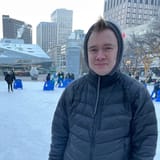
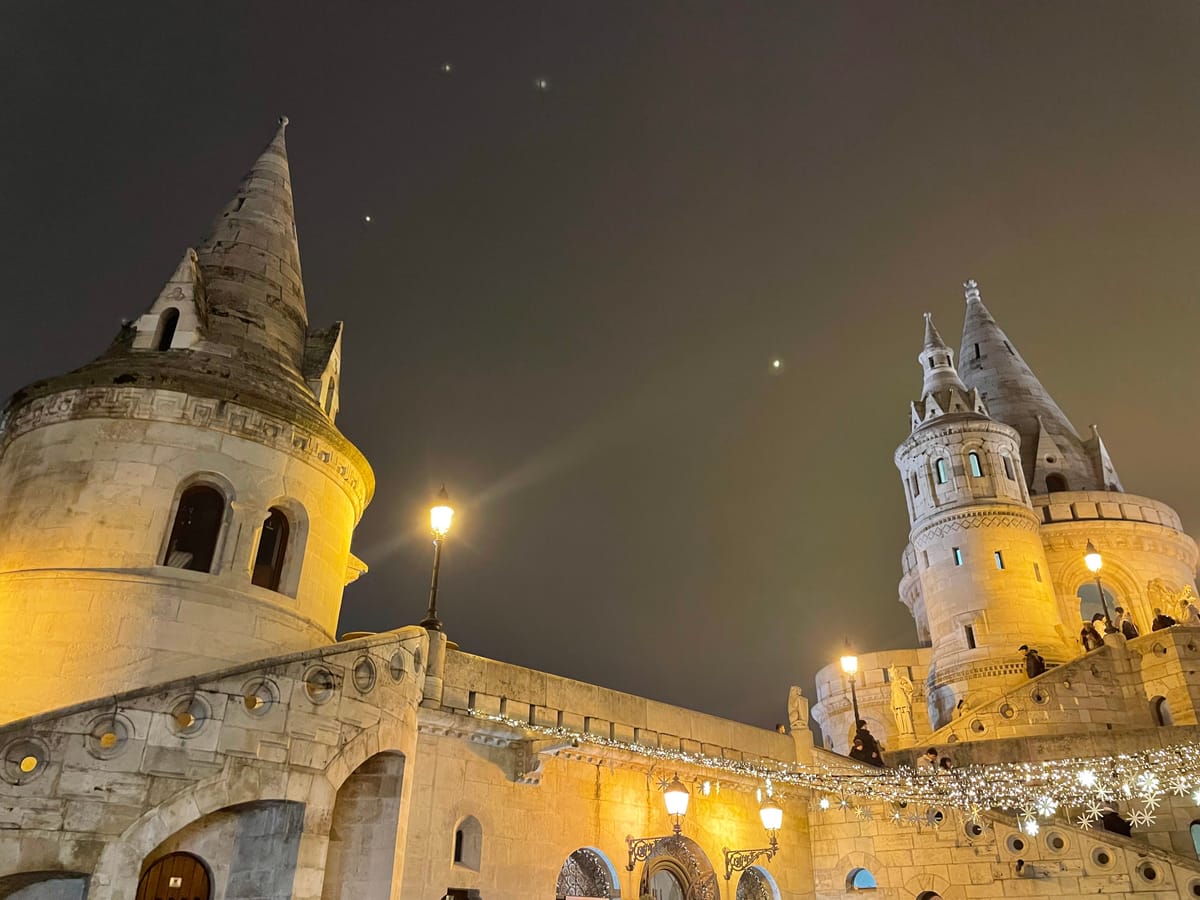
From mid-December to mid-January, we occupied ourselves with a mad dash through nine European countries. Here’s a few snippet summaries of what we got up to!
Overview of Places Visited:
🍕 Bulgaria (Plovdiv, Sofia)
⚰️ Romania (Bucharest, Brasov)
🇭🇺 Hungary (Budapest)
🐈 Austria (Vienna)
🥟 Poland (Krakow)
🏰 Slovakia (Bratislava)
🕰️ Czechia (Brno, Prague)
🍺 Germany (Berlin)
🍟 Netherlands (Amsterdam)
Happy Holidays Indeed
Vienna was our home base for the holidays, with a blissful week spent cat-sitting Marty and Simi, two British shorthair angels! We intermingled kitty cuddles with Christmas markets, museums, and concerts. Speaking of Christmas markets, we visited over 20 from Bulgaria to Bratislava. Festive, crowded, and overpriced, we enjoyed brief forays and a couple cups of mulled wine.
Marty and Simi’s place was cozy and well-equipped, nestled on the edge of the Vienna Woods. For Christmas we roasted a duck, and took a stroll through the snowy hills; we’d woken up to a welcome dusting of the stuff on Christmas Eve morning after three snowless weeks.
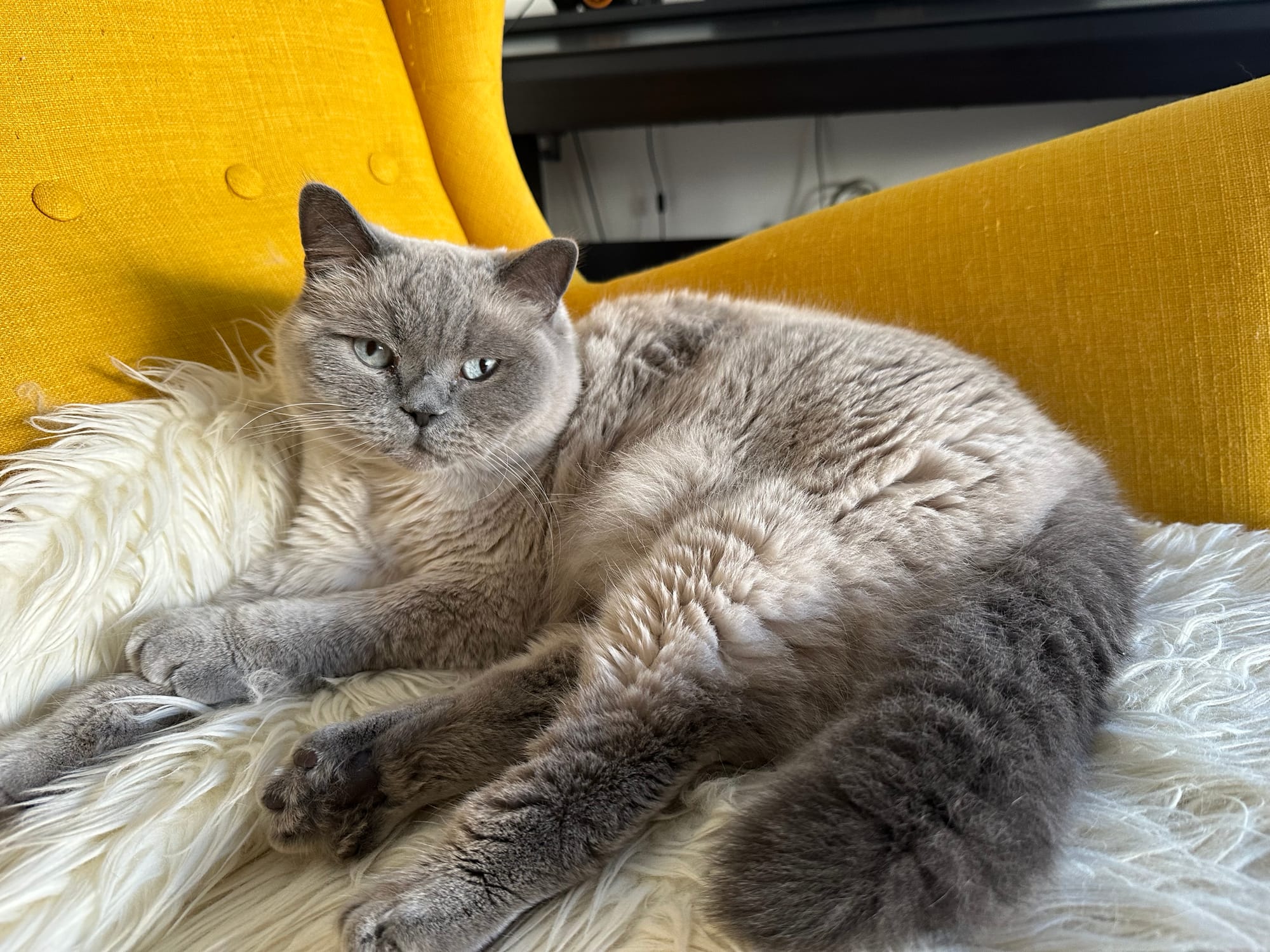
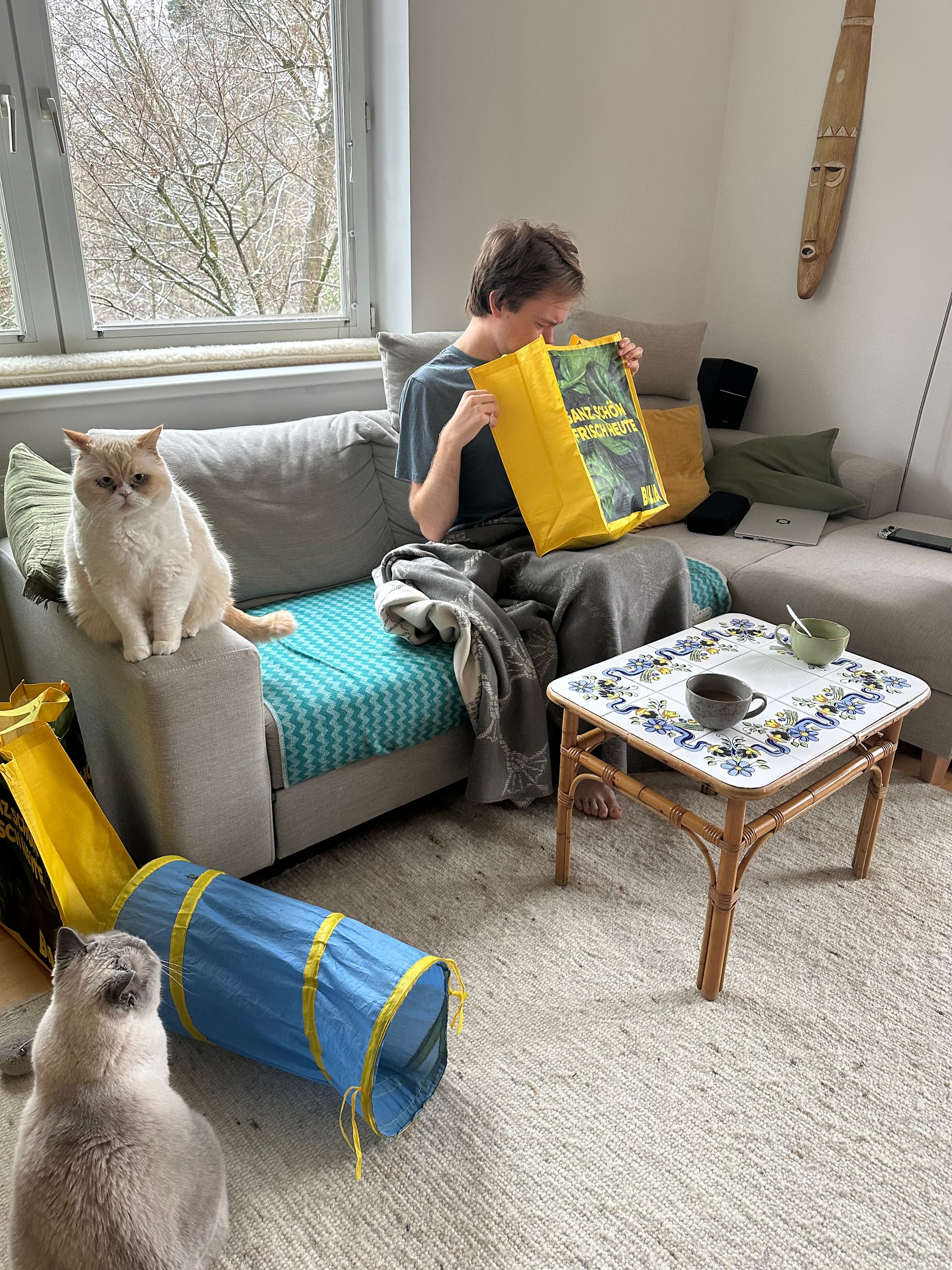
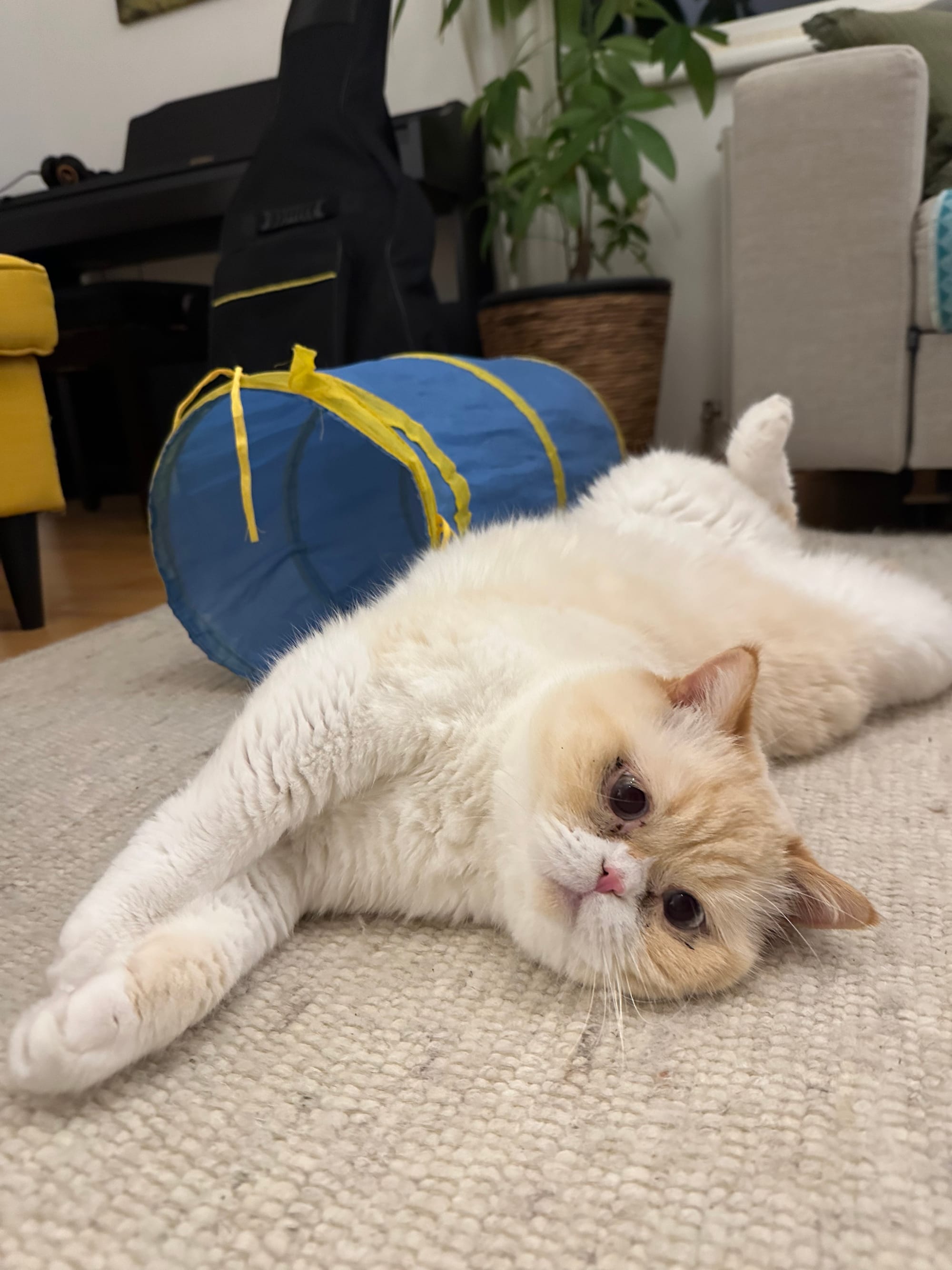
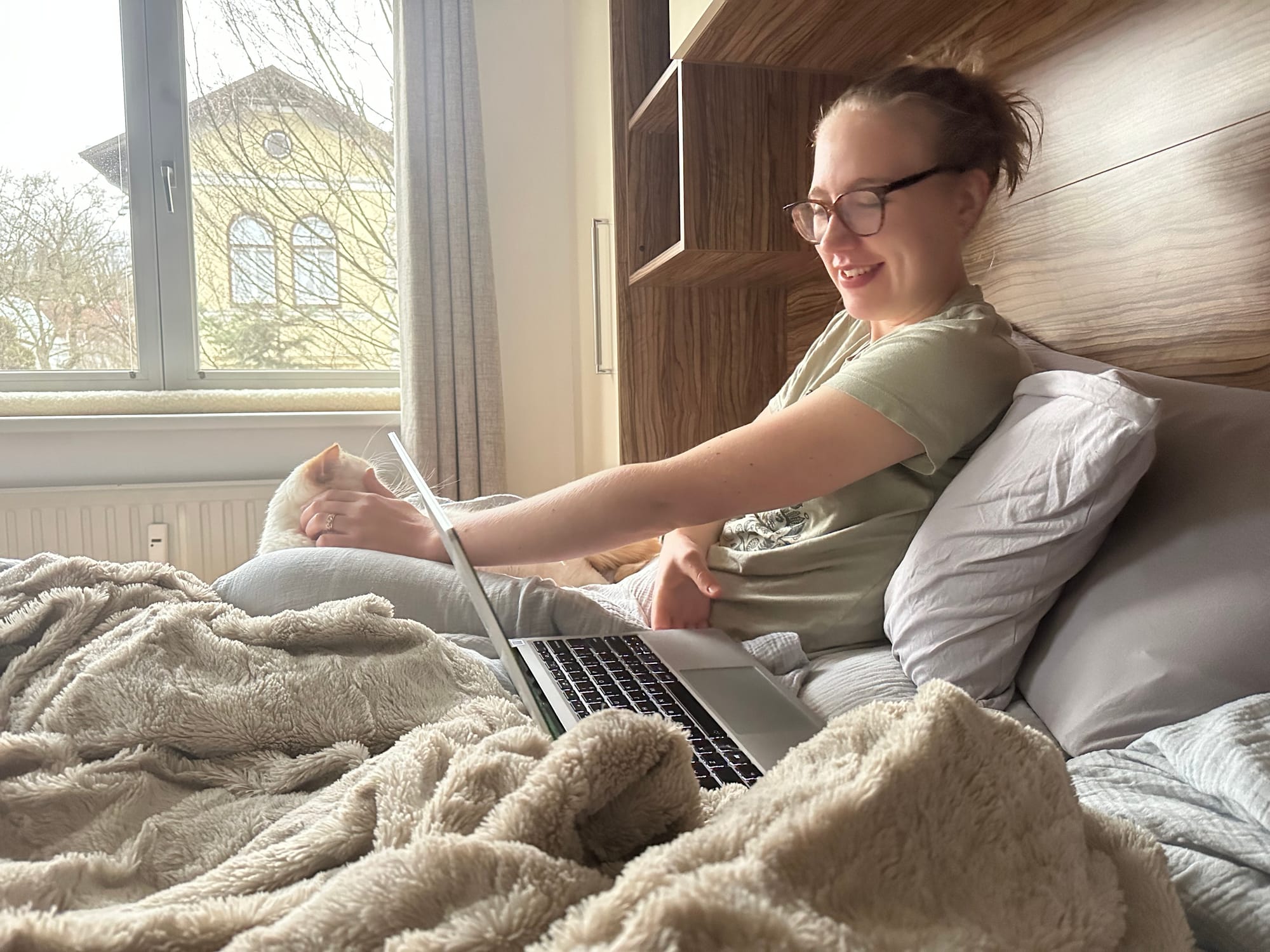
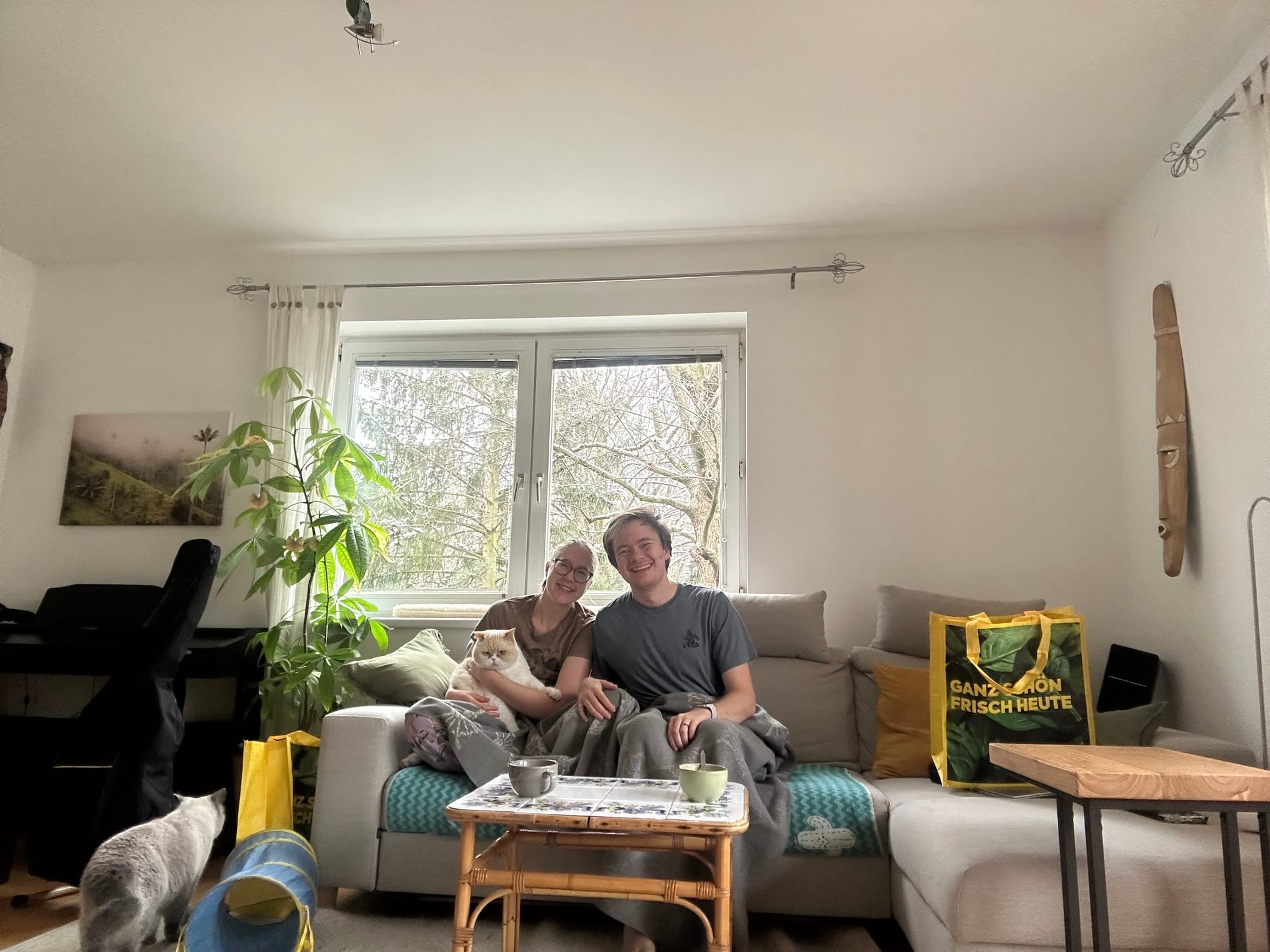
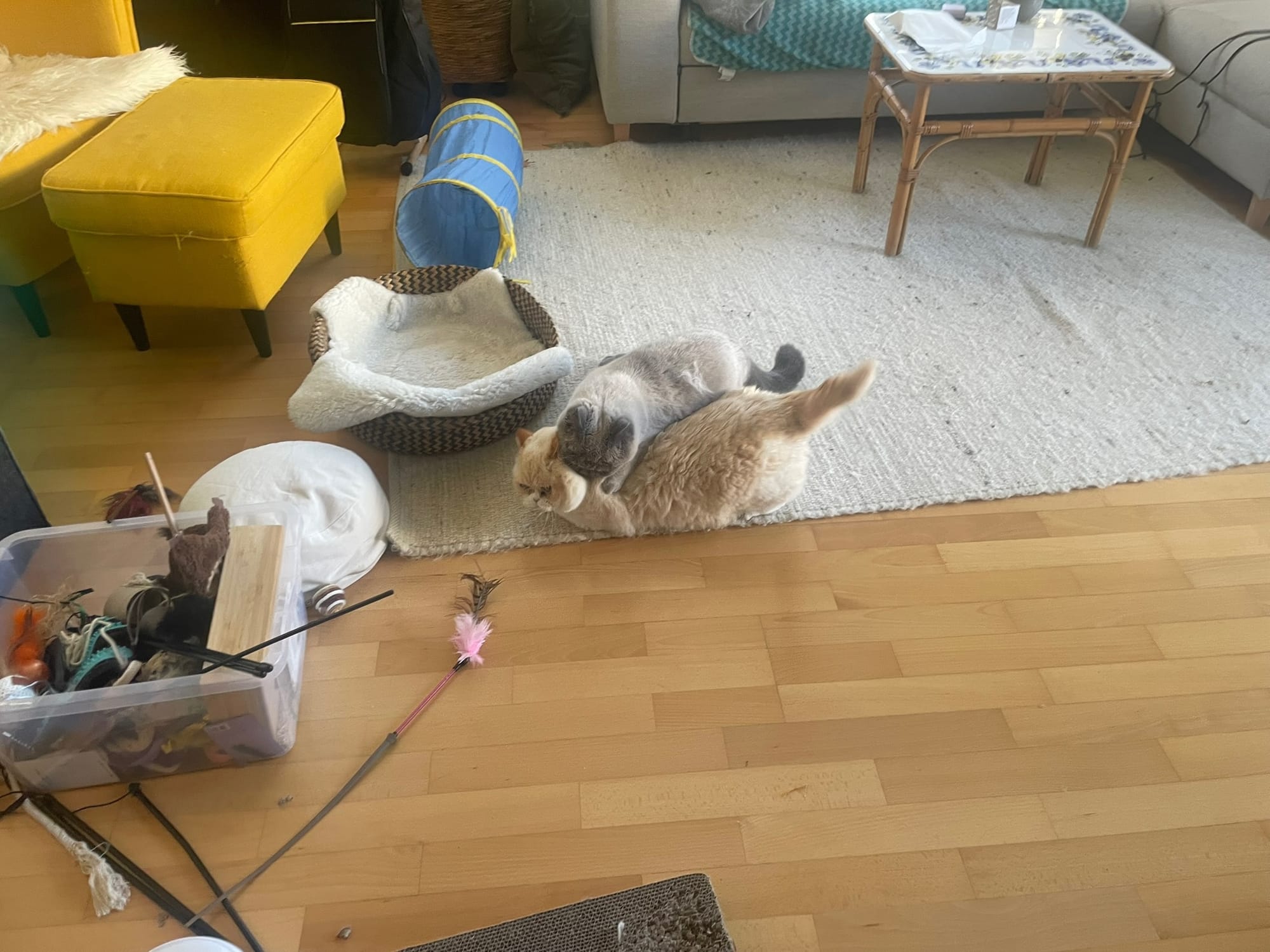
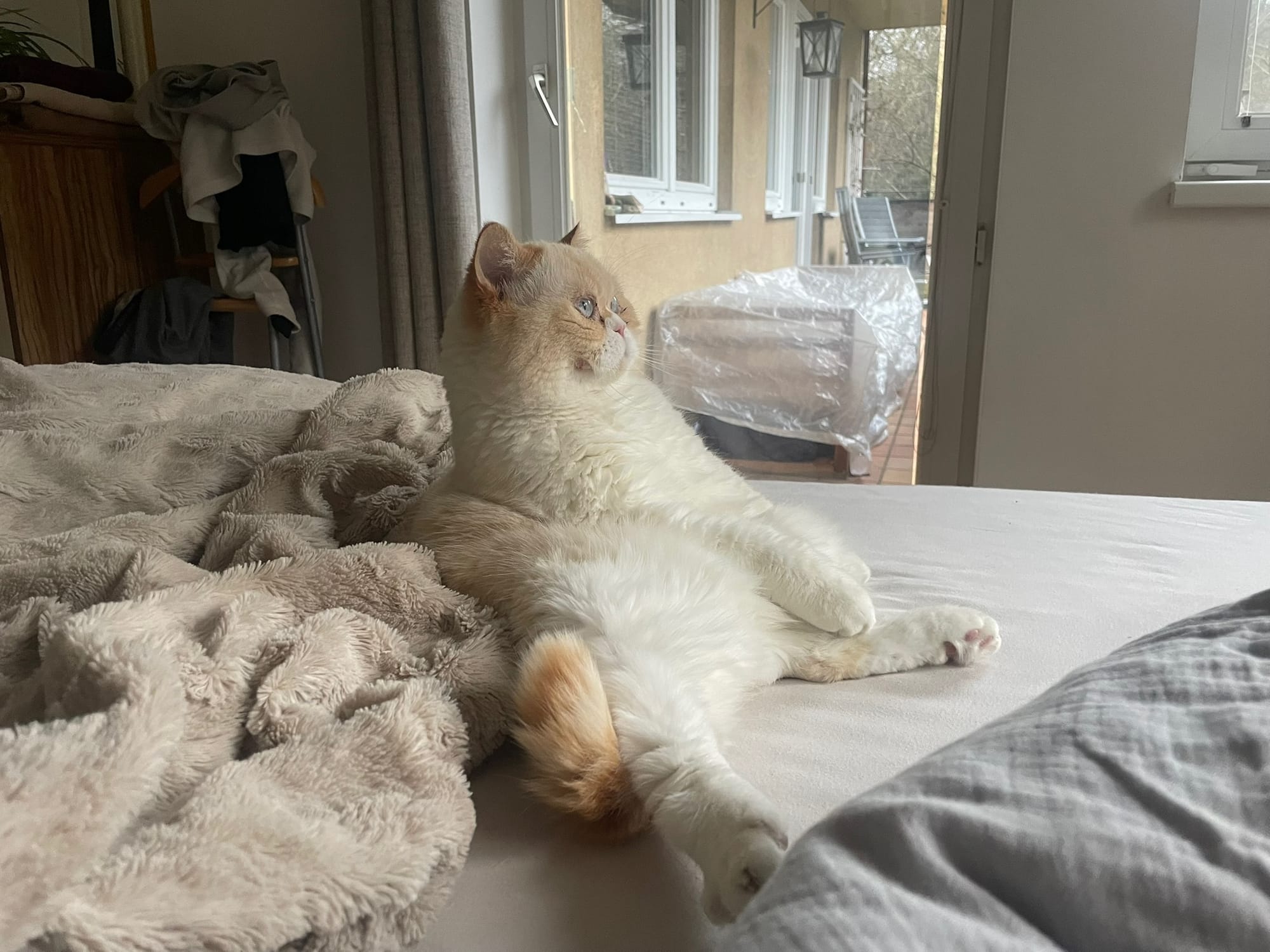
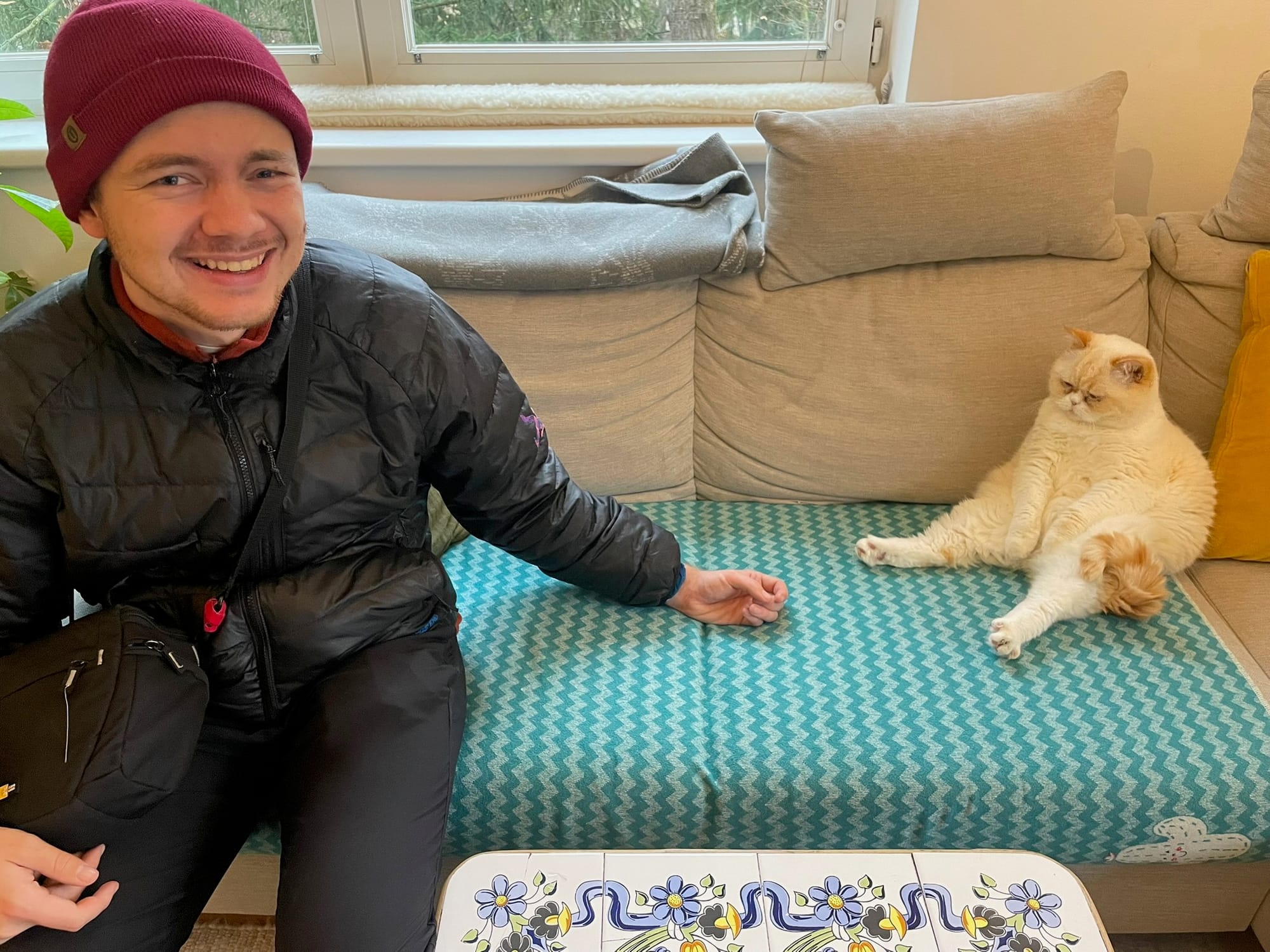
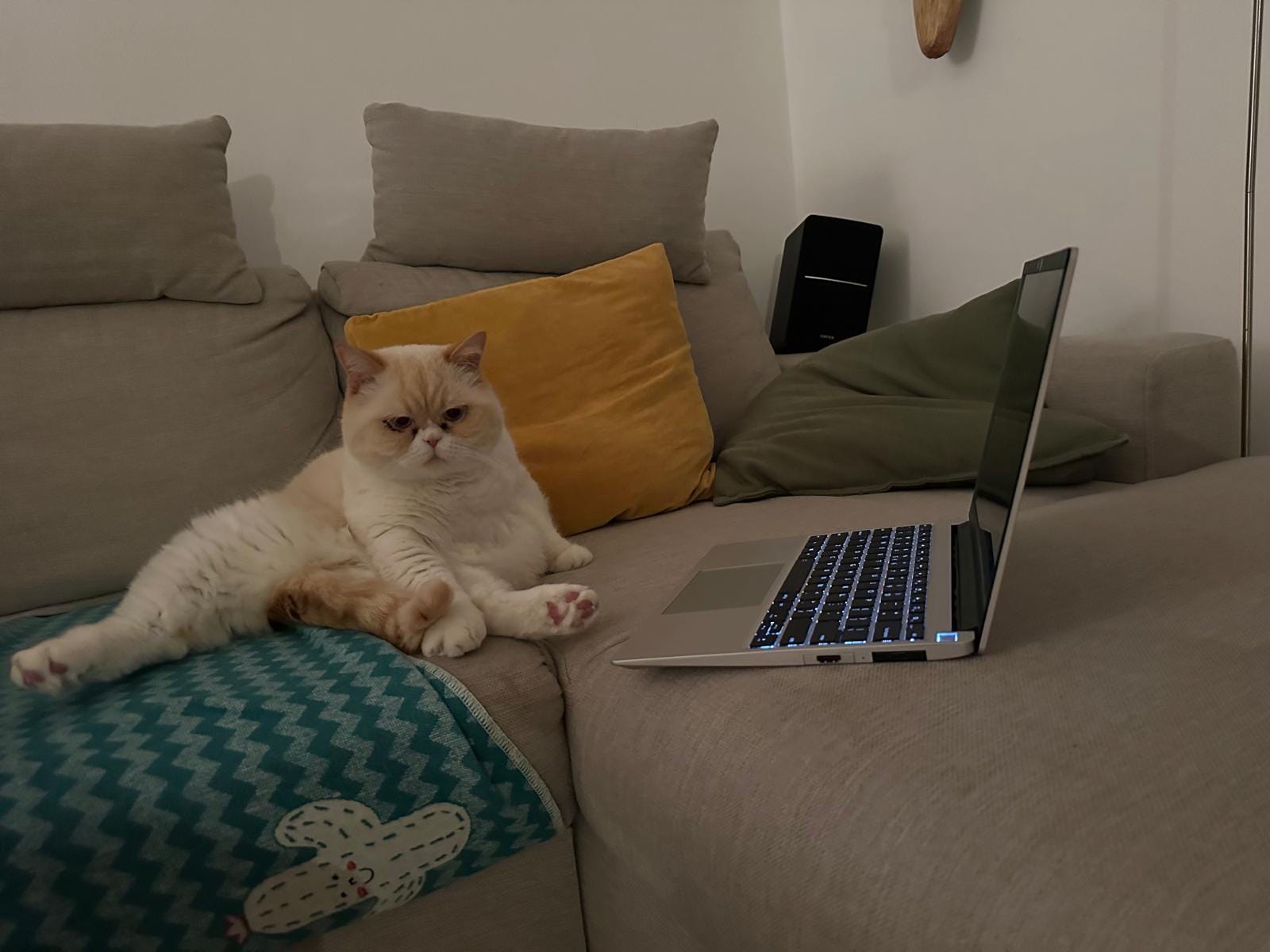
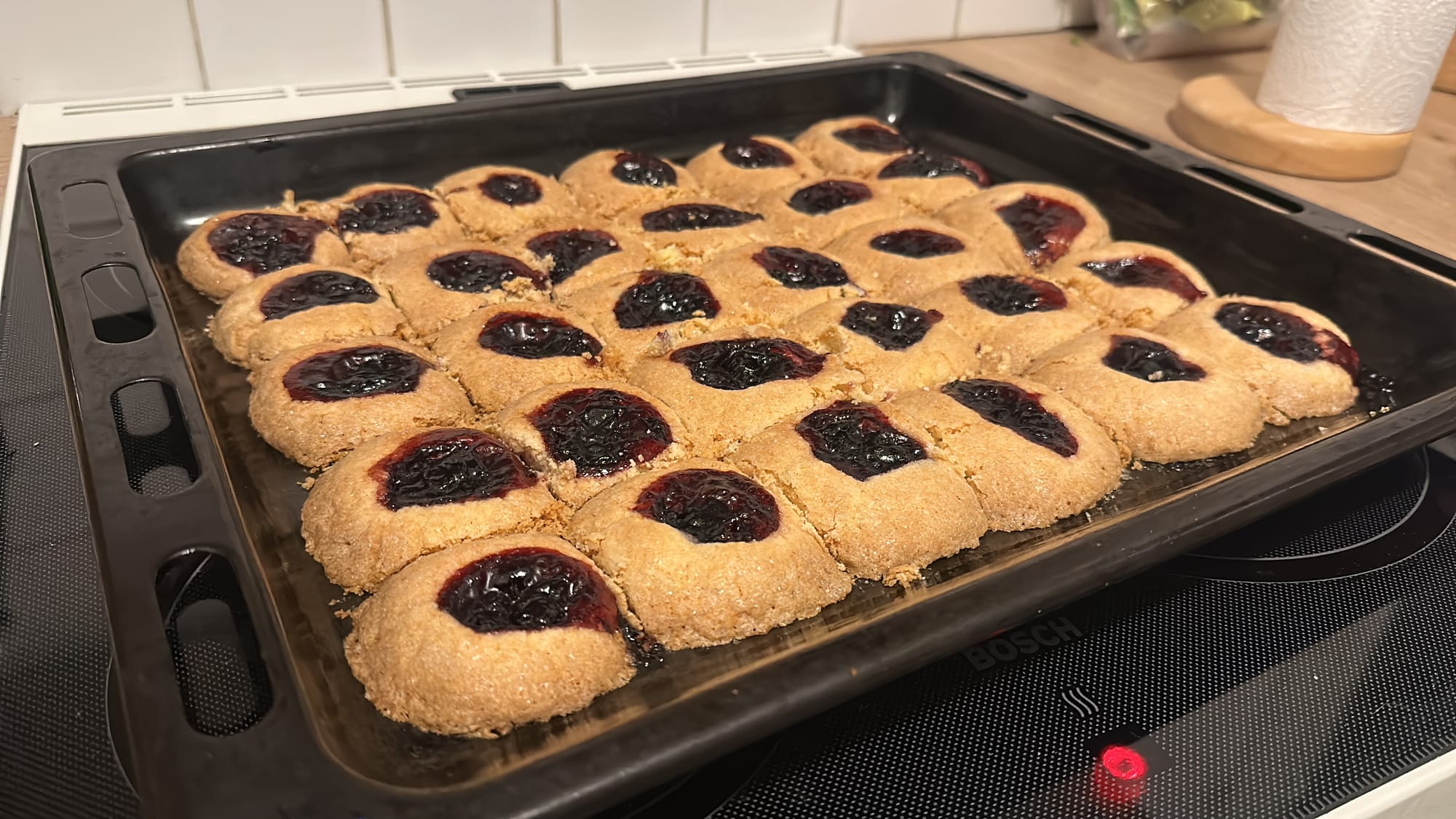
Simi was a diva, and Marty often sat like an old man in a gym locker room. Also... yeah, Johann made a lot of questionably-shaped Christmas jam thumbprint cookies... [📸 Rachel & Johann]
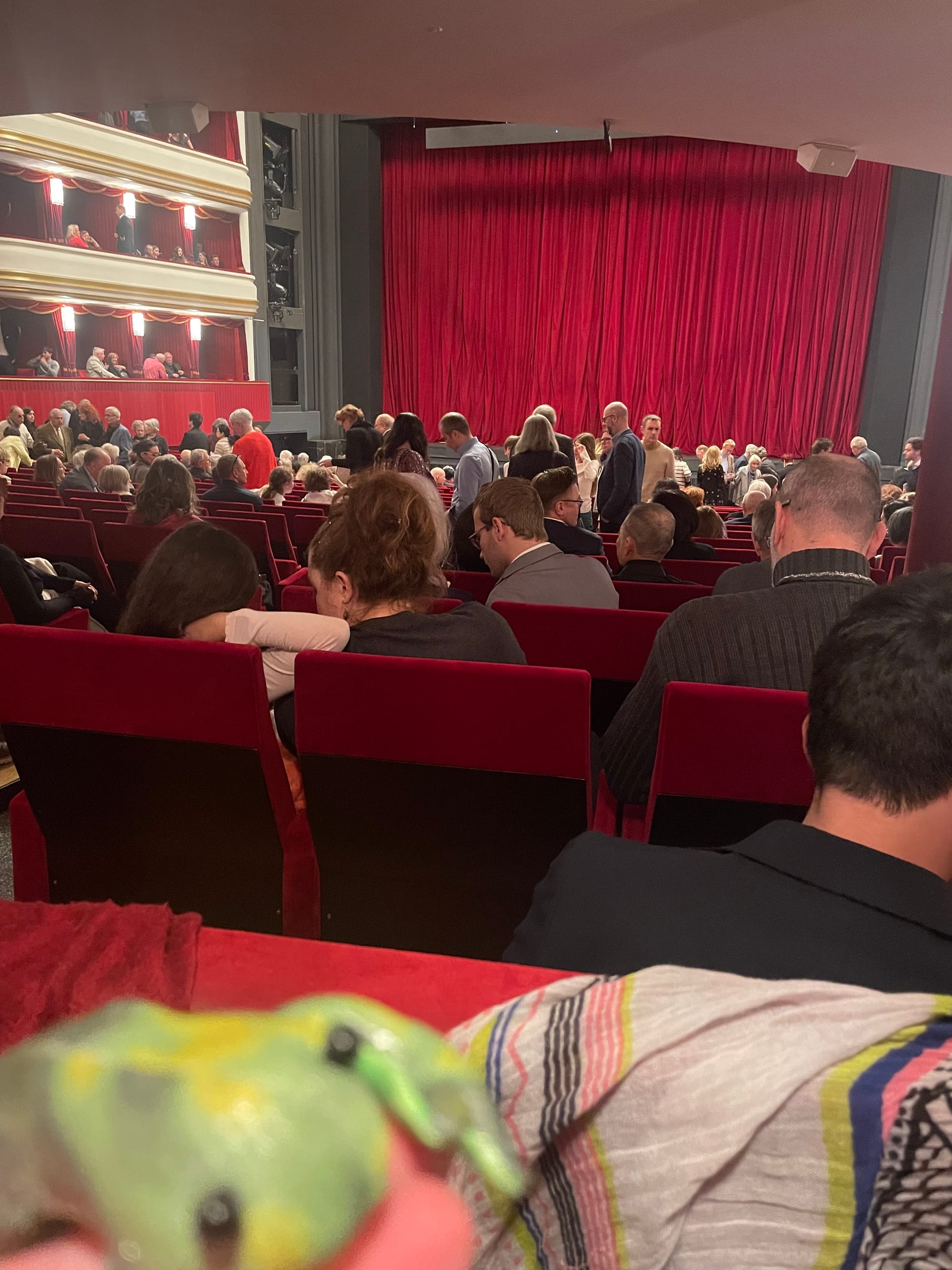
On New Years Eve we attended a matinee performance of Johann Strauss II’s operetta, Die Fledermaus at the Volksopera. The production was sumptuous, with a luxurious set and costuming, delightful acting, and a range of generally excellent voices. We had standing room tickets, which involved quite the workout in order to read the English subtitles which were only visible from a half squat. Thighs of steel.
At the end of the three hour performance, we exited the theatre into frigid high speed winds and blowing snow. Unfortunately, we were planning to stay outside for the next eight hours (until midnight); it was time to bundle!
Equipped with many more thermal layers, we entered the bustle of Vienna during the Silvesterpfad festival. Already by 5:00 pm, the streets were filling quickly. Huge Christmas light chandeliers swayed violently overhead, and music played through loudspeakers as couples rushed to learn the Viennese waltz (we couldn’t understand the German instructions: thus, WikiHow).
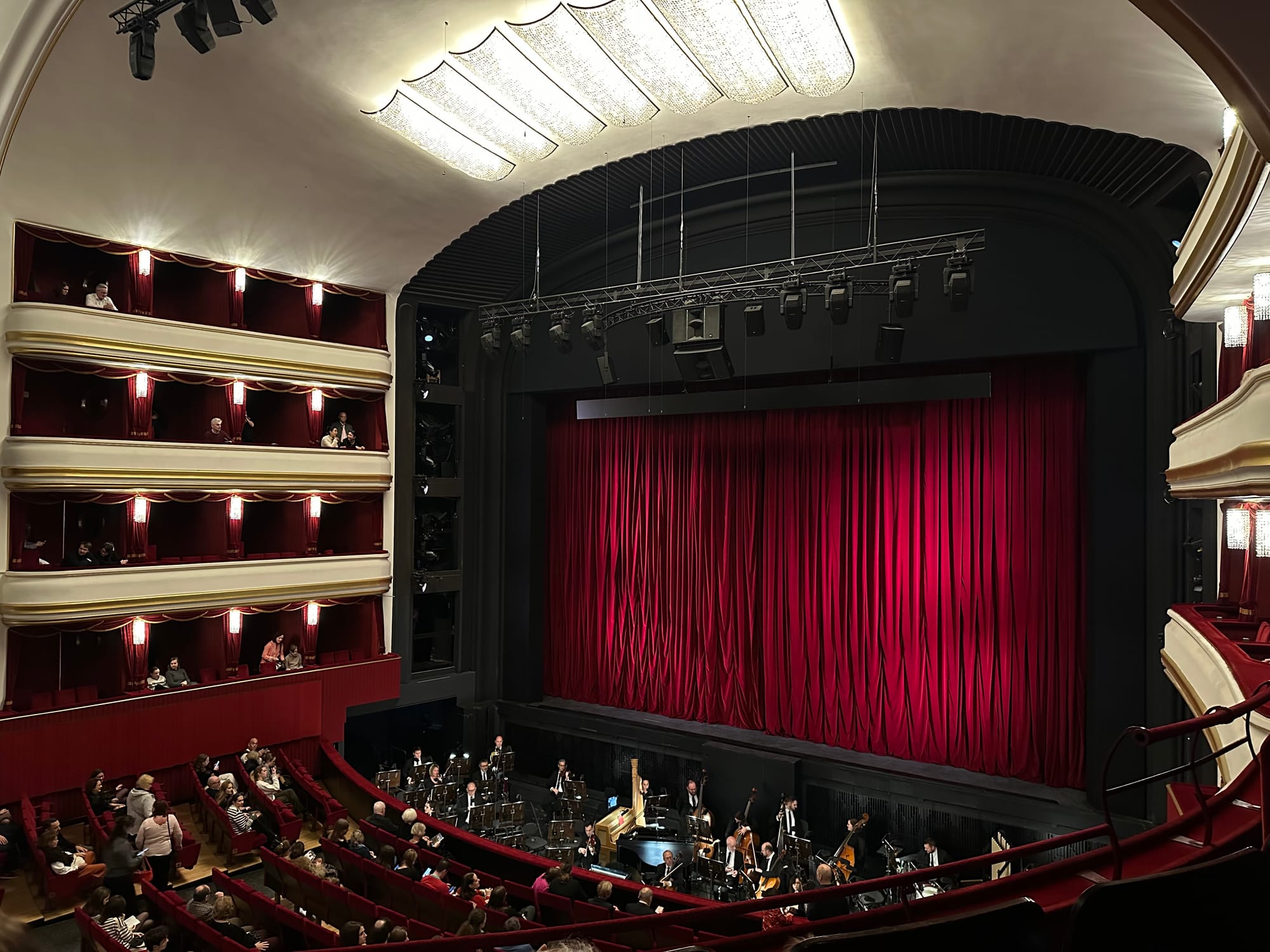
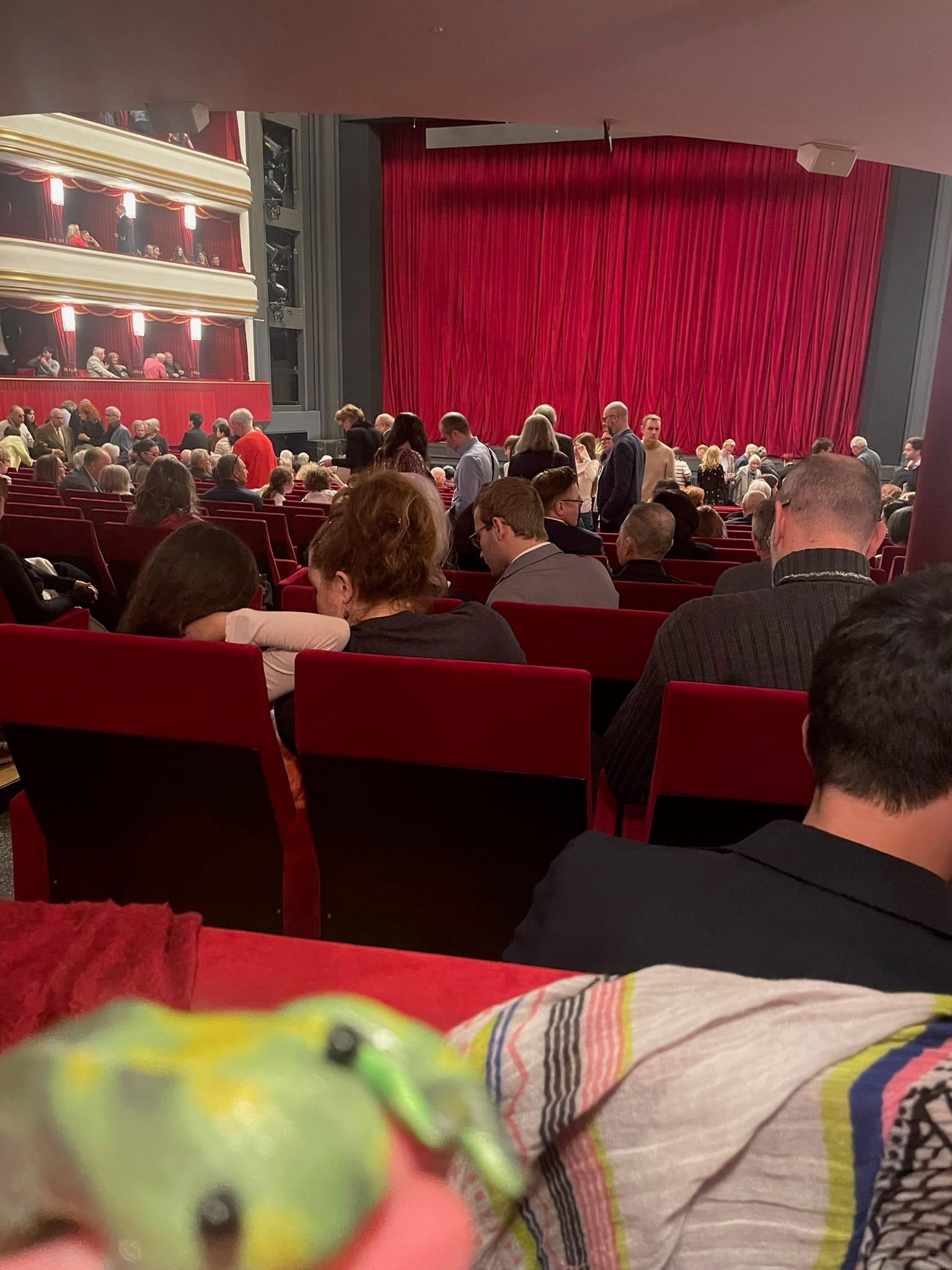
We had no idea that “standing room” really meant “repeated deep squatting room” if you wanted to see both the English captions and the stage performance… [📸 Rachel & Johann]
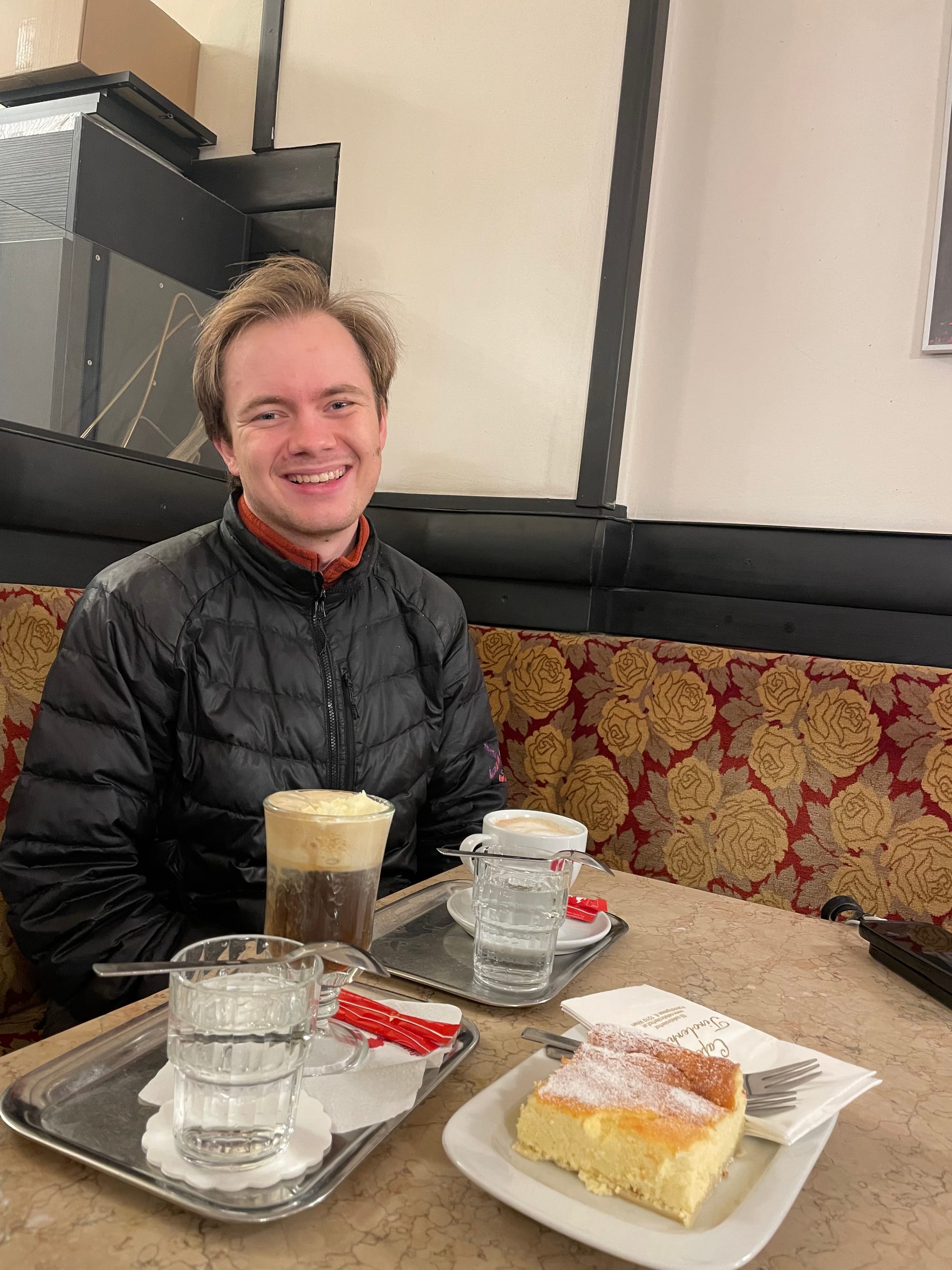
We wandered through the blustery streets, stopping to listen to whatever live music was playing from the seven stages set up around downtown Vienna. Bopping out to a Blues Brother tribute band helped keep away the cold, as did a mix of espresso, orange liquor and whipped cream enjoyed in one of Vienna’s historic coffee houses.
45 minutes to midnight found us in Stephanplatz, the huge square near St. Stephen’s cathedral that was PACKED with people. A small orchestra and band of operetta singers performed heady excerpts from The Merry Widow (imagine Rachel screaming like a fan girl, internally of course).
Then came the countdown, hundreds of voices shouting more or less in unison, 10-9-8-7-6-5-4-3-2-1! The bells of St. Stephen’s reverberated through the plaza as the orchestra struck up The Blue Danube. We attempted to waltz, but with limited space opted for a two-step as strains of the ethereal music rose above Vienna.
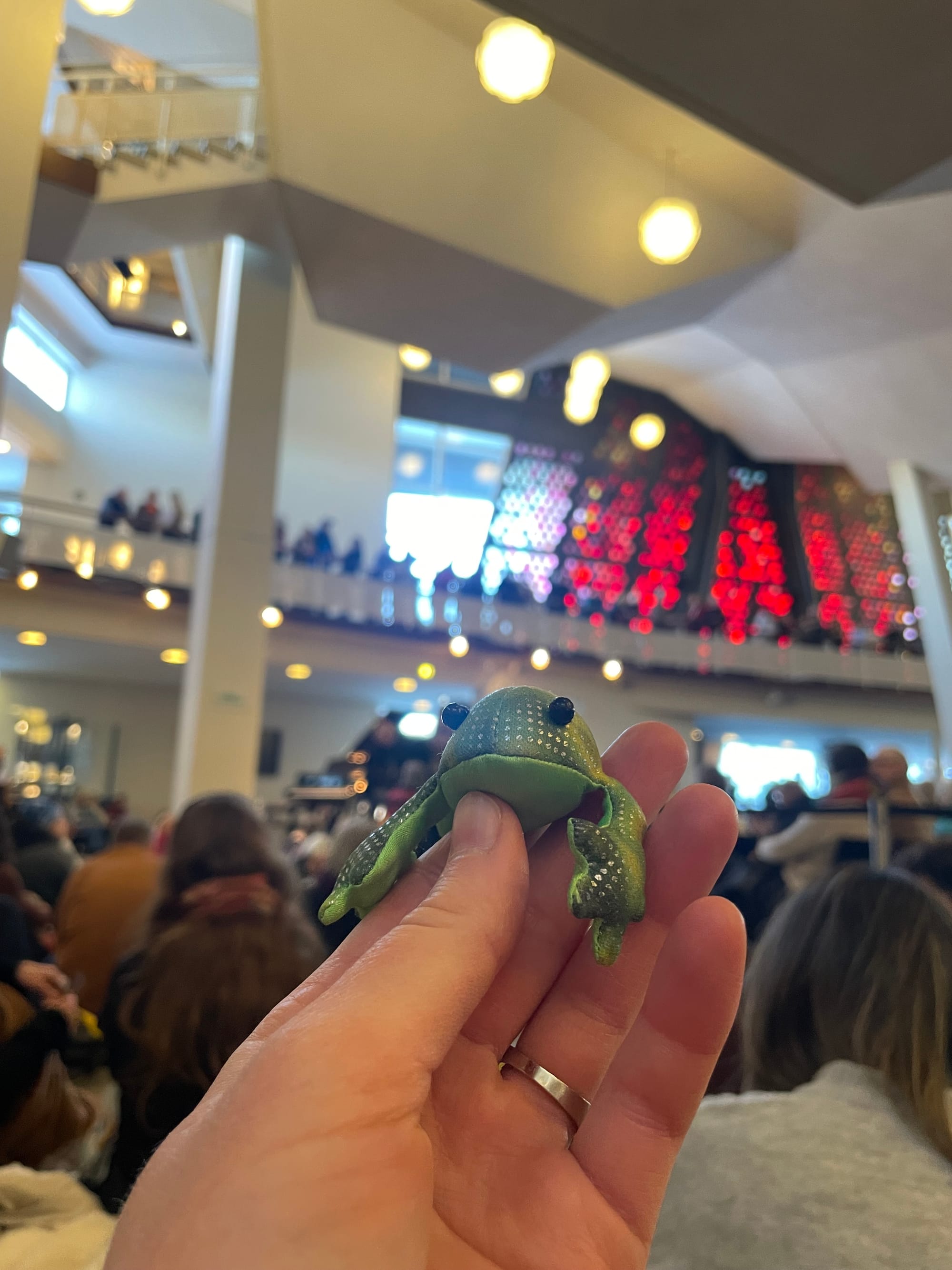
We got a chance to actually waltz on New Year’s Day, at a livestream of the Vienna Philharmonic’s New Year’s concert hosted by the Museum of Applied Arts. Sitting in front of a massive screen, we clapped along to the Radetzky March with the other attendees and joined the throngs of waltzers for The Blue Danube. We thus discovered that dancing a Viennese waltz, being quite fast, is exhausting!
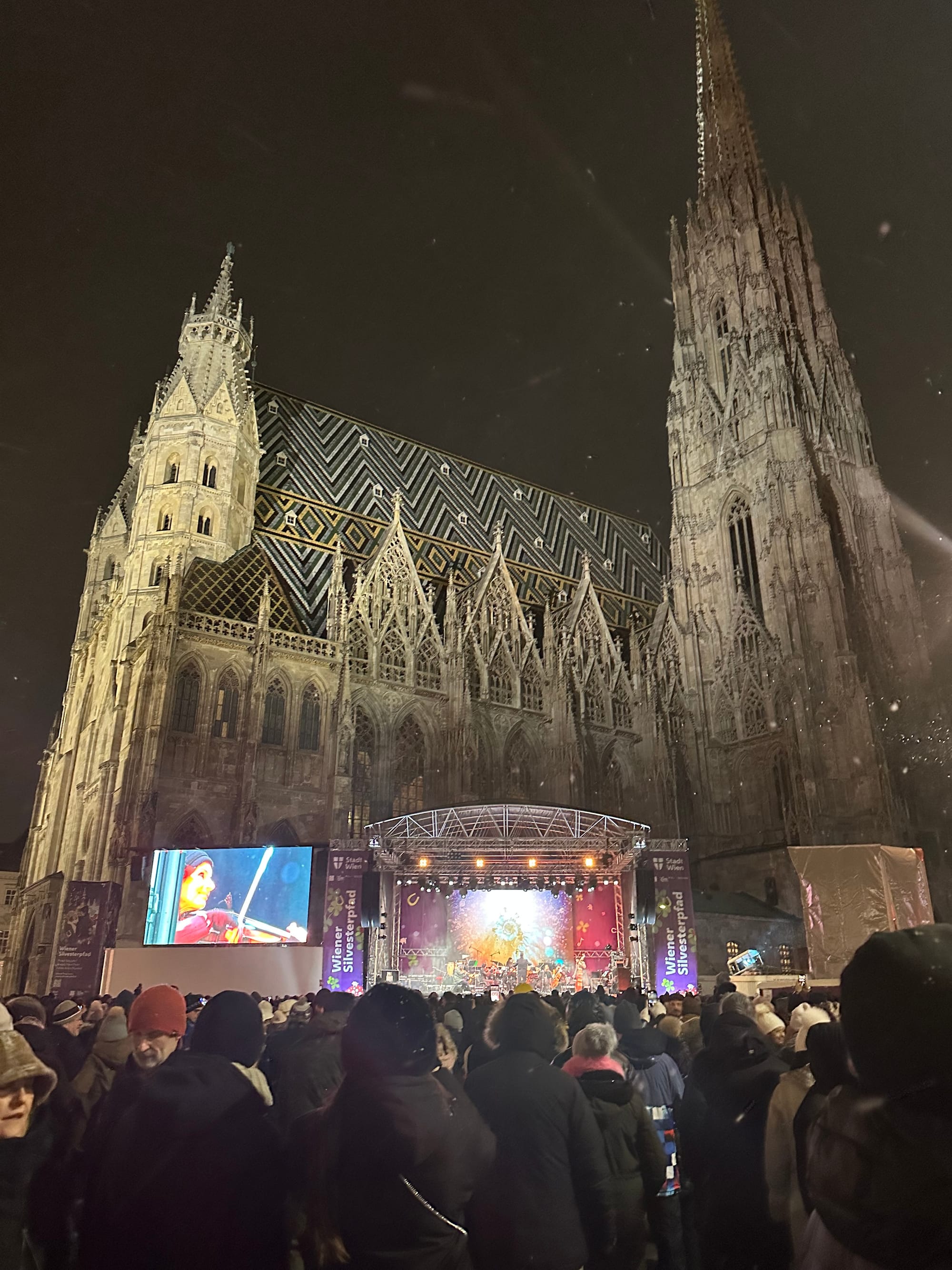
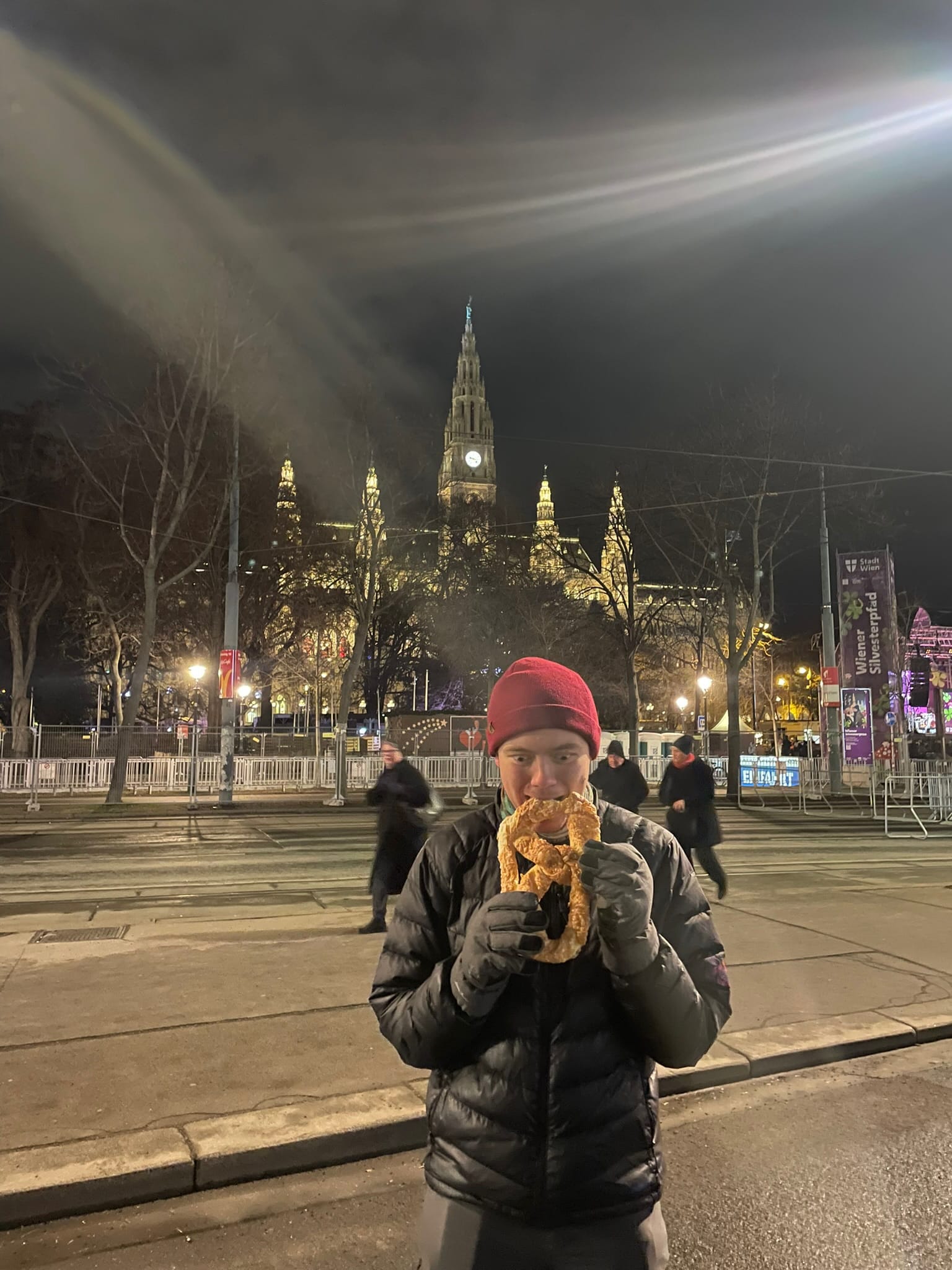
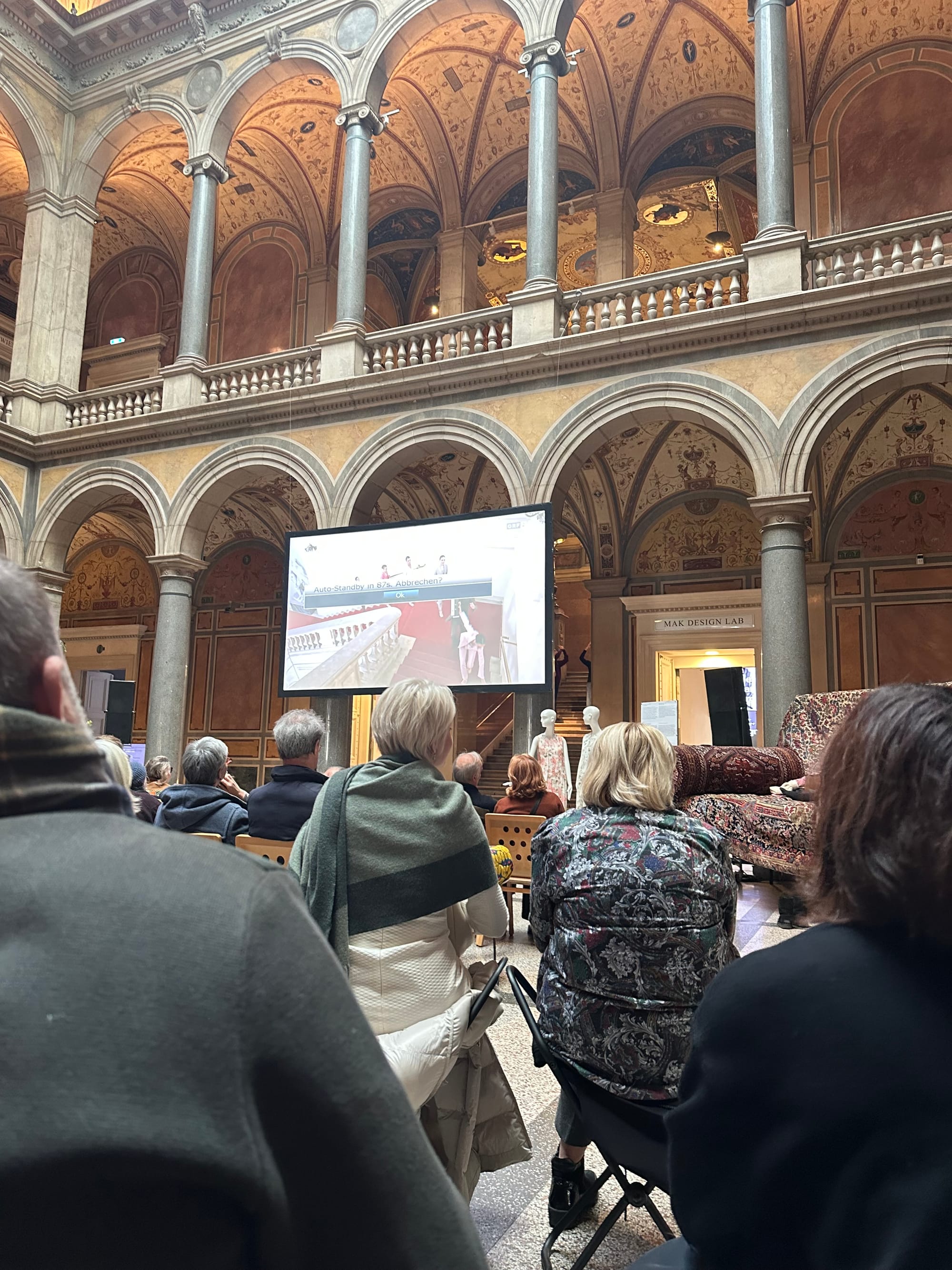
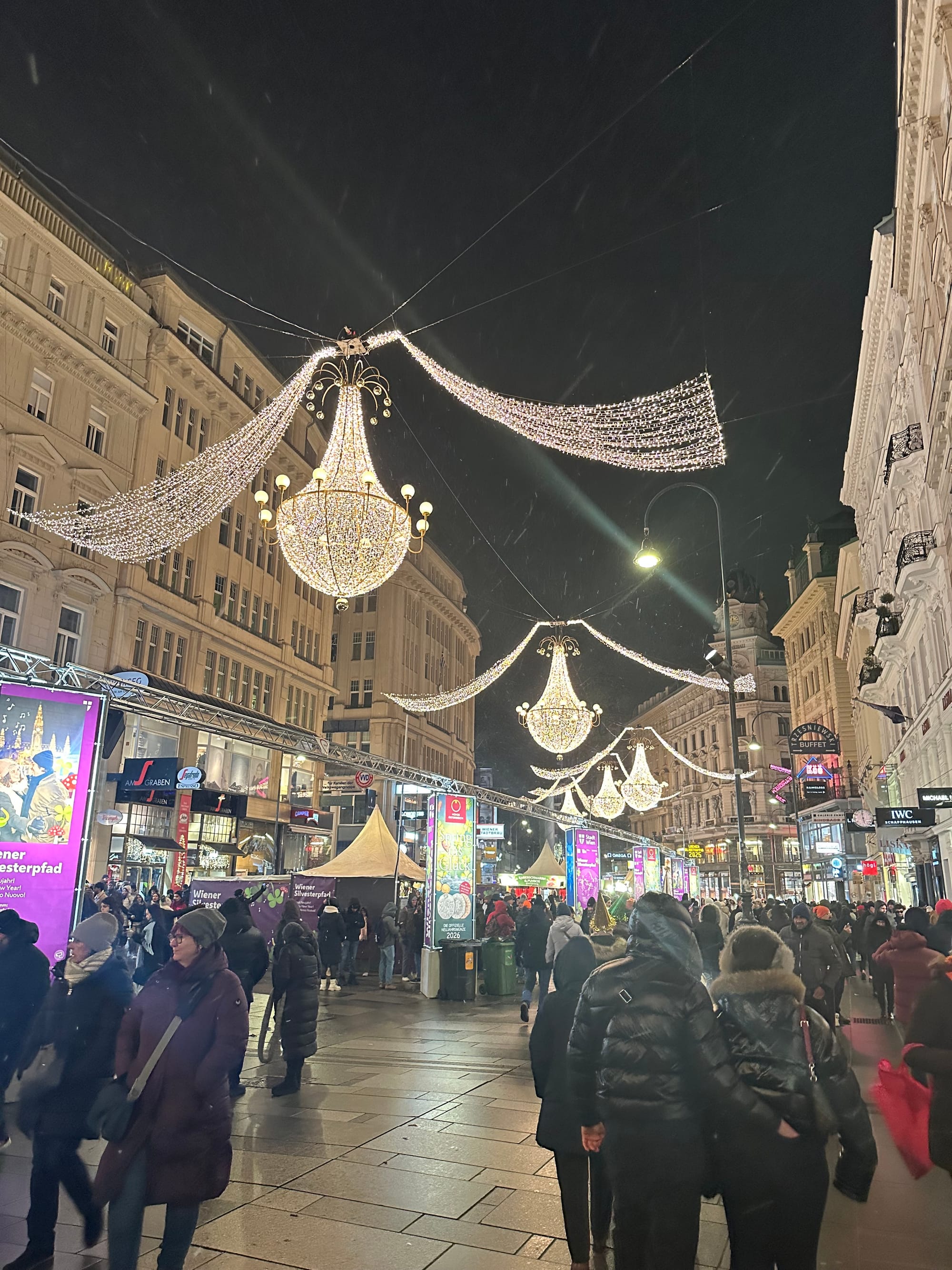
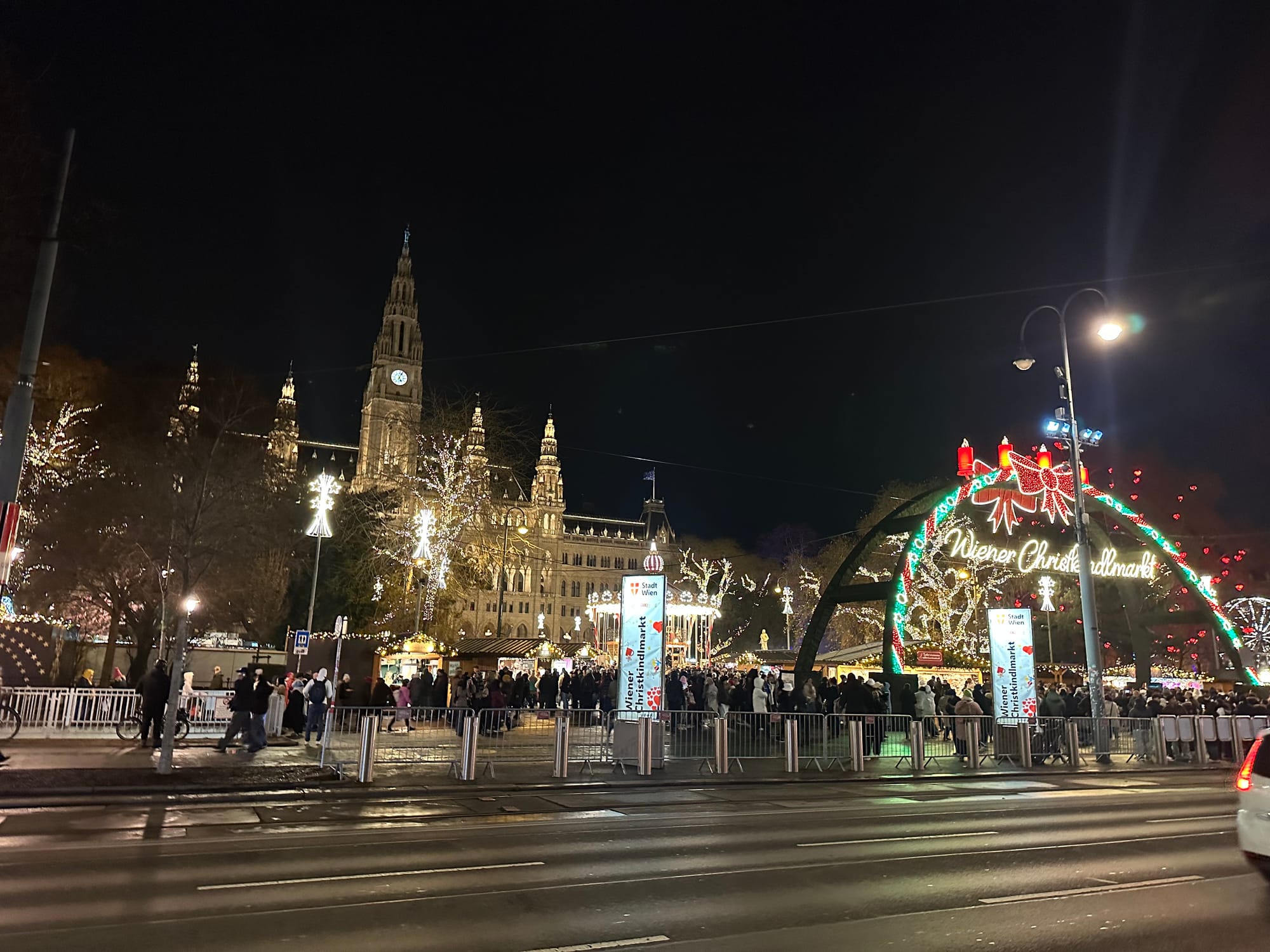
That pretzel kept Johann partying the entire night! Well… at least until he collapsed soon after midnight. [📸 Rachel & Johann]
History Lessons
No offence to past history teachers, but we learned more about European history during a couple months of travel than we did in our entire formal education. Encouraged by curiosity and the cold weather, we visited quite a few excellent museums. We were also treated to a number of tips-based walking tours alongside Rick Steve’s free Audio Europe walking tours (a rather mainstream historical narrative, but informative and entertaining).
We came face to face with some very heavy history, and the recency of WWII and the Cold War struck us in full. We walked along the former boundary of the Berlin Wall, and saw half a dozen artists spray painting its remaining sections. The Sachsenhausen concentration camp filled us with pain and anger; innumerable horrors were perpetrated there, and so many of those responsible never faced justice. An austere, snowy expanse with crumbling walls; so much of the physical history has been erased, but that which remains is testimony to many lifetimes worth of suffering. Along the banks of the Danube in Budapest, 60 pairs of cast metal shoes pay tribute to the Jews shot into the river at this spot. The Anne Frank house reminded us of the human faces on those numbers.
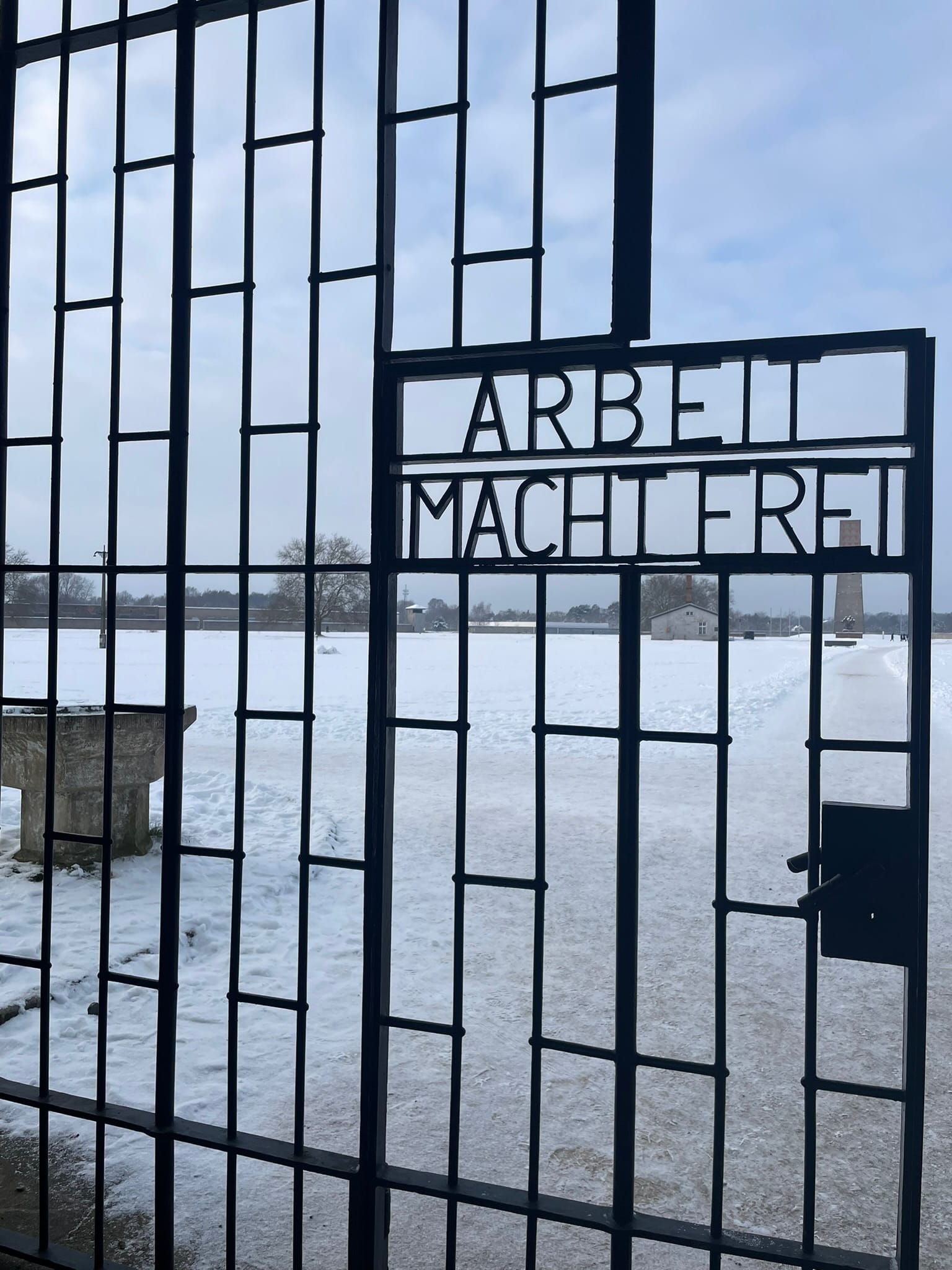
The recency of the Cold War shook us too, with so many people divided from each other. We visited a flat preserving everyday life in 1980’s communist Bulgaria and heard stories of the family who lived there. In Romania, we saw Nicolae Ceaușescu's massive Palace of Parliament, which he built while starving the nation and inciting a bloody revolution. Budapest stills bears the bullet holes of their own revolution, and honours victims of the Nazis and the first communist regime at The House of Terror Museum. In the context of castles hundreds or thousands of years old, like those of Prague, Warsaw, and Bran, we have come to better understand how painfully recent all of this is.
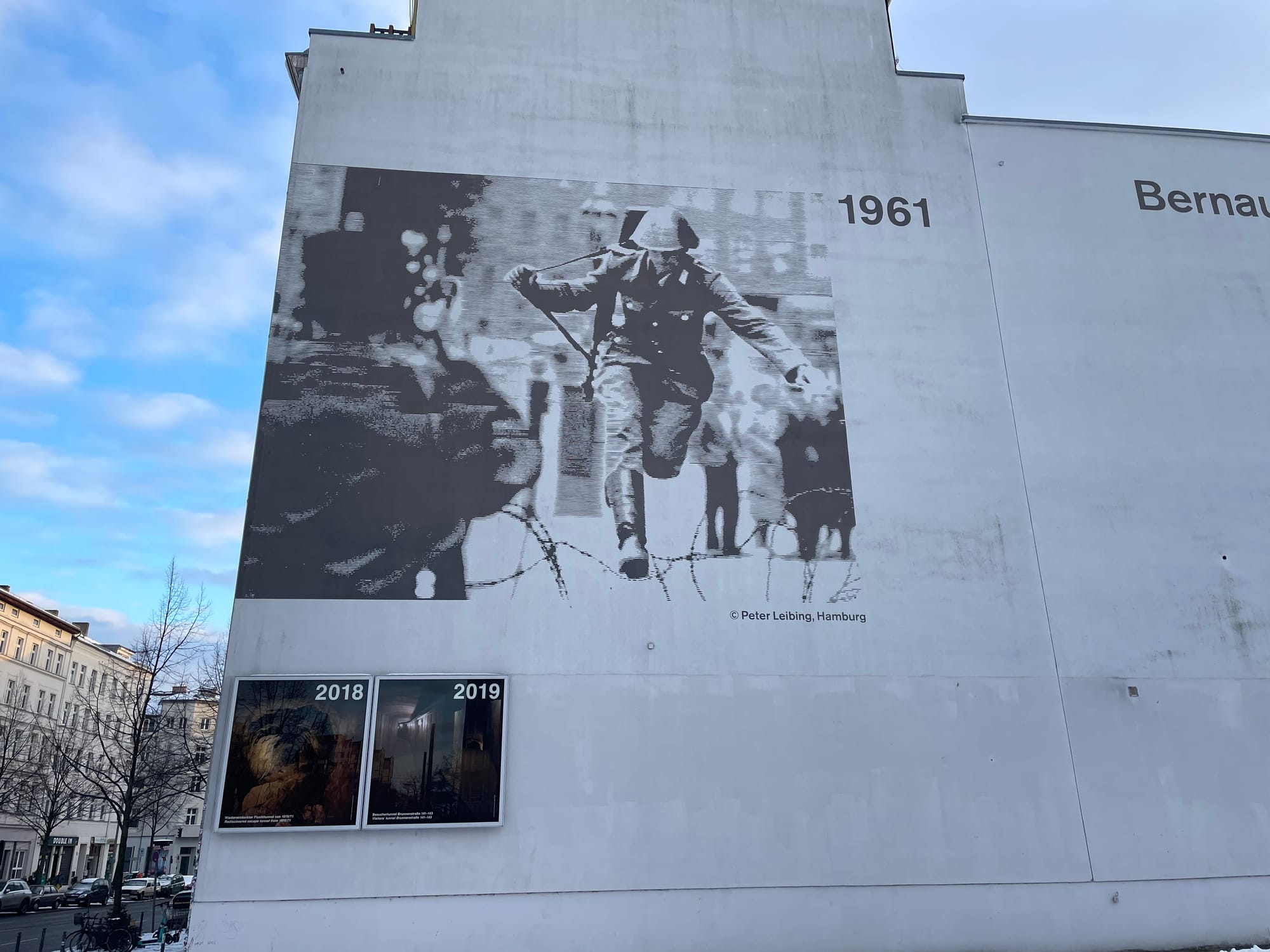
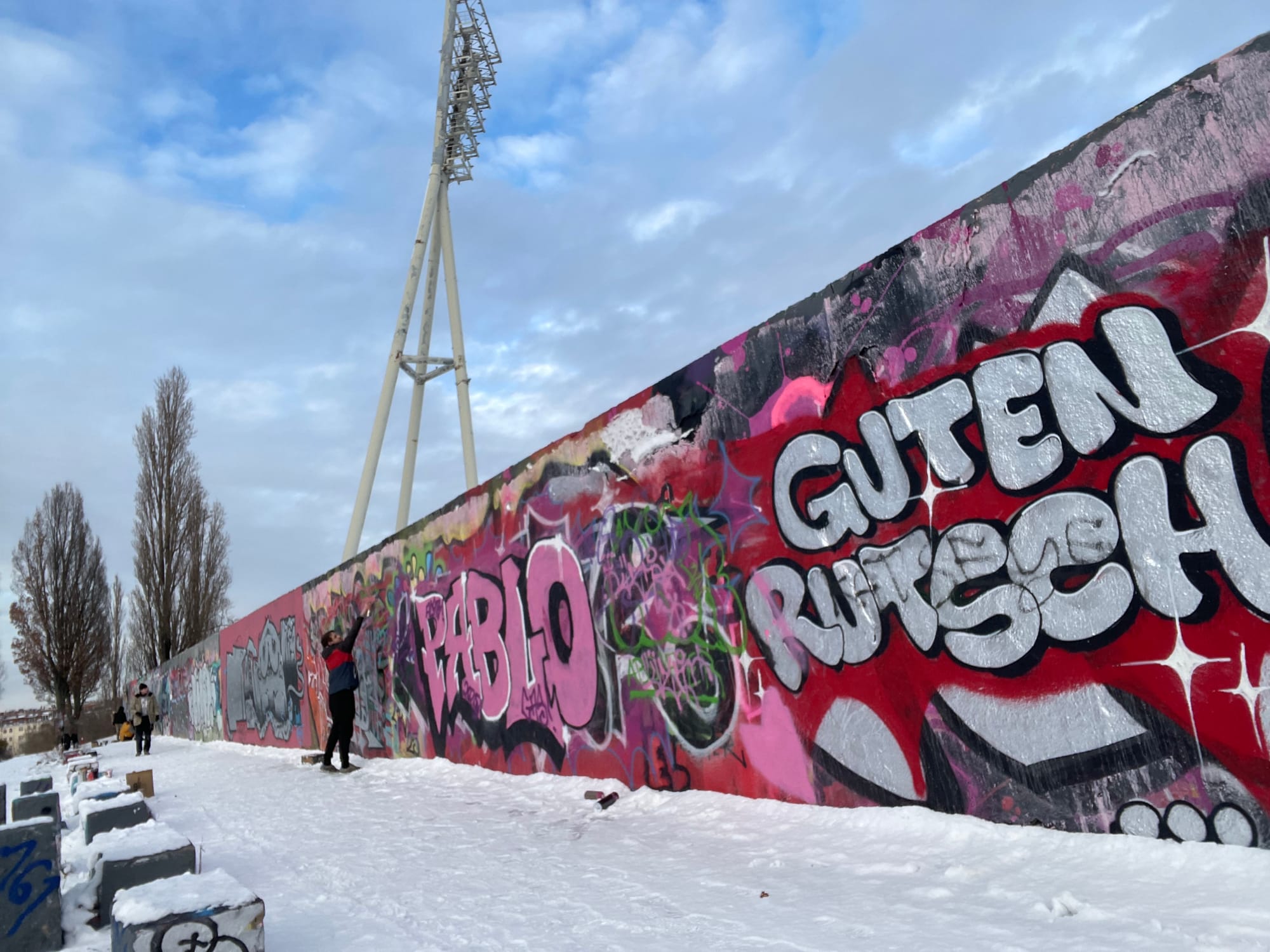
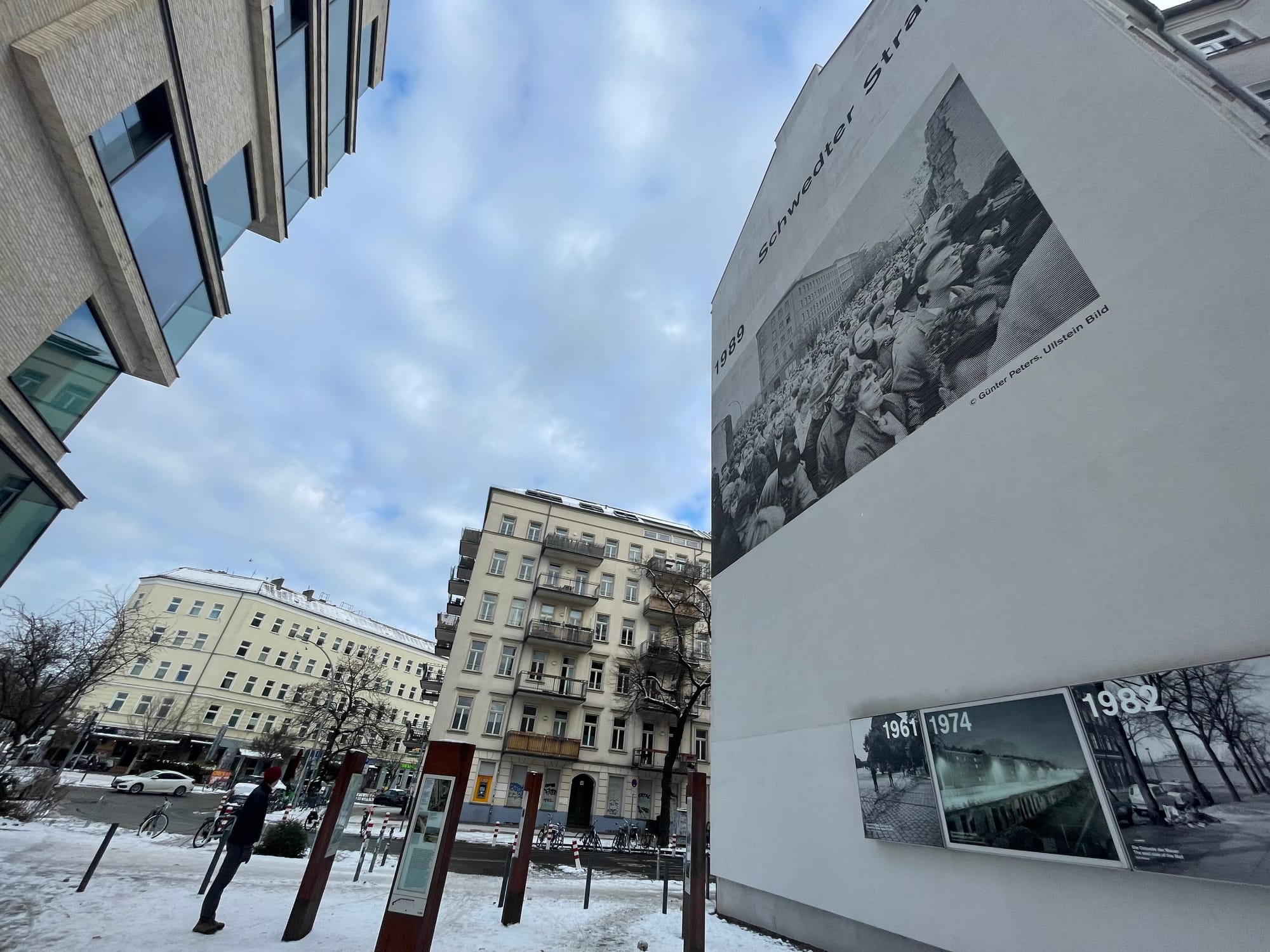
Along the Berlin Wall
Other Adventures
While we did a lot of heavy learning in Europe, we also enjoyed some lighter moments. In Plovdiv we discovered the incredible artwork of Dimitar Kirov and petted a spectacular fluffer of a cat. In Romania, we followed the sounds of a brass band to a vibrant folk dance festival where they passed around a huge wreath of braided bread to share. There was also the opera production of D’ale Carnival, an adaptation of a nationally famous Romanian play of which we did not understand a single word.
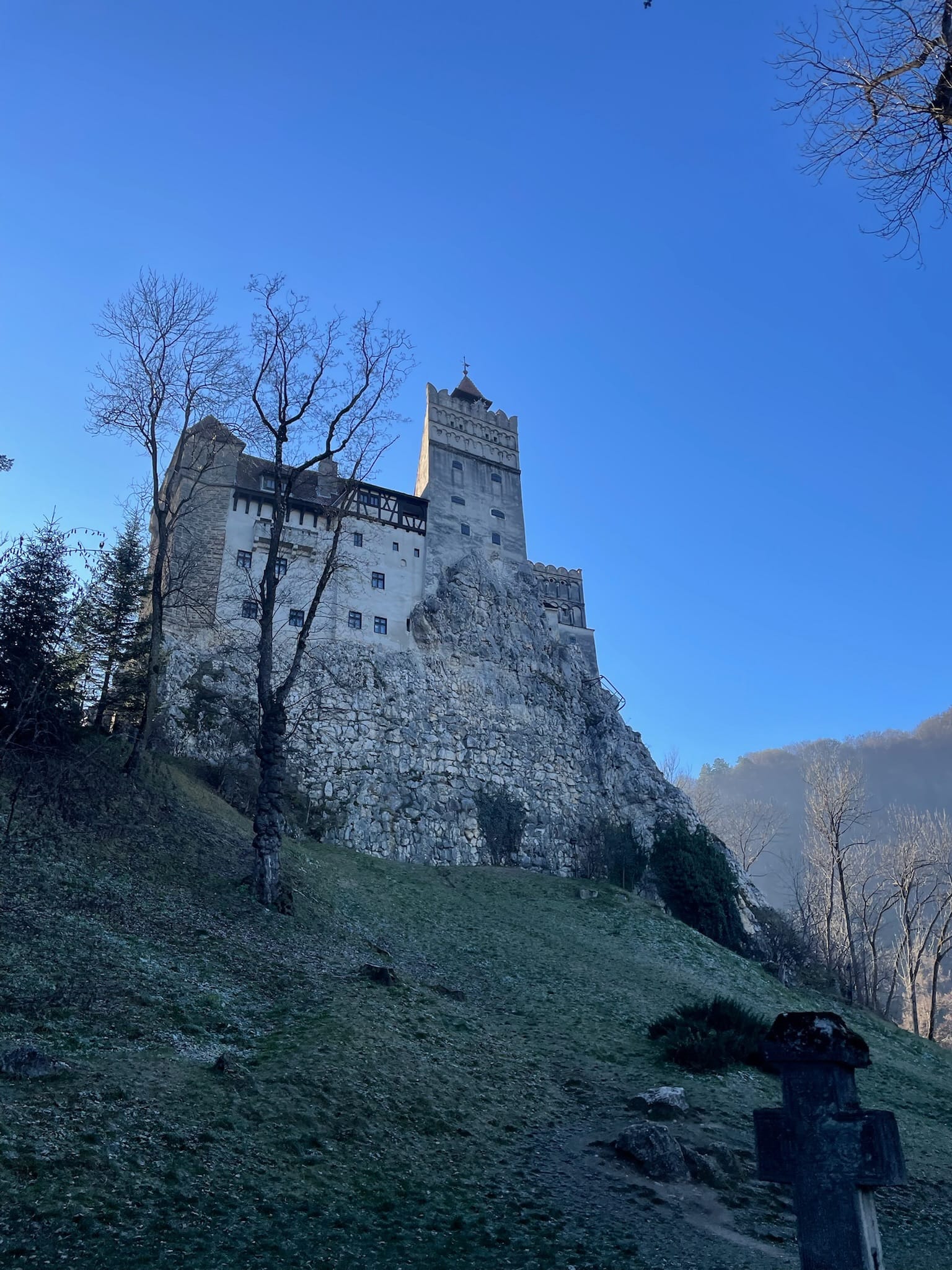
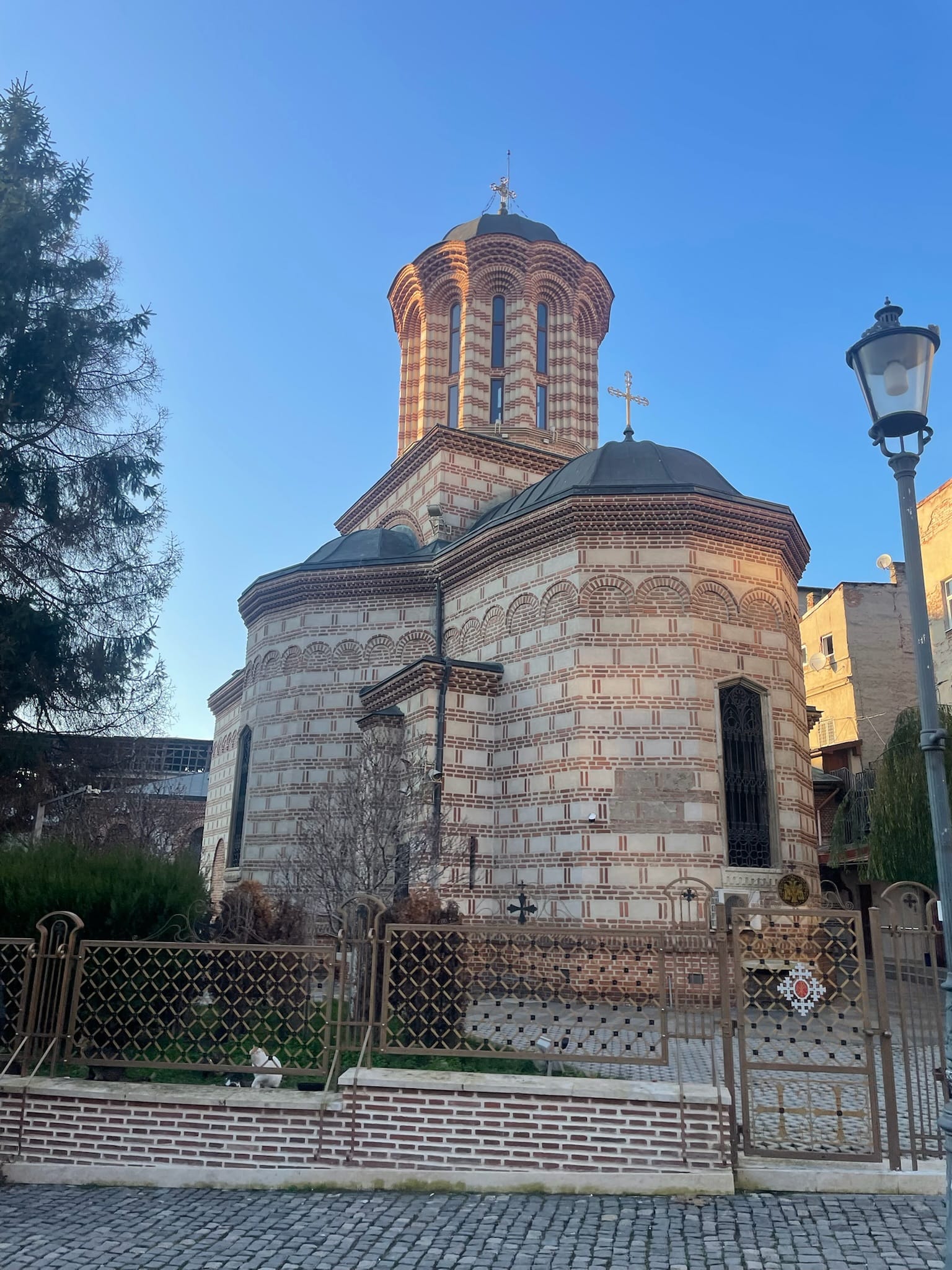
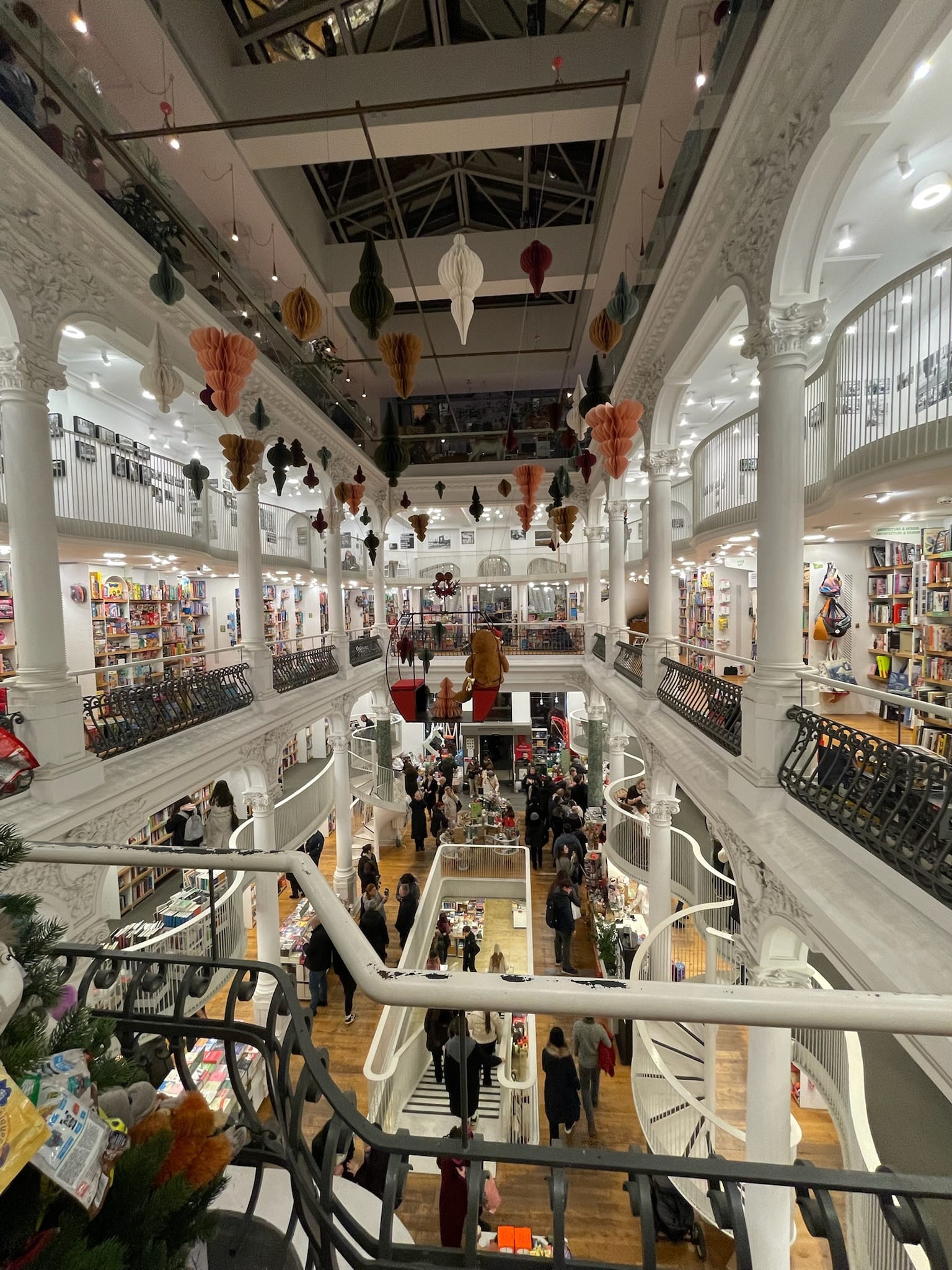
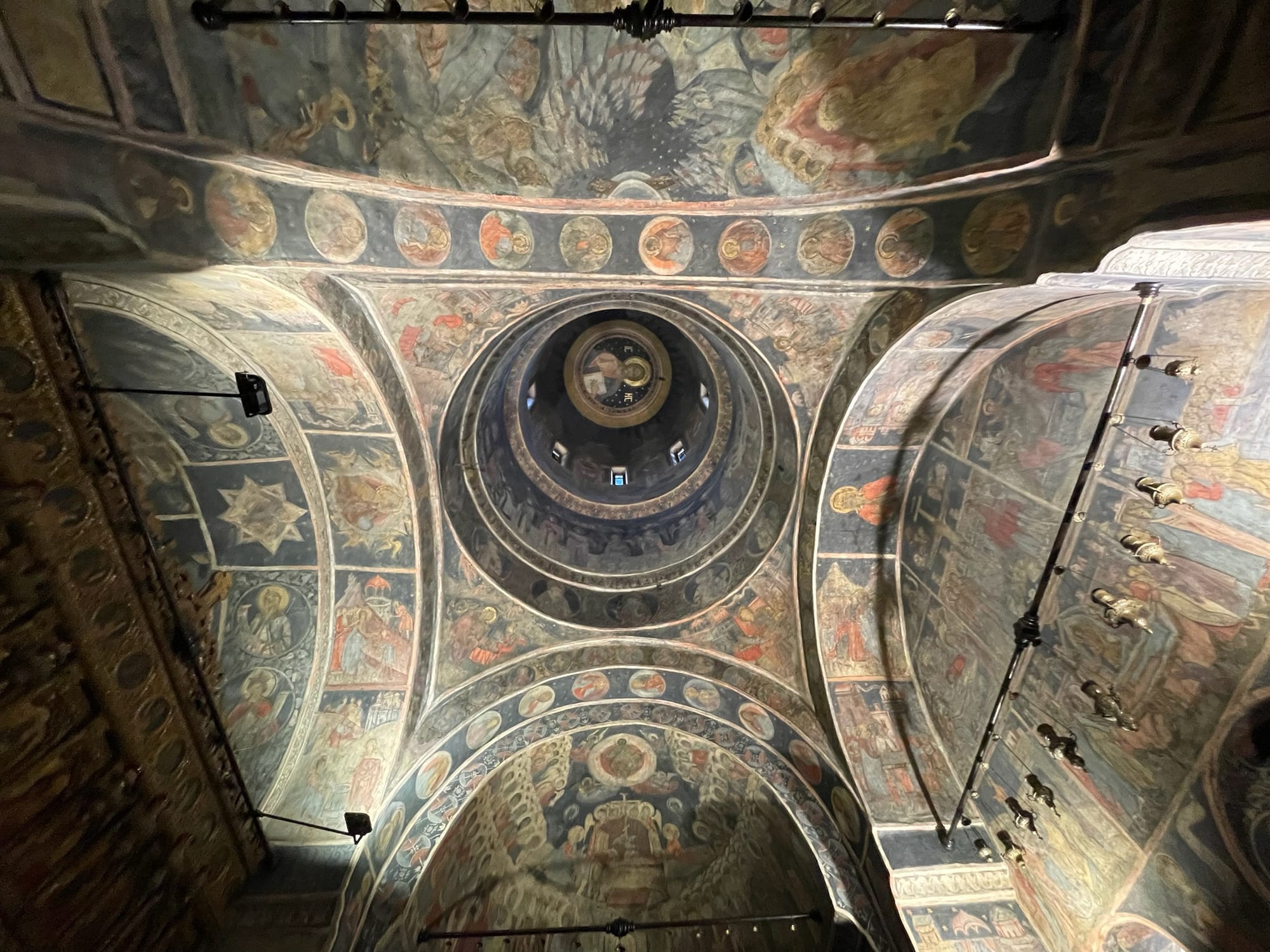
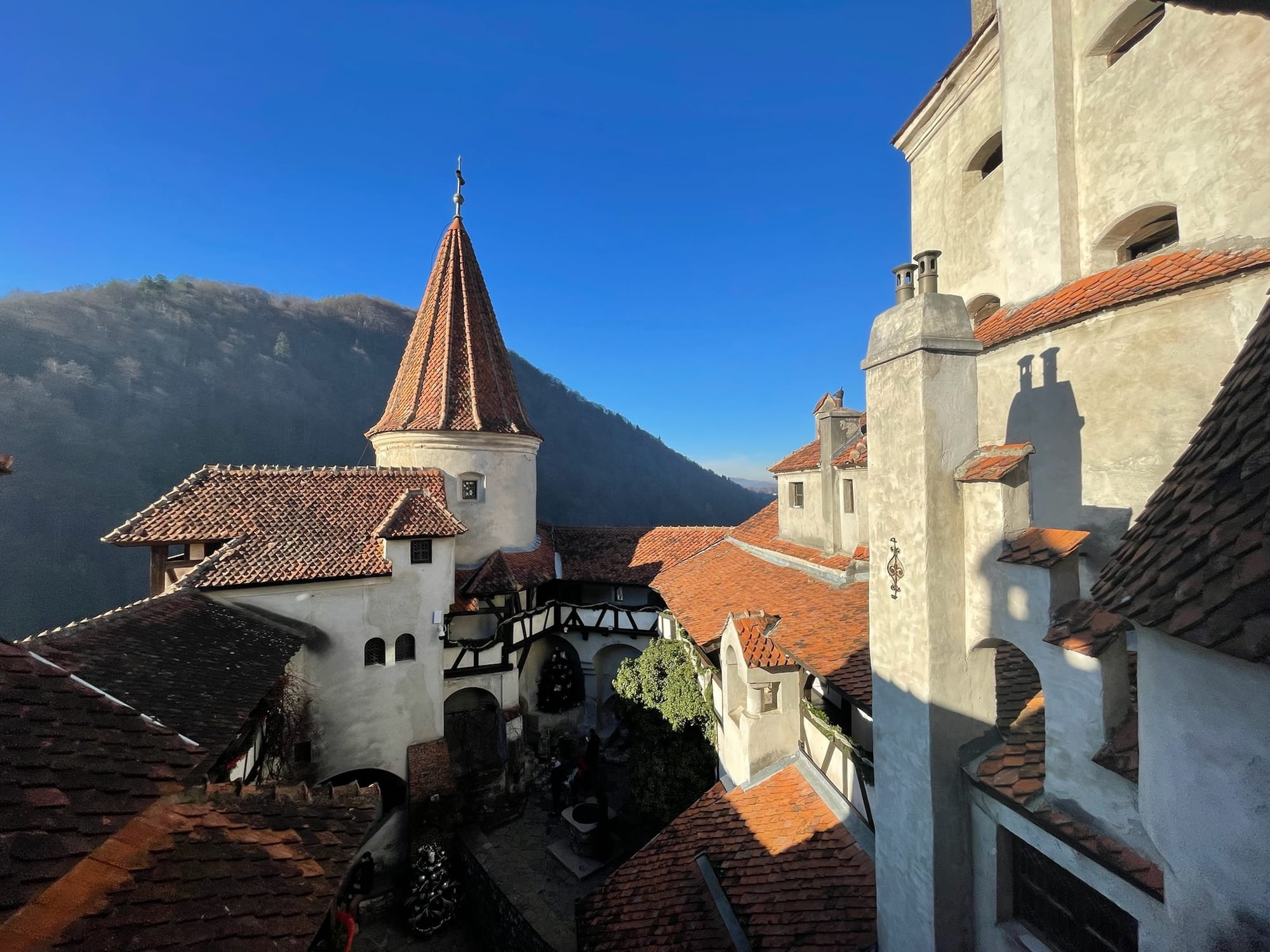
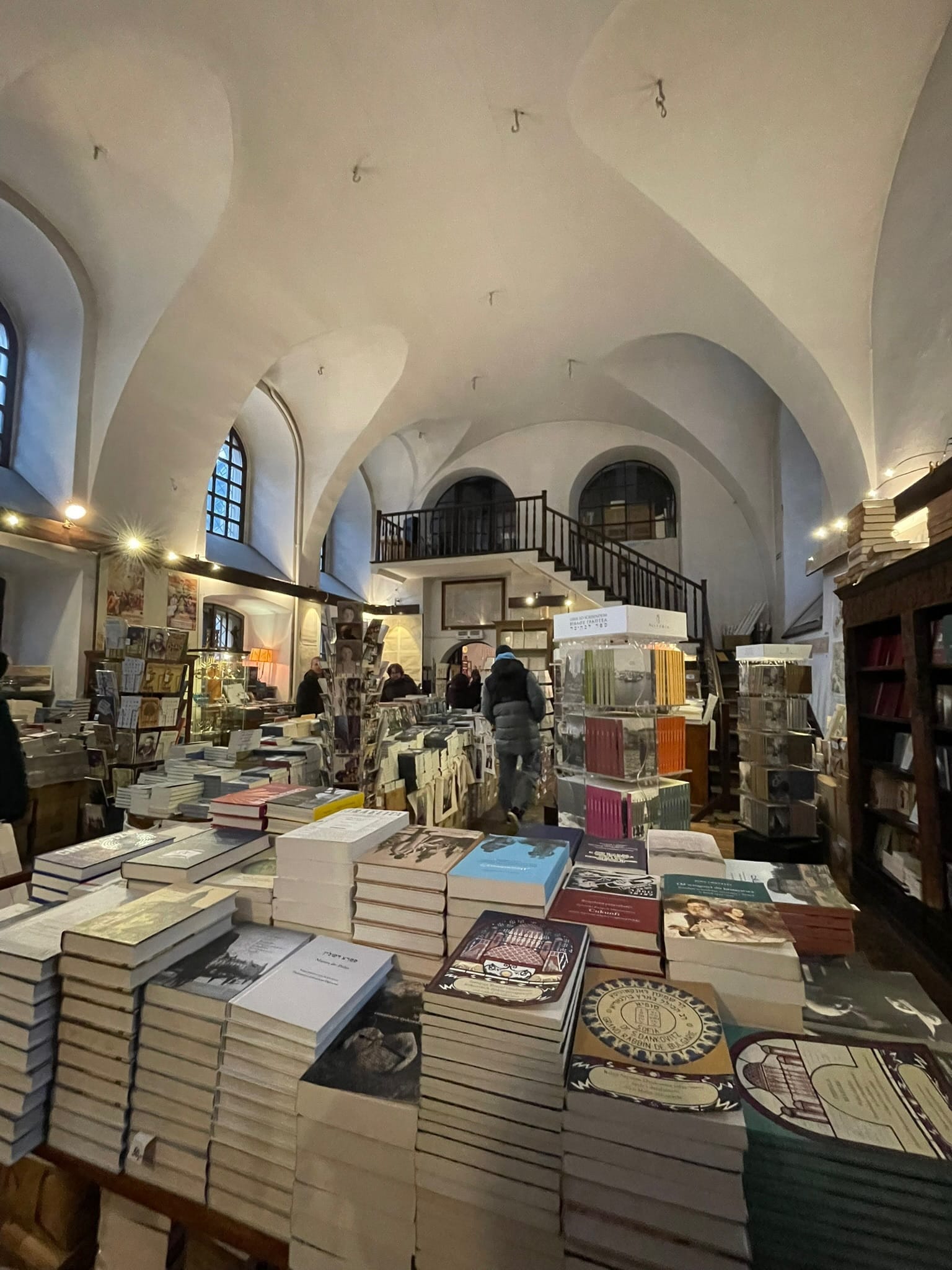
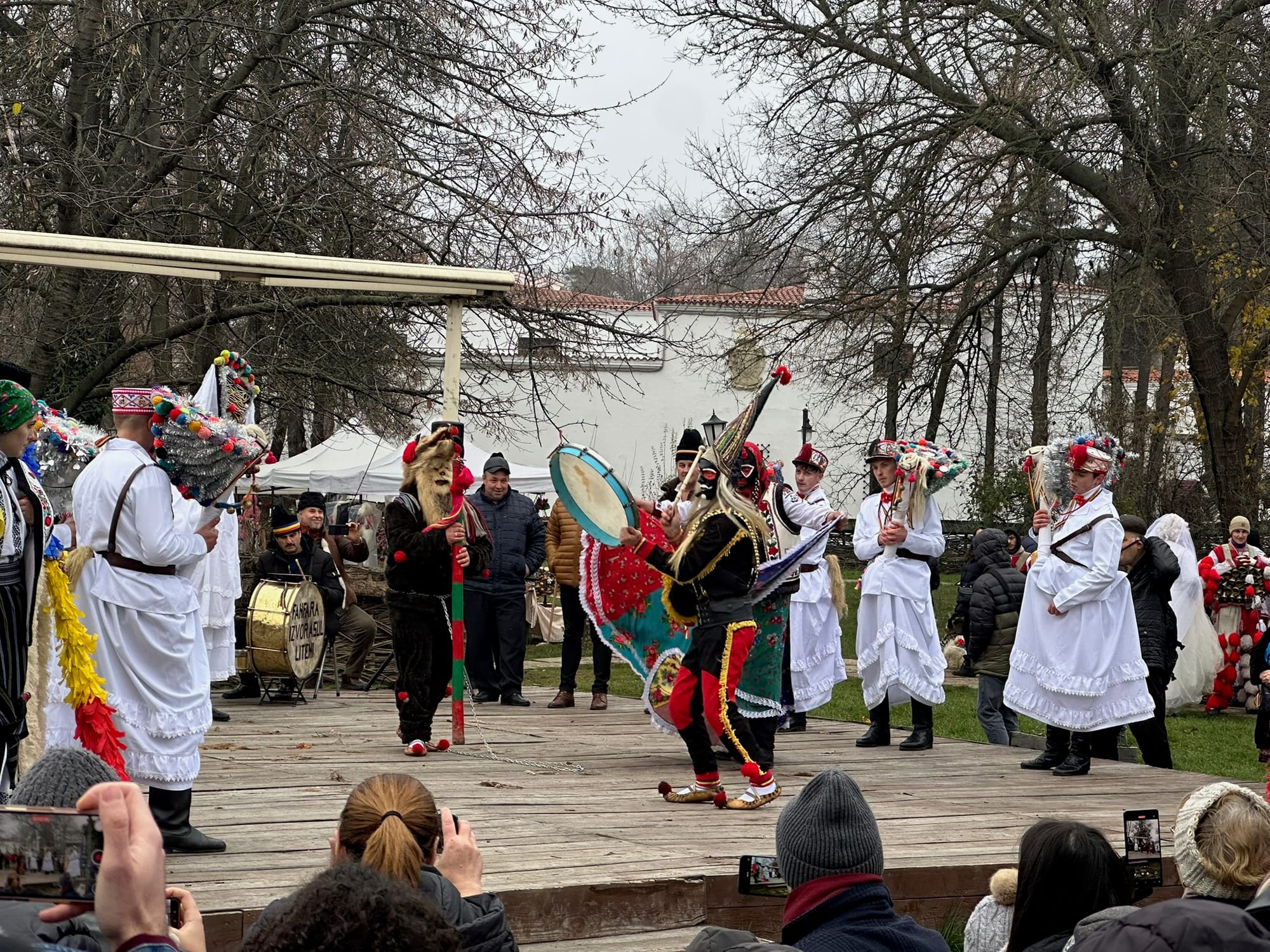
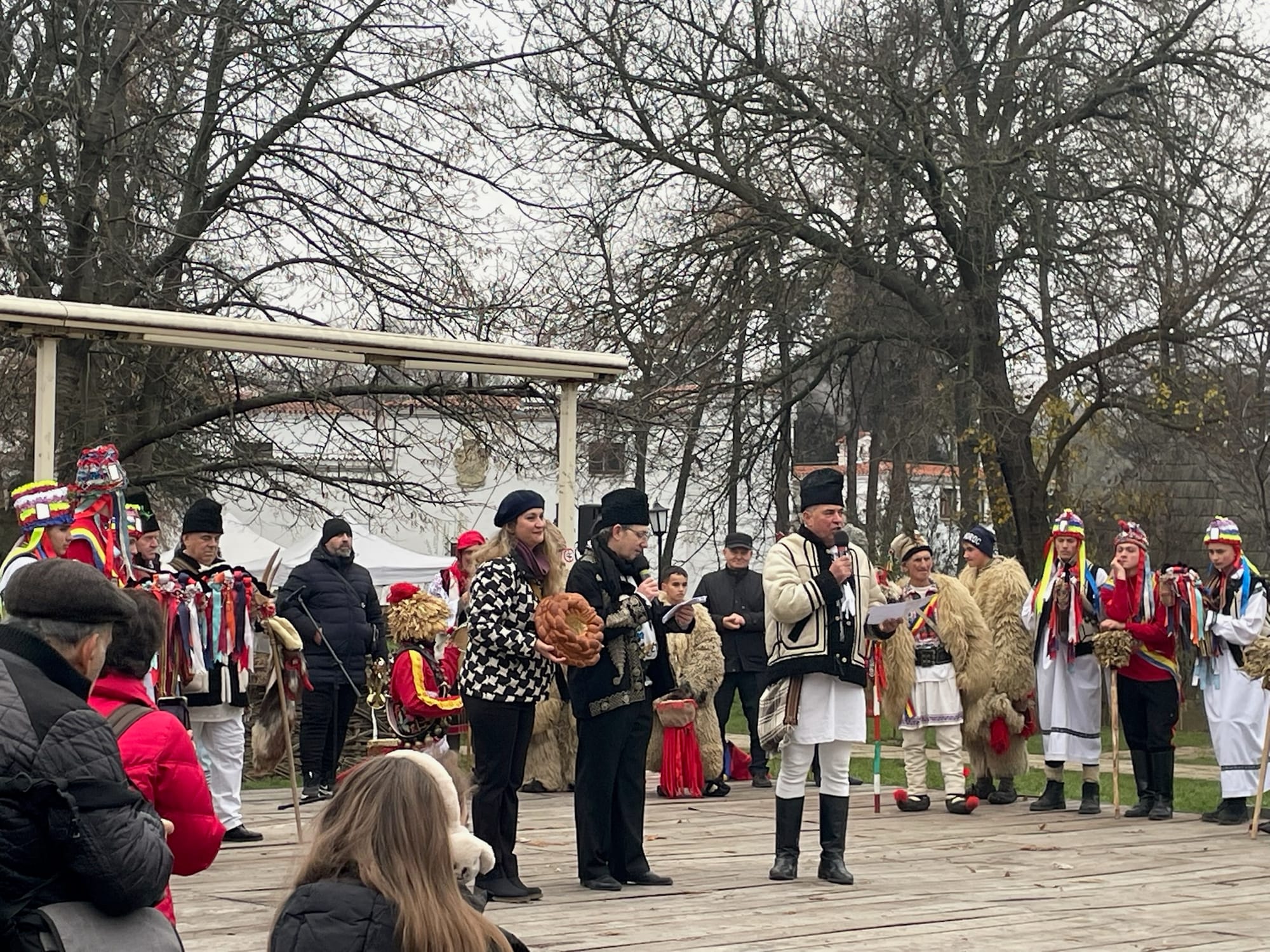
We kinda vaguely understood what the Romanian folk groups were dancing and performing about? All we know is that the braided bread they passed around at the end was divine. It all fit in so well with Europe’s innumerable castles and fortresses. [📸 Rachel & Johann]
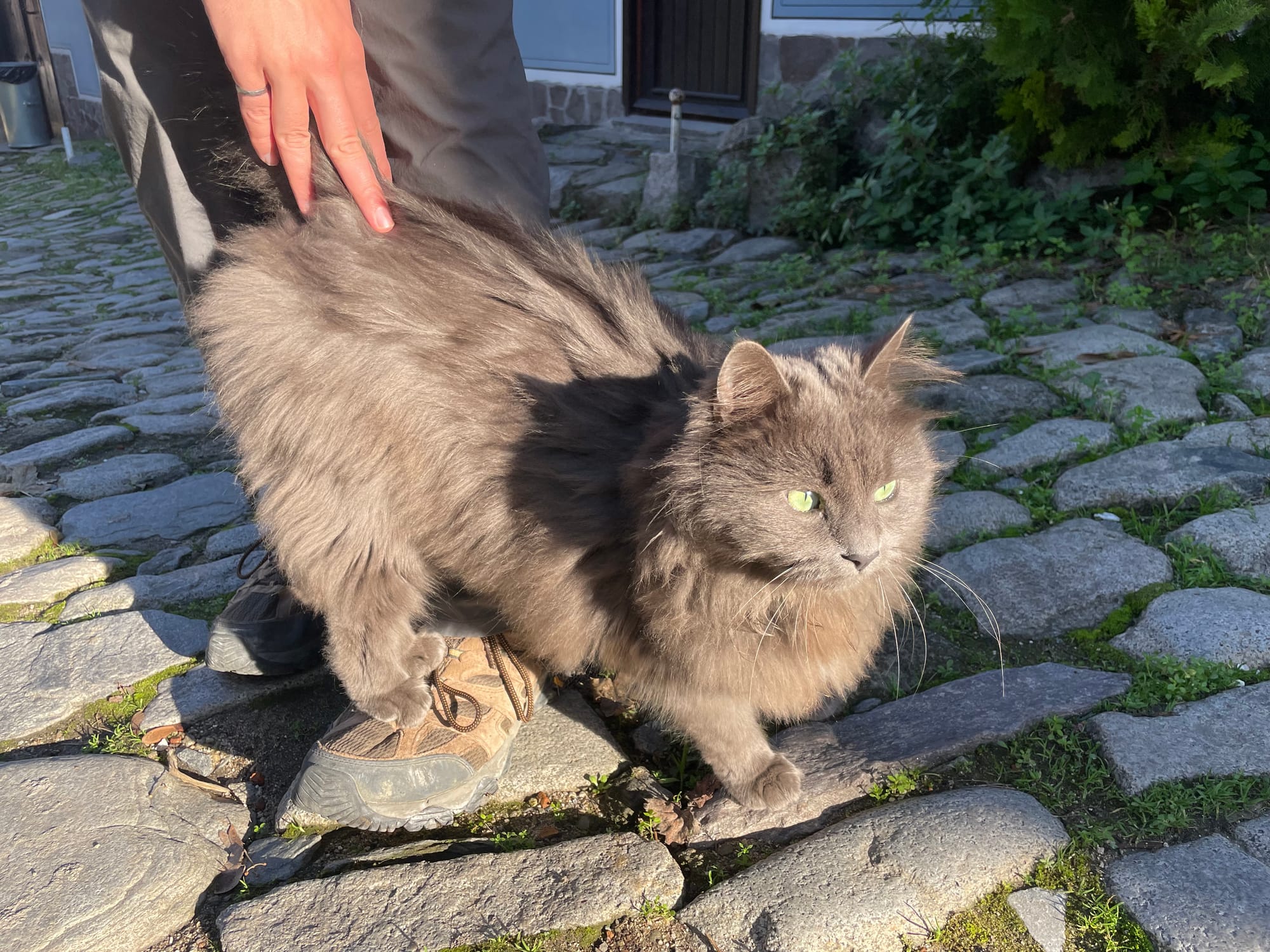
Spectacular Fluffer.
We also learned about vampires, which are far scarier in Romanian folklore than anything in Dracula or Twilight. You can look it up for yourselves, but be warned, it’s R-rated. While you’re at it, read about the wizards who associate with dragons and control the weather. As we walked to the Brasov train station, we stumbled across a troupe of brass carolers strolling beneath a dark apartment building and playing in exquisite harmonies.
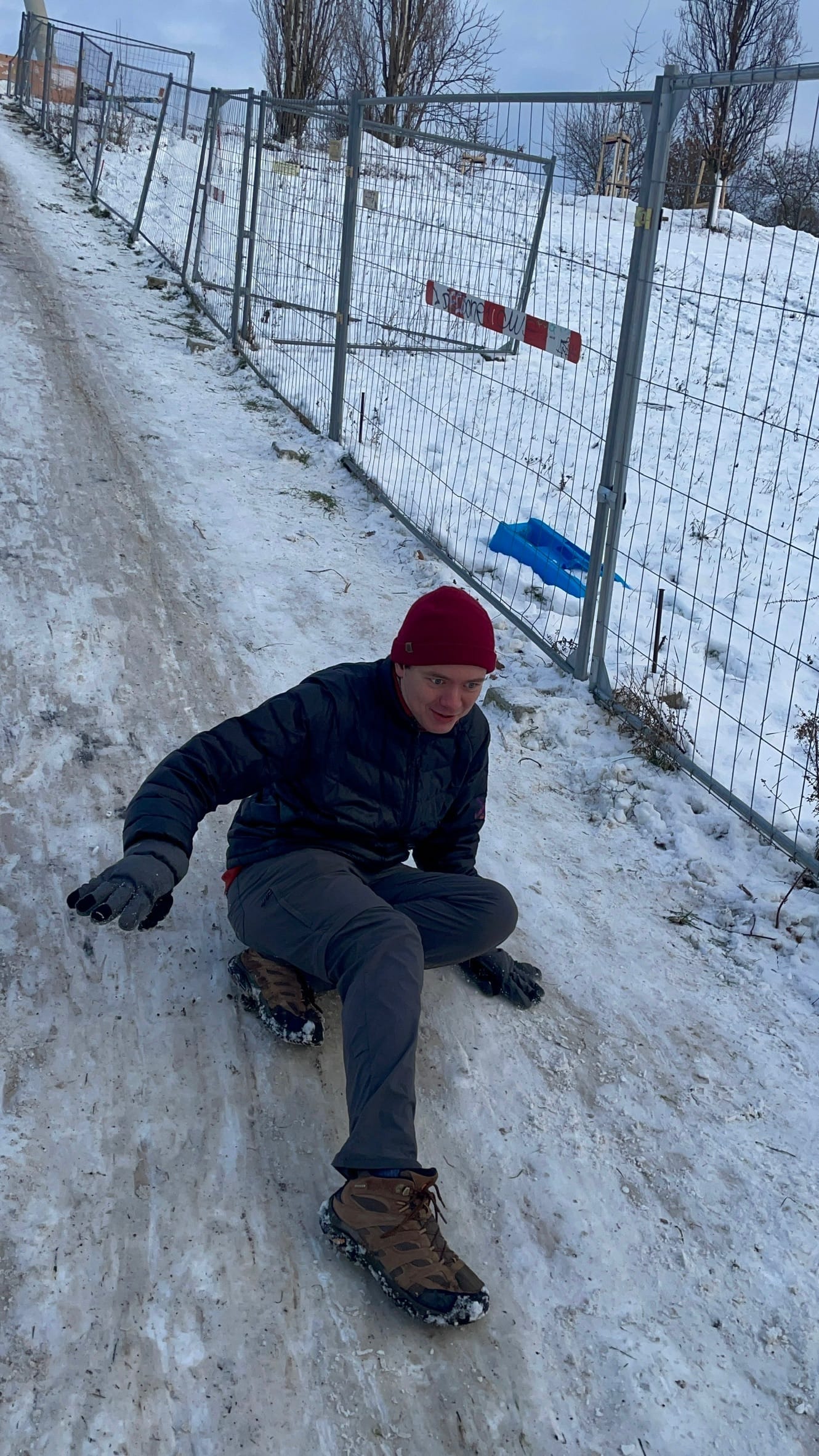
In Budapest we soaked in mineral water in a 16th century Ottoman bath, and later explored the elaborate underground caves created by those same thermal waters. In Brno, we retraced the steps of Mendel (father of genetics) and slept in a Cold War era bunker-turned hostel and museum. Prague brought us the astronomical clock, tram rides through streets of pastel coloured buildings, and a stroll through a nighttime garden of crystal flowers. Amsterdam was incredibly charming, slick with ice, and quite unfriendly towards a backpacking budget. We constructed sandwiches on our dorm beds, and Rachel downed a salted herring dipped in onions.
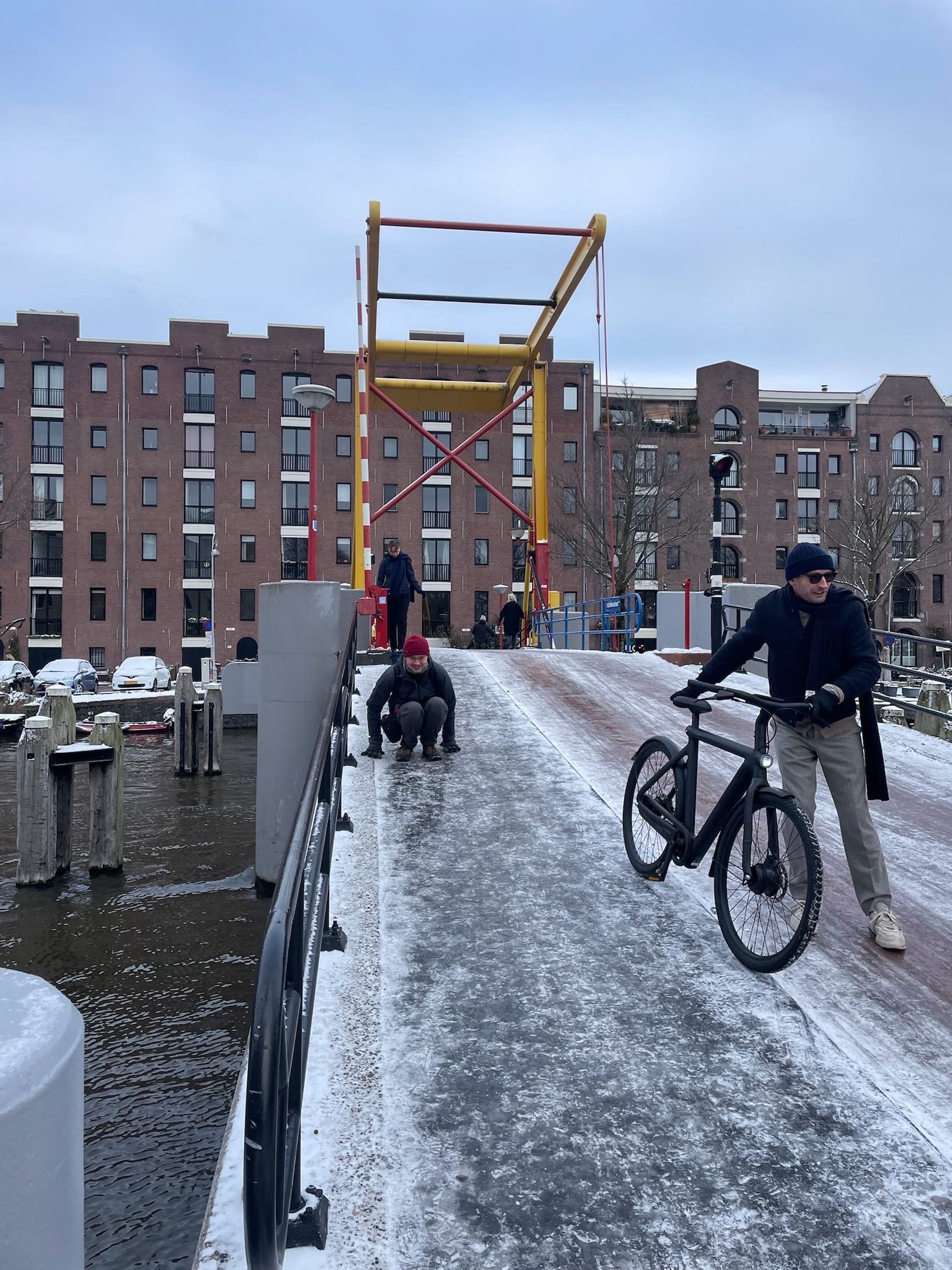
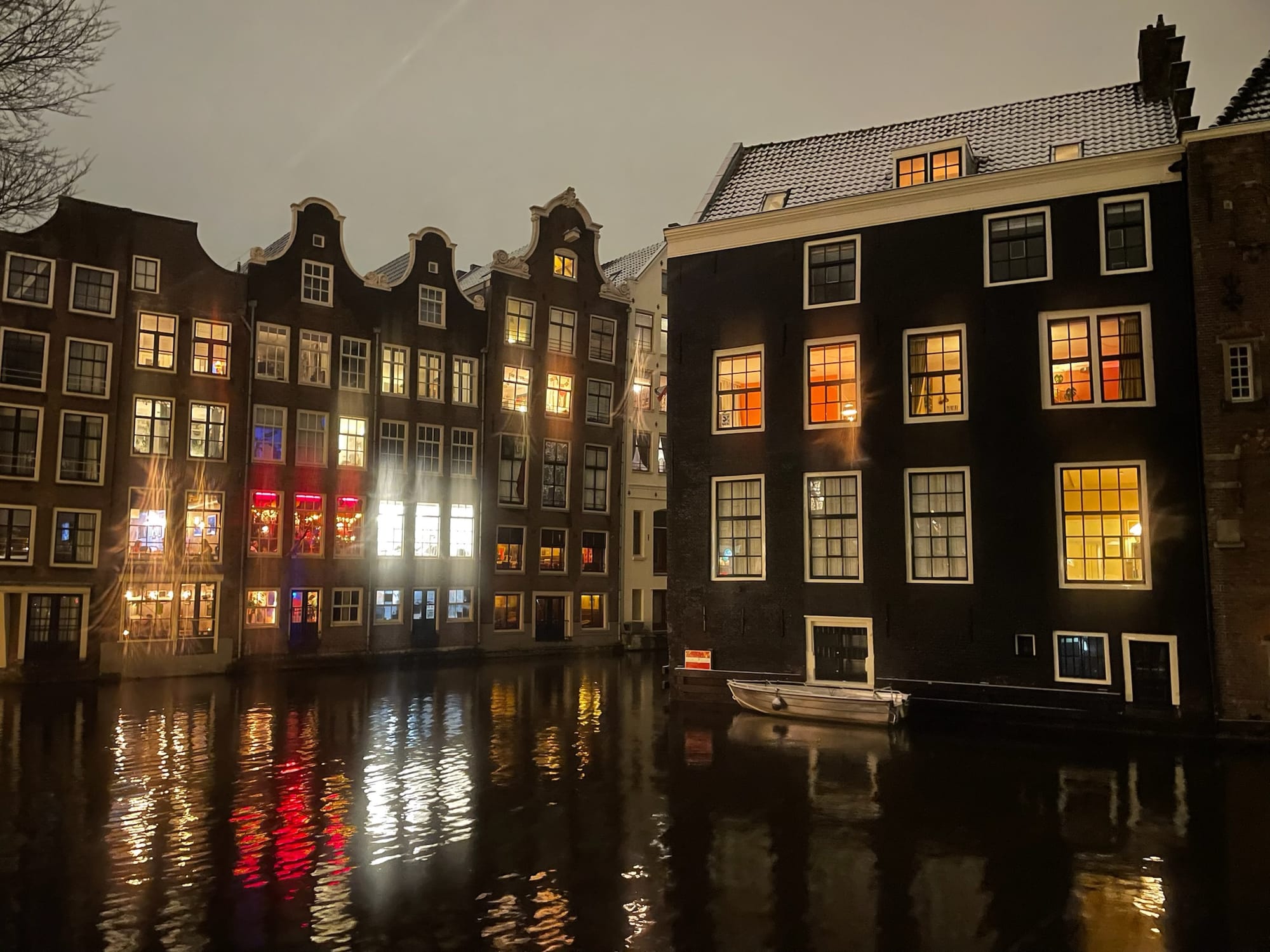
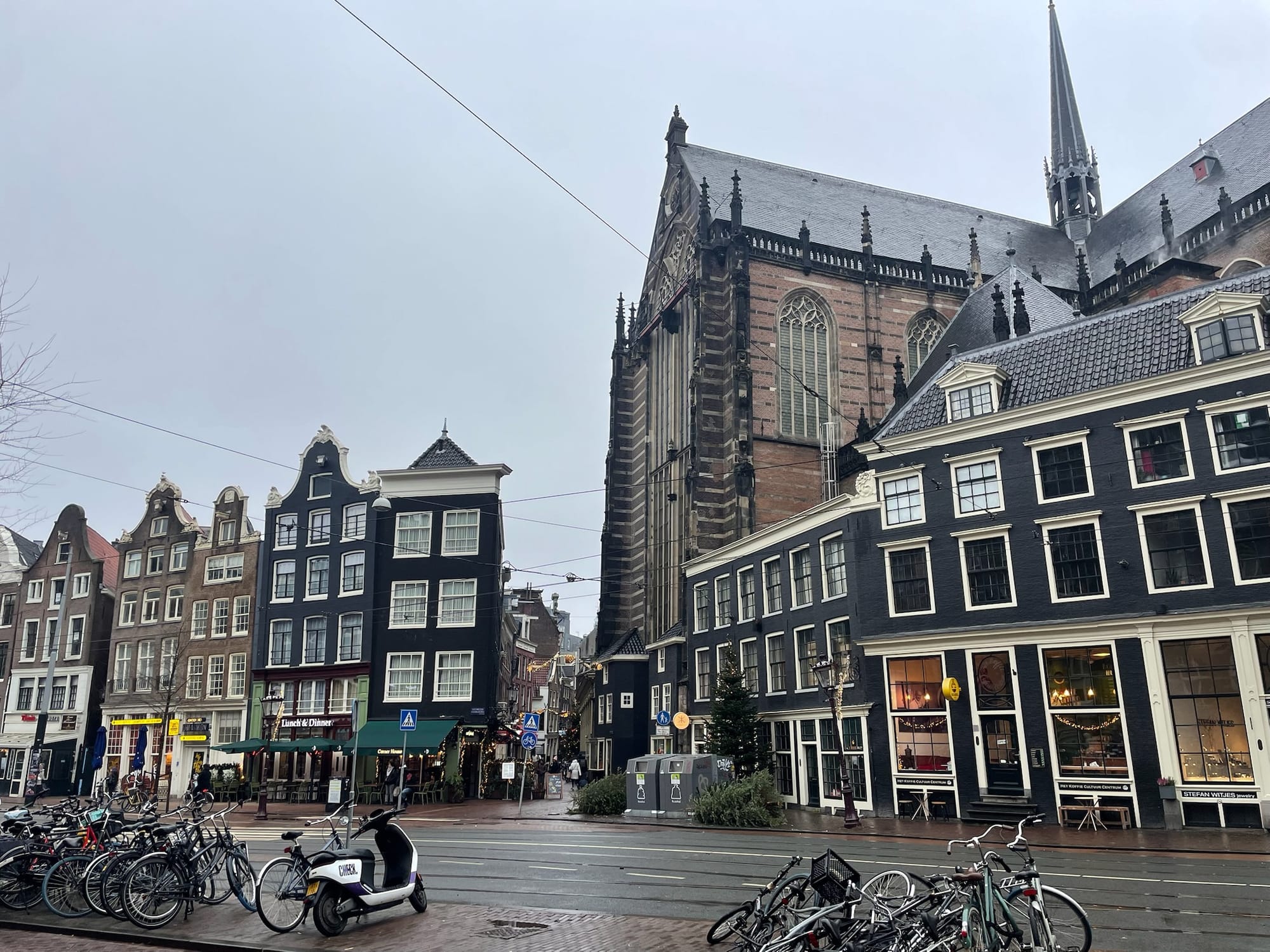
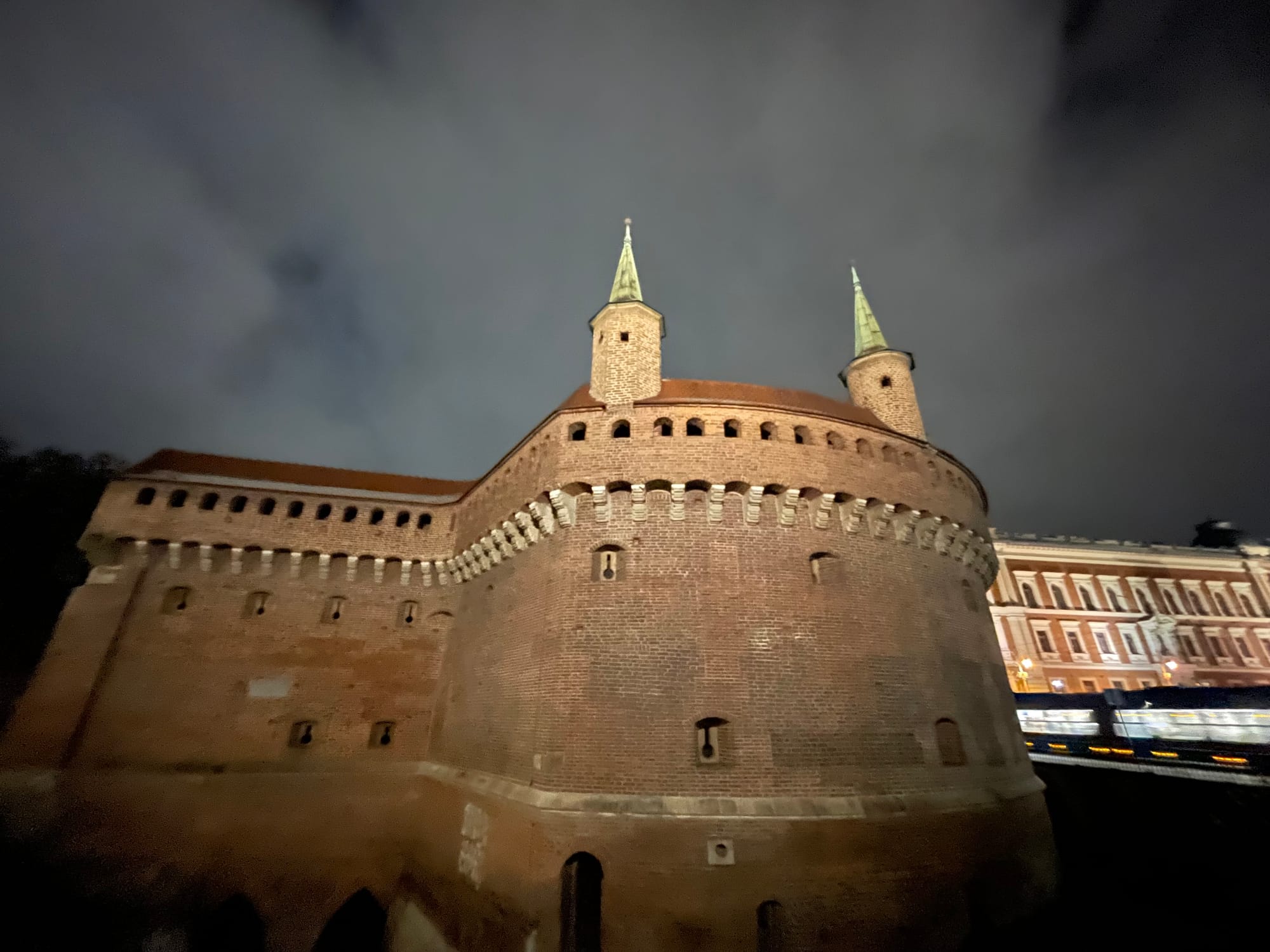
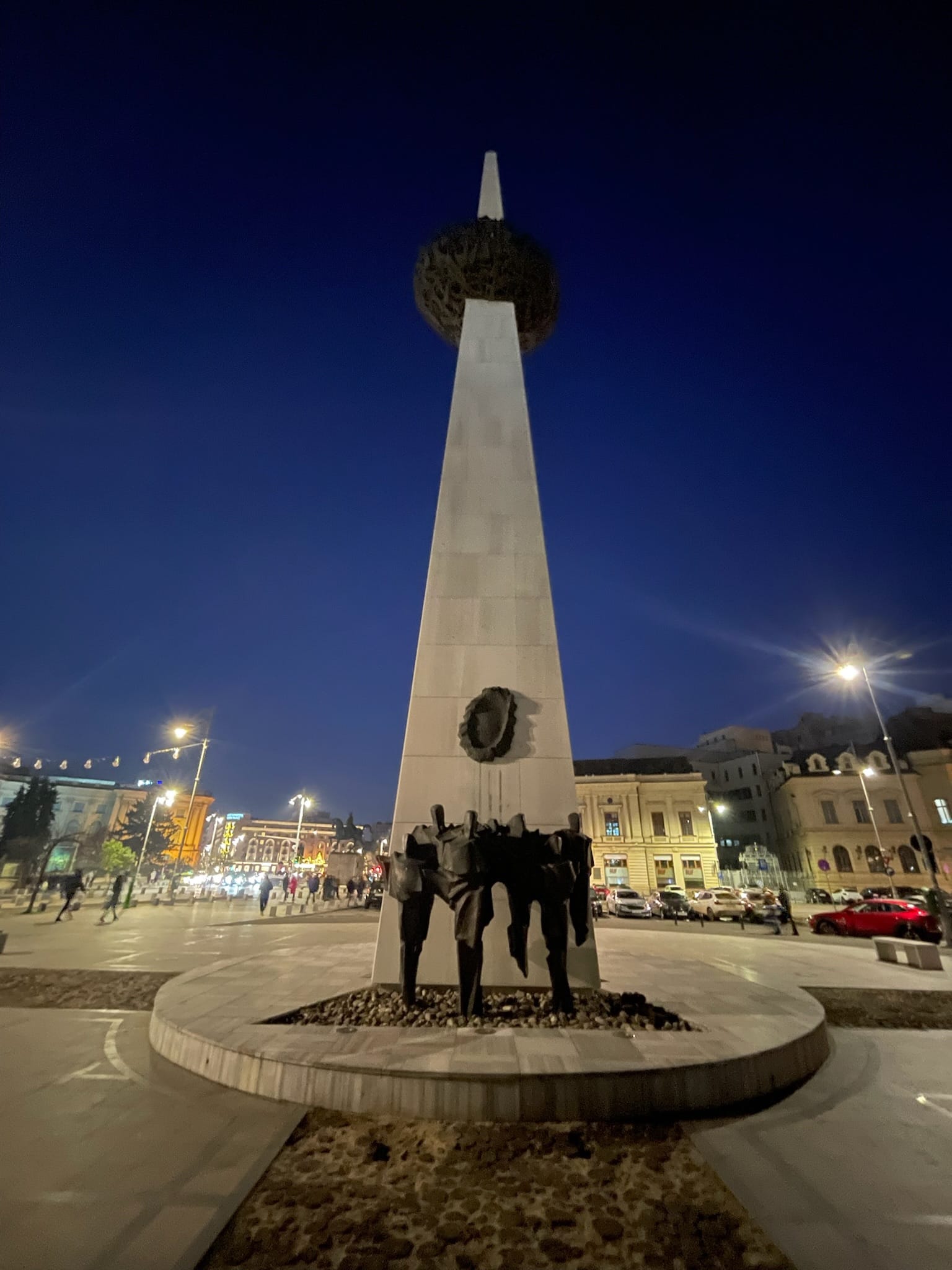
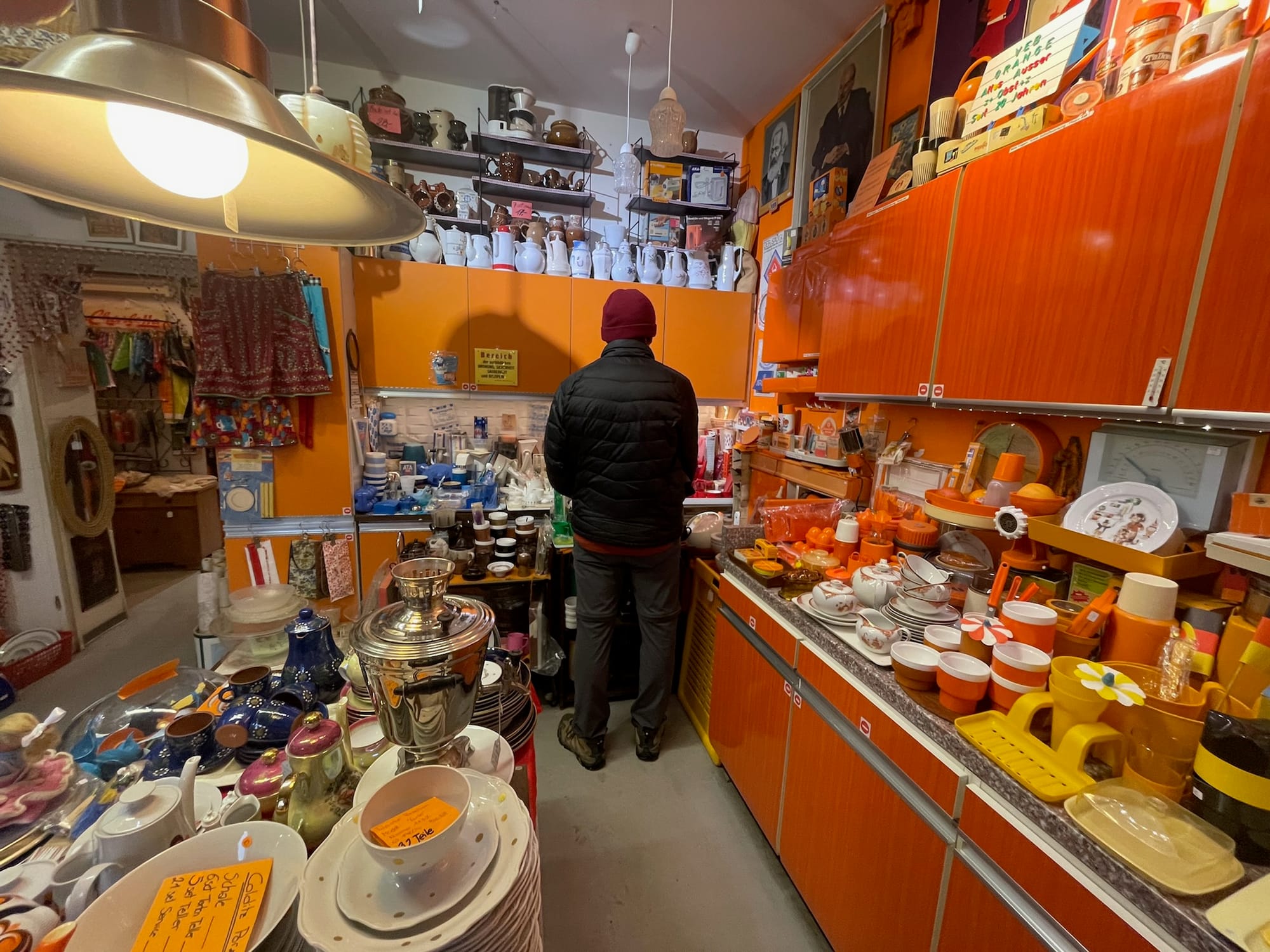
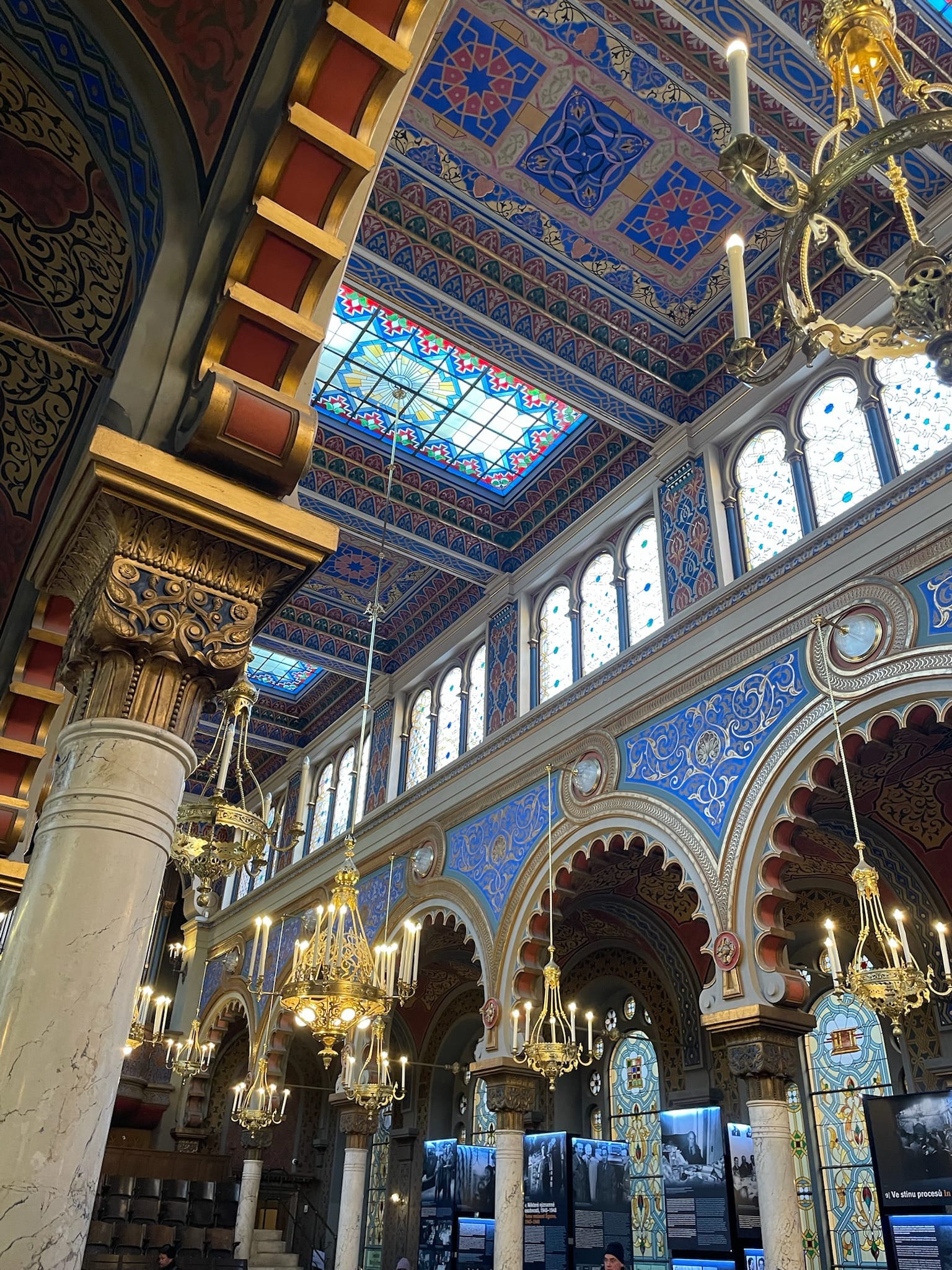
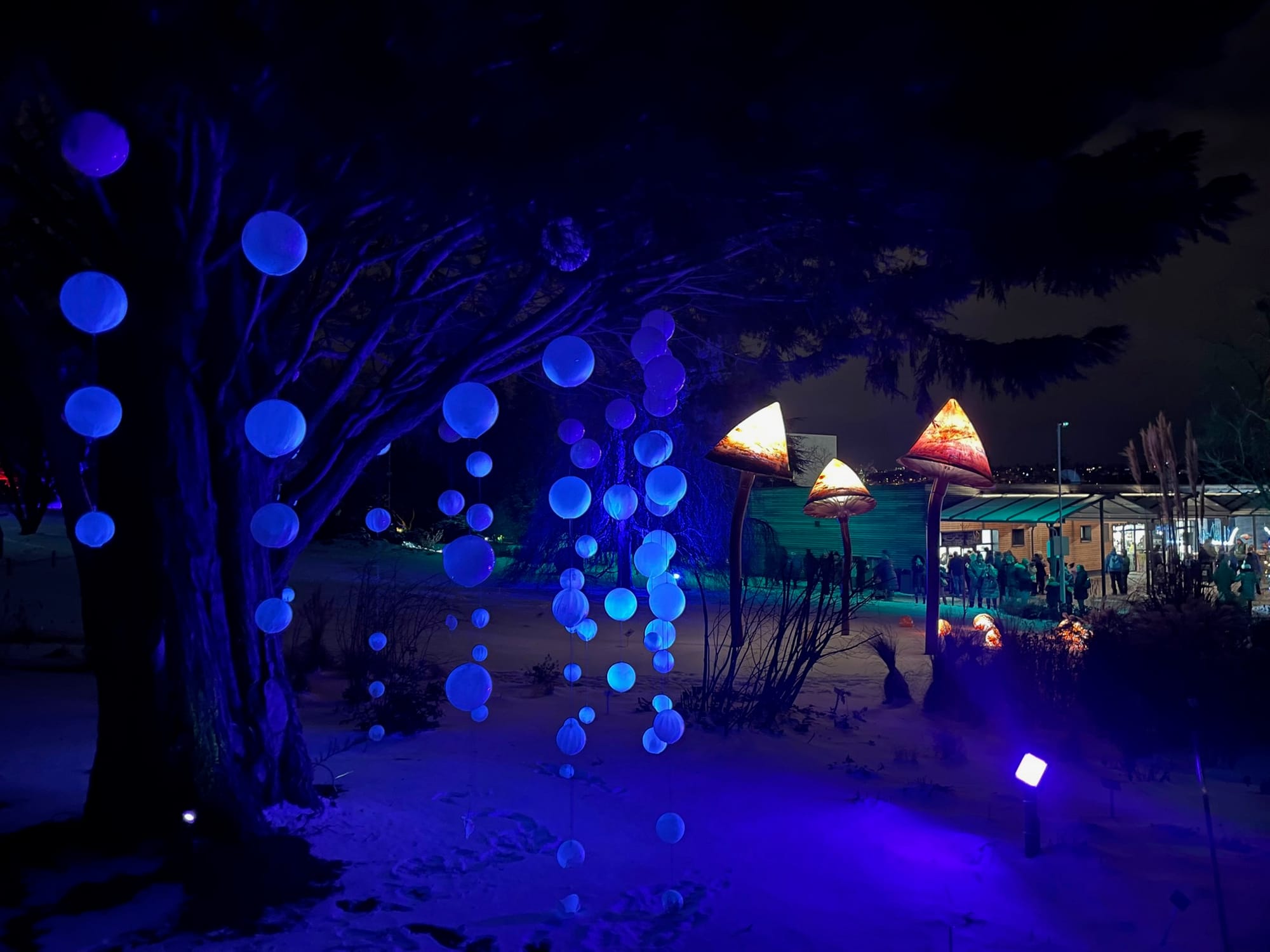
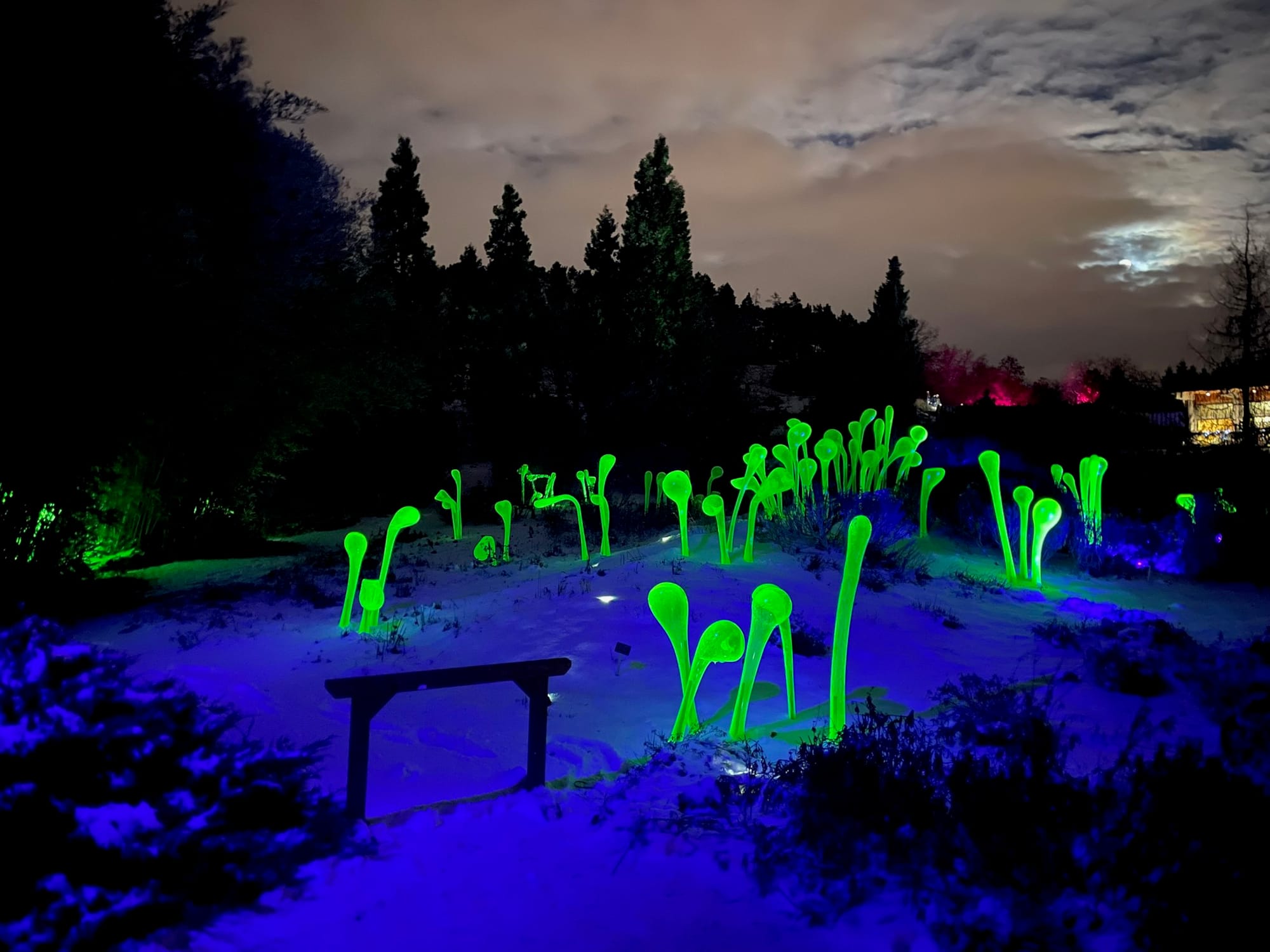
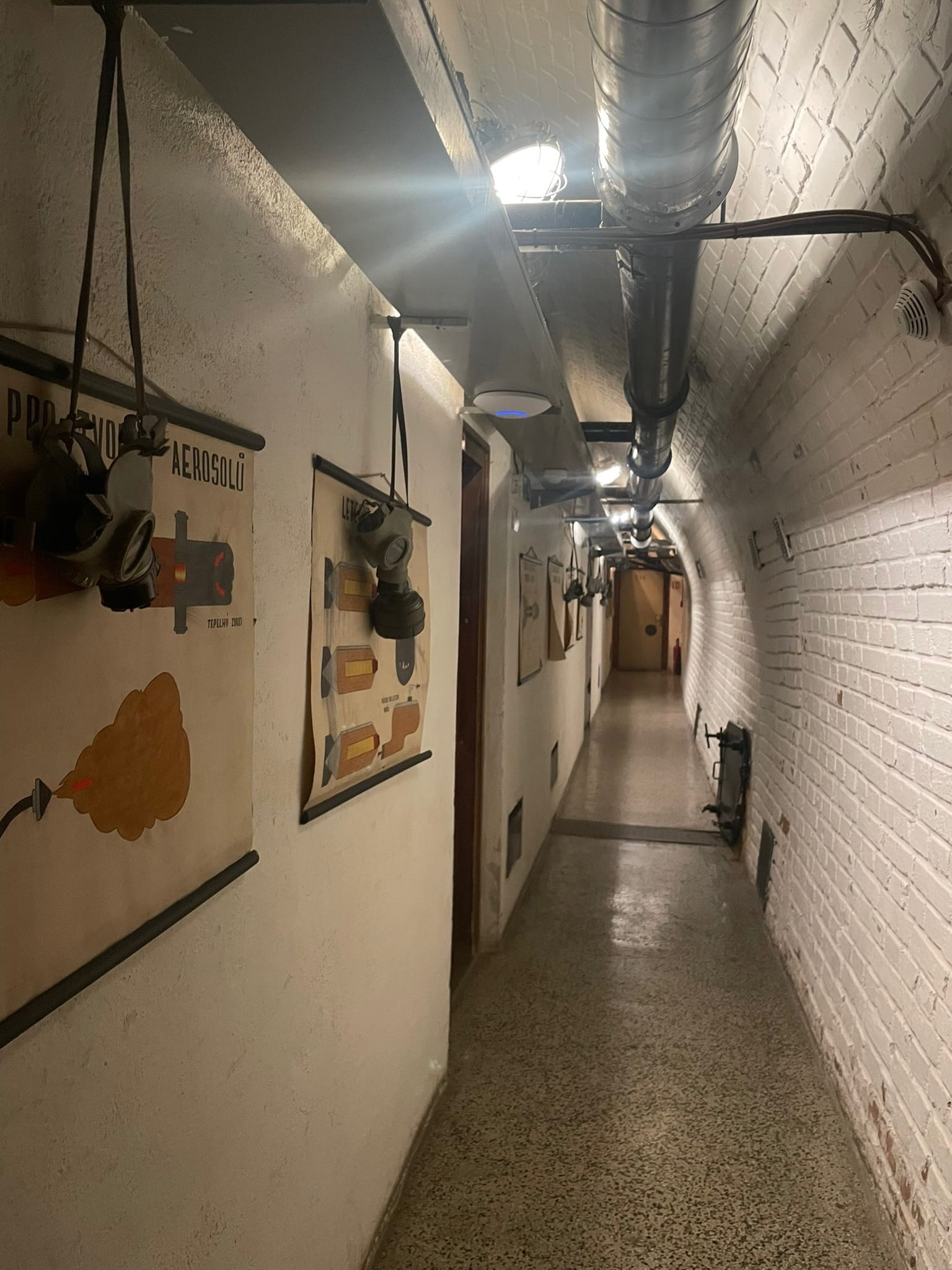
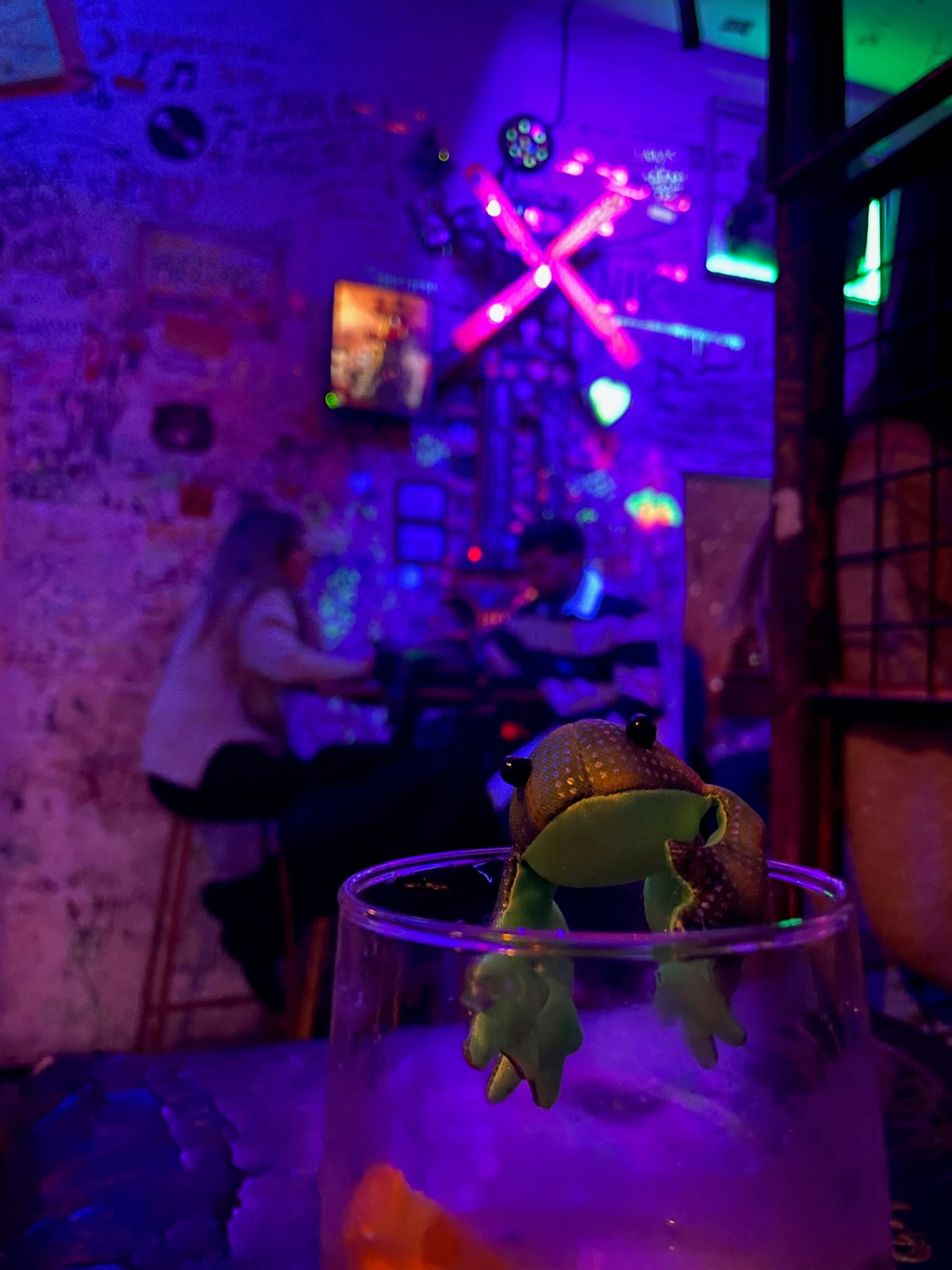
Bucharest’s Potato on a Spike left us speechless, Berlin had a fascinating thrift store filled with East Berlin-era goods, Prague’s crystal garden was ethereal, Amsterdam was wet and cold and slippery and wondrous, and the Szimpla Kert ruin bar in Budapest was strange and wonderful. Oh, and Cold War-era bunkers are cold inside, in case you were wondering. [📸 Rachel & Johann]
MORE ART
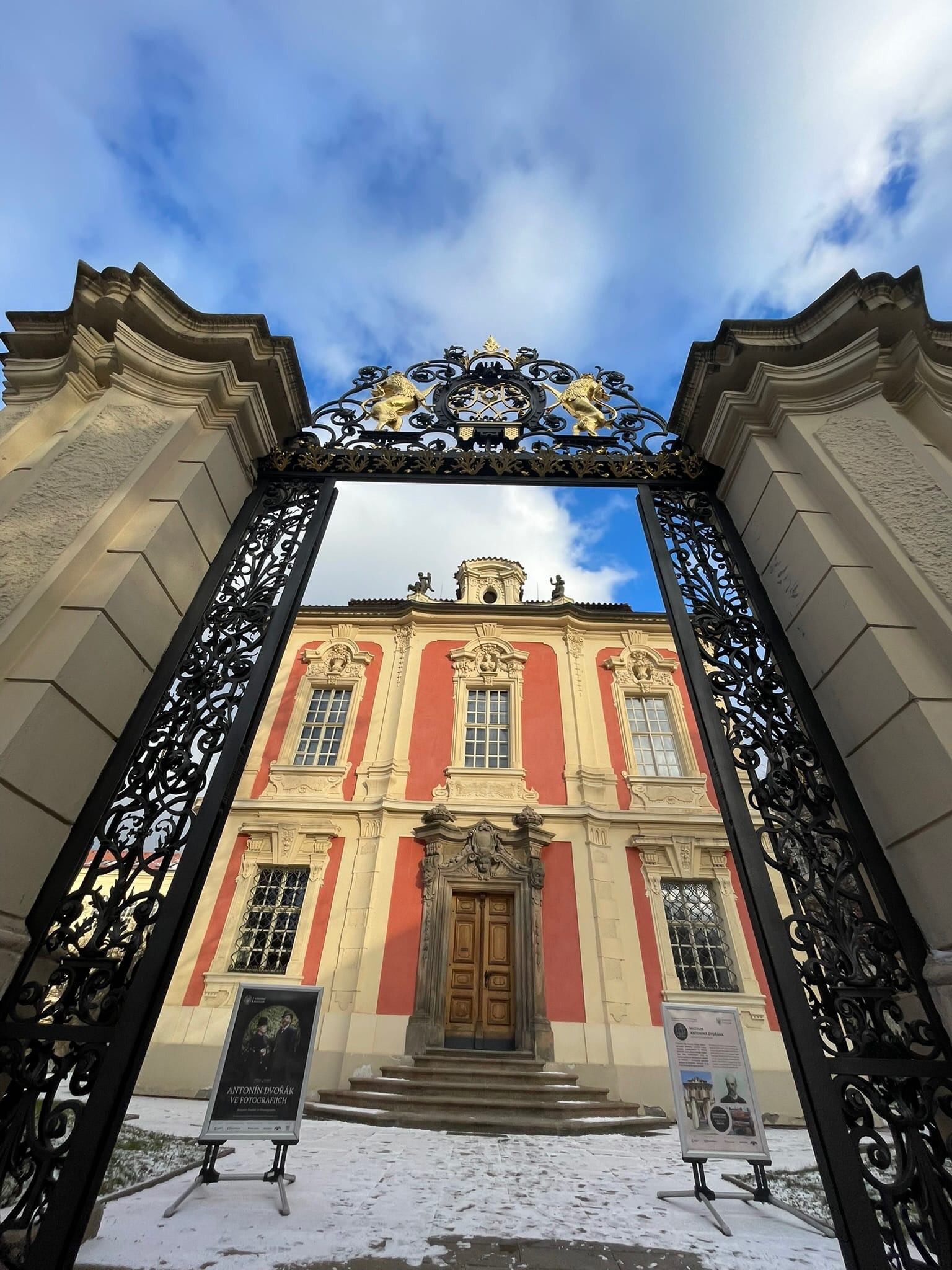
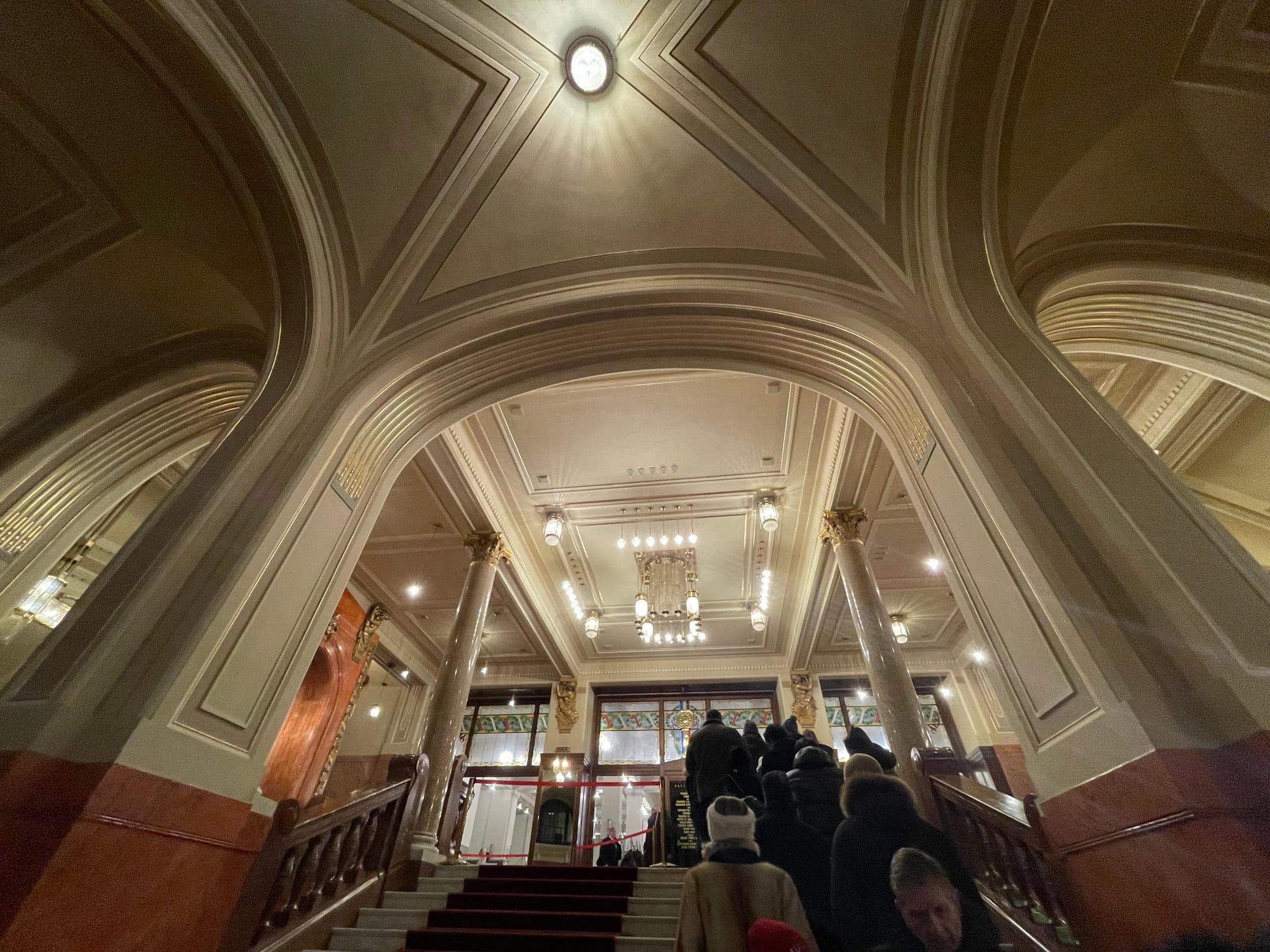
And there was still more music, from the glittering waltzes of Vienna (very persistent earworms, beware of the ‘Thunder and Lightning Polka’) to Dvorak played in Prague’s Art Nouveau Municipal House. We visited the Dvorak museum in Prague and learned that he too was a train enthusiast ("I'd give all my symphonies if I could have invented the locomotive!"). In Berlin we snagged a spot at the Philharmonic’s lunchtime concert series, camping out on the lobby floor and listening to delicate cello-piano duets with a crowd of other pilgrims.
On Boxing Day, we attended a gorgeous marionette performance of The Magic Flute at Schönbrunn Palace and were completely immersed in the illusion of a miniature world grown large. In Prague, we enjoyed the clever illusions of black light theatre, where a combination of the dark stage, performers dressed in black, and UV lights made objects seemingly float through the air.
We also had a grand time hunting up Art Nouveau buildings and art, especially in Prague and Vienna. Our favorite museum, the Leopold, was chock-full of art from the Vienna Secessionists and Vienna Workshop, while the Belvedere had a splendid collection of Klimt and modern Austrian artists.
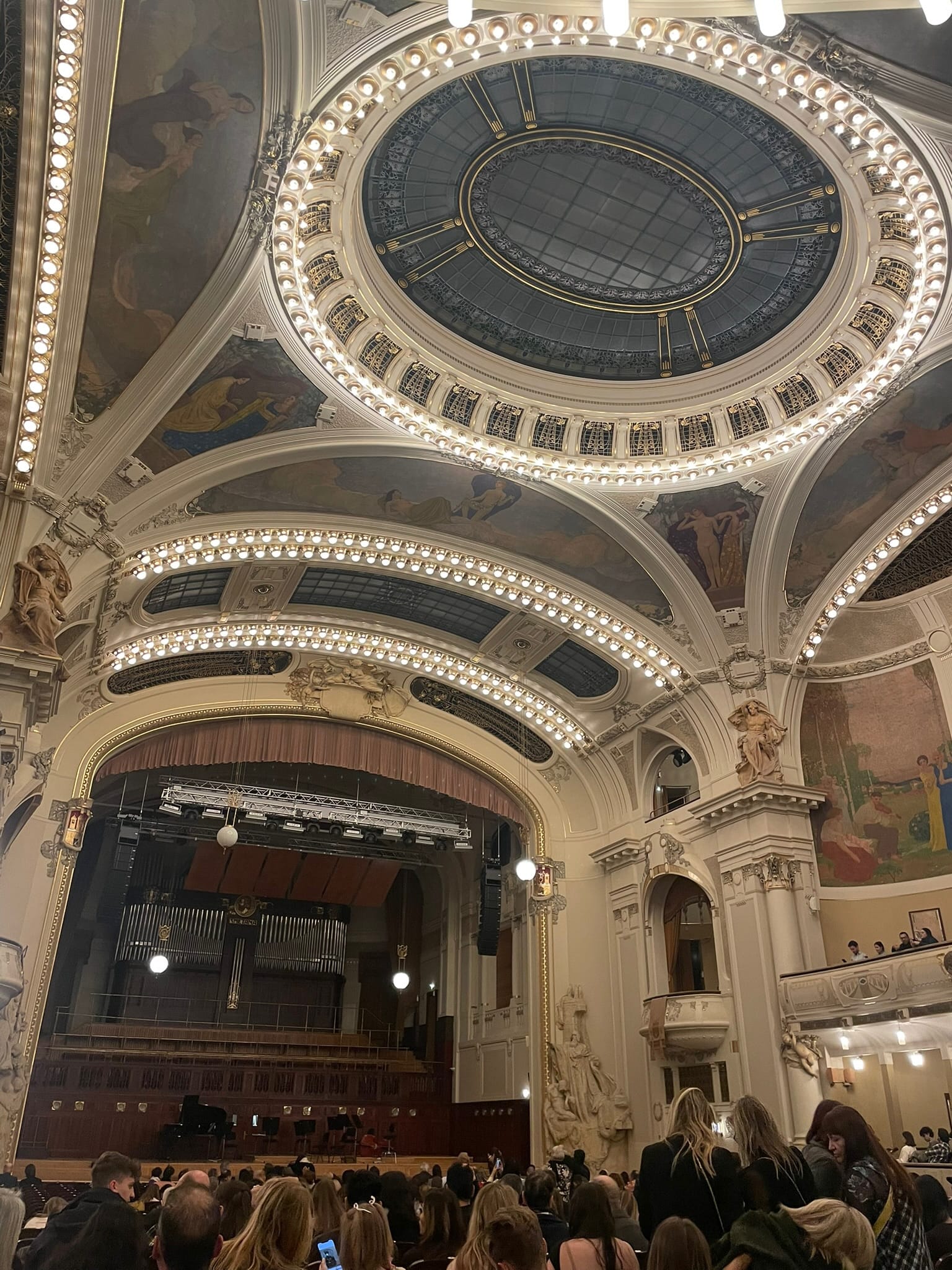
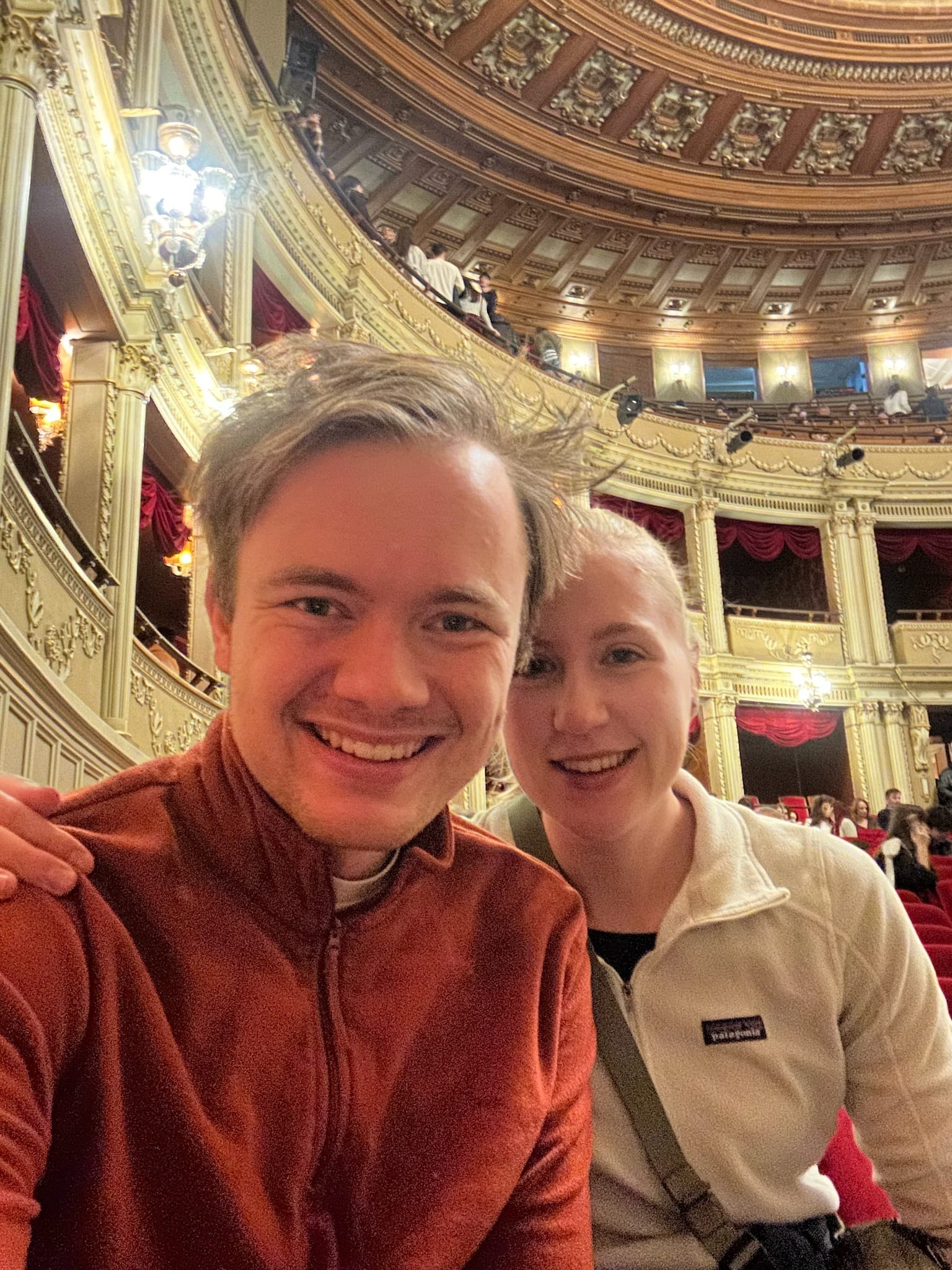
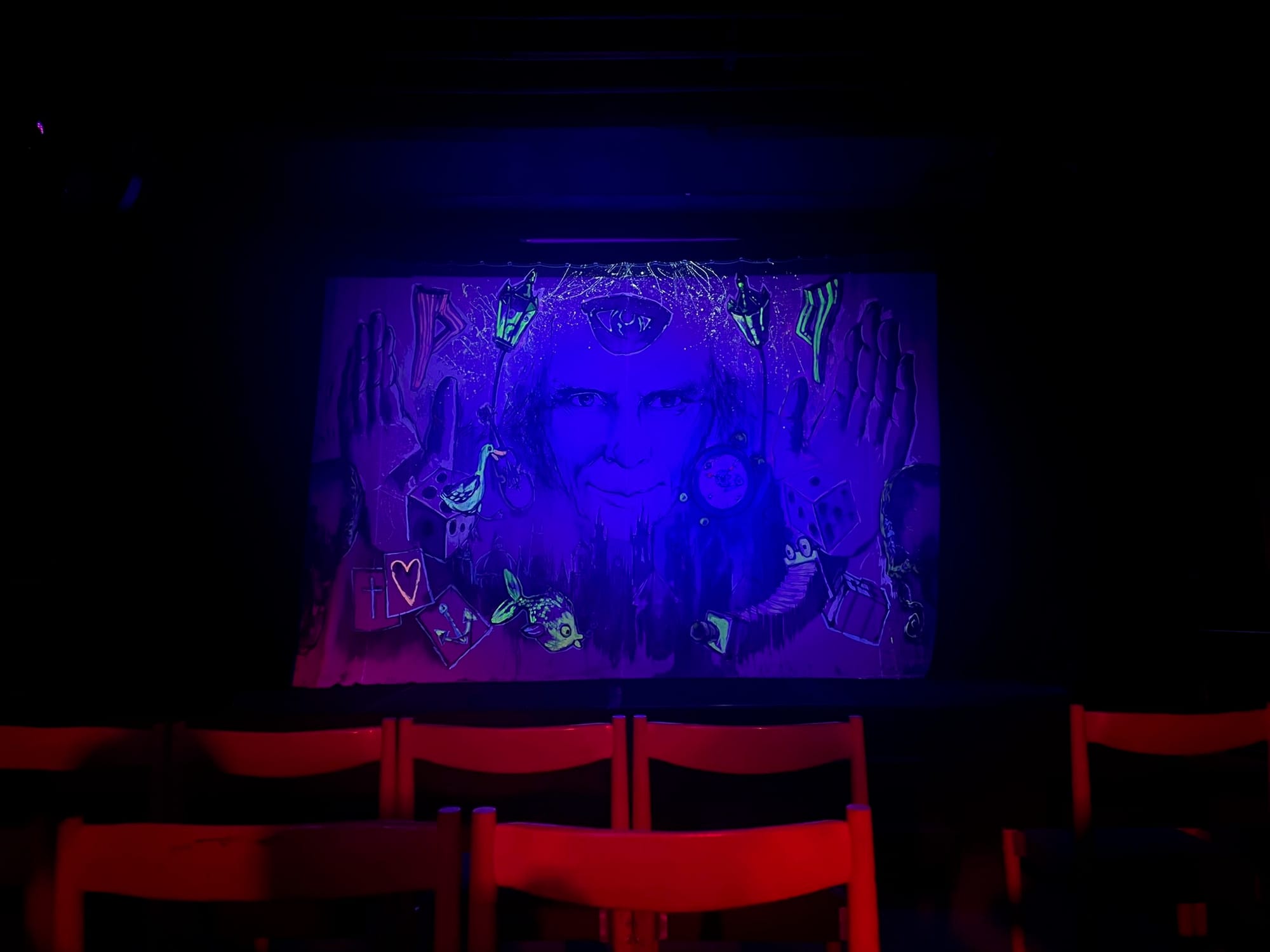
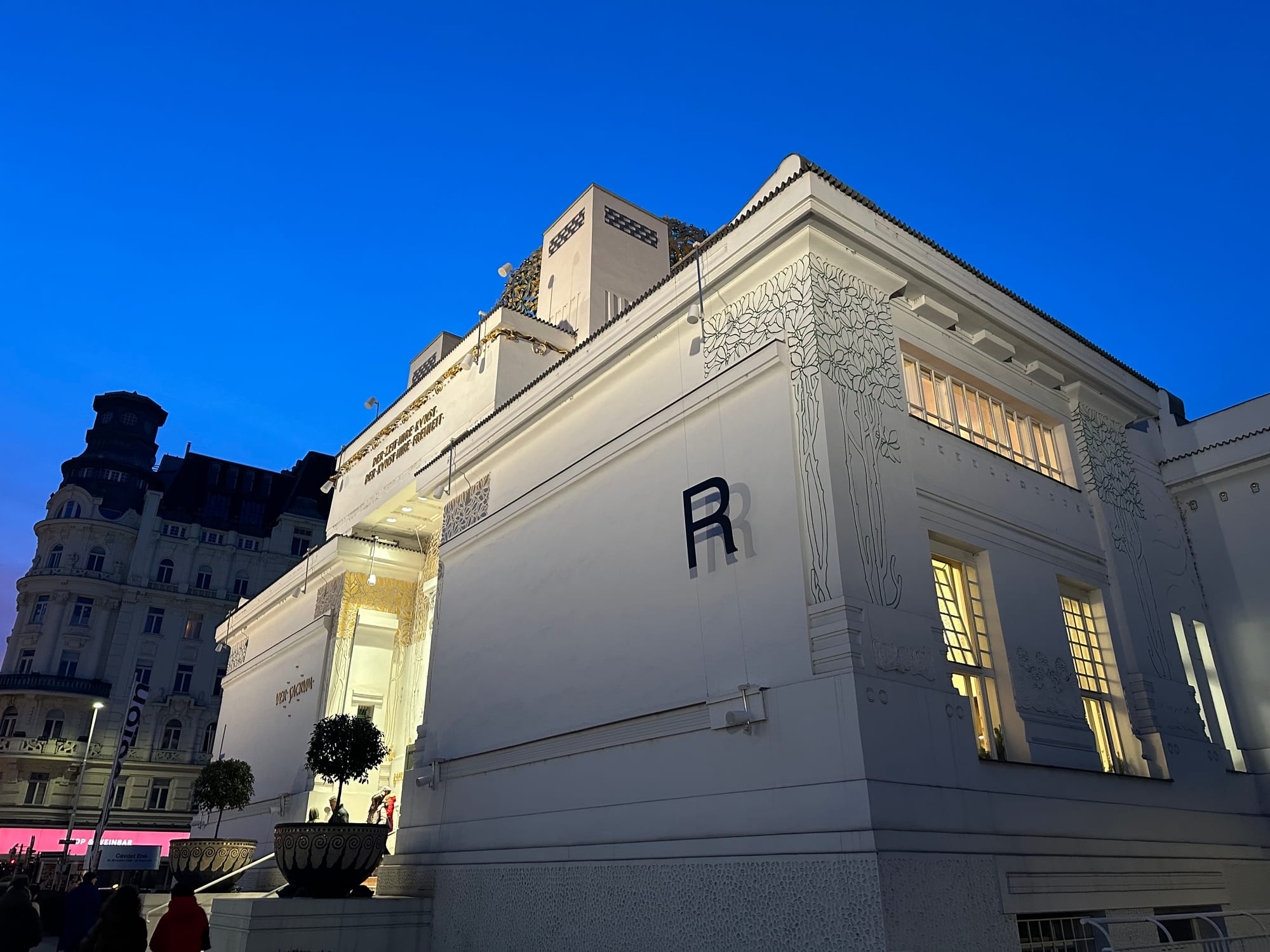
The Secession Building in Vienna had an interesting outdoor exhibit, where many small speakers all around the outside of the building would occasionally play falling rain sounds. [📸 Rachel & Johann]
Snackles (aka On Chimney Cakes And Their Providence)
Ok, so chimney cakes are Miraculous Bread. The caption for this section is misleading; if you really want to understand the complex history of interrelated tubular bread, YOU read the Wikipedia page.
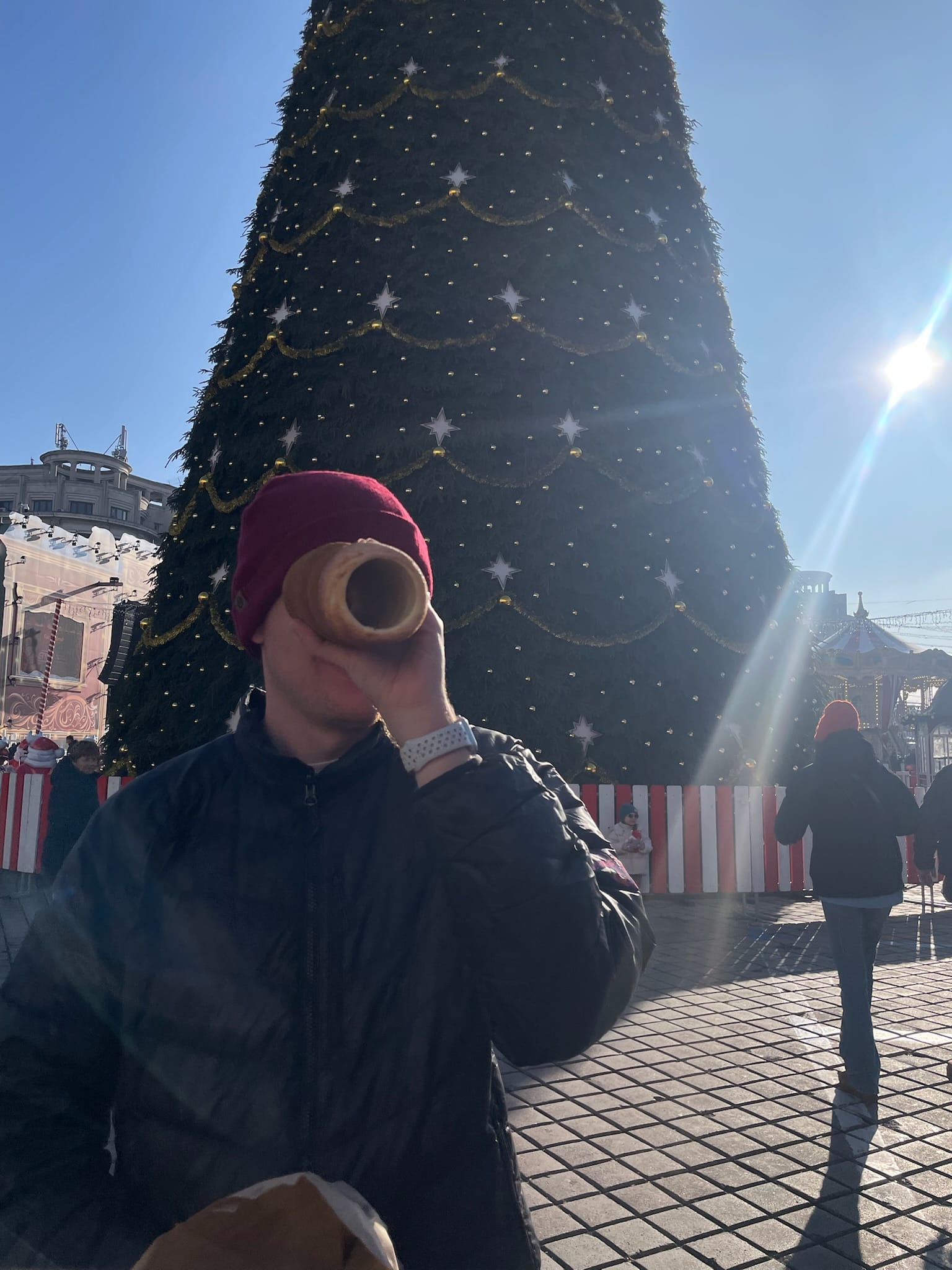
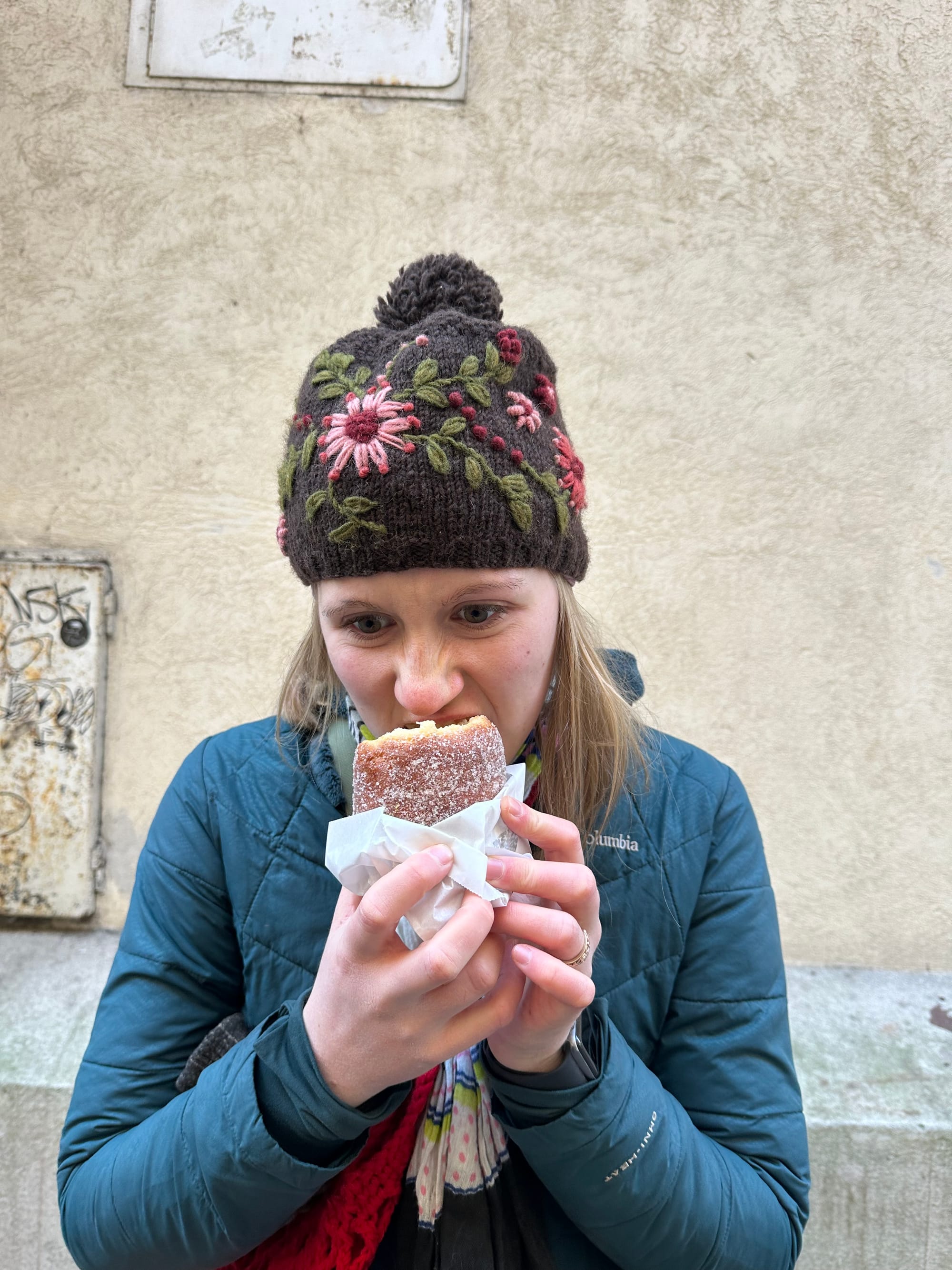
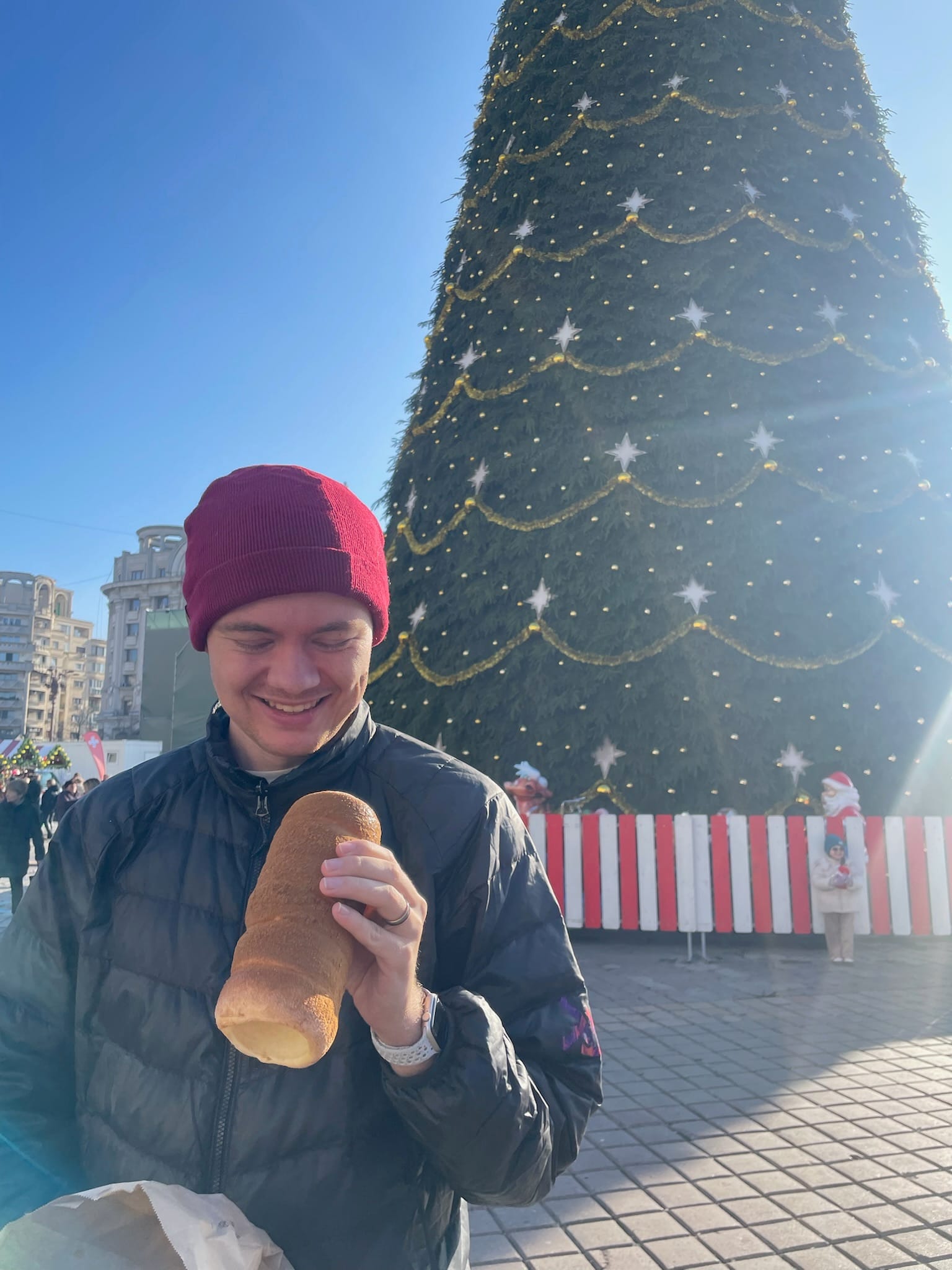
Bread is best when it is tube-shaped. [📸 Rachel & Johann]
We make an effort to try at least one cultural food in every country we visit, which isn’t easy considering Rachel can’t eat garlic or gluten, two things which are almost universally adored (including by her).
There were good sausages pretty universally. For us, the epitome was currywurst in Berlin - wurst (sausage) with fries, doused in a tomato curry sauce. We also had some excellent (gluten-free) dumplings - kartoffelklöße (potato dumplings) in Germany and melt-in-your-mouth soft perogies in Poland. And of course there were chimney cakes, especially in Romania, Hungary, and Czechia. A sweet, lemony dough, crispy on the outside and soft on the inside, sometimes coated in cinnamon sugar or crushed nuts depending on budget and preference, and once wrapped around a hot dog with a cheesy coating (thank you, Czechia). Every place claimed them as traditional. (We even found them in Peru! They must be traditional, we quipped. Spoiler alert: they're not).
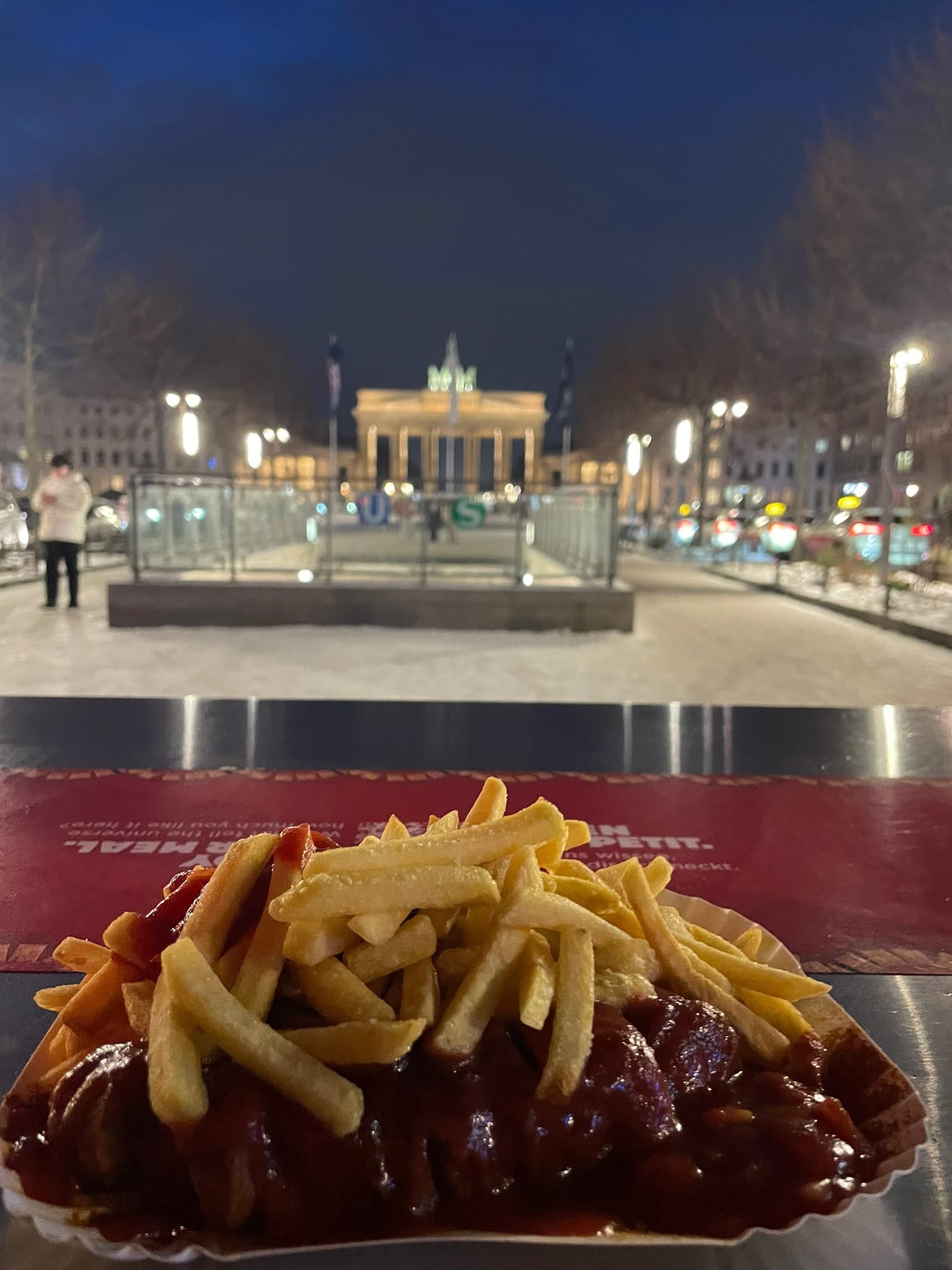
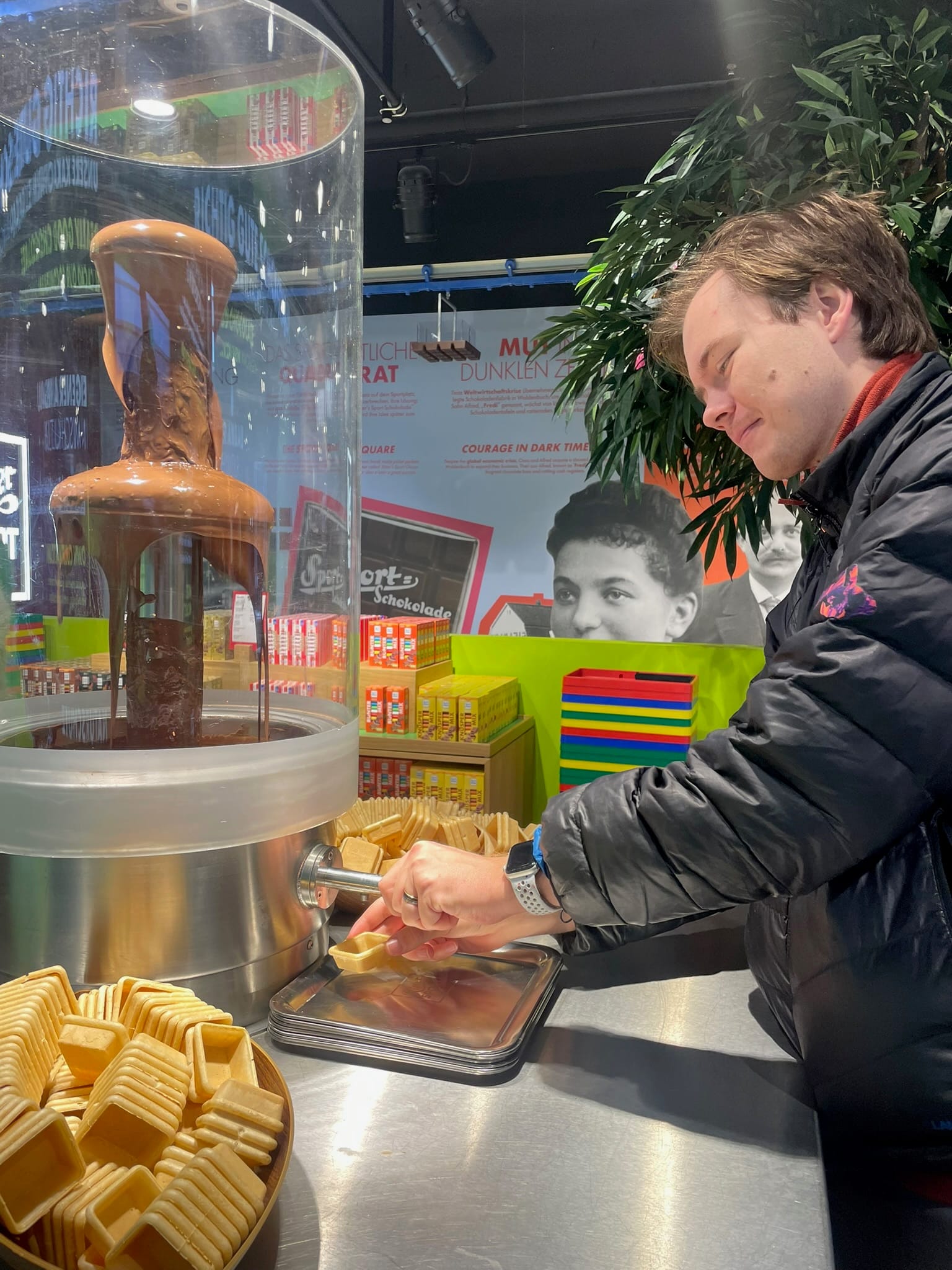
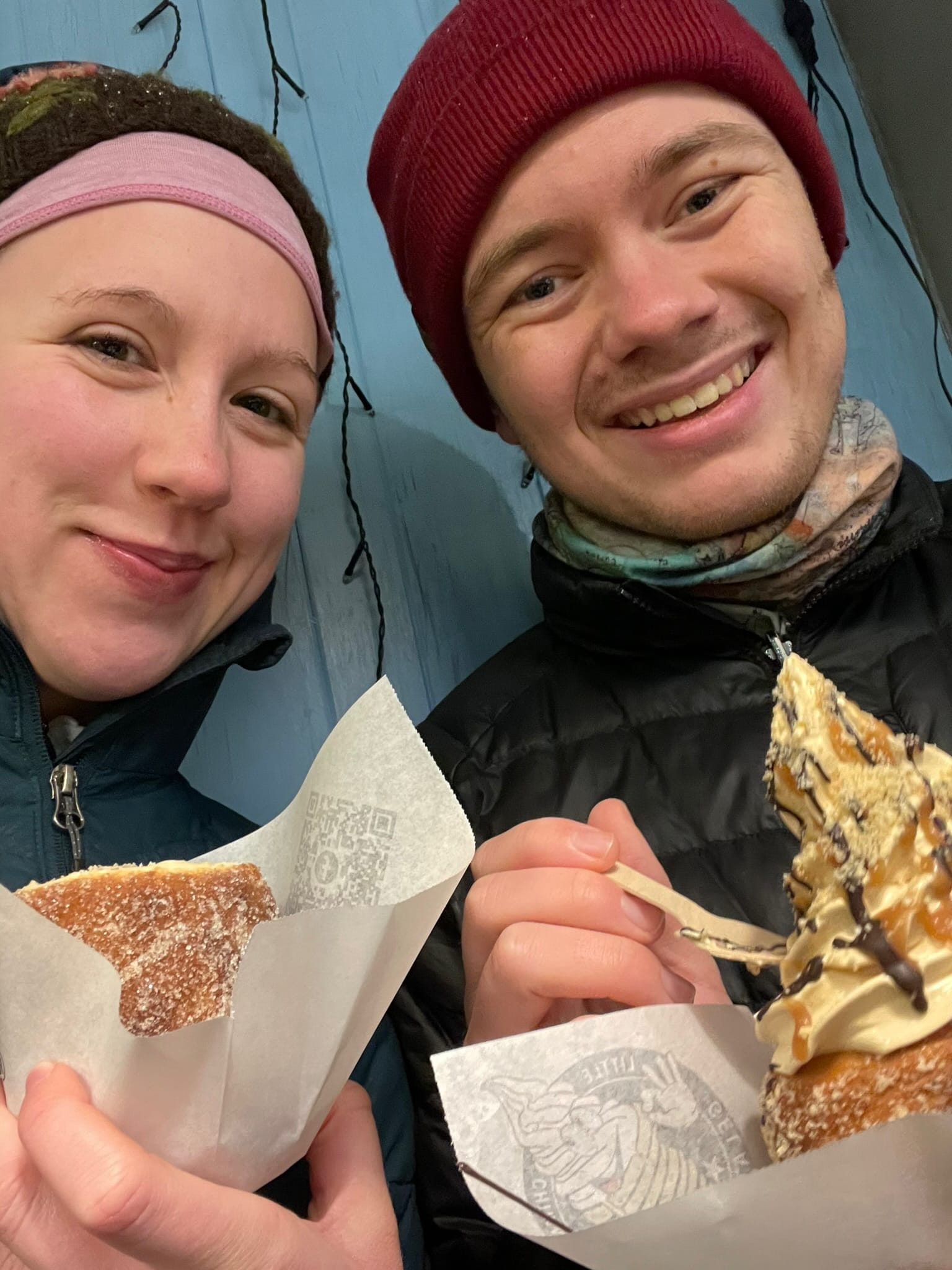
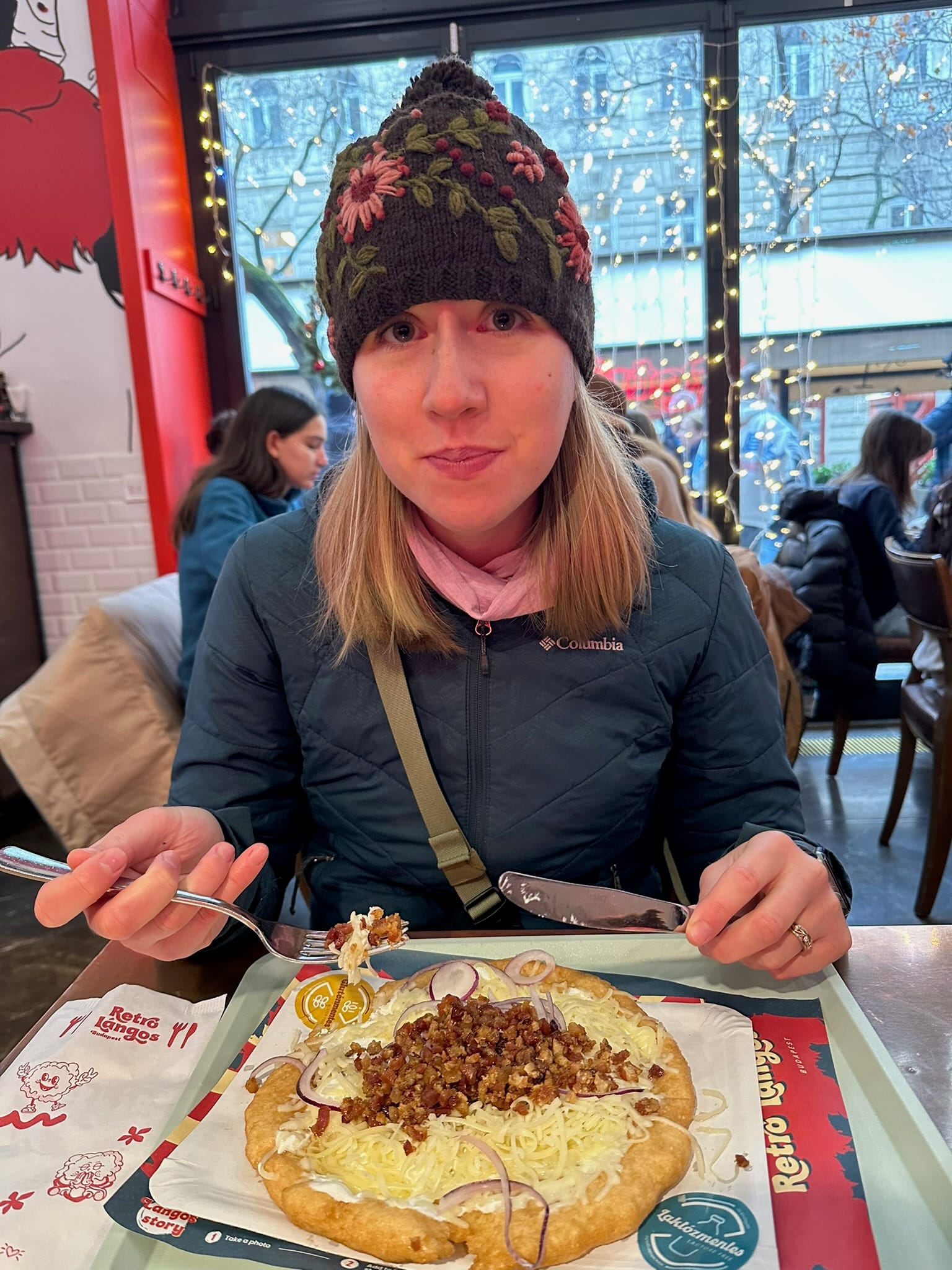
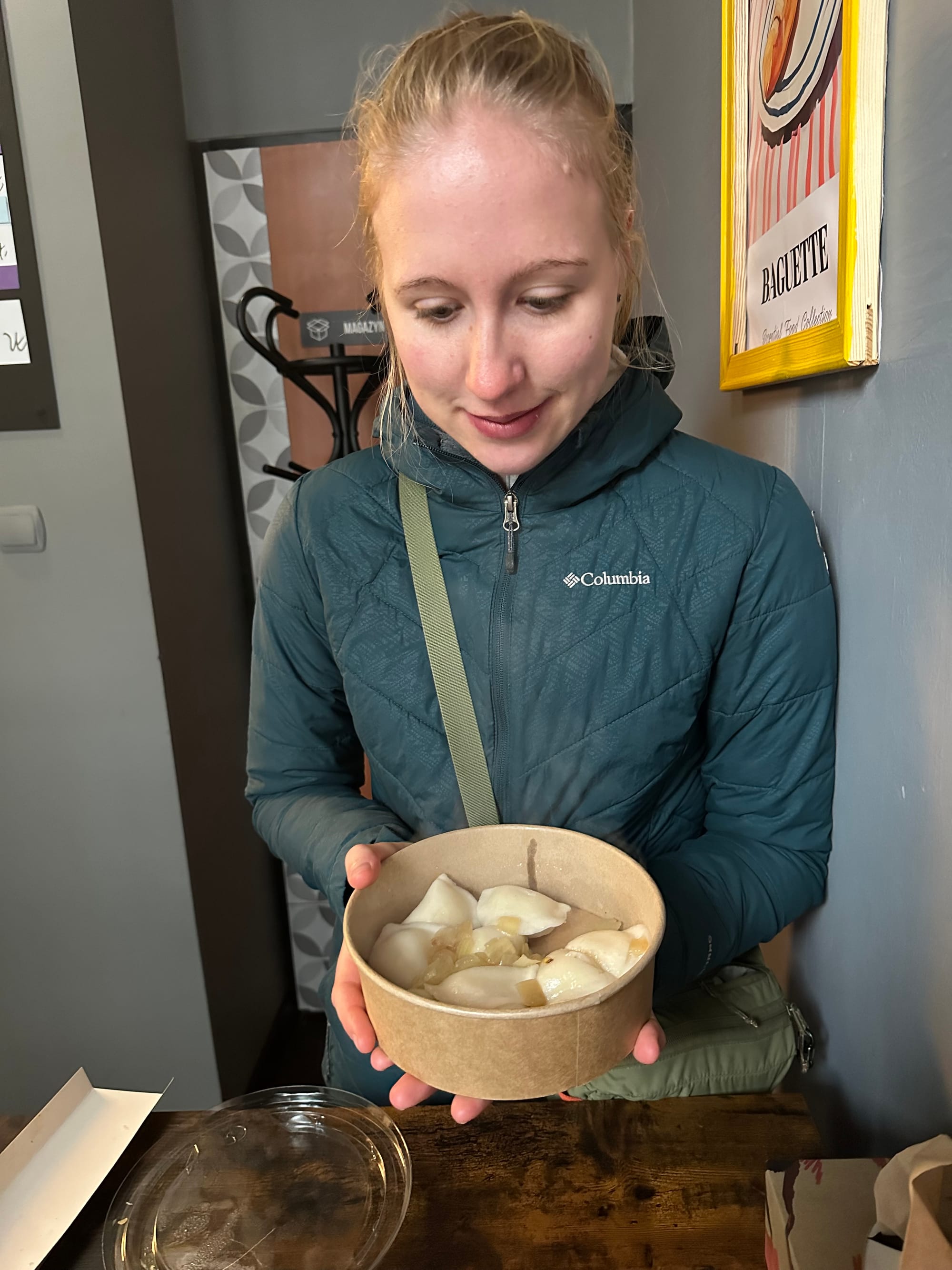
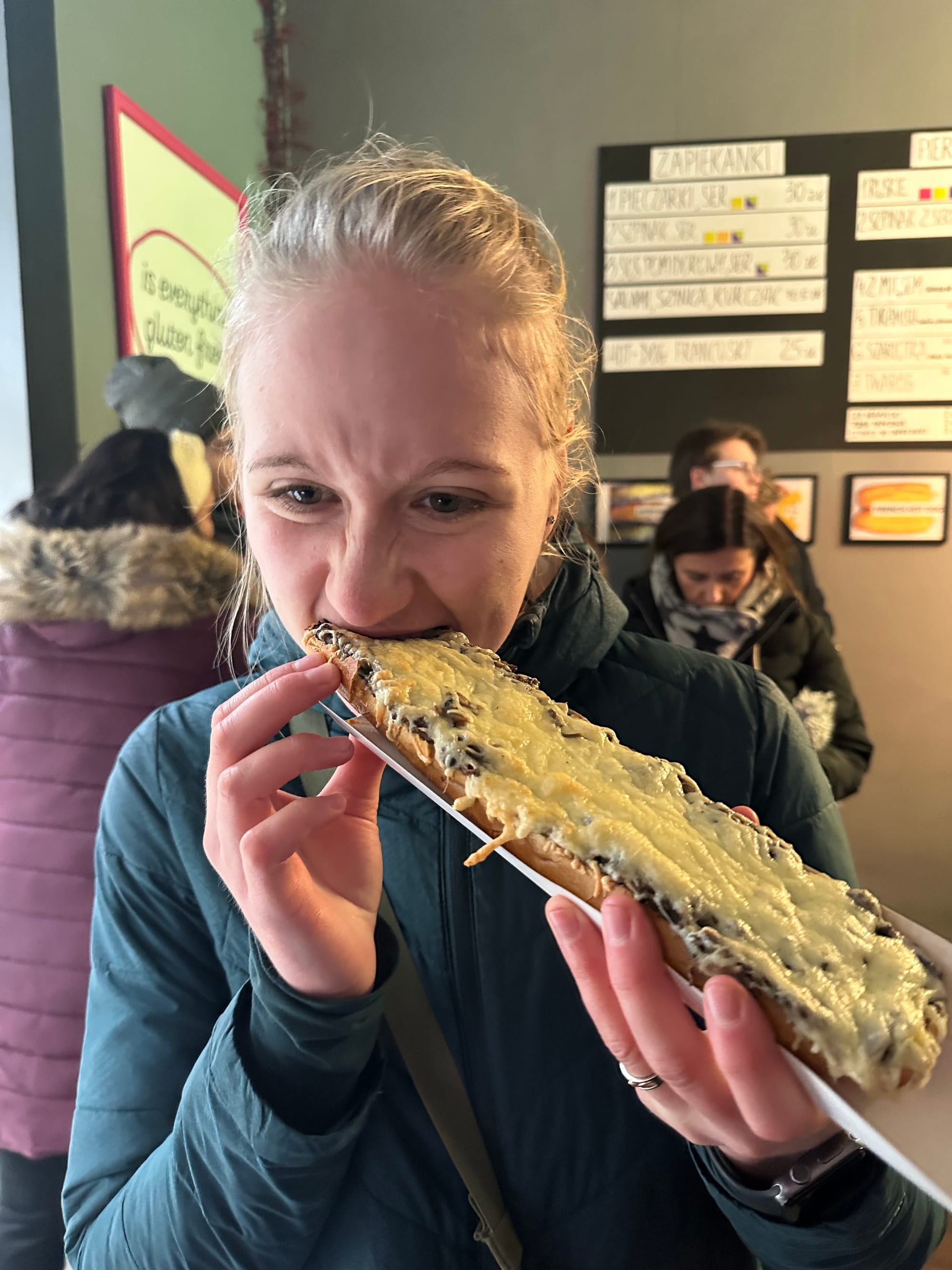
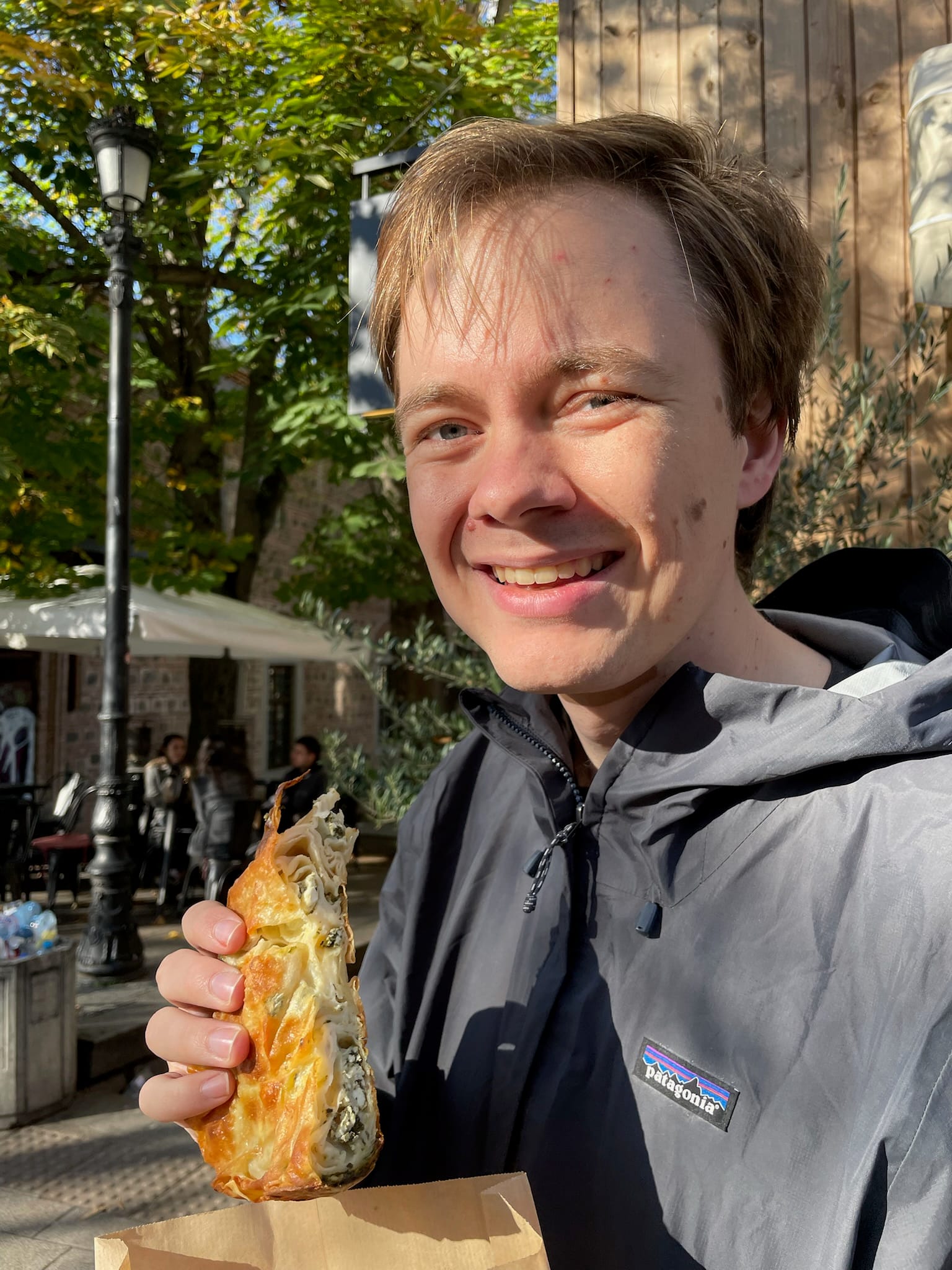
We have an unceasing devotion to doughy goods, especially when they’re gluten-free! [📸 Rachel & Johann]
Bulgarian yogurt, made with Lactobiclis bulgarius, was SO CREAMY! Taking into account the staggering volume of pizza restaurants in Sofia, does it count as Bulgarian cuisine? Hungary nourished with langos (fried flat dough with toppings) and goulash (soup, not stew), and in Slovakia, Christmas market lokše (potato flatbread) was wrapped around cheese and sauerkraut. We of course had pannenkoeken and gouda in Amsterdam: what else?
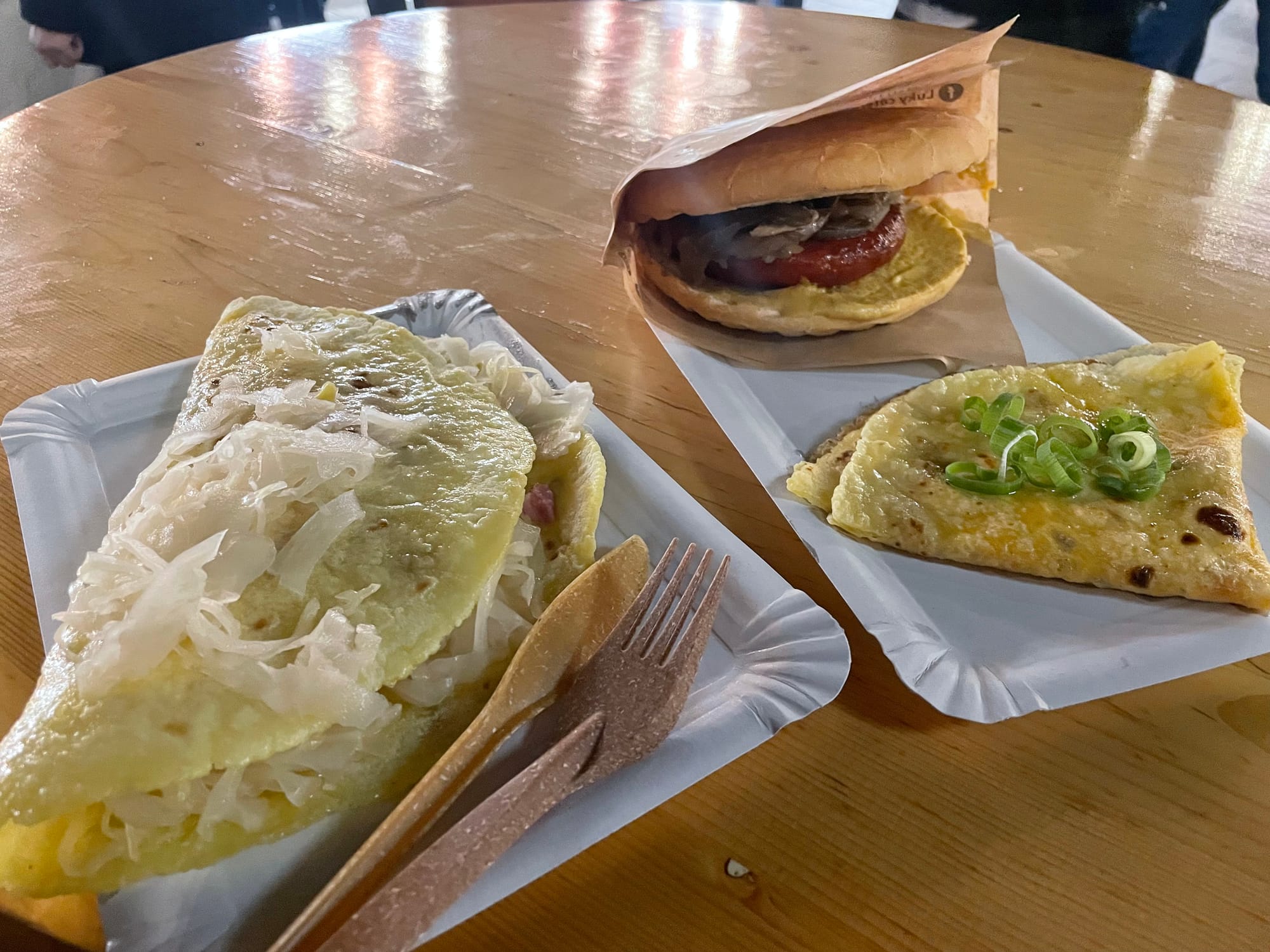
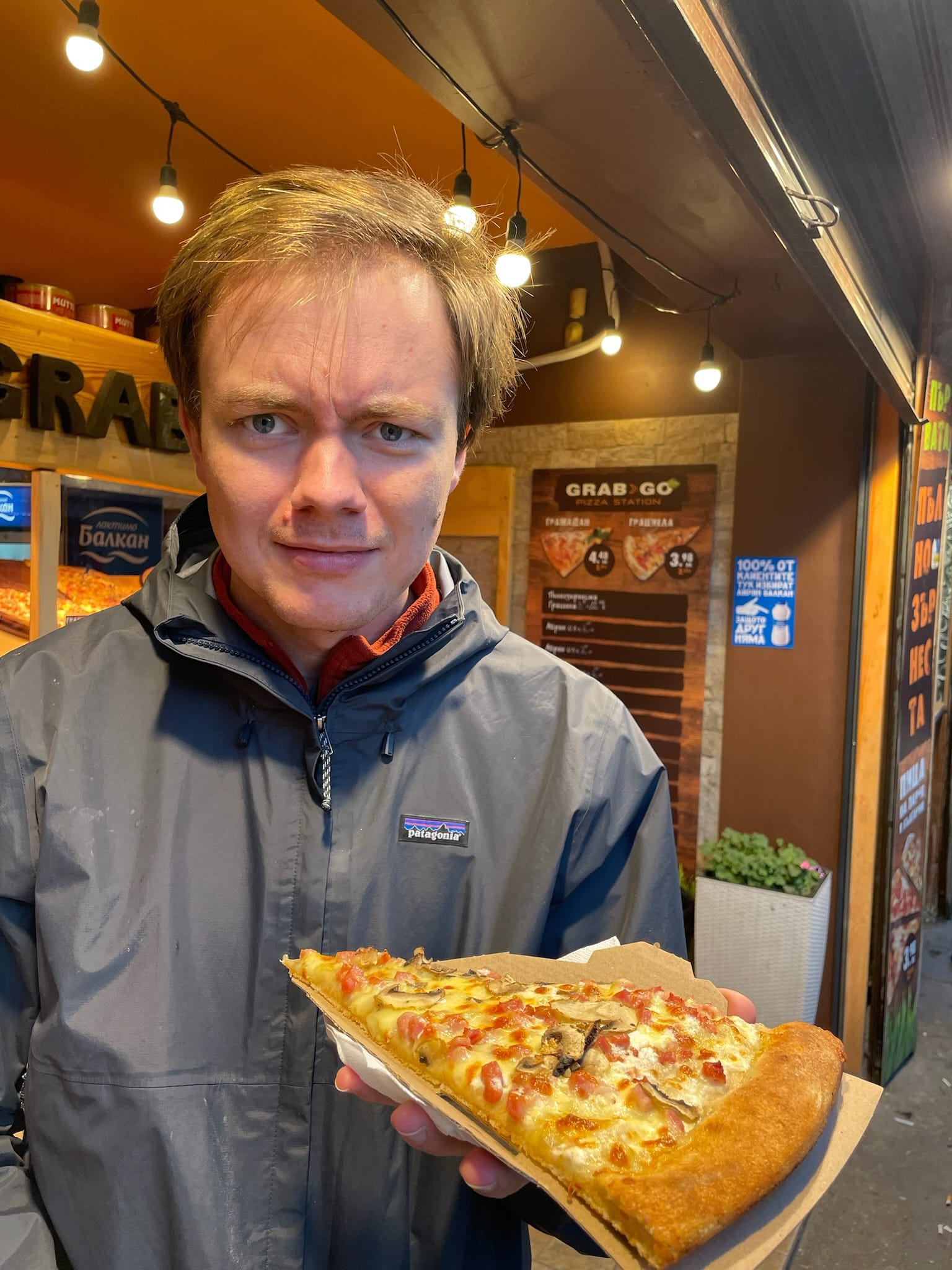
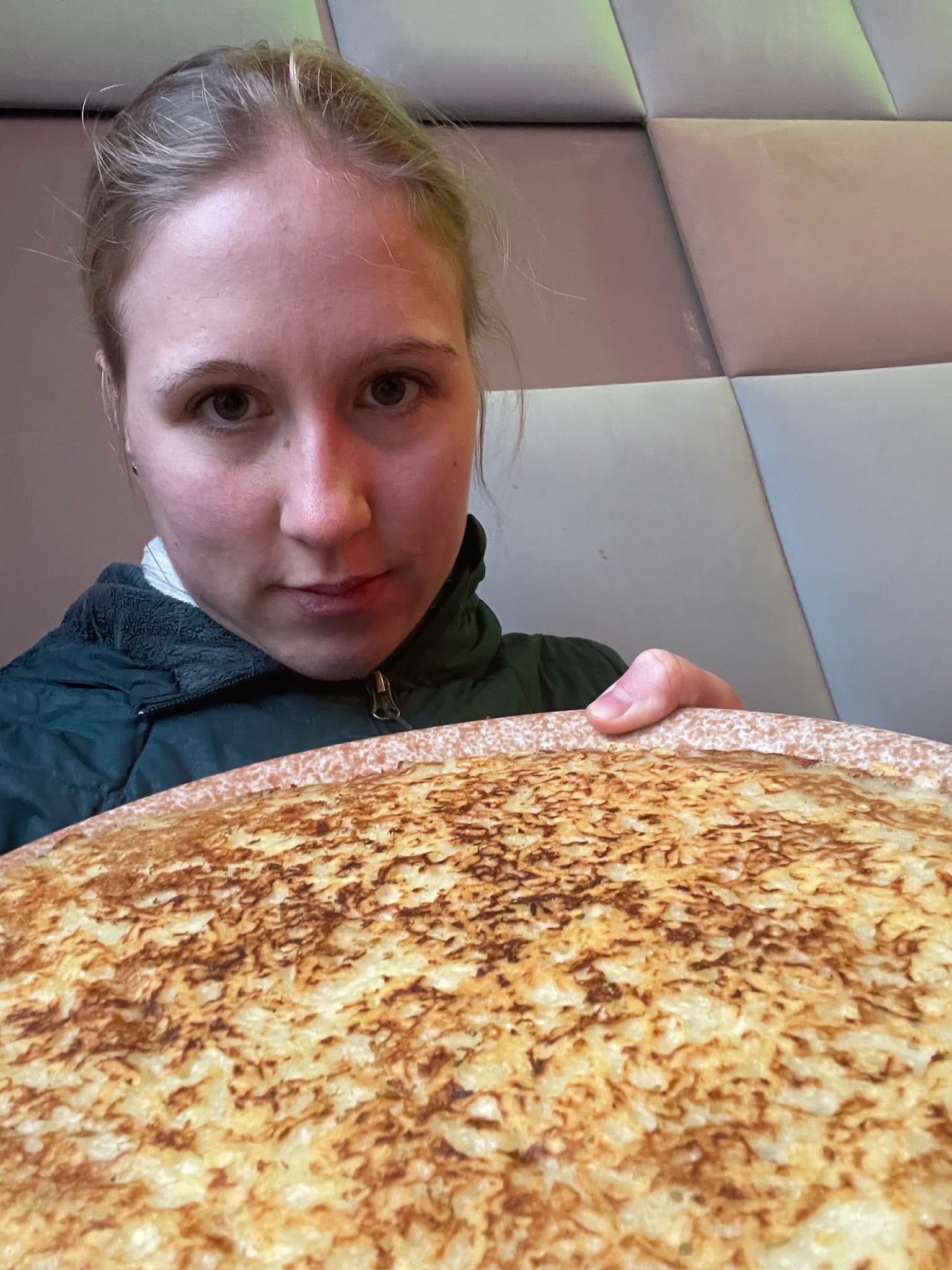
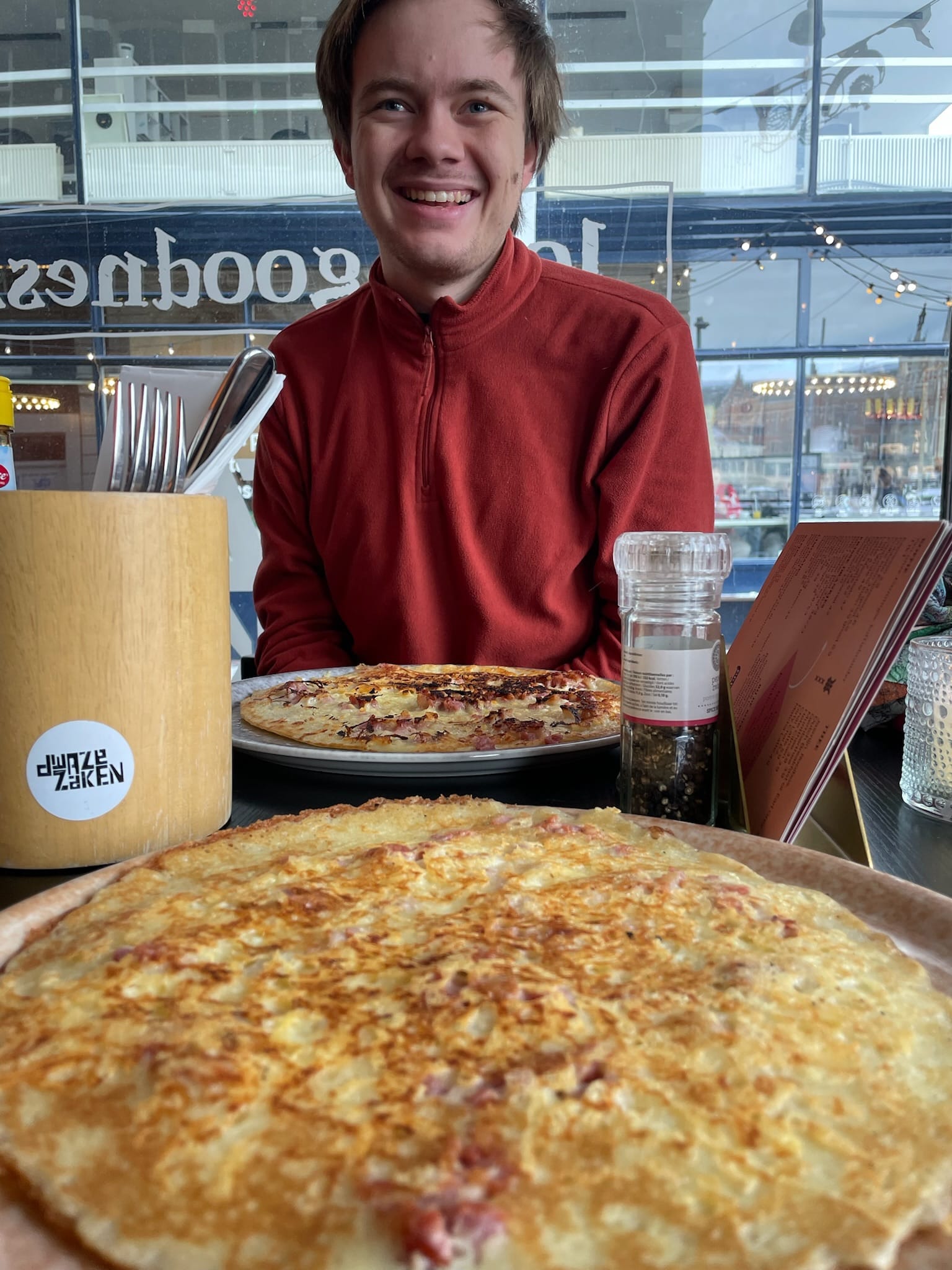
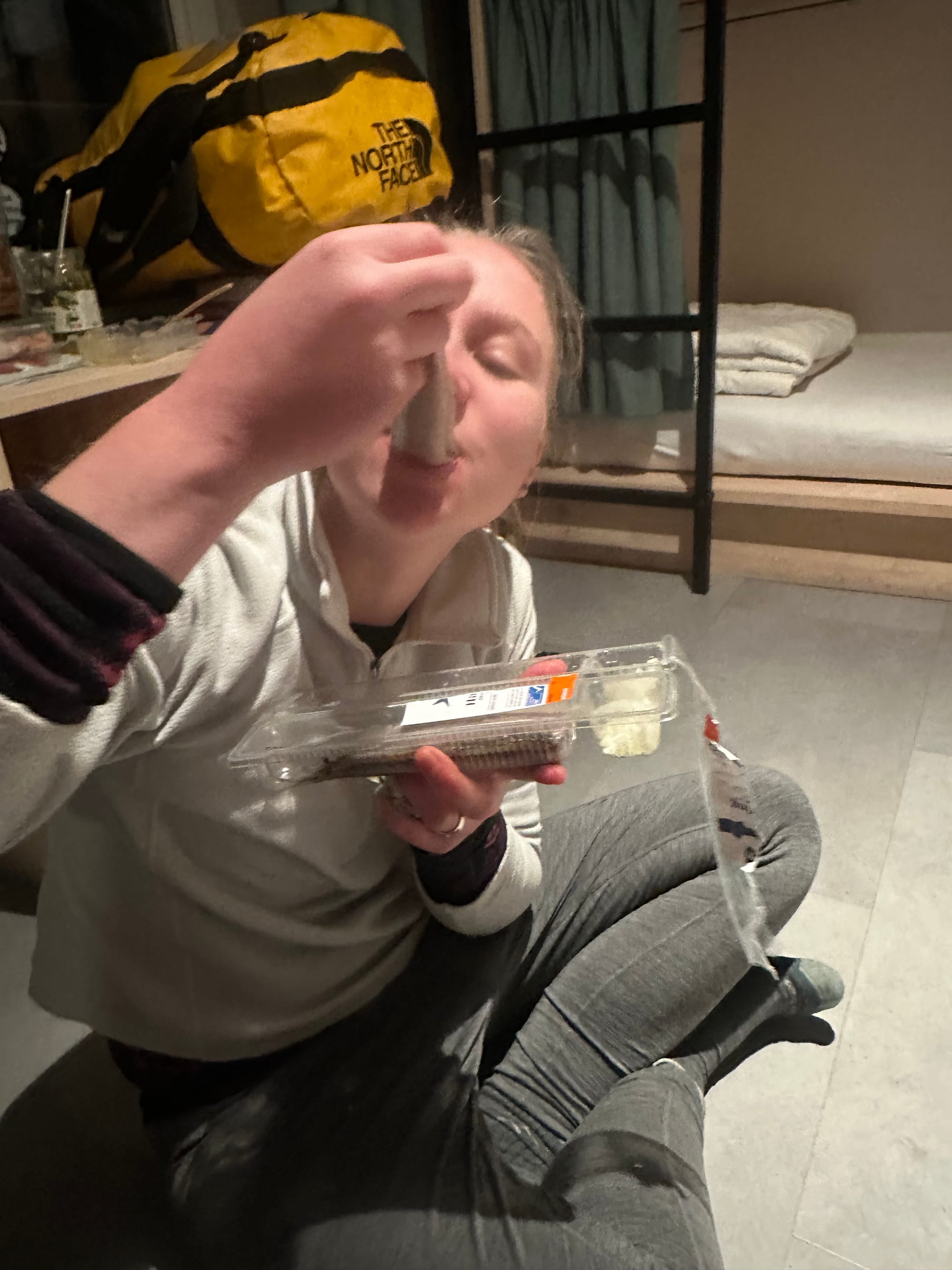
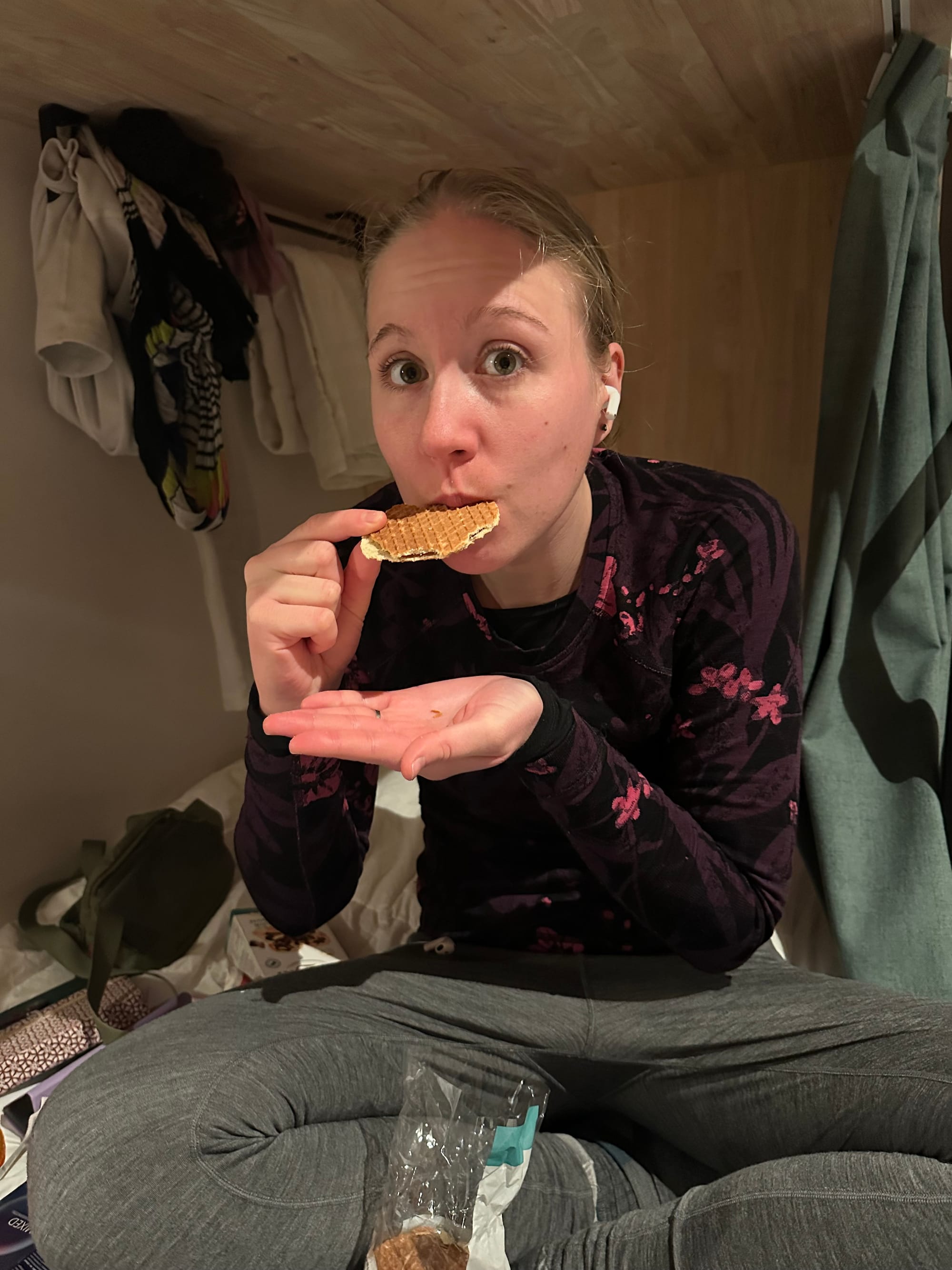
No, Johann did not try the raw herring. That was Rachel’s choice alone. [📸 Rachel & Johann]
Of all the countries we visited, Romania hosted our favorite foods. Creamy, smoky zacuscă (a pepper and eggplant spread for bread), and savoury cabbage rolls served with polenta and sour cream. Acidic soups and sweet treats like sour cherry rice pudding. Divine, delicious, we want more!
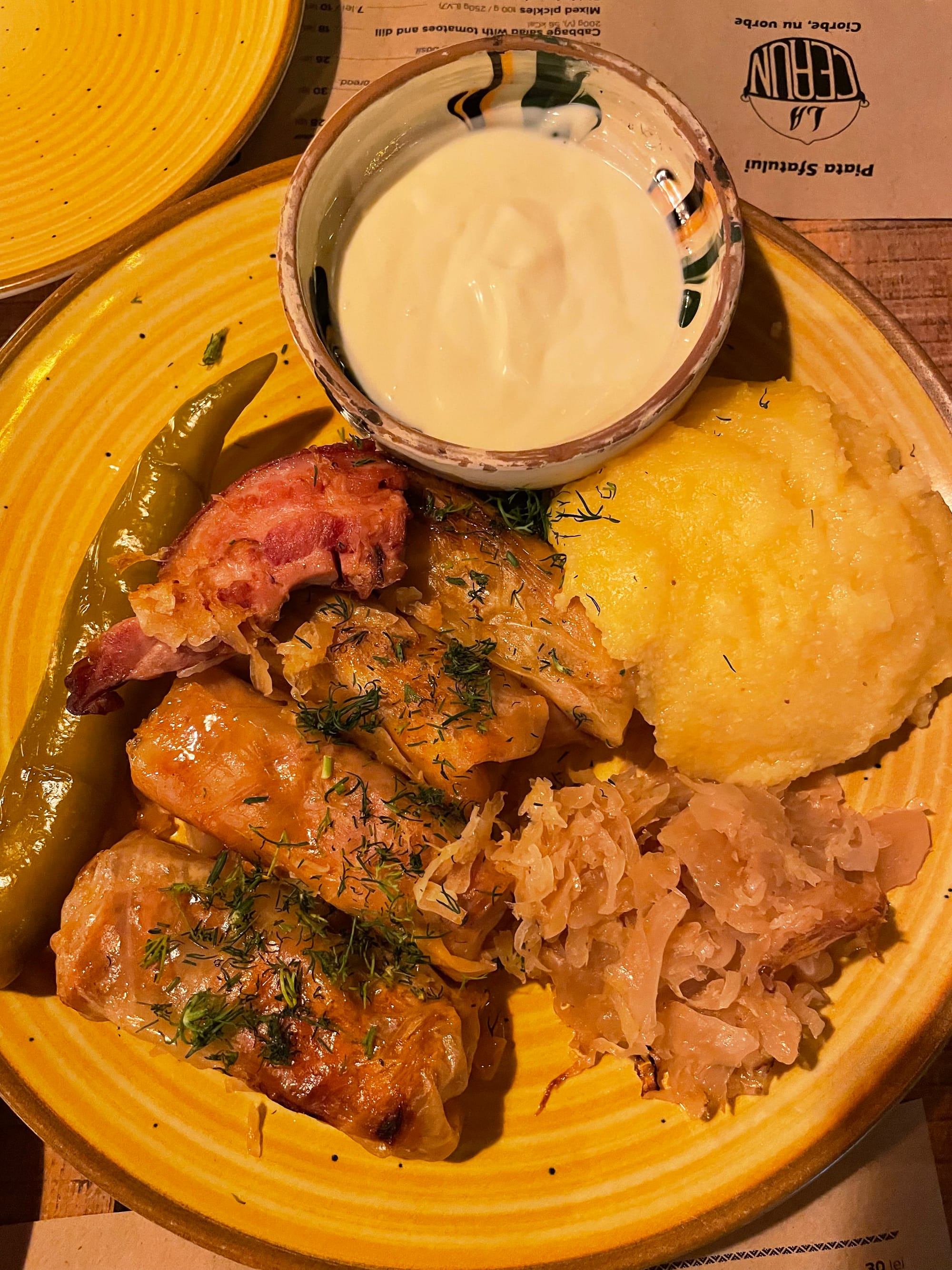
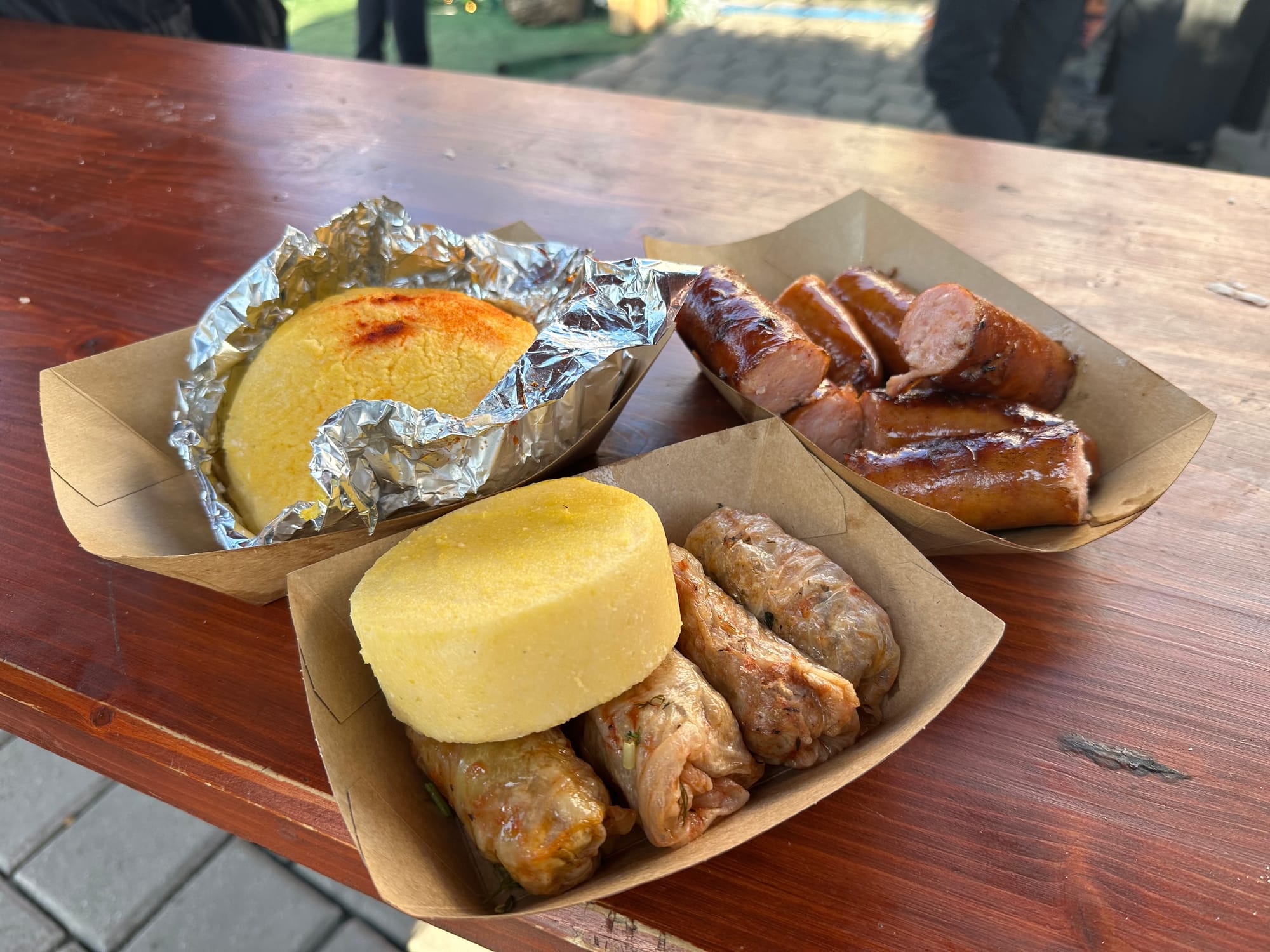
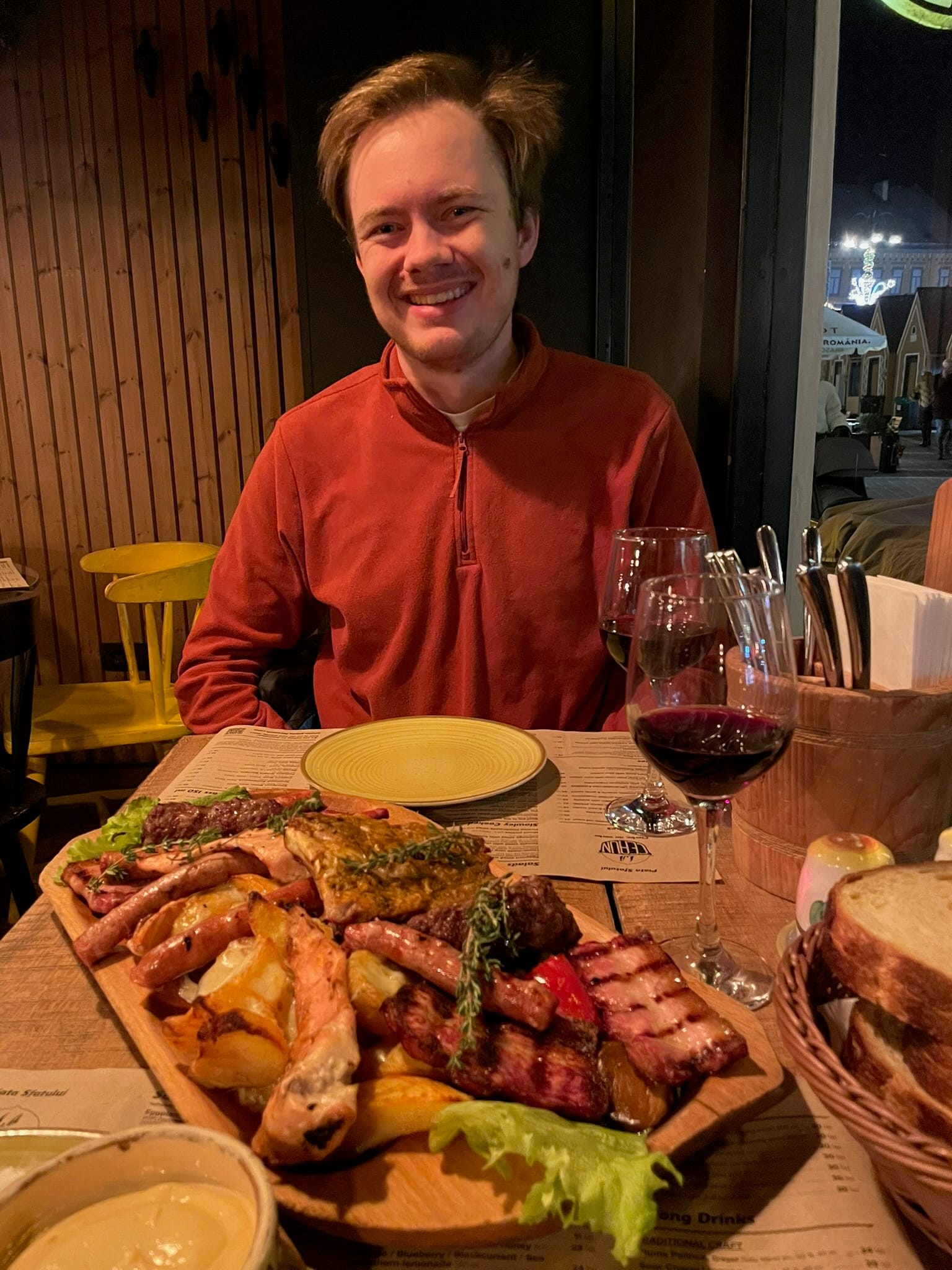
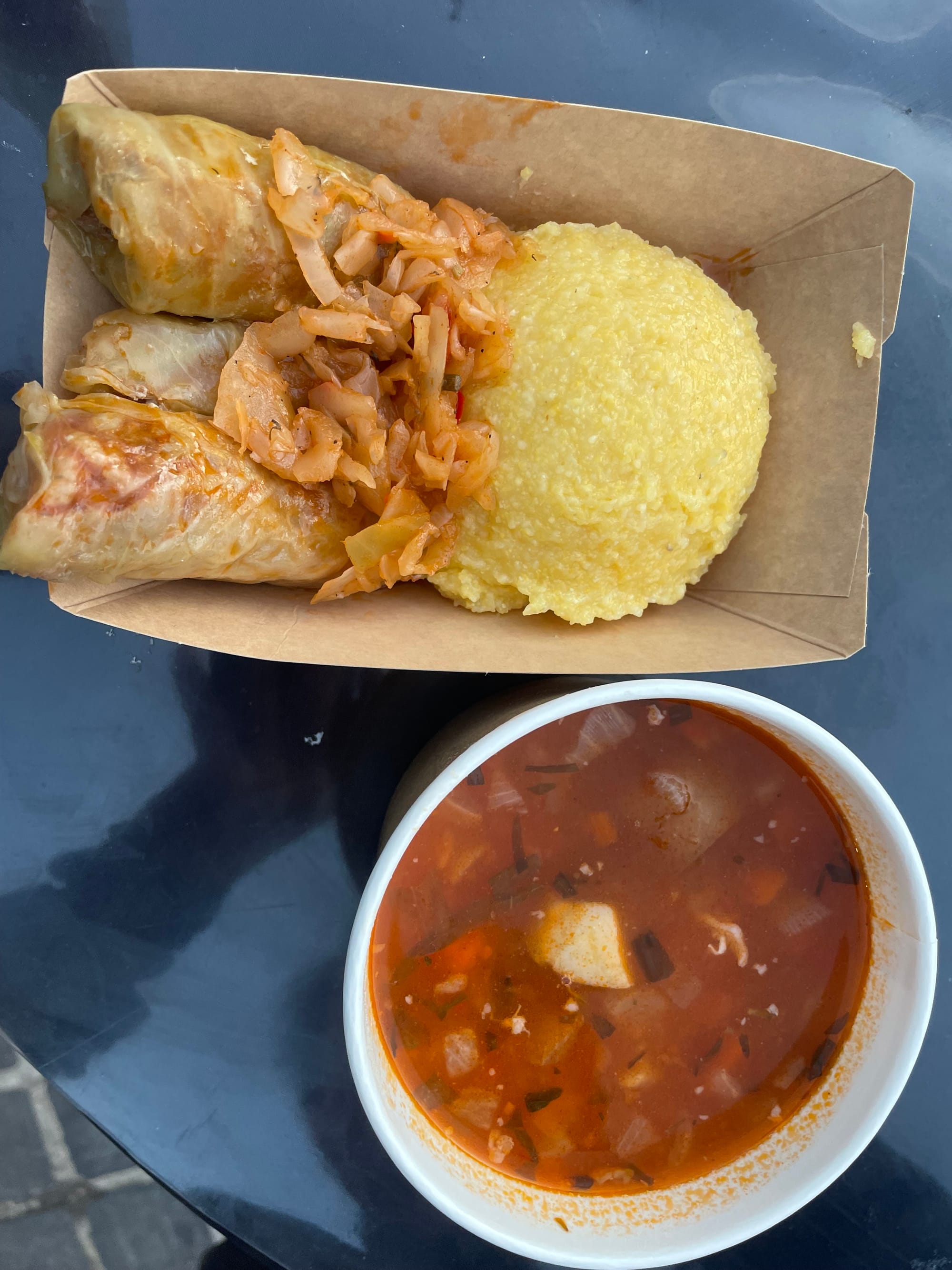
In Romania, we feasted. If anyone knows a good source for zacuscă in Canada, please let us know! [📸 Rachel & Johann]
And of course we couldn't visit Vienna without going for coffee and cake at one of its many historic coffeehouses, where intellectuals and artists once met to discuss new and radical ideas. We mostly discussed how good the sweets were. The Viennese have an excellent appreciation of putting whipped cream on hot drinks; we can only hope to be so cultured.
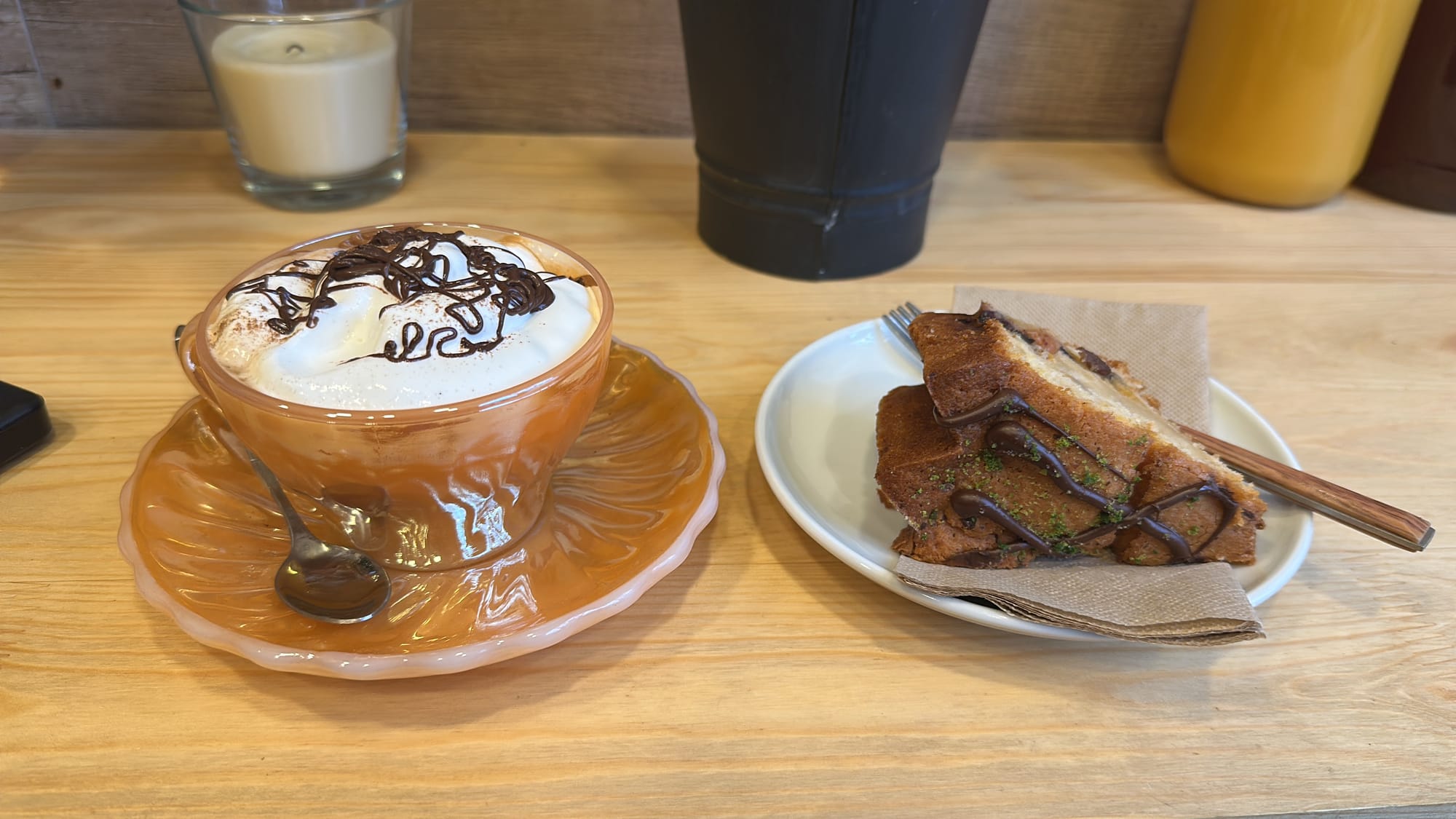
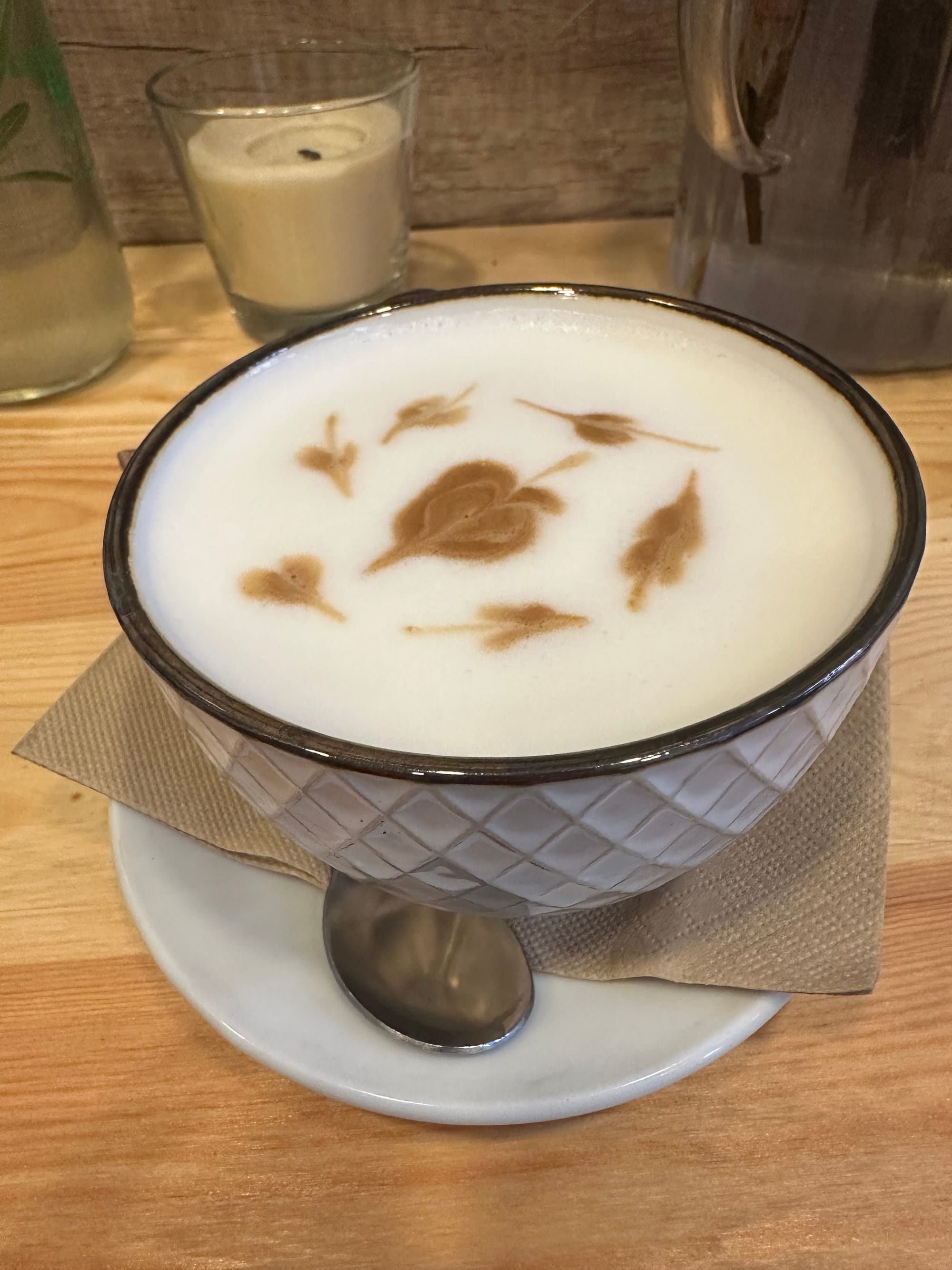
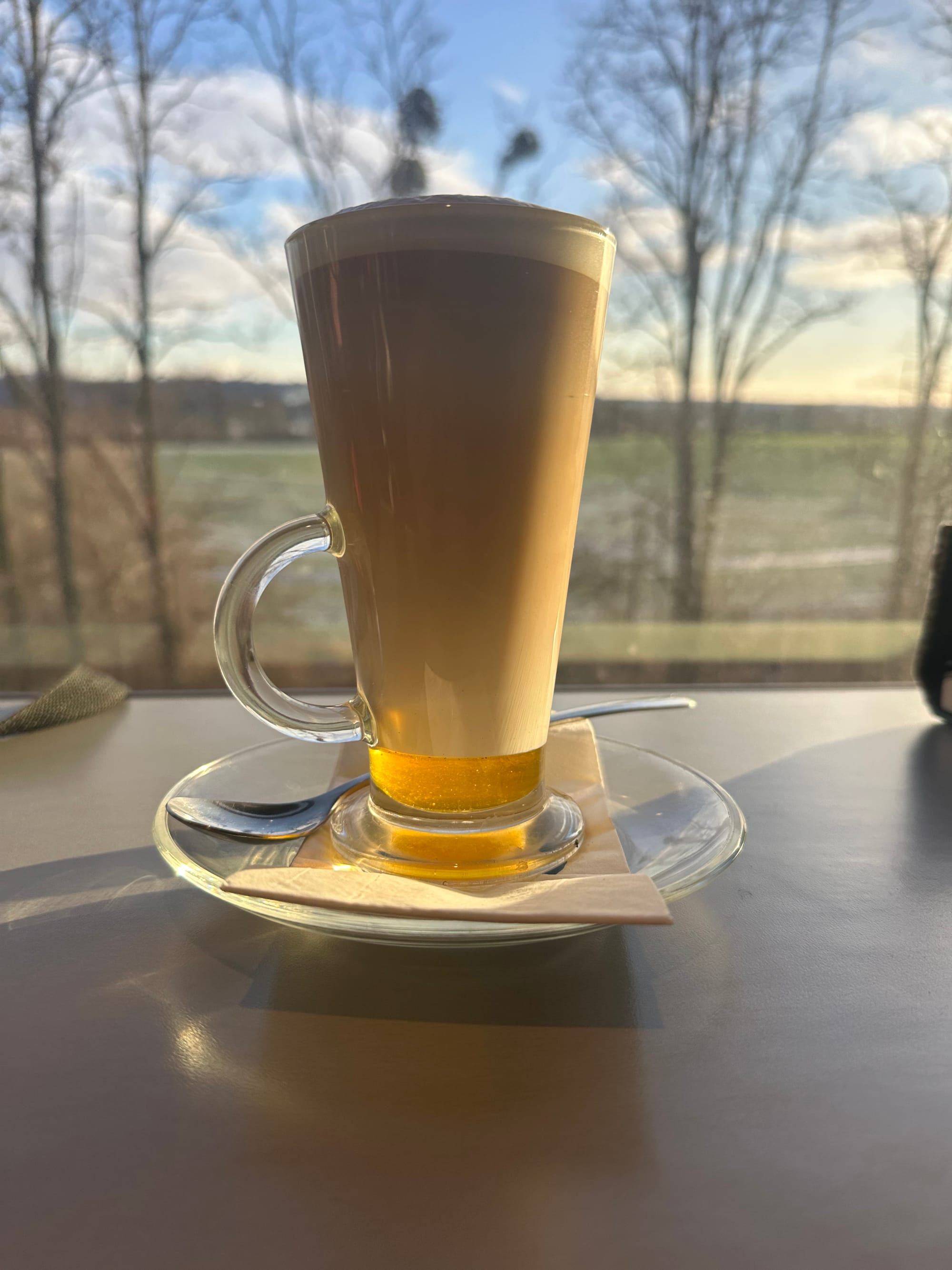
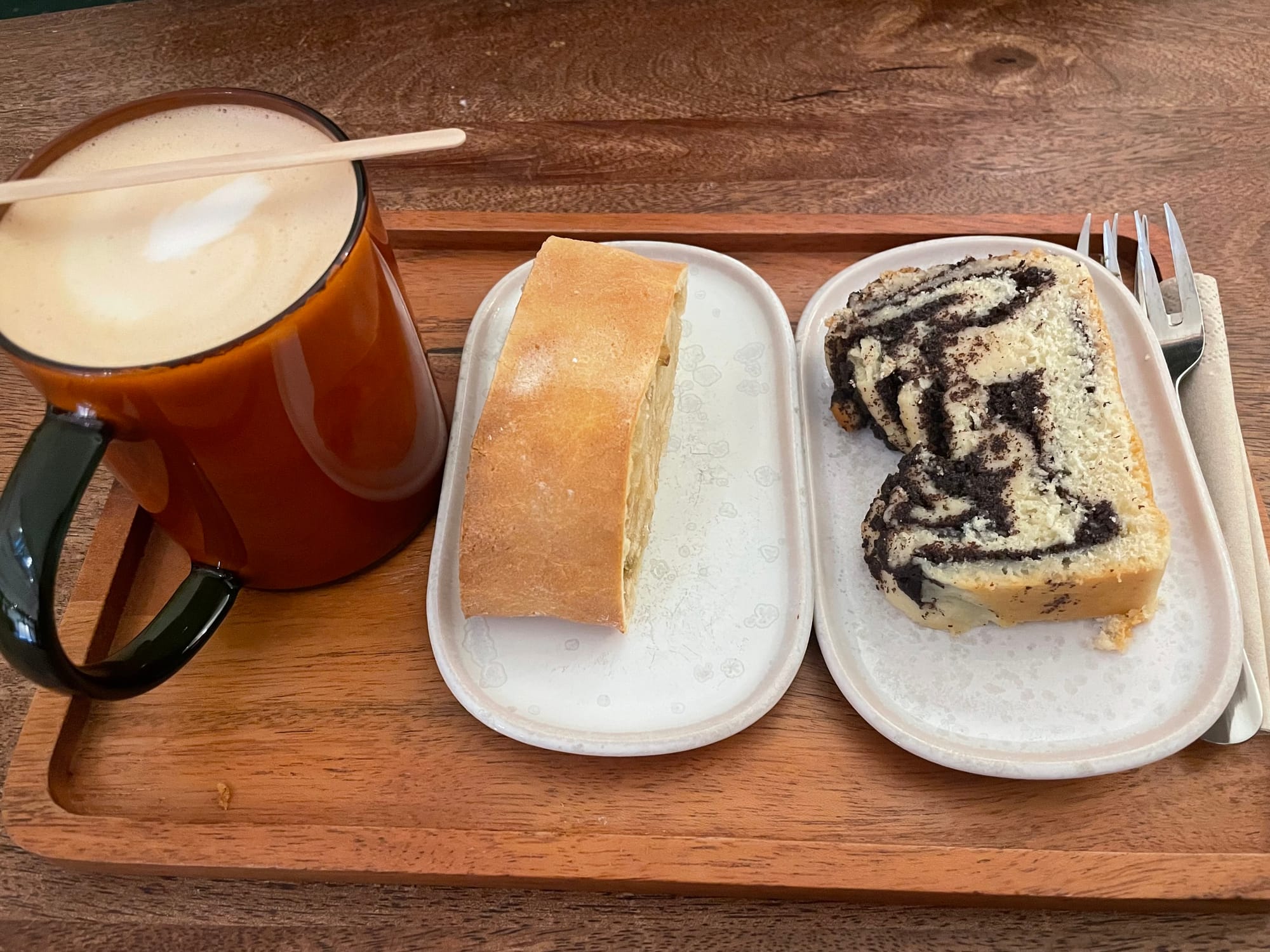
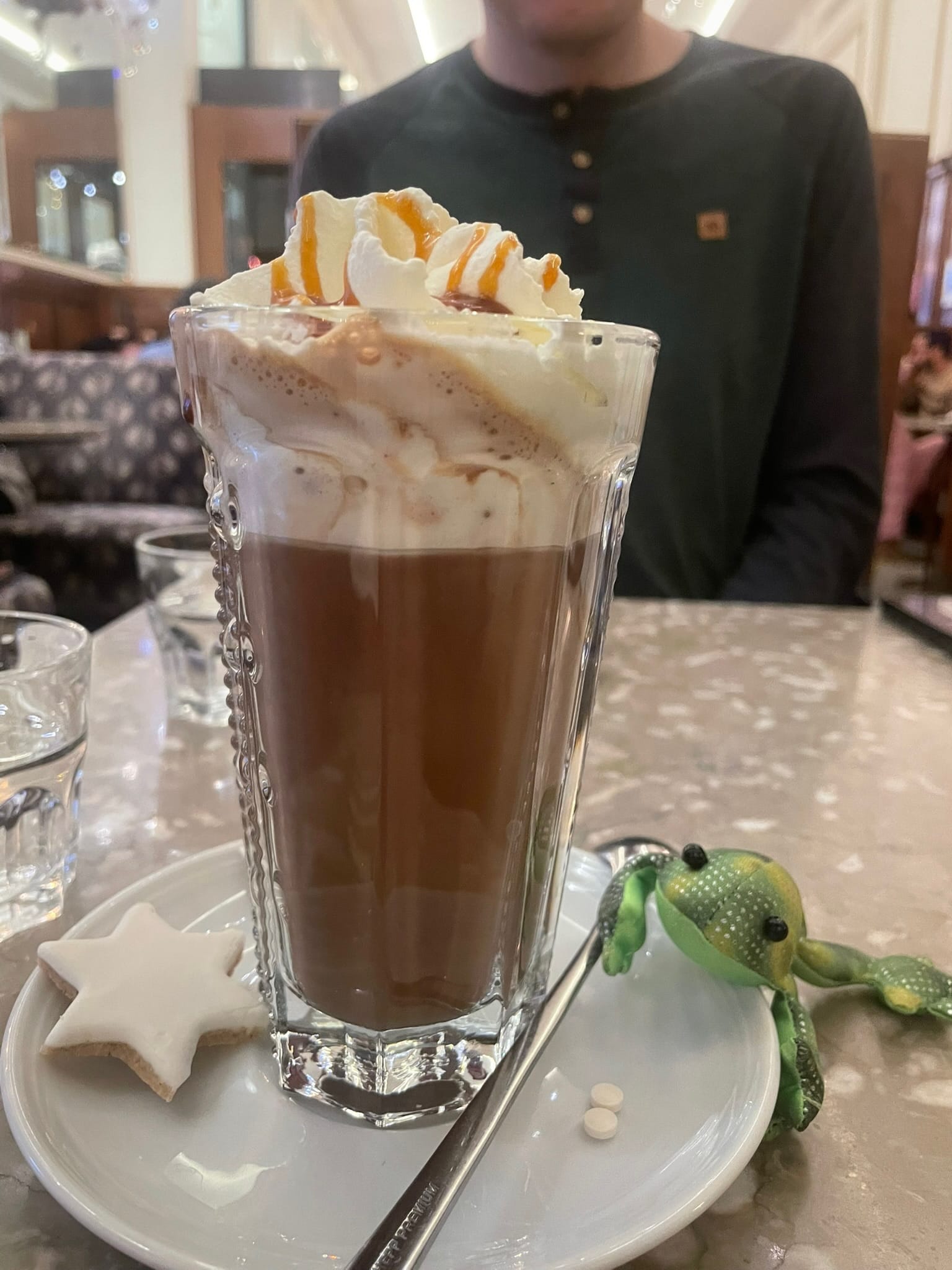
Endless endless endless coffee, and we want mooorrrreeee [📸 Rachel & Johann]
We weren’t sure if we could summarize the entirety of our second Europe foray in one blog post, but I guess we kind of did? That’s all for now, and strange as it might seem, our next post will be all about Peru! Until then, stay warm and eat cabbage rolls, up next are pisco sours and ceviche!