Feta Cheese: Thank You, Greece!
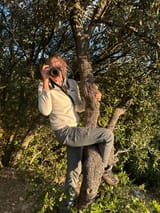

Greece was bright, friendly, and very rich with history. Our itinerary was in sandwich form, with Athens as the bread and the Greek islands as the filling. Maybe Naxos was the lemony green olive paste, and Syros was the feta cheese? Either way, it was delicious.
Athens
We sampled plenty of historic wonders, especially in Athens, from museums to ancient ruins. The National Archaeological museum took us back to 3rd millennium BC with the mysterious figures of the Cycladic culture, then onto the beautiful octopi of the Myceans. From the Greek golden age to the fall of Rome we saw dozens of spectacular statues, our personal favourite being Aphrodite posed to smack a frisky Pan with her sandal!
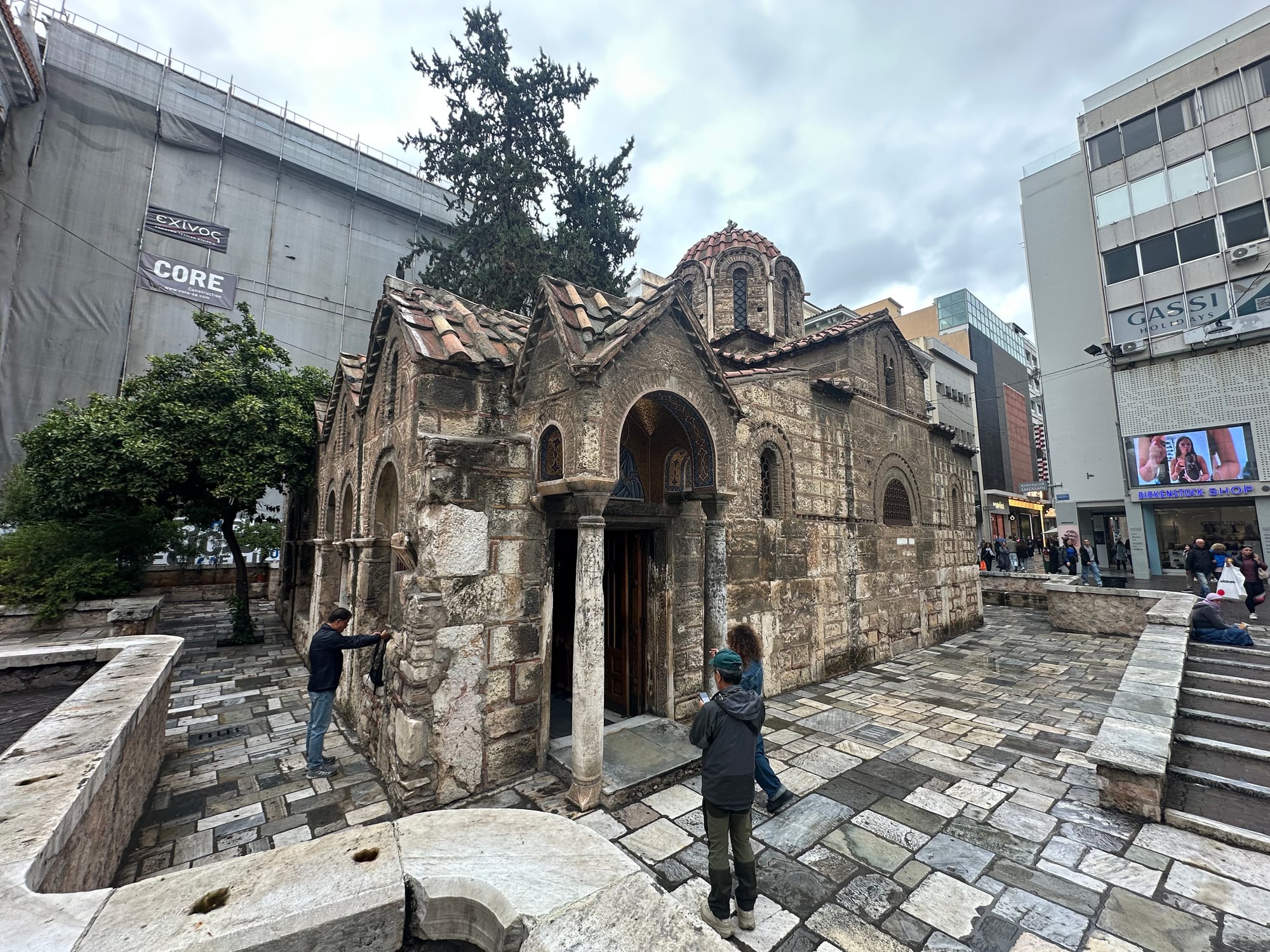
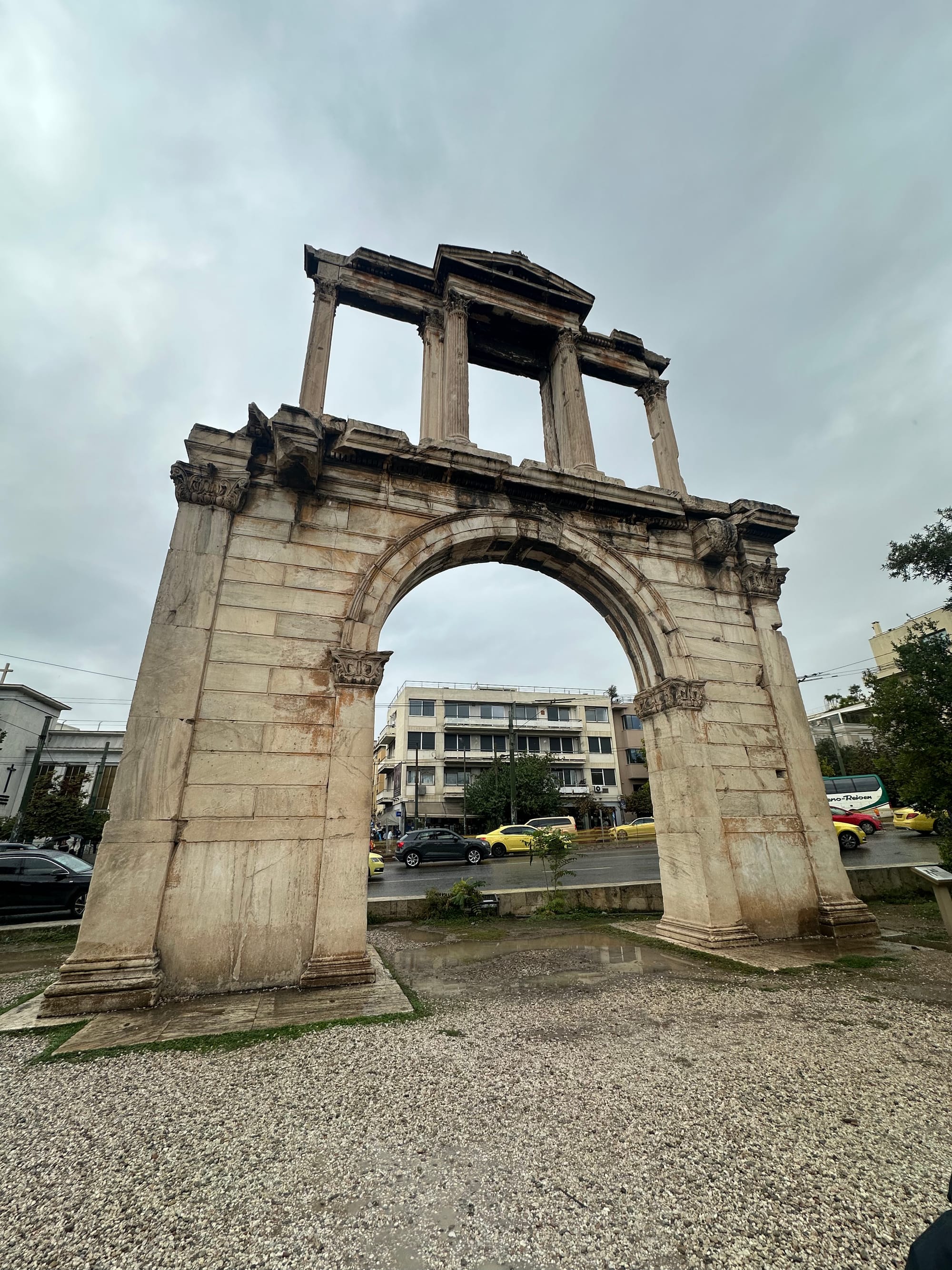
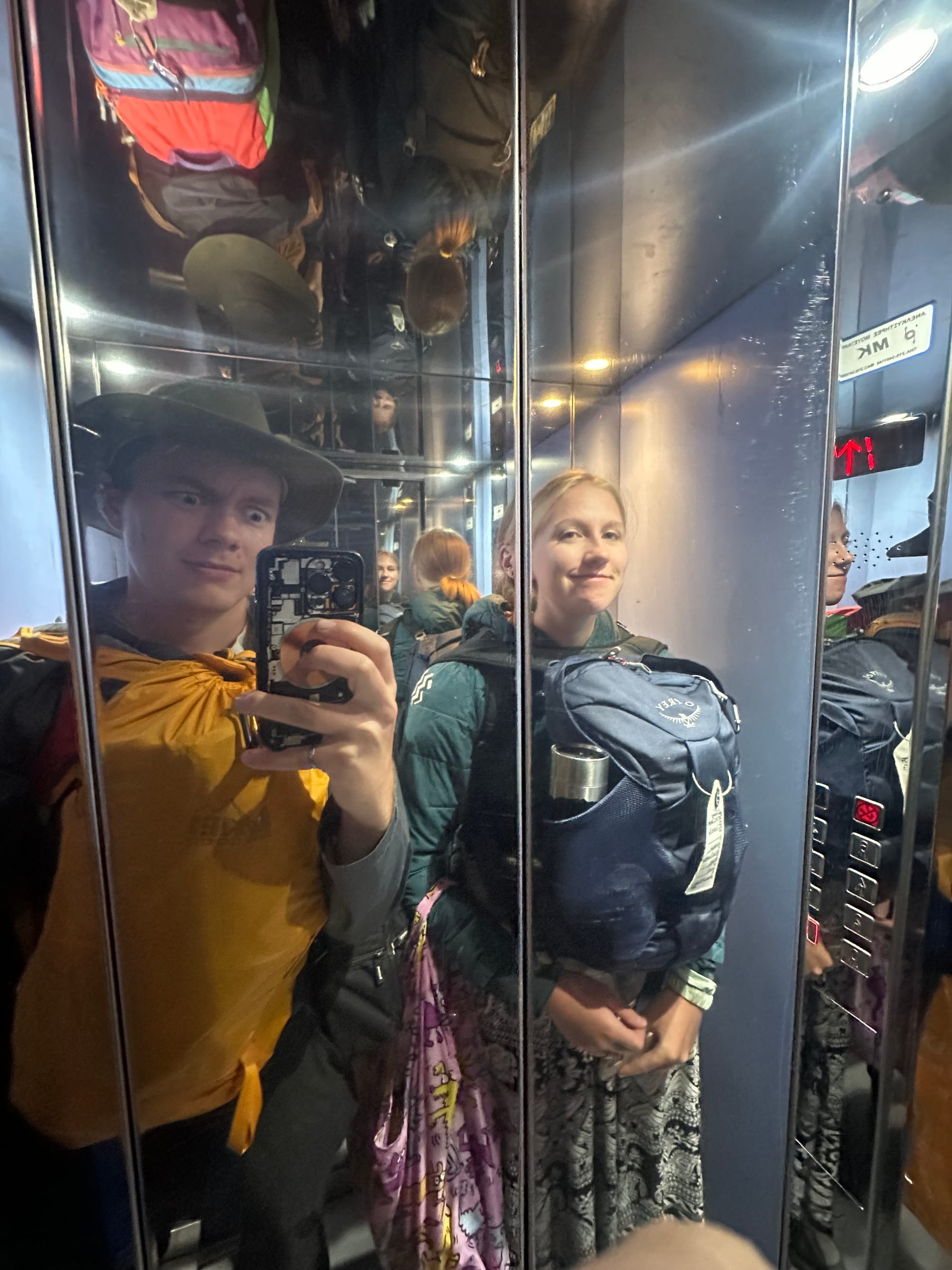
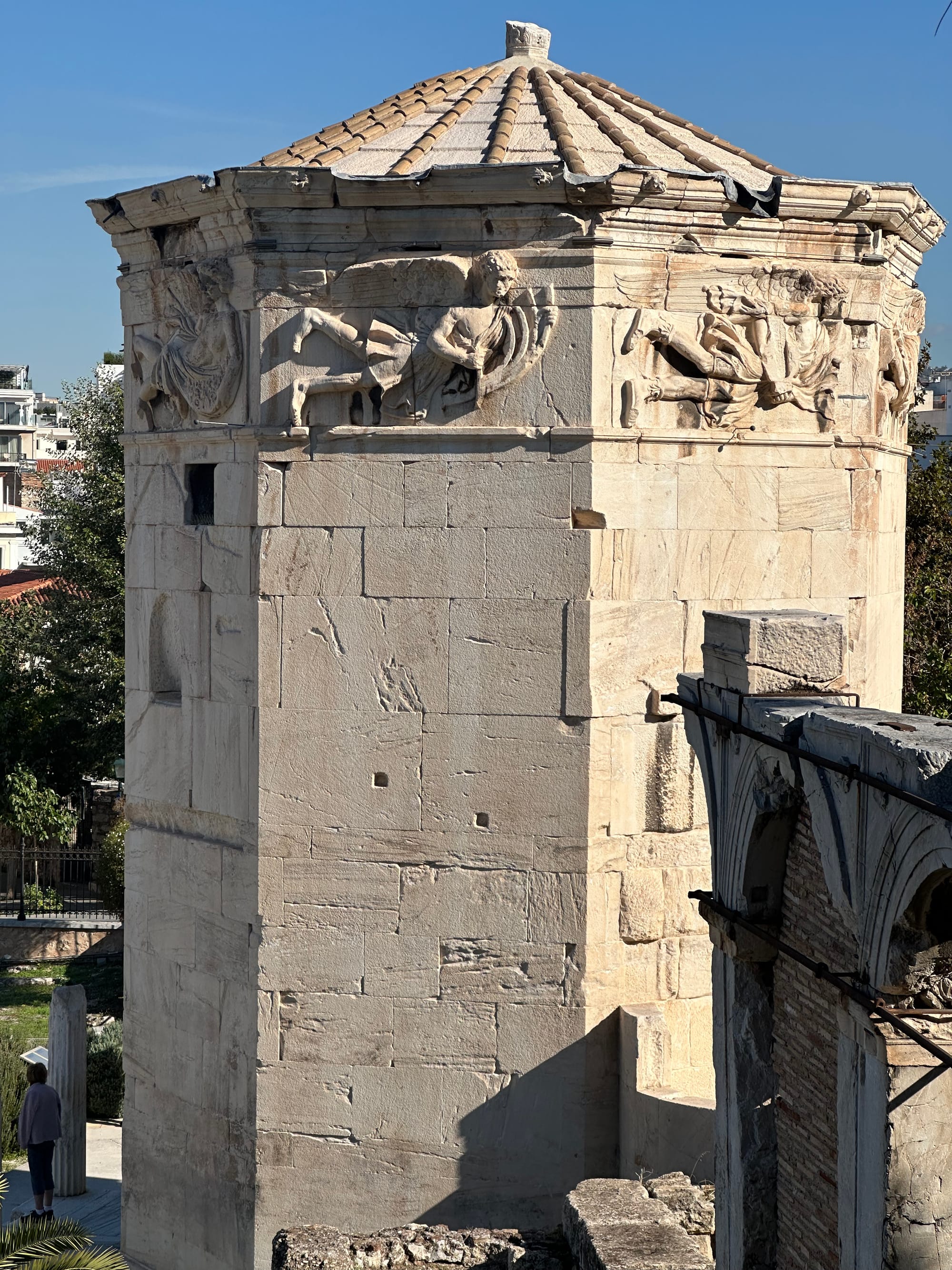
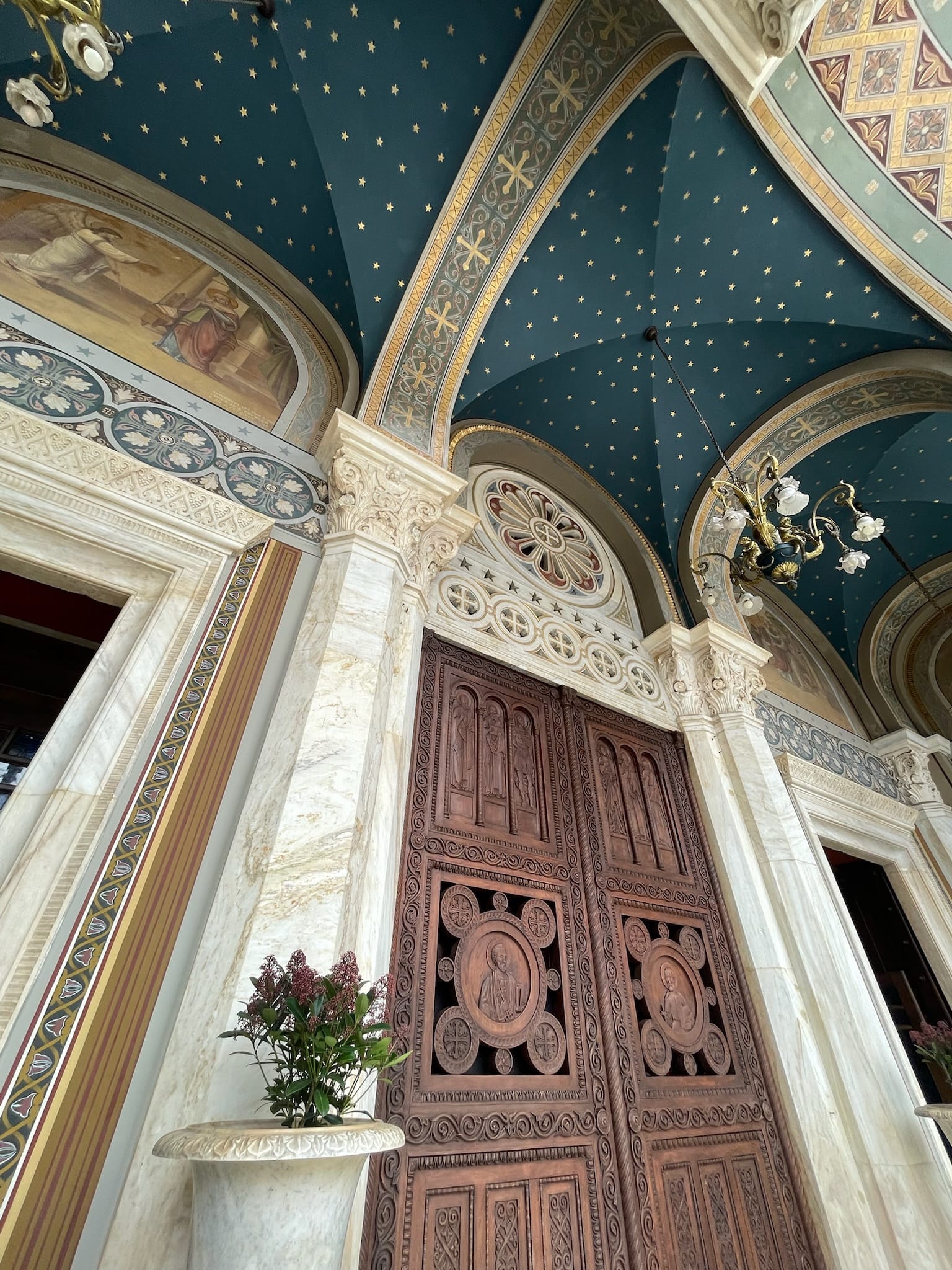
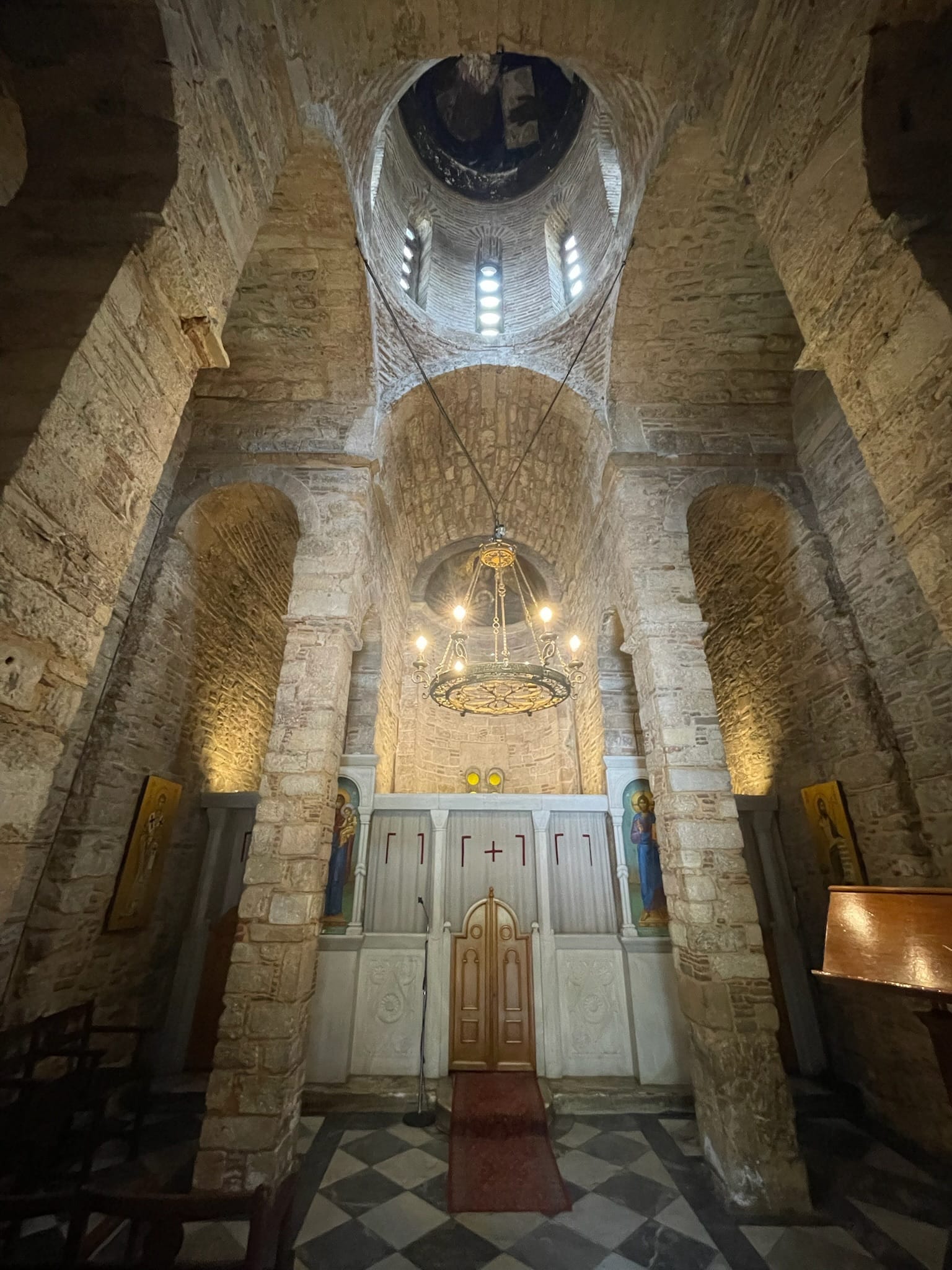
From the Arch of Hadrian to the Church of Panagia Kapnikarea or even to this really weird elevator in one of our AirBnB's (which was in a physiotherapist's office, by the way), Athens had so much to explore! [📸 Rachel & Johann]
The Acropolis Museum was a stunning interface of history with place. As you approach the entrance, the museum greets you with a large opening in the walkway where you can look down to see the excavated ruins of an ancient Athenian neighbourhood. These ruins extend below the entire museum, and you continue to see them through translucent flooring once inside. The museum leads you upwards, ascending chronologically through spacious, well-lit rooms populated with statues, figures, vases, friezes, and other treasures. One of our favourite displays was on the pigments used to colour the ancient statues (including lead and mercury-containing cinnabar). On some of the statues, you could still see traces of the original colour!
Carried upwards on an escalator, we emerged on the top floor. The sun poured through floor-to-ceiling glass panels, illuminating 46 metal pillars which spatially recreate the dimensions and layout of the Parthenon. Suspended between the pillars and set into the wall were the Parthenon friezes, with white platter casts as obvious wounds, highlighting those pieces still held at the British Museum. And out of the windows from countless angles, incredible views of the Acropolis rising in the near distance.
The Acropolis itself was somewhere between ‘beyond description’ and ‘awe-inspiring.’ The gargantuan Parthenon towered, cranes reaching up from within its belly. New pearly white marble fit seamlessly with the original cream coloured stone, replacing pieces lost to the explosion of 1687 (courtesy of the warring Venetians and Turks). In the nearby Erechtheion, replicas of the noble caryatid maidens rose with melted faces, faithful to the originals which were exposed to years of acid rain.
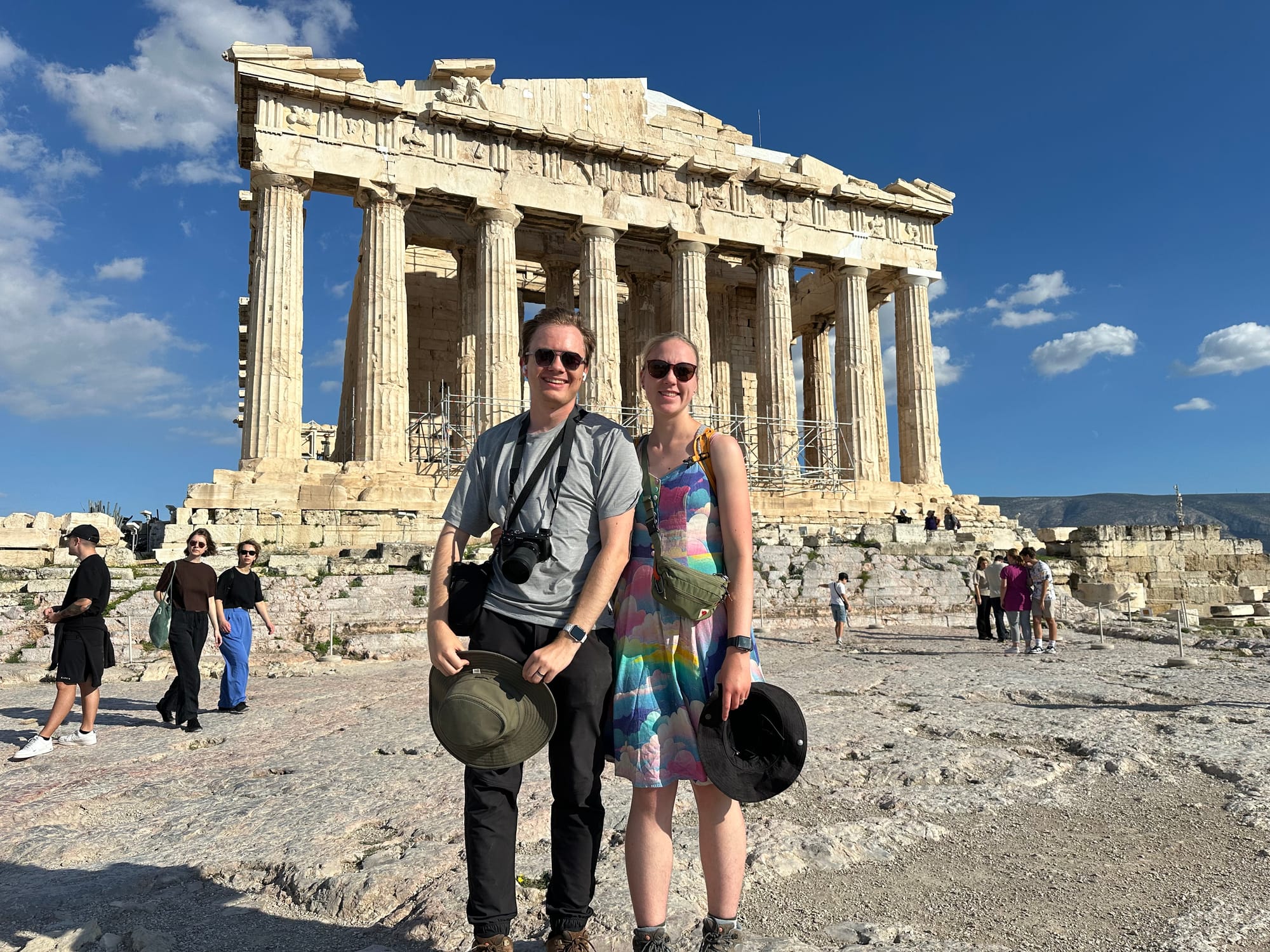
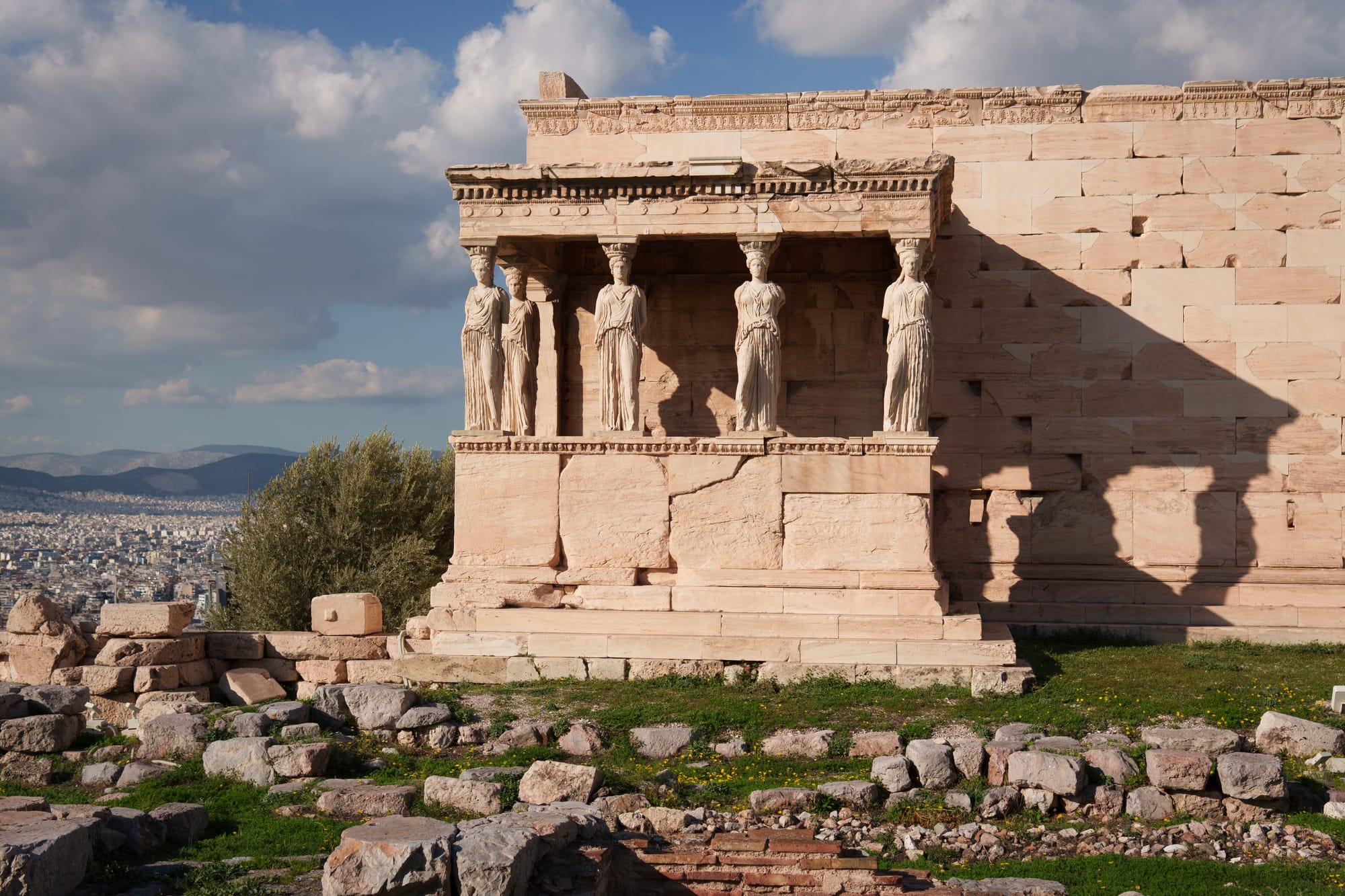
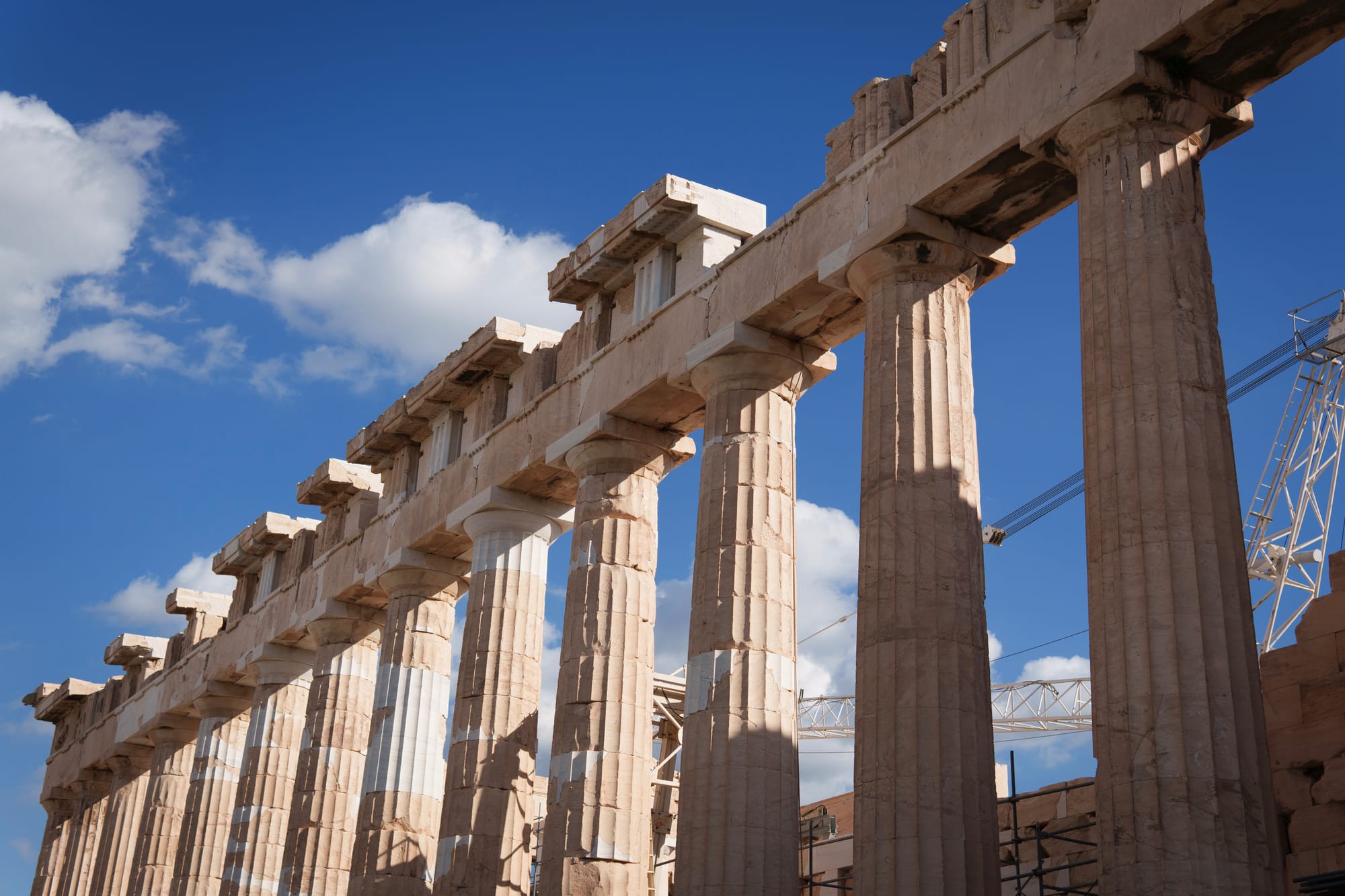
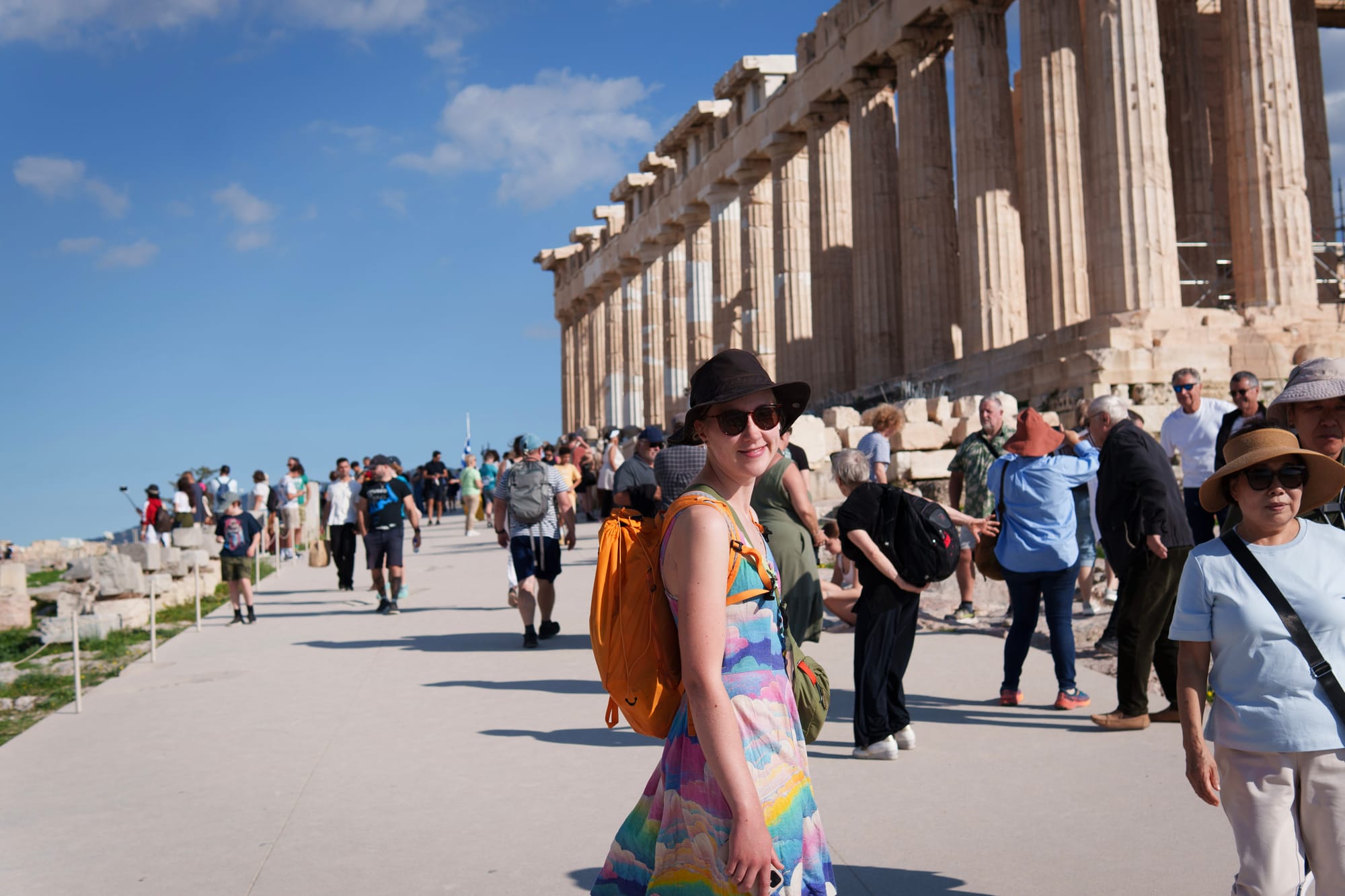
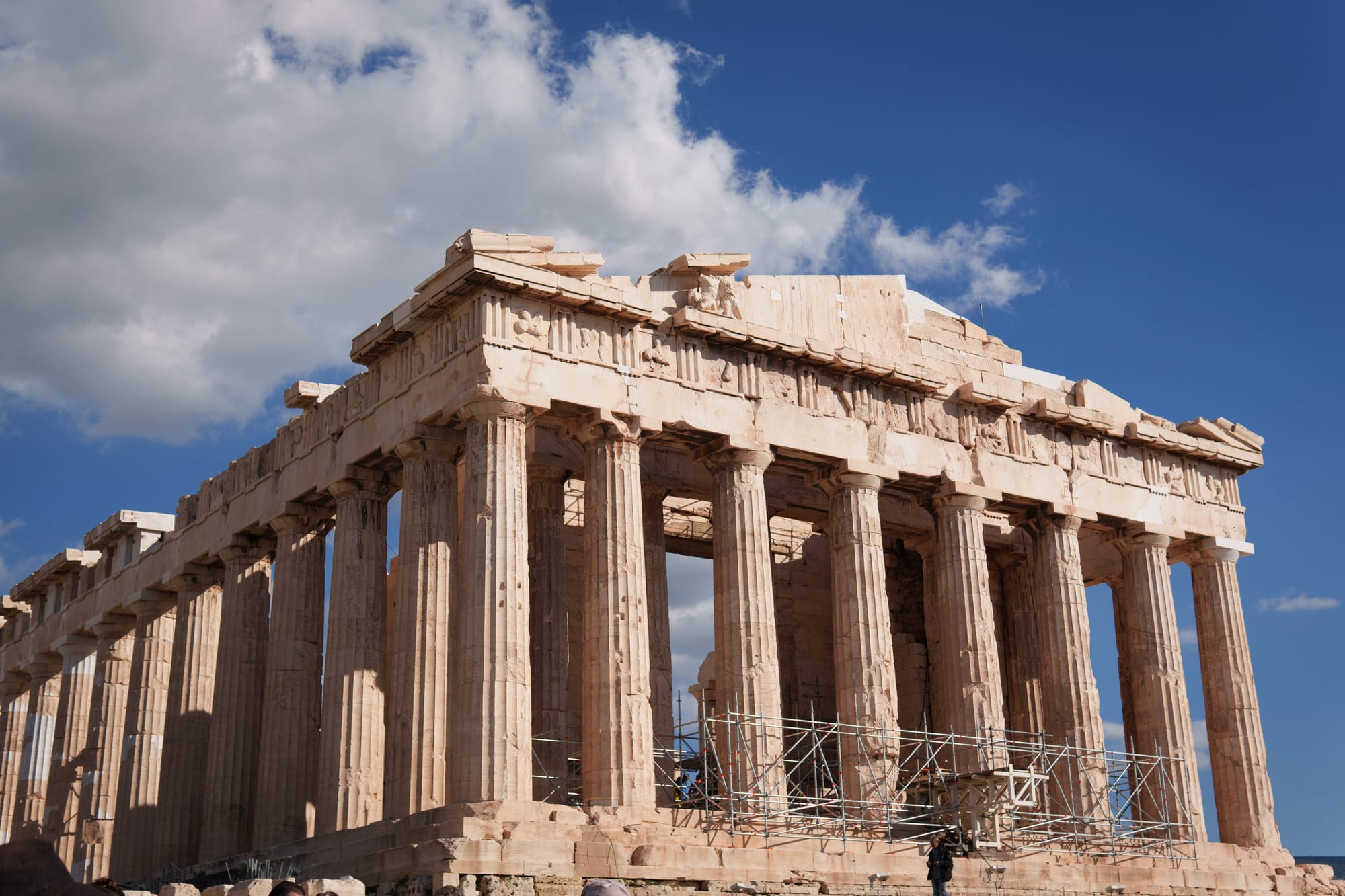
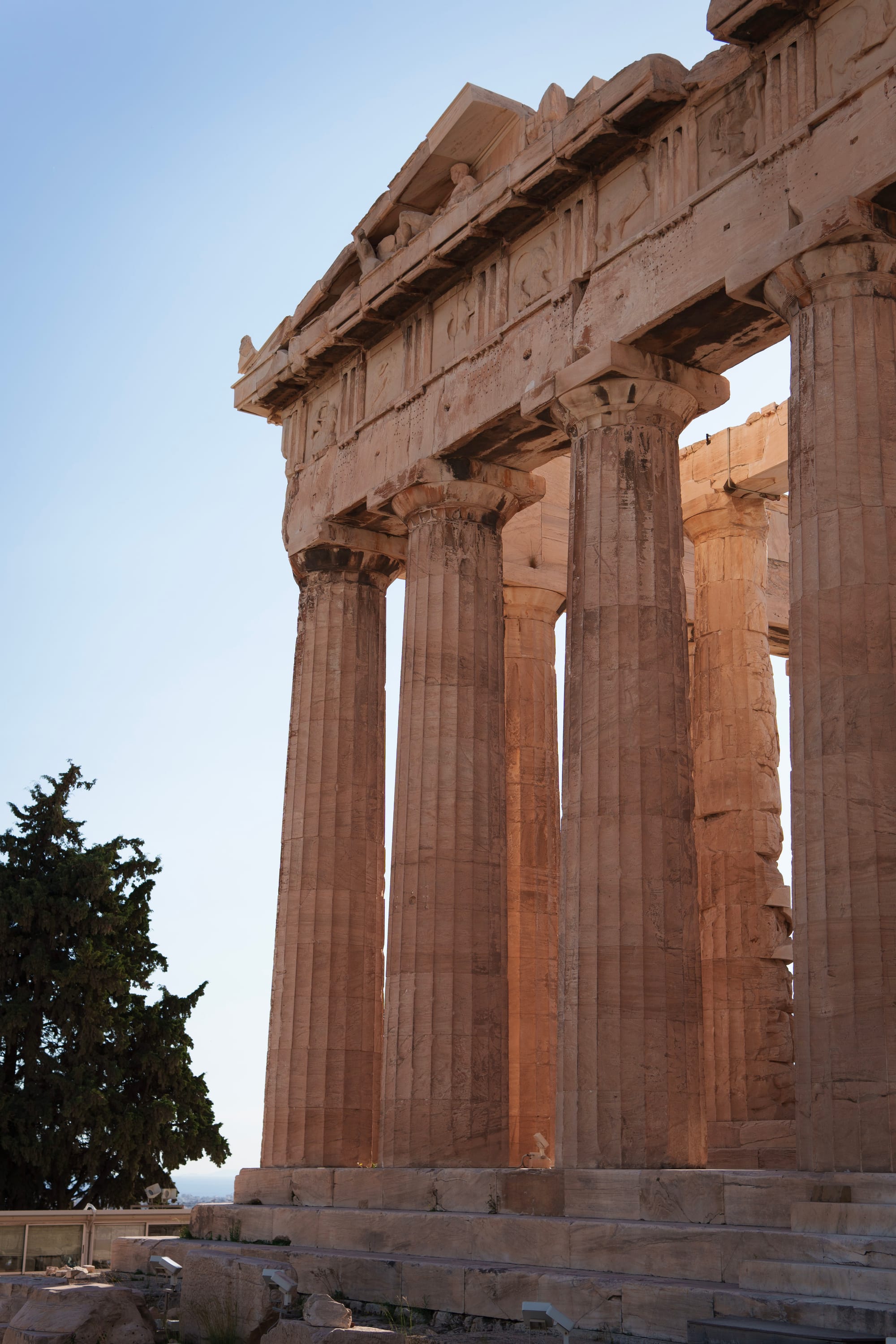
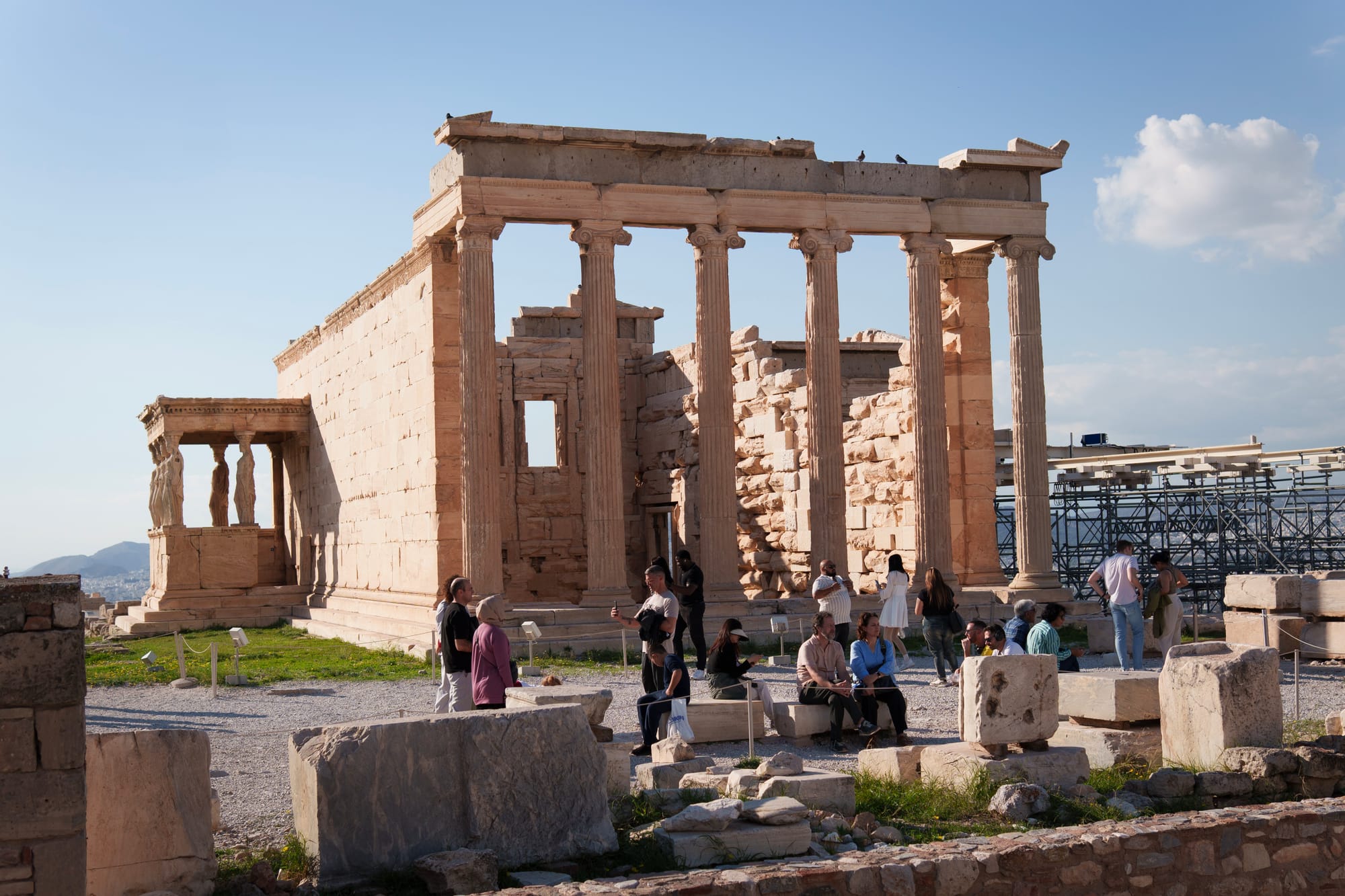
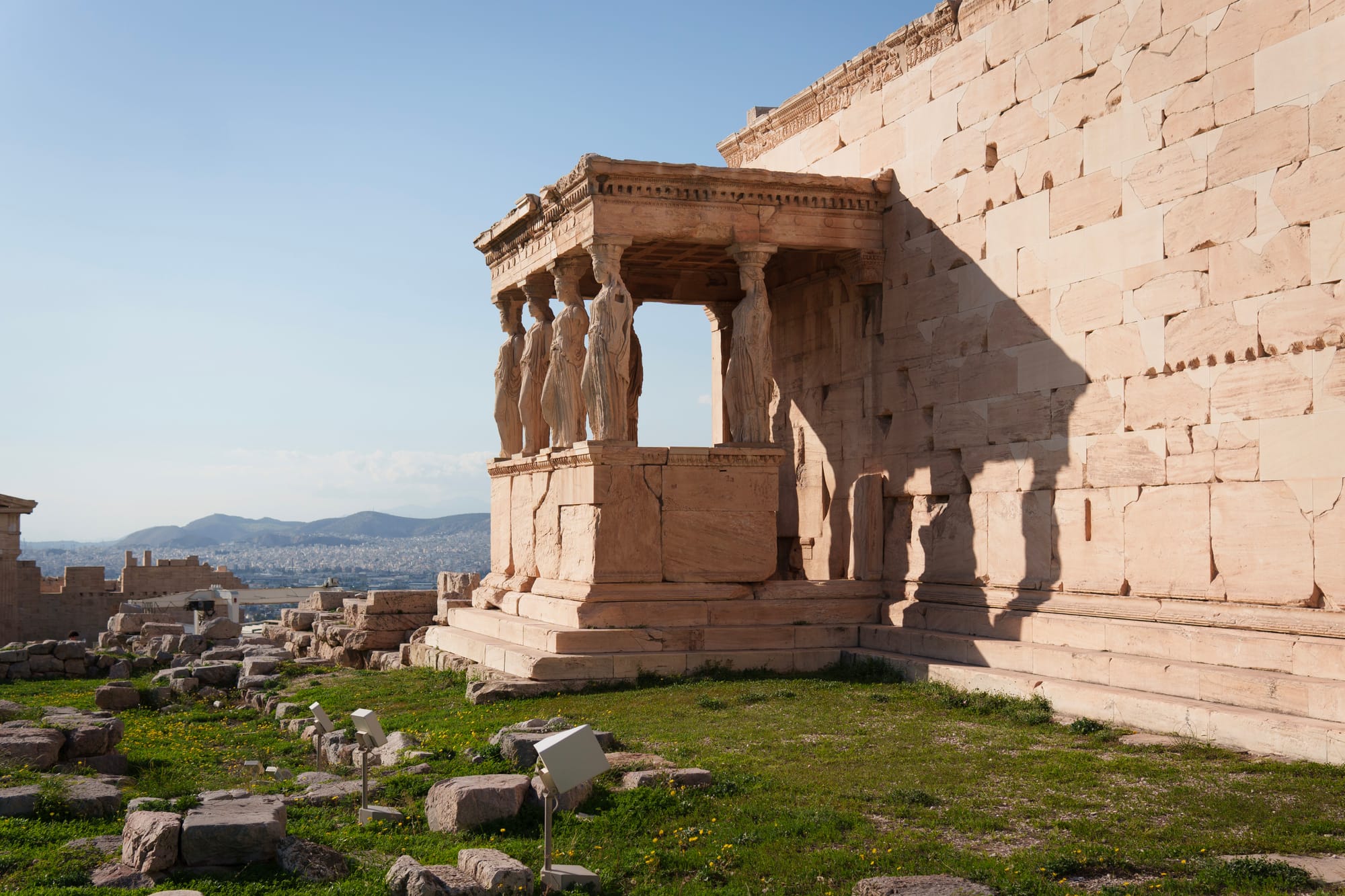
The Acropolis is beyond words. And the British still have most of it... [📸 Rachel & Johann]
At the base of the hill we made a pilgrimage to The Theatre of Dionysus, the birthplace of Western theatre. After mildly freaking out, we strolled through the Ancient Agora, where the ancient plays of Sophocles, Euripides, and Aristophanes (The Birds, The Frogs, Cloud Cuckoo Land) were once performed. Here too, Aristotle would have walked, poor Socrates ‘corrupted the youth,’ and Diogenes the Cynic shocked the public from his wooden bathtub. Plus, the Temple of Hephaestus was really cool.
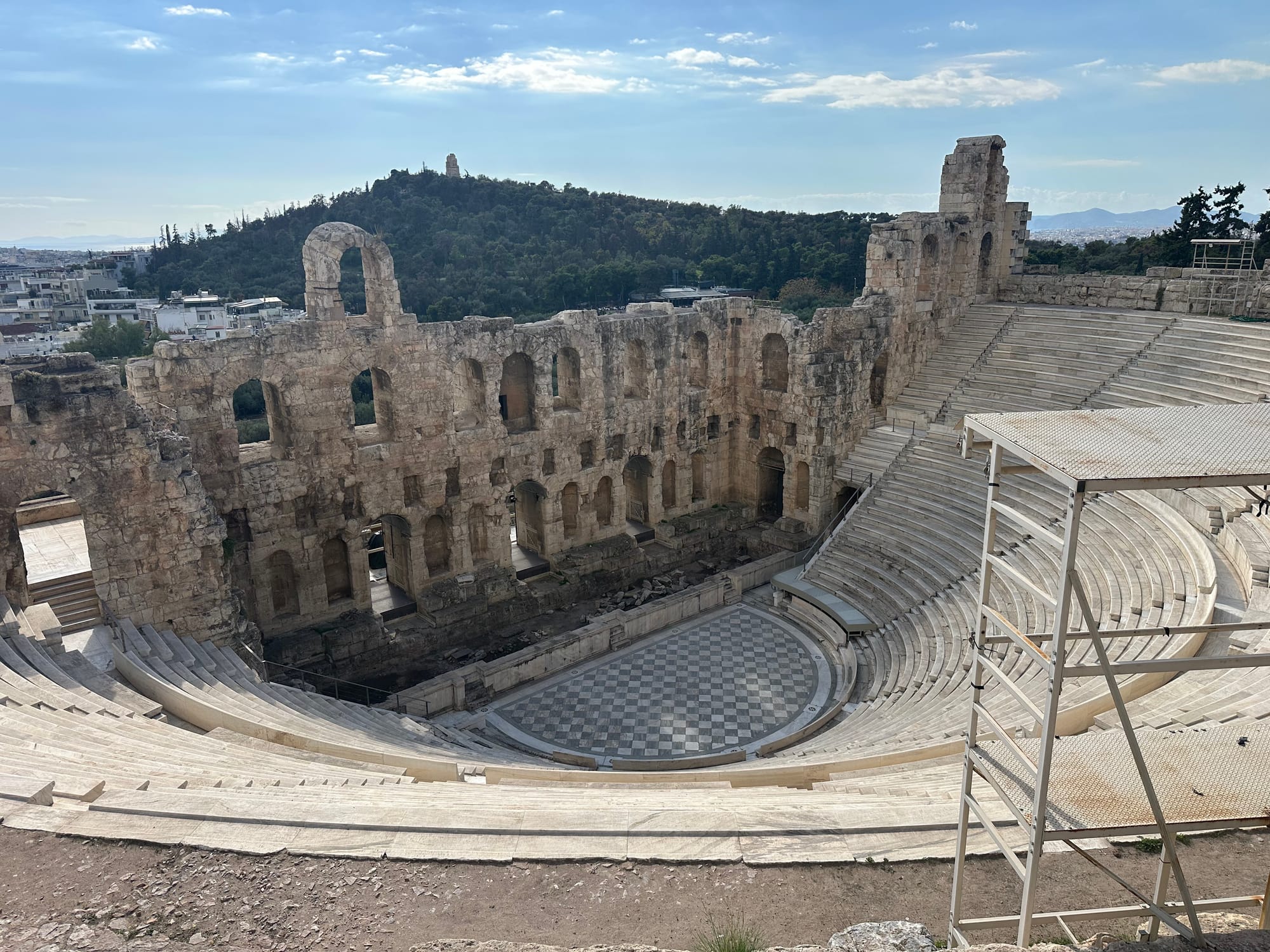
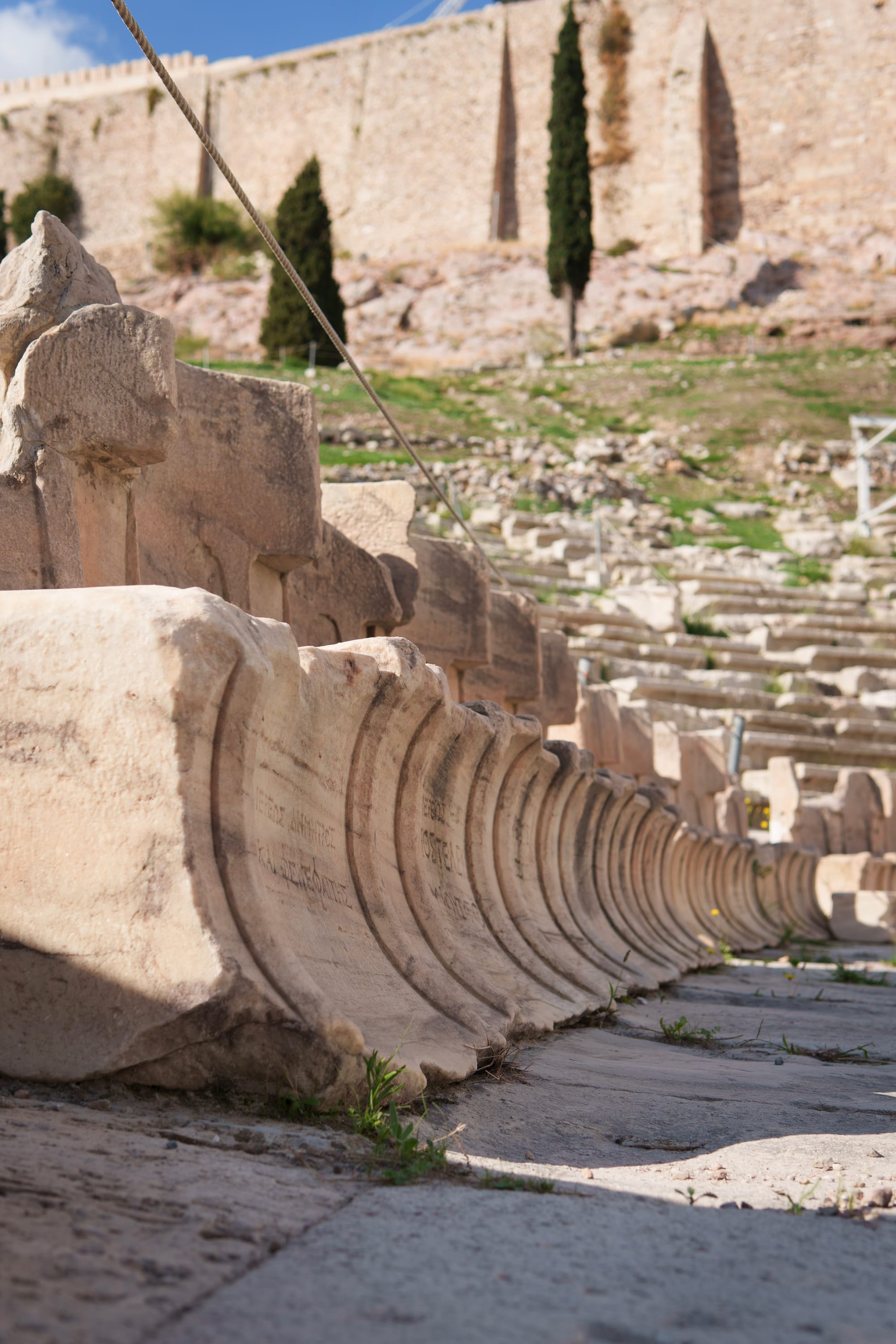
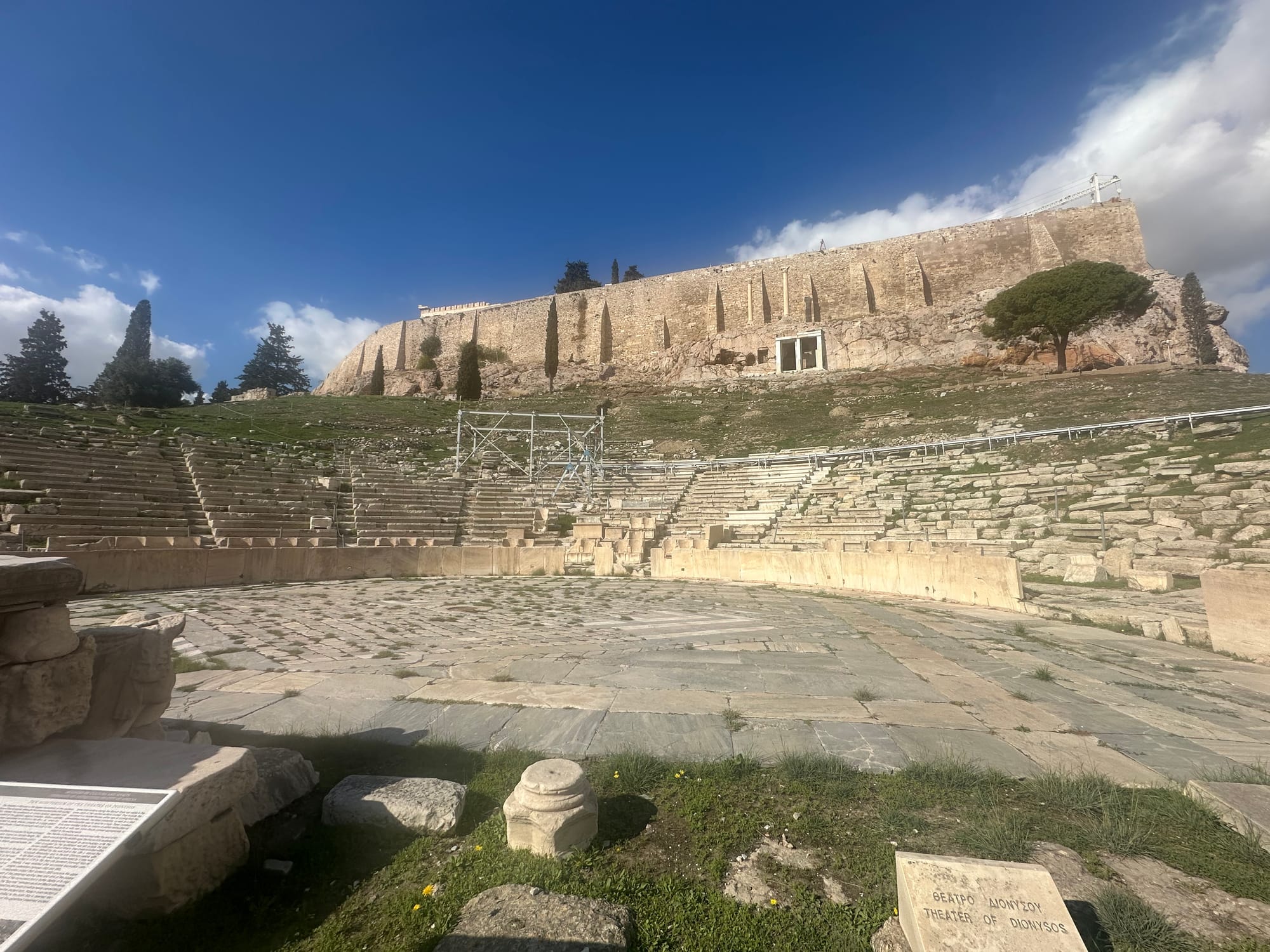
The Theatre of Dionysus is possibly the single coolest place we've gotten to visit so far! [📸 Rachel & Johann]
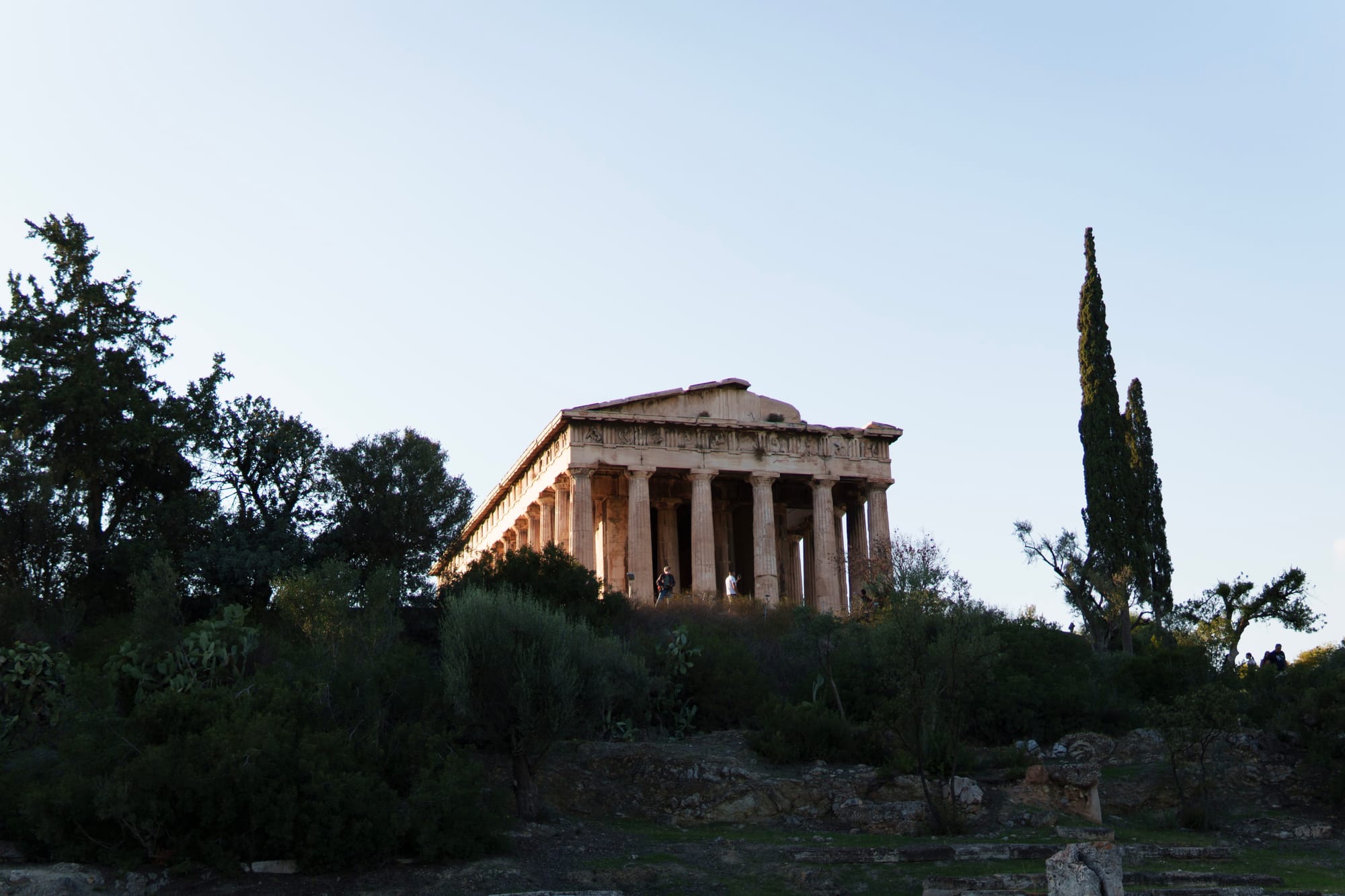
The Ancient Agora of Athens left us with a strong desire to live inside a bathtub. [📸 Rachel & Johann]
Naxos and Syros
The filling of our travel sandwich, the Greek islands of Naxos and Syros, were also delightful. Unfortunately, we caught some nasty bug and spent most of this time as a collective hot mess (that’s our excuse for only climbing the one mountain). We did try for one easy coastal hike in Syros, and Rachel got up about ten stairs before she was completely worn out. So instead, she swam in the Aegean Sea, and we sat on the sand eating dolmades and feta drizzled with oil olive and oregano.
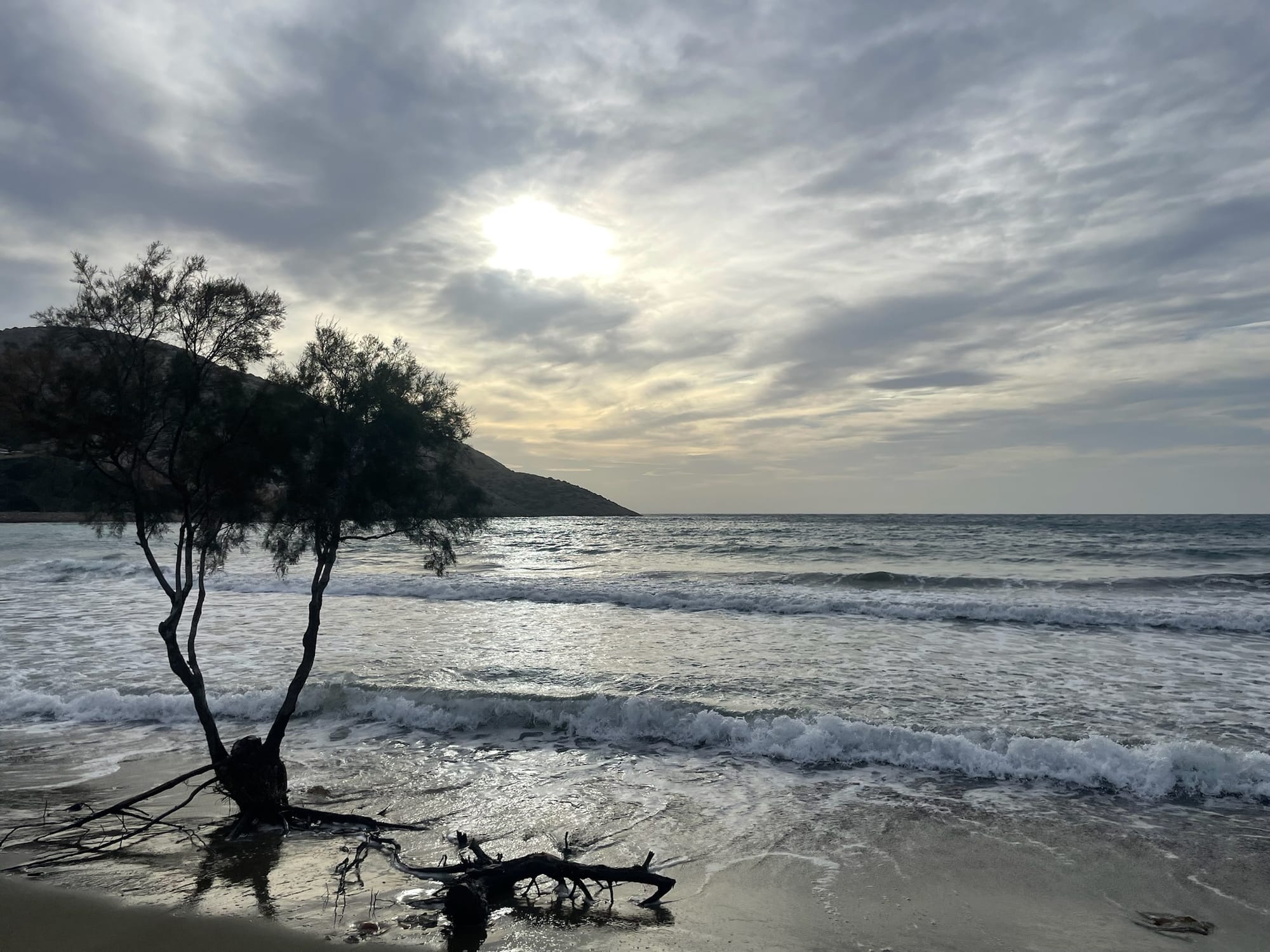
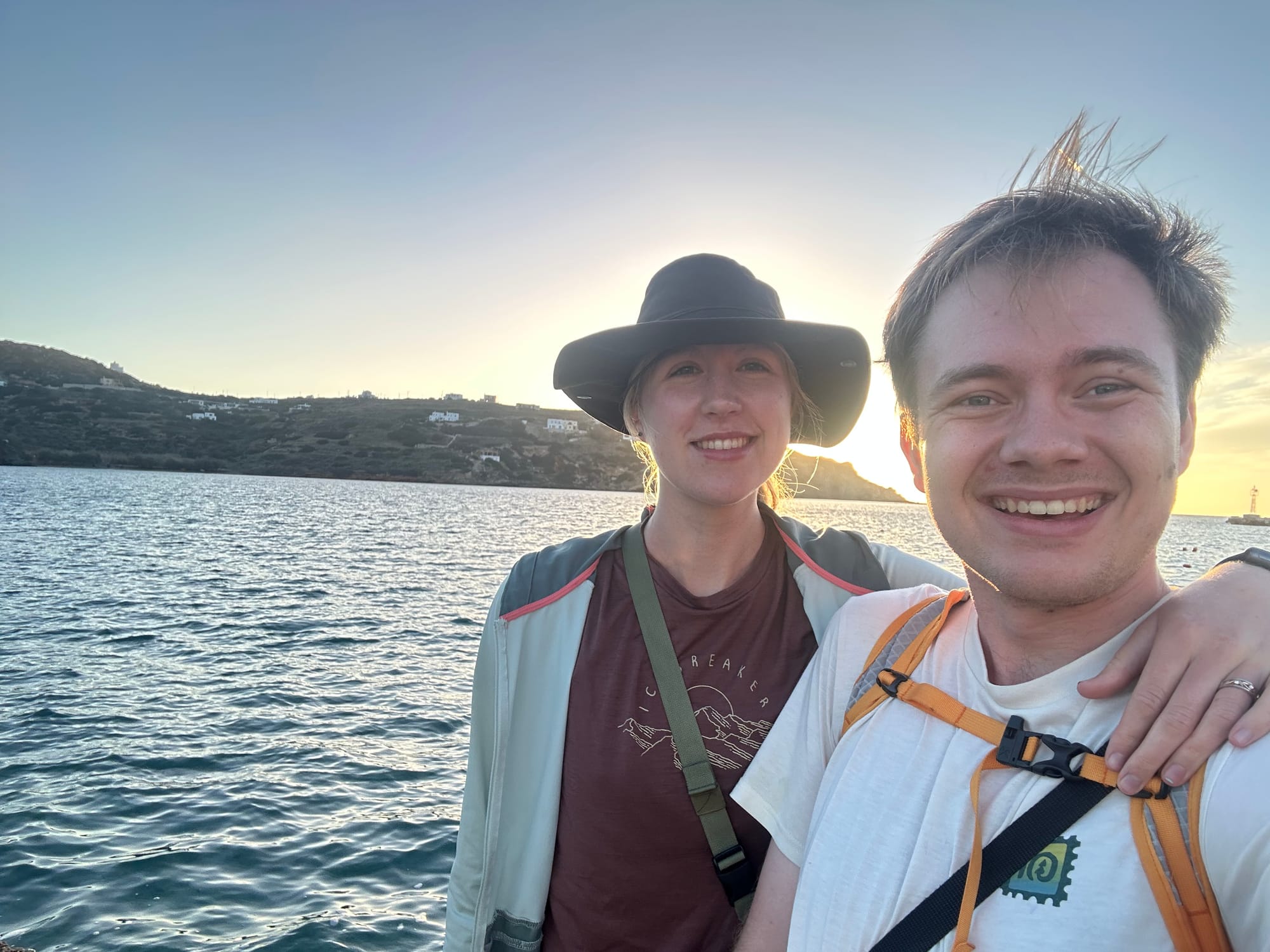
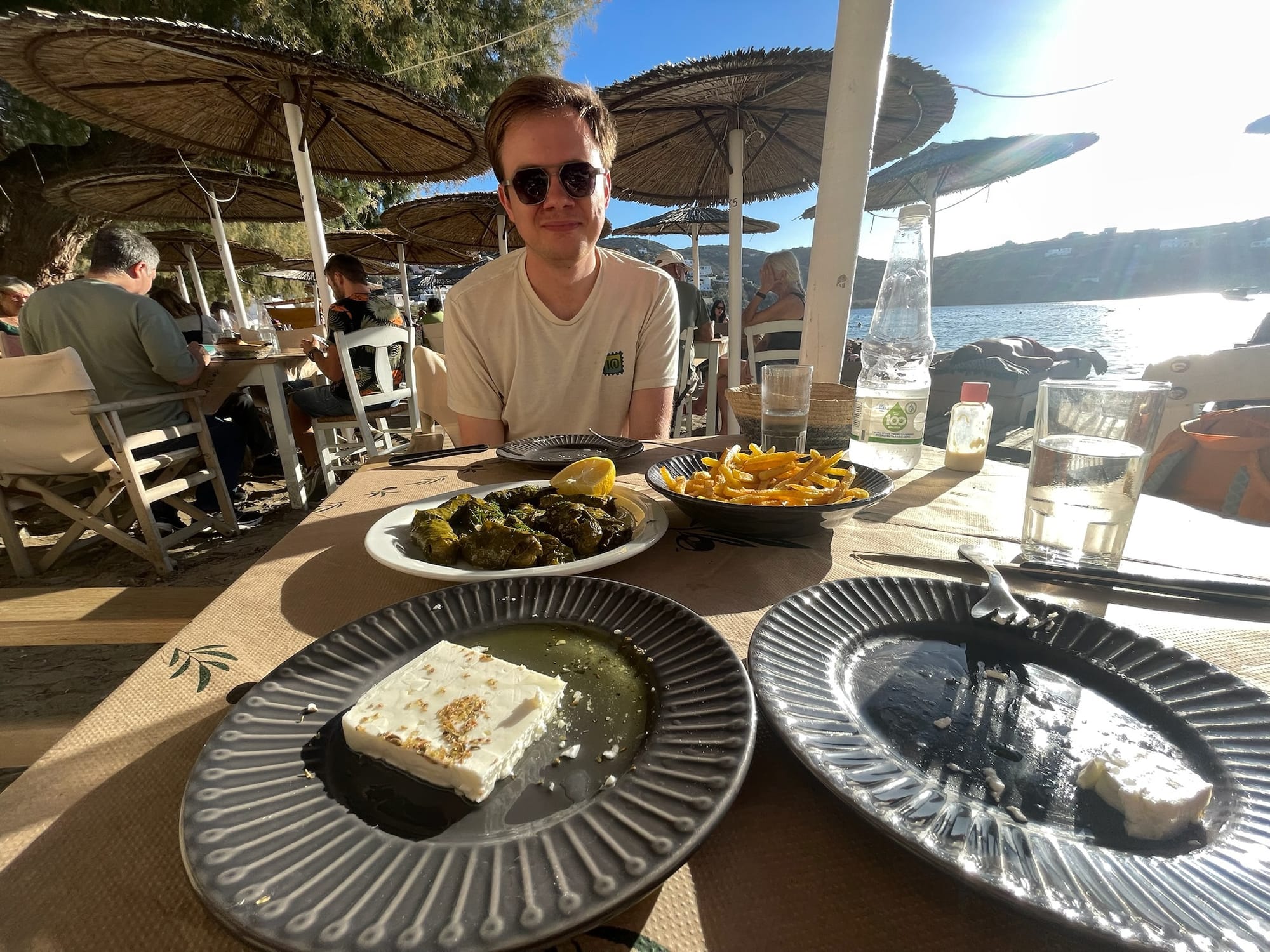
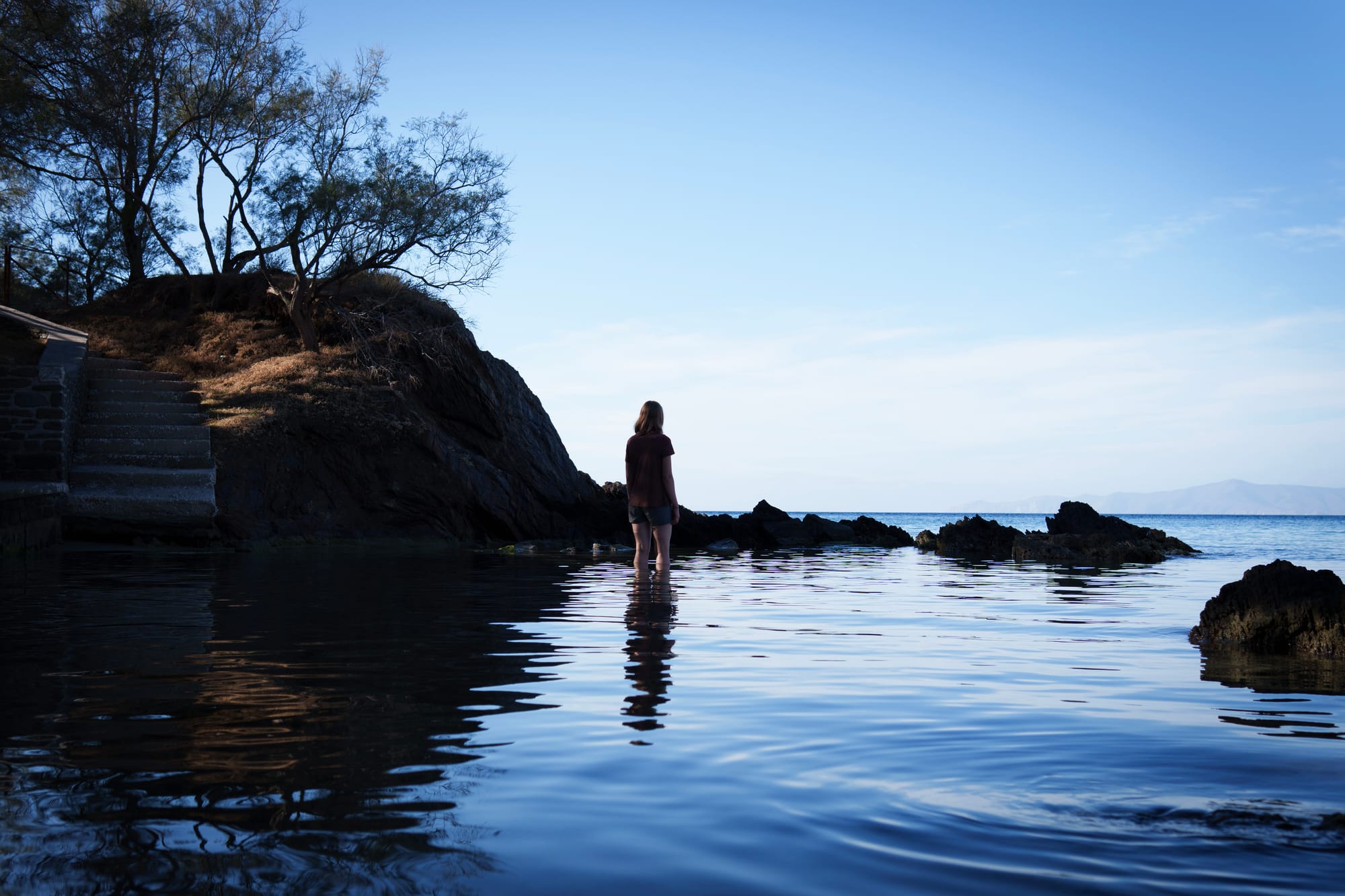
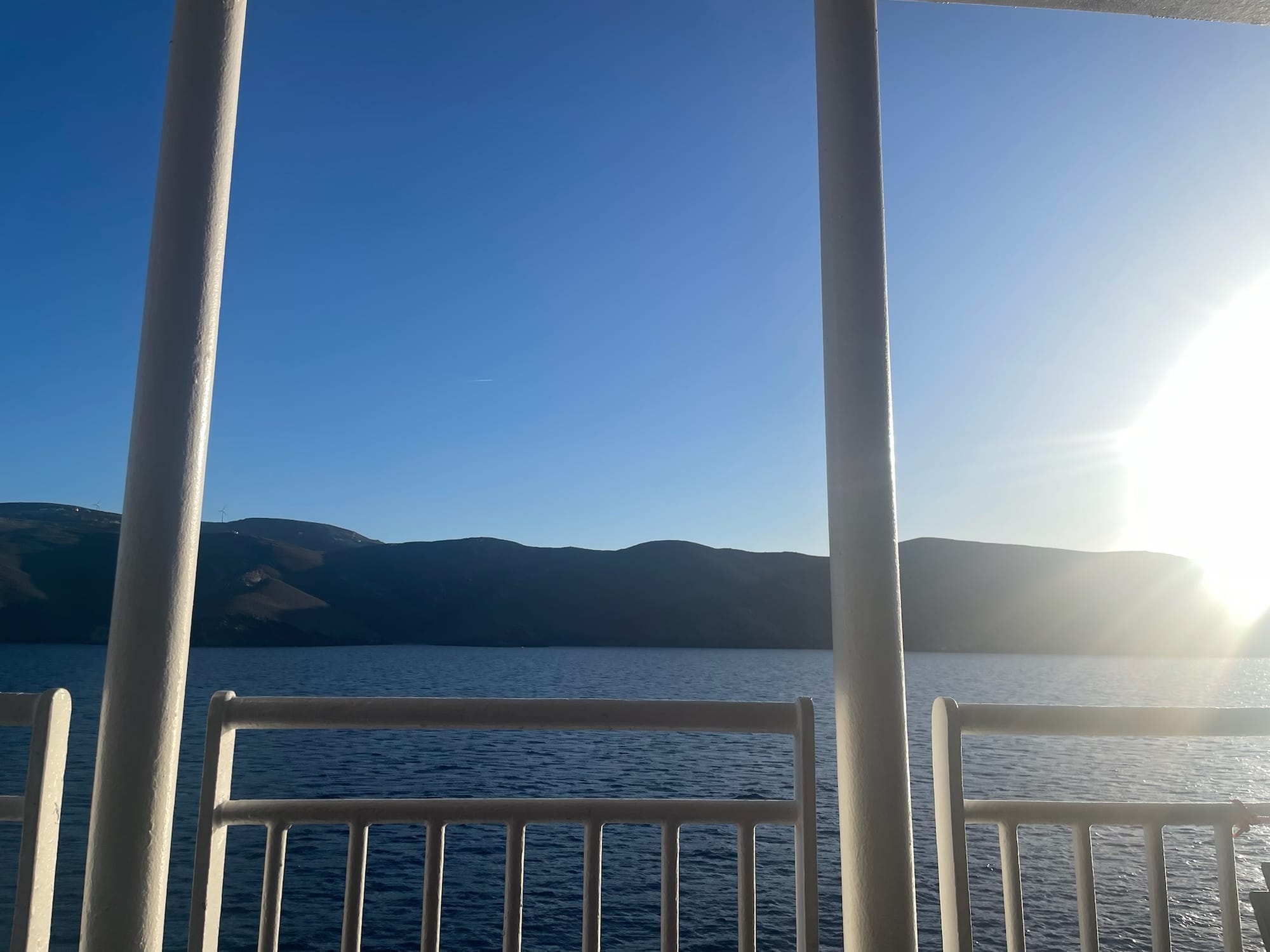
Thankfully, no hydras were encountered in this part of the Aegean Sea. [📸 Johann & Rachel]
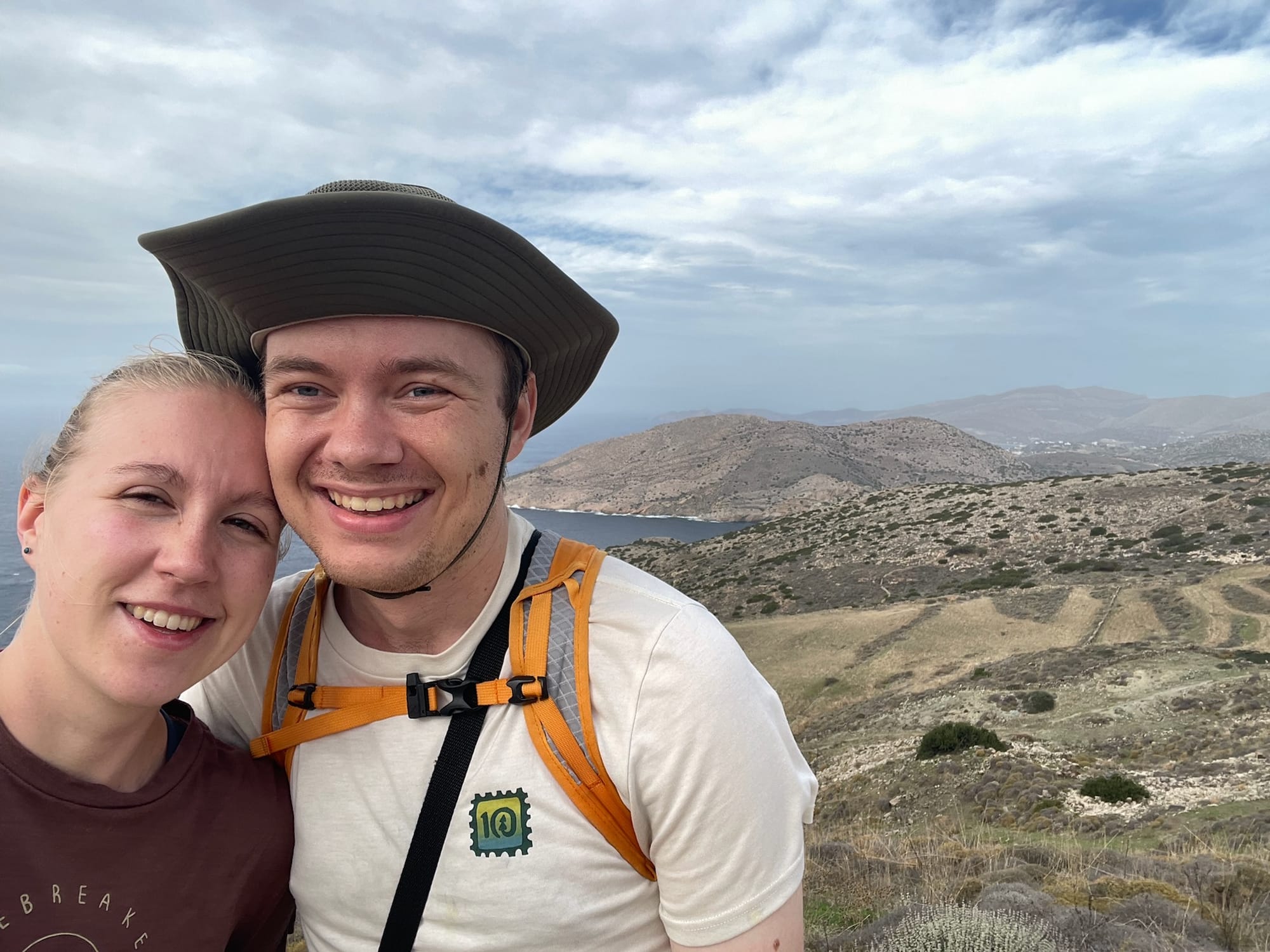
The next day we did manage a hike to the seaside Chapel of St. Stefanos. And when we say seaside, we mean built into a cave and perched mere meters above the crashing waves. To get there we took a bus along some very twisty roads, and then walked up an intensely steep road from the beach to the car park. At the top of the hill (200 meters above sea level) we could see almost the entirety of the small island with its many arid, treeless hills. After the initial climb, the rocky descent and return from the church itself was quite manageable because IT actually had switchbacks, unlike the road. While we were walking back down the road a car came rushing by, bouncing violently over the rough pavement. As we watched, the back hatch flew open and bags of groceries started to tumble out. The car stopped and two middle-aged women popped out to retrieve their groceries. We helped pick up some of the spilled contents, and barely managed to keep from giggling until they’d driven away. As soon as they were out of sight, we broke down laughing.
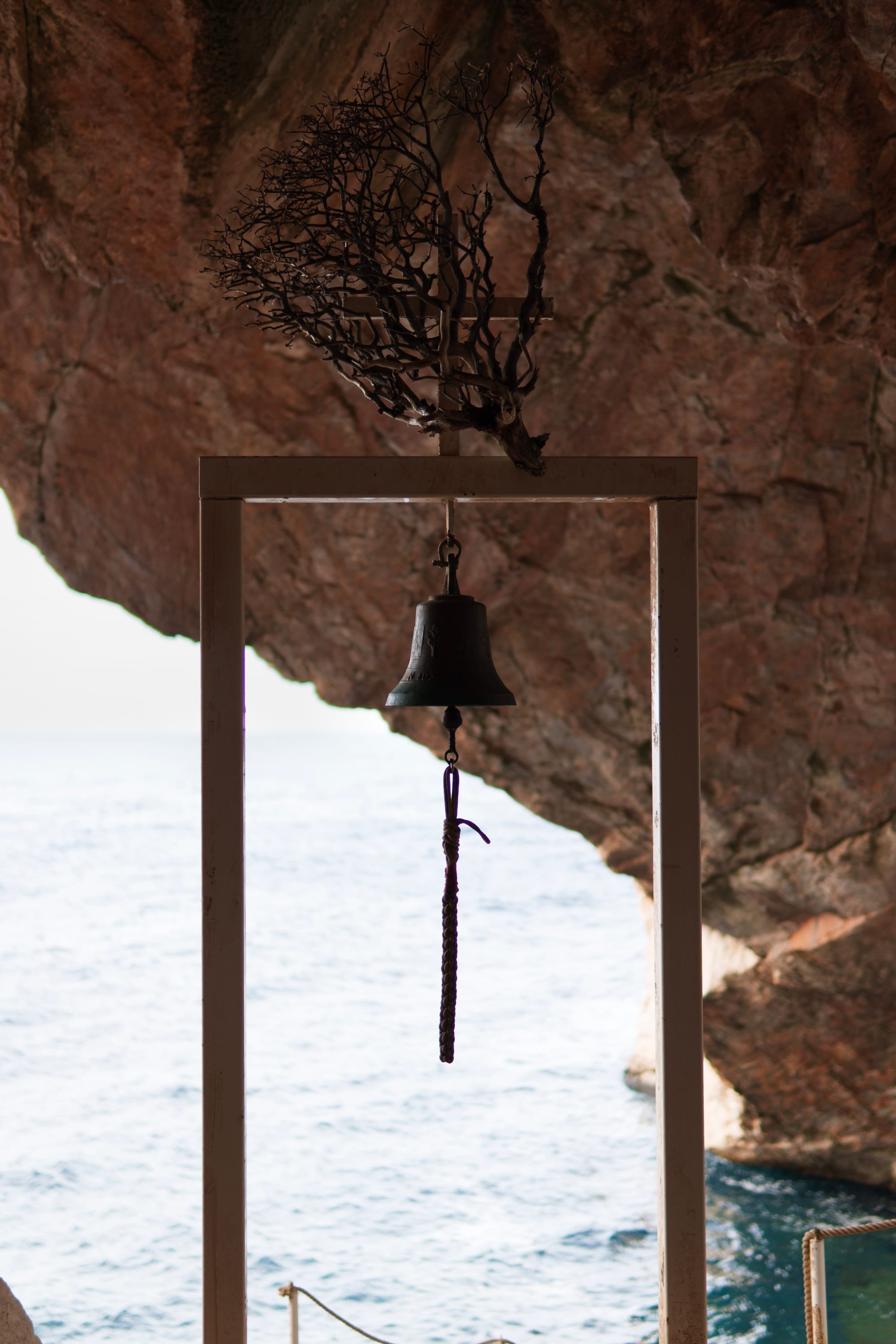
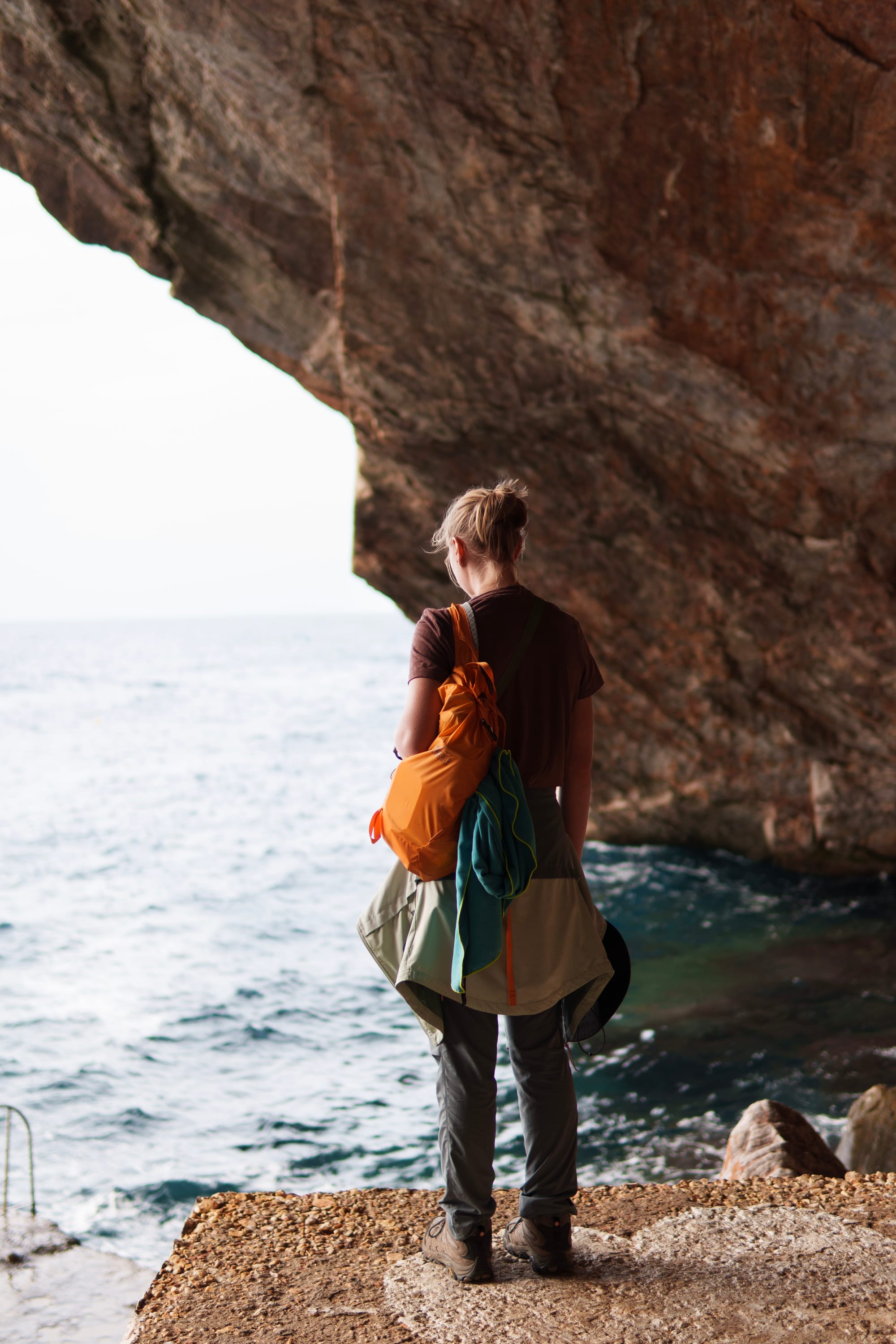
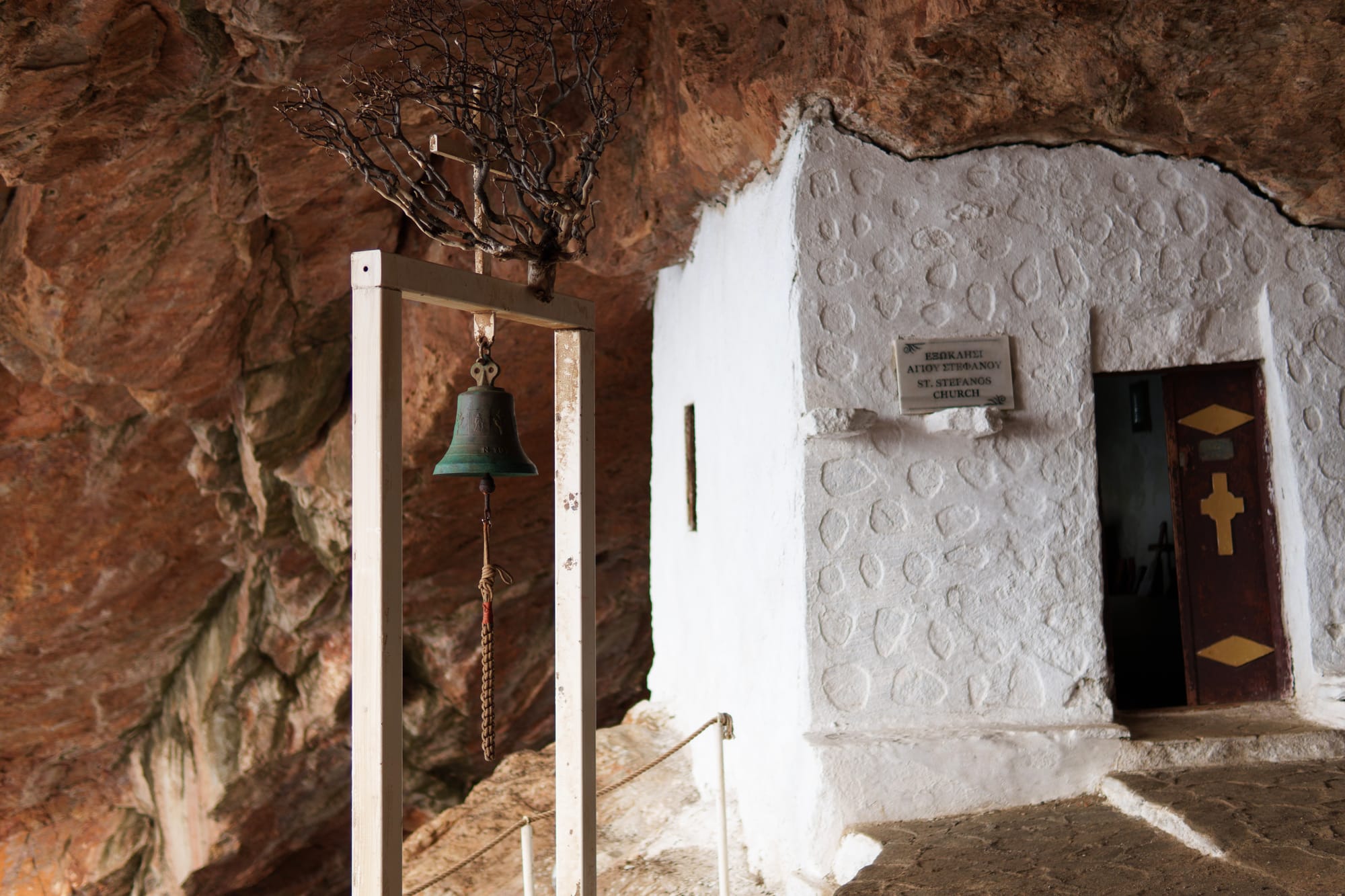
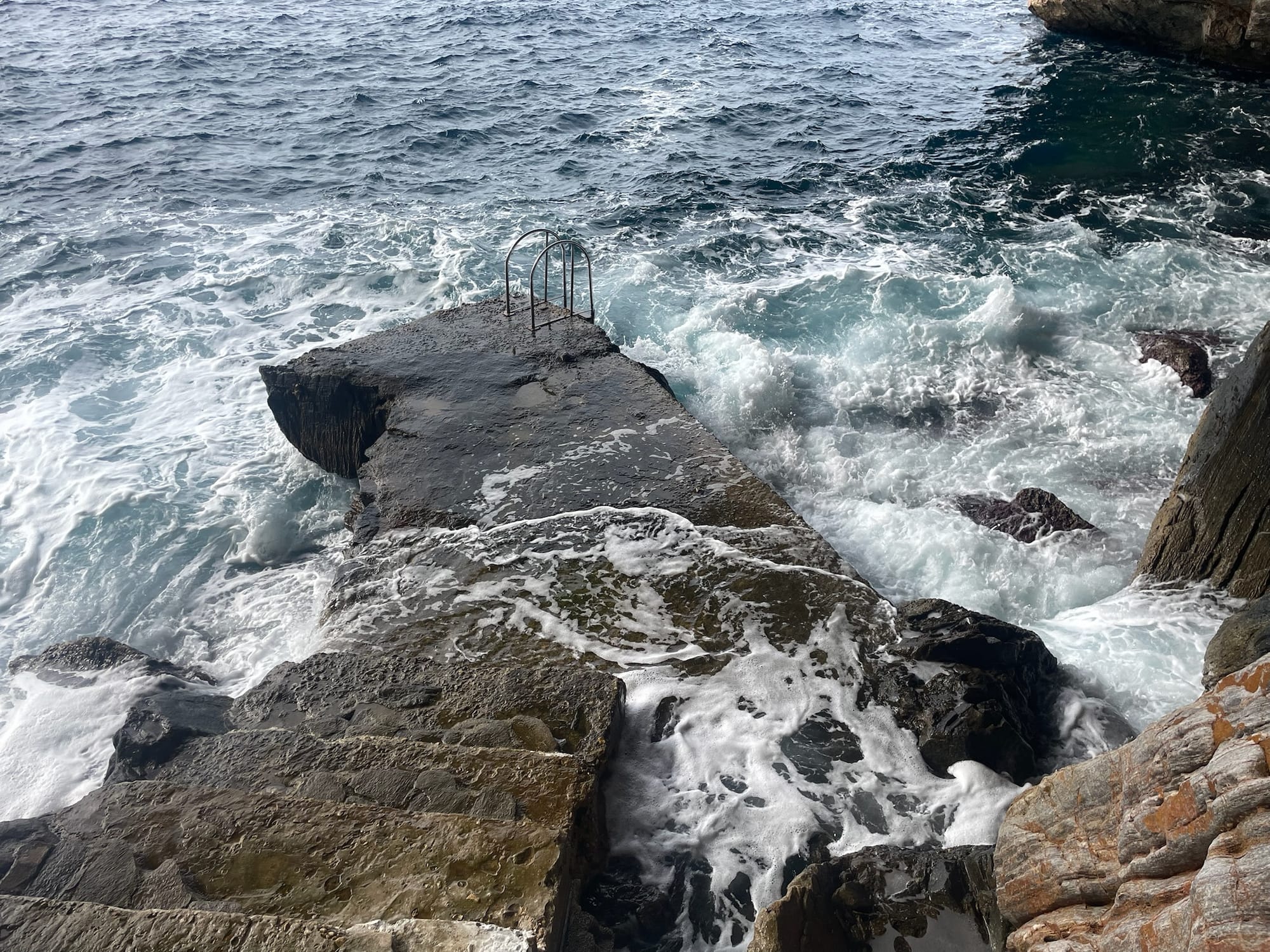
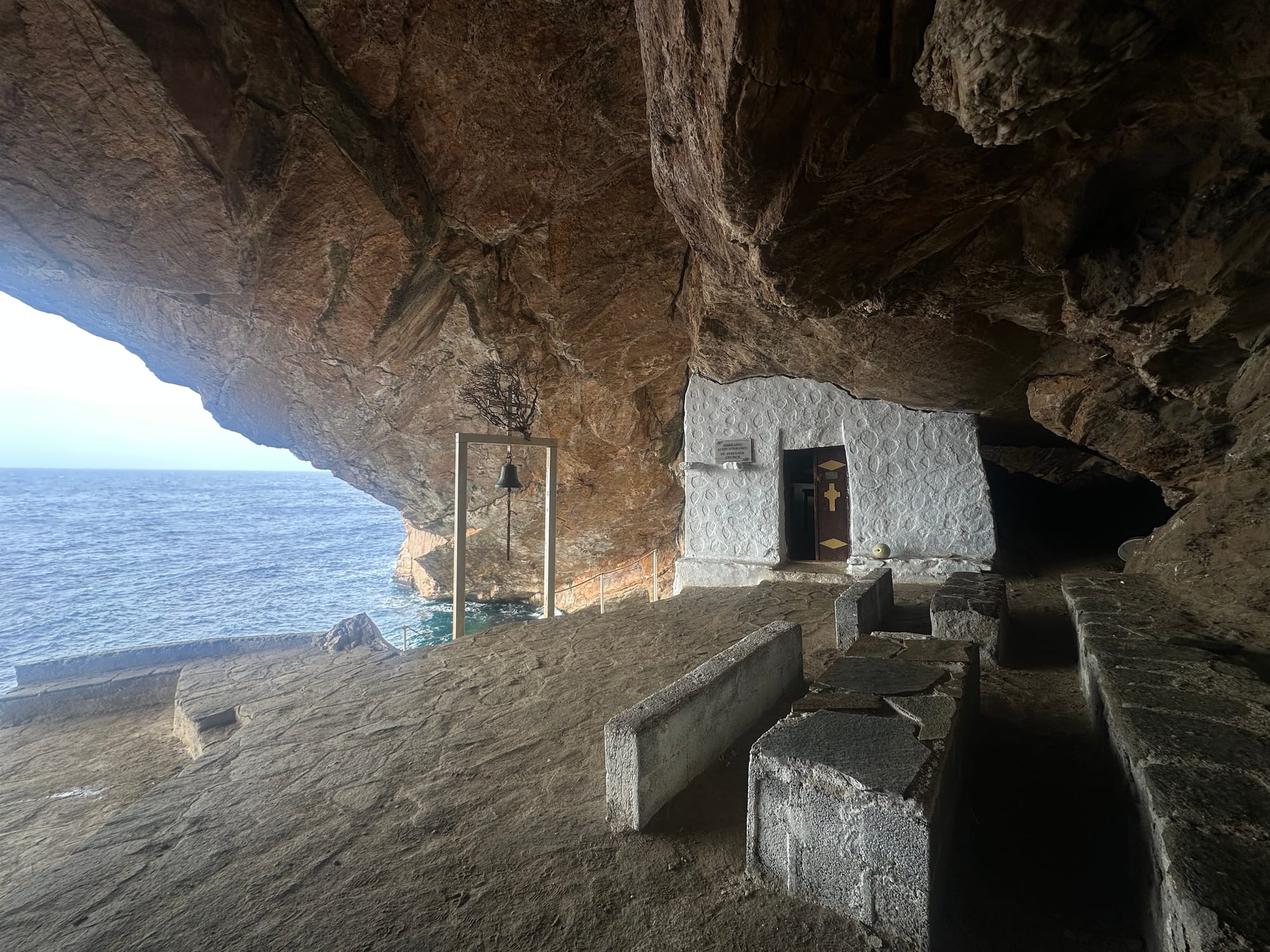
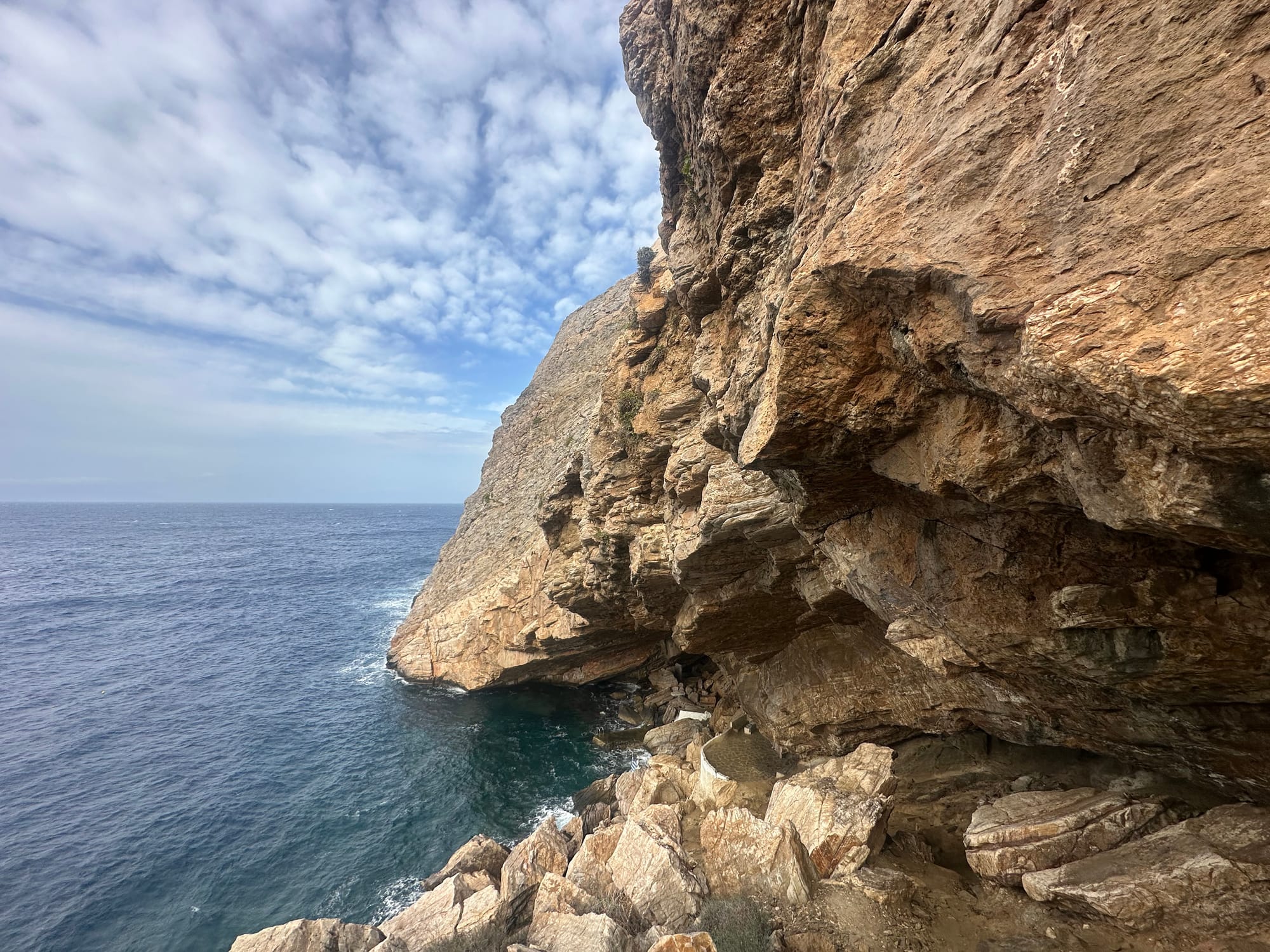
We were SO tempted to swim next to this chapel. Of course, the waves would have killed us, but still! [📸 Rachel & Johann]
We loved exploring the Cycladic villages, with their white-washed cubic buildings accented with eye-popping shutters and doors, framed by bright bougainvilleas. They tended to be quite vertically built, and exploring involved a lot of stairs. (Side note, our thighs are getting ripped.) Ano Syros took the cake here, with the entire medieval village being built into the side of a steep, high hill. It was nothing BUT stairs. It, like the other Cycladic villages, also happened to be incredibly charming. We loved the sidewalks of stones framed by white paint, which reminded us exactly of nougat (and spurred a sugar binge).
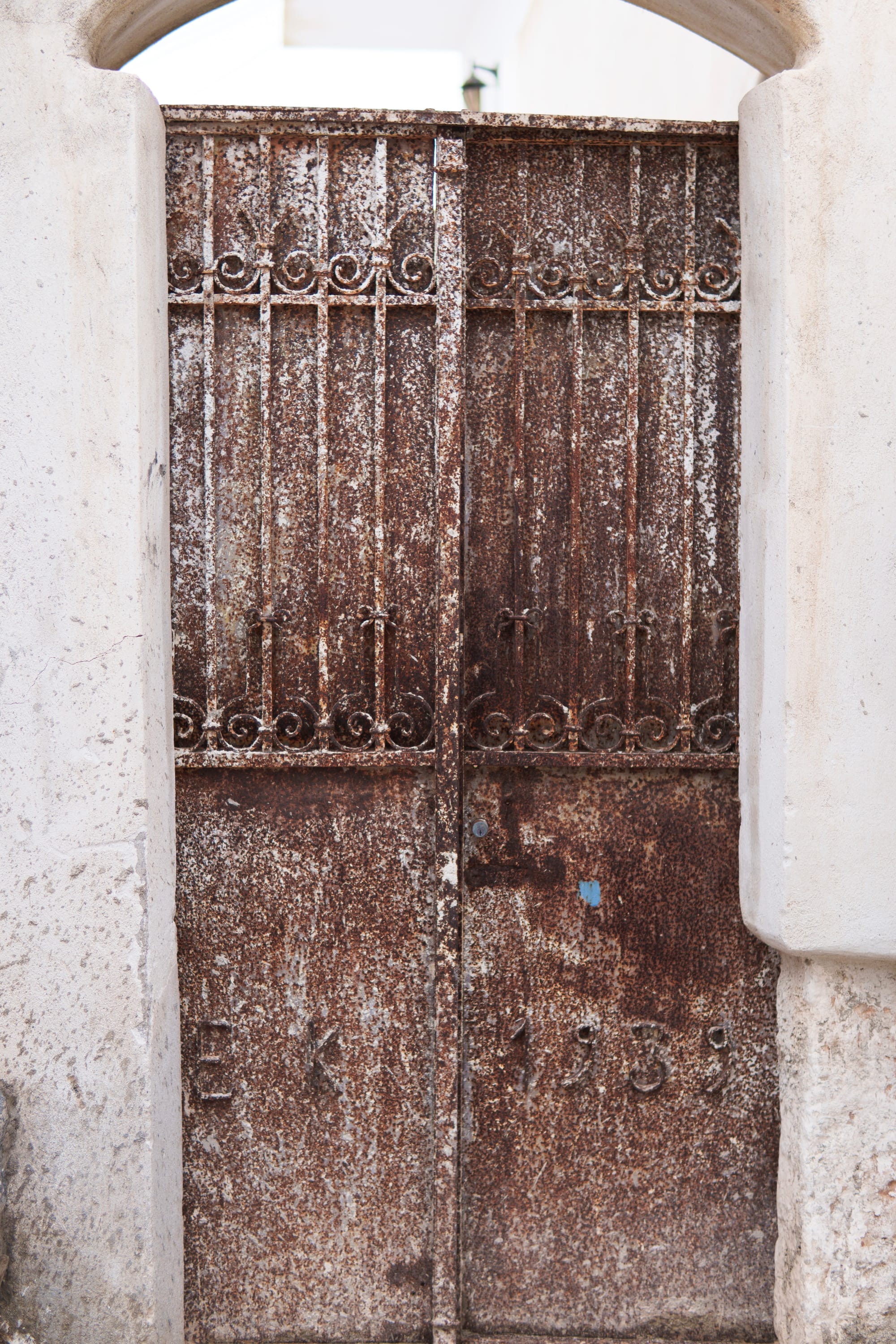
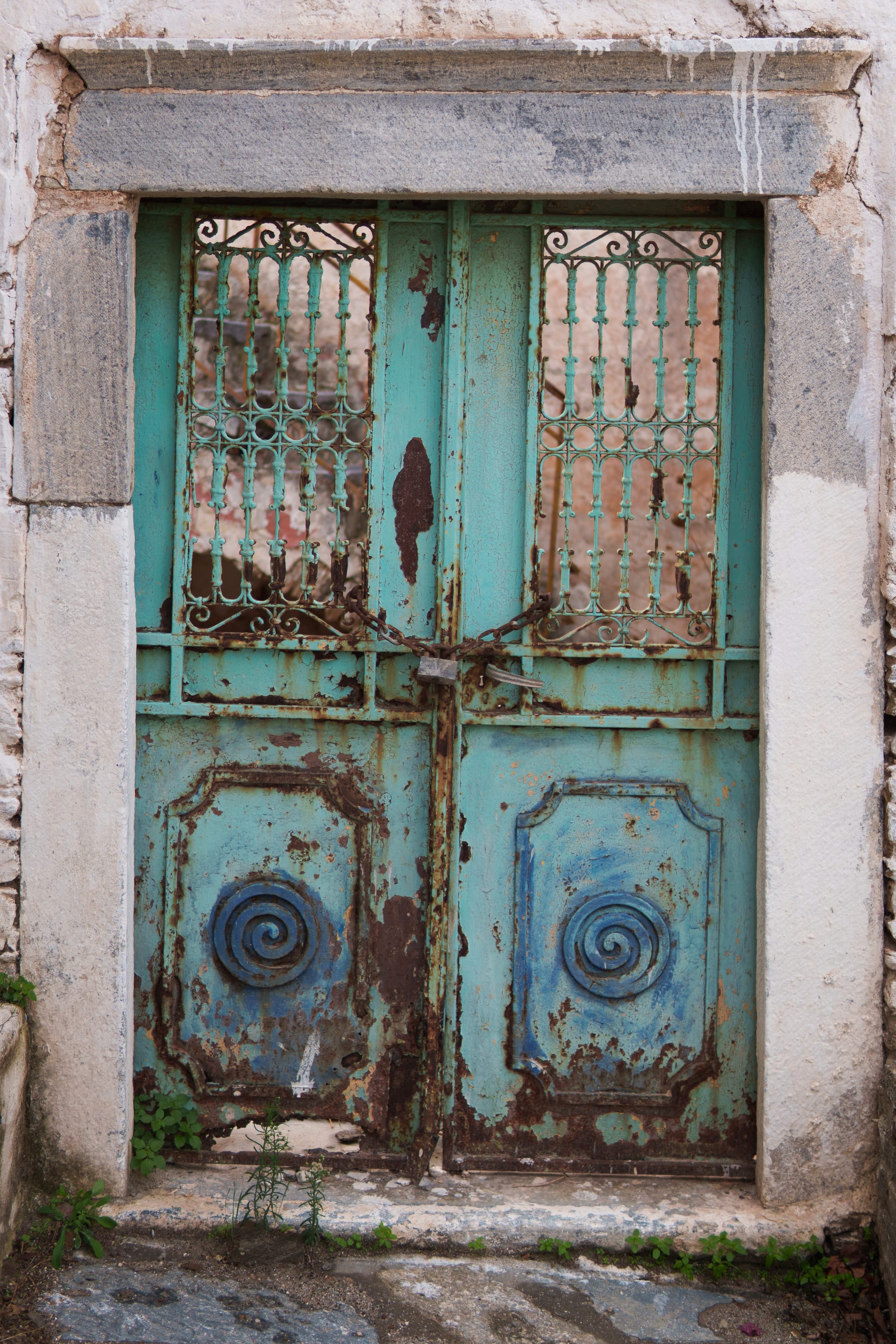
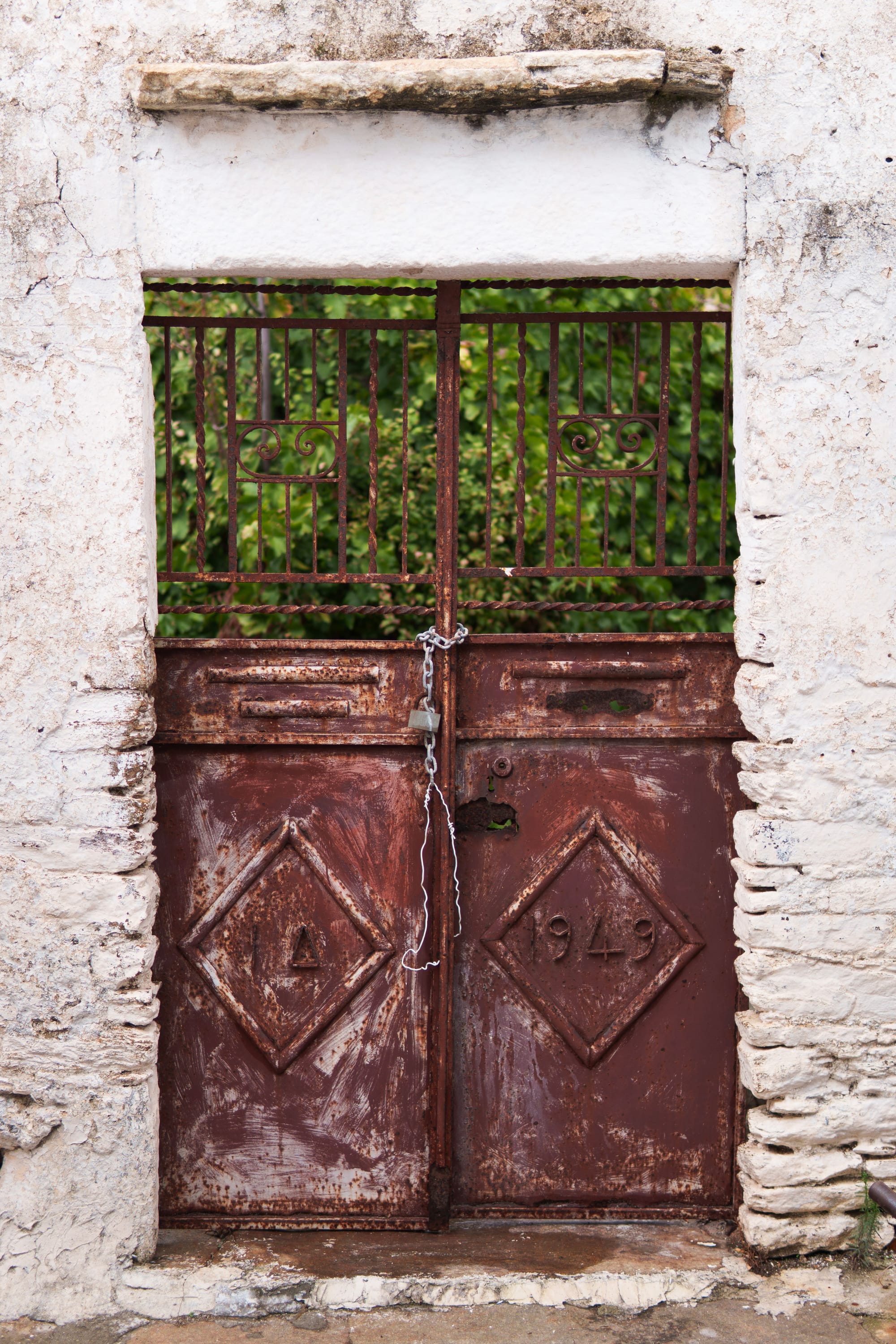
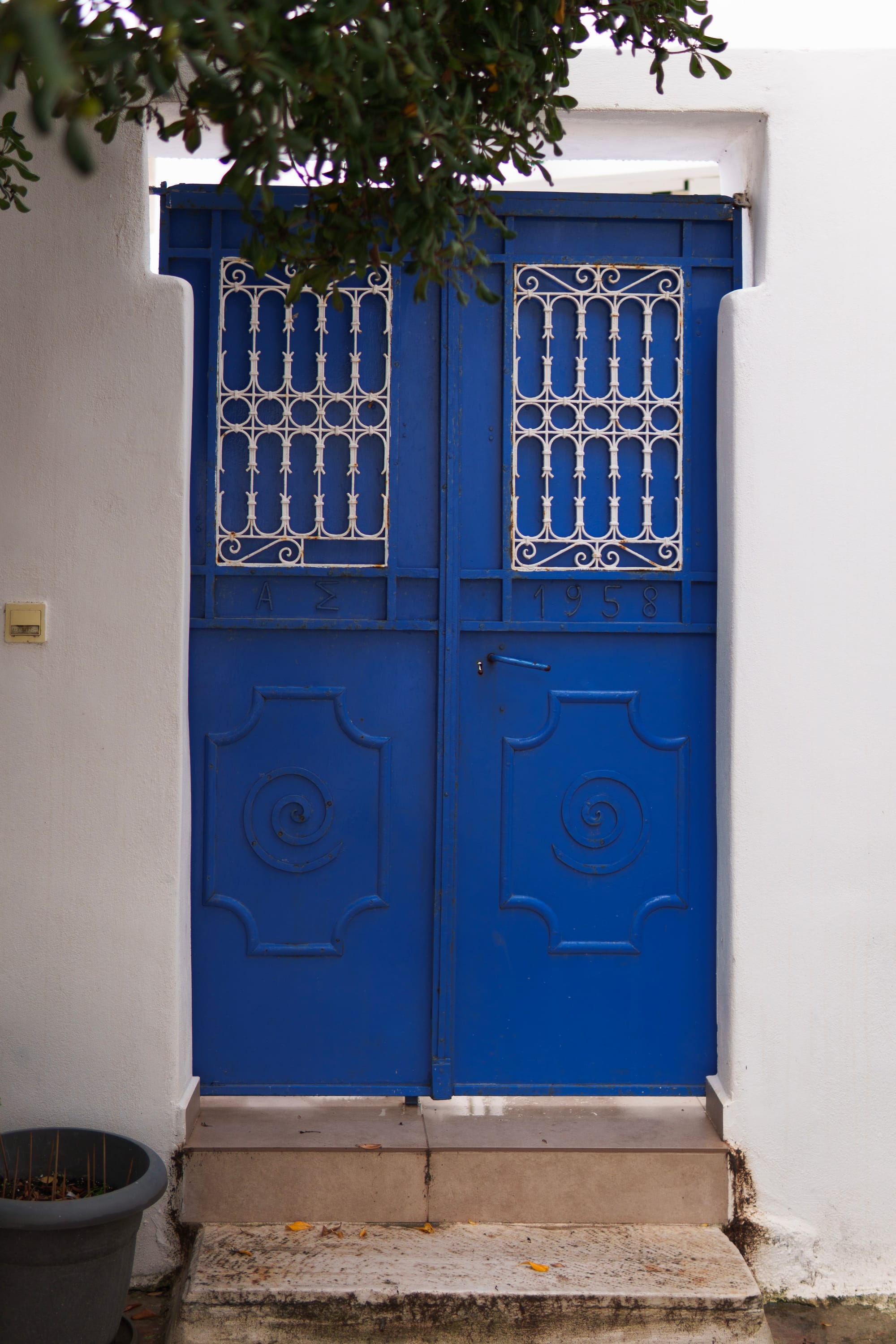
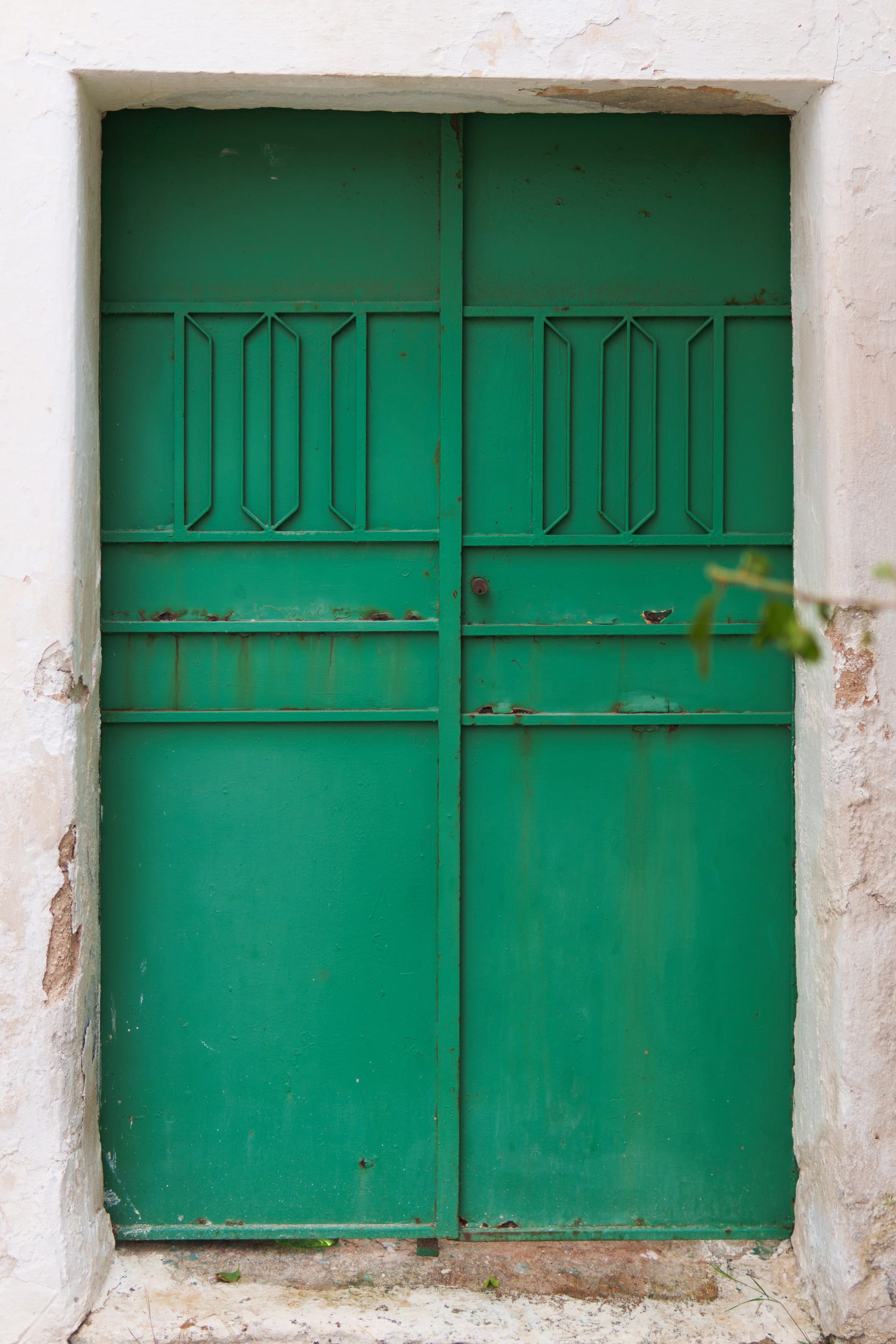
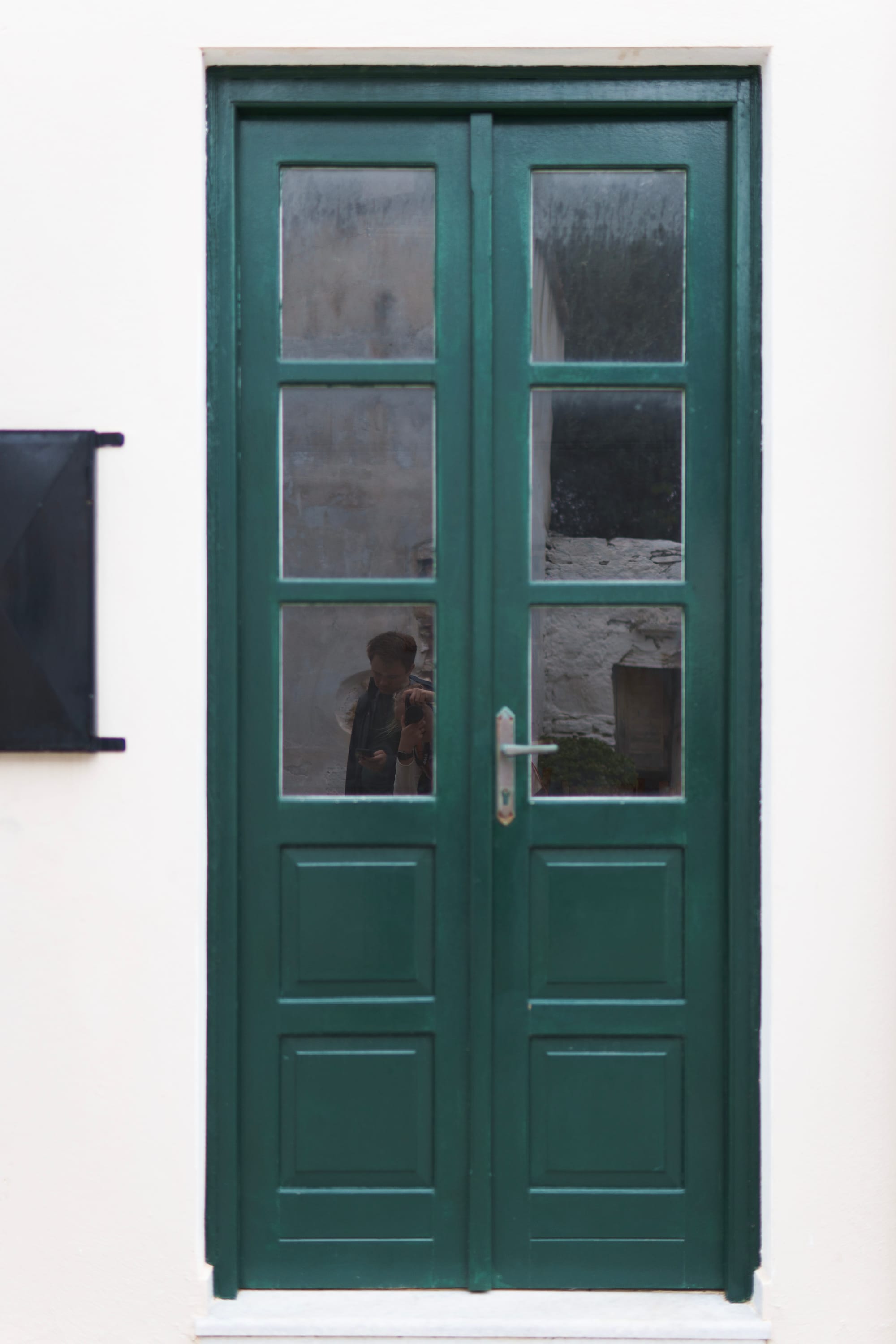
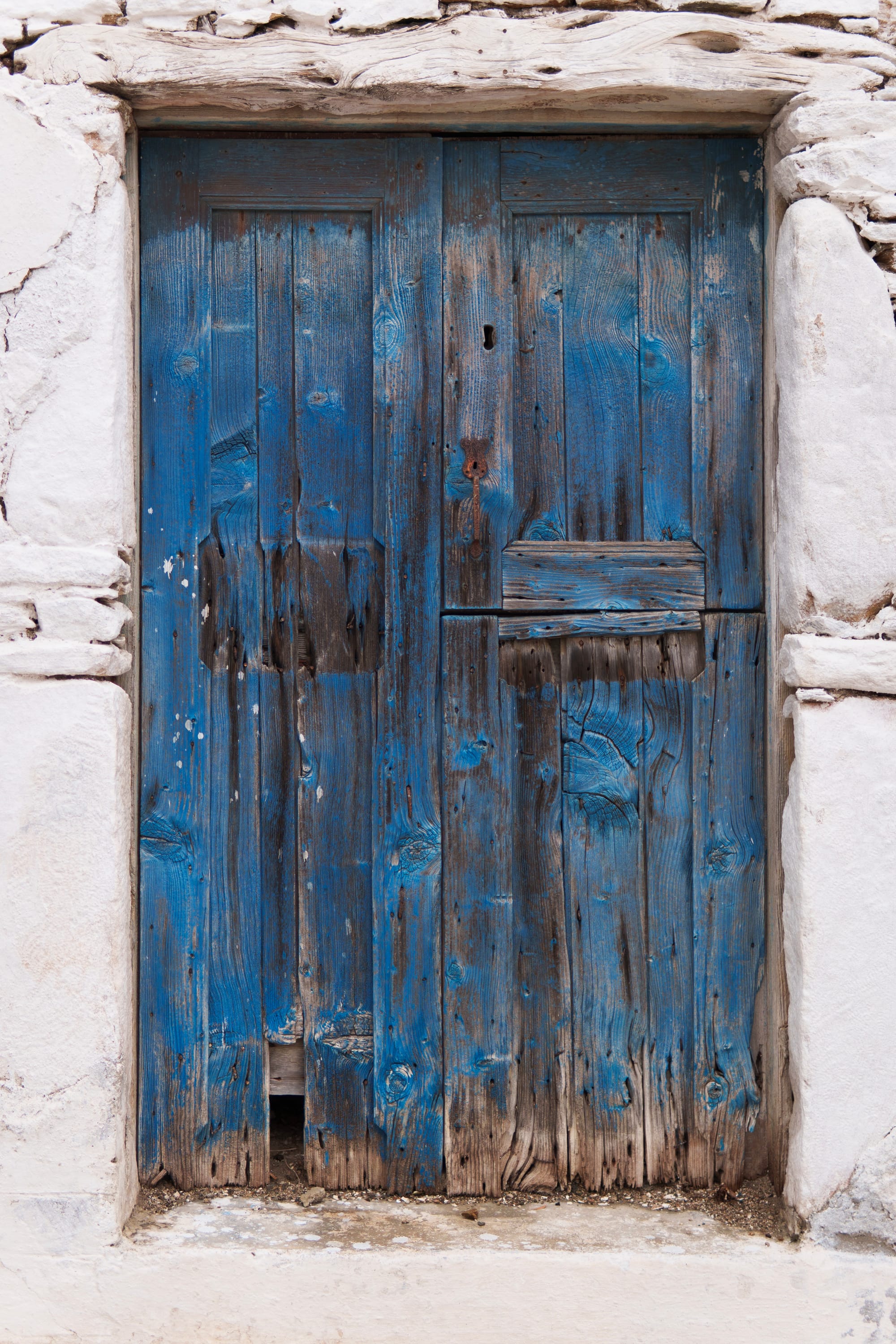
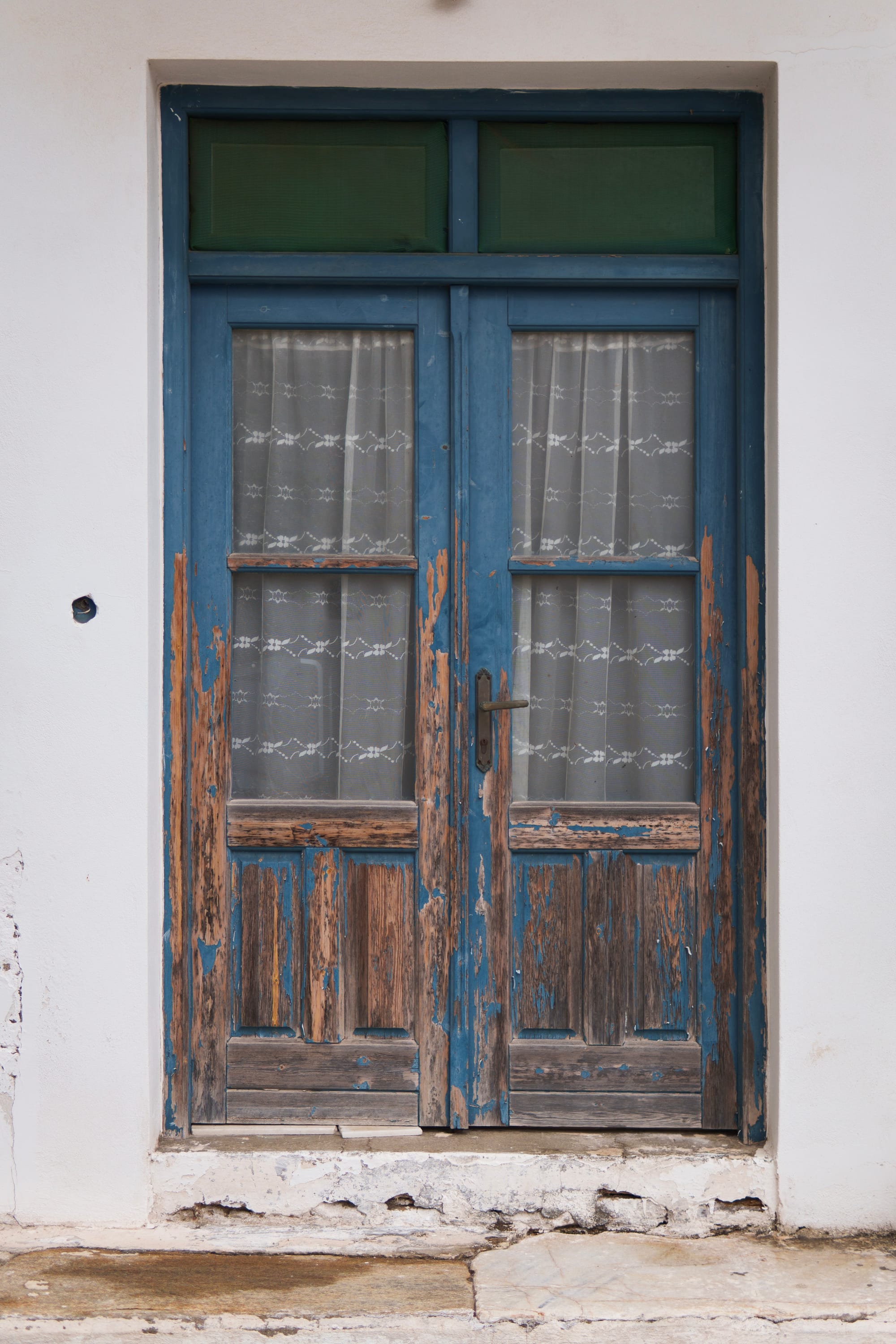
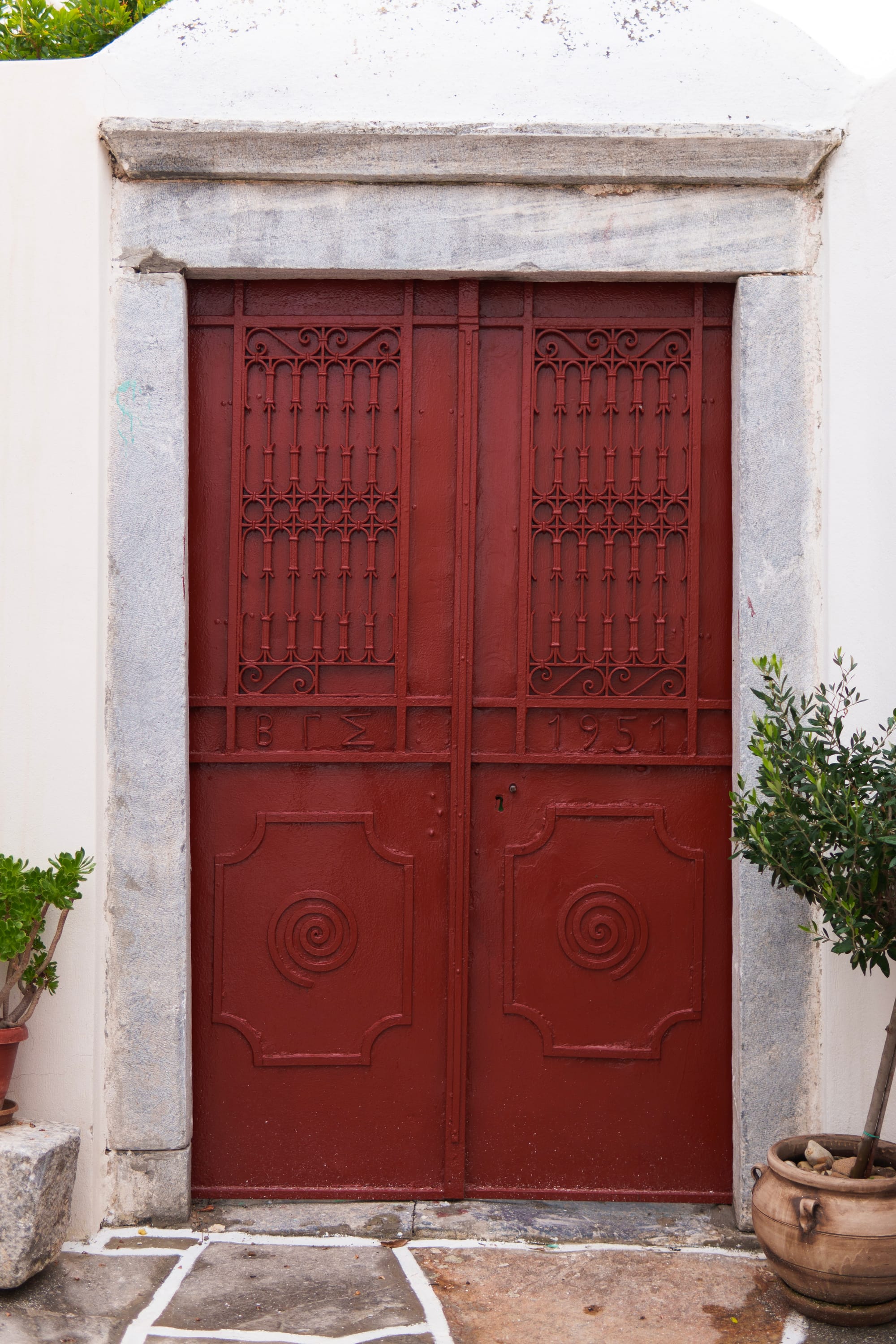
Ano Sagkri on the island of Naxos had the most beautiful doors. [📸 Rachel]
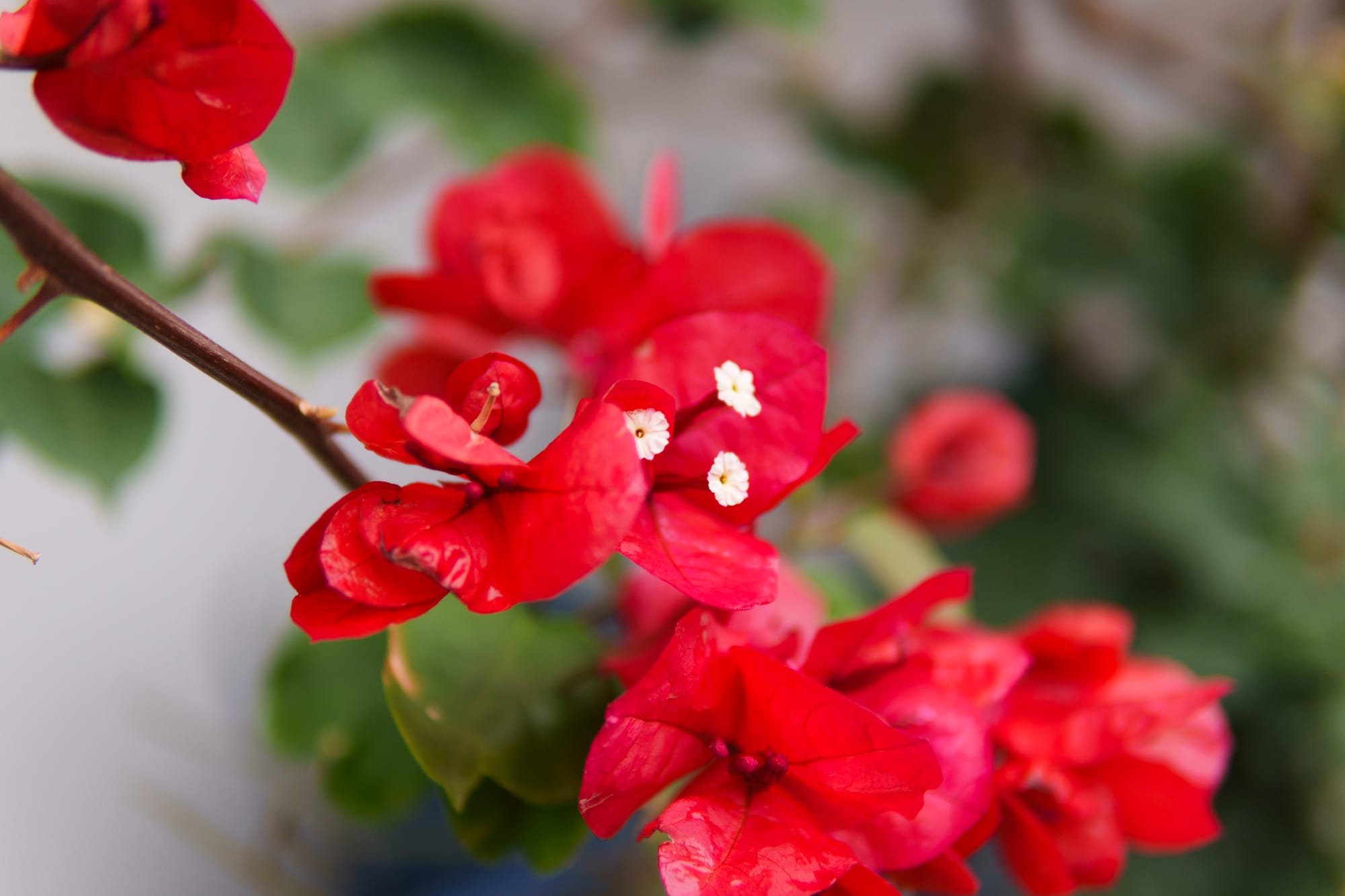
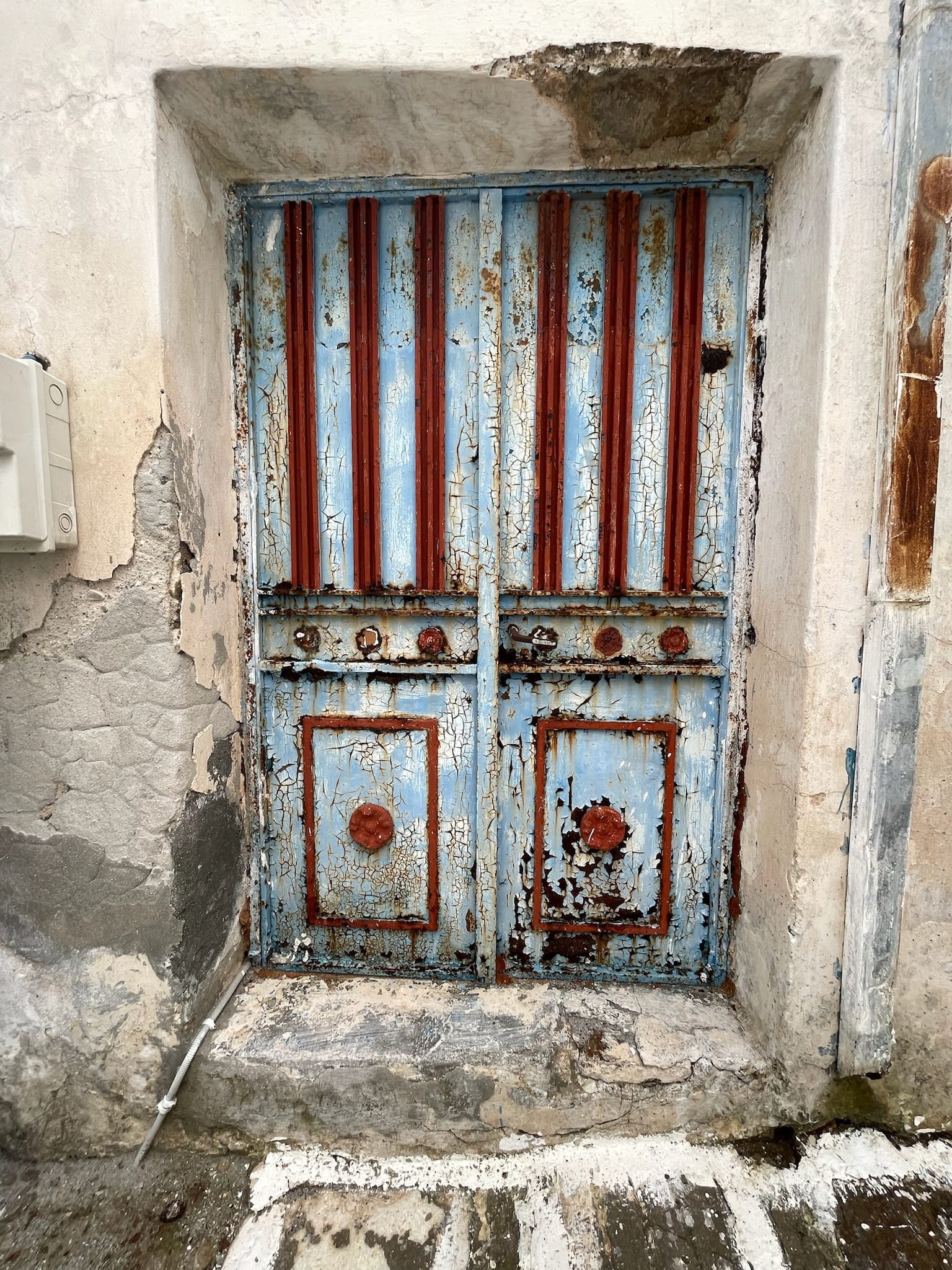
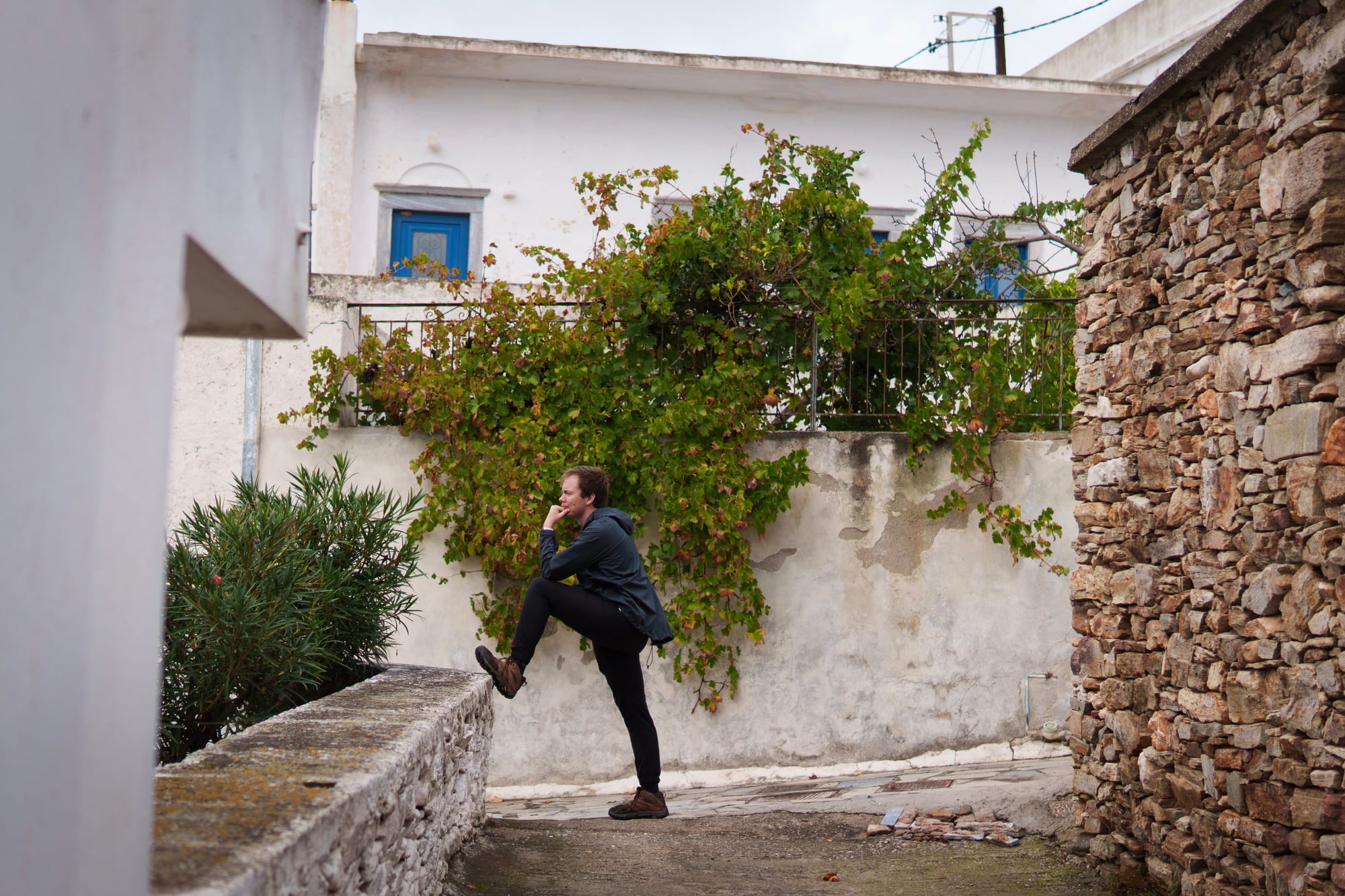
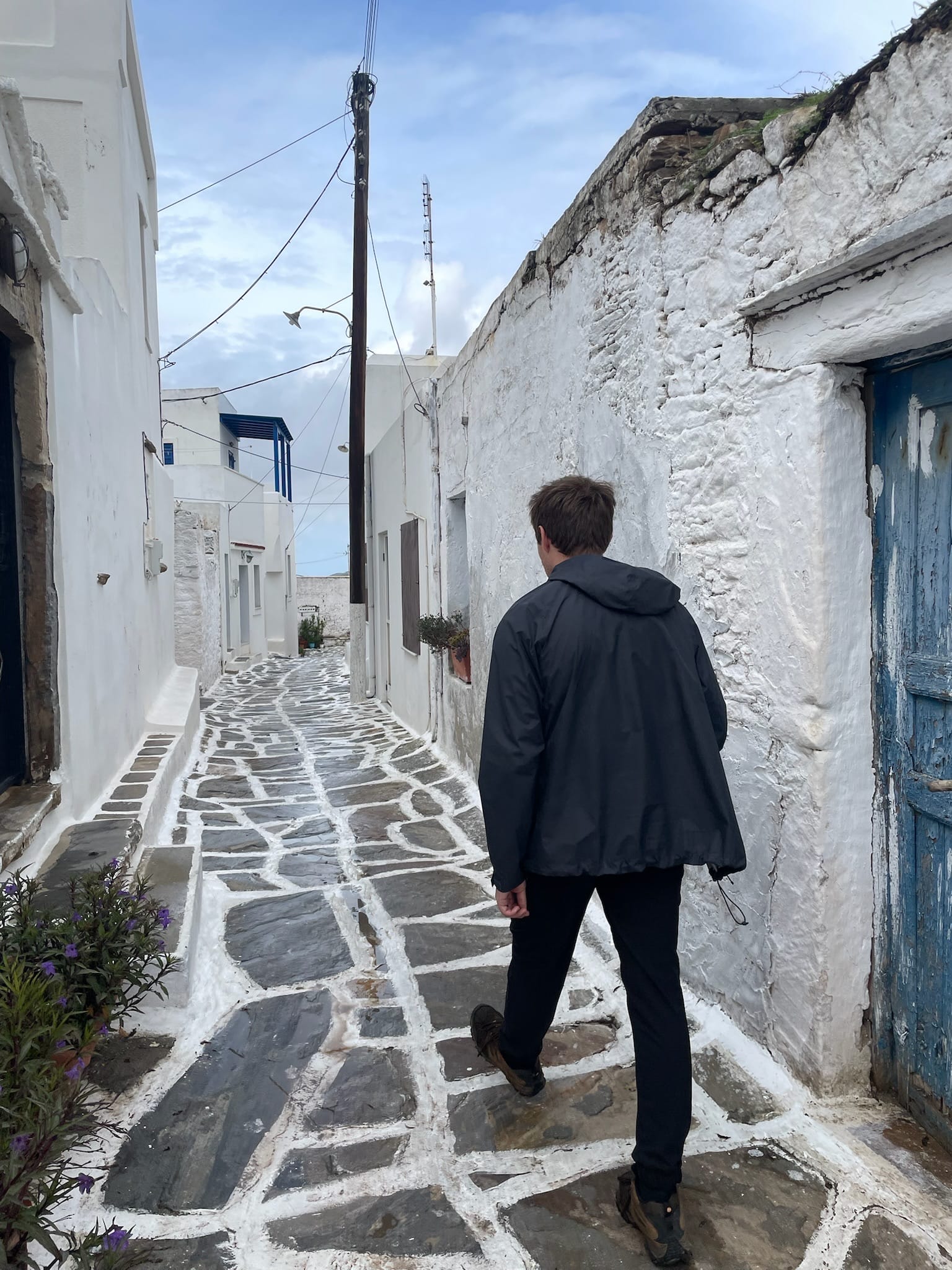
This is just how Johann thinks. Don't worry about it. [📸 Rachel]
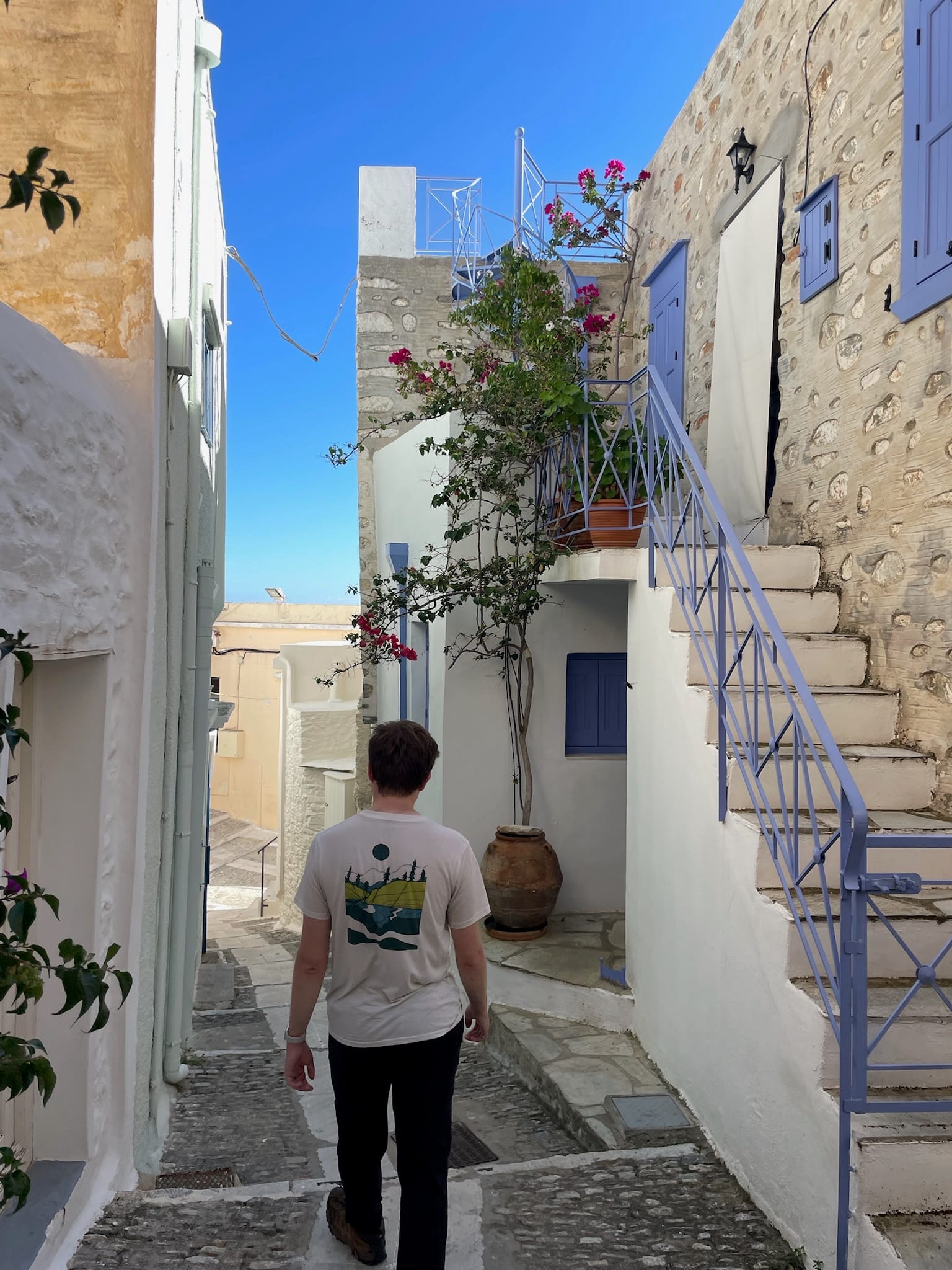
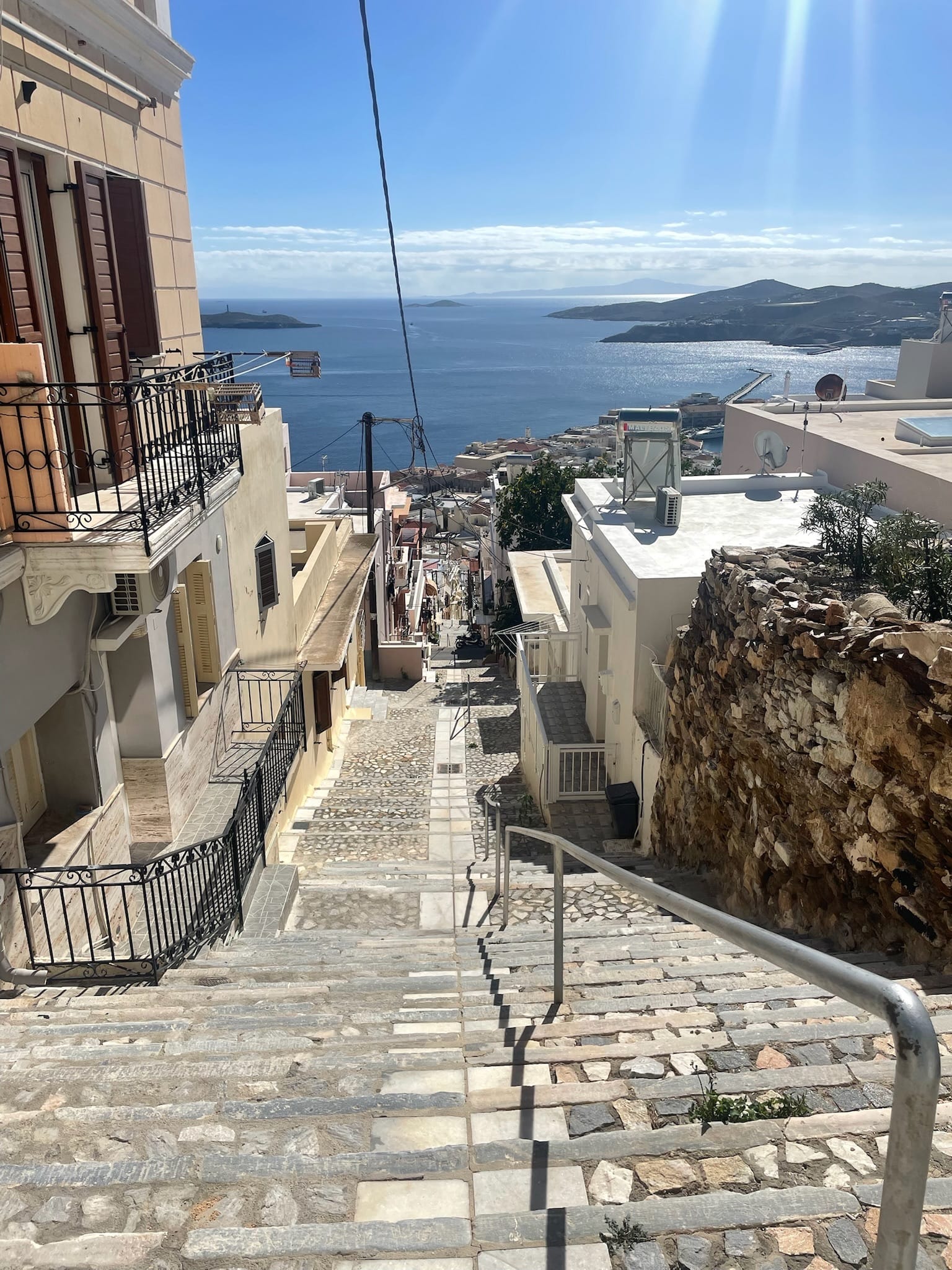
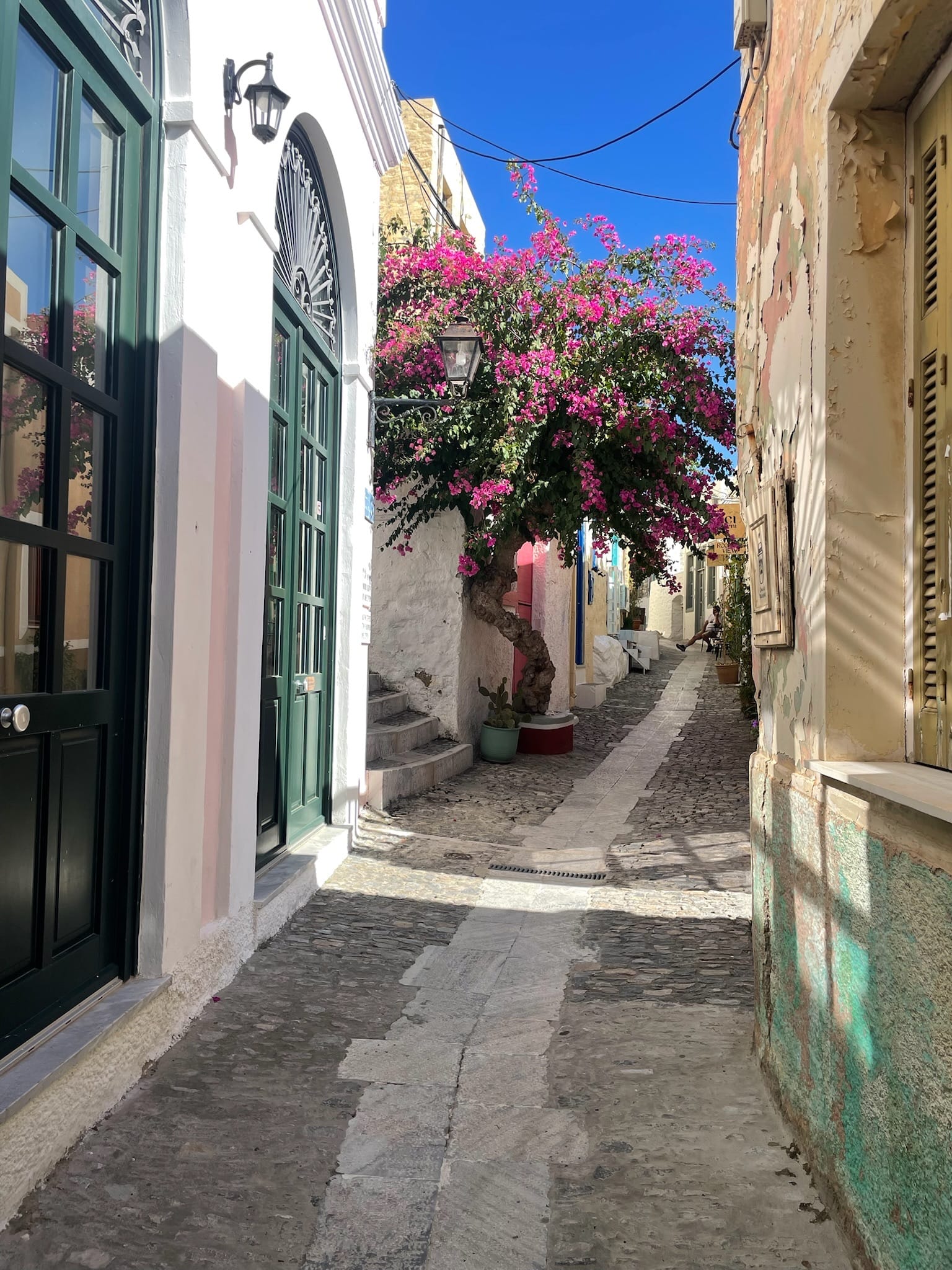
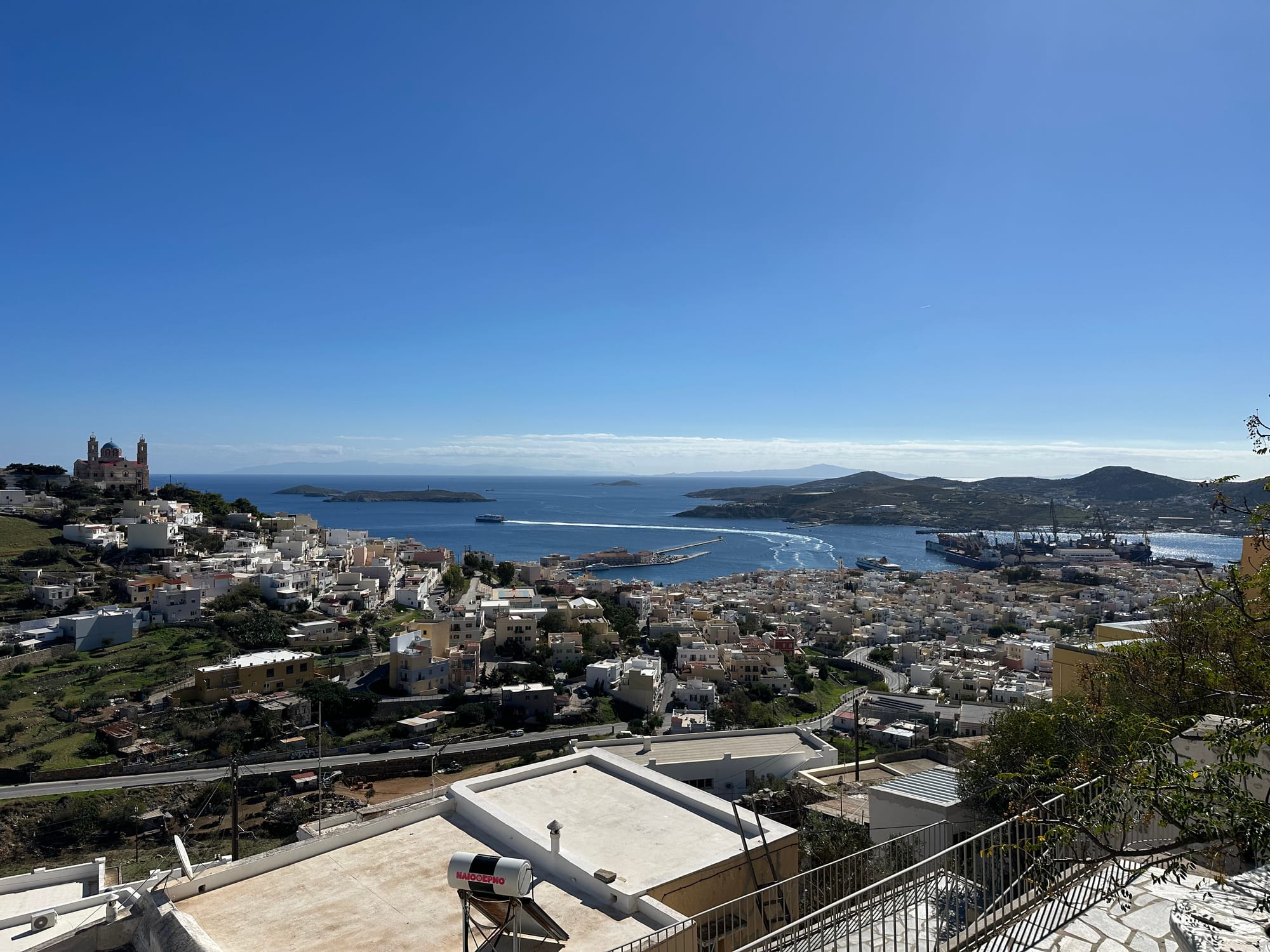
Ano Syros on the island of Syros was intensely vertical. Foreshadowing for our Nepal blog posts. [📸 Rachel]
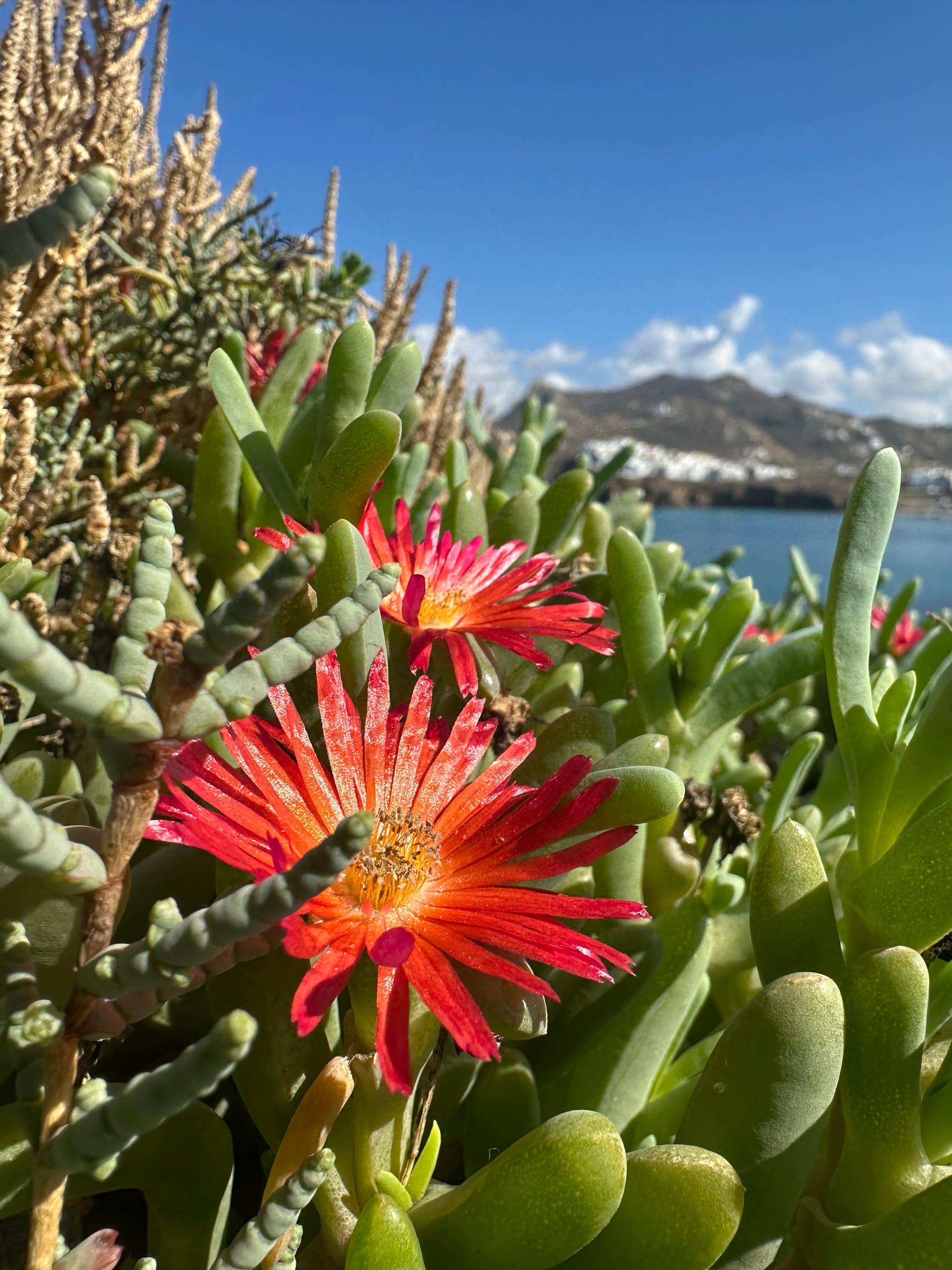
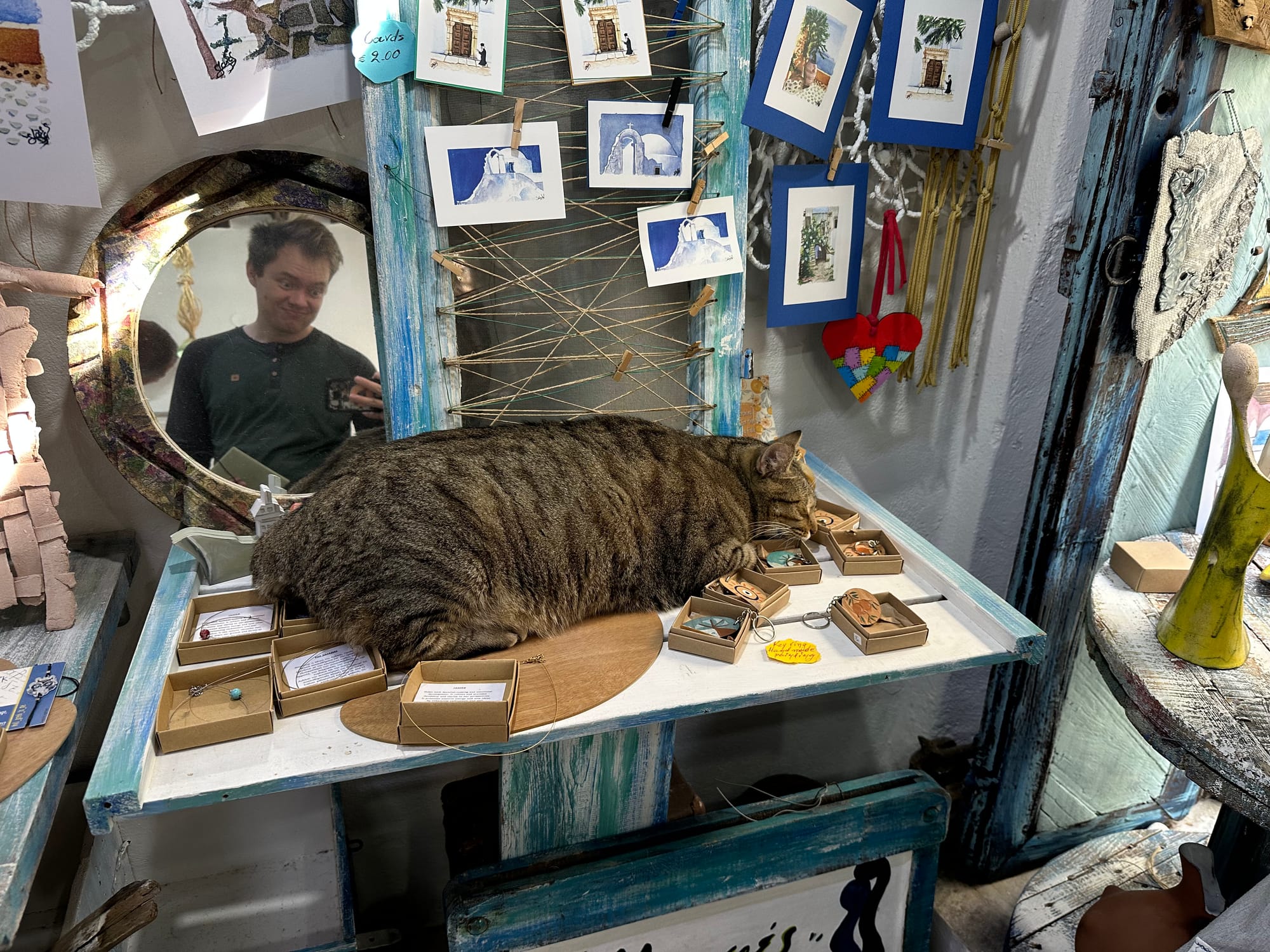
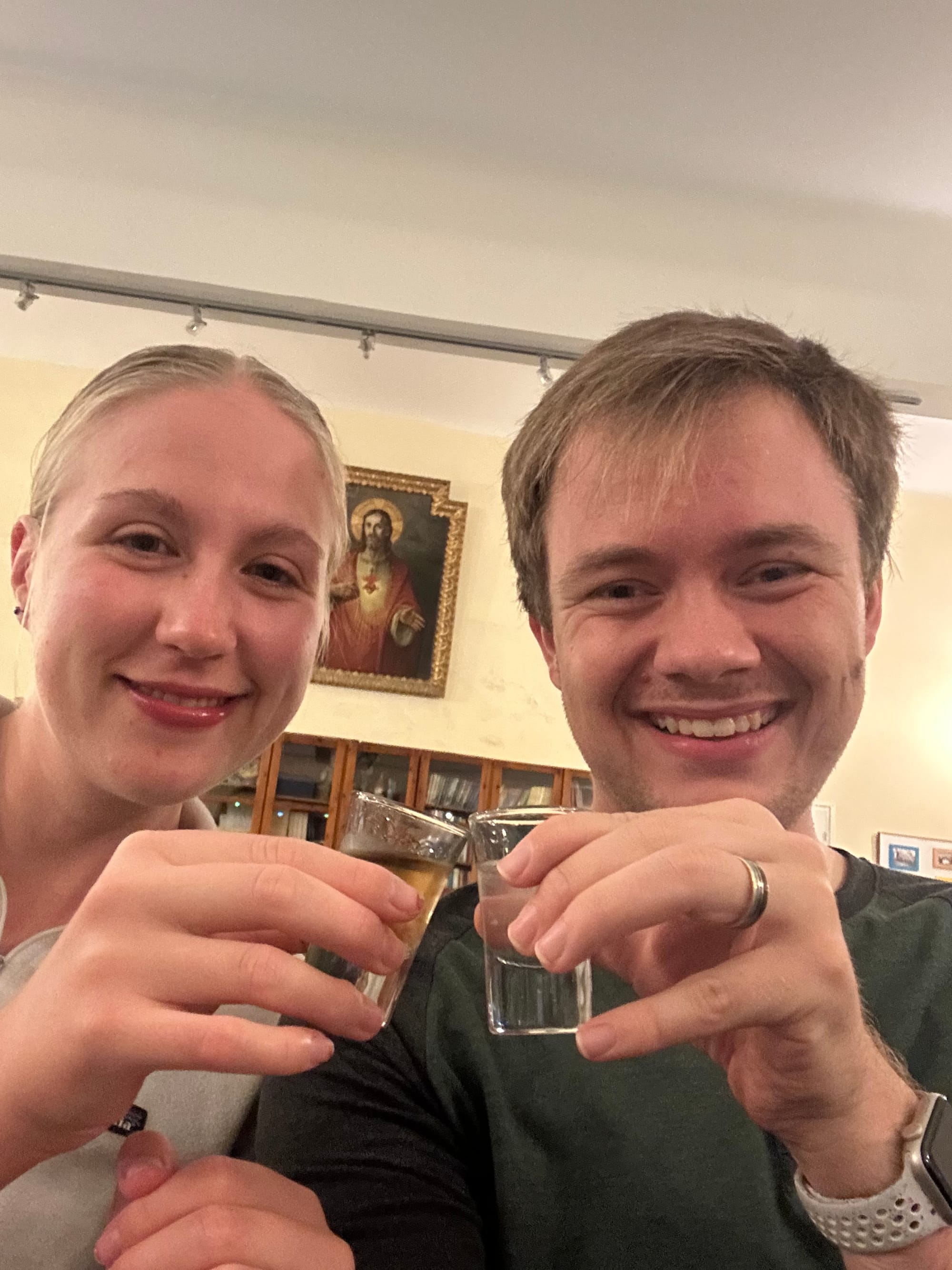
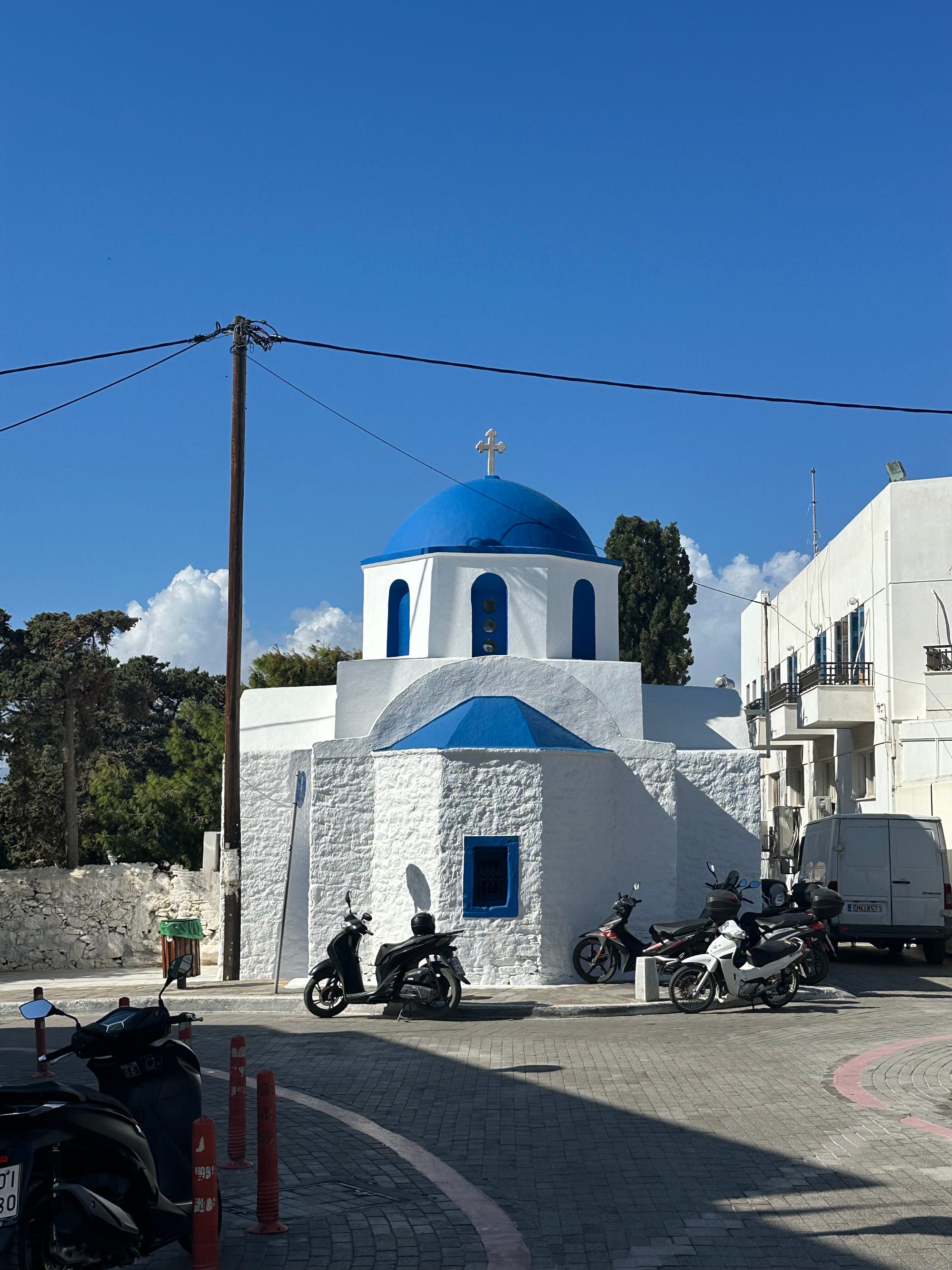
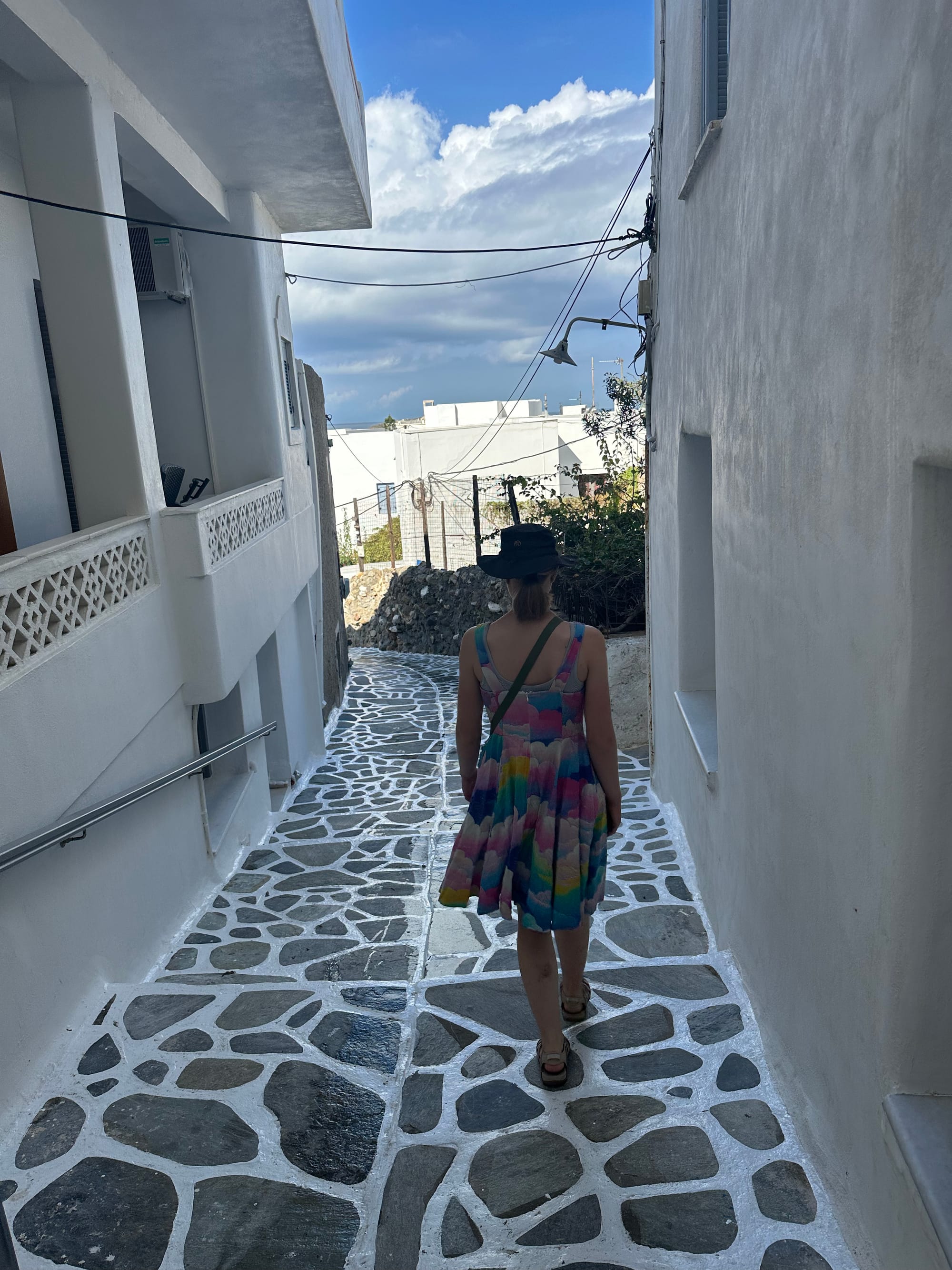
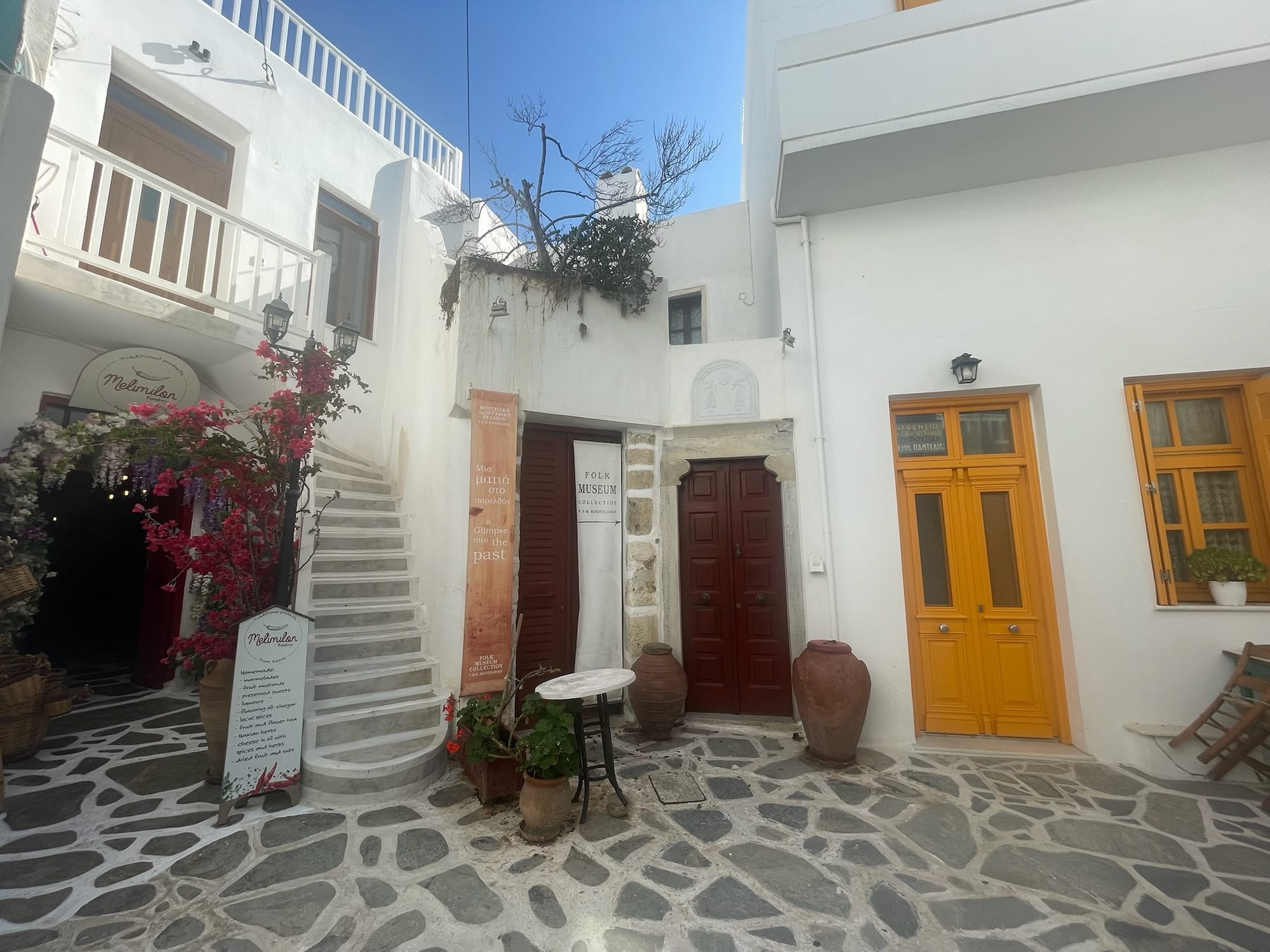
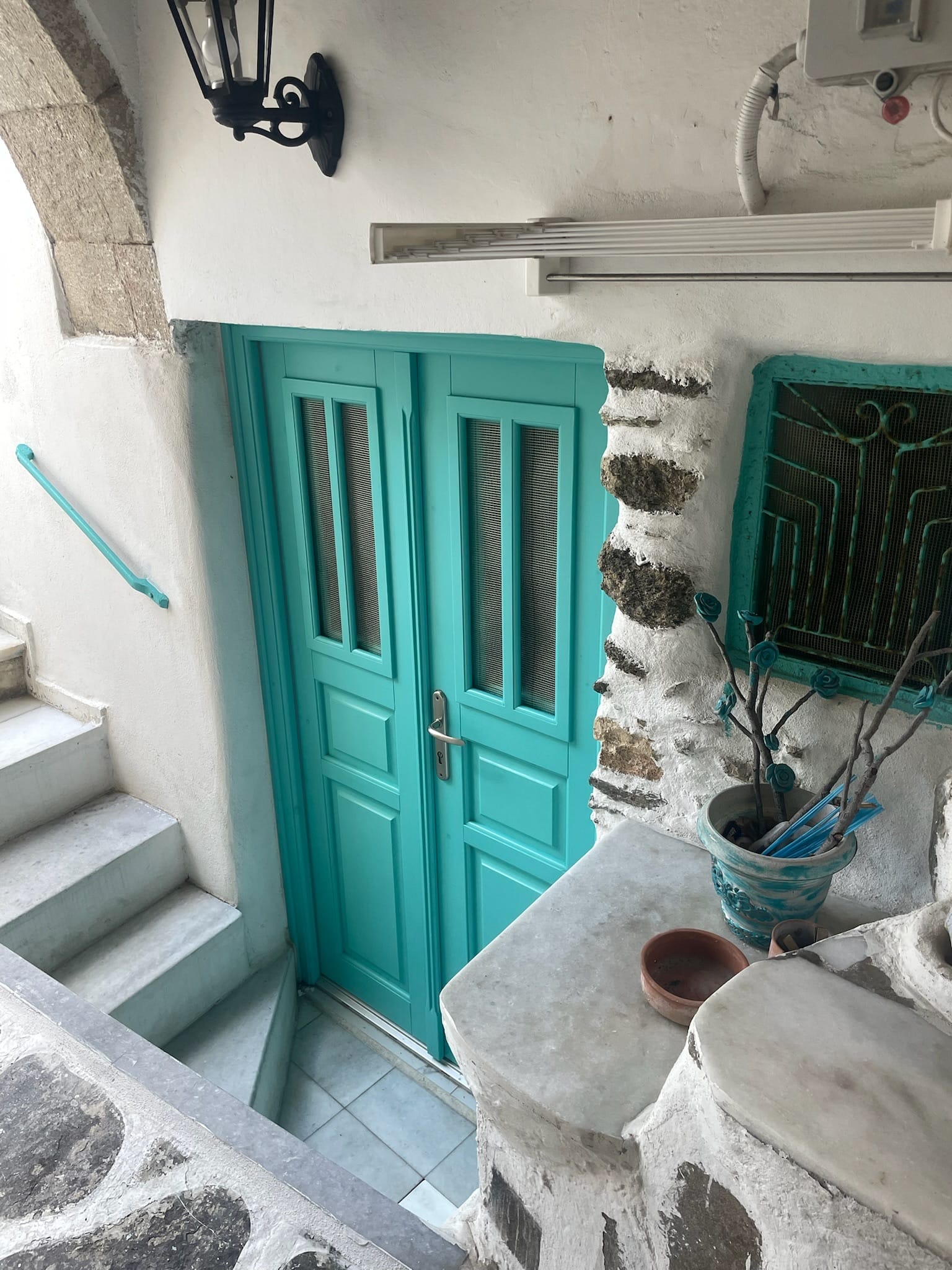
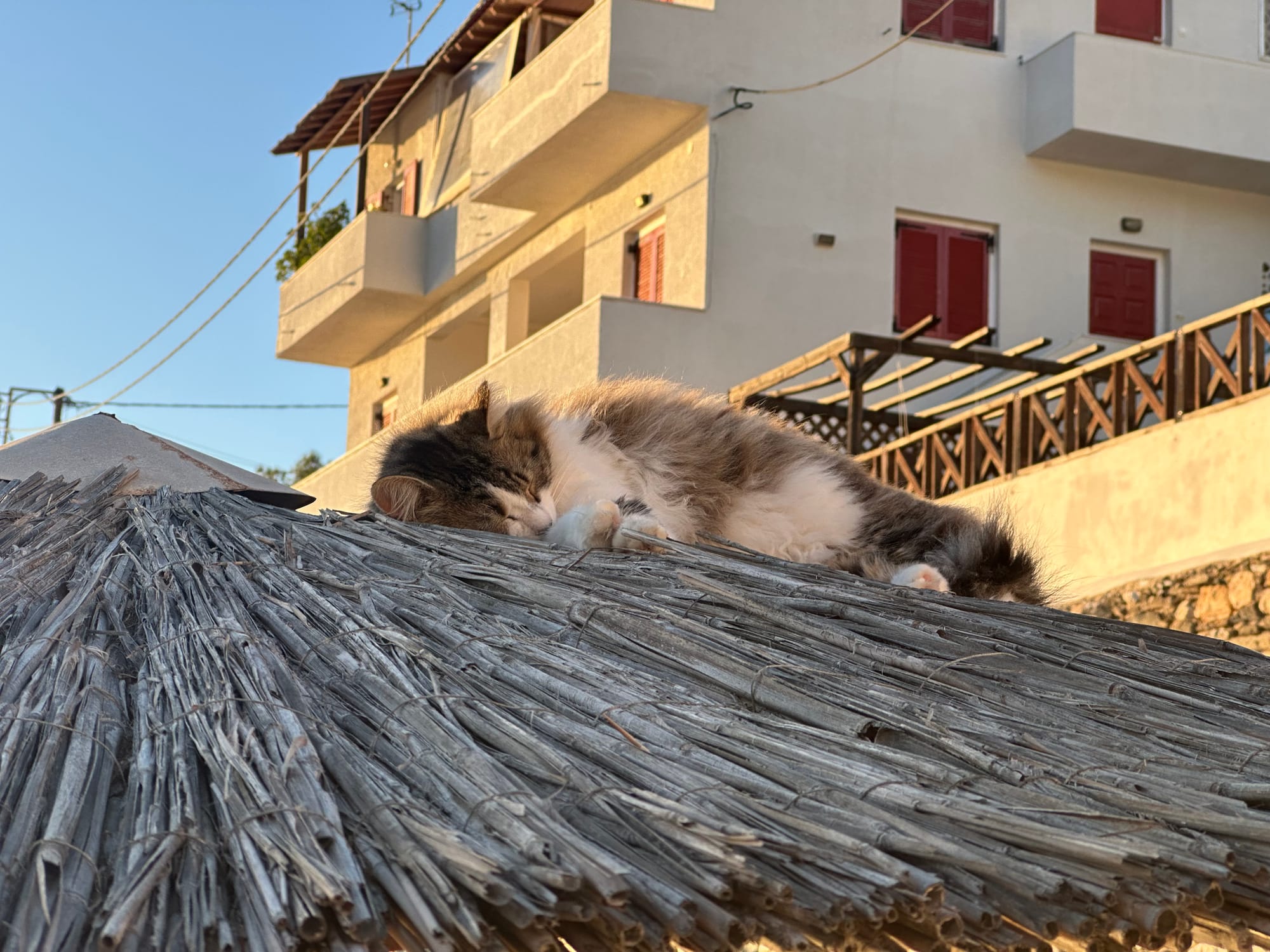
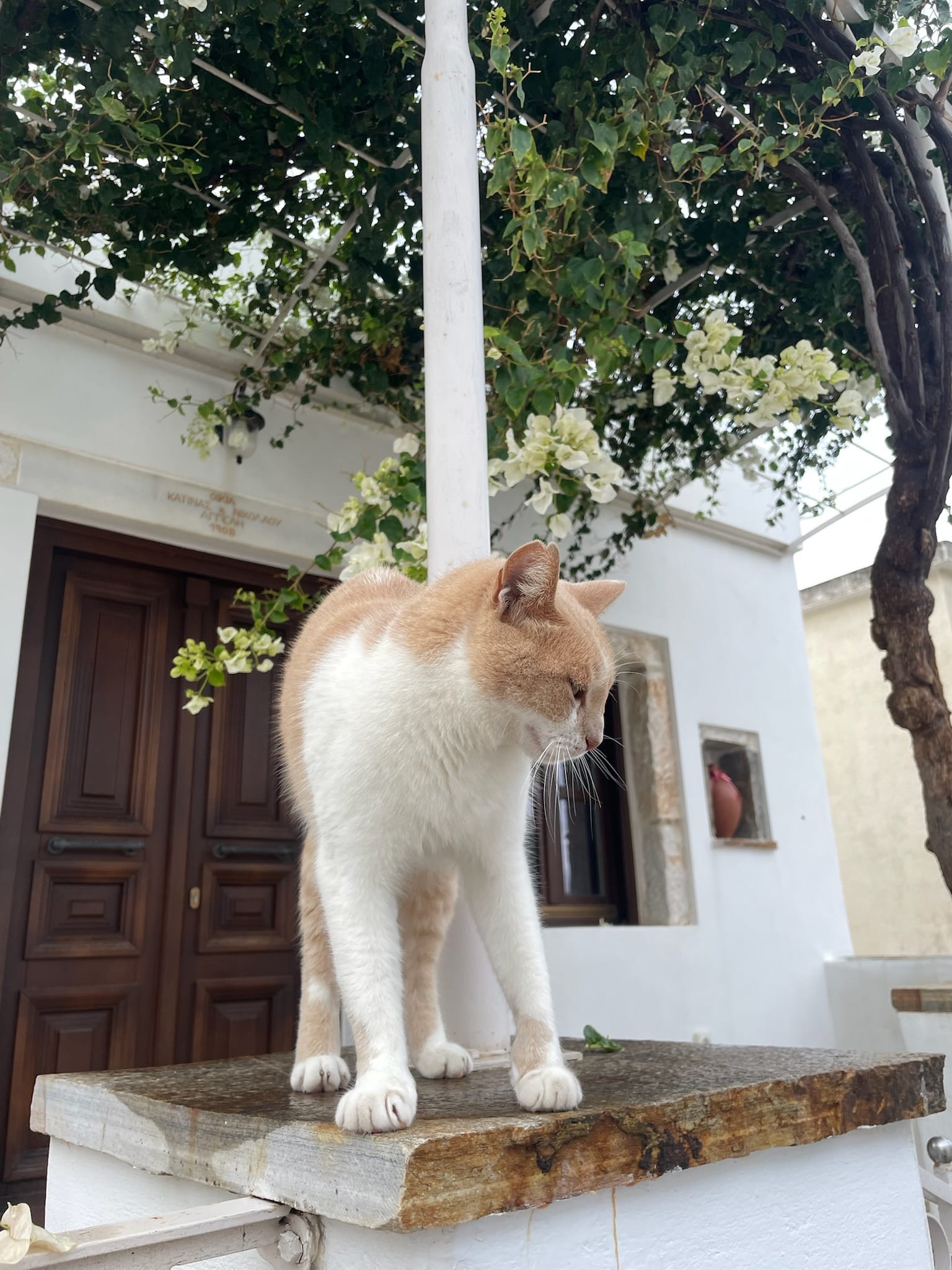
Naxos had so many beautiful churches, nougat roads, and well-fed kitties. [📸 Rachel & Johann]
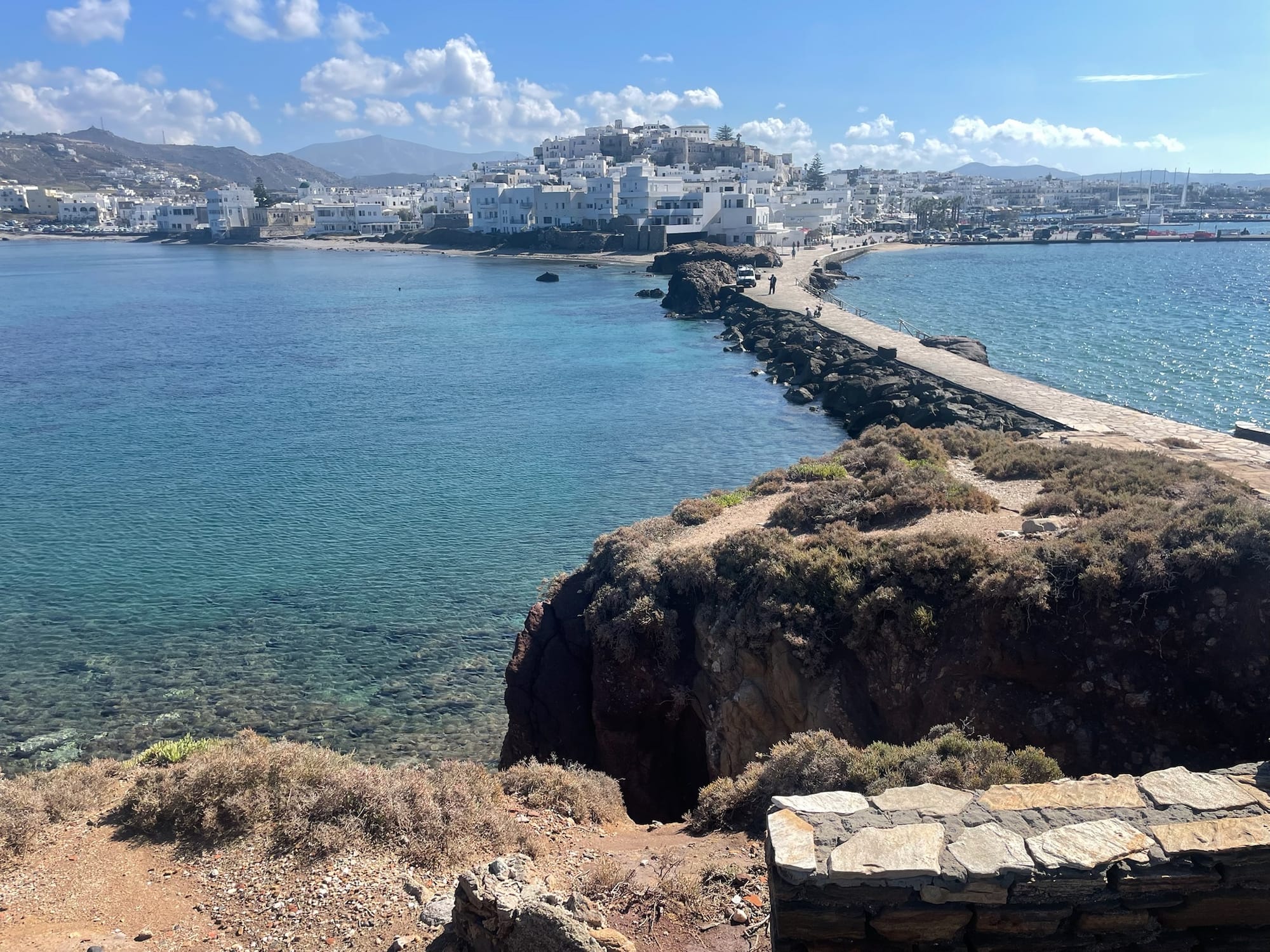
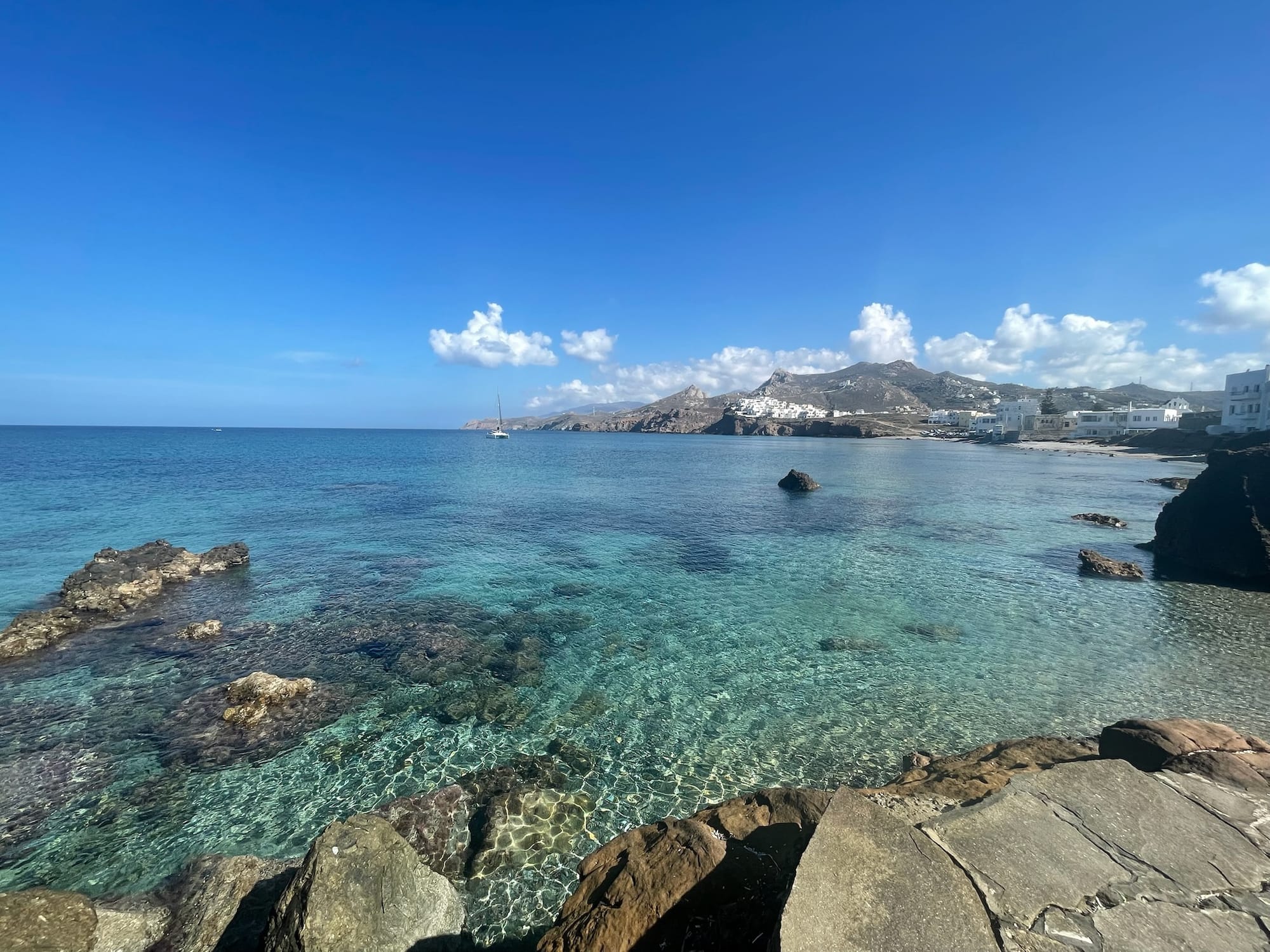
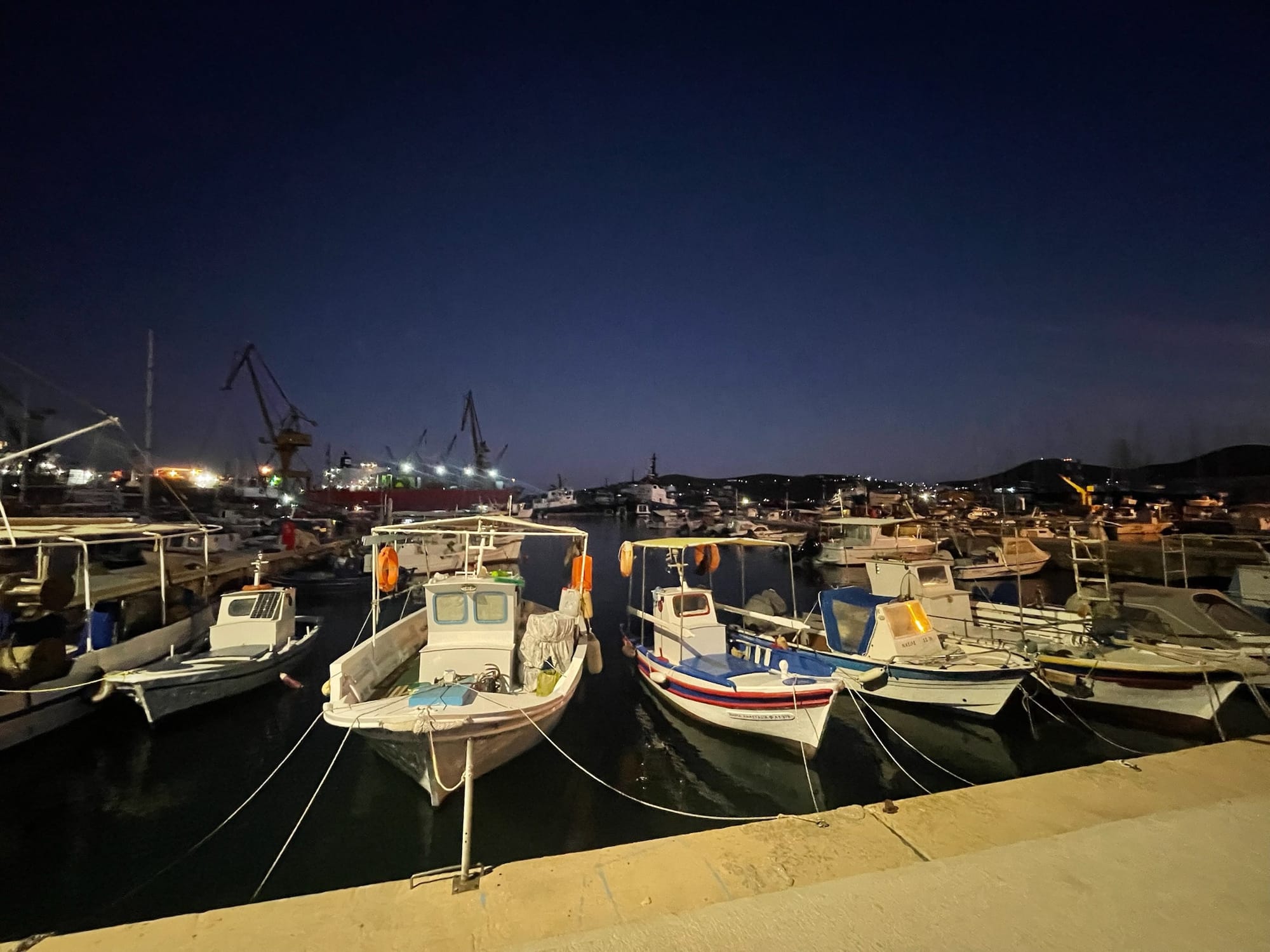
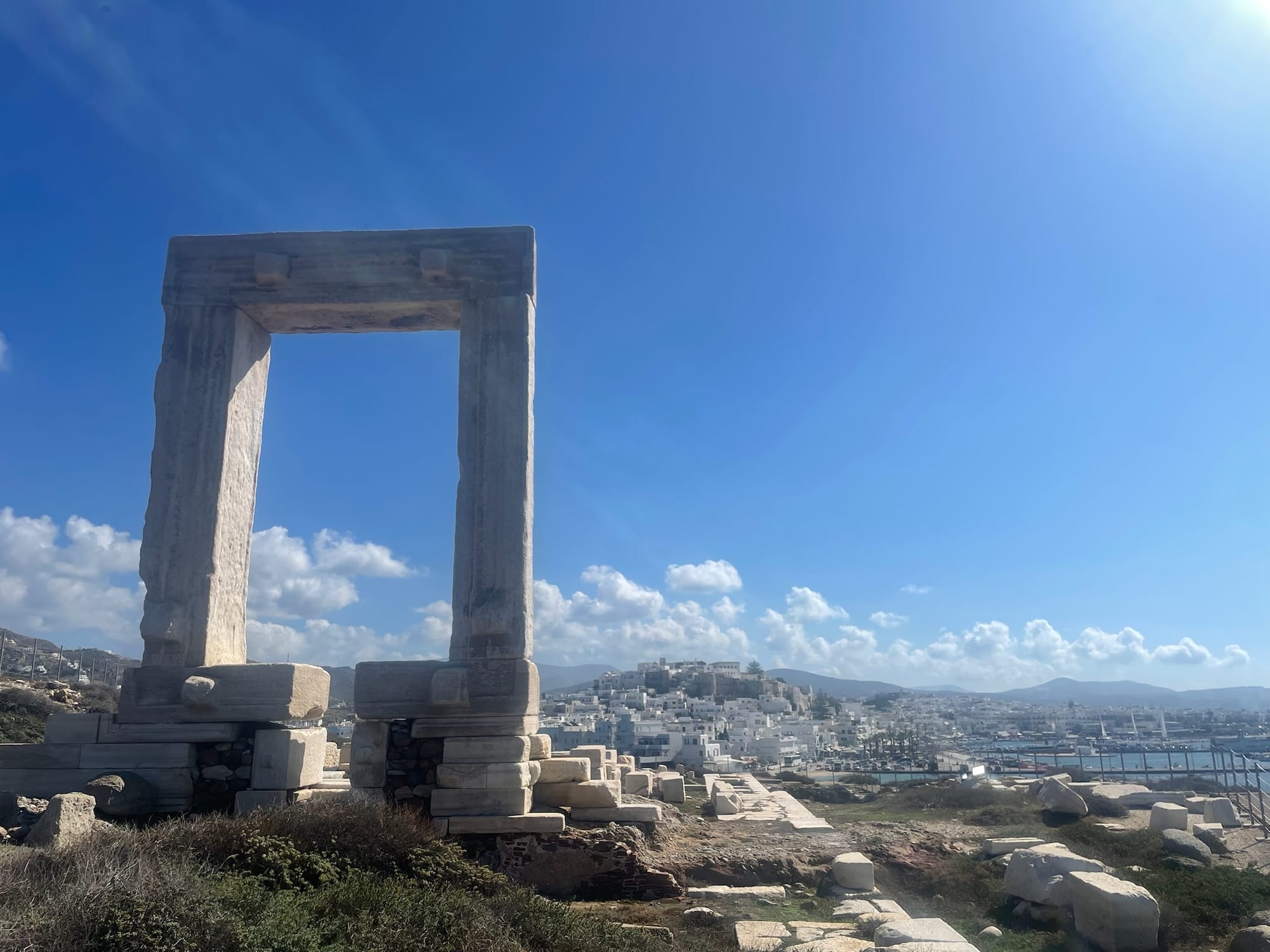
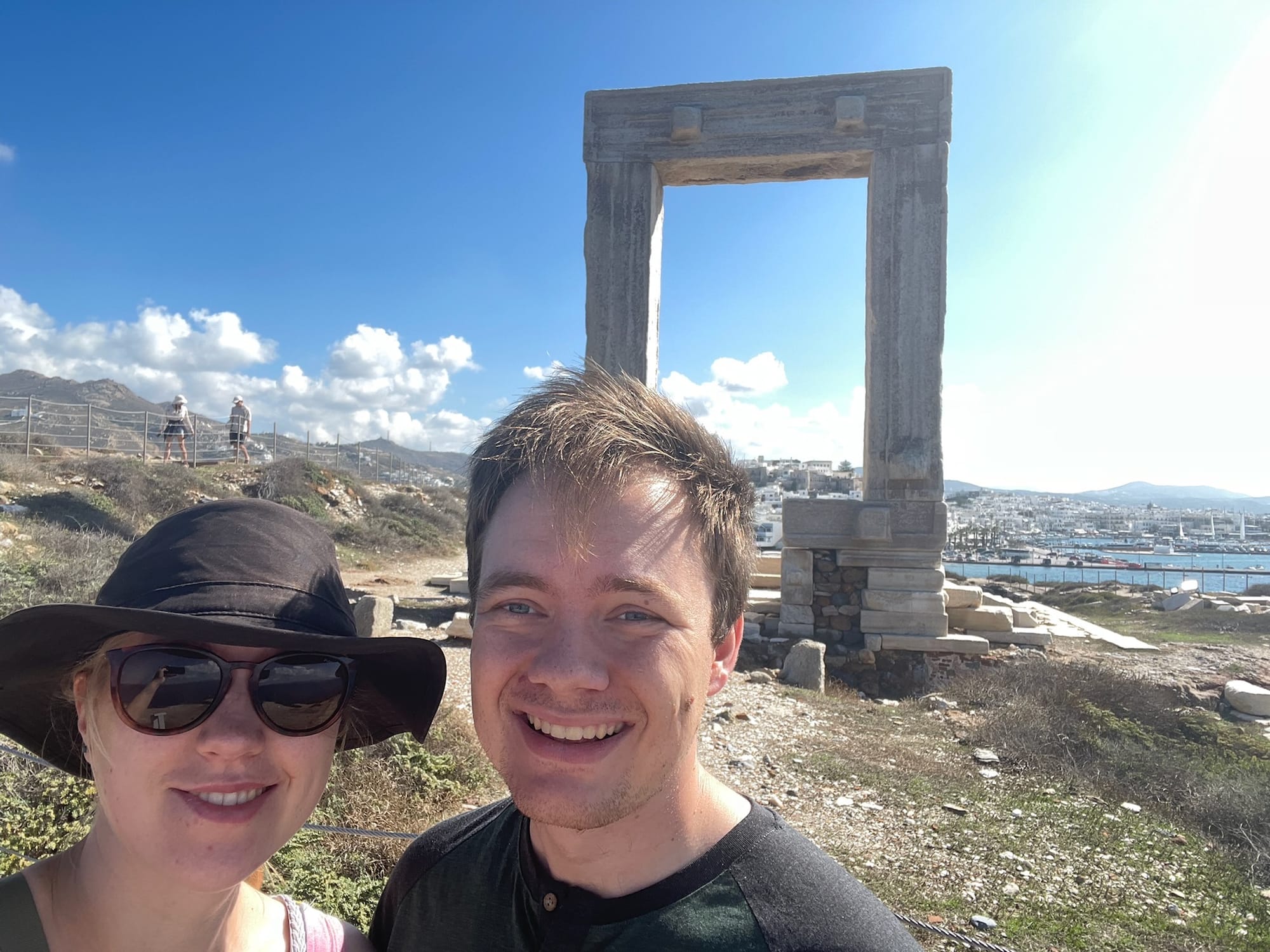
Naxos' slice of the Aegen Sea was idyllic. [📸 Rachel]
Naxos ended up being our favourite of the two islands in terms of hiking. Overall it was larger, more mountainous, and less arid. On one afternoon we took a gentle ramble (Johann’s wheezing set the pace) through the Naxian hills to the restored Temple of Demeter. It was drizzly, with the grey rain-light making the green hills pop with colour. We followed a path which wound beside old stone walls through olive groves dotted with grazing sheep and goats, their bells jangling.
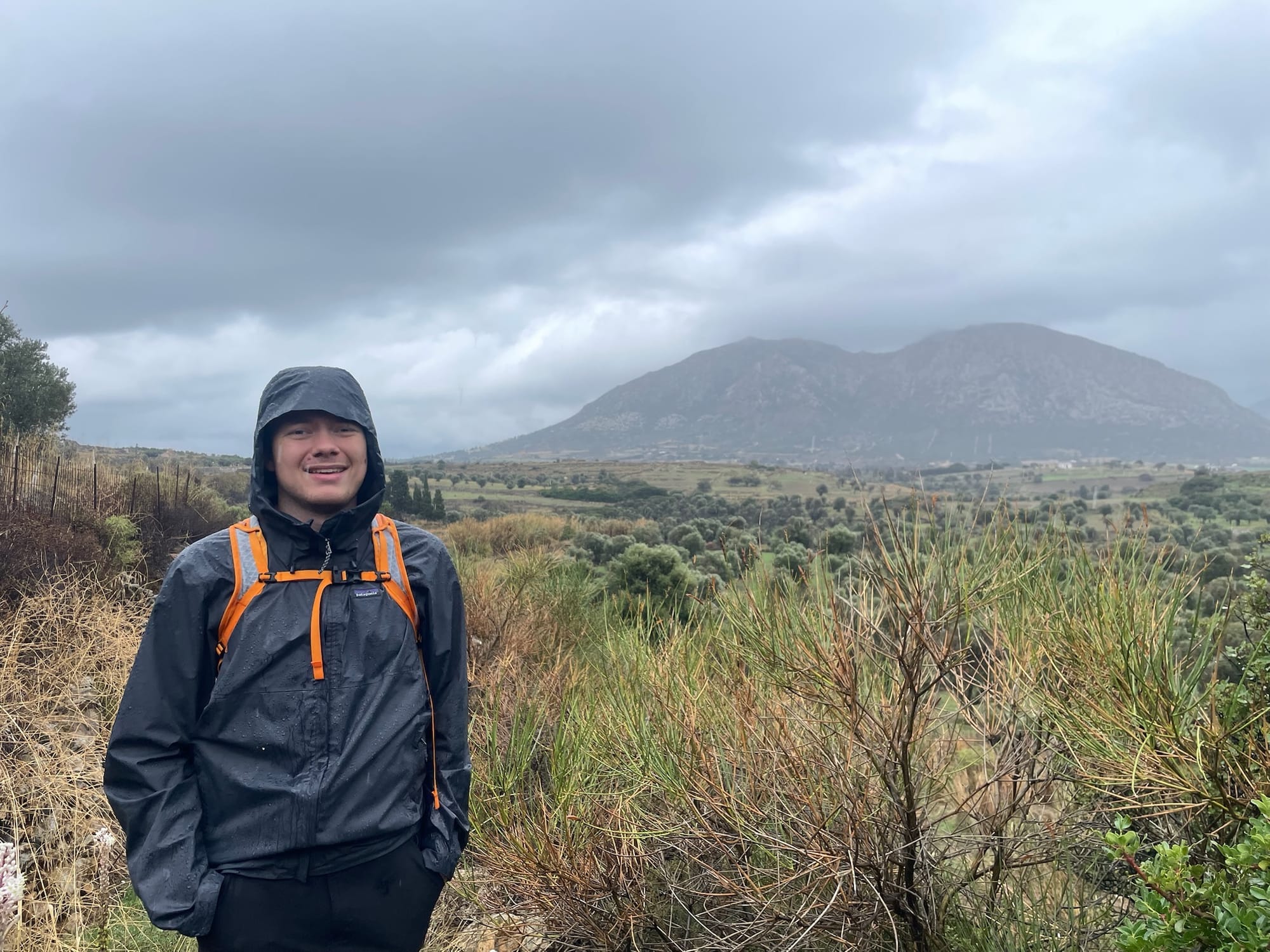
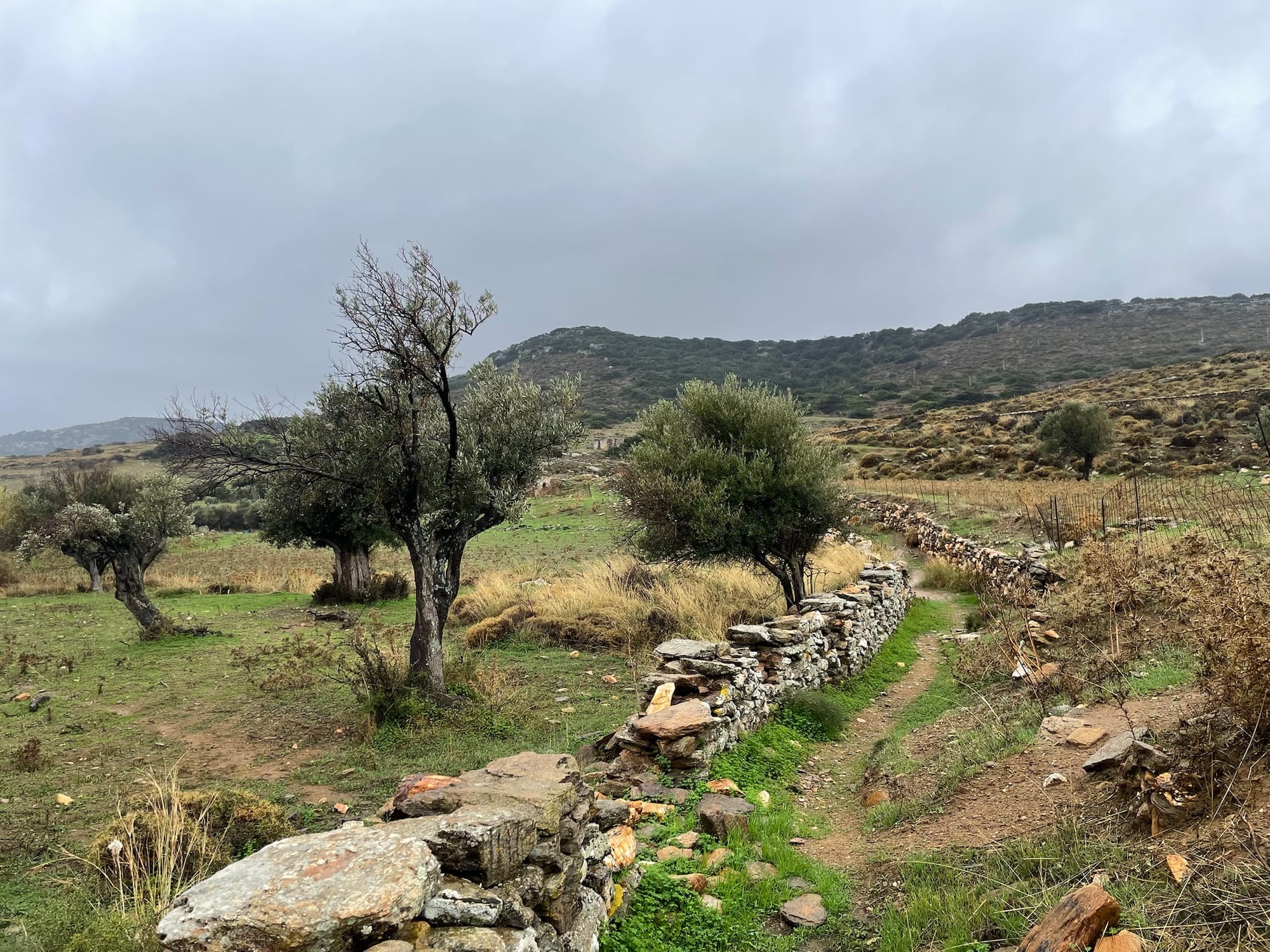
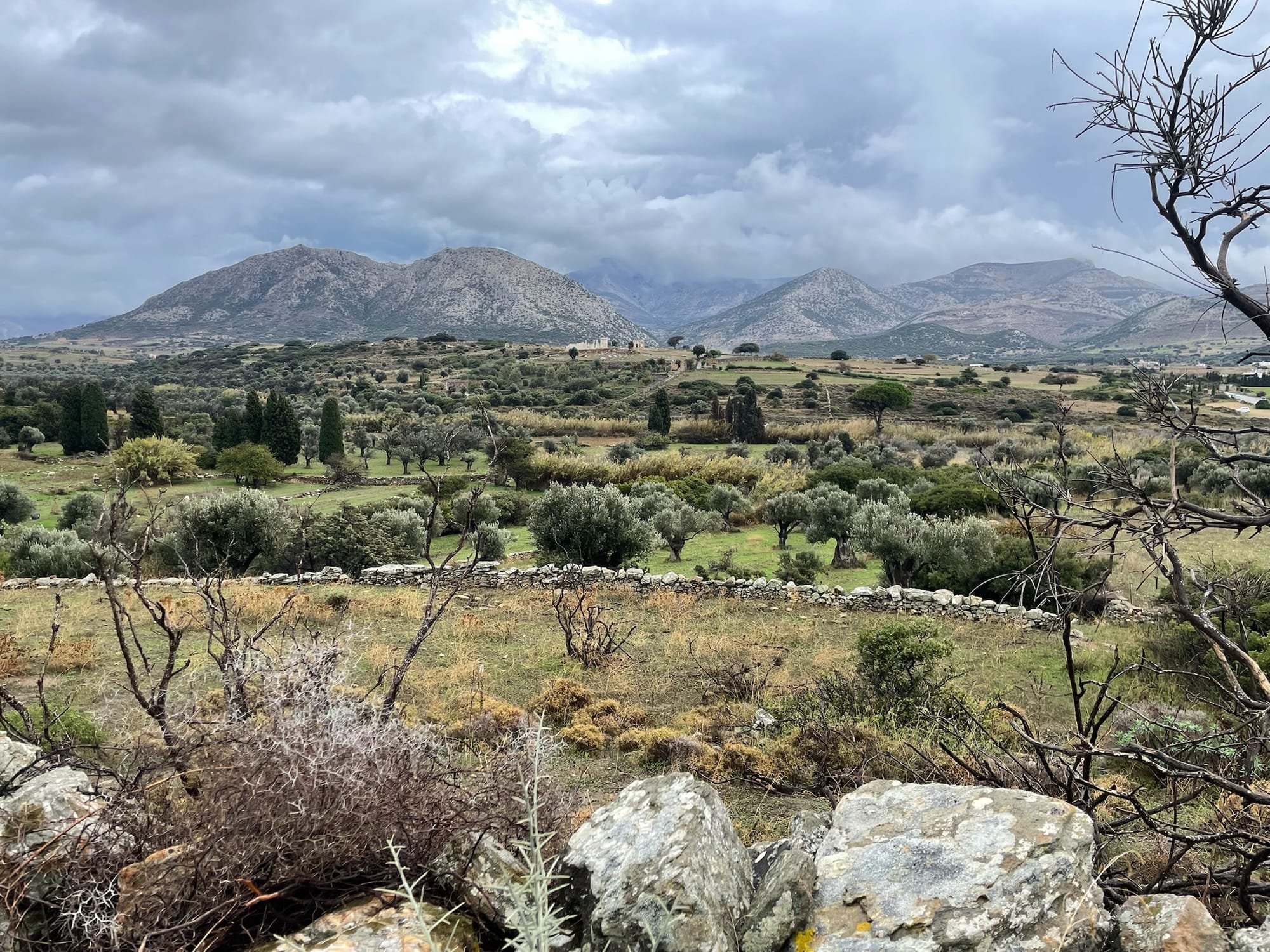
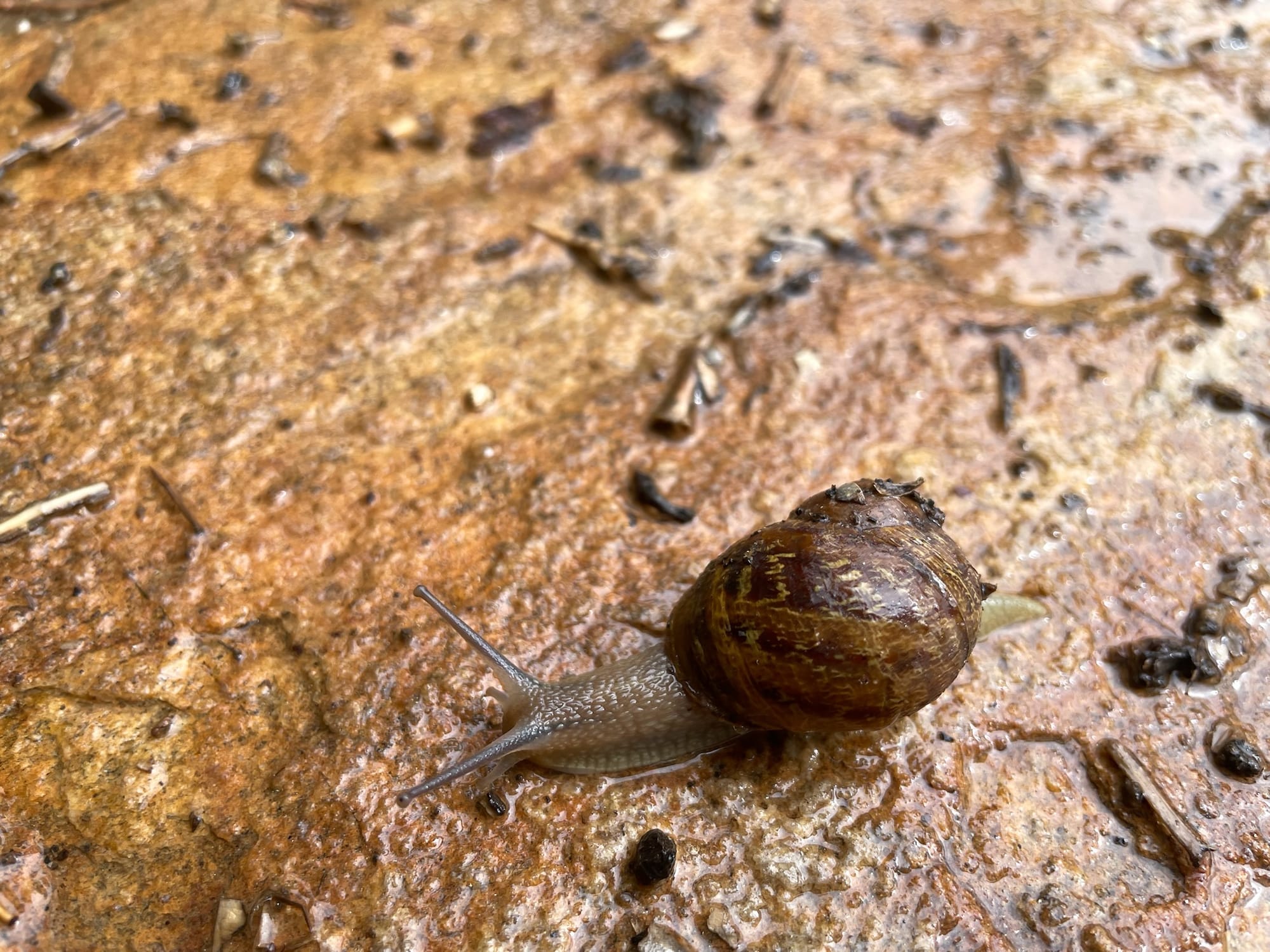
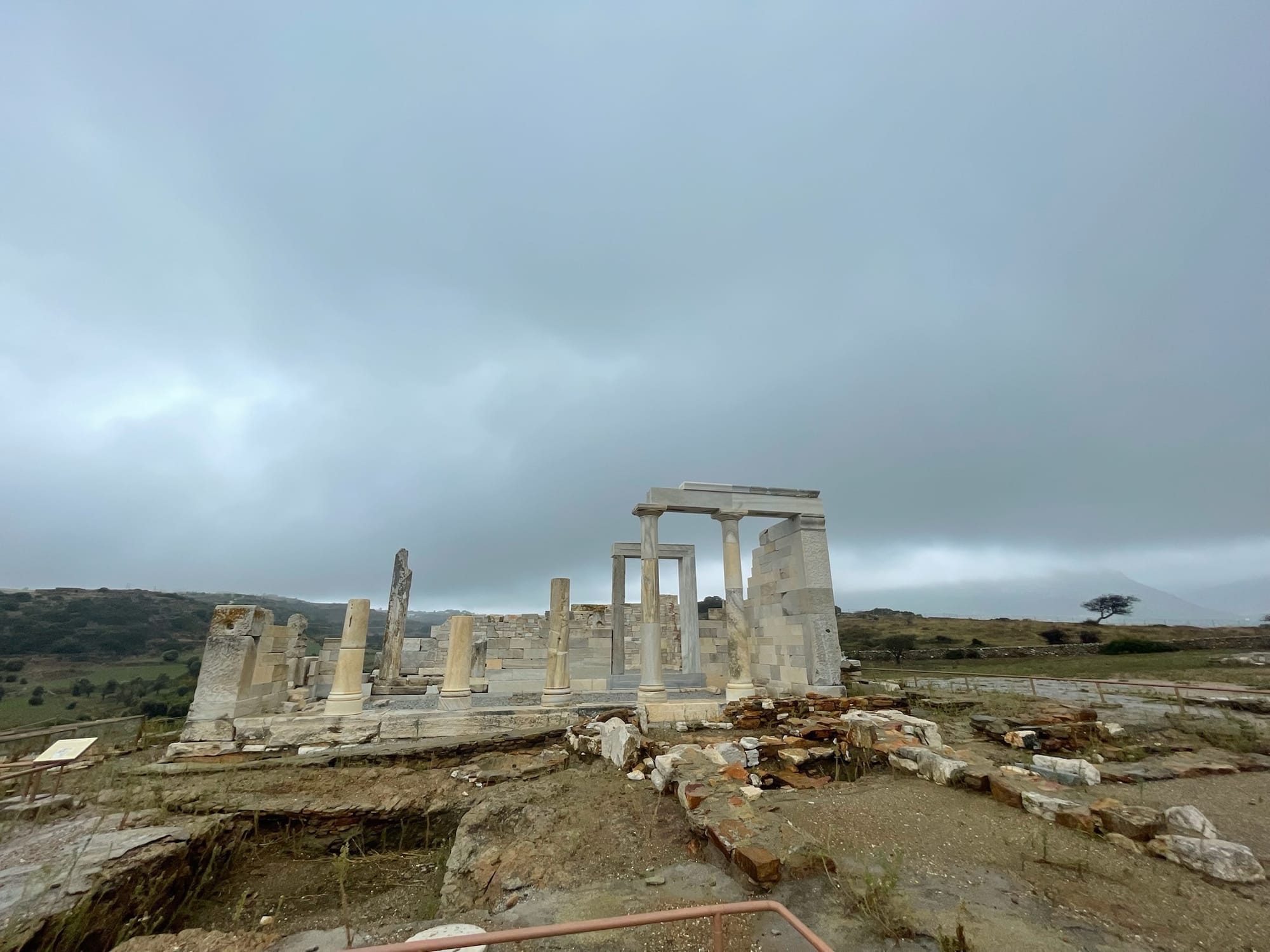
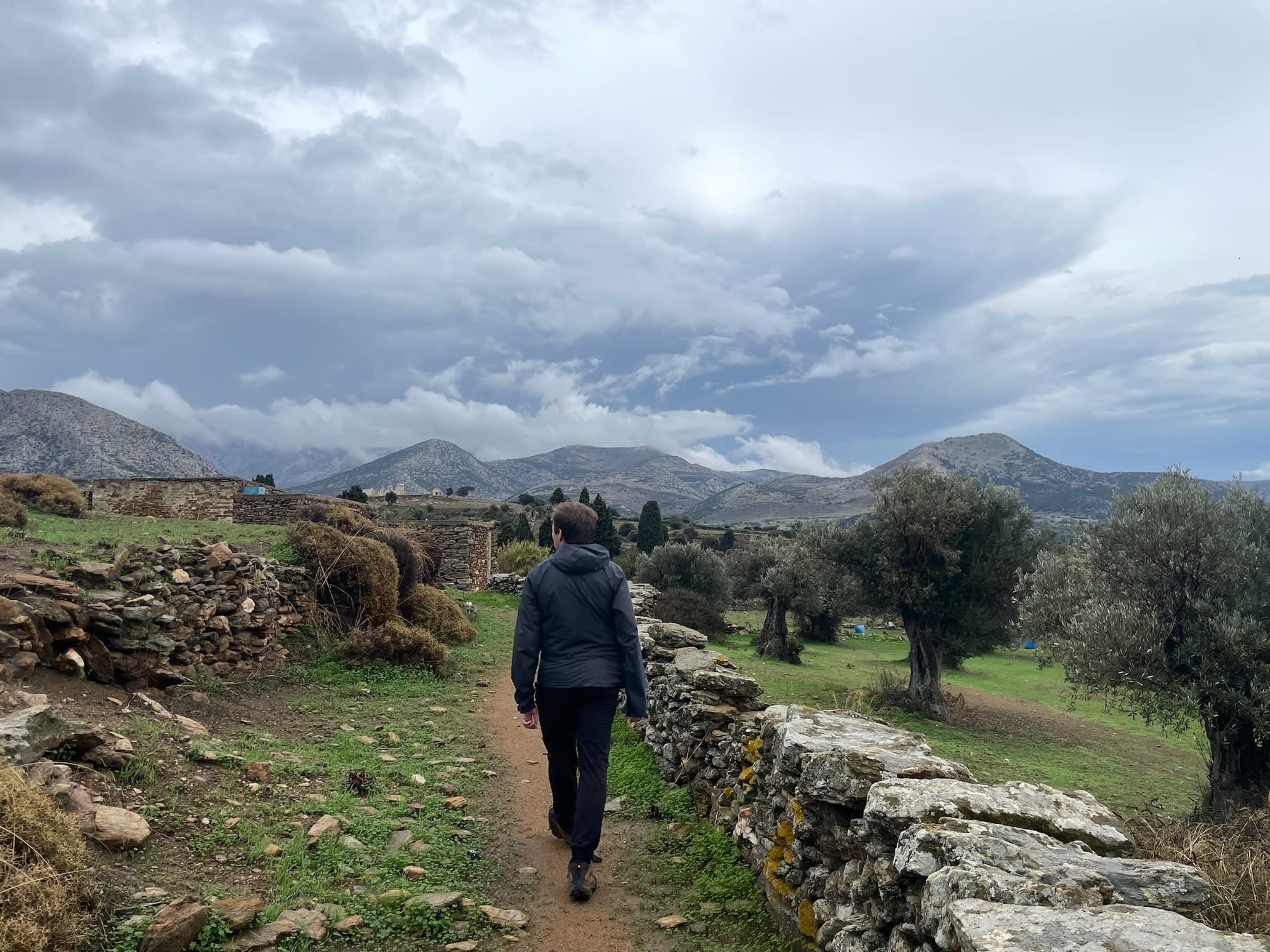
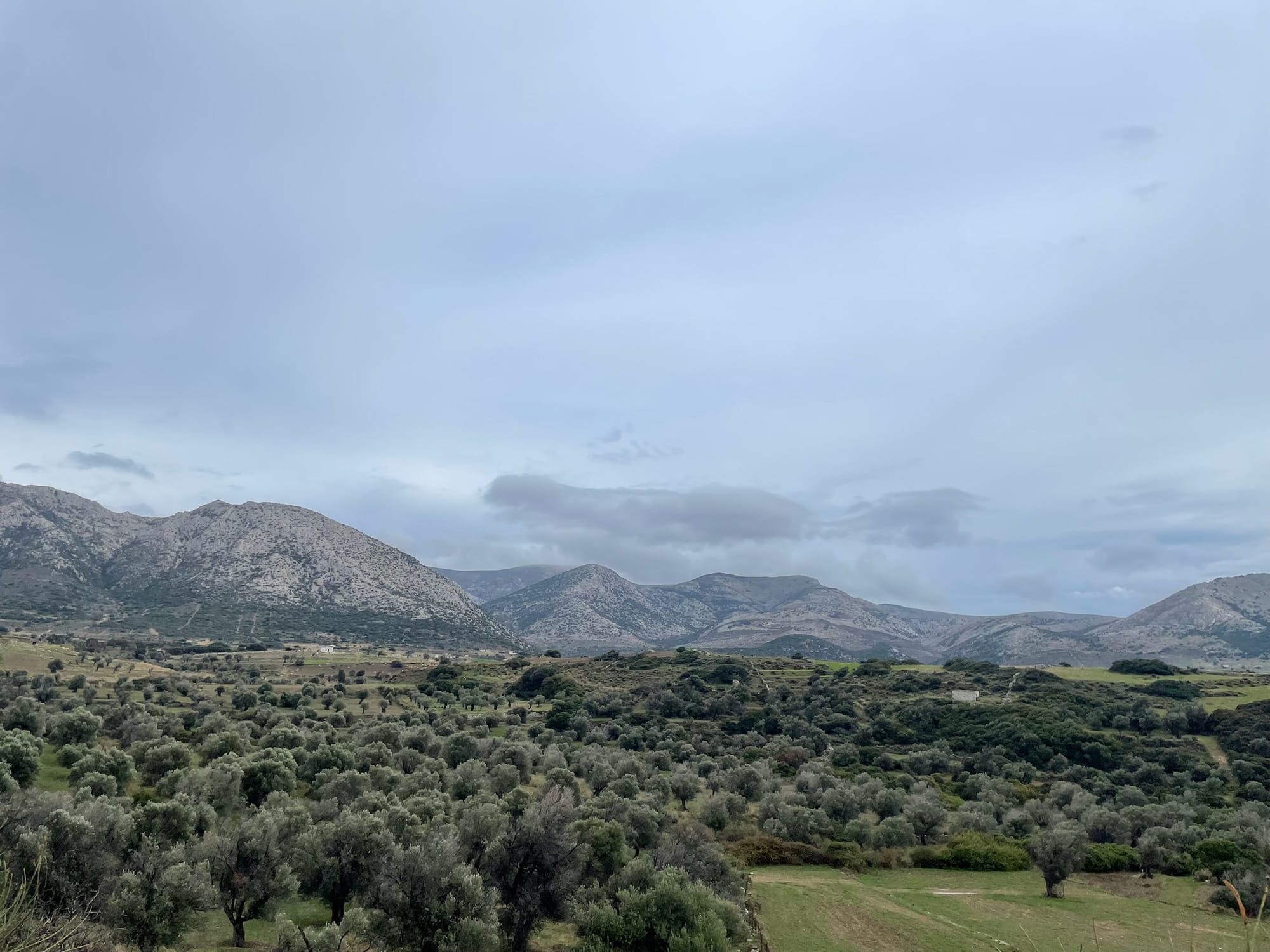
Ok, maybe "drizzly" was a slight understatement. Blame the Temple of Demeter - guess there's going to be a really good harvest. [📸 Rachel]
We waited until Johann was slightly less wheezy and Rachel had a fever before climbing the highest peak in the Cycladic mountains, Mount Zeus. We caught a local bus from the port, and let it whisk us in a winding sort of fashion through the hills and mountains. It dropped us at the start of a steep paved road, which took us on foot to Aria Spring. The road was covered in goat droppings, and we could hear the occasional jangling of their bells on the steep hillside above us. From there, the actual hiking path began, and it quickly turned from a dirt trail to a marble-paved path perched on a mountainside of stone. A fitting entrance to the birthplace of the king of the gods.
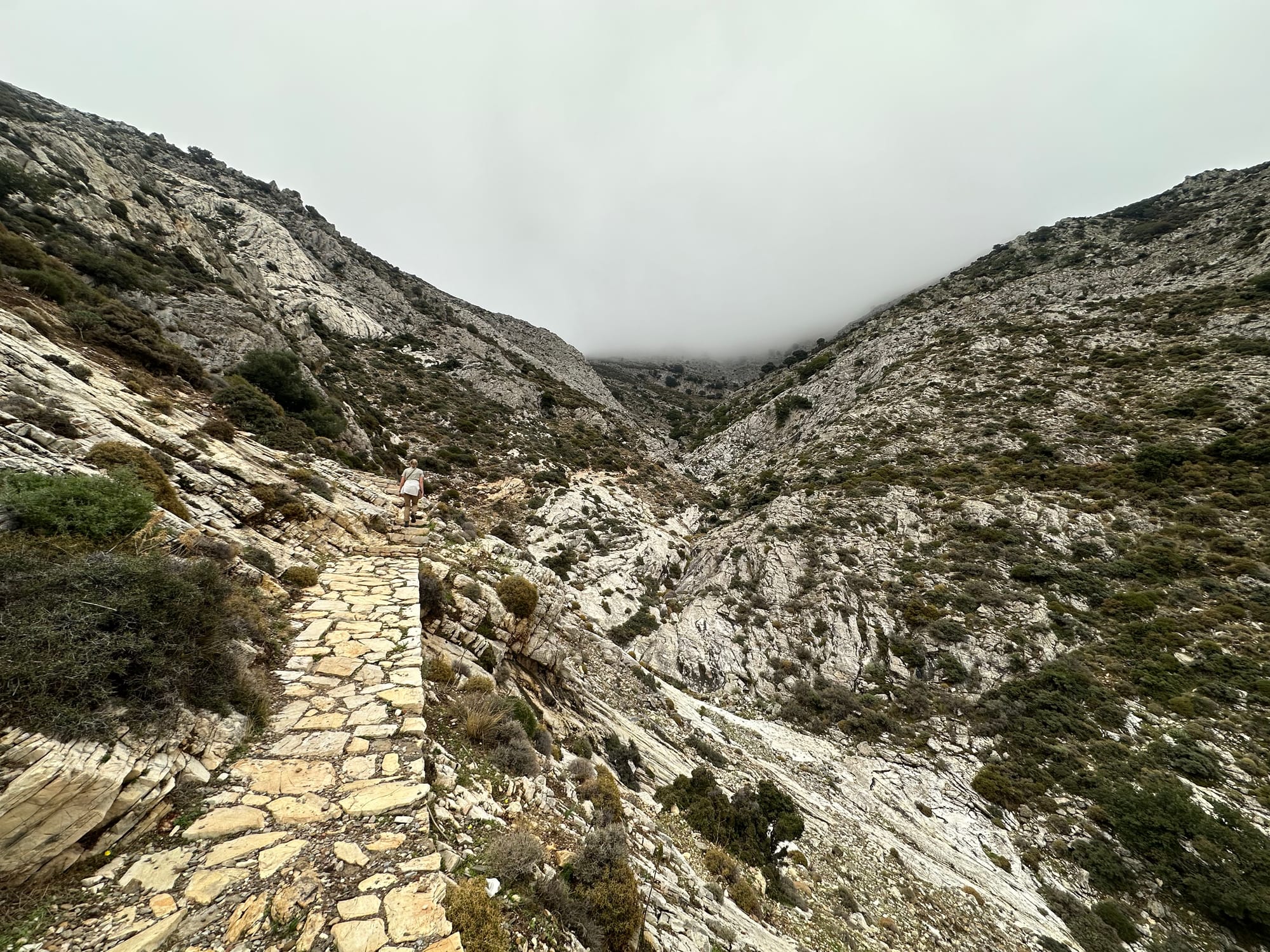
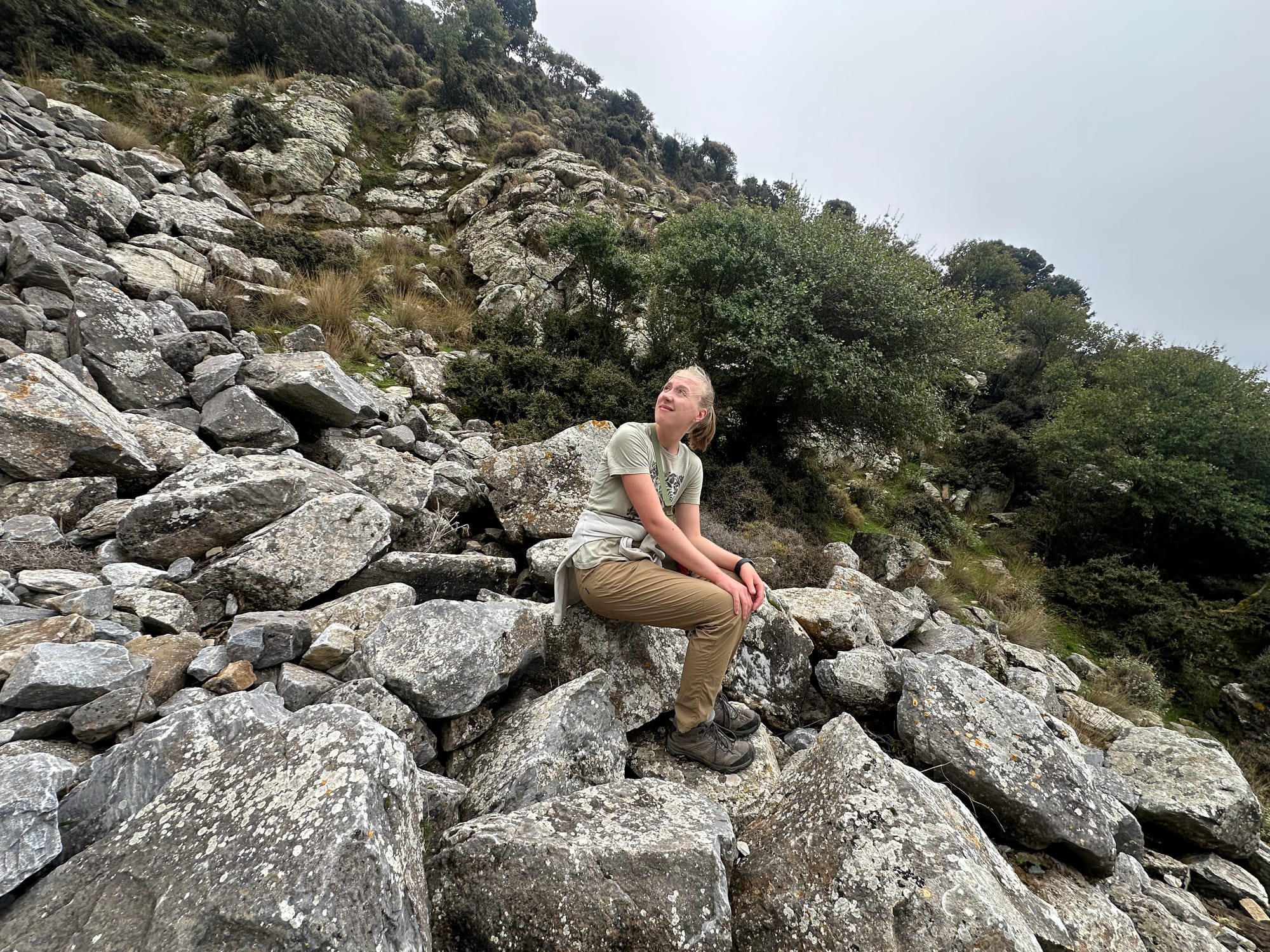
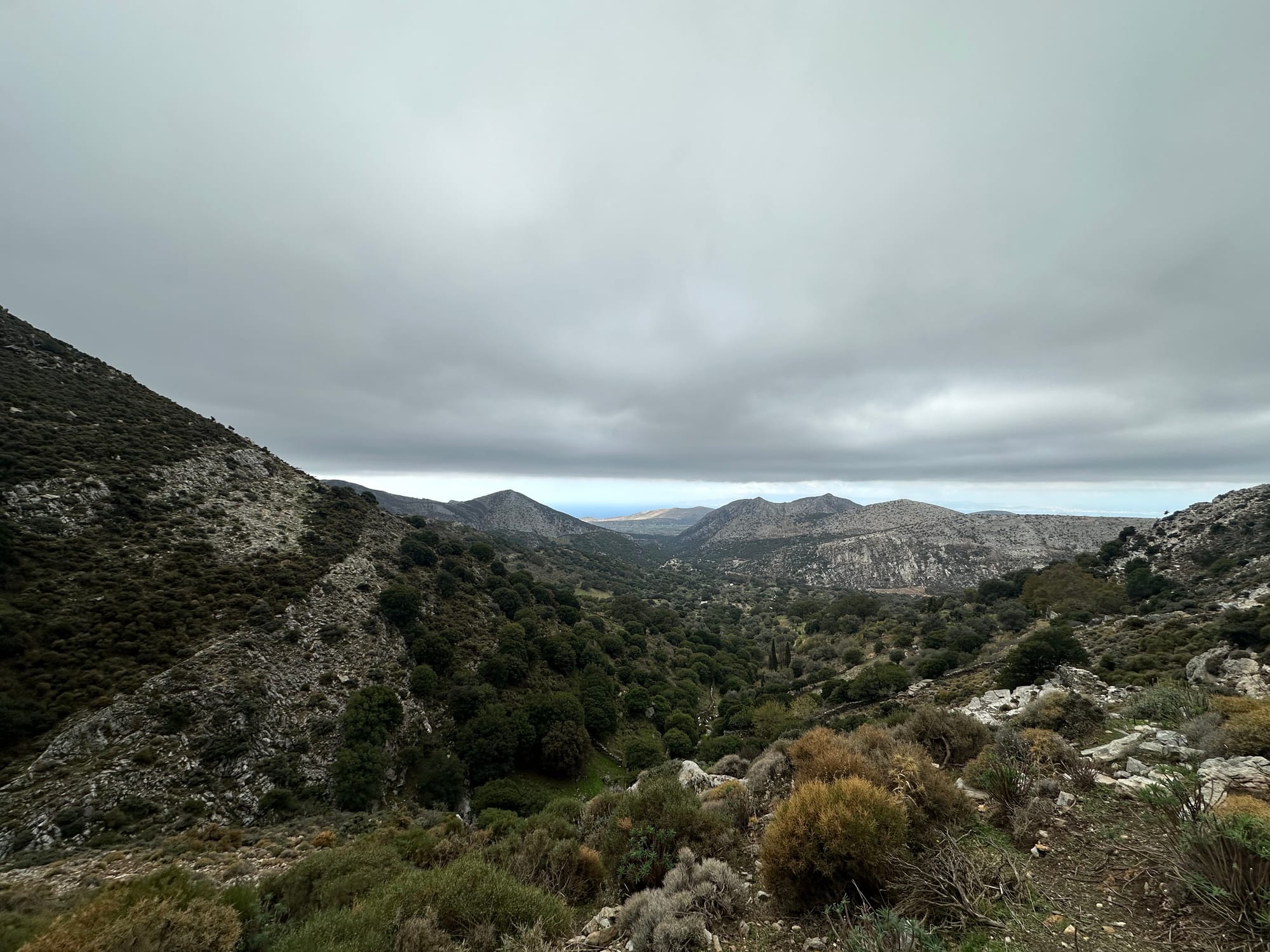
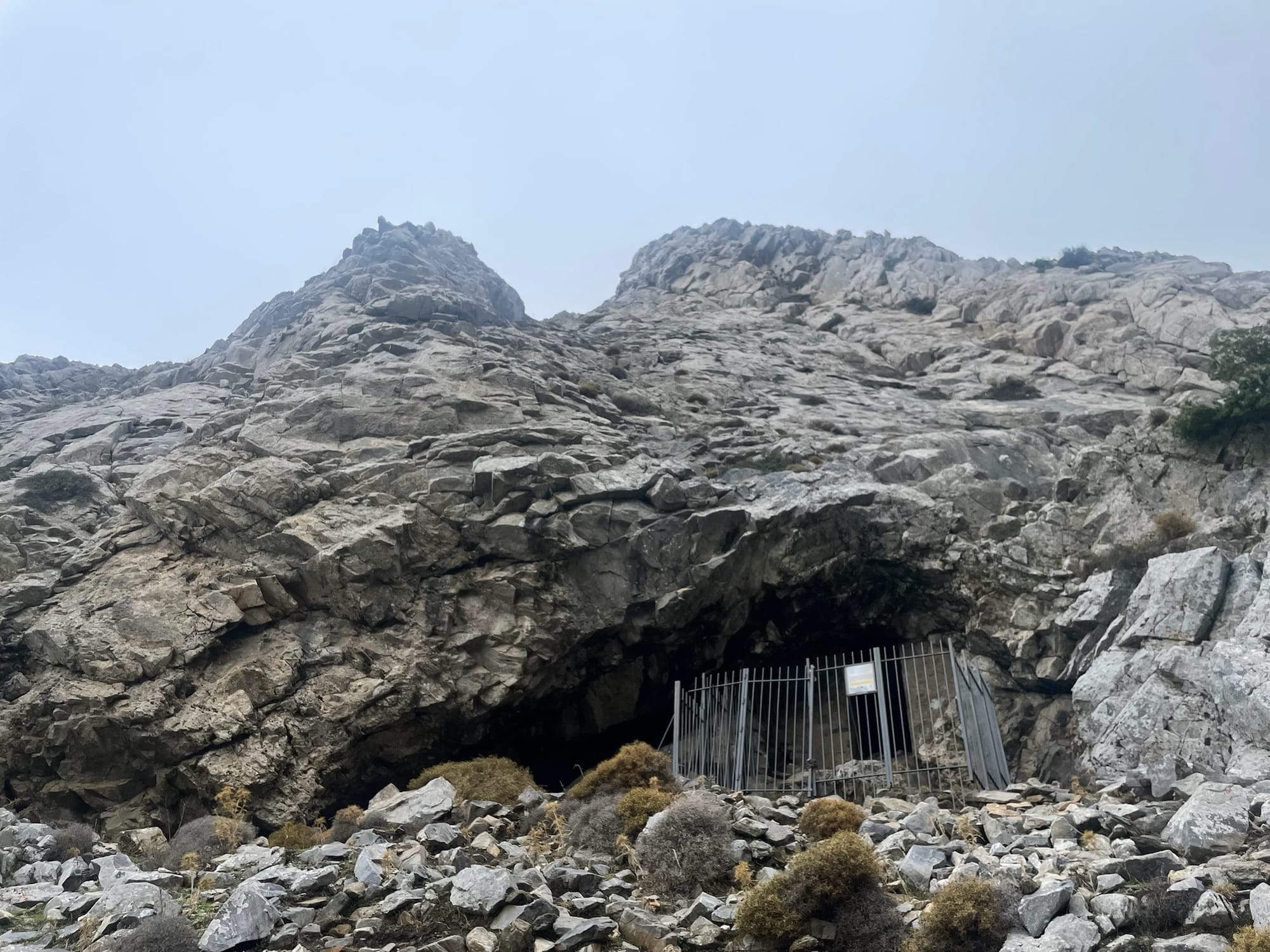
Zeus must have had ripped thighs. [📸 Rachel & Johann]
The clouds hung thick and low as we began our ascent. We passed the barred entrance to Zeus’ cave, the god’s mythological childhood home, the path becoming increasingly steep. Soon, we were in the clouds ourselves, the moisture clinging to our skin and covering our hair in fine droplets. Needless to say, the views from the top weren’t stellar (read: white void), but that’s not the only reason we climb mountains! Along the way we saw delicate cyclamen growing amongst the rocks, and dainty purple flowers with fiery orange stamen. Plus our handful of ‘summit peanuts’ tasted really really good.
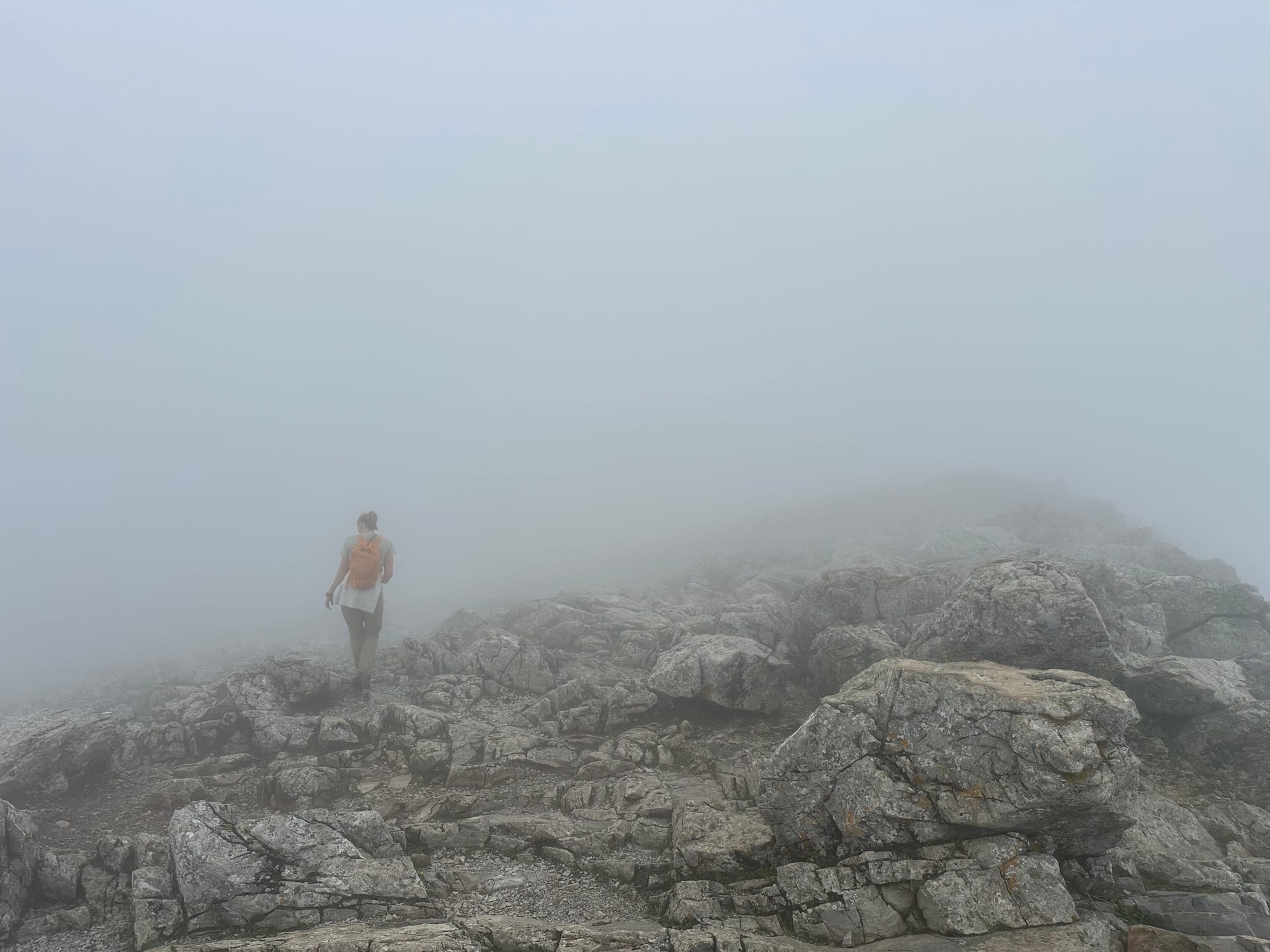
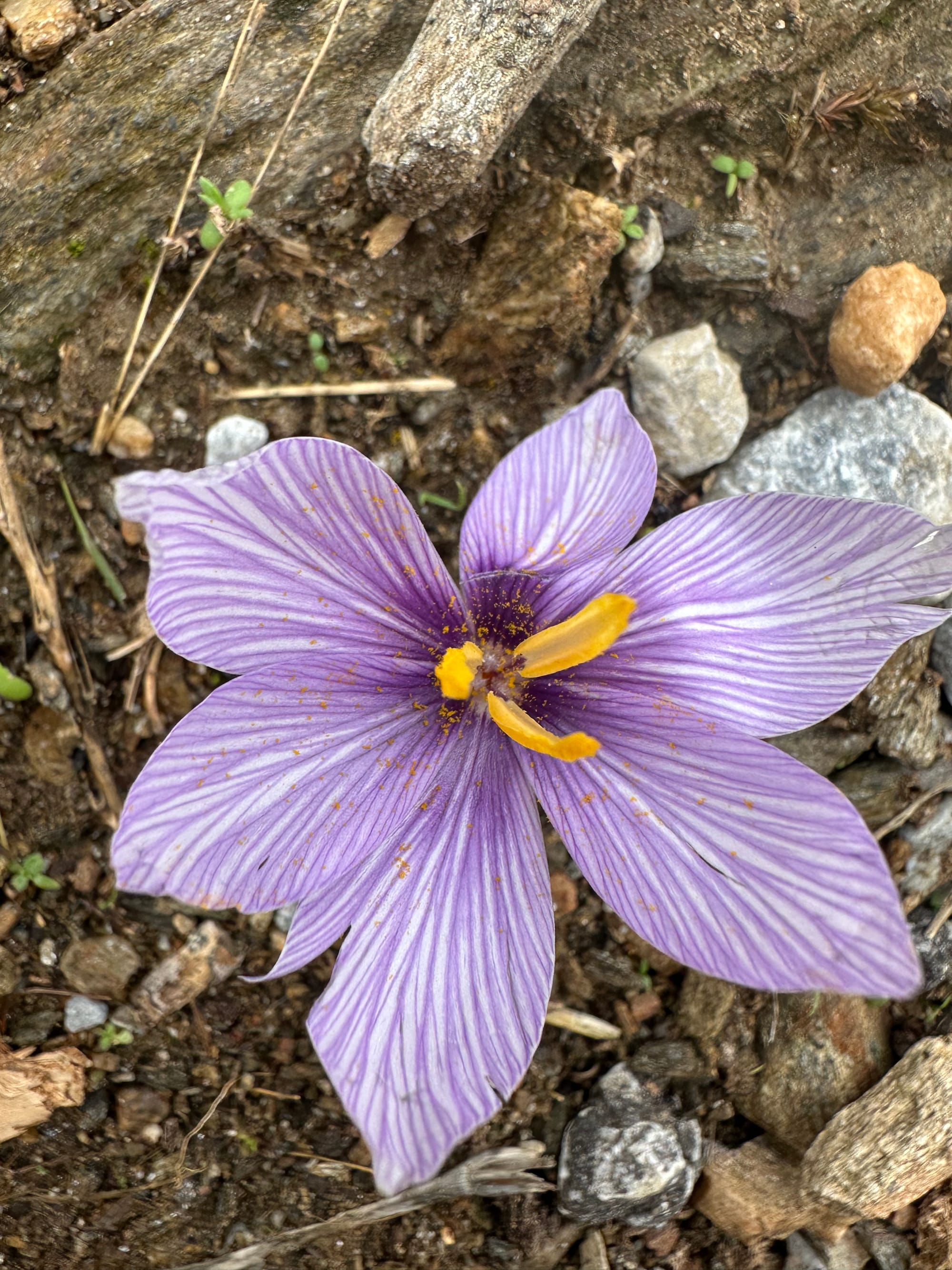
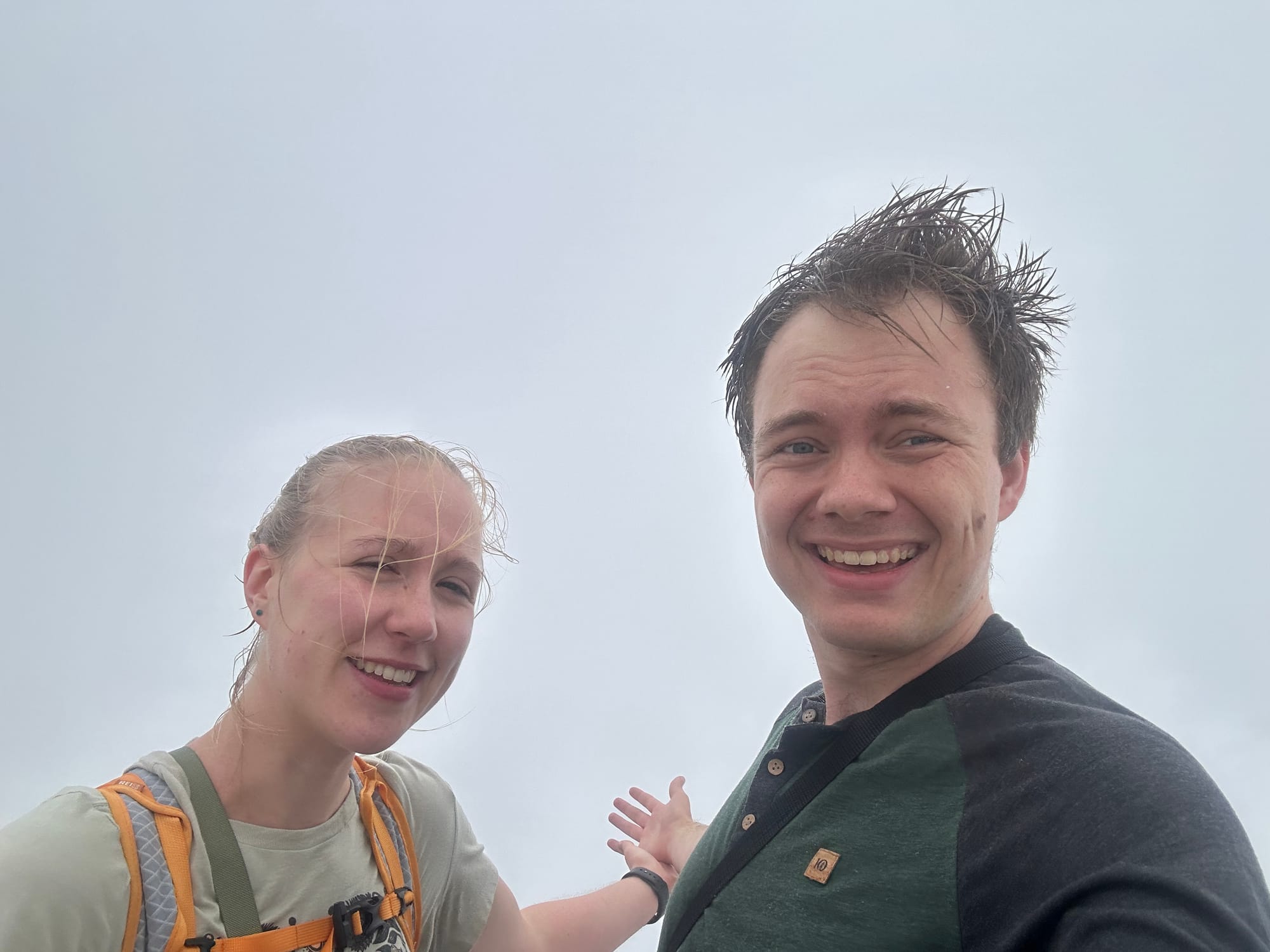
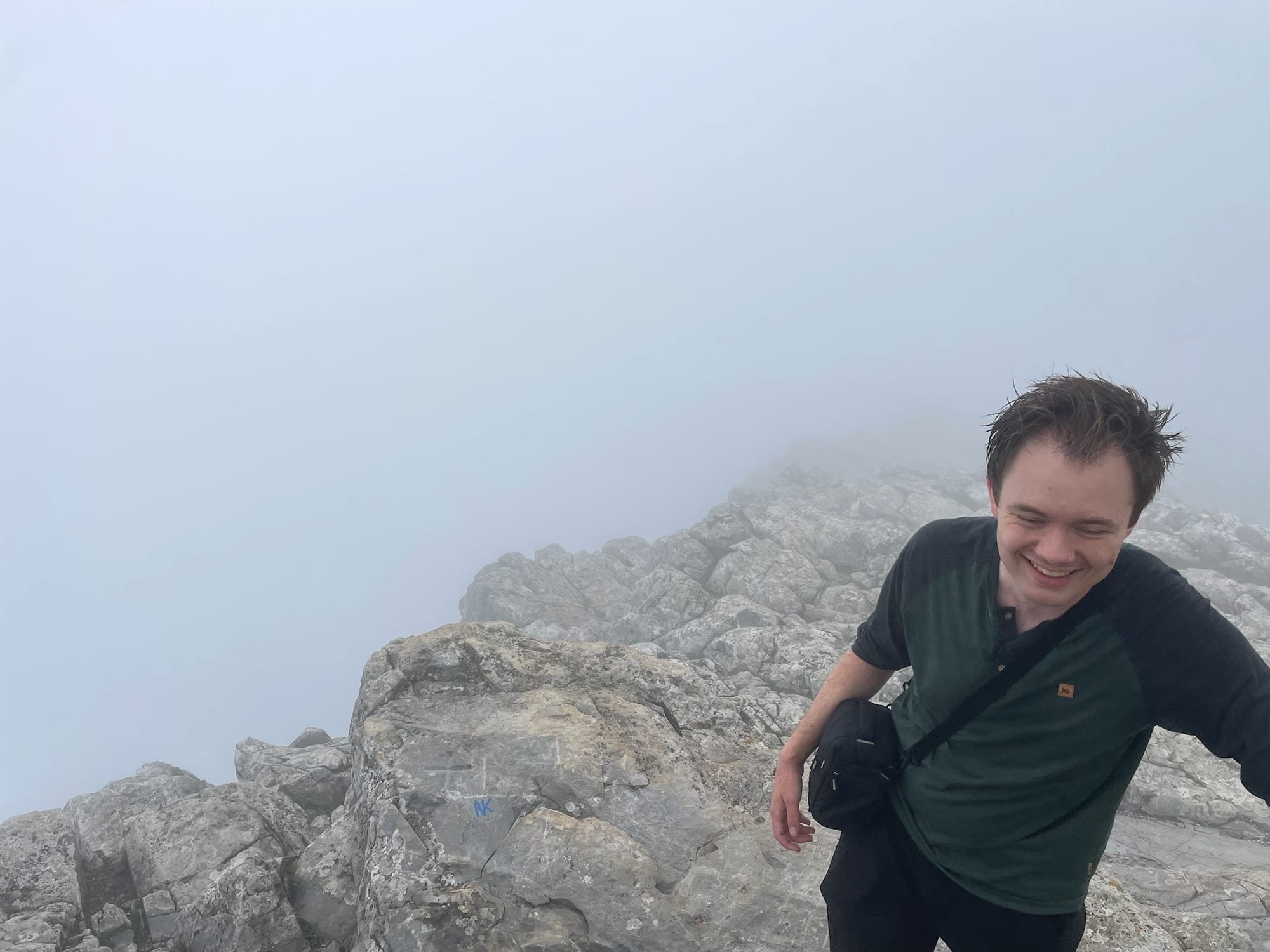
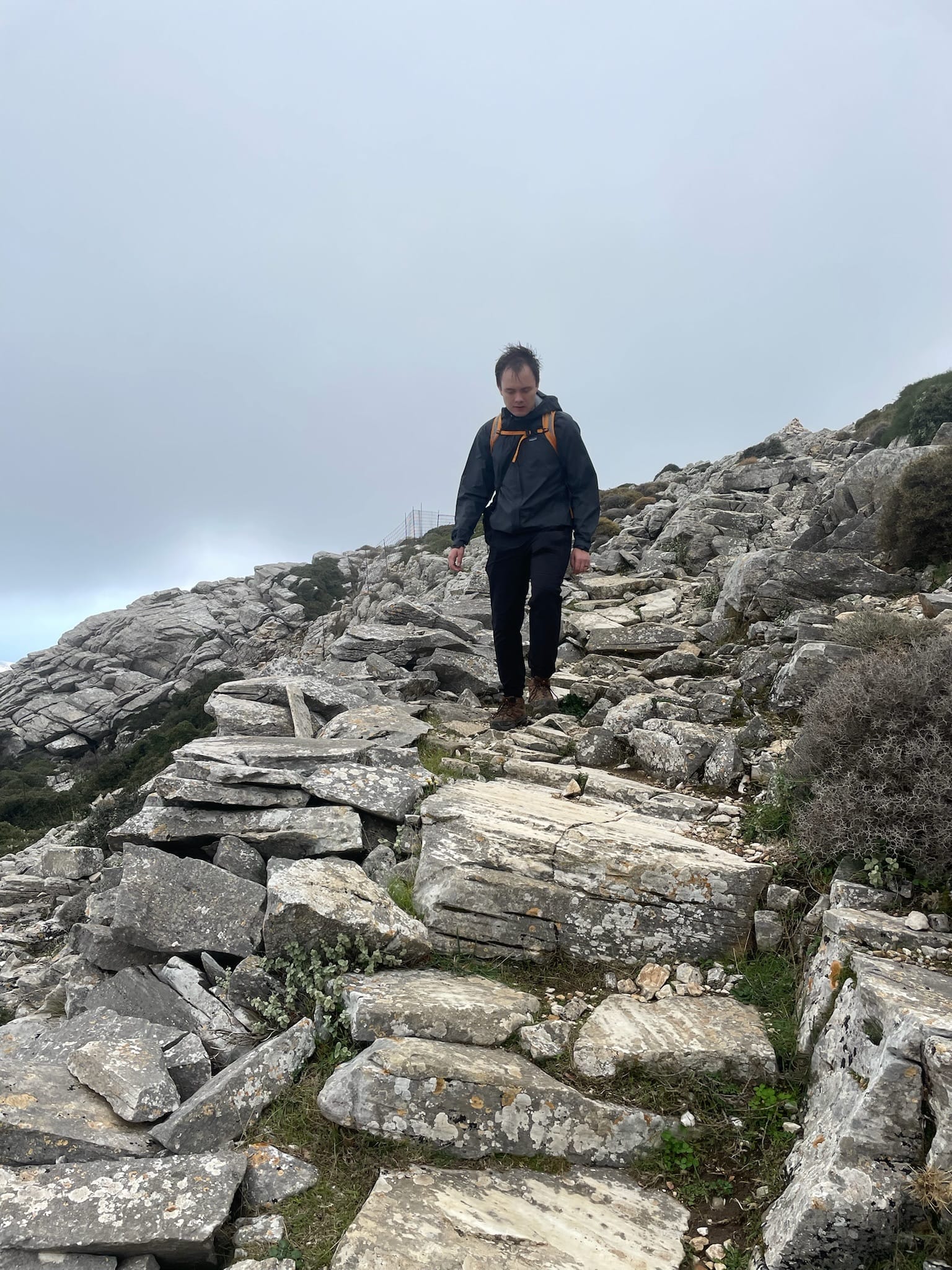
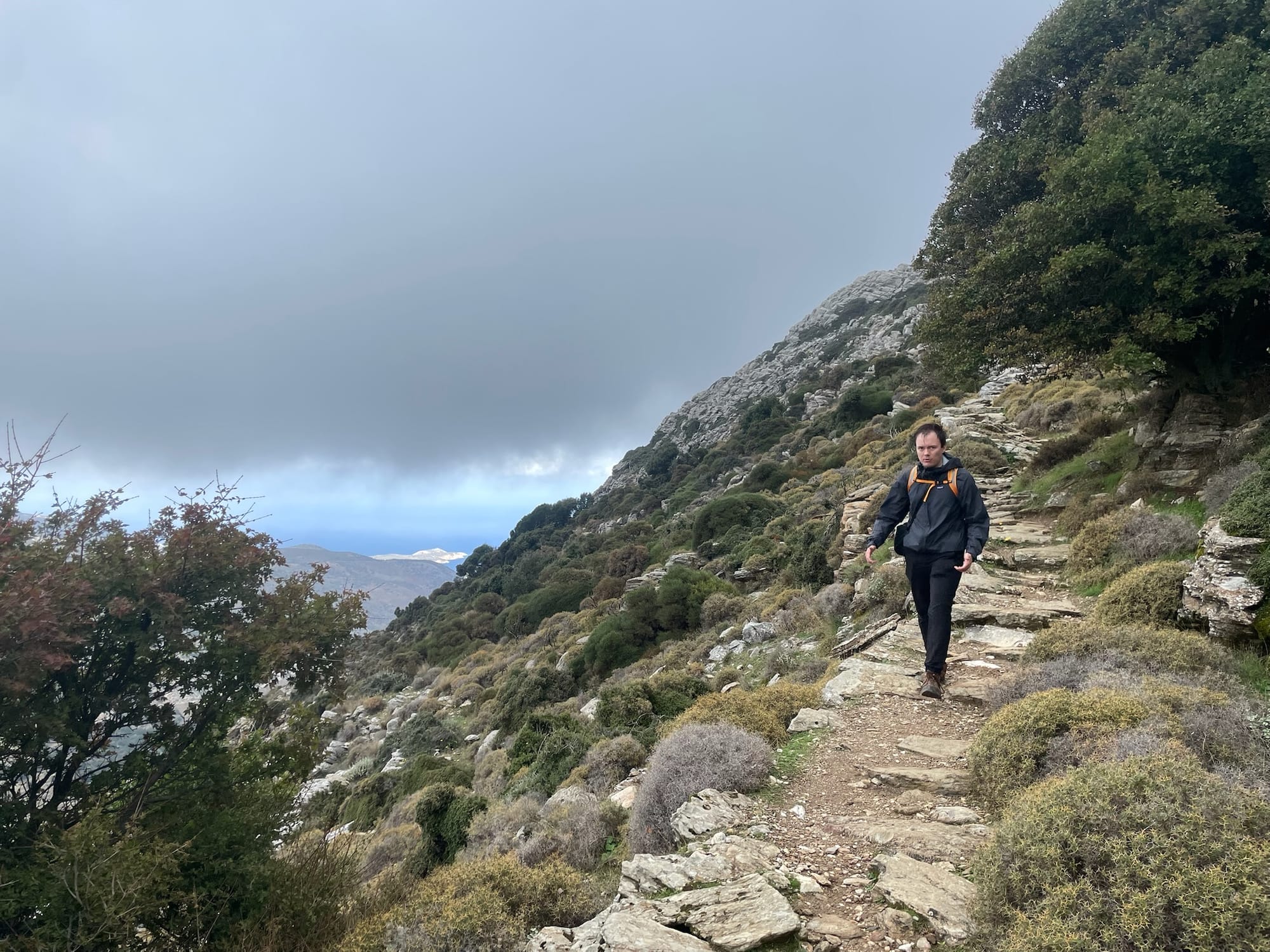
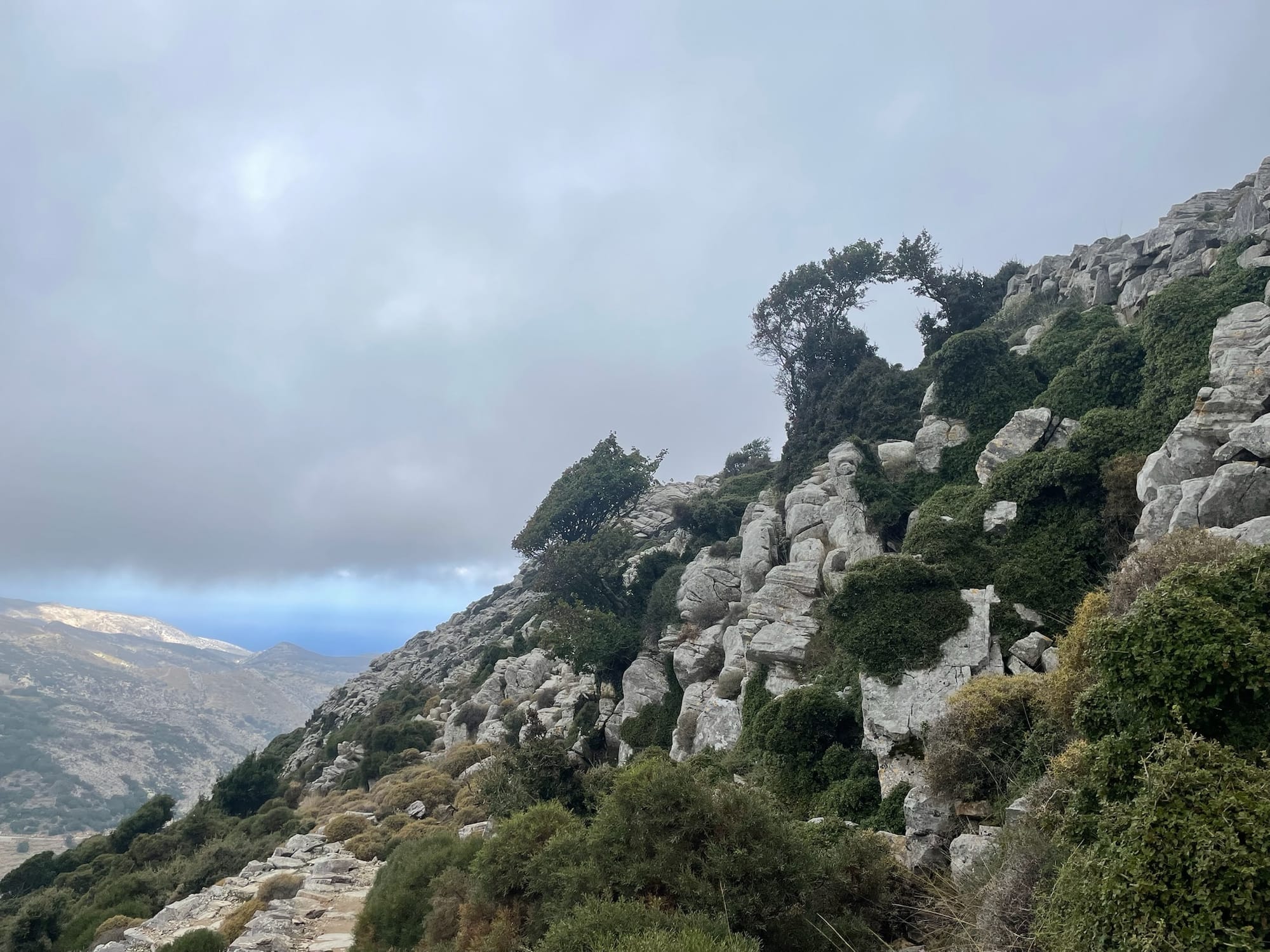
What a view! [📸 Rachel & Johann]
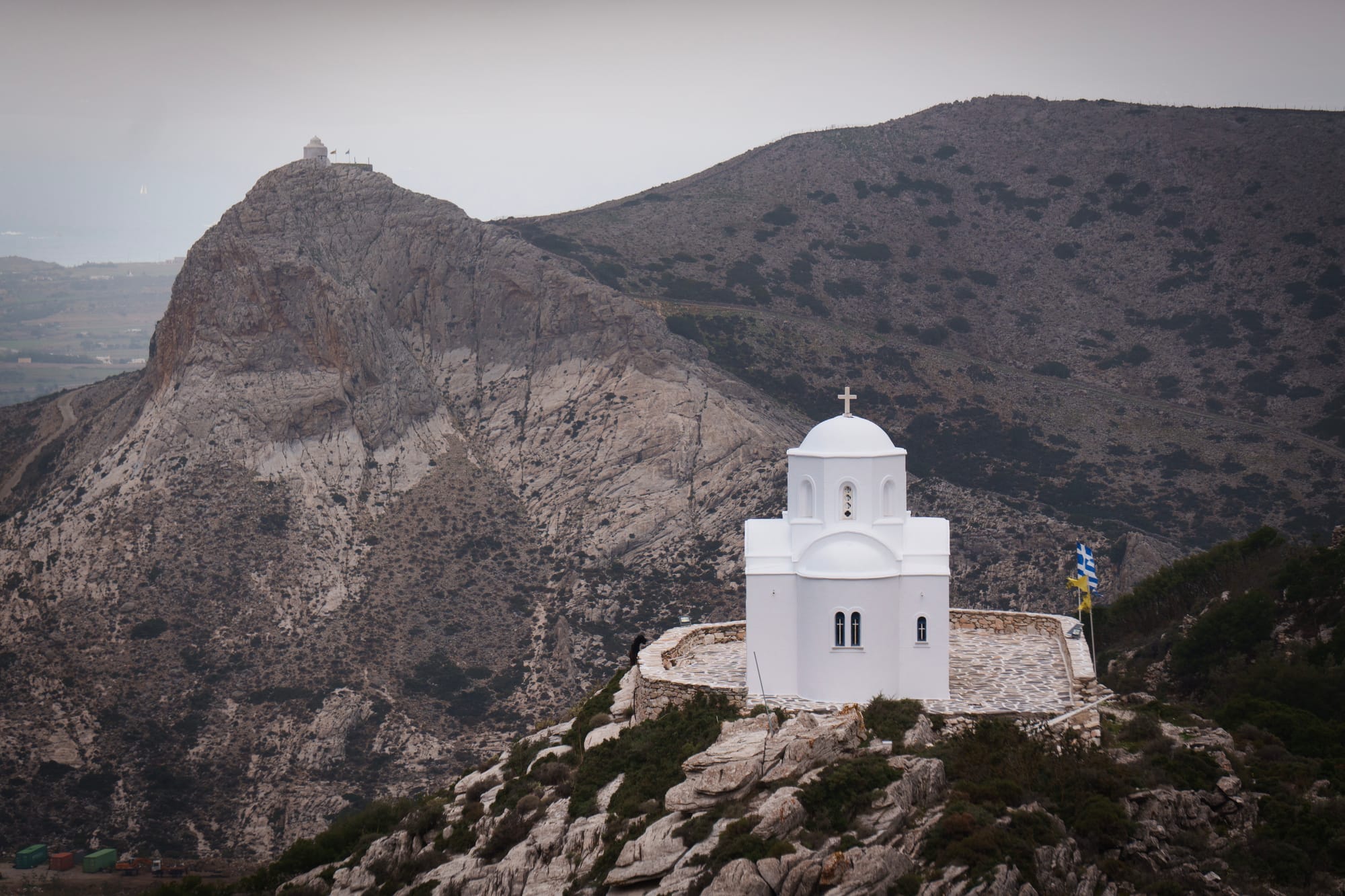
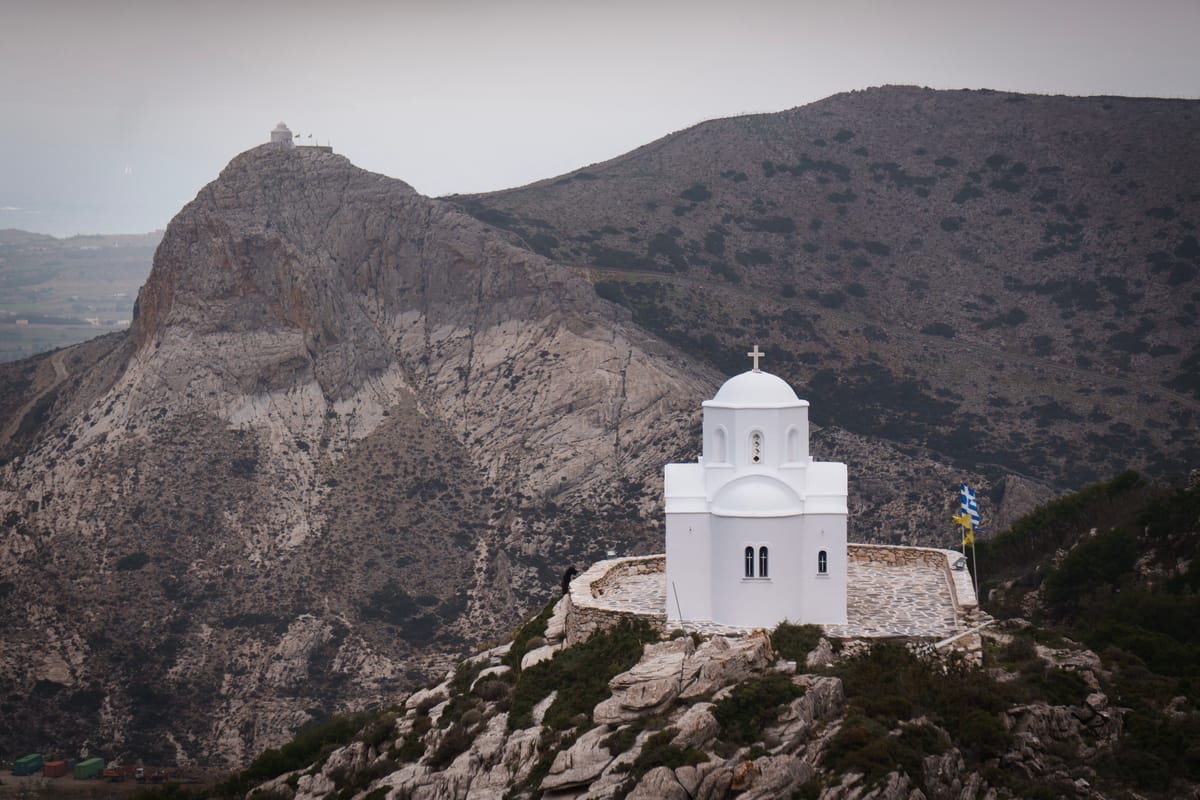
As usual, the descent was fast. Soon the clouds were above once more, and we could see the ocean glittering in distant sunlight. We crisscrossed the hillside on our descent to the mountain village of Filoti, the rocky slopes extensively tiered and planted with olive trees. On the tops of hills were tiny white Orthodox churches, promising worshippers an excellent fitness regime. Here it would seem that they have long understood how best to capture a hint of the divine.
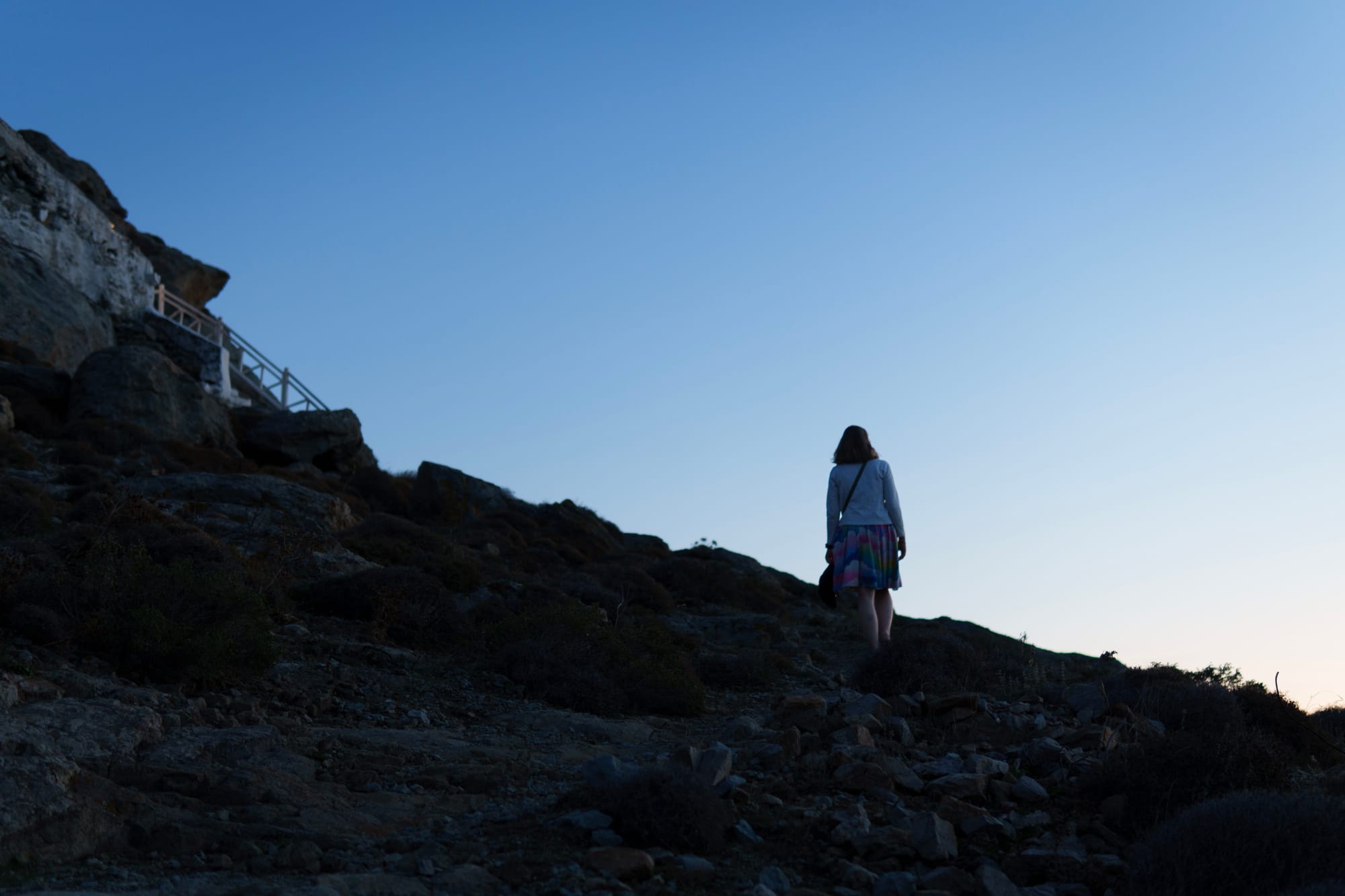
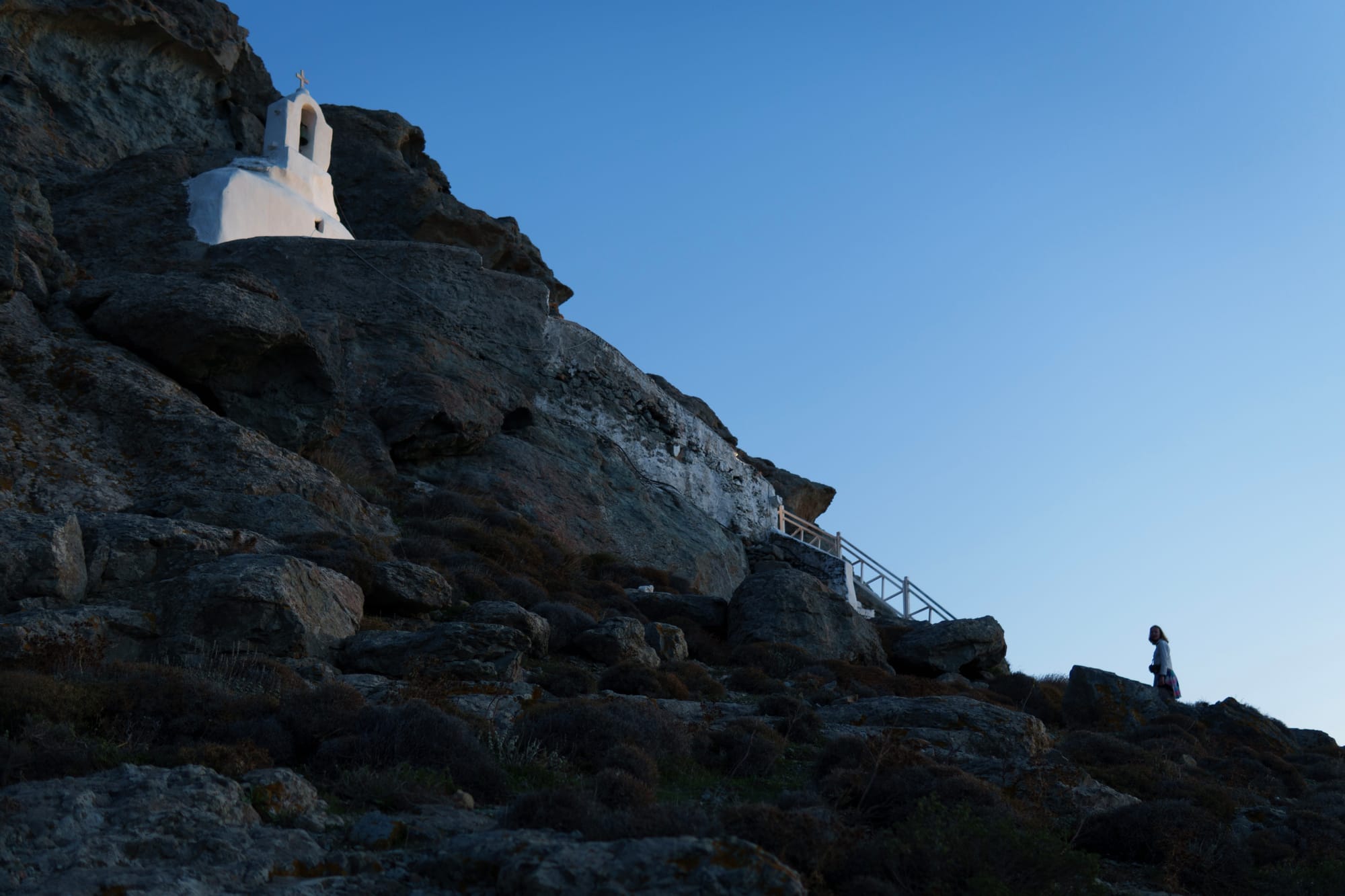
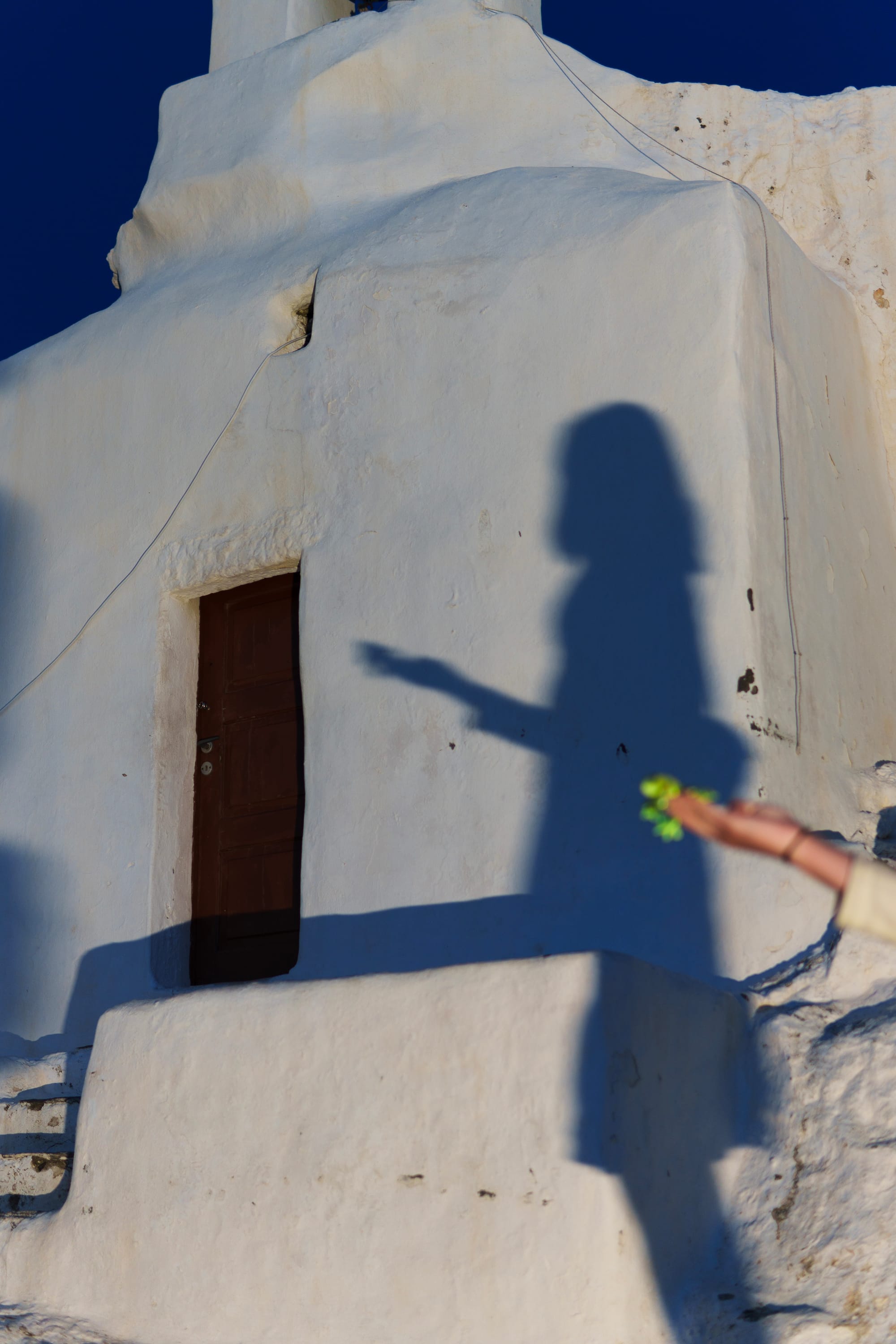
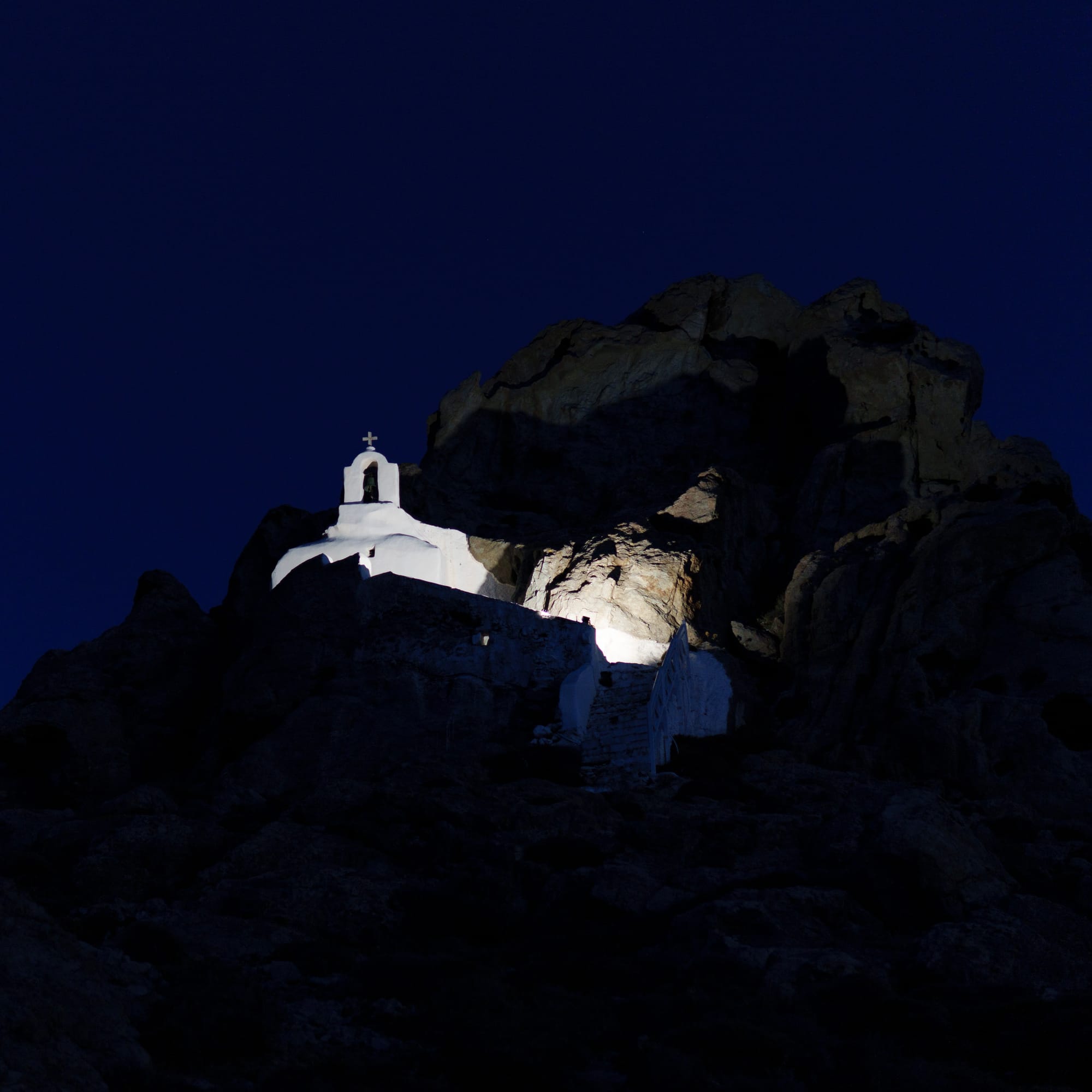
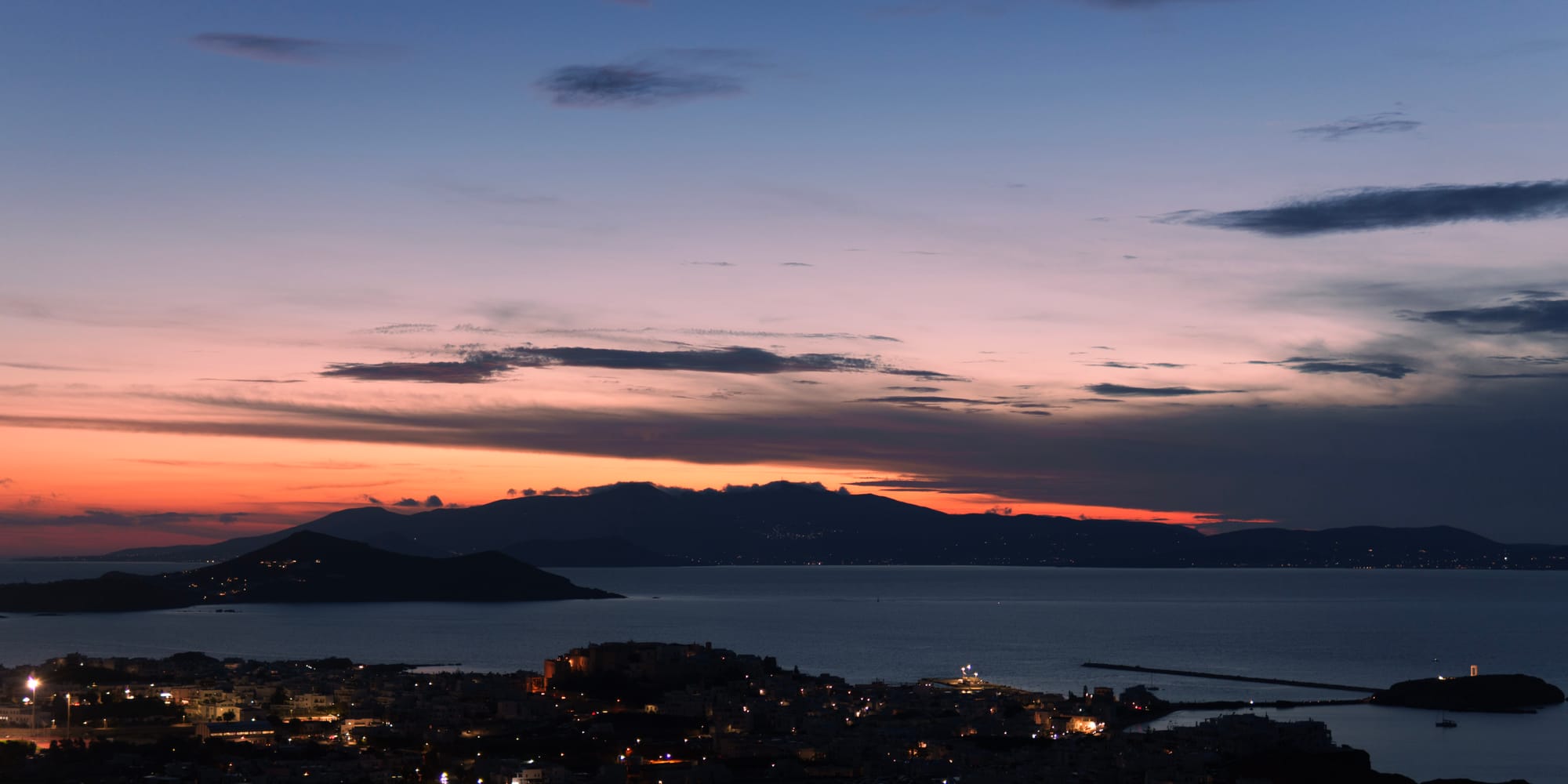
Small white churches were perched on nearly every hilltop, such as this one near Naxos. [📸 Johann]