Nepal Part II: The Silmarillionoceros
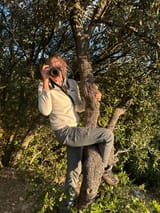

Let's pick up where we left off: in Nepal, having just landed in Kathmandu after trekking in the Himalayas.
Johann got sick earlier, and was mostly recovered by the time we finished our trek. Rachel lay ill in bed for four more days while Johann braved the streets alone to find her medicine and bananas. As far as we can gather, Pepto-Bismol and apple sauce do not exist in Nepal, or at least not in the Thamel district of Kathmandu where we were staying. Johann's parents provided invaluable medical and emotional support from afar, and with their guidance Rachel began to recover on the fifth day after taking prescription antibiotics brought from home.
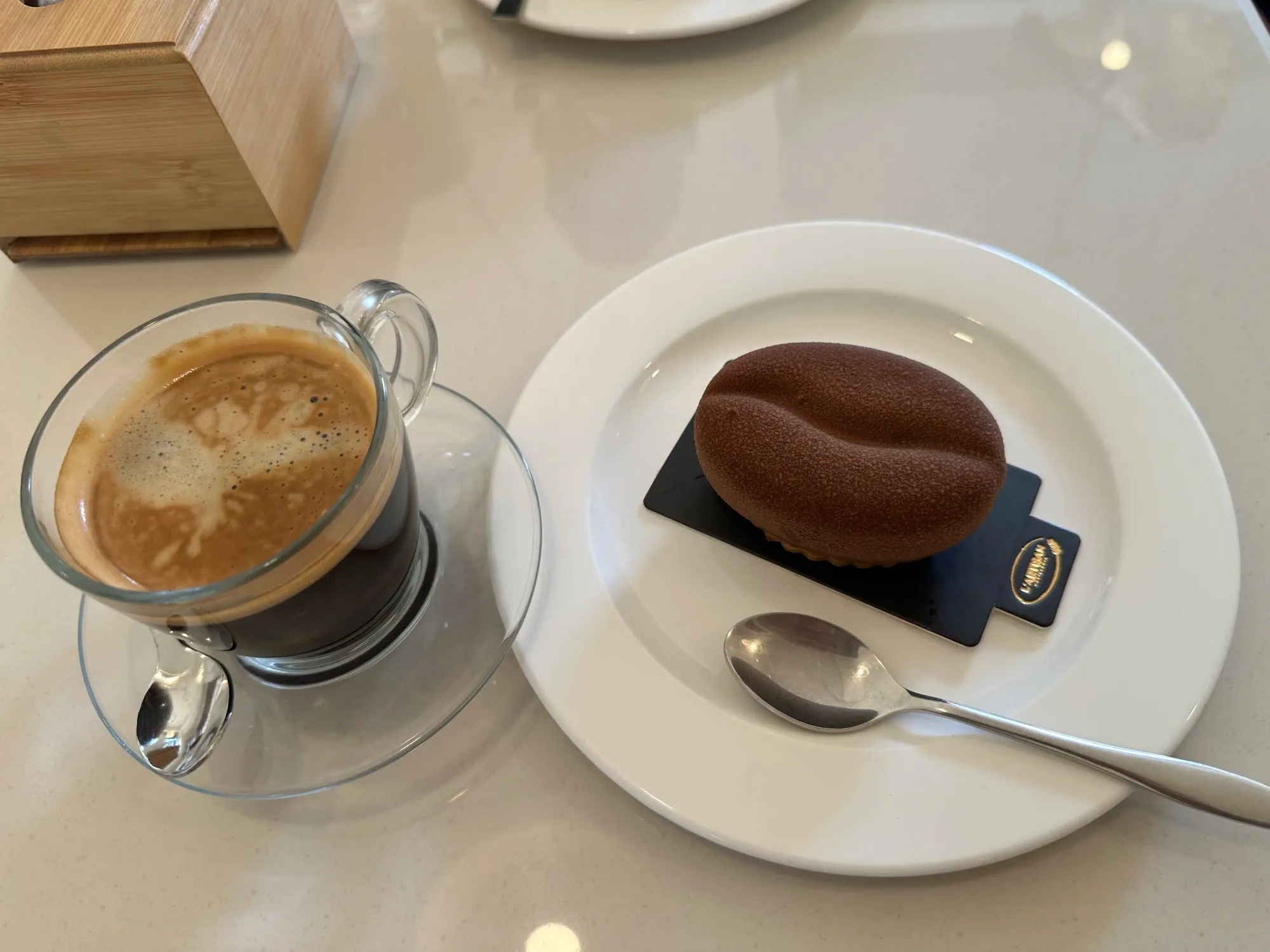
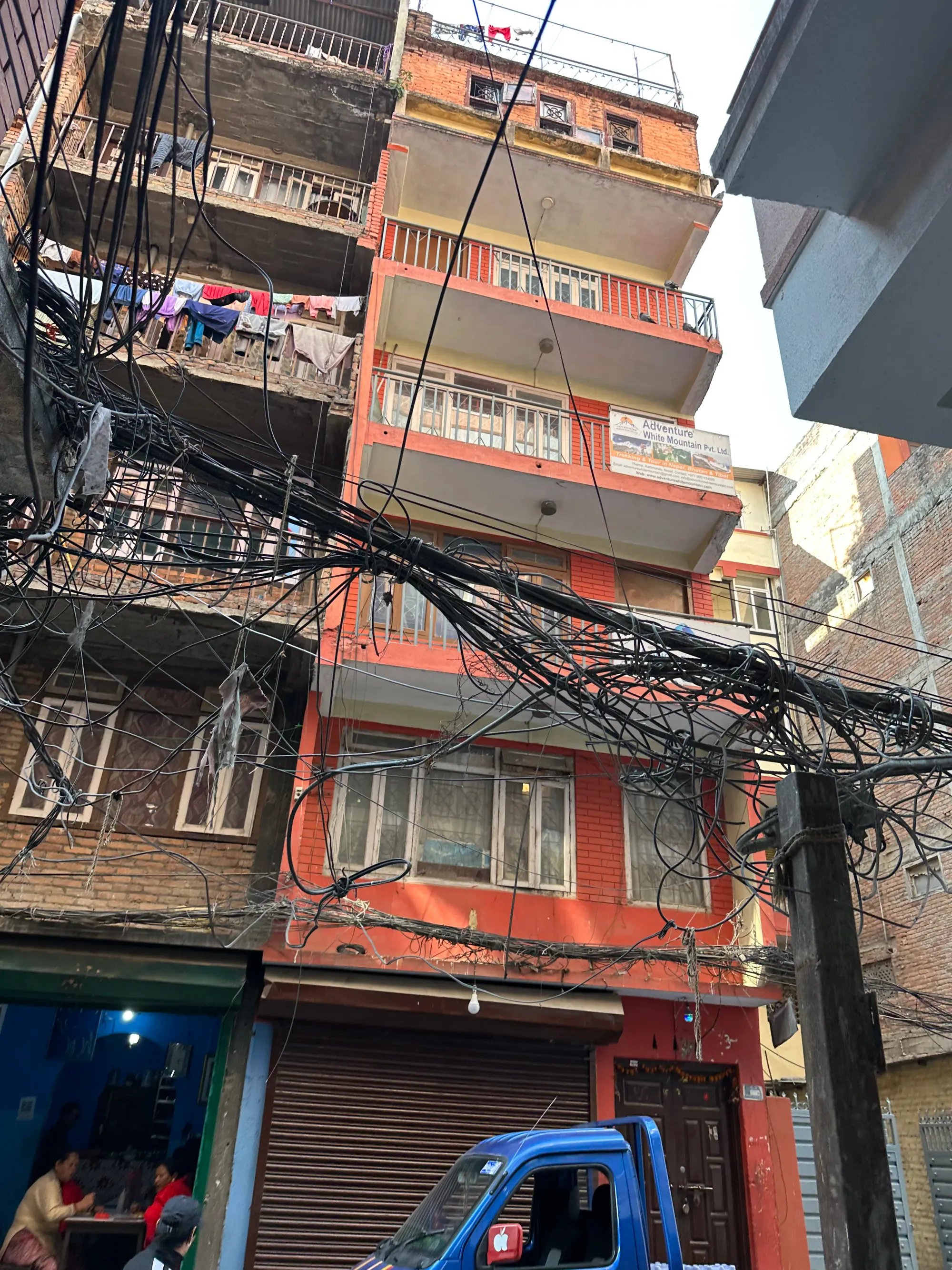
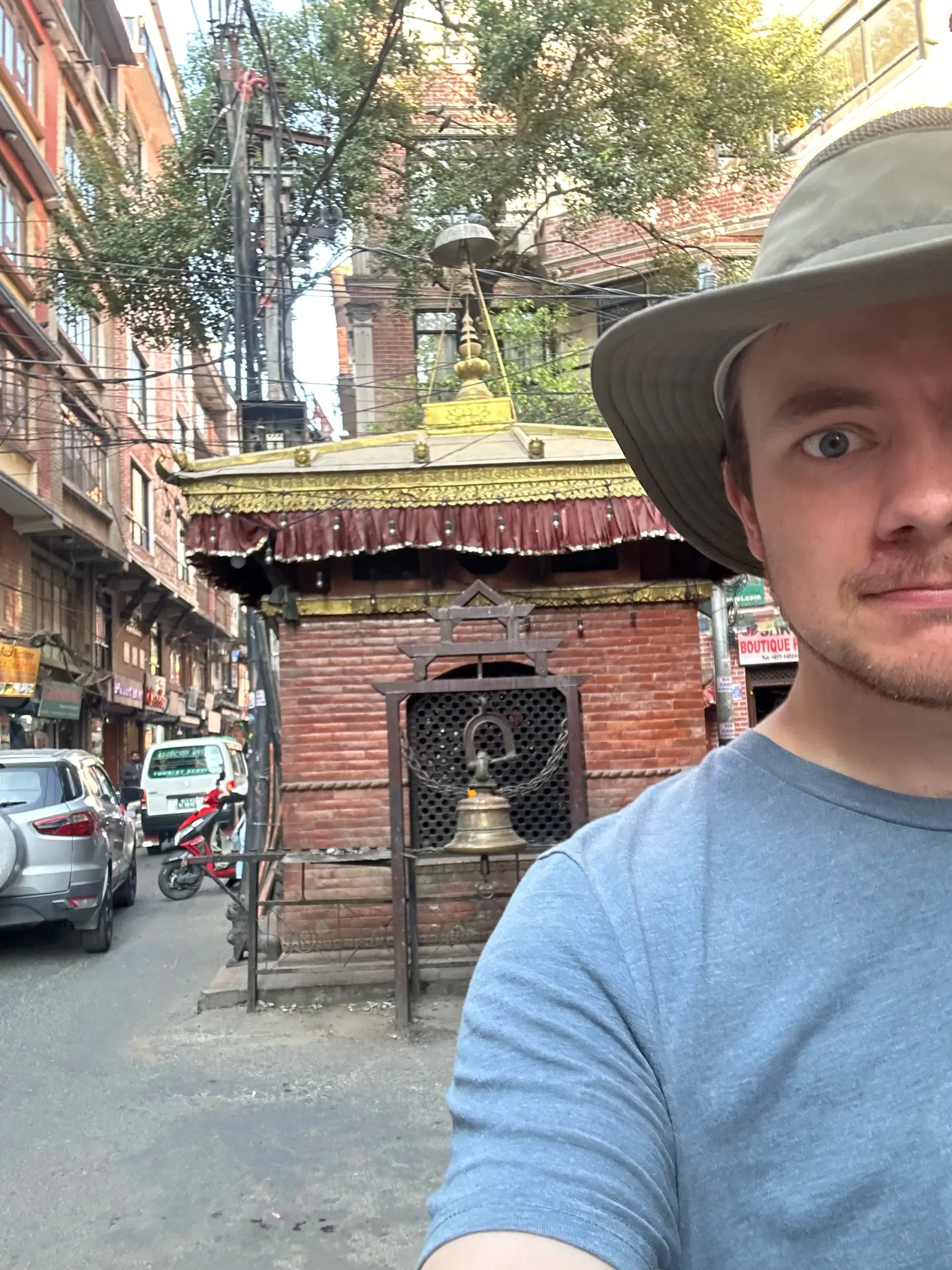
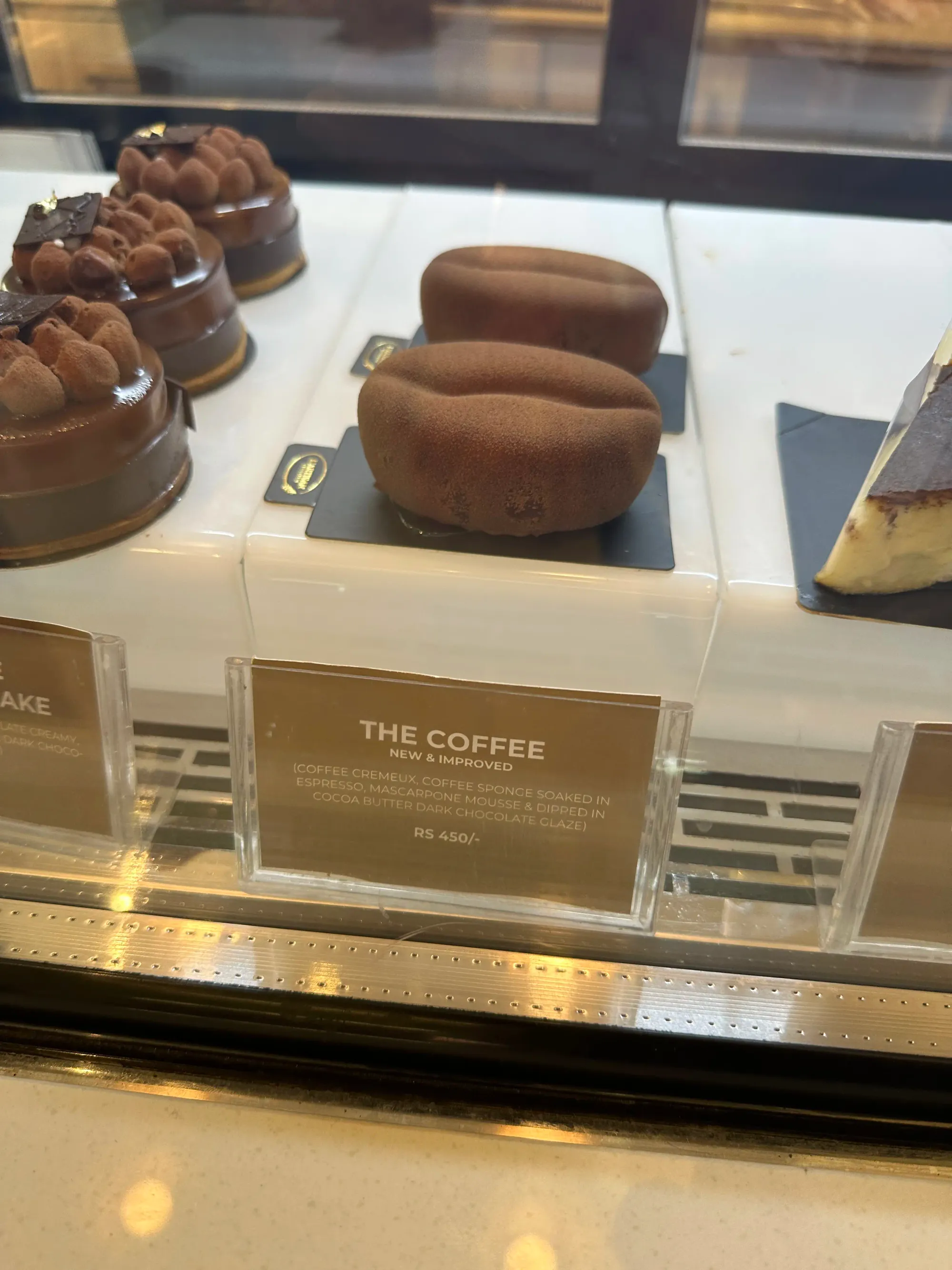
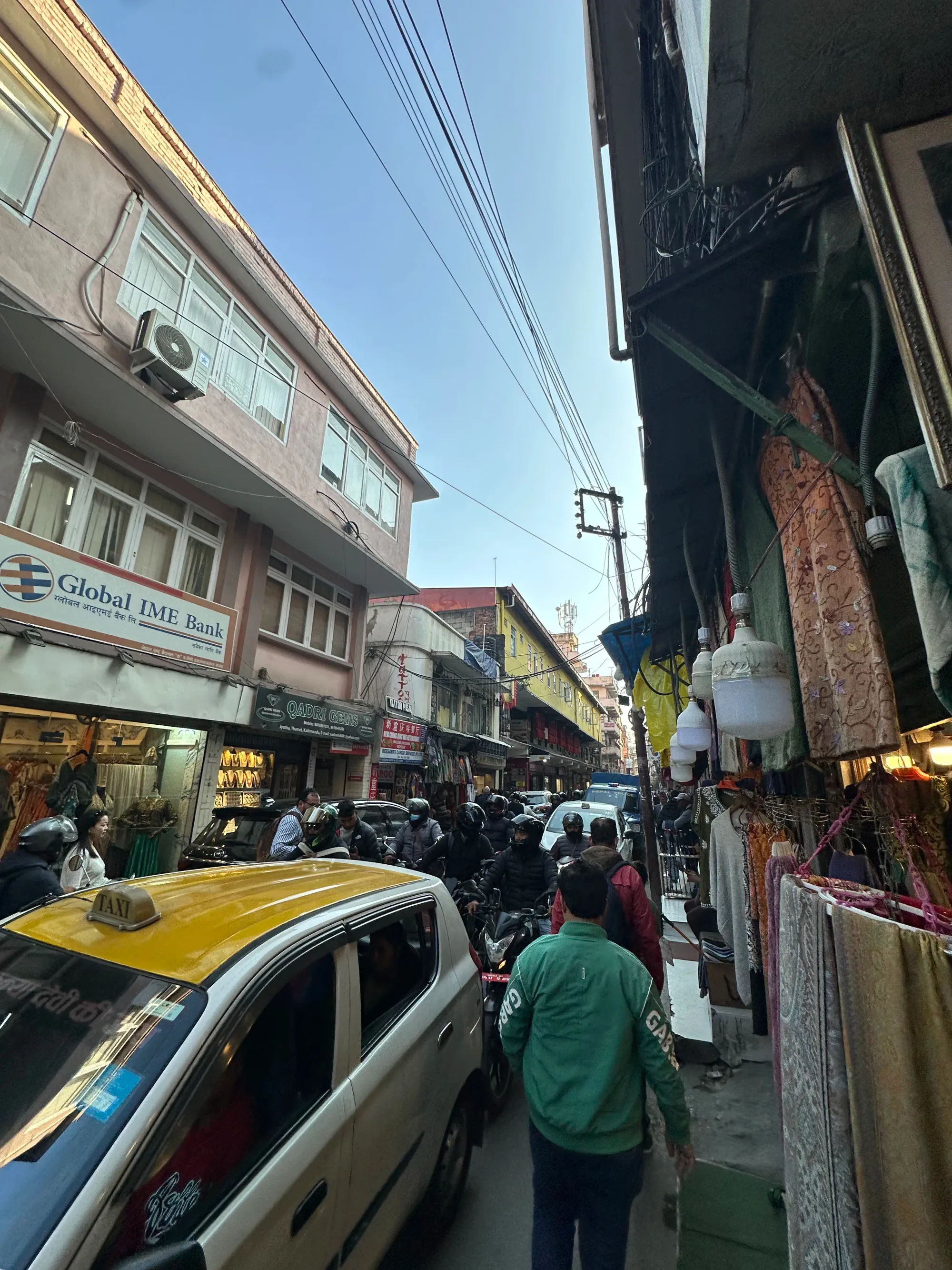
Johann had a heck of a time navigating the streets of Kathmandu to find supplies for Rachel, but luckily... luckily there were coffee cakes. [📸 Johann]
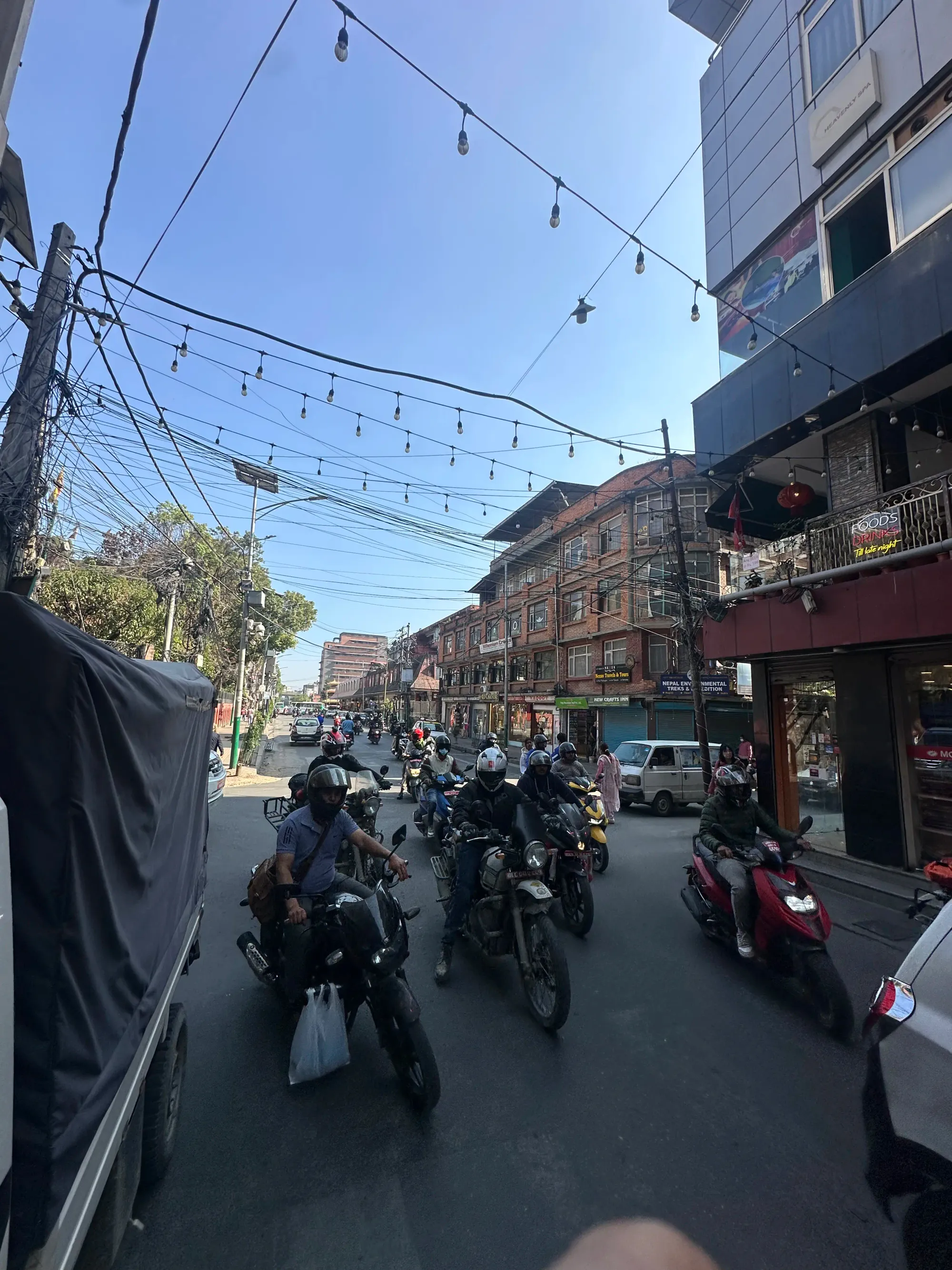
We had to cross this specific ultra-busy intersection almost every time we needed to go anywhere. We still have trigger responses when we hear scooters behind us. [📸 Johann]
We had been planning to volunteer on a rural coffee farm outside of Pokhara, but the host profile was pulled by the organizers, and as the host couldn't provide sufficient explanation, we decided to cancel our stay.
Still recovering from illness, tromping off to a rural farm with unknown bathroom facilities was also not particularly appealing. Instead we spent the week in Pokhara on our own, resting and exploring. While we are deeply sad that we didn't get to experience cultural immersion and exchange by living with a Nepalese family, we've concluded that this change was for the best, all things considered.
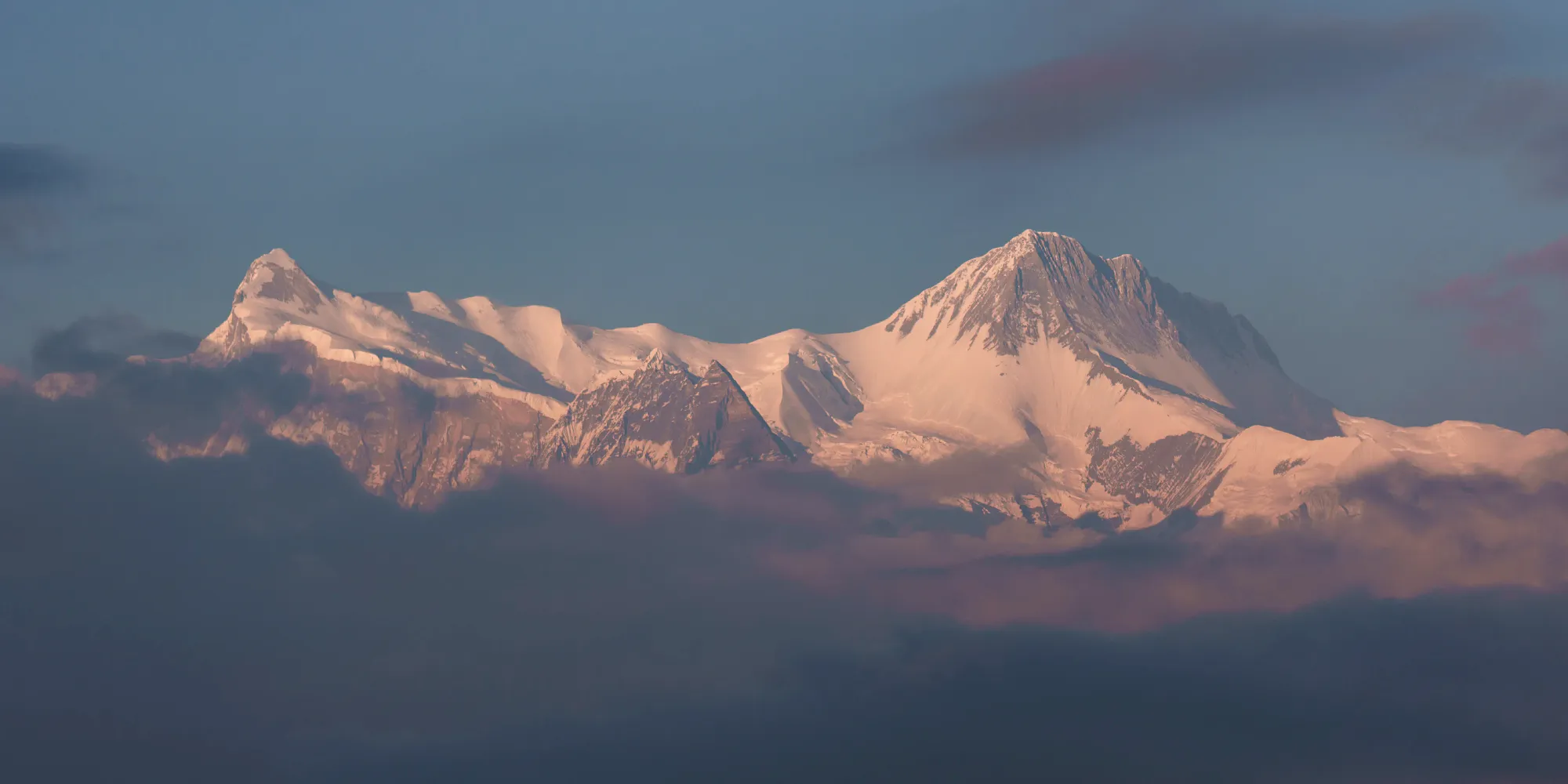
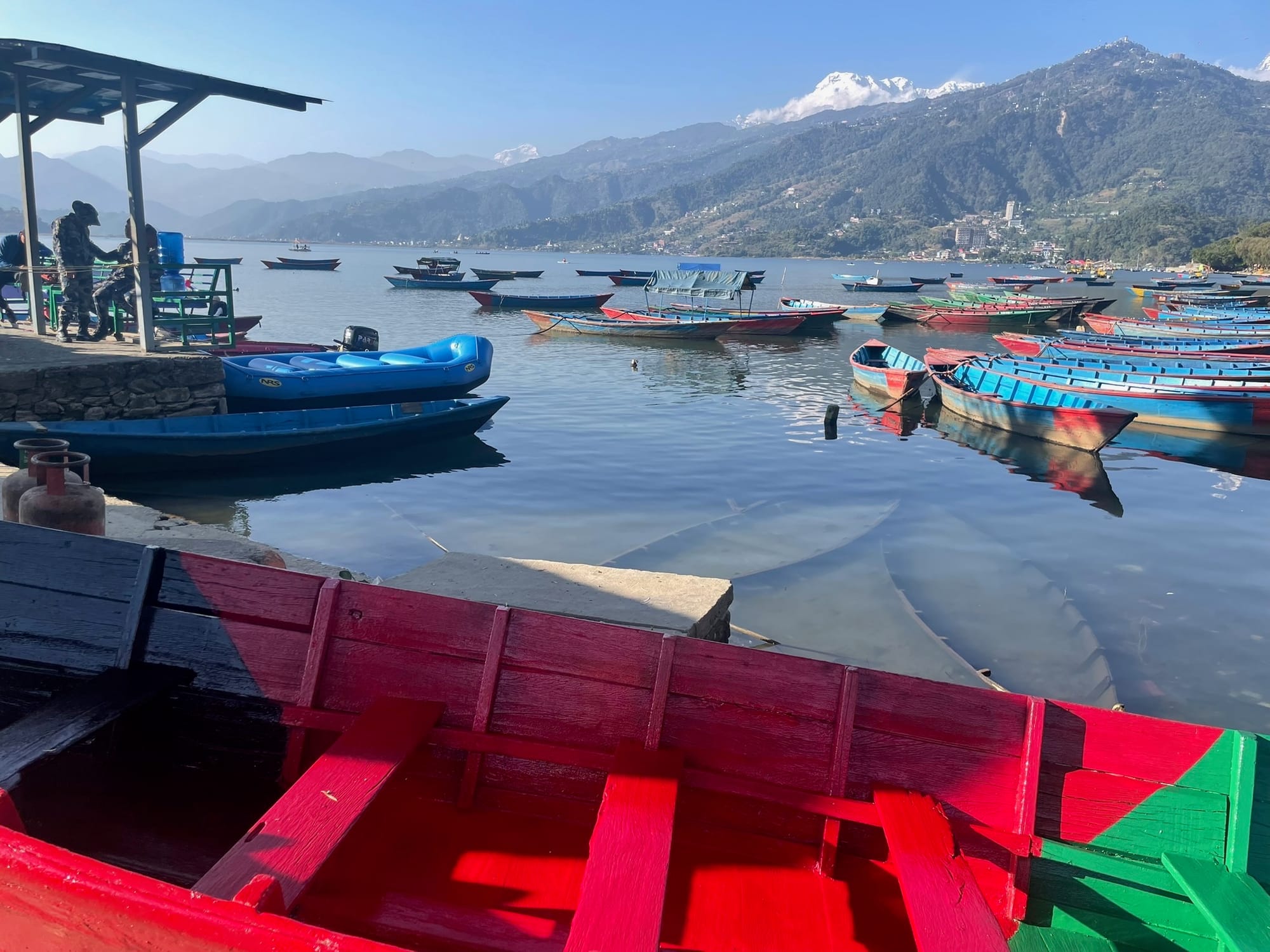
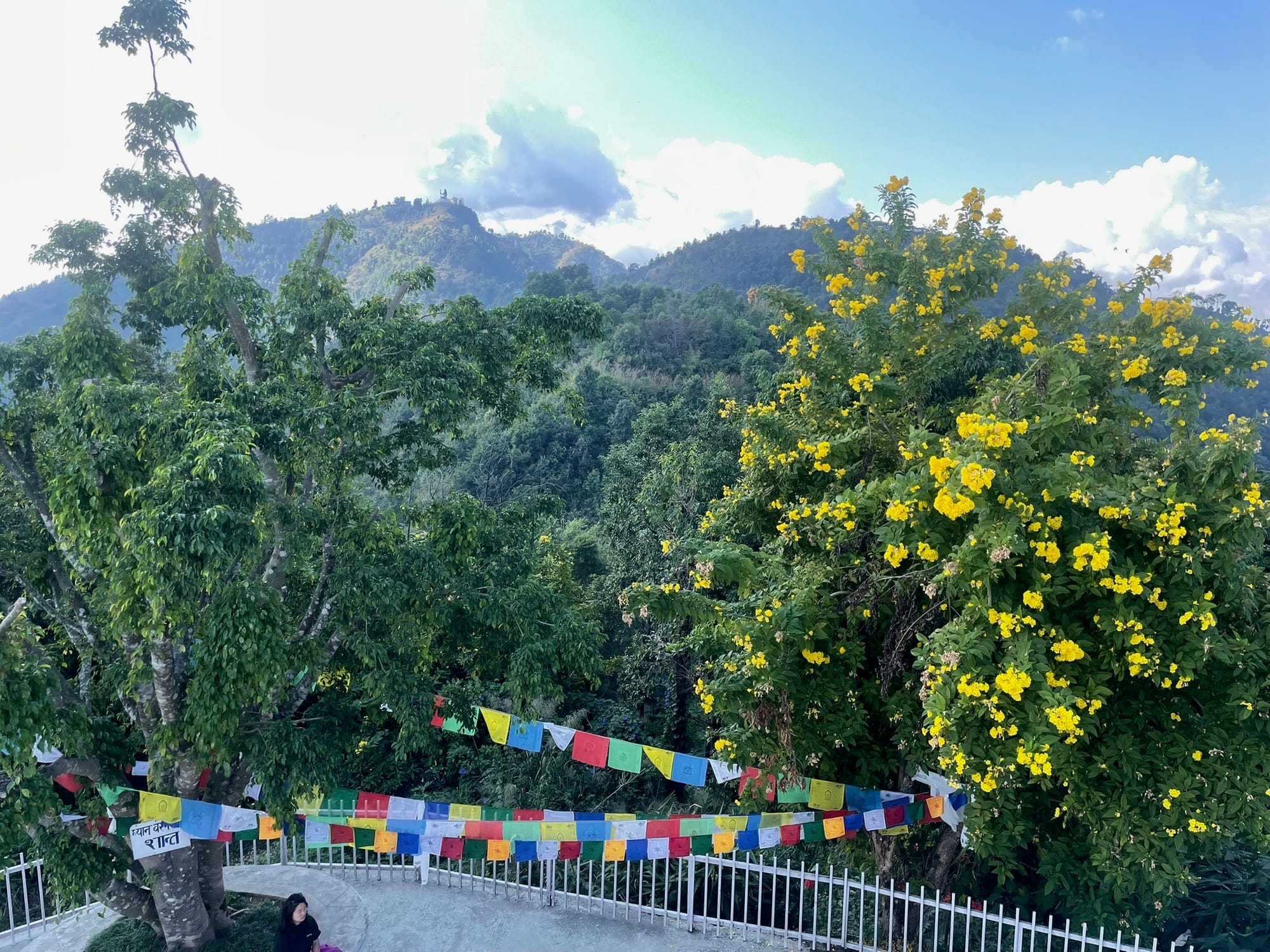
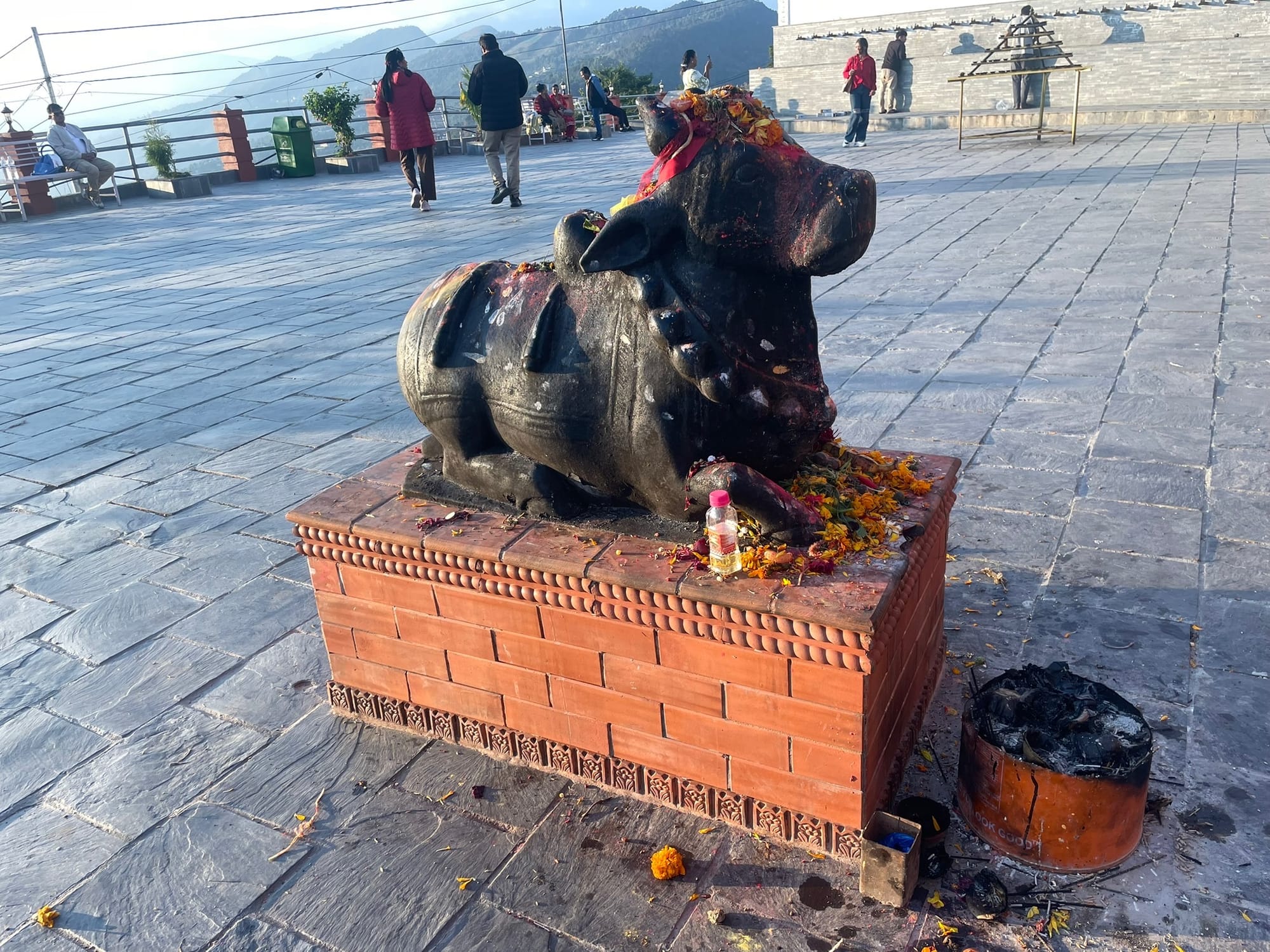
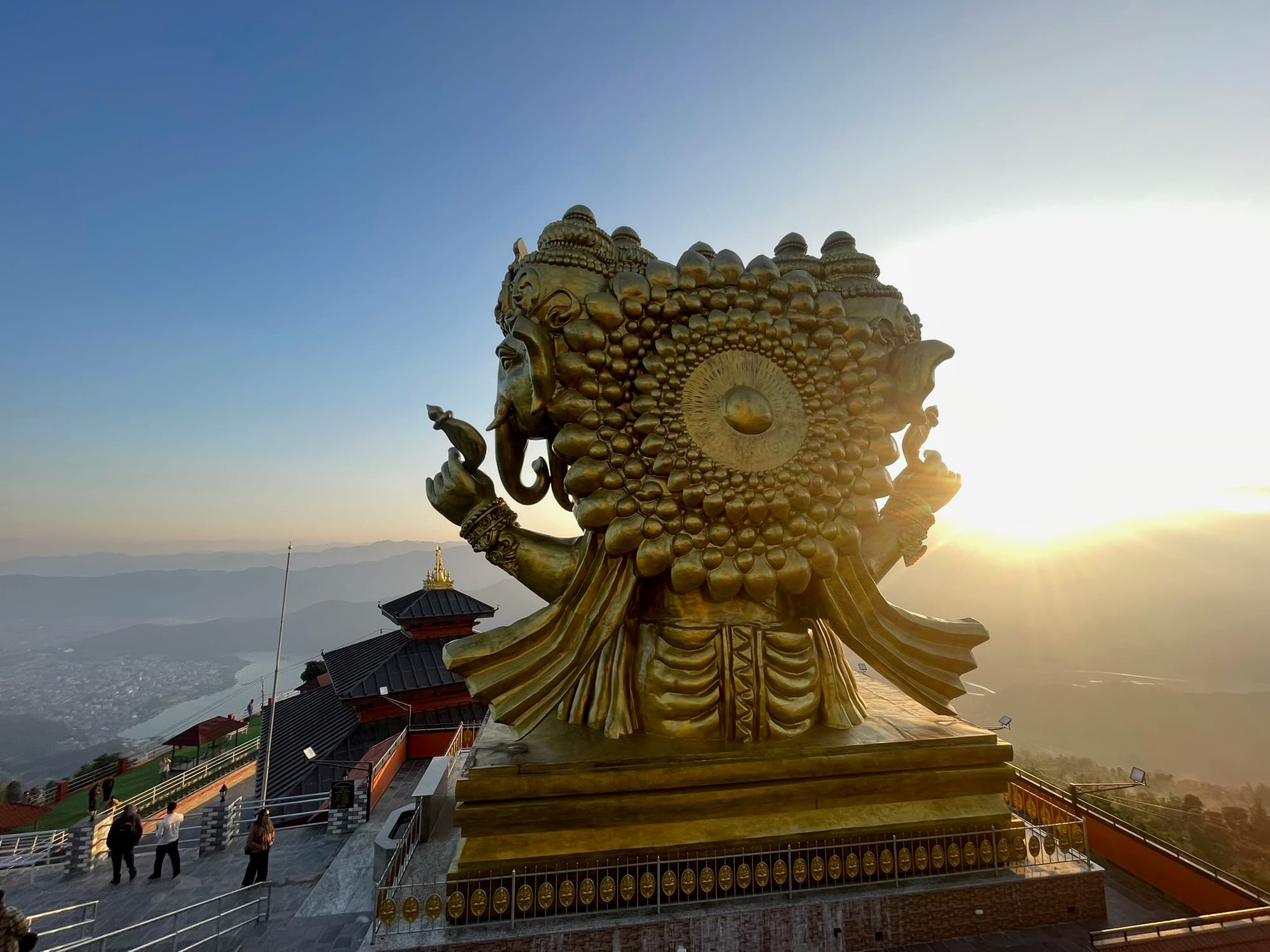
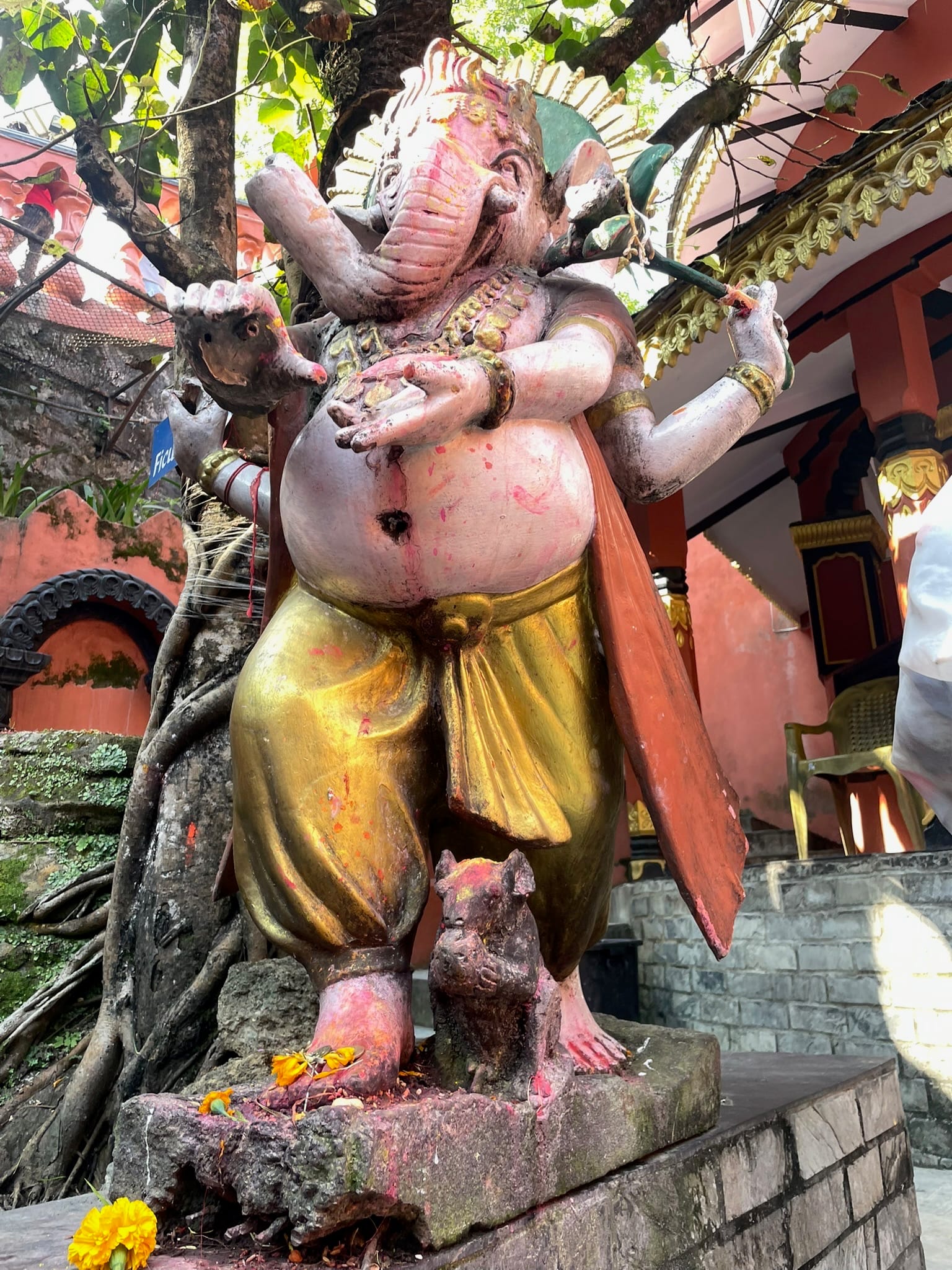
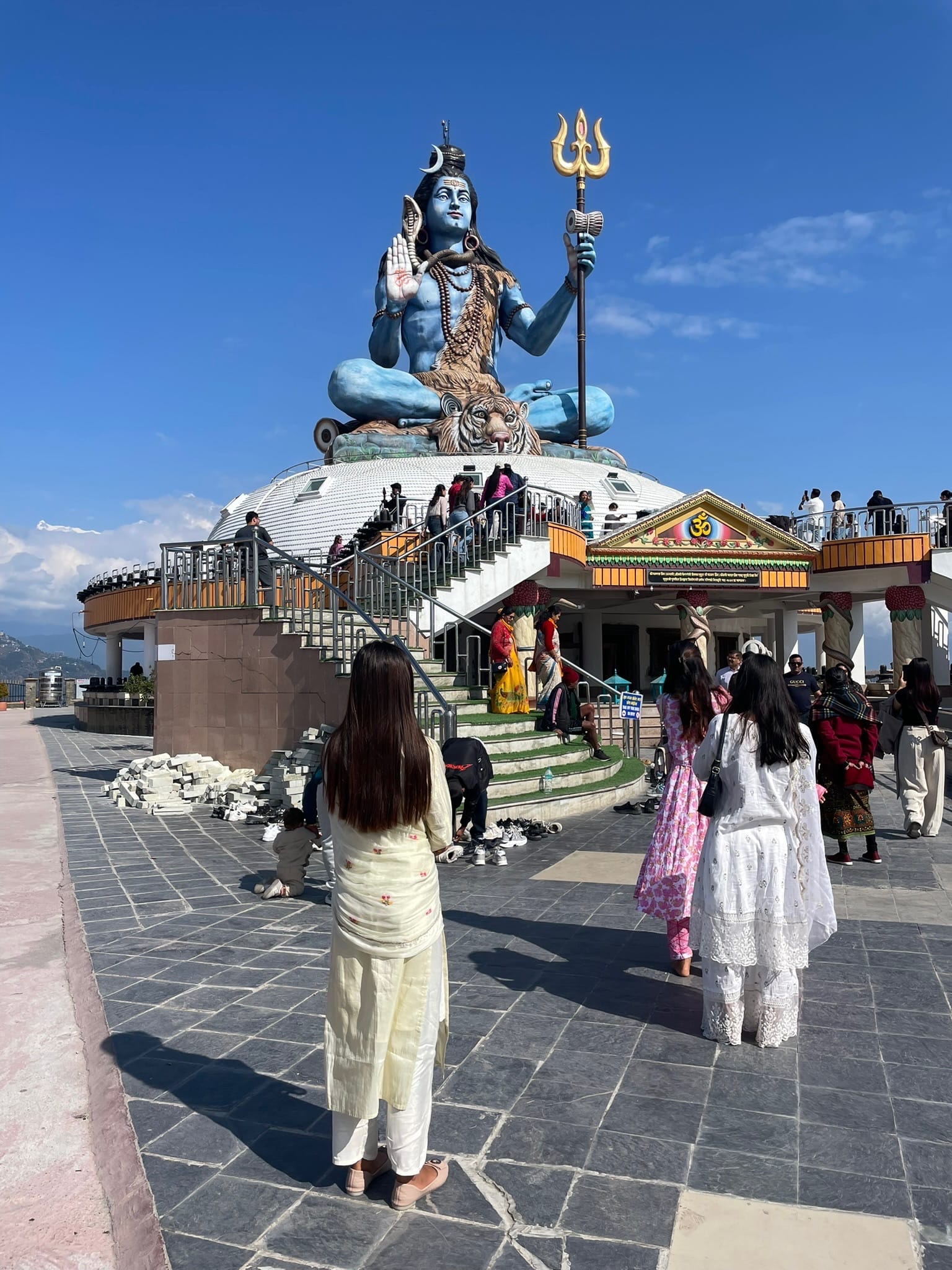
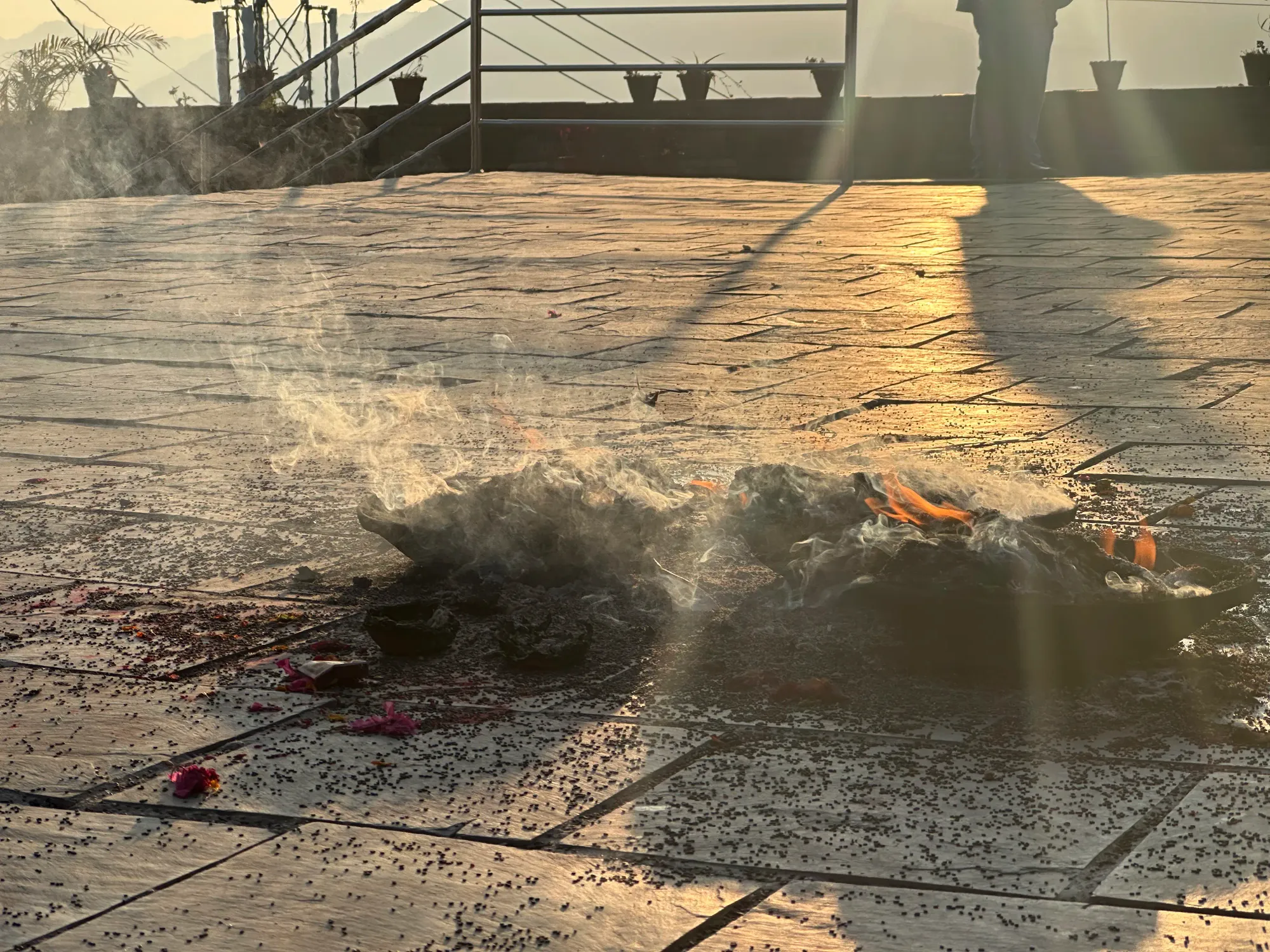
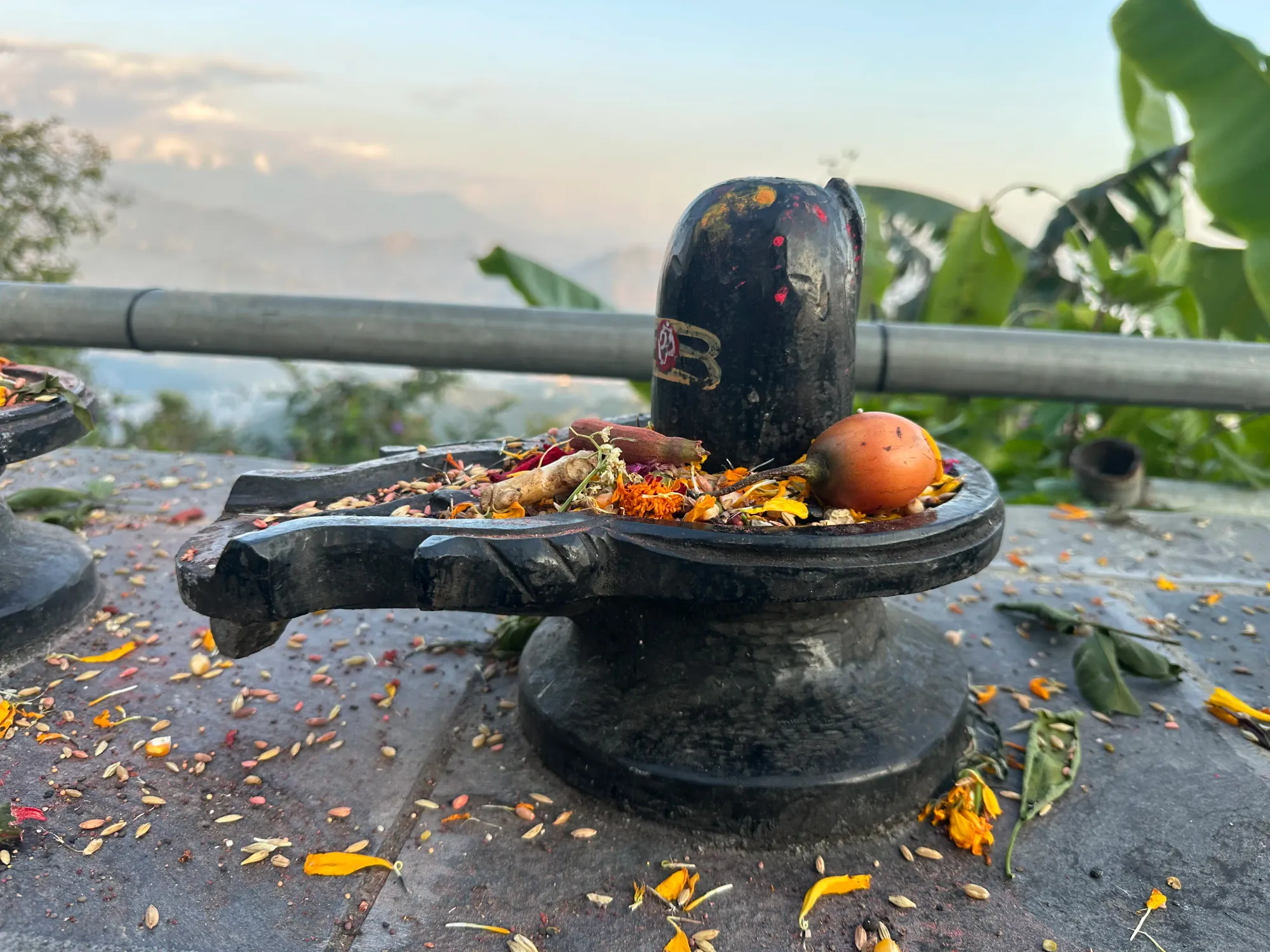
Pokhara had its fair share of mountain-top temples. [📸 Rachel & Johann]
Our first day in Pokhara, a recovering Rachel woke up RAVENOUS, her body realizing it hadn't properly digested food in about a week. So we ate. We started gentle, with plain rice and miso soup, then a bit of pickled plum onigiri. We tried salty buckwheat galletes at a couple of spots, but found them to be French in portion.
Our favourite Pokhara restaurant, which we returned to again and again, was The Juicery with its warm, plant-filled atmosphere and delicious food. This vegetarian spot quelled our tofu cravings, quenched our thirst with blueberry bubble tea and chocolate-banana smoothies, and warmed our hearts with fluffy millet pancakes, crystallized and crispy on the edges with salted caramel syrup and stacked high with fresh fruit.
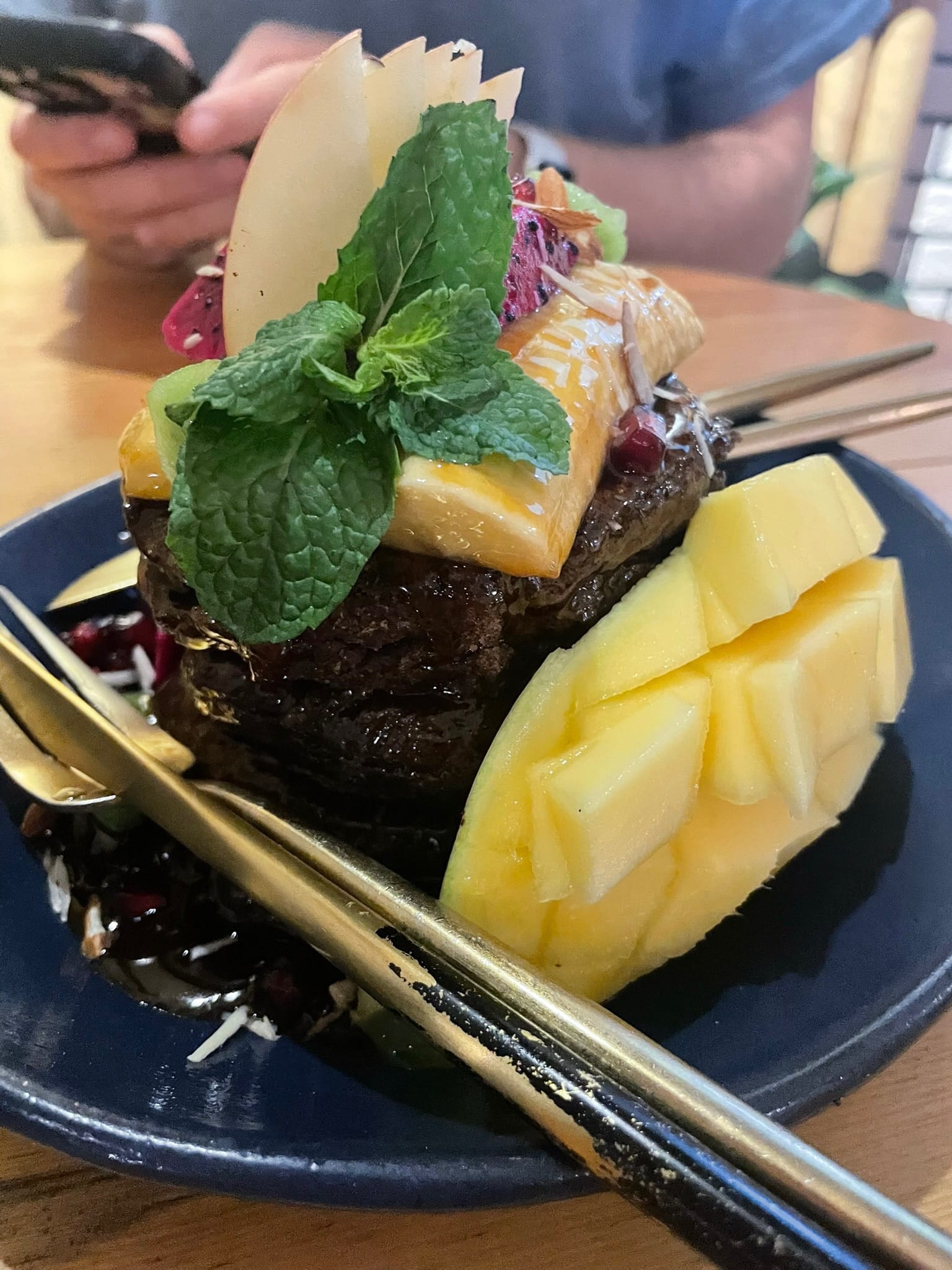
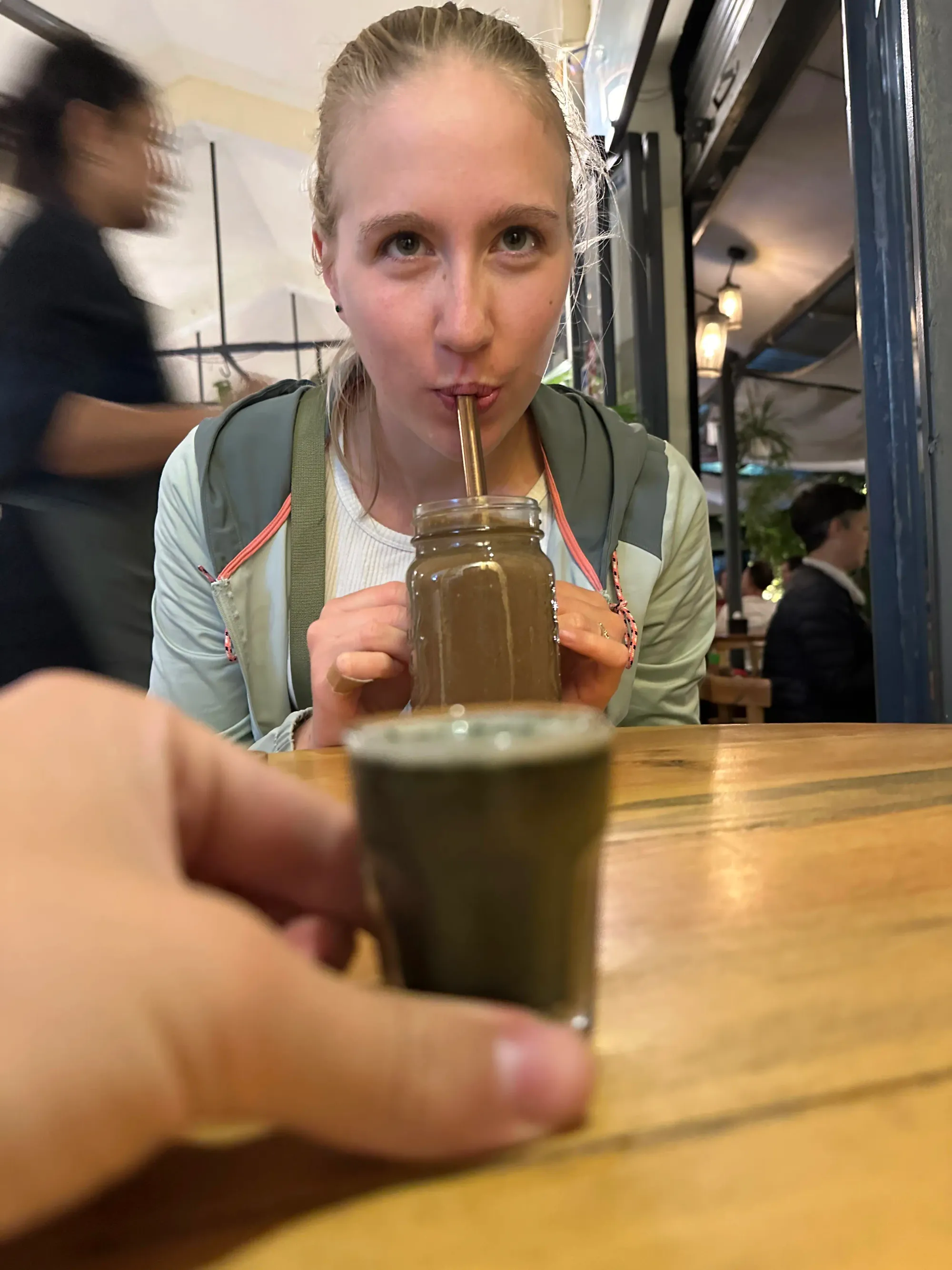
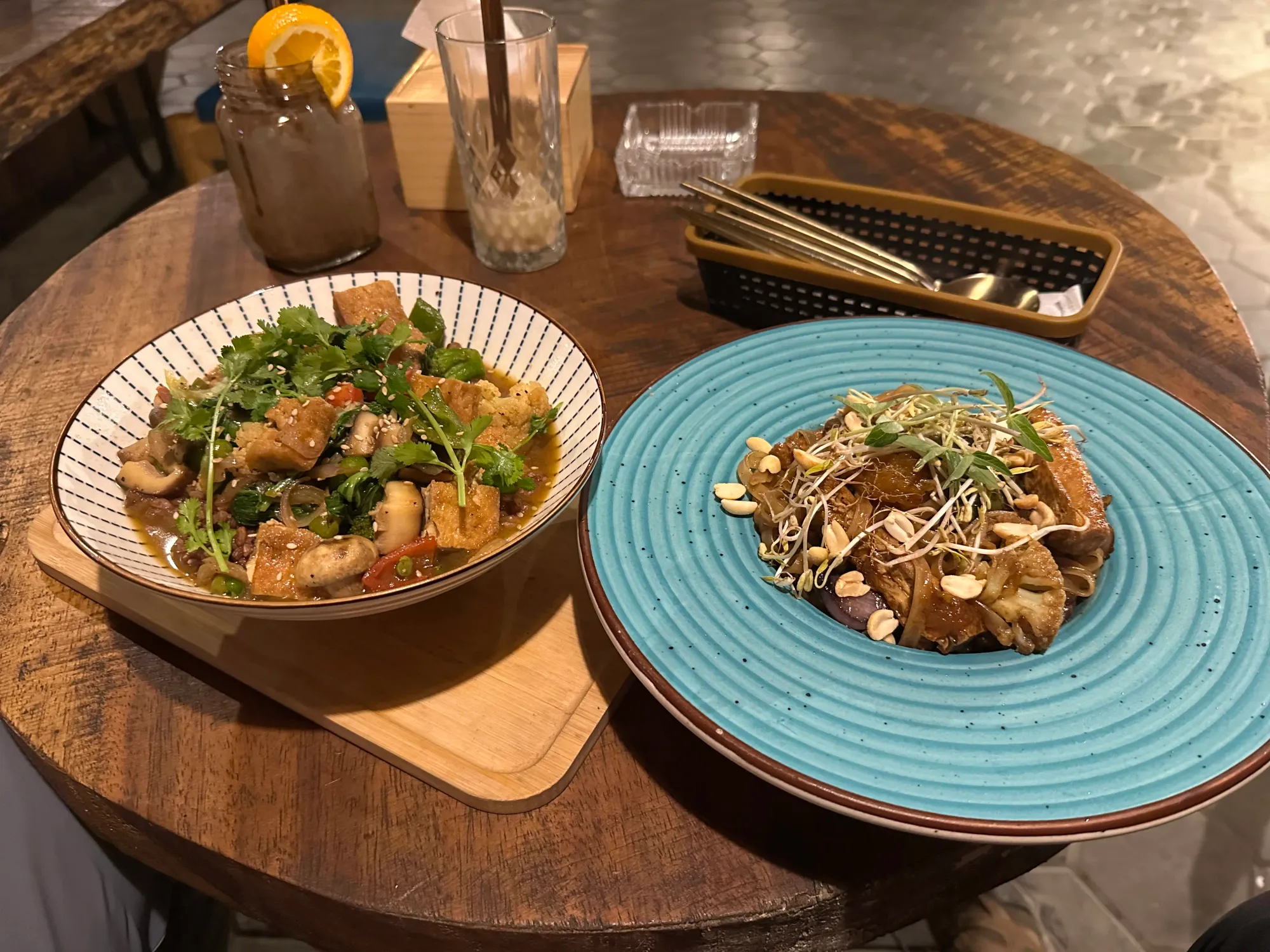
I'm getting hungry just trying to caption these photo - it tasted SO GOOD. [📸 Rachel & Johann]
We're usually big proponents of eating local cuisine while travelling, but this wasn't easy in Nepal as Rachel isn't able to eat garlic. Nepalese cuisine seemed often to still contain garlic even when guaranteed not to, as some chefs conceptualize garlic only as fresh cloves, and it was often included unwittingly through the sauces they used in cooking. Rachel learned this the hard way the first night of the trek, and had a very rough night and entire next day as consequence. During a brief rest from trekking, she casually remarked that she thought her intestines were being pinched together with safety pins.
She was regulated to a diet of oatmeal in the morning and either 'veg fried rice' or 'veg fried potatoes' for both lunch and dinner, with a heavy emphasis on no sauces (aka flavour), just salt. After eating a pile of carbs with little strings of green stuff for nine days straight, and then existing off bananas for another five, we felt that The Juicery was a well earned respite.
That's not to say that we didn't try local cuisine. We had the Nepalese staple of Dal Bhat, a watery lentil soup served with a spot of vegetable curry and a heap of rice. Johann enjoyed mo:mo:, Nepalese dumplings served steamed or fried with a variety of fillings, reminiscent of Japanese gyōza (Johann's first dumpling love). In the sherpa village of Khumjung we experienced life-altering 'potato pancakes,' which were more of a crêpe made from raw grated potato, cooked on a flat iron griddle, and doused in creamy boiled yaks milk (similar in taste to goat cheese).
 Johann Barnard
You should go read this post again and gaze lovingly at the potato pancakes.
On a street in Pokhara we found a man making fresh sel roti (fried doughnut-shaped delight made from sweet rice flour), and we drank spiced matka chiya (a type of milk tea served in clay cups) by the shores of Lake Fewa.
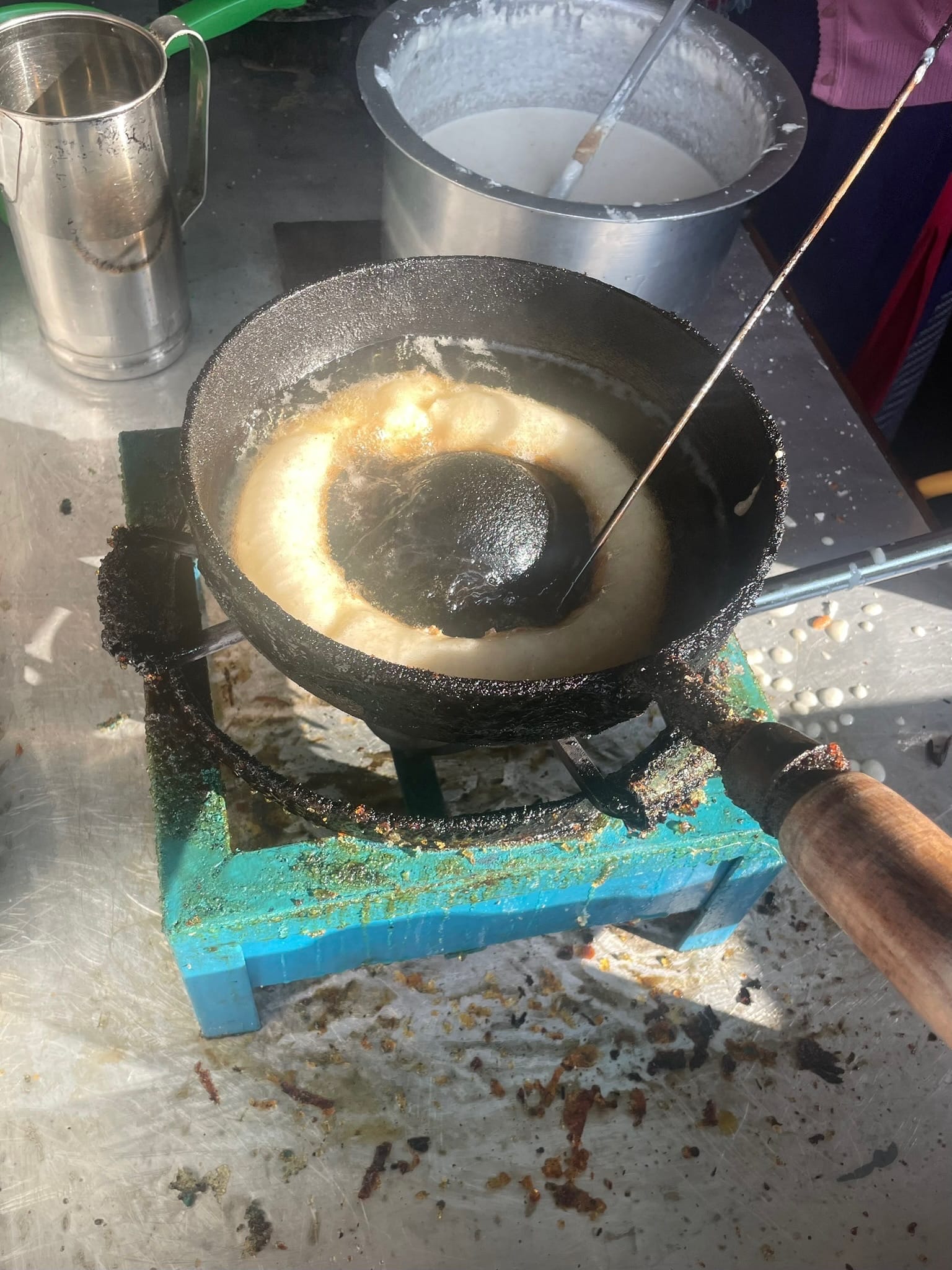
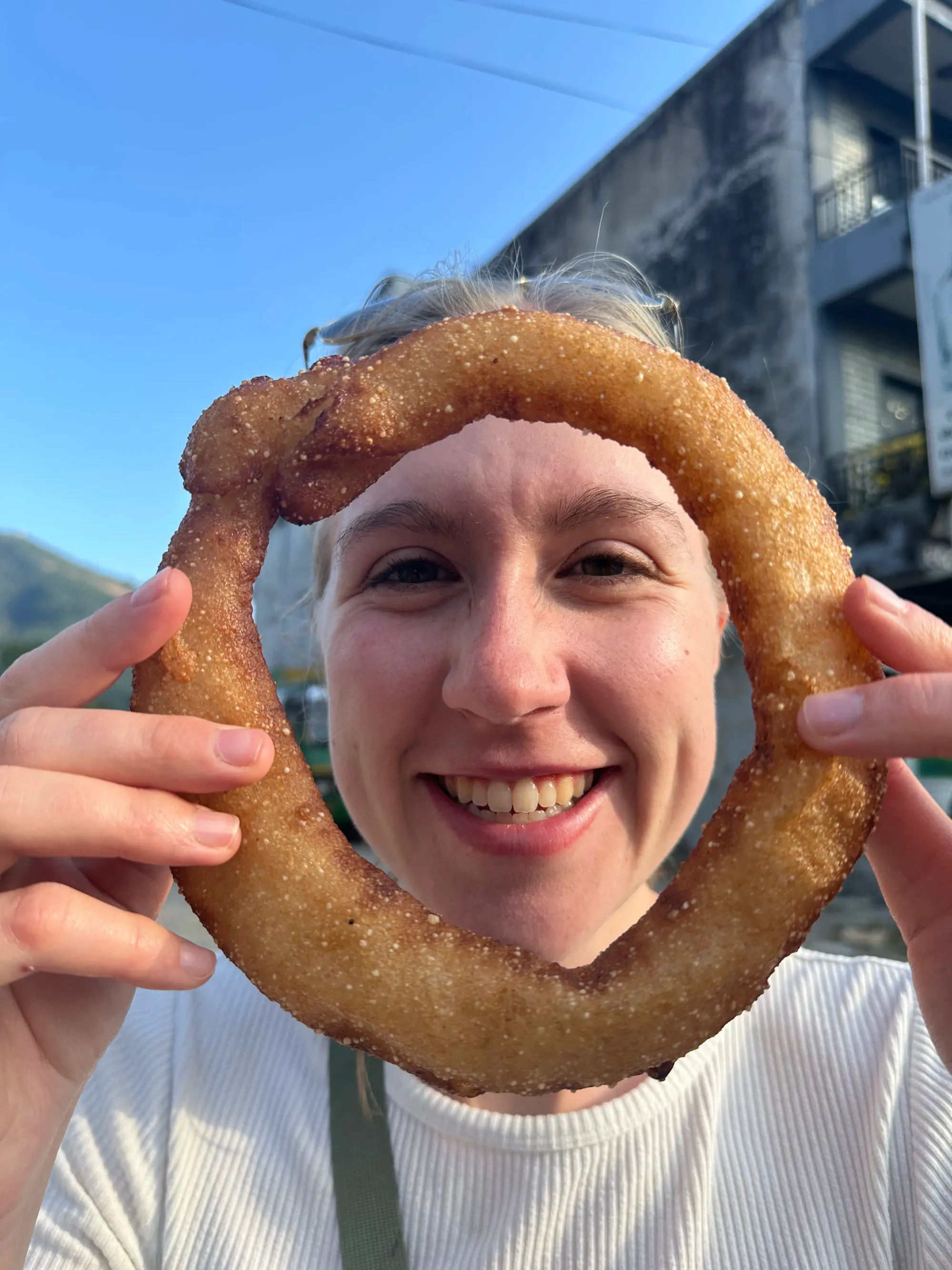
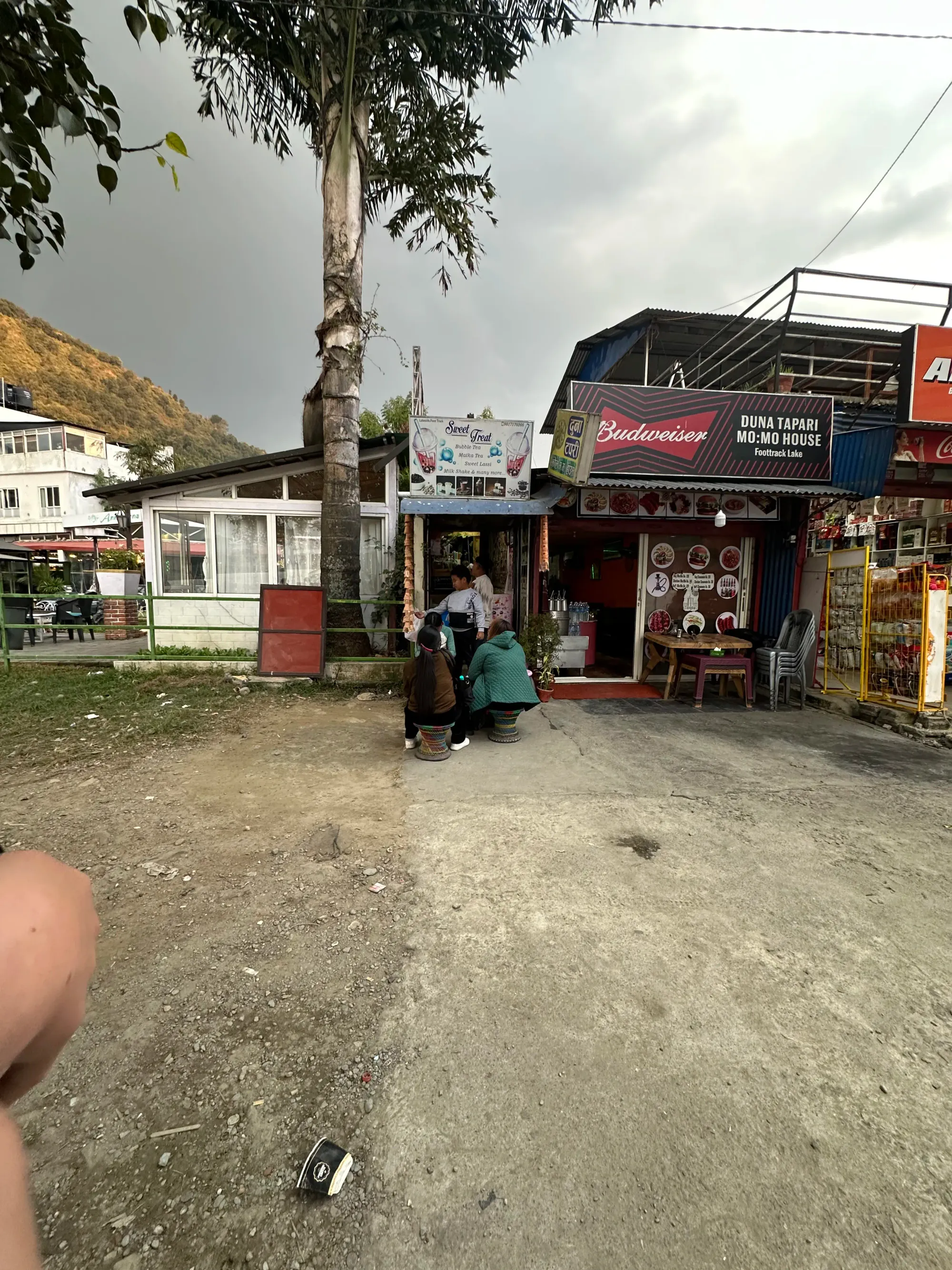
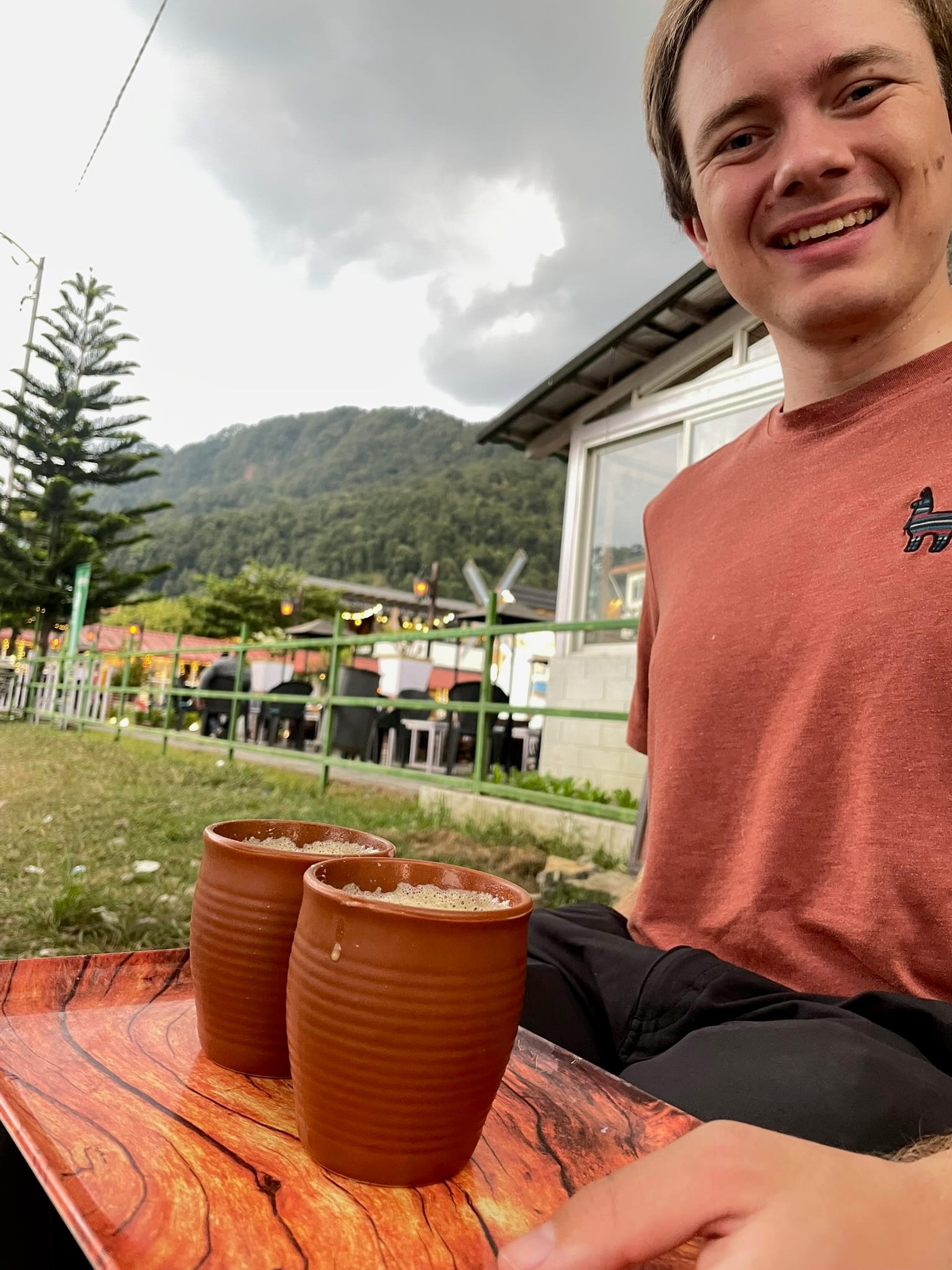
Street food normally scares us, but the sel roti and the matka chiya looked so good that we couldn't resist! [📸 Rachel & Johann]
And then there was Satkar Vegetarian Restaurant in Kathmandu. Inconspicuously located in a tiny courtyard at the end of a short tunnel of shops, this place specialized in not just Punjabi vegetarian and vegan food, but Jain food as well, which contains no garlic or onion. While the dishes we indulged in weren't strictly Jain, the restaurant's specialization meant they could deliver the most flavourful, vibrant food, all made WITHOUT GARLIC! Here we feasted on bright lemon rice, fragrant potatoes fried with cumin seeds (aalo zeera), creamy paneer in rich yogurt gravy (paneer paratha), crispy corn roti (makkai ki roti), and herbed yogurt with soft gram flour dumplings (bundi raita). Ah heaven, thy name is Satkar Vegetarian Restaurant, for which Rachel will forever yearn.
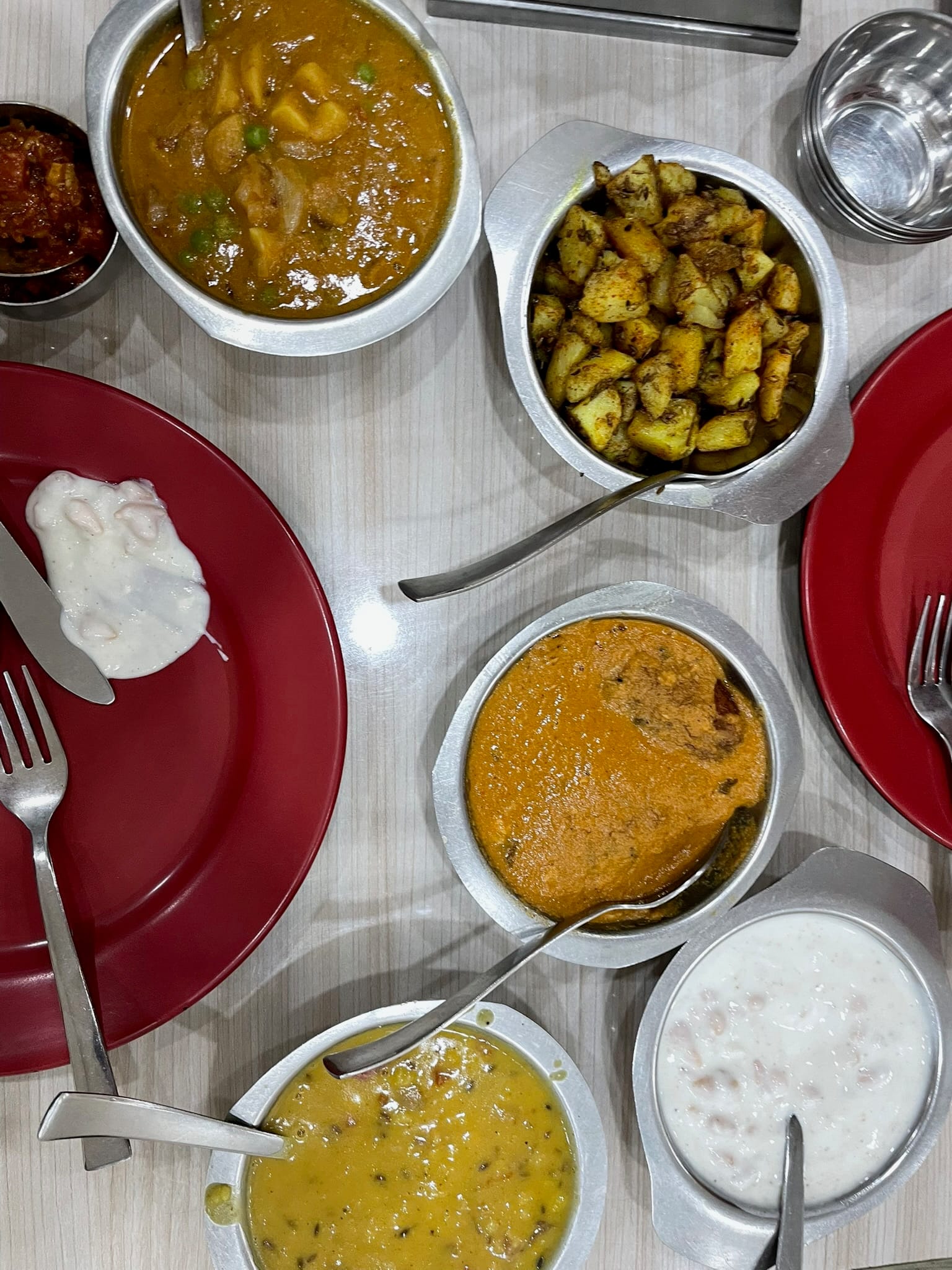
"Feast" was our movement verb. [📸 Rachel]
Okay, we did do more than just eat. We "walked" clockwise around the hilltop World Peace Pagoda in Pokhara, beneath the all knowing eyes of Buddha (we totally didn't run from the aggressive, large wasps). We helped our boatman paddle to the Hindu Tal Barahi Mandir temple, located on an island in Lake Fewa, and then rowed back through emerald green waters.
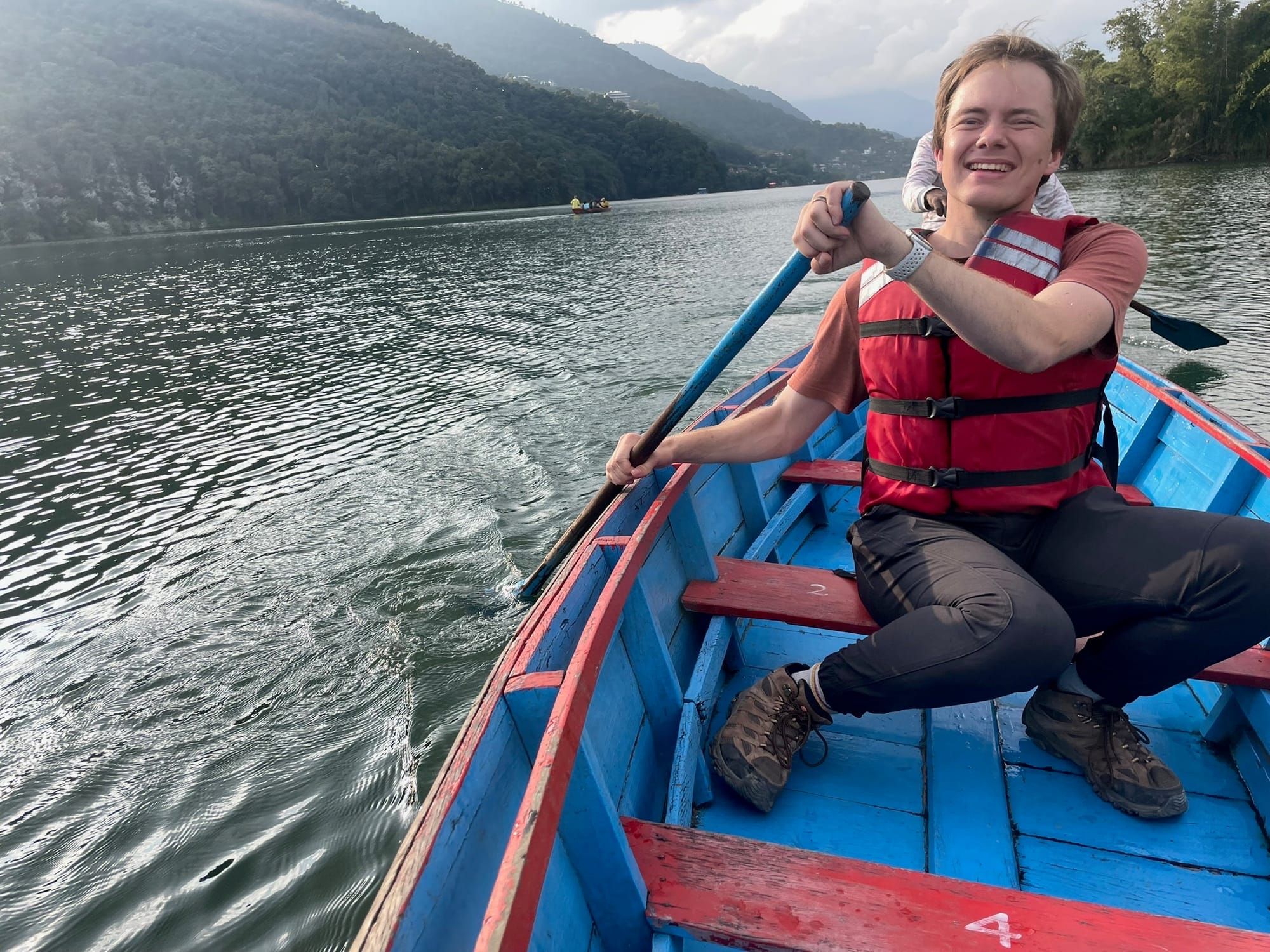
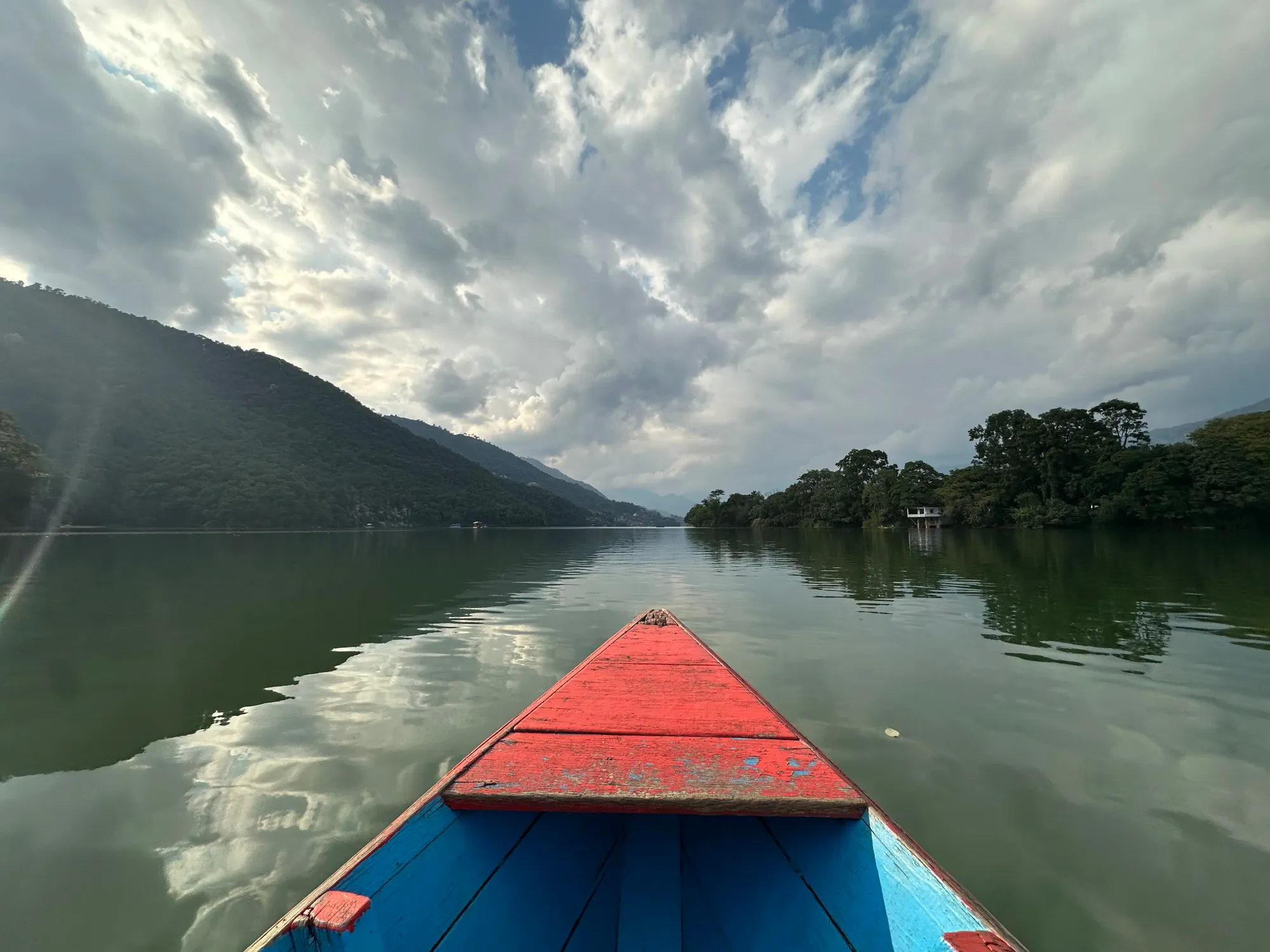
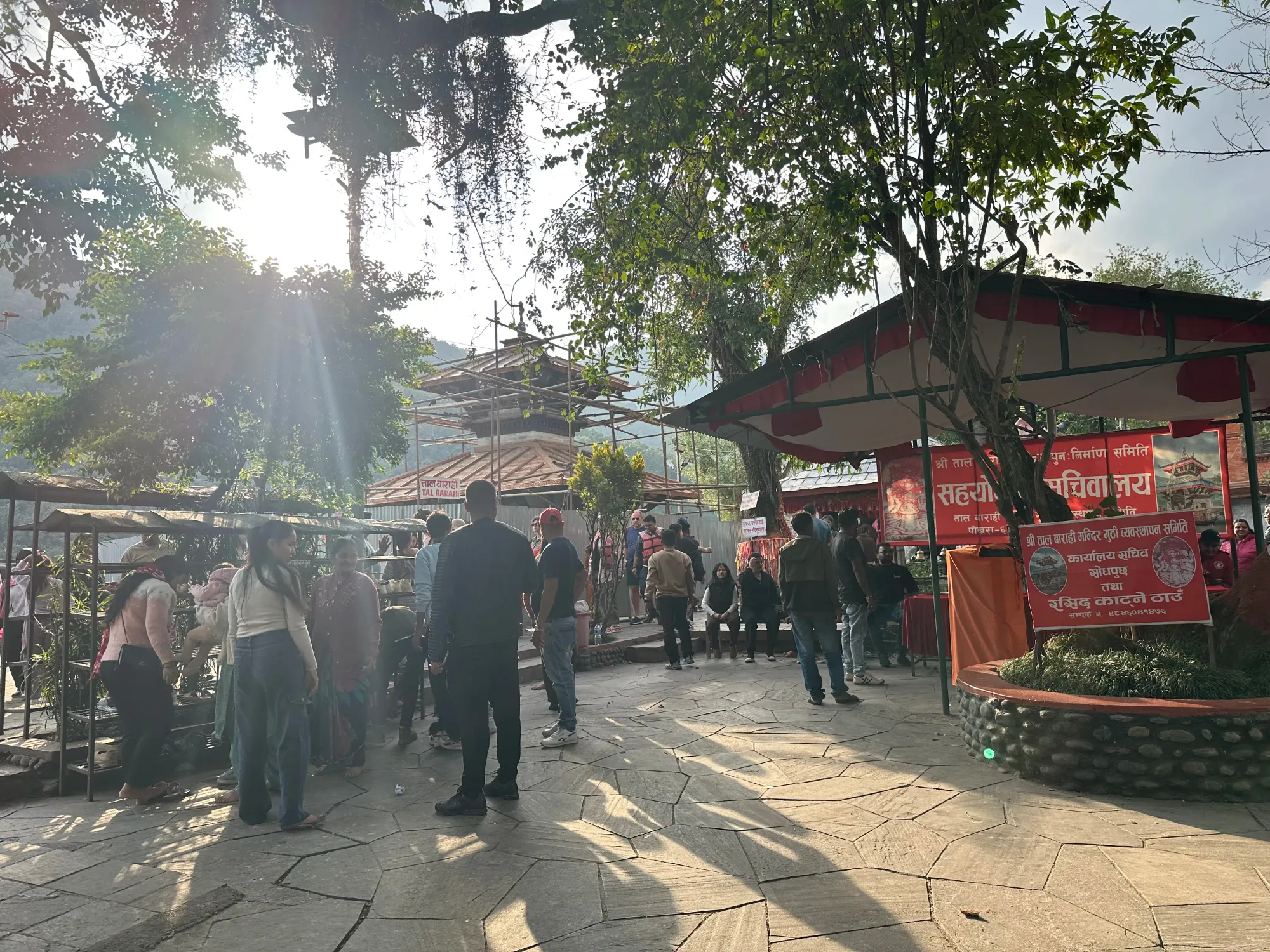
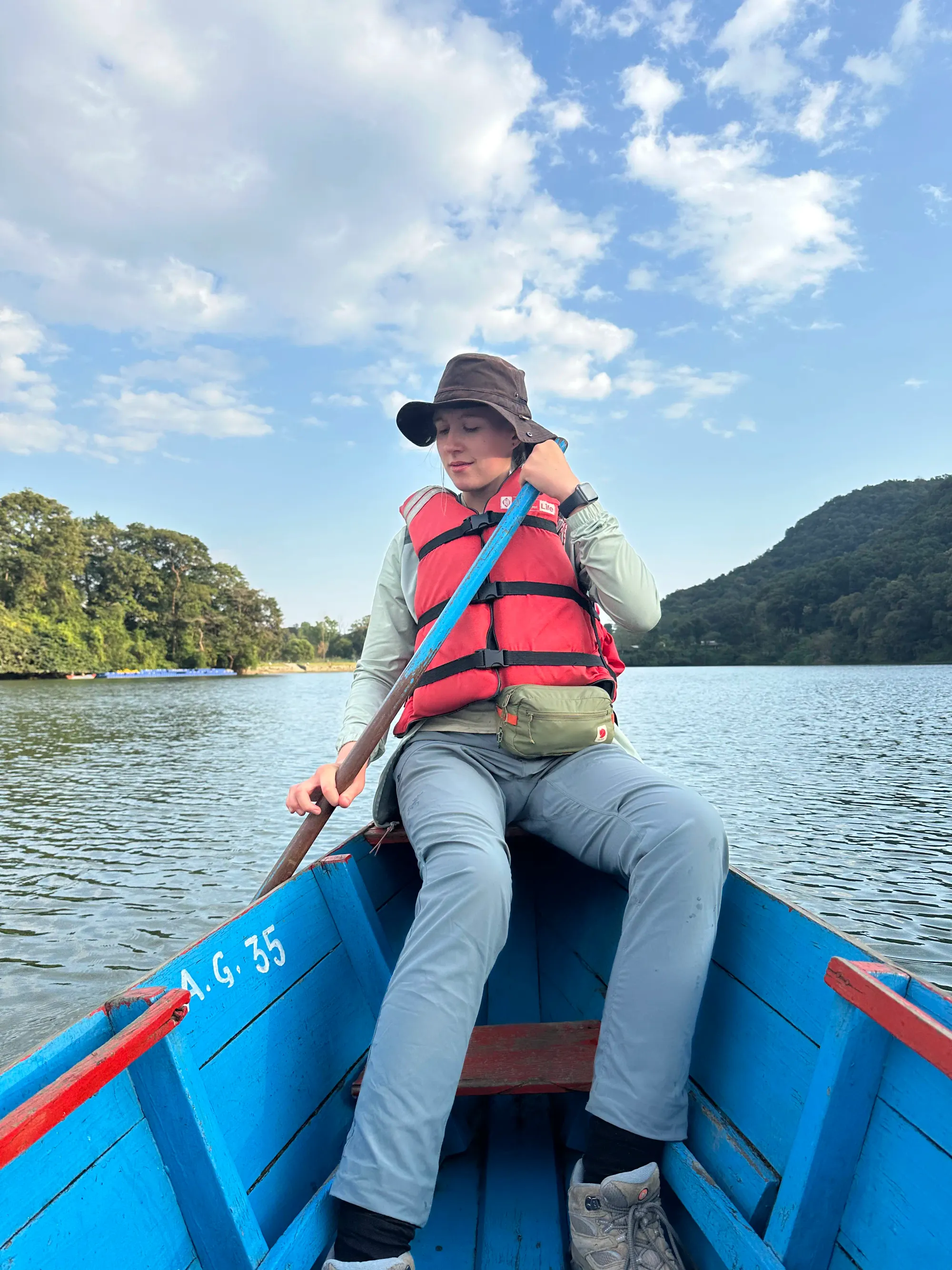
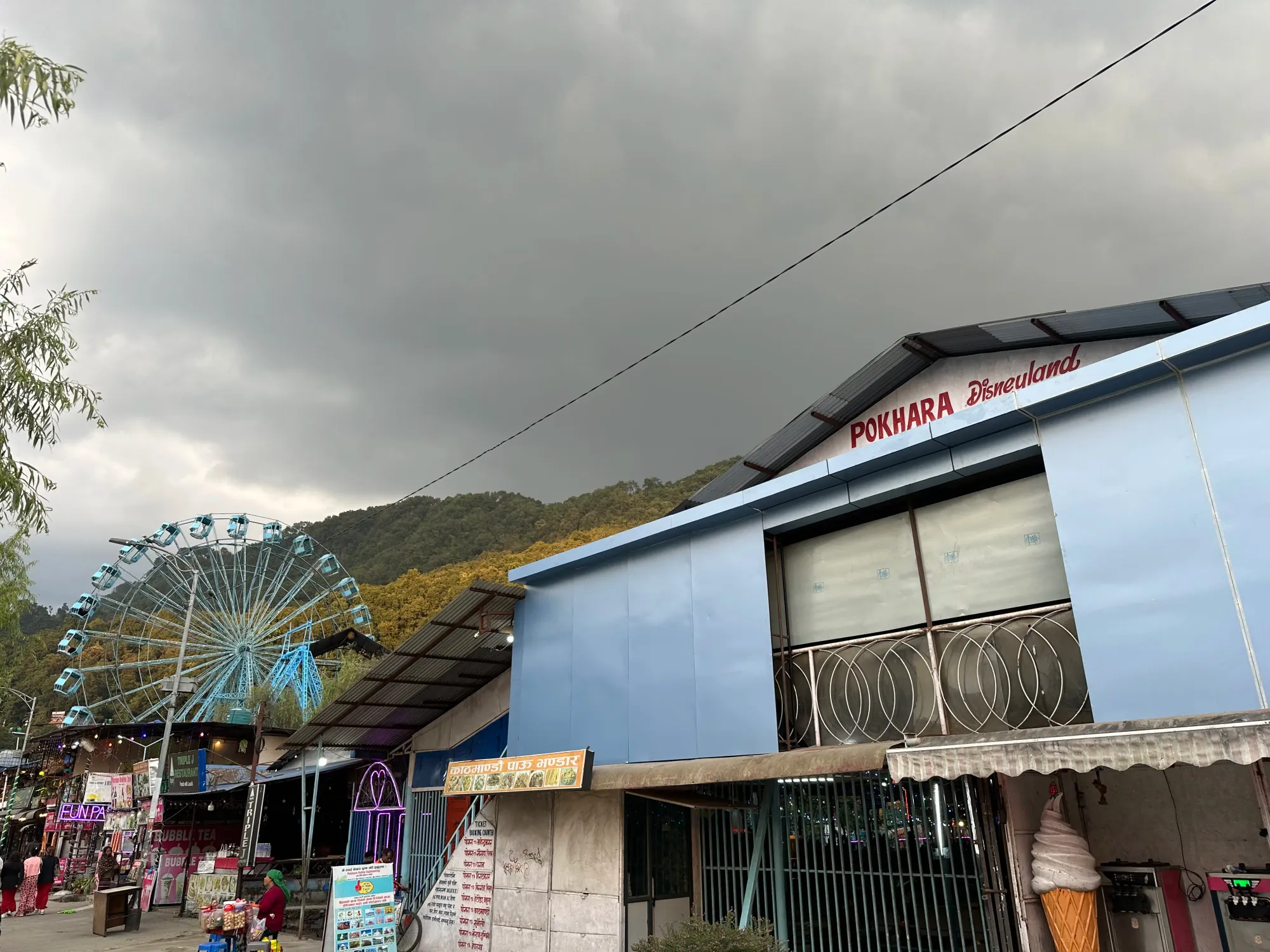
I'm sure that Pokhara Disneyland is the best of Disney's parks, but we didn't go. Our arms were too tired from rowing. [📸 Rachel & Johann]
In Kathmandu we climbed steep stairs to the massive stupa of the Swayambhu Mahachaitya temple and watched roving monkeys swing effortlessly onto intricately carved roofs. (One squatted with a stolen shopping bag, gleefully upturning it while another guzzled Coca-Cola from a plastic bottle.)
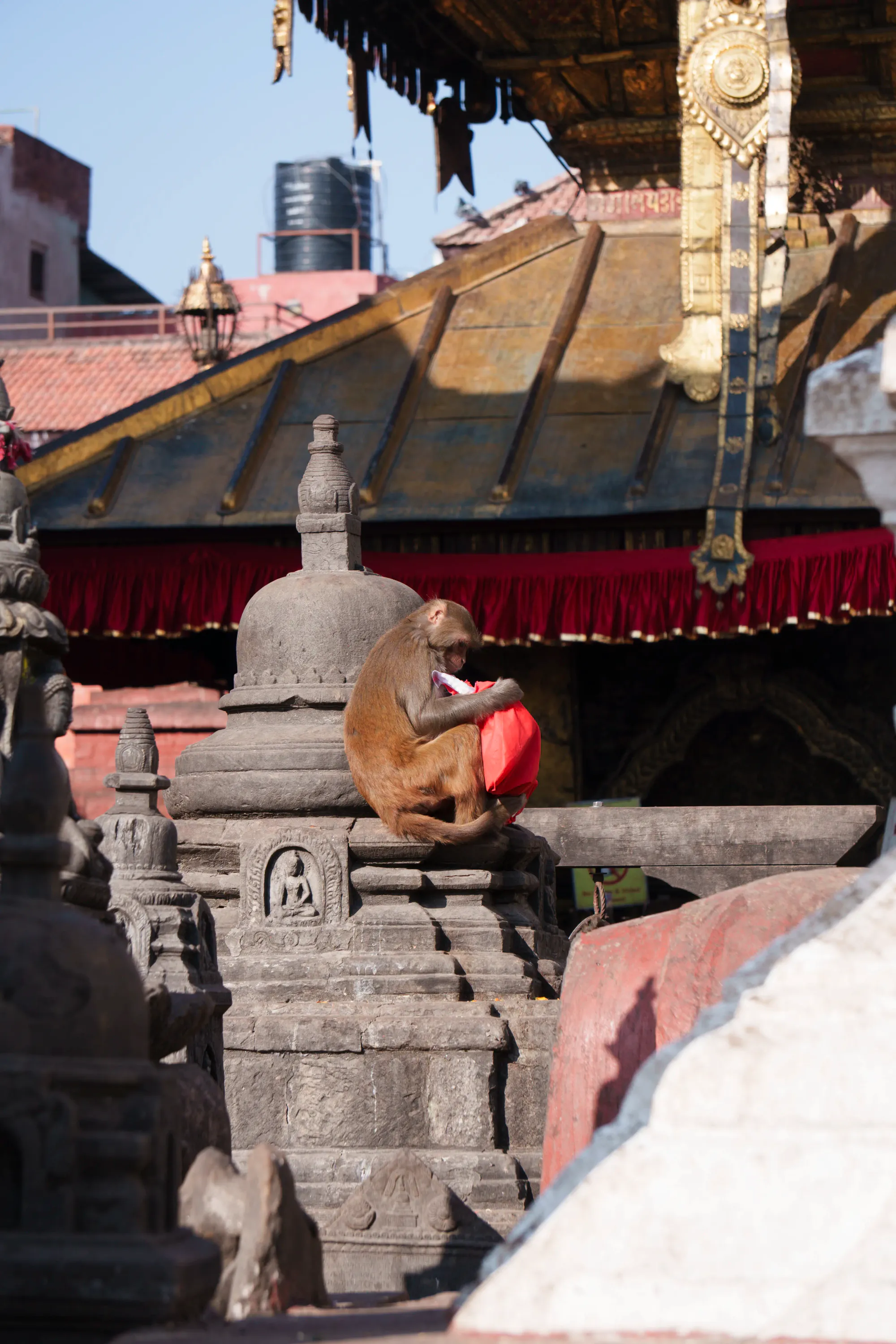
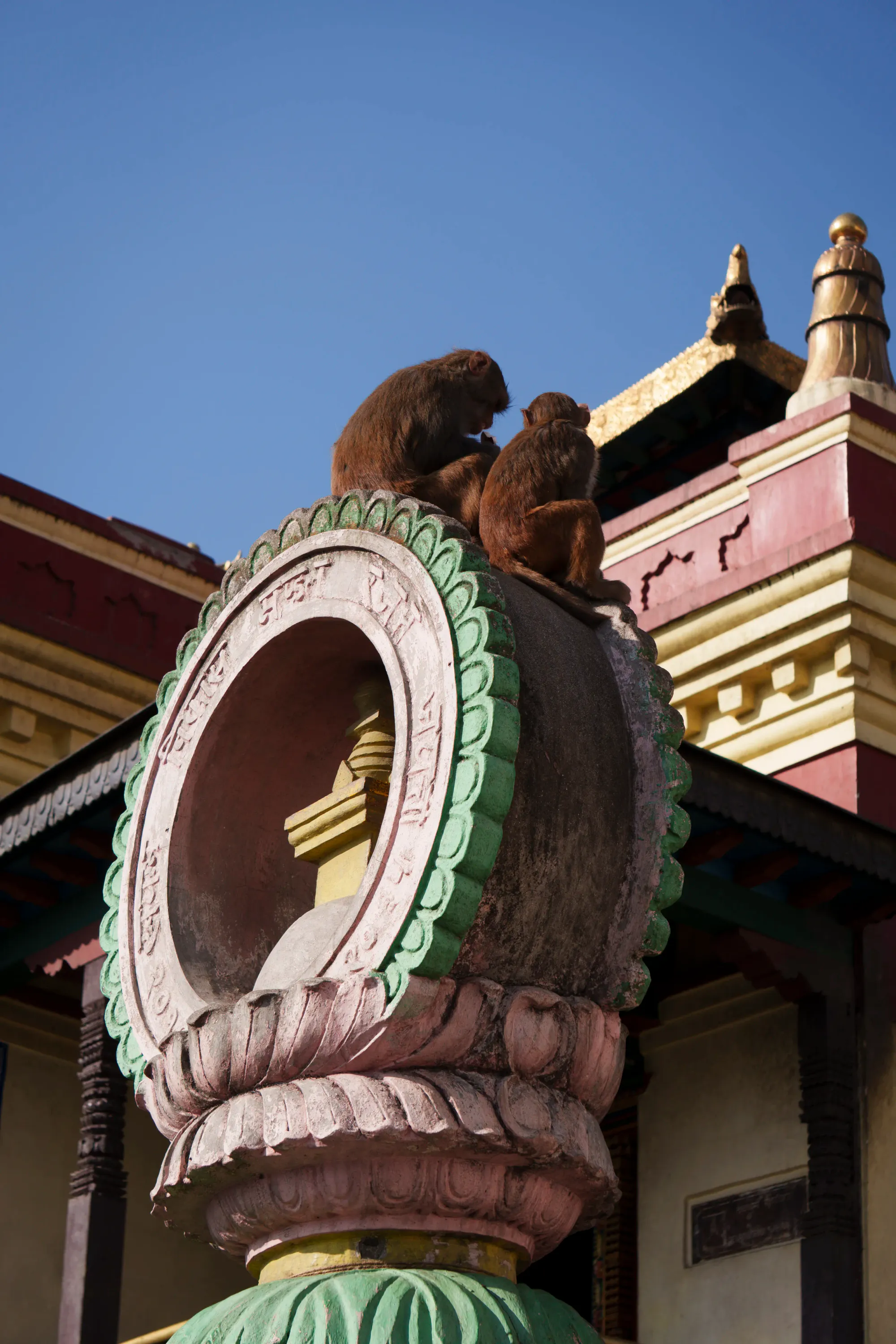
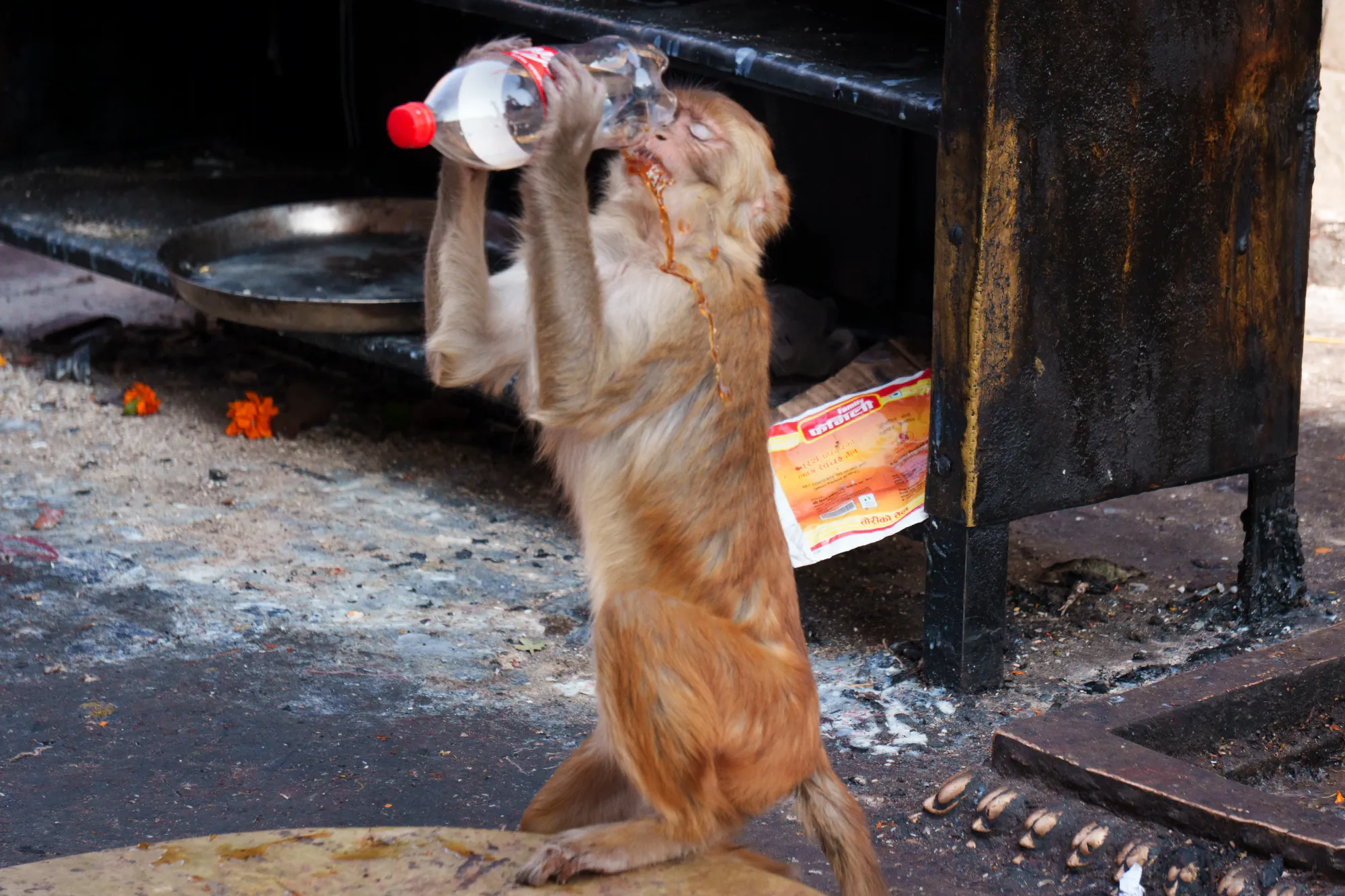
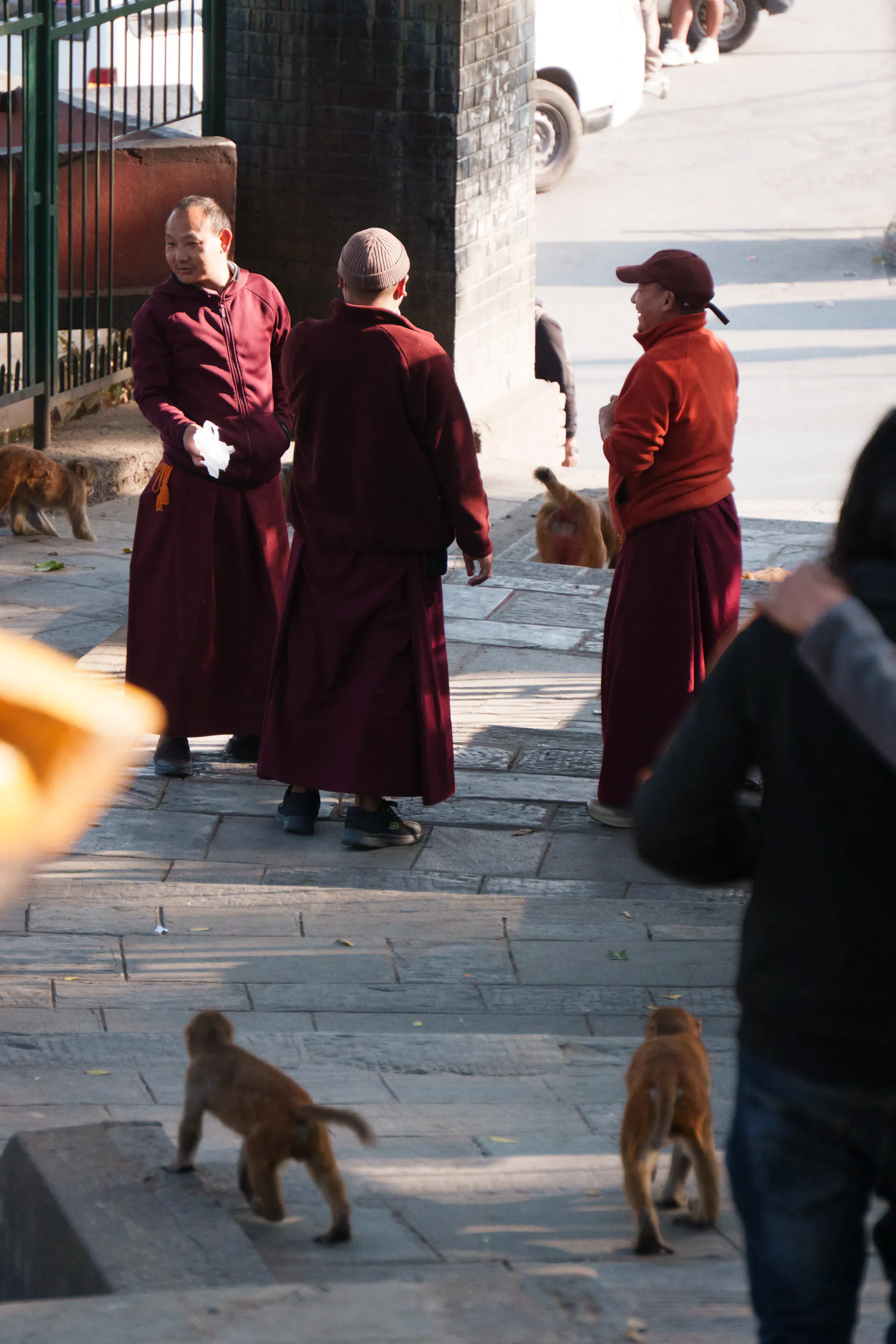
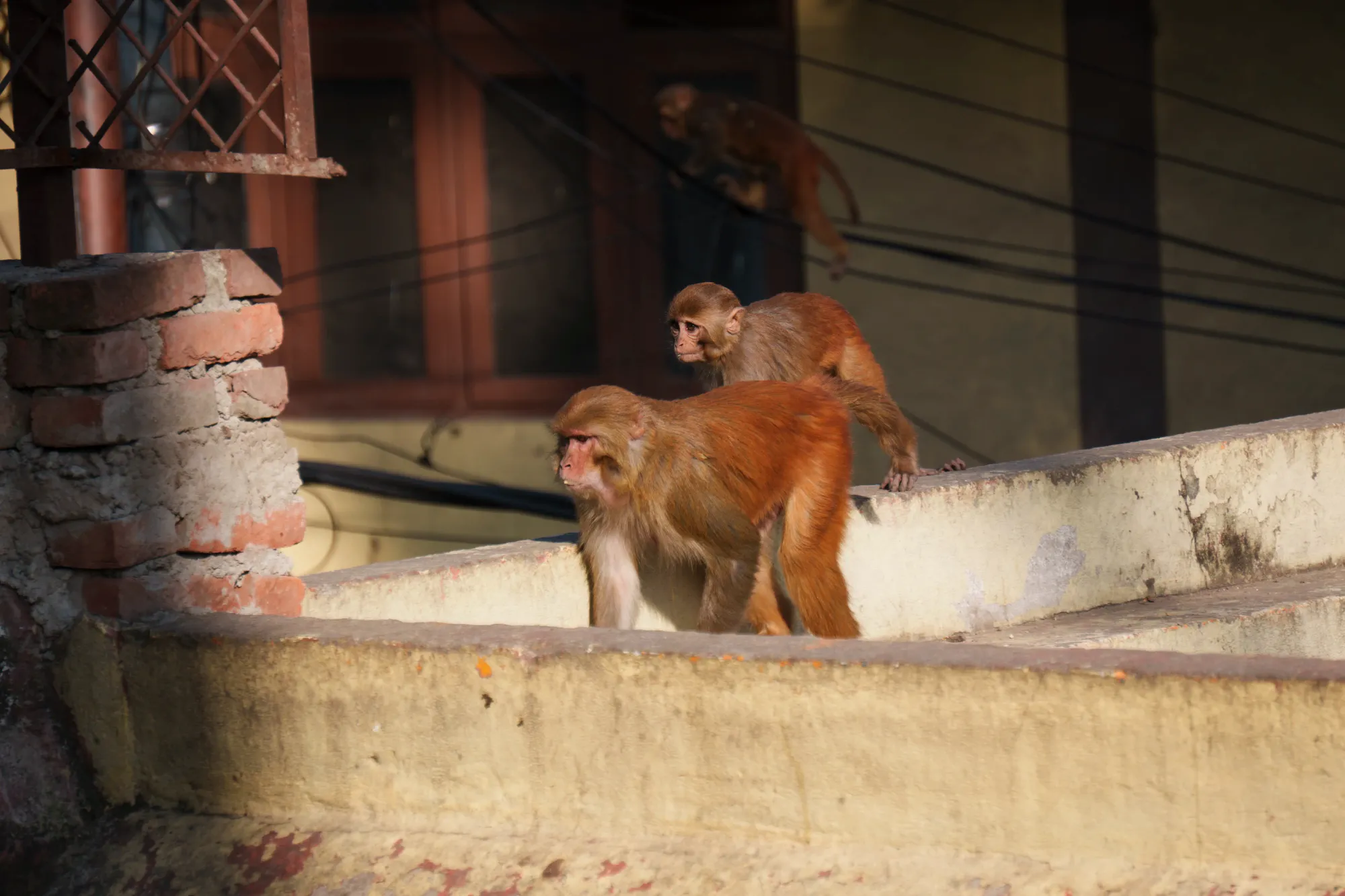
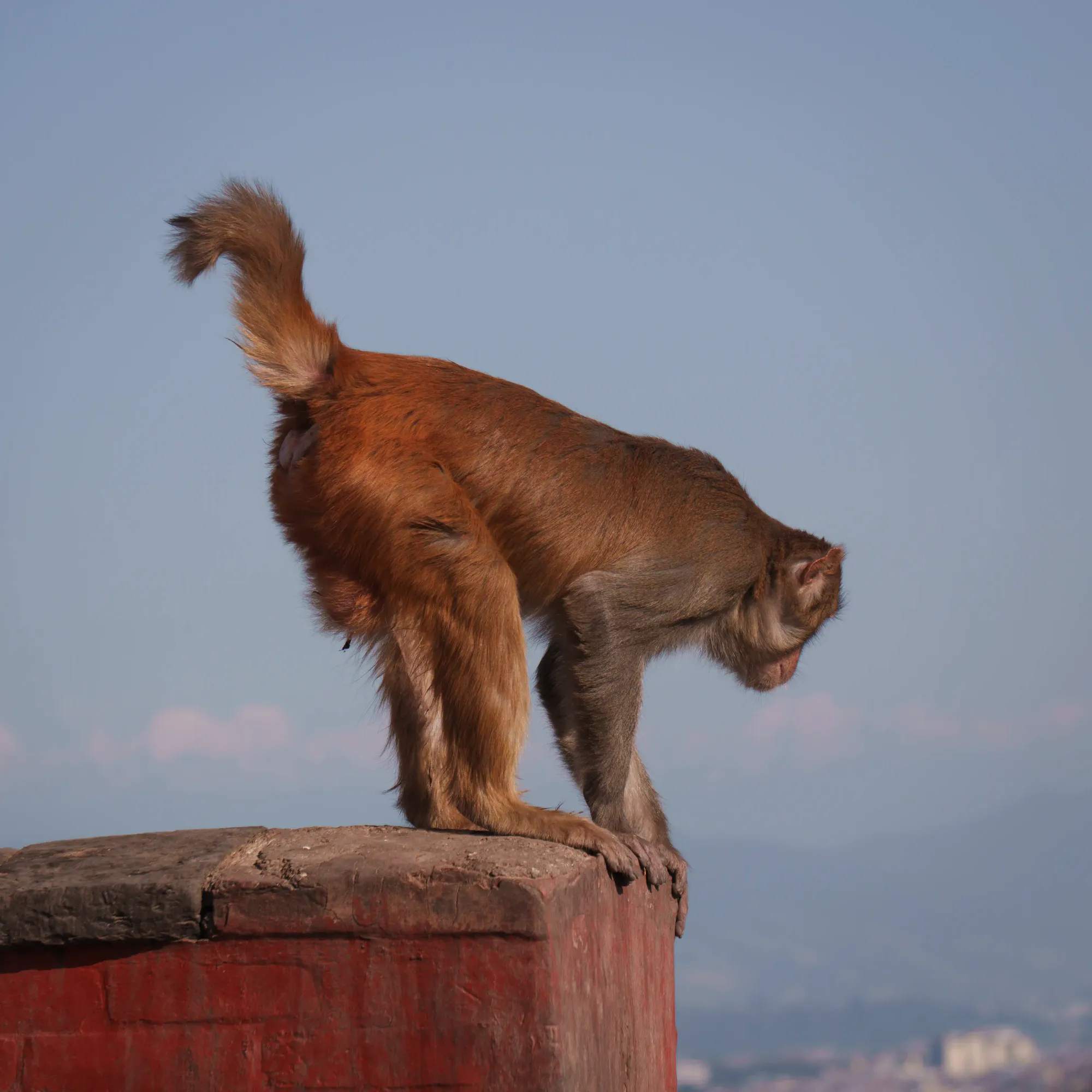
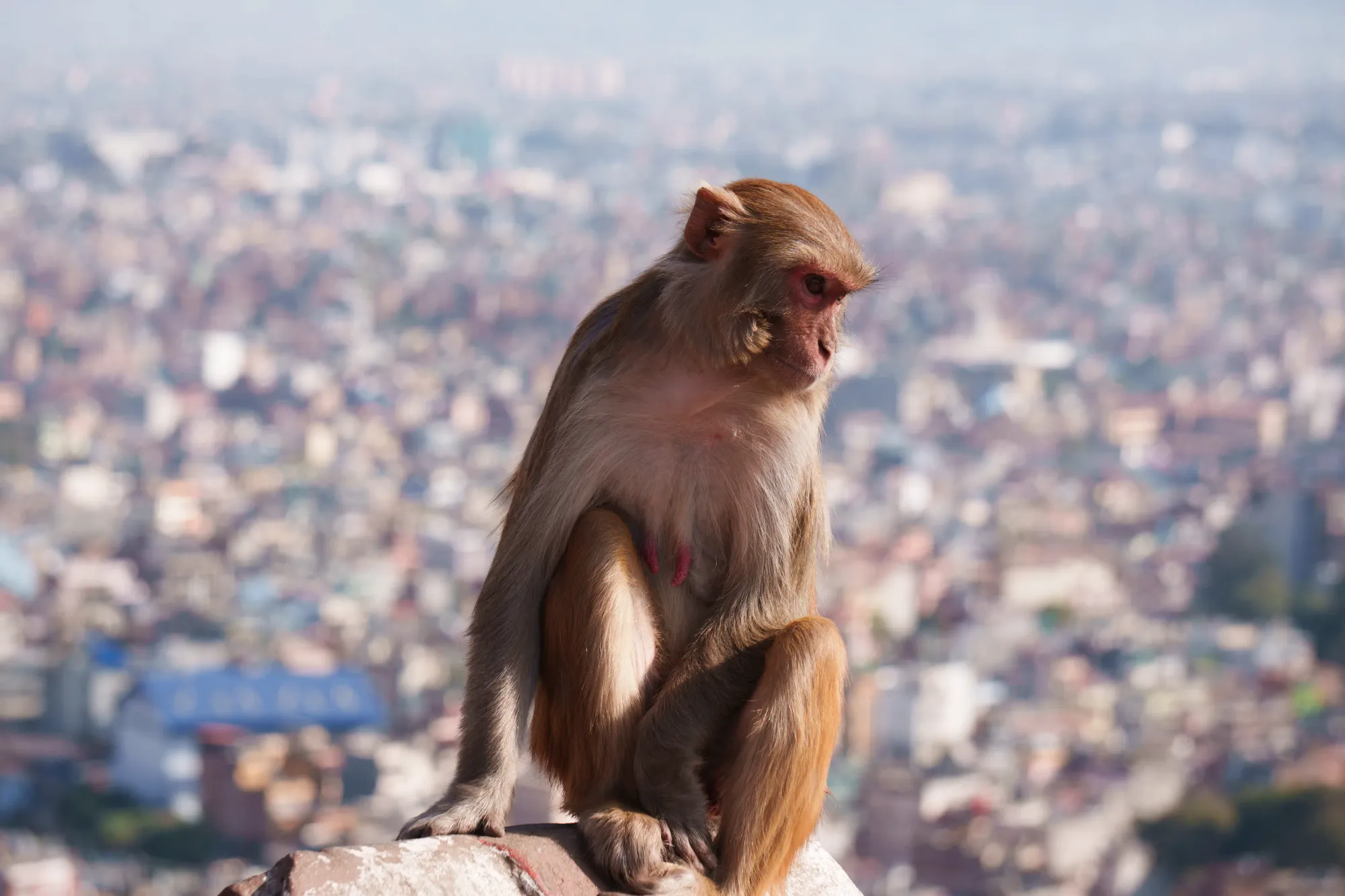
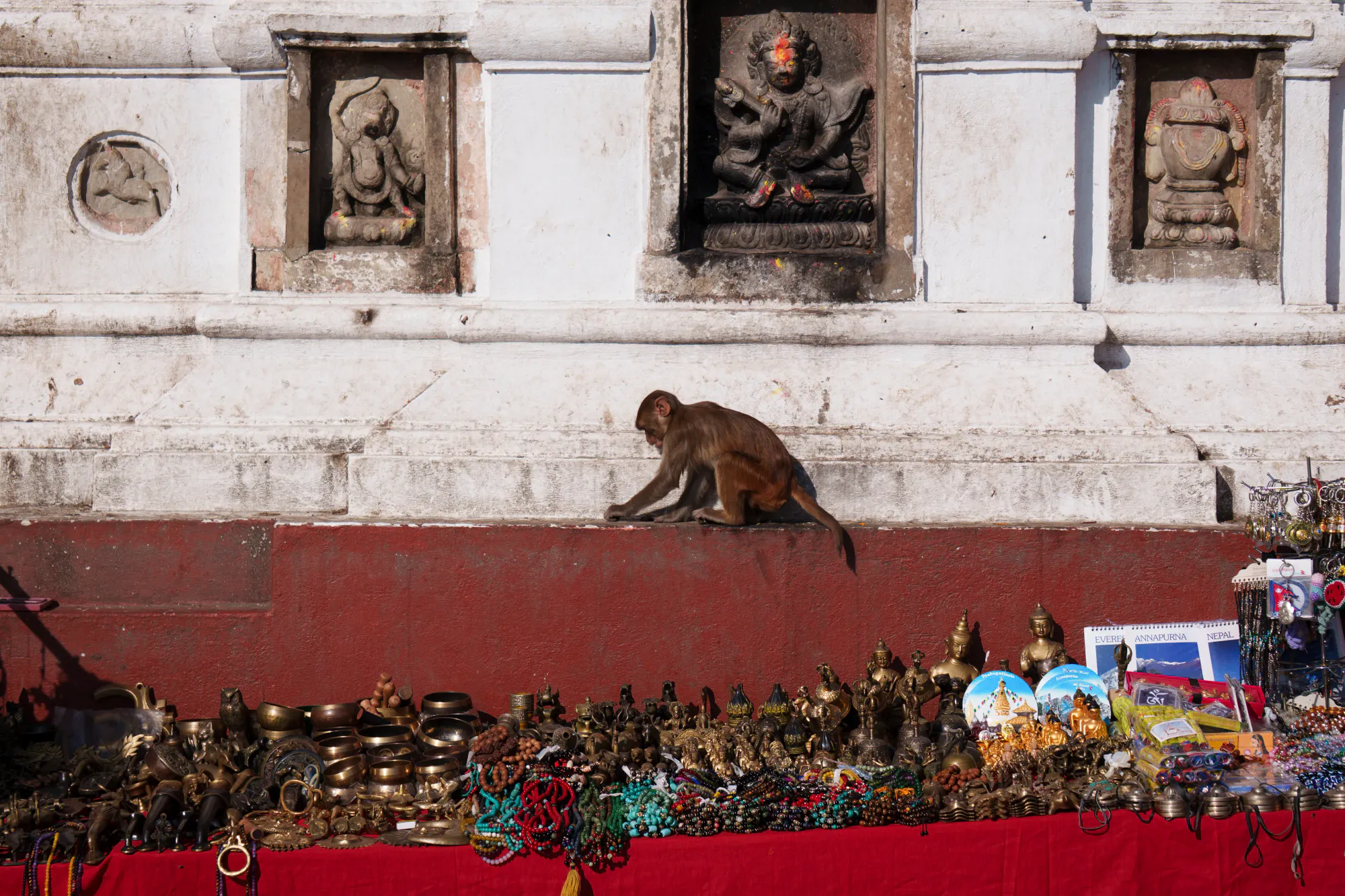
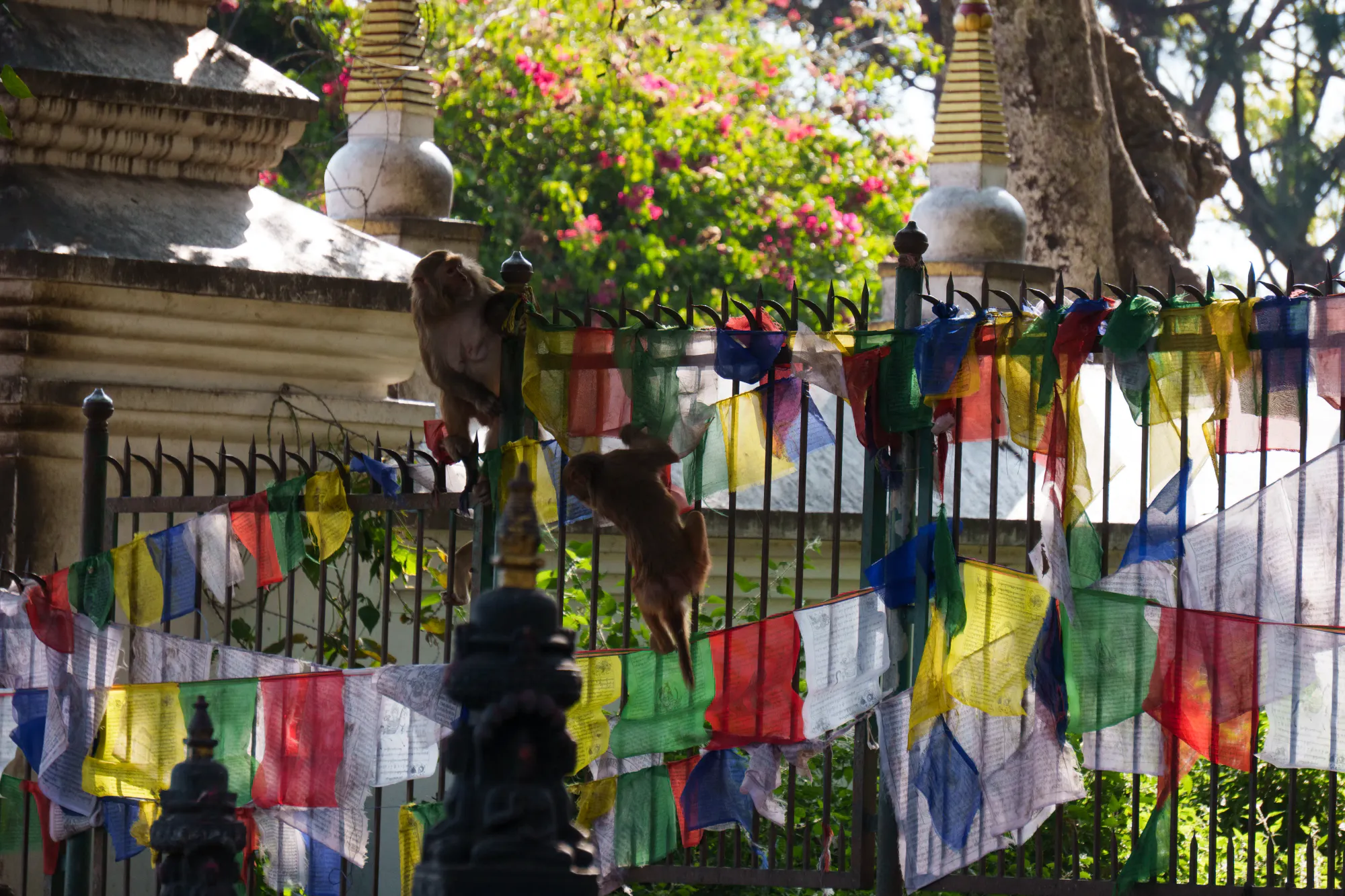
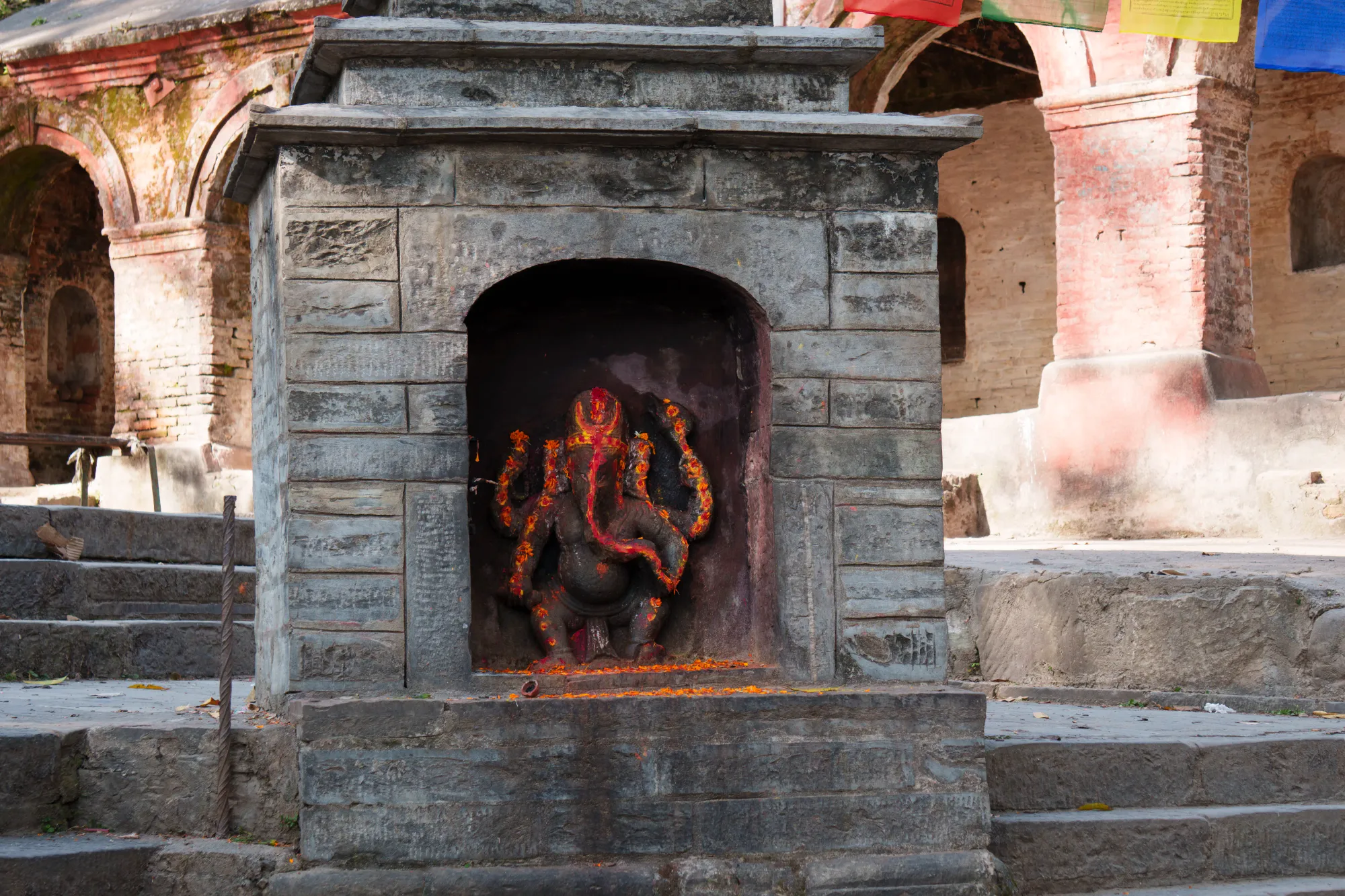
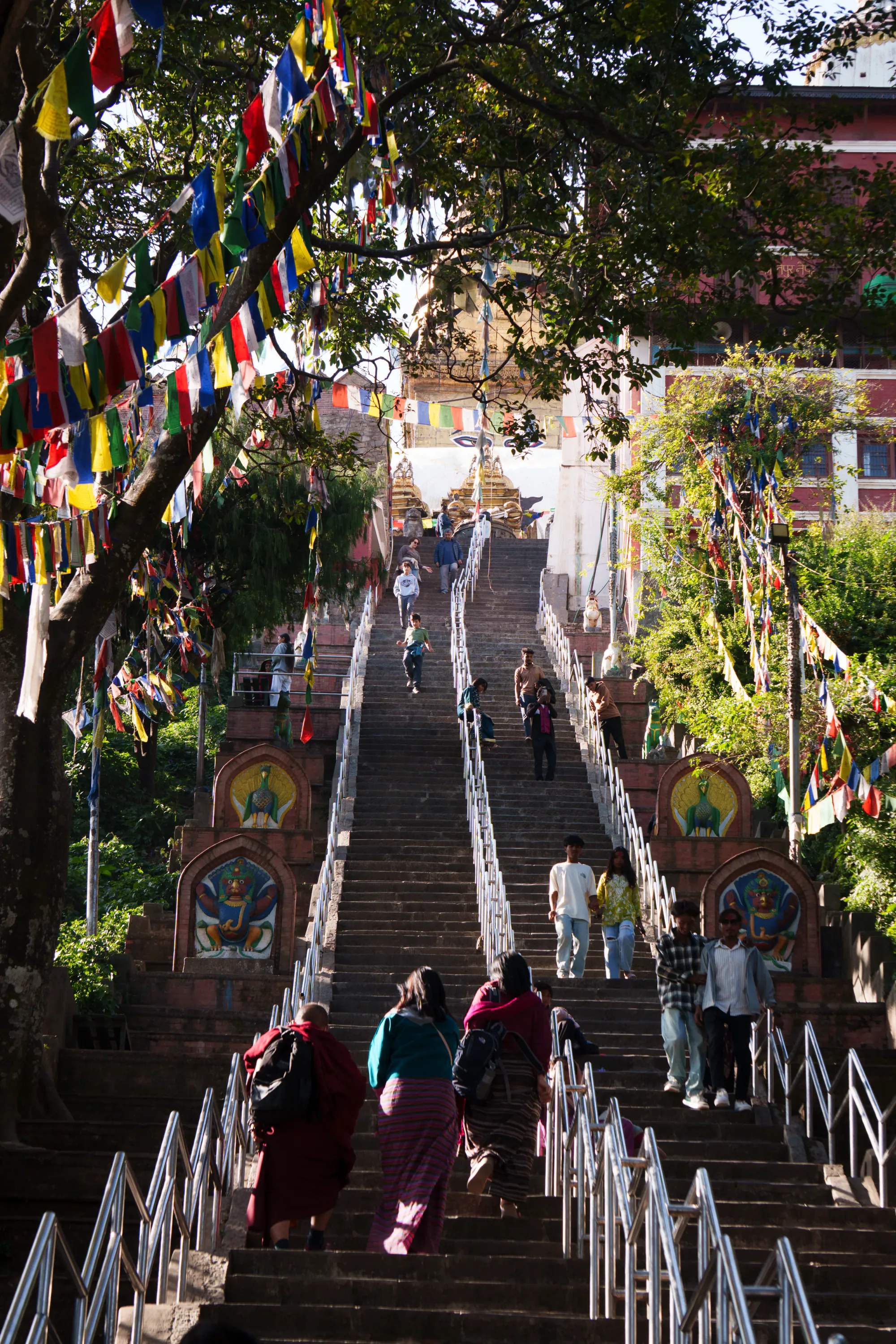
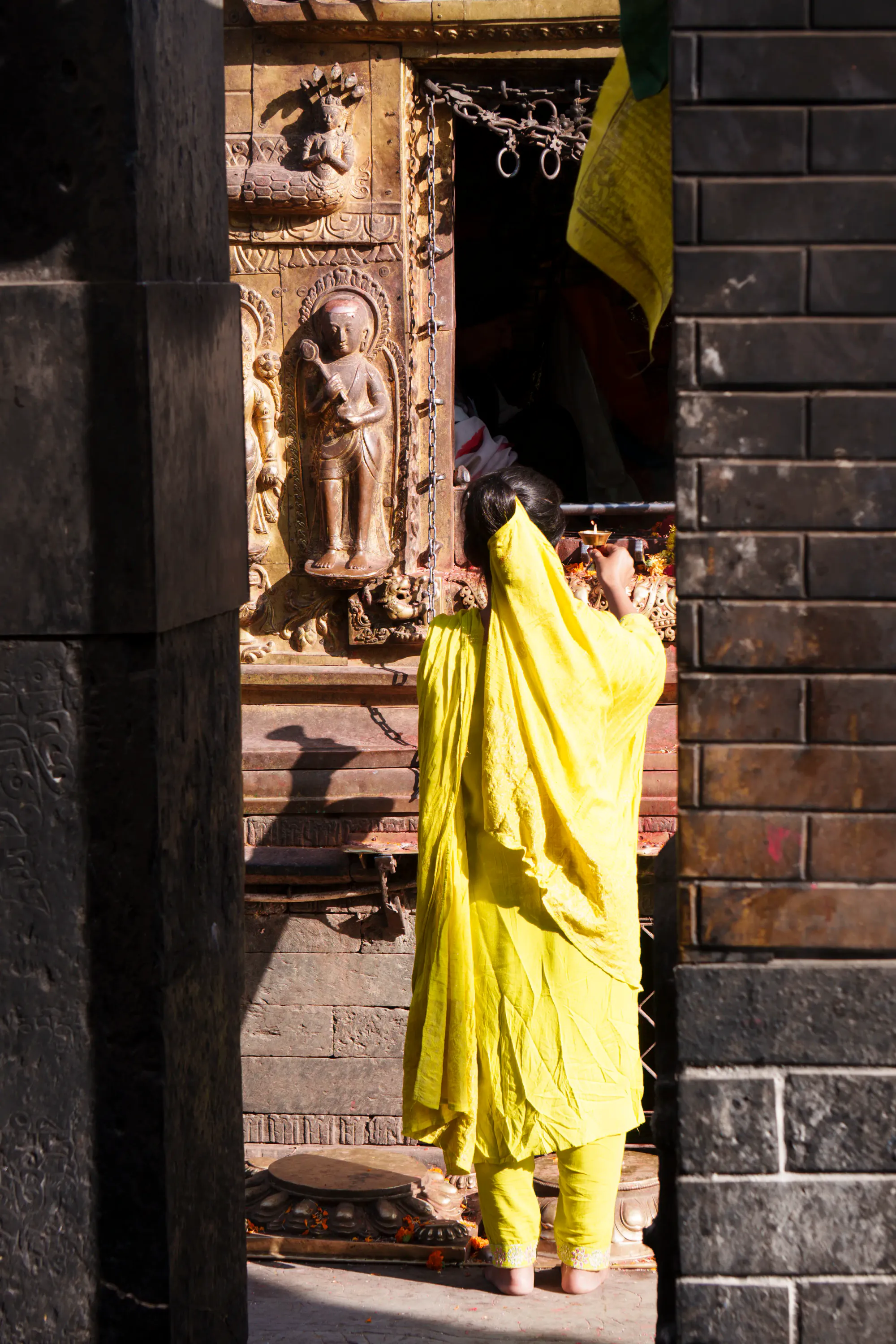
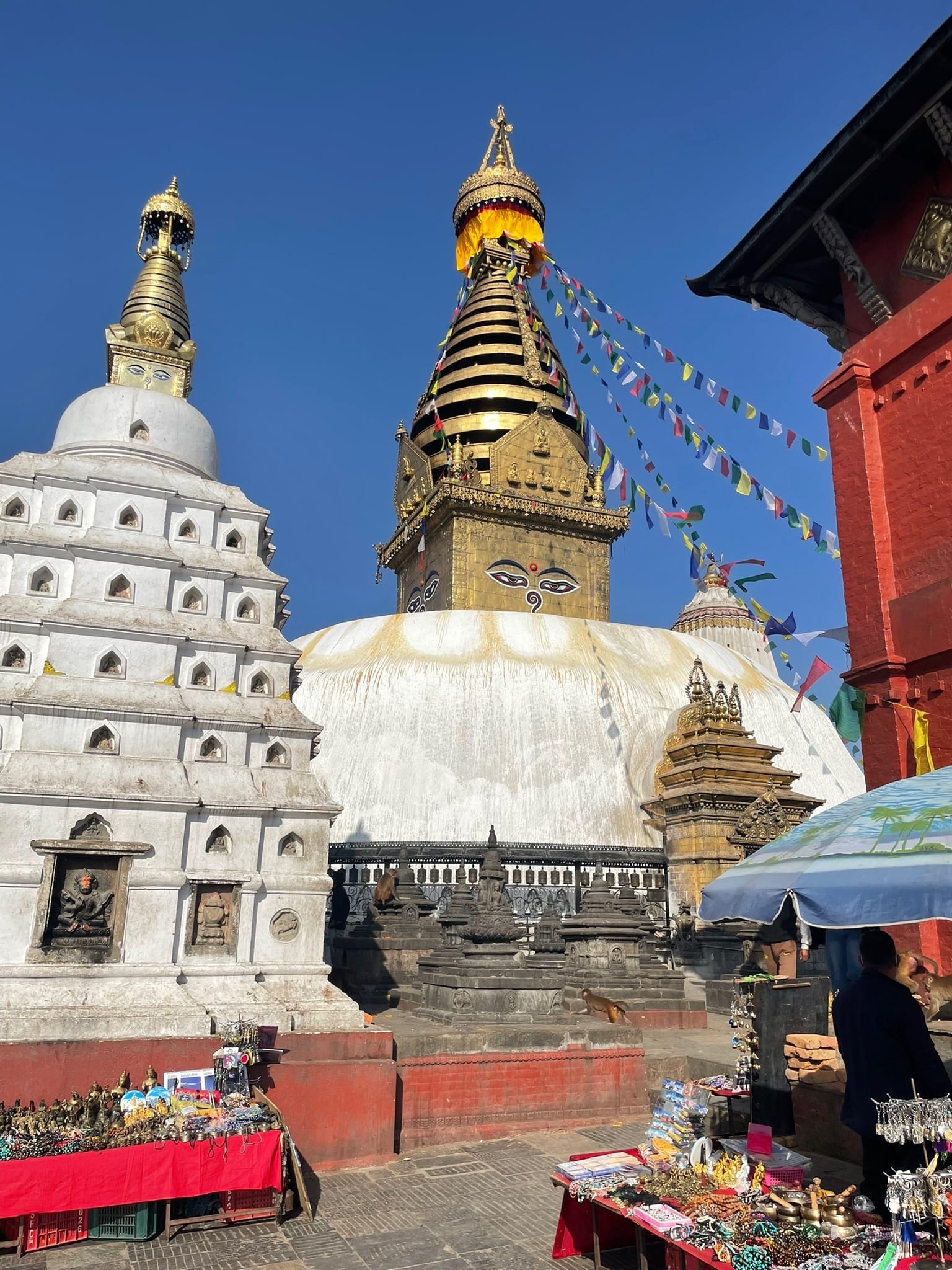
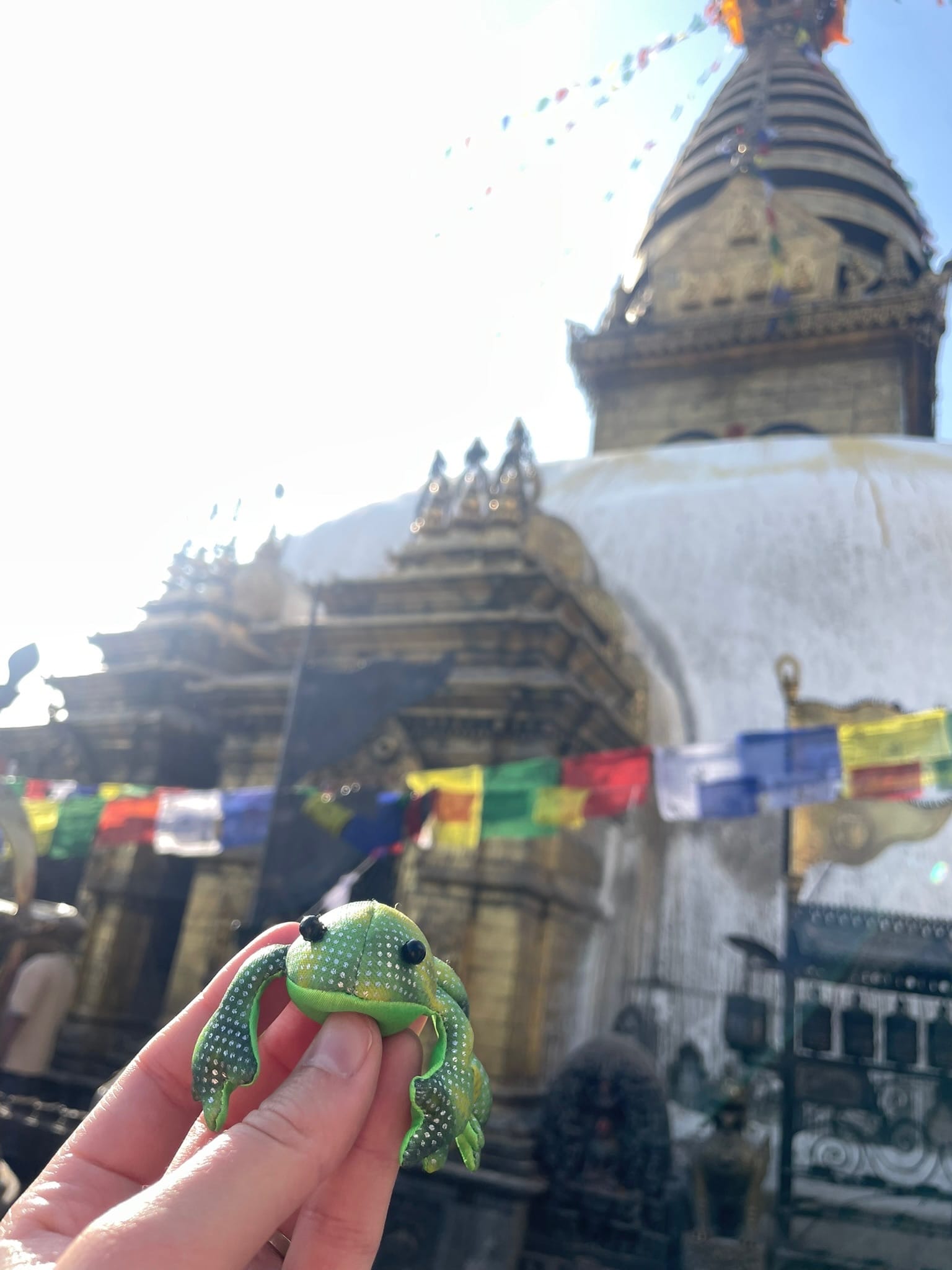
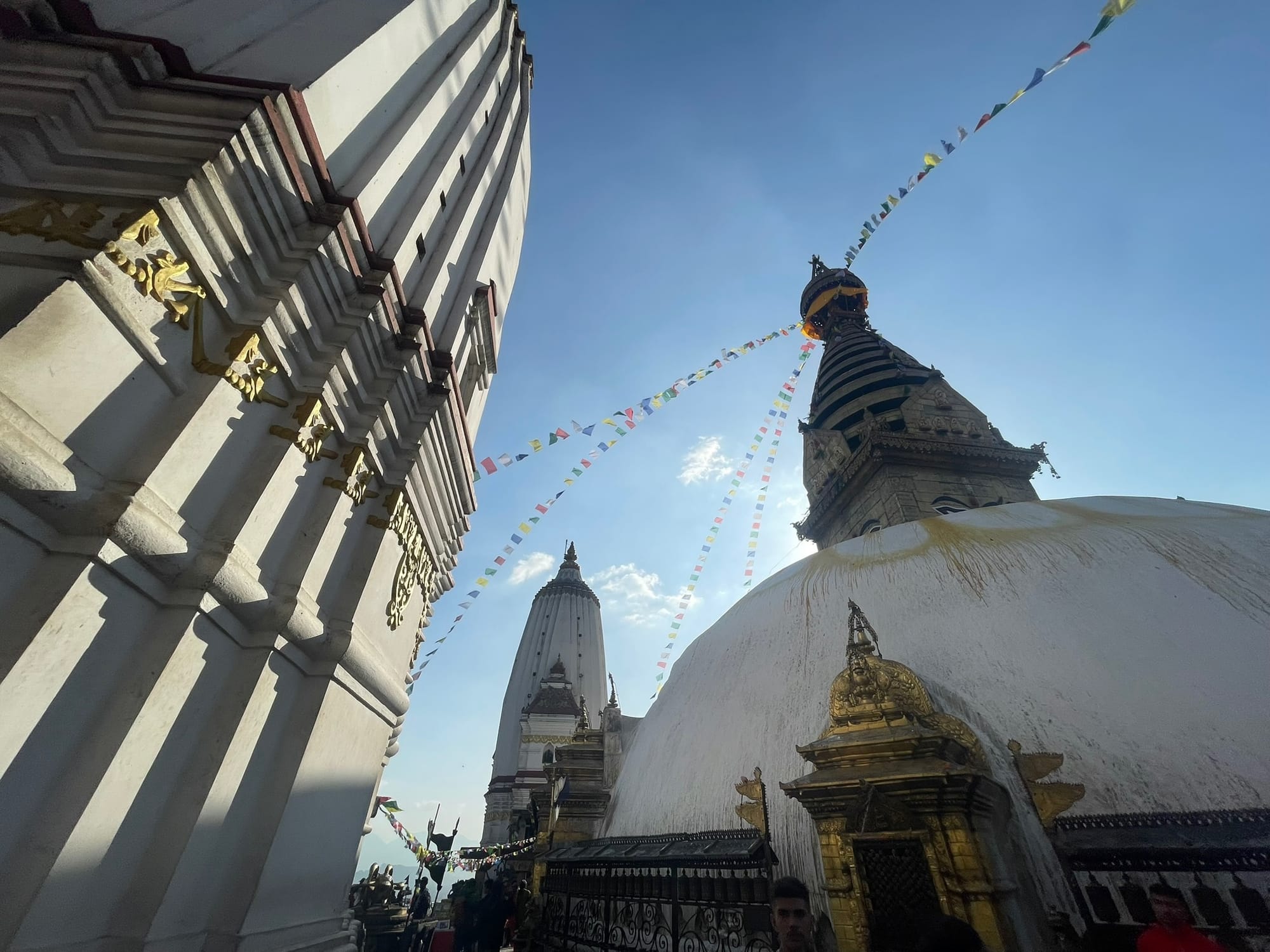
We saw a monkey steal a banana from a fruit stand, start eating it a bit, and get chased away by the storekeeper. The storekeeper then picked the open, bitten banana up, wiped it off a bit, and put it back on the stand. Just... thought we should put that out there. [📸 Johann & Rachel]
In Kathmandu's Durbar Square, we observed the beautiful melding of delicate wood carving with terracotta brick and smelled the smoke of offerings burnt next to statues strewn with flowers and dusted with brightly coloured powders.
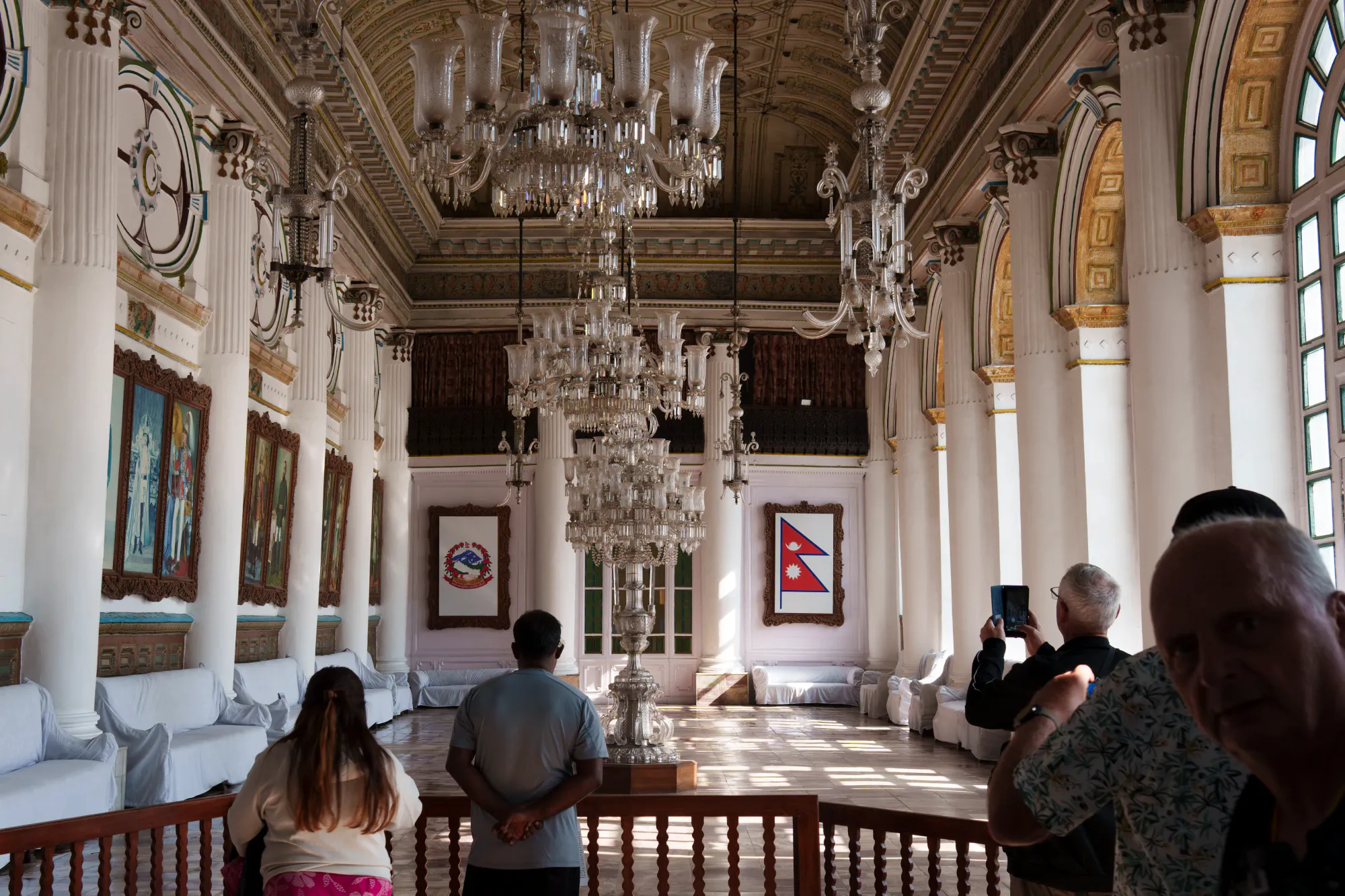
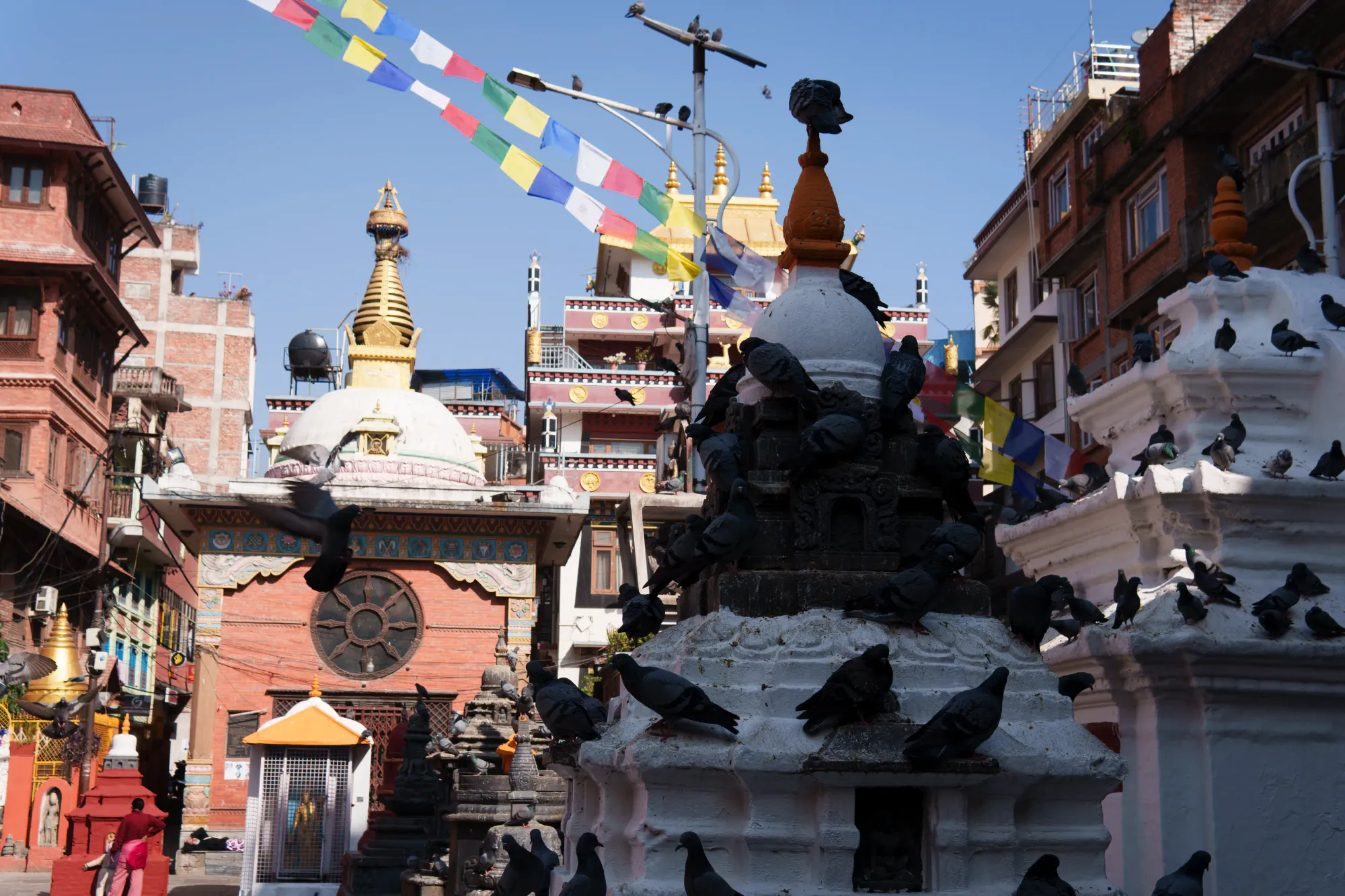
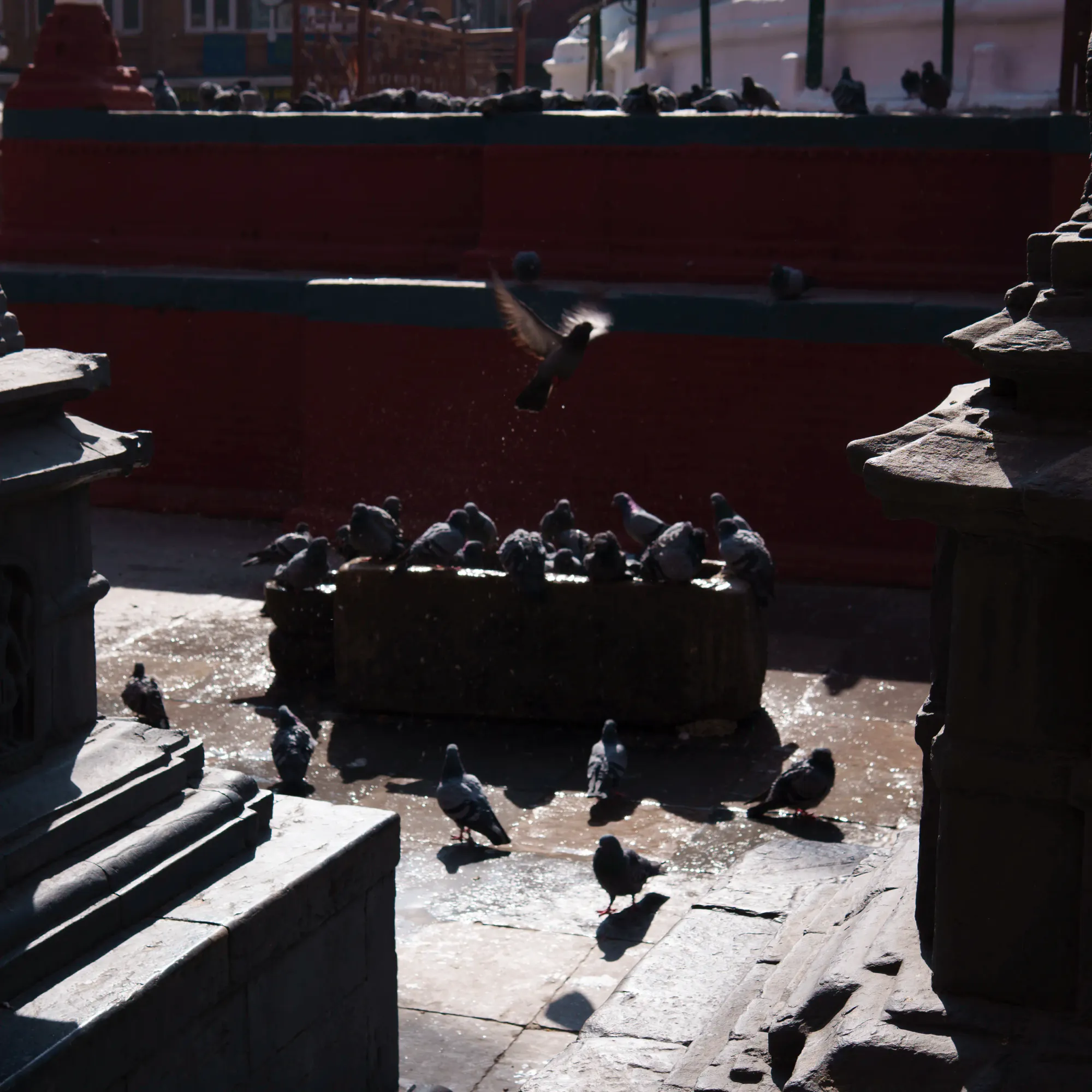
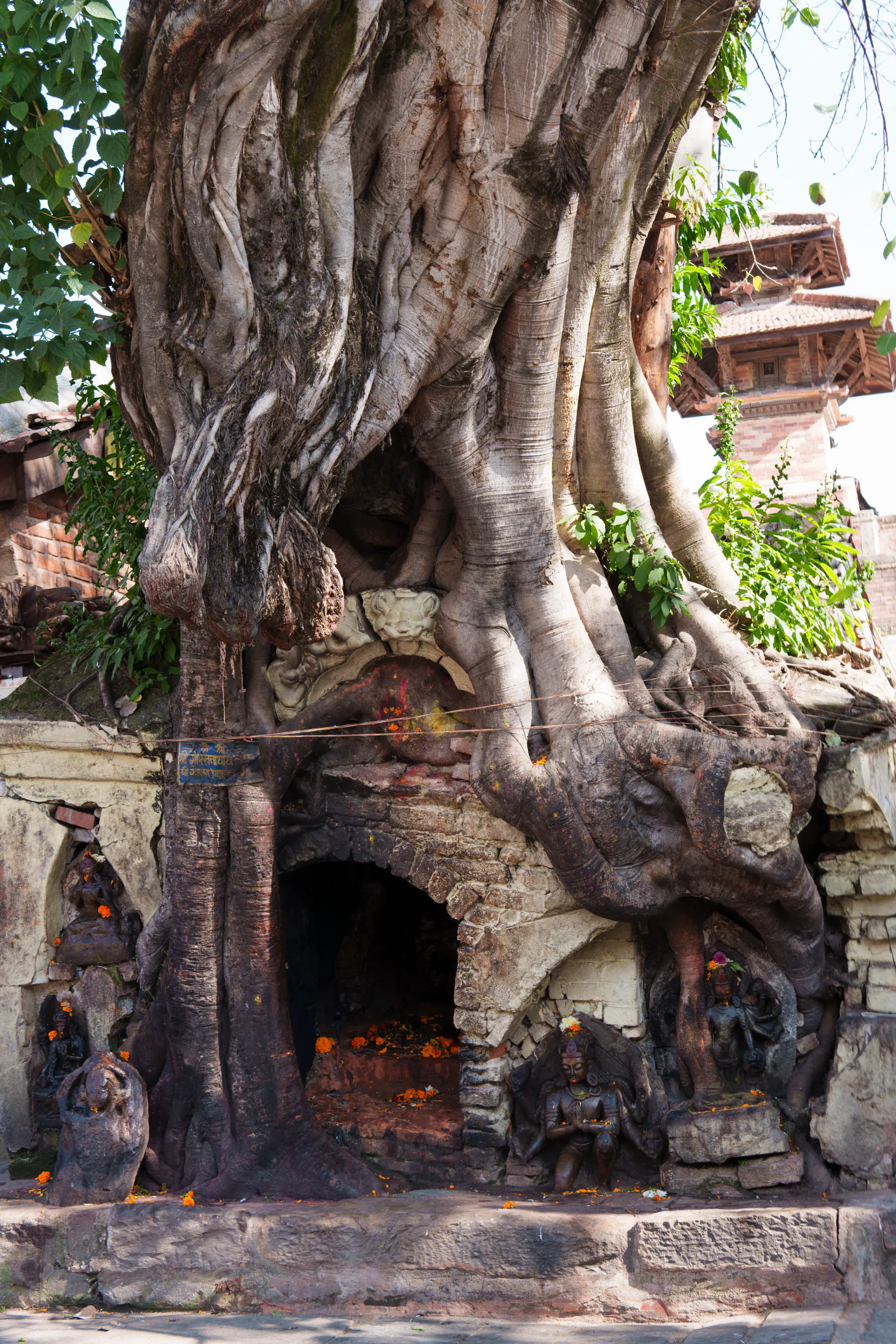
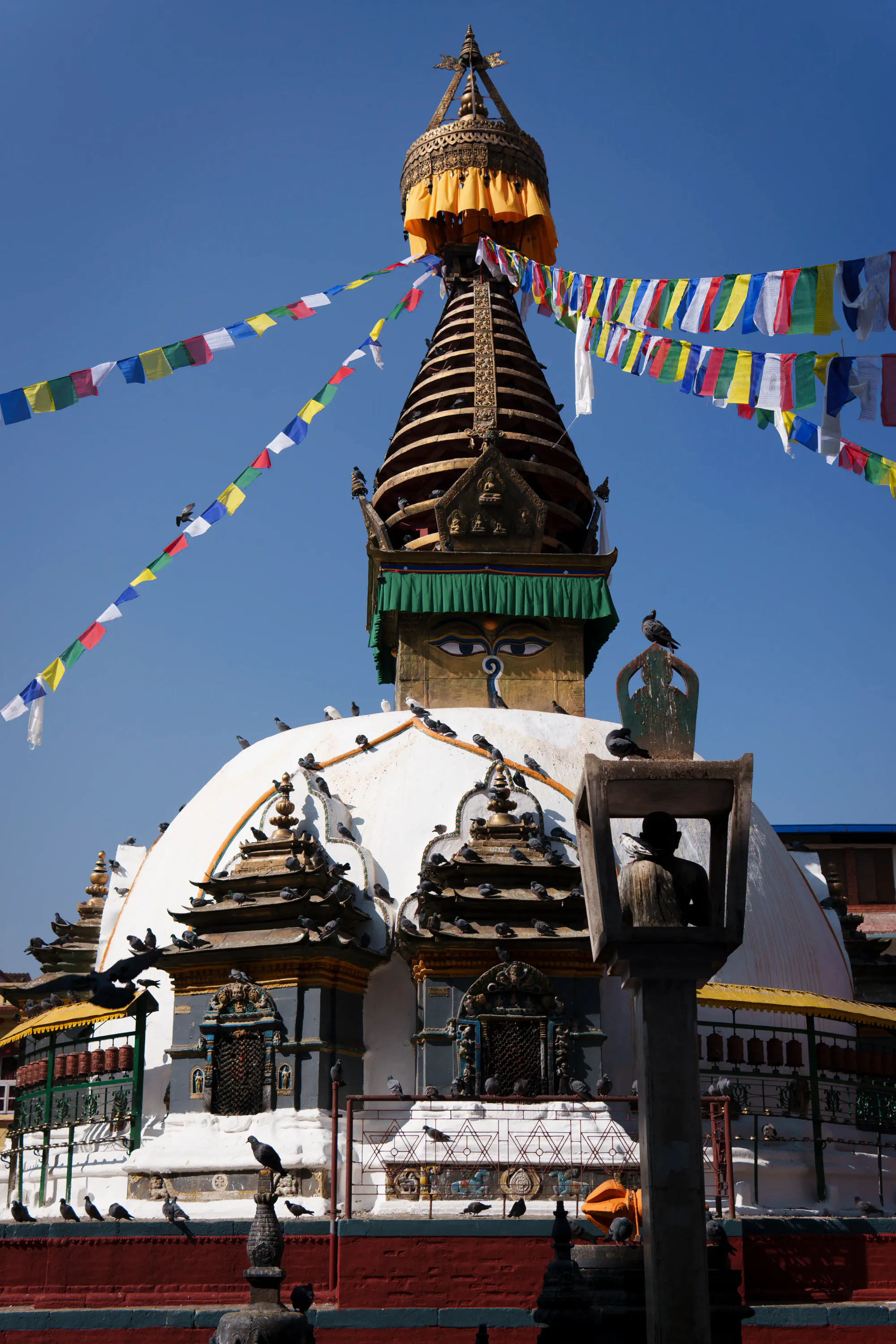
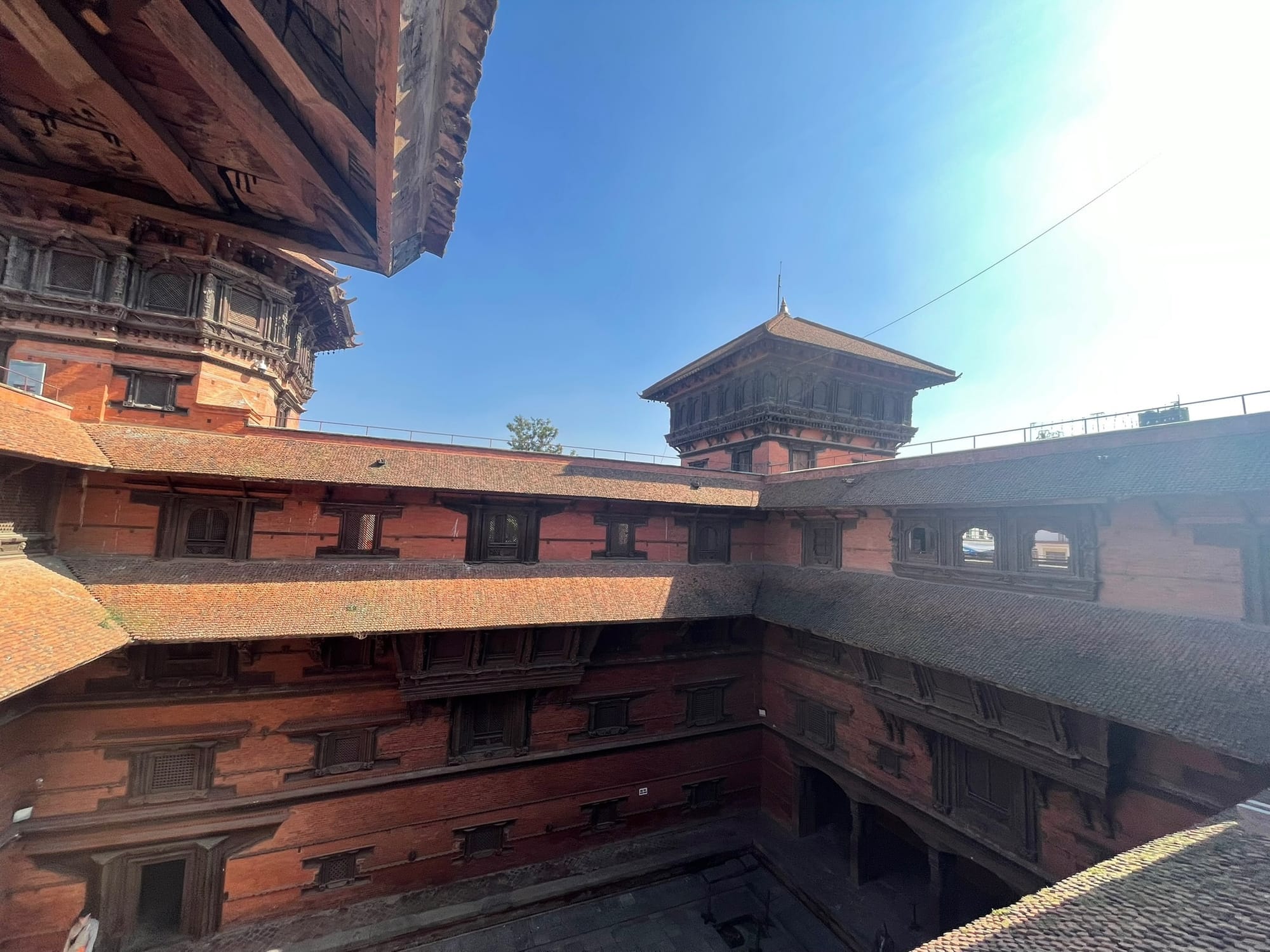
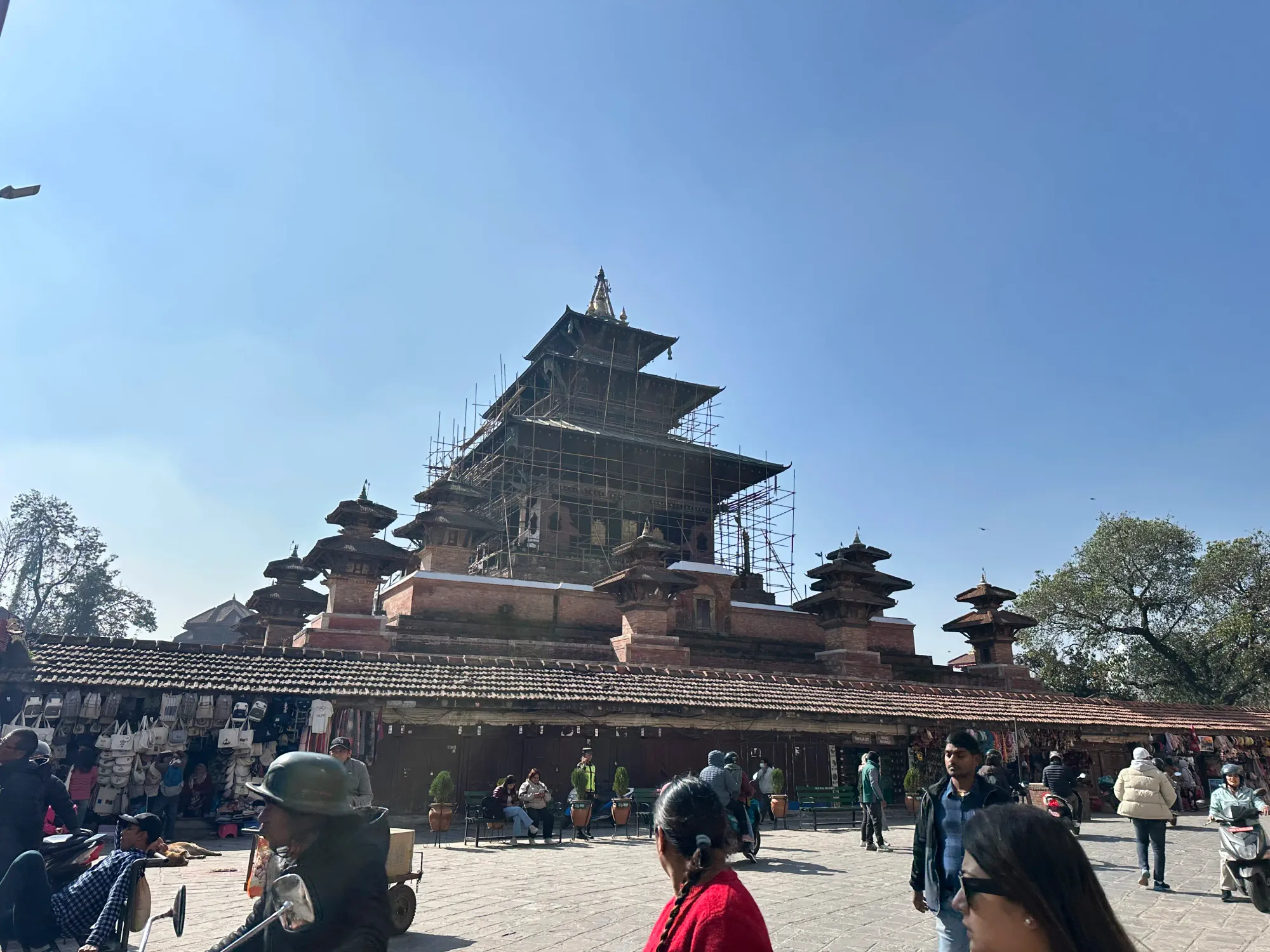
Durbar Square has been undergoing painstaking restoration after the cataclysmic 2015 Nepal earthquake. [📸 Rachel & Johann]
In Pokhara's Gupteshwar Mahadev Cave women waited in line to pray to a holy man with loud, fervent voices. The air was thick and humid, condensed water falling as sparse rain. Through a tunnel and down slippery metal stairs we caught a glimpse of the Devi Falls cascading into the cave, plummeting from the deep-cut gorge above. There was the bat cave, with its 'small exit' (a very small, secondary passage) in which a woman was stuck, and ginormous statues of Hindu gods on tall hilltops. Mountain views and holy places, brightly coloured boats and rushing water.
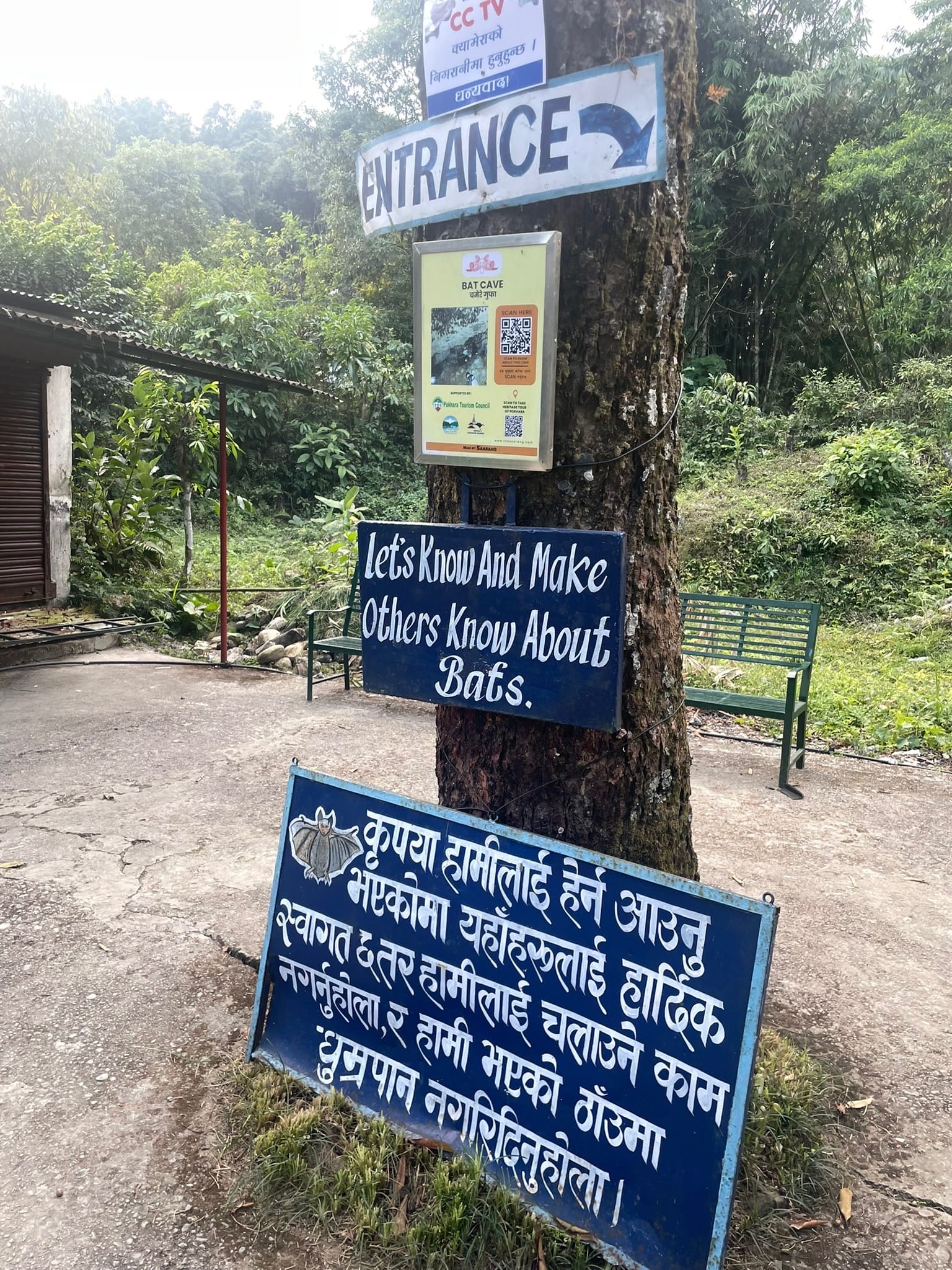
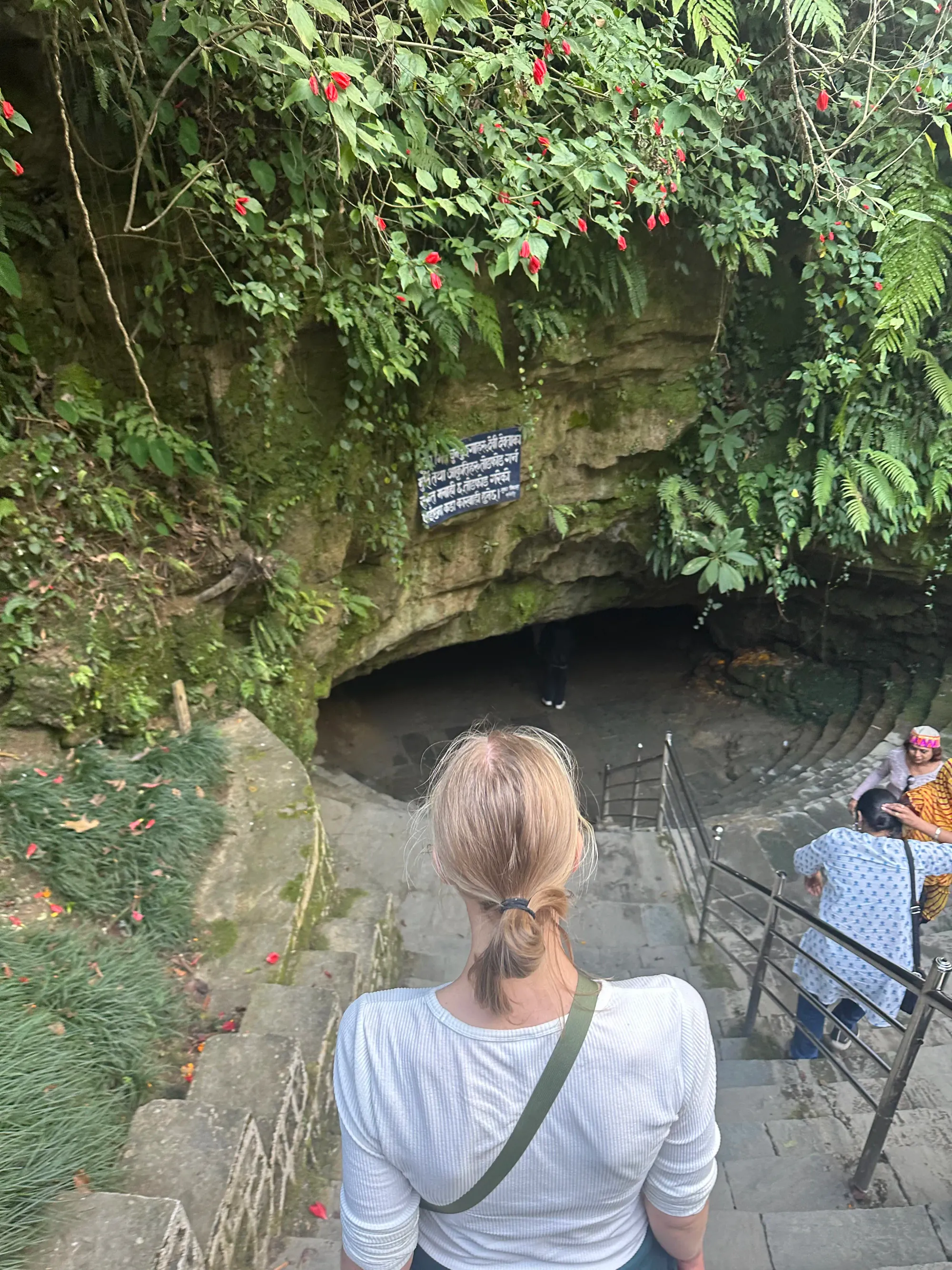
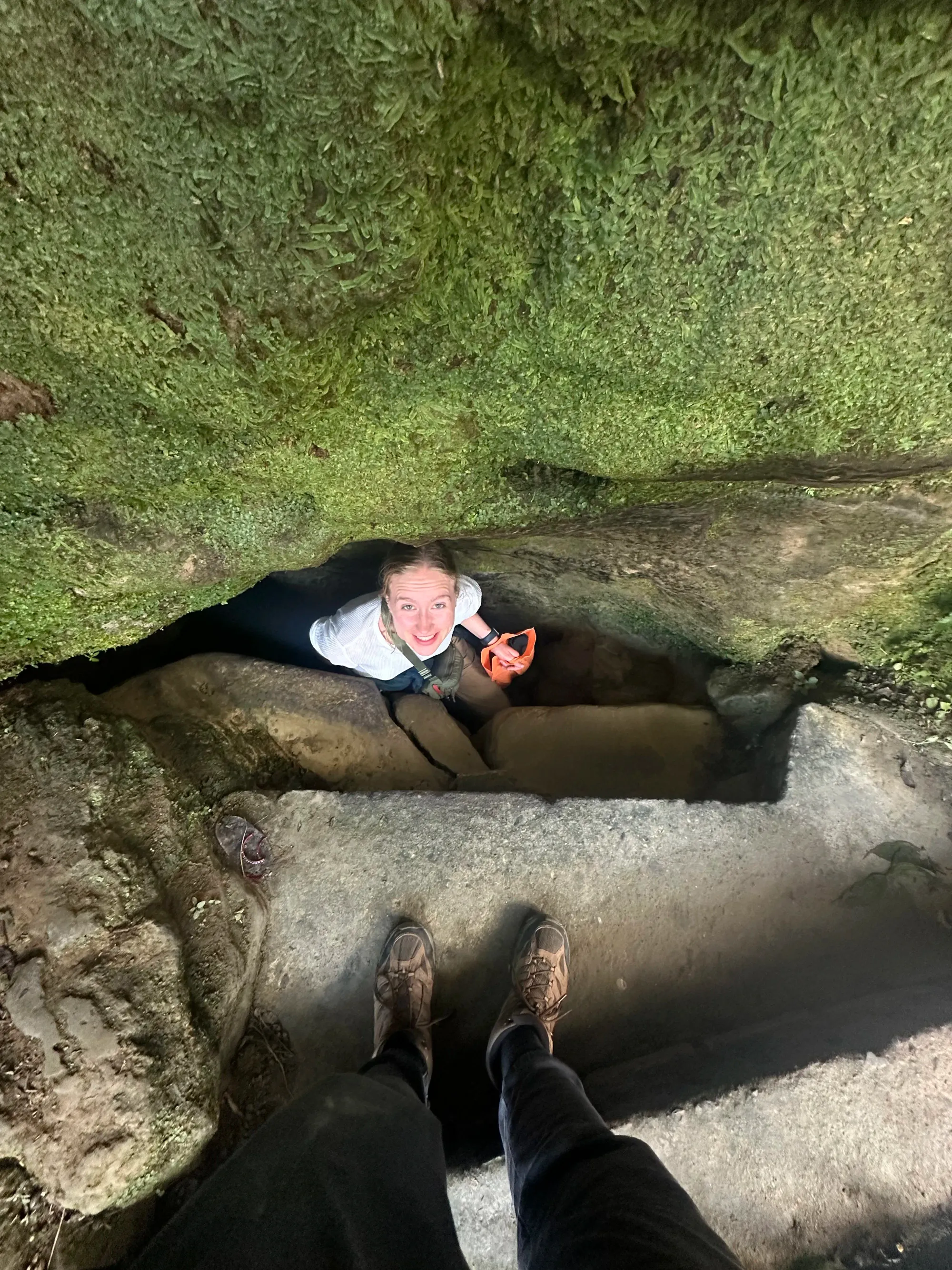
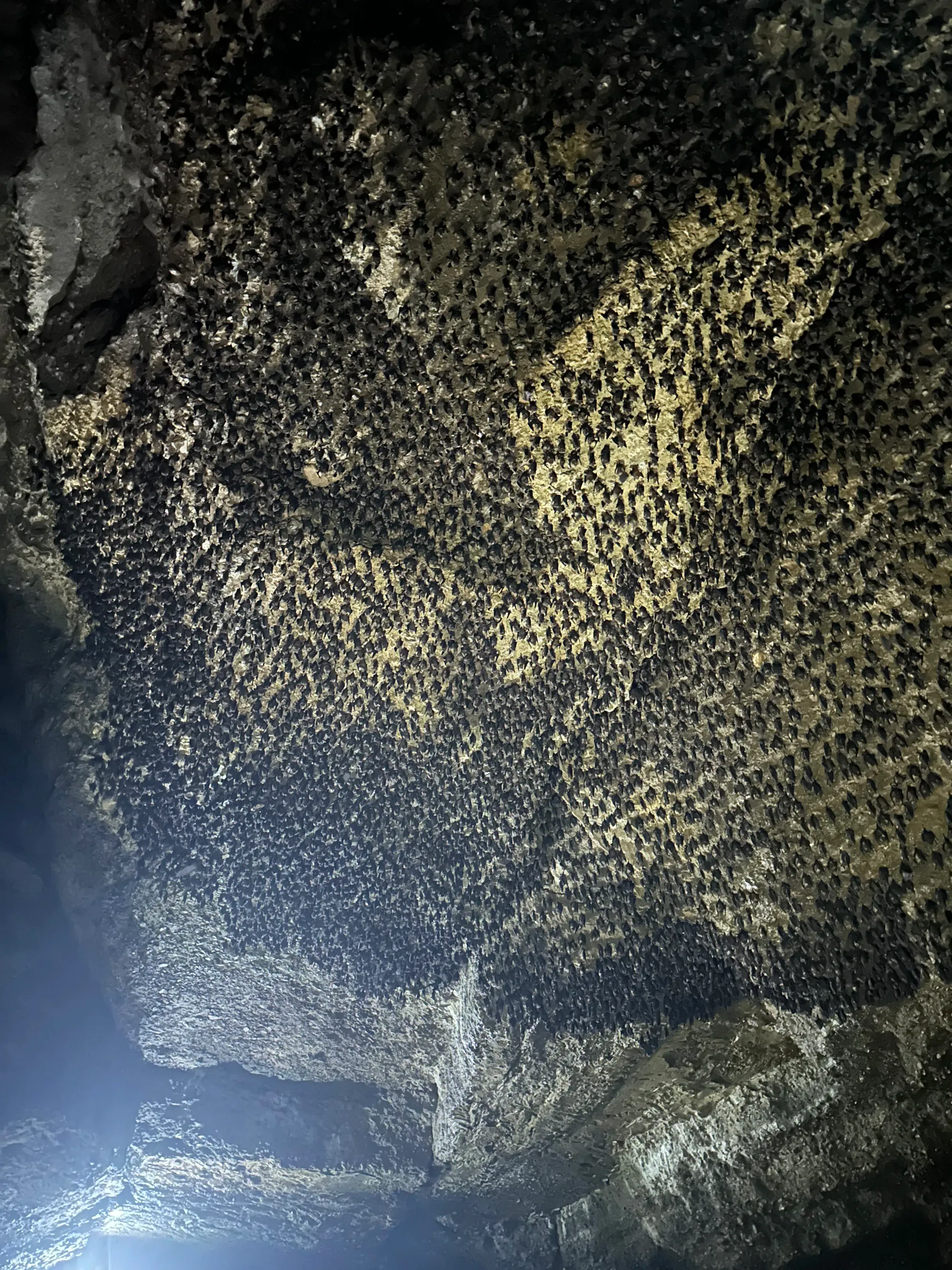
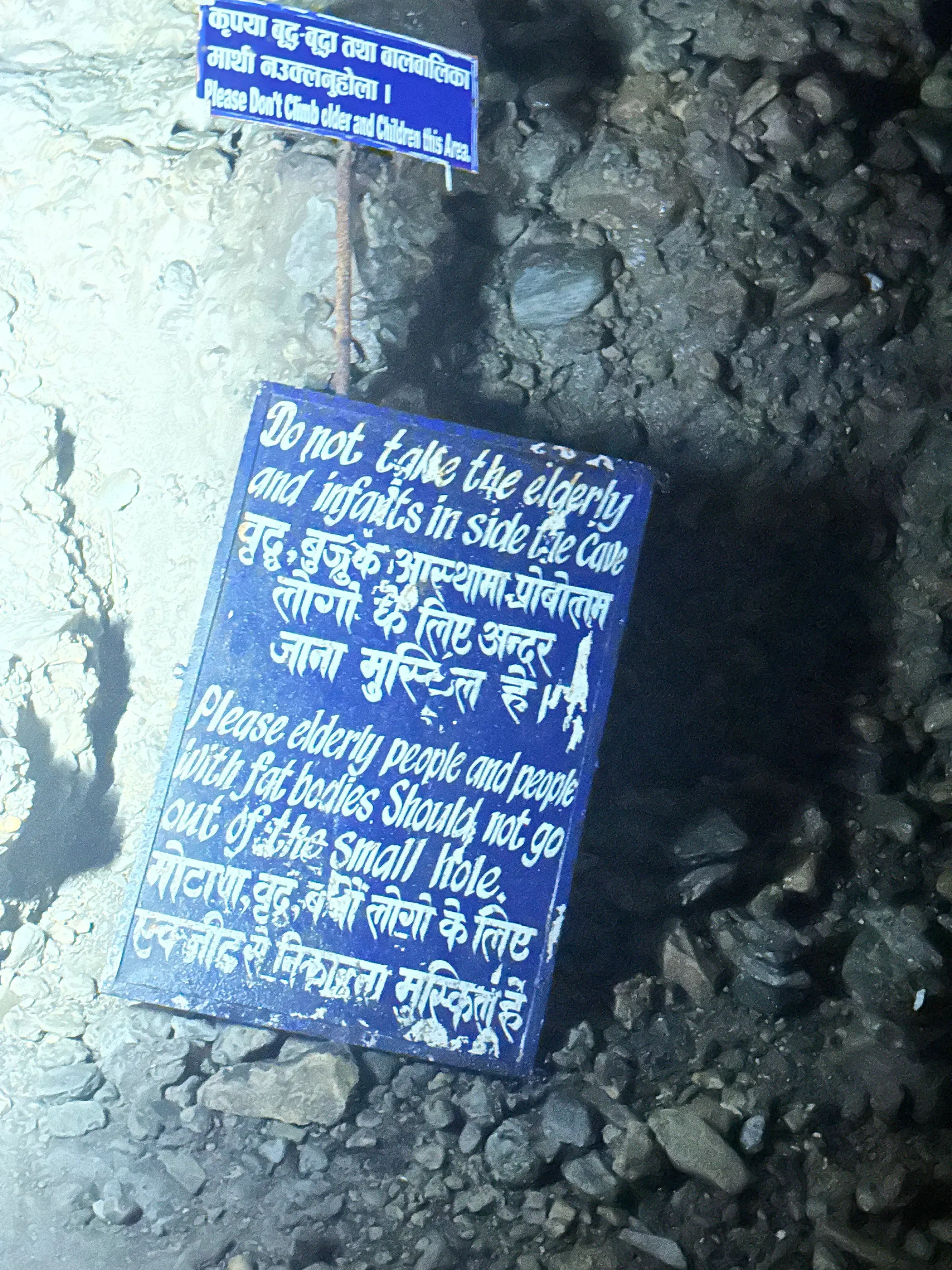
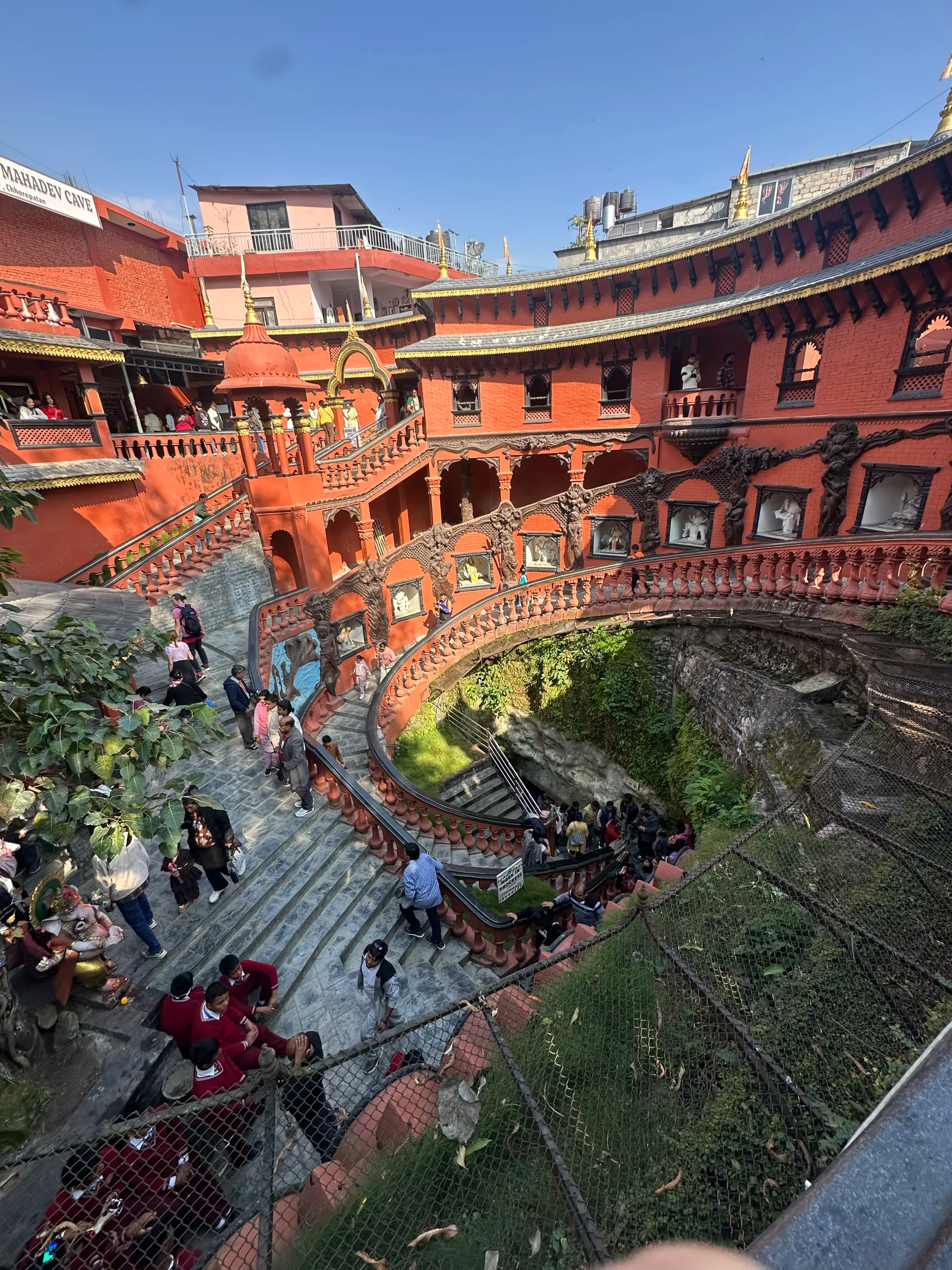
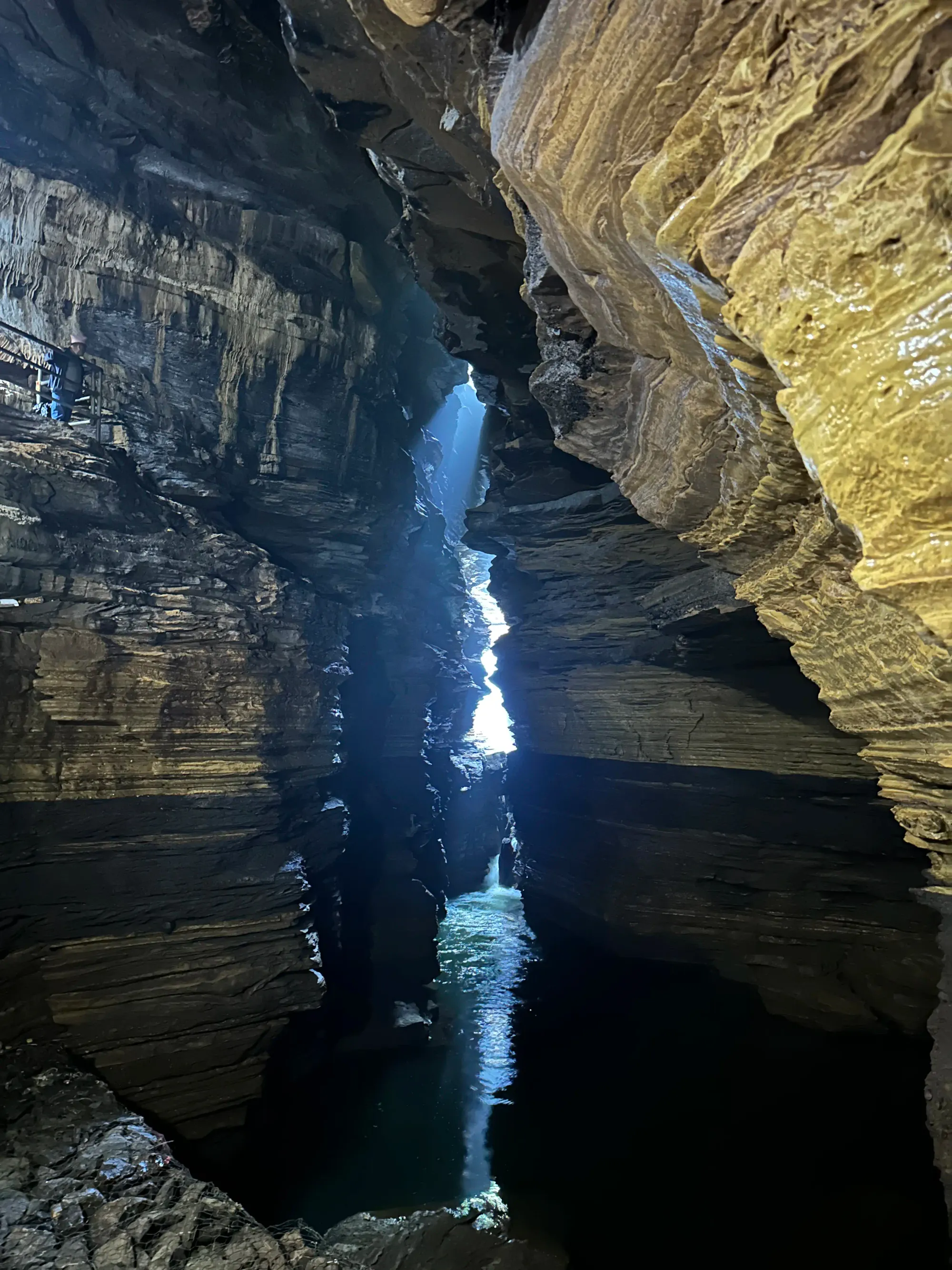
Truly the pinnacle of interpretive signage. [📸 Rachel & Johann]
Nepal was incredibly beautiful, but it wasn't quite so easy for us as travellers either. As a couple of introverts, we were quickly overwhelmed by the constant approaches for money. Walking down streets in touristy areas, we were met almost constantly by sales pitches for restaurants and wares. This happened in Dubai and would happen in Türkiye too, and we understand that this is part of the culture of these regions and that tourists do bring much-needed income. What we really struggled with was when we were actively followed; walking and deep in conversation after dinner when suddenly a strange man was rapidly keeping pace with us, talking a mile a minute and refusing to let us be, or entering Durbar Square and being persistently followed by a would-be tour guide who would not take no for an answer. We never wanted to be rude, but also yearned for a few minutes where we could explore without being reminded of our status as (on-a-budget) wallets on two legs. We wanted to learn about the local people and culture, but in touristy areas every interaction felt strongly as if it were motivated by money; fair enough, that is how tourism works. However, it only increased our disappointment that our homestay fell through, as we believe that would have provided an invaluable cultural learning opportunity through a more direct lens.
On our last weekend in Nepal, we visited Chitwan National Park, near the border with India. Several modes of transportation took us into the jungle; on foot, via canoe, and by jeep. 'If we see a rhino,' our guide told us right before we walked into the jungle, 'climb at least 9 feet into a tree.' We eyed the smooth, branchless trunks knowing that if we met a rhino there was no hope for us. 'If we meet a tiger, it probably won't attack. Unless it has food or cubs.' Also no hope for us.
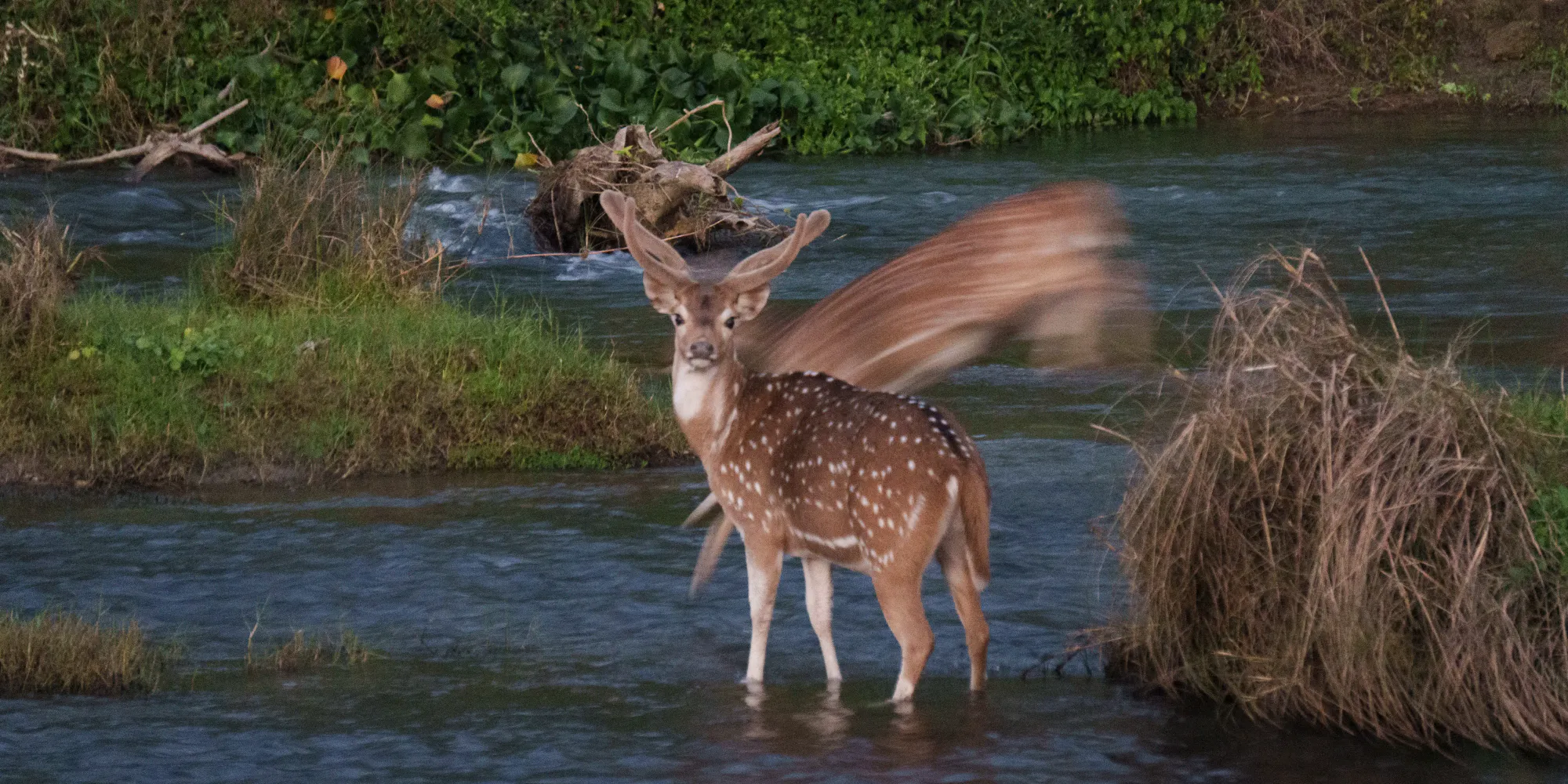
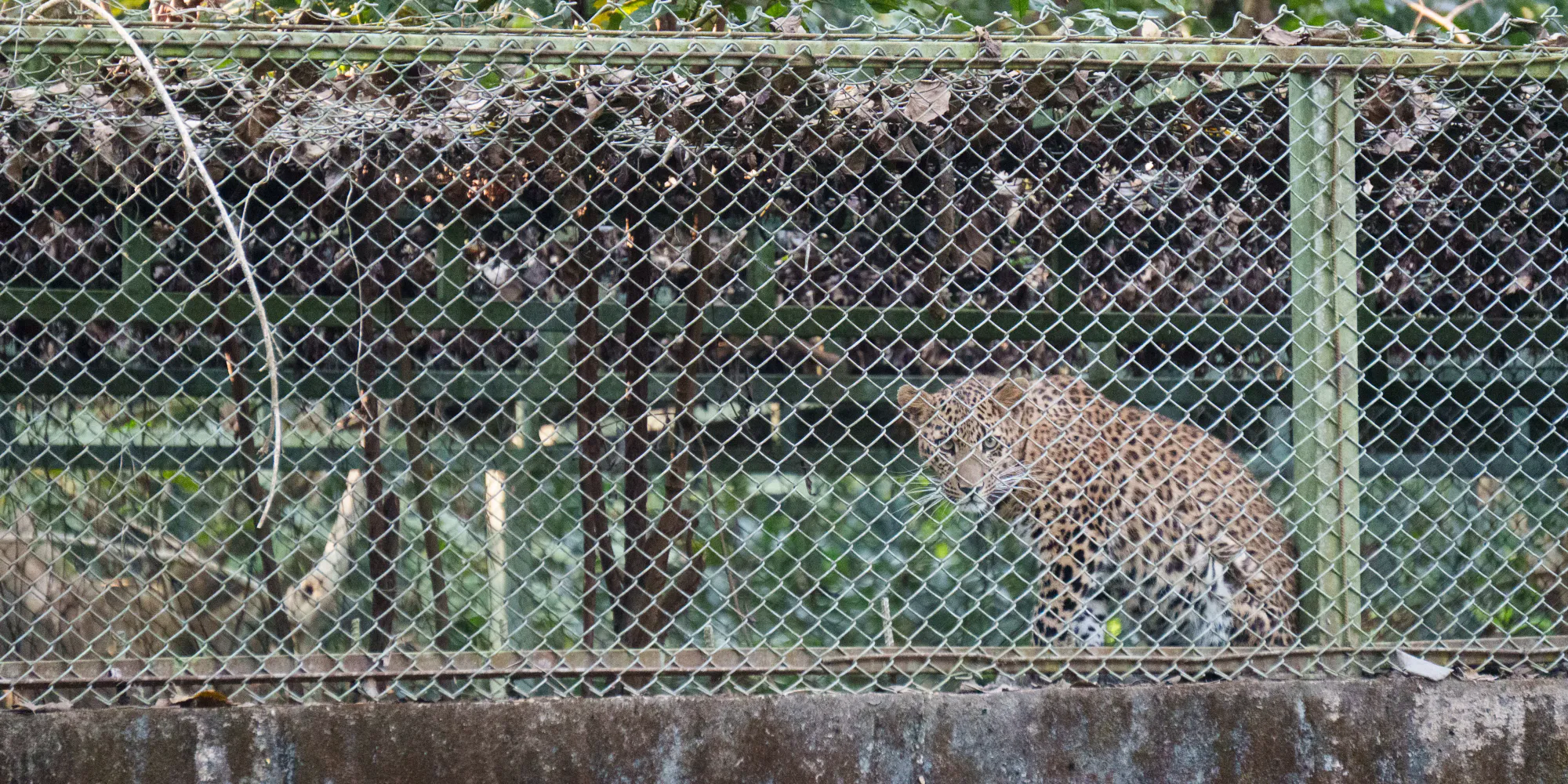
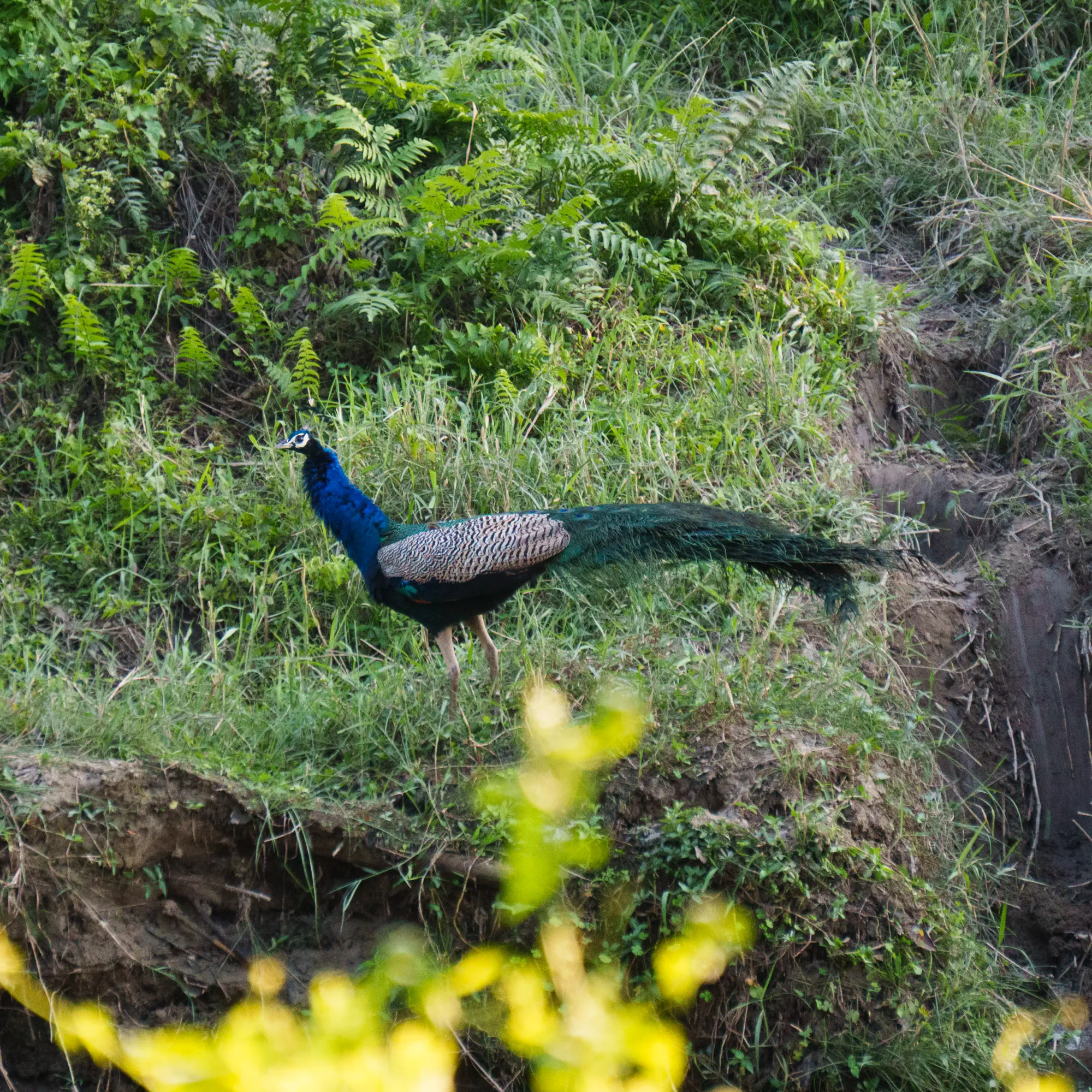
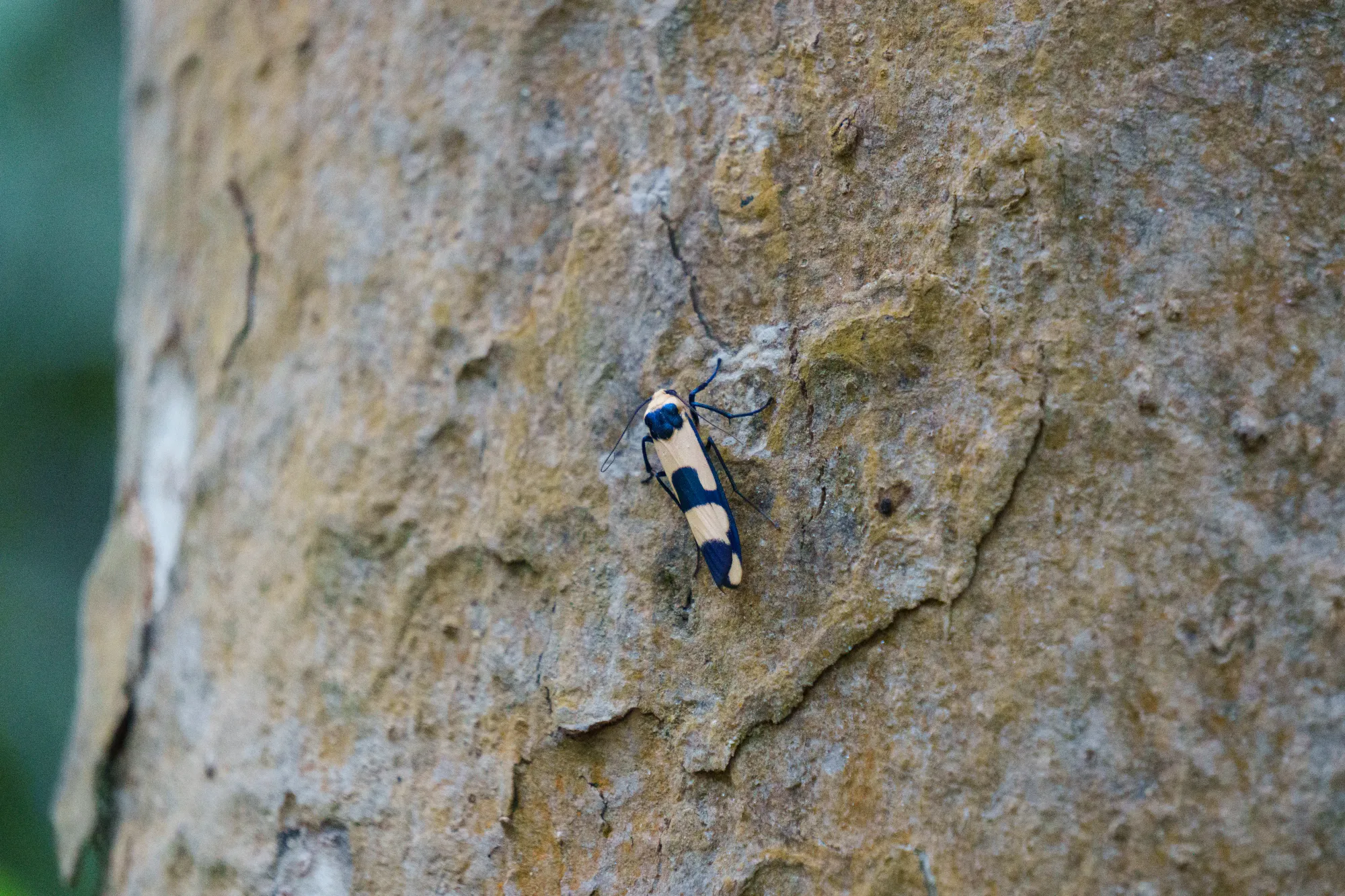
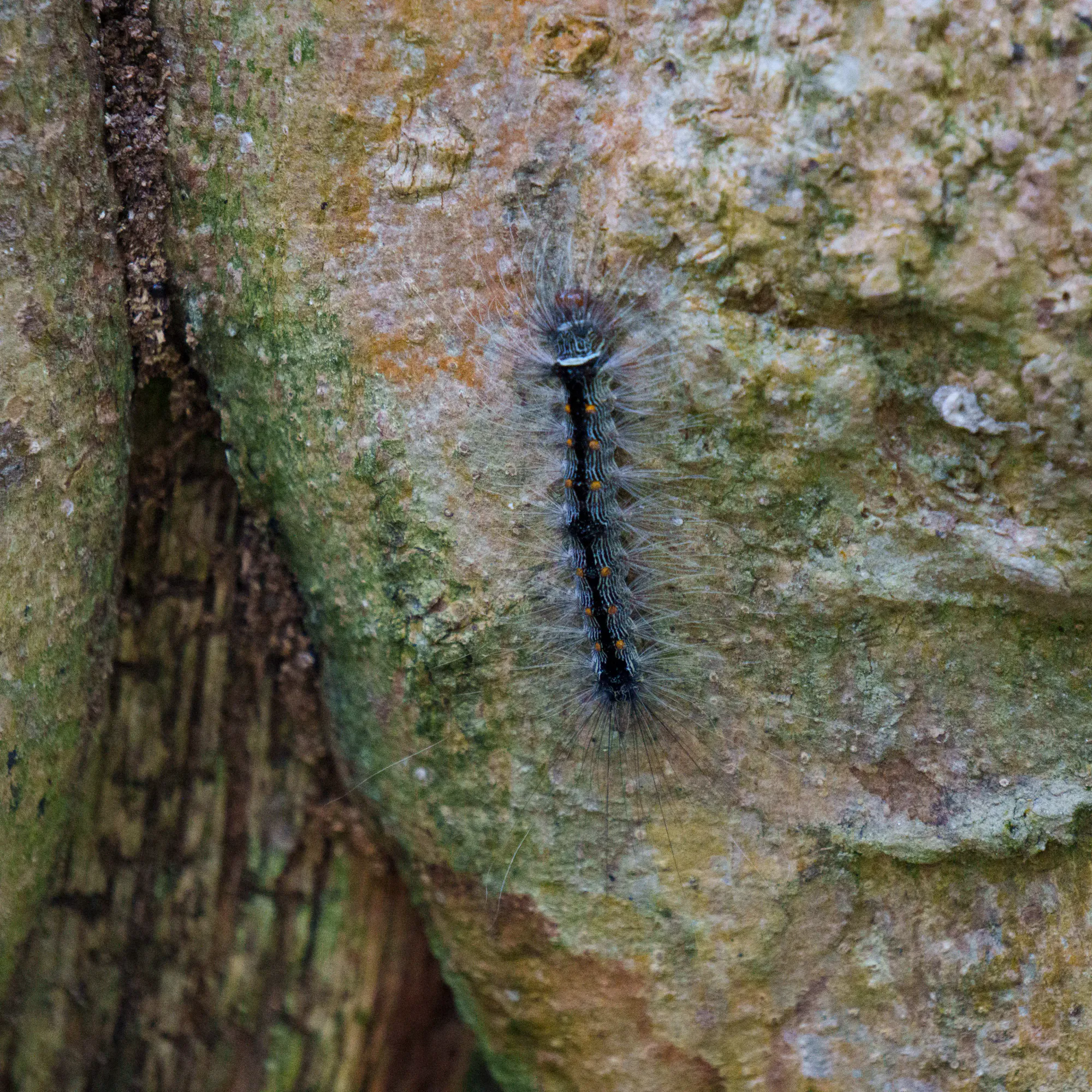
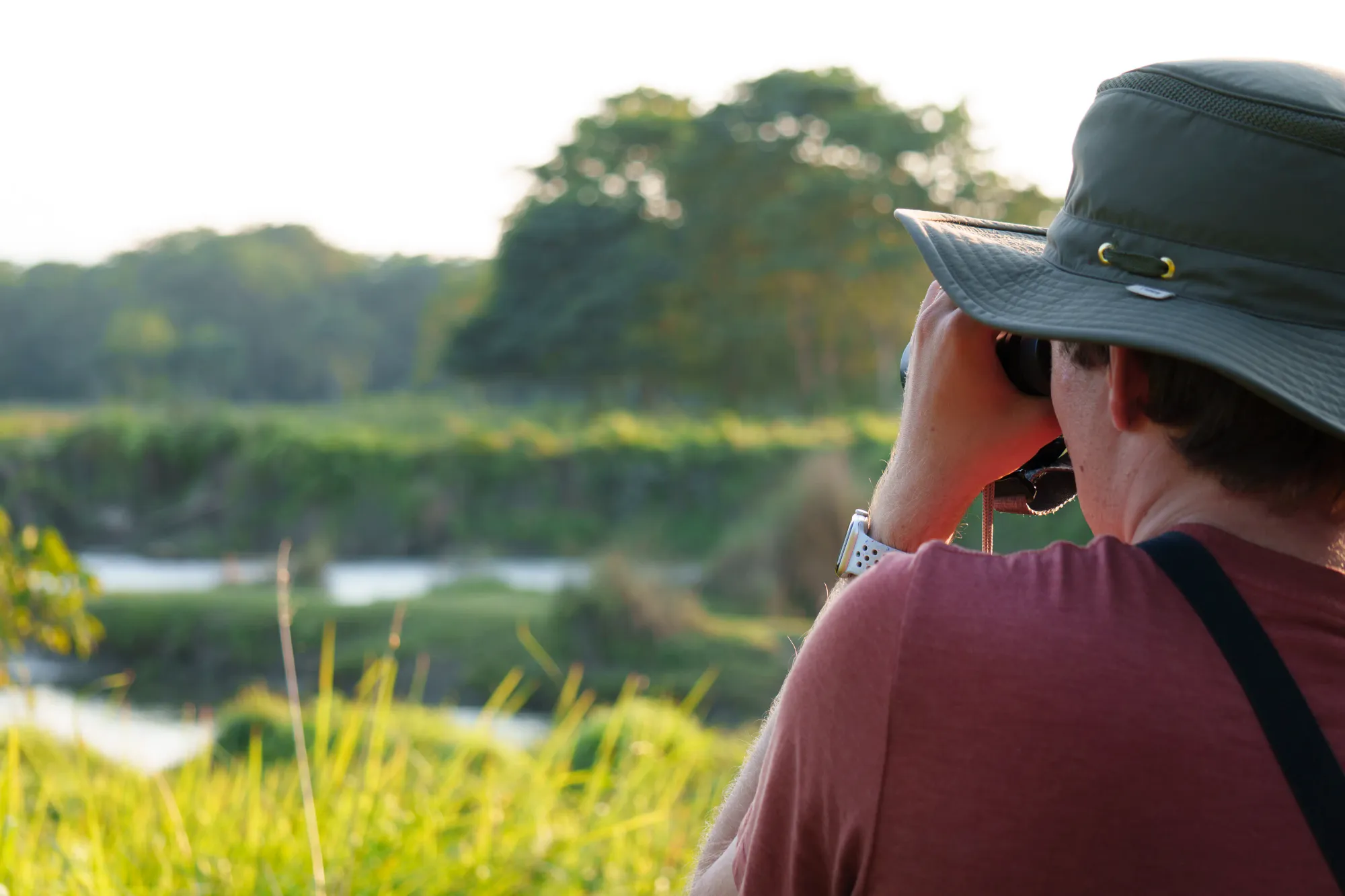
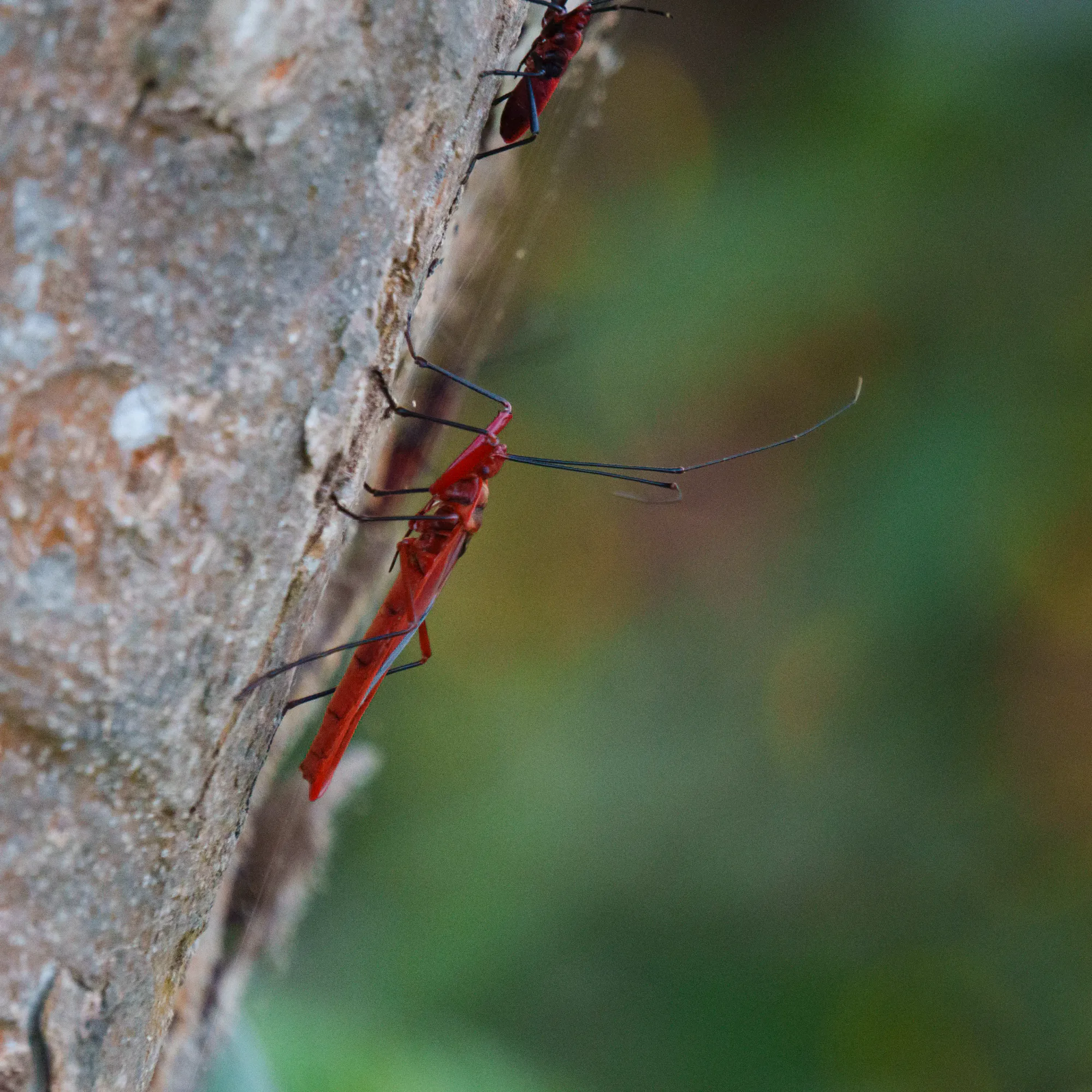
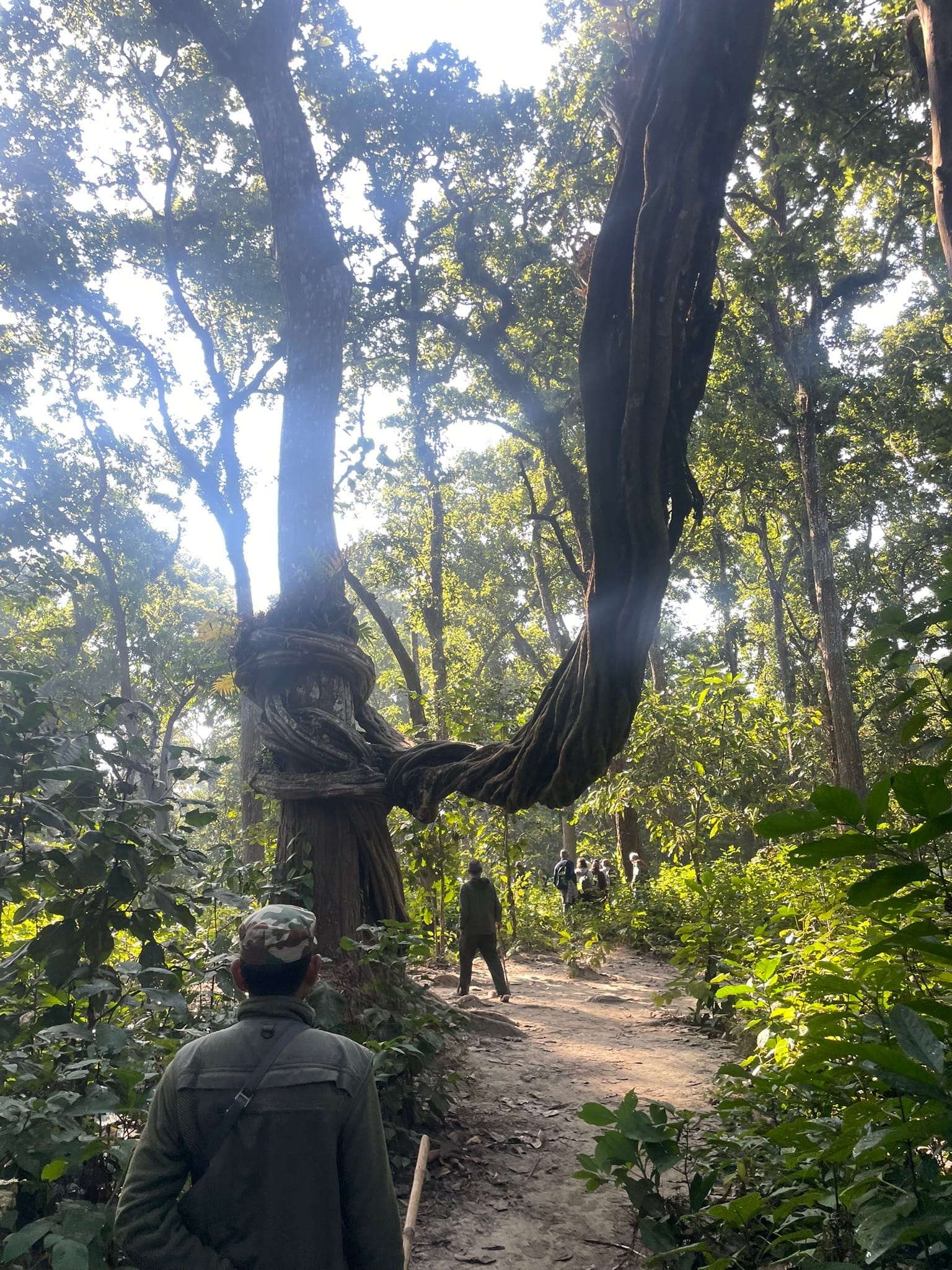
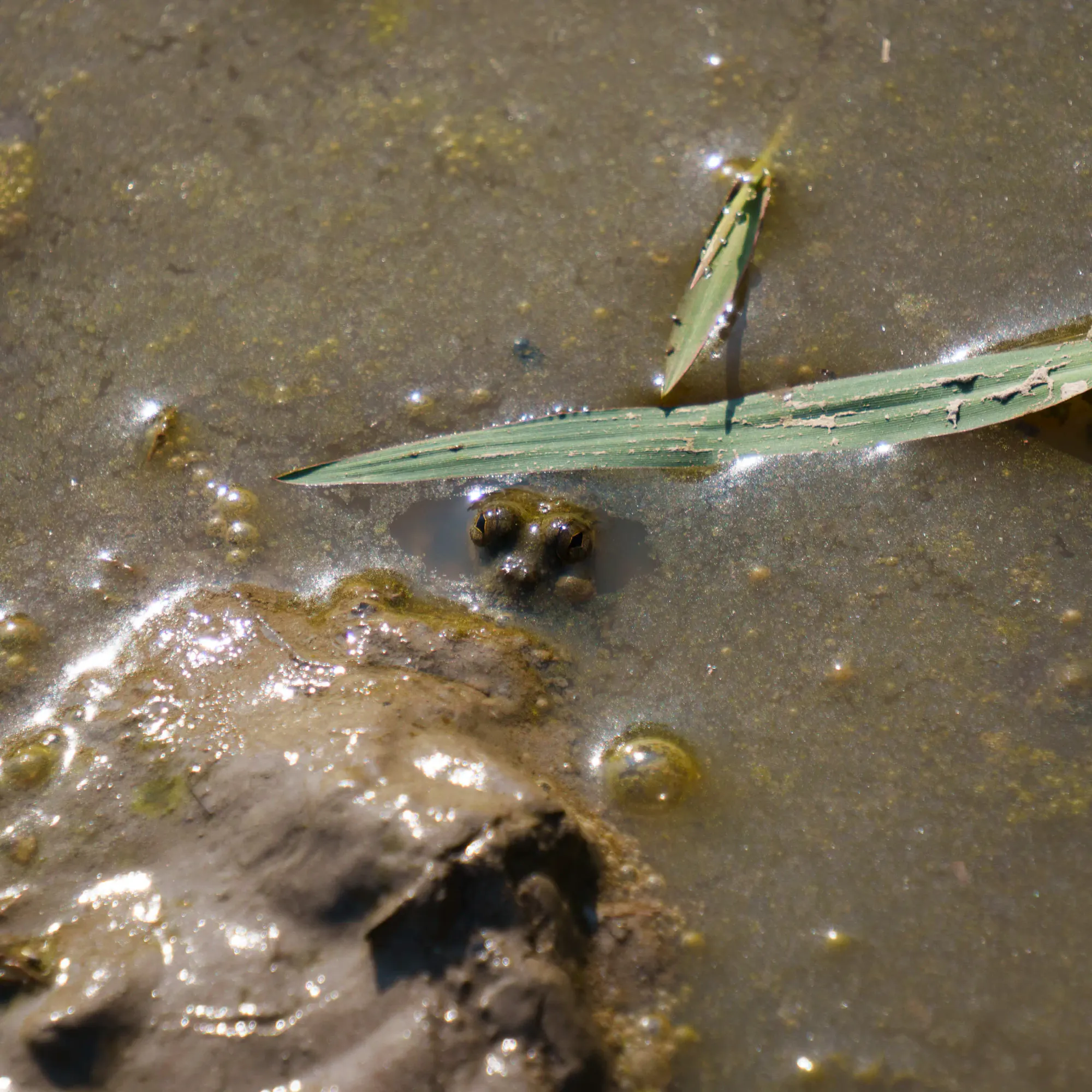
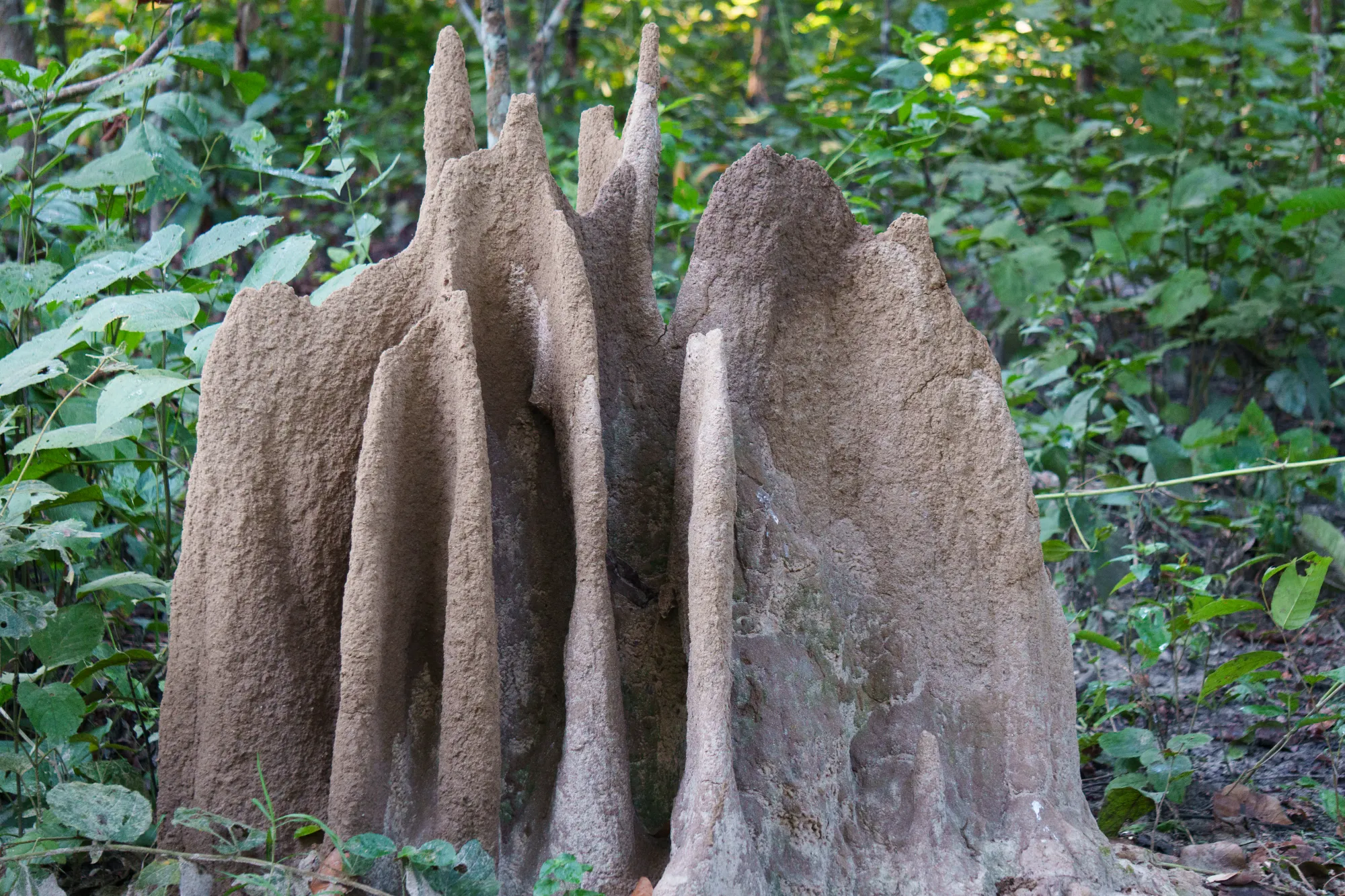
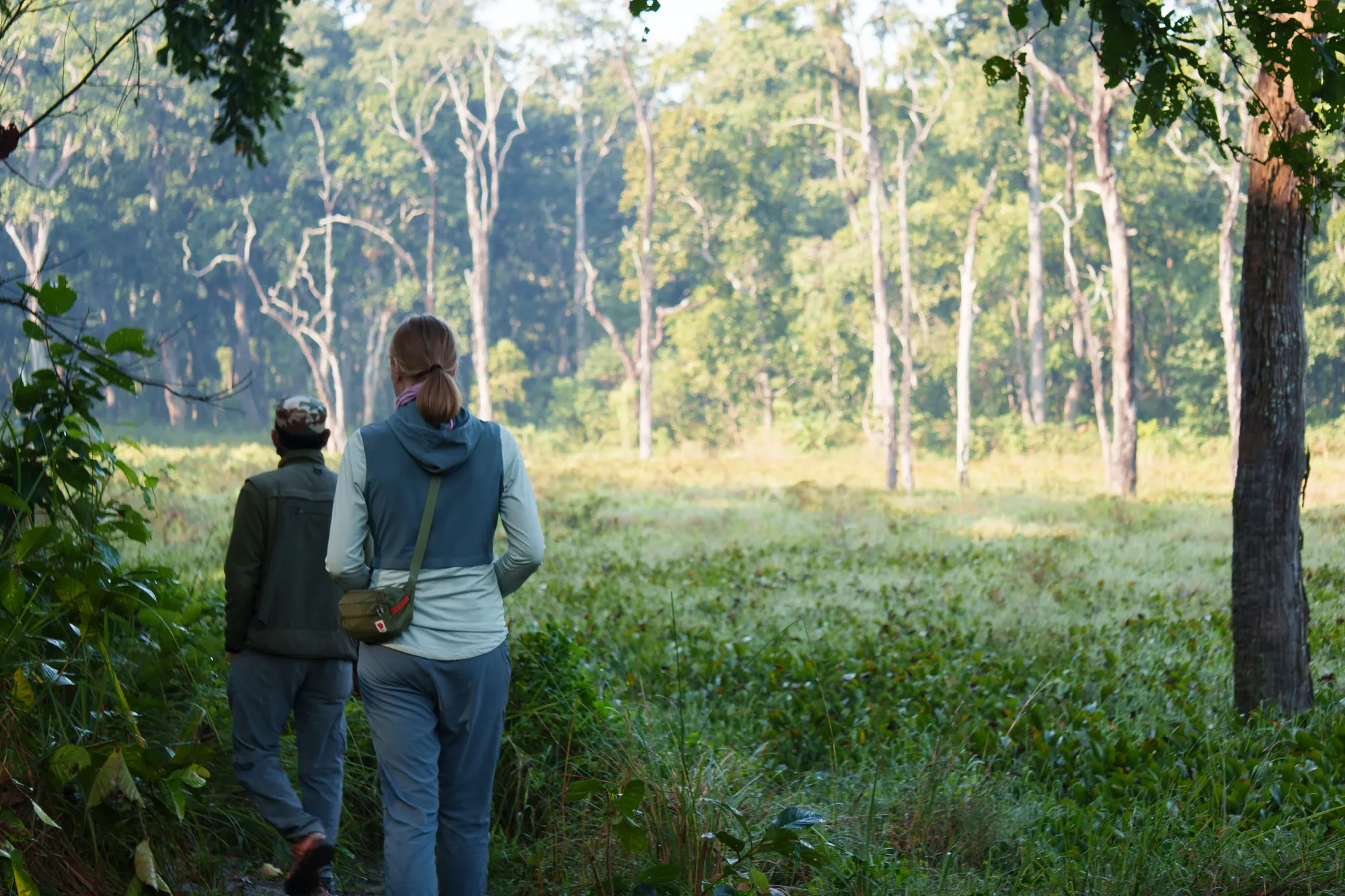
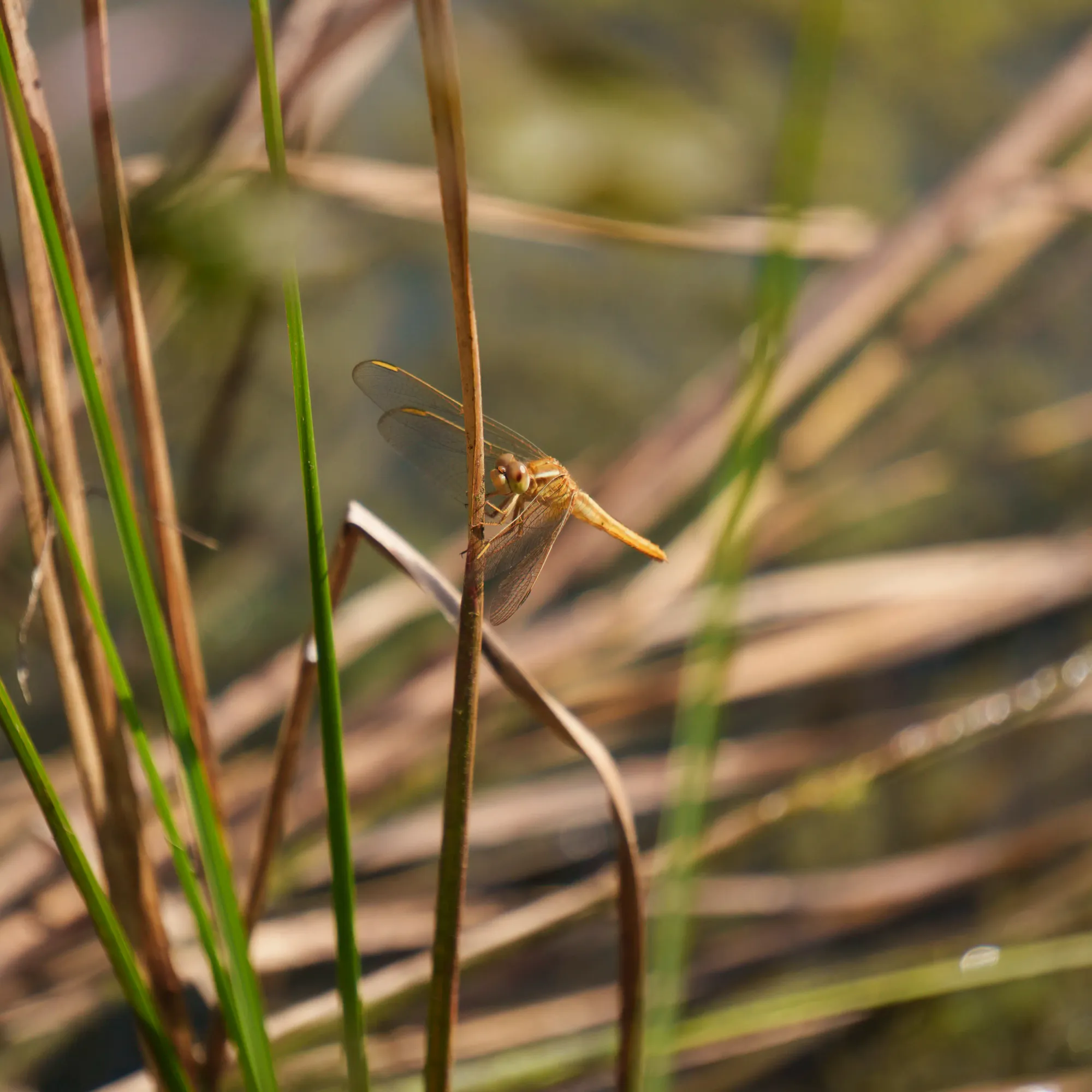
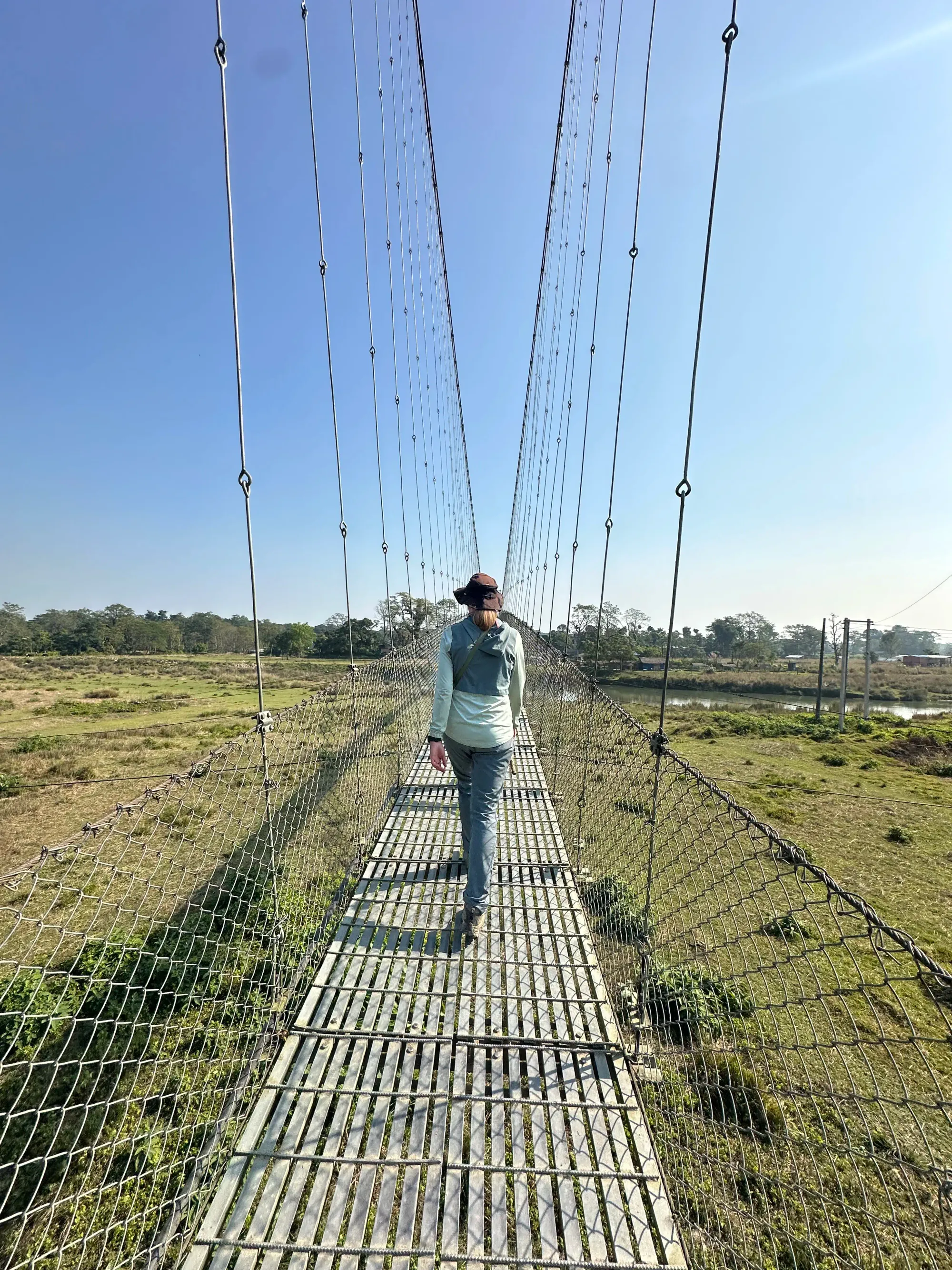
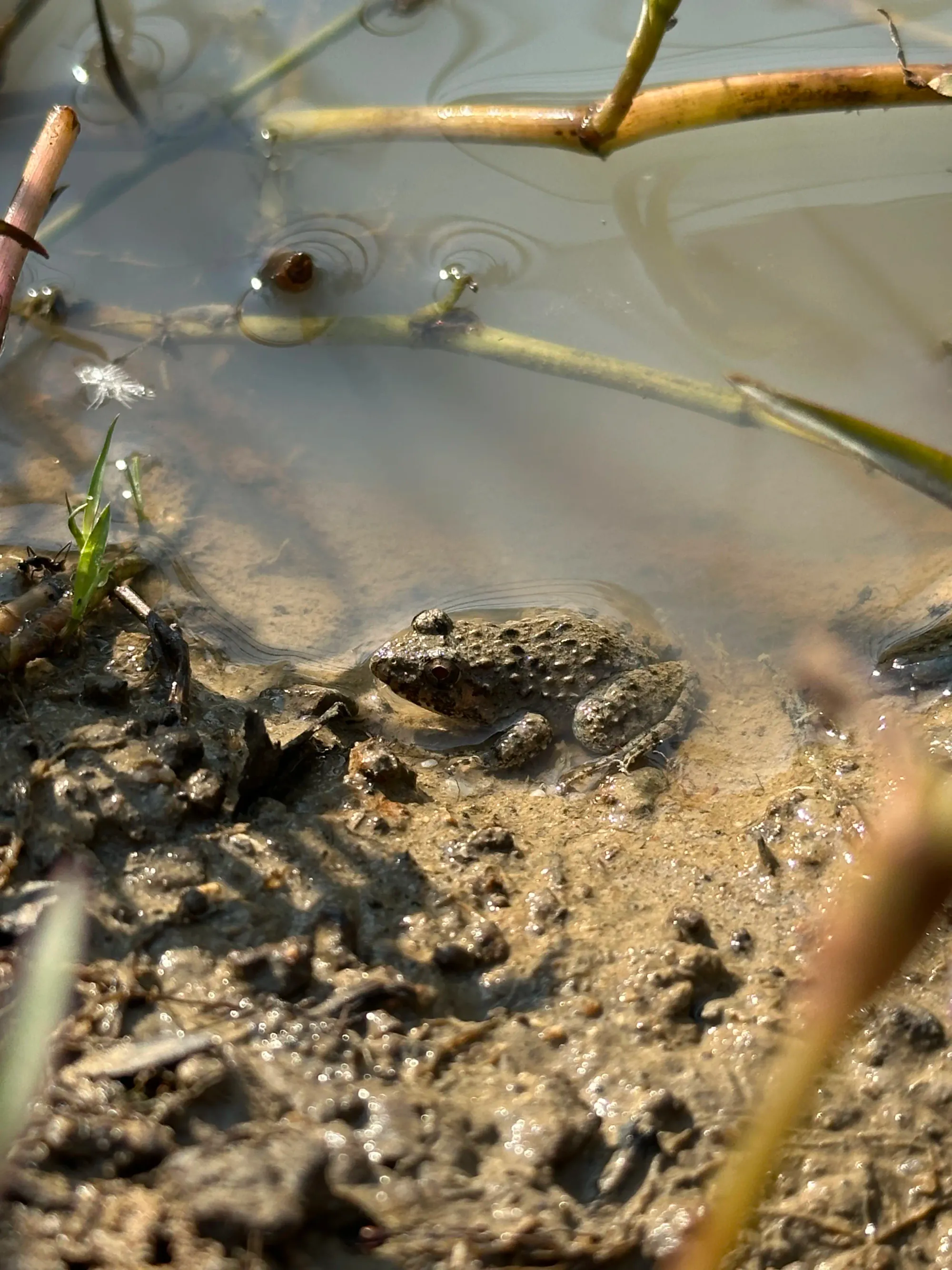
Chitwan was a spectacular blend of savanna and jungle. [📸 Johann & Rachel]
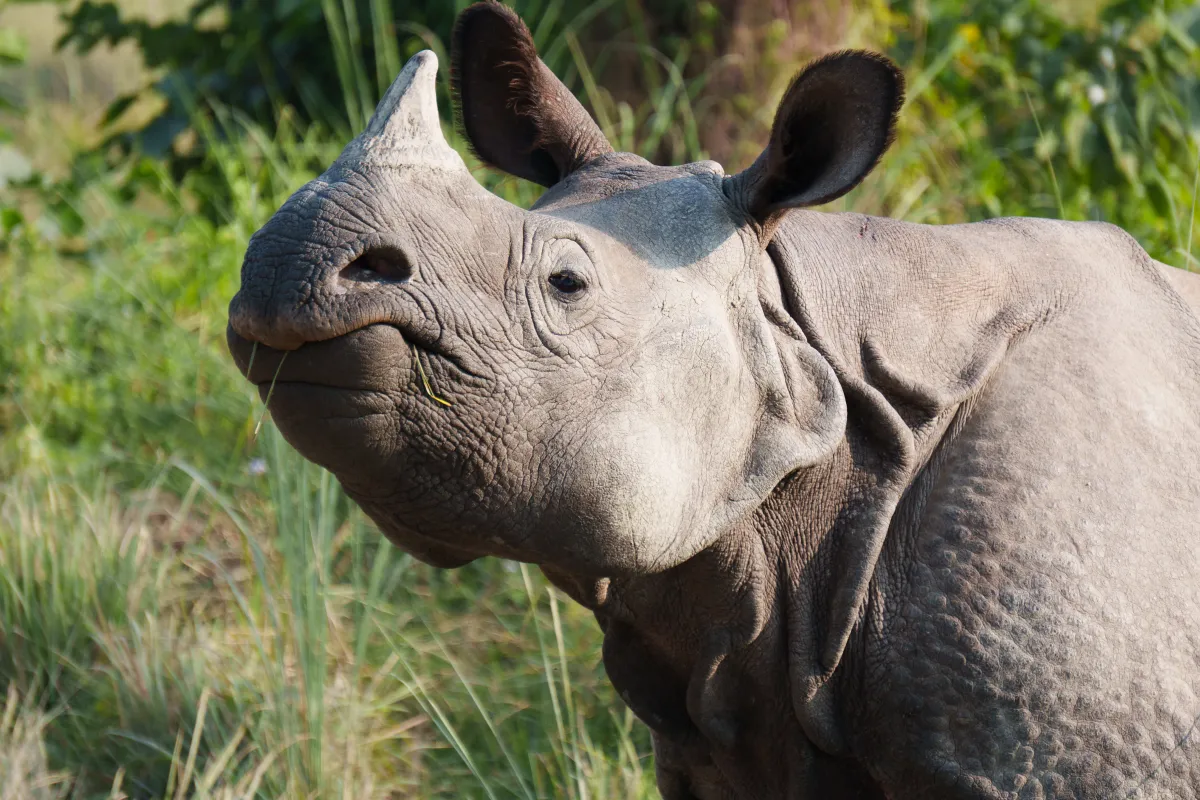
For better or worse, we only saw rhinos from the jeep. A mother and calf grazed on grass side by side, thick skin grey and wrinkled. One male crossed the road then pivoted to sniff the air; suddenly he thundered into the tall elephant grass and was gone. Another stood neck deep in a pool connected to a huge wetland complex, almost entirely obscured.
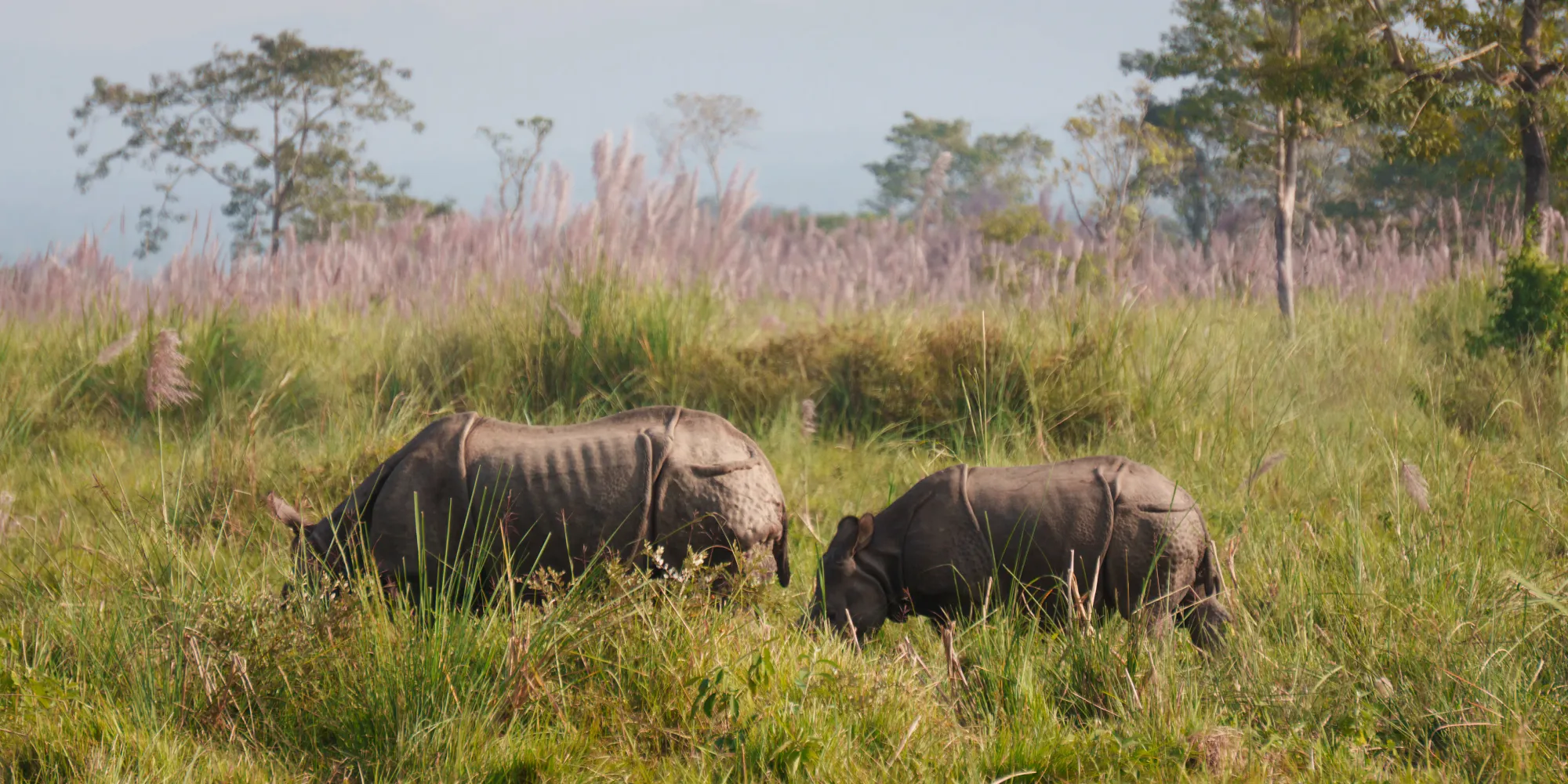
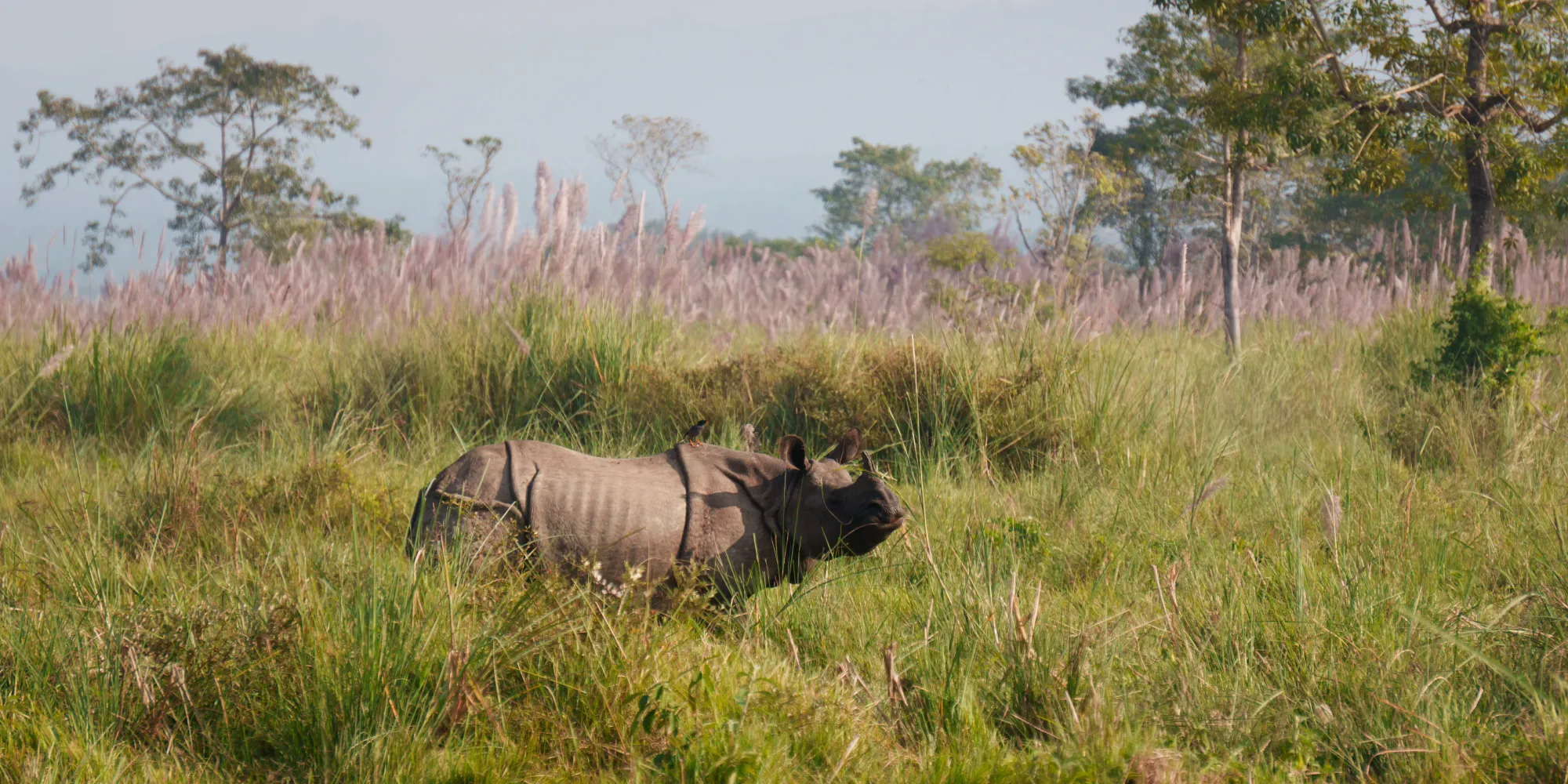
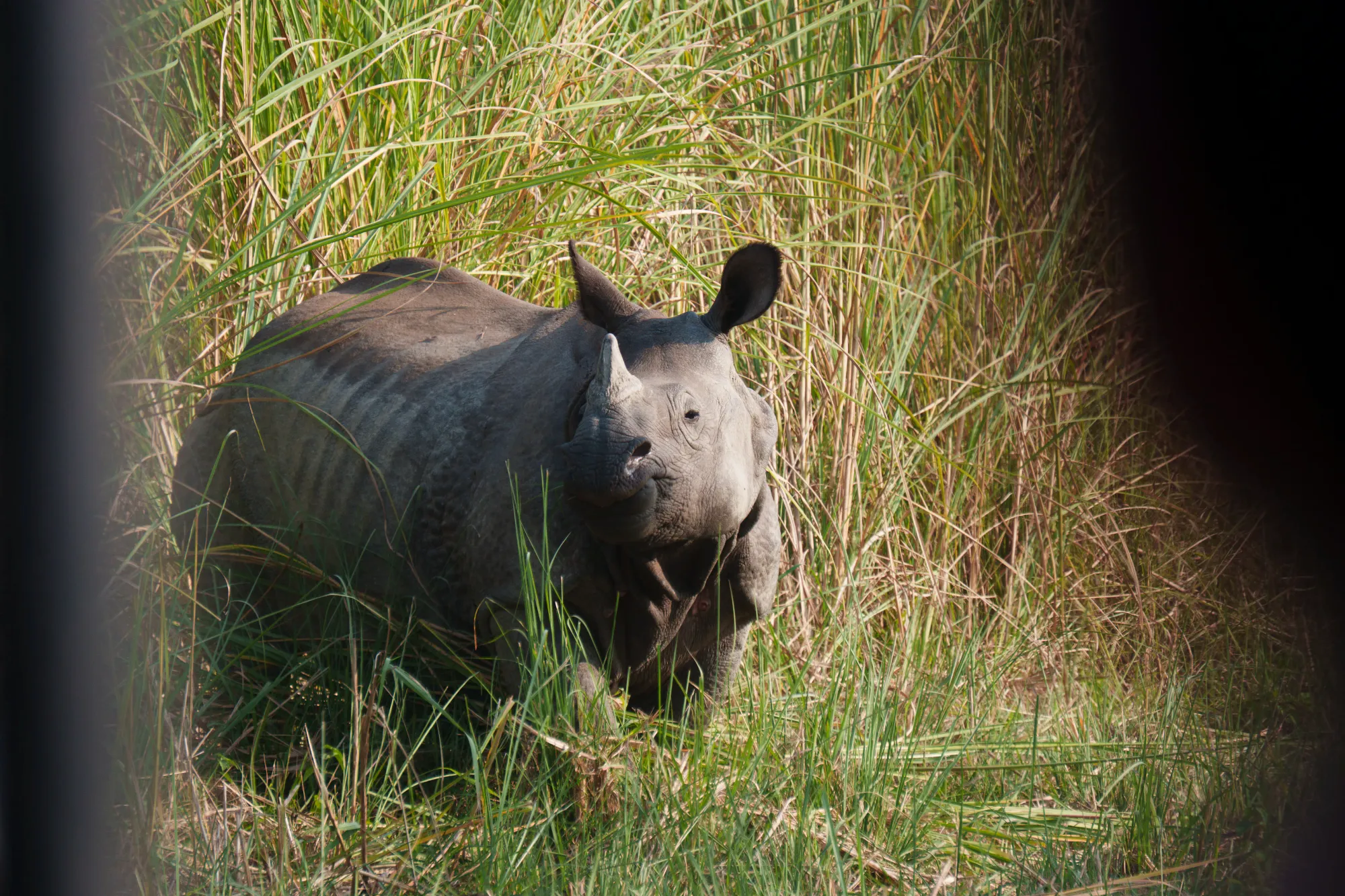
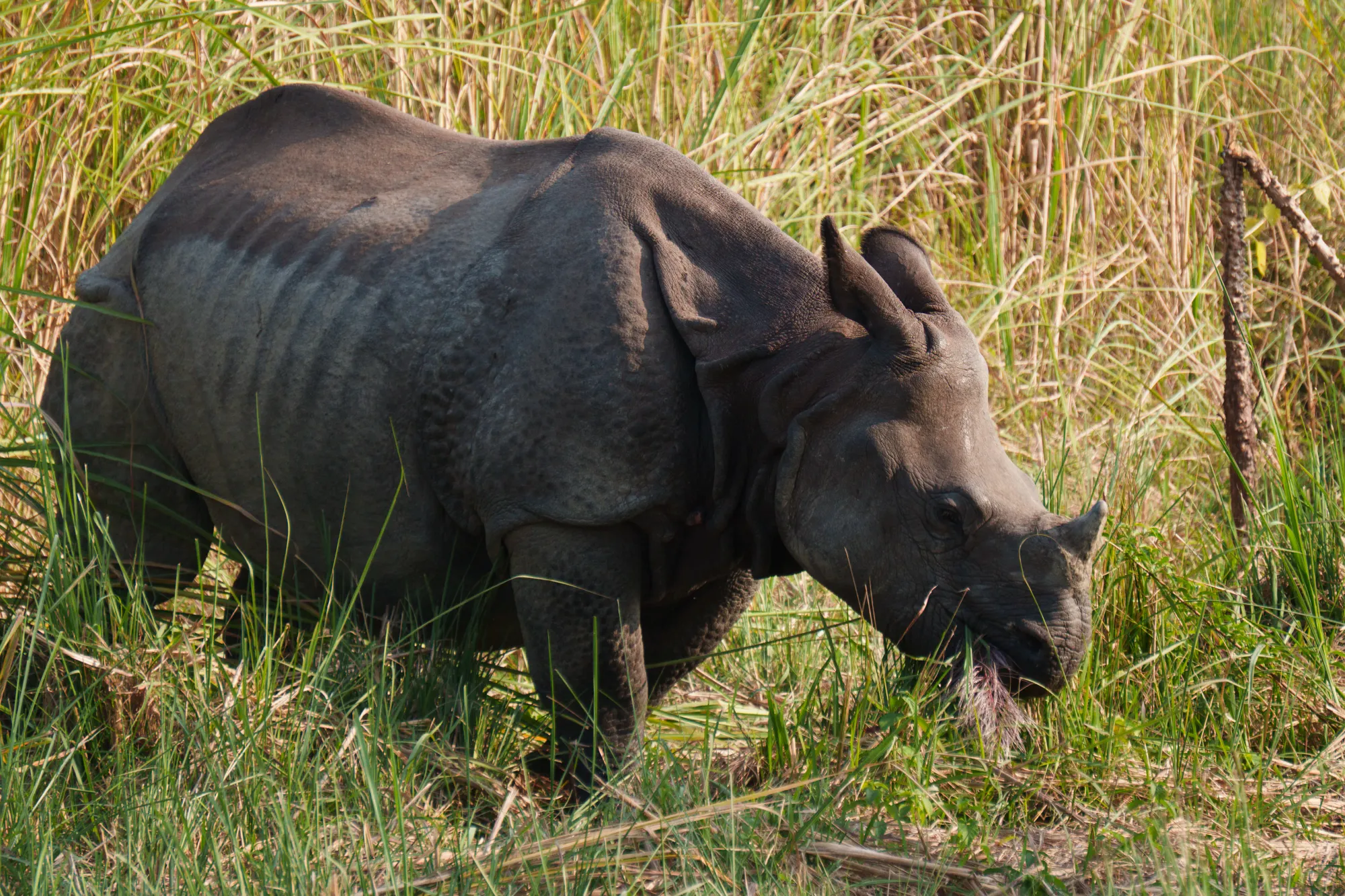
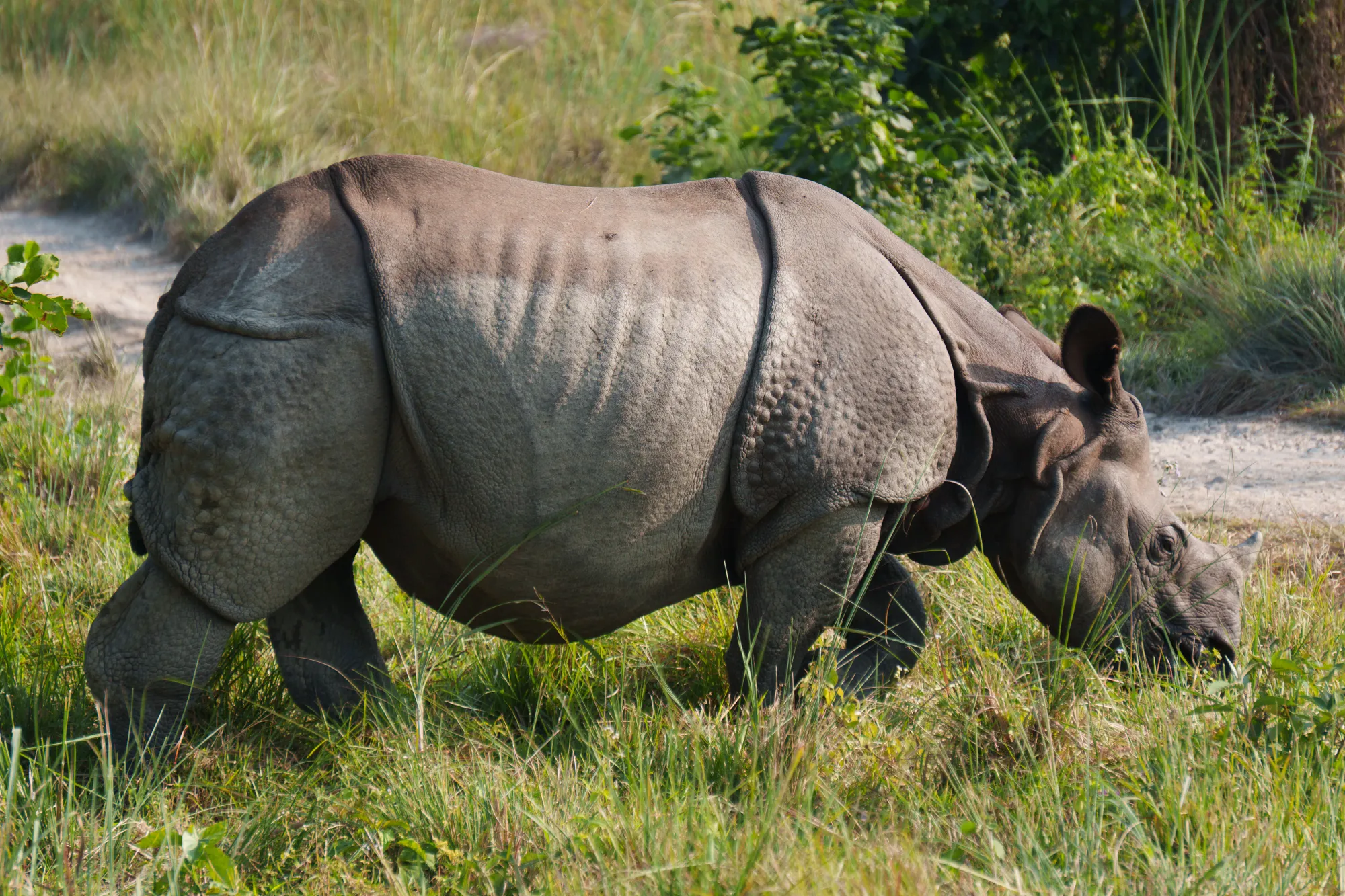
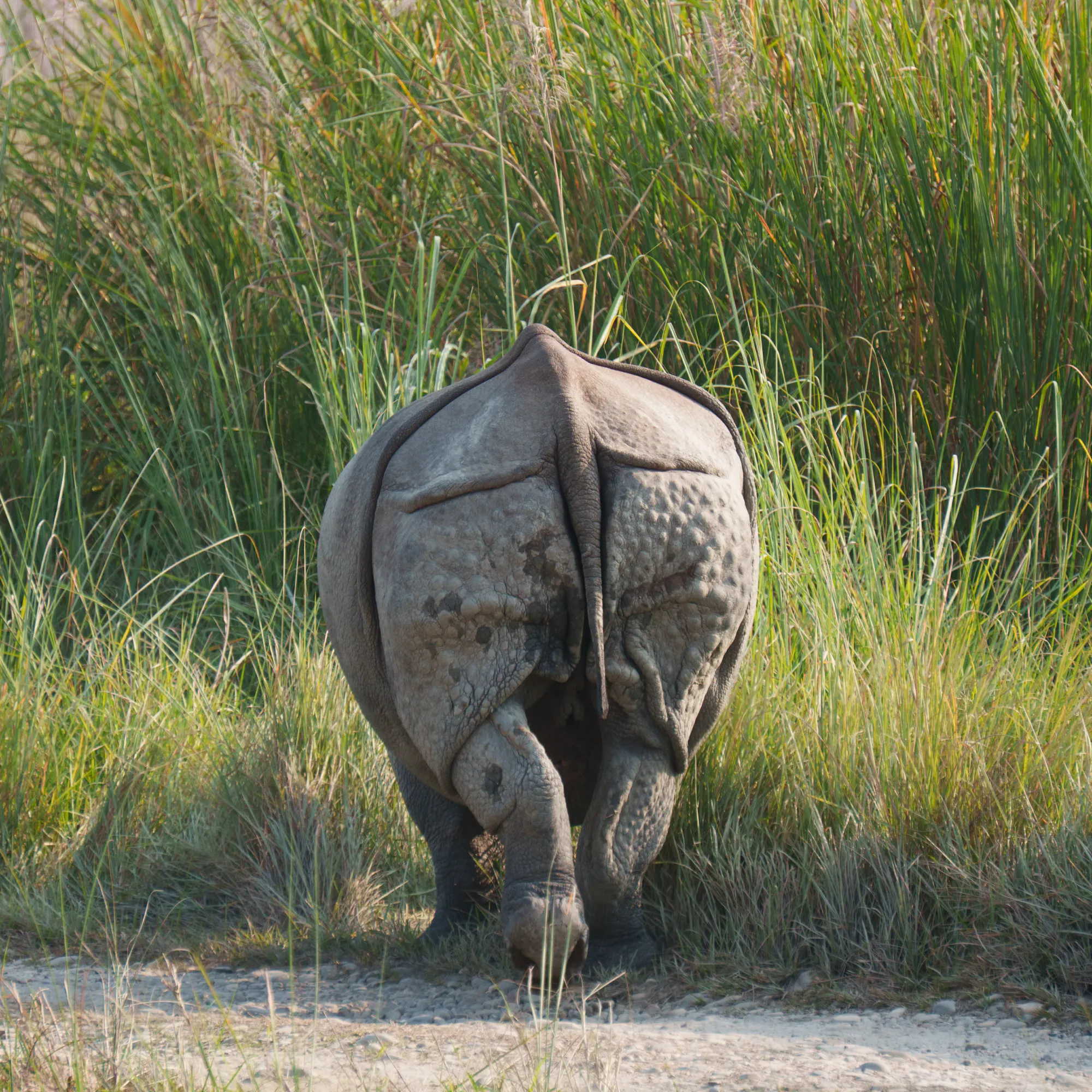
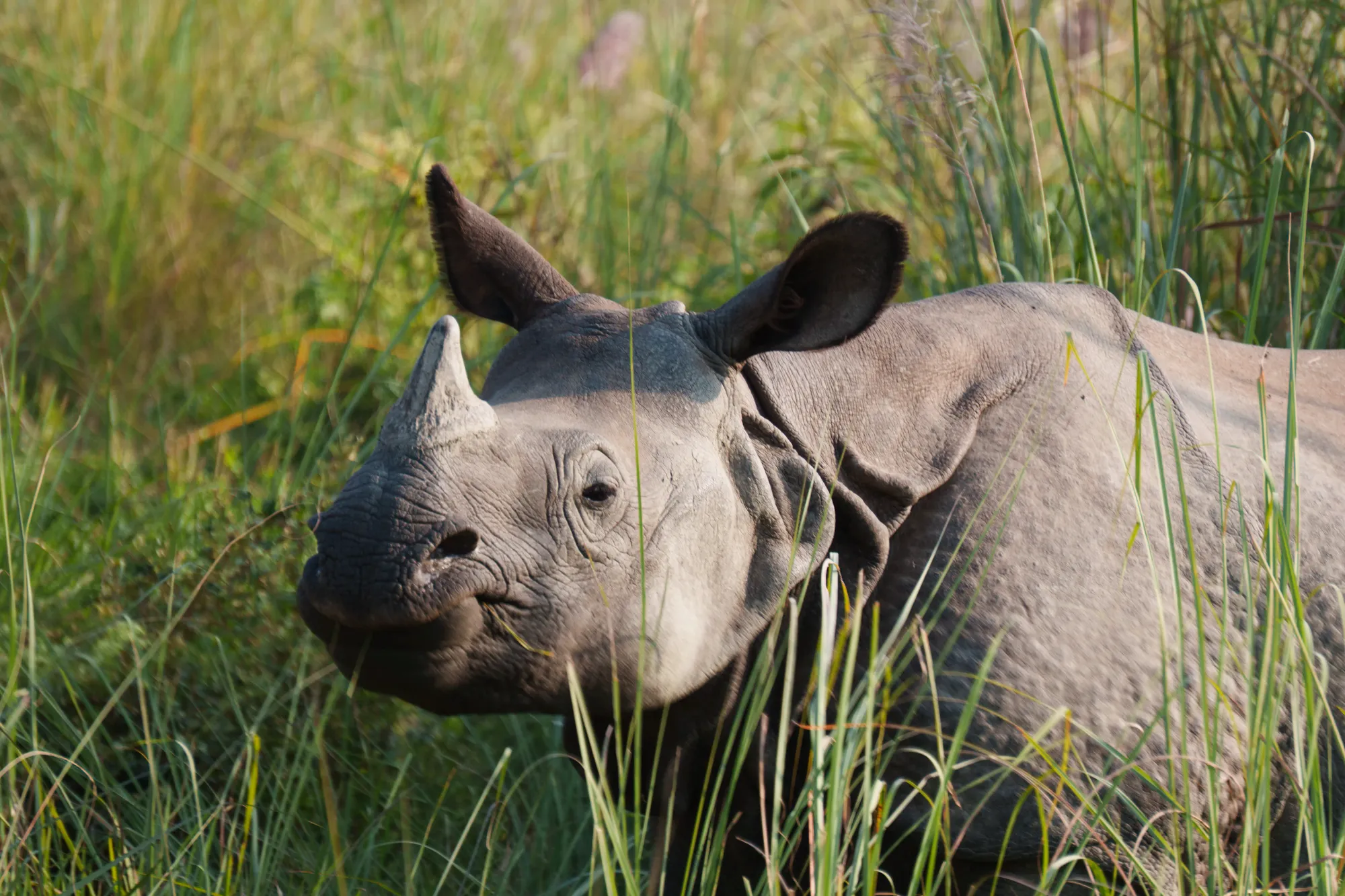
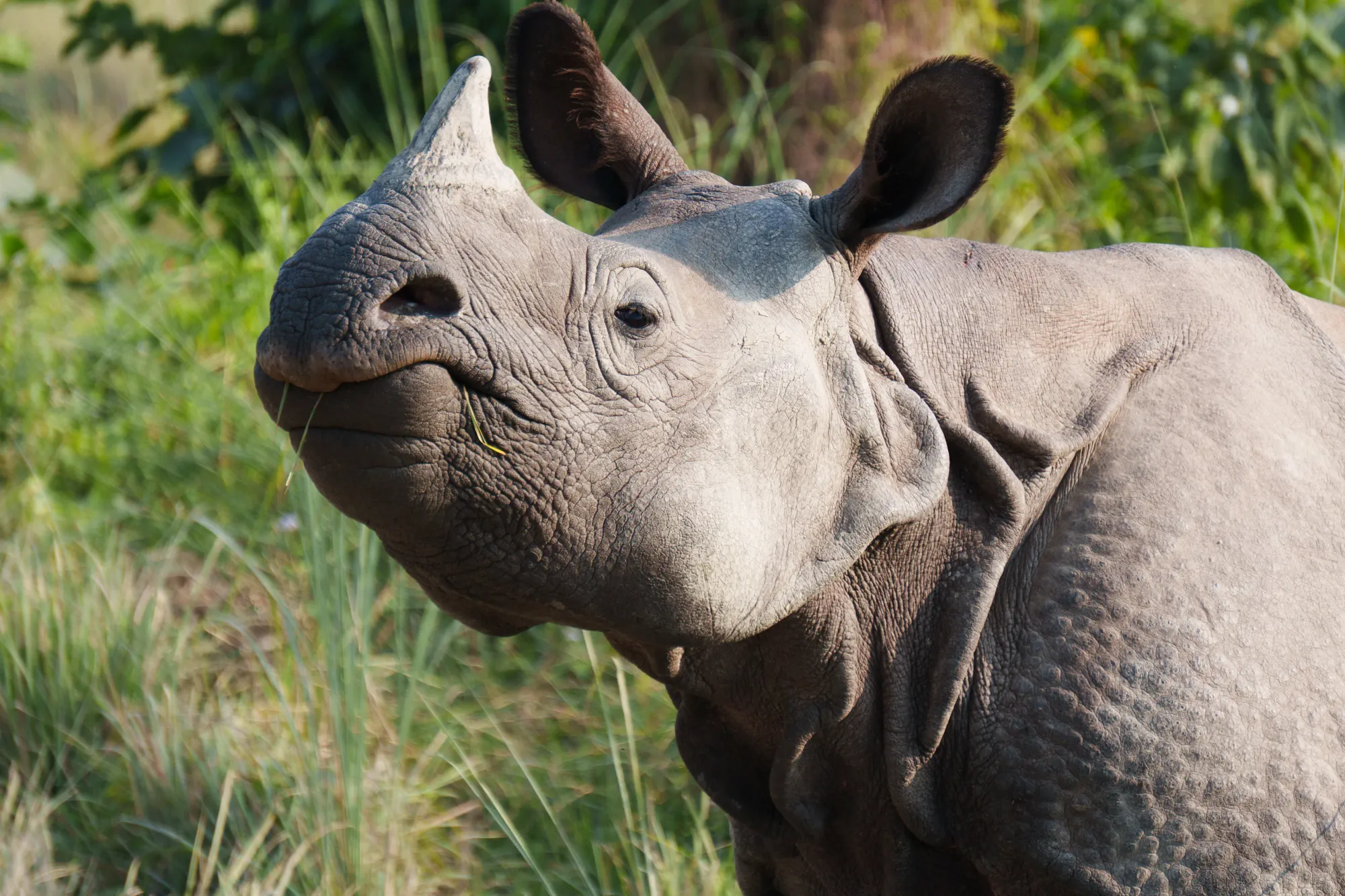
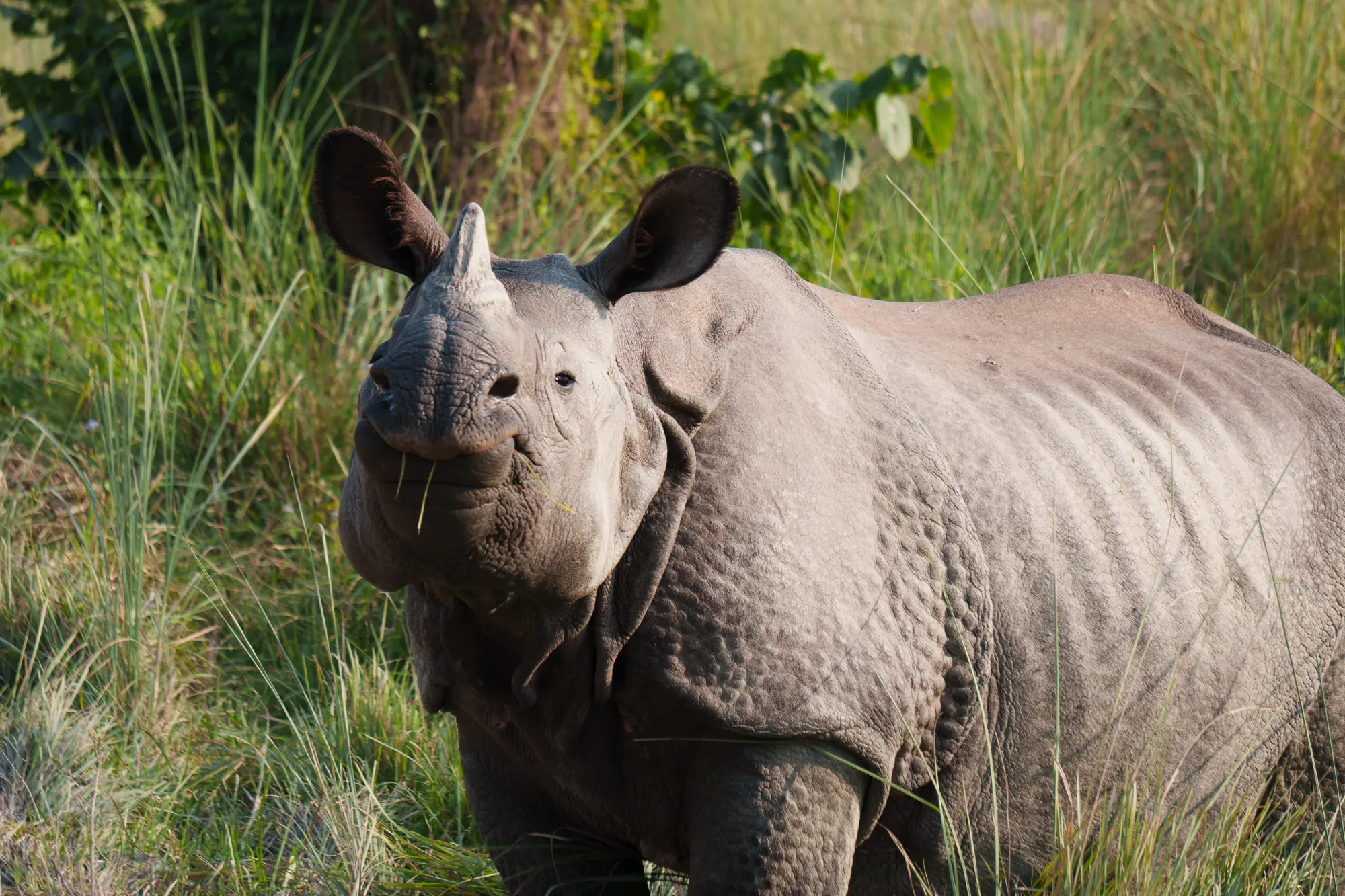
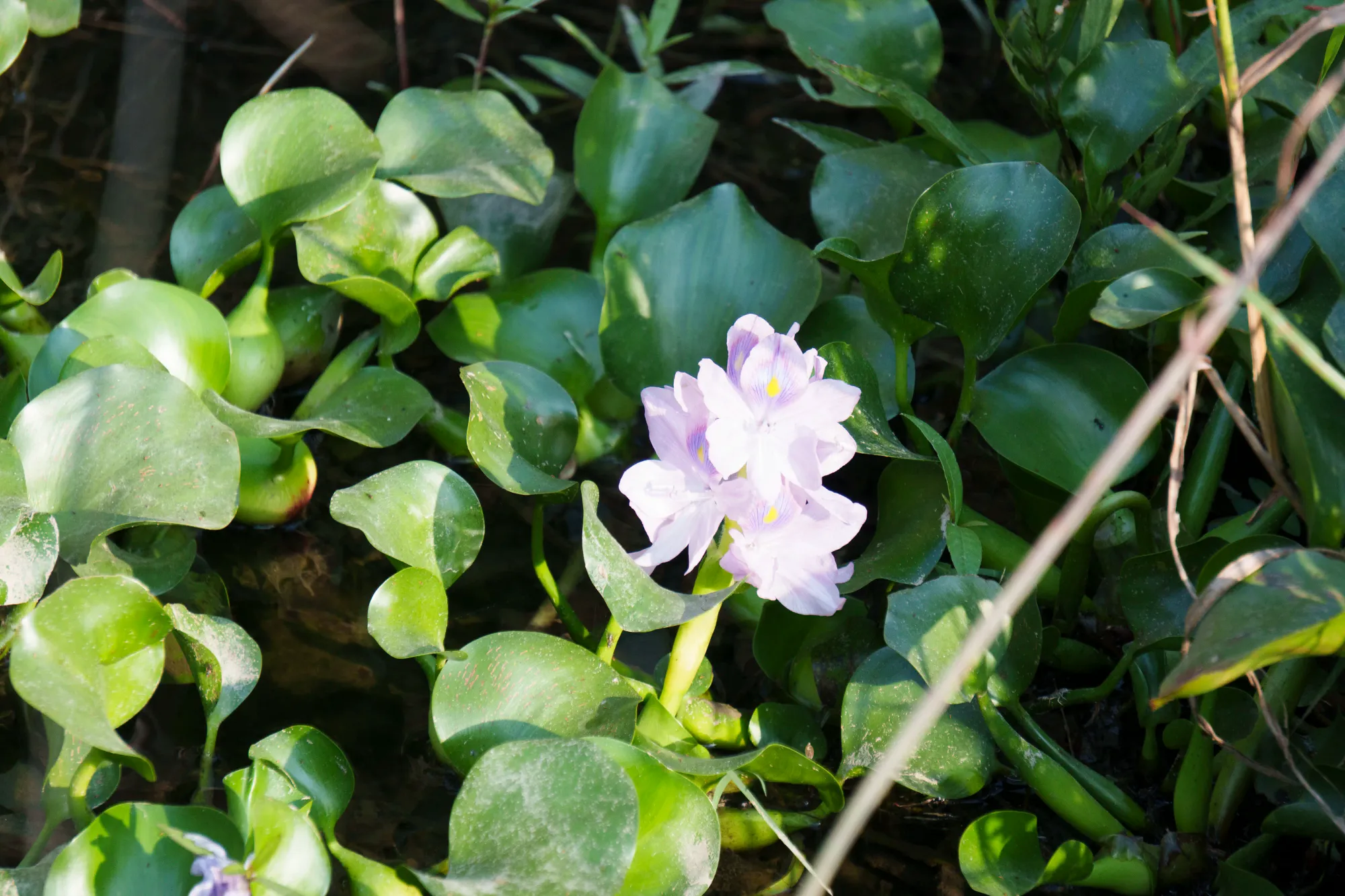
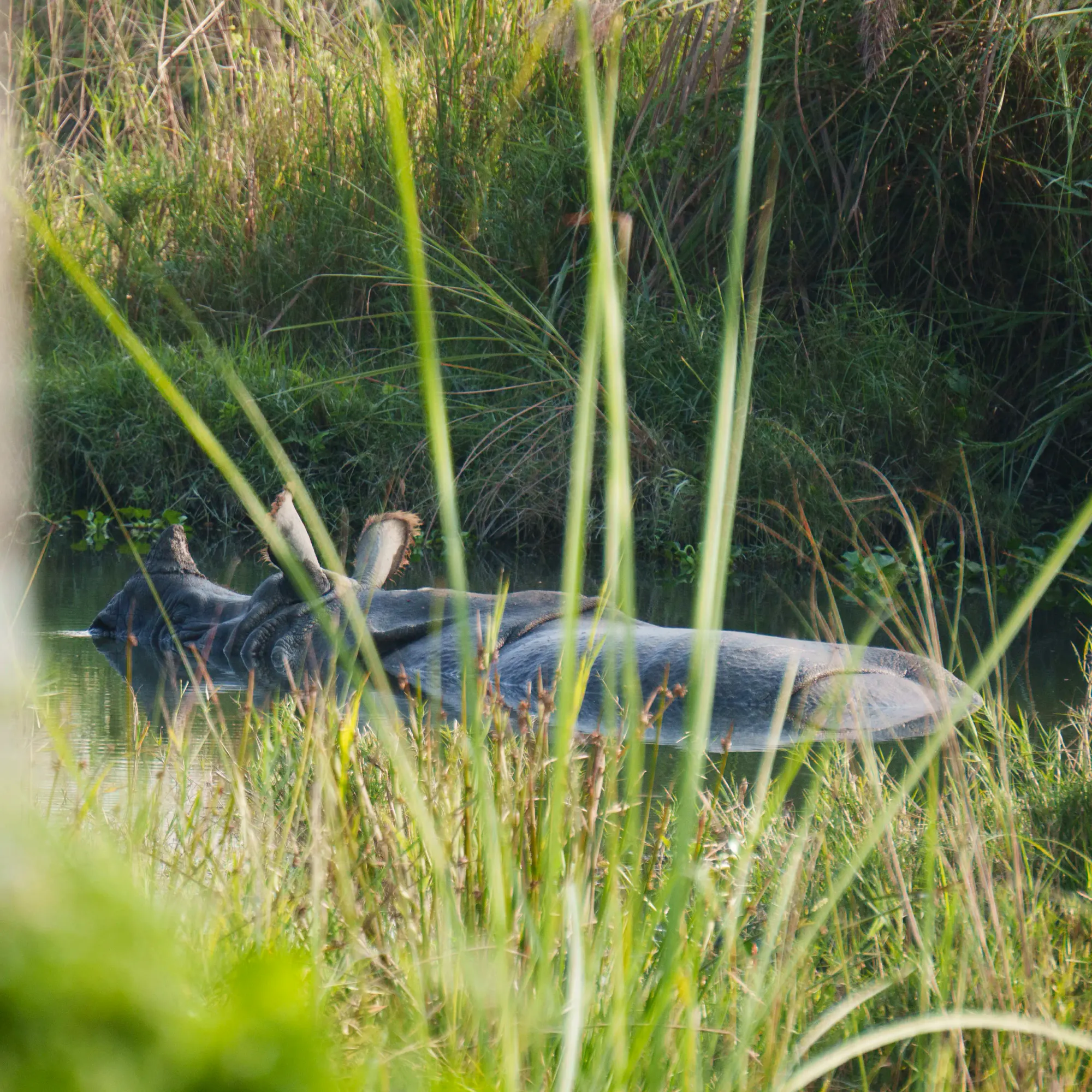
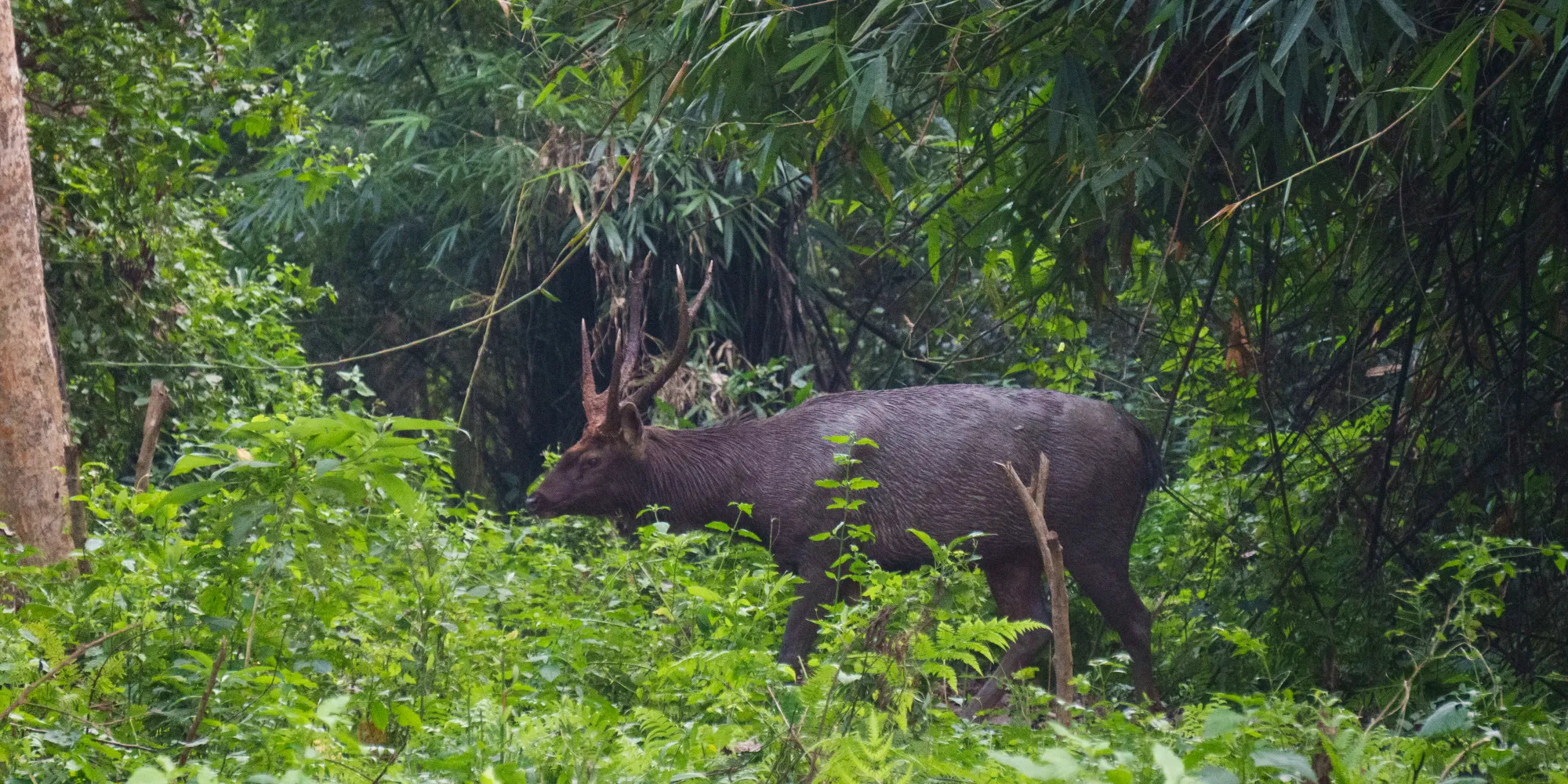
Johann couldn't sit for two days after that Jeep ride. [📸 Johann & Rachel]
We saw plenty of working Asian elephants in the Park. Park staff used them to help with land clearing, patrolling for poachers, and entertaining tourists. The Park had a small museum dedicated to elephants, showcasing their history as working animals in the region, and the processes of "breaking" them, caring for them, and training them.
Johann's thoughts on elephants (click here for rant)
Elephants have a long history of being used for service in Nepal and India, predating any colonial involvement or federalization. The local indigenous groups around Chitwan Park, for example, have long oral histories of breaking elephants, riding them, and using them for tasks. Even the Indus Valley civilization (2500-1500 B.C.) are known to have used domesticated elephants [Bist et al.]. Modern elephant practices in Chitwan incorporate many of their traditional rituals and techniques. In fact, the Nepalese government (not tourism companies!) owns the majority of the elephants in the area, and maintains strict controls on their health and their associated cultural practices.
Within the park, elephant handlers ride on litters made of wicker, leather, and wood. The litters are designed for minimal strain and pain for the elephants. They are used for tasks such as land maintenance, patrolling for poachers, and even light construction. These elephants live on a diet of leaves and grass, with the occasional bundle of fresh-cut sweet grass as a treat. When not in use, they are kept chained safely under a shelter, itself surrounded by electric fences.
Outside of the park, tourism companies saddle their elephants with larger litters, which are known to often overburden the elephants [Kontogeorgopoulos, 2019, doi:0.5040/9781978729643.ch-003]. Many elephants serving in tourism are illegally imported into Nepal [Szydlowski, 2021]. We did everything we could to avoid the elephant tourism business.
Elephants in Nepal are in a very complicated situation. This paper [doi:10.3390/ani14010171] has a good, balanced overview of the situation, highlighting the conservation efforts in the Chitwan area, but also health and safety issues that the elephants face. But you should do some of your own research on this as well!
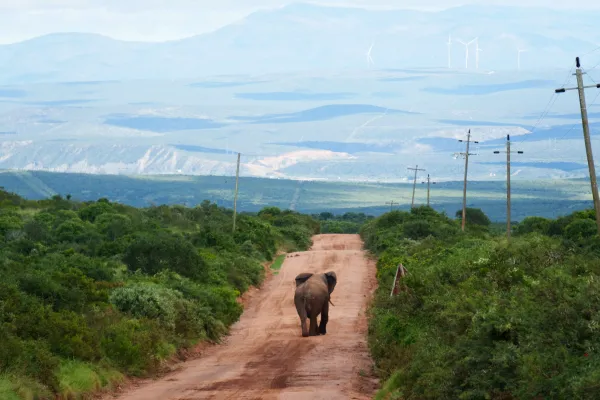
Personally, I (Johann) felt a bit uncomfortable seeing the elephants in chains and used for government and tourism purposes. I have been fortunate enough to visit the African elephants in the Kruger and Addo Elephant Parks multiple times. When picturing an elephant, I've always pictured them. African elephants are almost never domesticated, and I was brought up with an understanding that they shouldn't be - they should be respected, protected, and free.
This does not mean that I think that Chitwan's use of elephants is wrong - it is far more complicated than that. As a Canadian that shares nothing of Nepali culture and who is not deeply involved in Asian elephant conservation, it would be invalid for me to pass such harsh judgment on the matter. I am merely a mechanical engineer-in-training, specializing in building-related things, and am of South African descent. I know a lot about ducts, pipes, and biltong, but not much about the anthrozoologic and conservational conversations around Nepali elephants.
So take this merely as a data point - that I personally felt uncomfortable seeing the elephants treated in this way - and do some of your own scholarly research. And below, enjoy the photographs we captured of them. The elephants are all objectively beautiful.
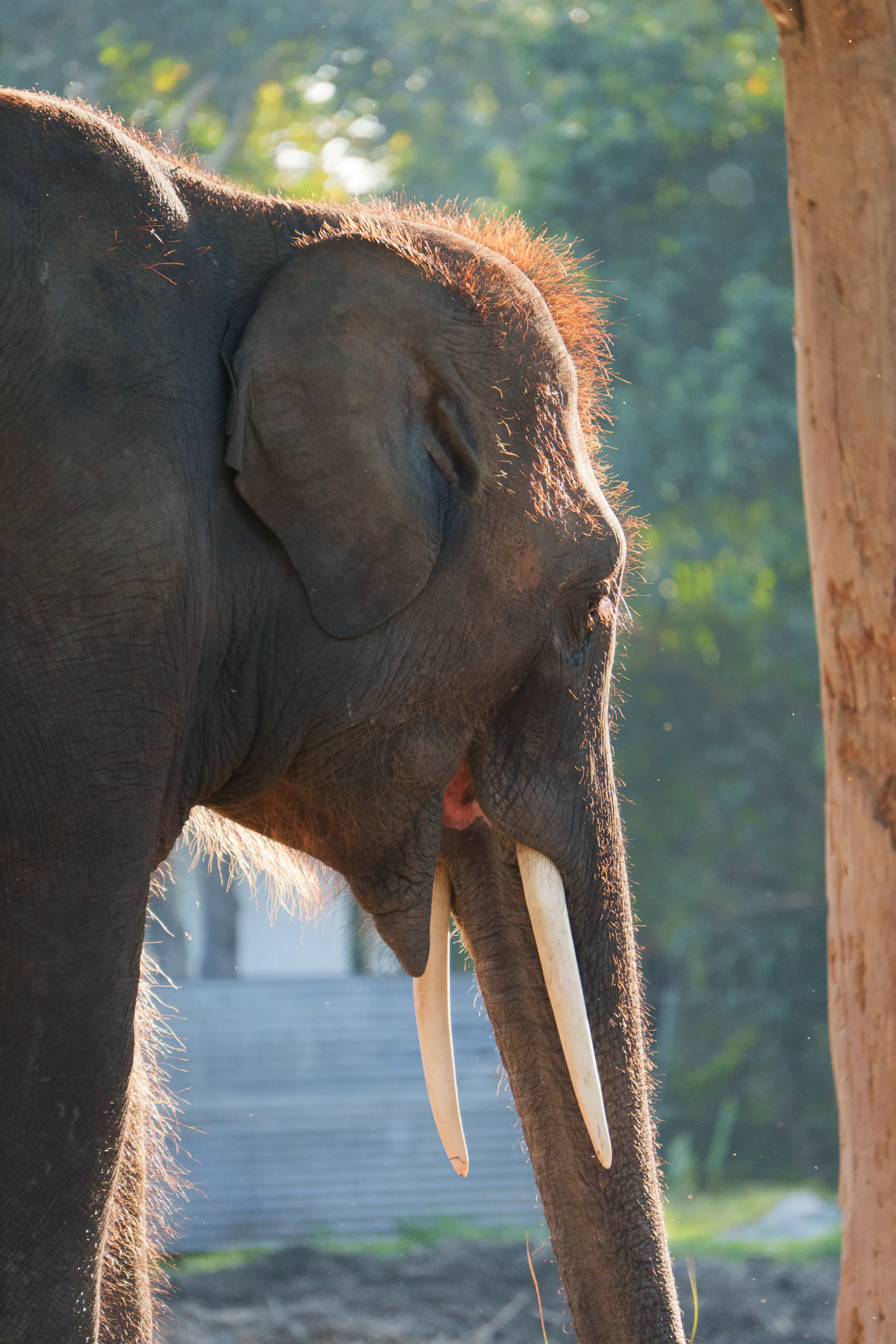
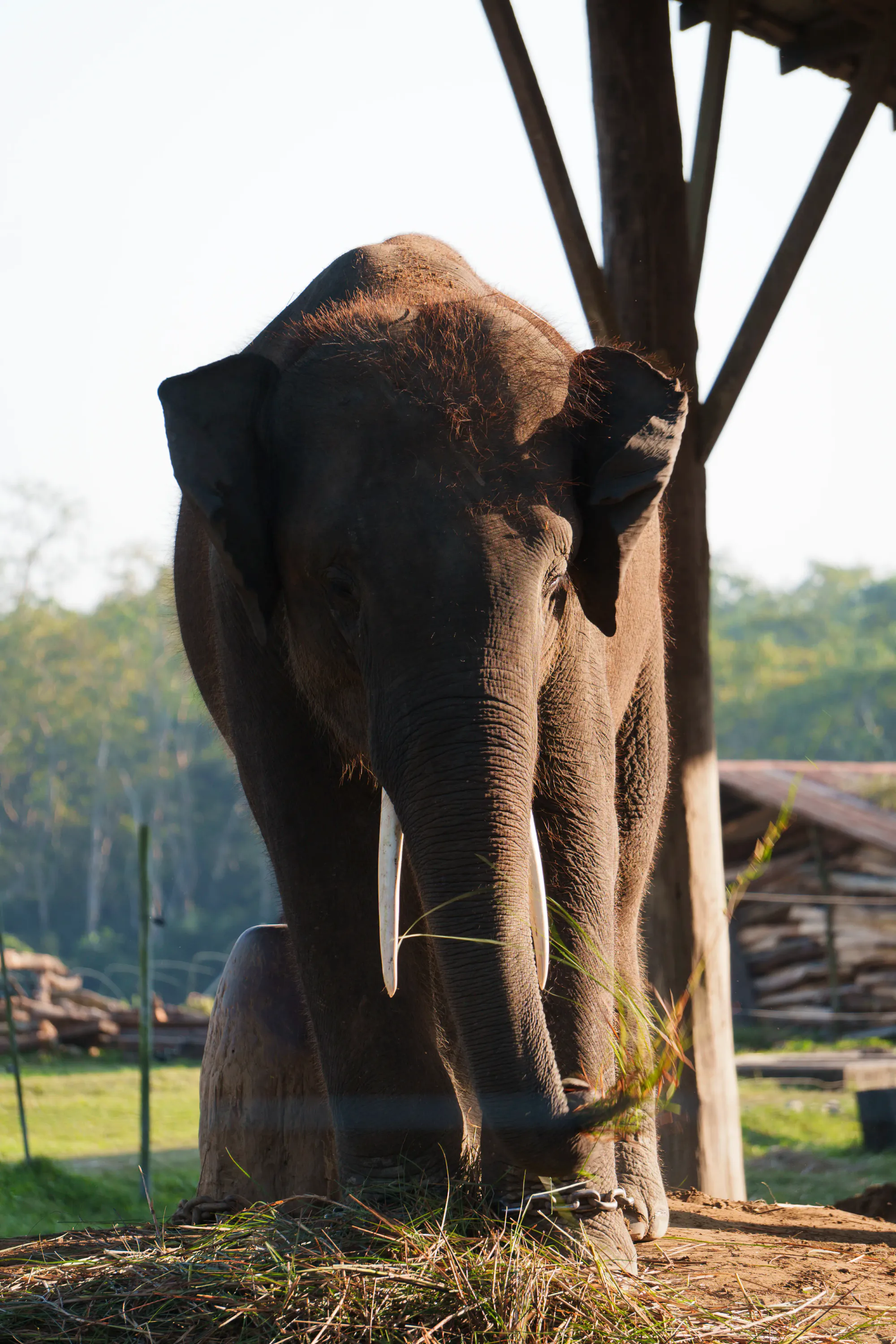
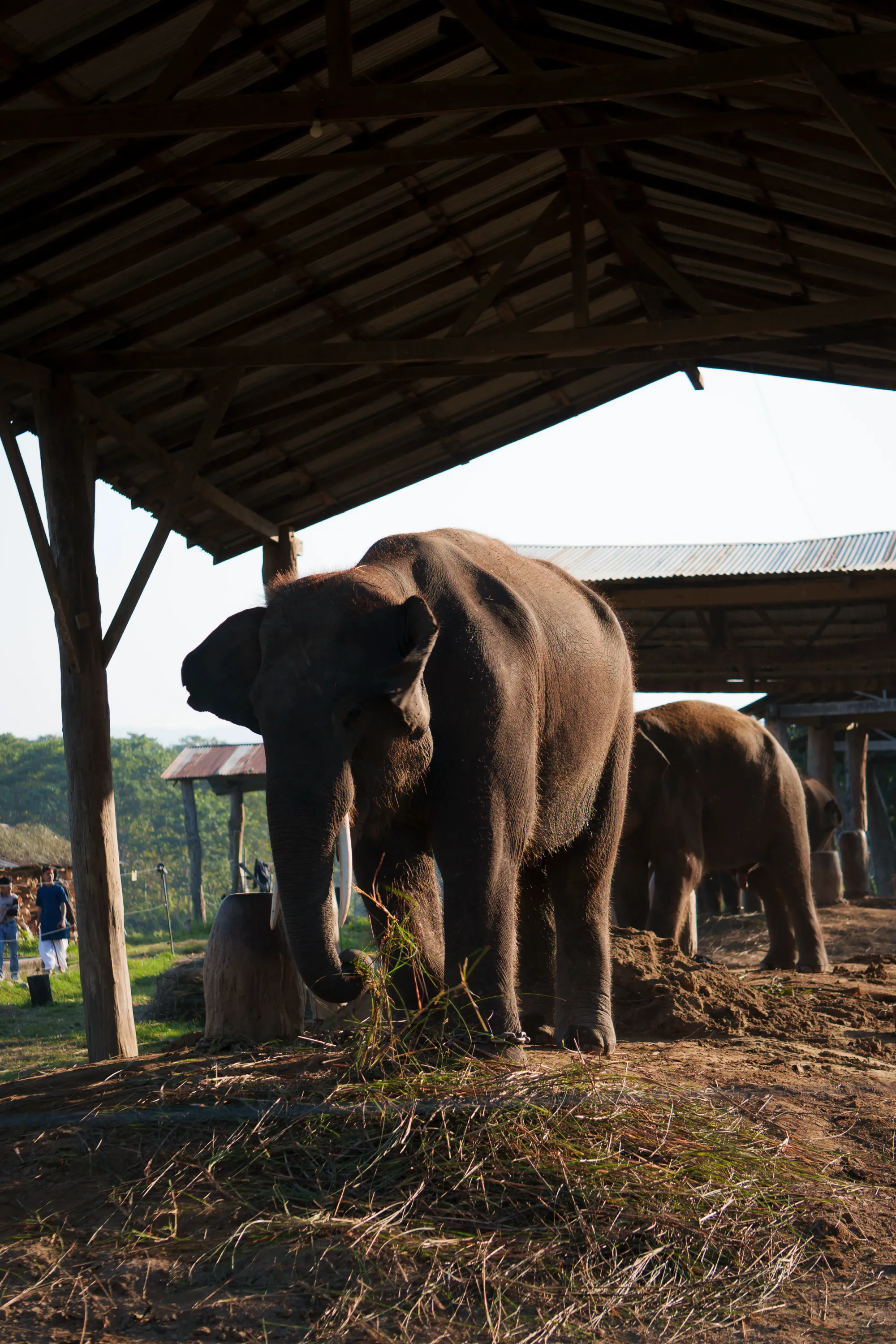
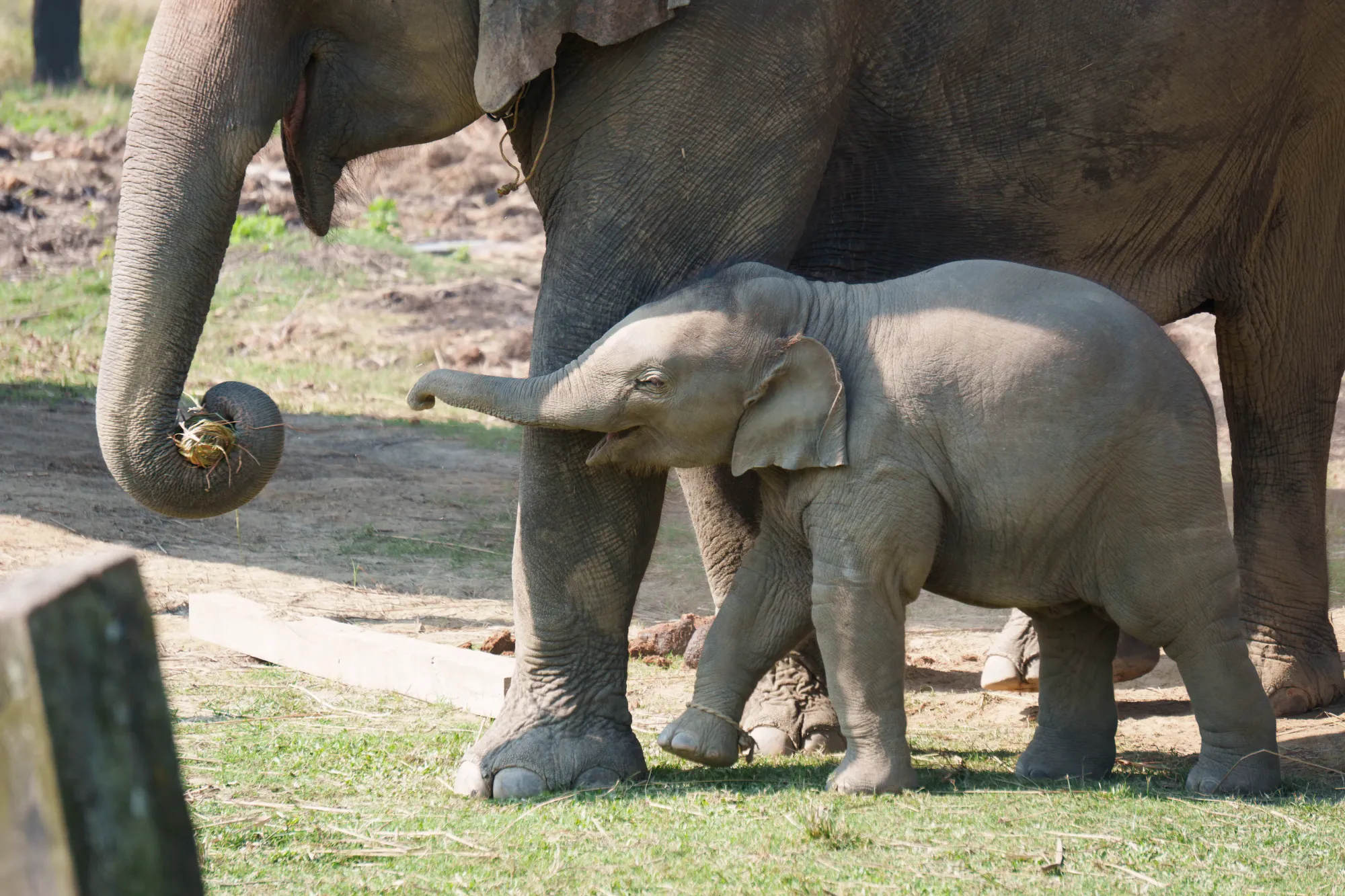
Baby elephants are some of the cutest animals in this world, and you can't convince me otherwise. [📸 Johann & Rachel]
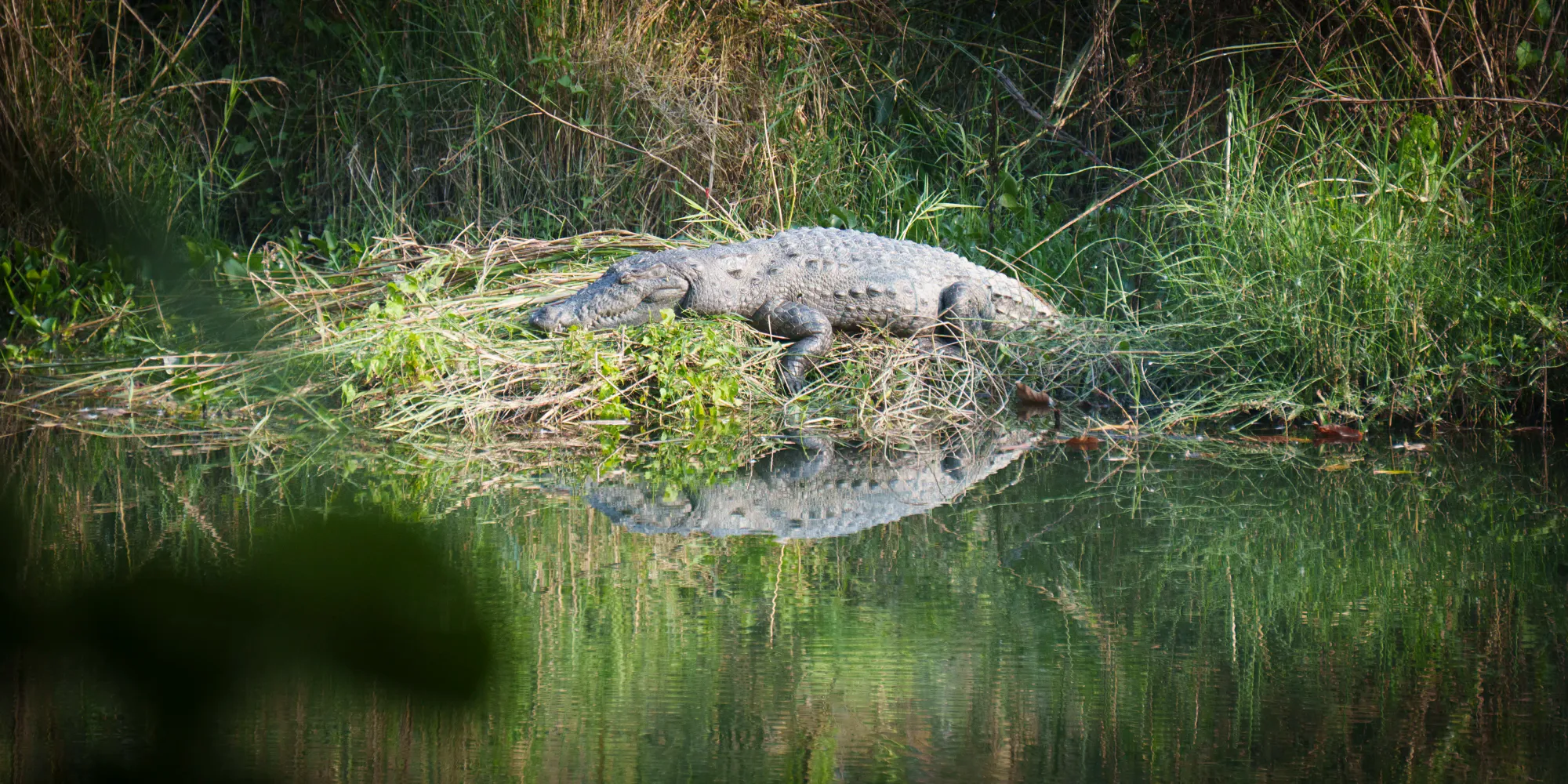
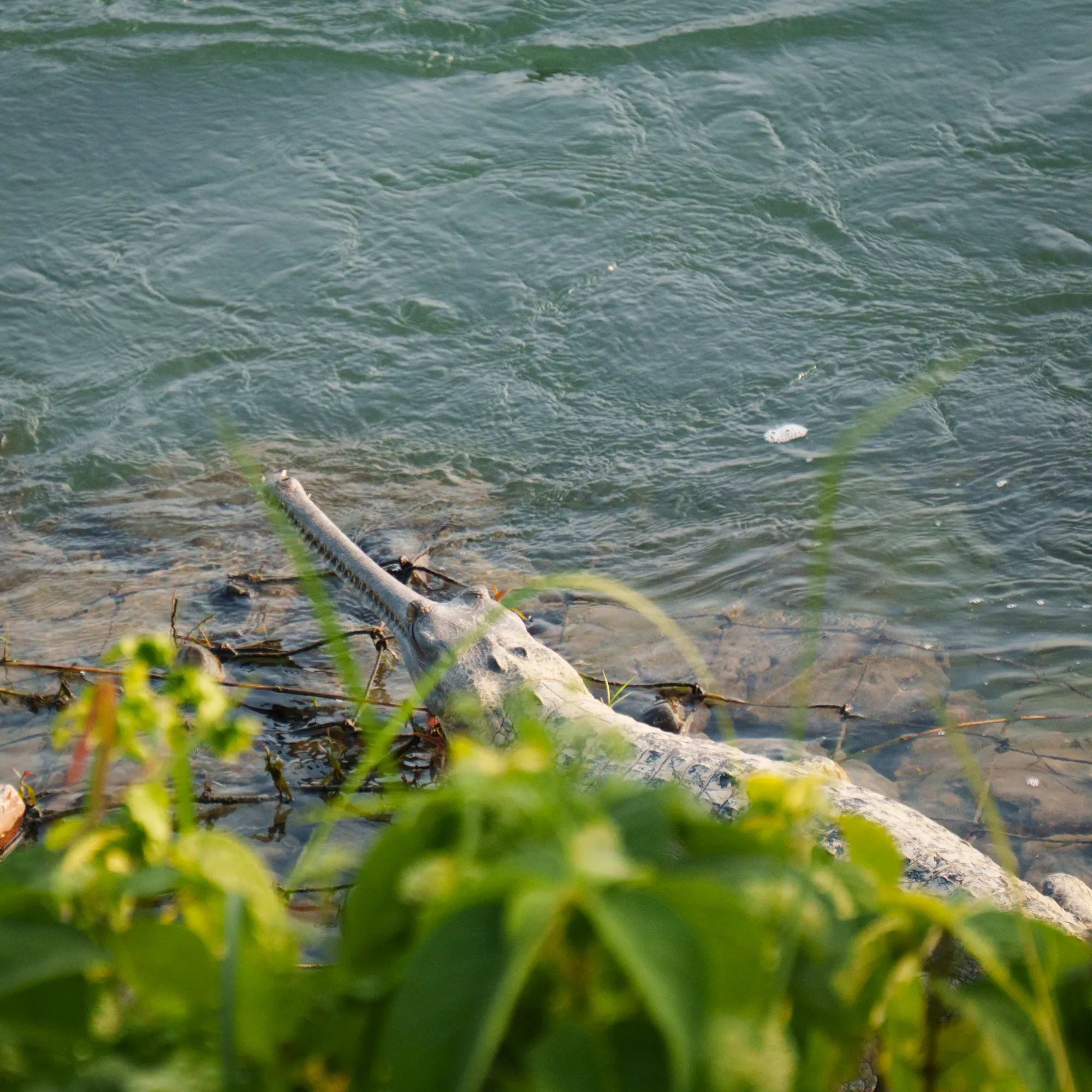
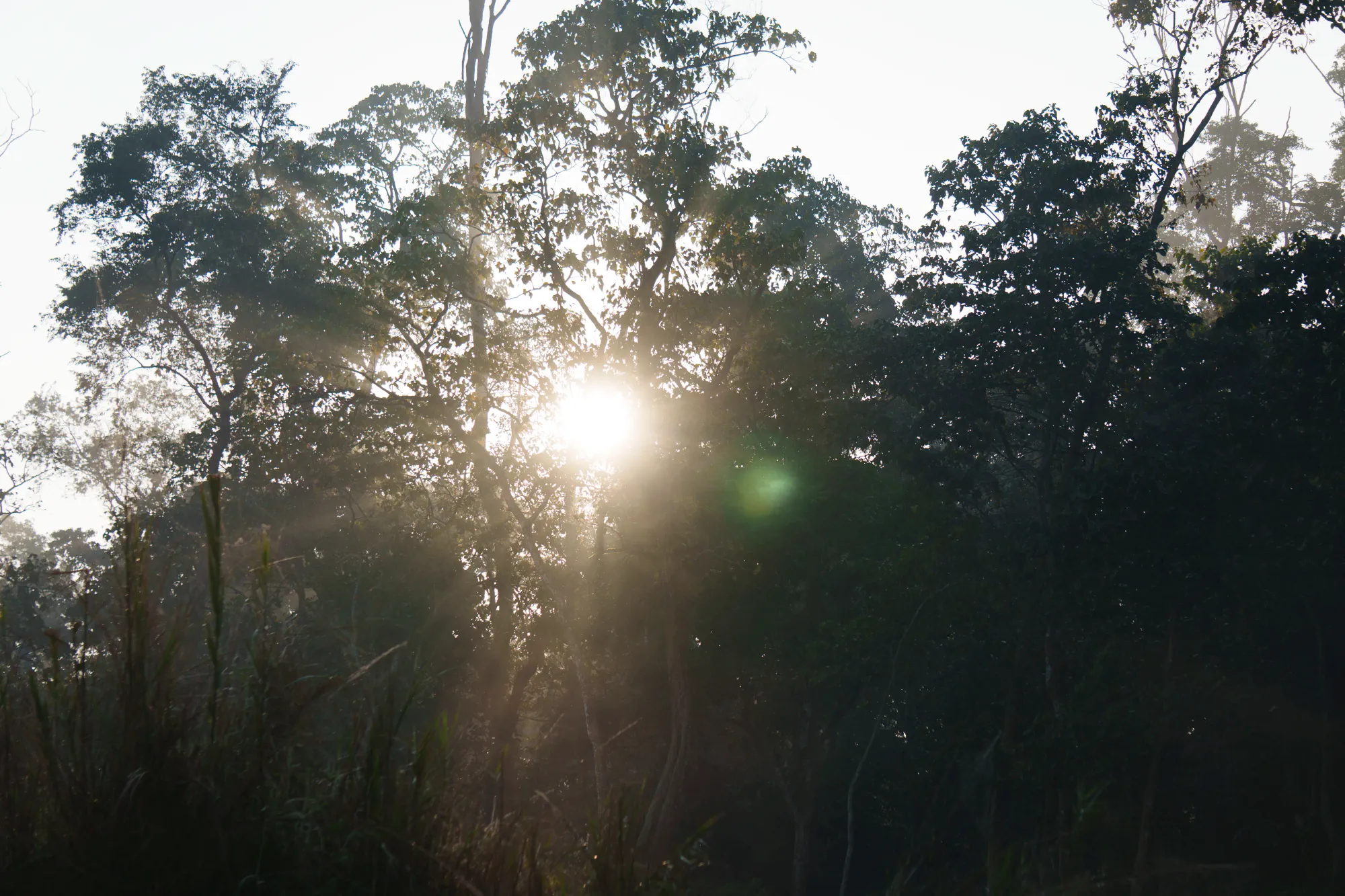
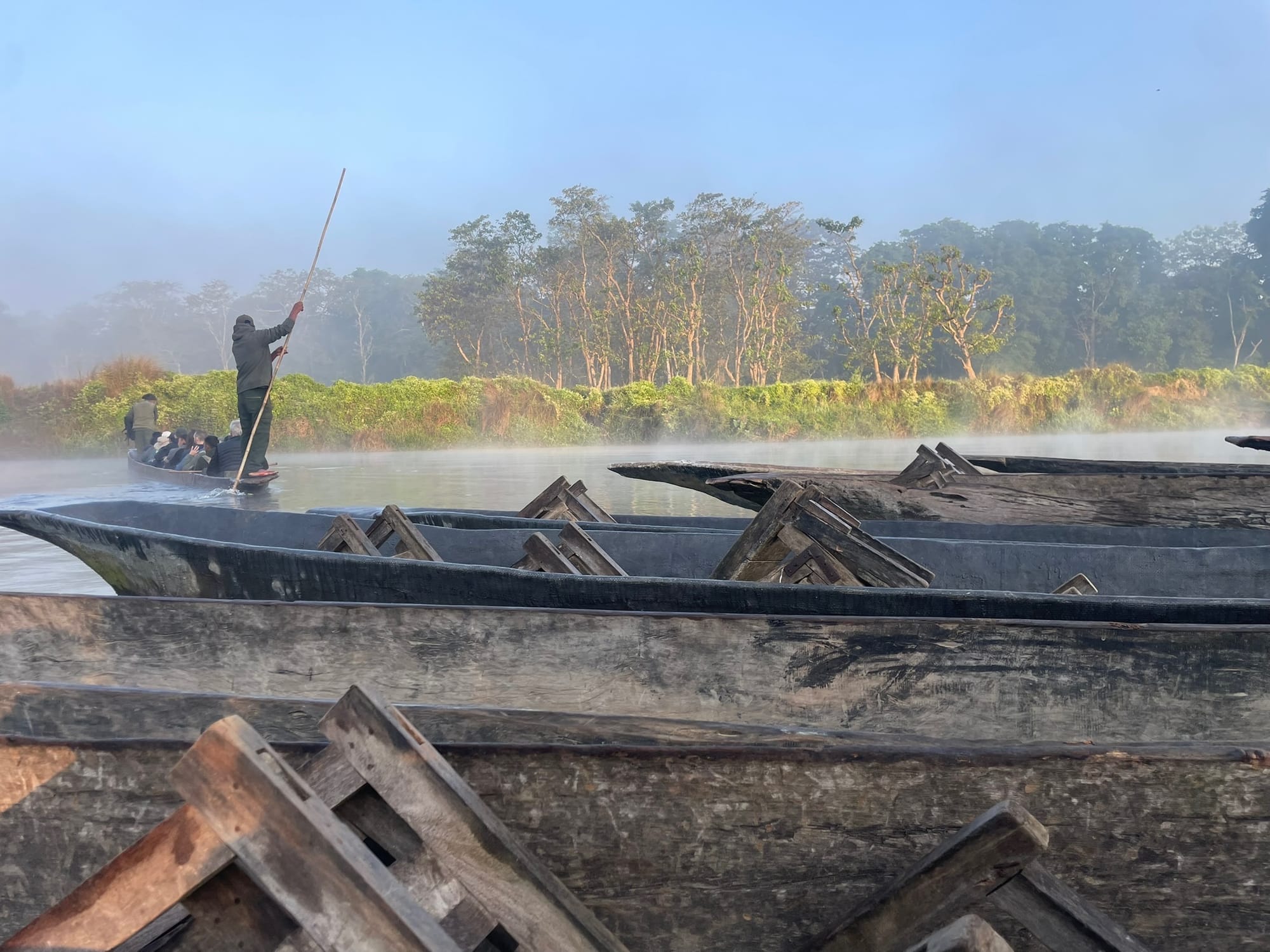
At dawn, we climbed into the bottom of a dugout canoe, and the boatman pushed off into the current with a long pole. Fine mist rose above the water, which lapped a mere half a foot beneath the canoe's rim. Rocky alligator eyes peered just above the water's surface, bodies hidden underneath.
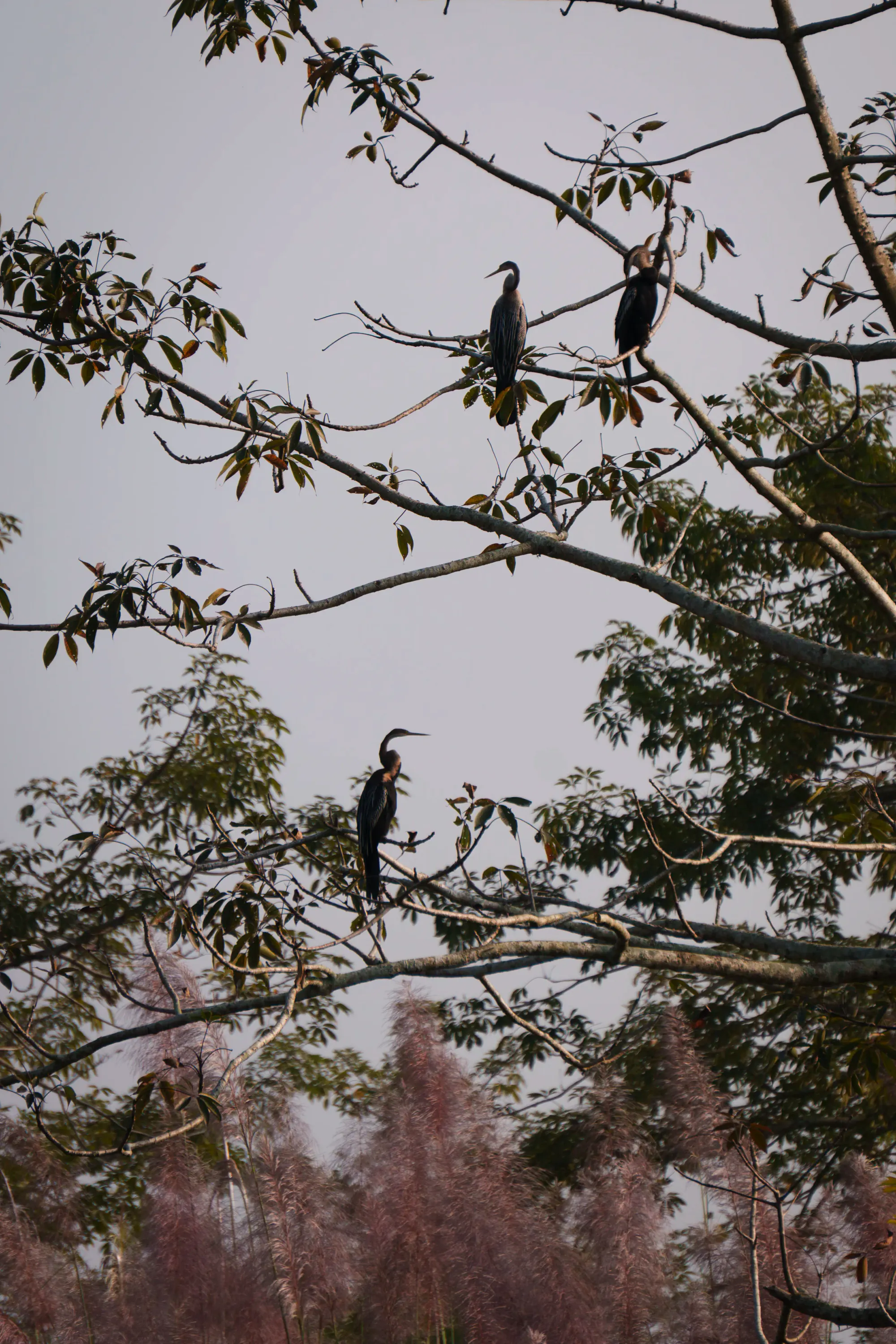
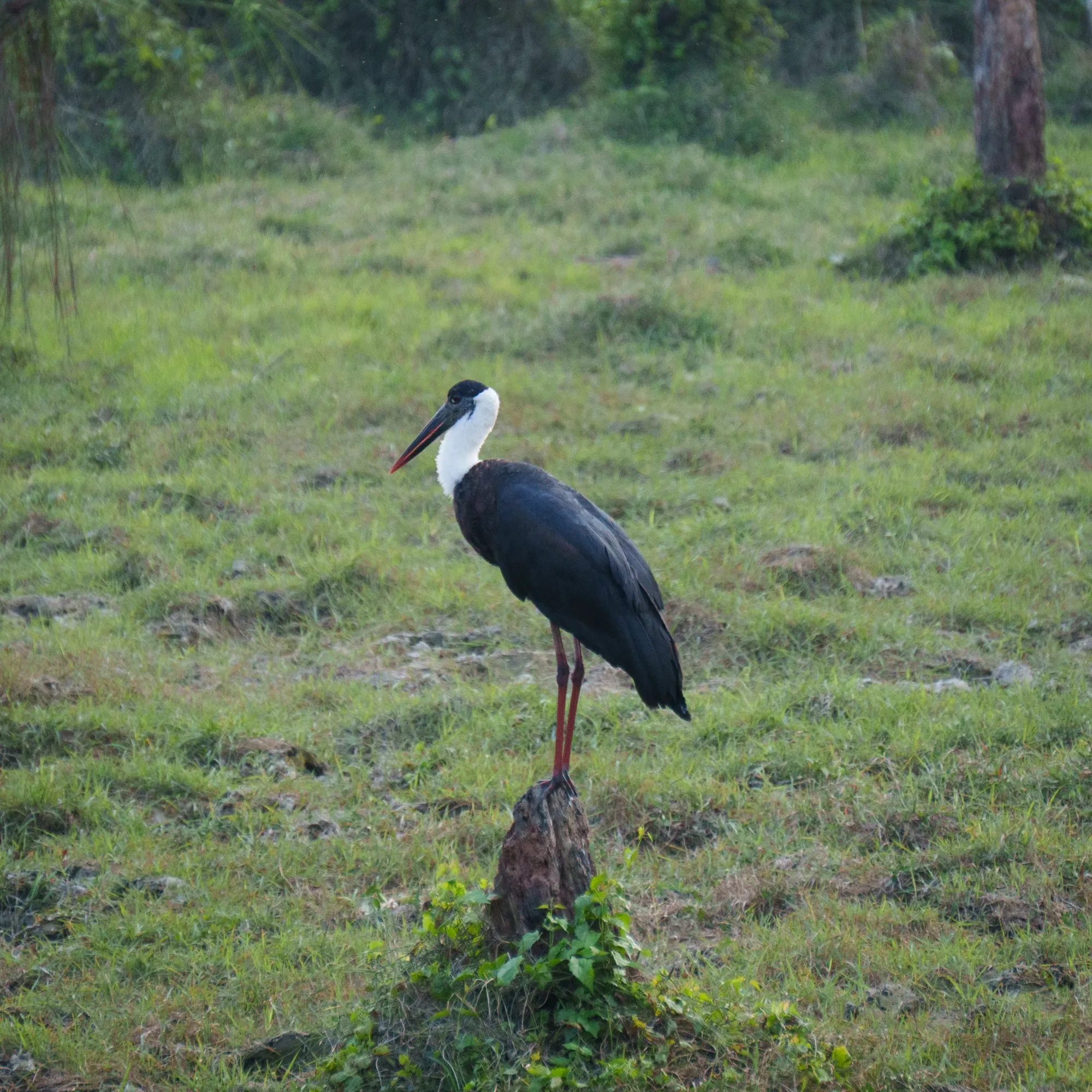
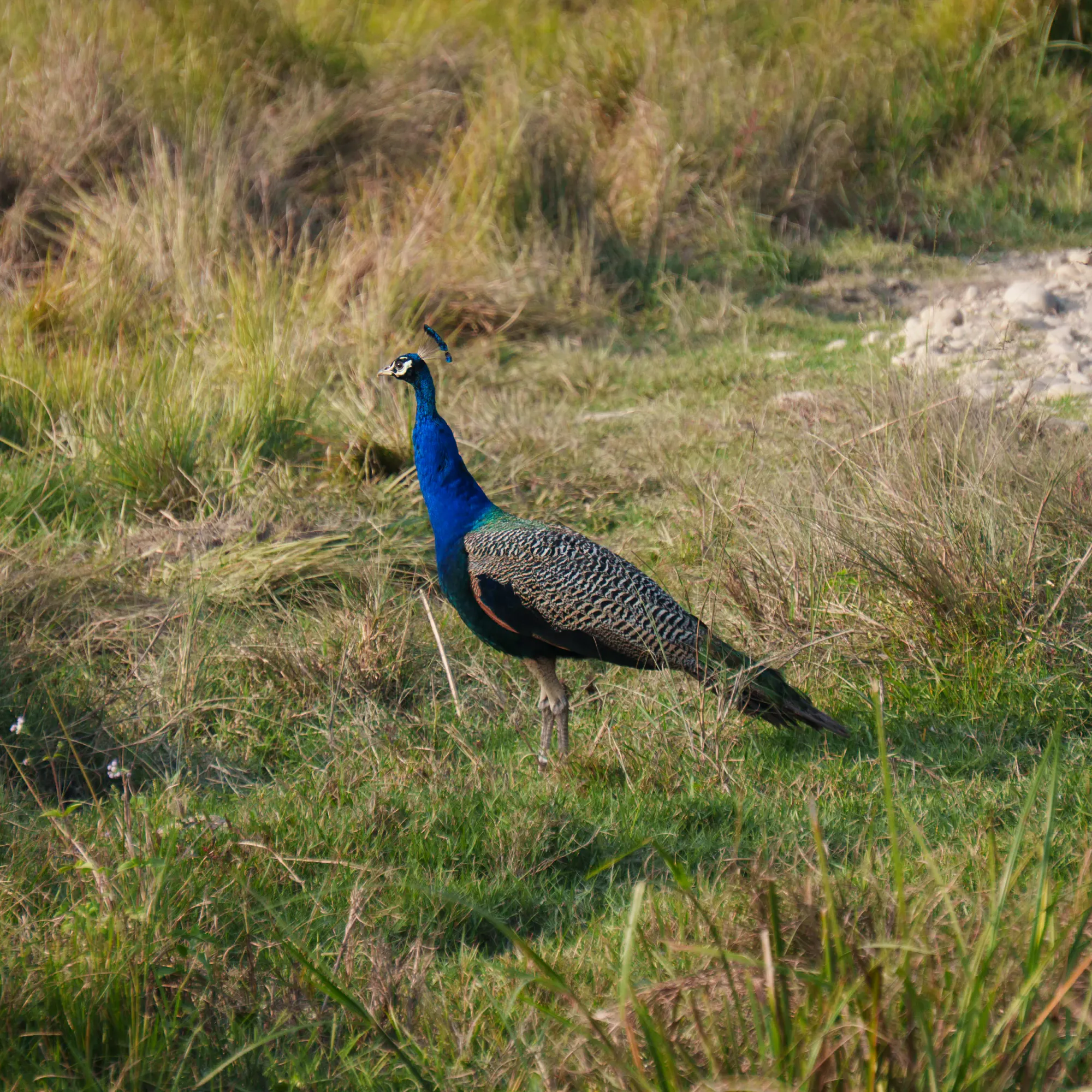
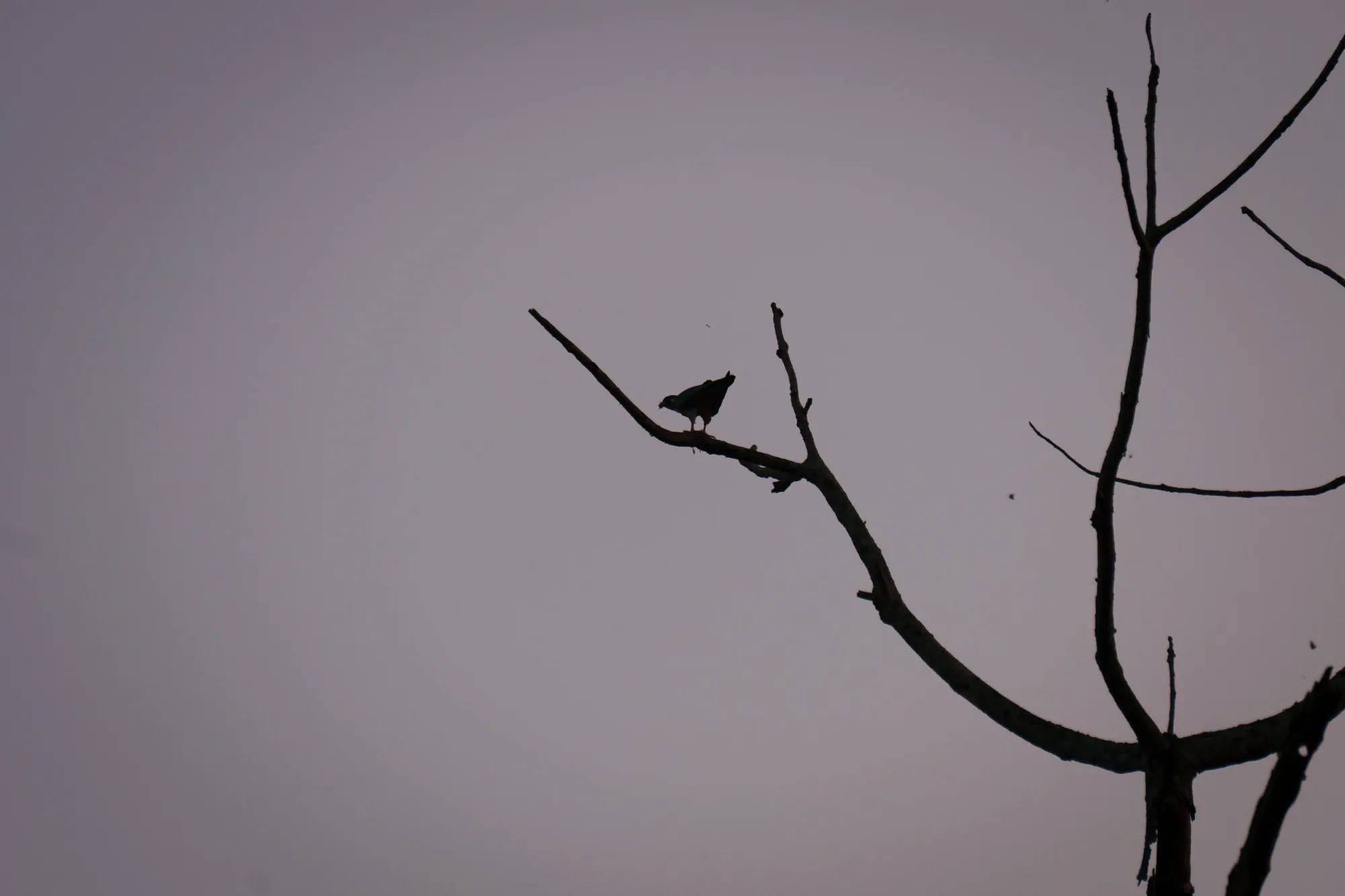
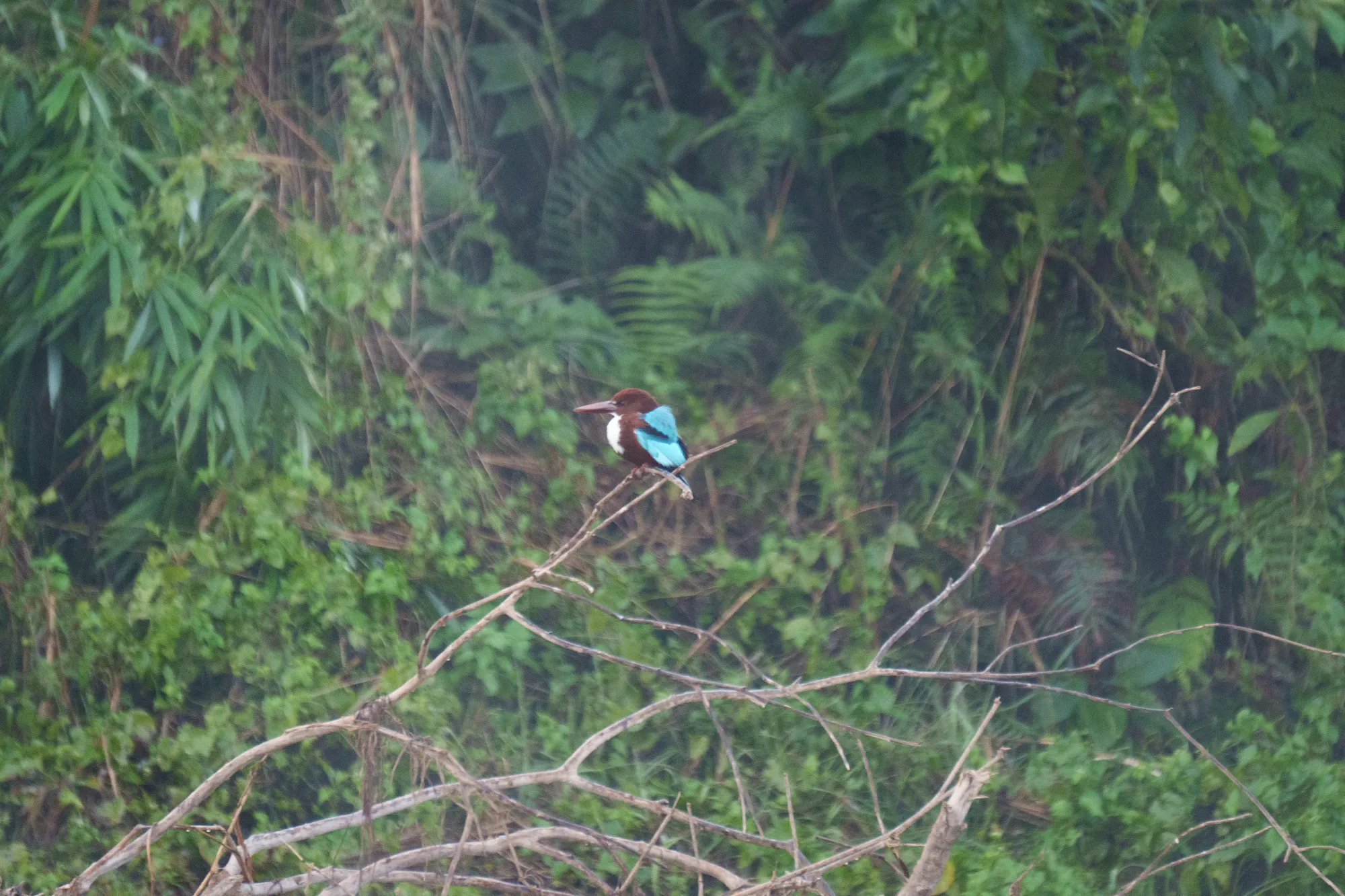
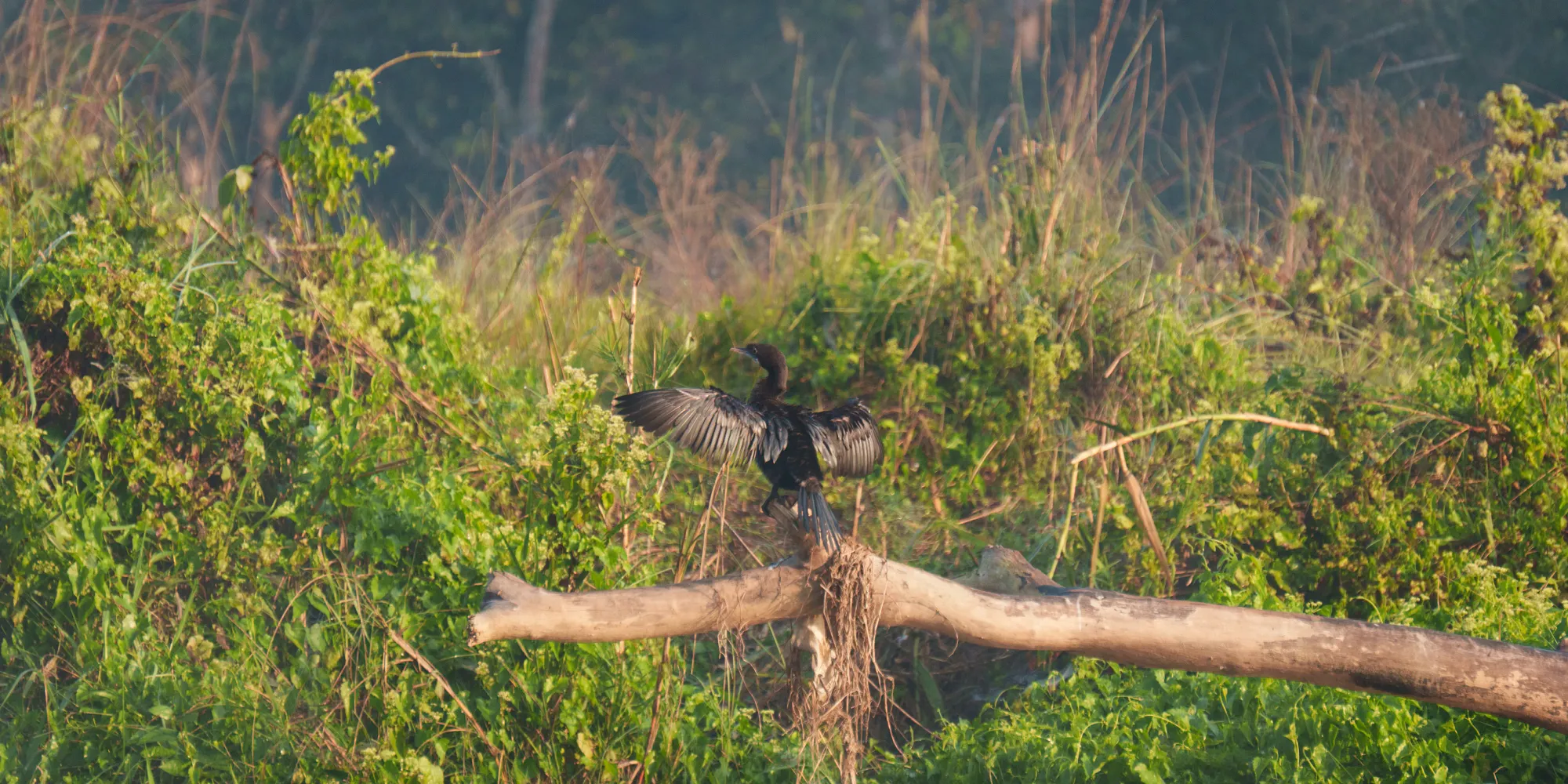
A cormorant warmed its wings in the early sun, and lapwings roamed the shore. Every now and then we would be dazzled by the turquoise back of a kingfisher or the glorious indigo plumage and intricate, trailing tails of peacocks still perched in the high branches of tall trees, where they had spent the night. The sun gained strength, mist evaporating, and we gently bid Nepal farewell.
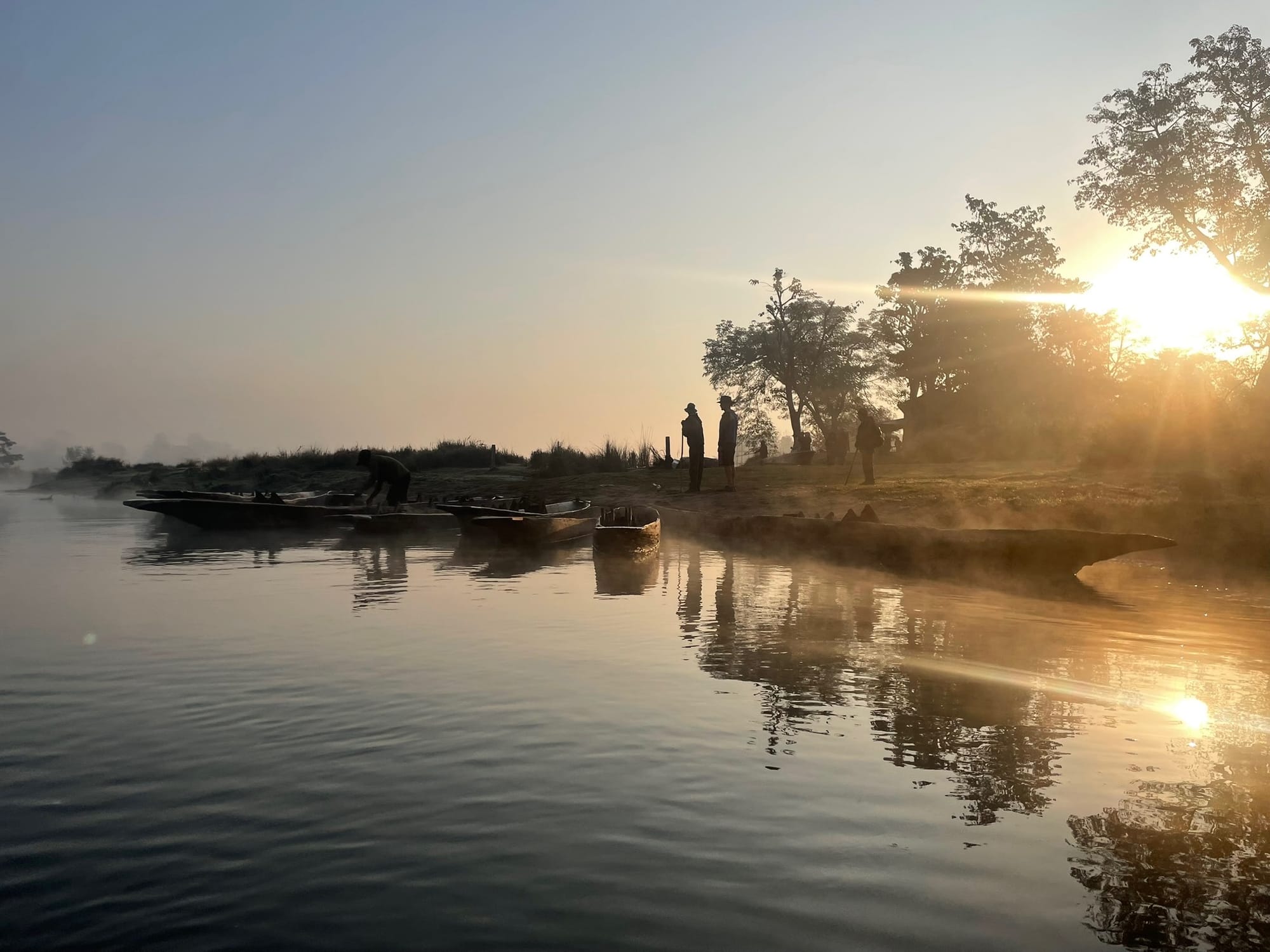
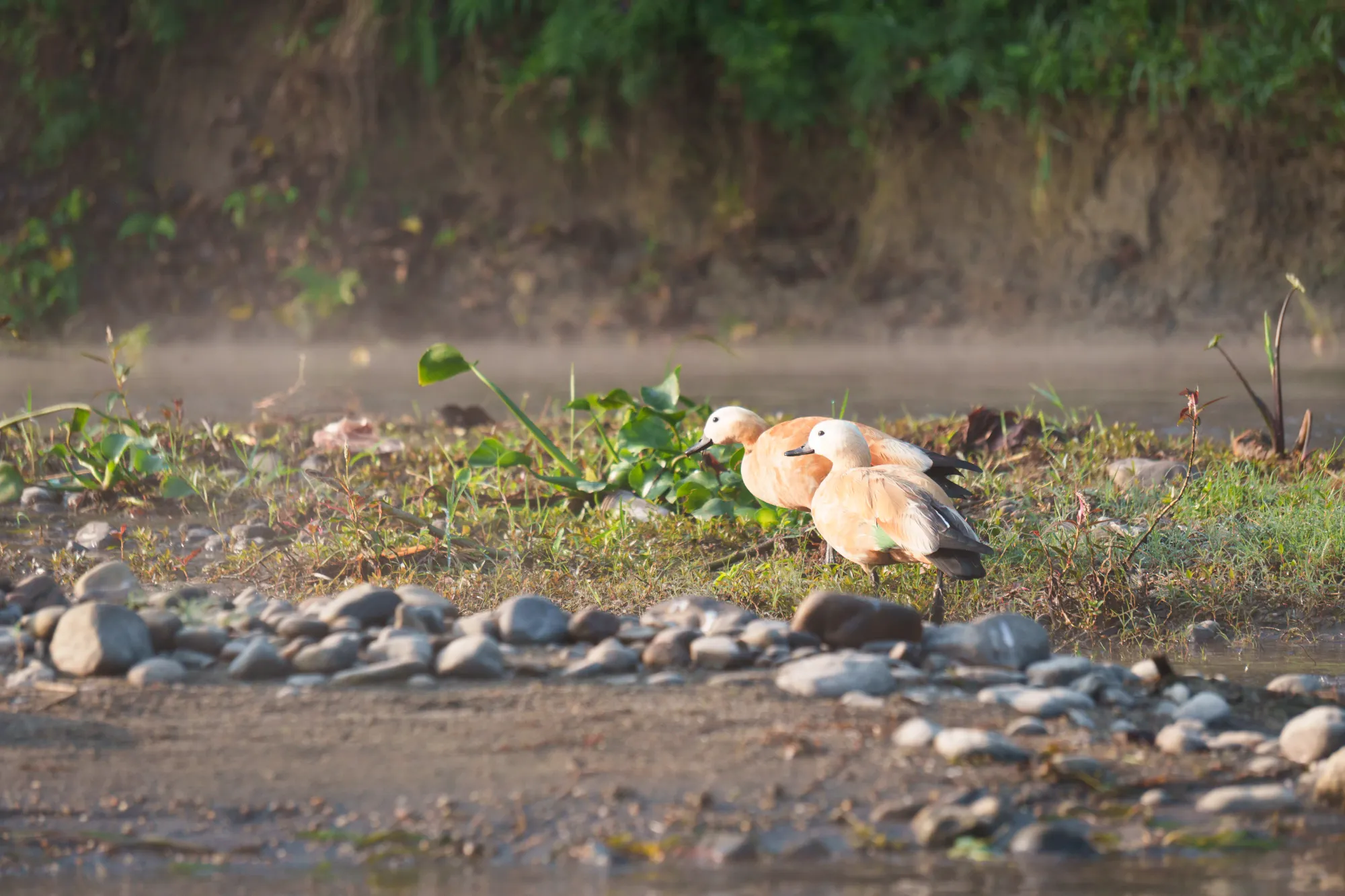
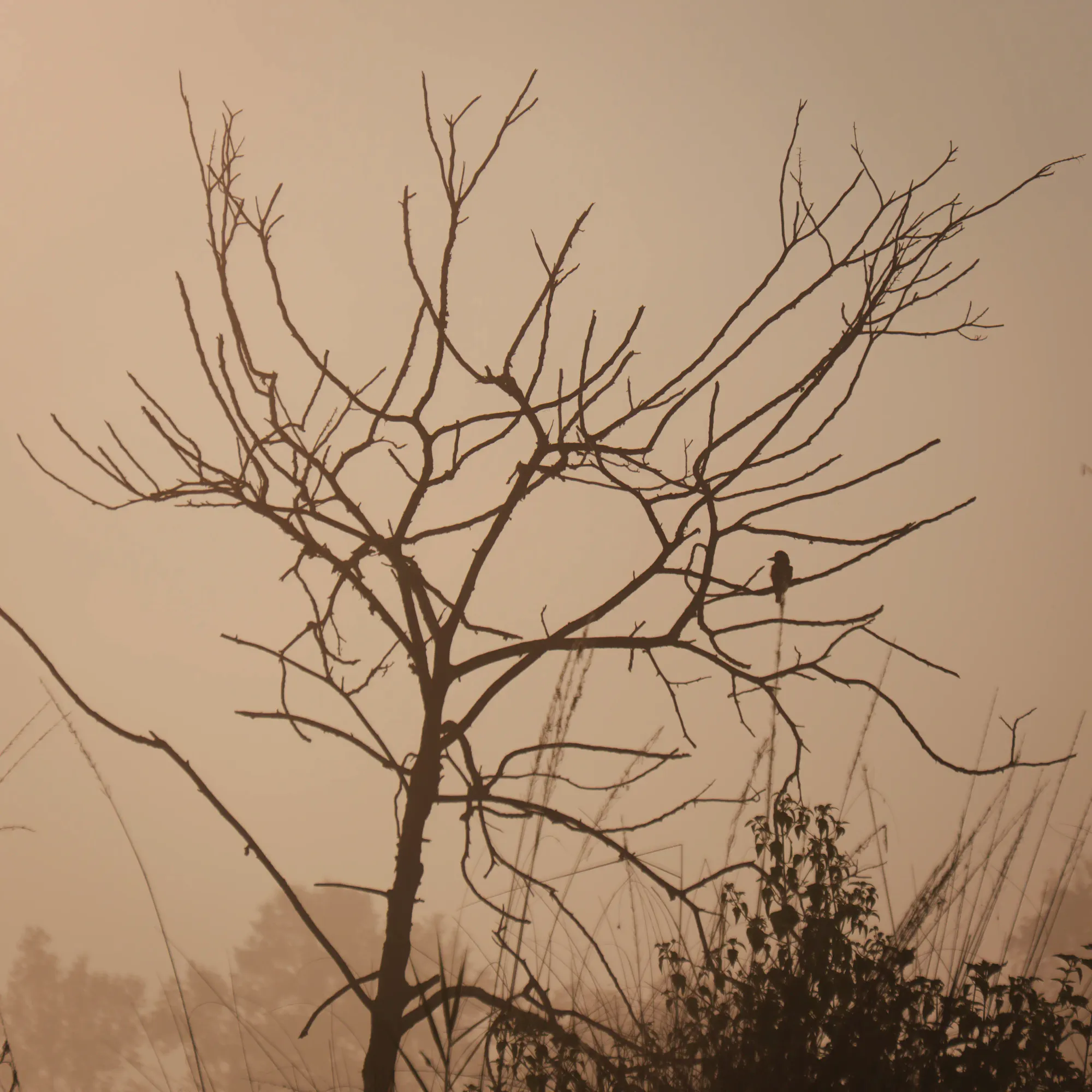
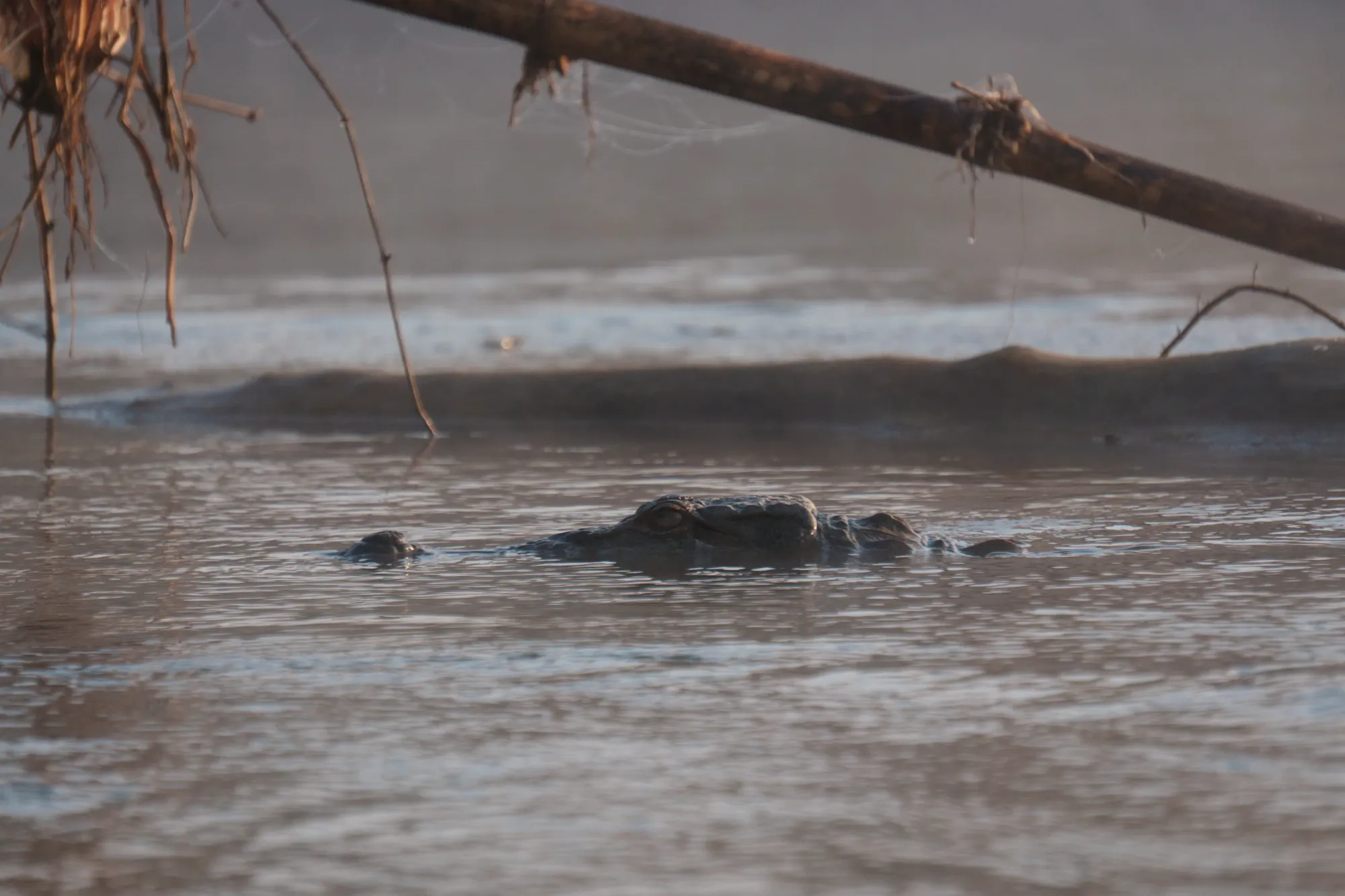
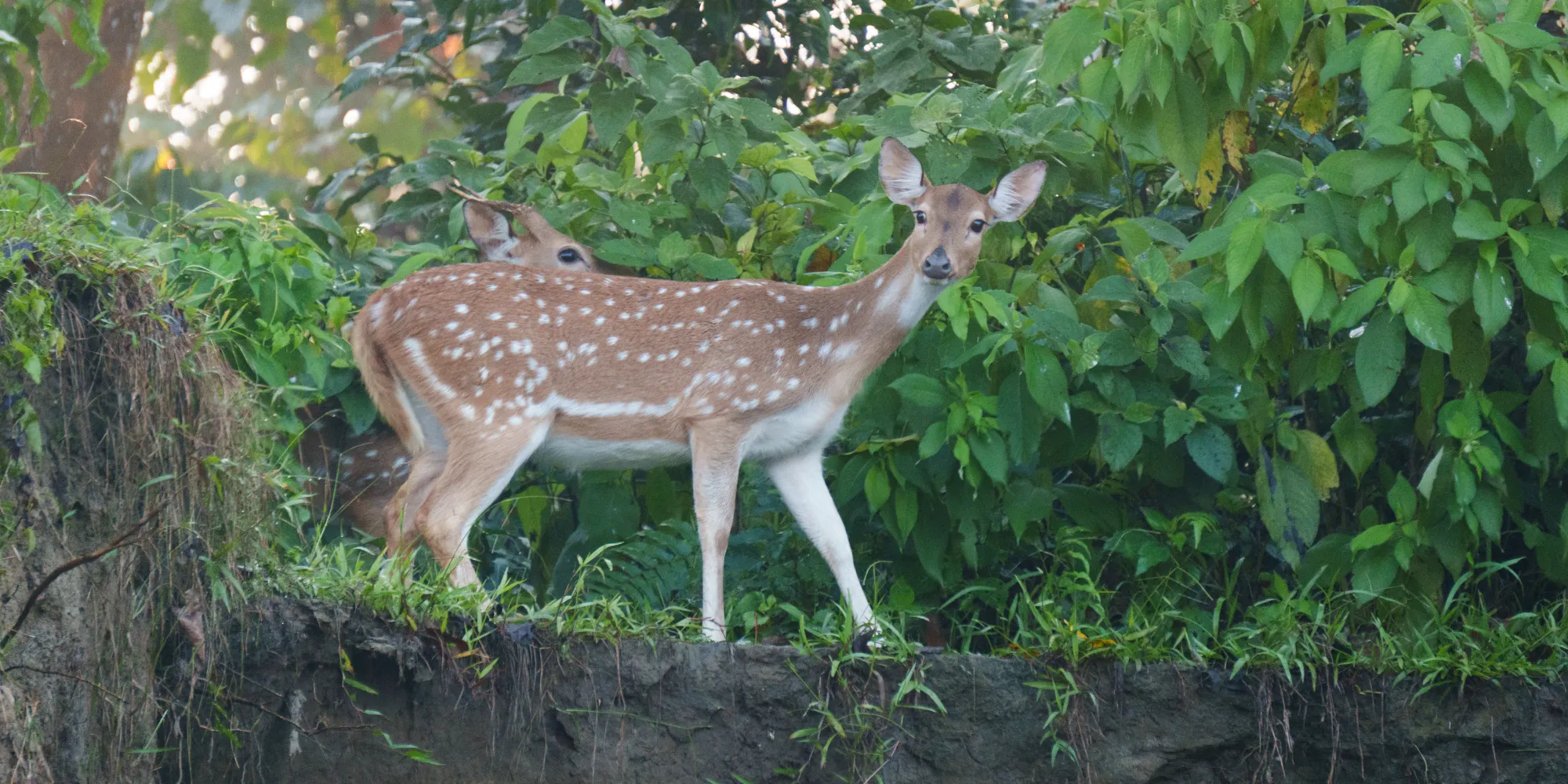
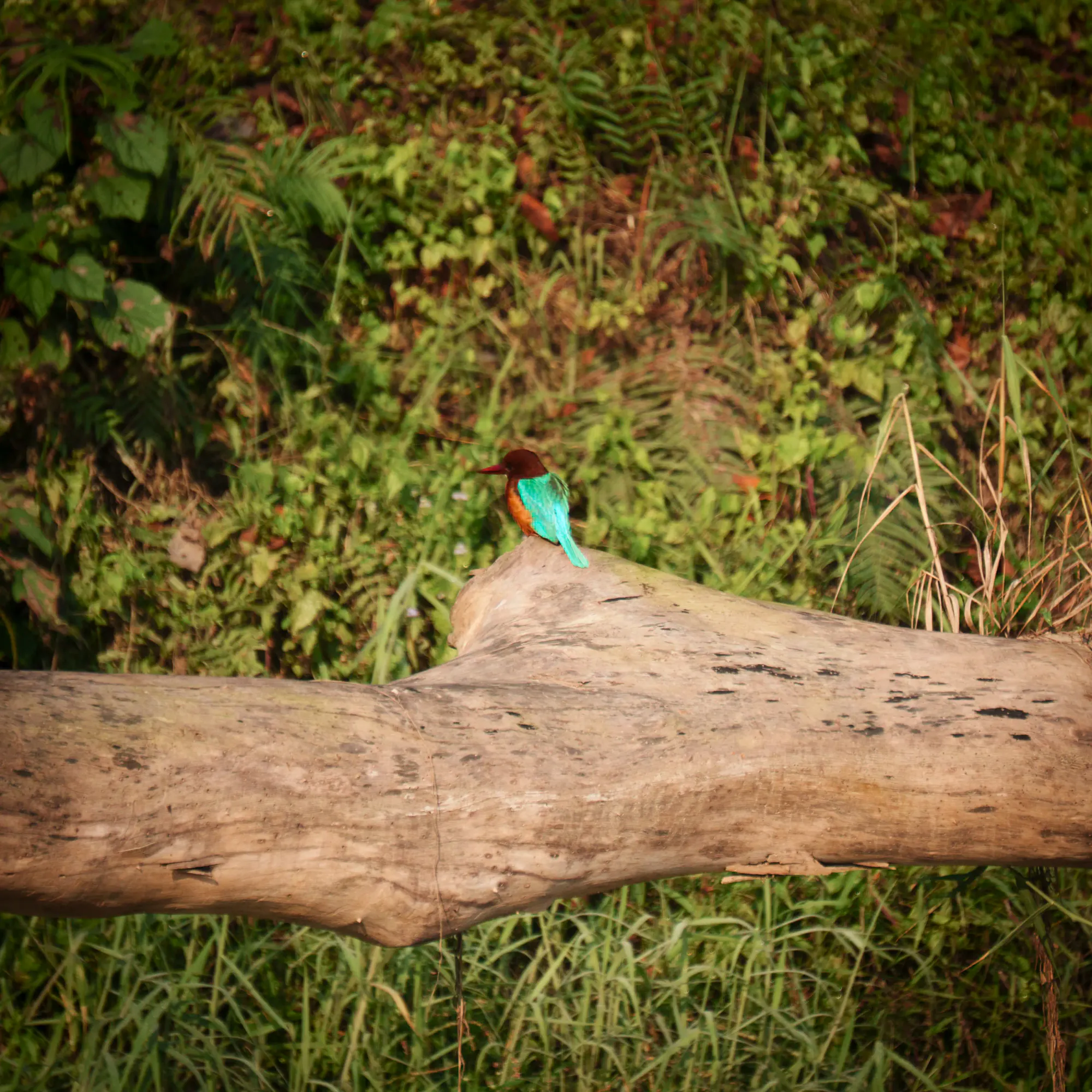
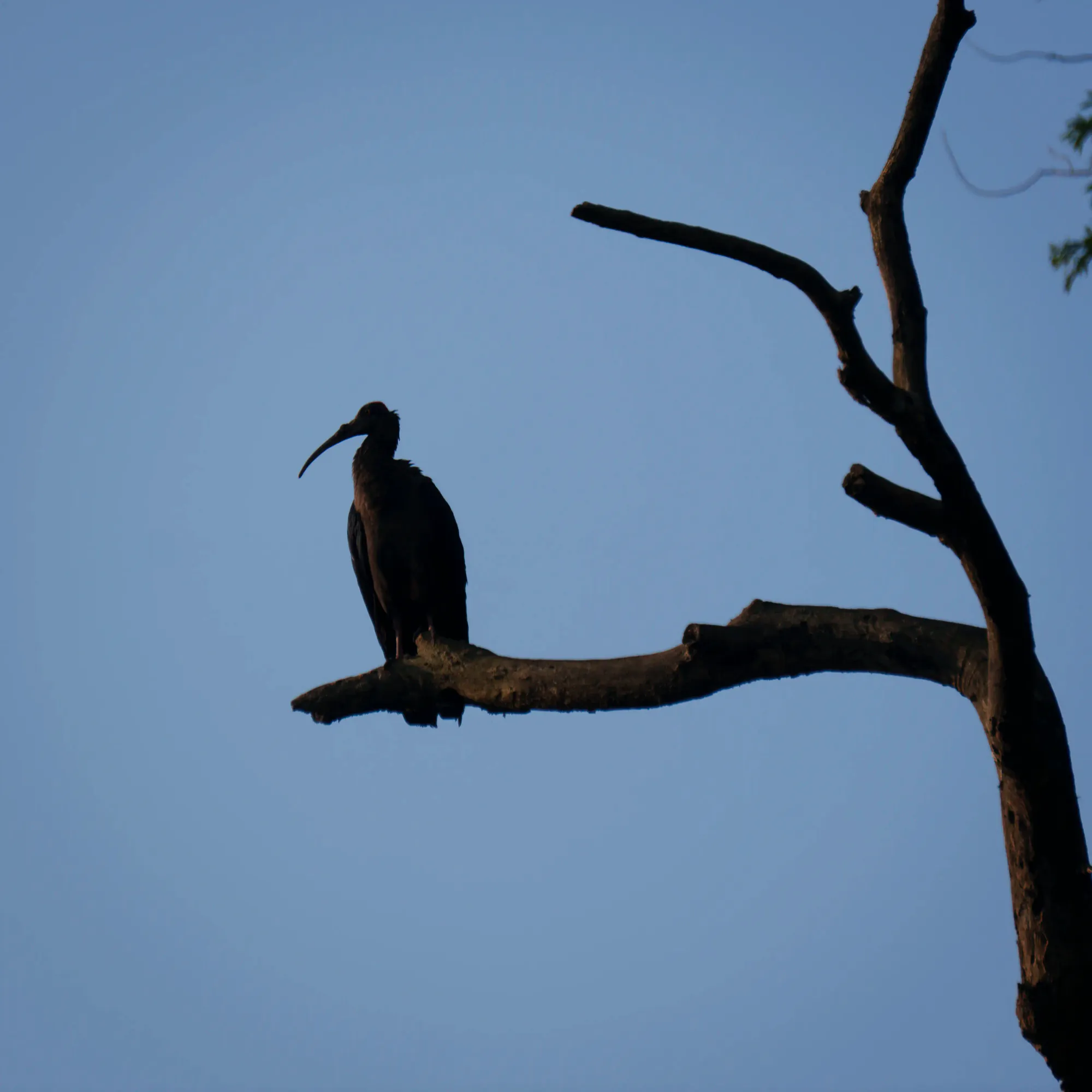
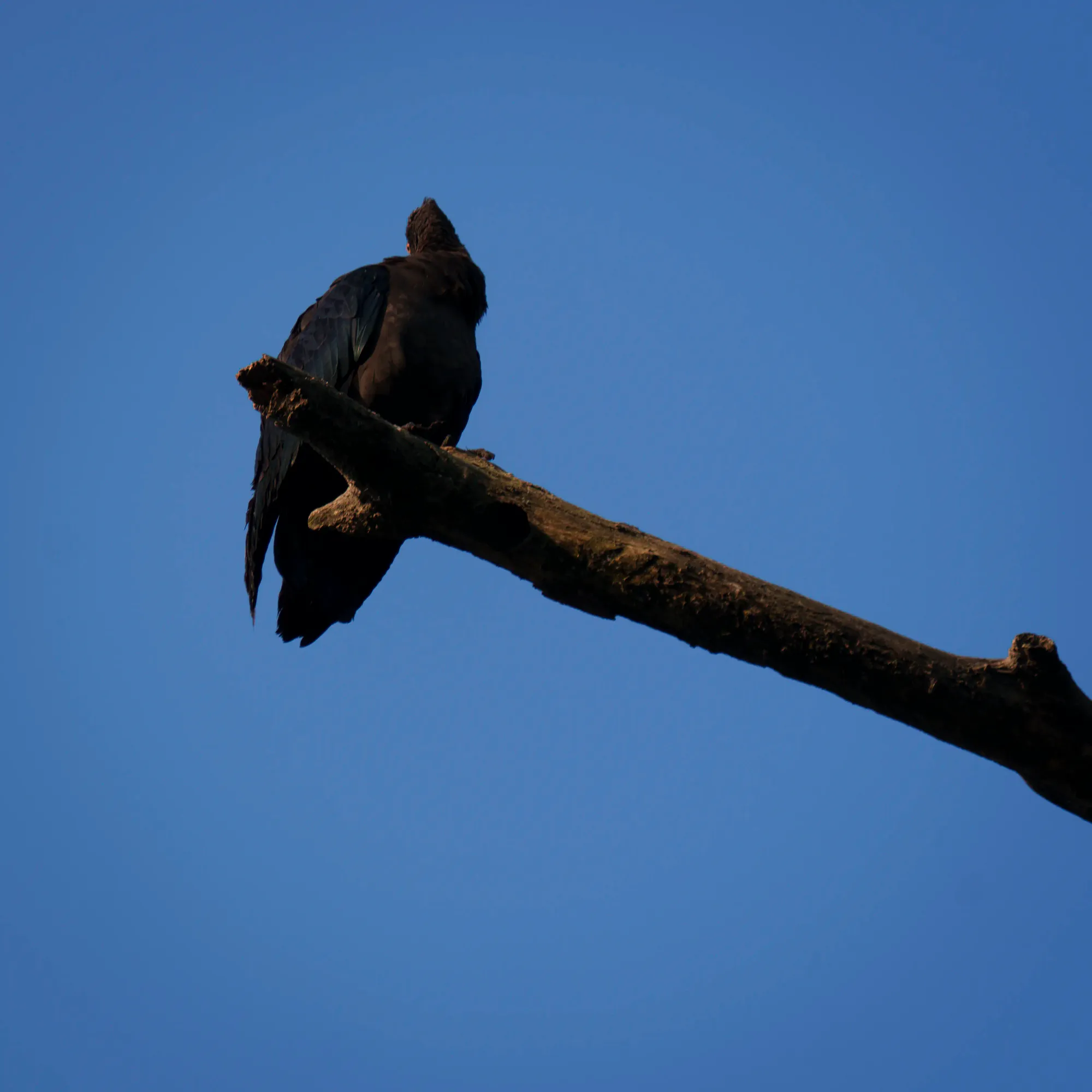
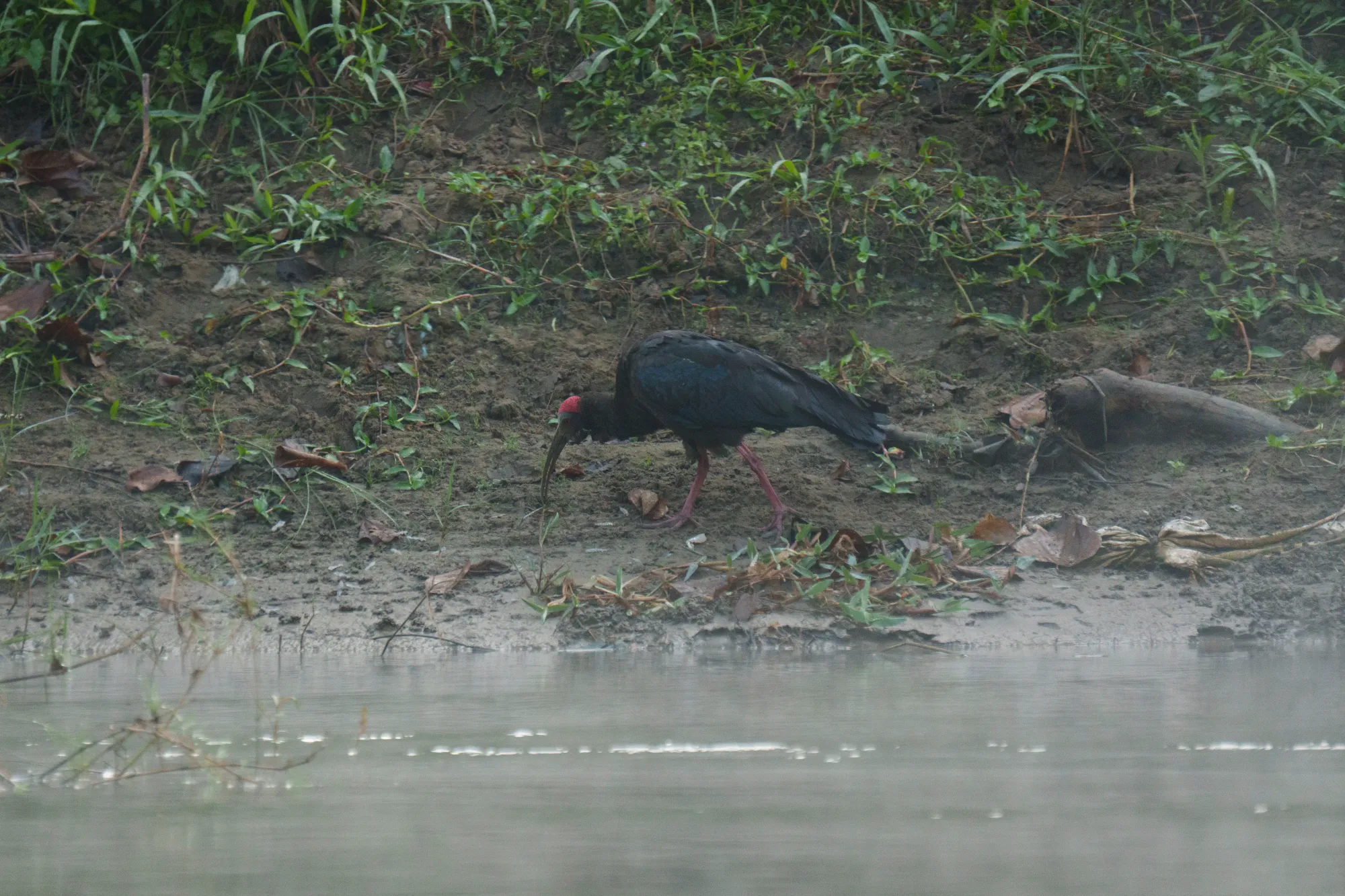
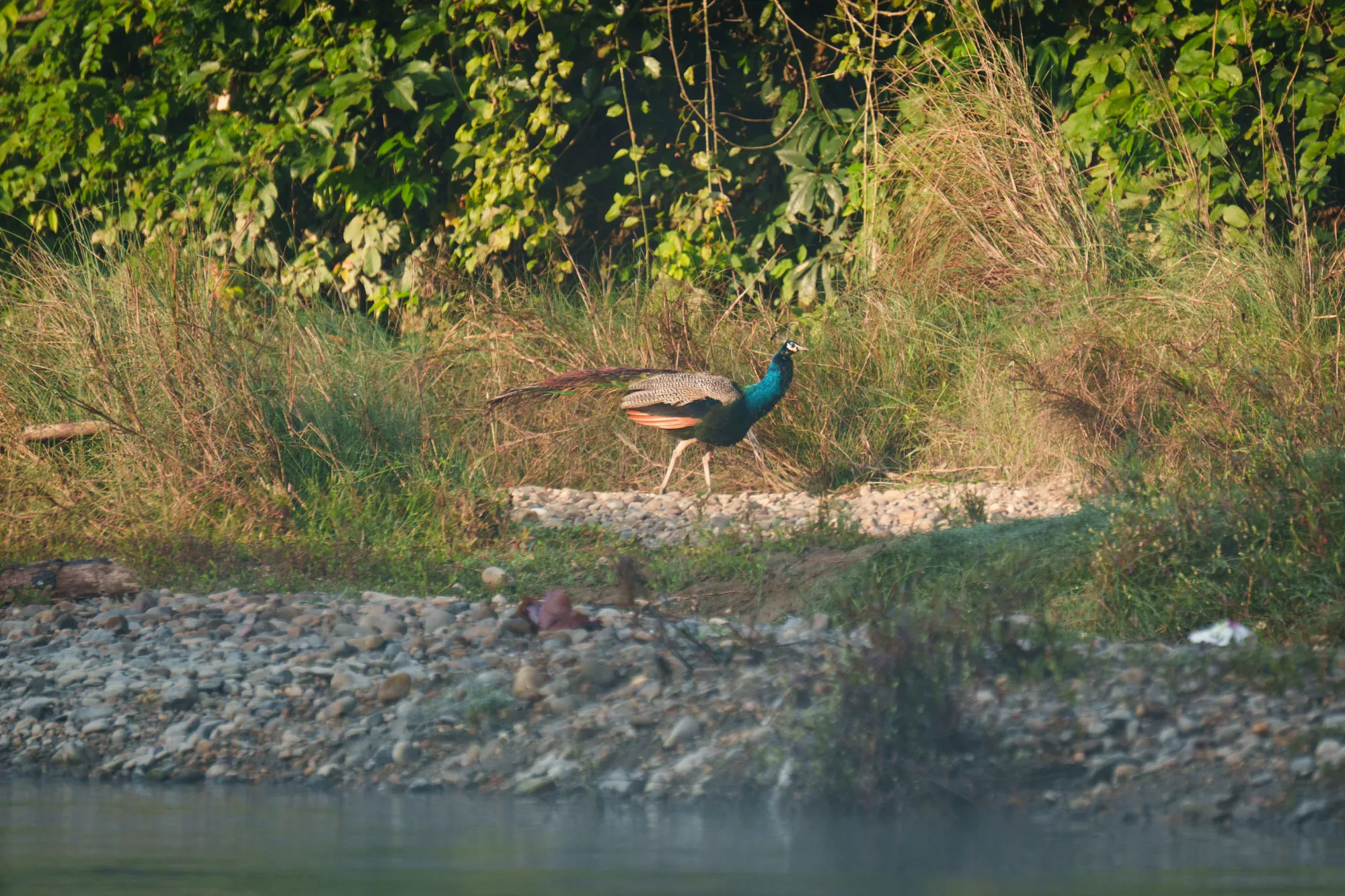
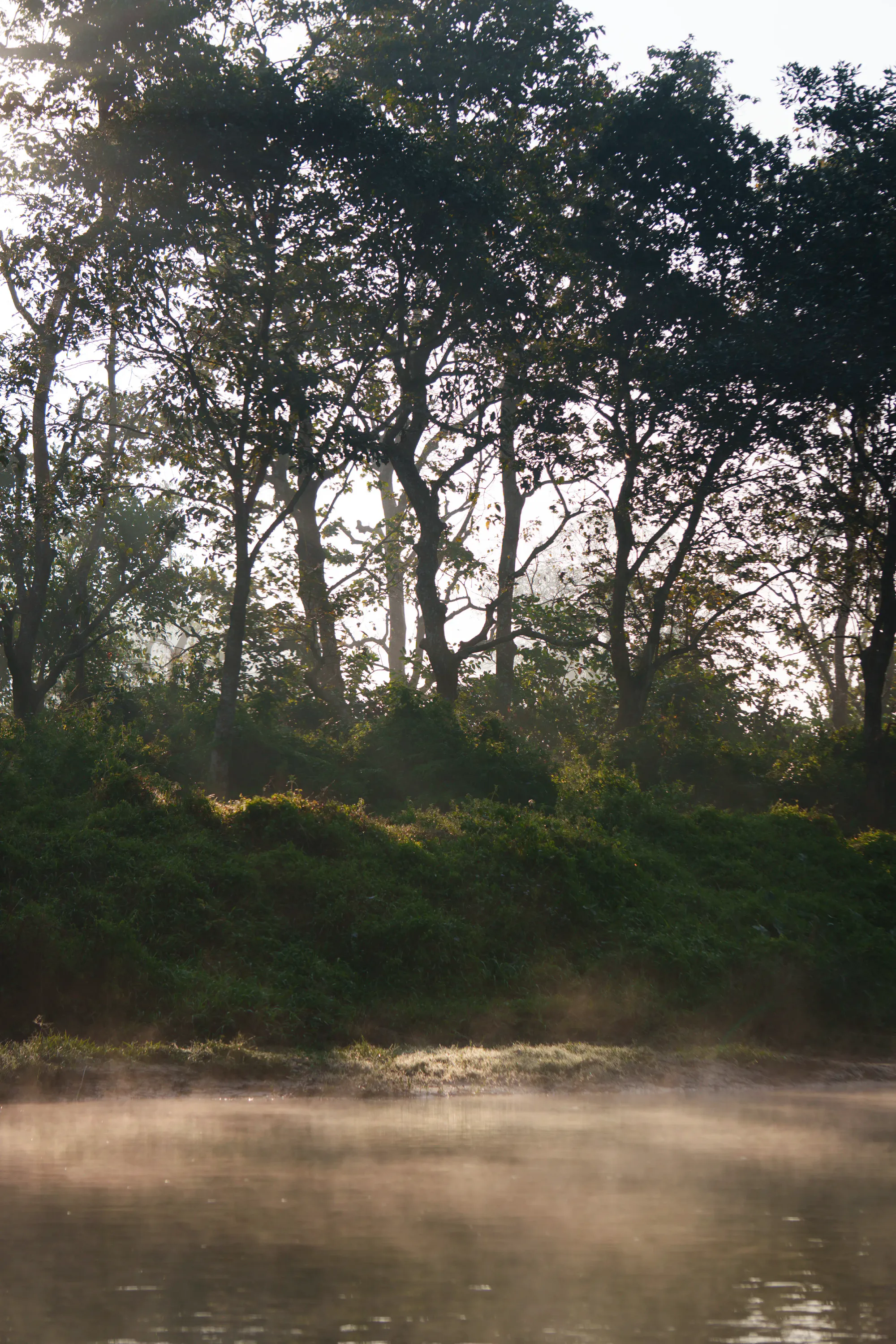
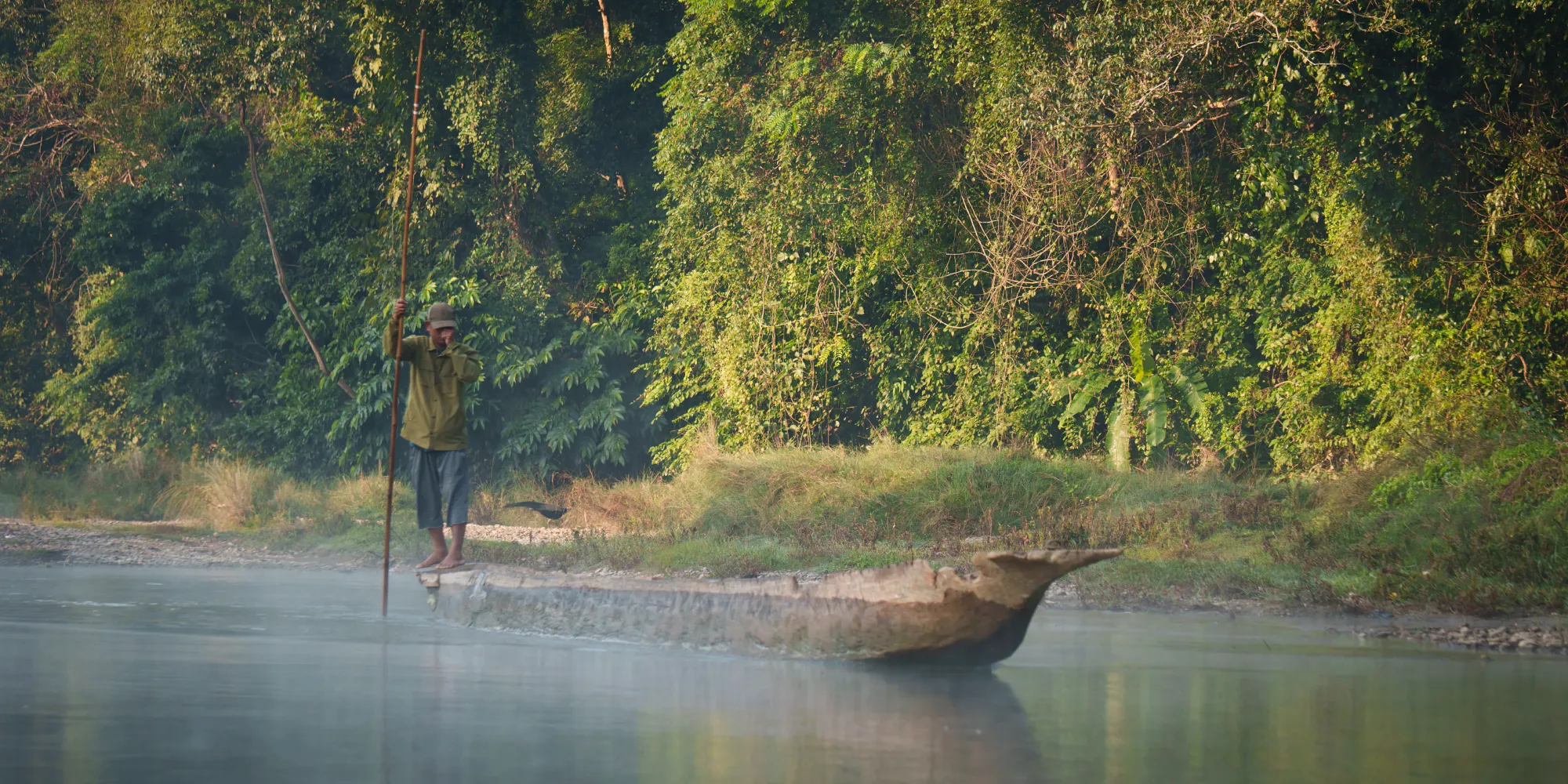
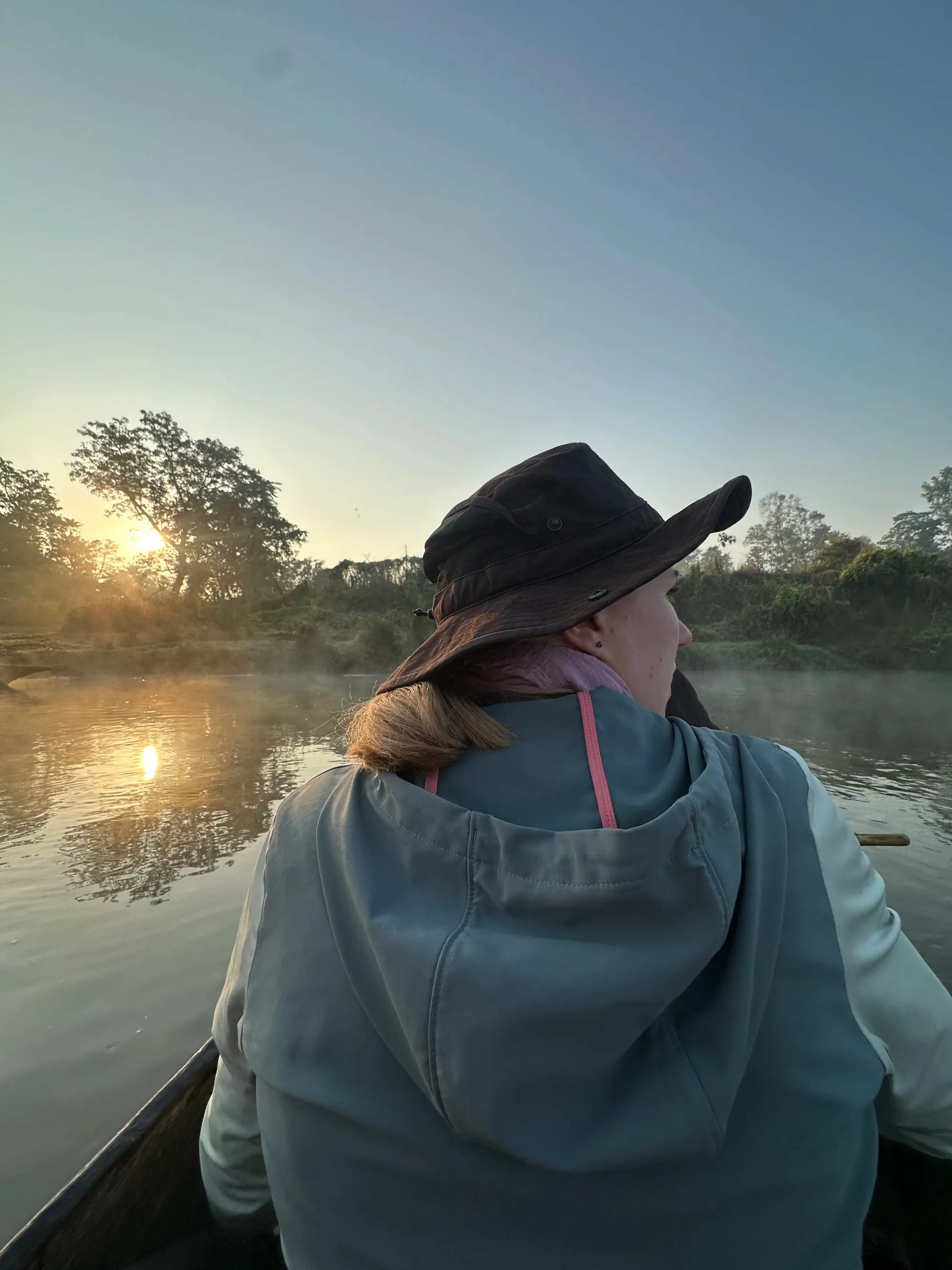
Do NOT swim with the spiky logs. [📸 Johann & Rachel]