Peru Part I: Sleepless in Peru
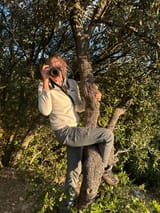

We landed in Lima, Peru after our cramped overnight flight, and pretended to be logs. The hostel let us hang out in the common area until check in, and we ate stroopwafels and instant noodles out of our coffee thermos. Bed time was 7:30 pm.
The next day had us off to a more auspicious start, as we began a week-long crash course in survival Spanish. Between classes, activities with the school and hostel, and exploring on our own, we had a grand time of it.
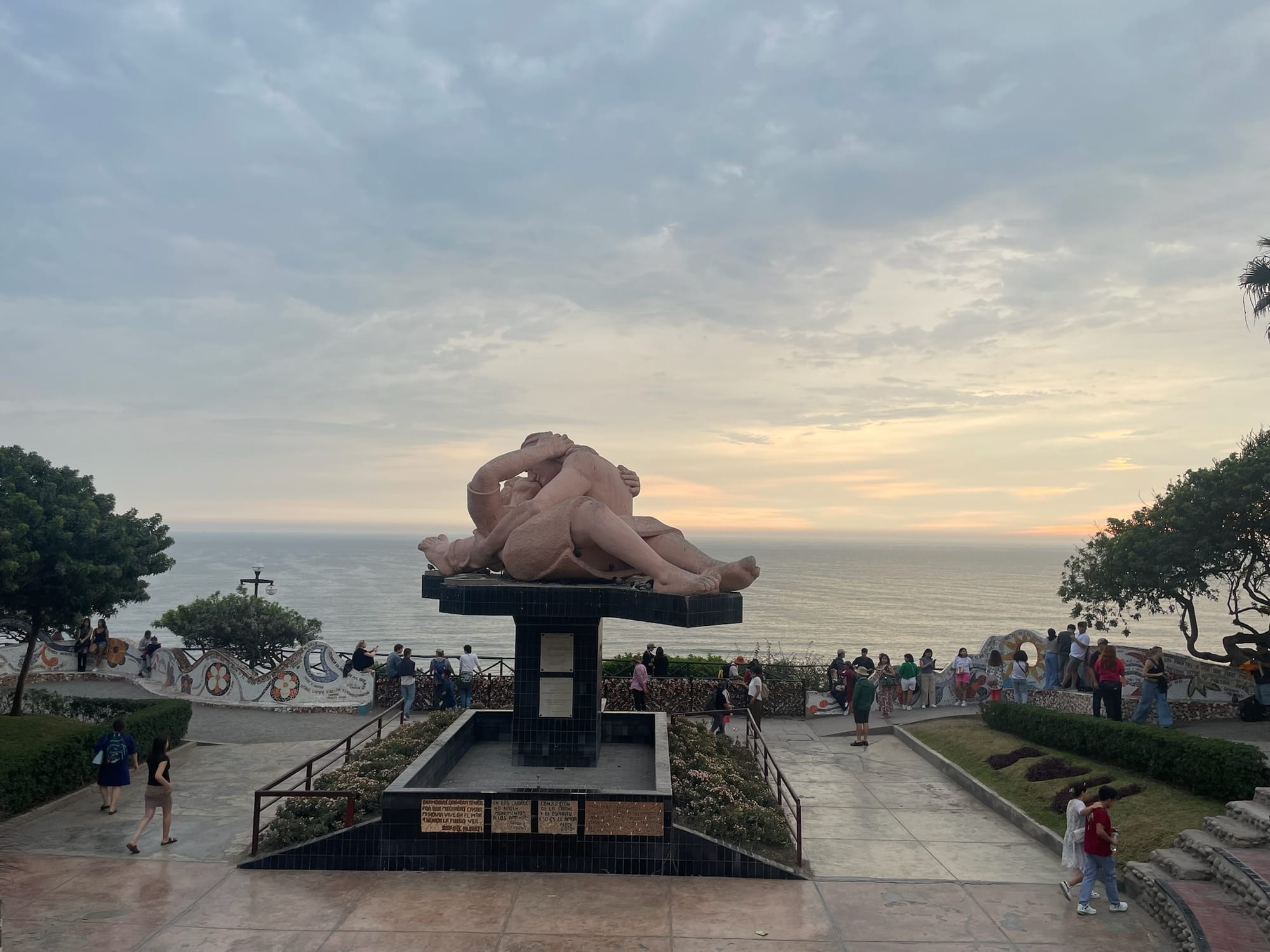
The statue was titled "The Kiss", but we think it's moved past that a bit. [📸 Rachel & Johann]
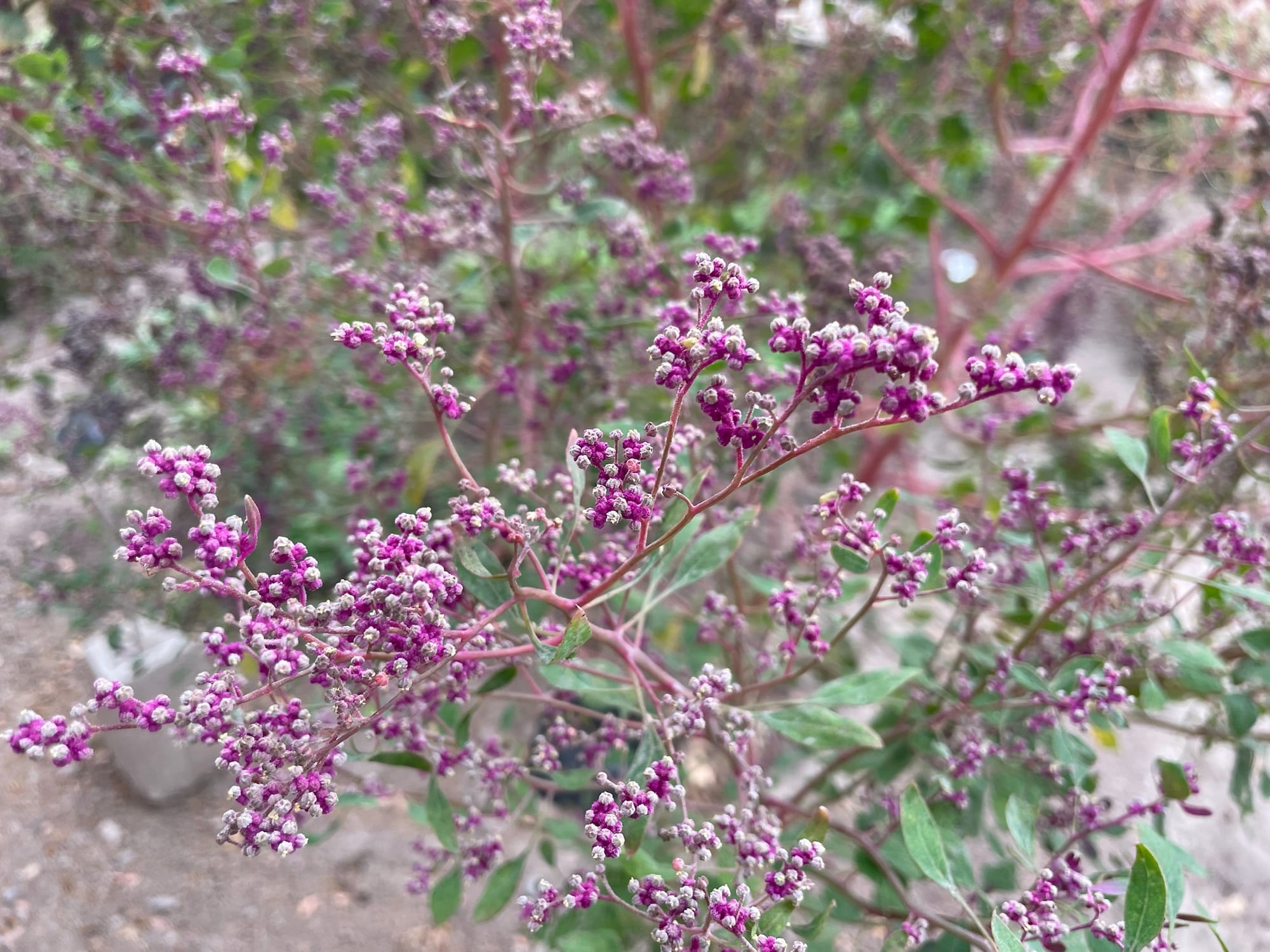
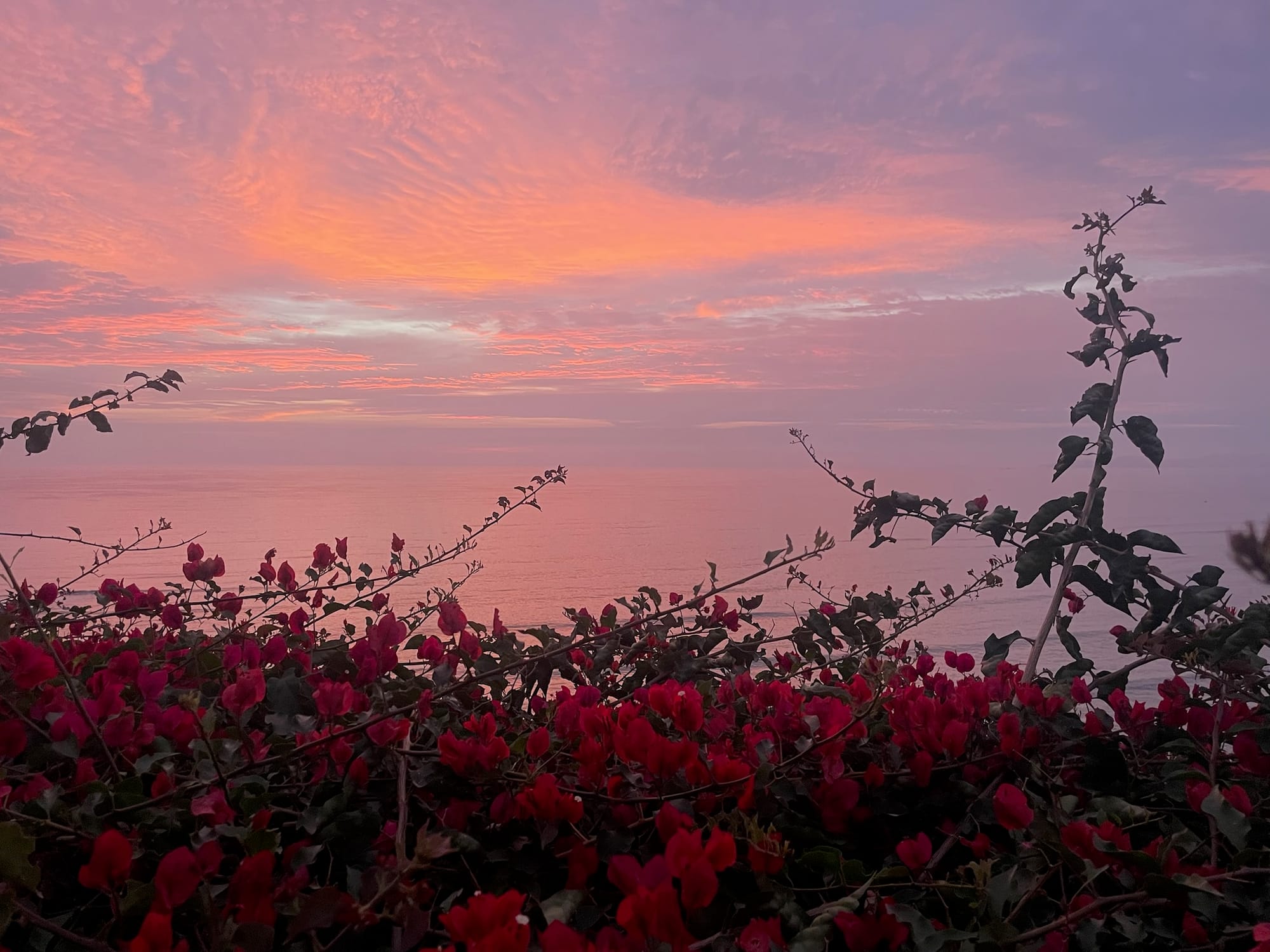
We wandered through the art-filled streets of Barranco, a colourful neighbourhood we reached by standing in a bus with an extremely effective break system. Opting to walk back, we strolled along the seaside cliffs as the sun dipped into the ocean, bougainvillea lining the path.
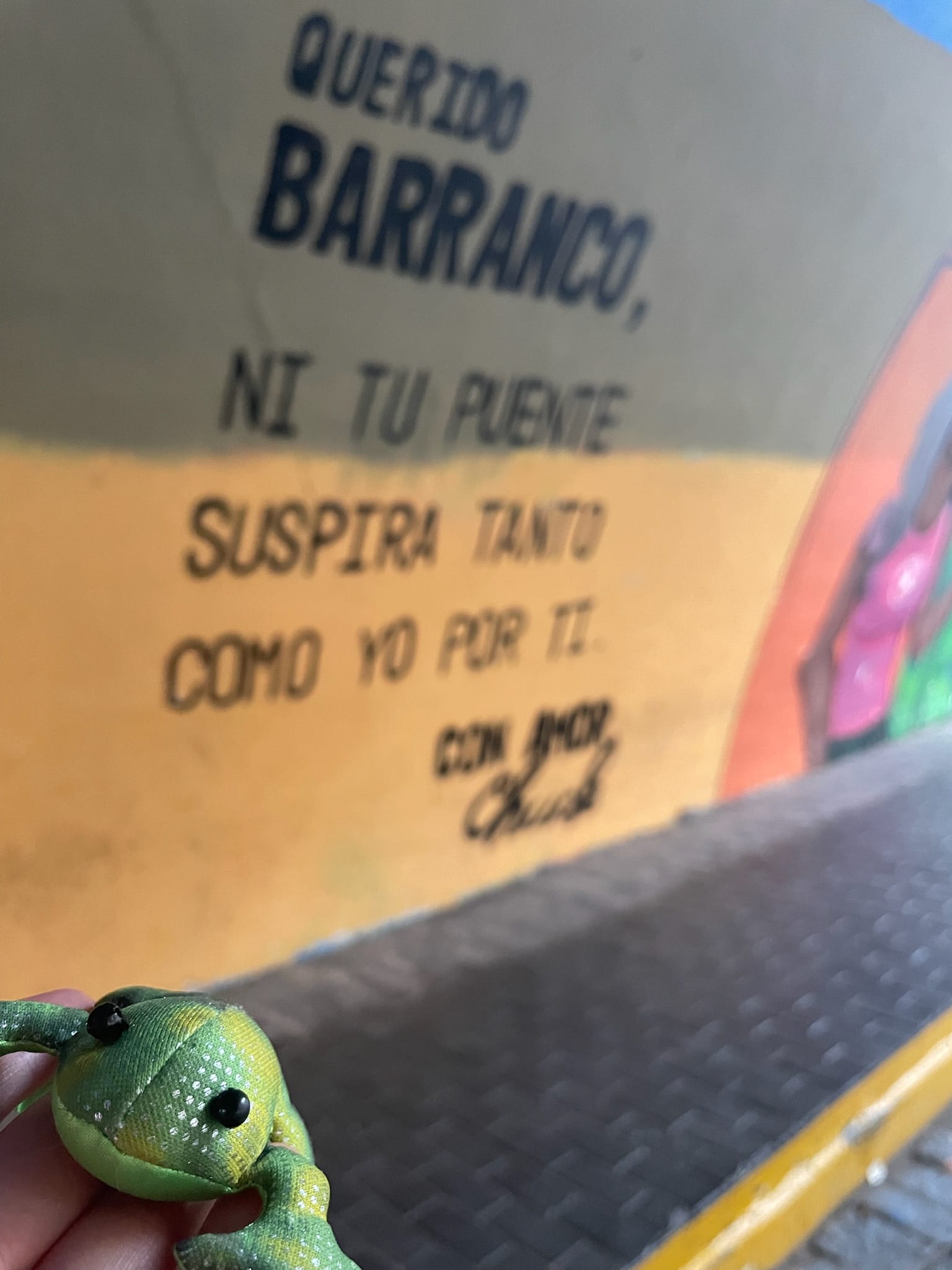
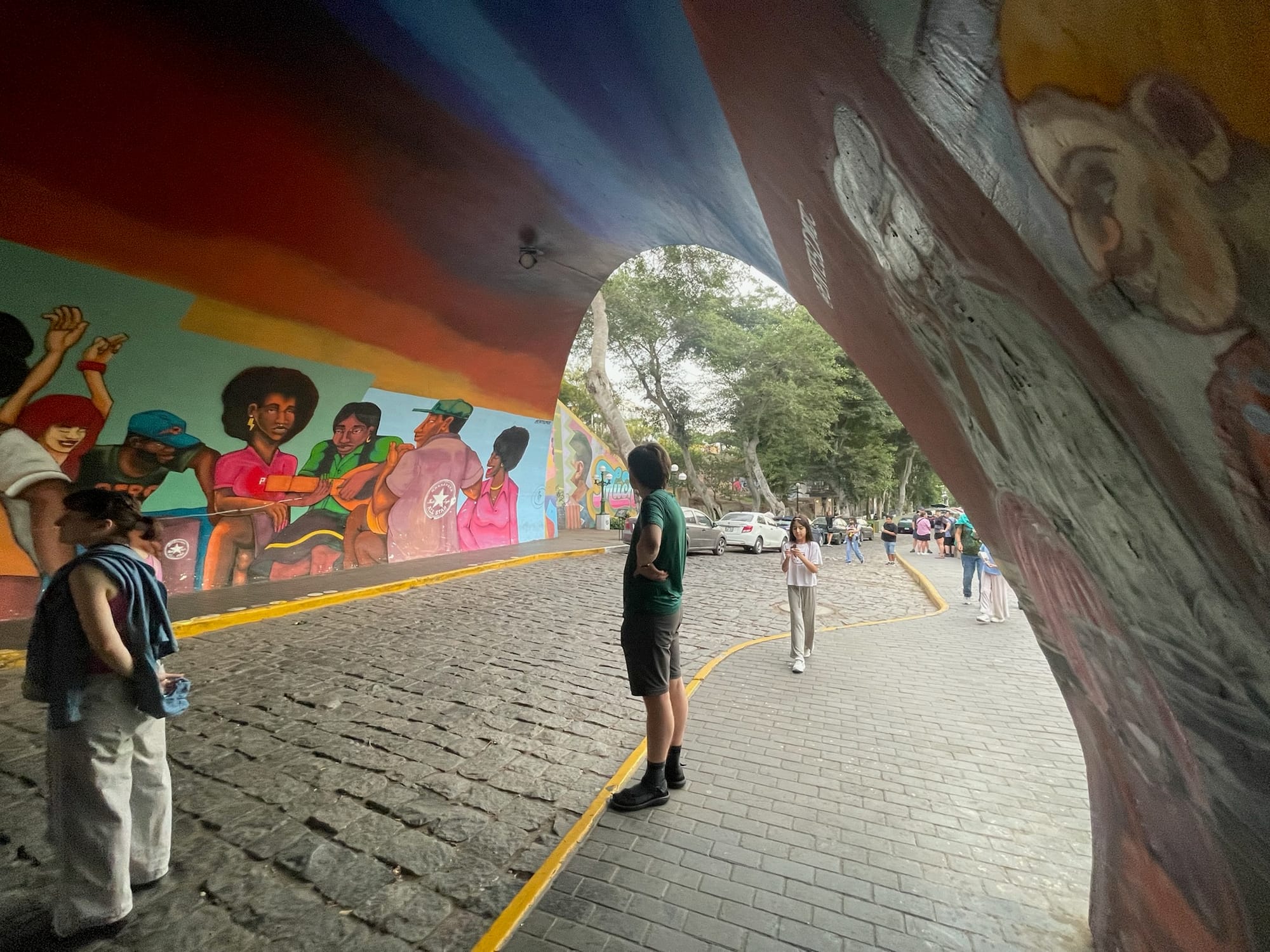
There were a few kids that were ripping their scooters down that cobblestone street under the bridge. Johann was in awe. [📸 Rachel & Johann]
We learned a little salsa dancing, and some bachata too. Thanks to our teacher, we will now never forget the hips. We also learned to make Peru’s favourite cocktail, the Pisco Sour (and our preferred passionfruit variation, the Maracuya Sour). Thanks to Johann, we got our protein by drinking an entire raw egg (he broke the yolk). If you are well behaved blog minions, we will prepare the fancy alcohol for you too!
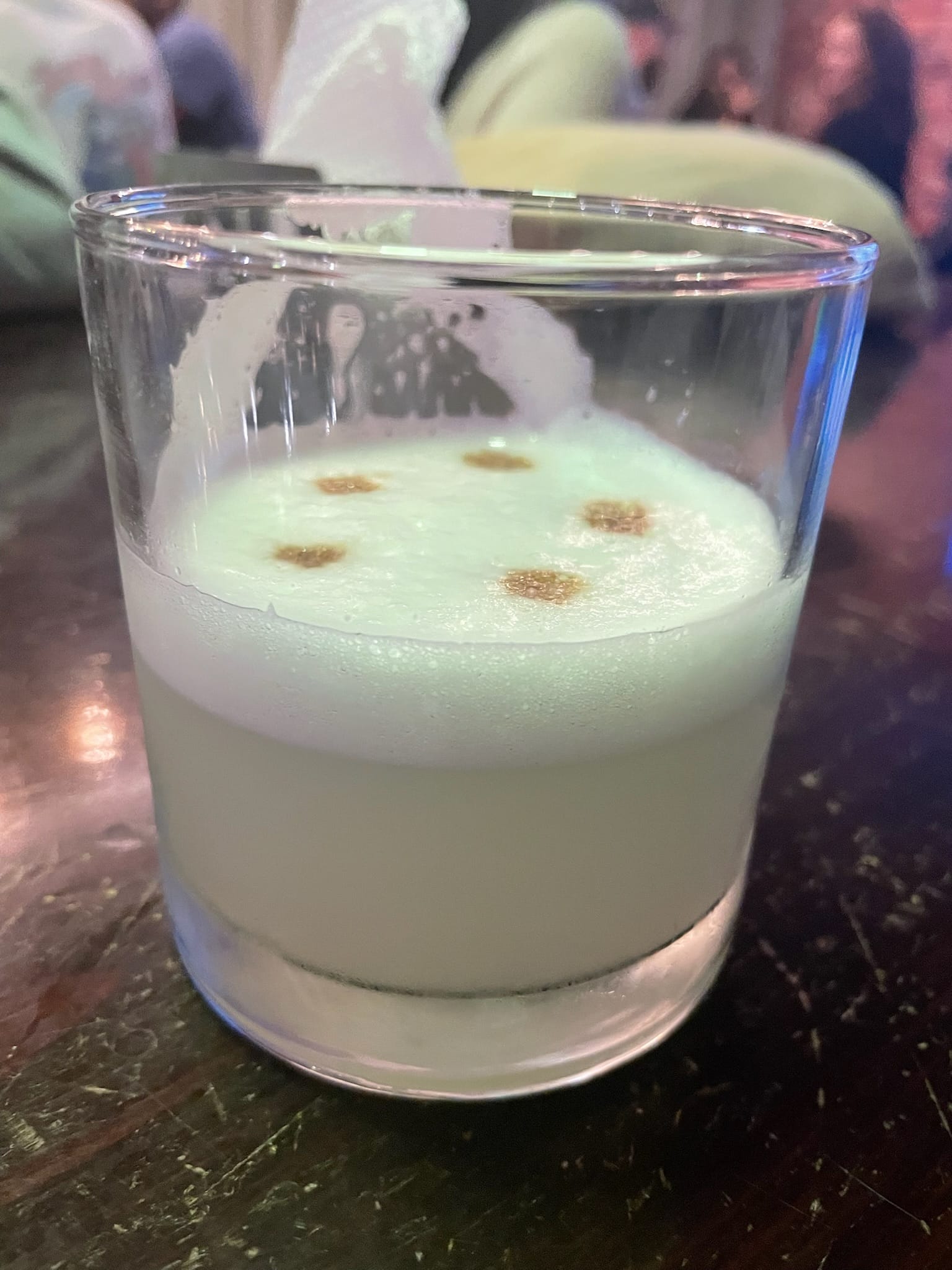
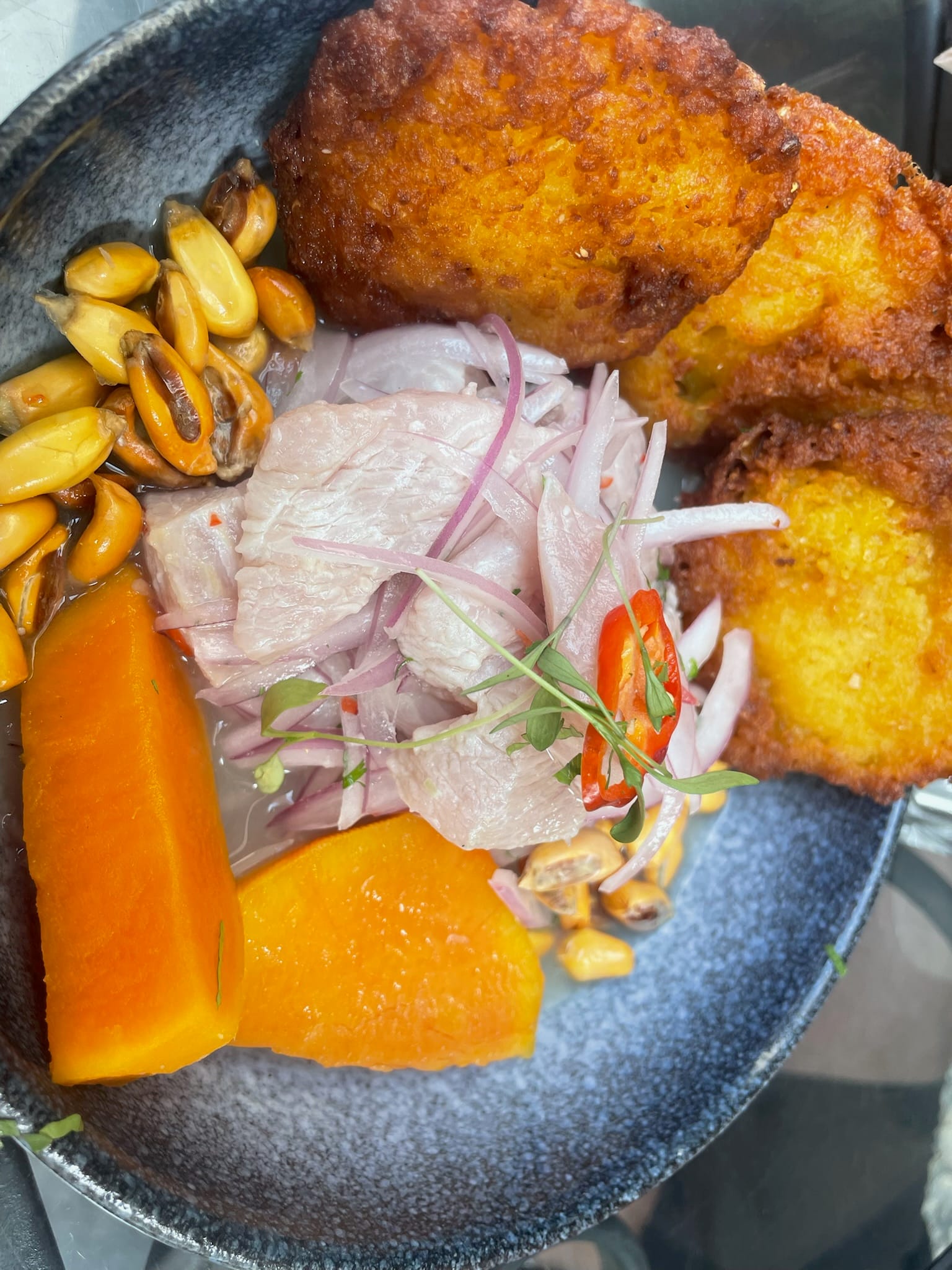
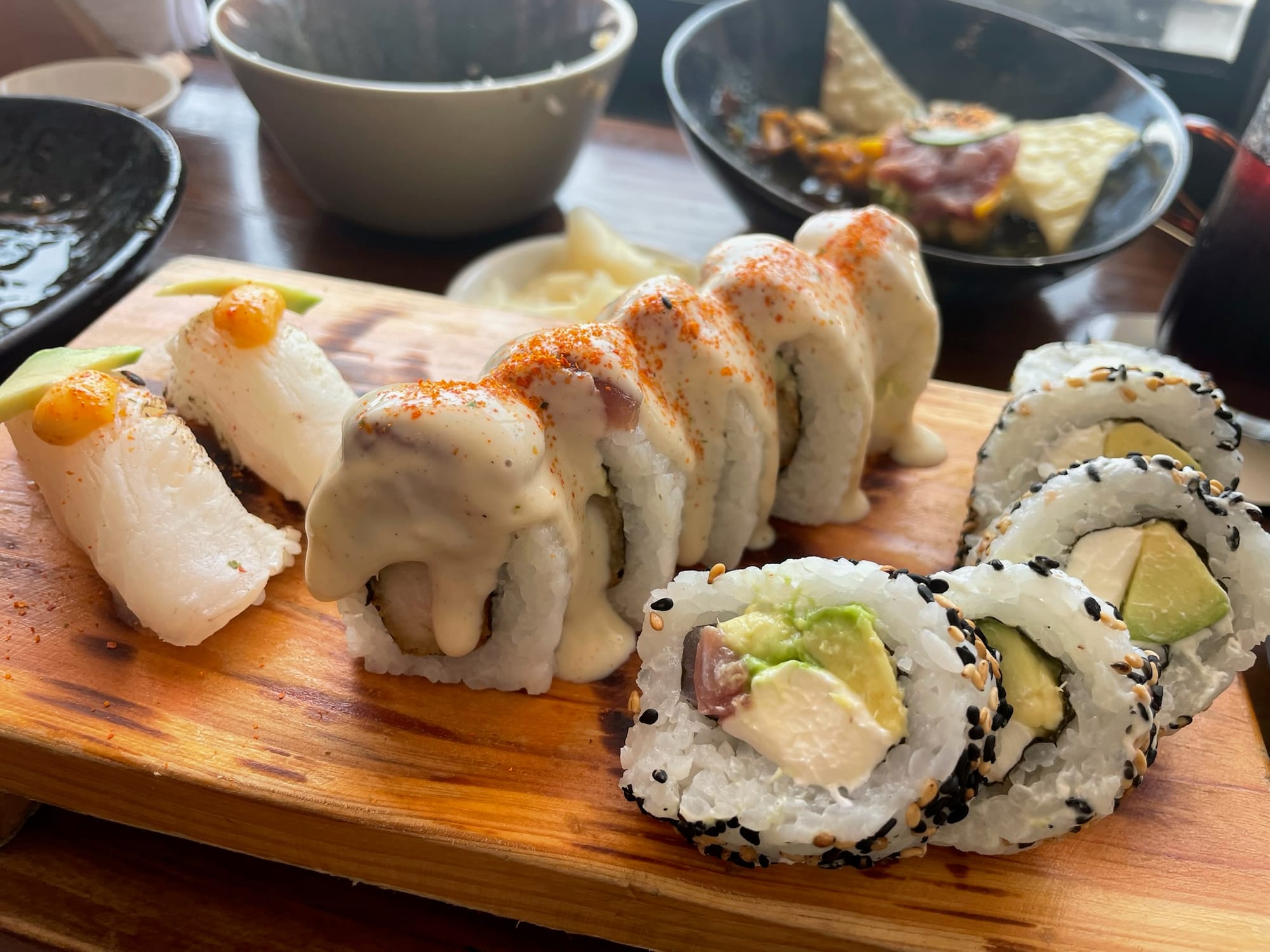
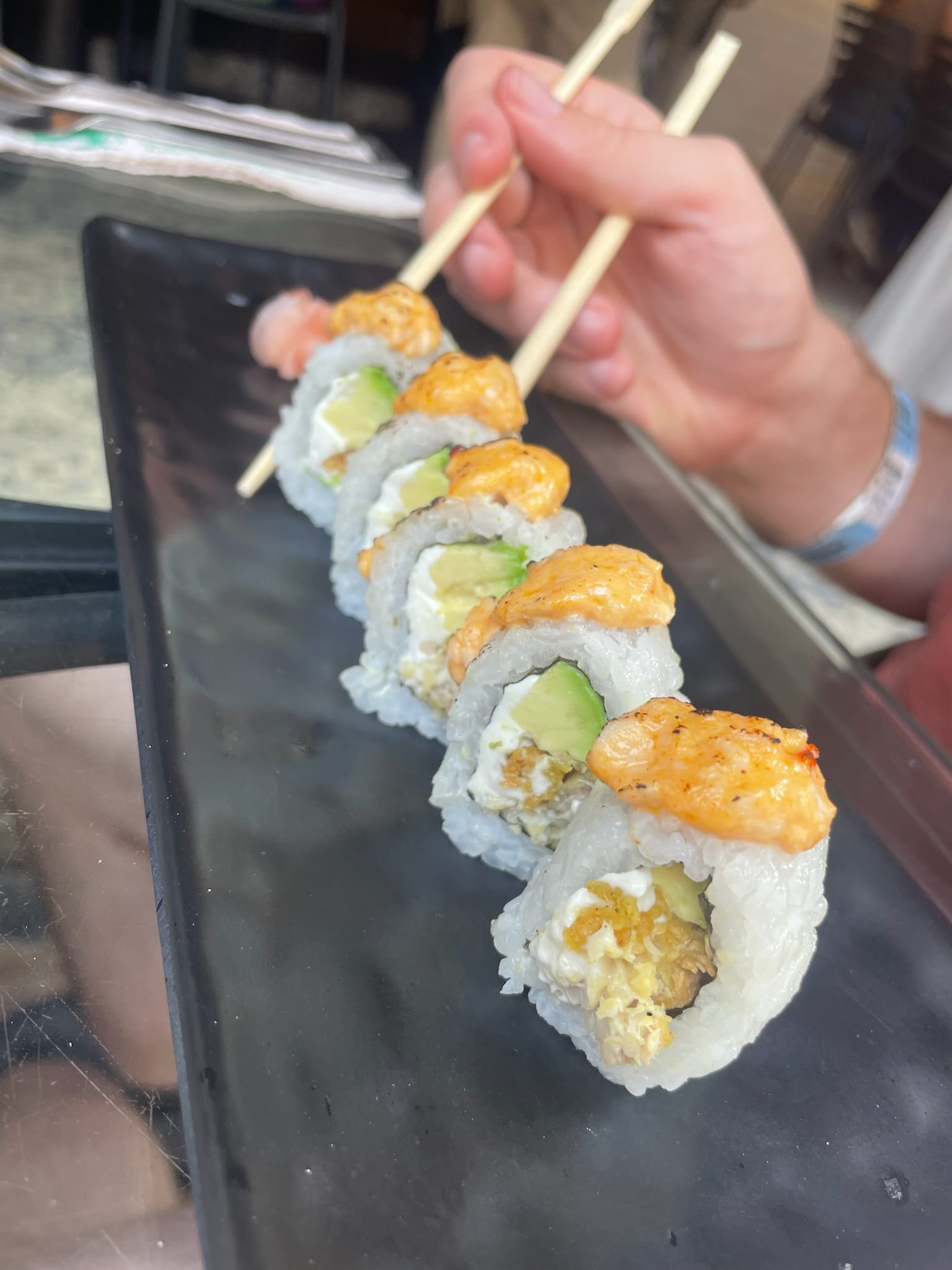

Look I KNOW it looks like we just went to Japanese restaurants again but it's called Nikkei and we're in love. [📸 Rachel & Johann]
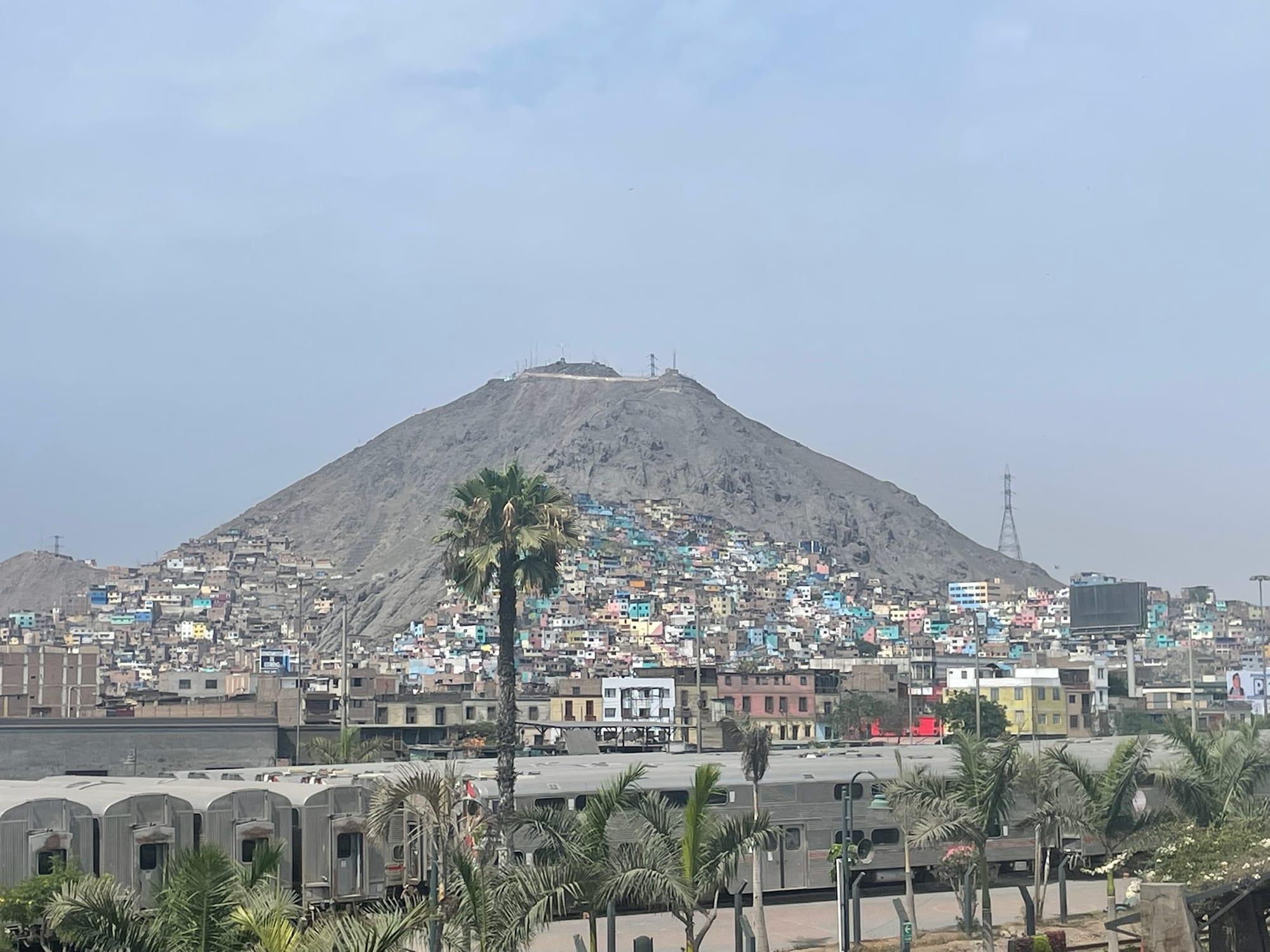
A note about Lima’s transportation system: It’s an experience. Your options for getting around are:
- Regular city(?) buses, sometimes called “minis”, which all have vastly different branding and advertising, have no consistent costs that we could glean, and seemingly have the strongest vehicle brakes known to humankind. You better hold on.
- Taxis, if you enjoy paying a lot of money as a visitor.
- Collectivos, which are like taxis, but they’re usually minivans and don’t go anywhere until they’re full. At least they’re kinda cheap.
- A train metro line, though it doesn’t go anywhere you’d probably want to go as a visitor. It only has one line, though five others have been planned for years. Most of them are kinda stalled in a half-constructed state, there are allegations of bribery and corruption, etc… We didn’t get to try this.
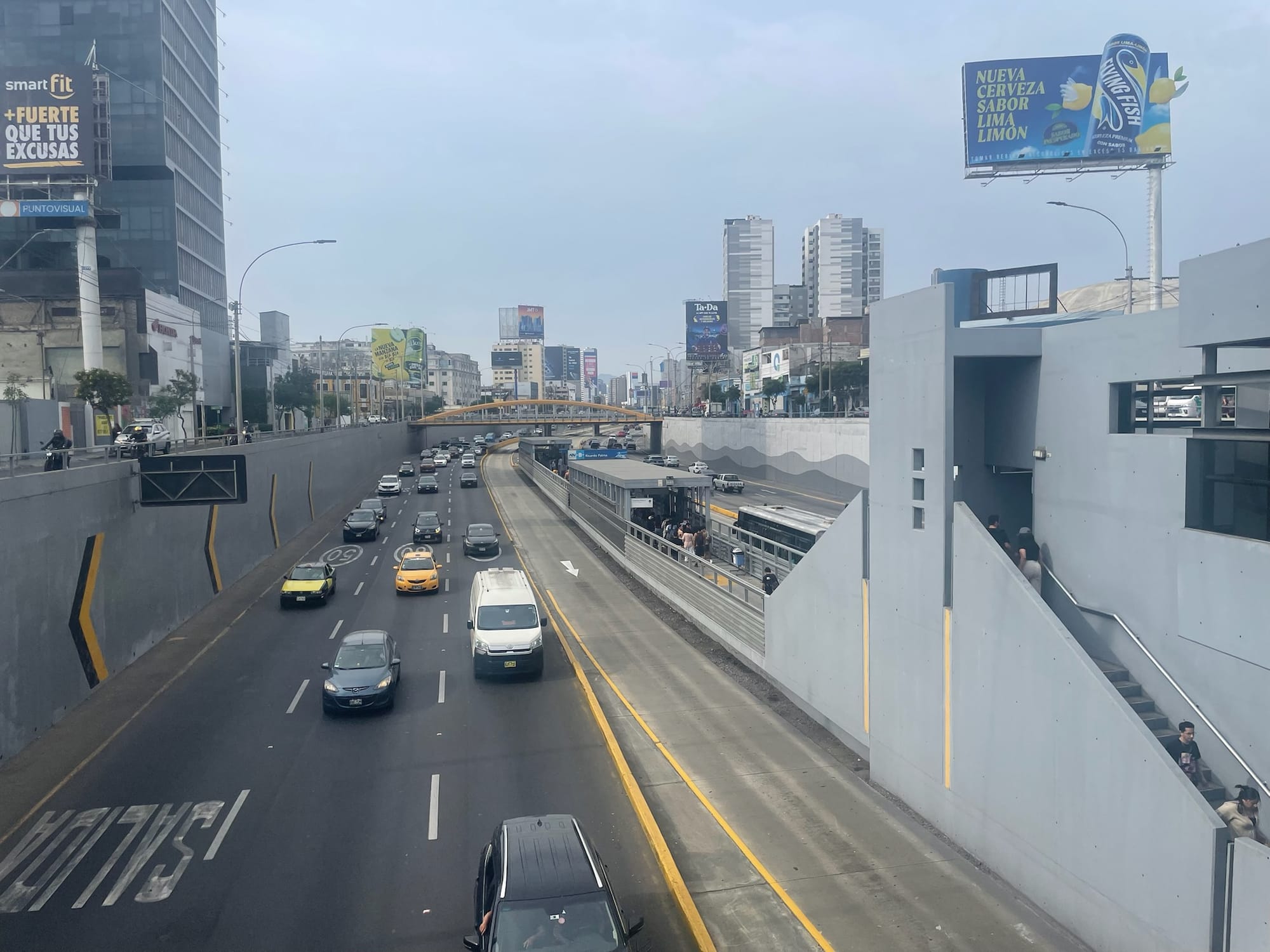
- The Metropolitano. This… this was kinda perplexing to us. It’s like a train metro system in every way - dedicated stations, payment via metro card, waiting platforms with a yellow line you have to stand behind, and so on. EXCEPT where you’d expect to find a train, it’s all buses. Which use natural gas. Running on perfectly separated roads that totally could accommodate train tracks. We guess it works fine, and people seem ok with it, but… We are ardent supporters of Train Supremacy.
For better or worse, our trip from Lima followed the textbook Southern Peru route. That also meant it could be hyper-touristic, but we did our best to dive deeper by lingering in places, walking cities as much as we could, and escaping tours where possible. Translation: (some) chaos ensued.
Paracas
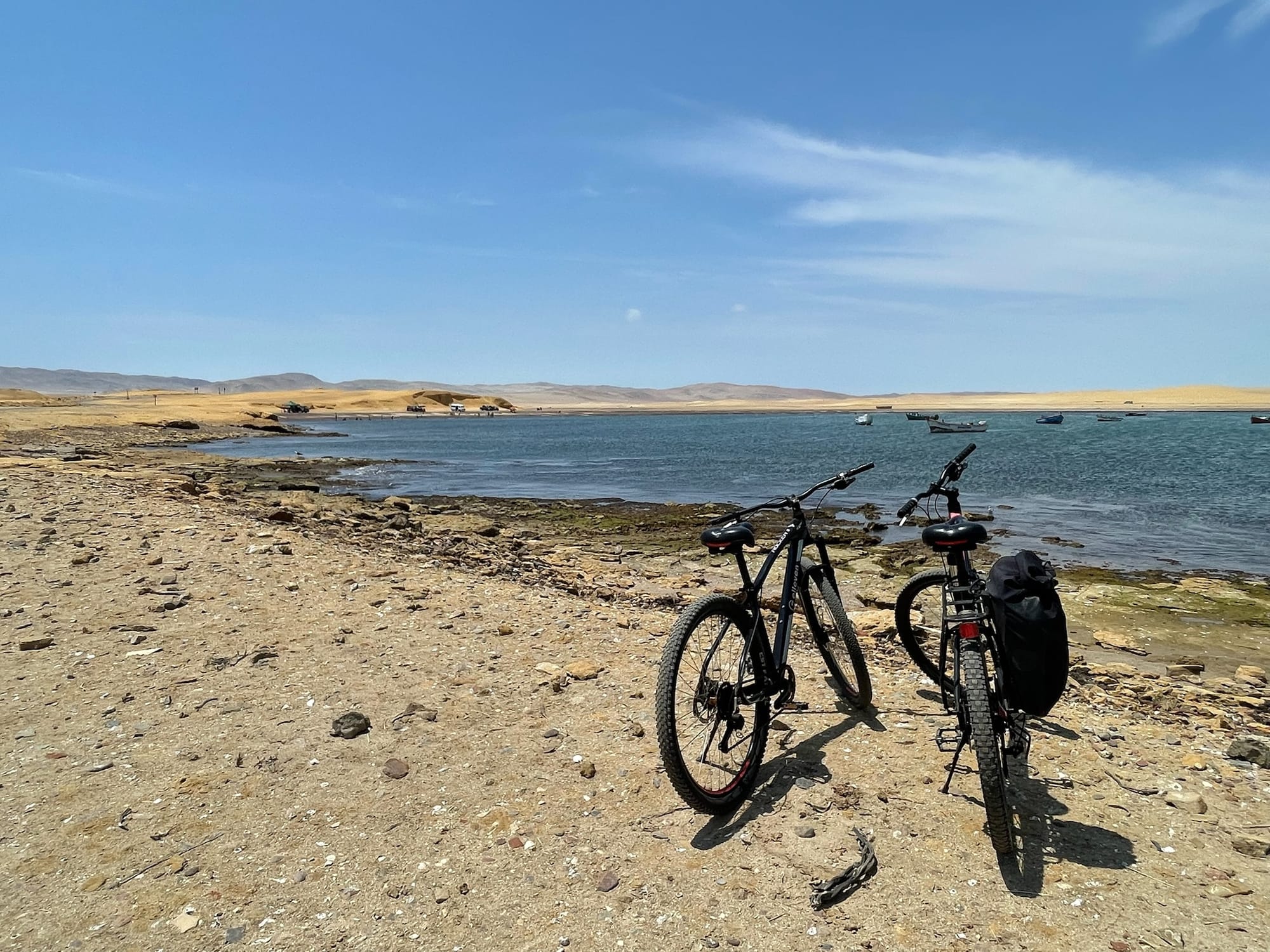
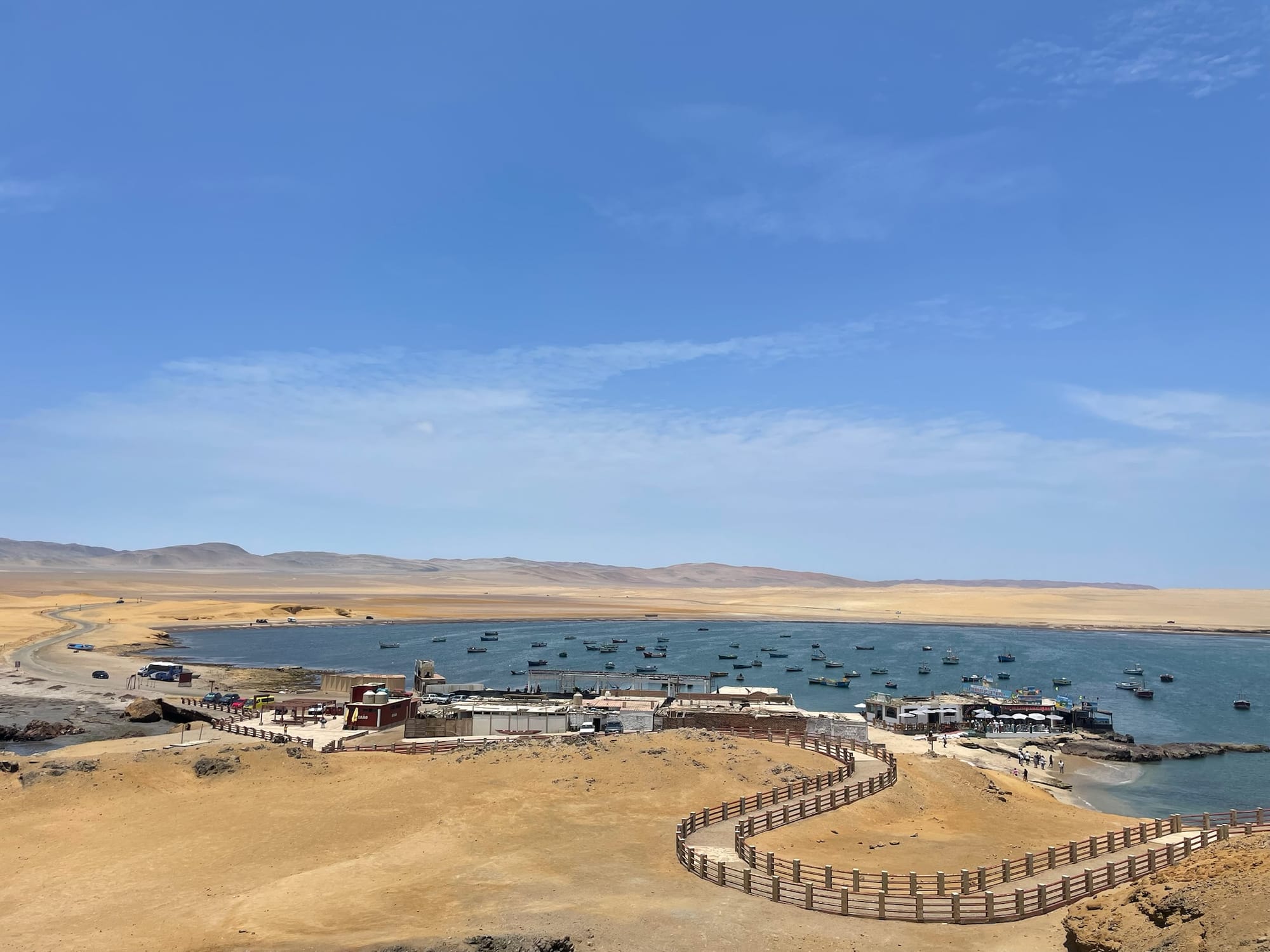
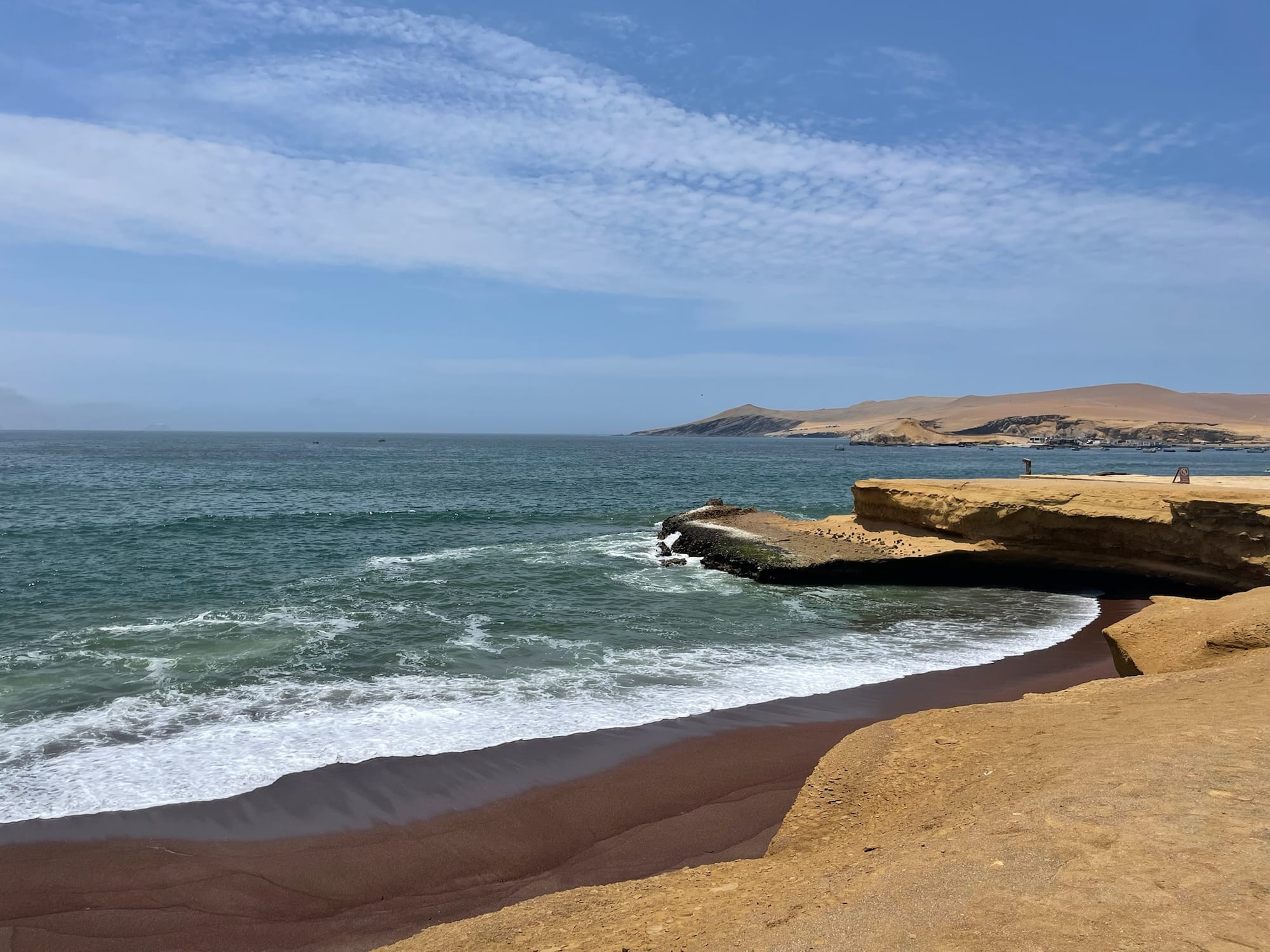
Part of the coastal desert, Paracas was DRY. But more than that it was beautiful, with the teal Pacific lapping dunes of crimson, dusky orange and gold. When confronted with a hot, dry desert we followed our natural instincts and rented bikes.
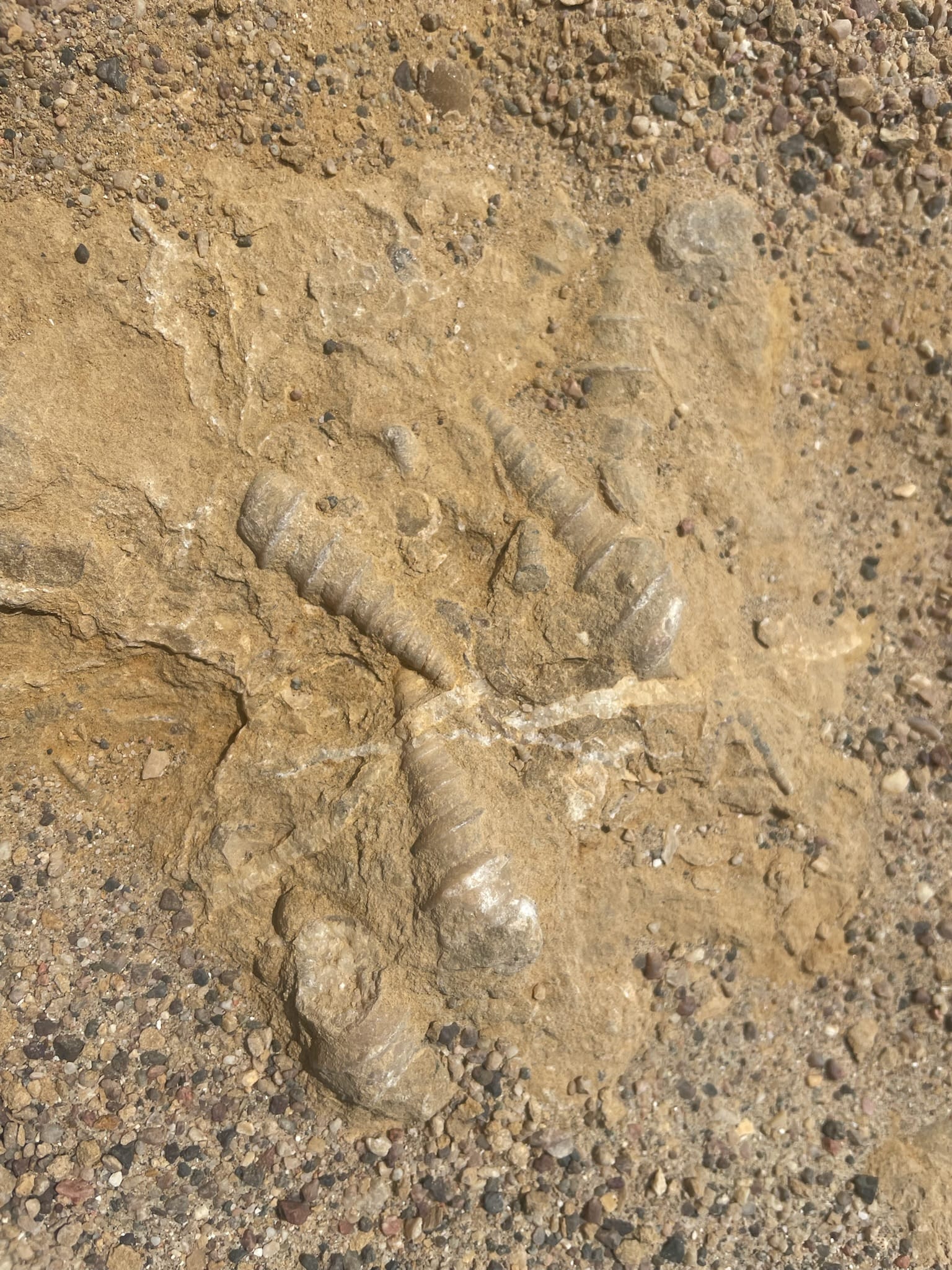
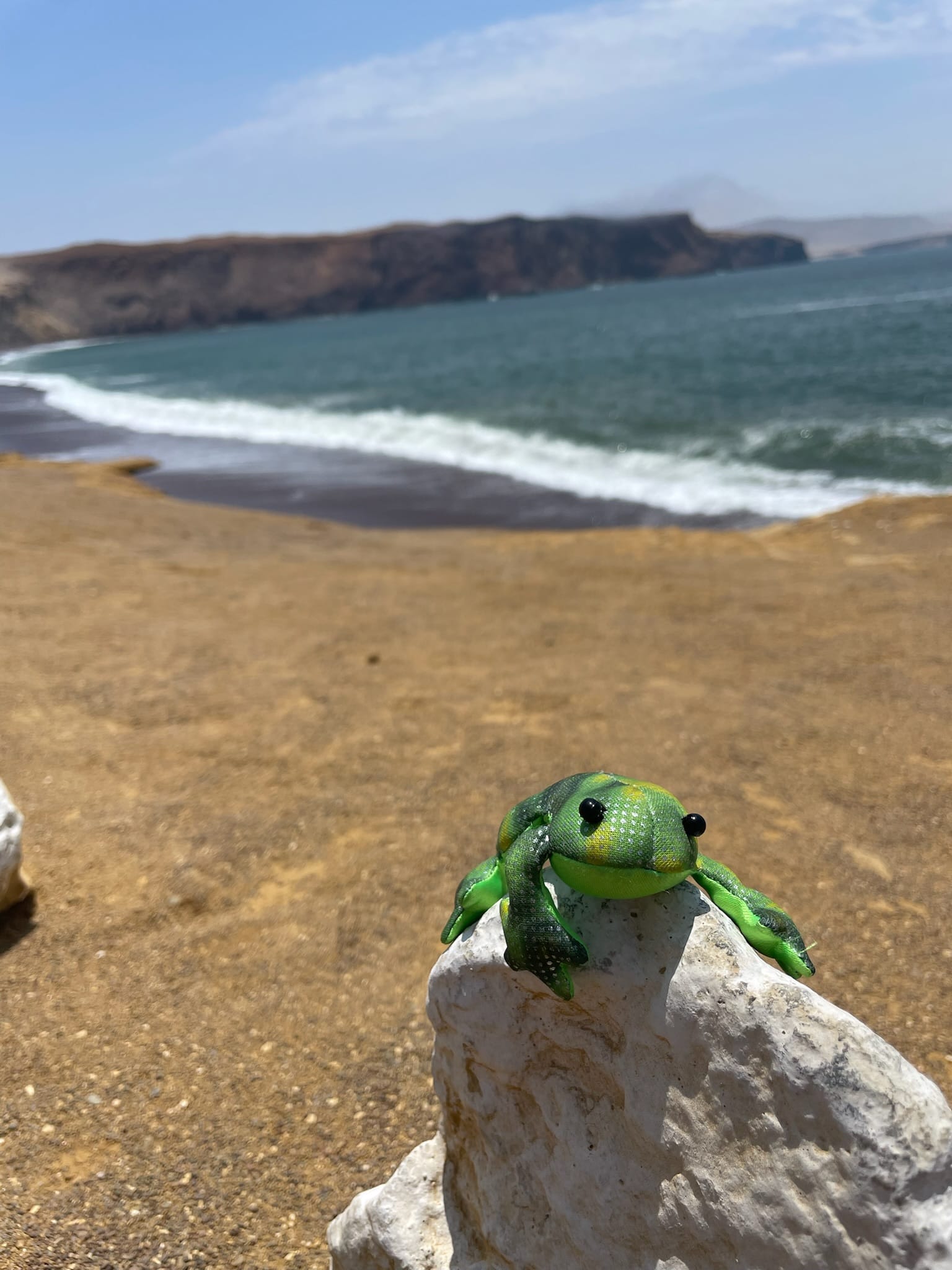
We spent more or less an entire day pedalling through the Paracas National Reserve, enjoying stops at beaches with white, red, and grey sand. We were fascinated by the many shell fossils embedded in the desert floor, and the red dunes which lent a Martian atmosphere.
The Sun was spicy, and despite our best sunscreen endeavours, we burned a colour to match the dunes. There were many lovely shorebirds nesting and feeding in the reserve; our favourite was a determined gull who stood on a tire continuously dropping a sea urchin for a good 20 minutes. They were still at it when we pedalled away. Other birds would dive perpendicularly into the water without warning and come up with wriggling fish.
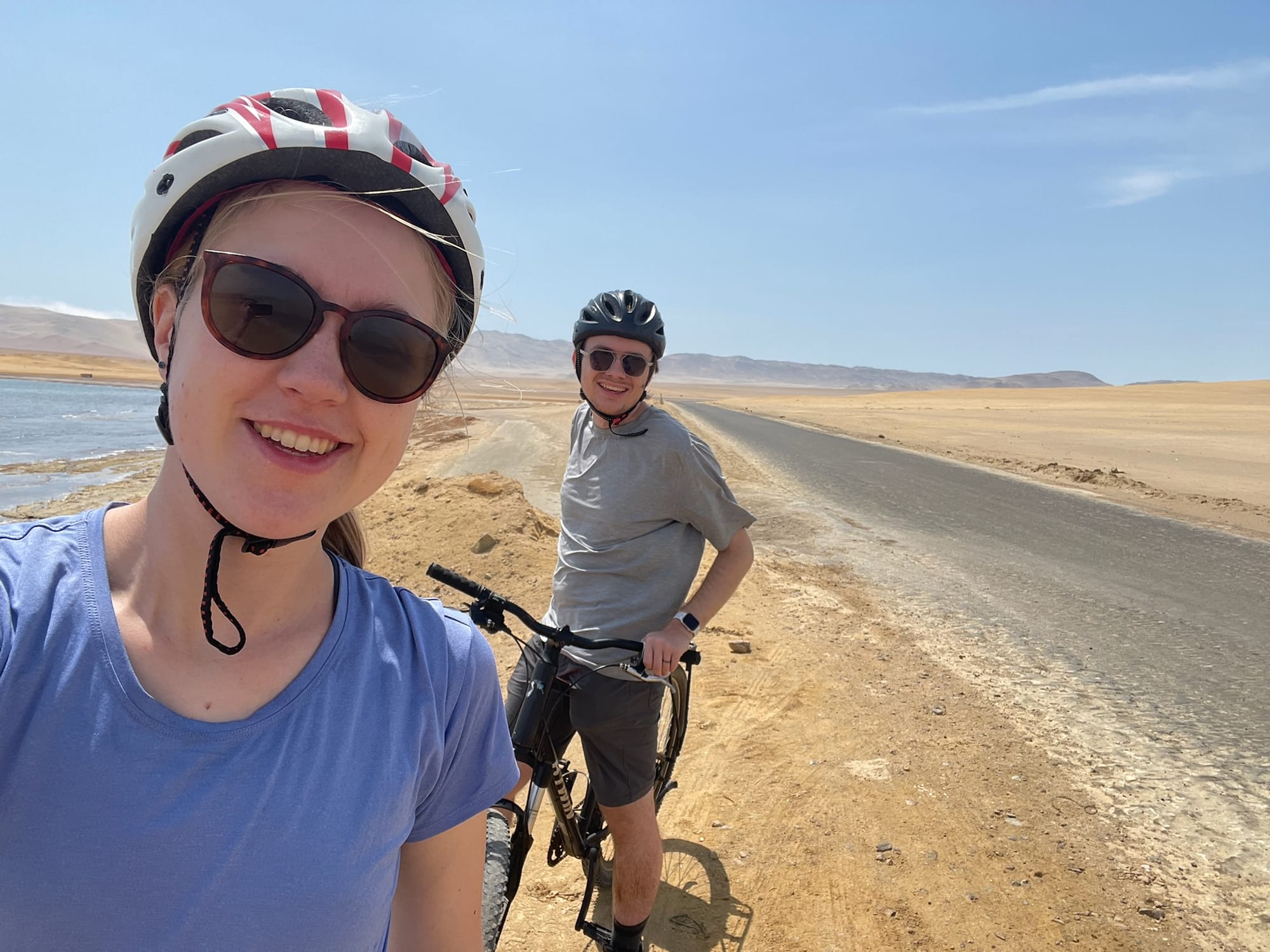
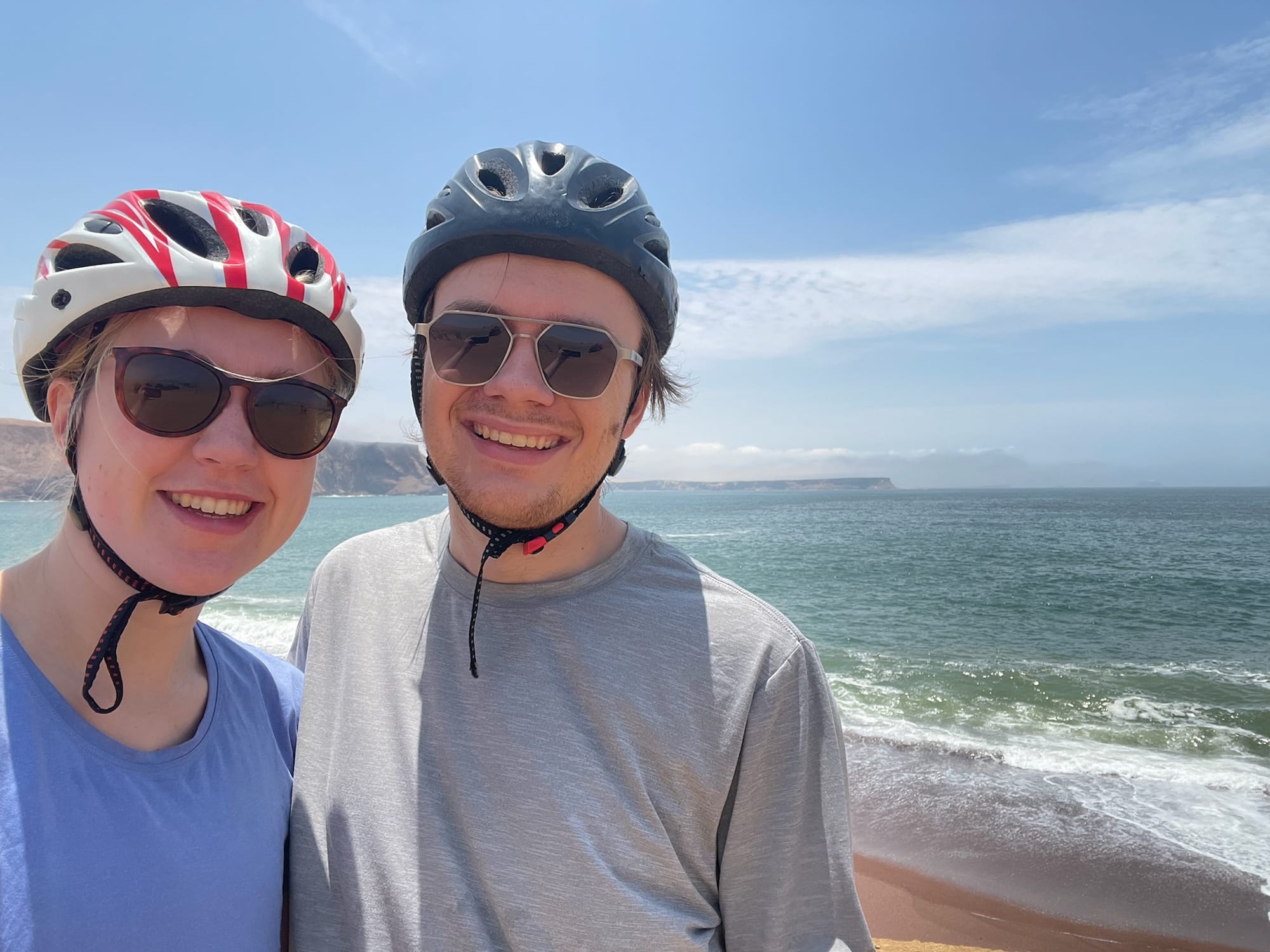
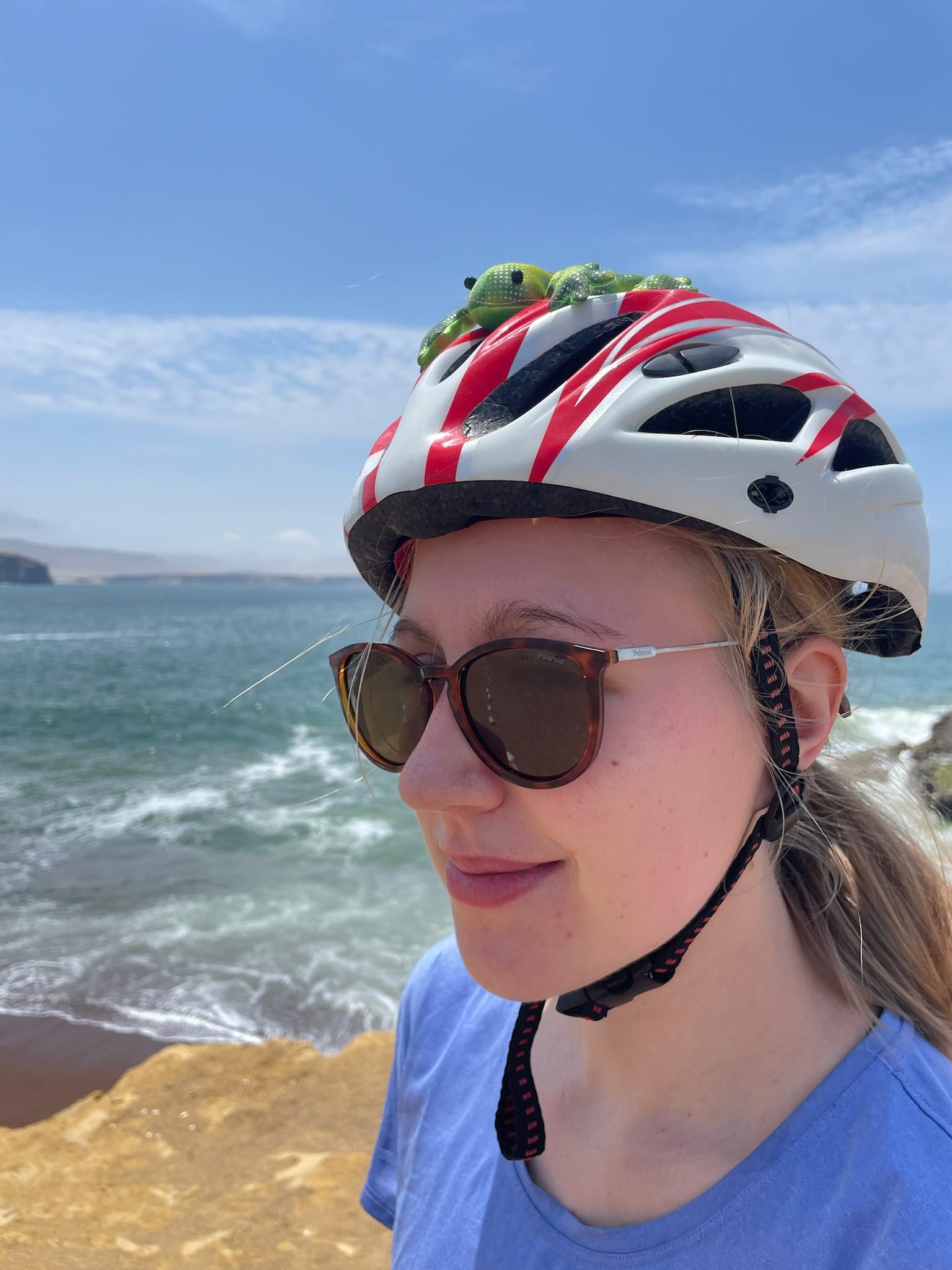
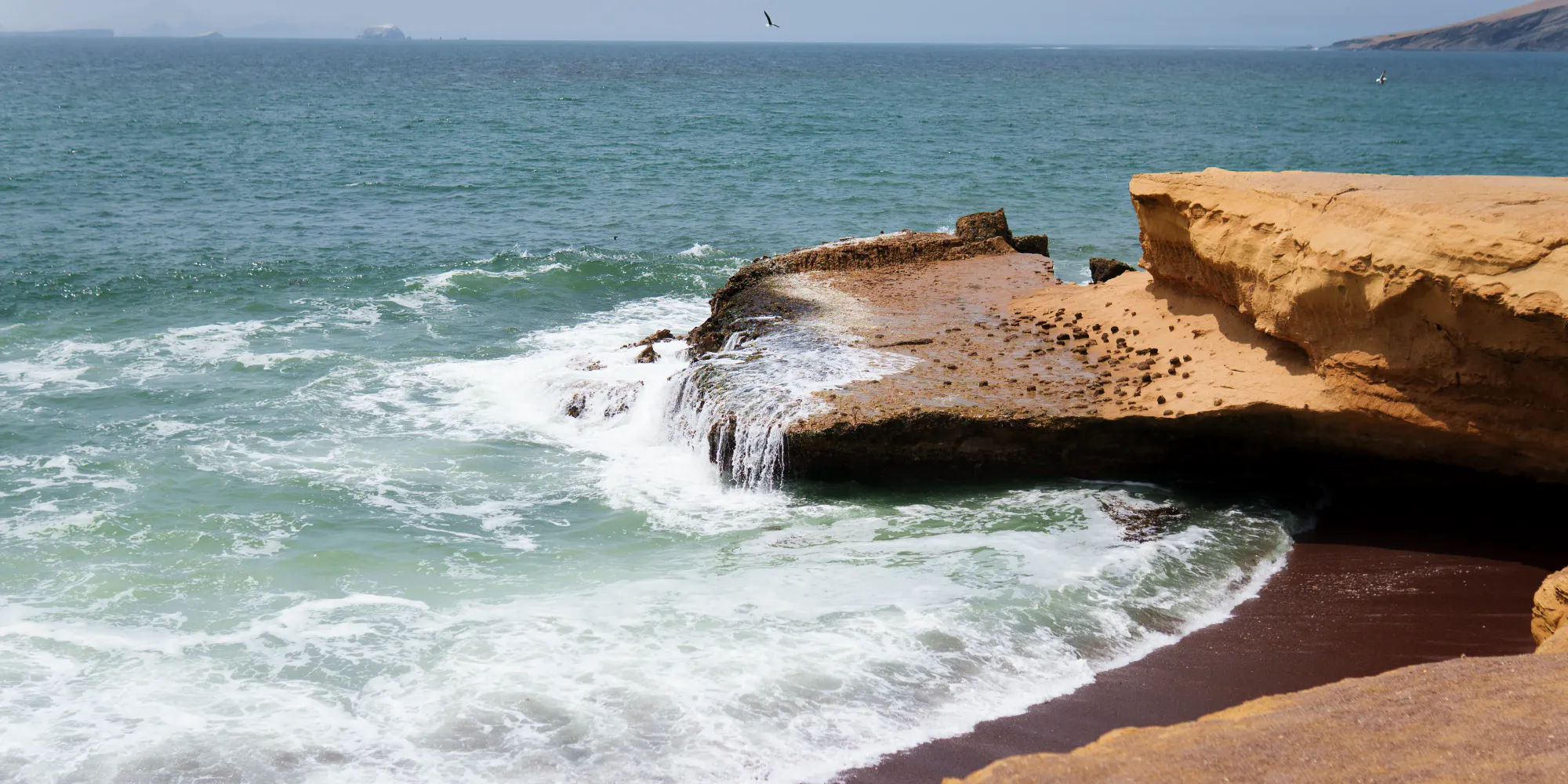
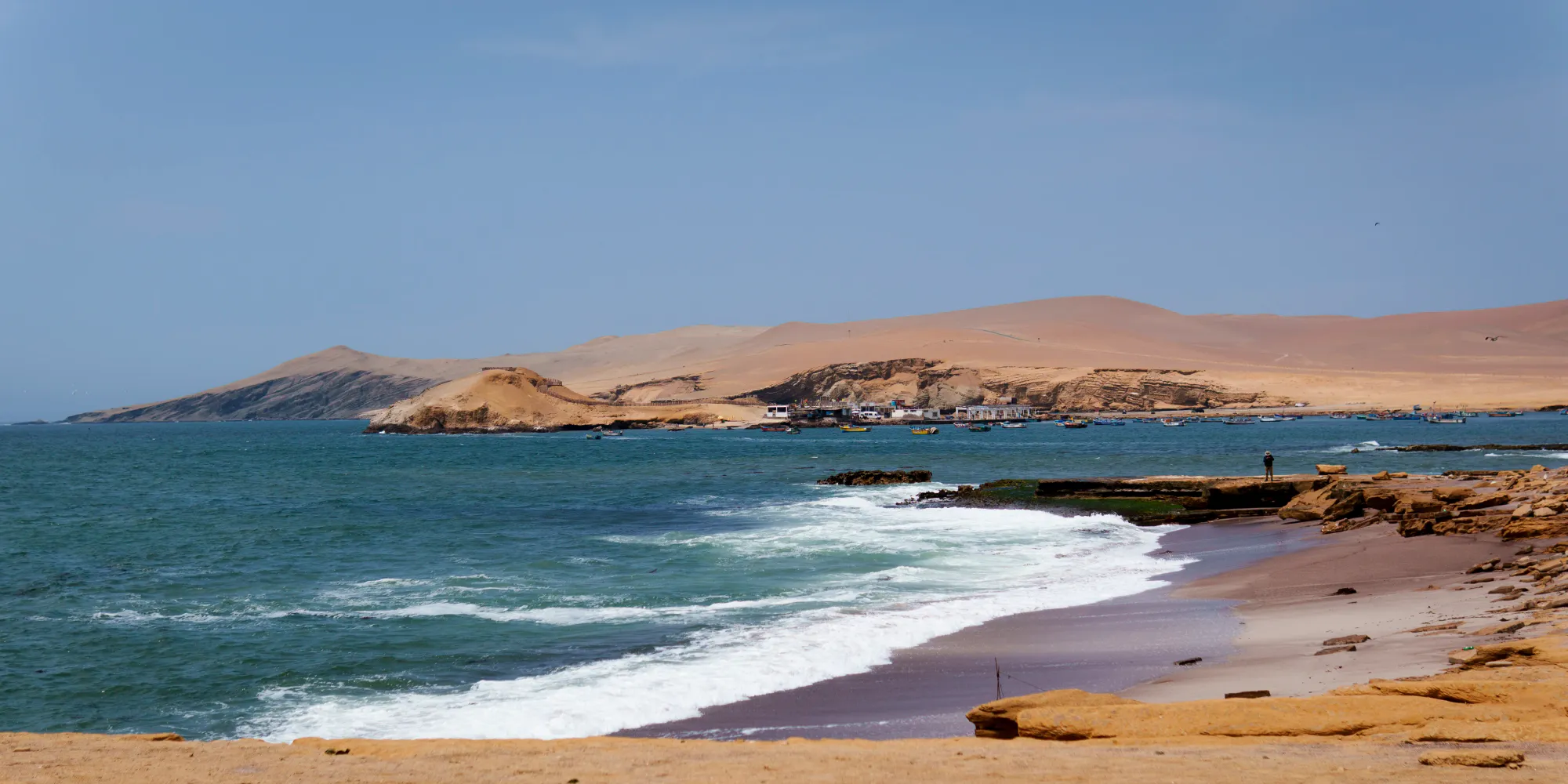
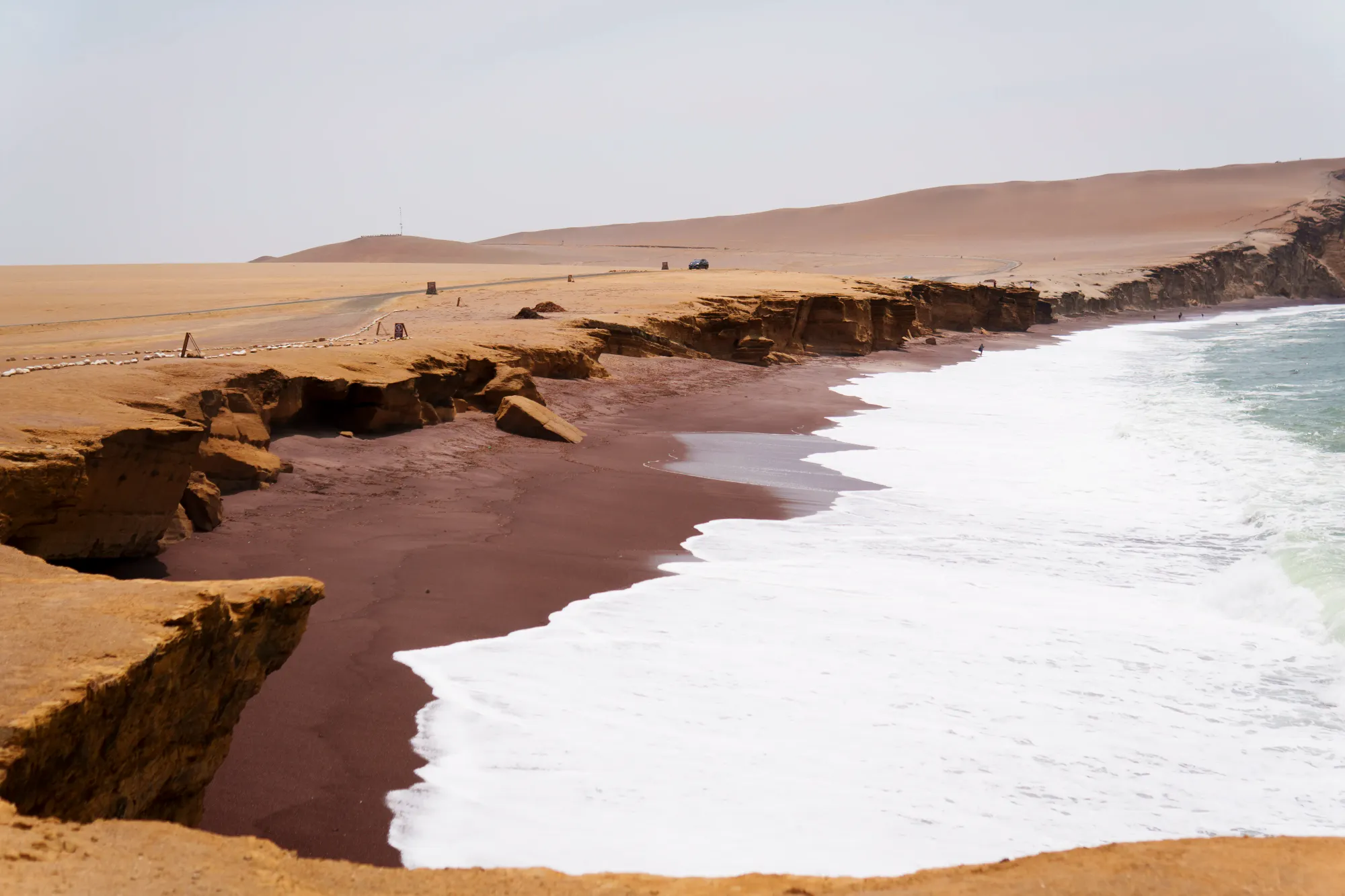
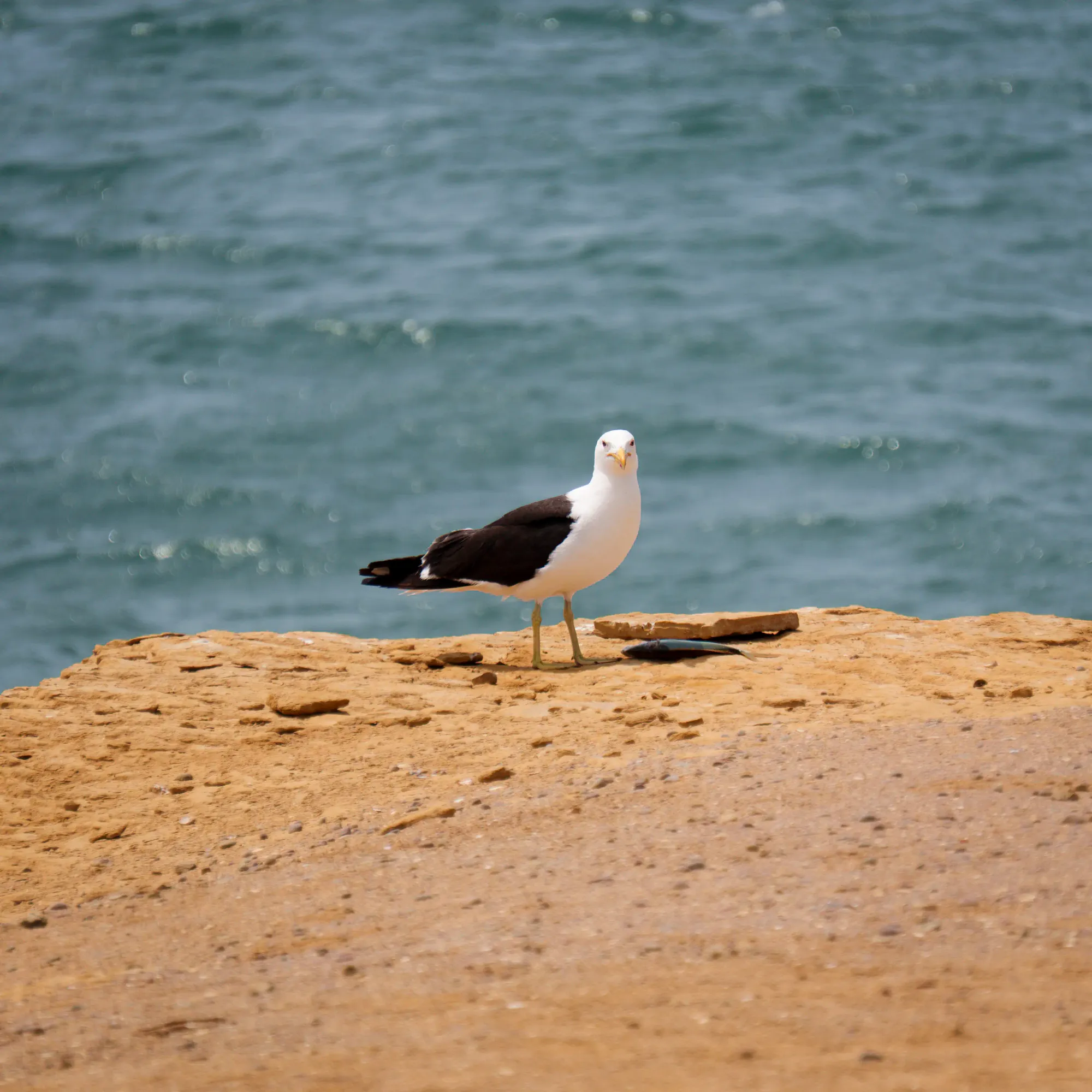
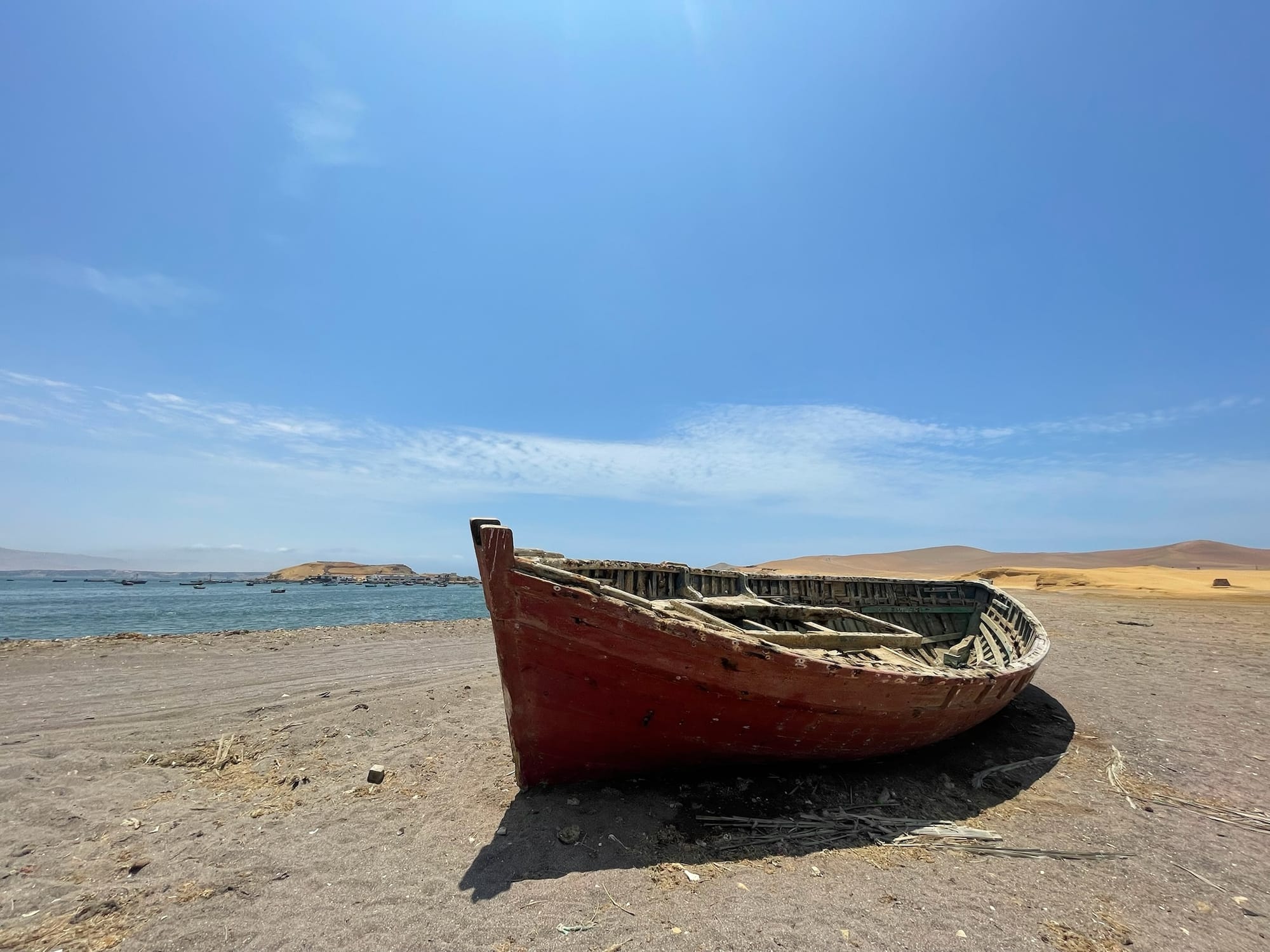
We put thick layers of sunscreen on something like every 40 minutes, and still got crazy sunburns. [📸 Rachel & Johann]
Fun fact: Apparently, NASA used the area around Paracas to test imaging sensors for their Mars rovers due to the similar terrain and colouration. Allegedly. Or so we were told. Johann didn't have the energy to look it up.
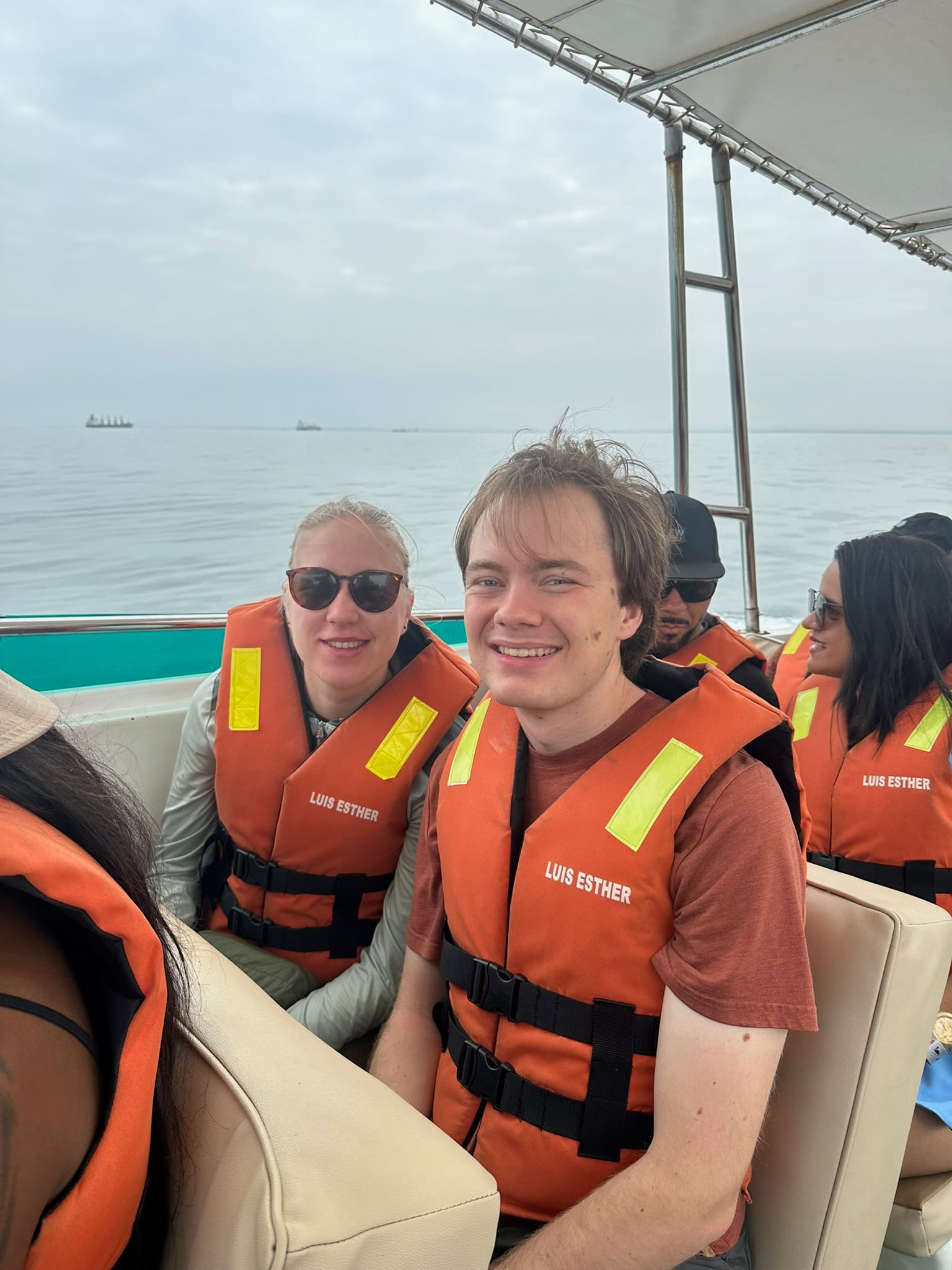
A definite highlight was taking a boat to the Ballestas Islands, with their thousands of nesting birds. There were grey-footed Peruvian boobies and Humboldt penguins standing sentinel. The noise was uproarious as we approached a sea lion breeding beach, long-maned males patrolling their harems of females and pups. These islands are a few of many which were essentially strip mined for guano (bird crap), which is a top fertilizer. One guide confidently told us that "the bird poopoo made the trains in the US go." No sir, it did not.
We also saw the Paracas Candelabra, a massive geoglyph carved into the side of a mountain. Its origins and purpose are unknown, and like many historic features in Peru, it is tinged with mysticism.
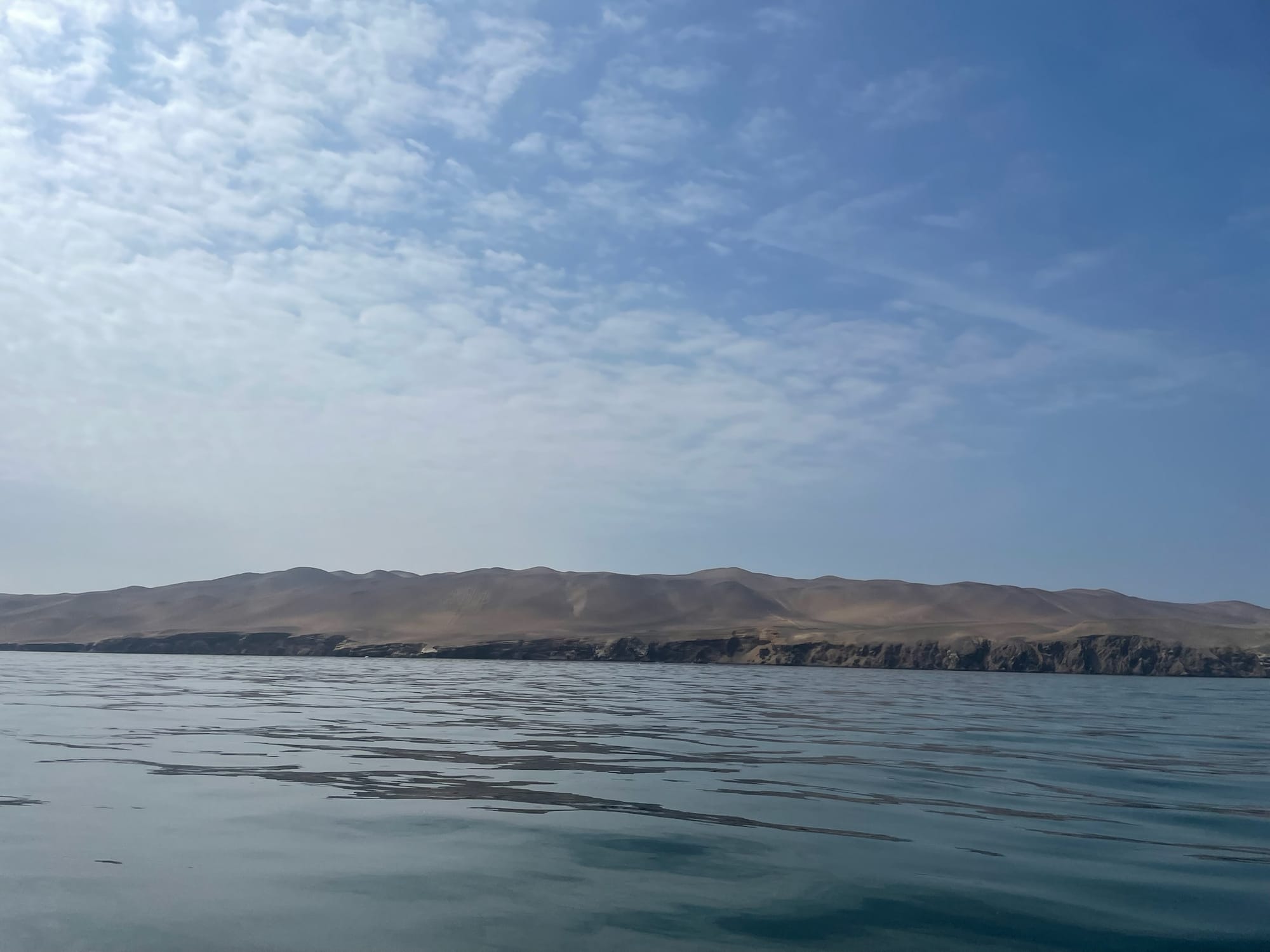
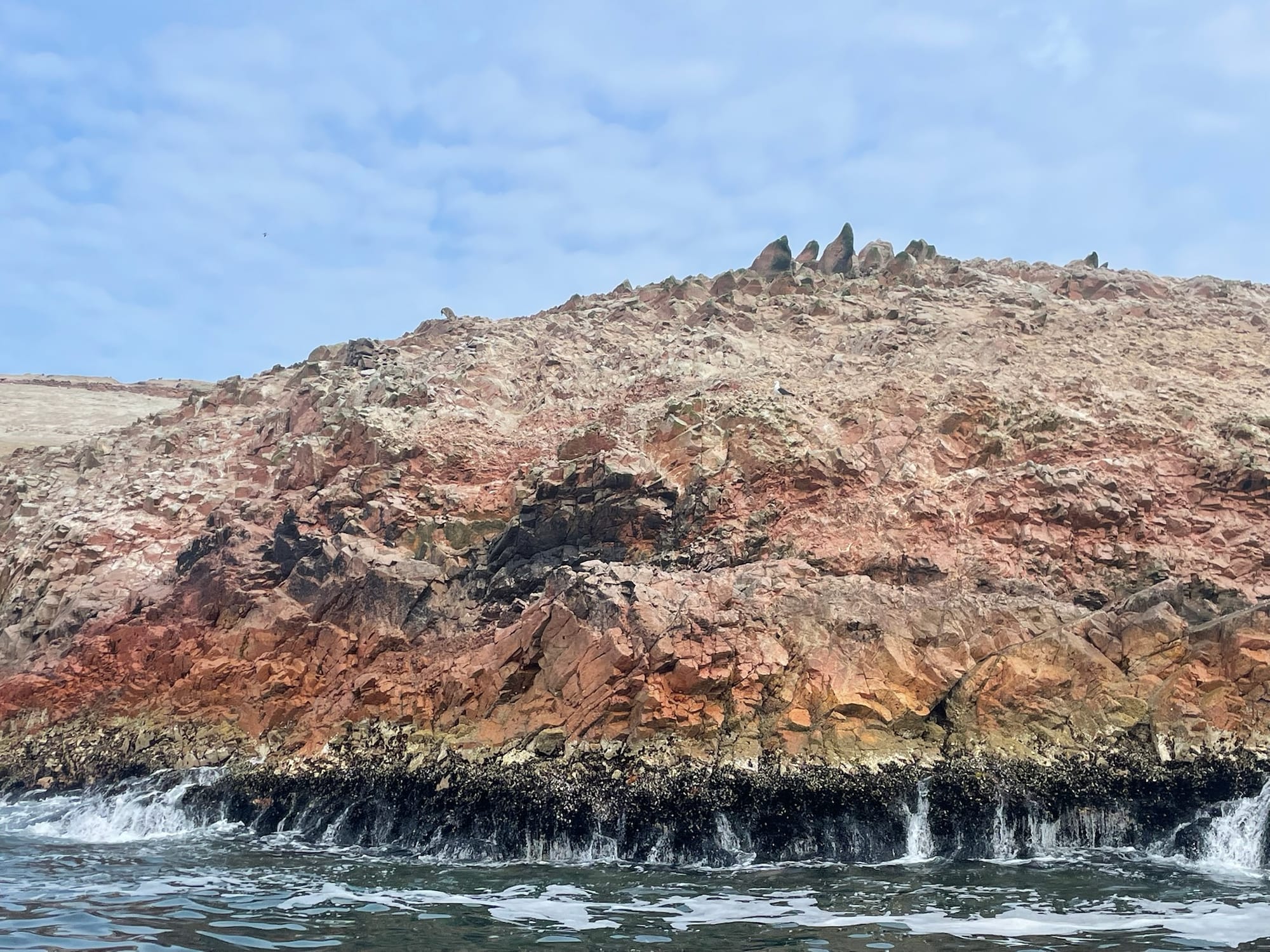
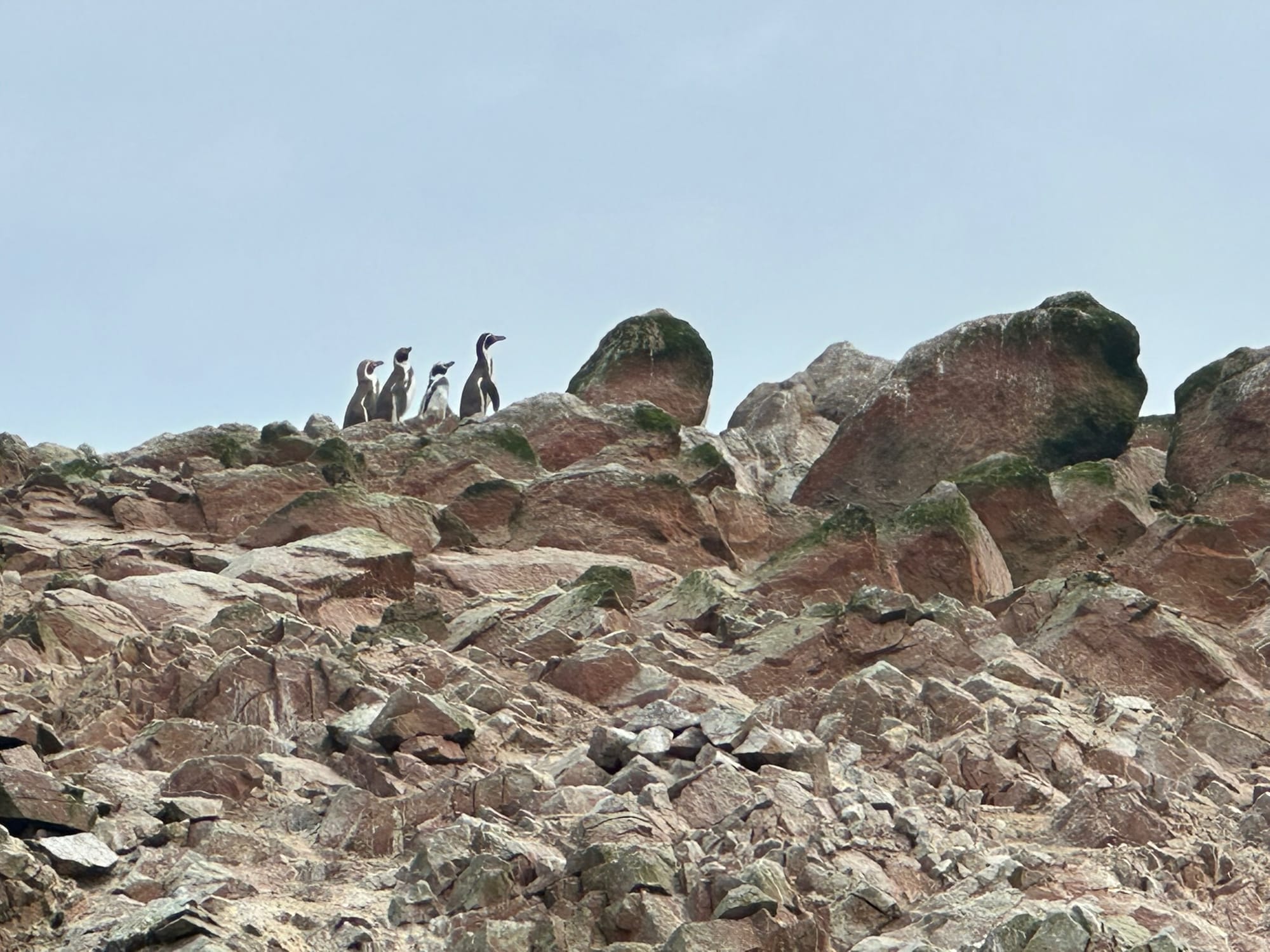
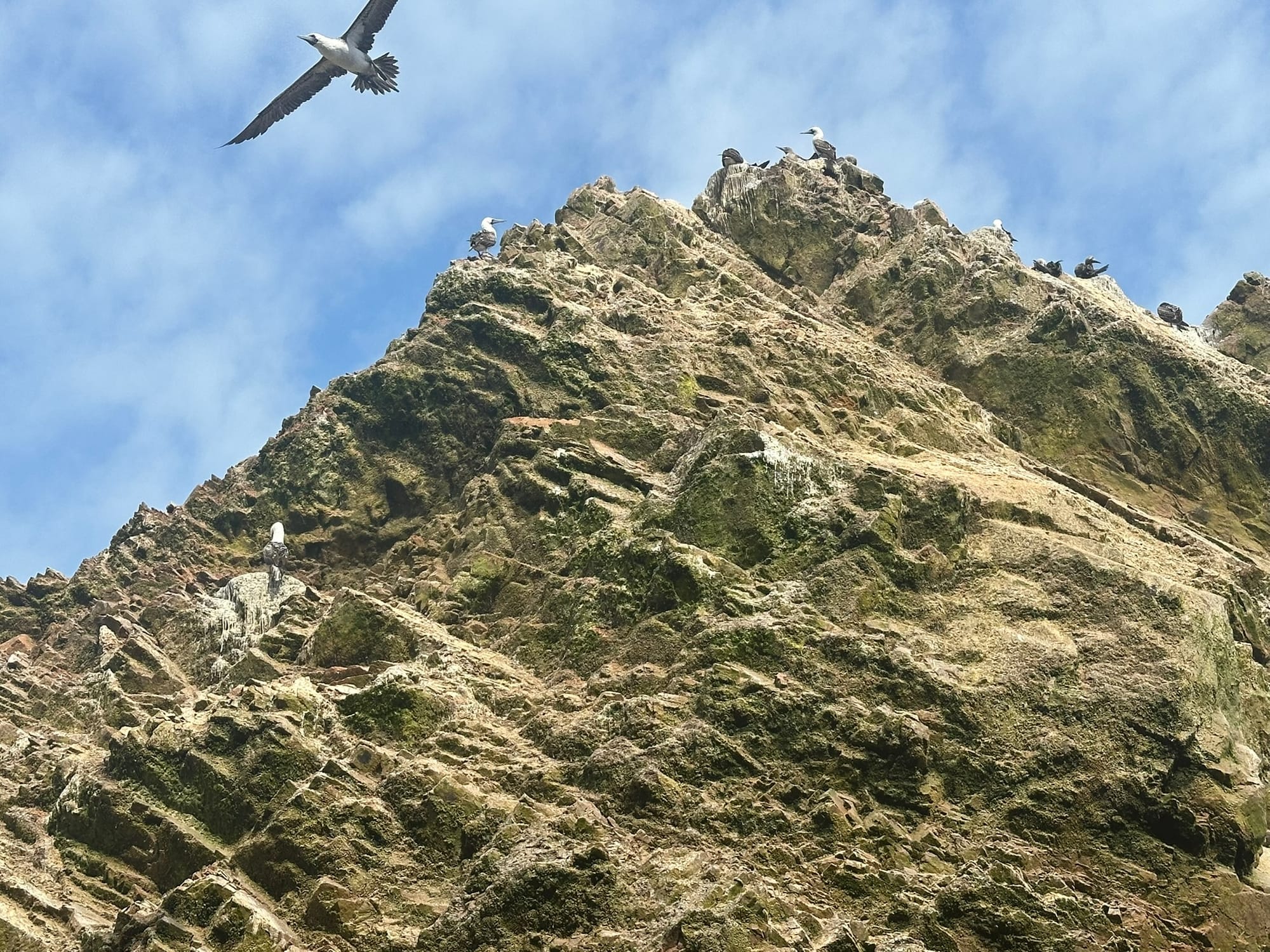
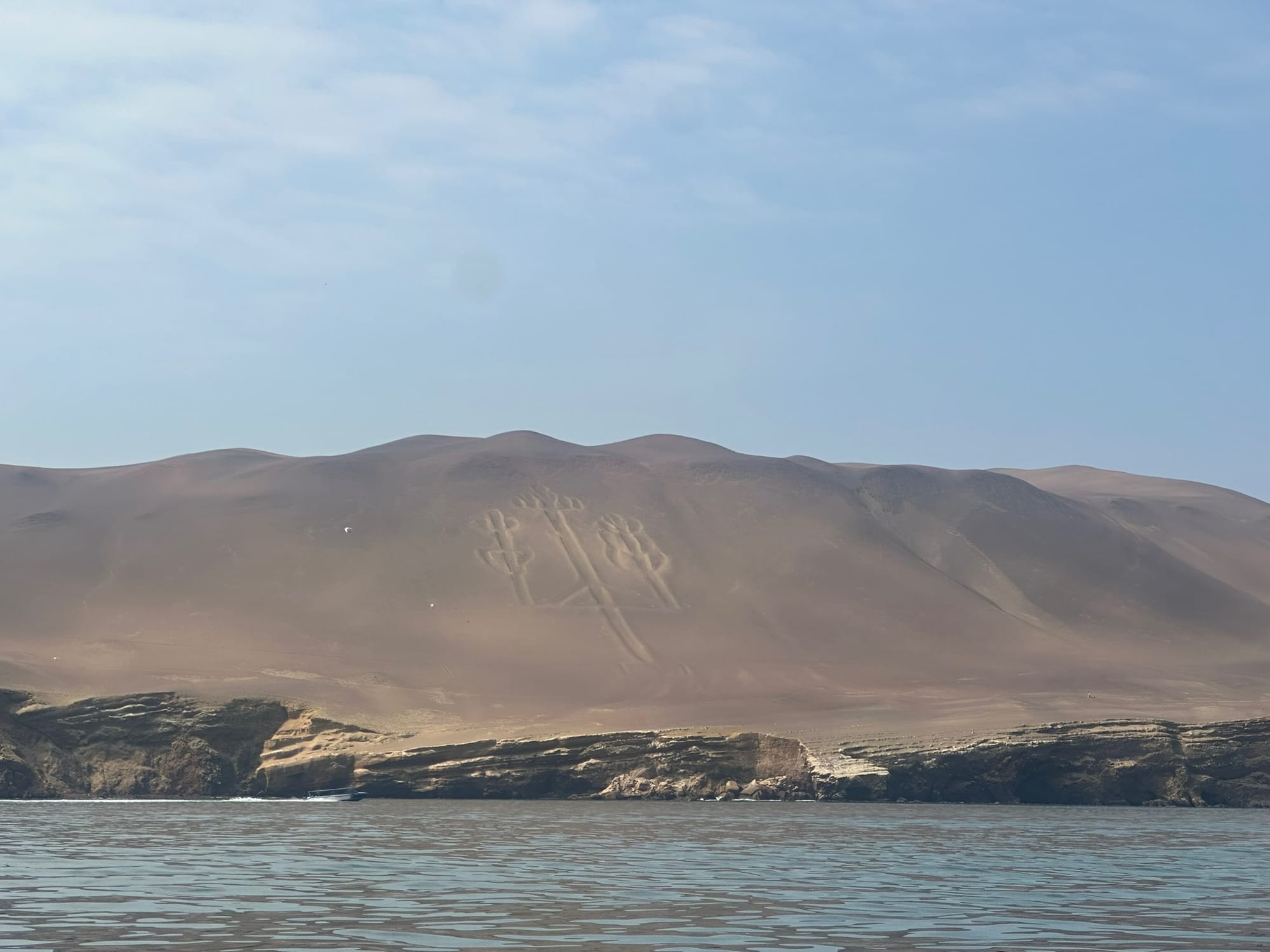
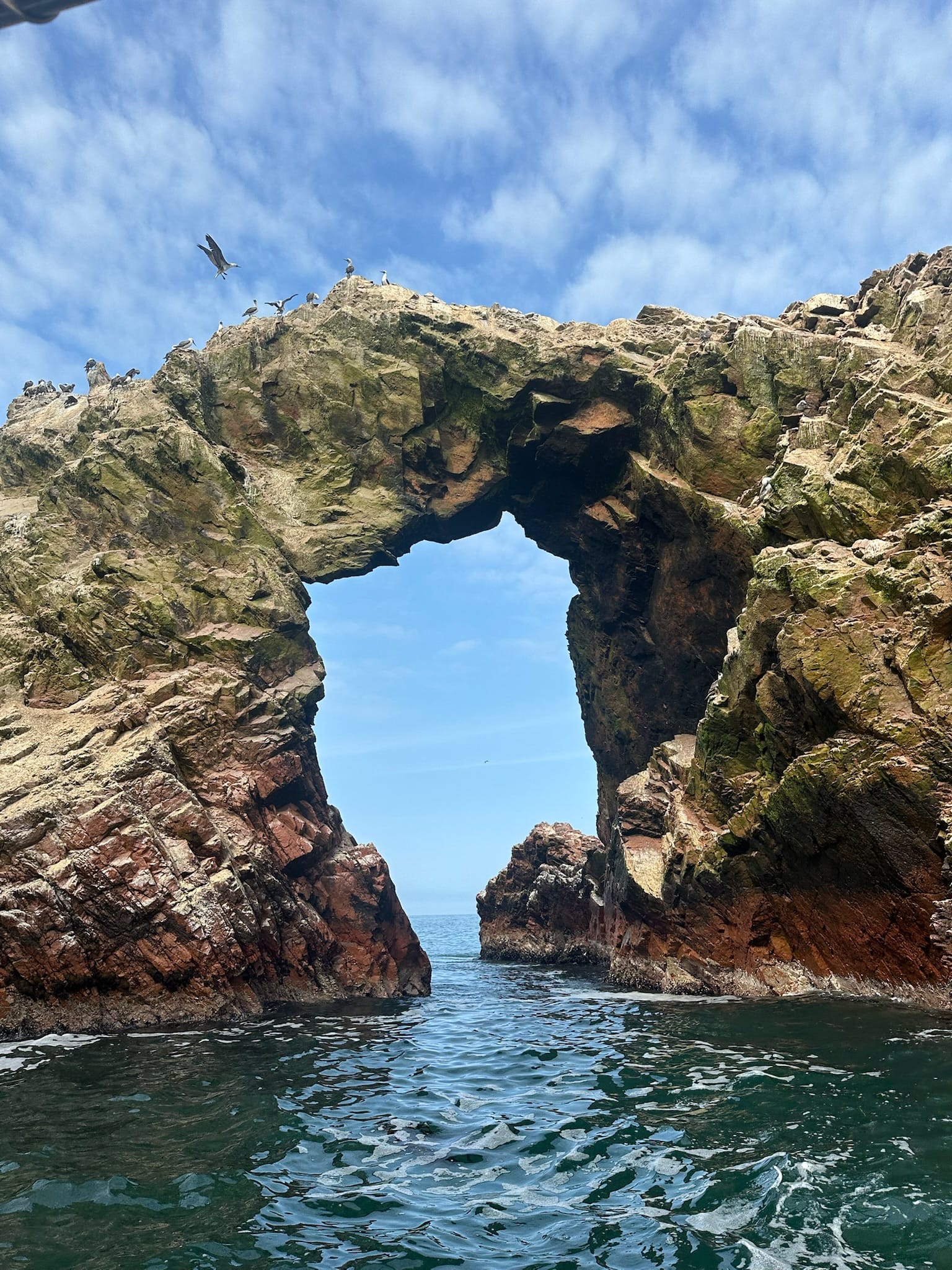
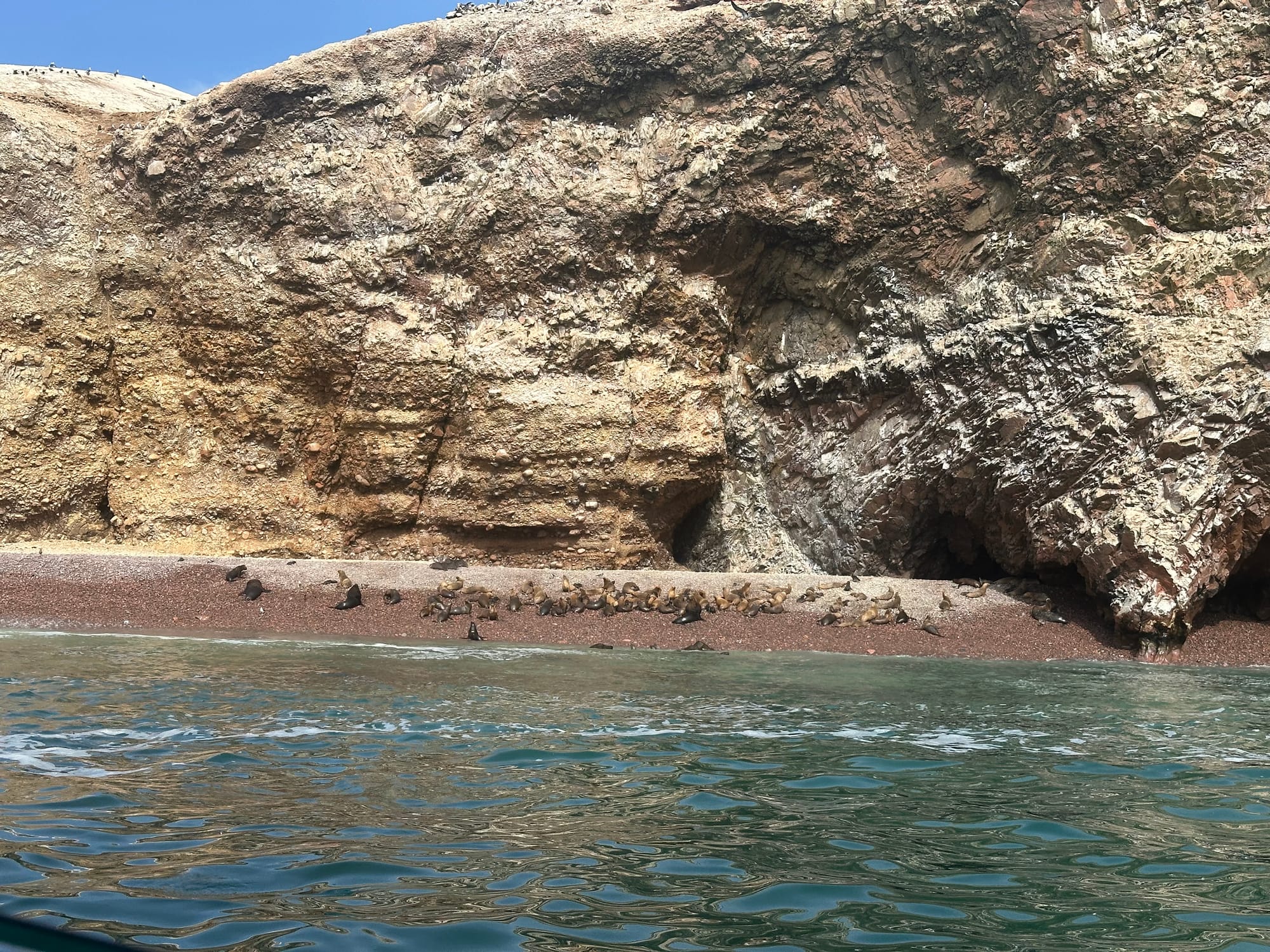
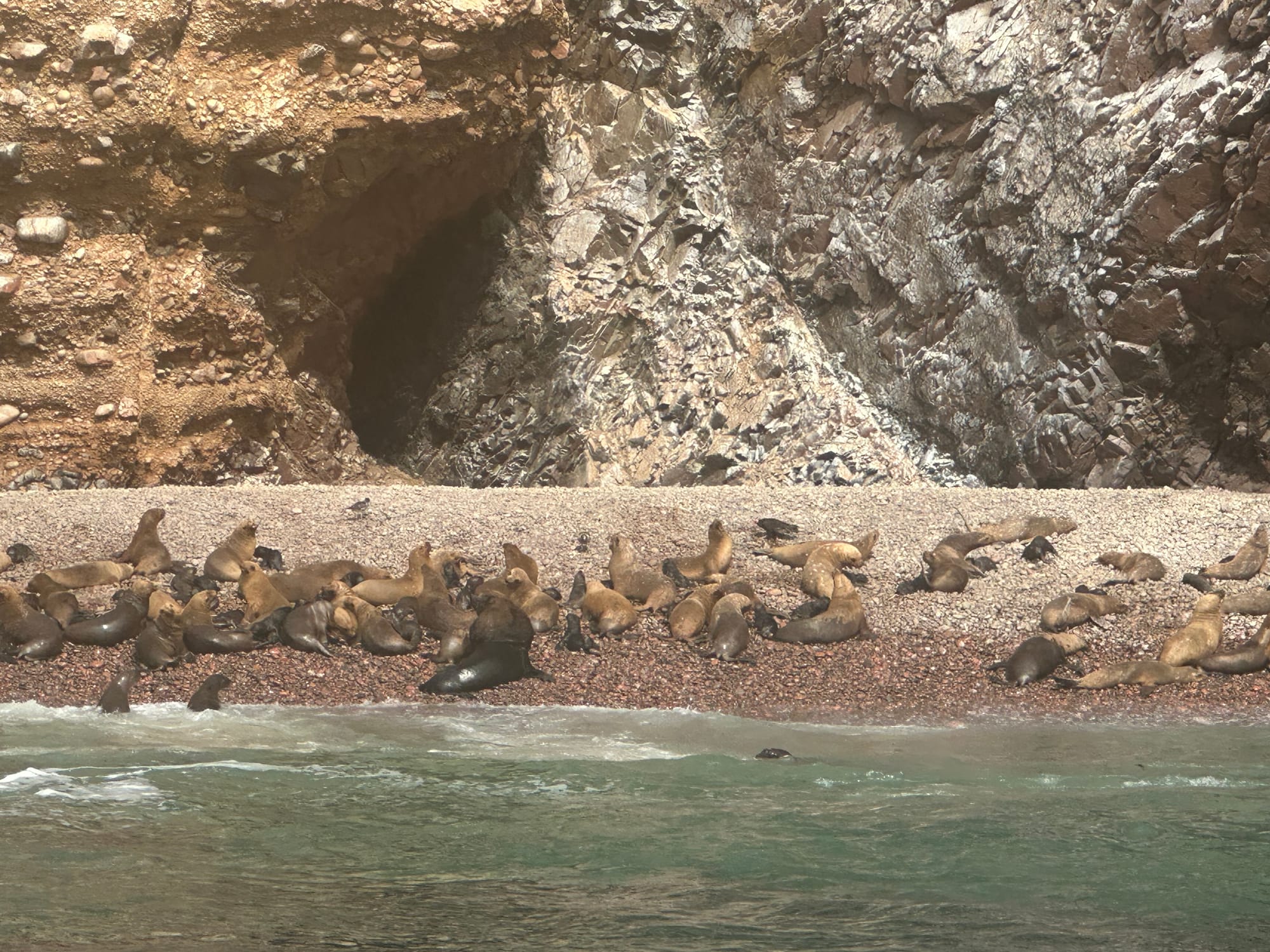
Oh, to be a sea lion, sunning oneself on a comfortable patch of rock... [📸 Rachel & Johann]
A random but pertinent warning: always taste the salt in the hostel kitchen. It may be in a hand grinder labelled salt, but there is a non-zero chance it’s sugar, which is significantly less good on pasta. Nothing happened, we swear. (Good gracious, sweet gnocchi!)
Huacachina
Further inland, the desert was much different, more akin to the classic Arabian-style desert with dunes like mountains. All we needed were some sand worms. Huacachina itself is a small town wrapped around a natural desert oasis, though the lagoon now has to be artificially filled due to tourism pressures.
After much deliberation, we decided to try sand-boarding. Sledding face first down the massive dunes was great fun! Unfortunately, to reach our sledding spot, we had to take dune buggies. We eventually got used to the high speed, lurching thrill ride, and even enjoyed it; that is, after Johann stopped muttering about our driver being a psychopath. It was fun, but once was enough.
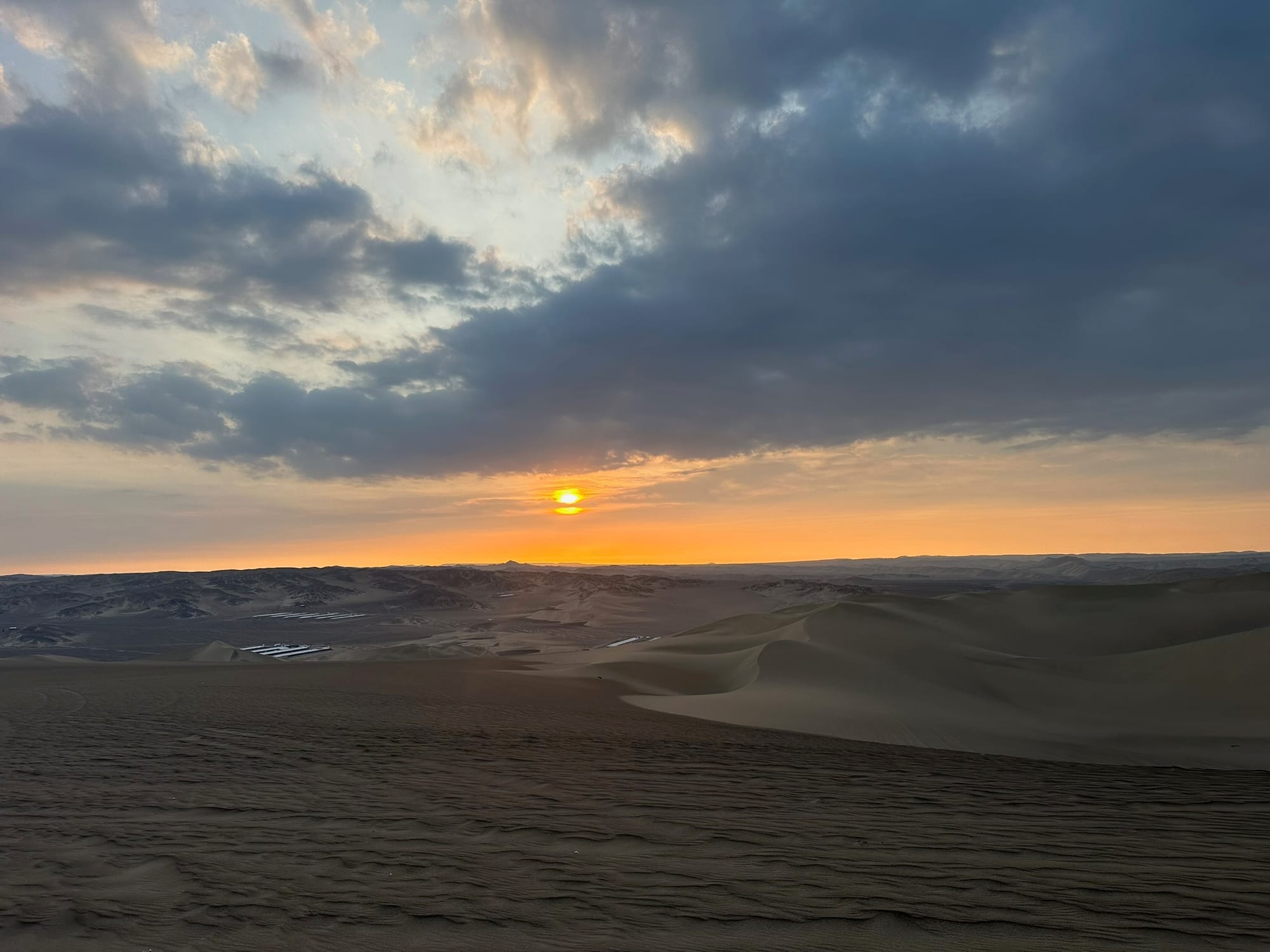
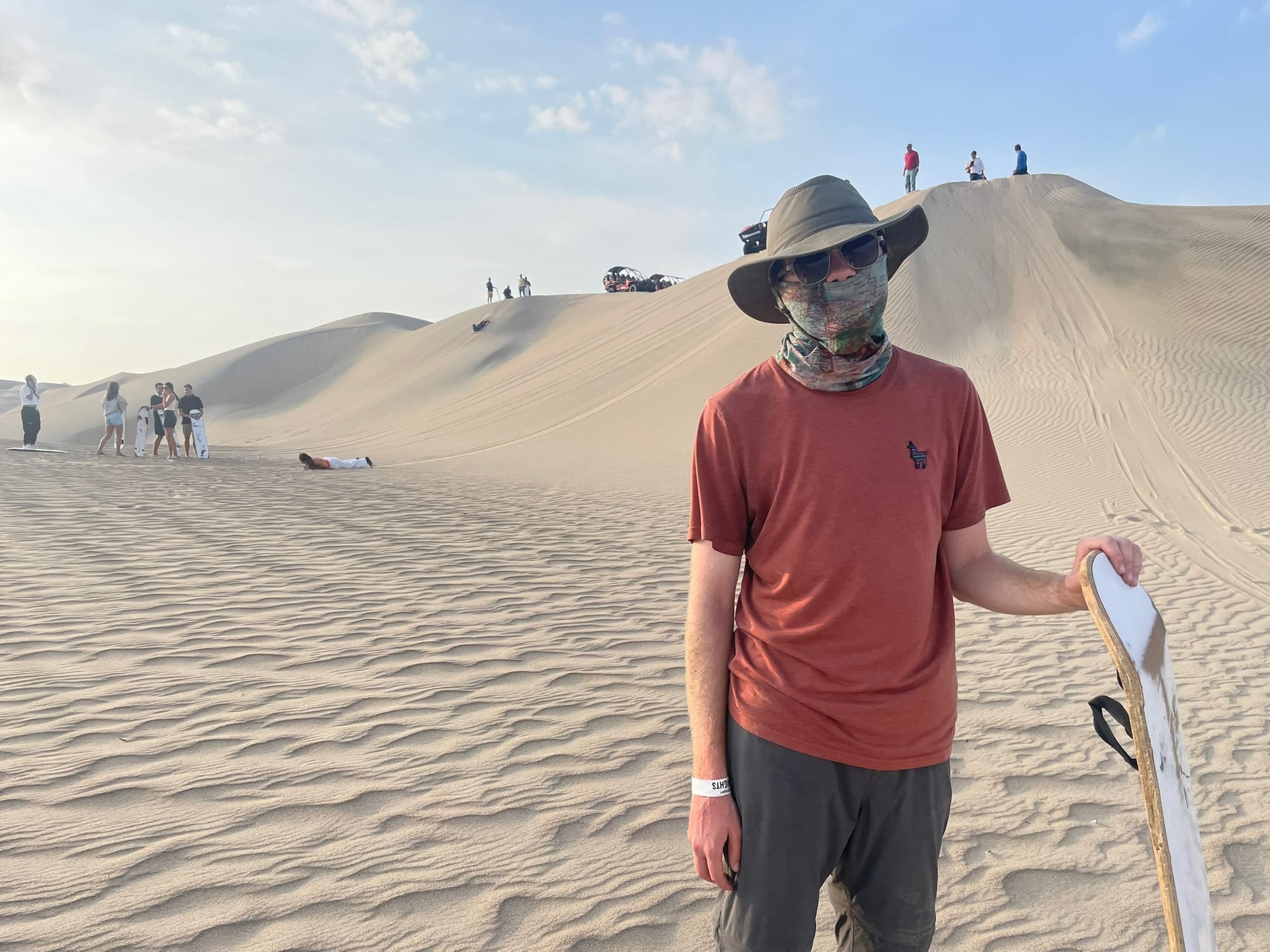
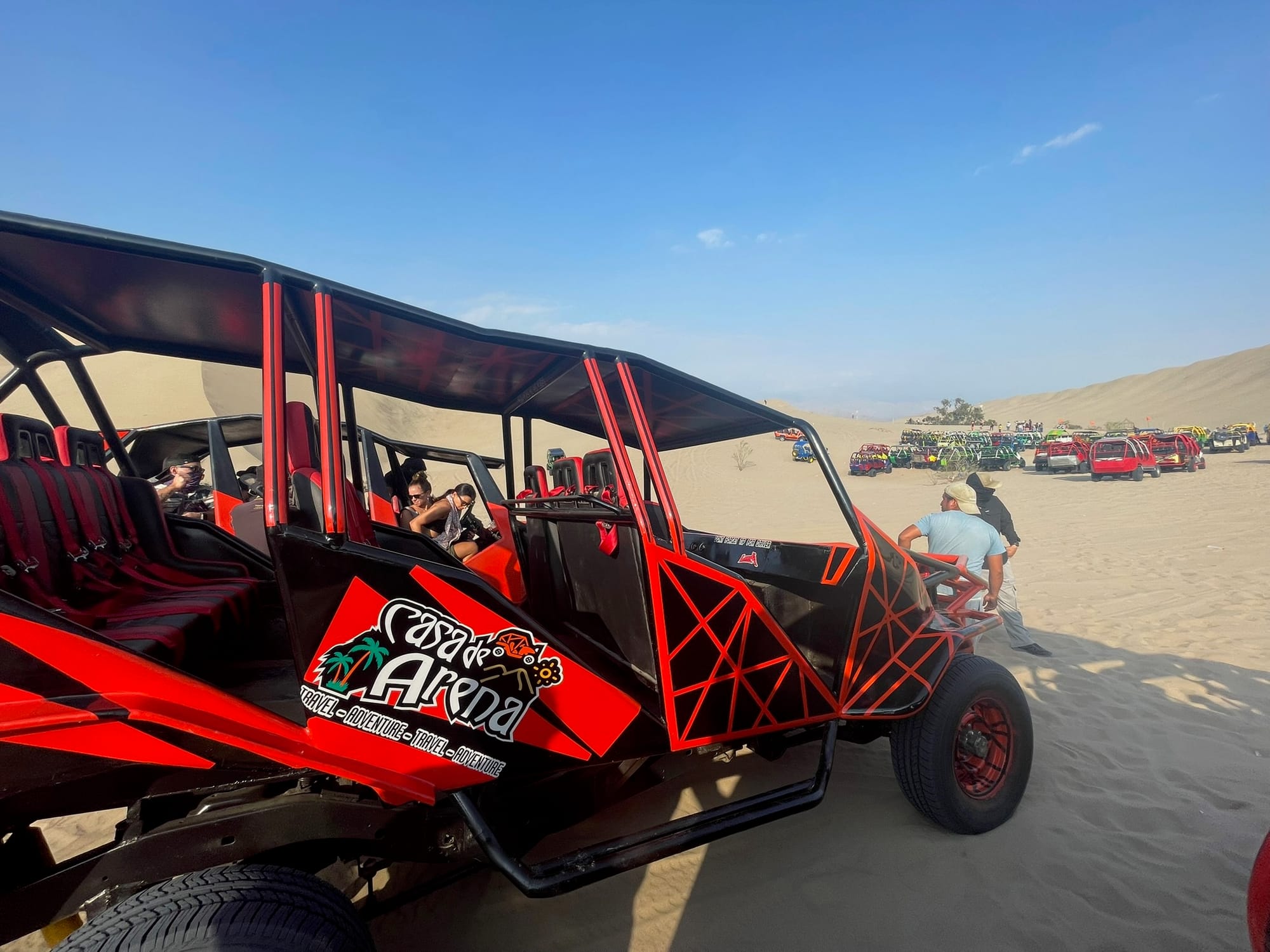
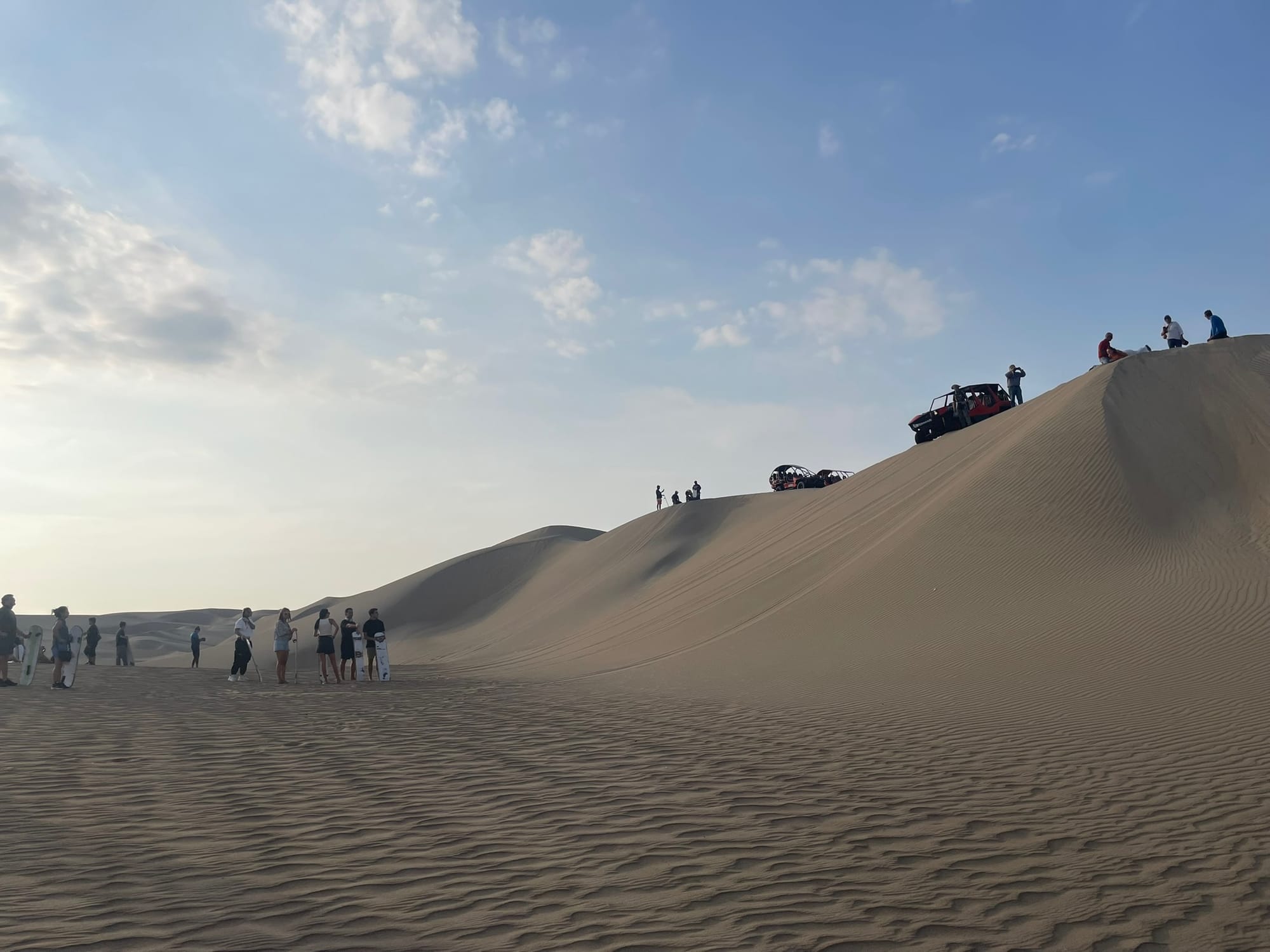
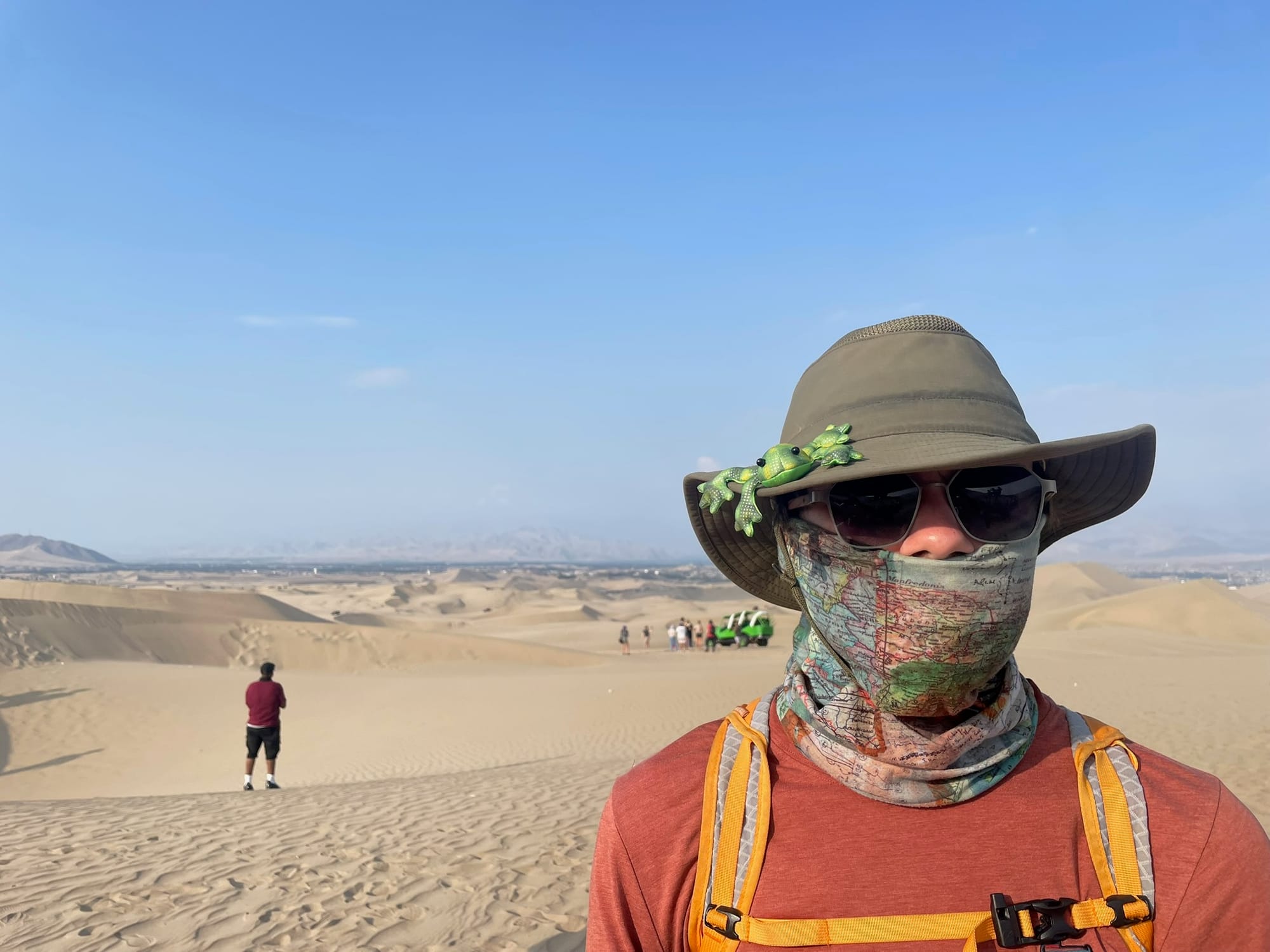
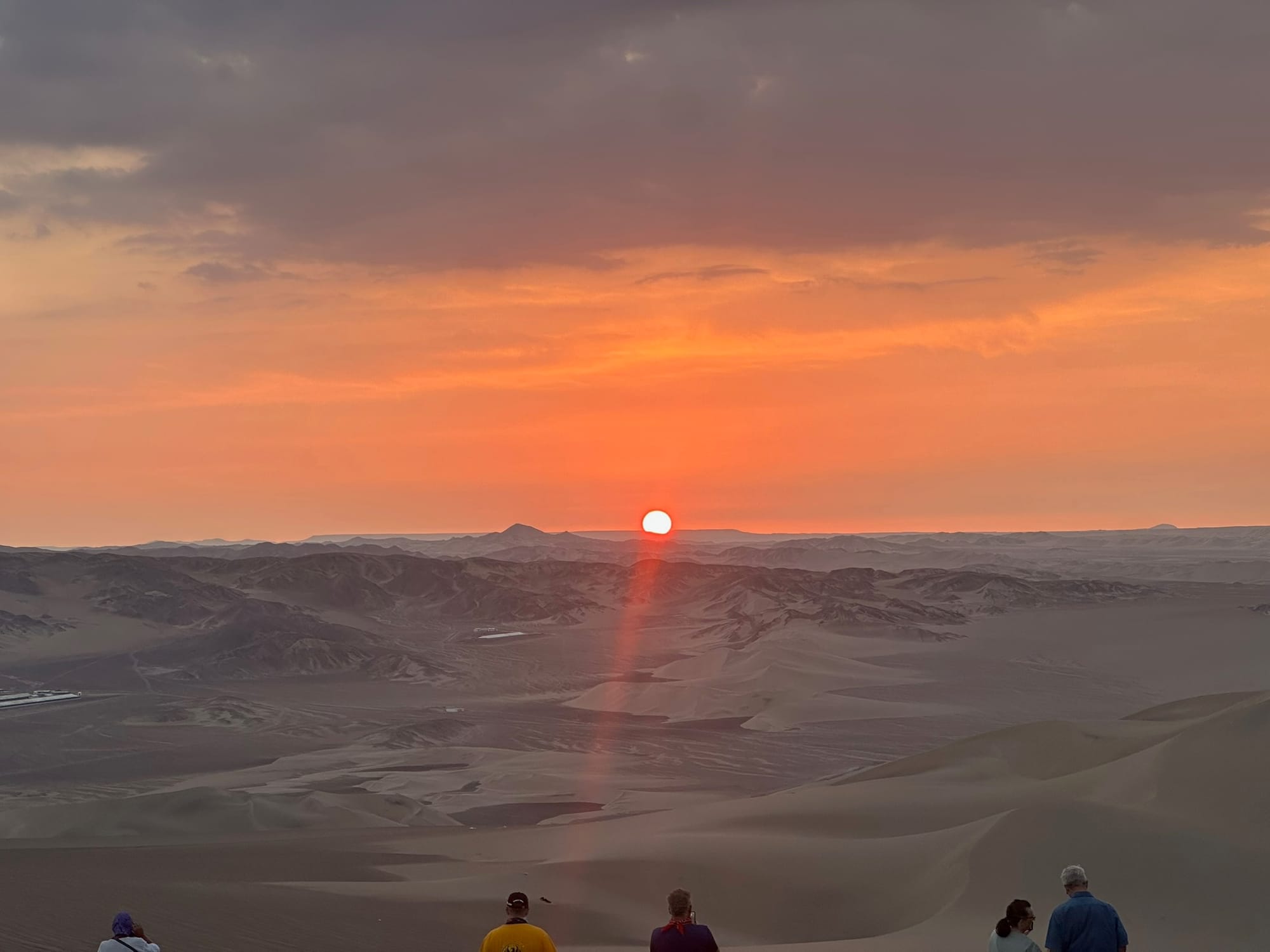
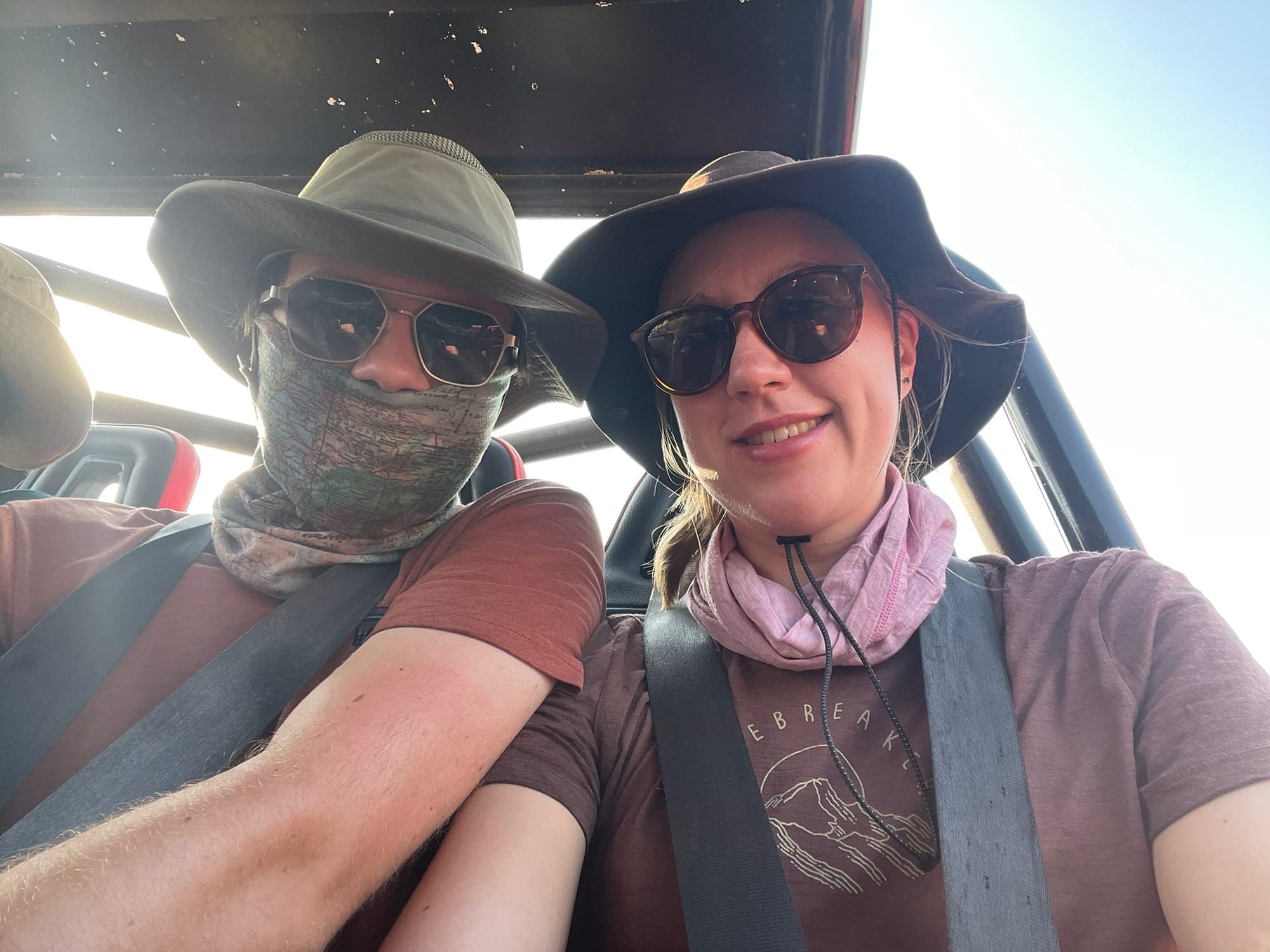
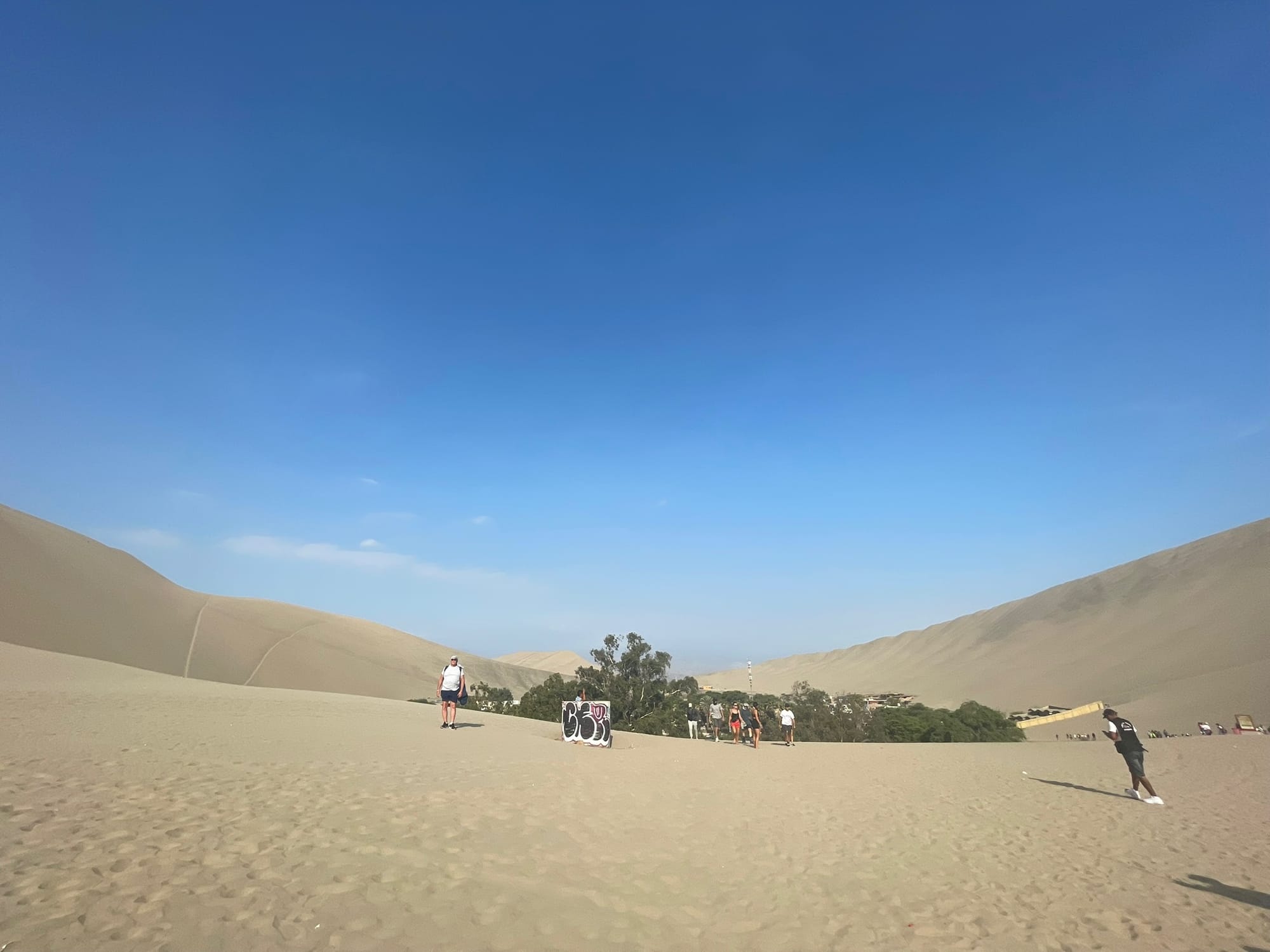
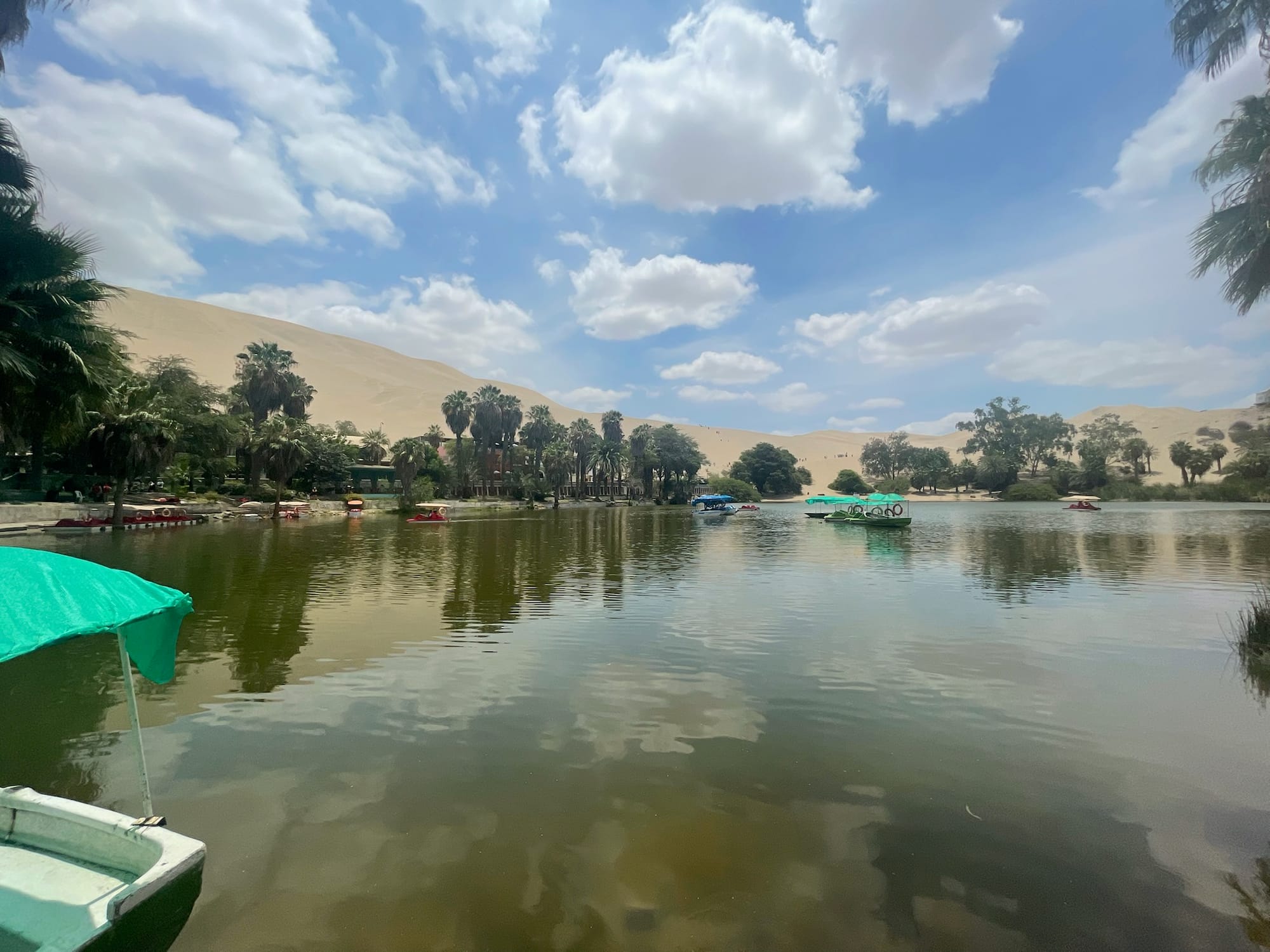
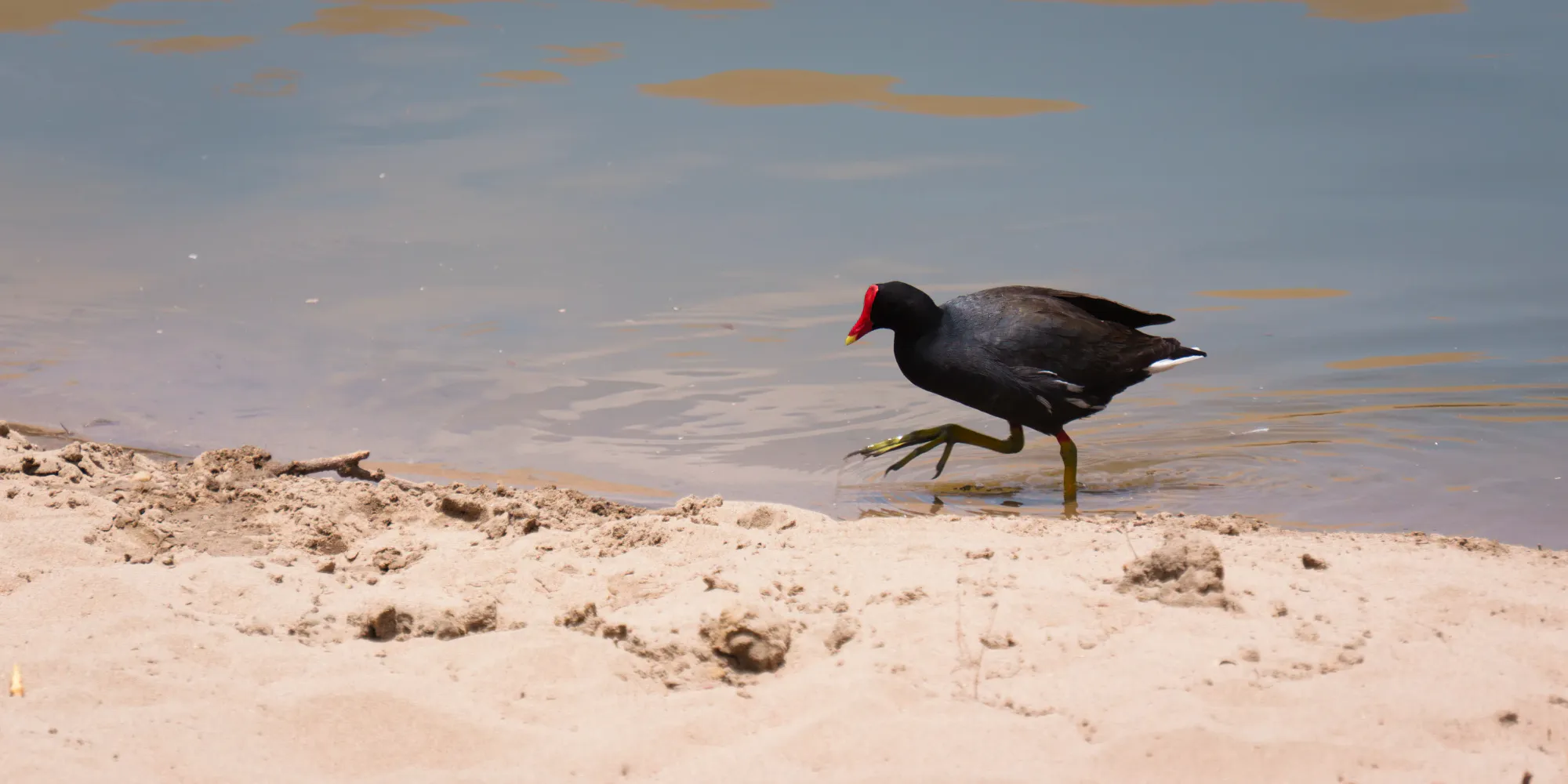
"I don't like sand. It's coarse and rough and irritating and it gets everywhere." [📸 Rachel & Johann]
Nazca
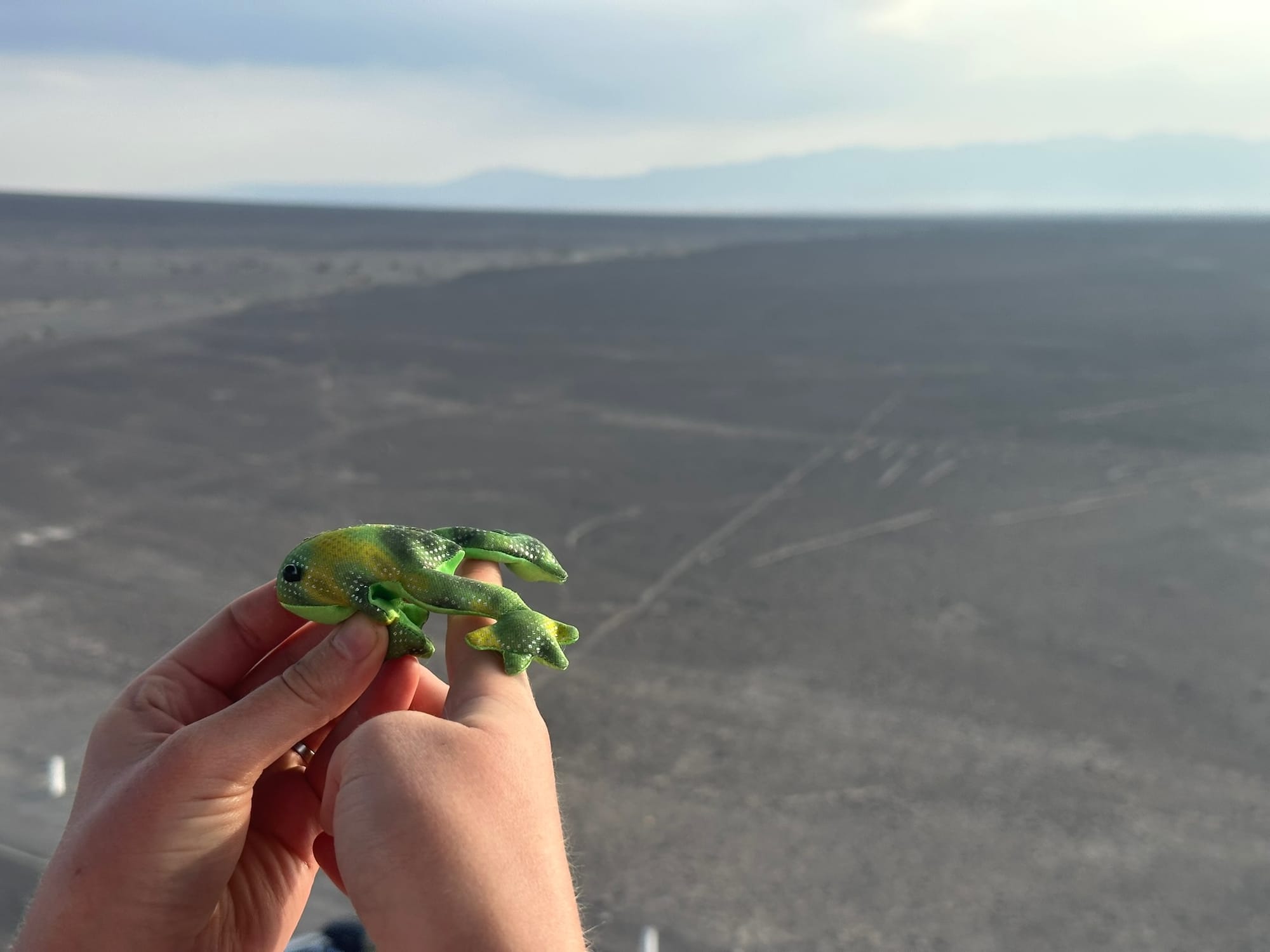
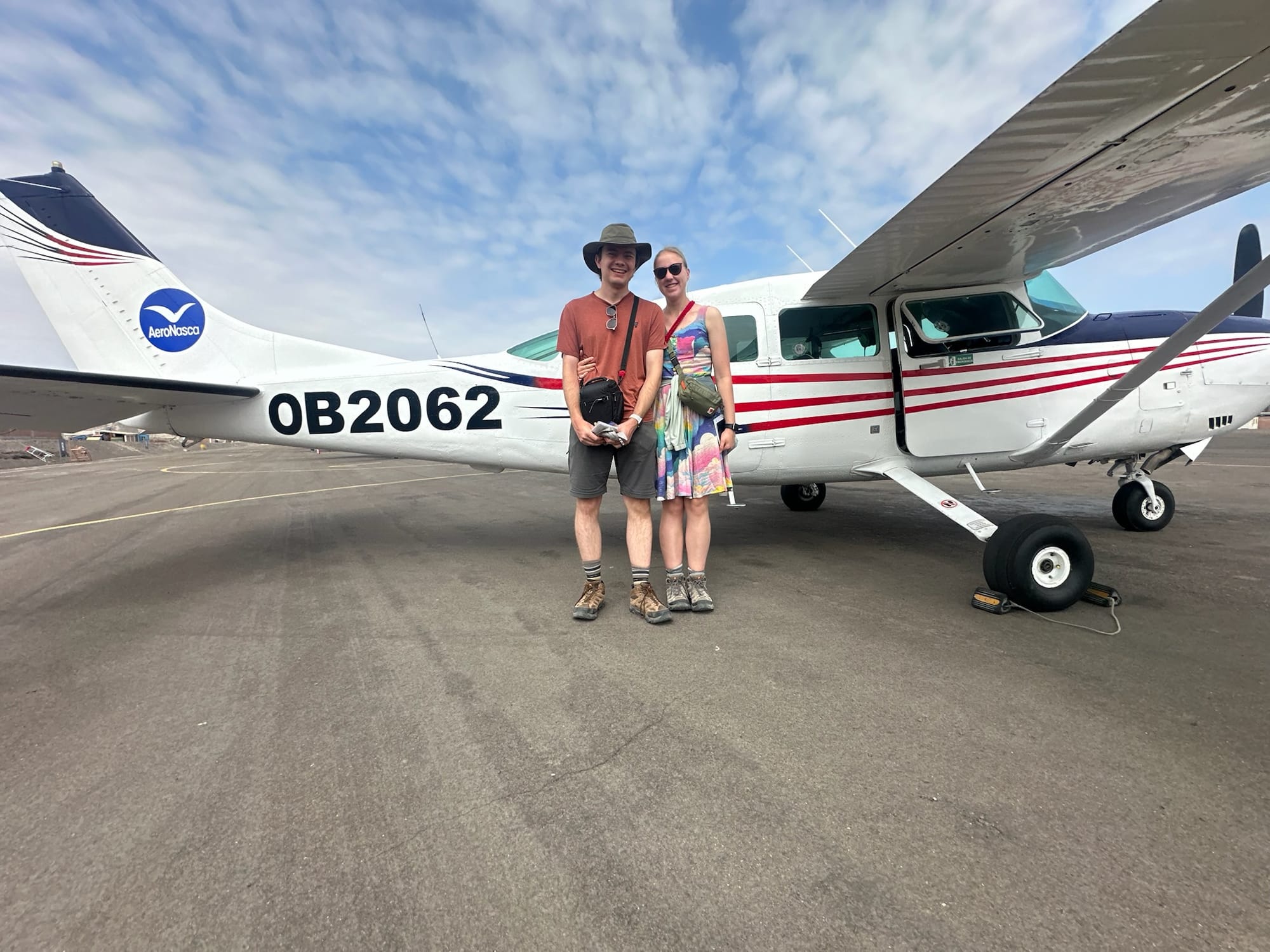
Yes, we flew over the Nazca lines, those ancient and huge geoglyphs. It was in a tiny plane, and Rachel got VERY motion sick, but the glyphs were extremely impressive and beautifully designed. We did mourn for the lizard who lost its feet and was separated from its tail by the Pan-American Highway, constructed in the 80s.
We also visited a local museum with some really wild English information courtesy of Google Translate. Next came an adventure walking to Incan ruins on the outskirt of town, then climbing up to the giant white Christ statue, arms outstretched over the cemetery below (think Rio de Janeiro, but much smaller).
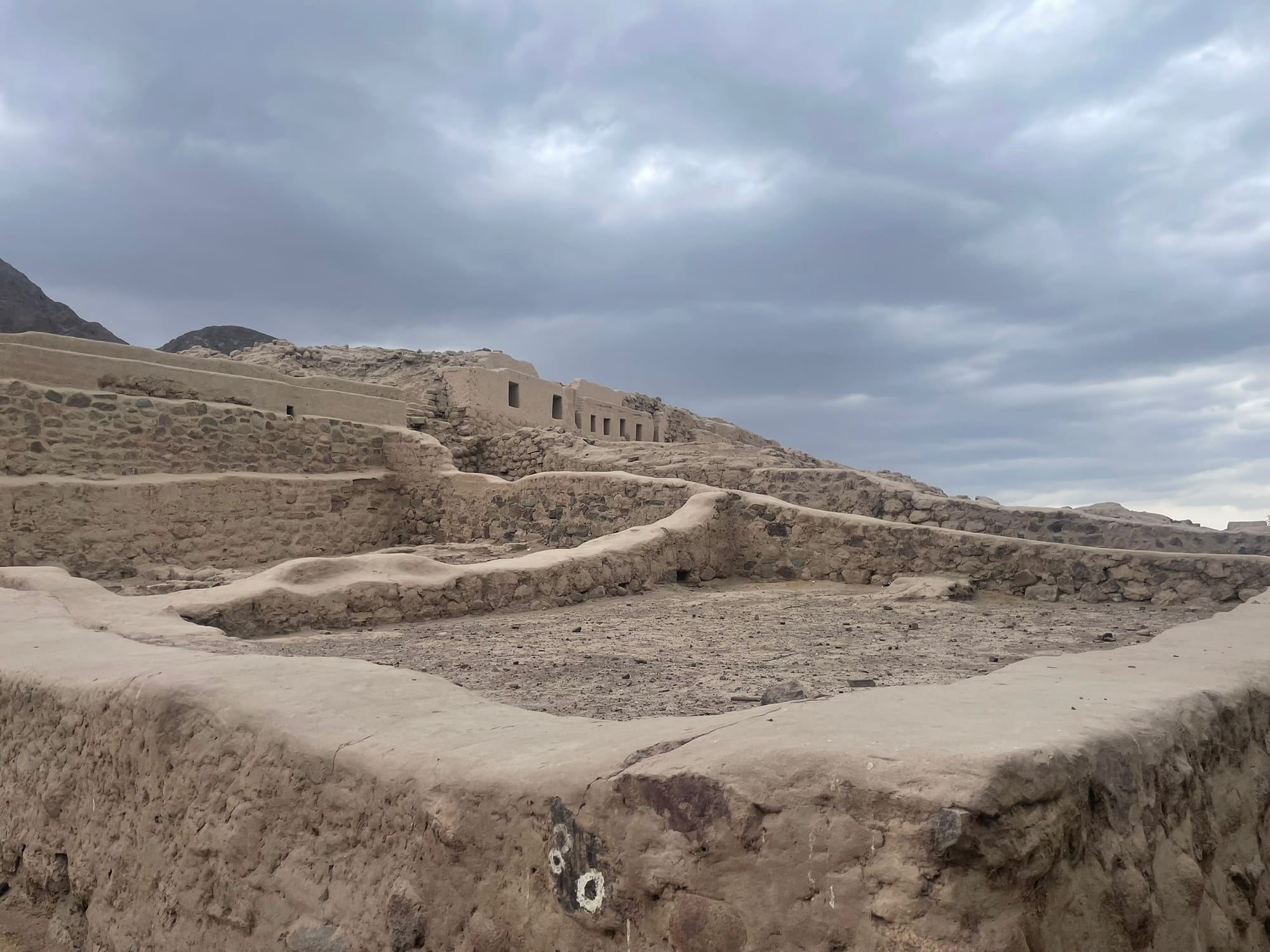
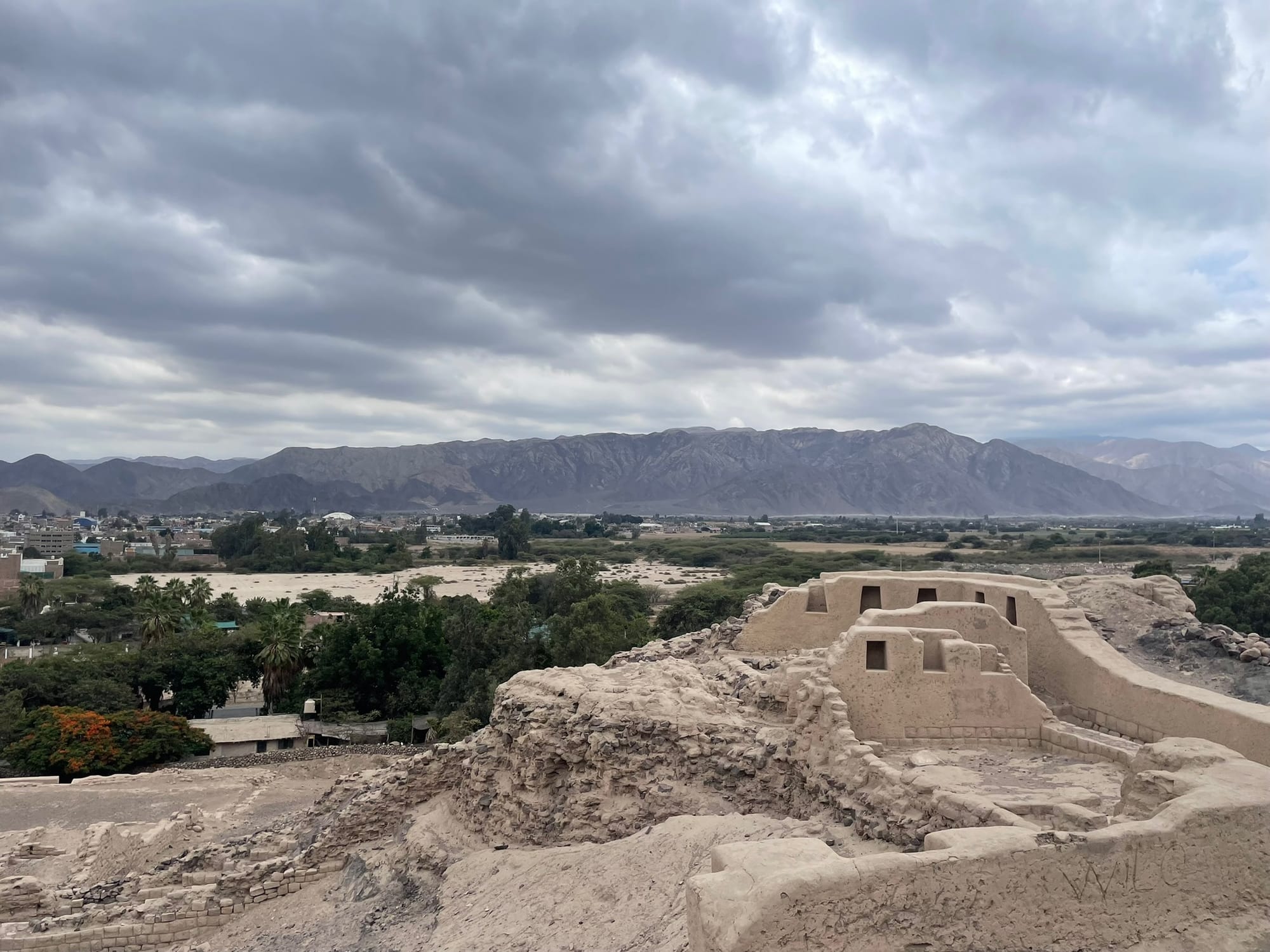
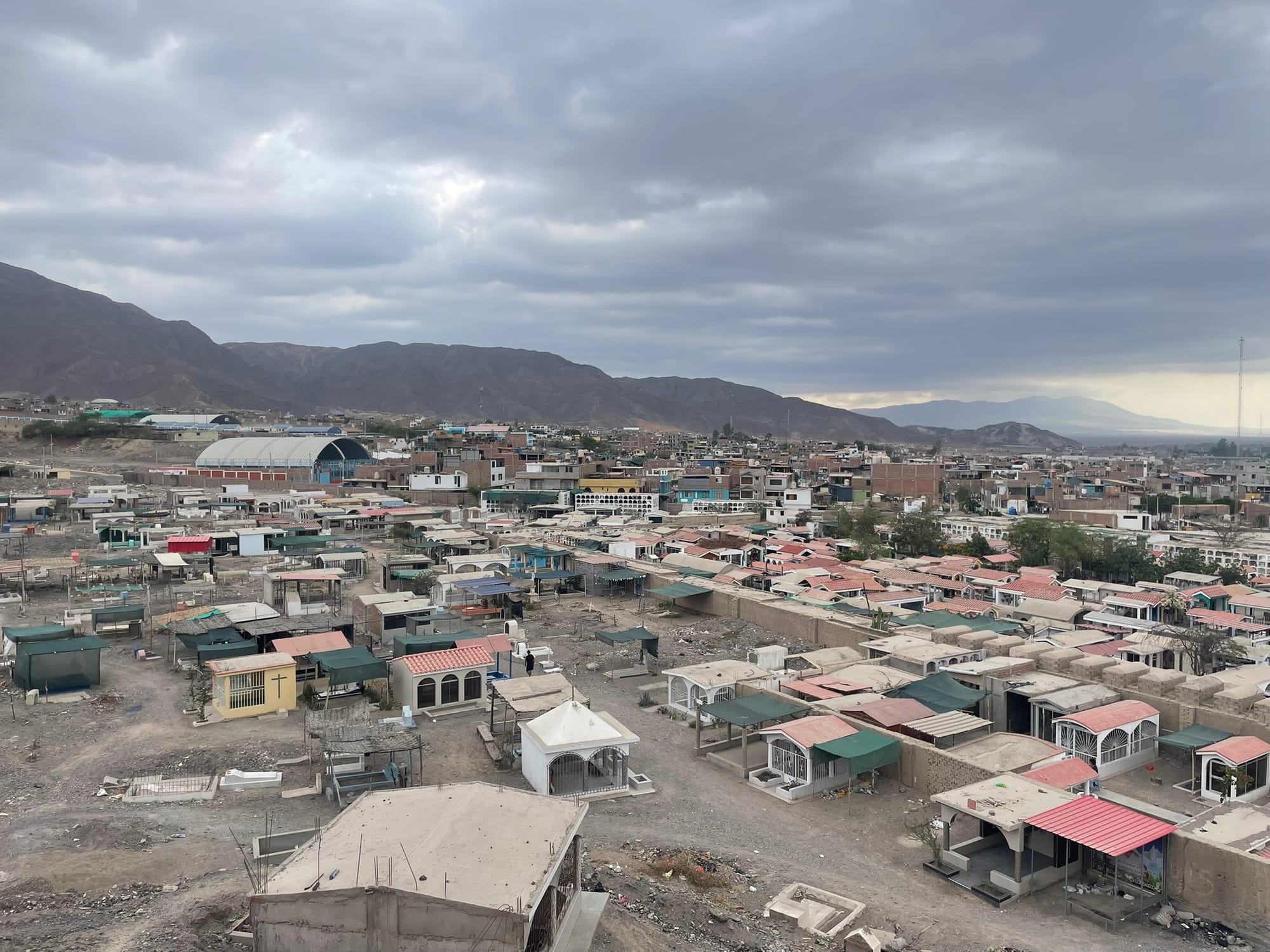
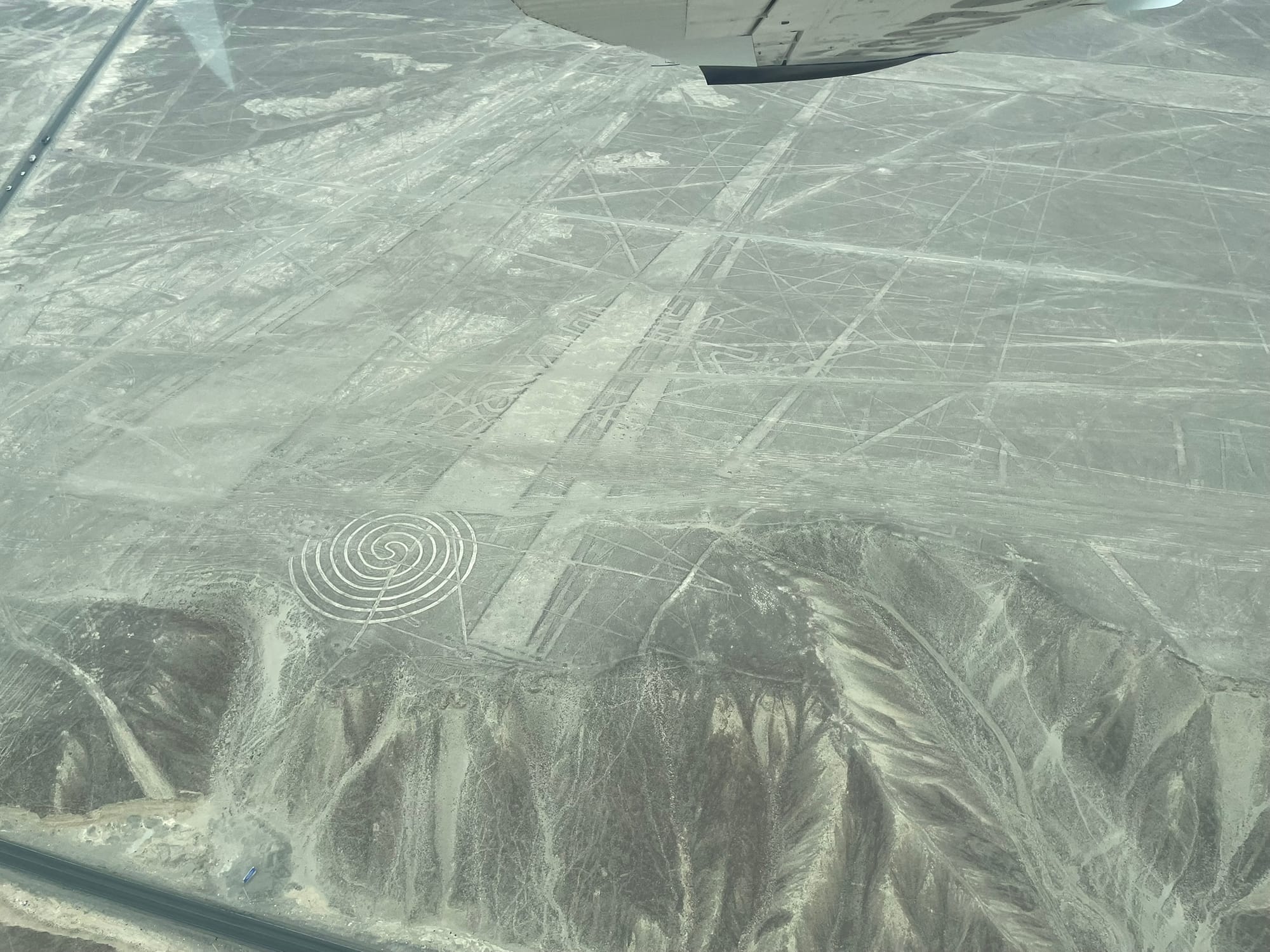
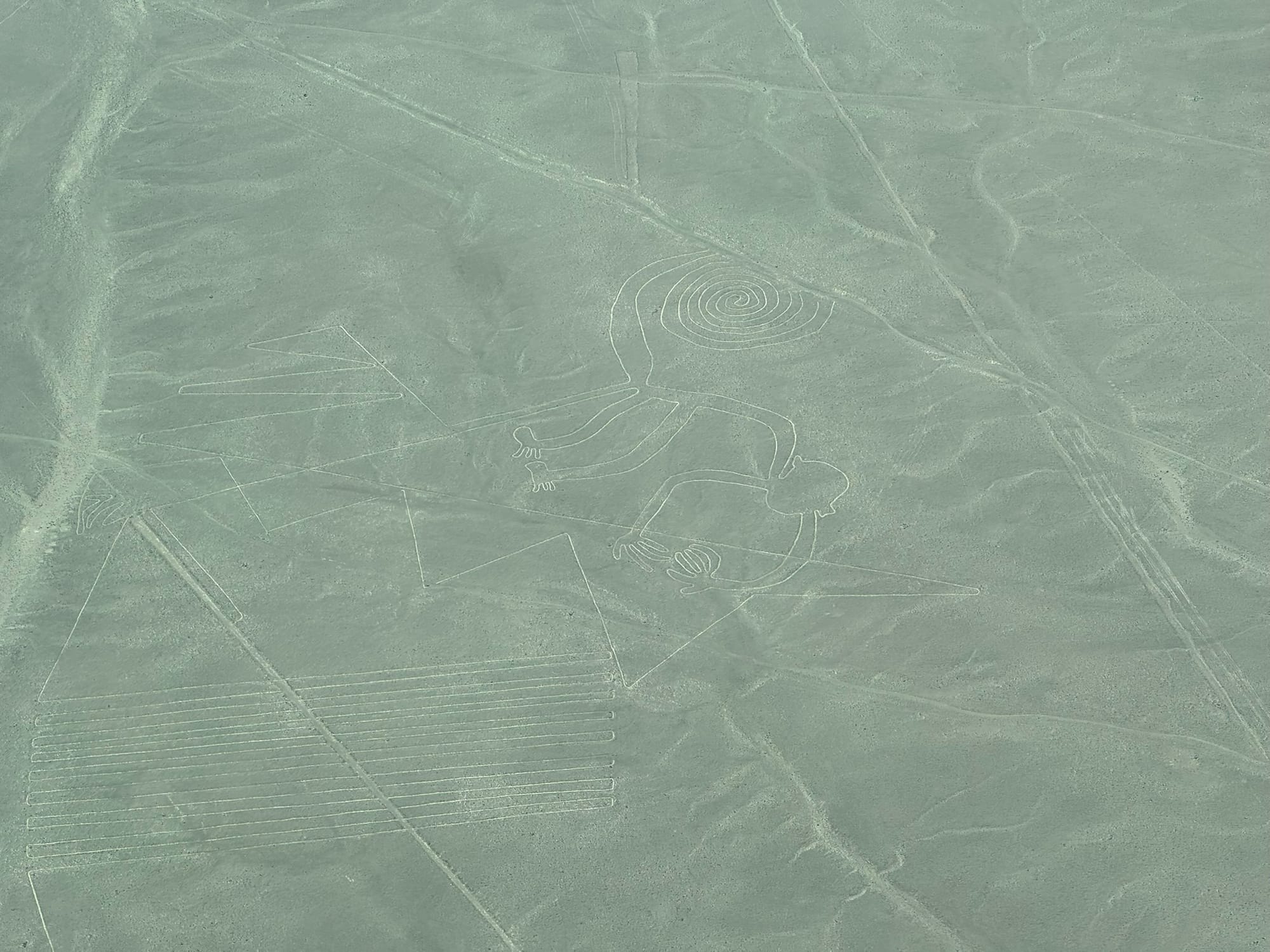
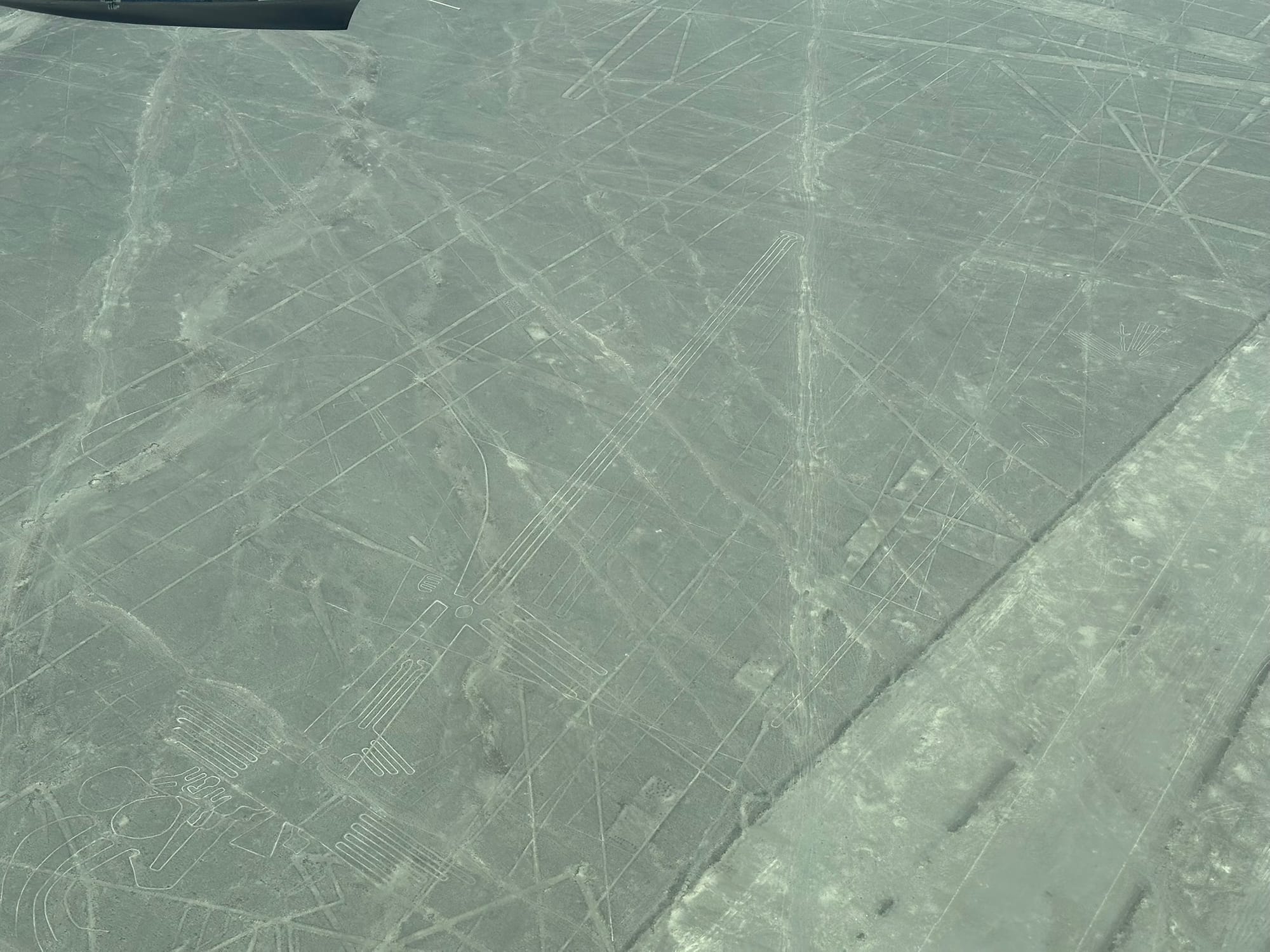
Proof that we touched grass. Or at least, a sparkly image of grass between images of cobblestones printed onto cheap vinyl tiles. [📸 Johann & Rachel]
On the way back to the city centre we were chased by dogs (they really seem to hate rainbow dresses) and offered a ride in a taxi consisting of a wooden cart pulled behind a creaky bike (sadly going the wrong way). To cap it off, we spent the afternoon unexpectedly running into eight other Canadians. Neat!
Arequipa
We crashed landed in Arequipa at 4:30 am, not having slept much on the overnight bus. Despite our best efforts, we often ended up with transportation or activities starting (much) earlier than we would have liked. The unifying feature of our Peru travels has been sleep deprivation.
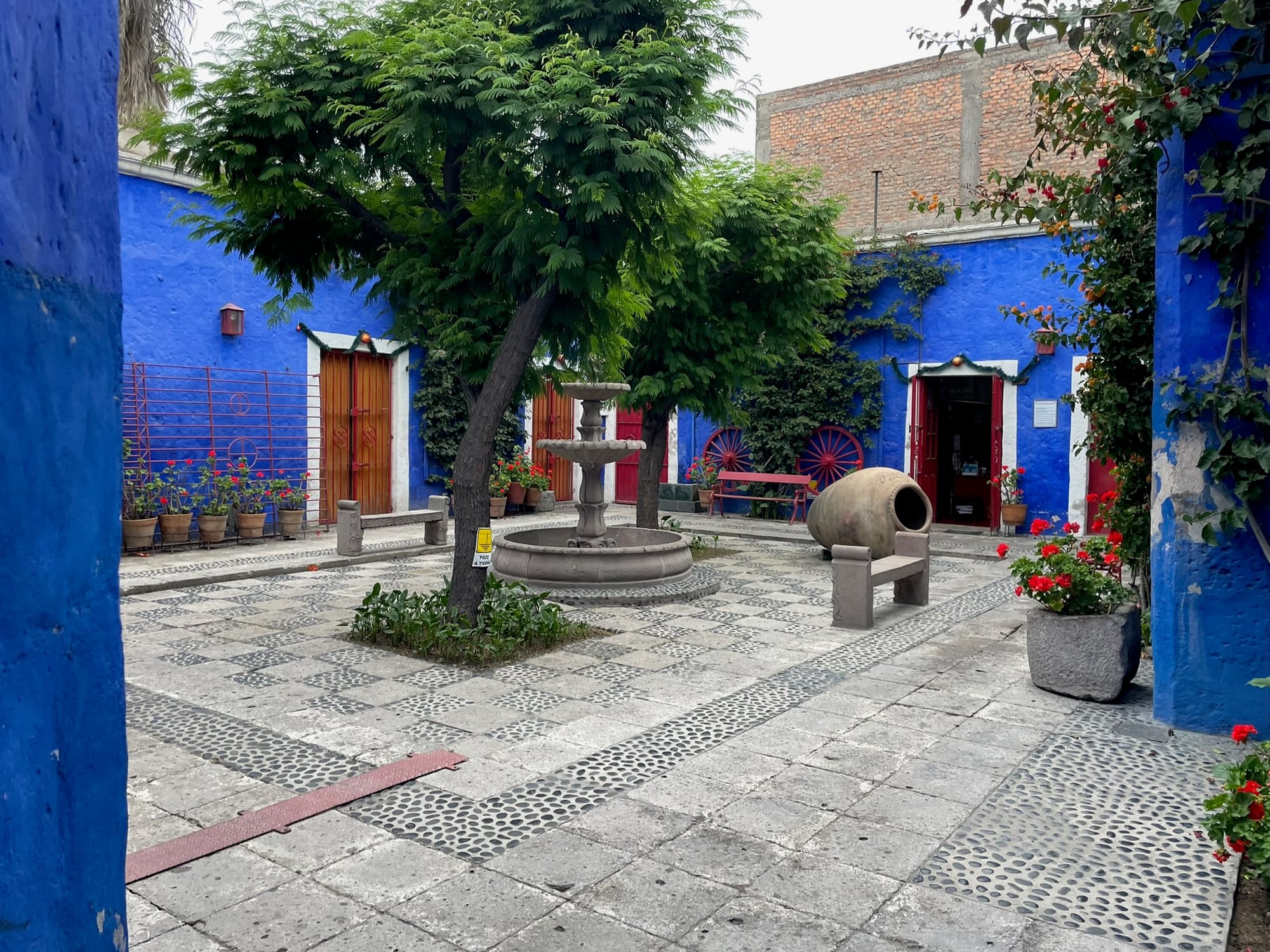
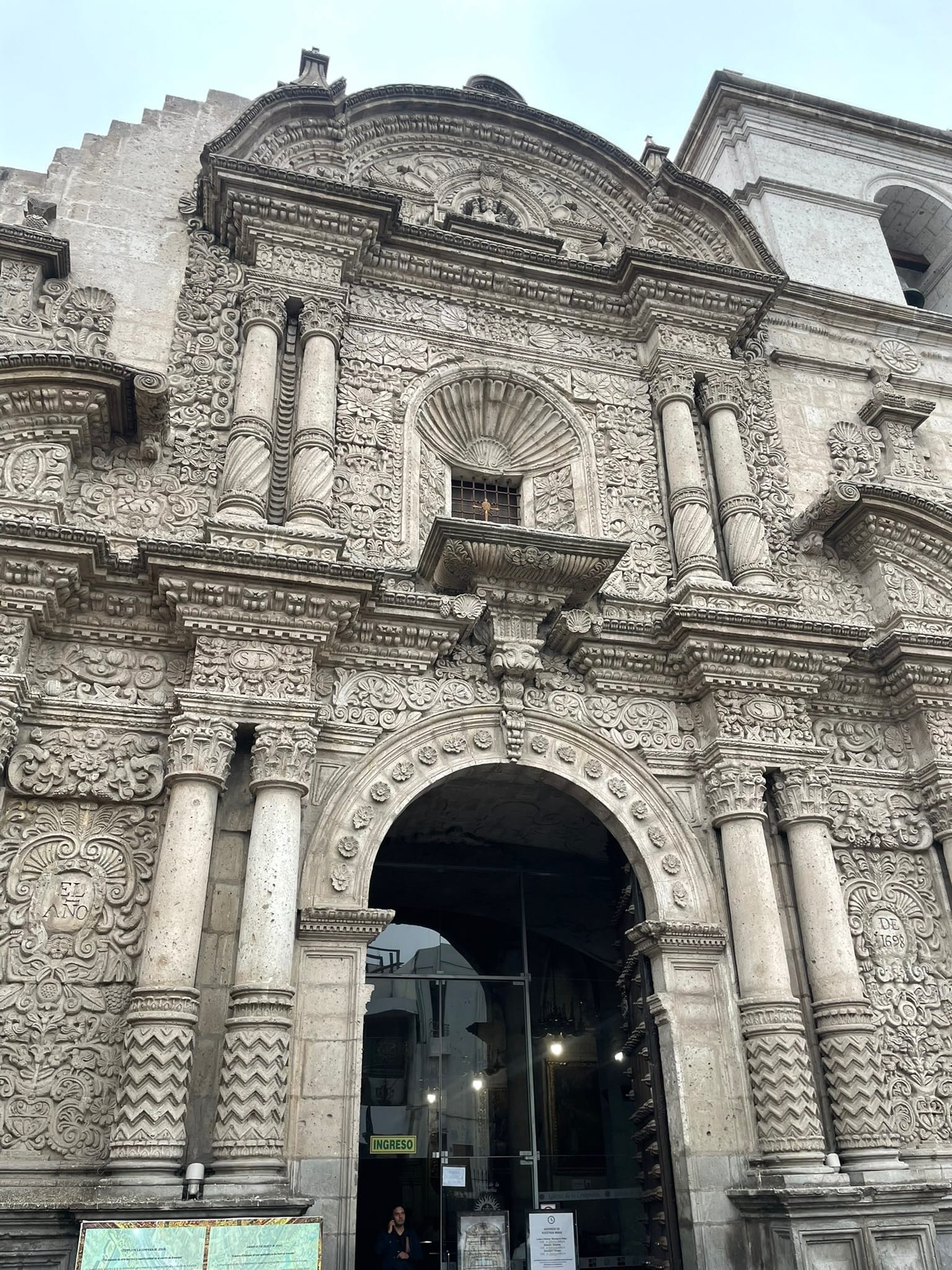
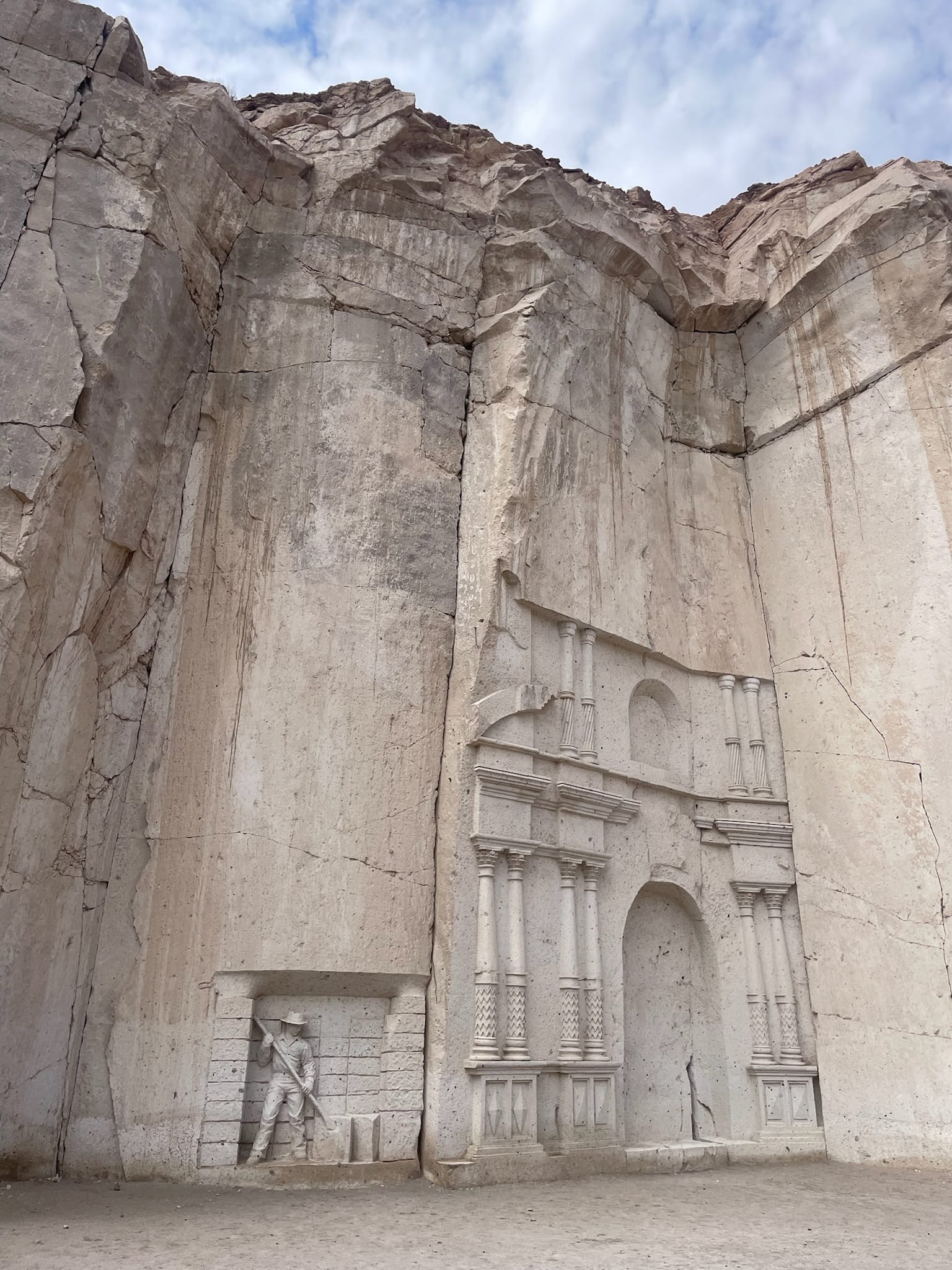
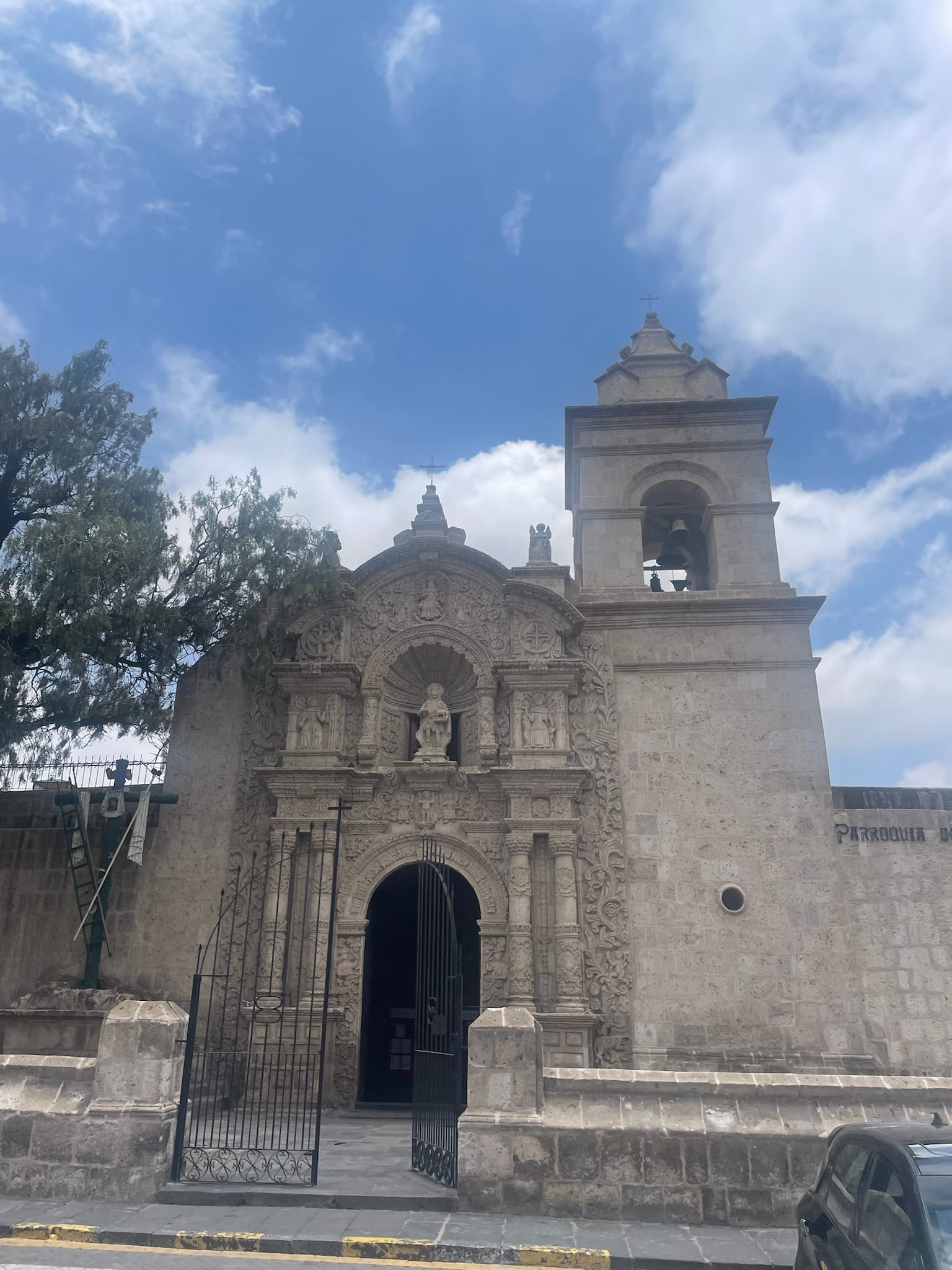
Arequipa is a very beautiful colonial city, and we enjoyed exploring it. It also served as a constant reminder of the many historic injustices that have been committed. We also visited the sillar mines (a volcanic ash based stone), where families continue on the work of generations, carving the sillar into large bricks by hand. Much of Arequipa was historically built from this white stone.
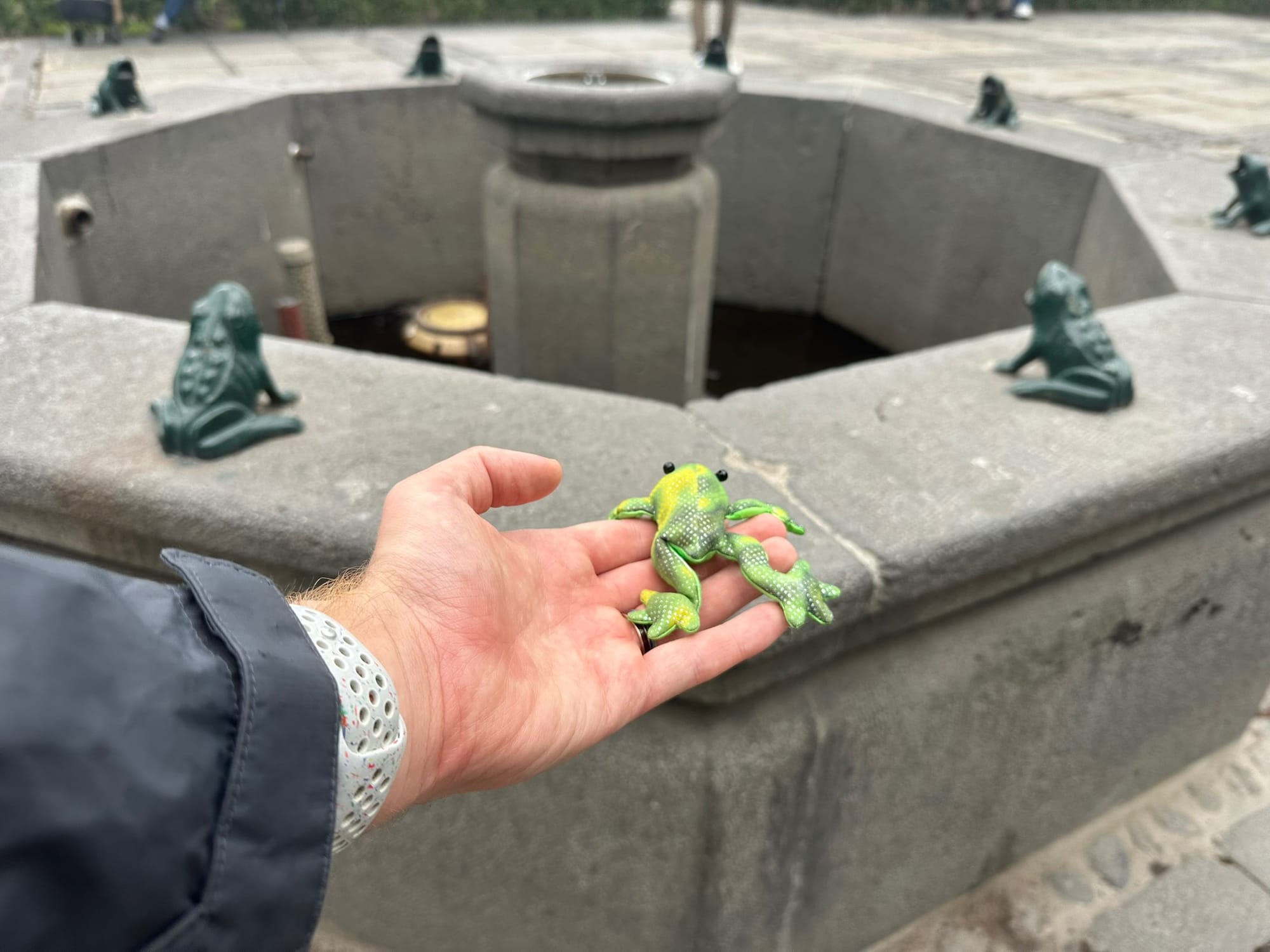
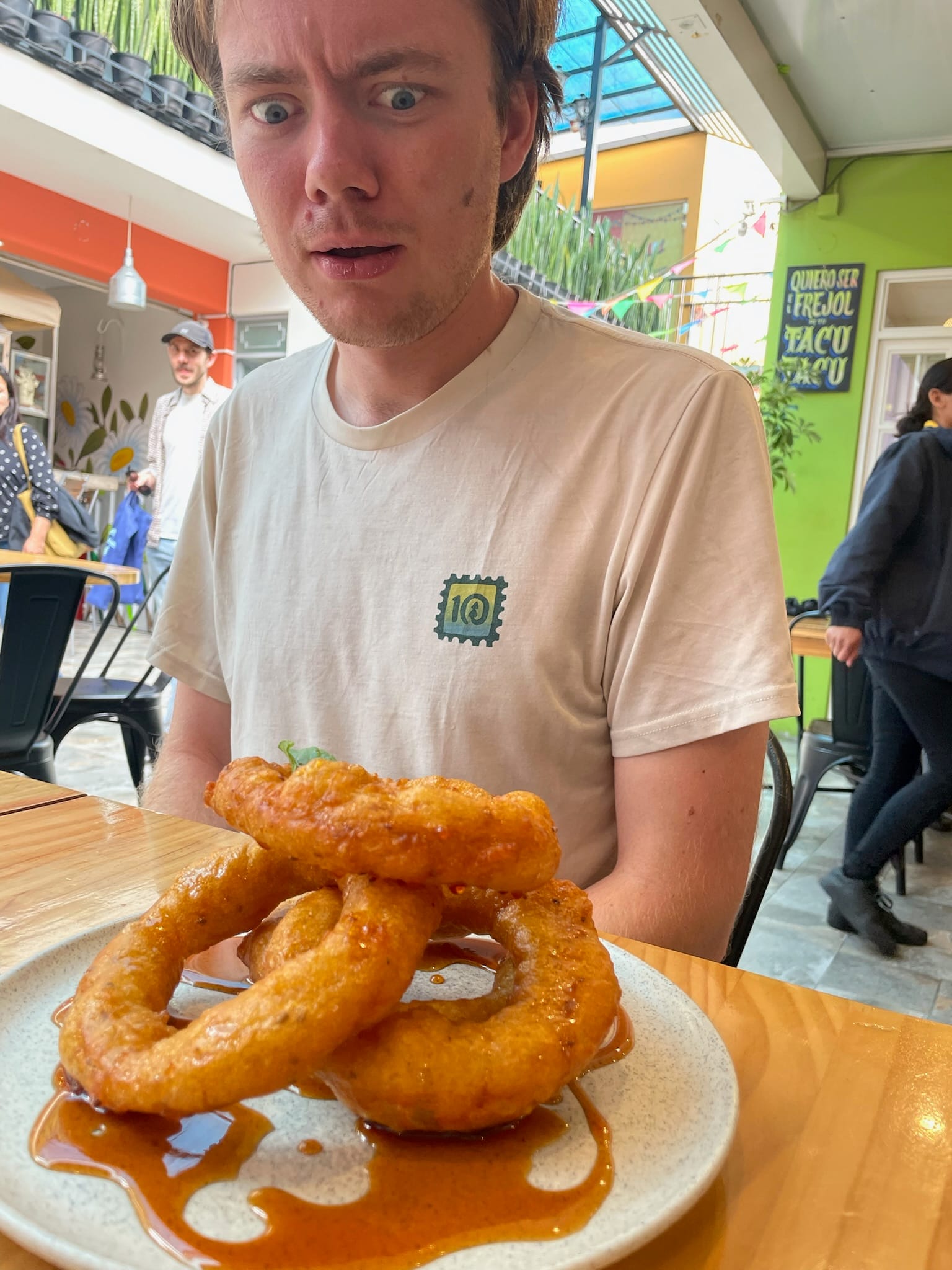
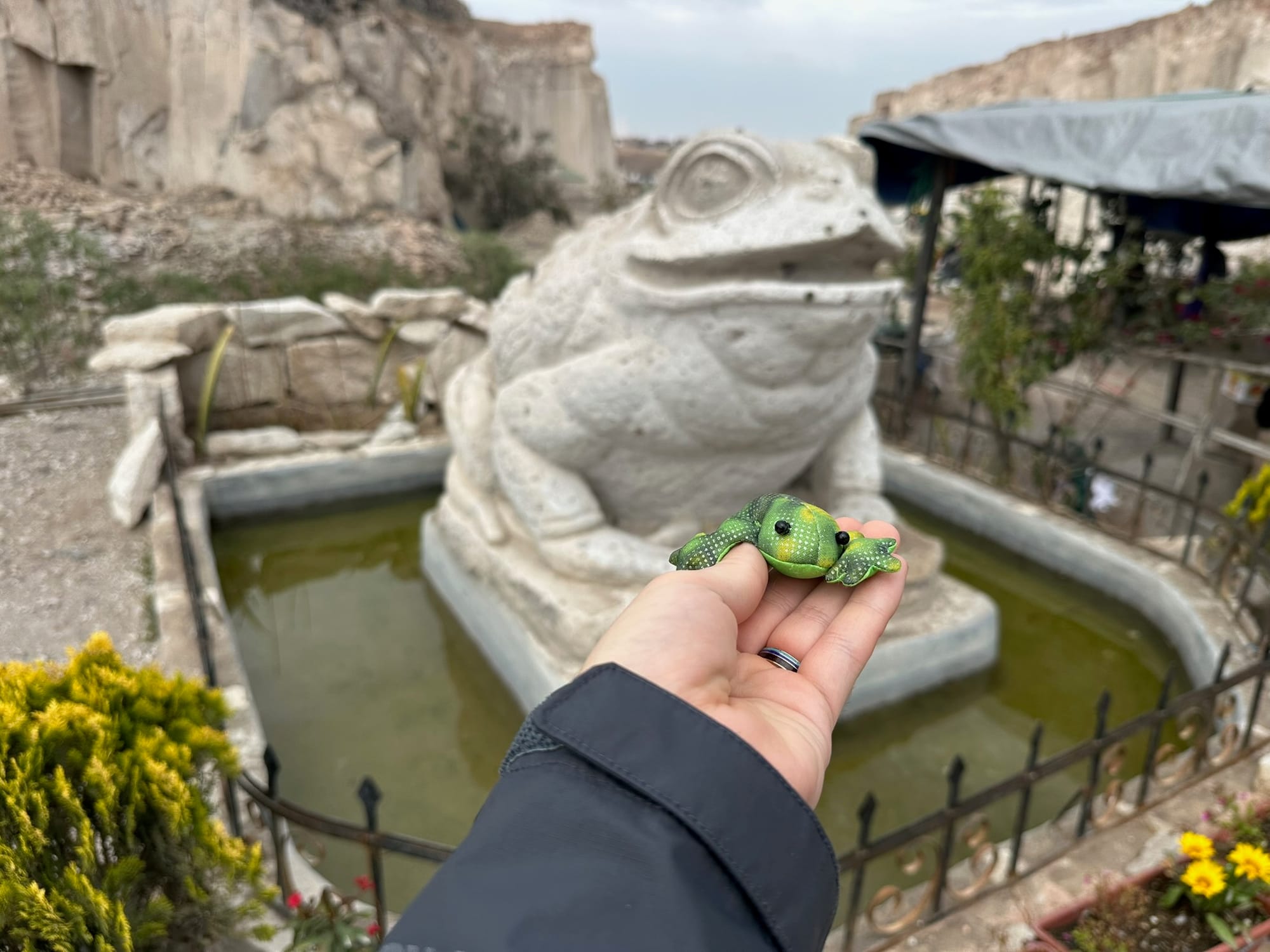
There's another photo concerning these frogs, but it's exclusively available on OnlyHerps. [📸 Rachel & Johann]
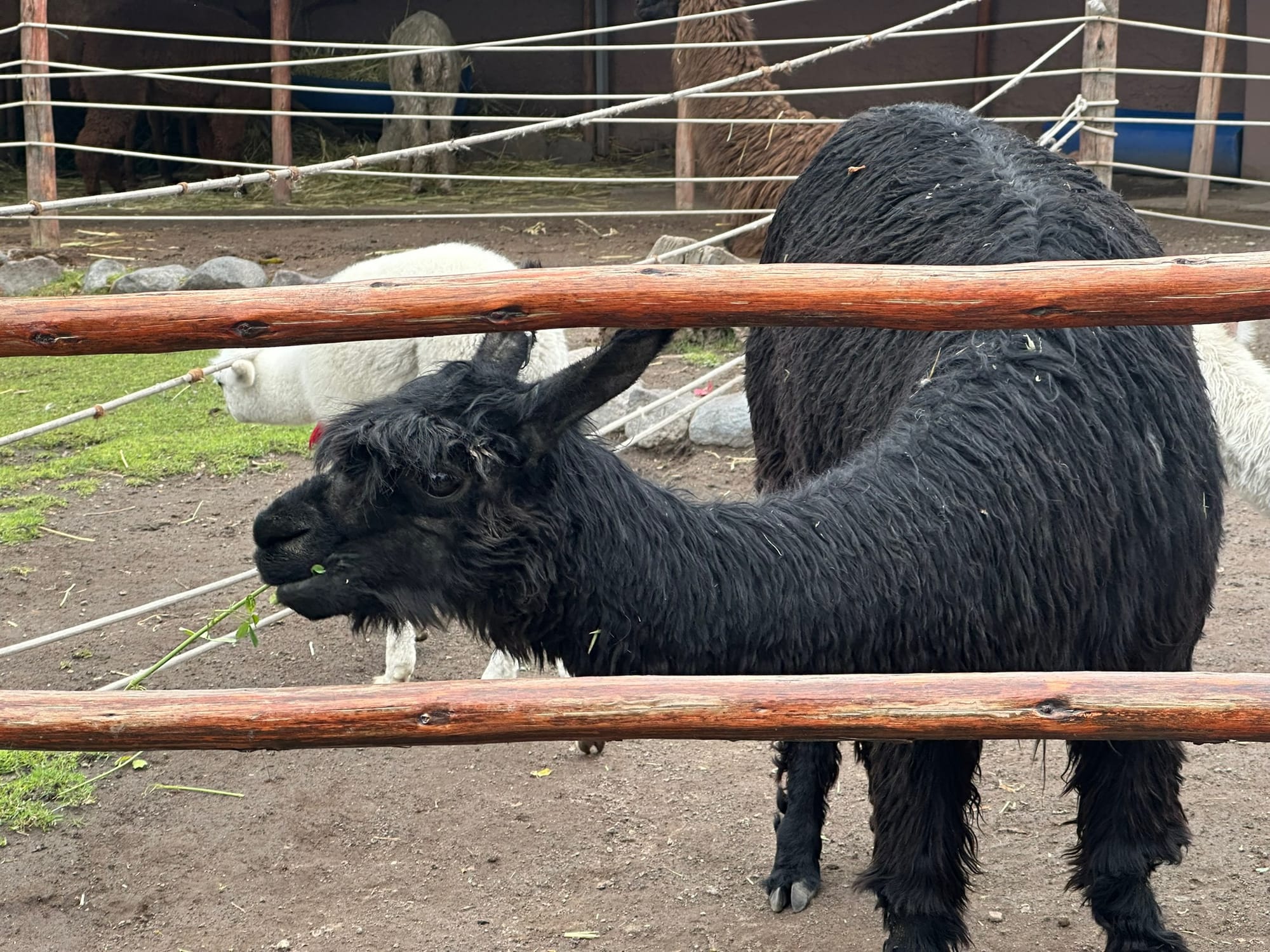
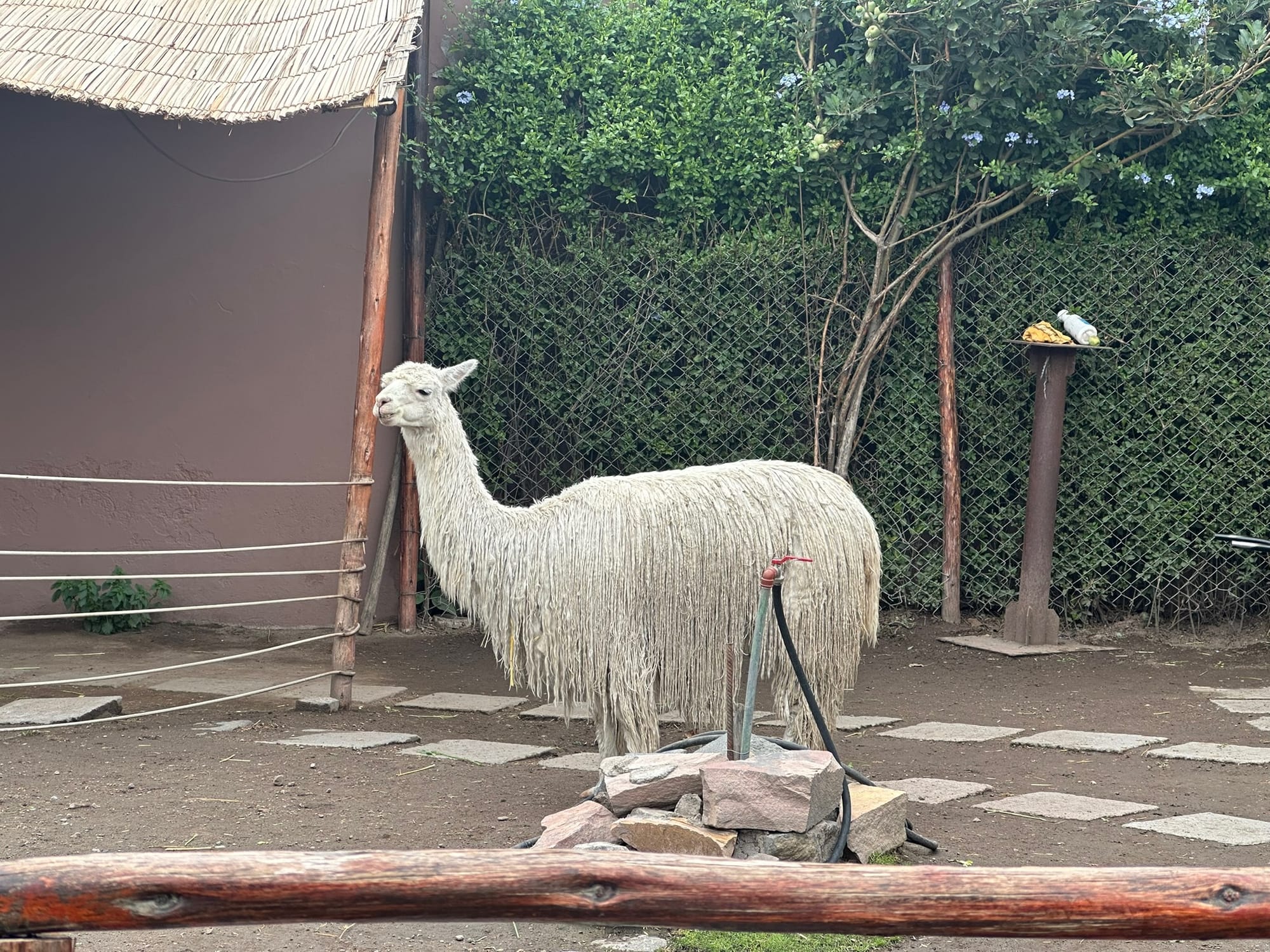
Johann really wanted to hug the llamas and alpacas, but feared their spit. All camelids spit. [📸 Rachel]
Colca Canyon
Not to sugarcoat it: we woke up at 2:30 the morning of our trek and it was awful. Our guide failed to specify a pick-up time beyond somewhere within 3:00-3:30 am, and was ten minutes late on top of that, so we ended up standing on the street corner for 45 minutes. You’re right, it was just so fun.
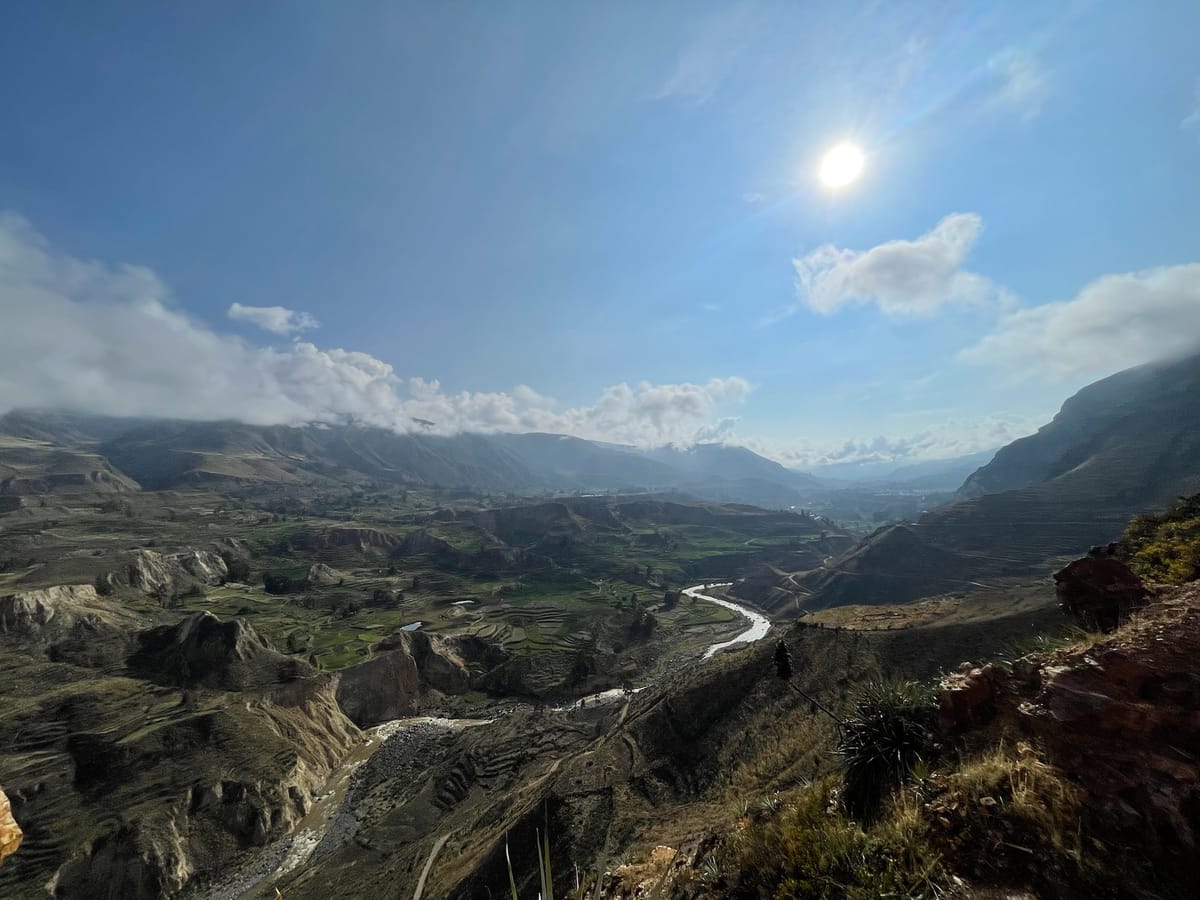
The trek itself though was spectacularly beautiful. The thick clouds cleared as we began our descent into the world’s second deepest canyon, and a huge Andean condor flew overhead. They are the largest bird of prey in the world, with a wingspan of up to 3.3 meters! Sure thing, it was one big bird.
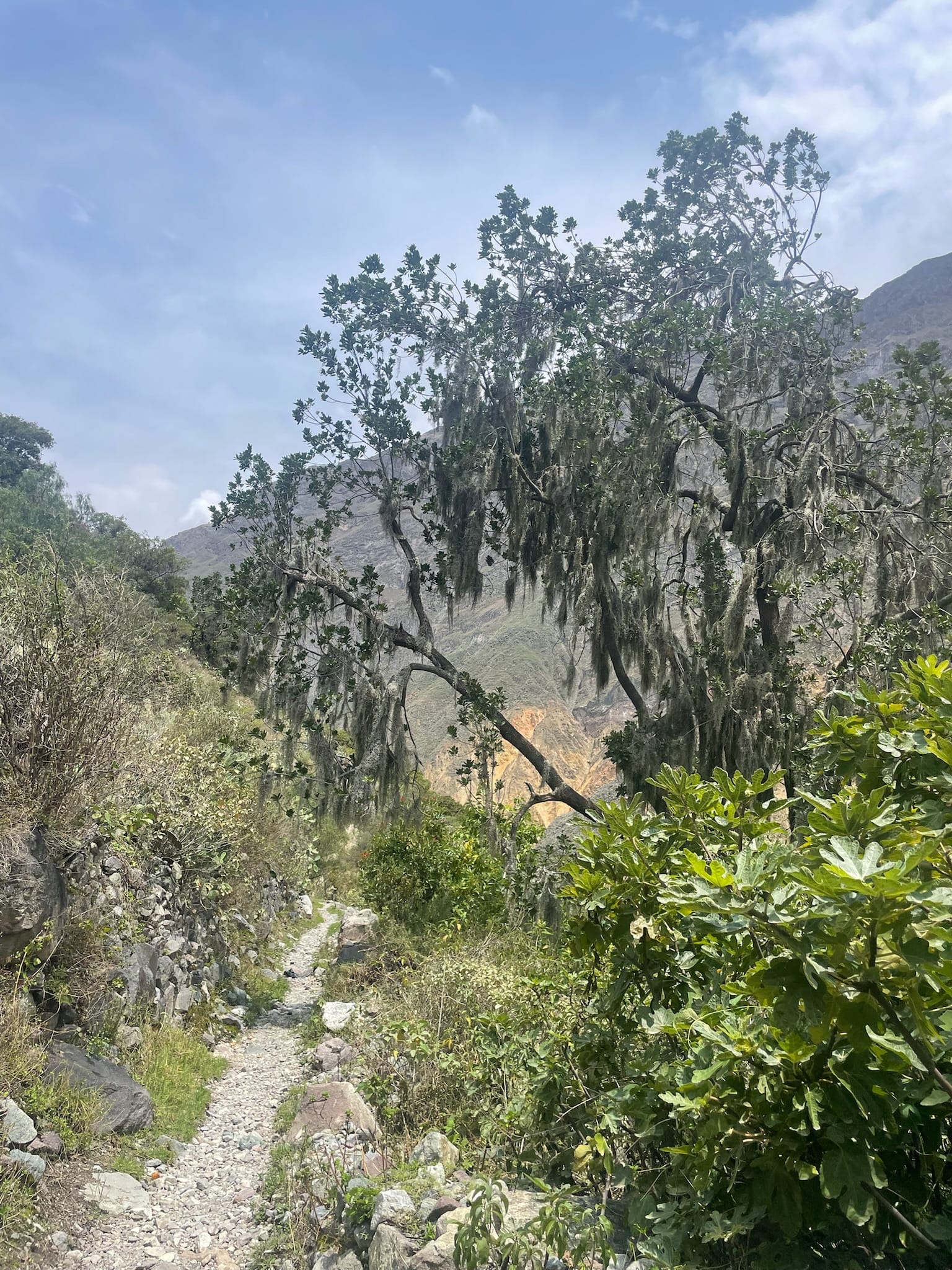
We descended 1000 meters to the canyon bottom, where a river poured brown and frothing. The canyon walls were covered in spiny cacti and huge rock formations that are apparently adored by nesting wasps (no Mr. Guide, please don’t stop in the swarm of wasps to assure us we’ll be okay). We ate lunch.
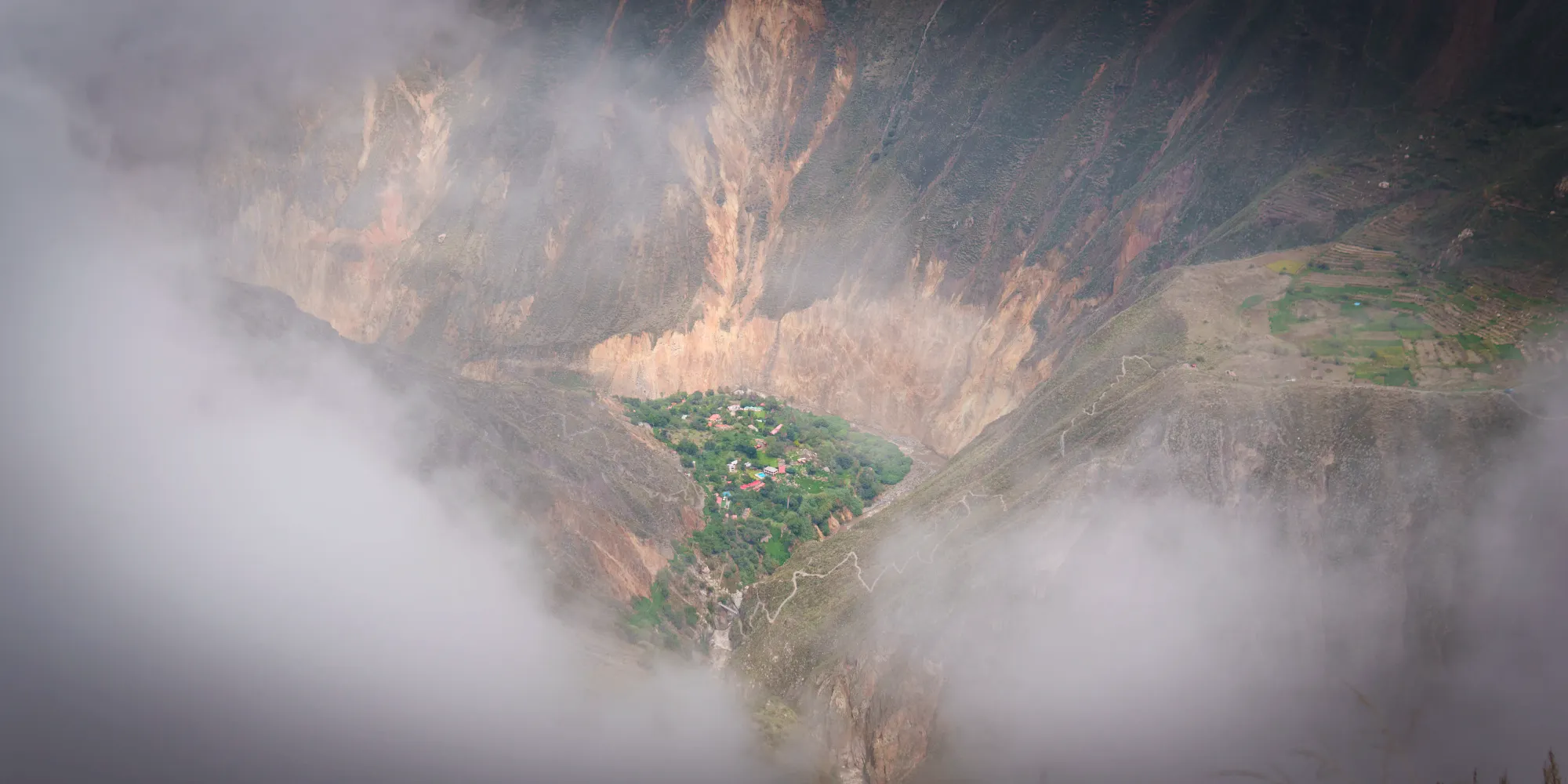
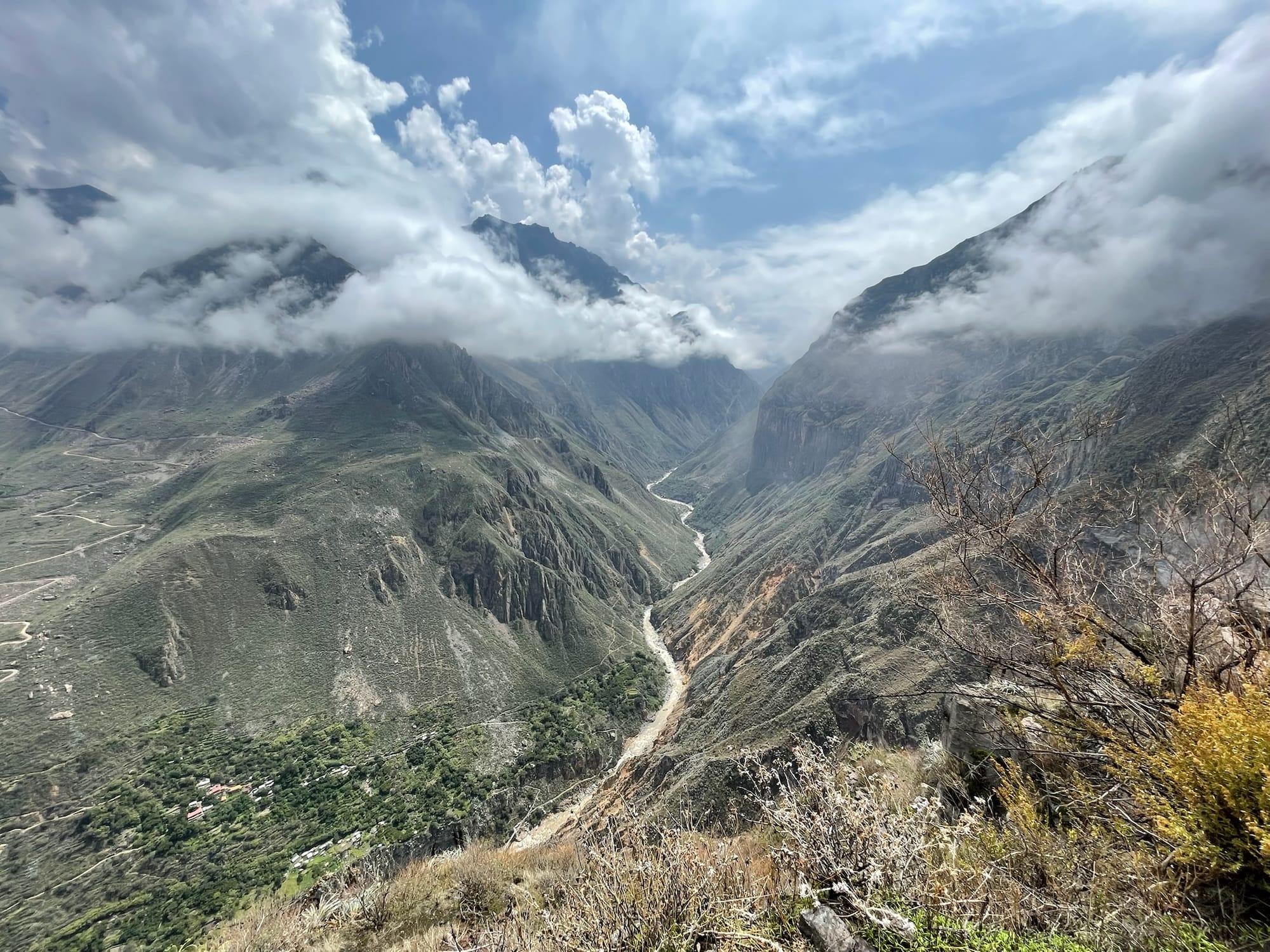
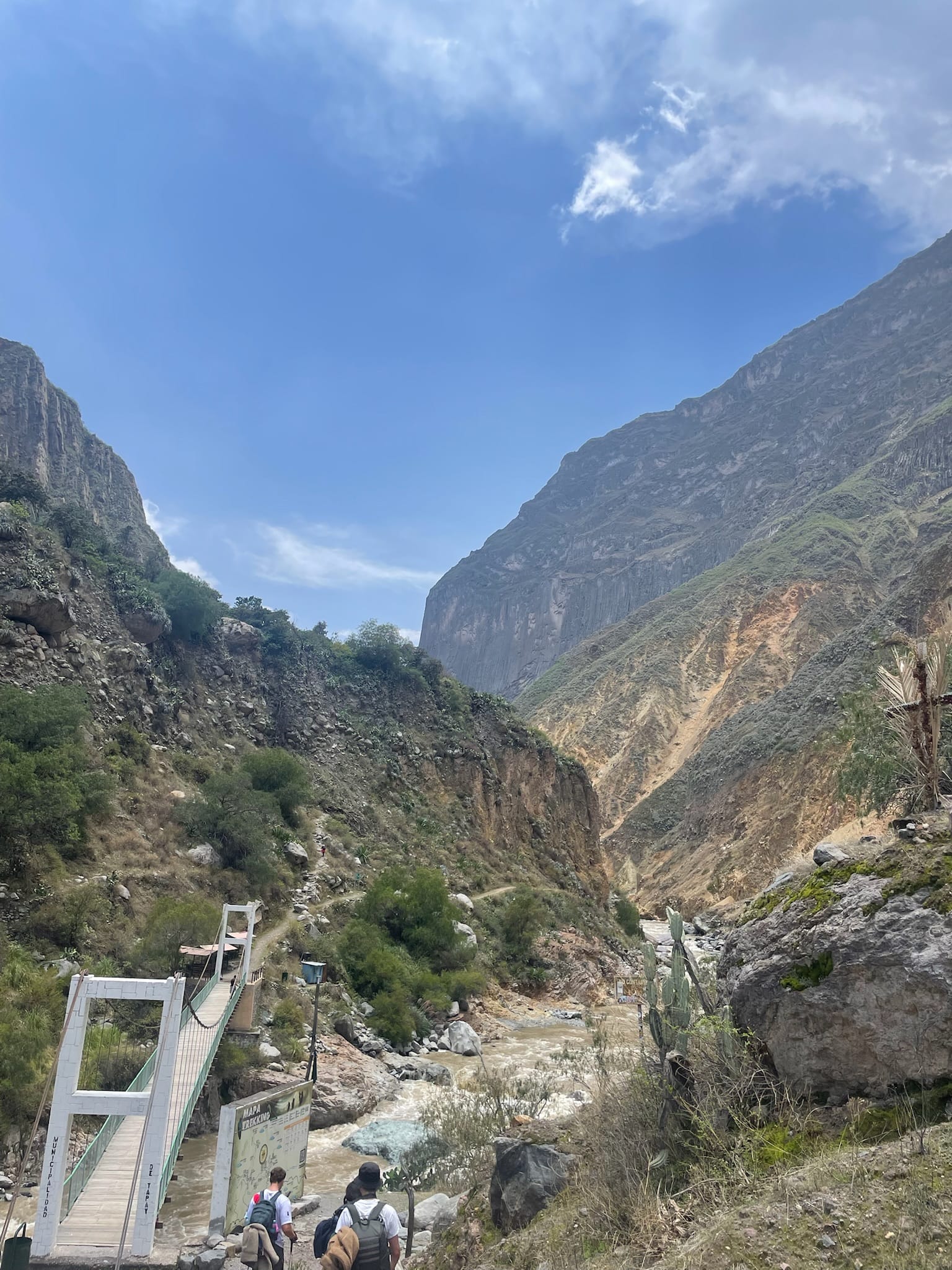
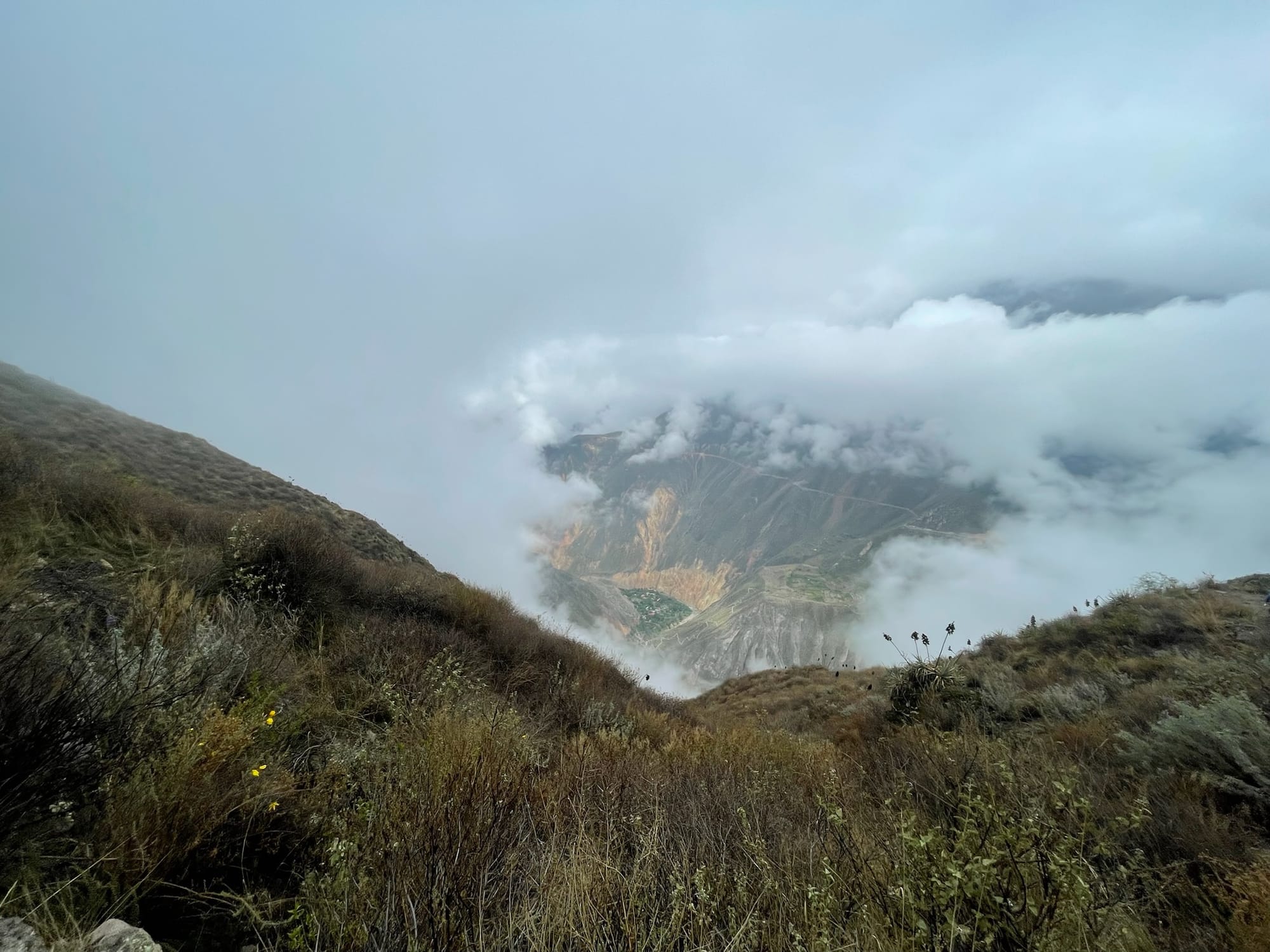
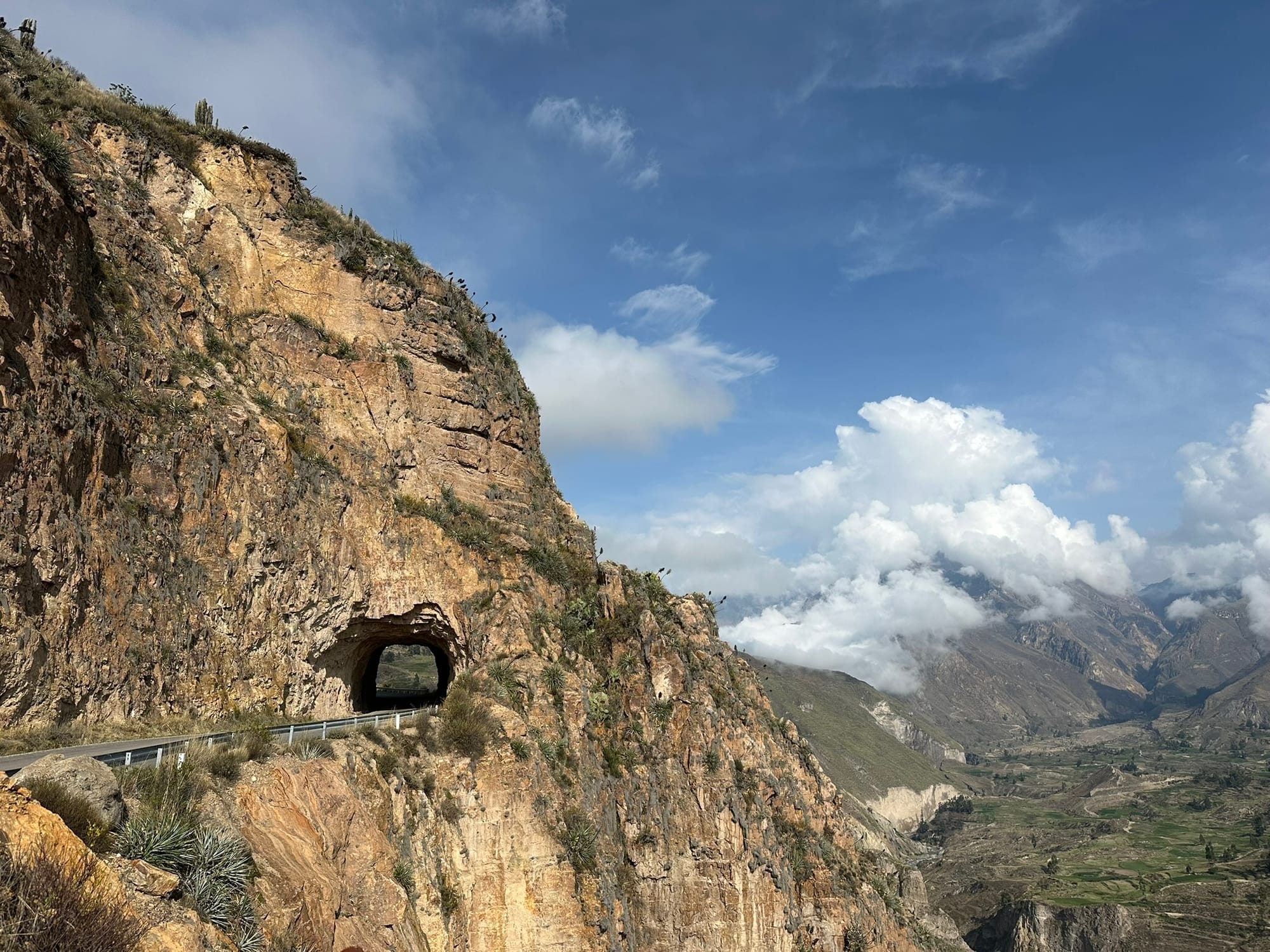
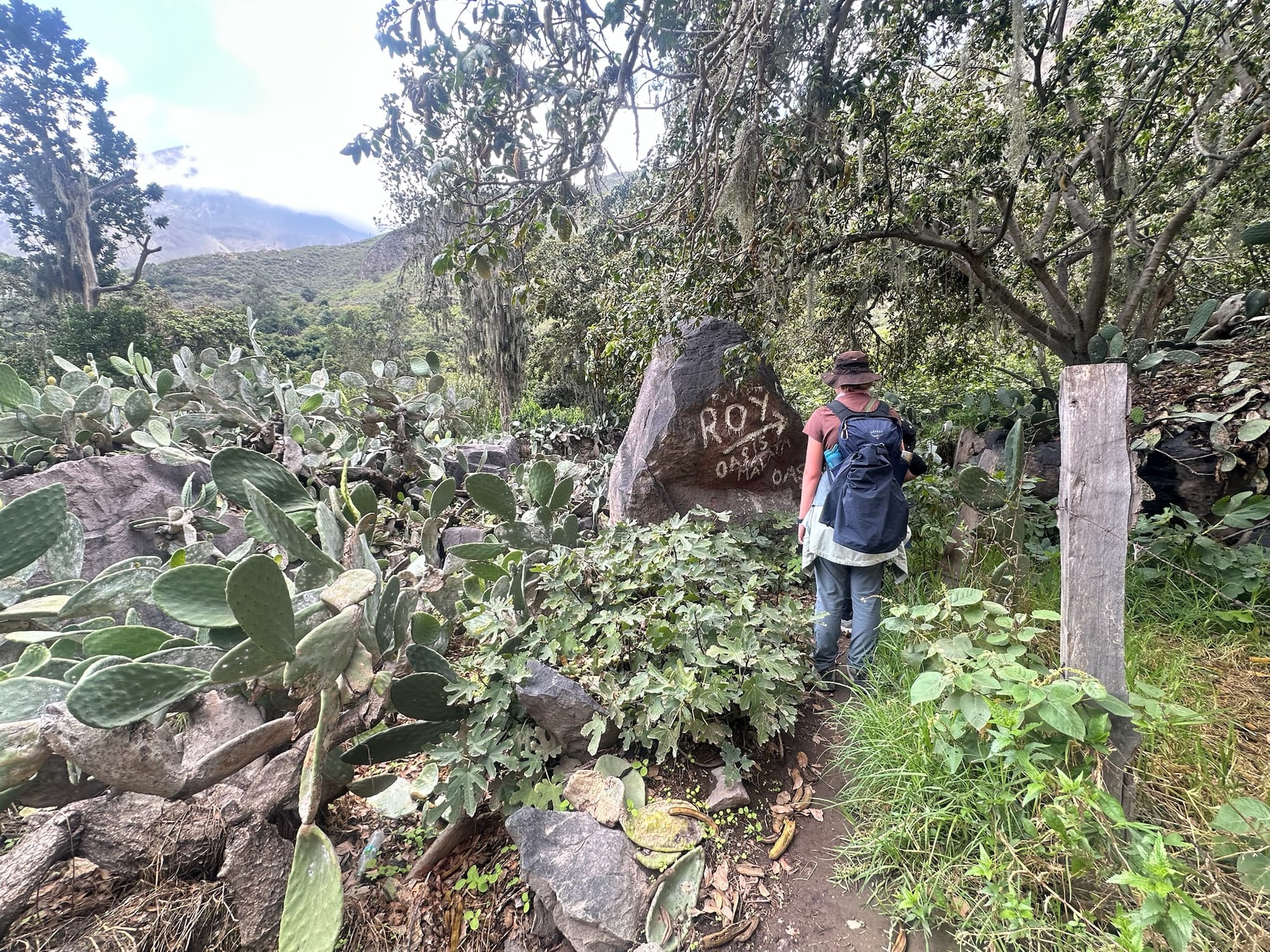
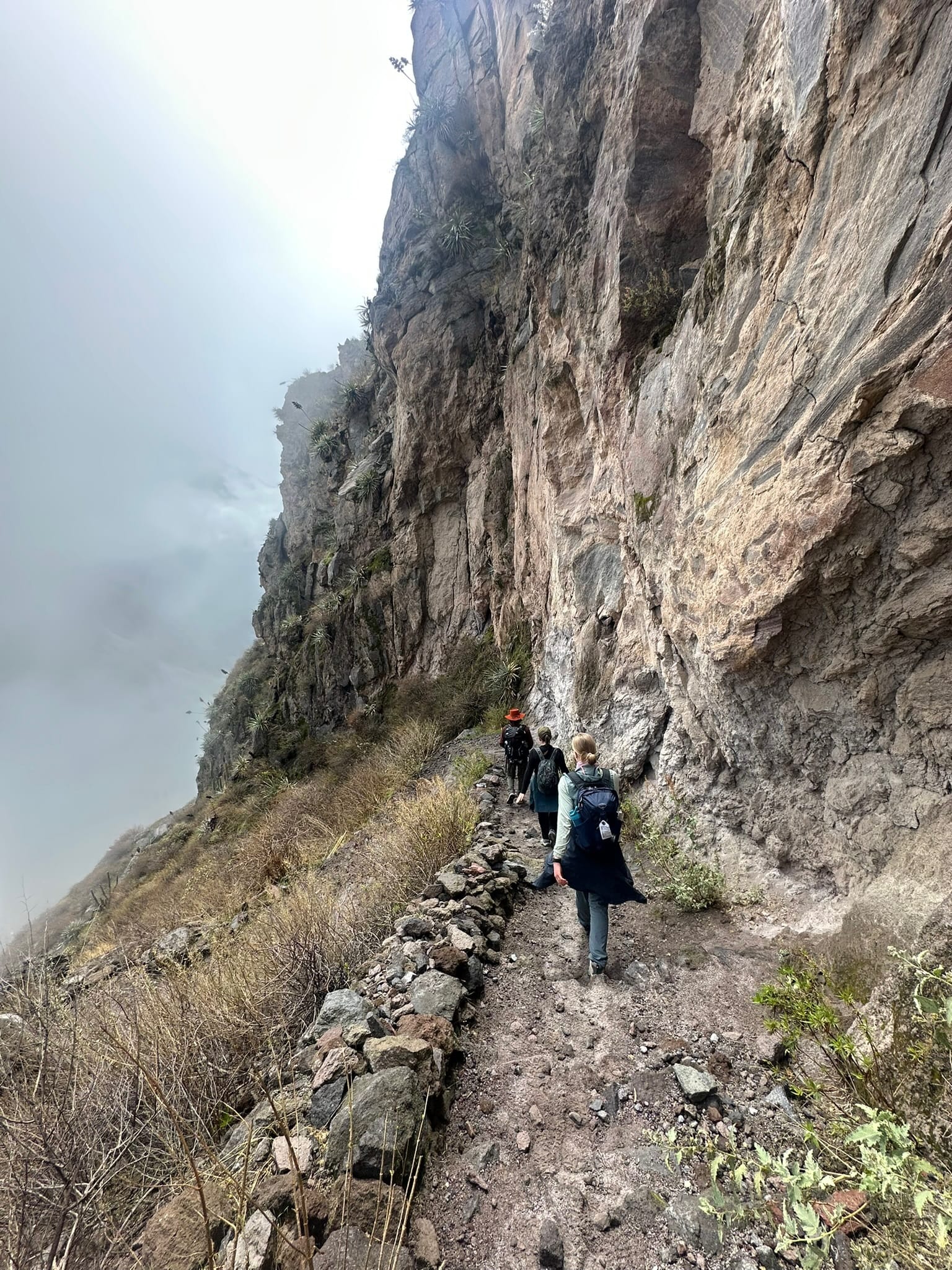
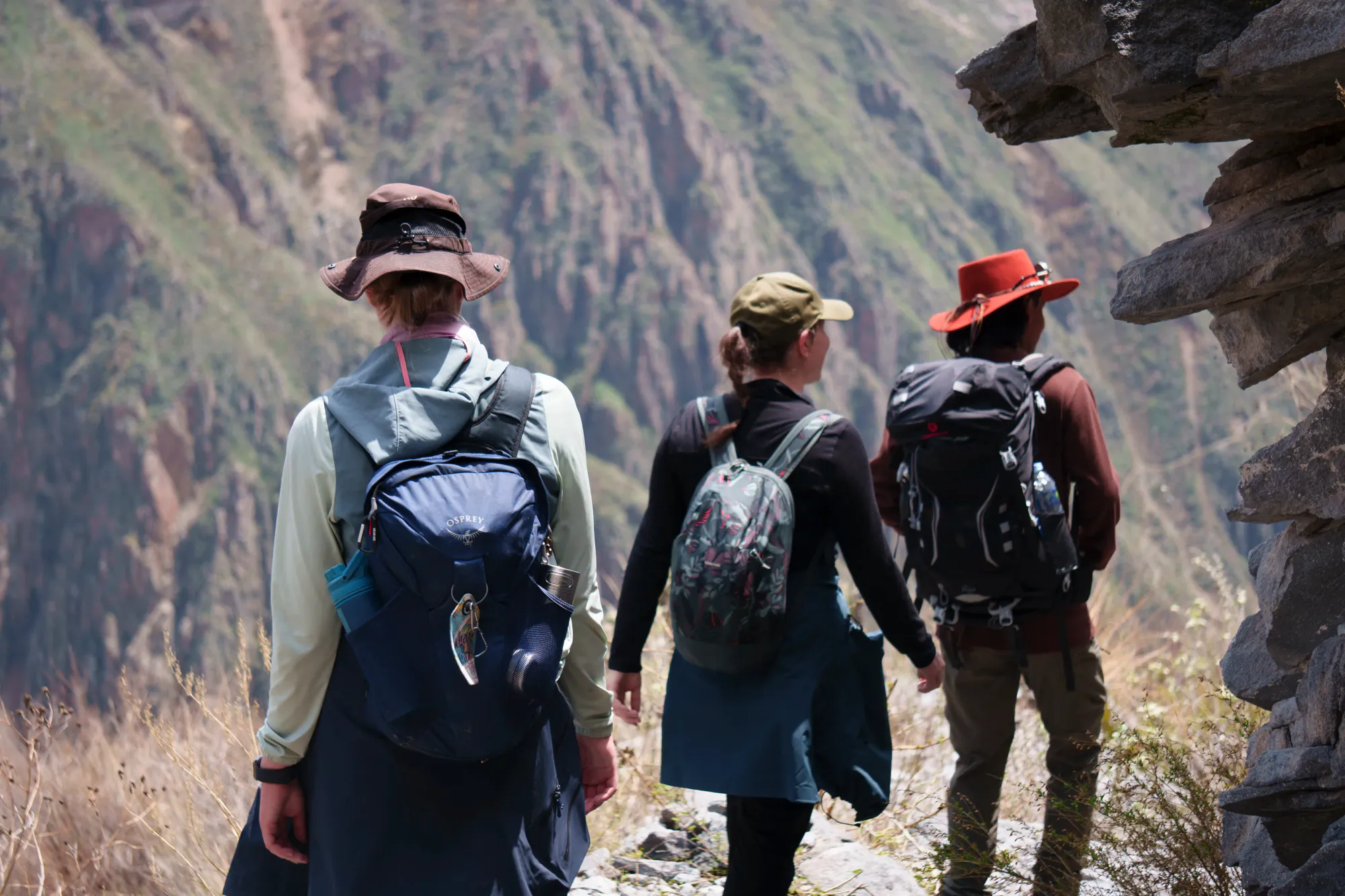
Canyons are like reverse mountains. You get to destroy your legs on the descent at the start, and then you get to climb out again! [📸 Rachel & Johann]
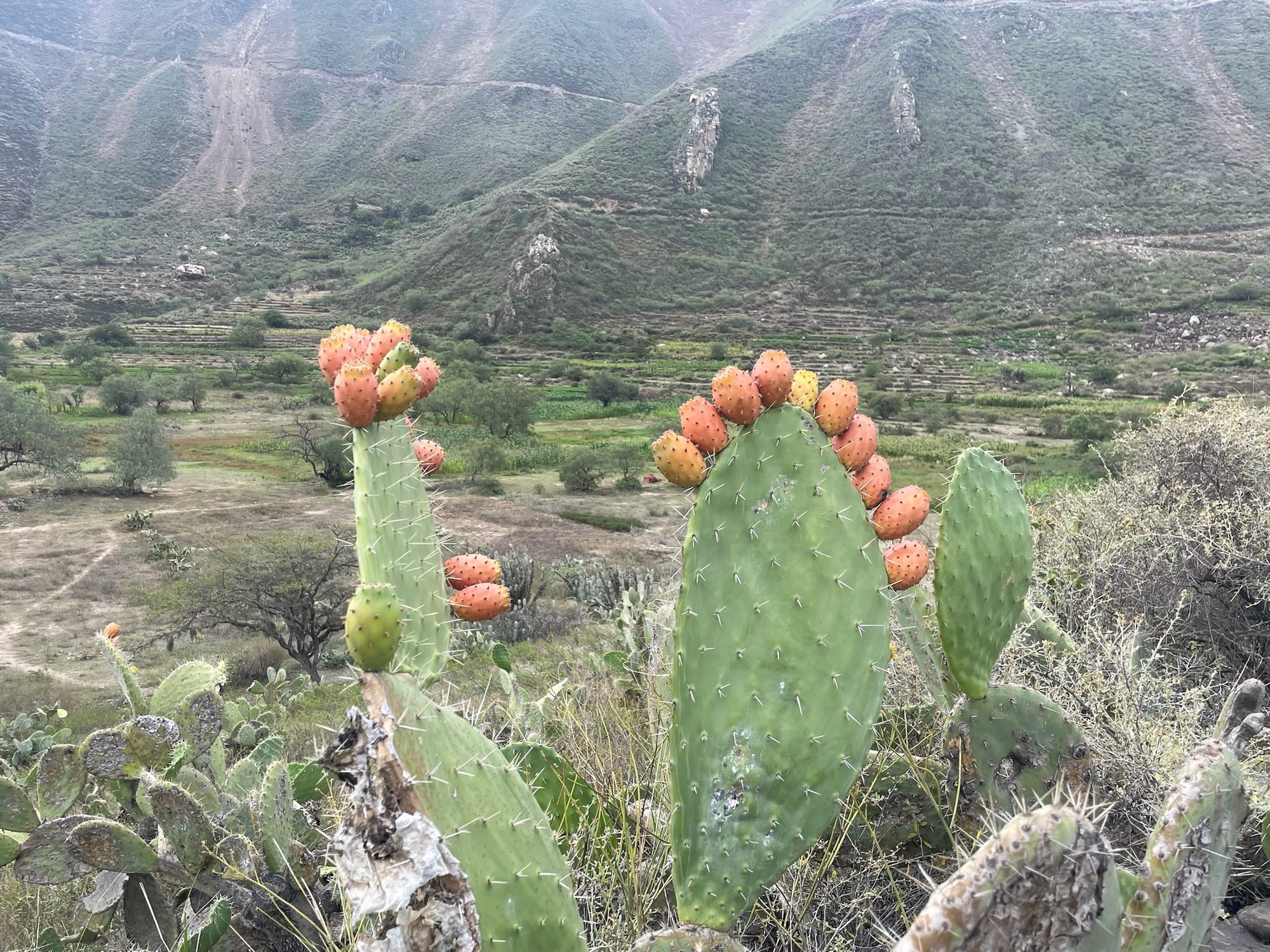
After enjoying fresh avocado from a local family’s restaurant, we began our 9 km along the canyon bottom. It was more of a valley at the base, with terraces of lush food crops growing above the river. The canyon was a vegetal wonderscape of broad cacti and spiky agave with their huge inflorescences. We cut open a ripe prickly pear fruit, the red flesh sweet and juicy with large black seeds, its taste reminiscent of watermelon. Their large paddles were covered in red cochineal beetles buried within the plant tissue. We even saw a toad!
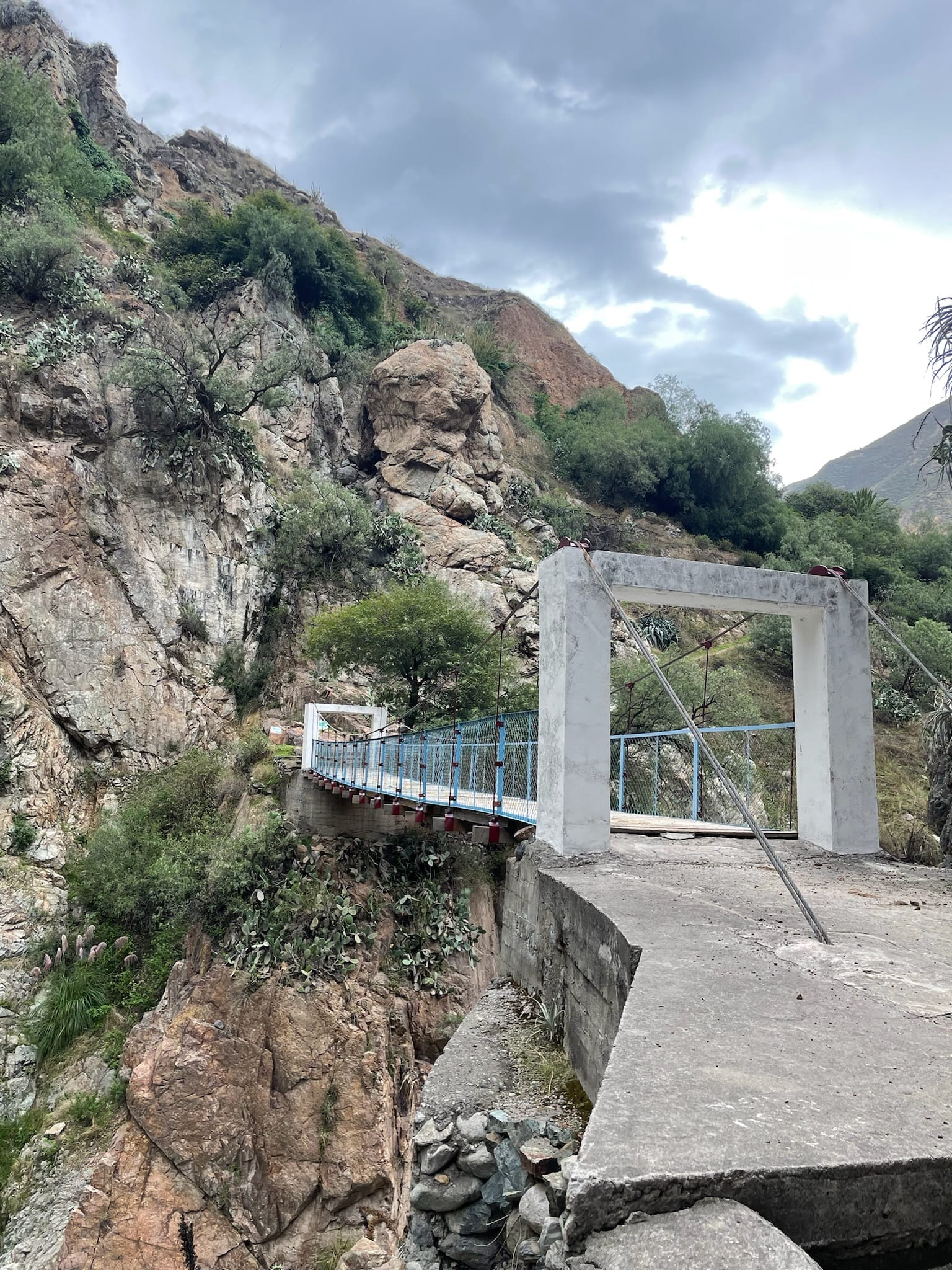
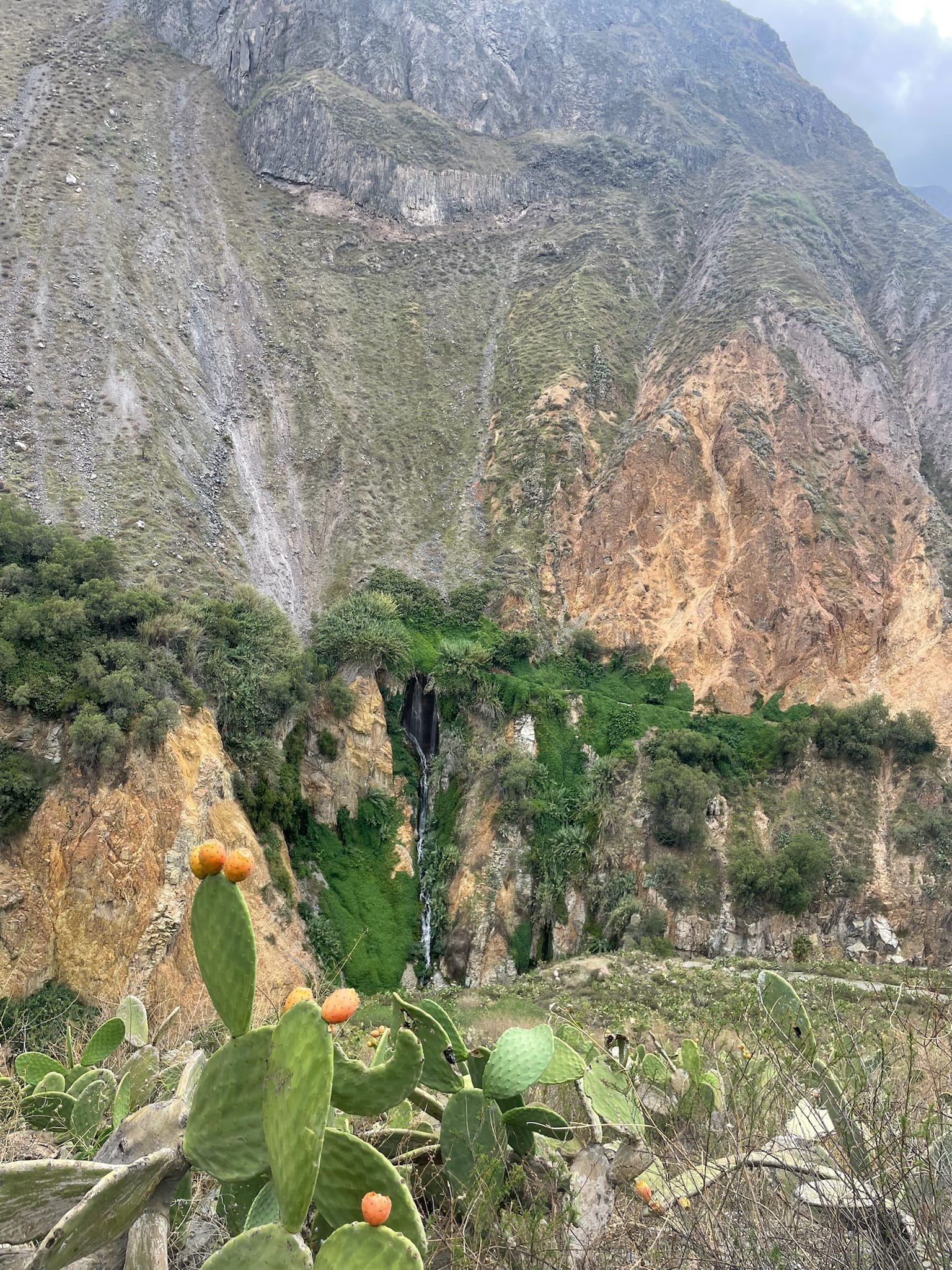
We spent the night at a basic but comfortable lodge in the valley bottom. On the approach we descended towards a lush patch of forest, waterfalls cascading from springs in the mountainside. The canyon grew steep and narrow, the river surging between rocky walls. A bridge crossing and a few more minutes walk delivered us to our destination!
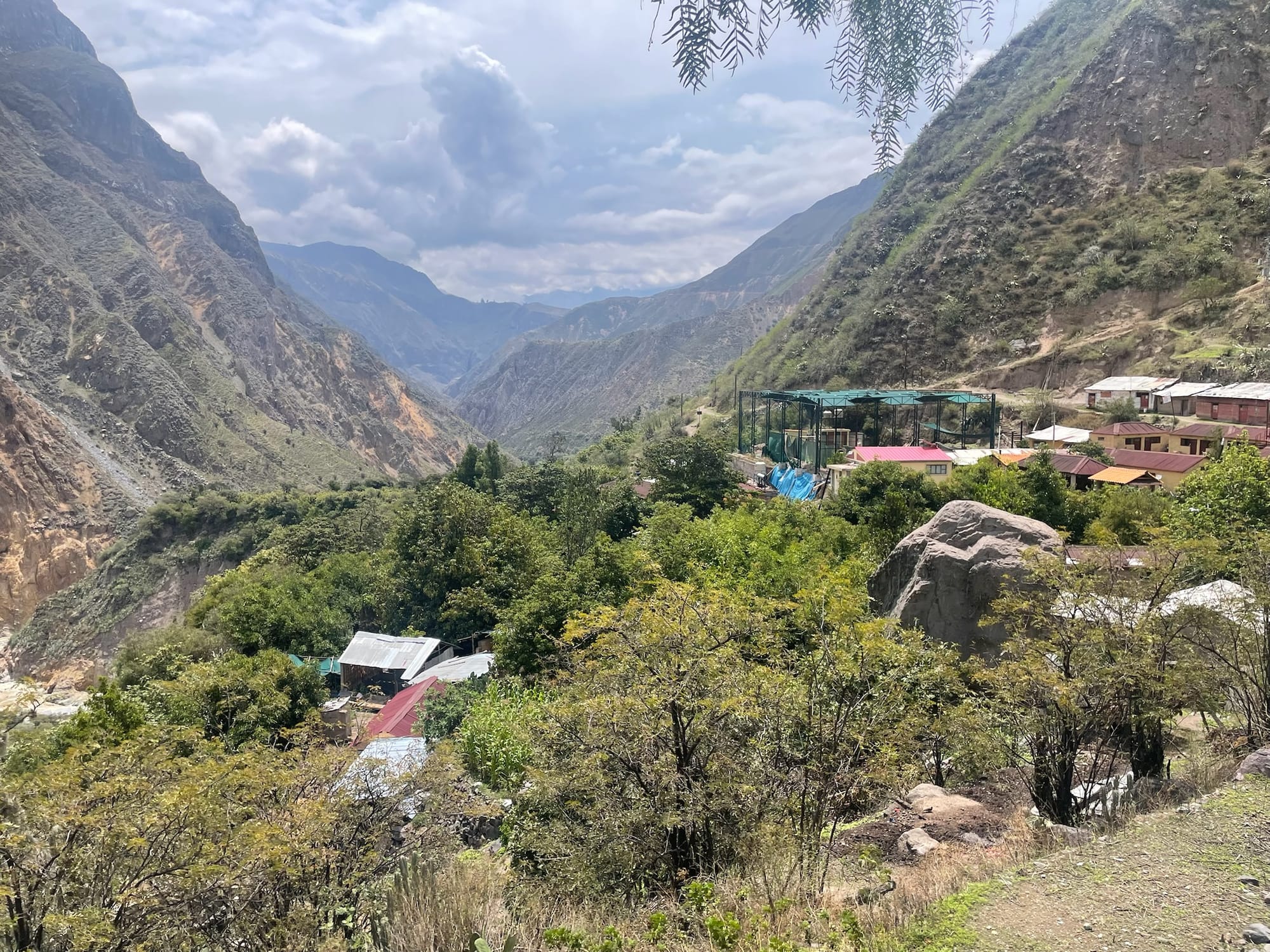
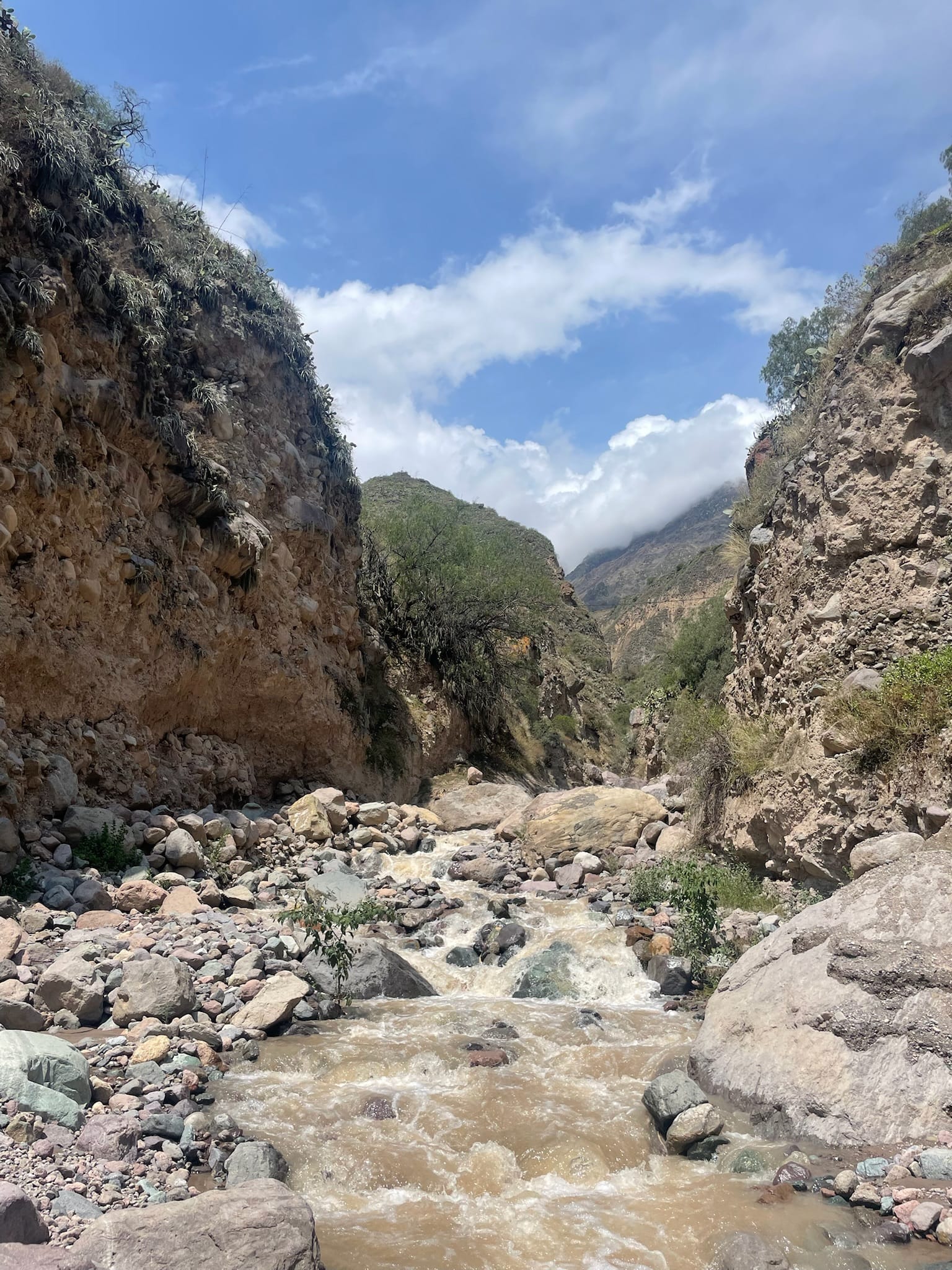
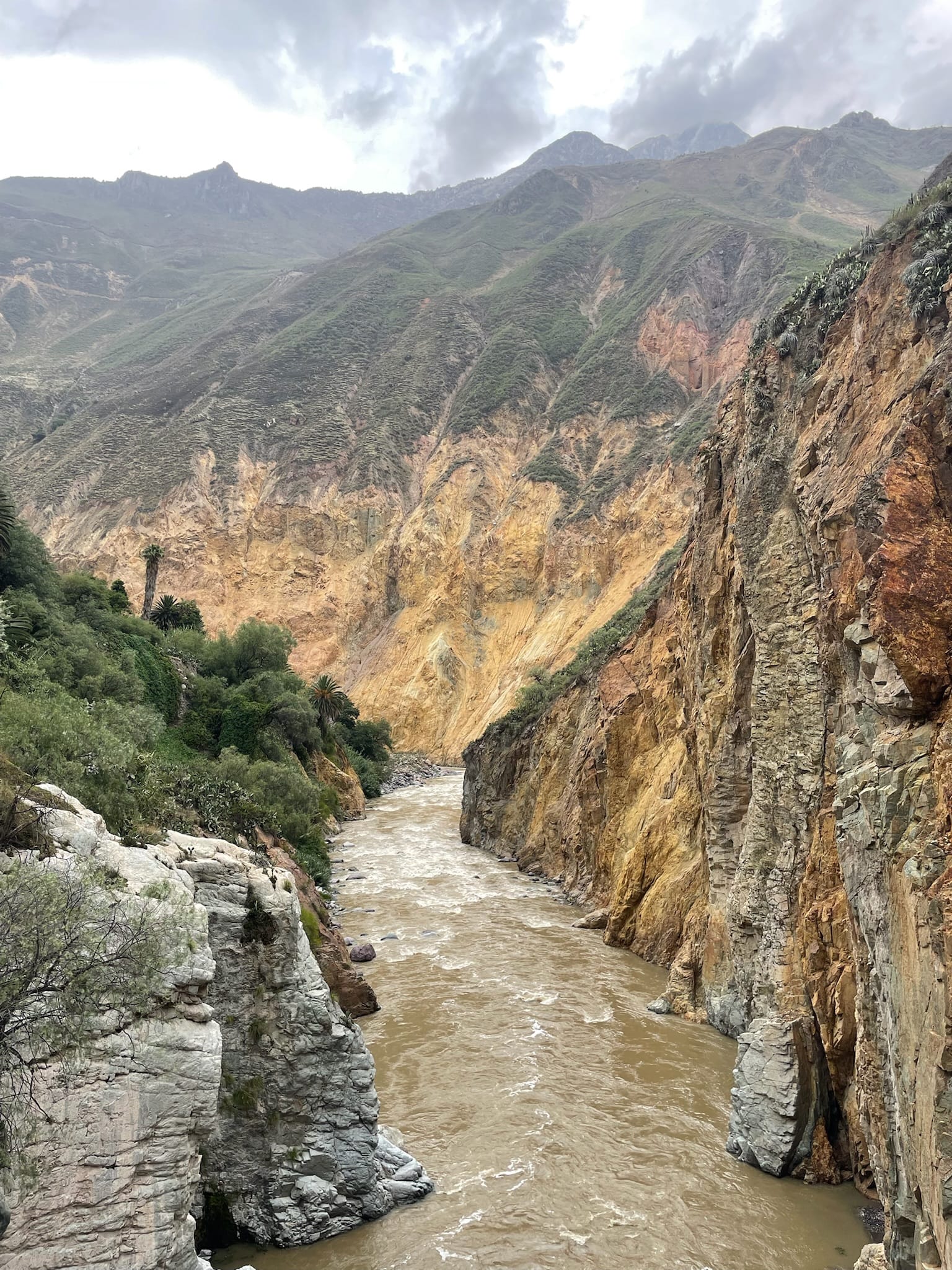
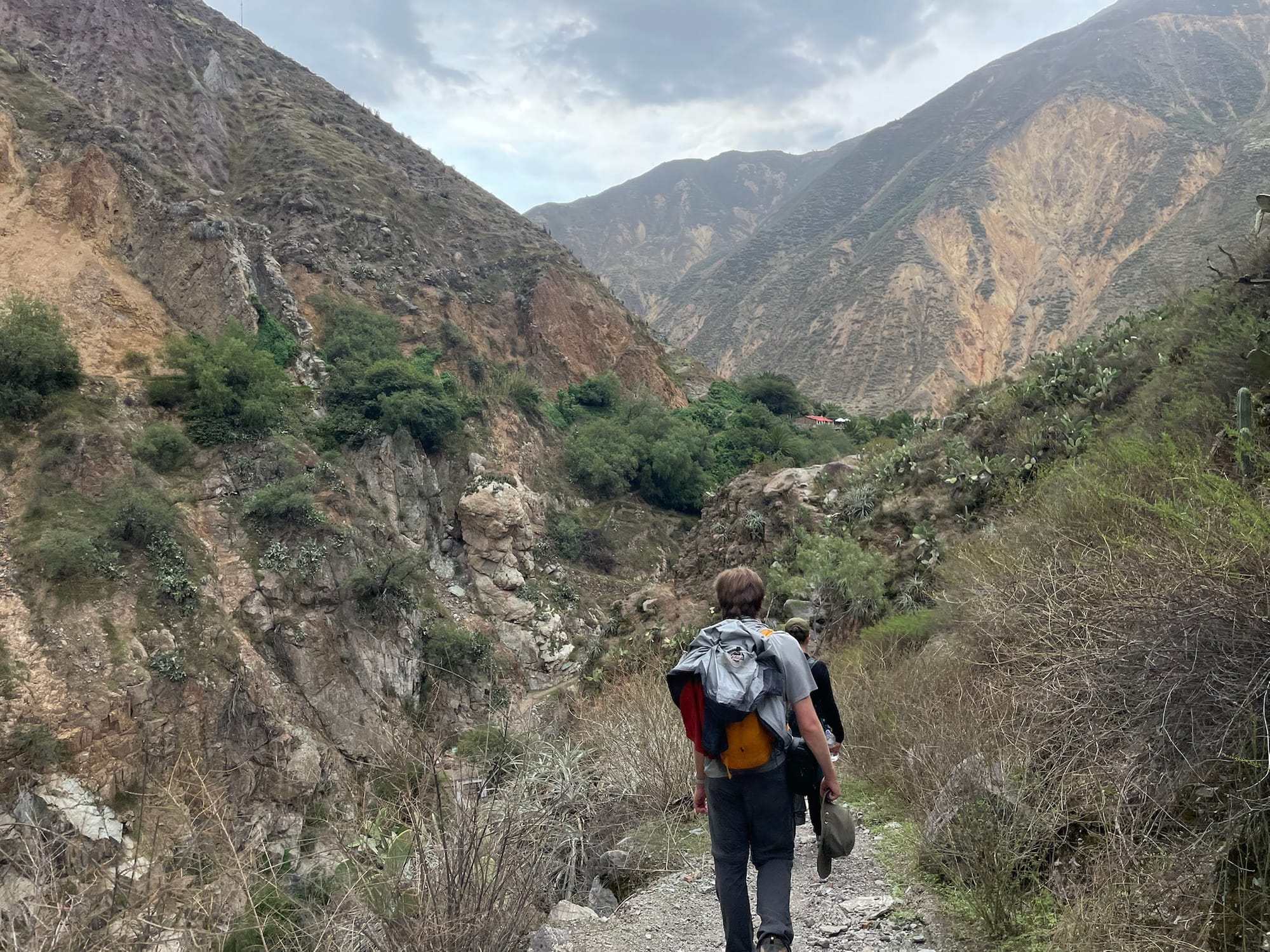
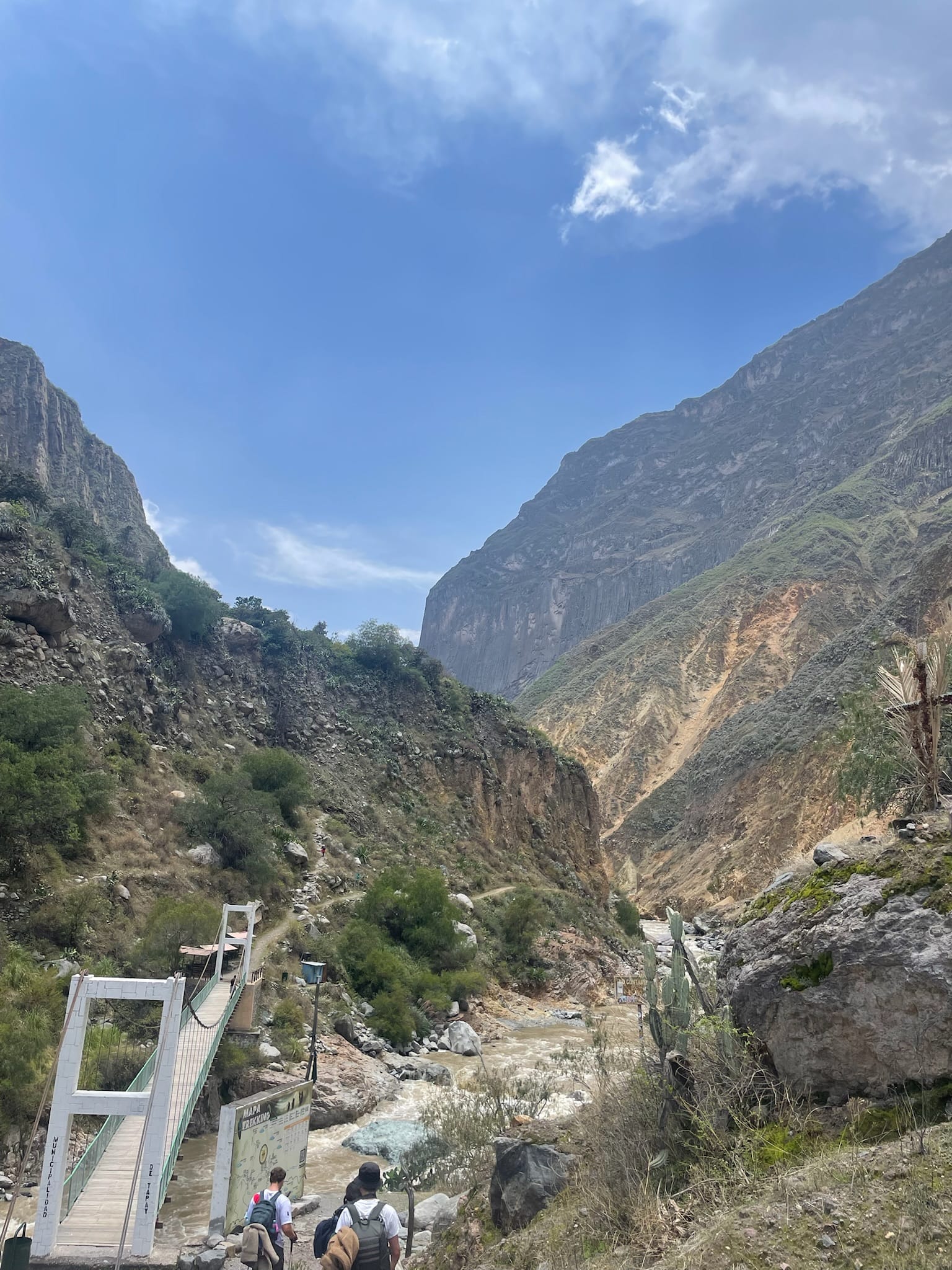
There's a little puppy that followed us all the way down into the canyon, slept over outside our bedroom door, and then climbed out with us the next morning. The guides tell us the puppy does it every single day. [📸 Rachel & Johann]
It was early to bed, but our 4:00 am alarm still found us frazzled. At 4:30, we began our 1000 meter (4 km) climb out of the valley. The stars slowly faded as dawn broke, flooding the landscape with golden light. A hummingbird hovered, feeding from a huge white cactus flower.
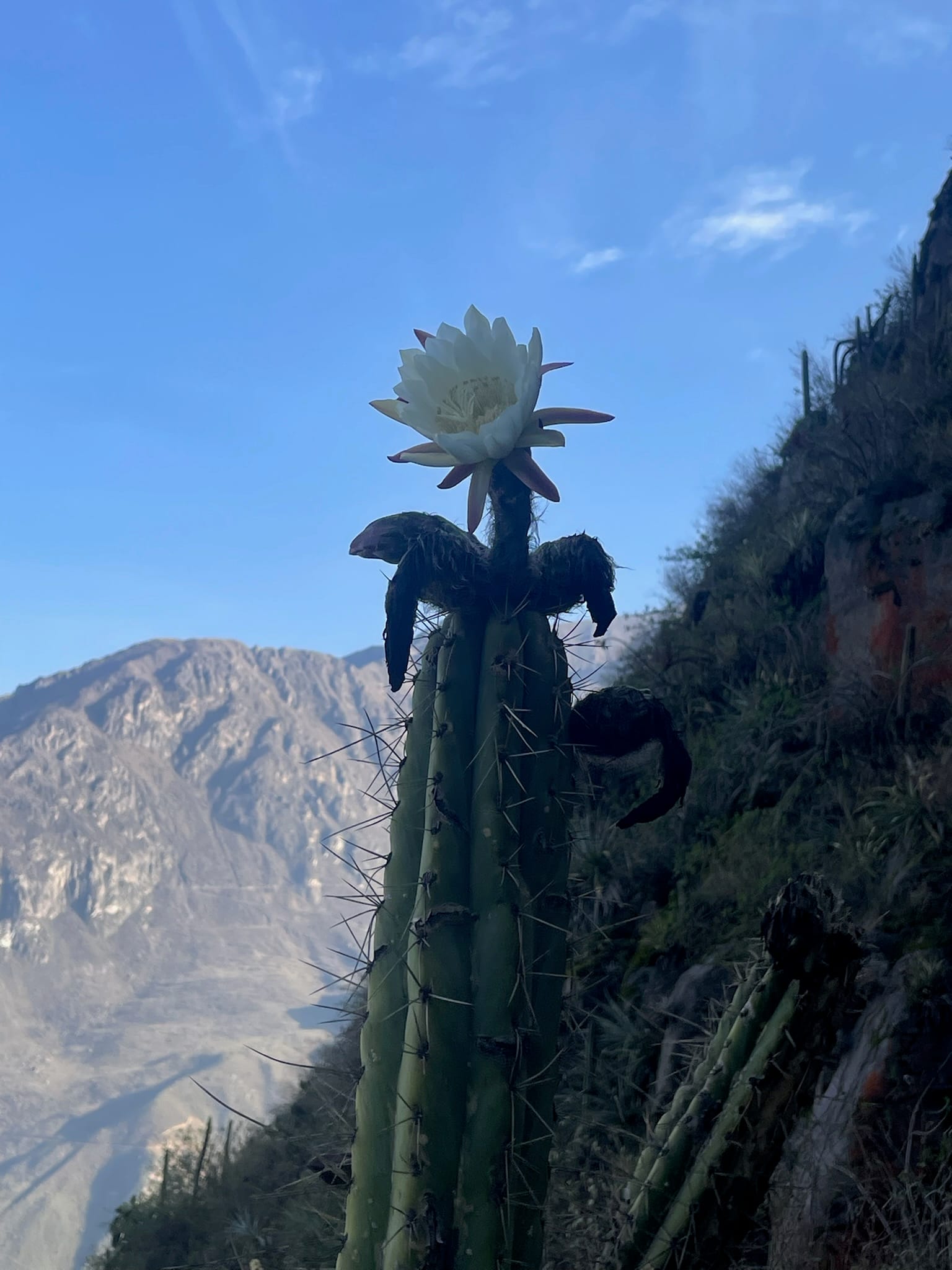
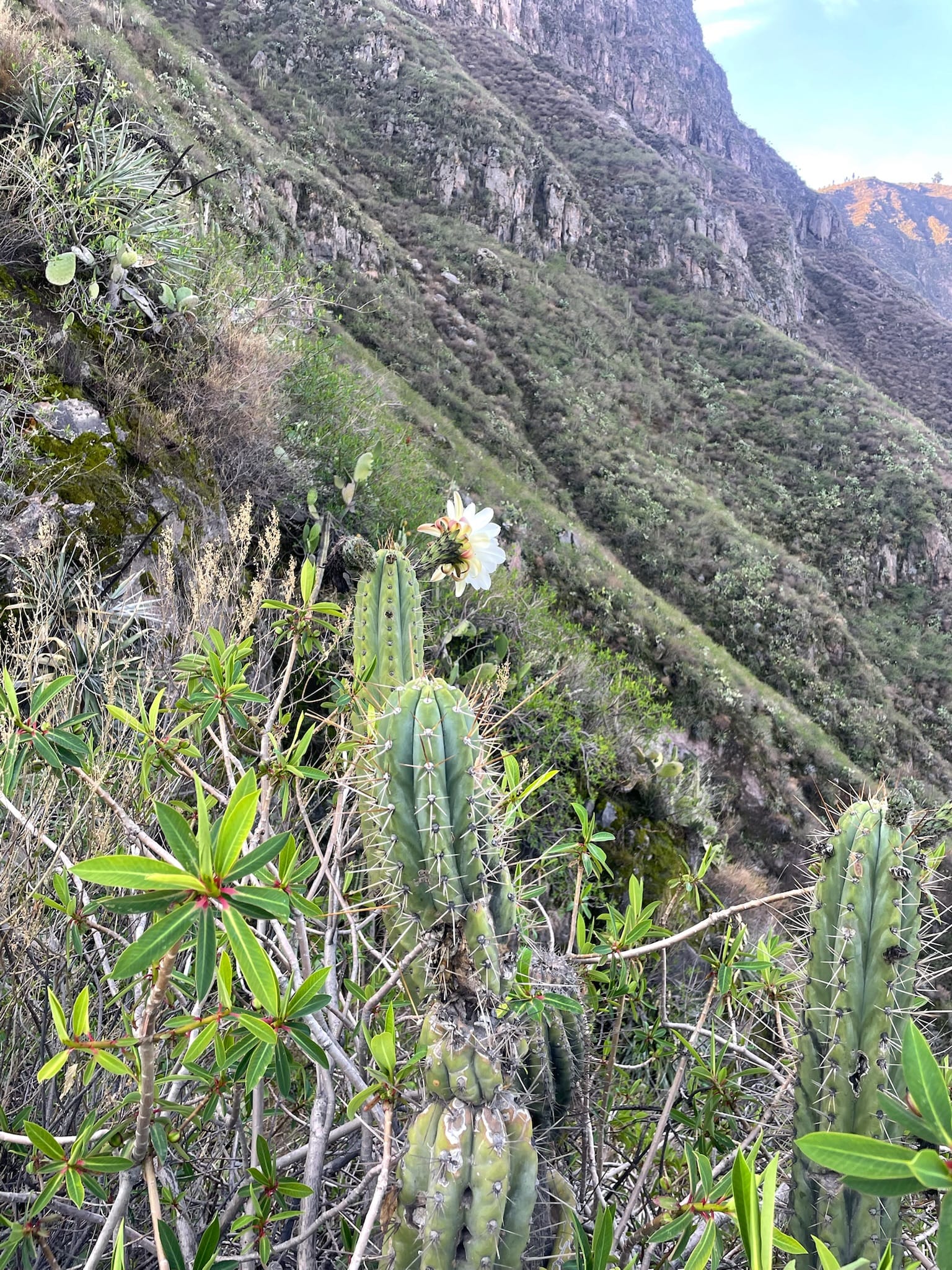
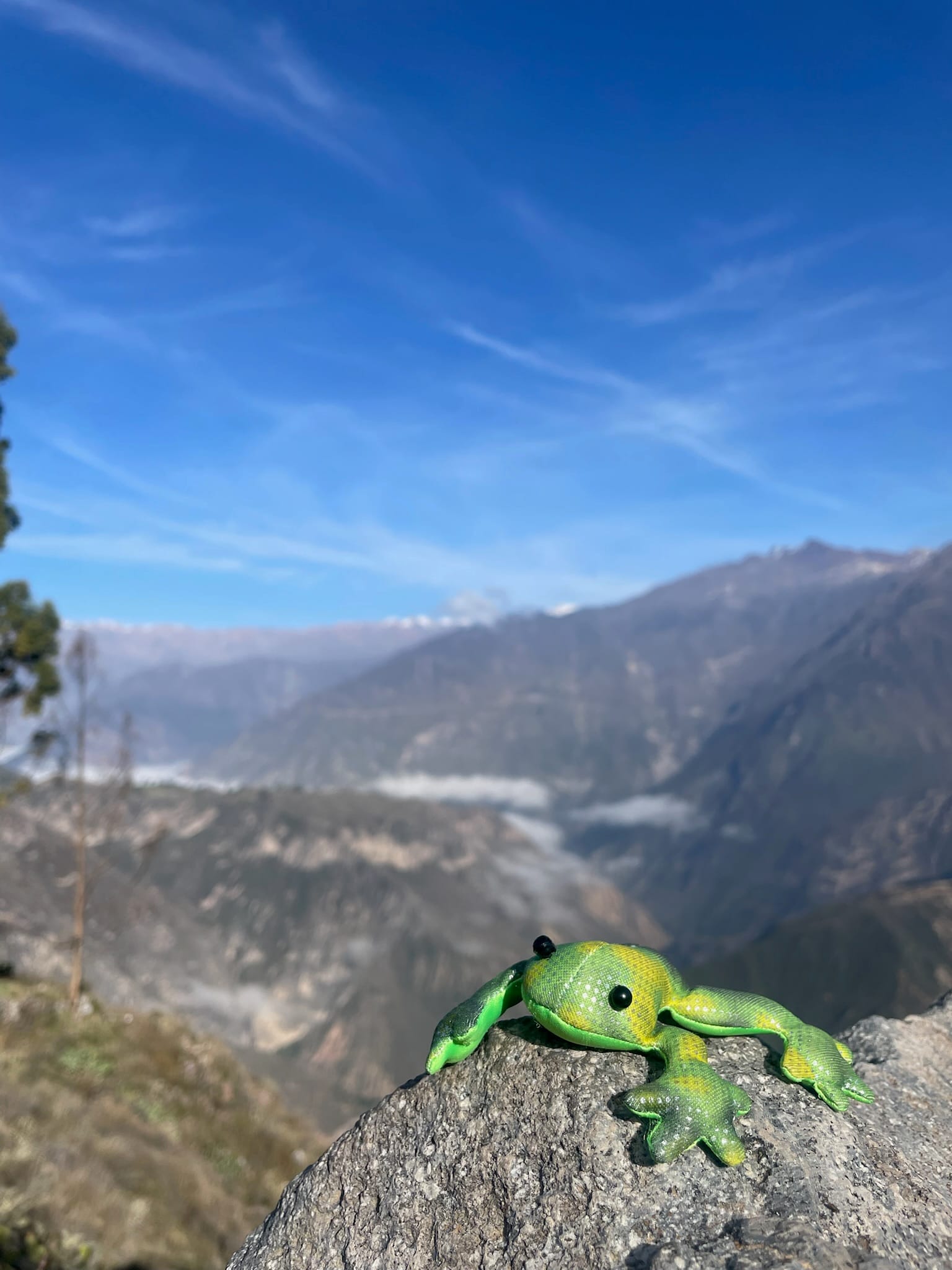
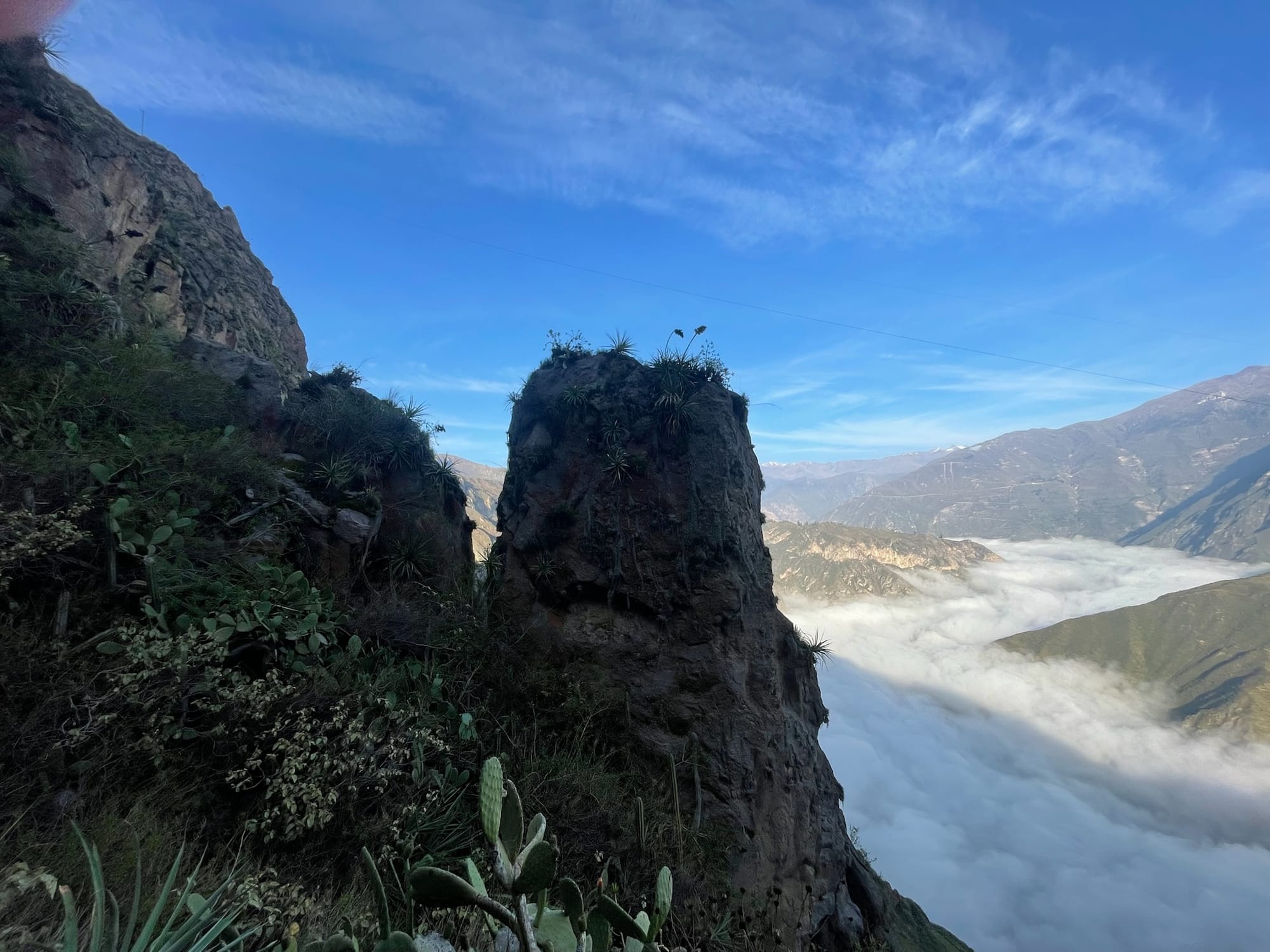
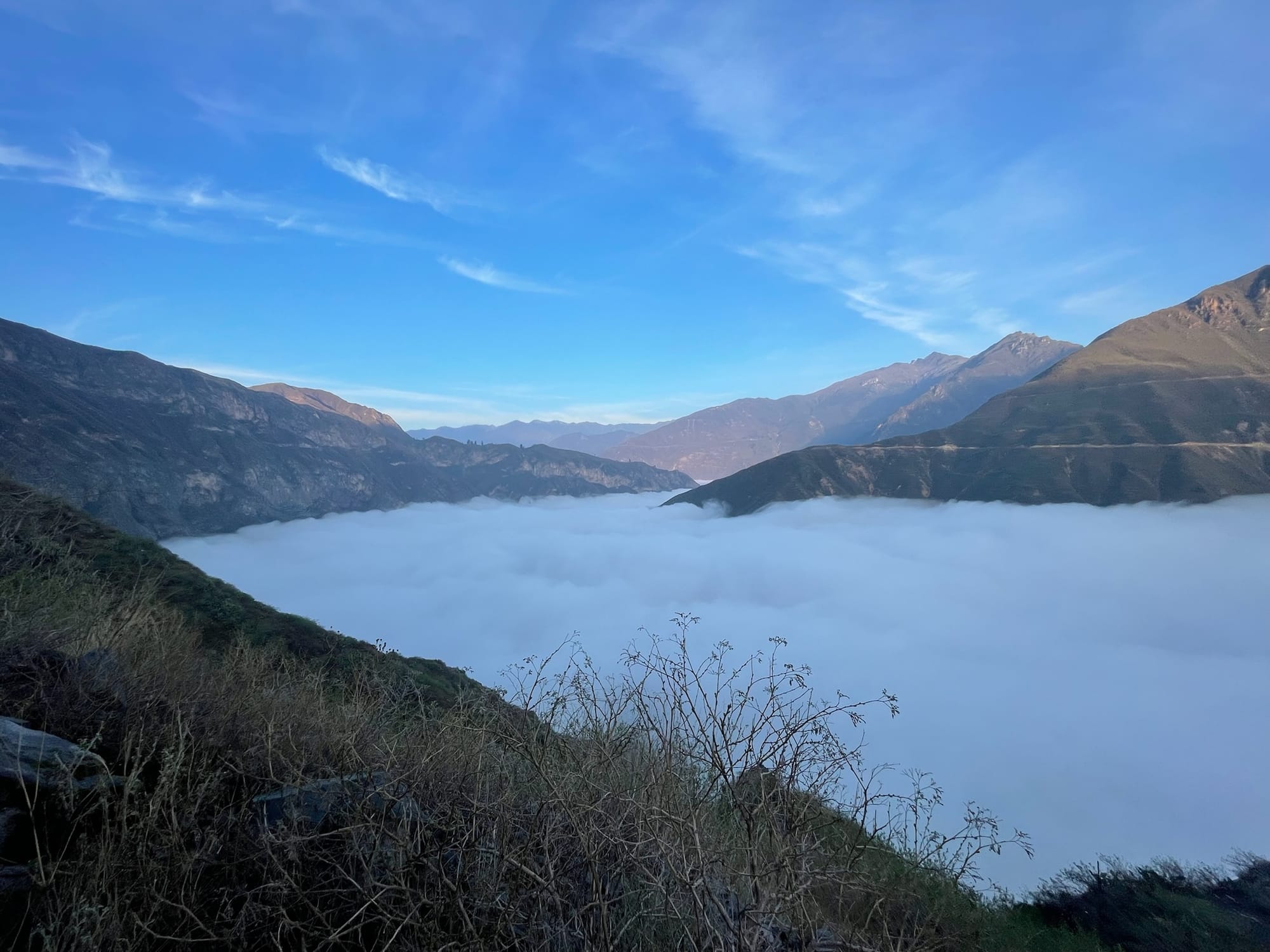
Climbing at 4:30 AM, our movement verb was "sleepwalk." [📸 Rachel & Johann]
It hurt, but the spectacular surroundings were suitably distracting. After a breakfast in which Rachel was offered only butter and jam (our guide was extremely inadequate), we piled in a van for the return journey. A stop at the riverside hot springs felt REALLY GOOD, while their unconventional design kept Johann “entertained.” (read: AHS pool inspectors are coming for us all)
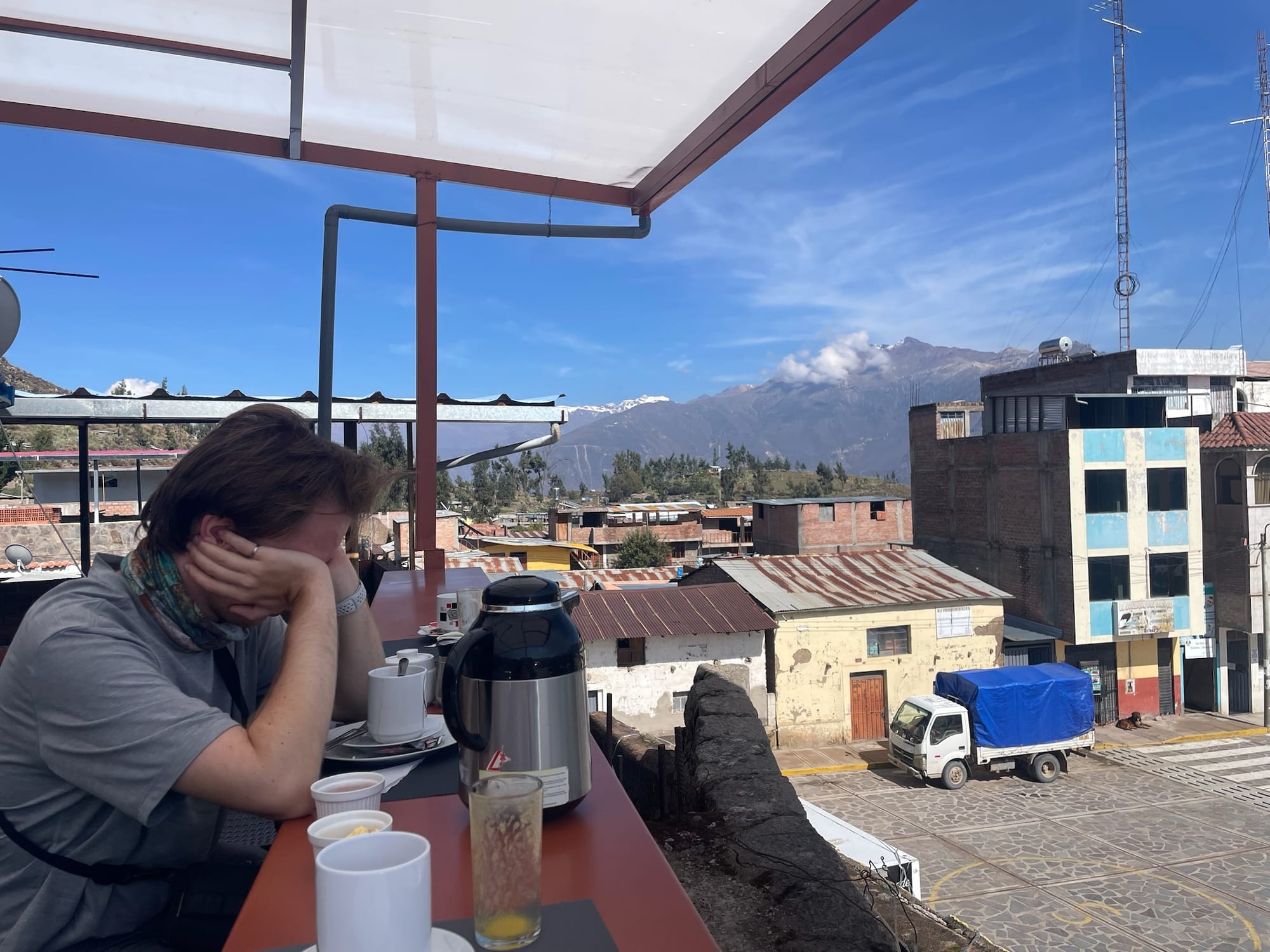
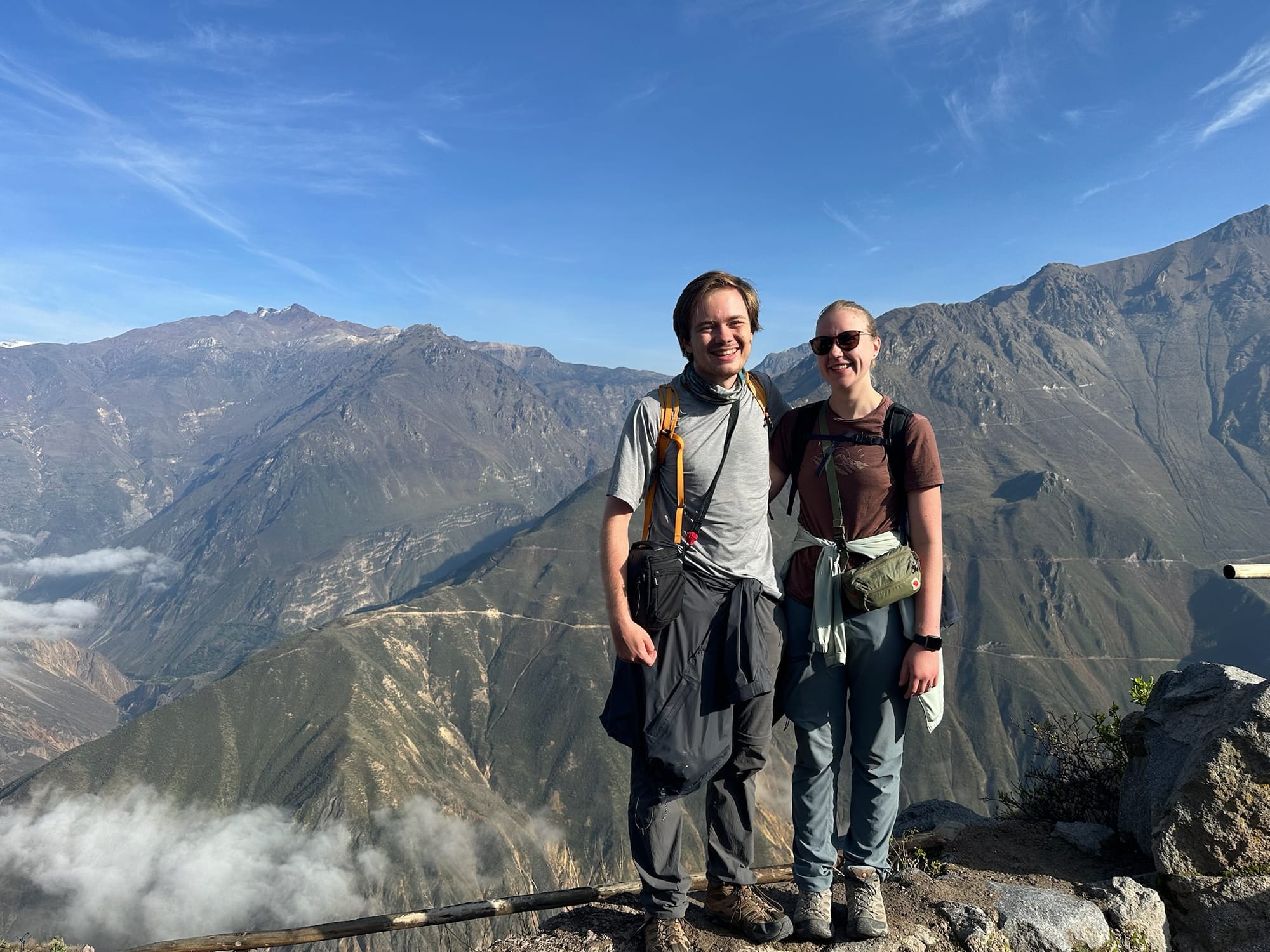
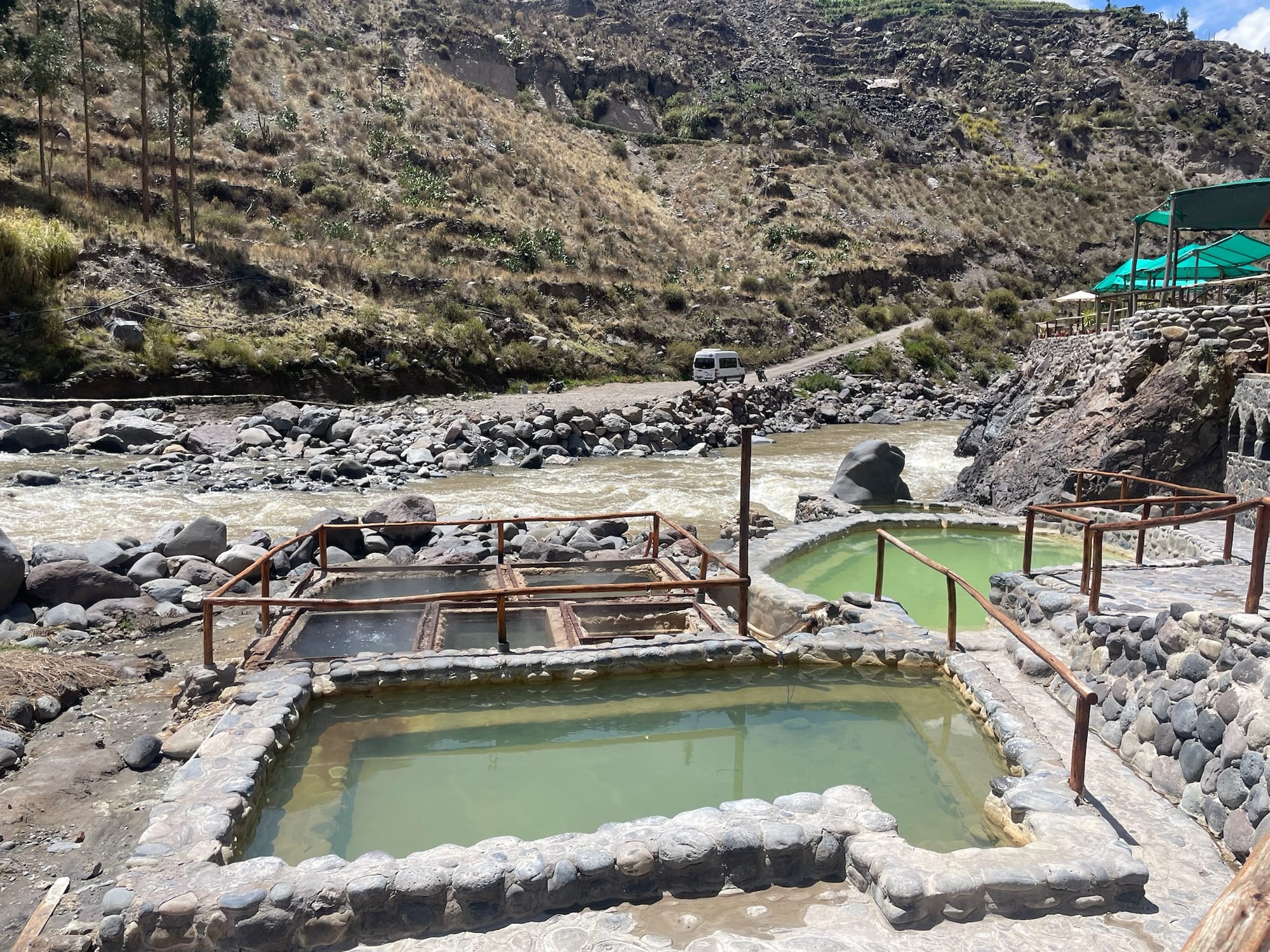
Next time you want to get into a cold plunge pool, think about how human skin cells and oils tend to congeal on the surface. In "the biz", we call that "body butter." Hope you enjoy your next spa visit :-) [📸 Rachel & Johann]
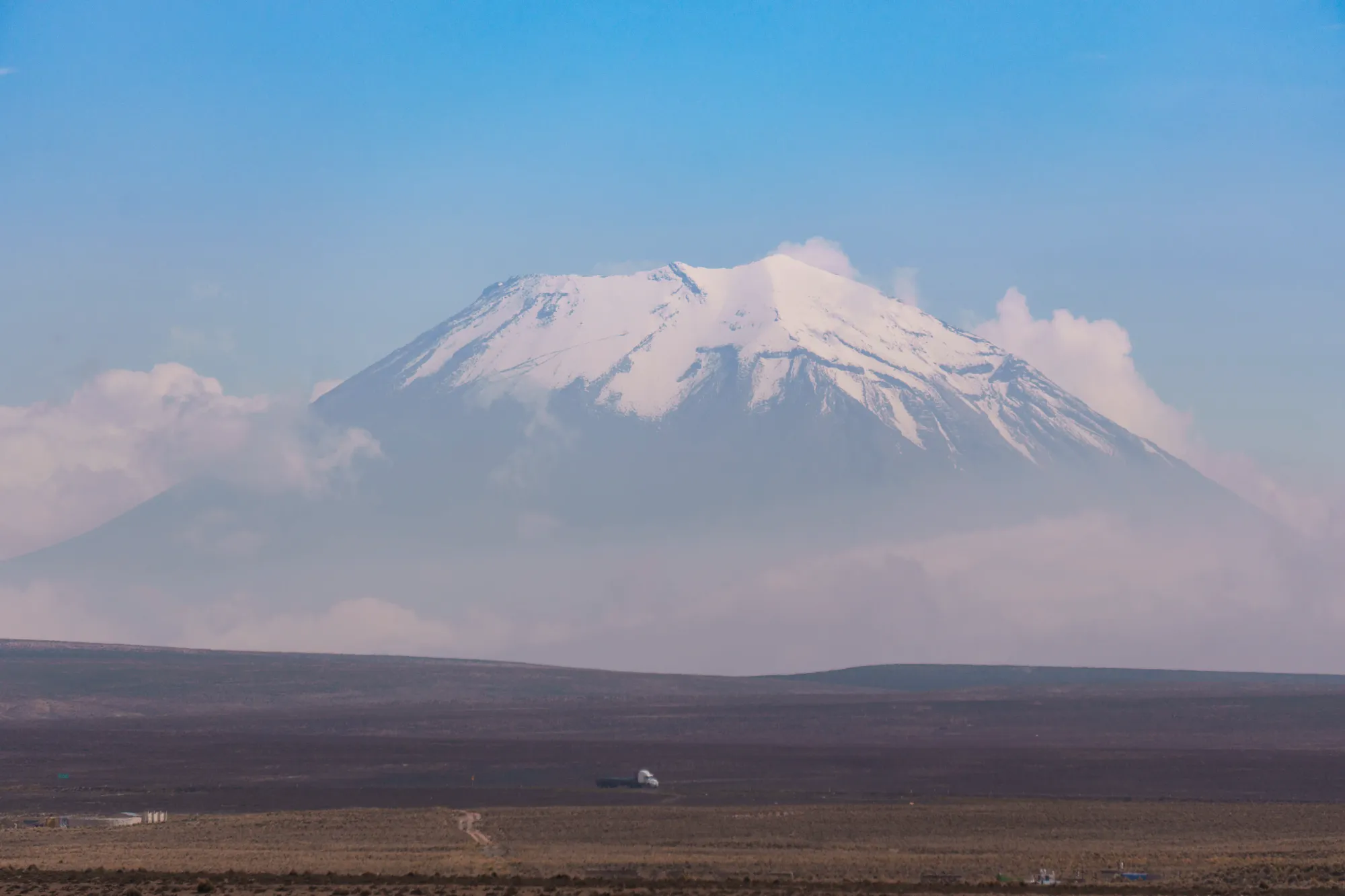
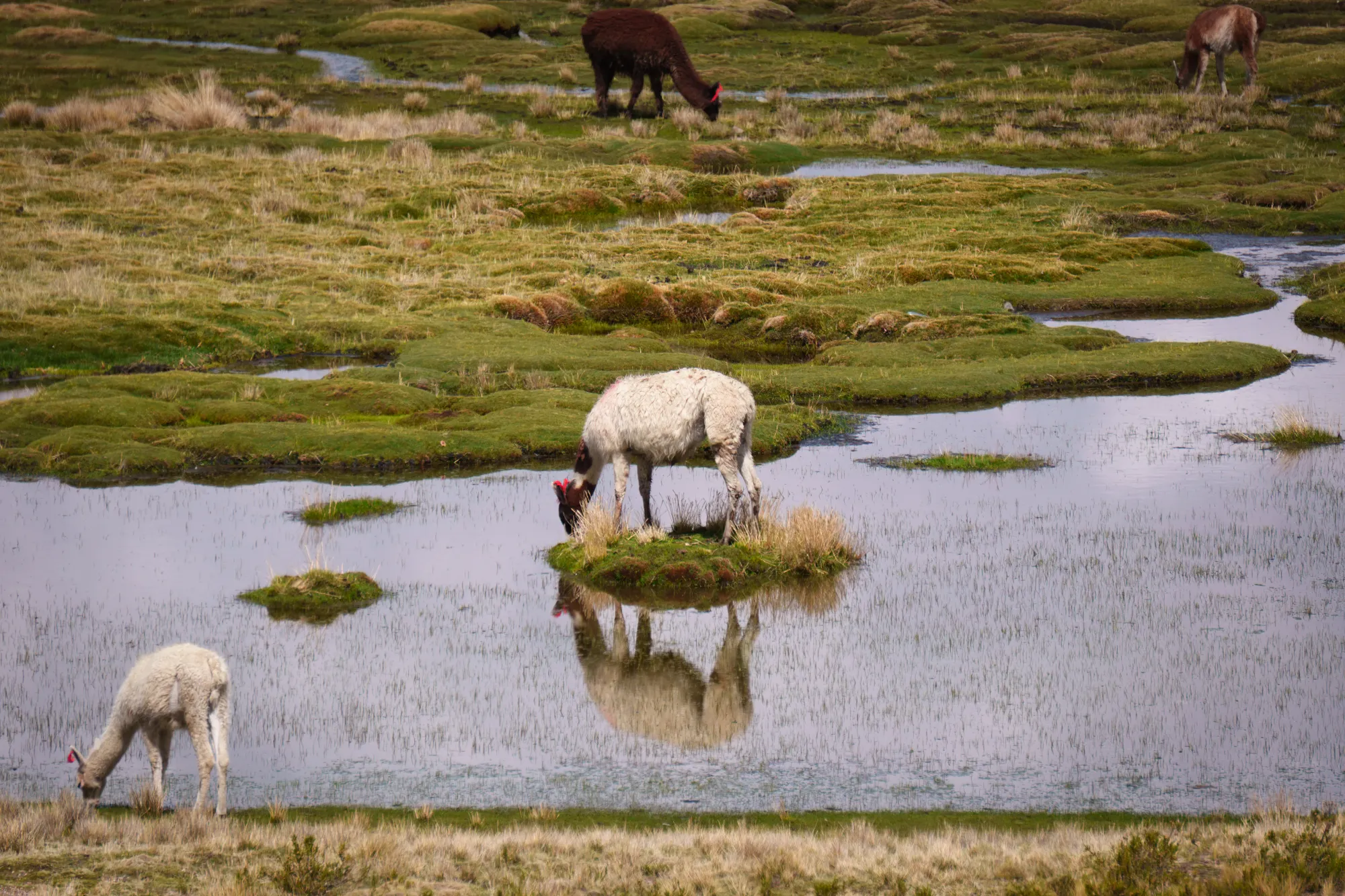
We weren’t about to spend a fortune on some tourist trap buffet lunch, opting to carve up our rock hard avocado on the front lawn of the restaurant instead. Crossing back to Arequipa over a 5000 meter pass, we saw volcanoes, clouds where volcanoes should be, grazing alpacas and llamas, and elegant wild vicuñas. All together, an excellent array of camelids.
And that’s it for Peru Part 1, the first instalment of our Sleep Deprivation Trilogy! Stay tuned for more! Which we will get to you whenever we have time and wifi and adequate rest.
Maybe. We just walked 60,000 steps in two days near El Chaltén, Argentina.