Peru Part II: Breathing Water
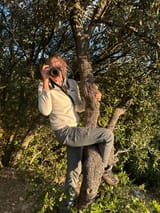
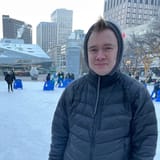
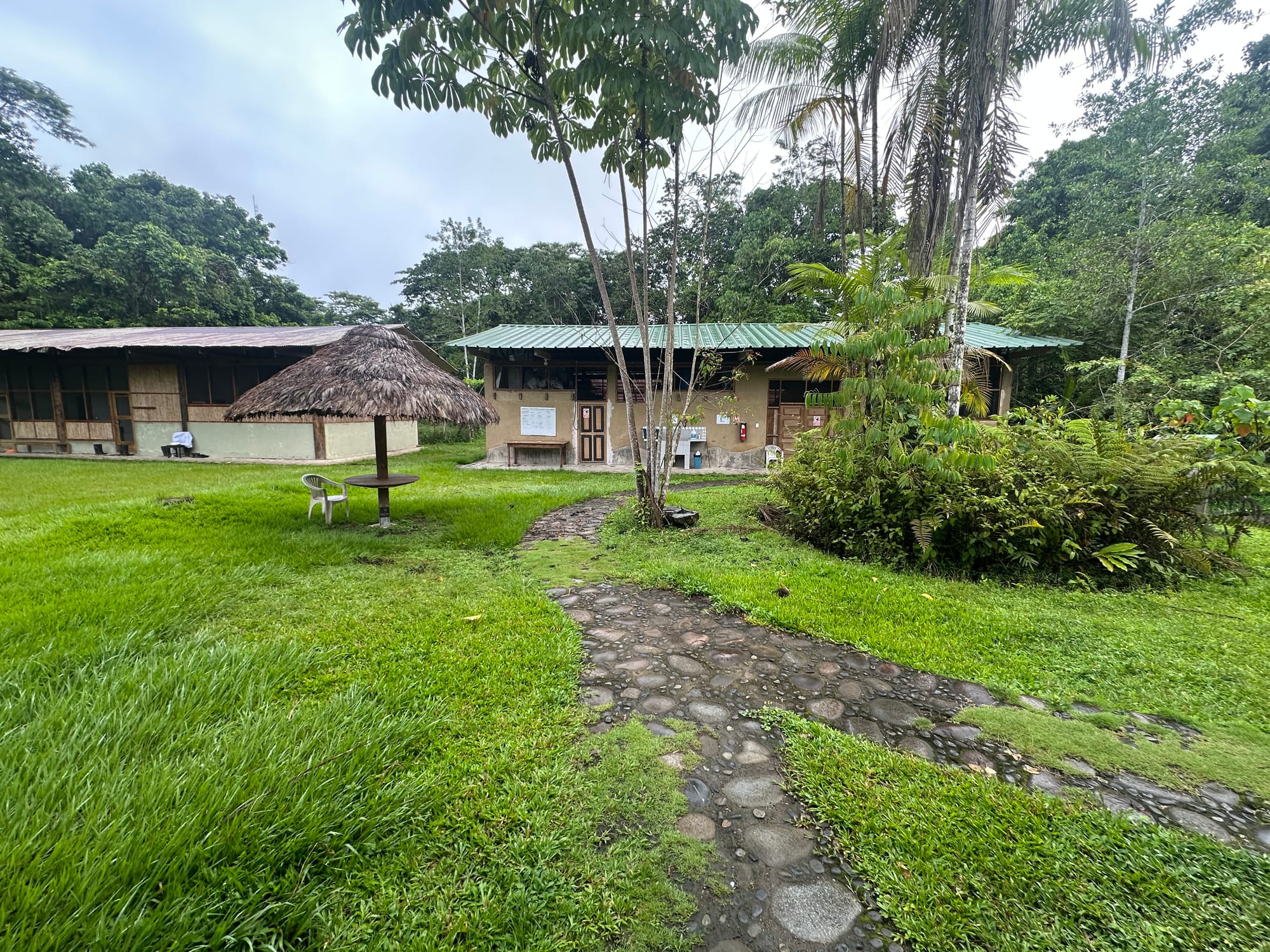
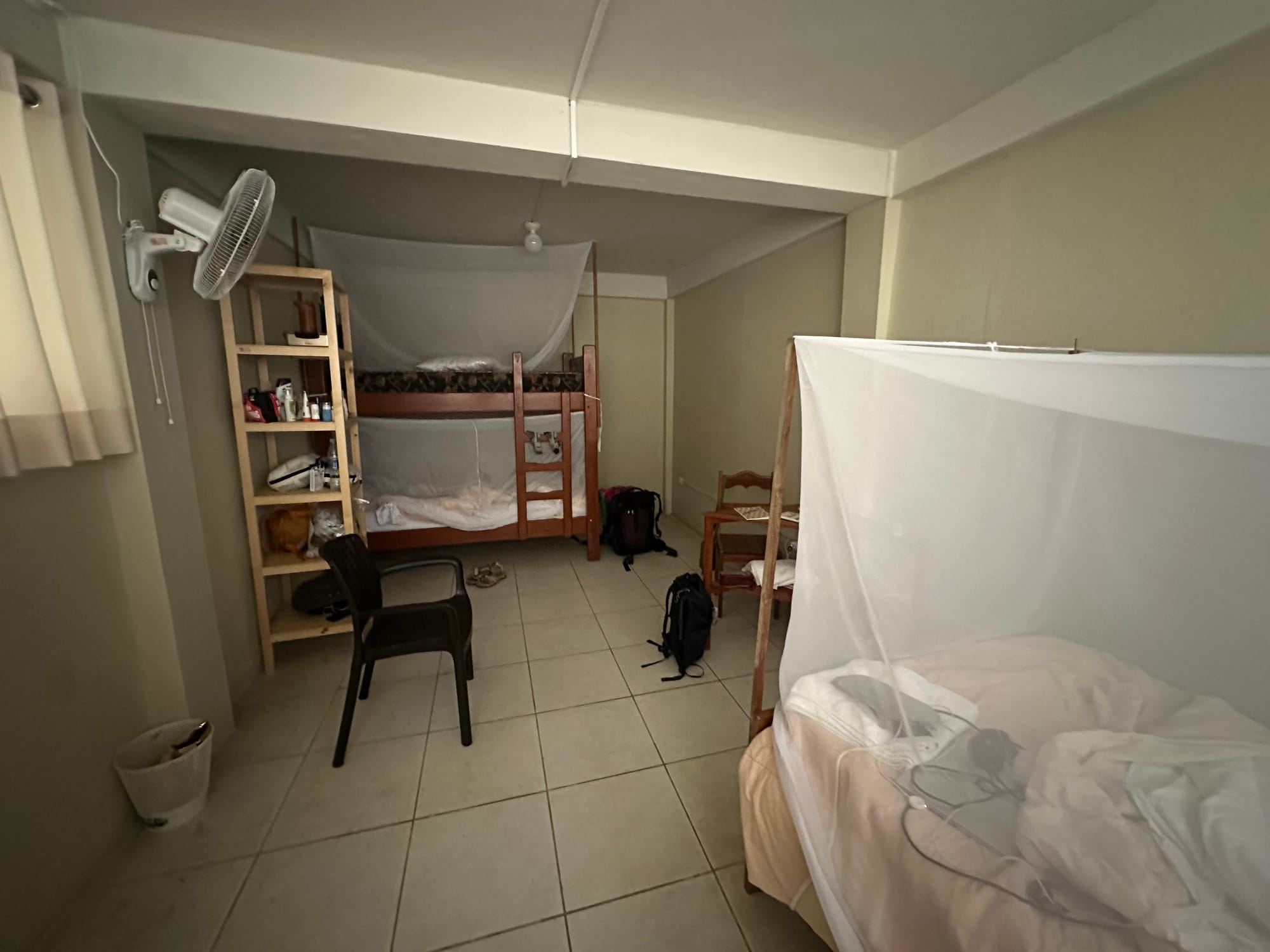
Our quarters at Manu Biological Station, where we spent two weeks volunteering. It's hotter and more humid inside the bug tents than outside. [📸 Johann & Rachel]
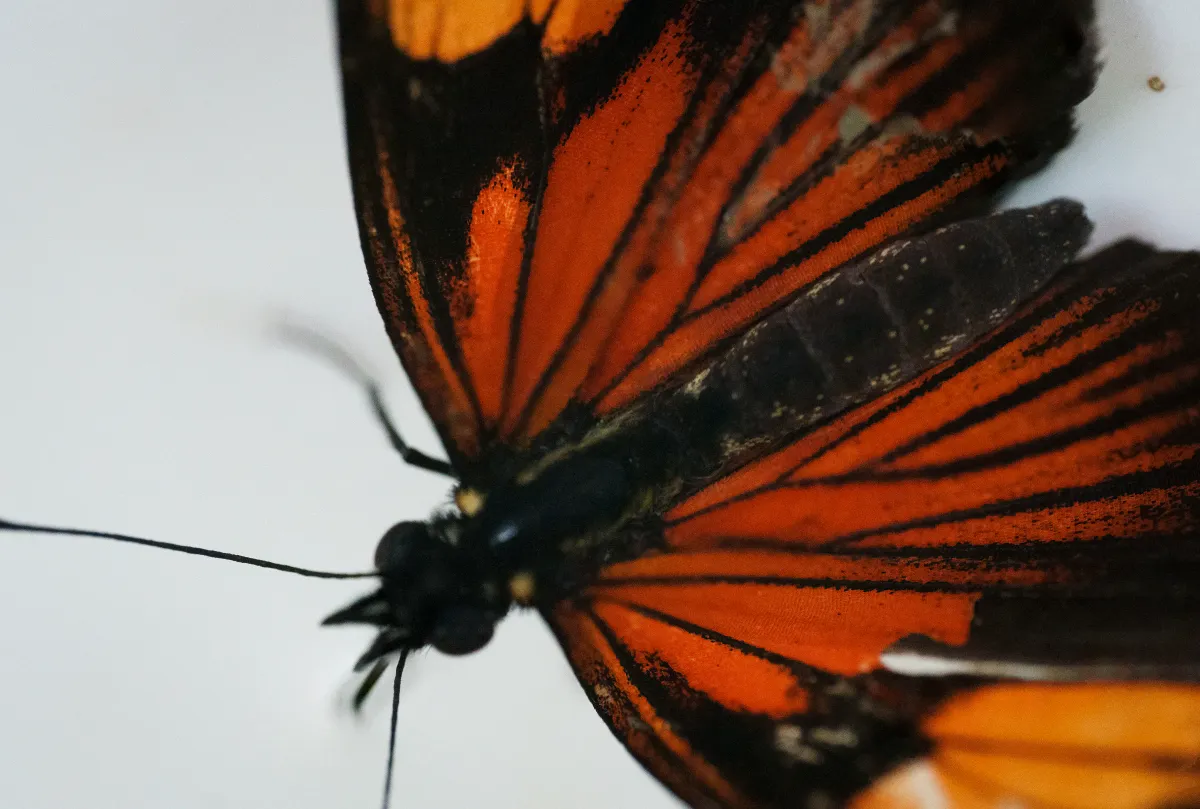
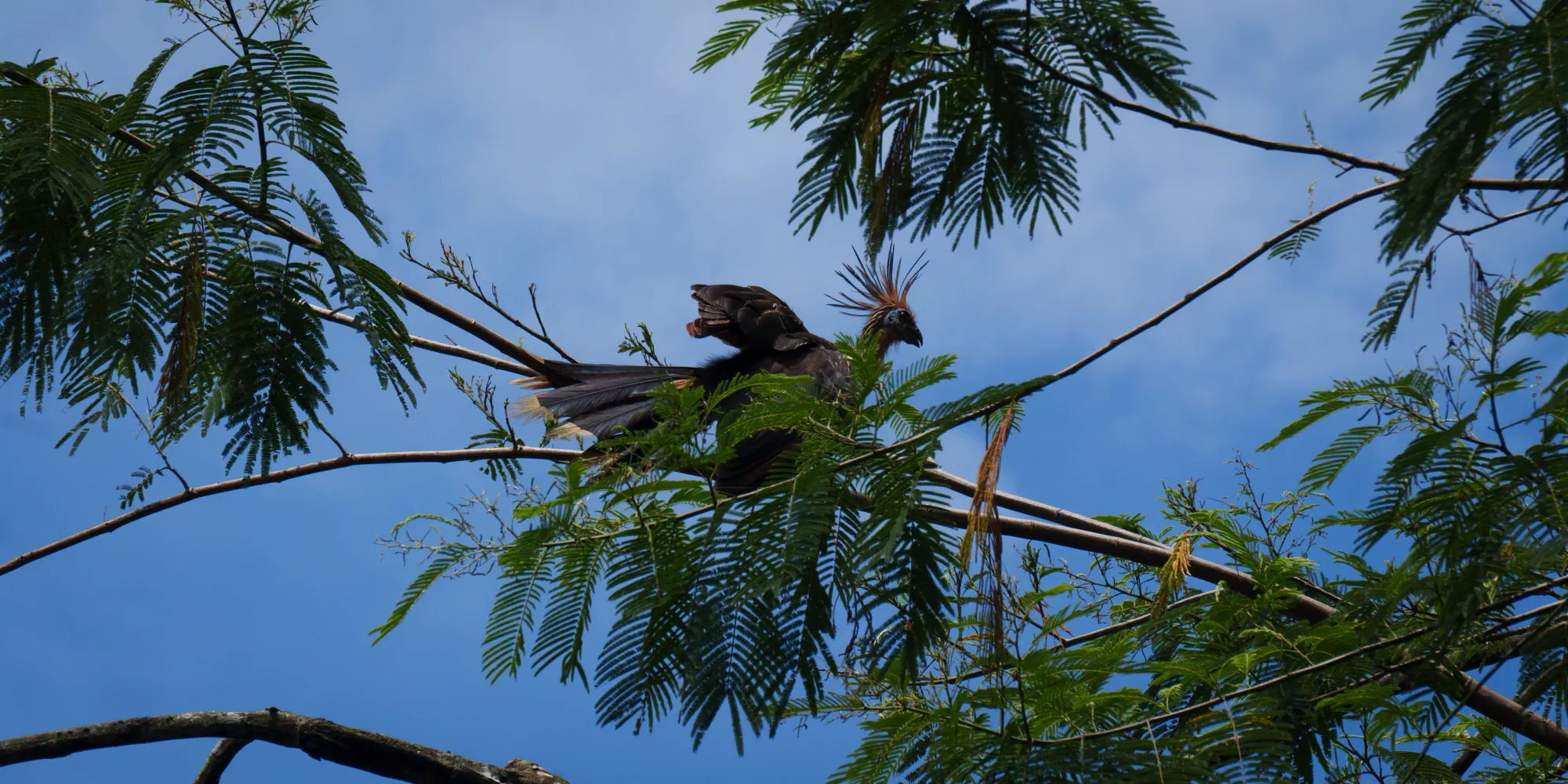
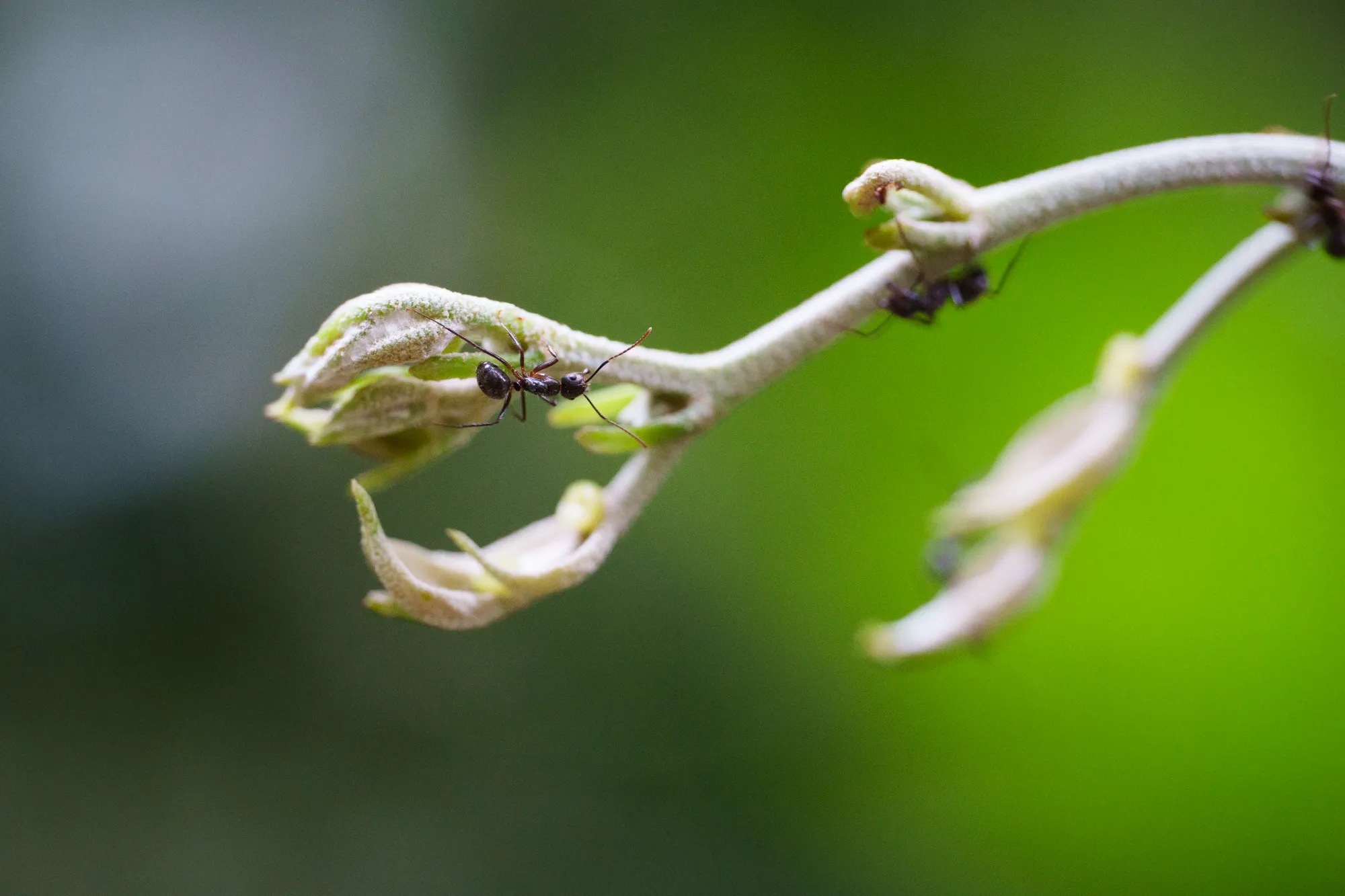
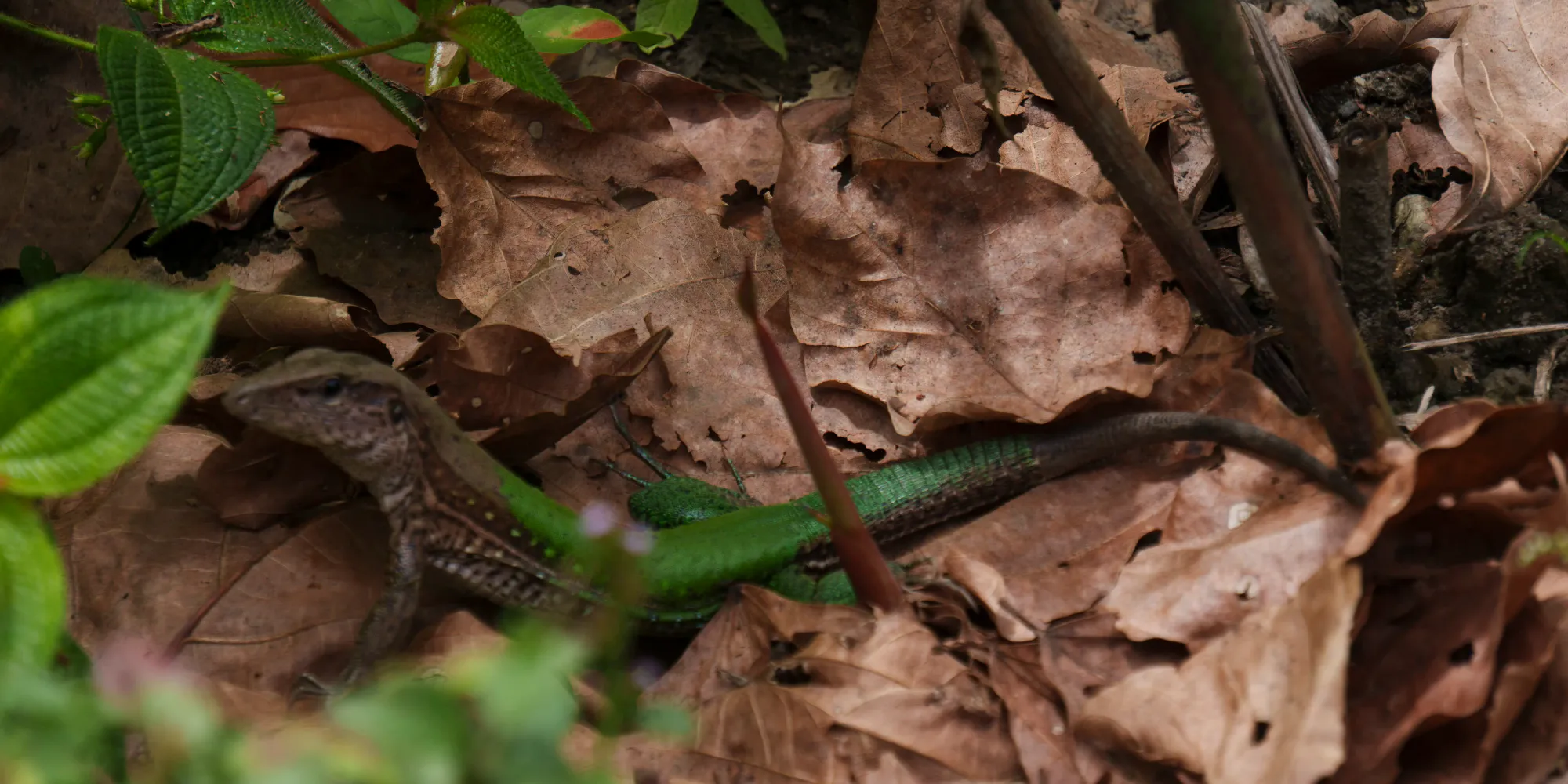
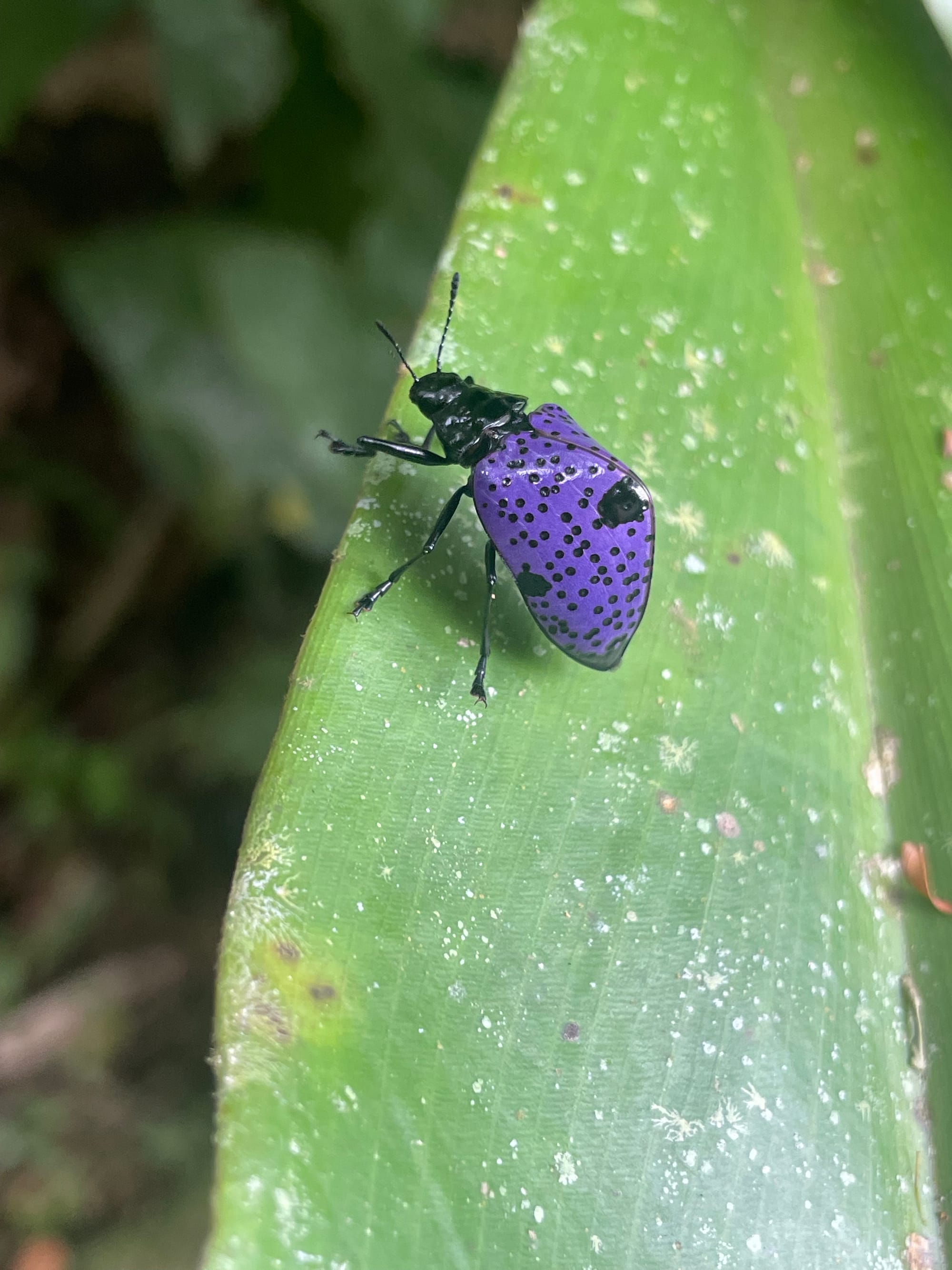
Air like water, water as lifeblood, a craving for life so strong we might fear it if we didn’t wonder. My old ecology textbooks writ large, text straining and bursting into gemstone tapestries, colours we don’t have words for. The researchers at Manu talk about discovering new insect species as an everyday occurrence. To know that at least 10% of Earth’s biodiversity is contained here in the Amazon rainforest gives us a glimpse of how vast the biodiversity of this planet is.
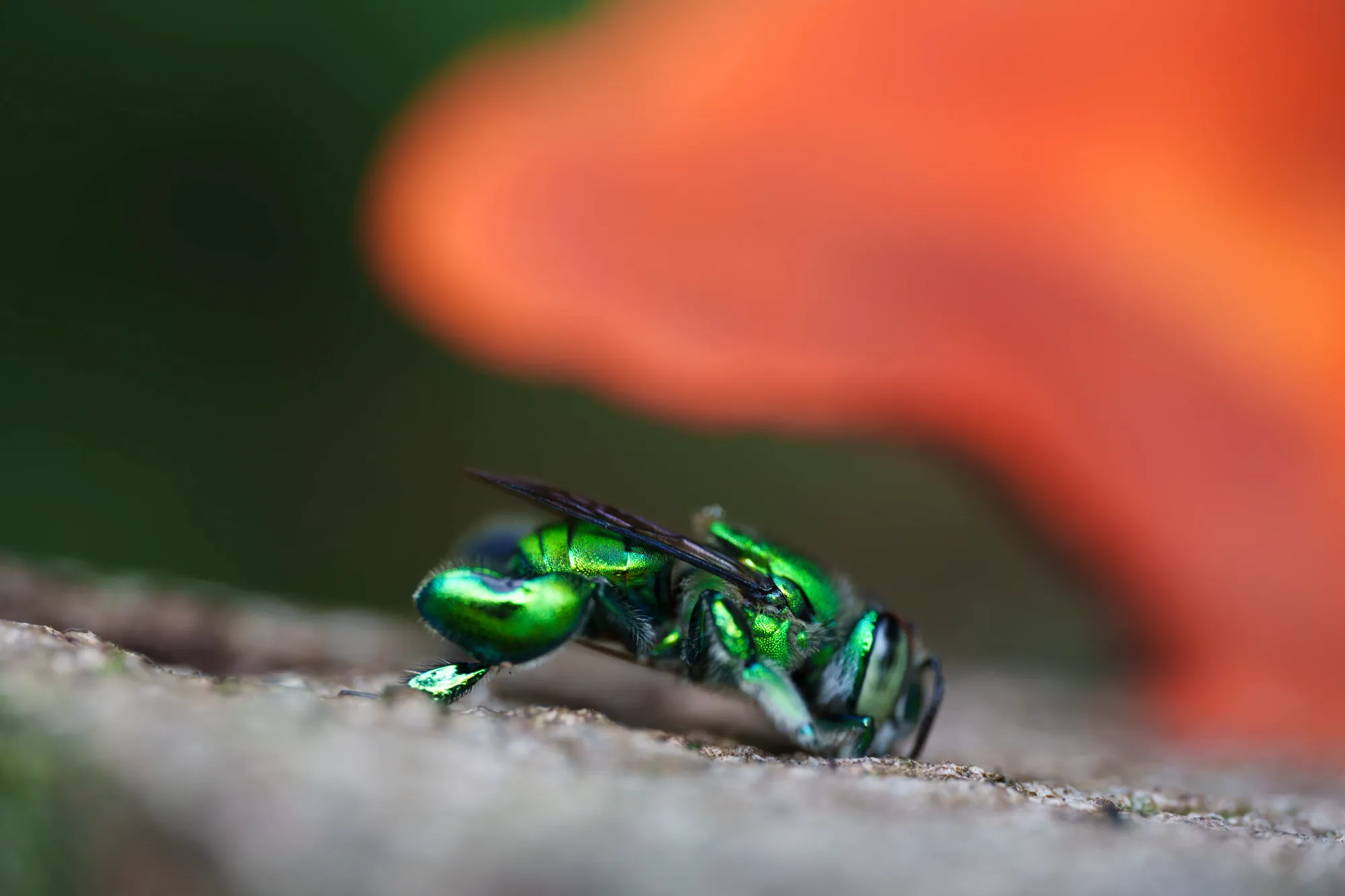
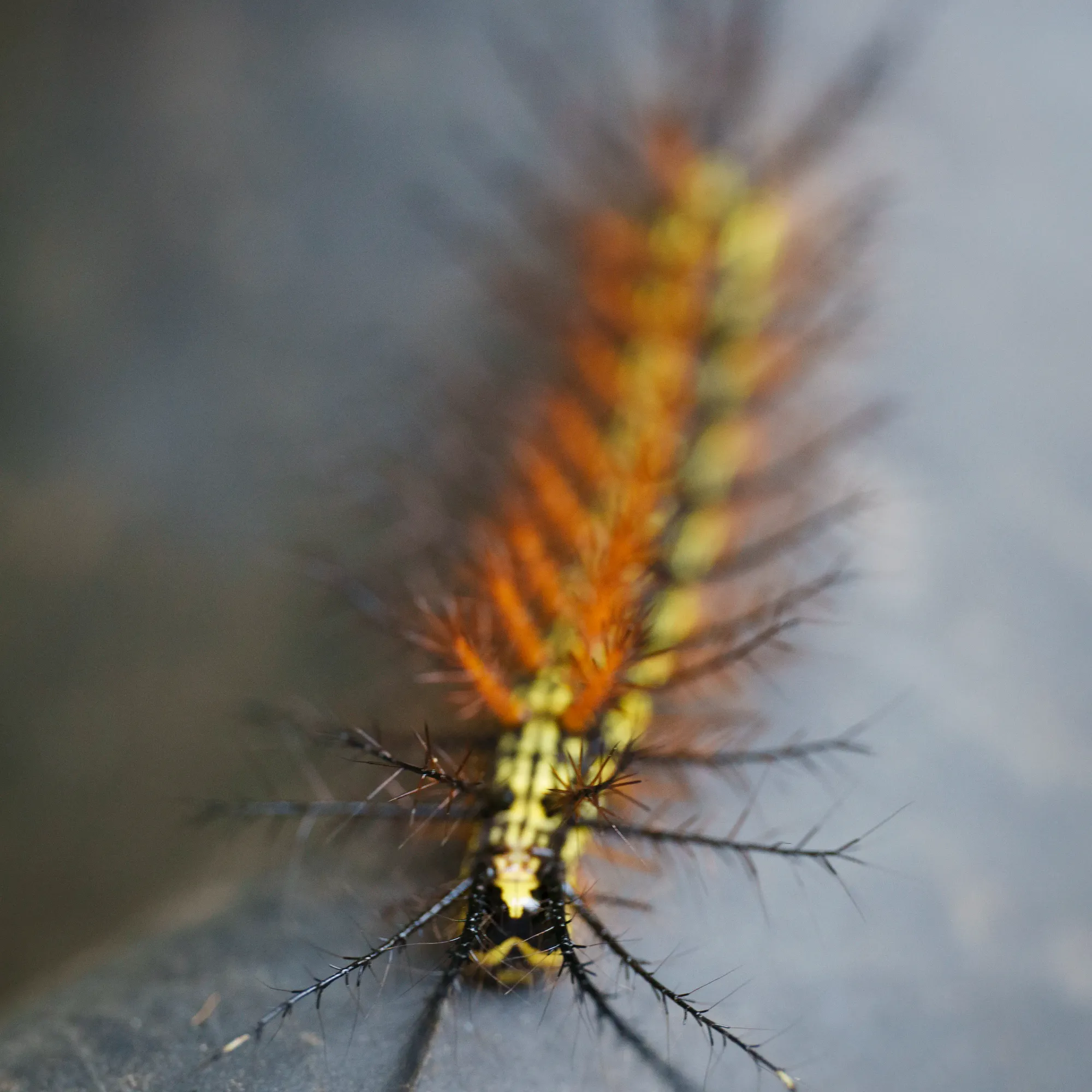
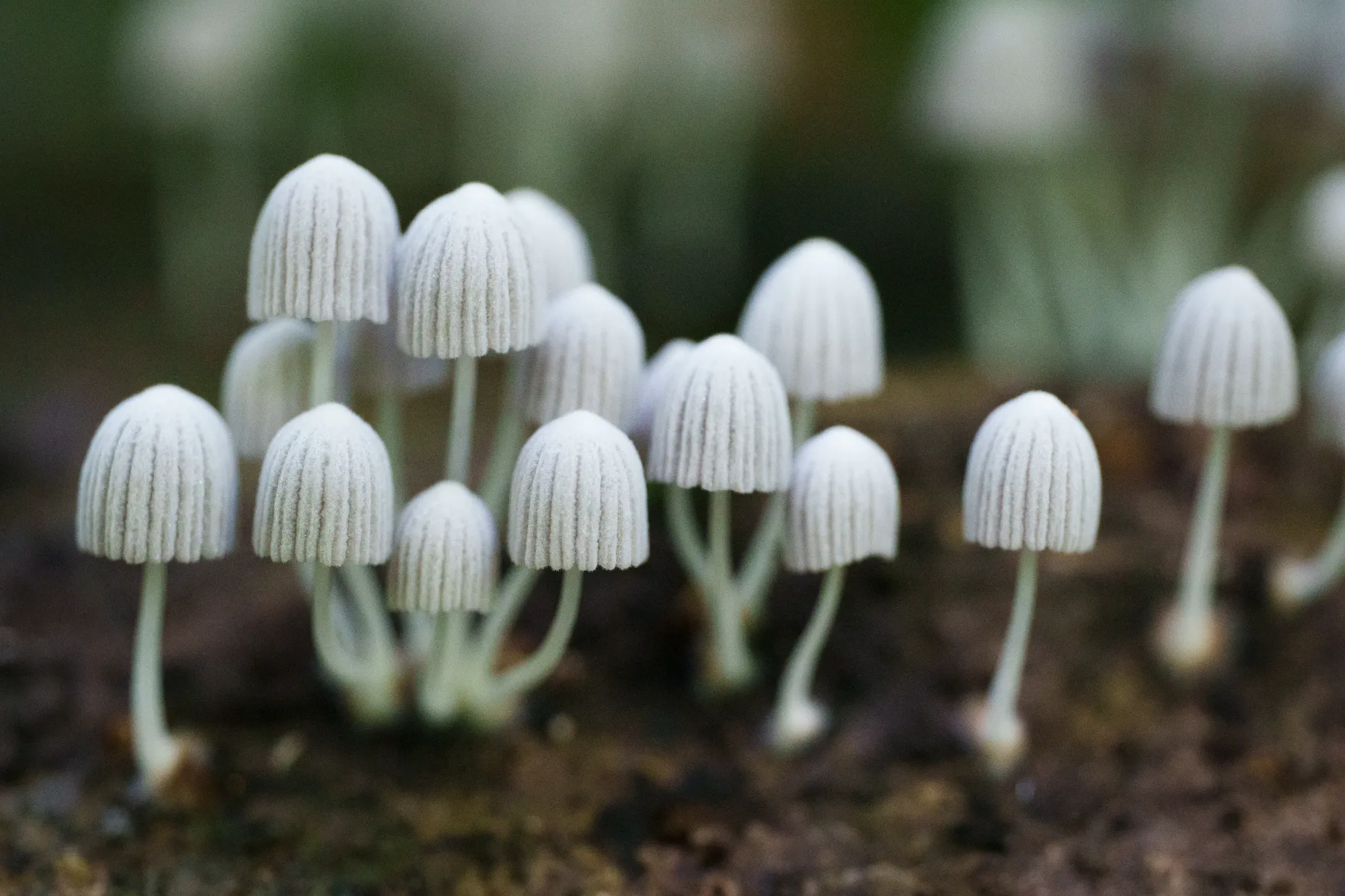
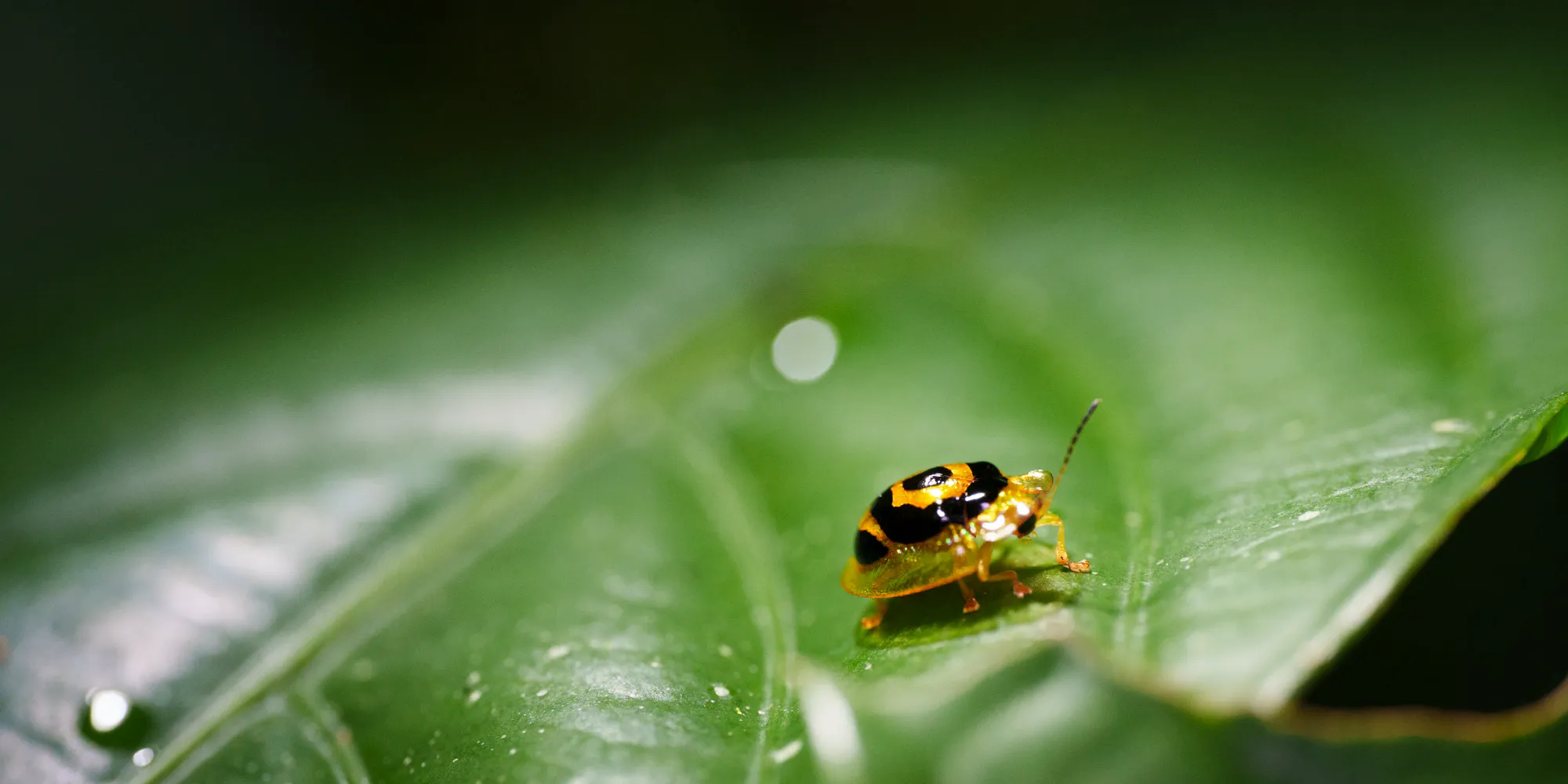
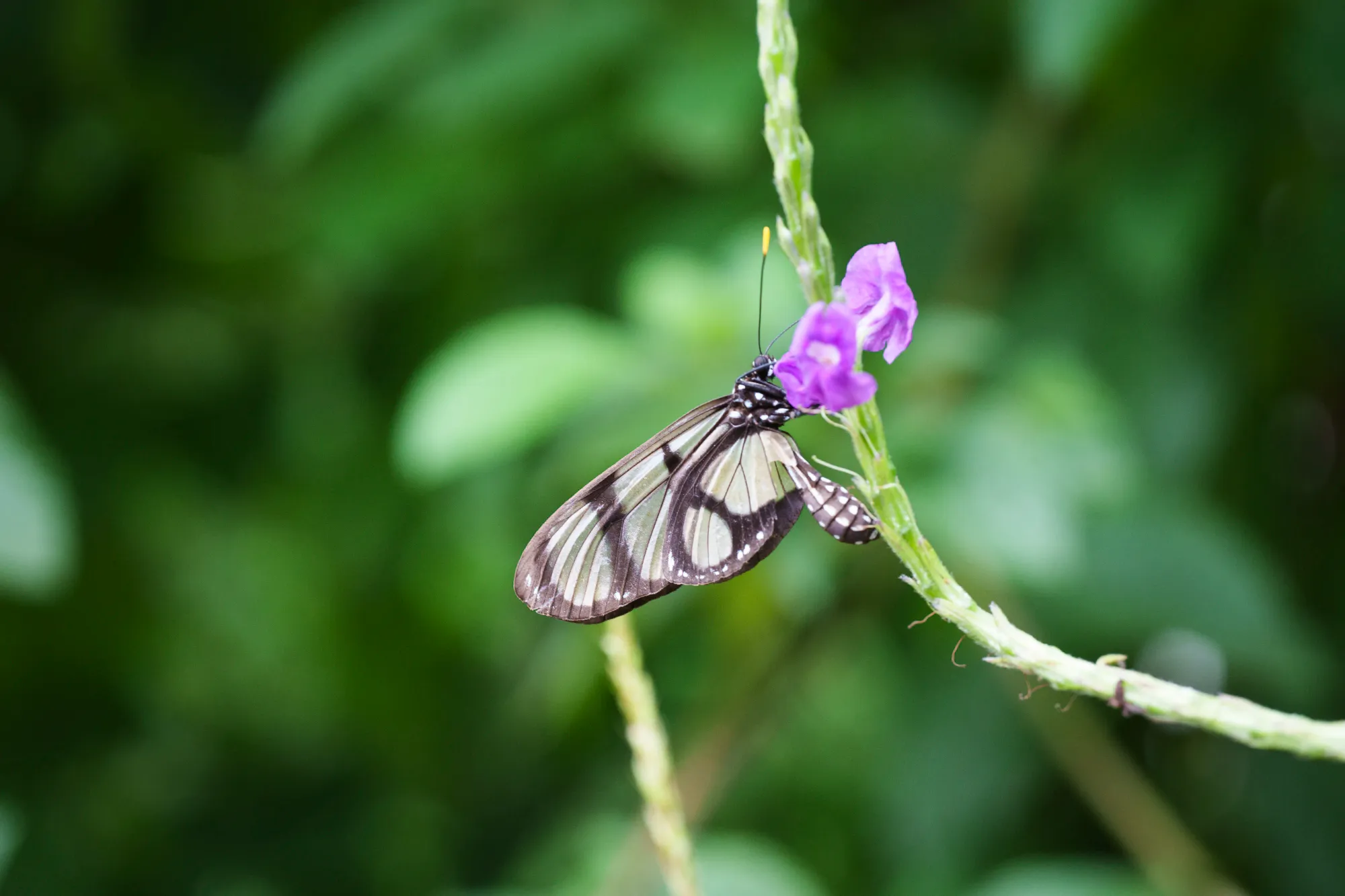
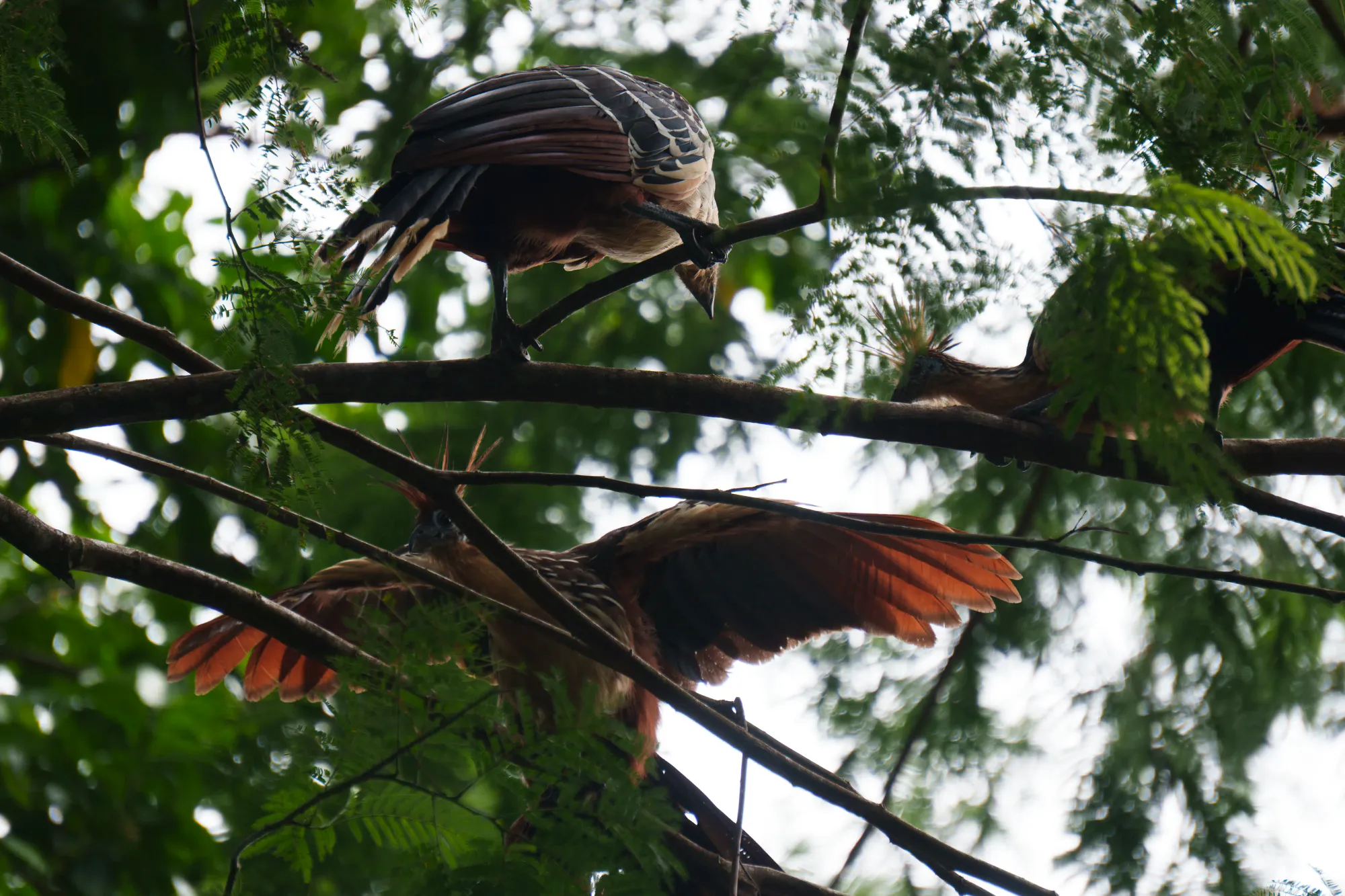
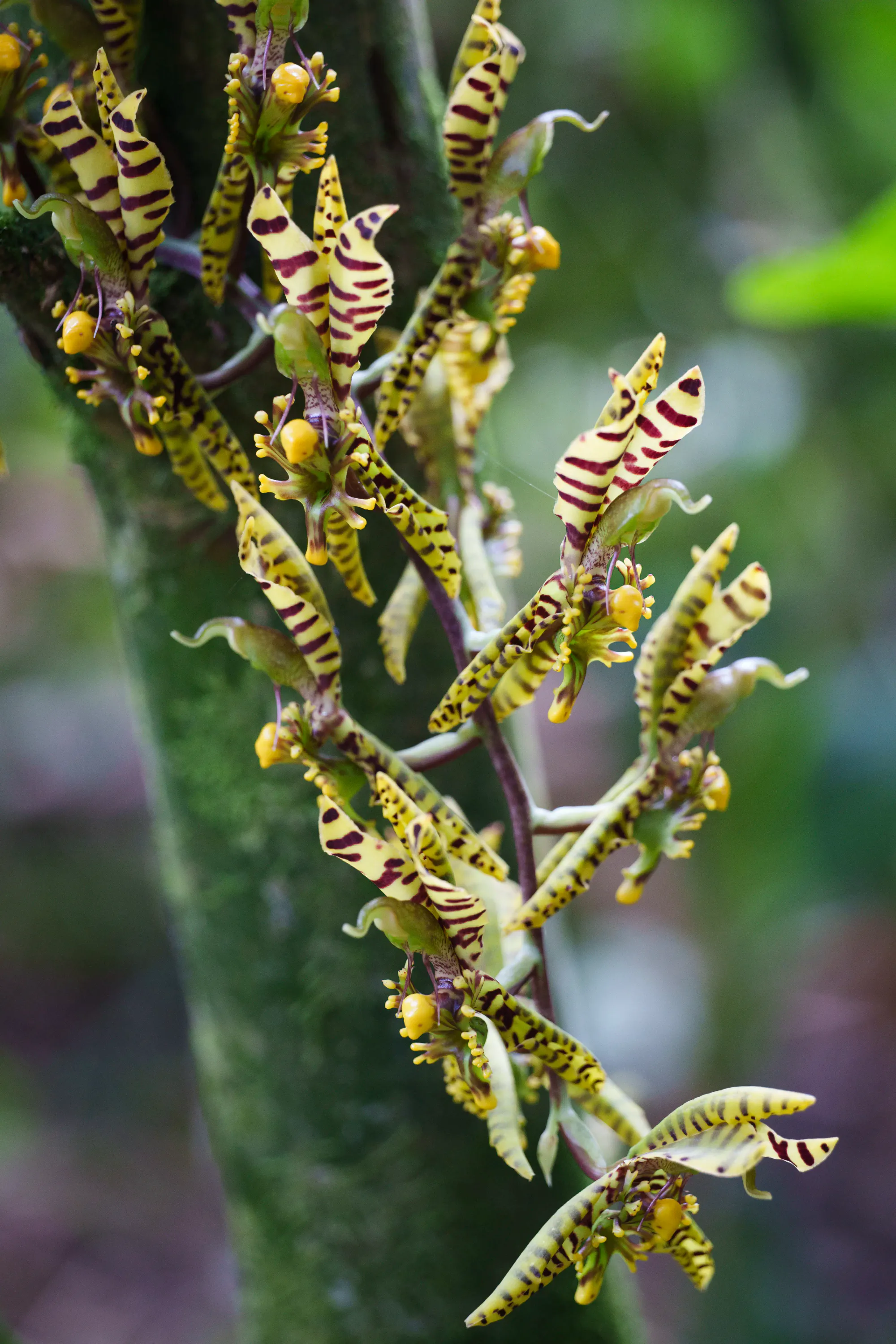
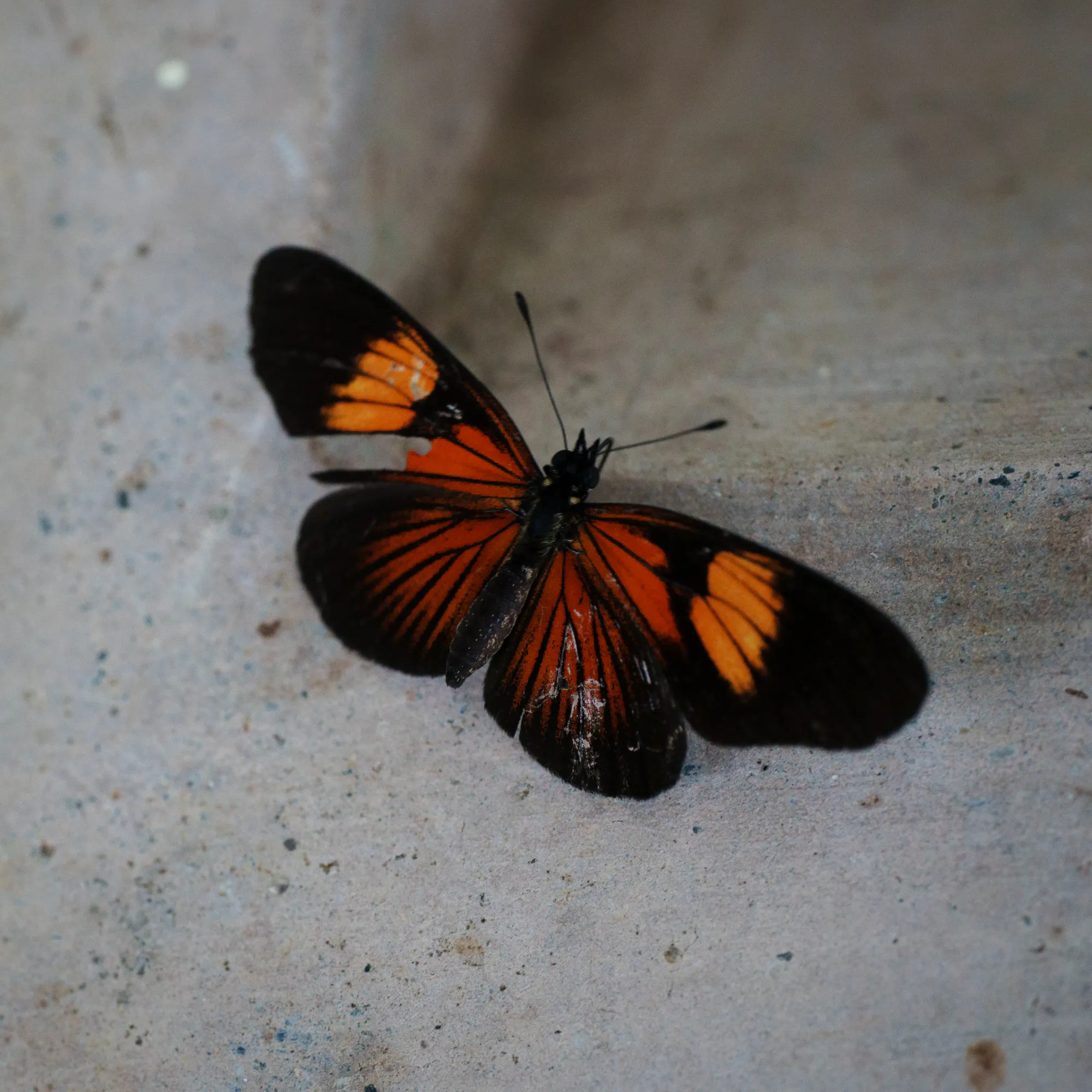
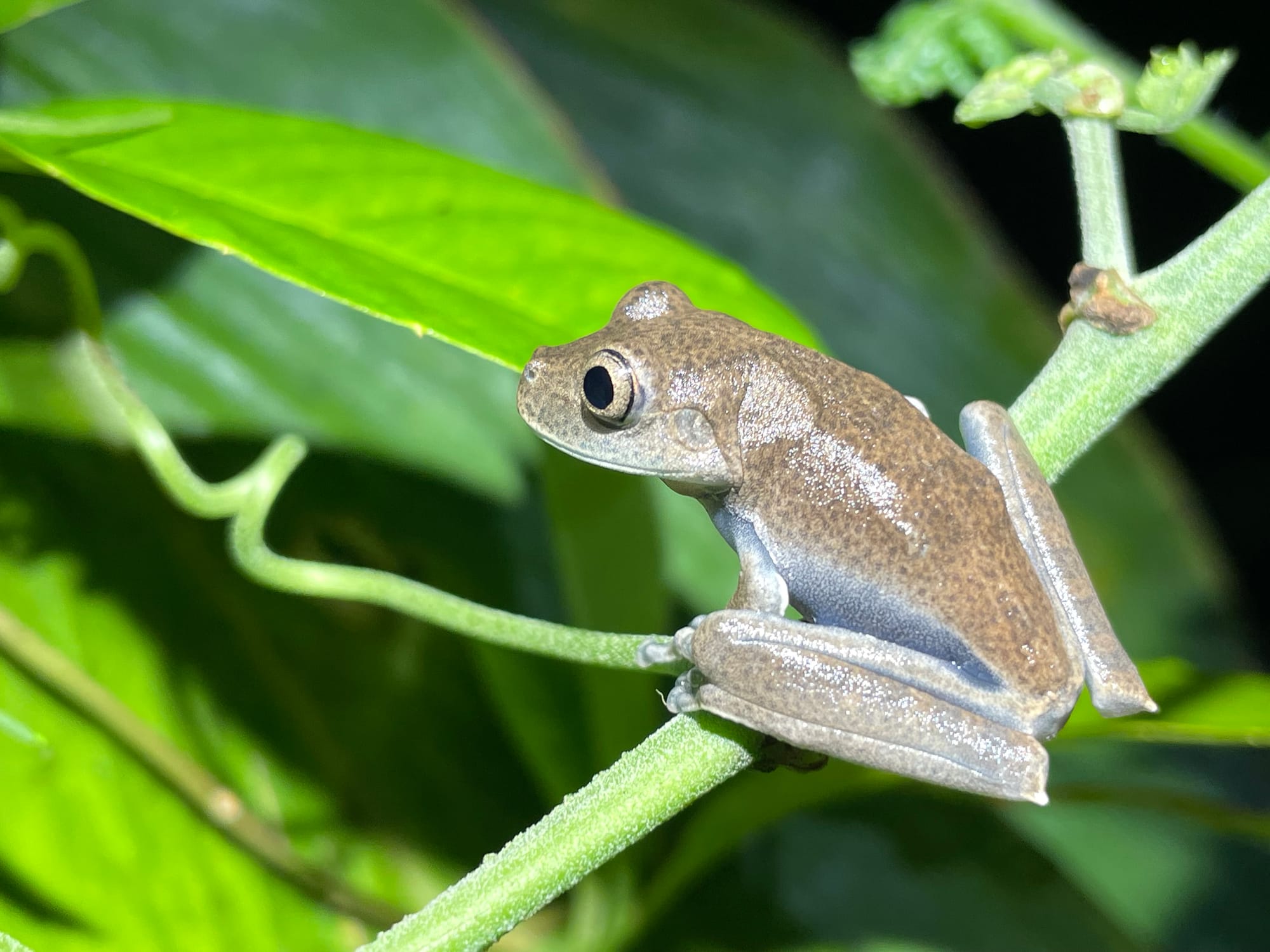
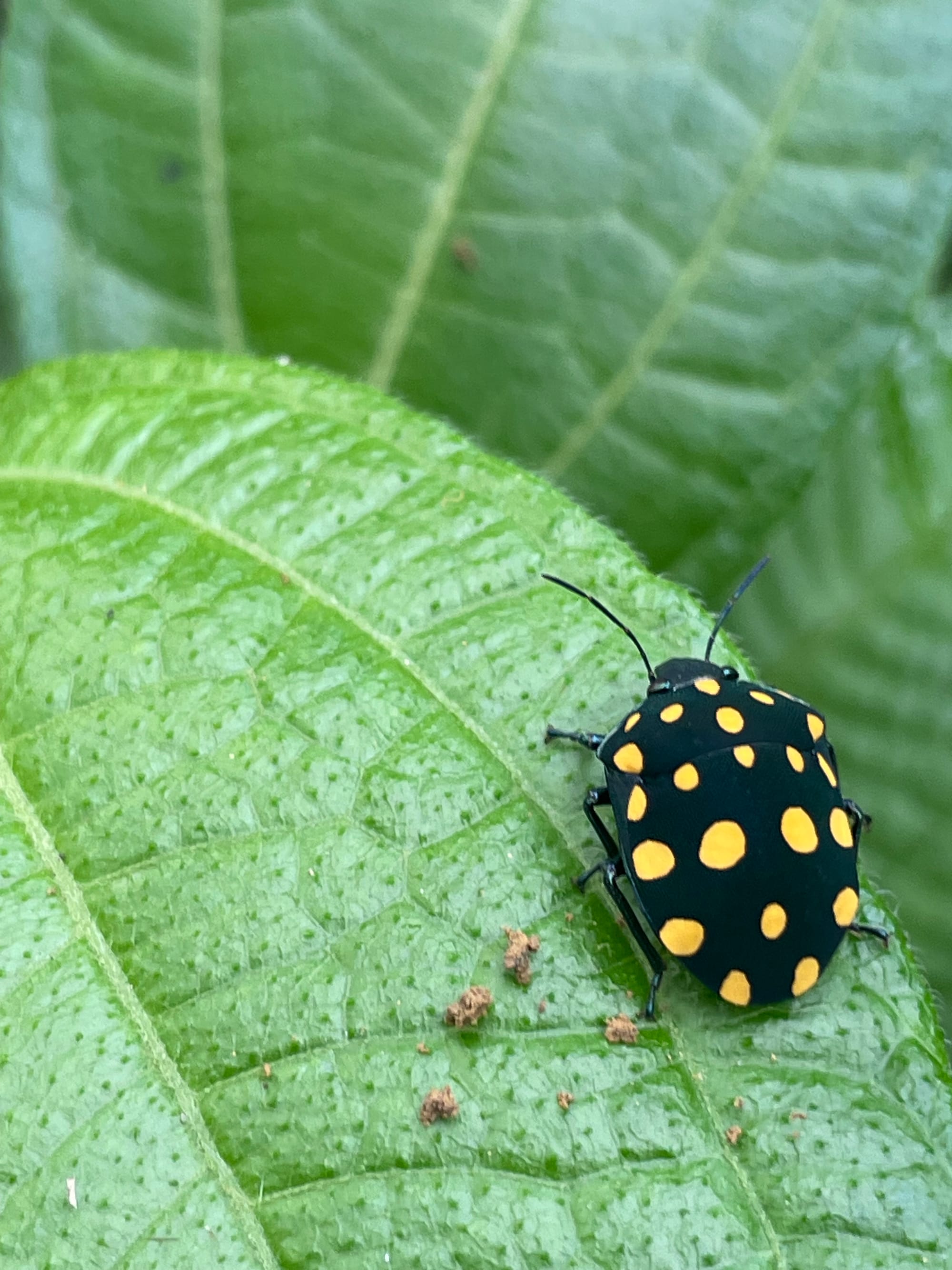
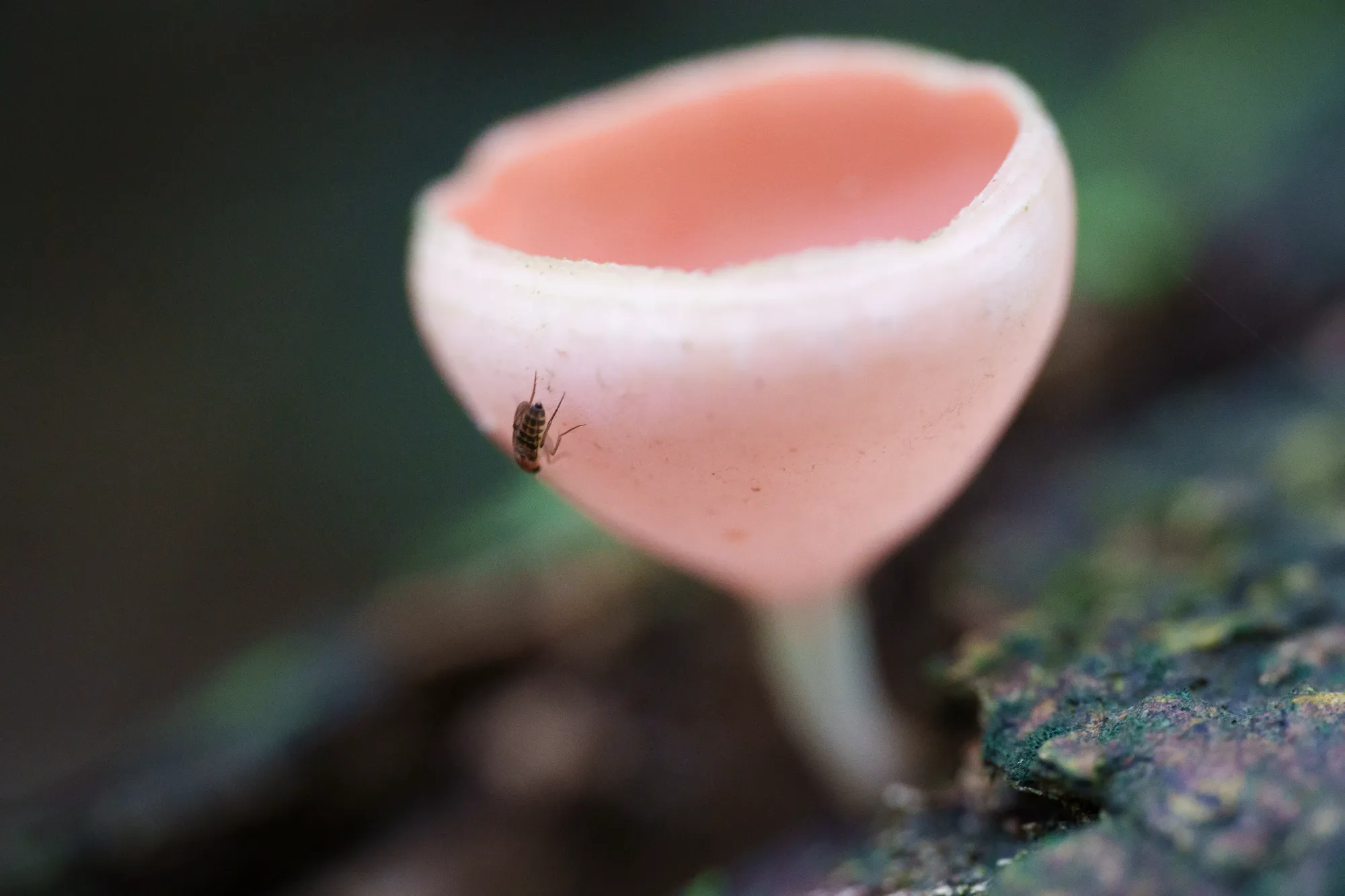
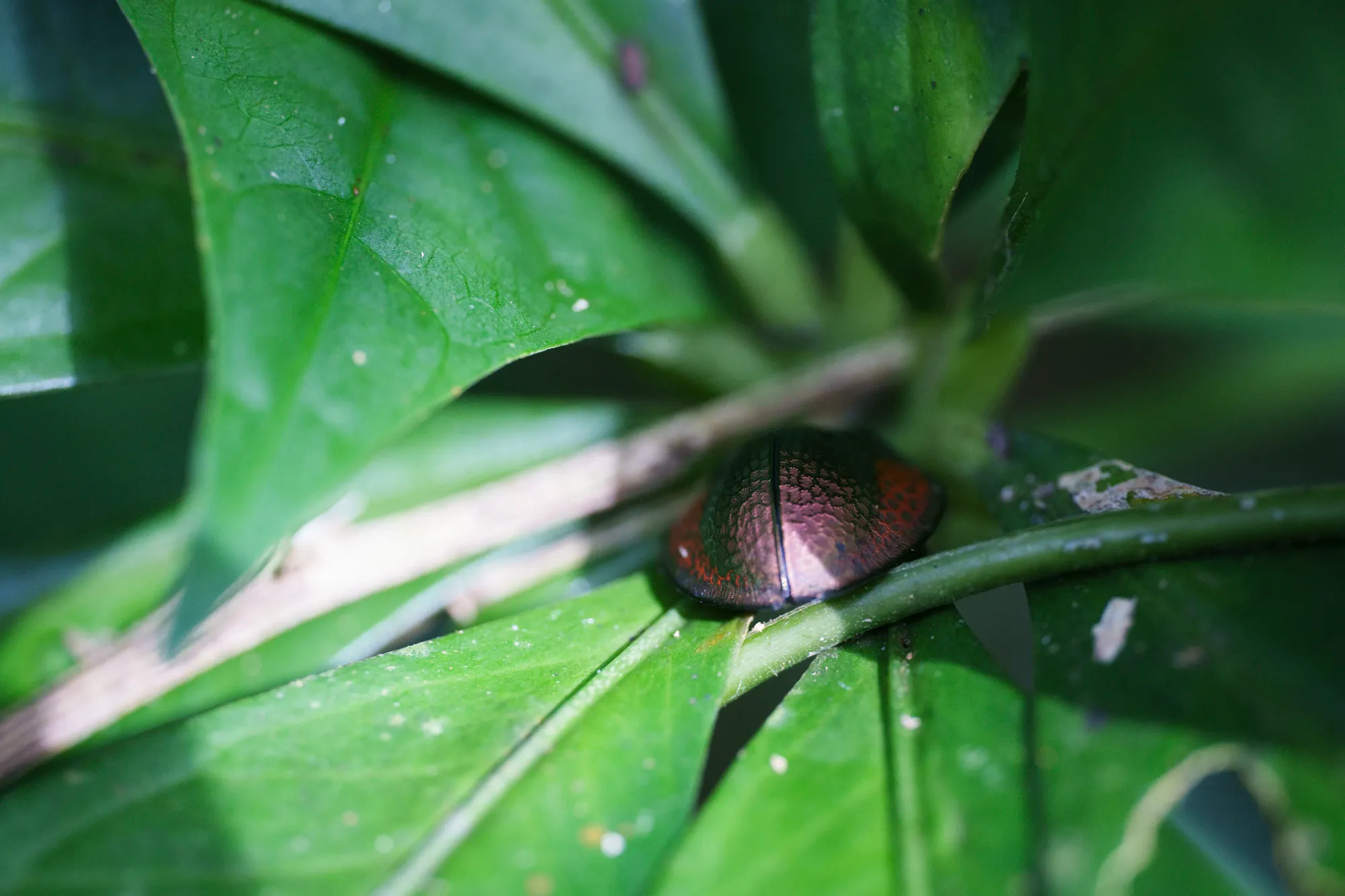
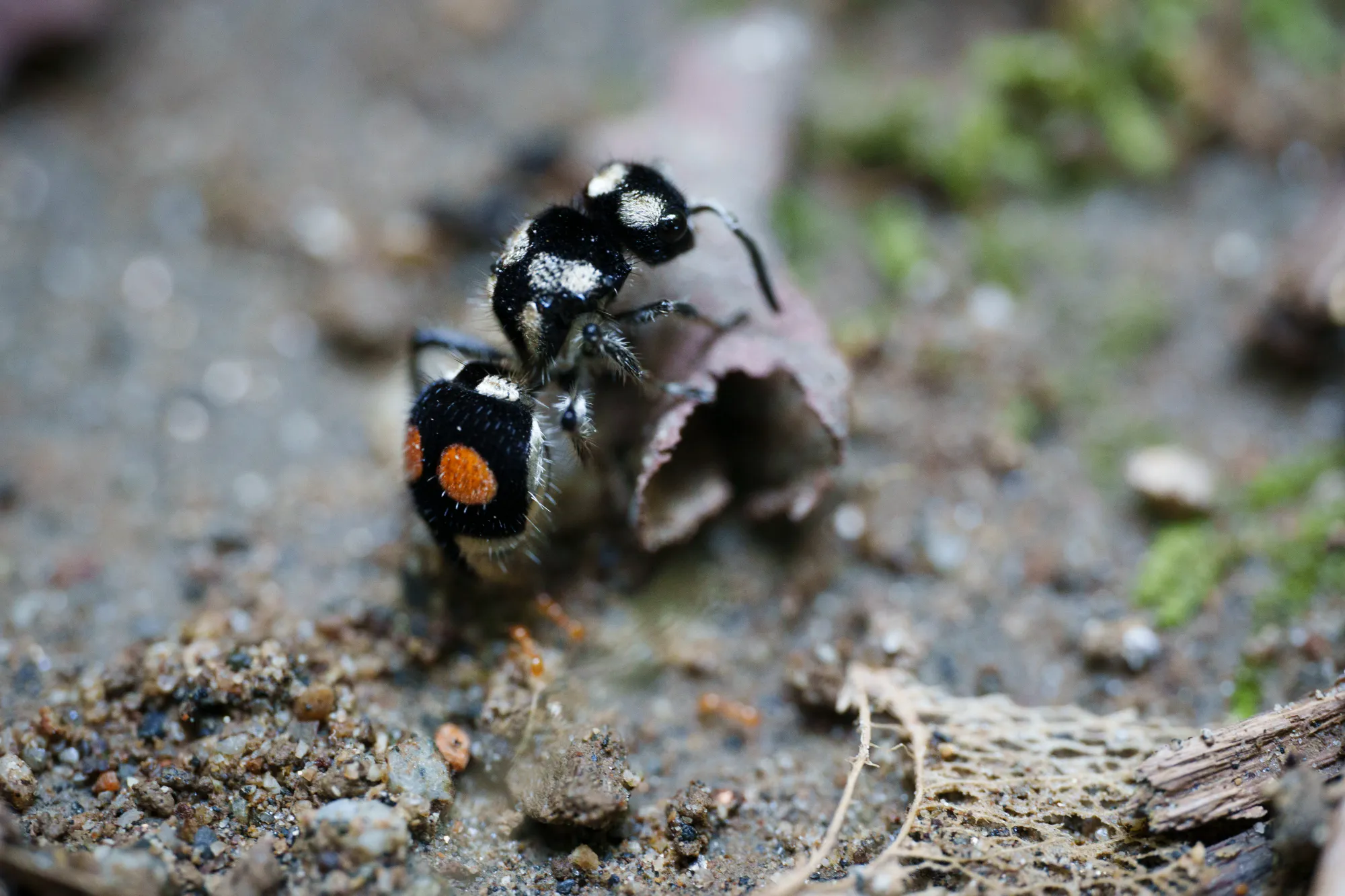
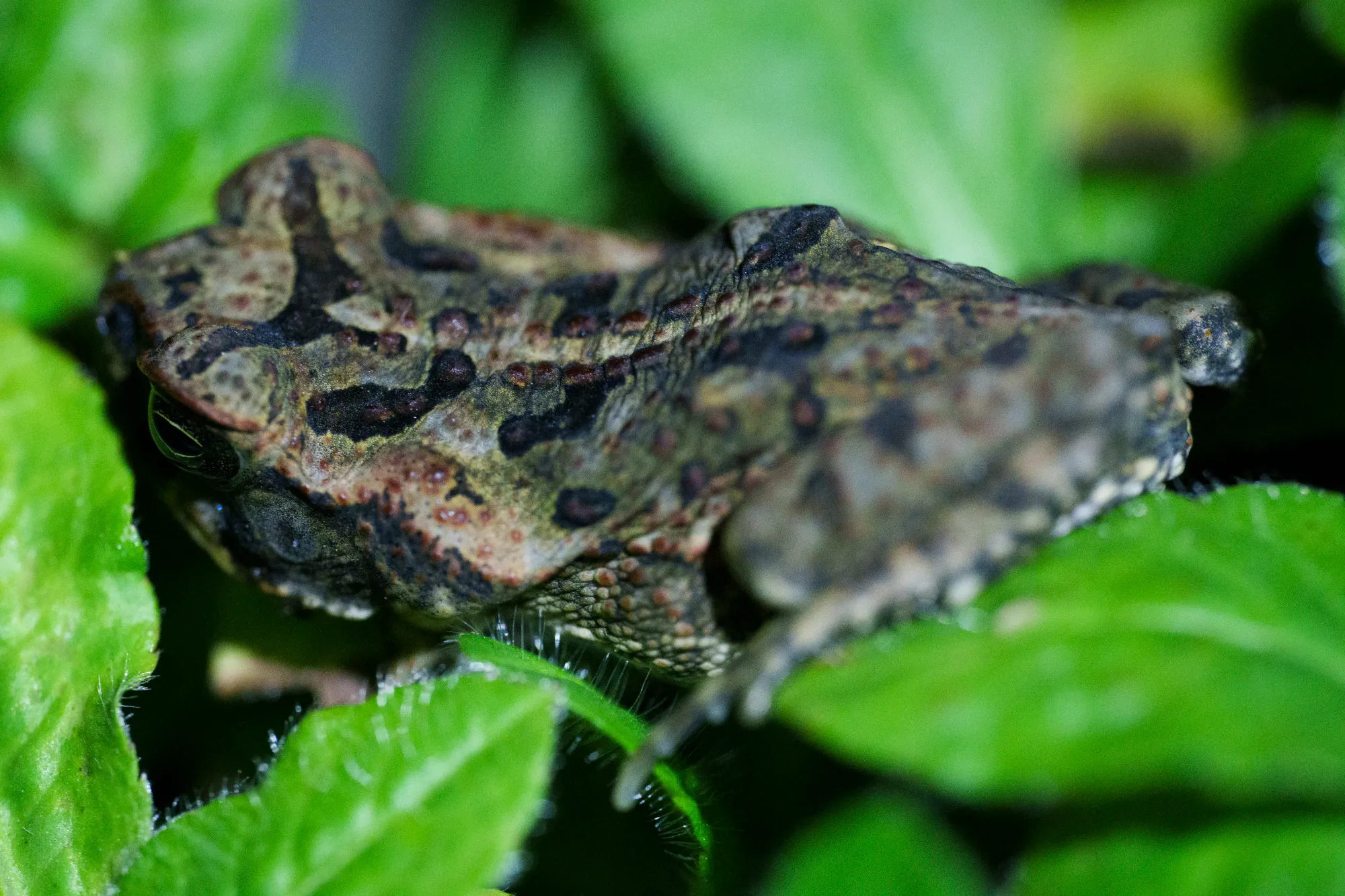
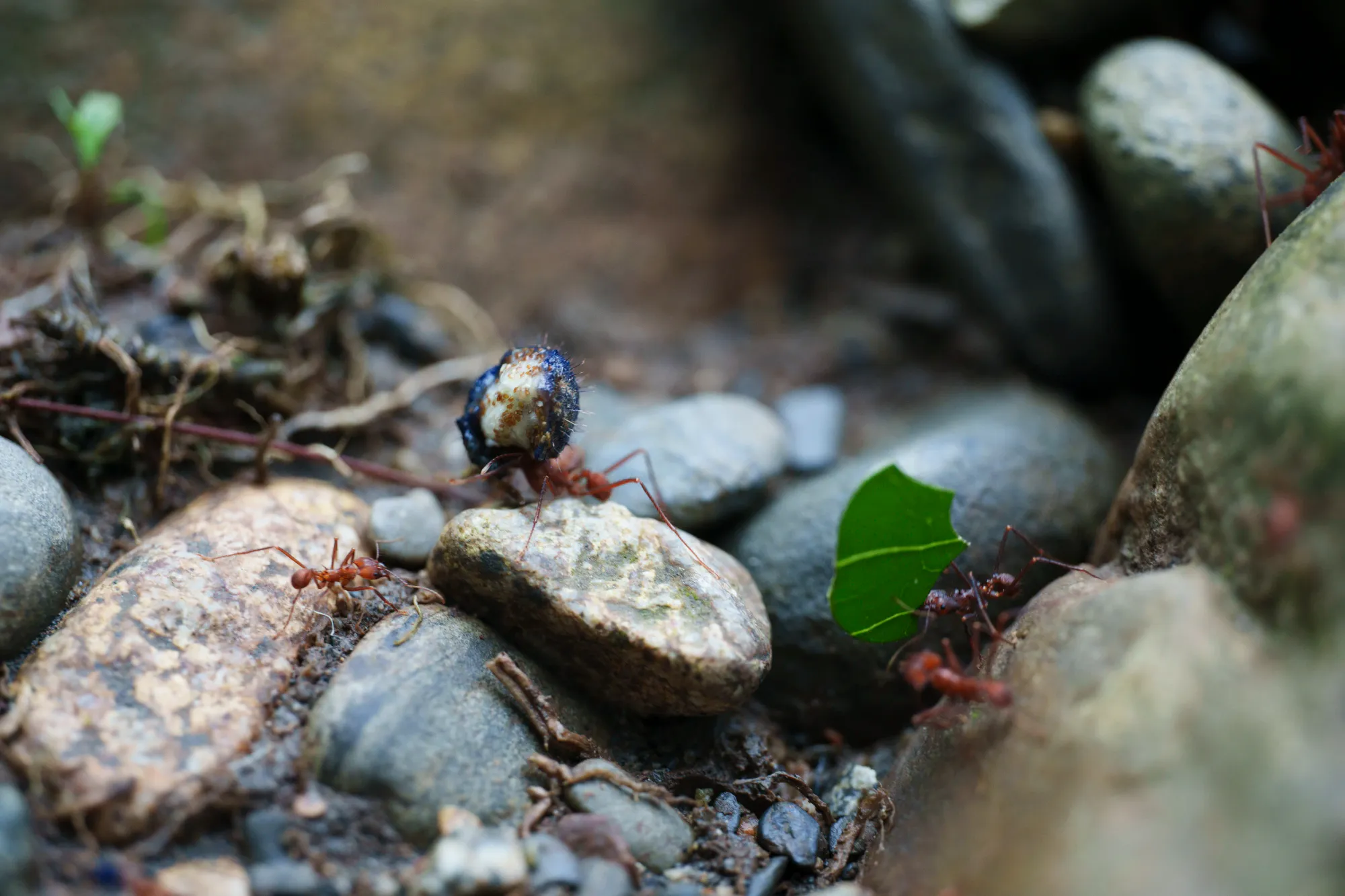
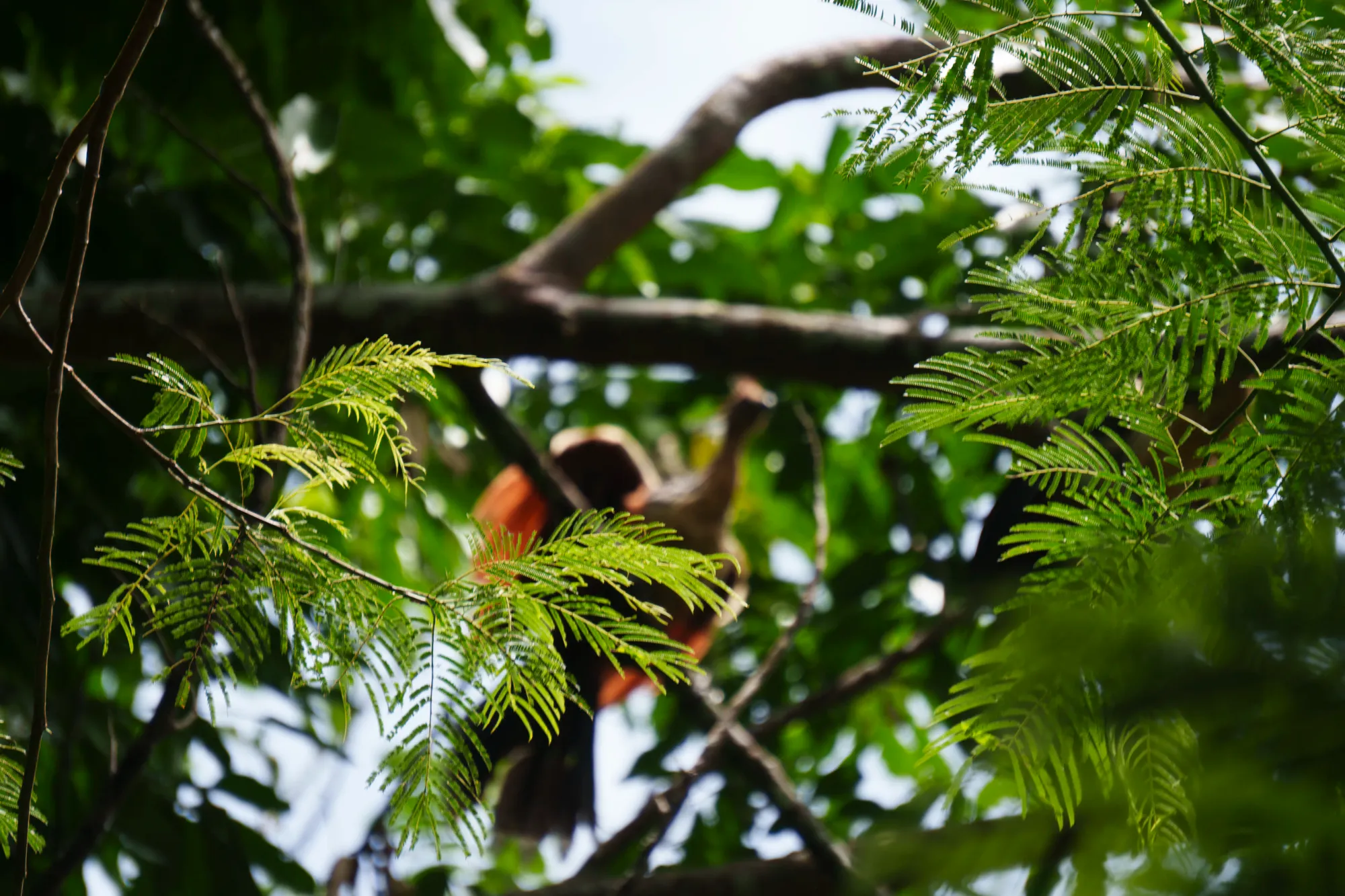
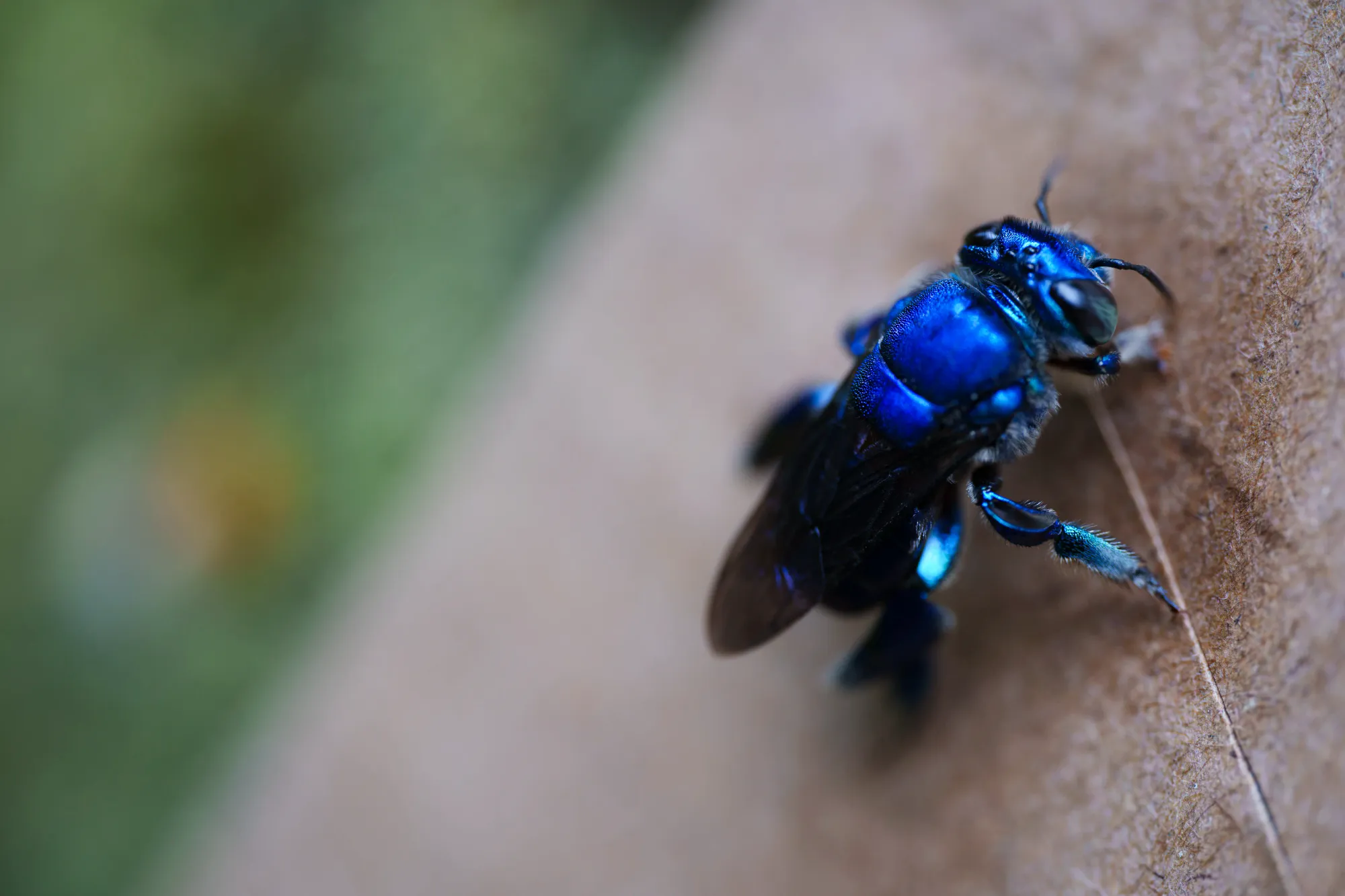
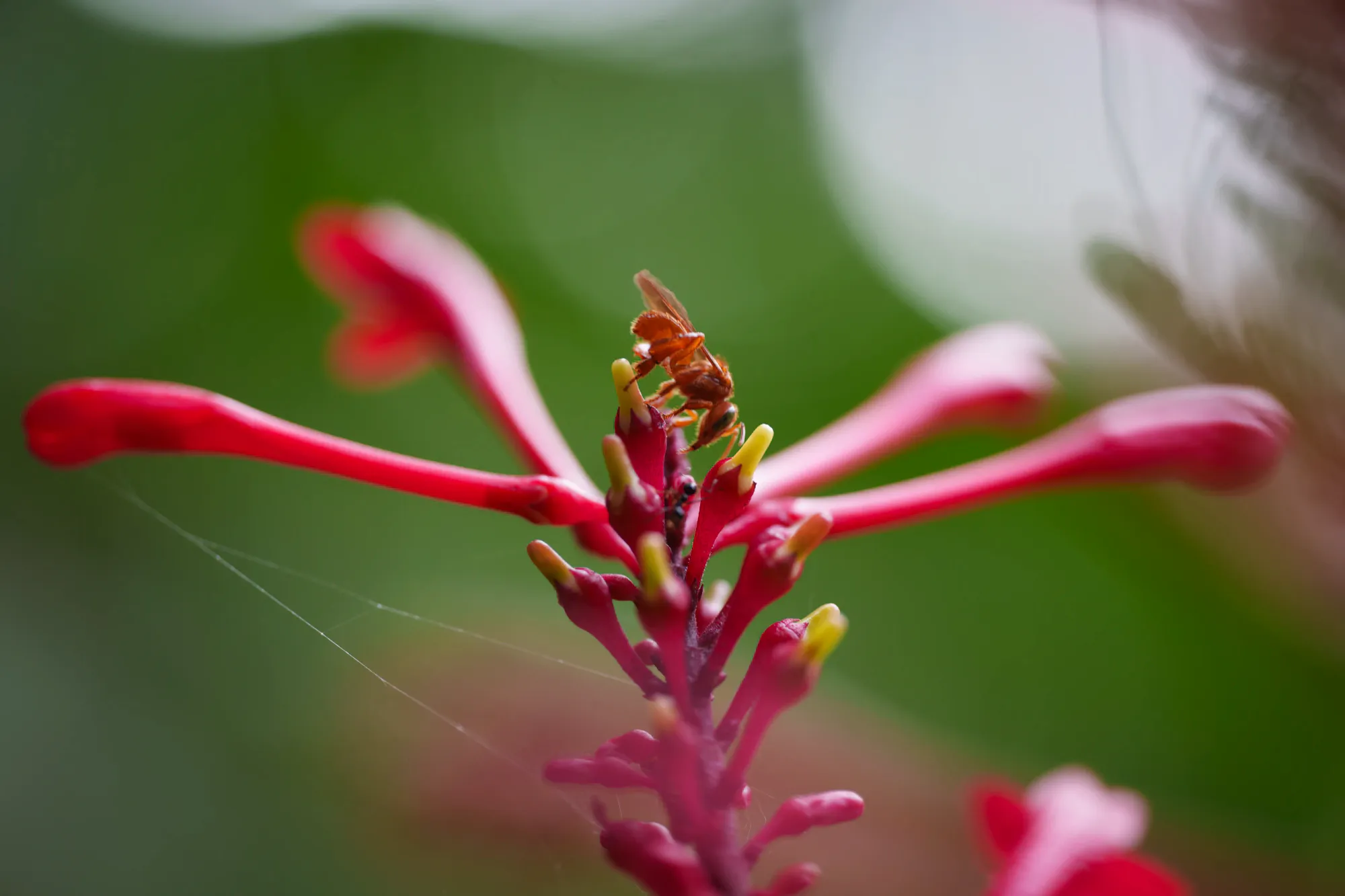
The jungle around the Manu Biostation are full of indescribable wonder. [📸 Johann & Rachel]
Our favourite chicken is named Becky. She is beautiful, white-speckled tan, and voluminous. Retrieving eggs, her underbelly radiates warmth, pouring out heat for chicks that can never be. Becky was born to be a mother; while the other chickens let their eggs grow cold, she rarely leaves her cubicle. When confronted with an egg (mysteriously plopped down in front of her), she gently rolls it underneath her with a tender beak. A mother she will never be, but still she sits and gives her warmth; is this a chicken’s kind of hope, or is it only instinct?
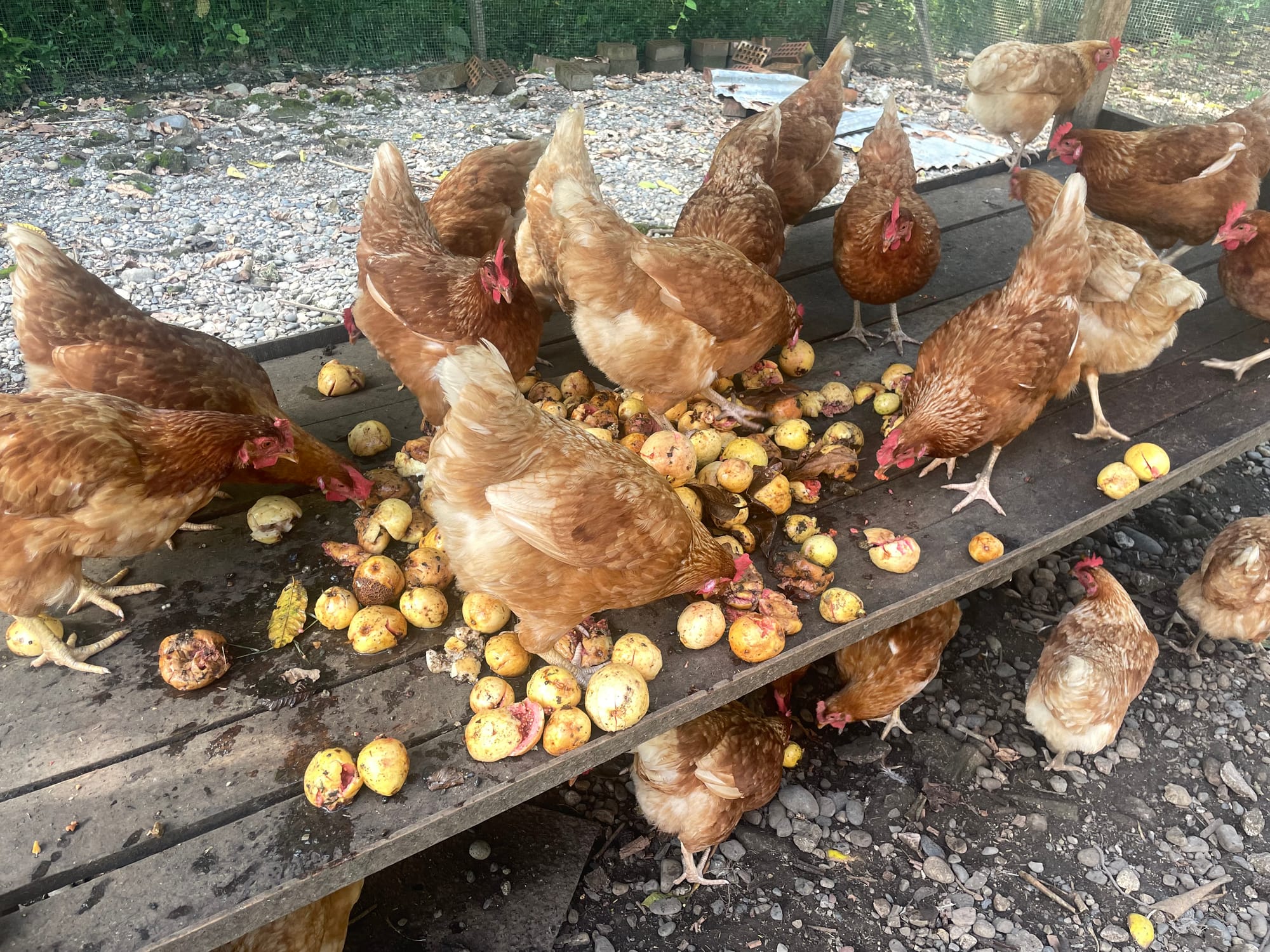
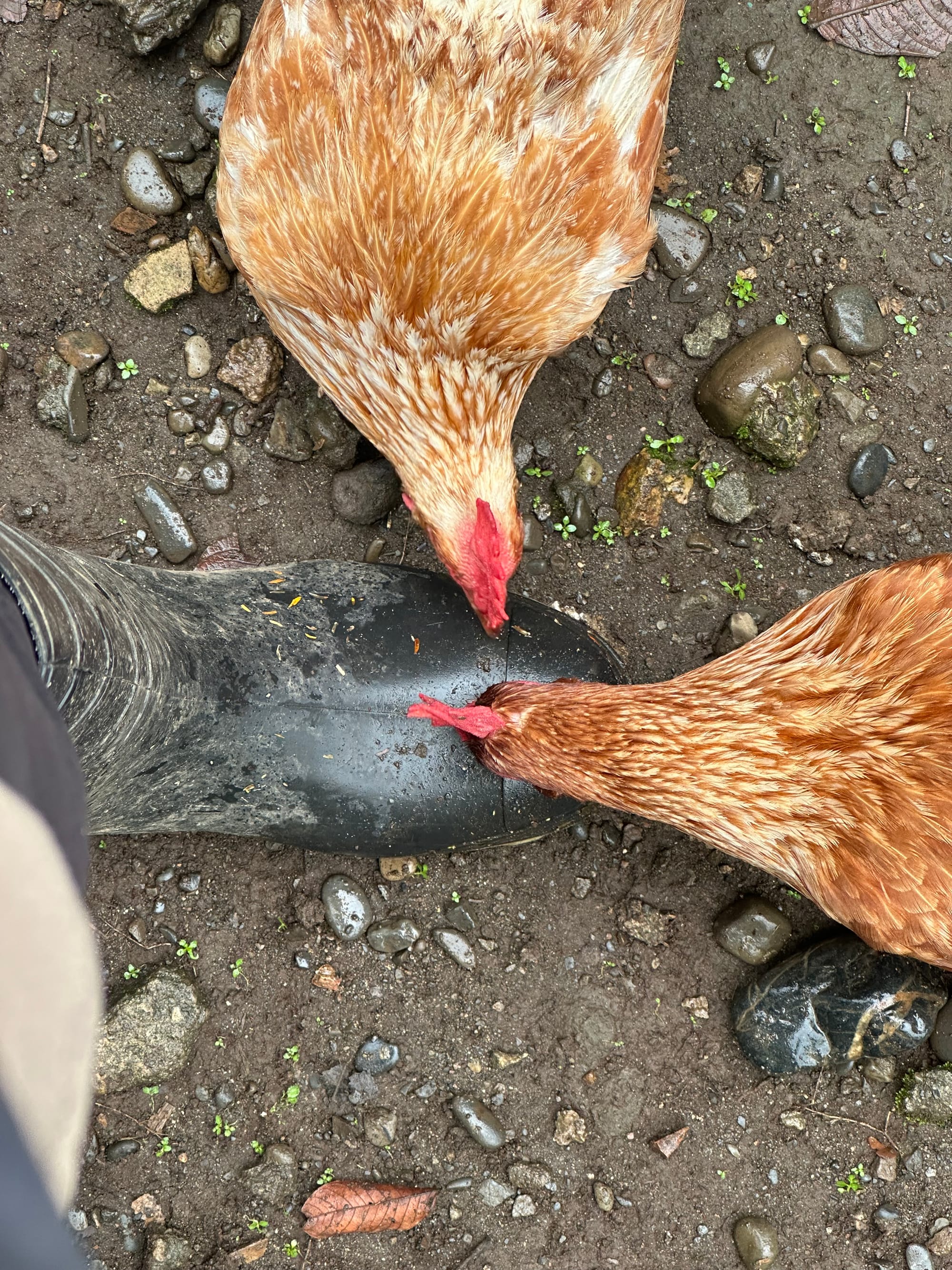
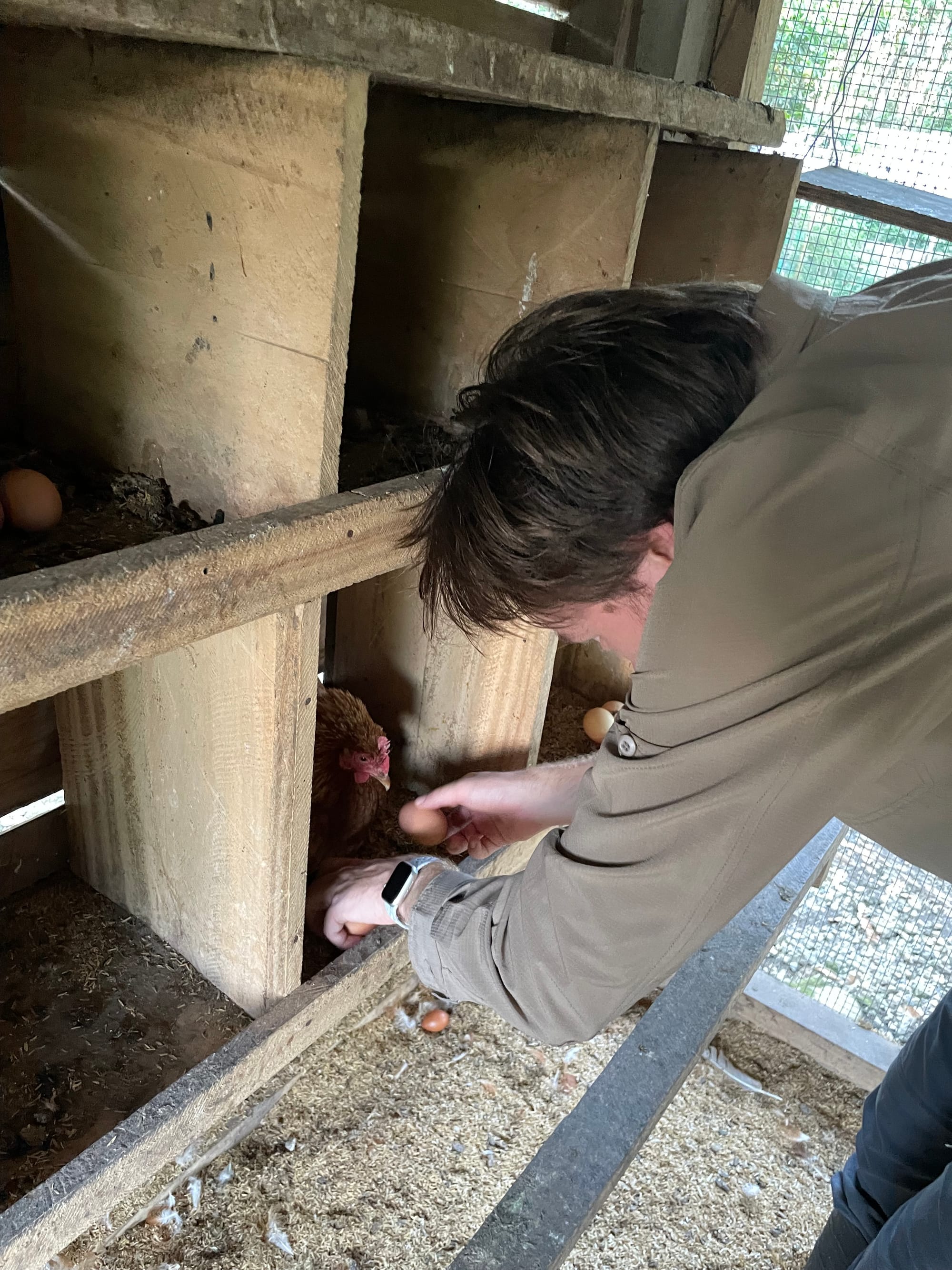
One of our volunteer duties was taking care of the chickens! We fed them scraps and collected their eggs, and Rachel may have helped butcher ten of them... [📸 Rachel & Johann]
The soil is a thick clay, at least on the hill we slip down from digging pitfall traps. We catch ourselves with machetes, which are also our spades for hole digging. Into the finished pits we slide plastic cups and fill them with soapy water before covering them with plastic plate roofs. Little houses of death for the sought-after ground beetles; science requires sacrifice. The humidity is hungry for the thousand pinned specimens which sprout soft grey point clouds of mold. Smells of warmed insect, ethanol, and dying spores emanate from the drying oven, before each fuzzy moth is delicately cleaned with a paintbrush and anti-fungal applied.
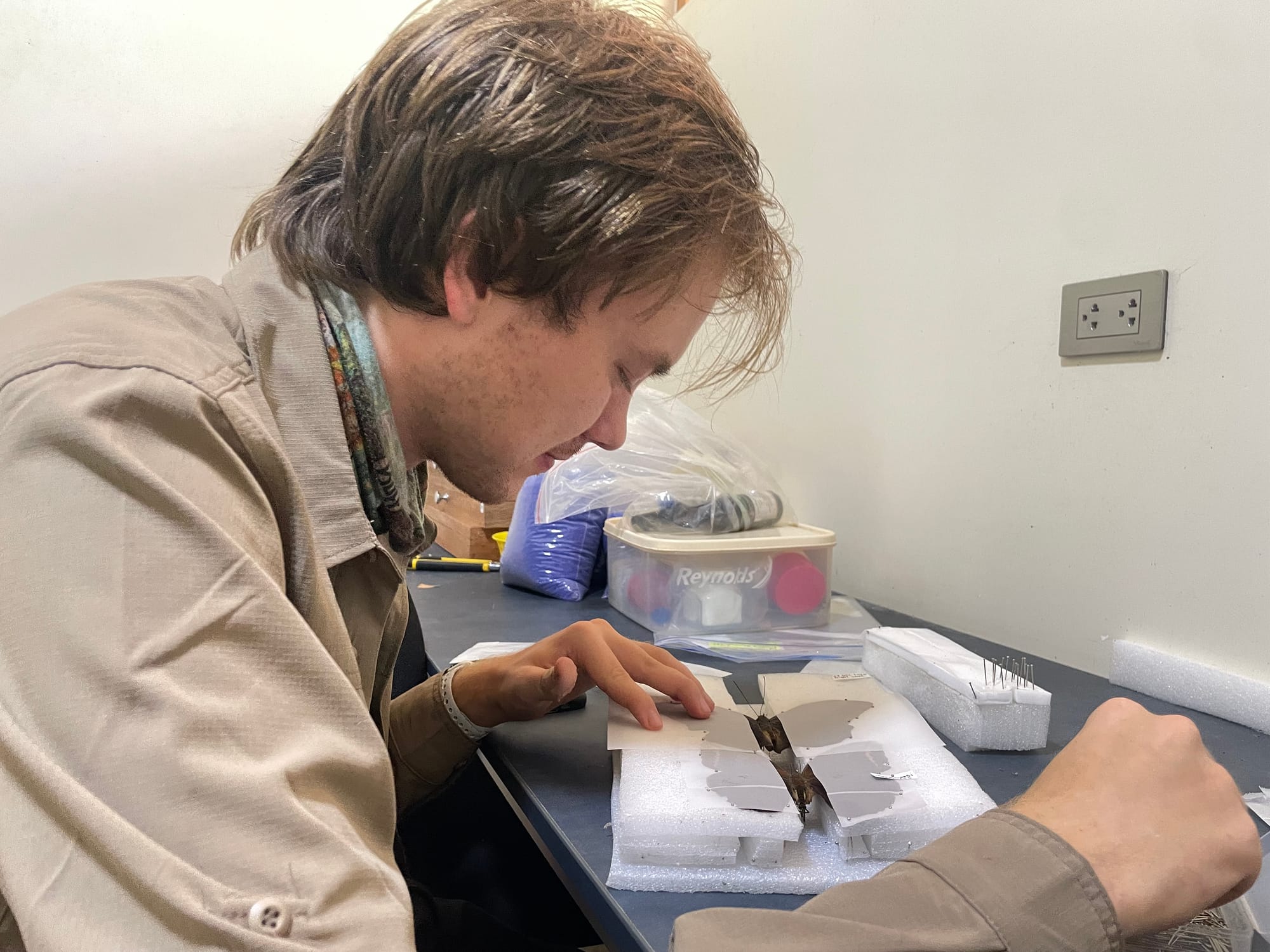
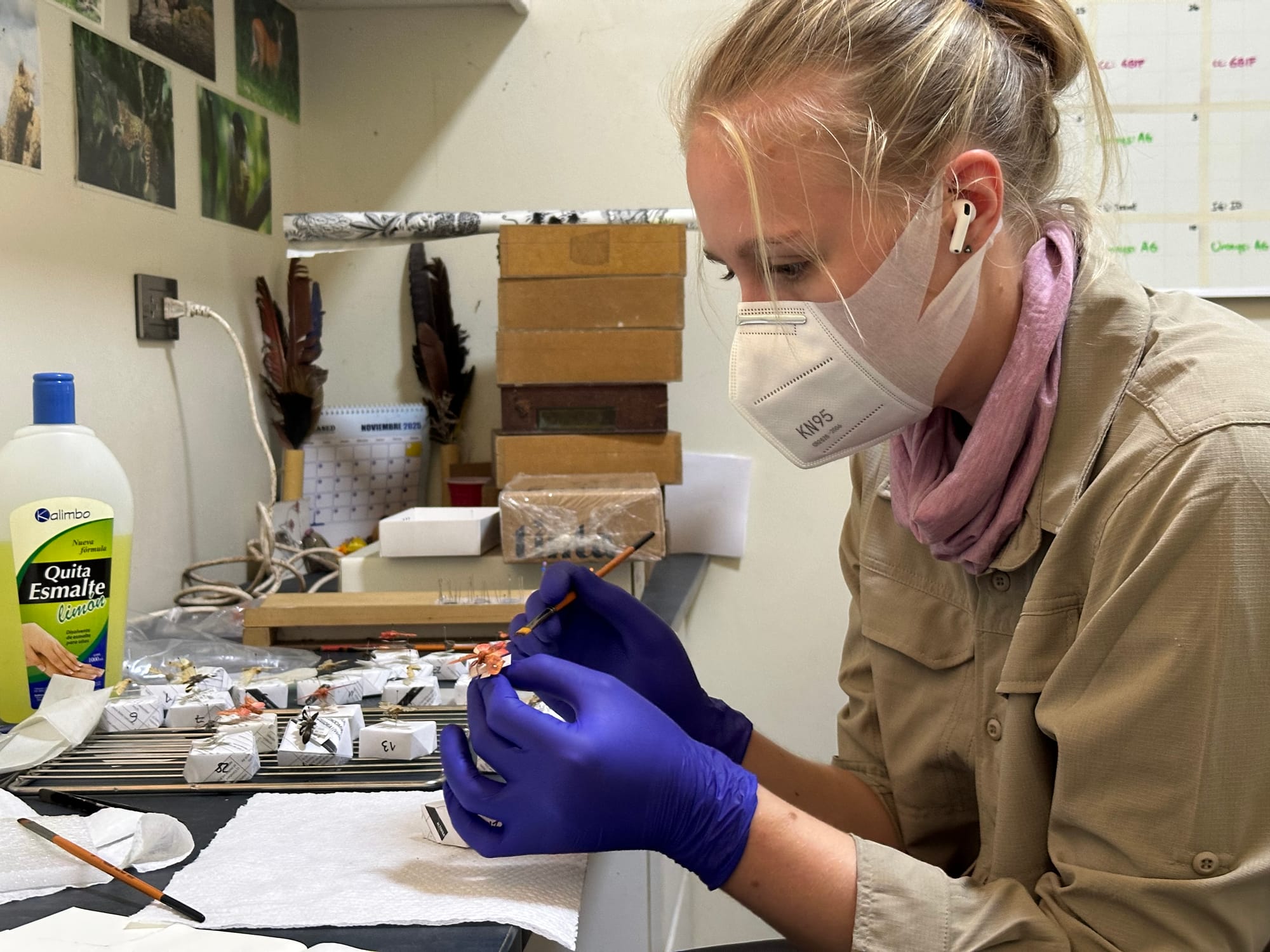
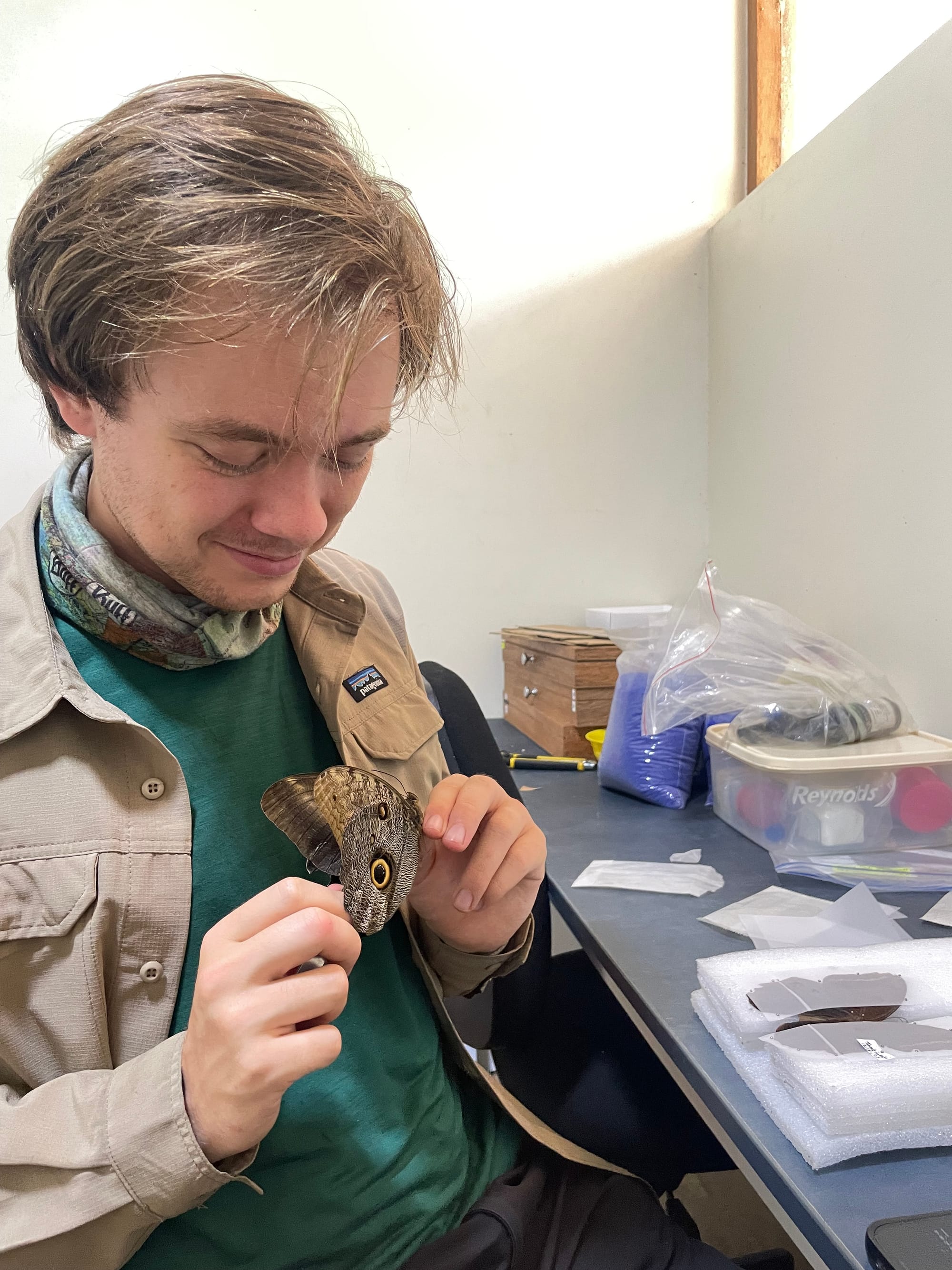
Johann spent hours curating the station's moth collection. Rachel chipped in too. Spreadsheets ensued. [📸 Rachel & Johann]
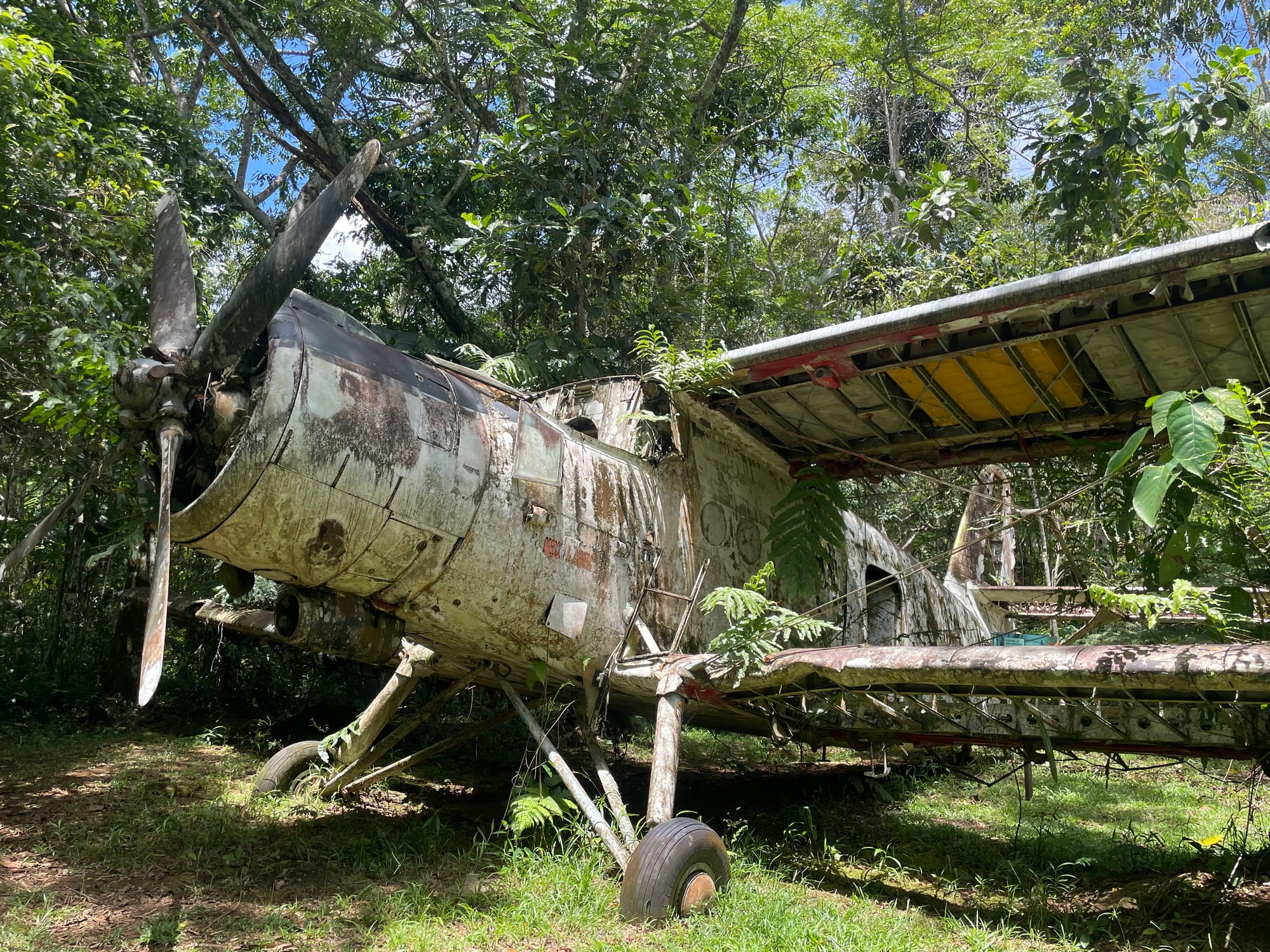
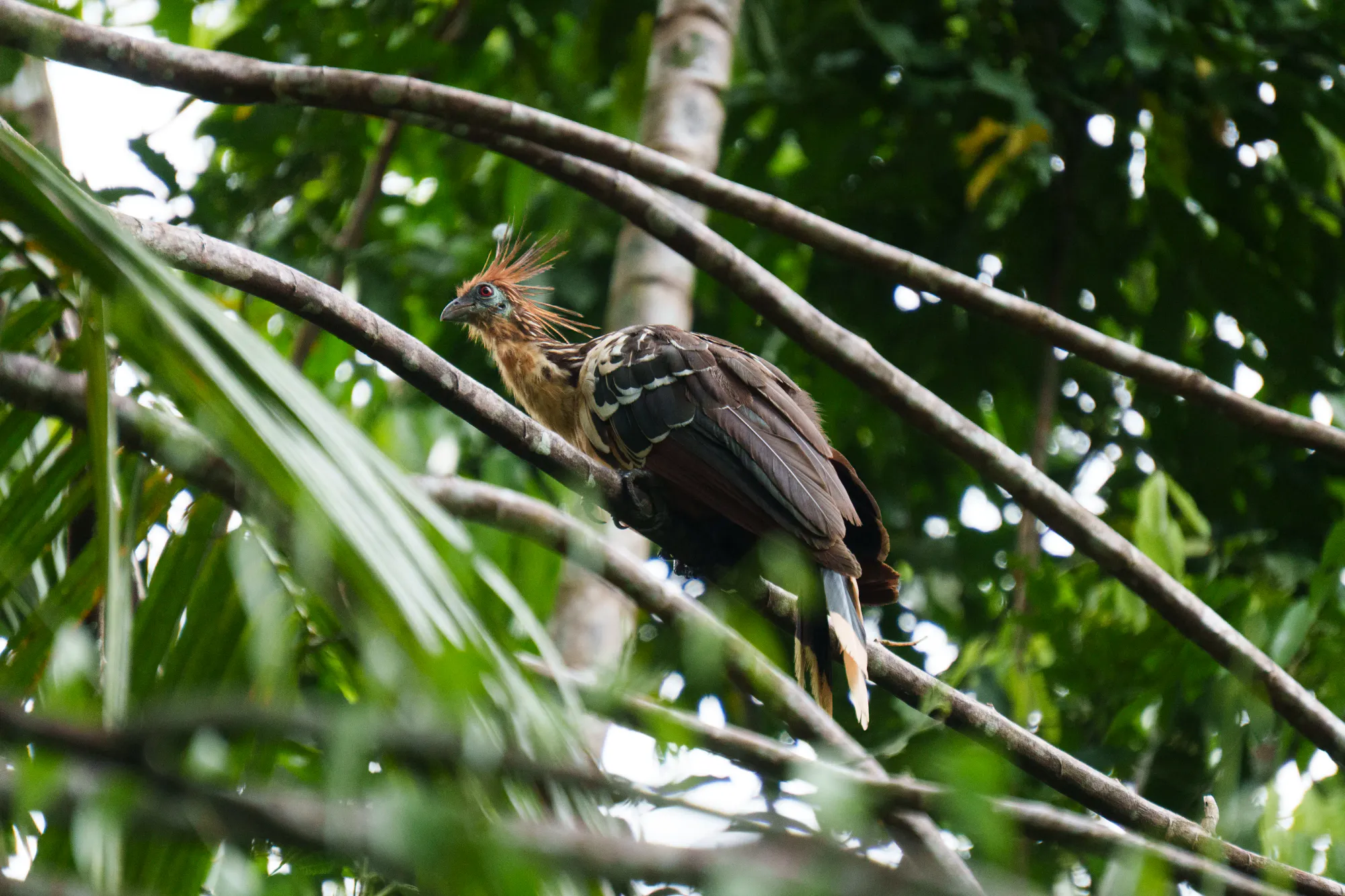
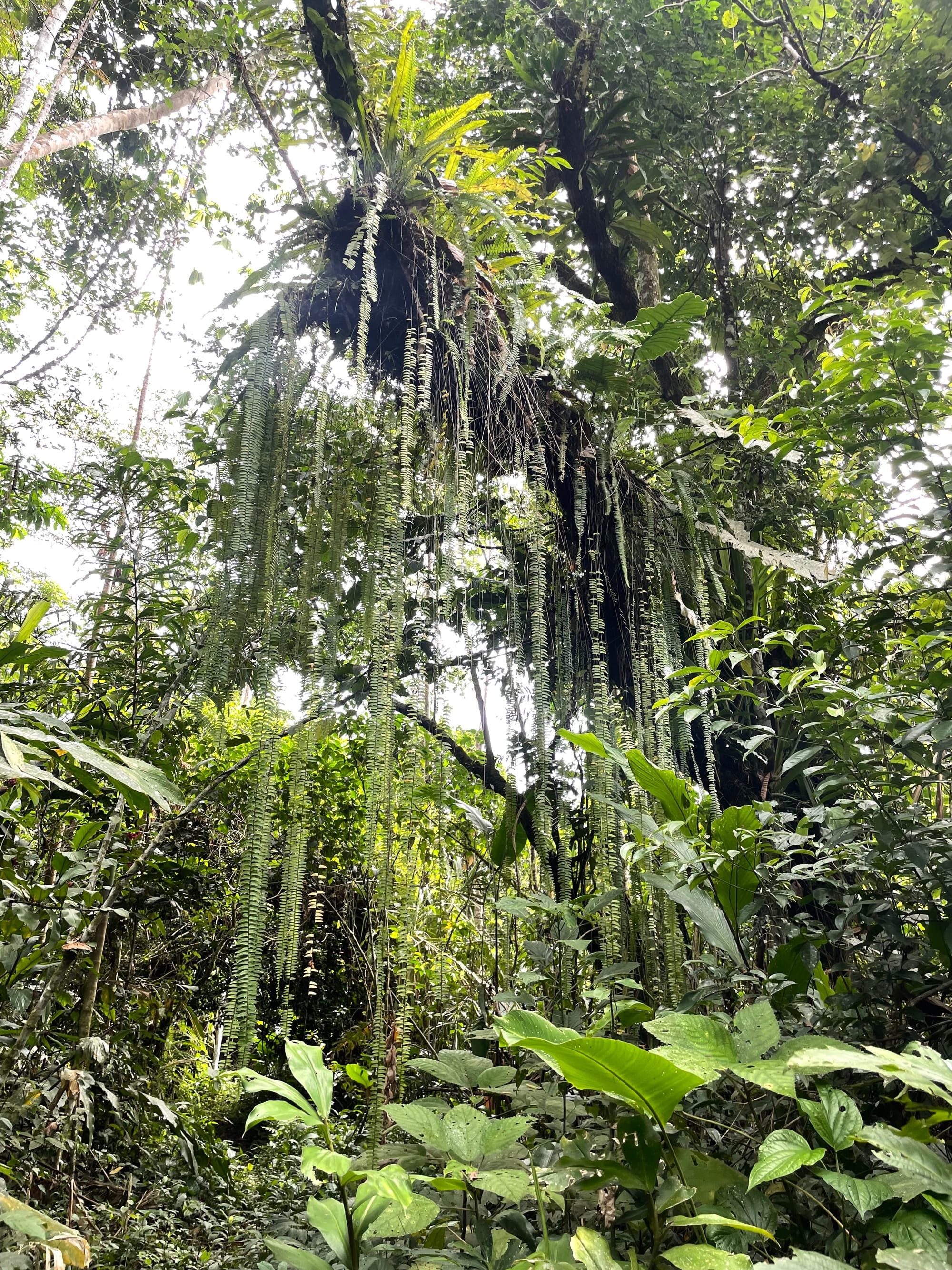
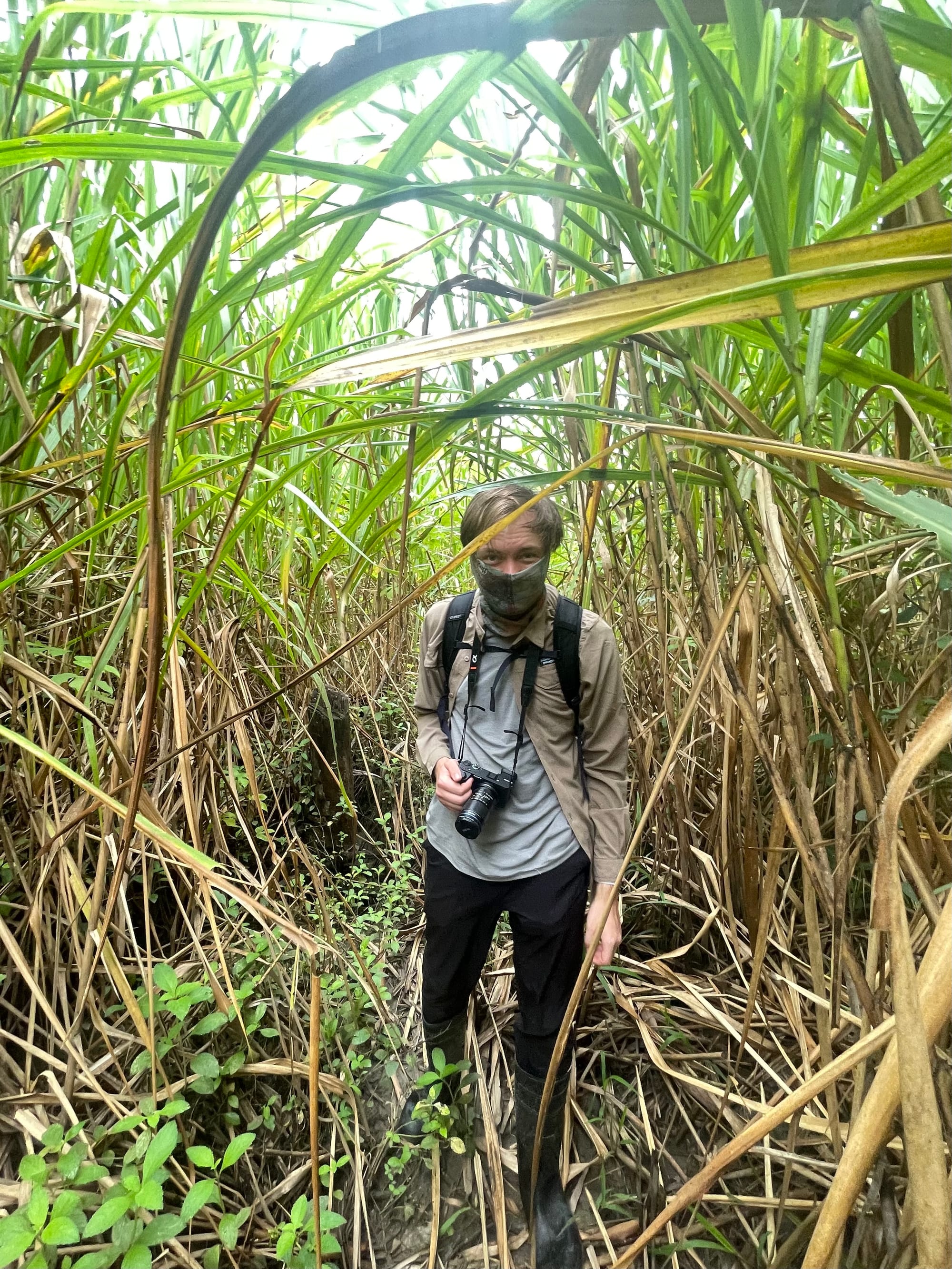
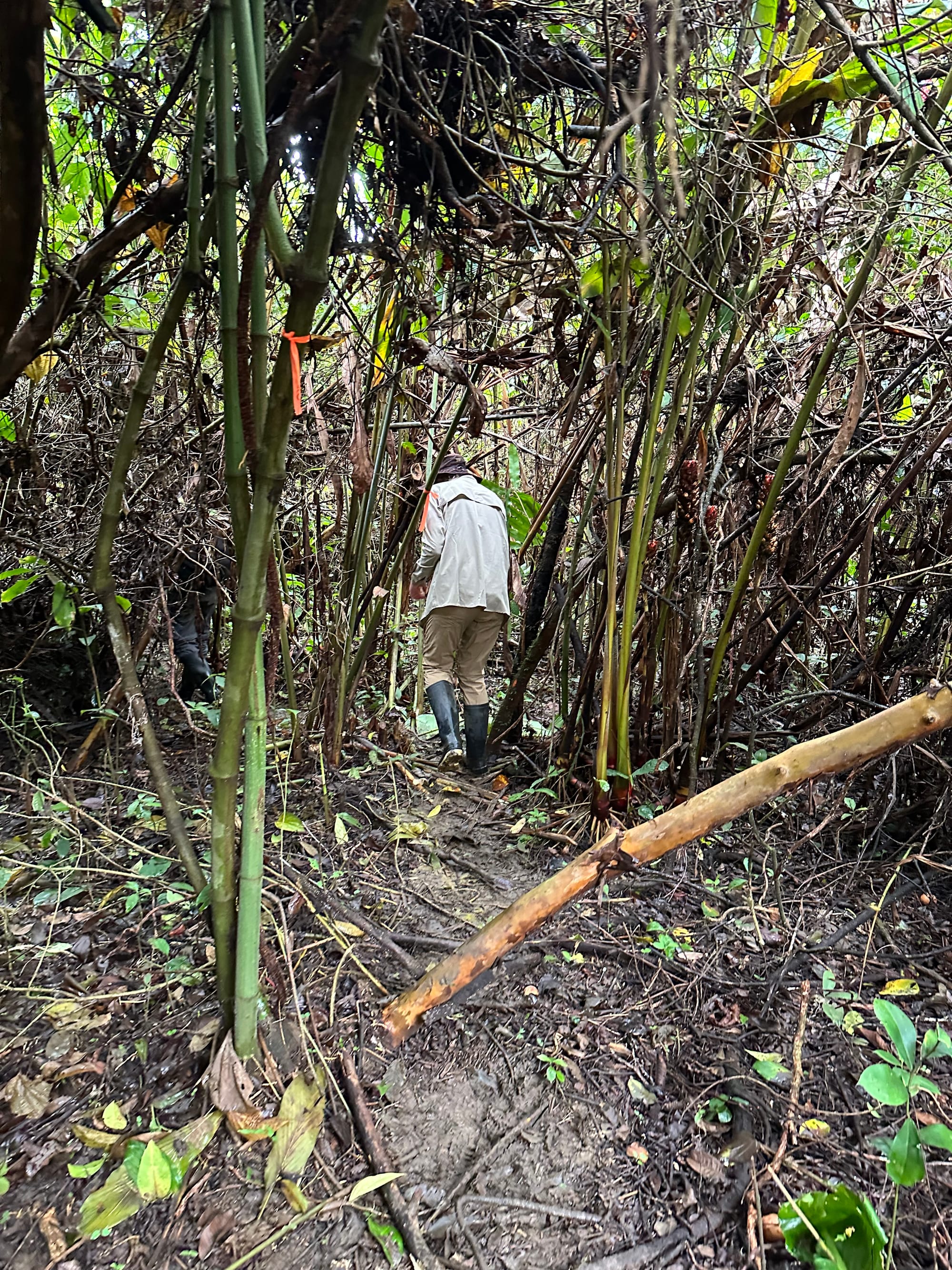
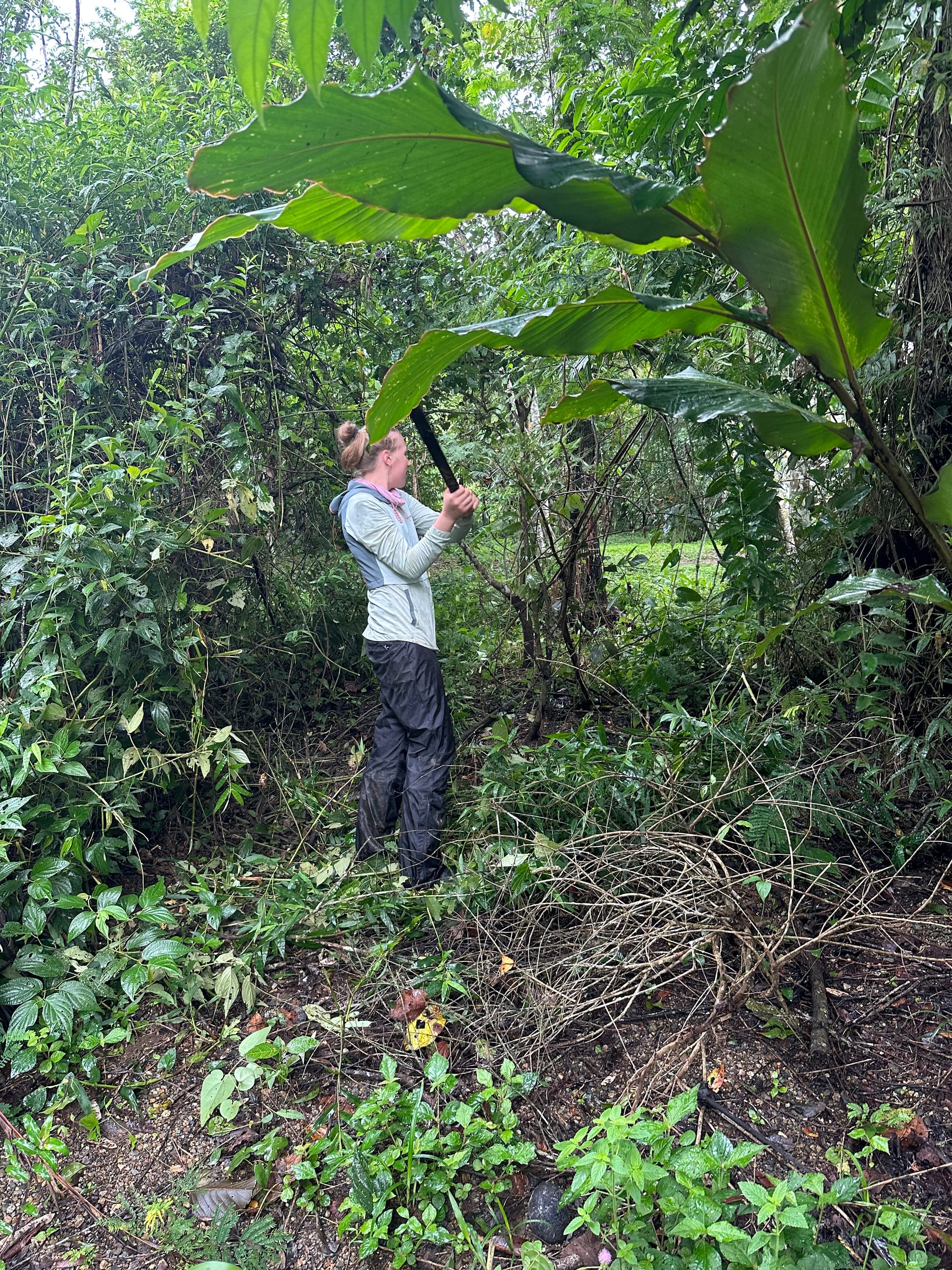
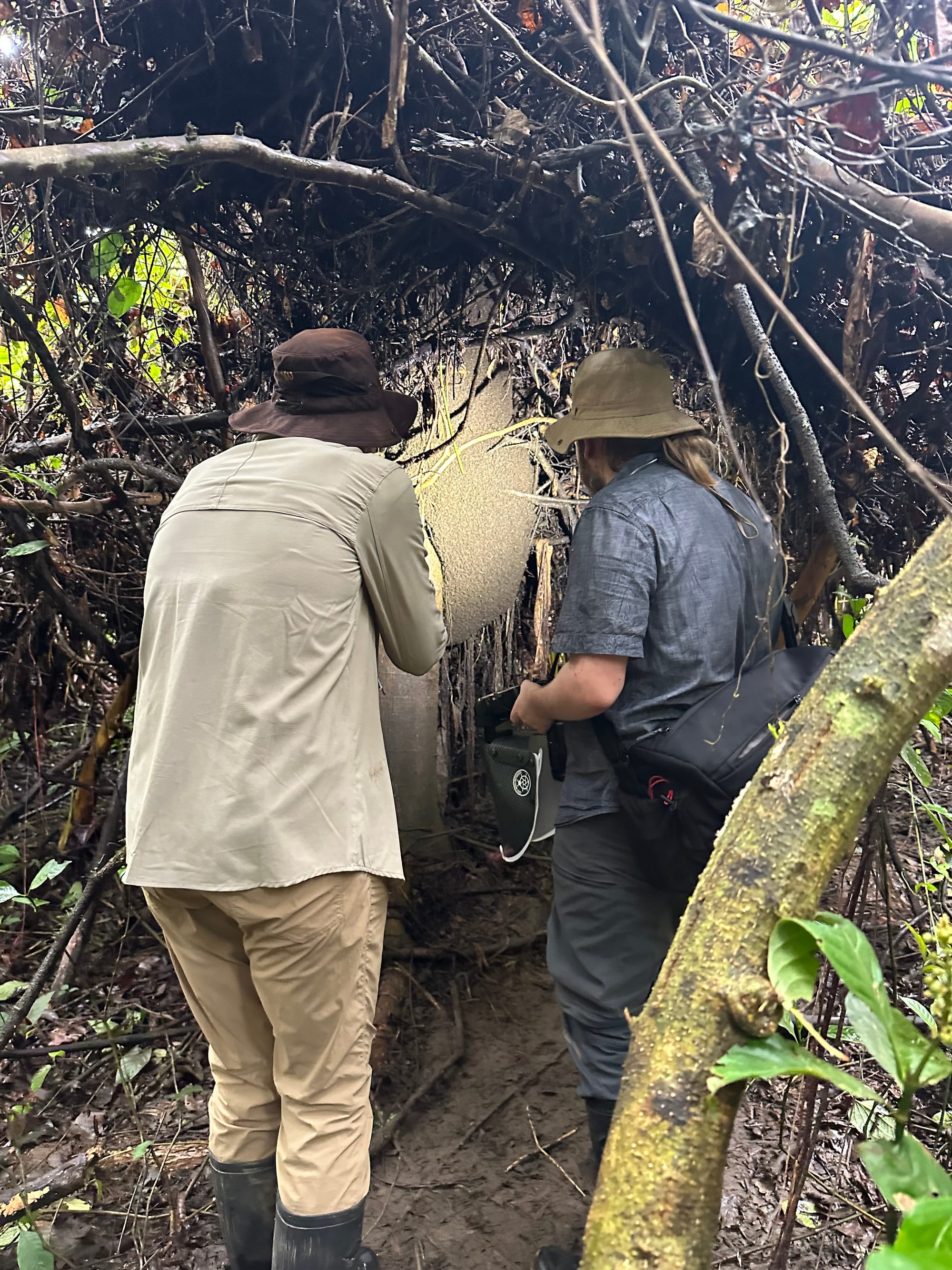
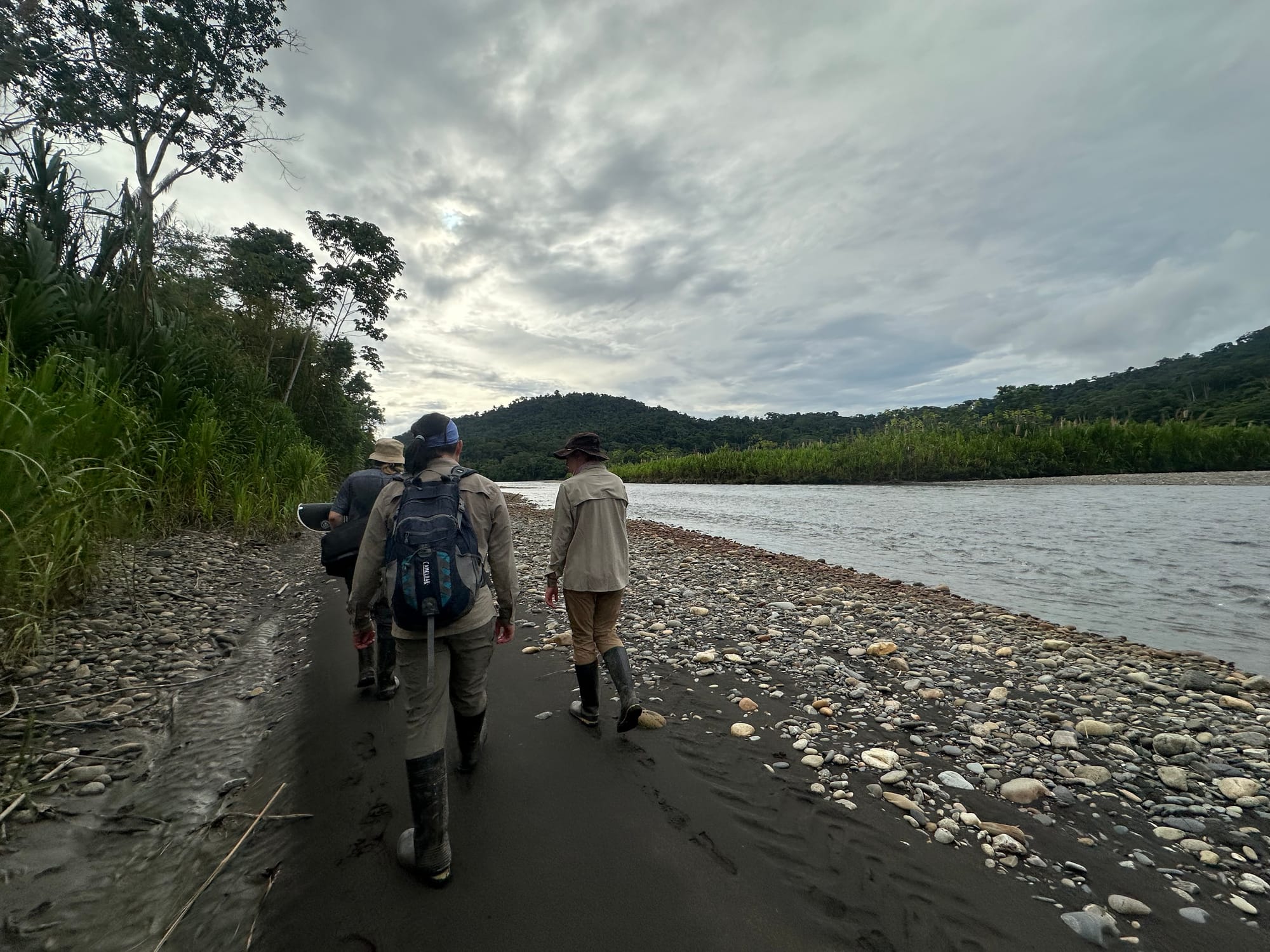
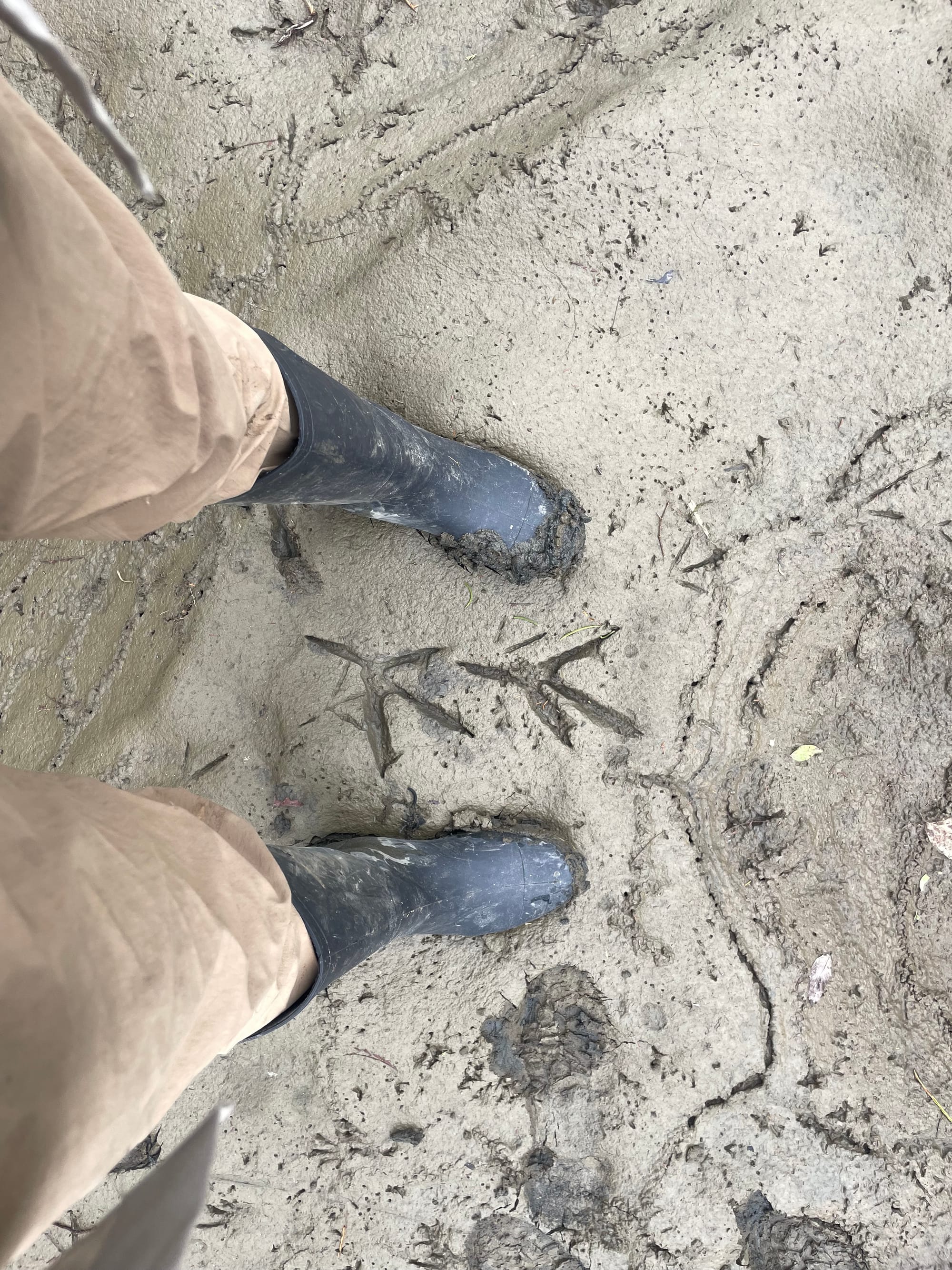
In the jungle, the mighty jungle. Also for reference - that ant nest Rachel is shining a flash light at is a temporary army ant nest (a bivouac), and is composed entirely of ants linking their limbs together. [📸 Rachel & Johann]
I swim in the lagoon everyday, horseflies close buzzing my head. I am visiting the Pacu fish in their watery home, their mouths filled with molars. A cormorant perches on a dead snag, wings spread wide, and shits in the water; I artfully swim around the spot. This water linking me with the reeds ringing the lagoon, with the fish and birds and beetles, will flow into the Pinipini river, the Madre de Dios river, and eventually join the Amazon river on its way to the Atlantic Ocean. And along that interweaving of millions of organisms, the water touching my skin coalescing with thousands of mossy droplets, are illegal goldmines leaching mercury into our lifeblood. Massecated riverbeds, deforestation, armed conflict, the suspension of Peru’s oldest biostation, mercury in arterial waters like blood poisoning. This water I am immersed in, would I dare to touch it downstream?
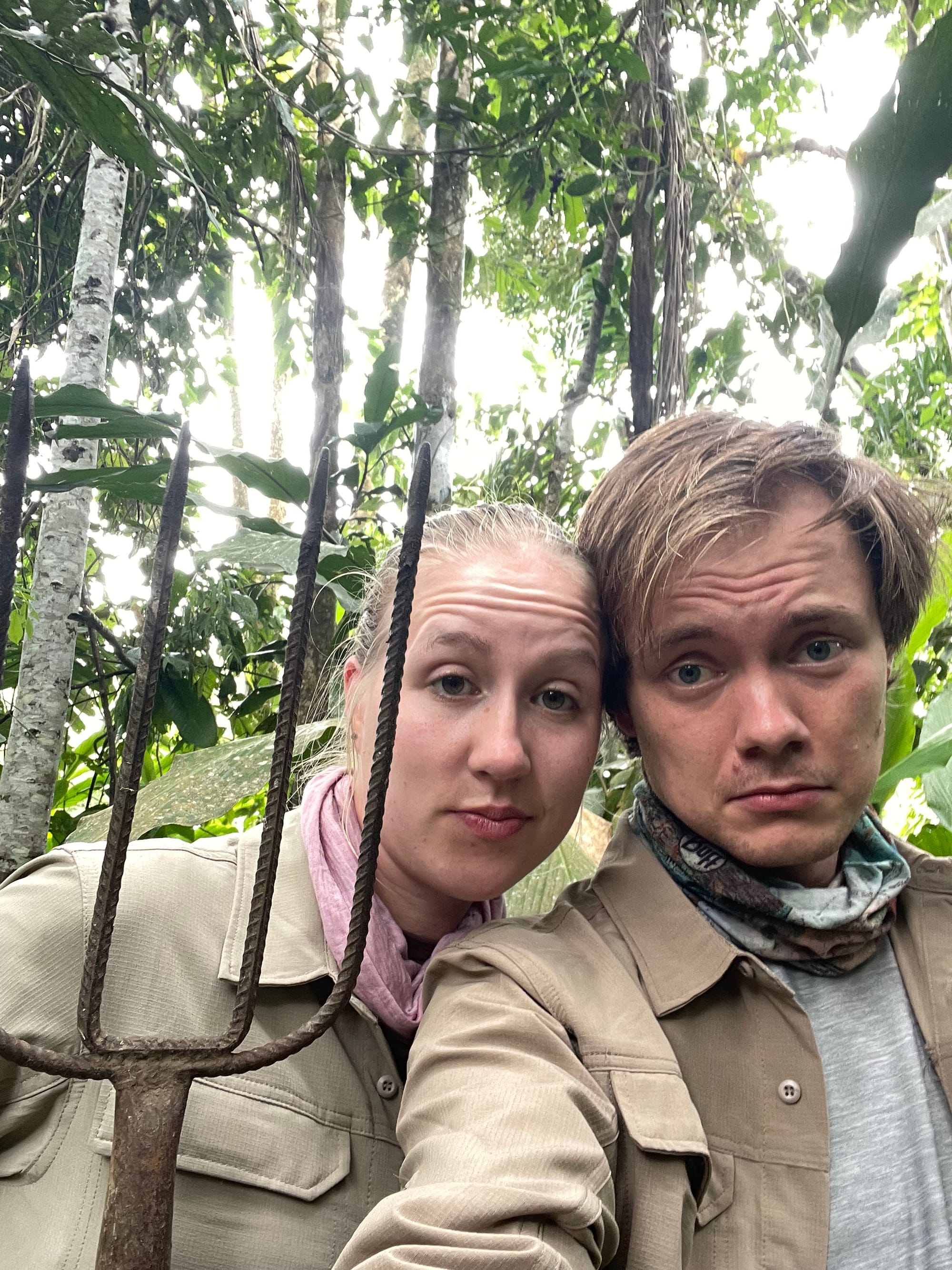
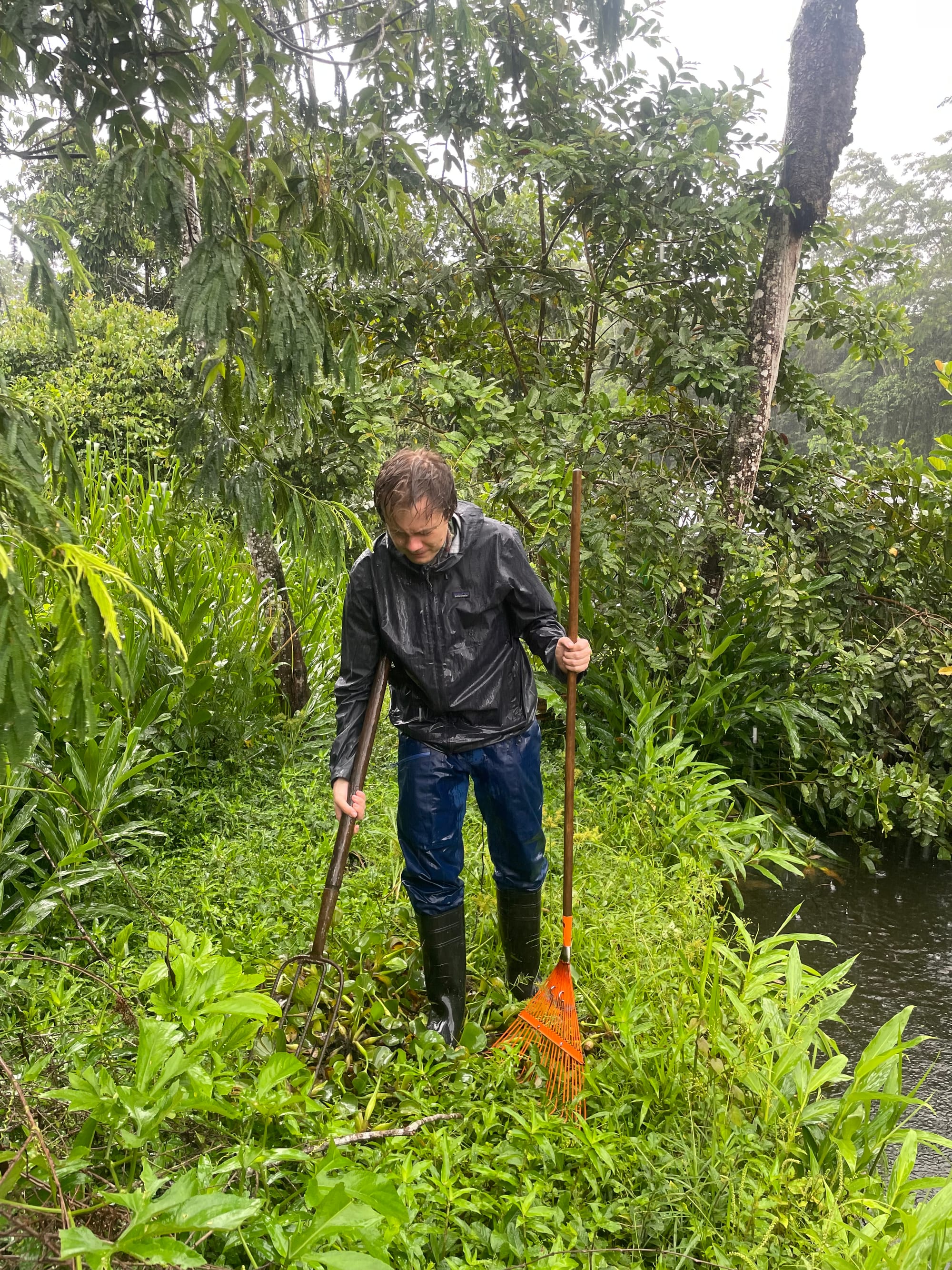
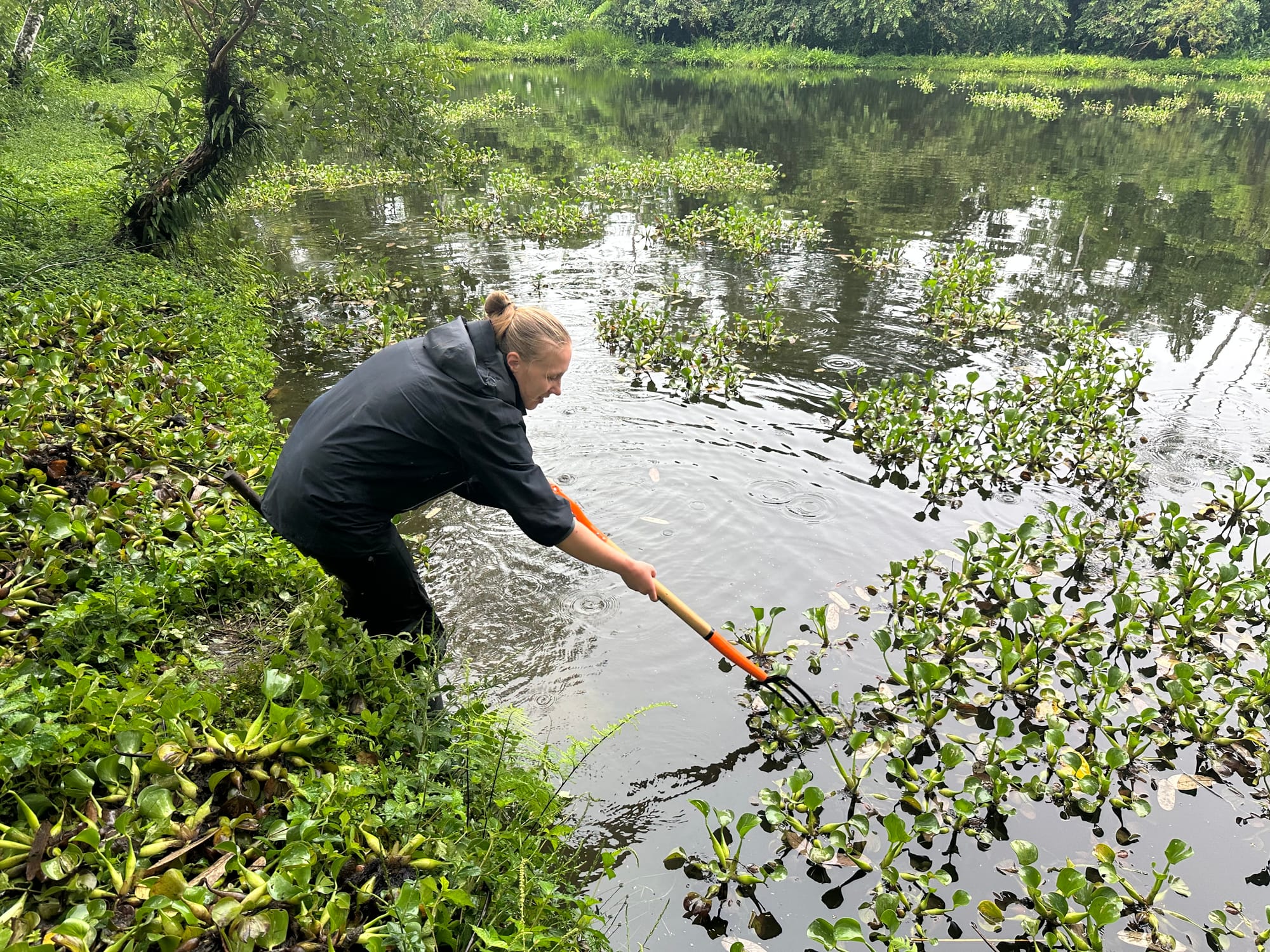
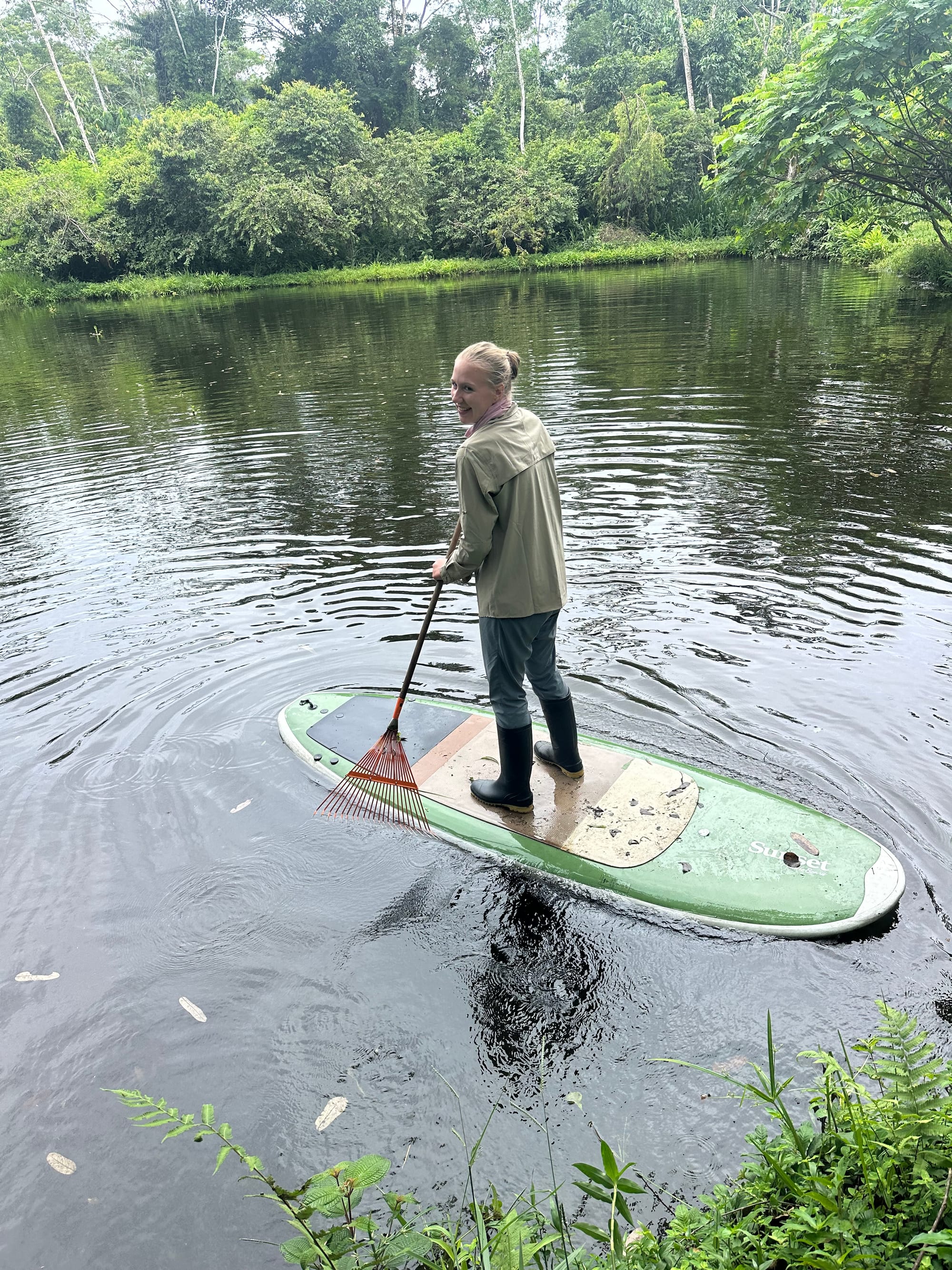
Our first full day of volunteering was spent removing invasive water hyacinths from the fish pond, in heavy rain. Rachel used a paddleboard (with a rake for a paddle) to get the plants floating in the middle. [📸 Rachel & Johann]
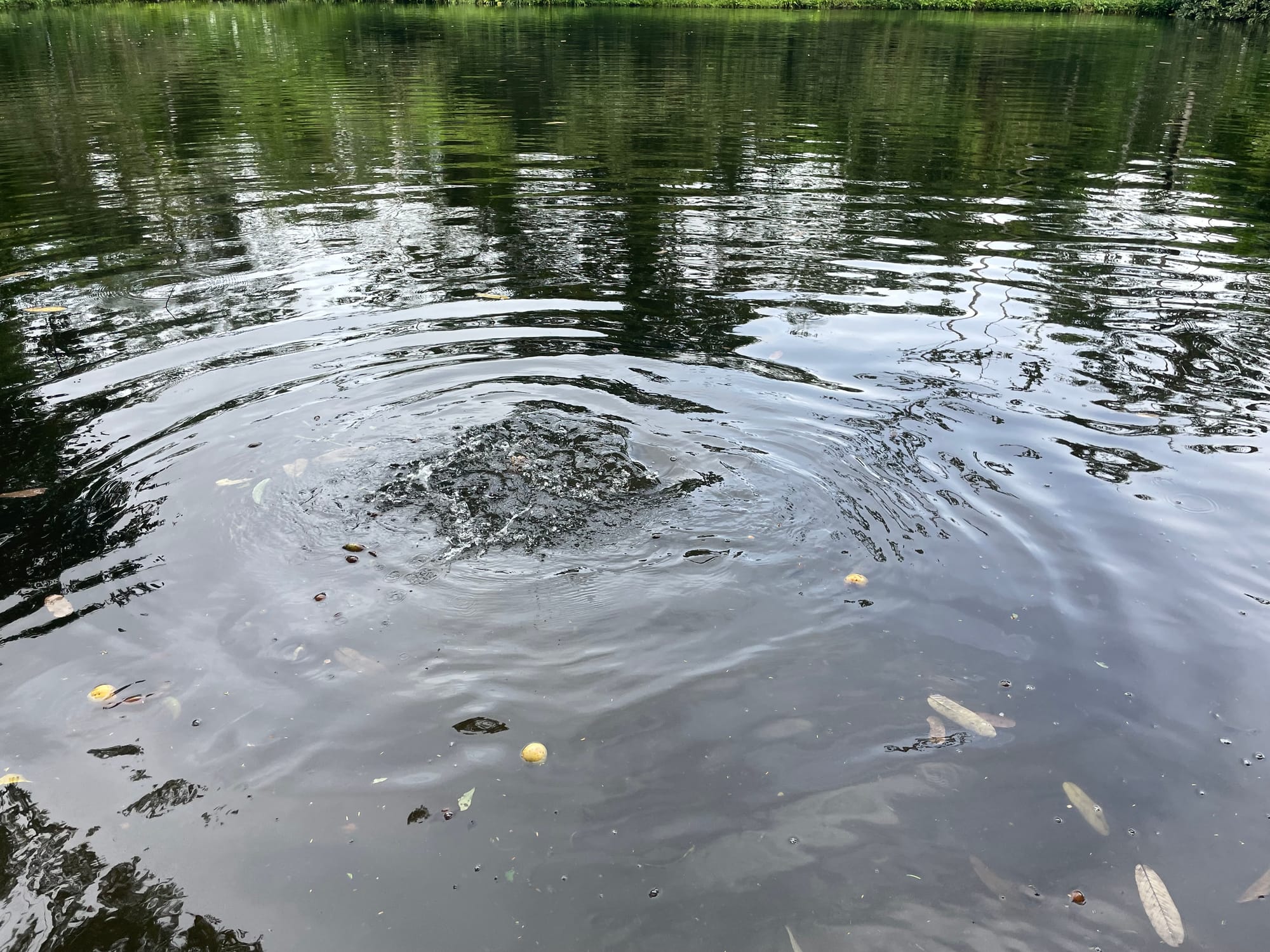
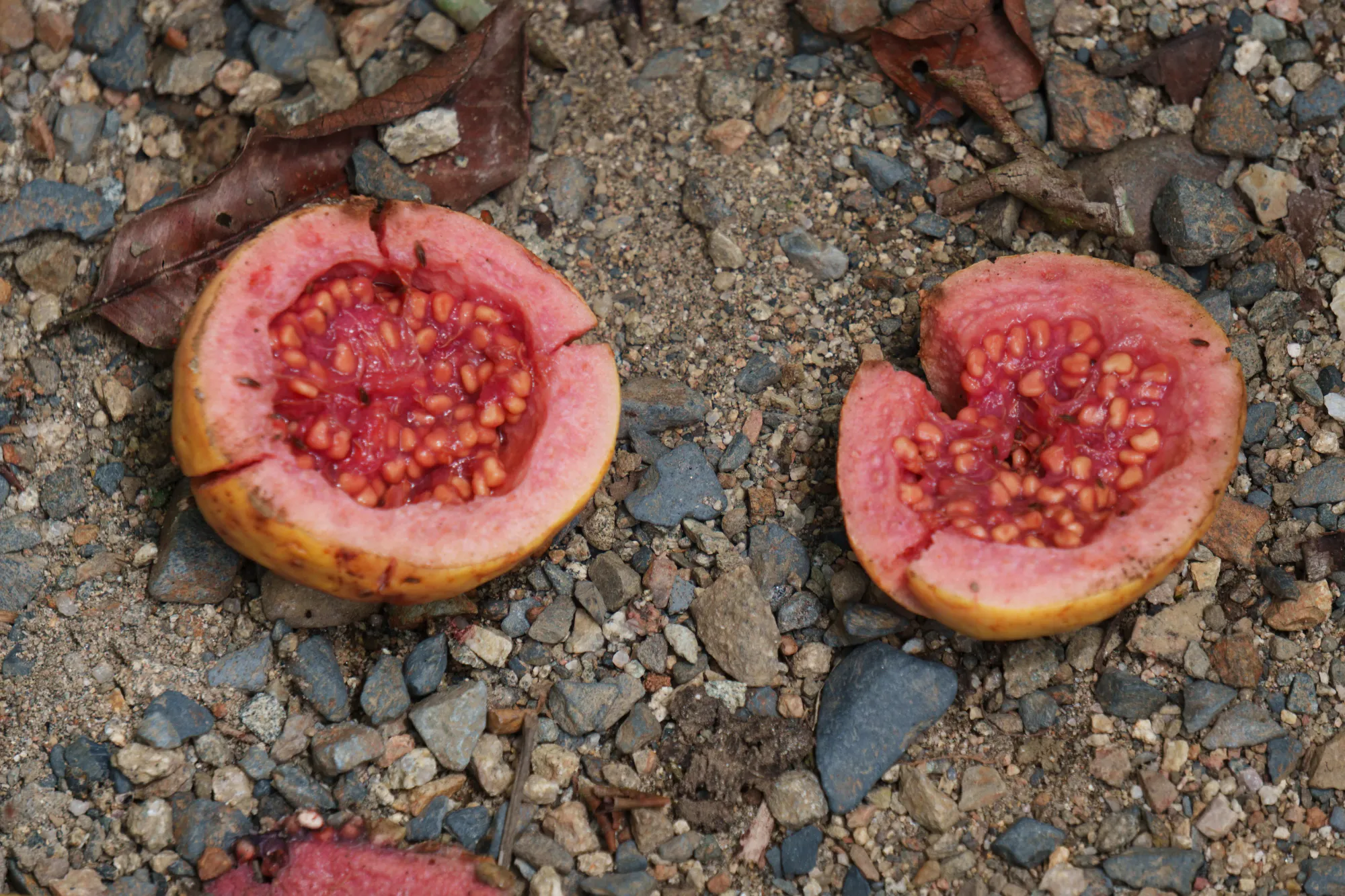
We fed the Pacu fish rotting guavas too! [📸 Rachel]
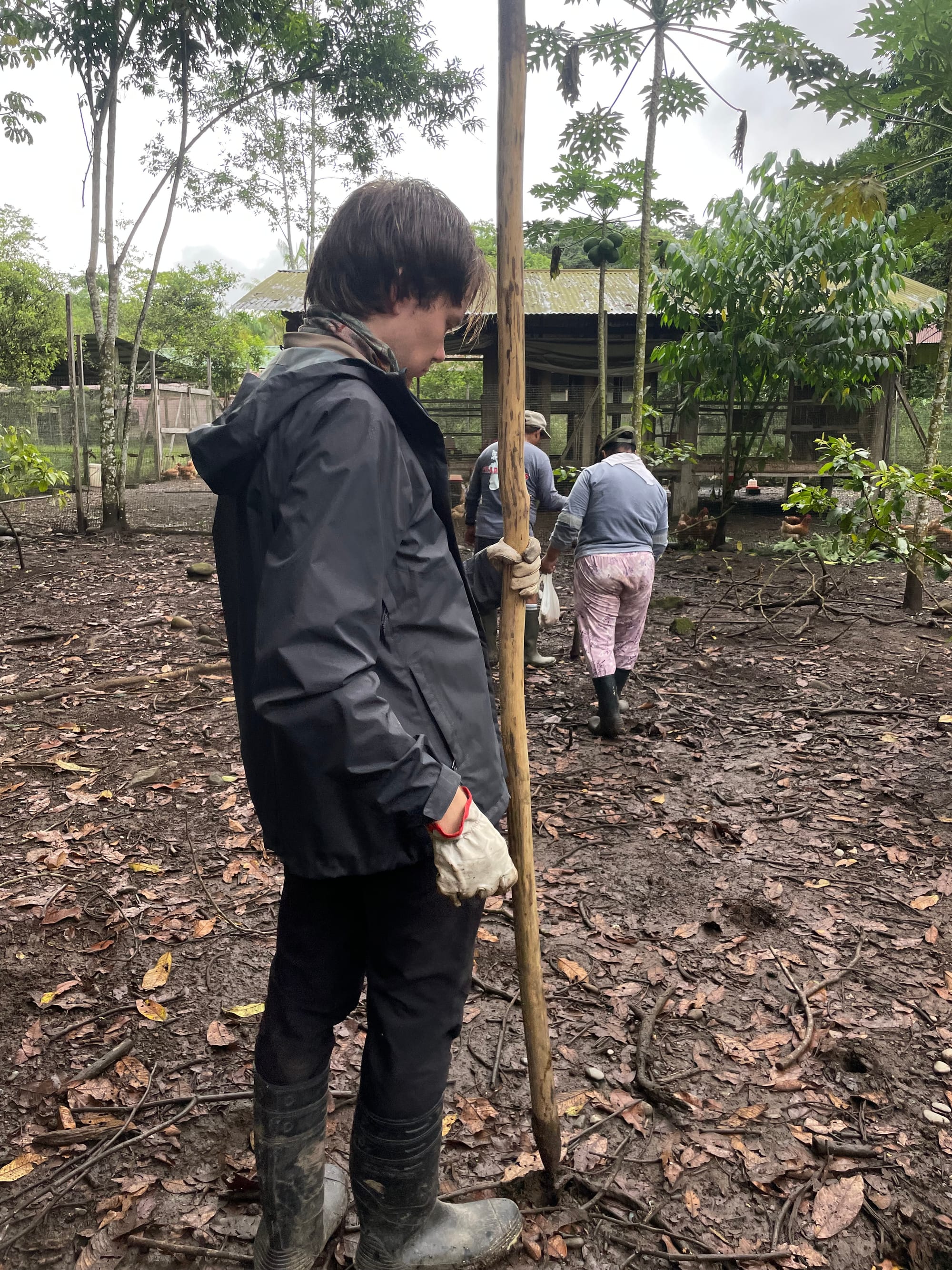
Volunteering at Manu for two weeks is a smorgasbord of amazing people who are generous with their knowledge. Doroteo and Martina teach us to plant corn using a stick with a tapered end, one person forming an even line of holes and the other planting seeds. They tell us Quechua words, and teach me how to butcher chickens. Doroteo clamps the tail feather down hard as I slit their throats, especially after a loose chicken sends shit flying over his arms and face, Martina breathless with laughter.
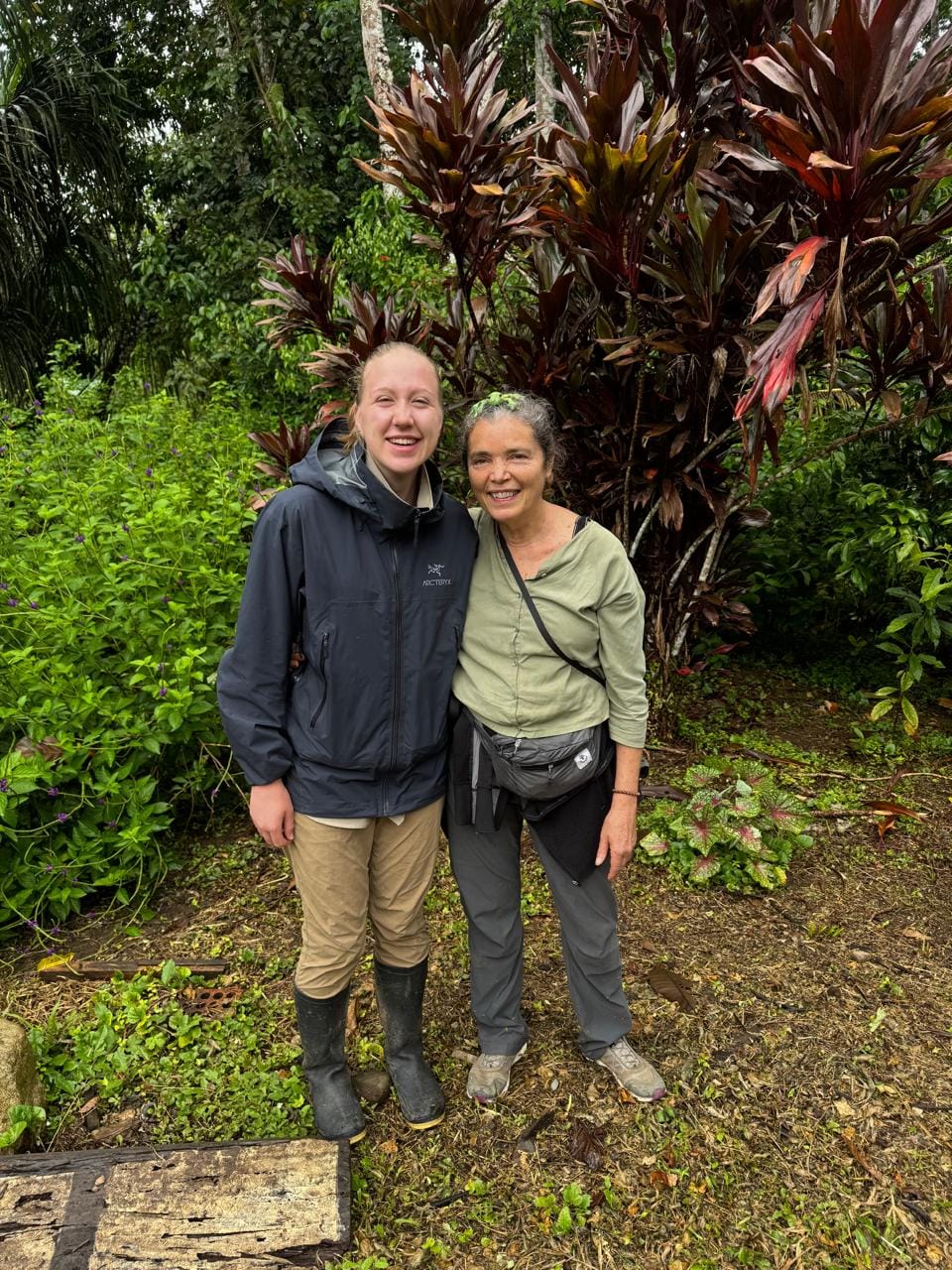
Sharon, a superb artist from Chicago with deep ties to the rainforest, leads seed artwork workshops for the local children and the station residences. Her warmth and humour make her a universal favorite, and an excellent companion over dinner, and for swims and jungle walks. Our new emotional support German, Julian, has a wicked sharp sense of humour, and we enjoy many a funny chat. As his field assistants we venture into the jungle at night to try our hand at catching ground beetles, finding innumerable ginormous spiders at the same time.
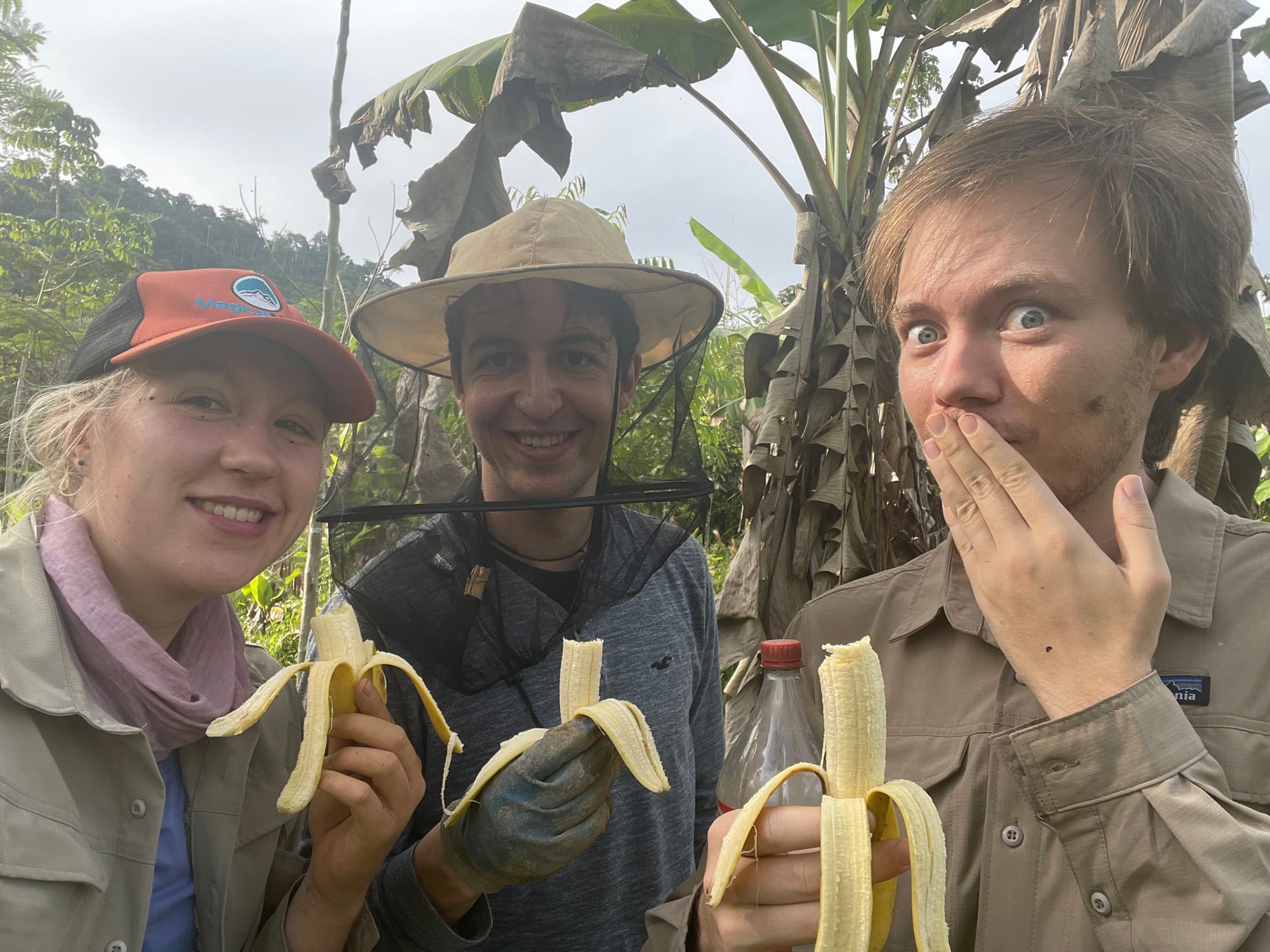
We got to try bananas fresh from a tree while installing insect pitfall traps! [📸 Rachel]
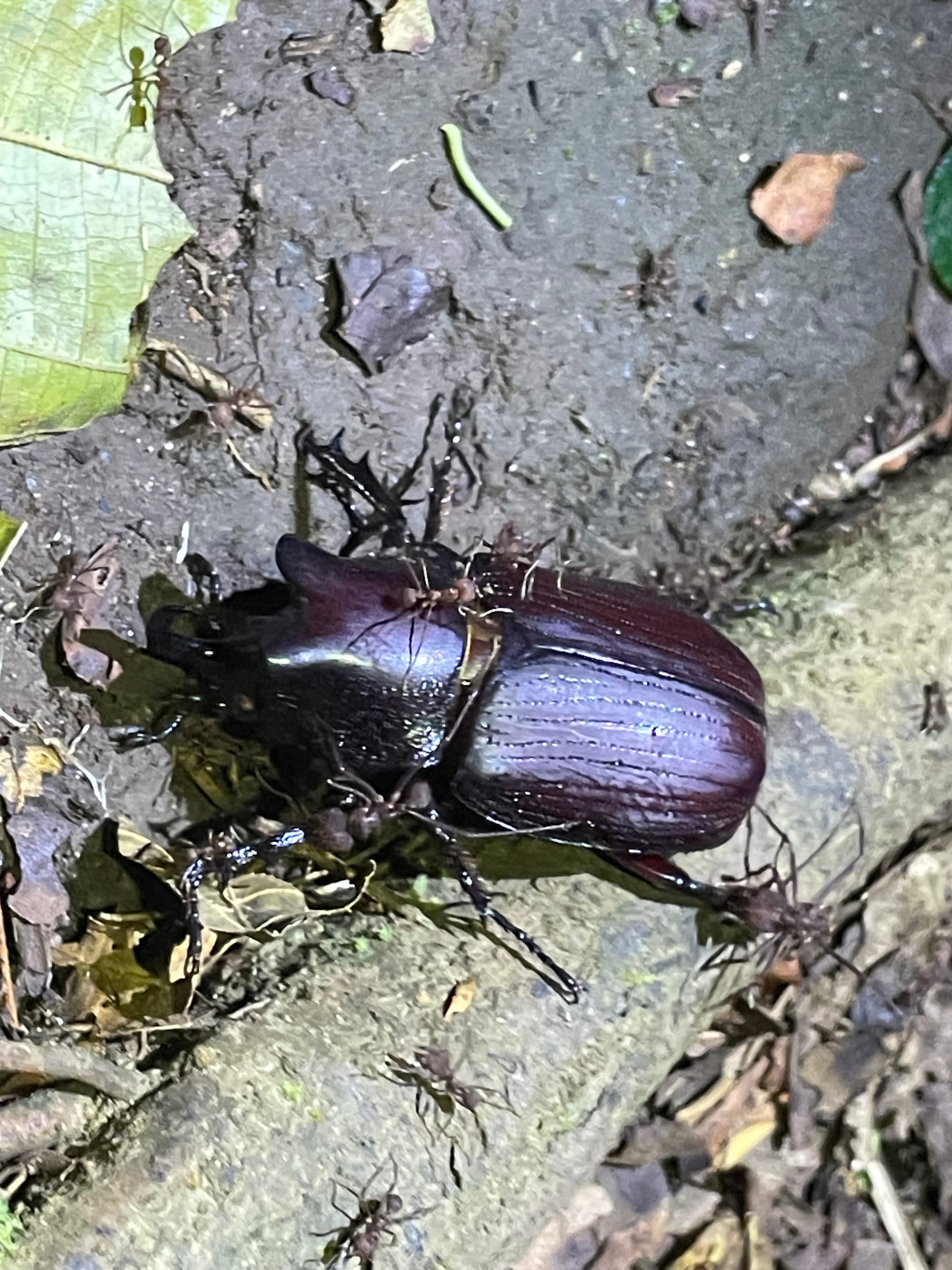
The jungle at night is augmented, growing strangely more beautiful and dangerous. Hundreds of green yellow spider eyes reflect back, twinkling from forest floor to canopy. A huge Bolivian wandering spider balances precariously on a branch, and a deadly coral snake winds its way wearing vibrant colours. A yellow orb weaver drops down to secure its prey, and whip spiders meander like strange alien lifeforms. The ants march on along their highways, a huge rhinoceros beetle in their midst.
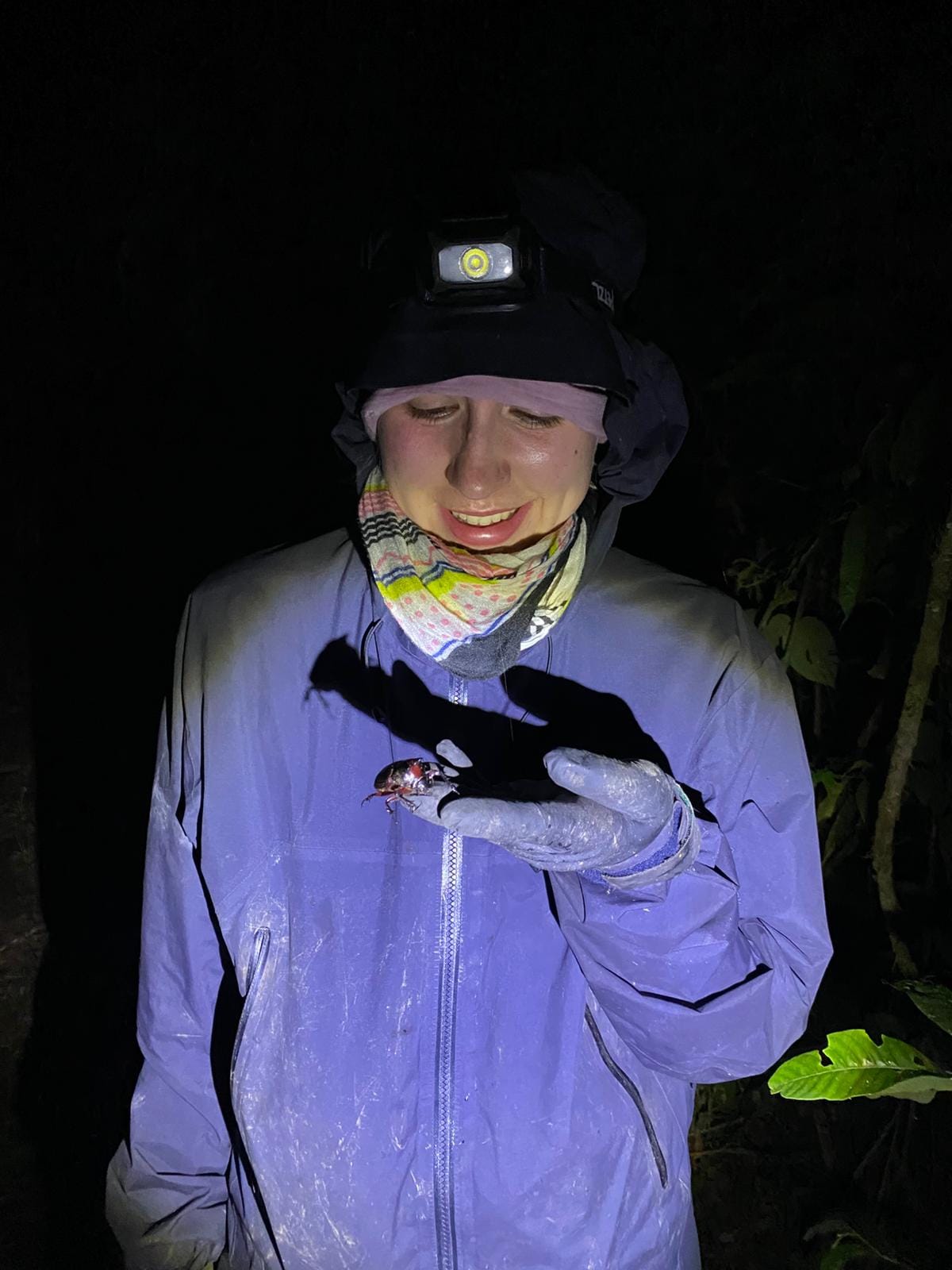
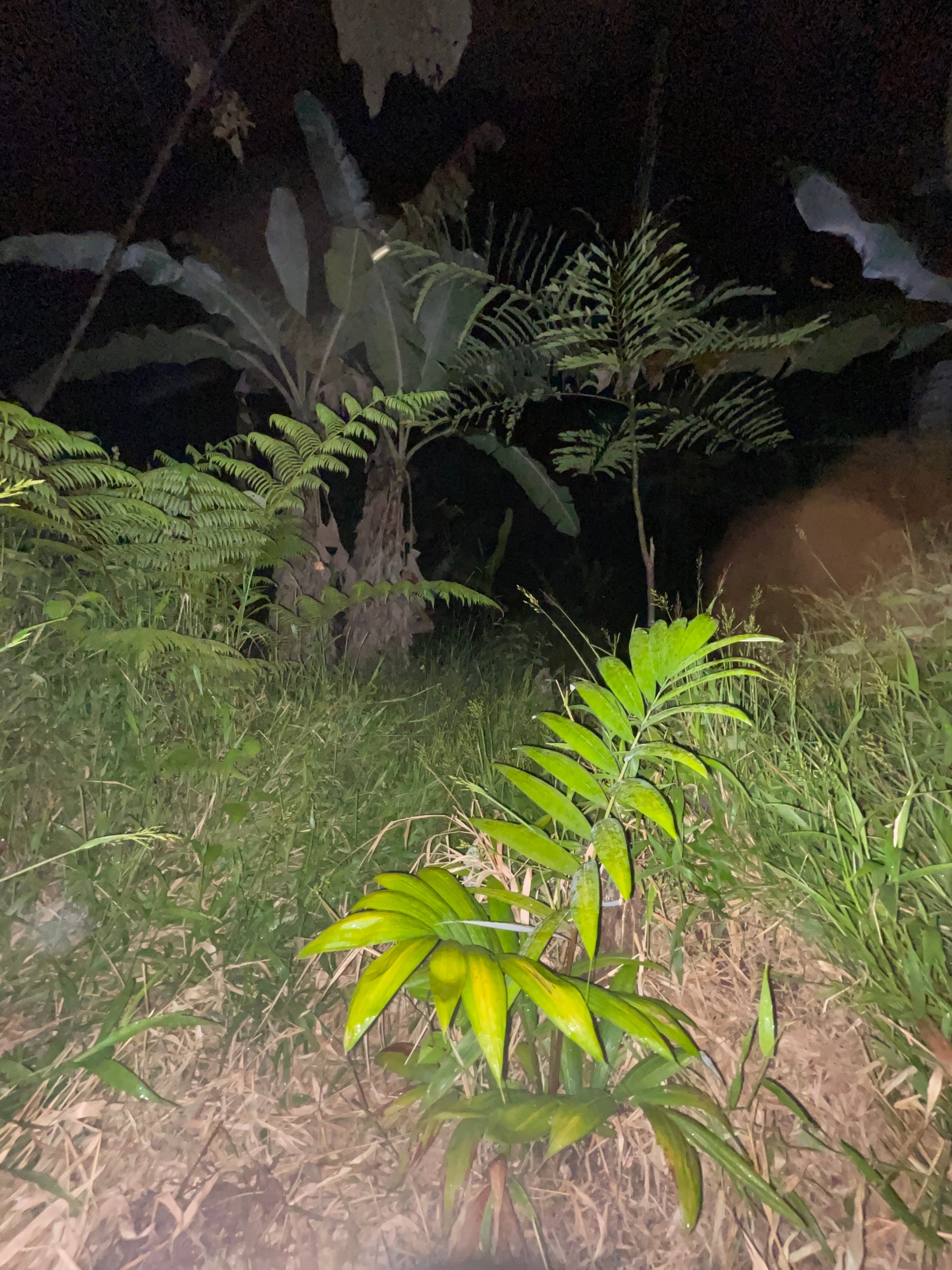
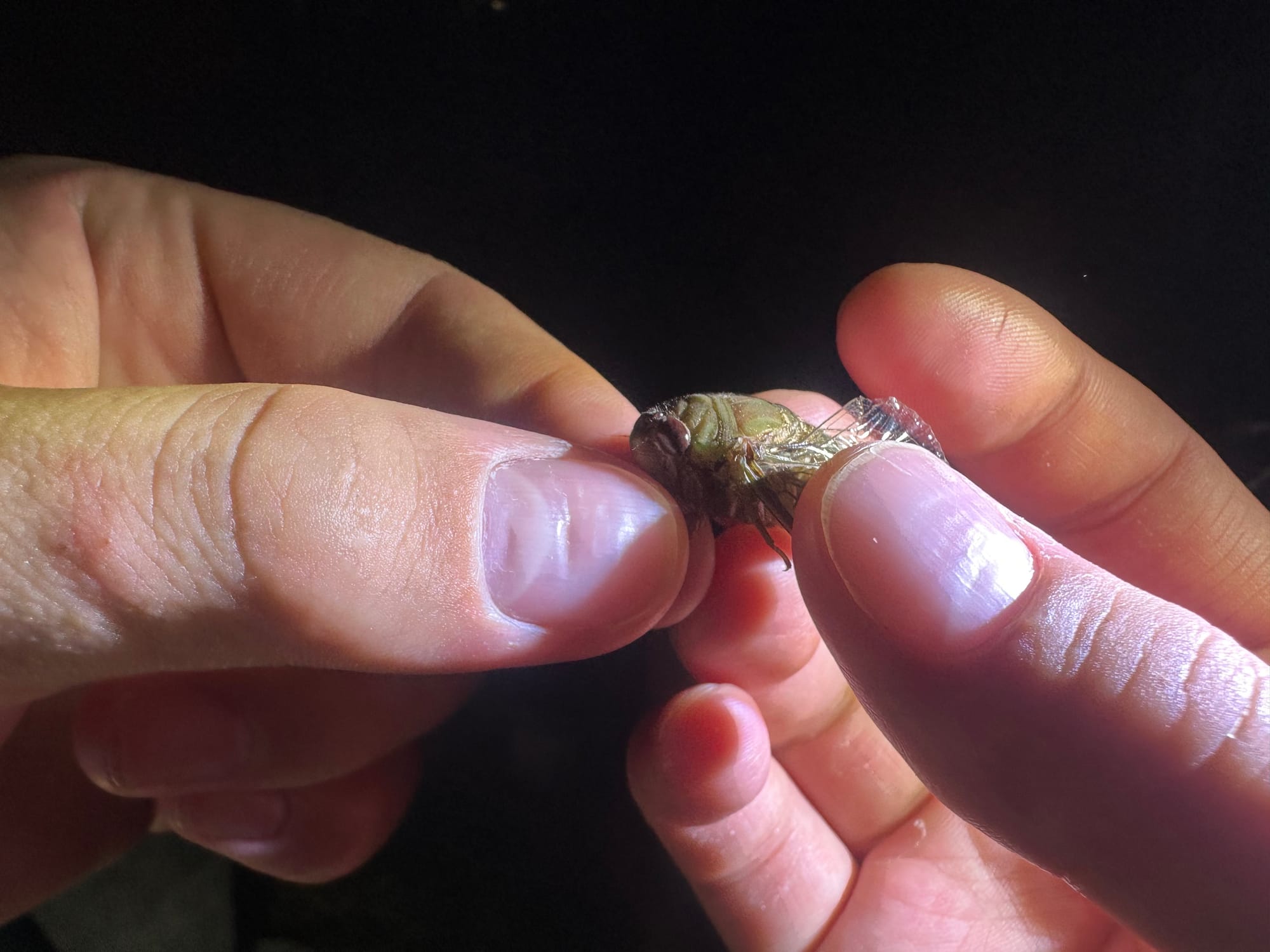
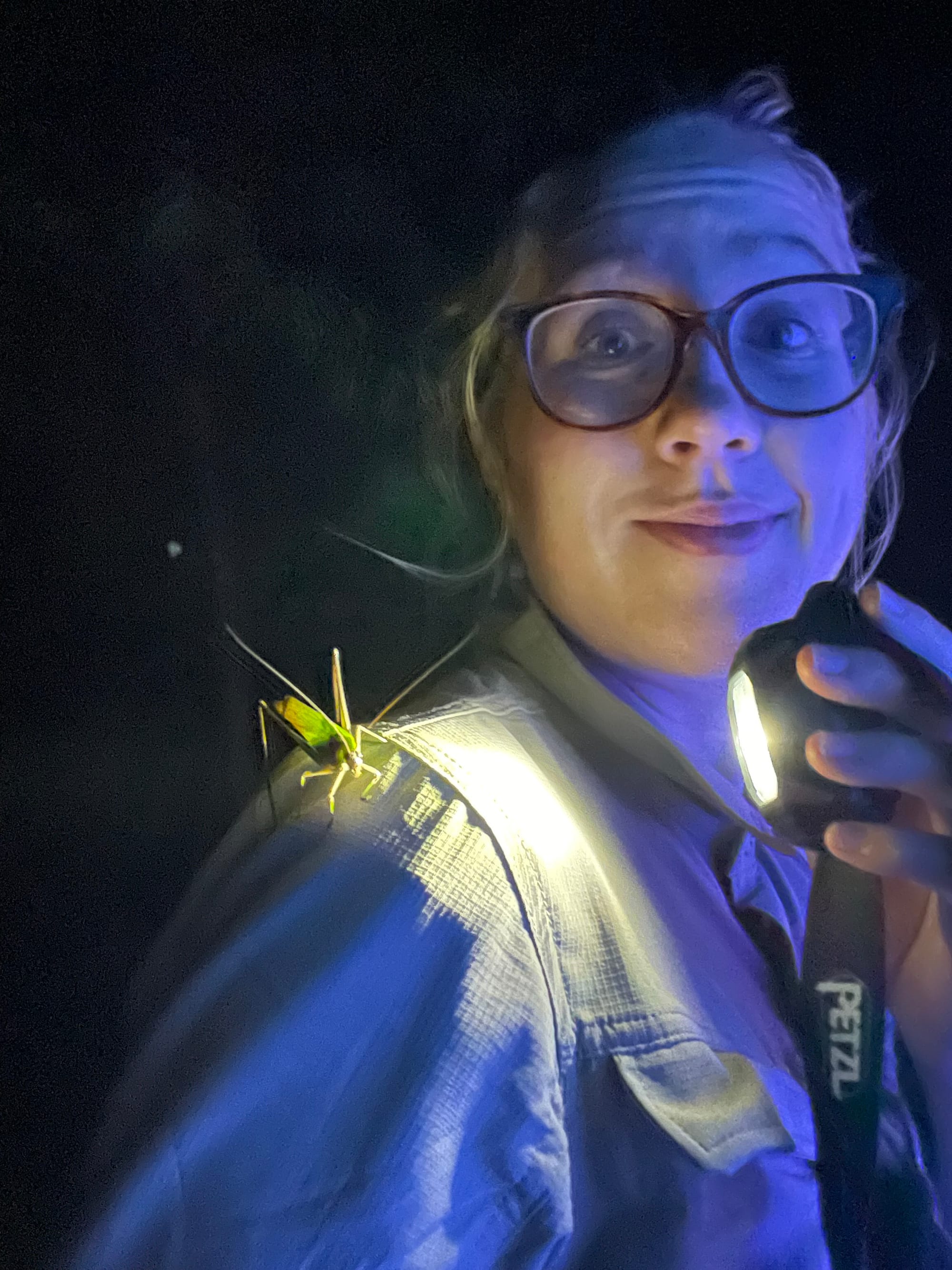
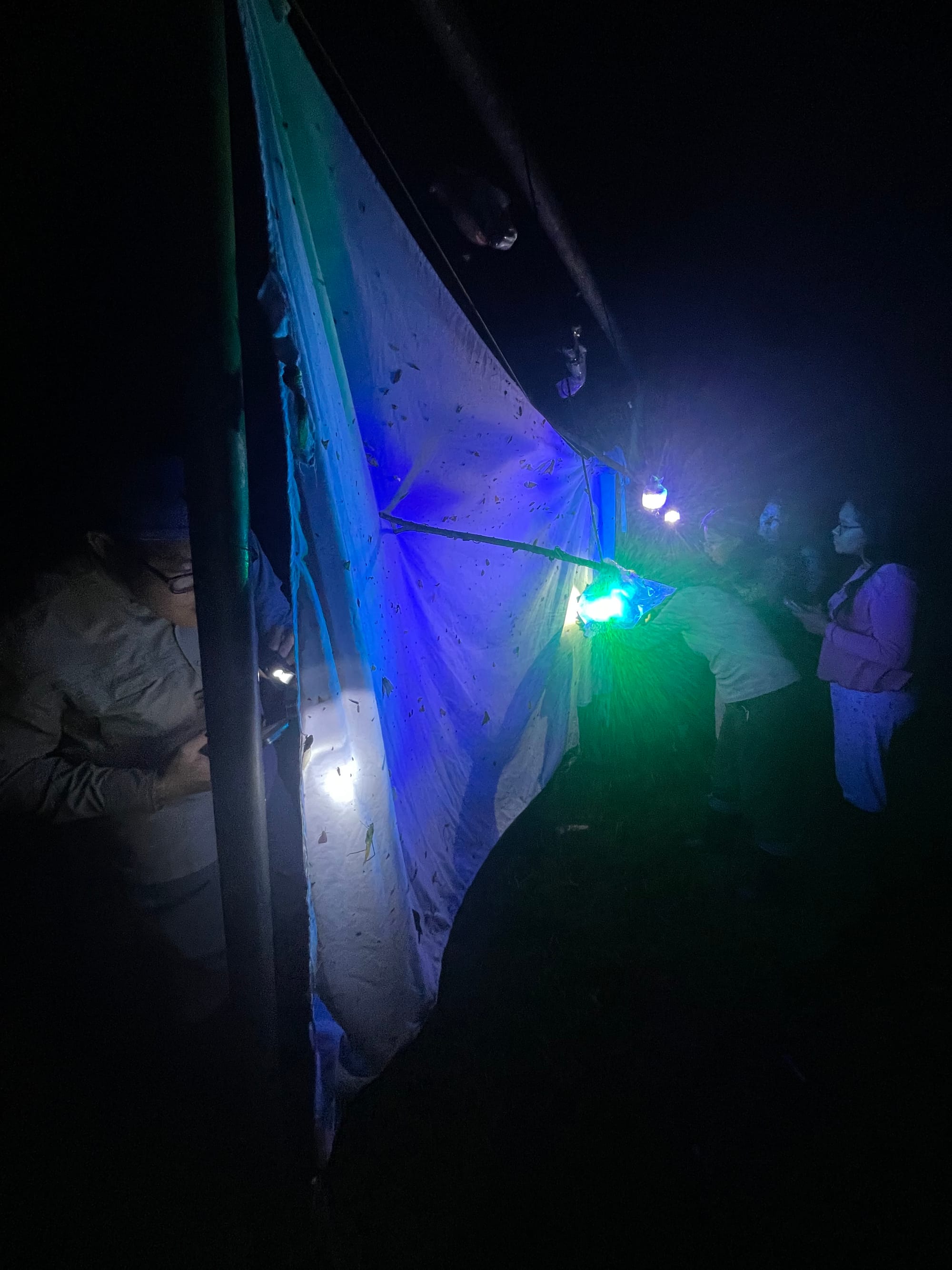
Insects were irresistibly attracted to the UV light trap that was set up every now and then. [📸 Rachel & Johann]
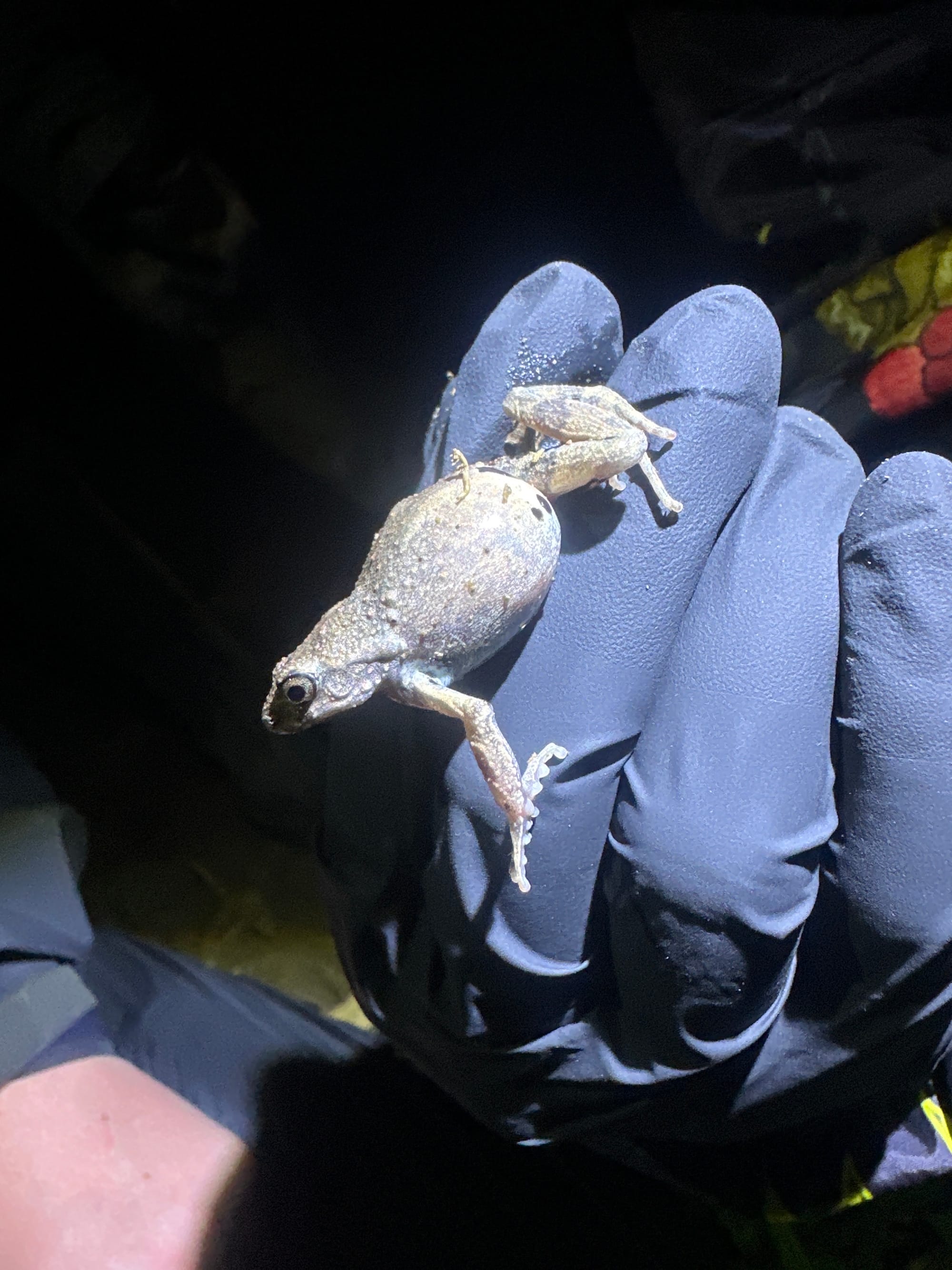
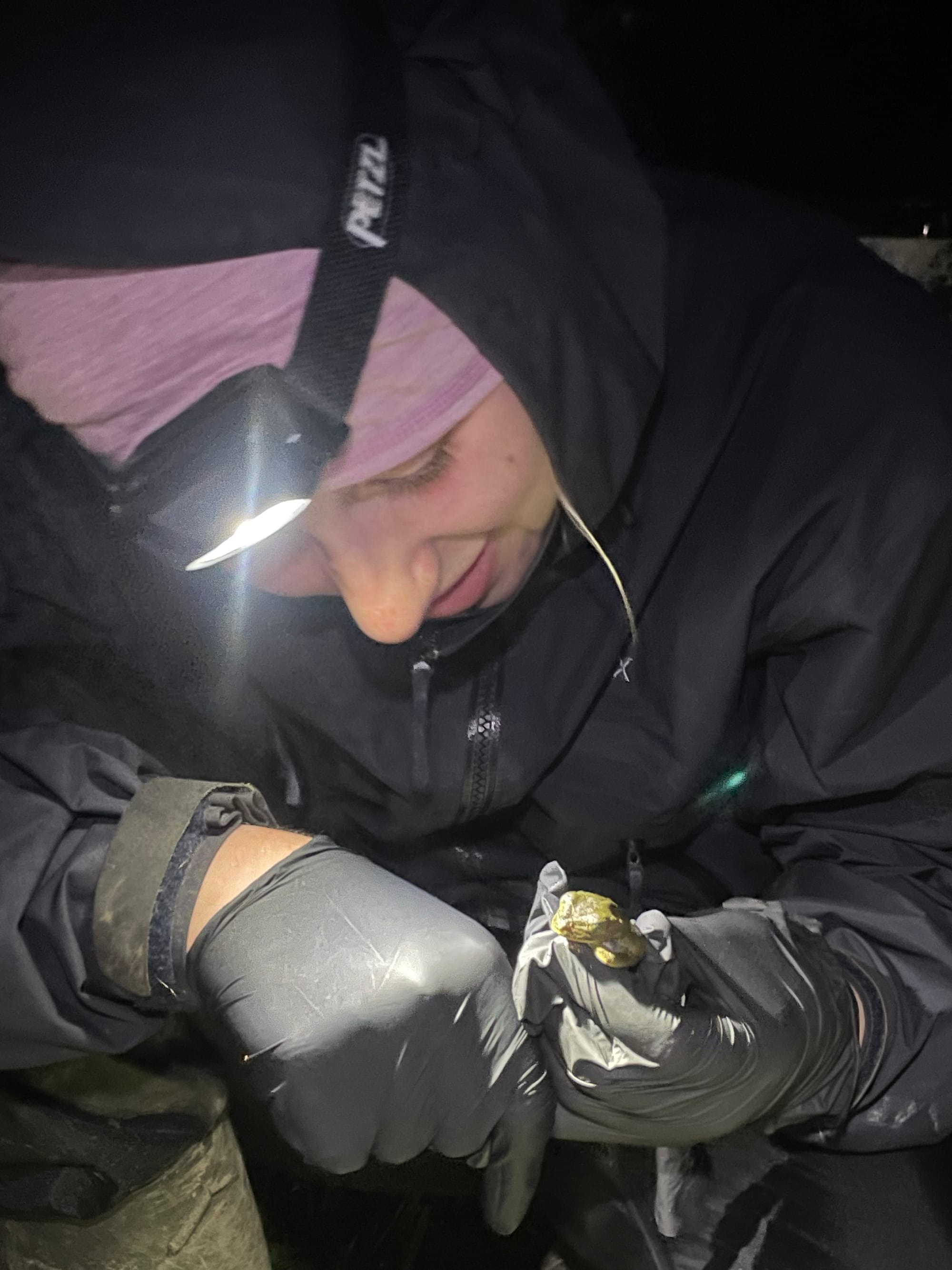
And then we see the leap, catch a dart of motion from headlamp shine into darkness. Tiny frogs fall like raindrops amongst low leaves; is this mimicry of motion a coincidence or evolution? Baby map treefrogs perch on leaves, grey bellies which will turn mottled and blue-tinged with adulthood. Already, their toe pads are round and precious. Eyes too are round, letting in the light like curiosity. As a wise woman once said, always be on the lookout for frogs.
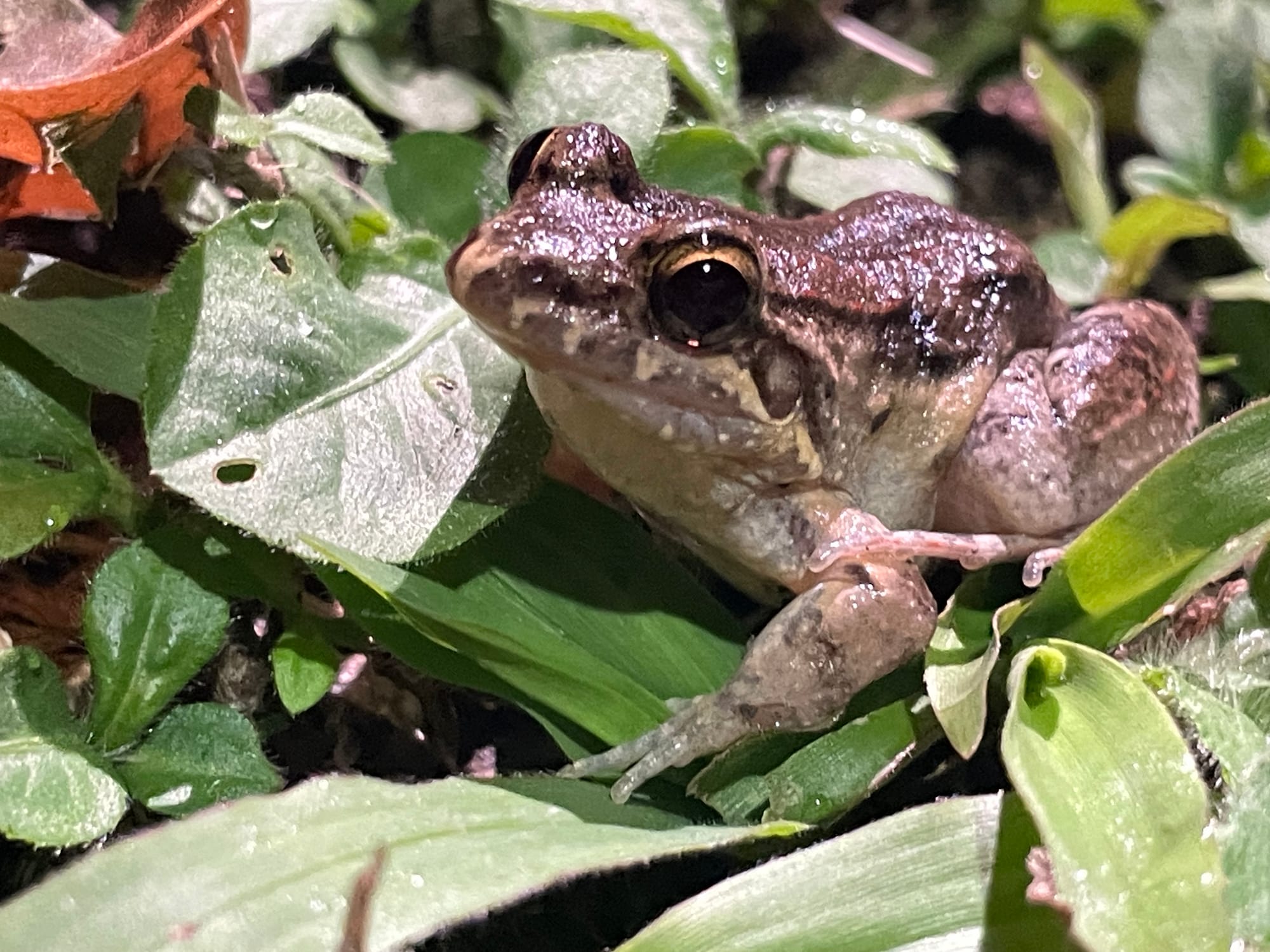
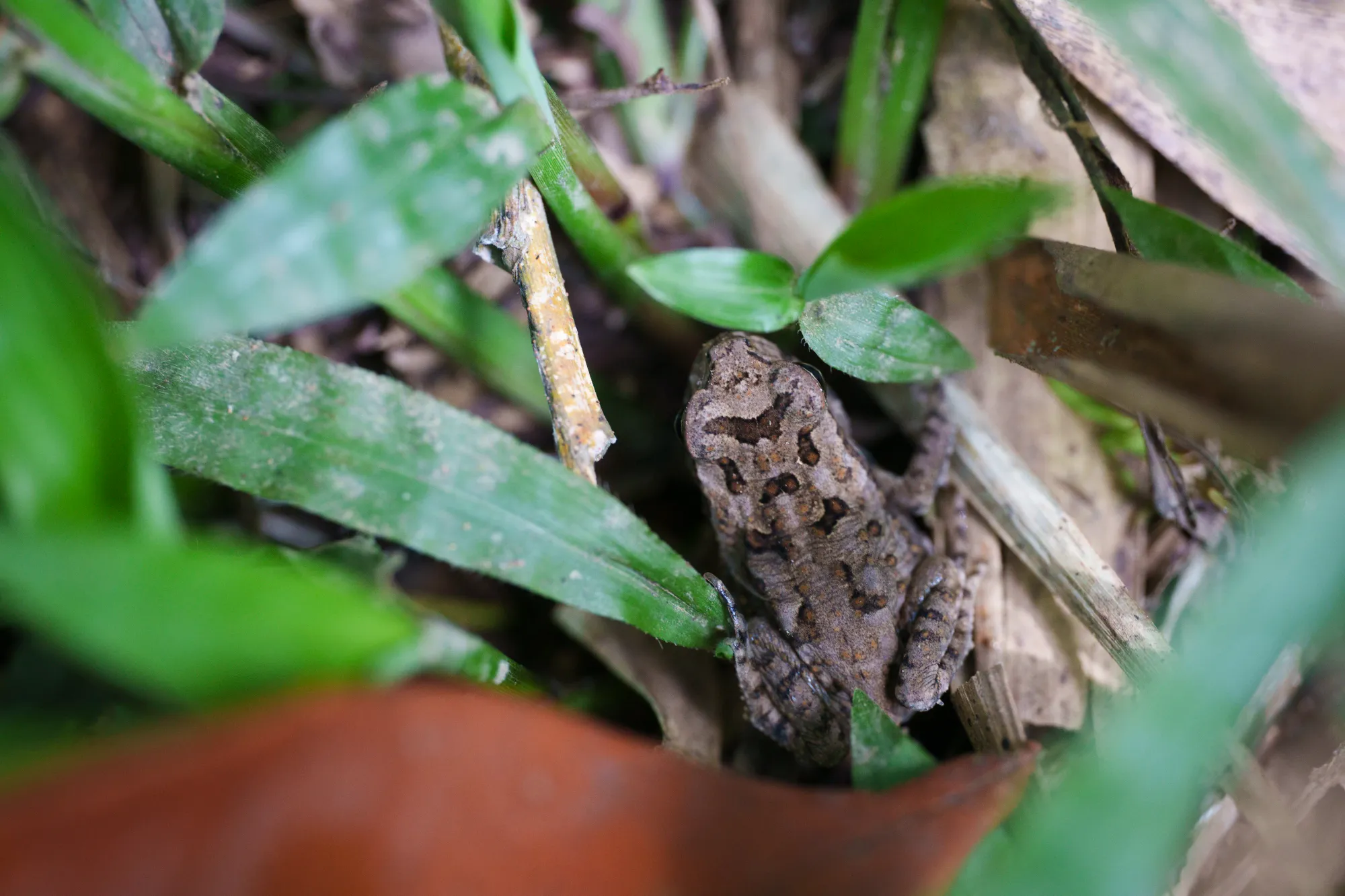
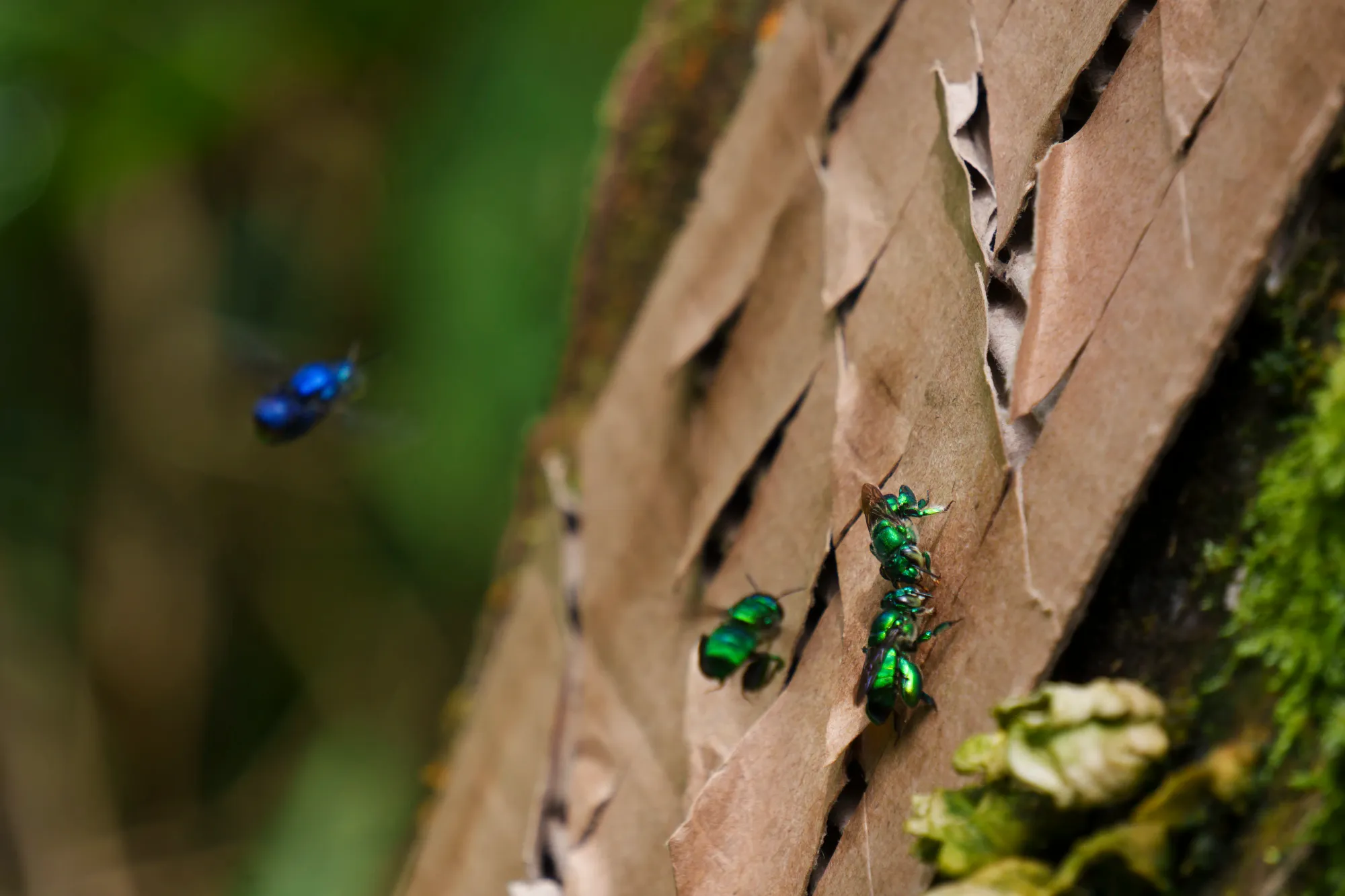
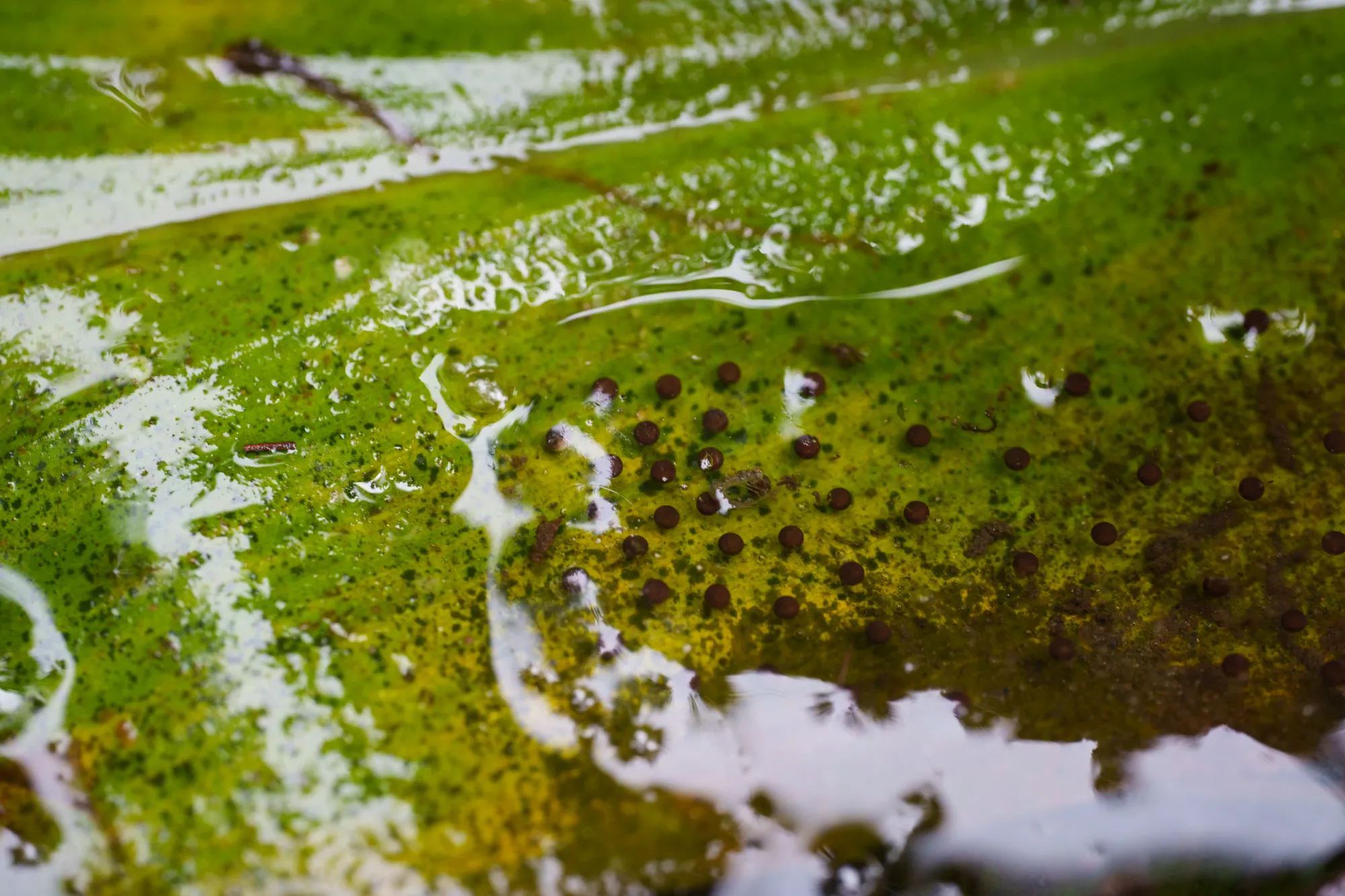
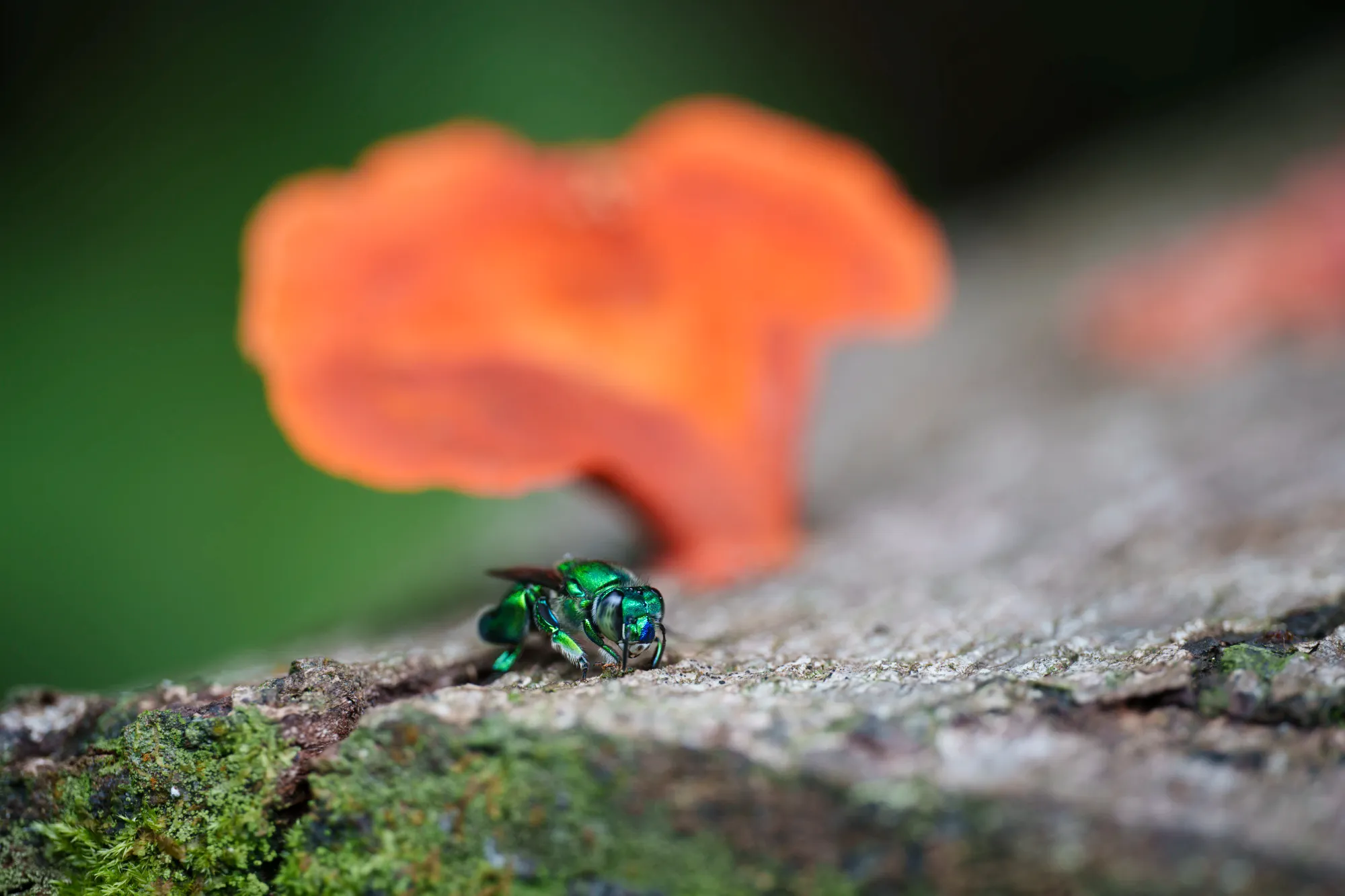
10/10 wood frog again (but actually, SO MANY species wow wow wow). [📸 Rachel & Johann]