Spain and Morocco

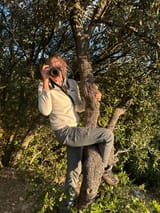
Spain greeted us with a smile, or rather a reasonably-priced gluten-free savoury empanada that was akin to an out-of-body experience. We just couldn't believe that it, or the €2 gluten-free baguettes, were real. Not to only dwell on food... but we also found gluten-free calamari and Rachel wept for joy.
Barcelona
The main highlight of Spain was actually something from home, or rather two people from home: We spent three amazing days in Barcelona with Johann's parents! Between all the catching up and enjoying yummy meals together, we had such an amazing time together!
Between exploring Barcelona's gothic quarter, taking the rope-car up to Montjus Castle, and several excellent museums, there was a lot to enjoy! But our favourite part of the trip was Barcelona's architectural marvels, hands-down. If you're interested at all in architecture, we highly recommend visiting Barcelona at least once.
The Gothic Quarter
We began with walking about Barcelona's Gothic Quarter. As one of the oldest parts of Barcelona, it's filled with Roman aqueduct remnants, renaissance-era and gothic-era architecture, and dense, twisted streets. Some of our highlights were:
- Finding actual, real, affordable gluten-free empanadas at Hanai Vegana!!
- Beautiful arches, bridges, and spires all around the neighborhood.
- Panoramic views of the Mediterranean from Montjus Castle.
- The gothic Catedral de Barcelona, with towers coated in remote, carved details.
- Mercat de la Boqueria, which was full of Iberian ham and towers of fruit jellies.
- An amazing flamenco music and dance performance!
- The chocolate museum, with beautiful sculptures made out of chocolate.
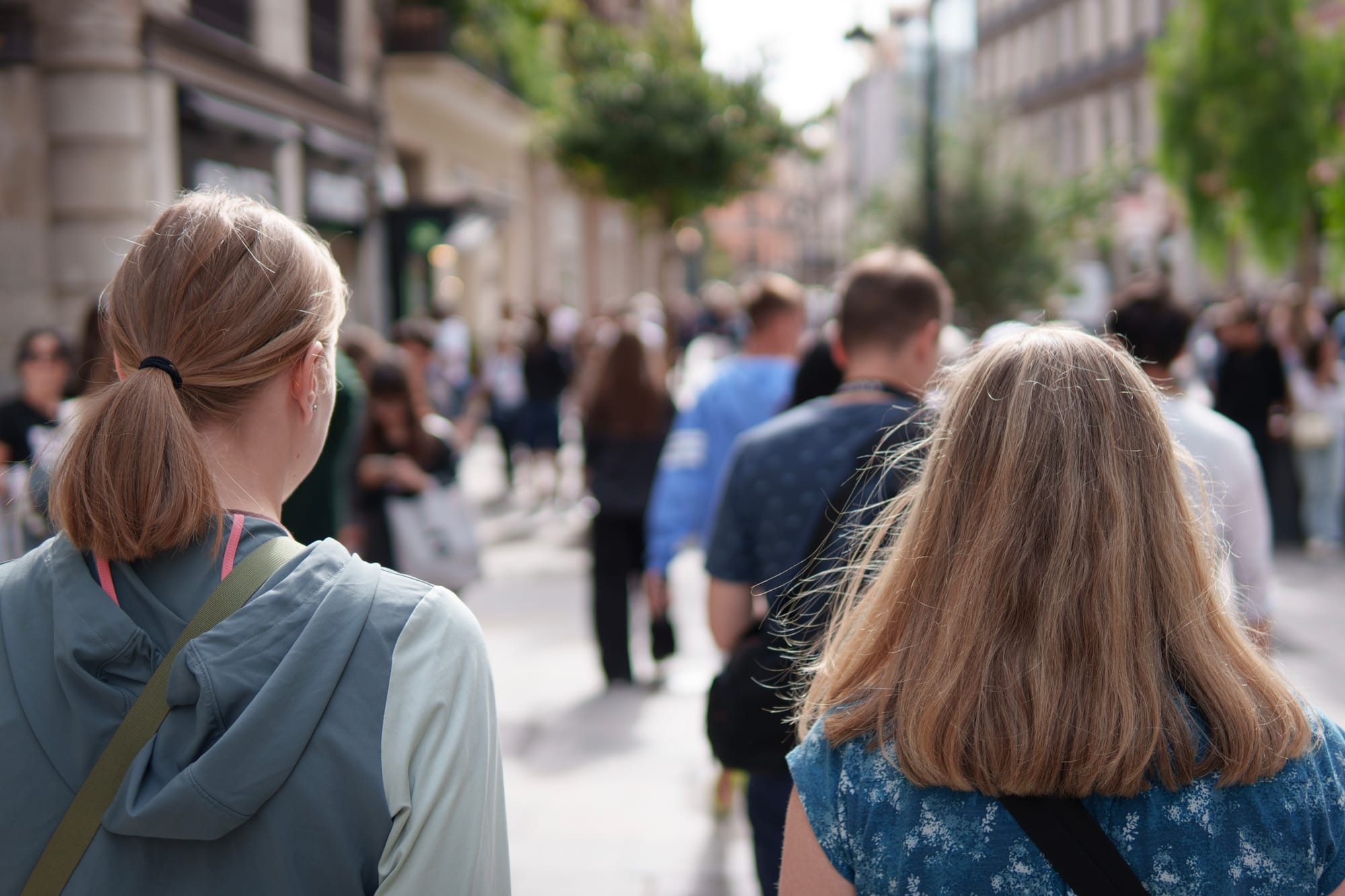
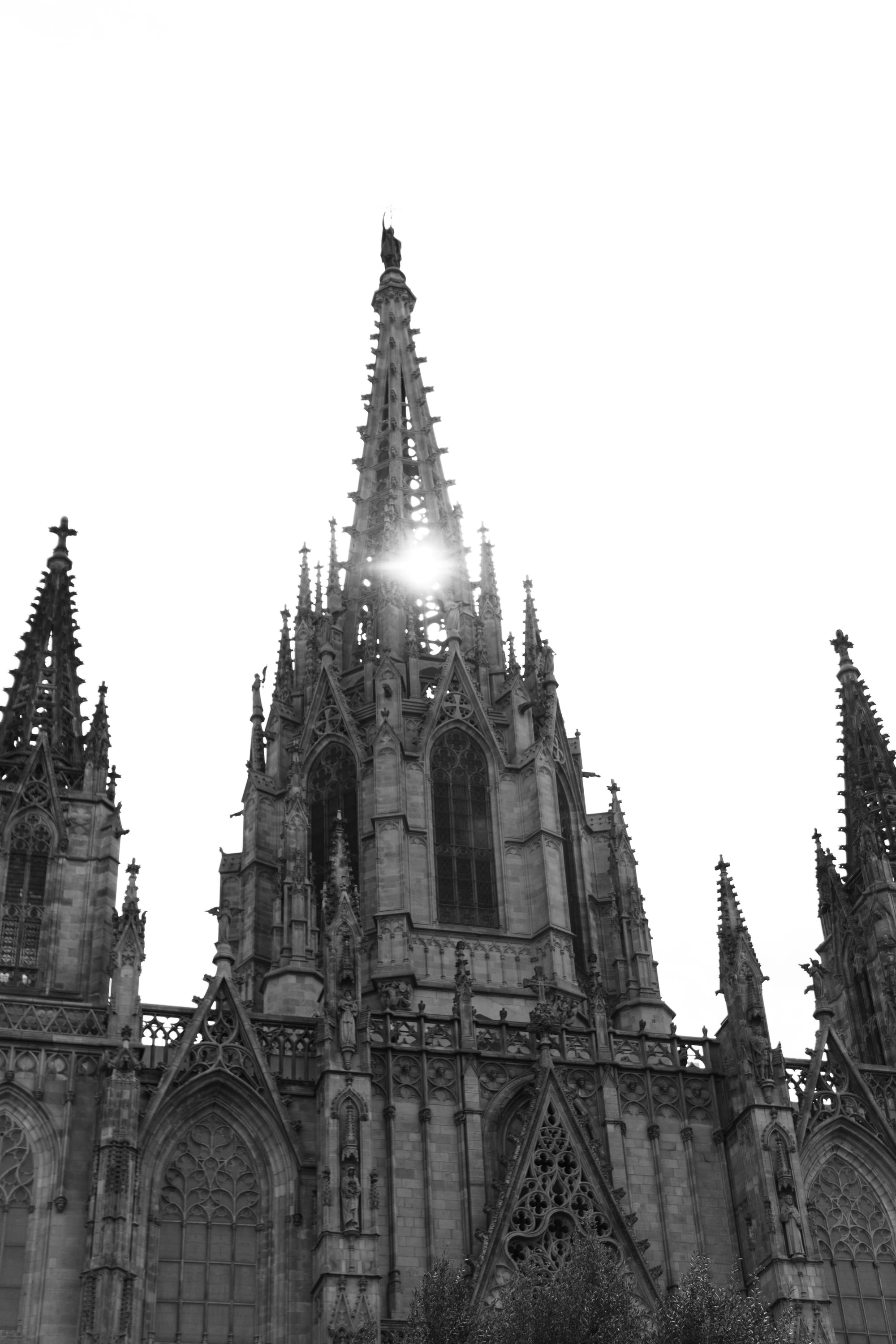
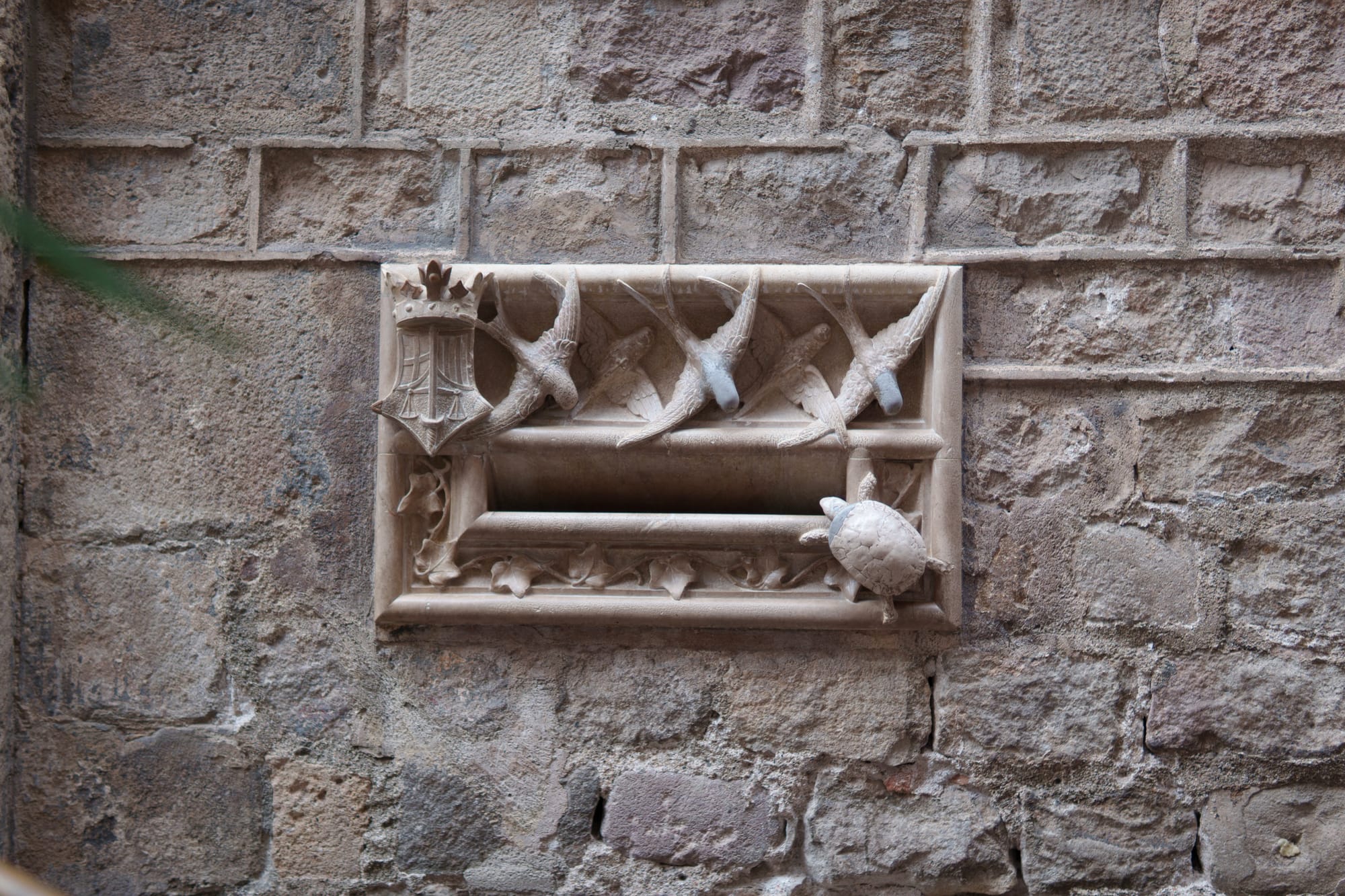
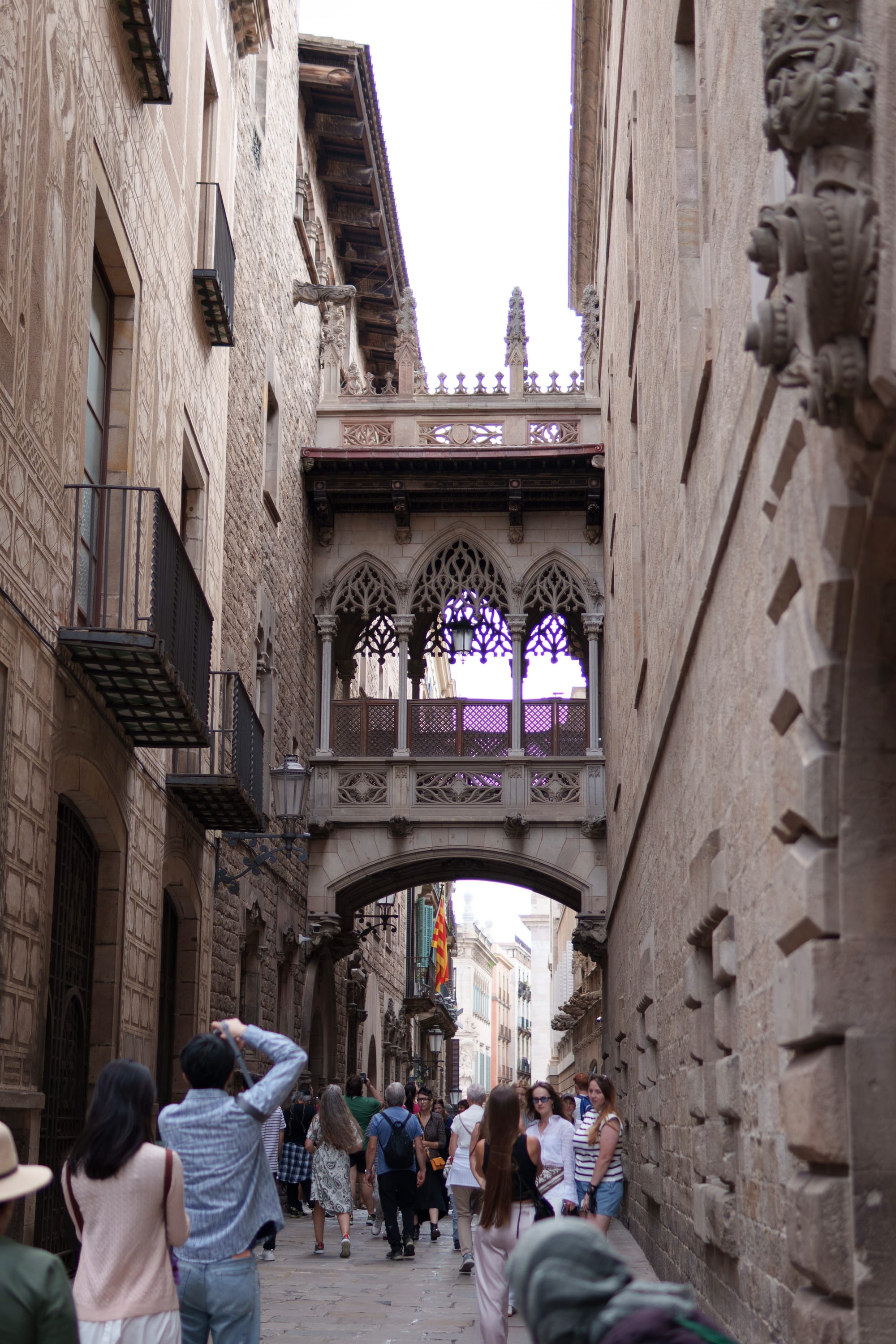
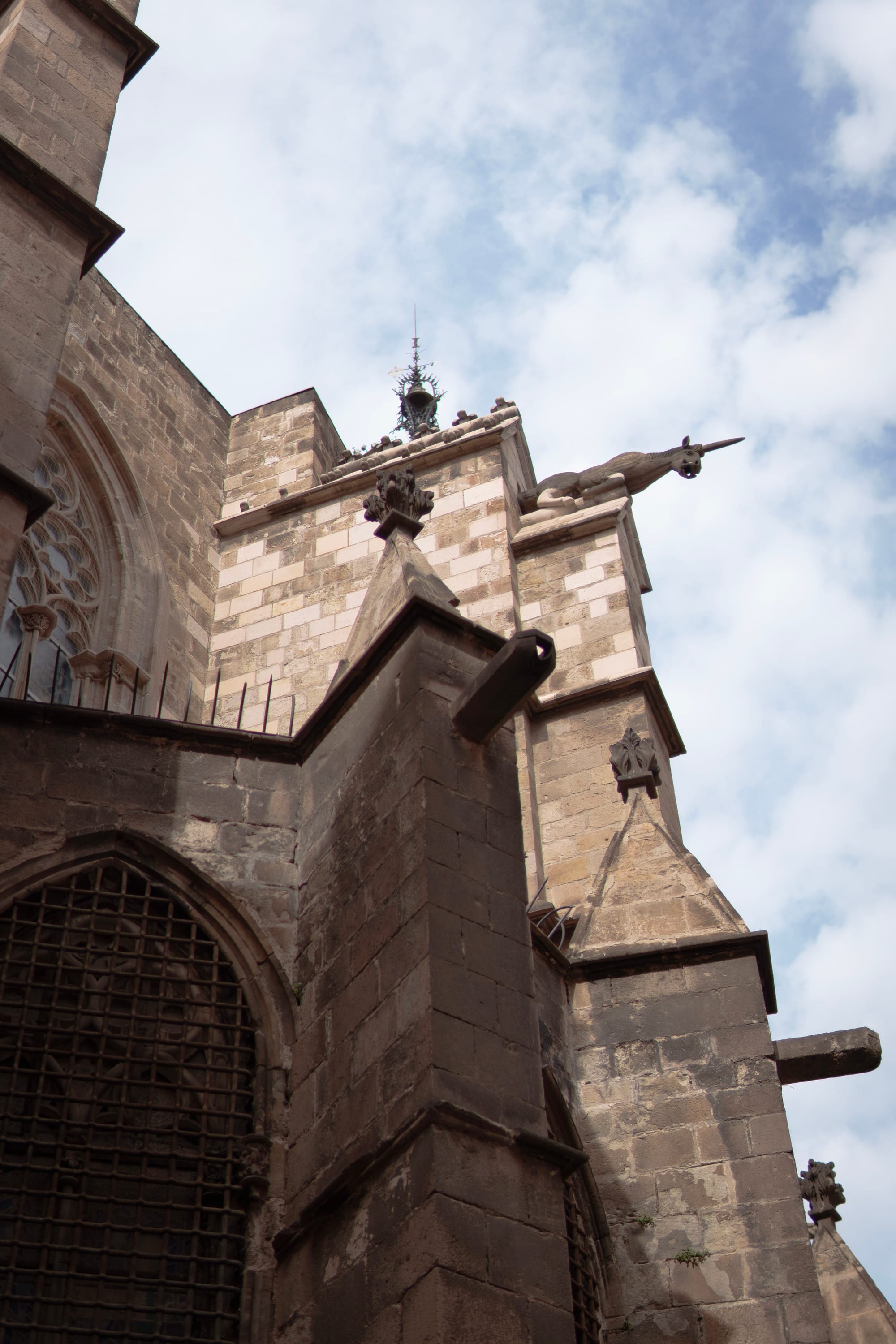
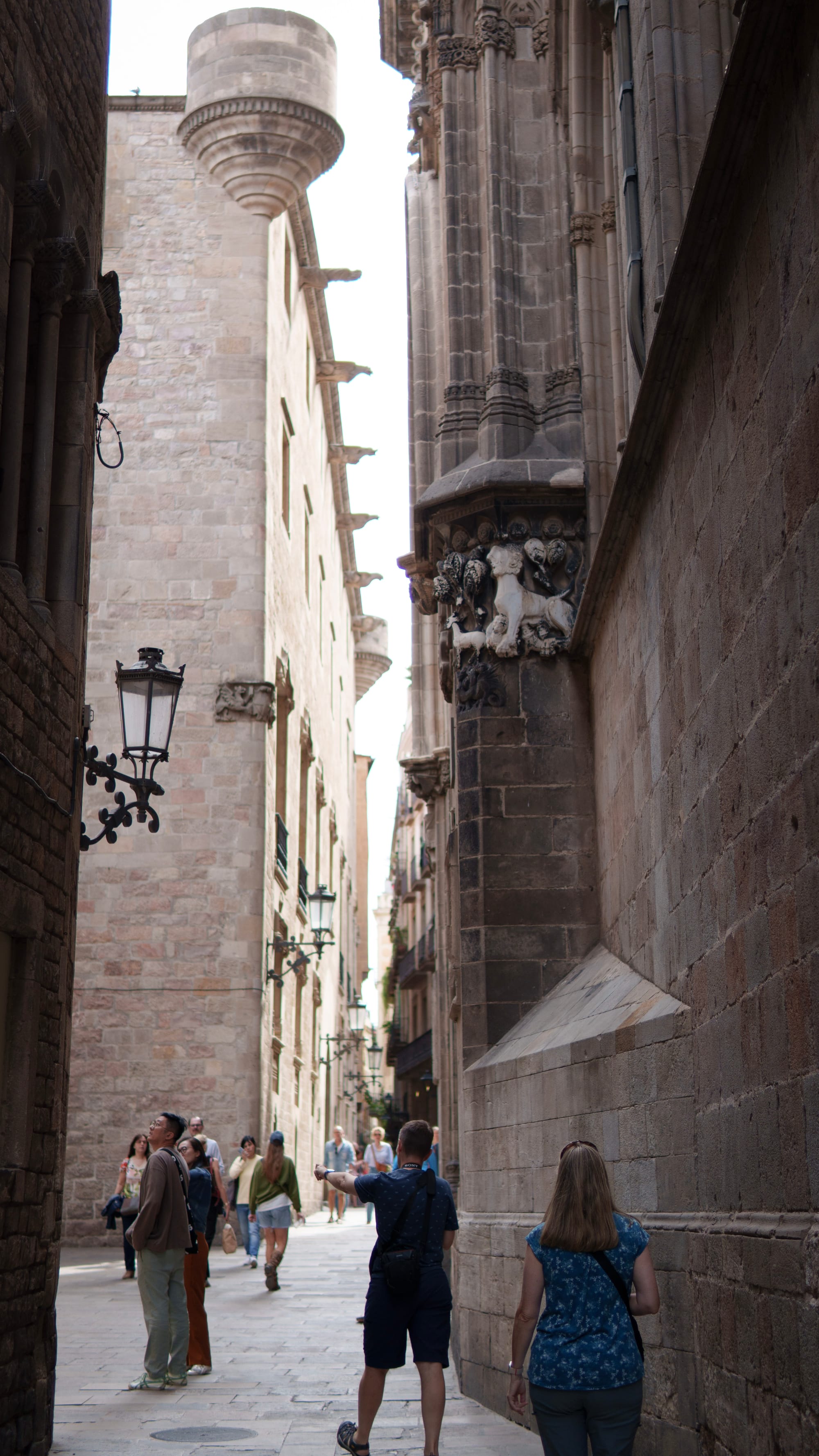
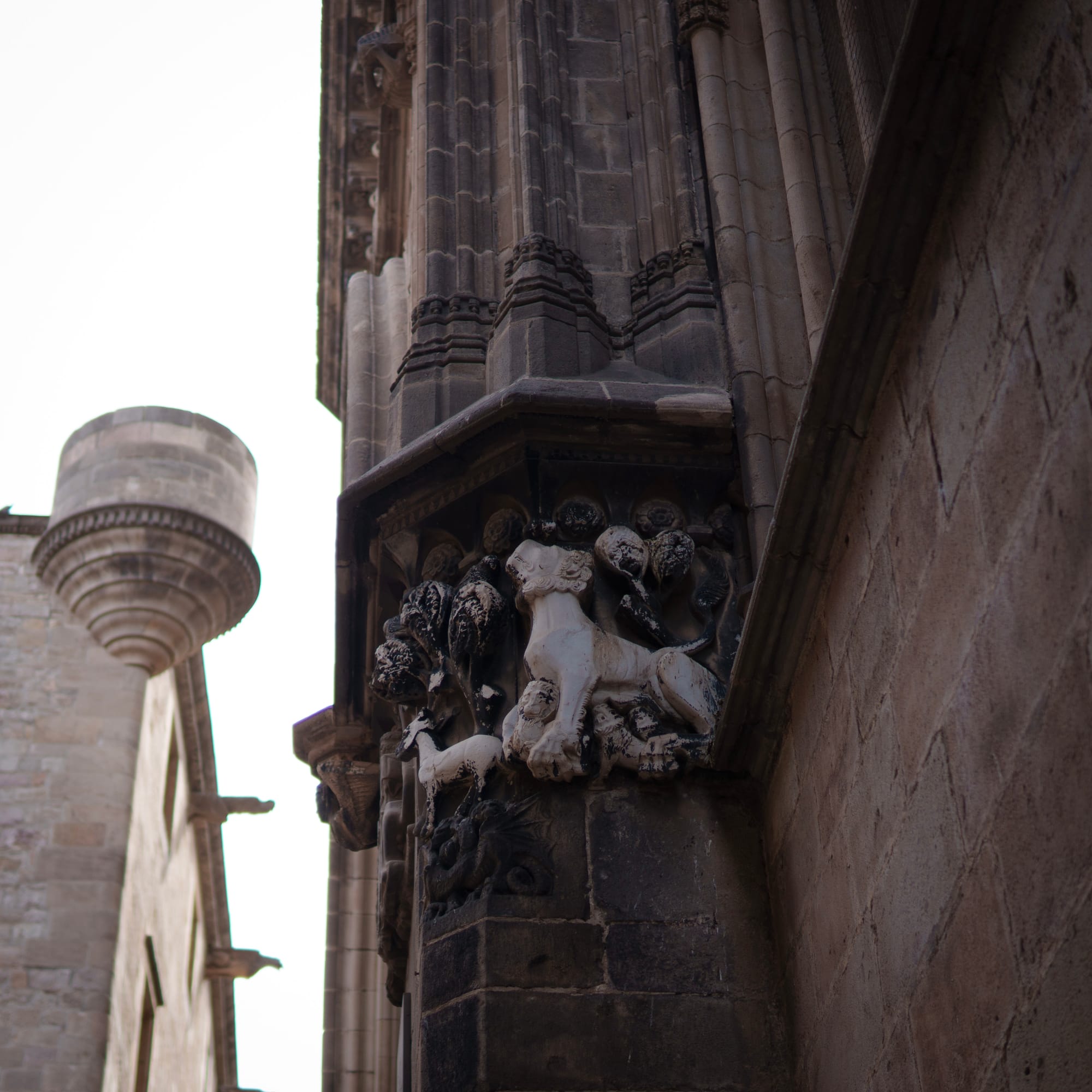
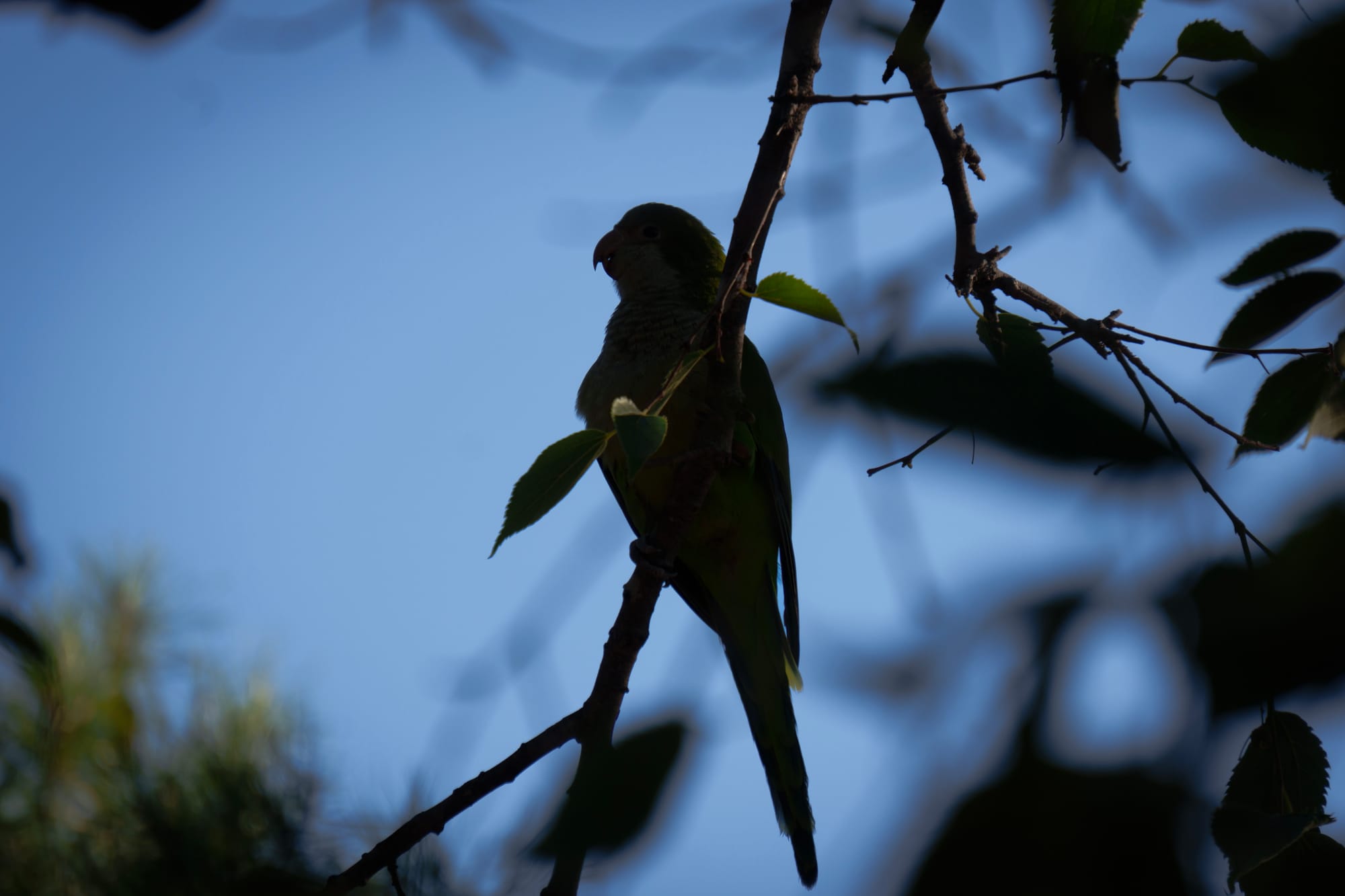
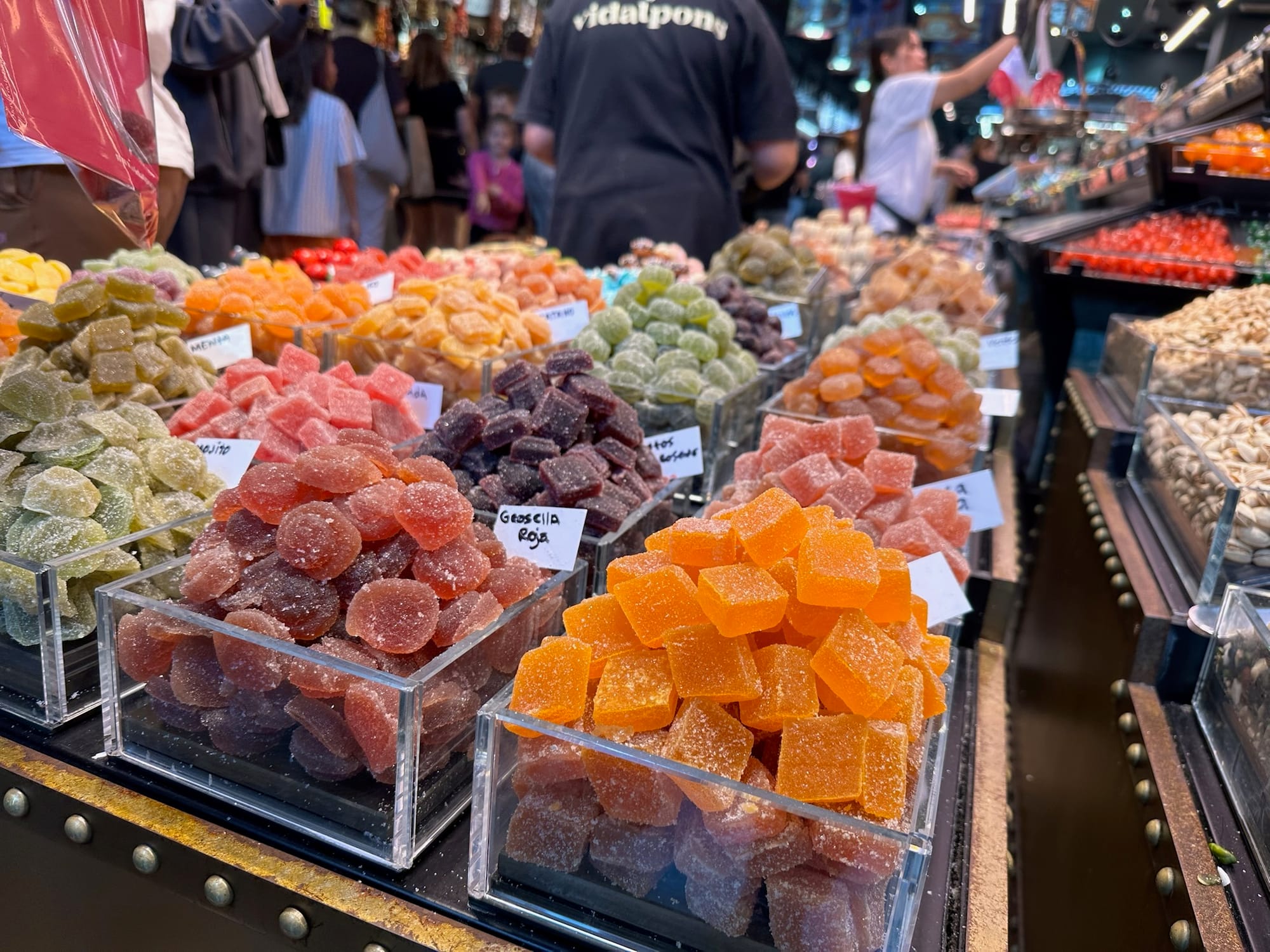
Left to right, top to bottom: 1. Wandering around the Gothic Quarter; 2. The spires of the Catedral de Barcelona; 3. Carvings near the cathedral; 4. A footbridge close to the cathedral that reminded us of the "Bridge of Sighs" in Venice; 5. Unicorn gargoyles on the side of the cathedral doubled as rain gutters; 6. Wandering the streets; 7. Faded carvings on the side of the cathedral; 8. An invasive parakeet (there were many); 9. Piles of fruit jellies at the Mercat de la Boqueria. [📸 Johann & Rachel]
Antoni Gaudí's Park Güell
Antoni Gaudí was, for those unaware, a true master architect from the late 19th-early 20th centuries. His work was influenced by the Modernista movement of the time, though he definitely transcended it, drawing strong influence from neo-gothic art, oriental techniques, nature, religion, and geometric purity. Barcelona is full of his works (and those of his peers), from the Casa Vicens to a series of lampposts. His works are characterized by striking contours, natural curves, and plenty of light, with few straight lines to be found.
The first site we visited was Park Güell, designed by Gaudí for his benefactor Eusebi Güell. This park is a masterclass in space planning. For example, one plaza Gaudí designed was intended to be used as either a performance space, a meeting point, or simply to improve circulation. The plaza is held up by beautifully-designed pillars, between which Gaudí envisioned a market could be held. The plaza is also ringed by a molded, ergonomic, tiled concrete bench (an early example of pre-cast concrete!), which includes room to collect rainwater and funnel it out through gargoyles while keeping it away from users. The plaza also included multiple area drains (now blocked) which line up with the pillars below - many of the pillars contain an embedded pipe to ferry water away to an underground cistern.
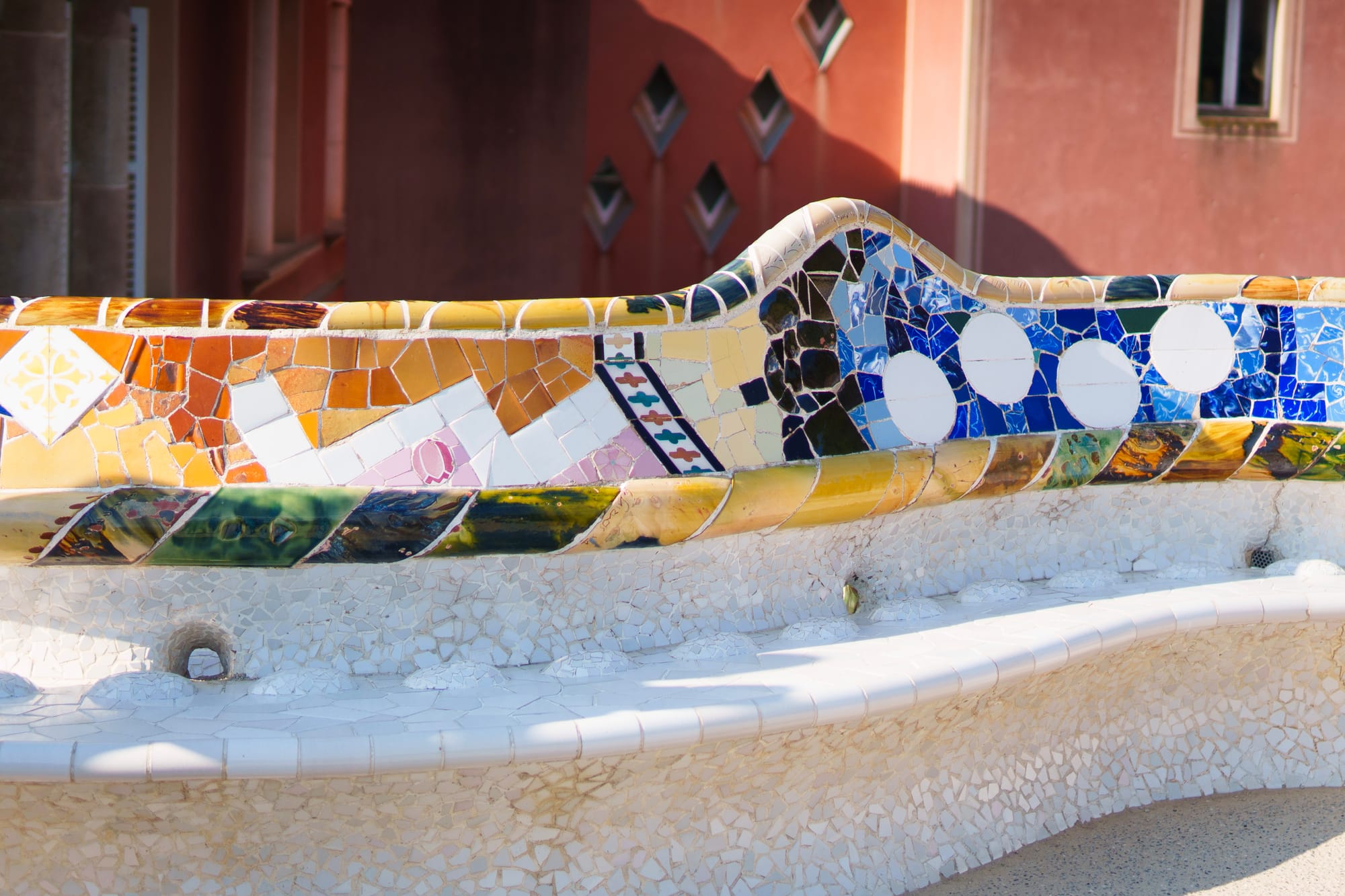
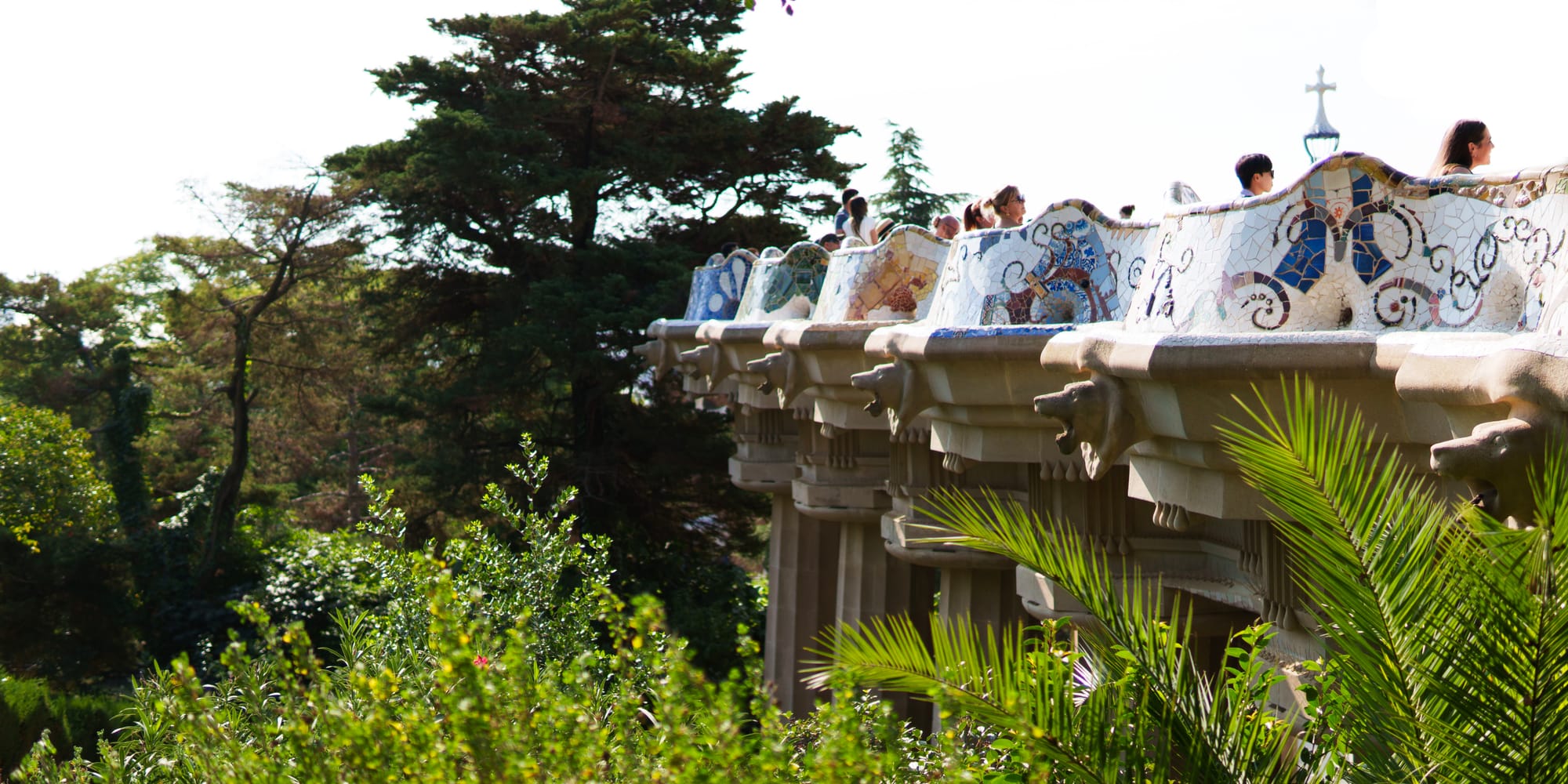
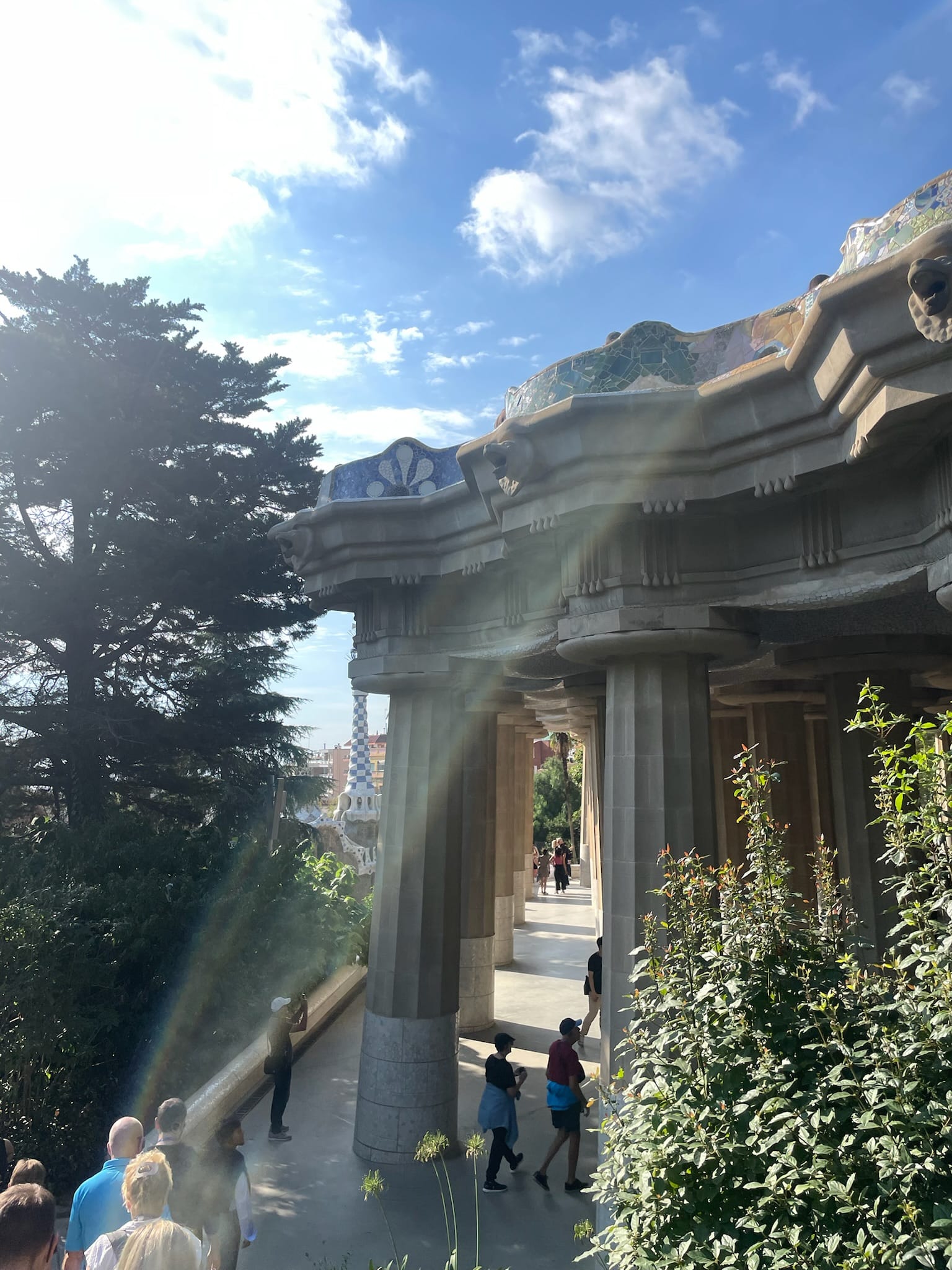
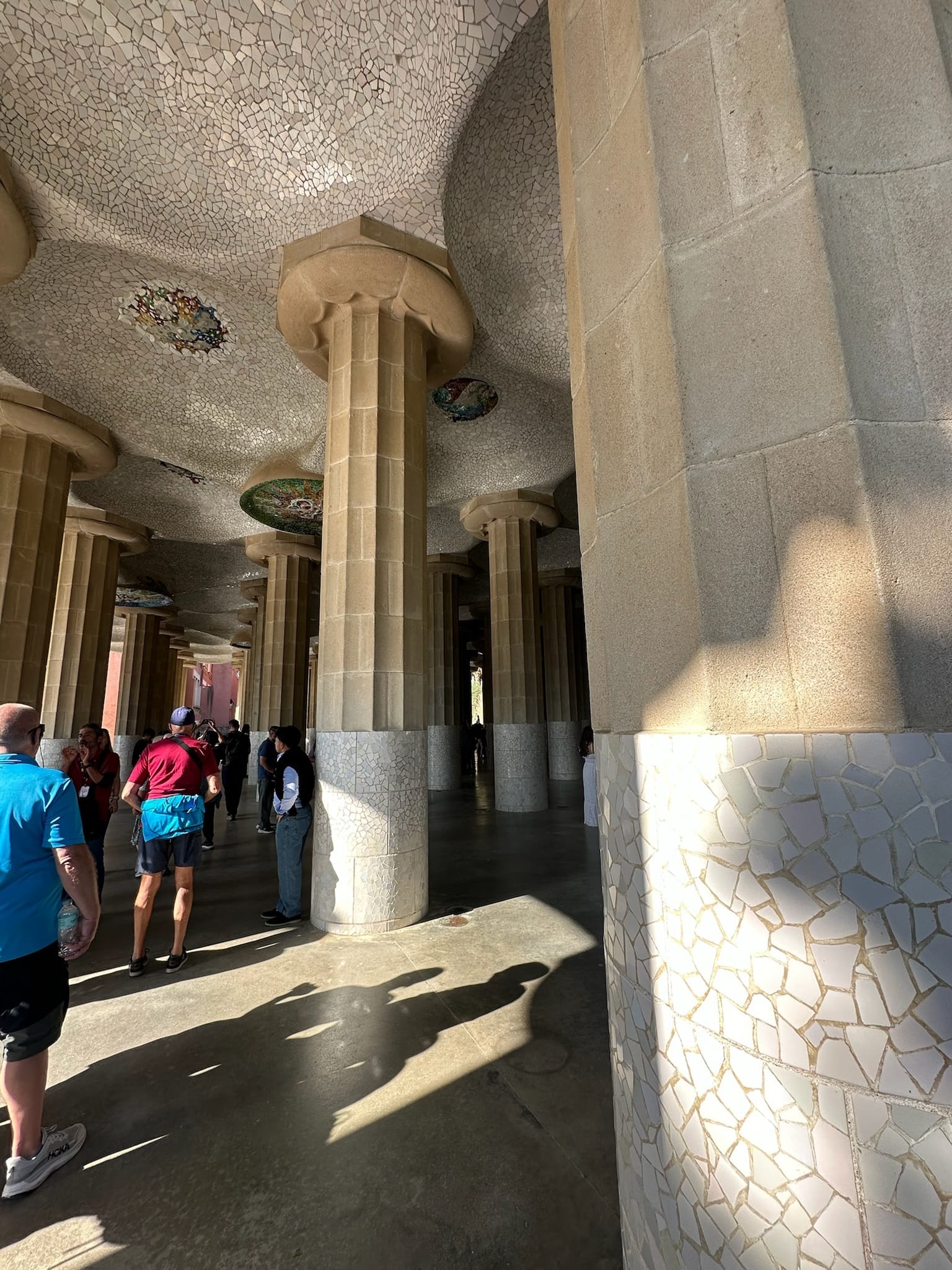
The benches at Park Güell, with the "marketplace" area shown underneath (worth noting - it was never used as a marketplace due to demand issues). [📸 Johann & Rachel]
This is just one example of the multi-use design principles Gaudí used for this park. The park is full of them, from viaducts sculpted from aggregated rocks that doubled as rain shelters for the area below, to bollards that doubled as concrete seats.
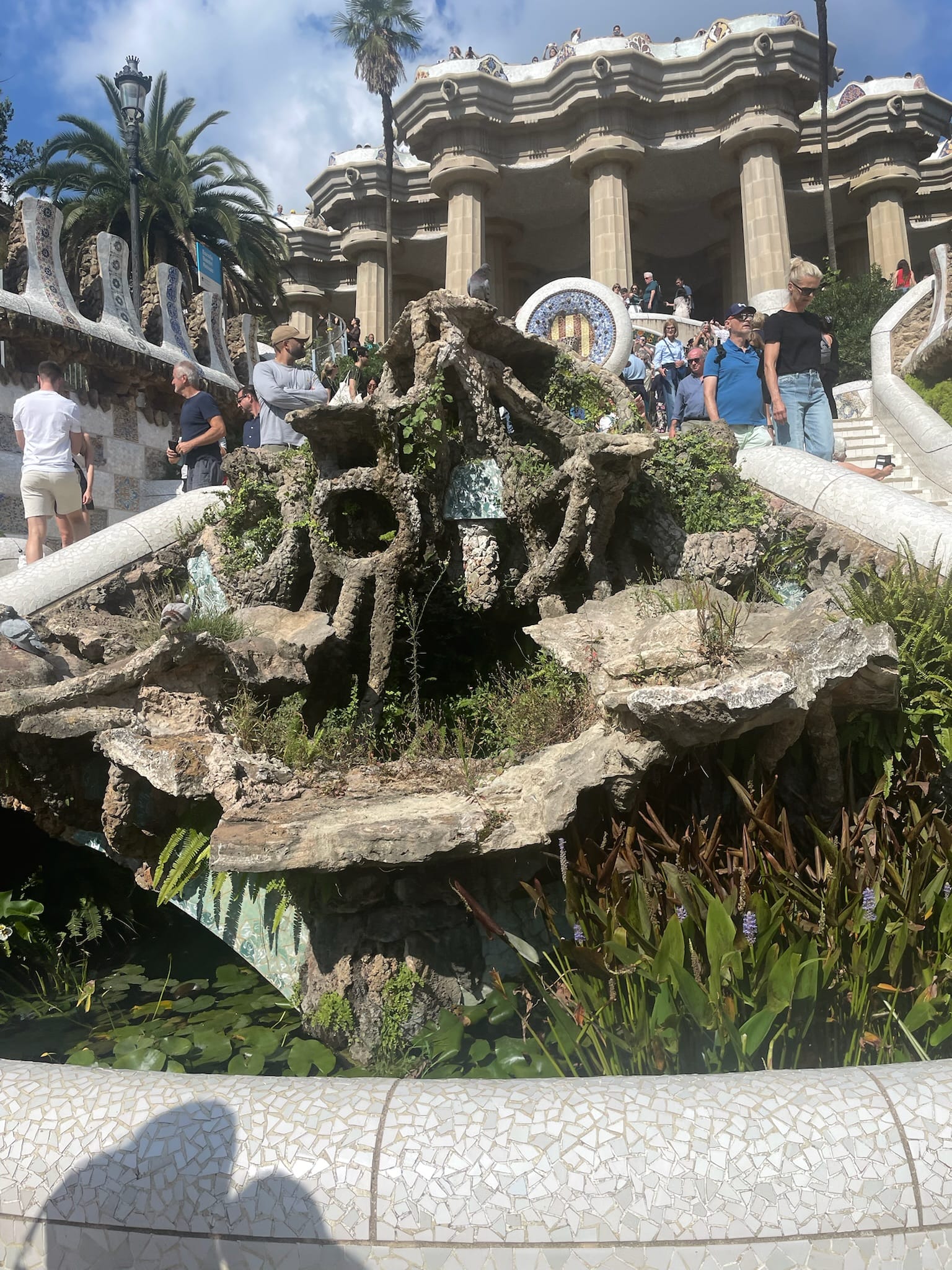
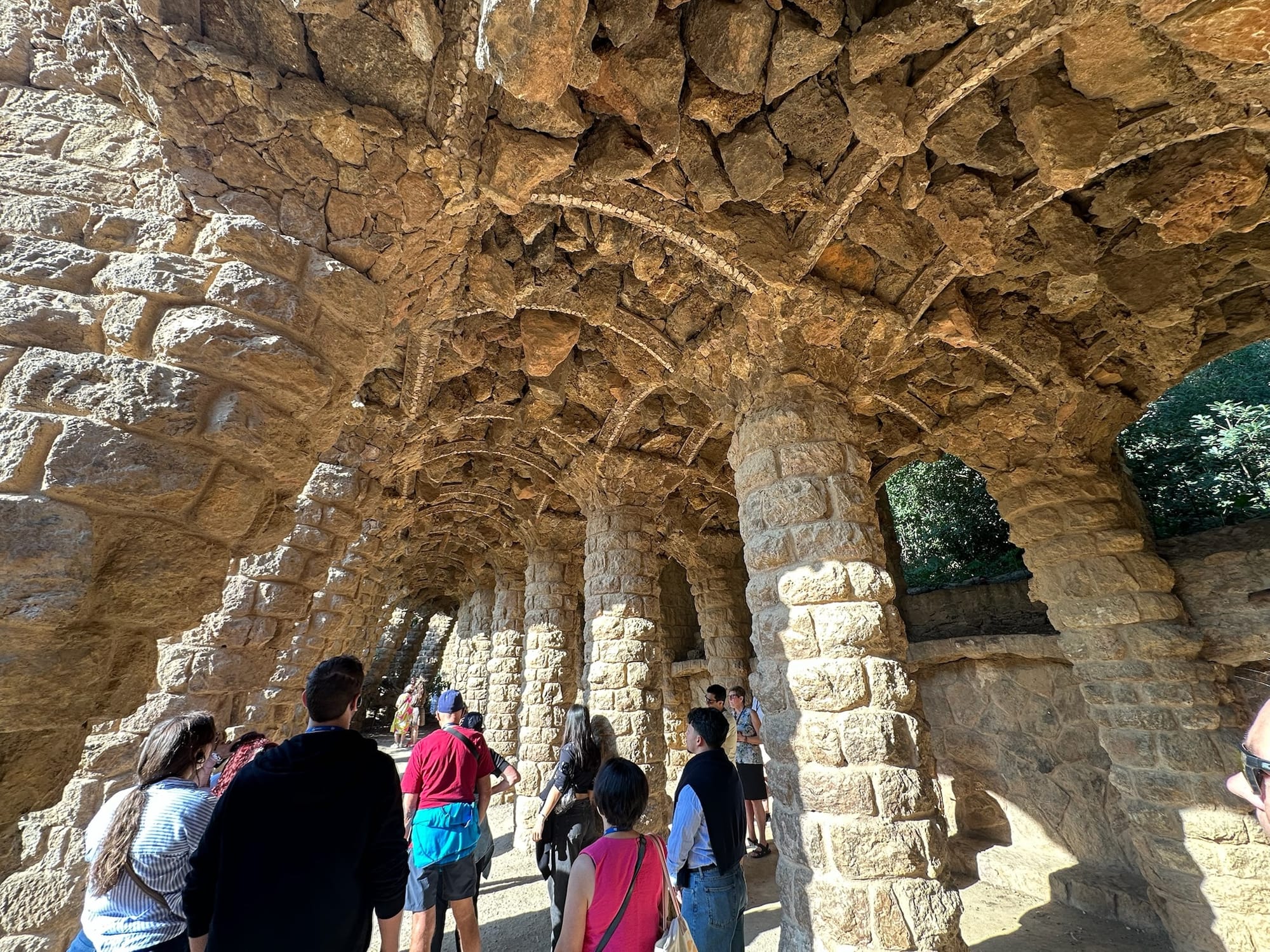
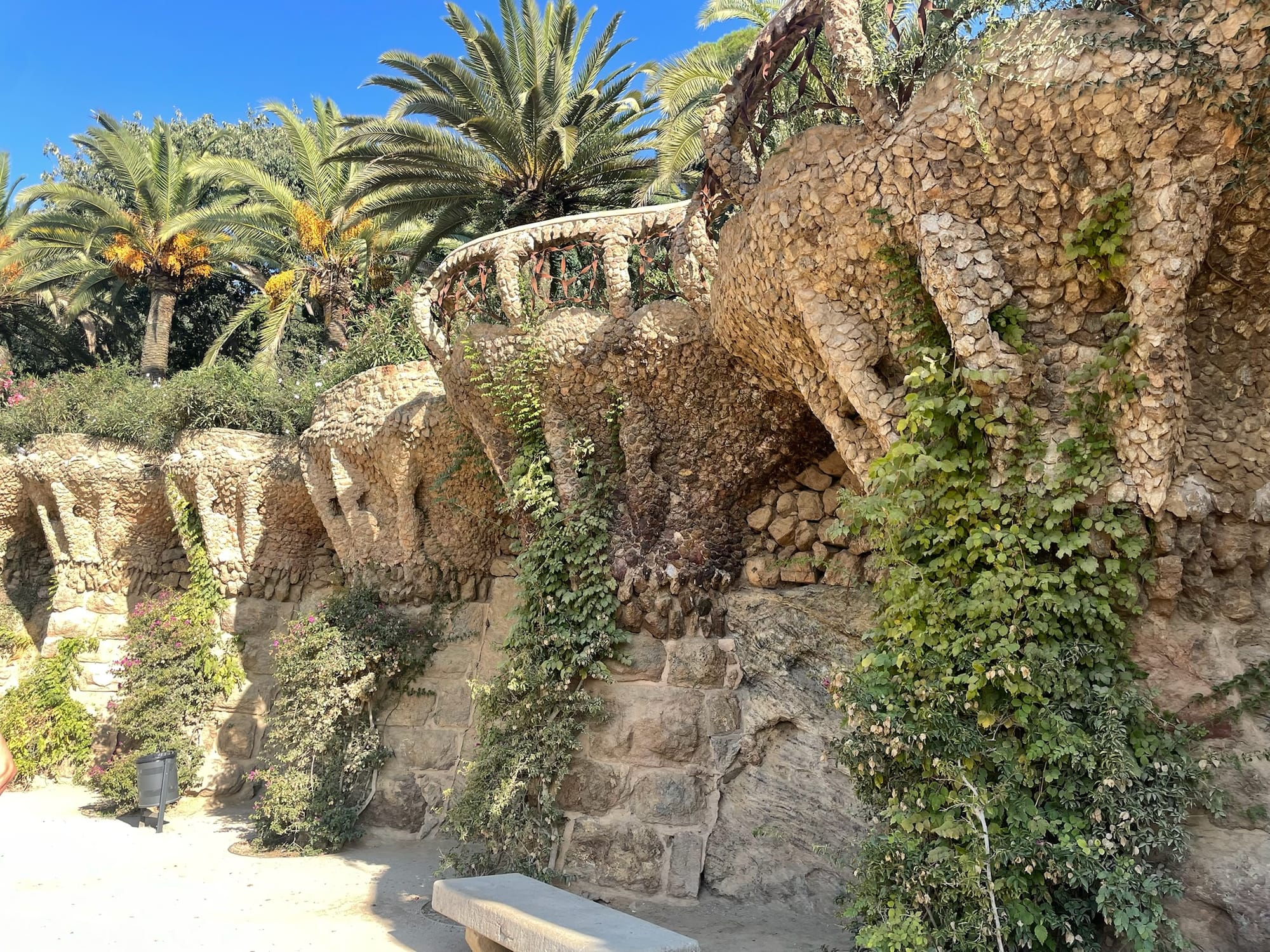
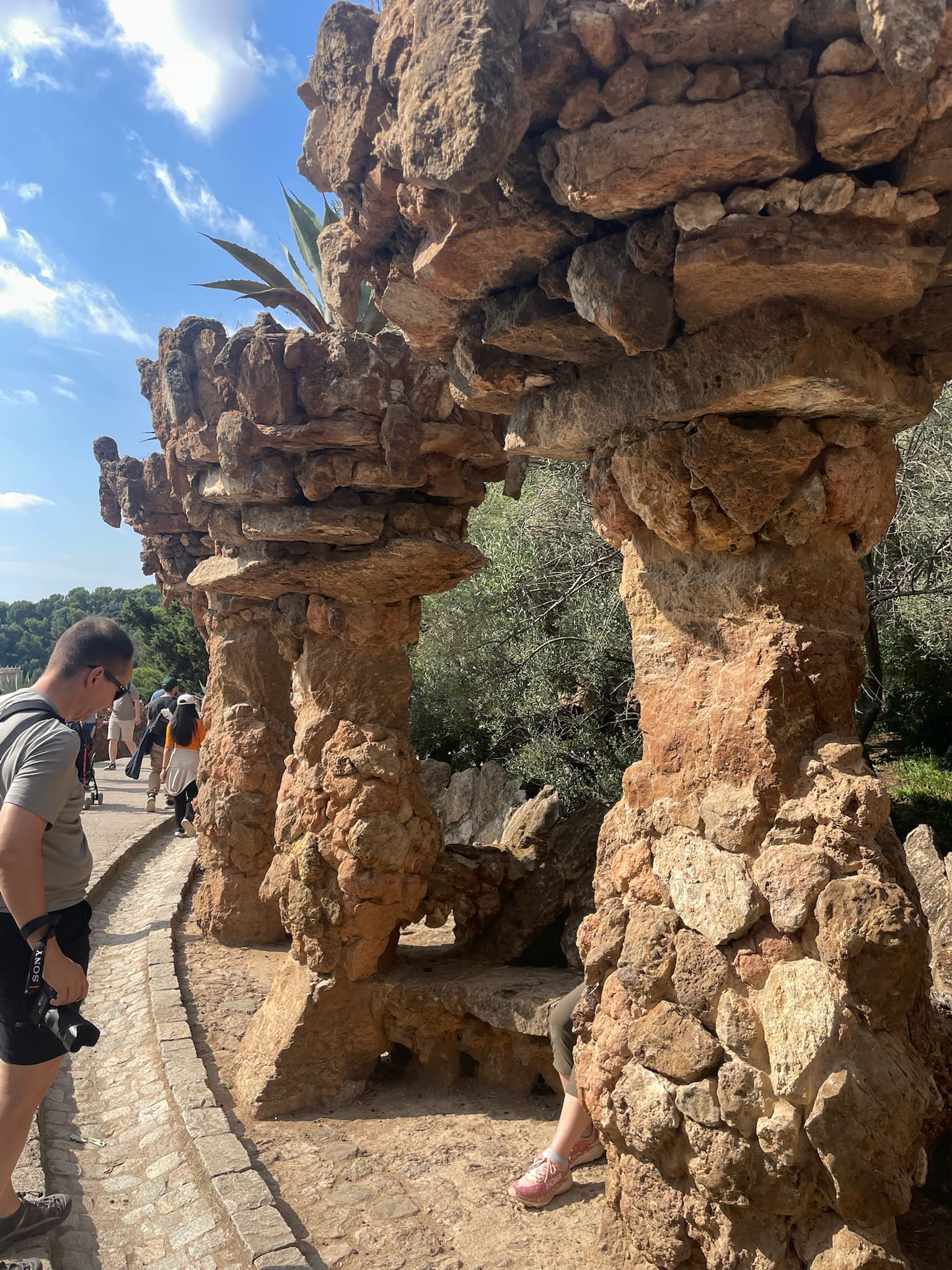
Park Güell featured a strong mix of nature and architecture, with classical forms sculpted from cemented-together rough stones, covered in plants. [📸 Rachel]
Lluís Domènech i Montaner's Palau de la Música Catalana
The next site we visited was an ornate concert hall designed by one of Gaudí's mentors and peers, Lluís Domènech i Montaner. The concert hall is beautiful - words can't do it justice. The auditorium itself has a beautiful concert organ, ringed with sculptures paying heritage to The Flight of the Valkyries and more-traditional Catalonian works. Every surface is covered in tiles, sculpted flowers, and so on. The pillars in every balustrade were constructed of twisted, yellow glass, with a smaller porcelain pillar inside.
If one were to go to a concert in this hall (which they still regularly hold!), it would be hard to focus on the music (despite the amazing acoustics). The building itself is a work of art.
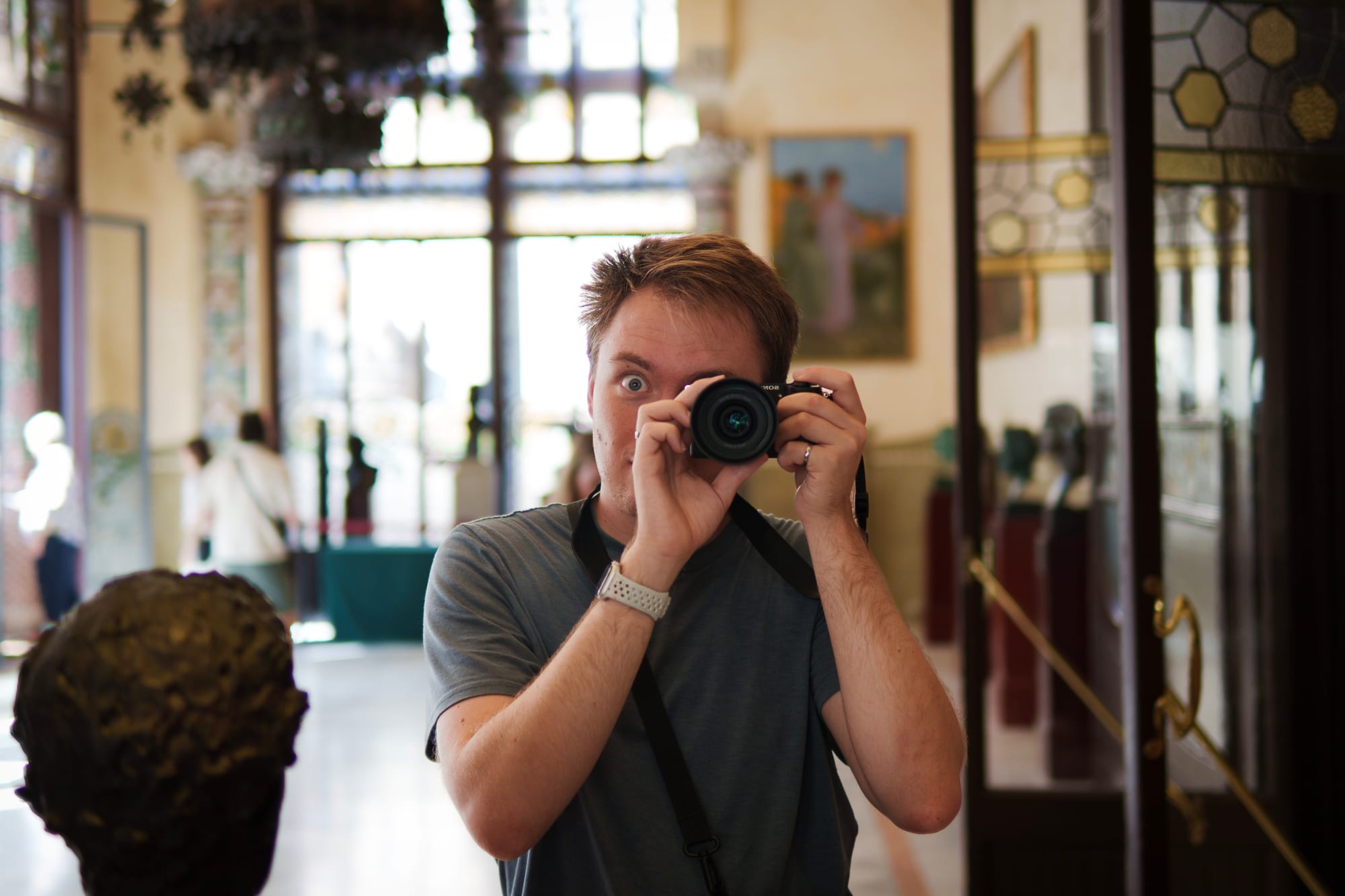
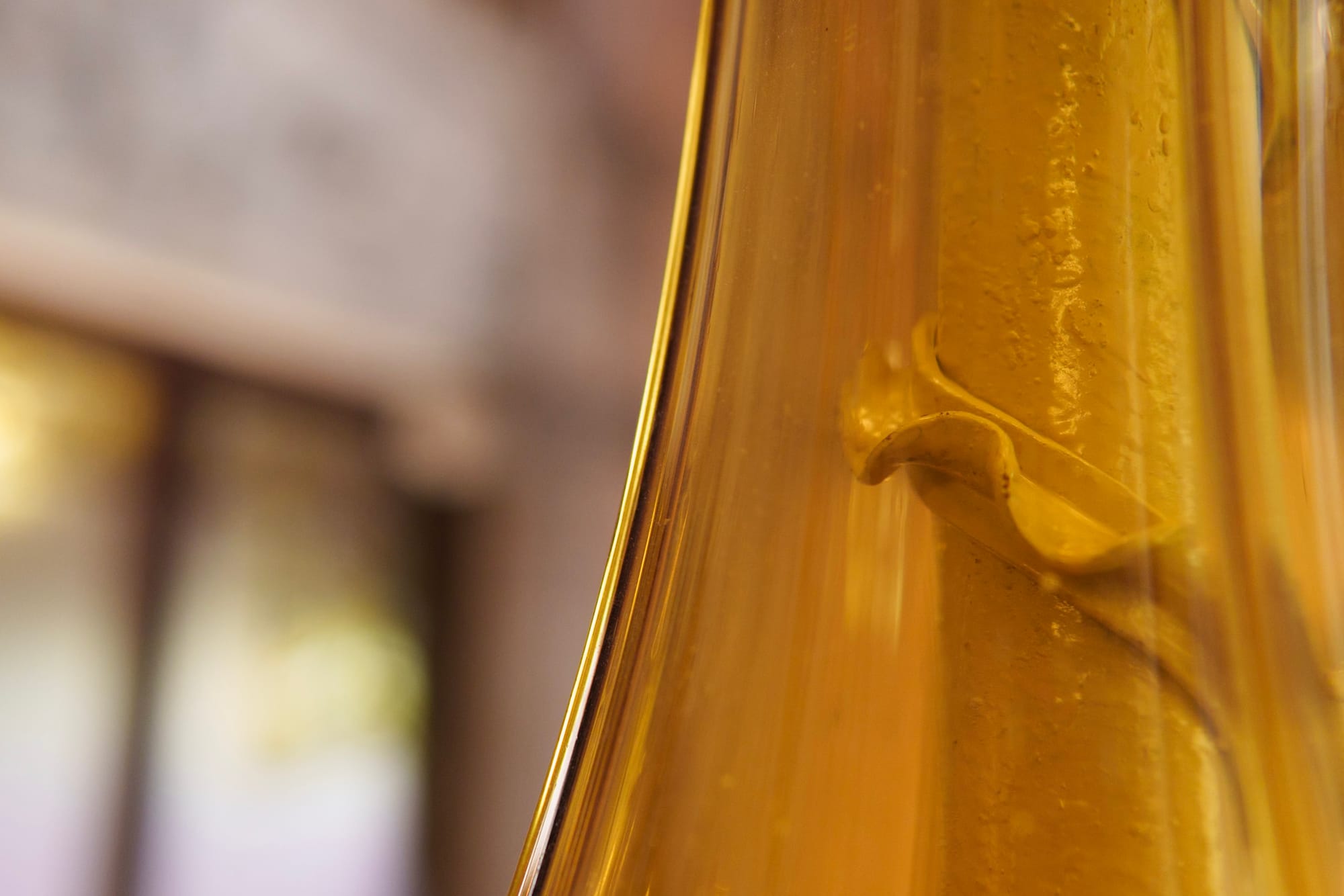
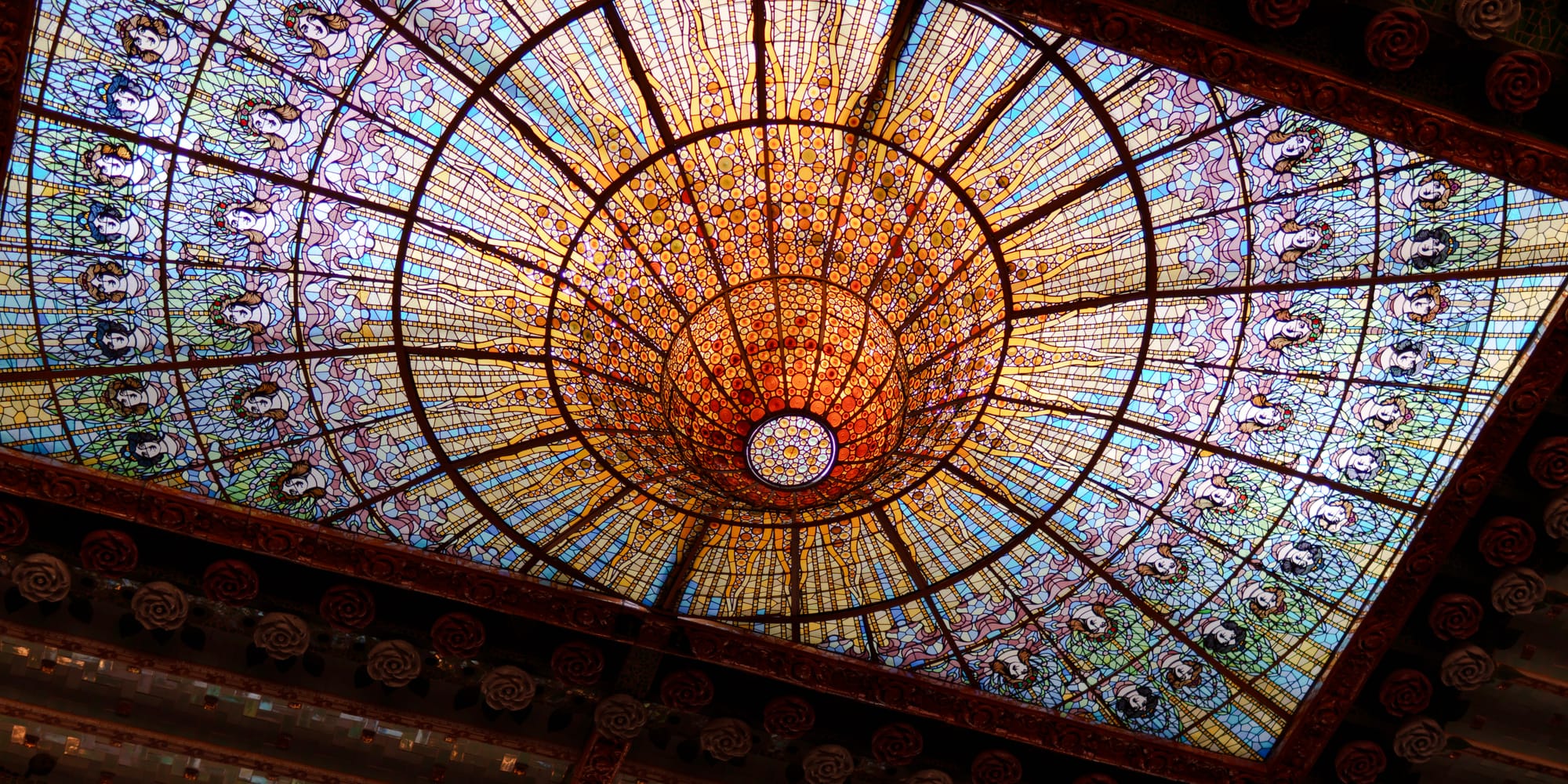
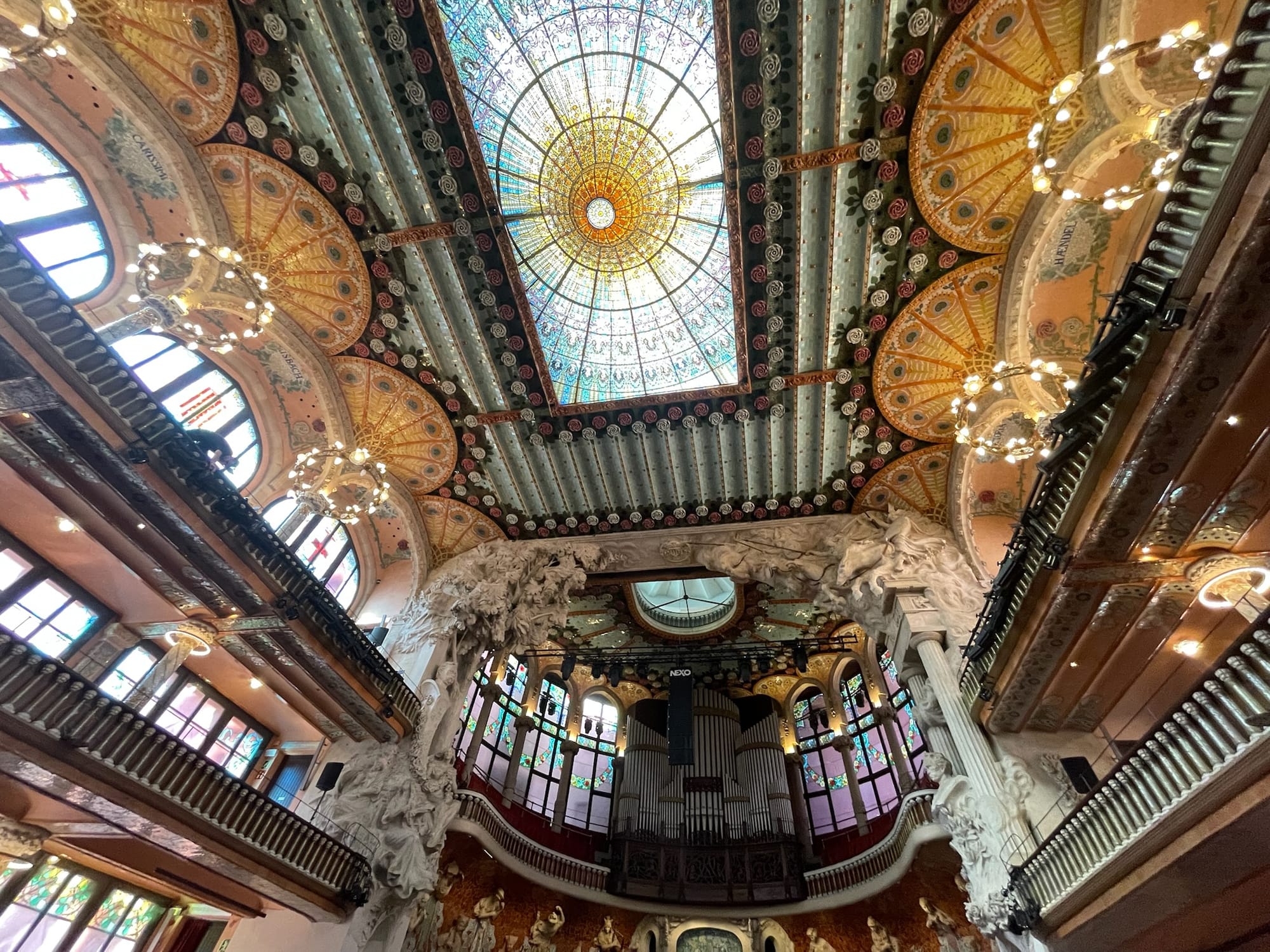
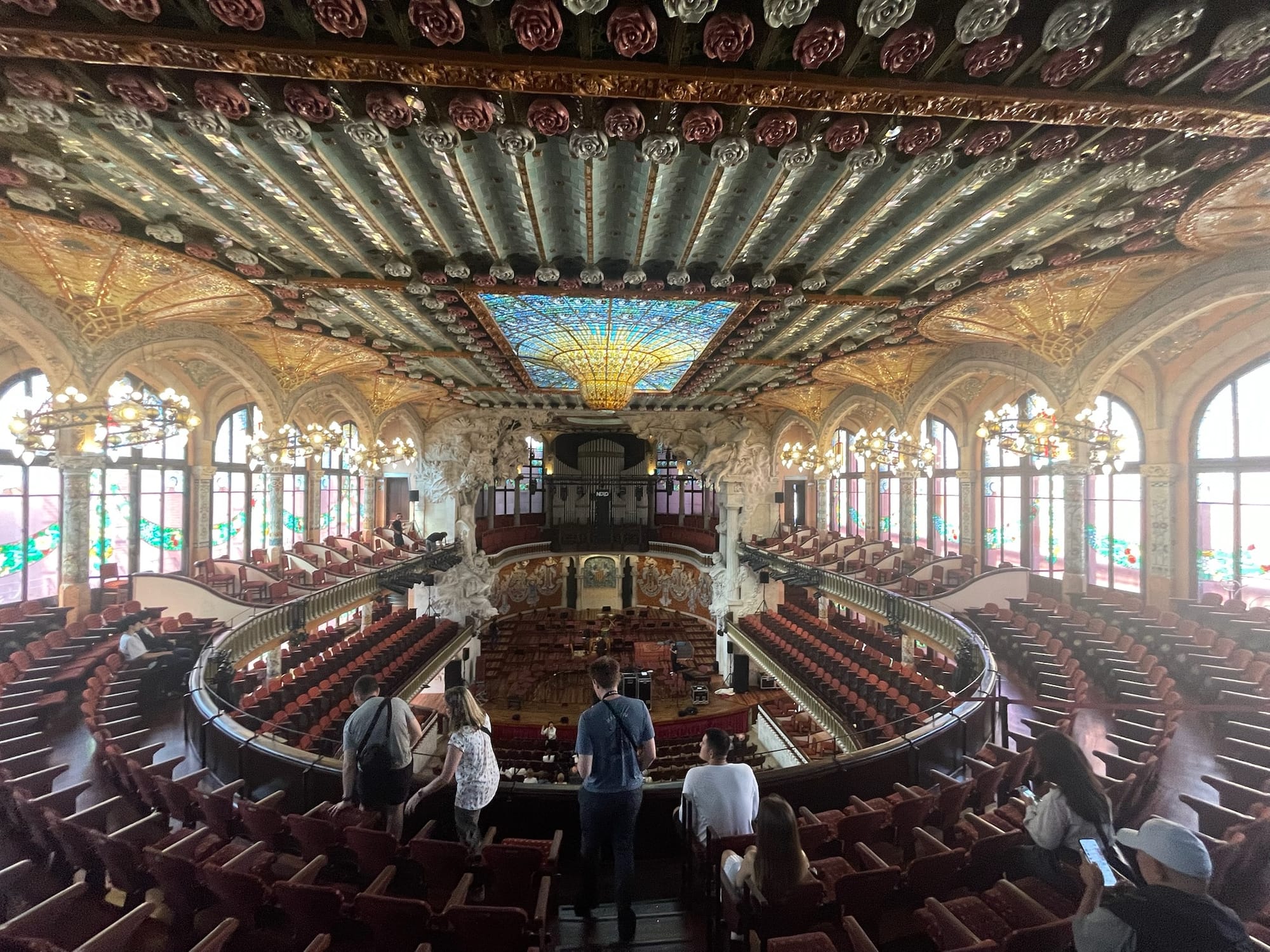
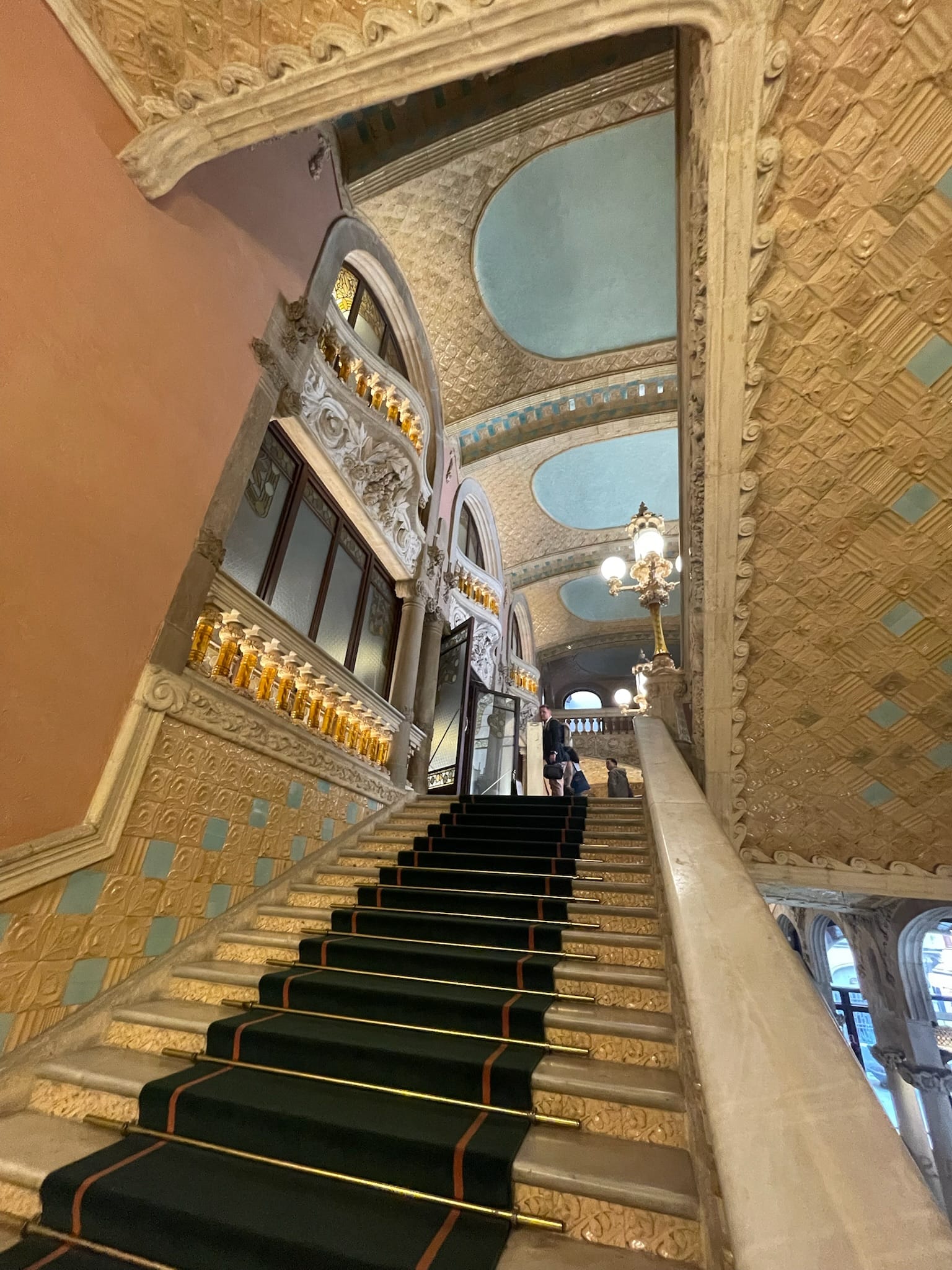
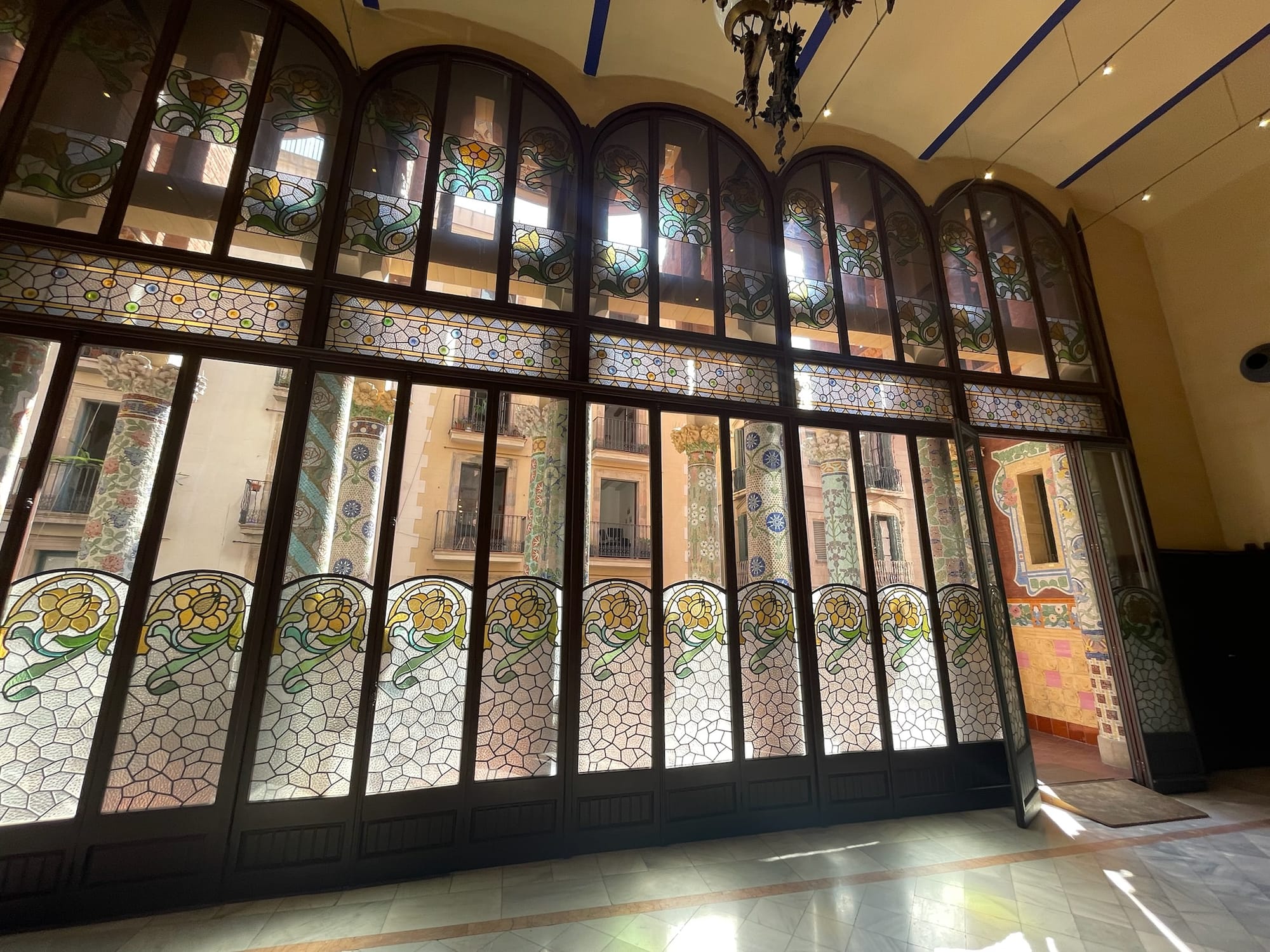
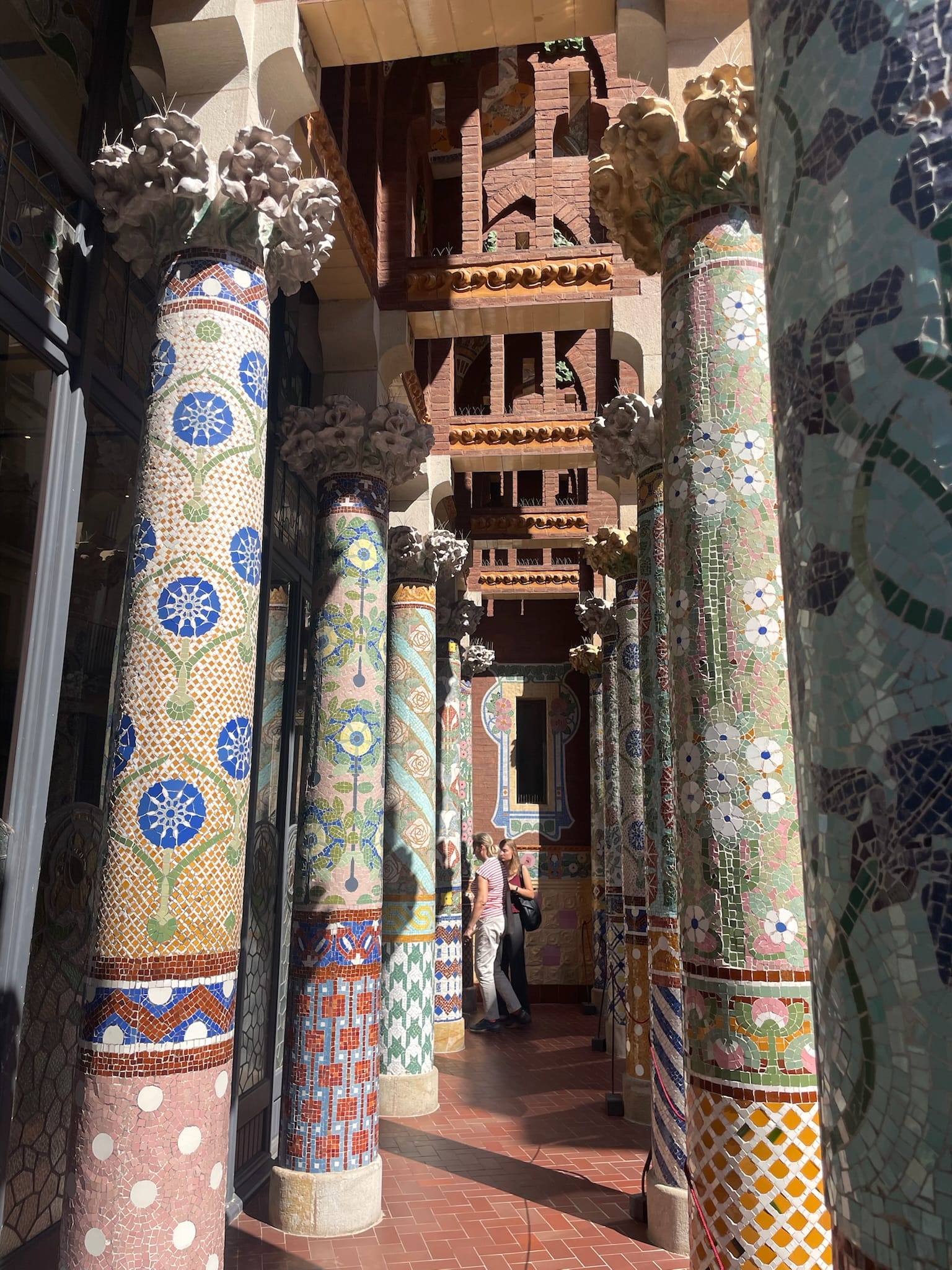
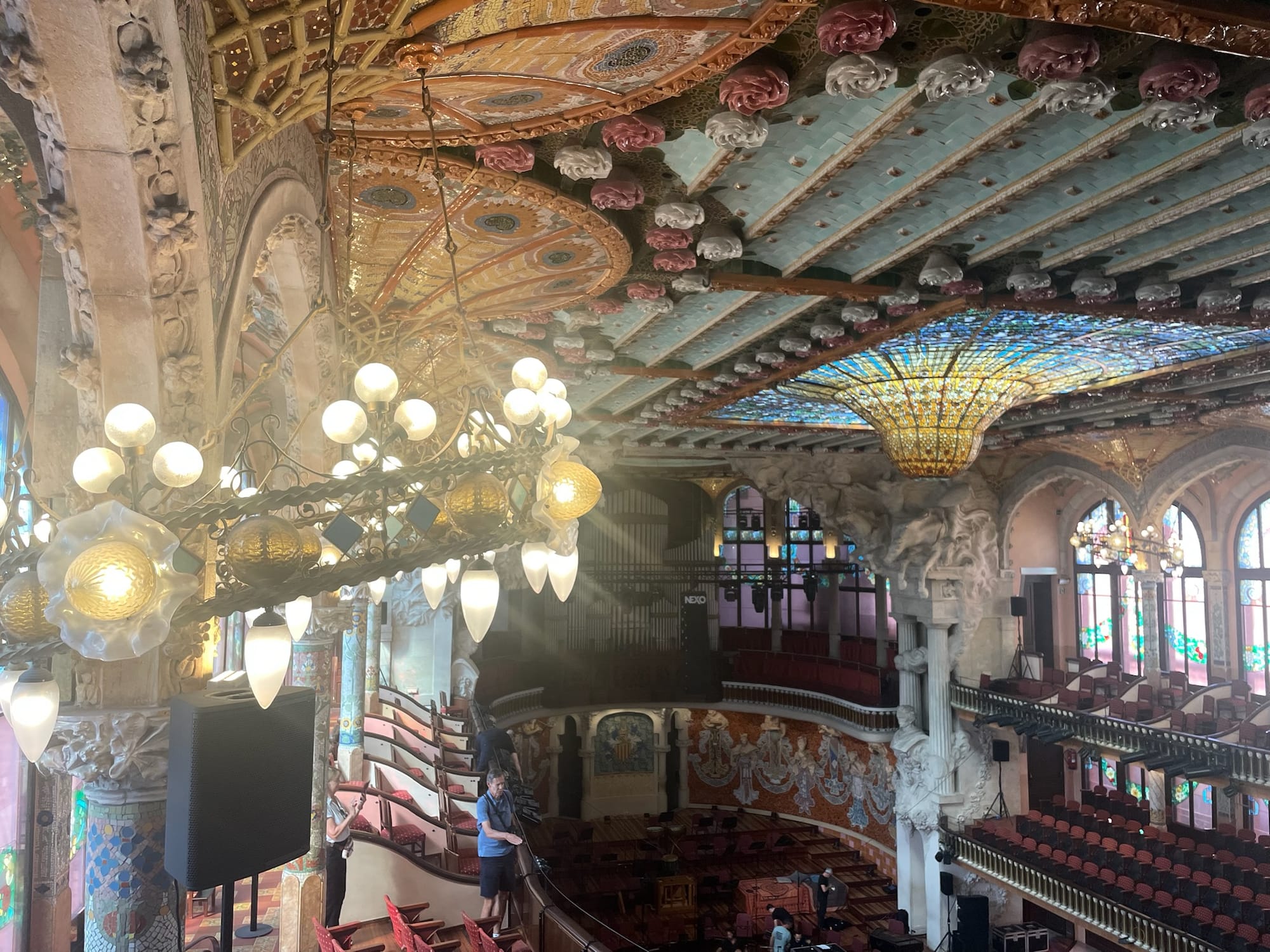
The Palau de la Música Catalana was stunning, inside and outside. Sculpted tilework abounded. [📸 Rachel & Johann]
Gaudí's Basílica i Temple Expiatori de la Sagrada Família
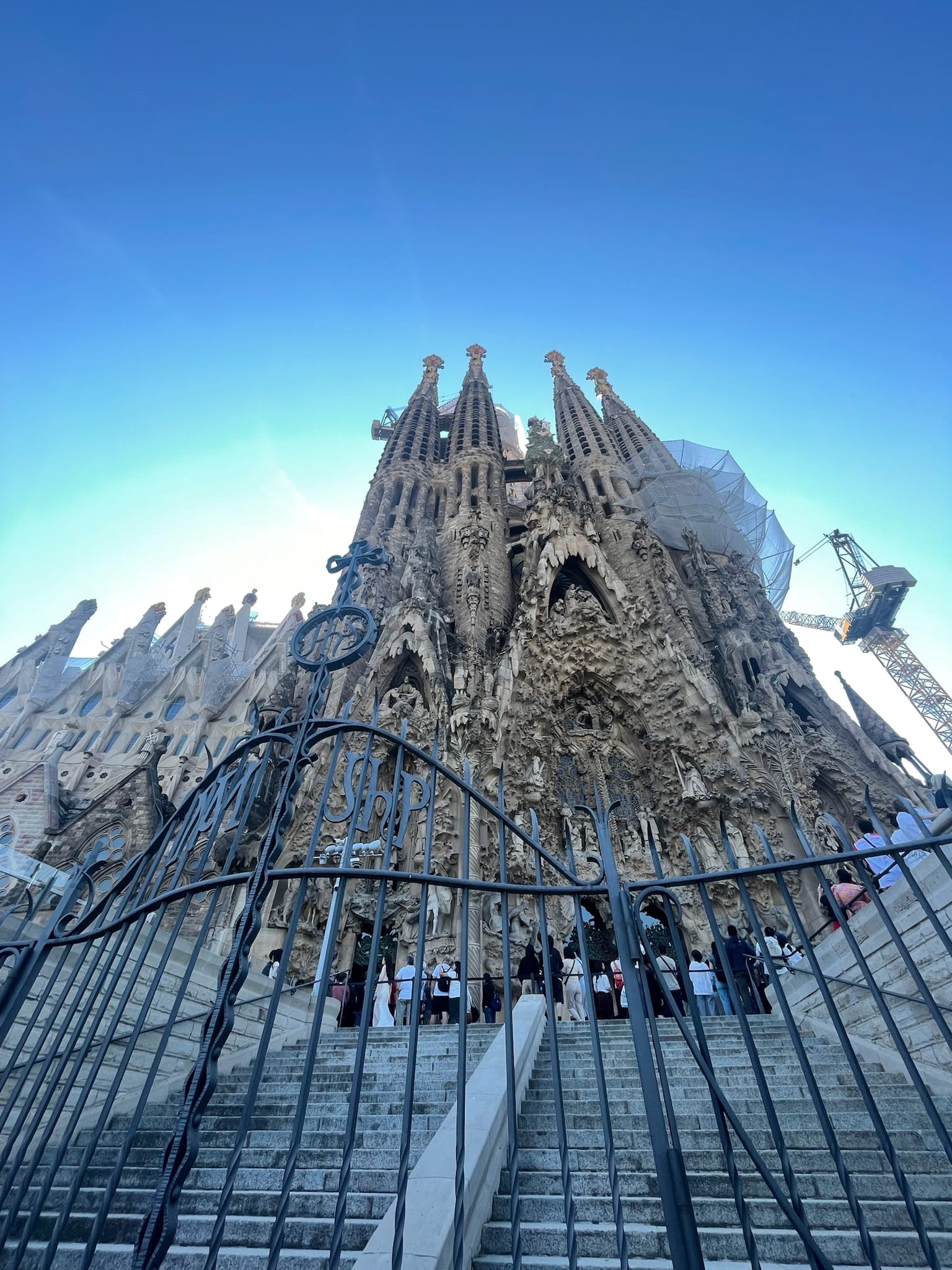
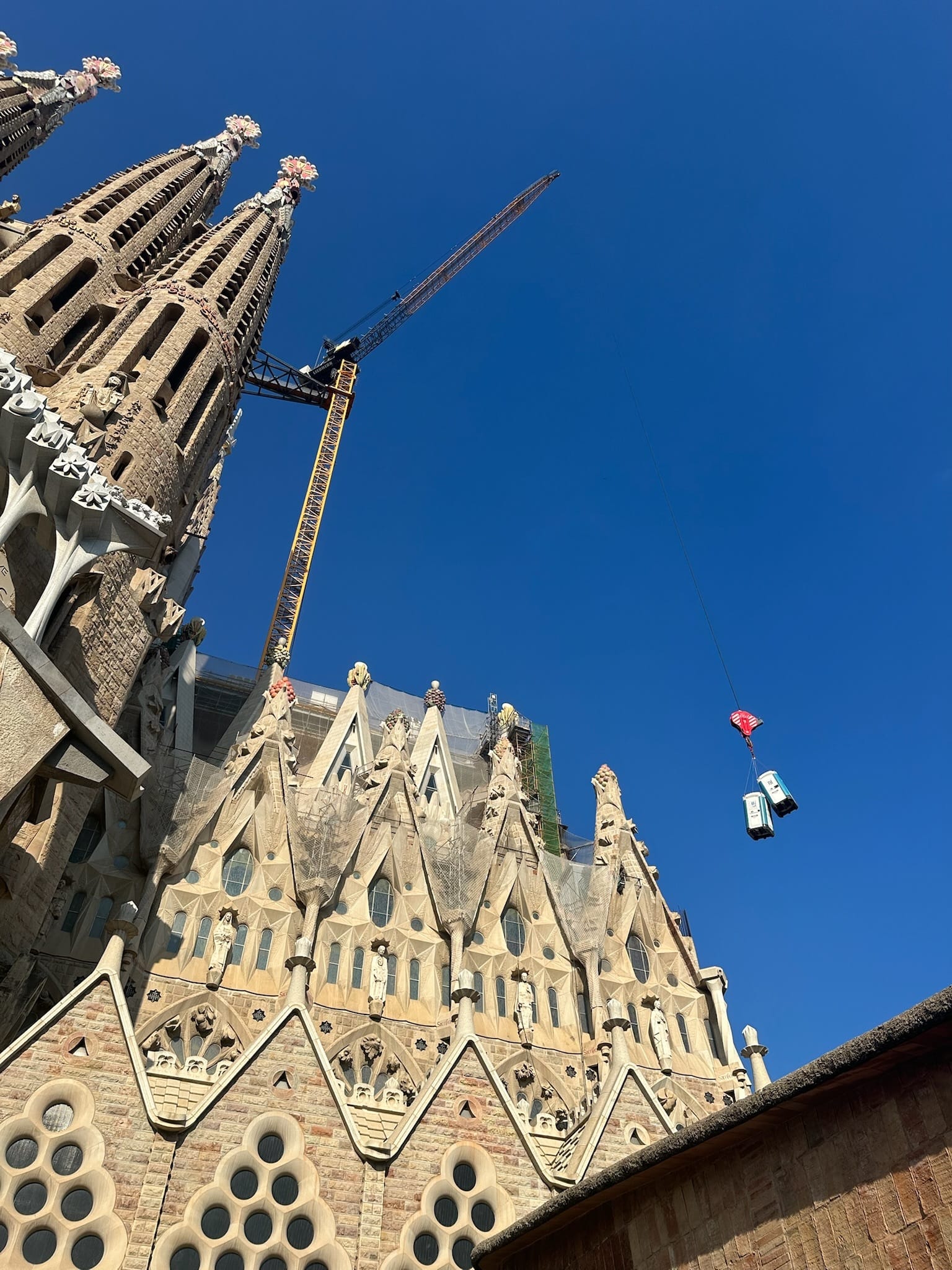
Arguably Gaudí's most famous work, this massive neo-gothic cathedral is almost beyond comprehension. Gaudí worked almost exclusively on his Sagrada Família for the last forty years of his life, and it's still under construction!
Let us emphasize that point - the Sagrada Família has been under construction for around 143 years.
"[Gaudí] planned the construction in phases because he believed that this would make it more difficult to abandon the project."
- Totally relevant quote from the Gaudí museum in the Sagrada Família's basement
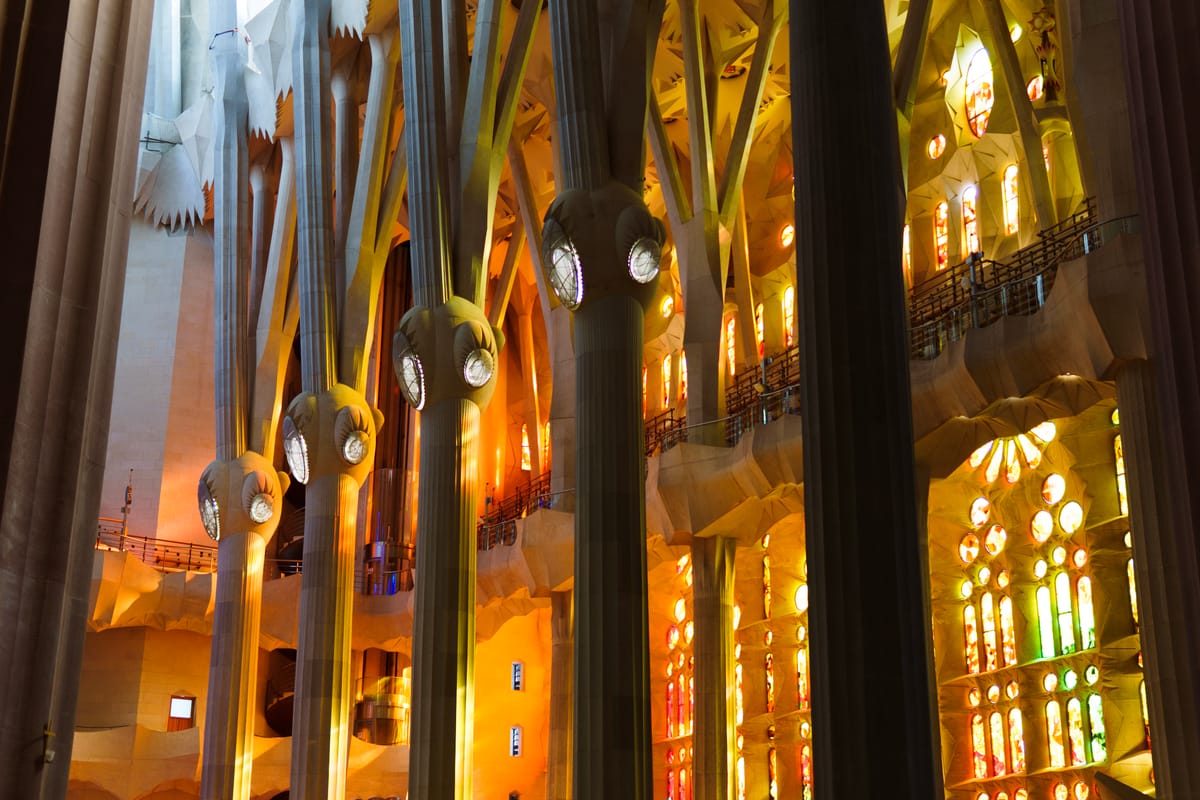
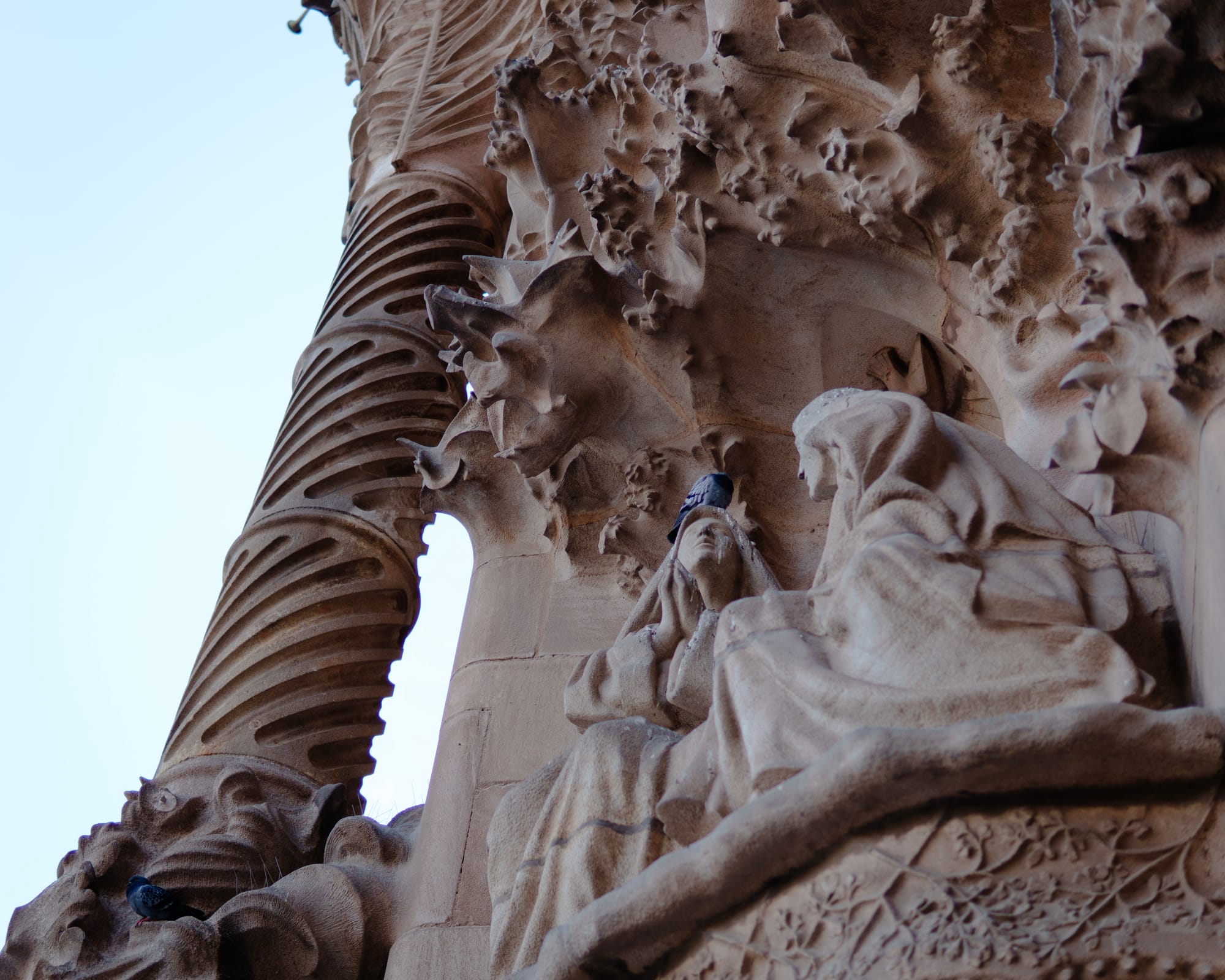
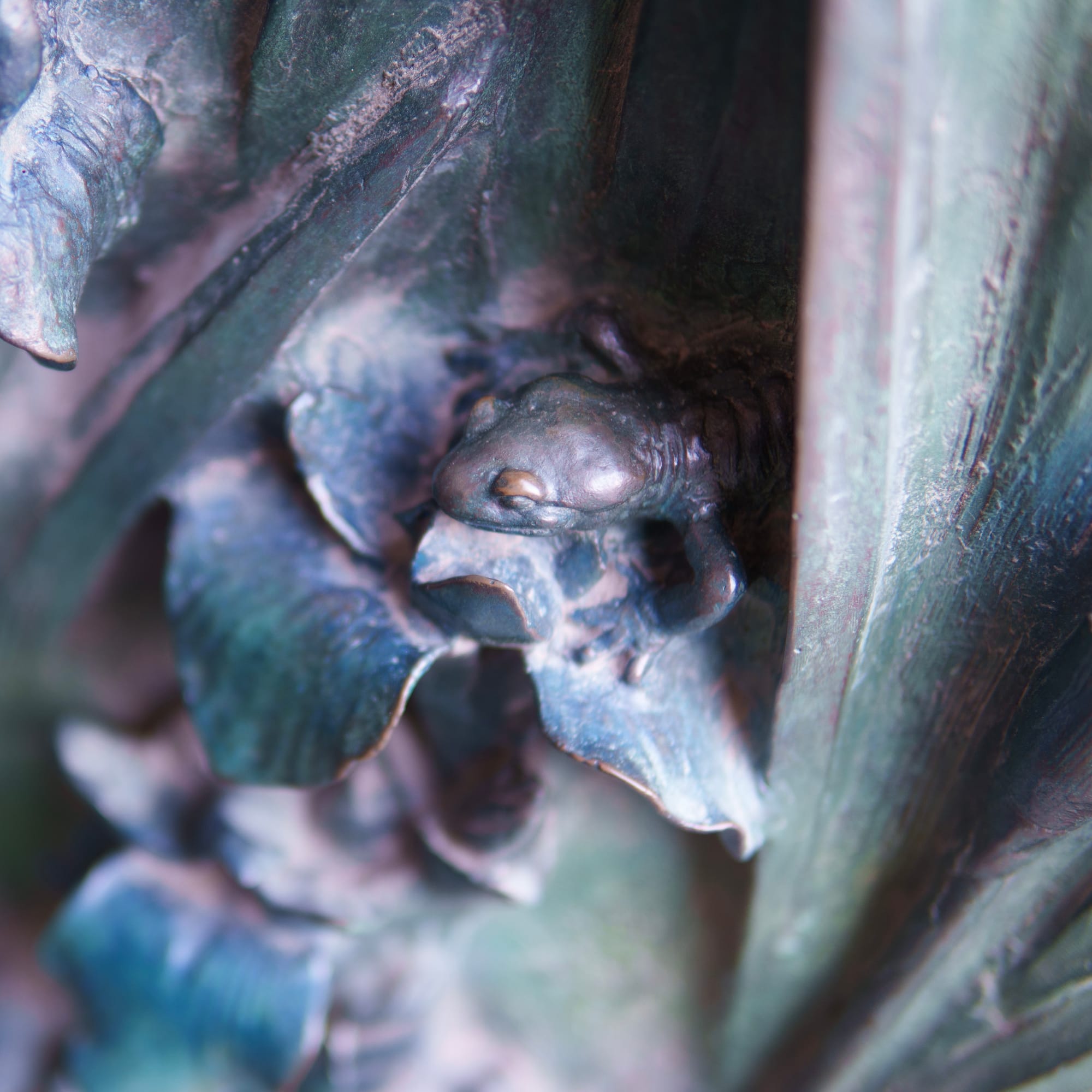
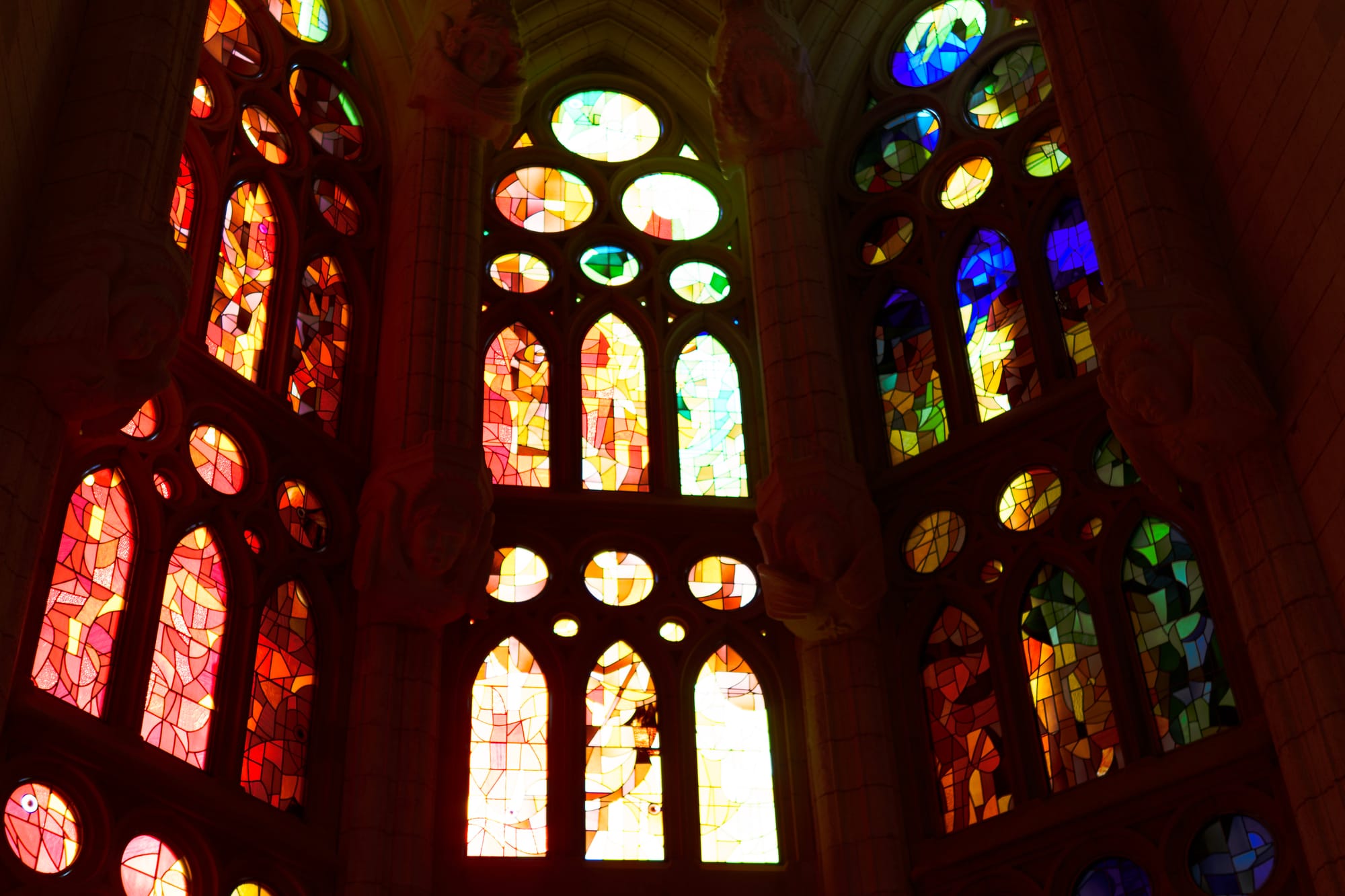
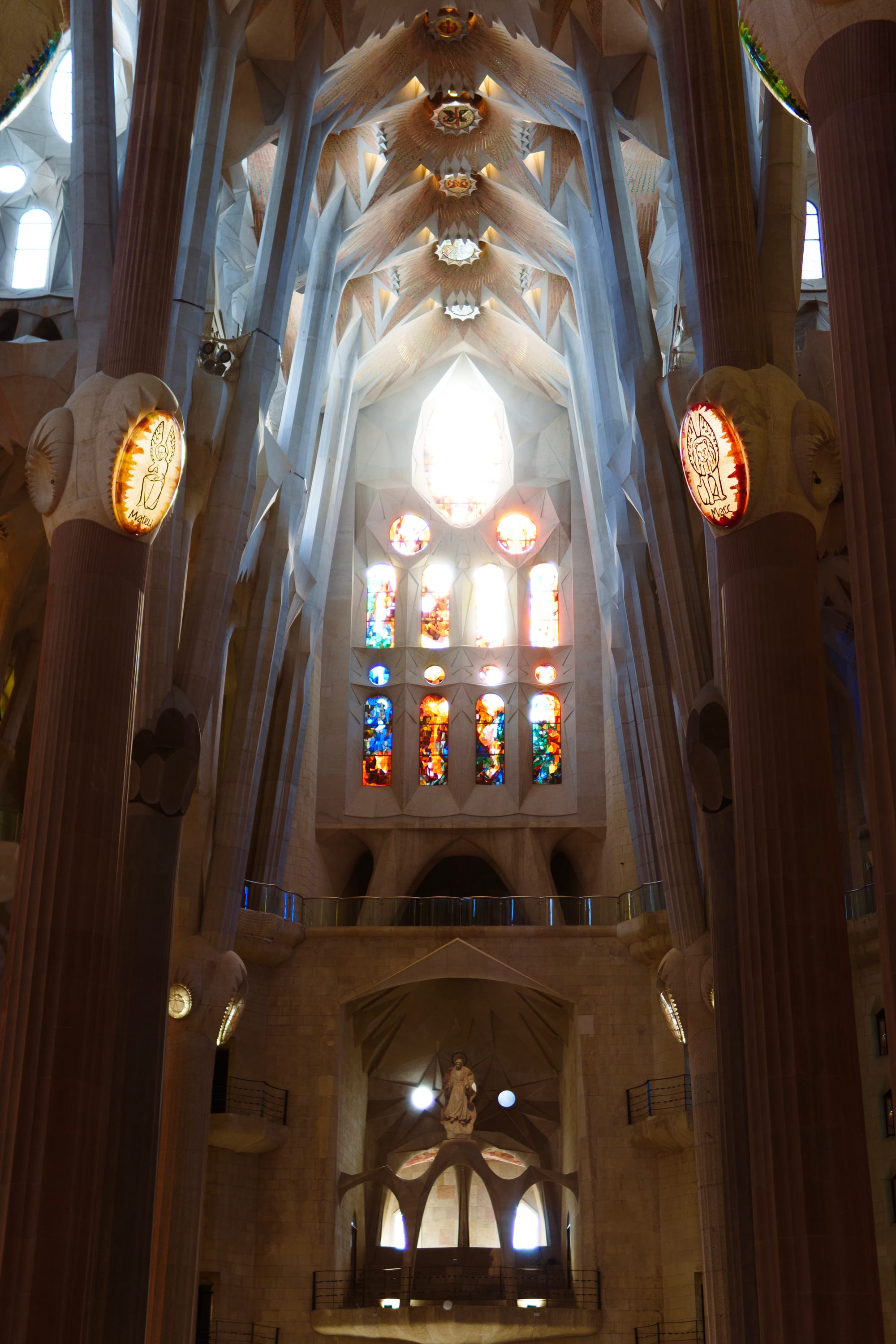
And what a cathedral it is! The exterior is covered in sculptures from various artists over the project's life, many of which were sculpted on-site. The walls are decorated with massive stained-glass windows, first designed as abstract water-colour pieces by the artist, which paint the interior in a rainbow of colours that shift throughout the day.
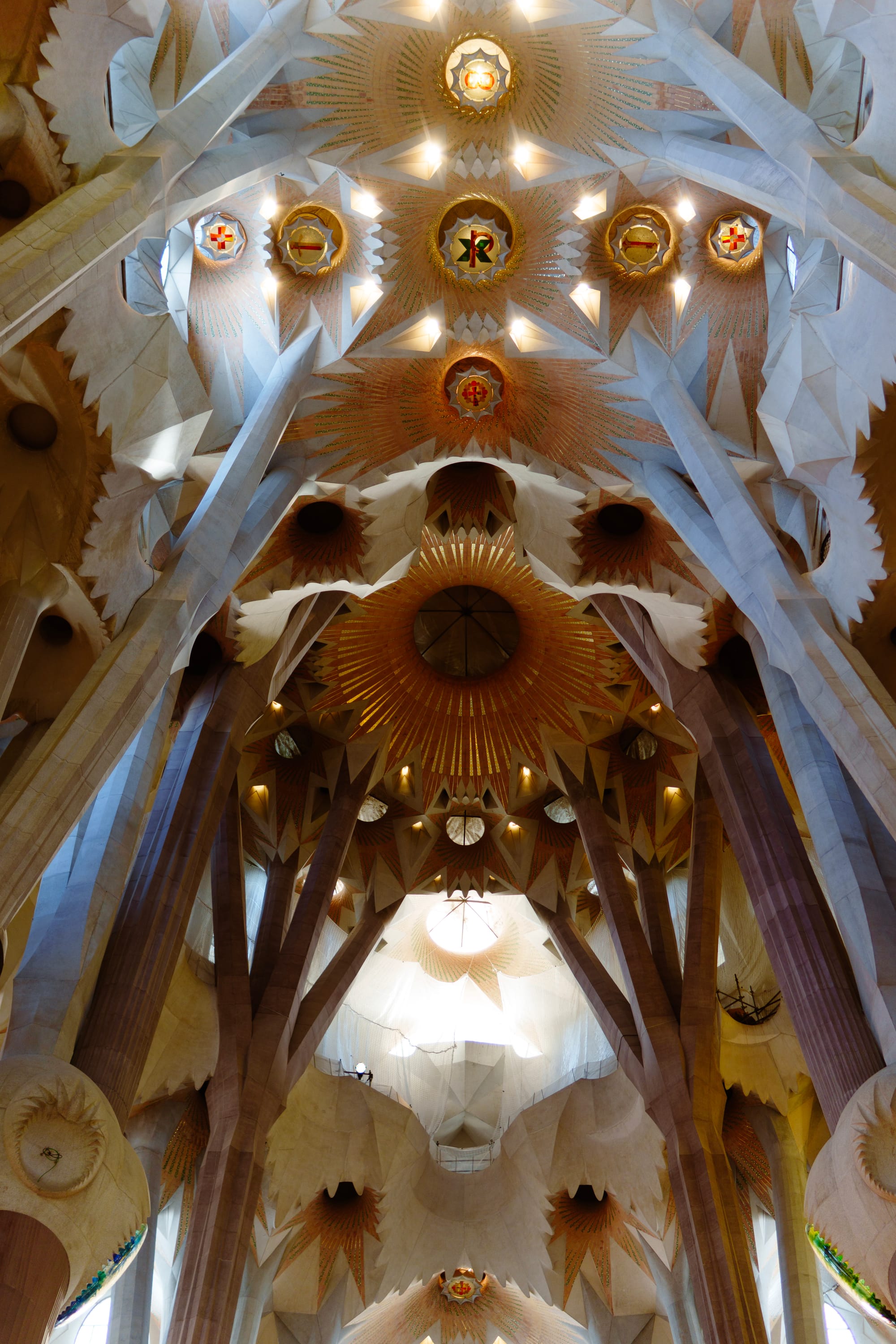
Gaudí employed naturalistic forms for the cathedral's columns, with an emphasis on hyperbolic curves and ruled surfaces, allowing for extremely high vaulted ceilings and plenty of light within the cathedral. He engineered the perfect shape for the cathedral's arches, and evaluated its massing, by constructing an upside-down model out of strings and weights.
Just... just look at these pictures:
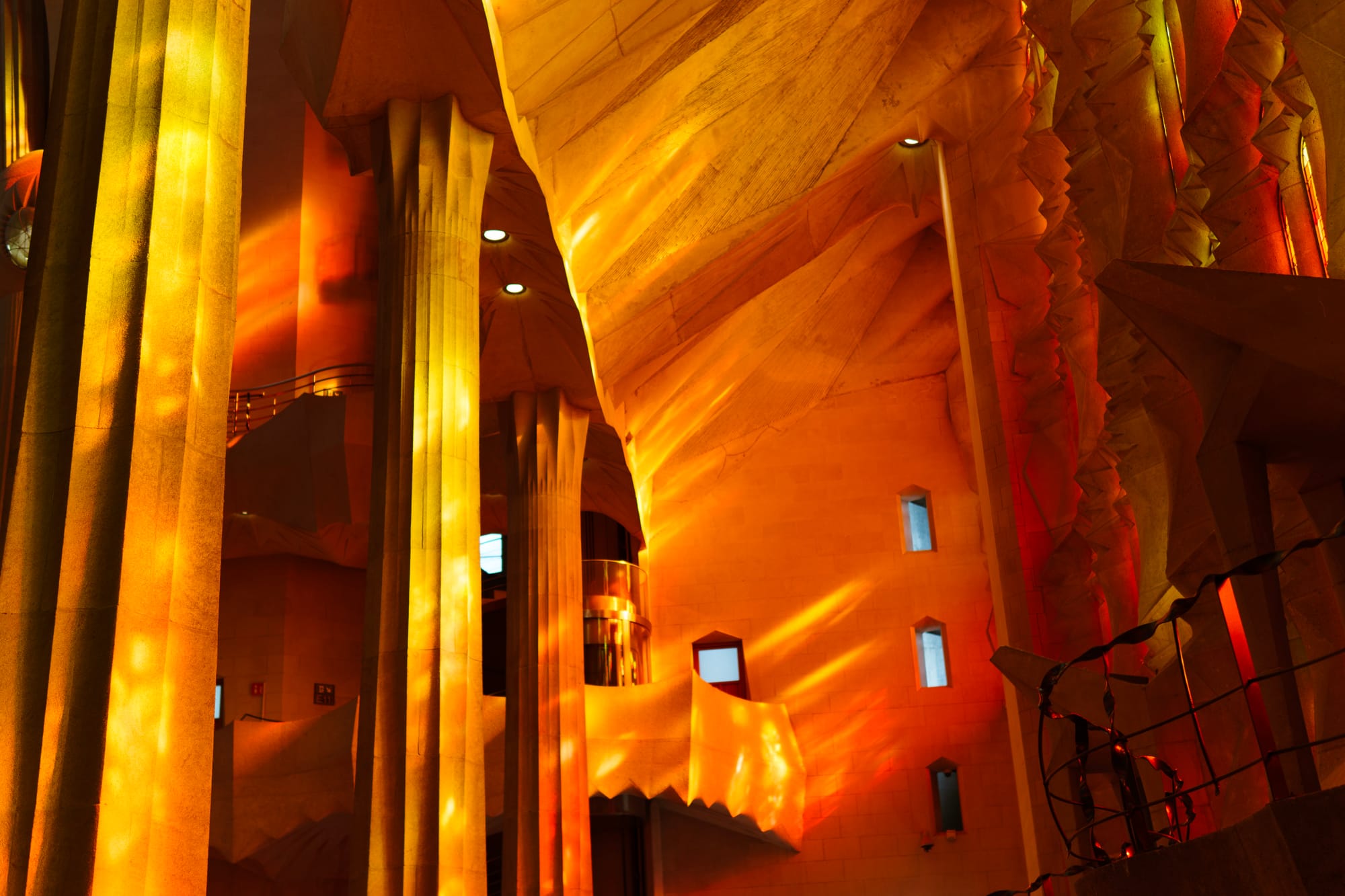
Overall, we had such a lovely time in Barcelona with Johann's parents. And there's still so much left to explore!
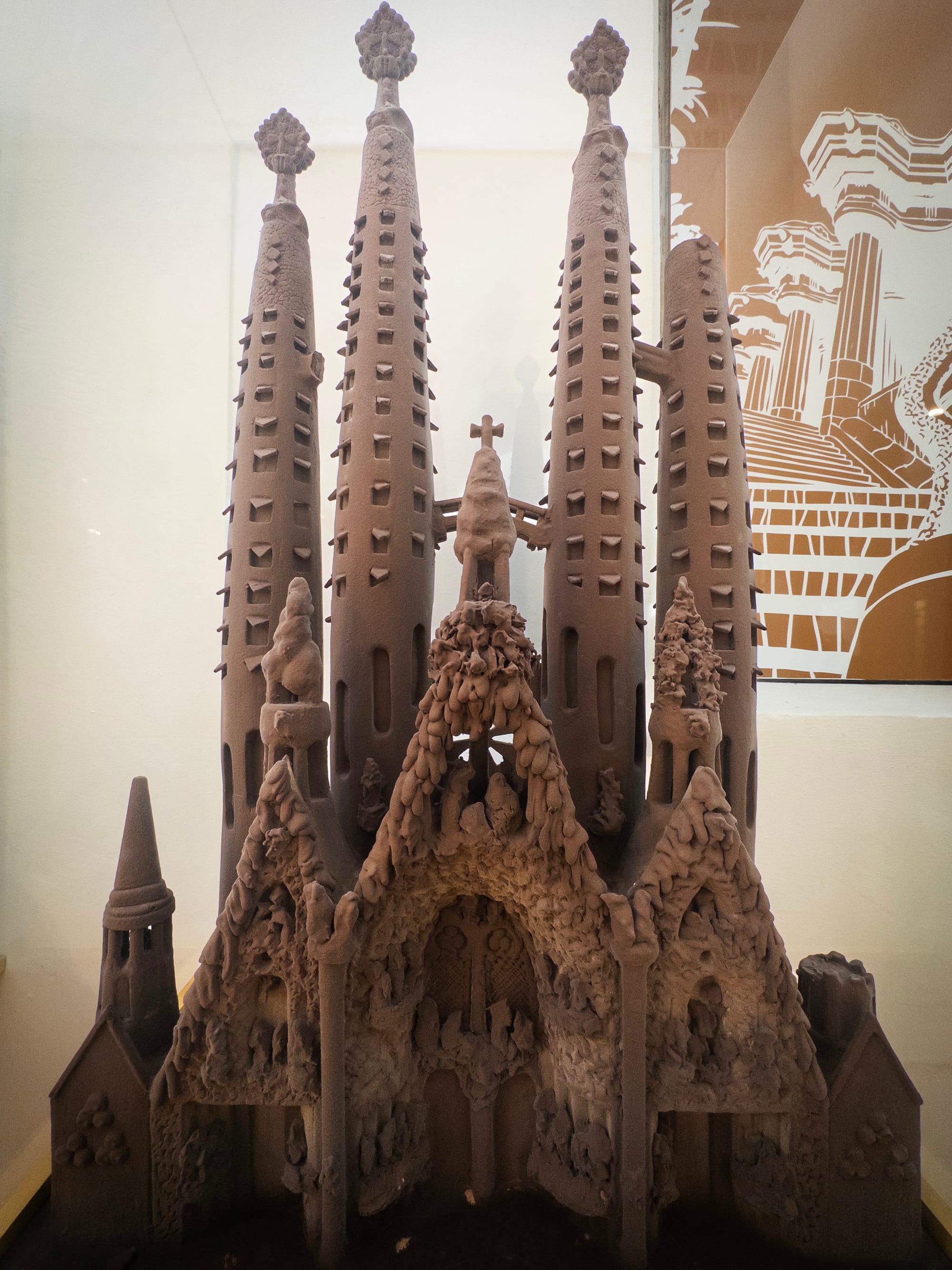
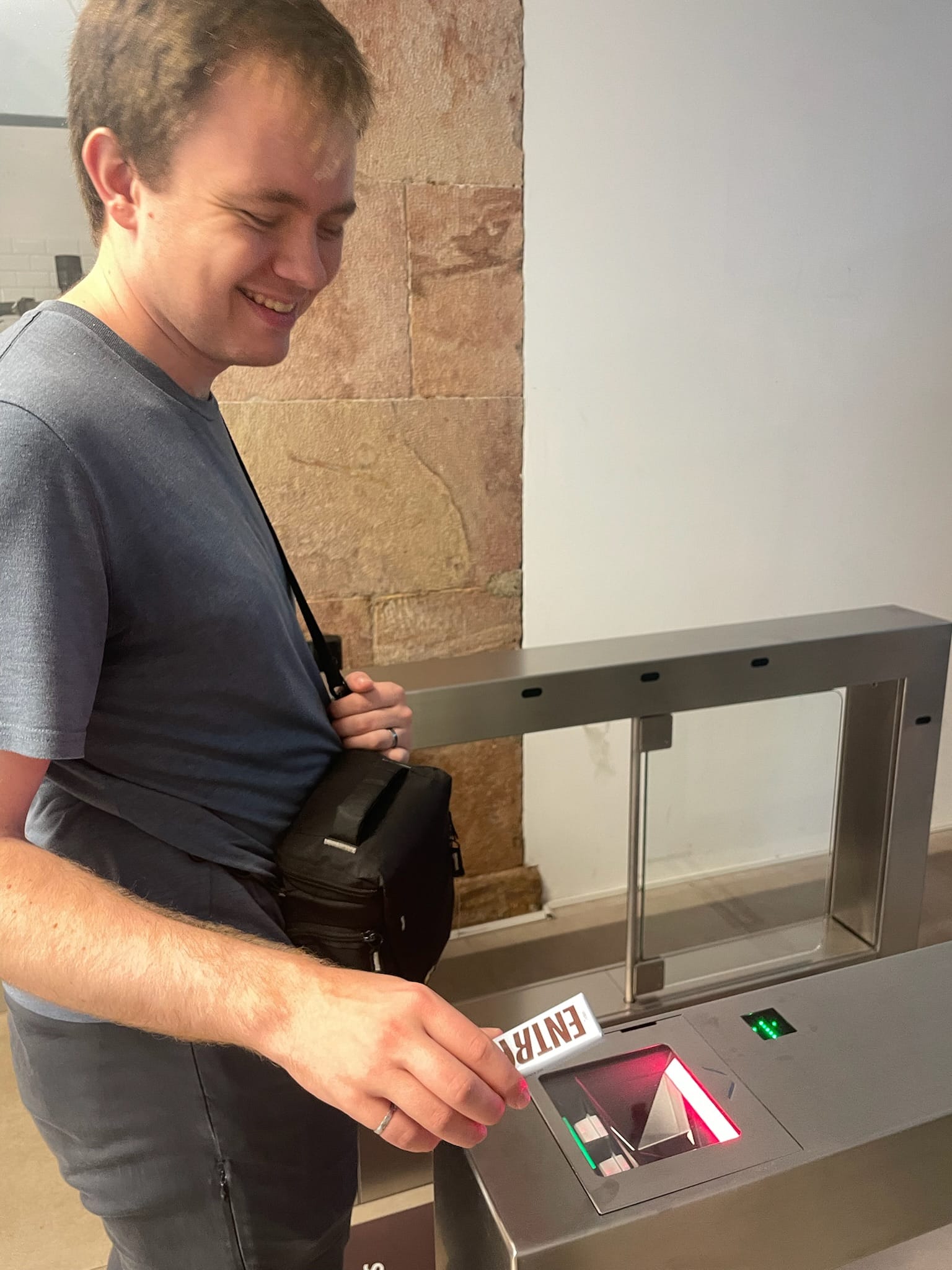
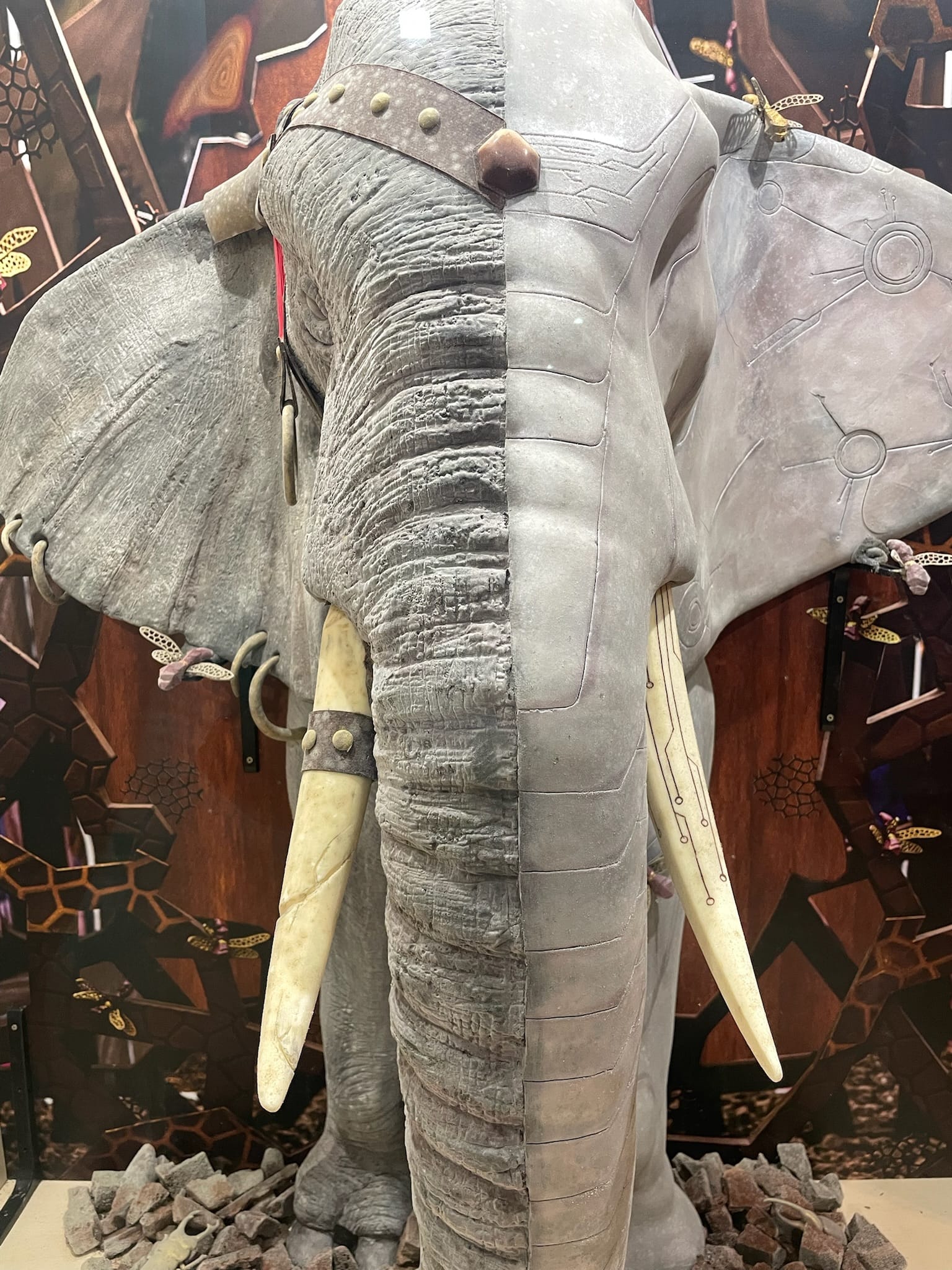
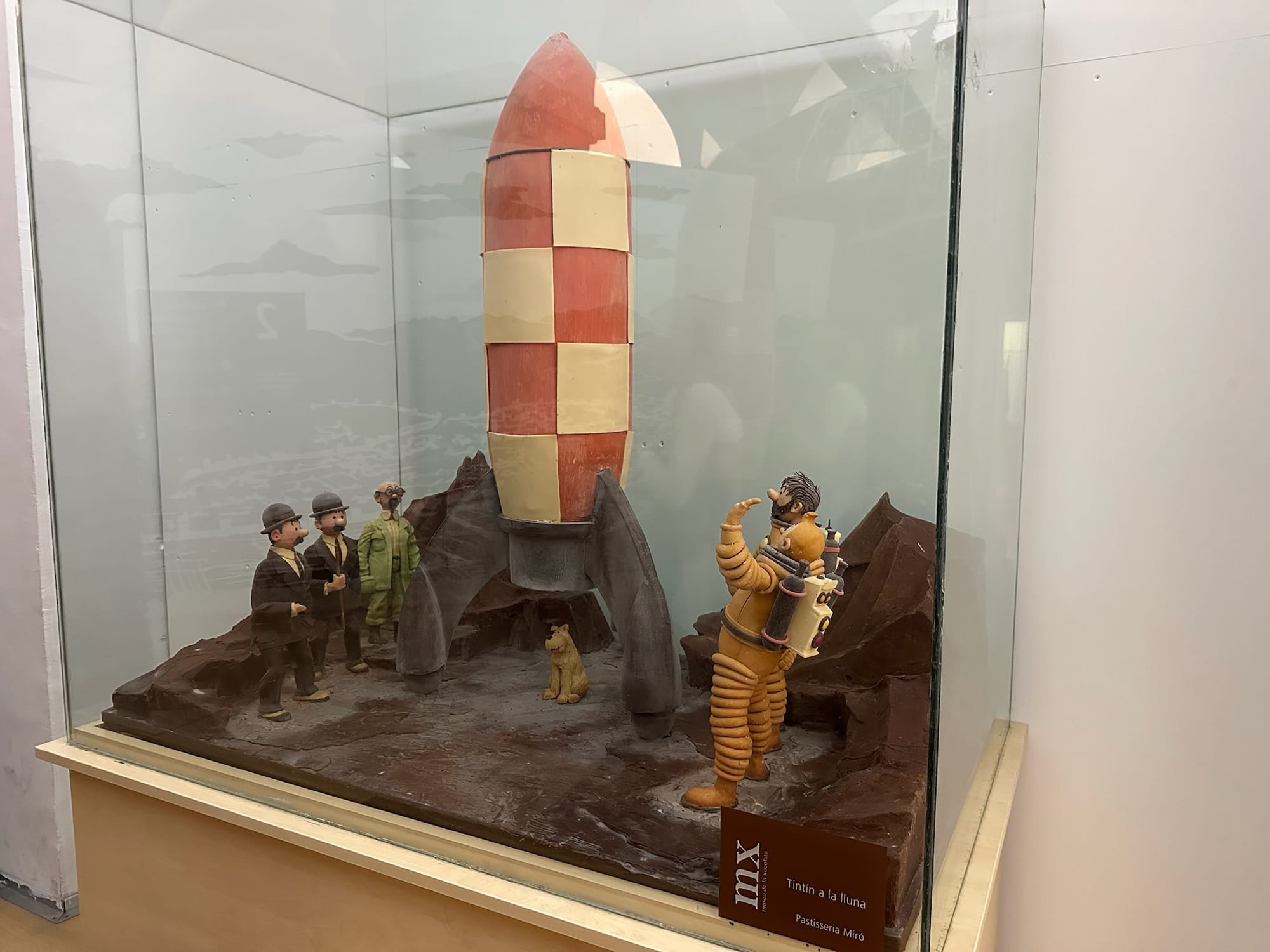
Our favourite models at the Museu de la Xocolata (chocolate museum). Our entrance ticket was itself a chocolate bar! [📸 Rachel & Johann]
Tarifa
We left Barcelona regrettably early (up at 4:30!) on a train which took us to Madrid, and from there across arid farmland to Malaga. We caught a bus in Malaga which wound its way along the glittering ocean, between bushy green hills and white villas to Algeciras. Along the way, we saw the Rock of Gibraltar rising up from the coastline, topped by clouds. One more bus, and we were in Tarifa, a small town right on the Strait of Gibraltar, where the Atlantic Ocean meets the Mediterranean Sea.
We spent three days in Tarifa, exploring the winding white-washed streets of its historic old town, walking and swimming along the beach and arid coastline, and watching the wind surfers gliding over the waves and temporarily taking flight. It was restful, vividly beautiful, and extremely windy.
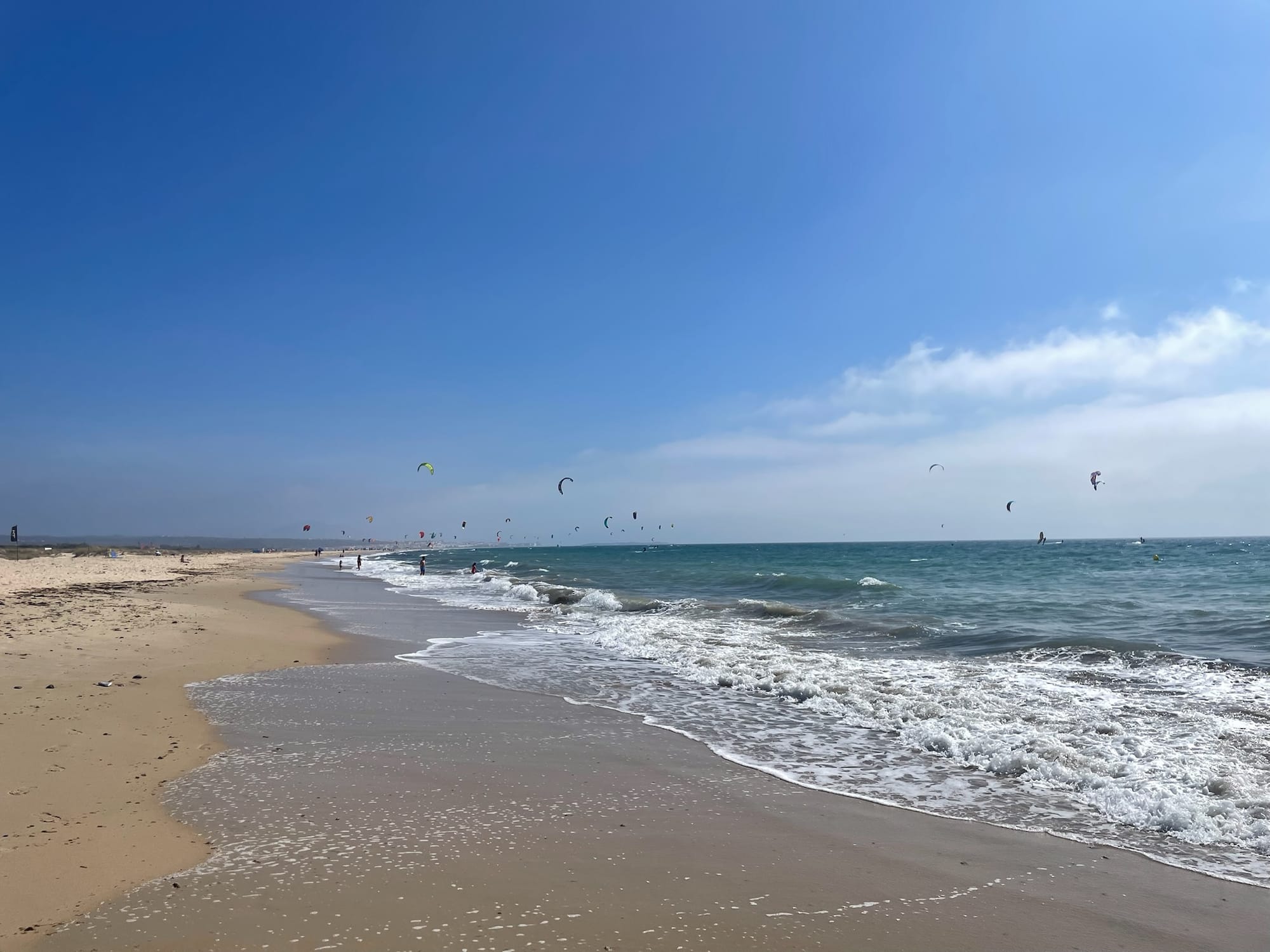
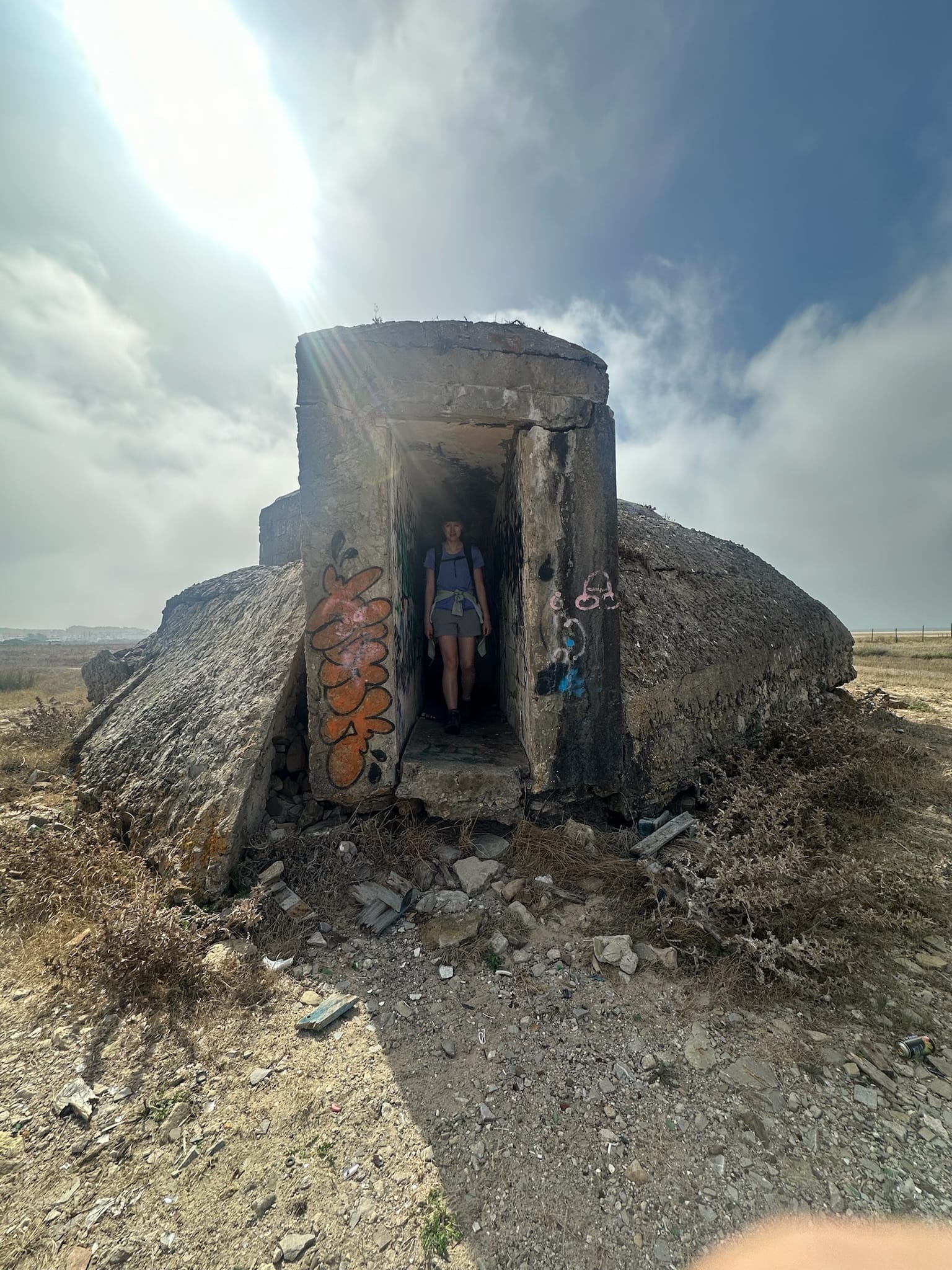
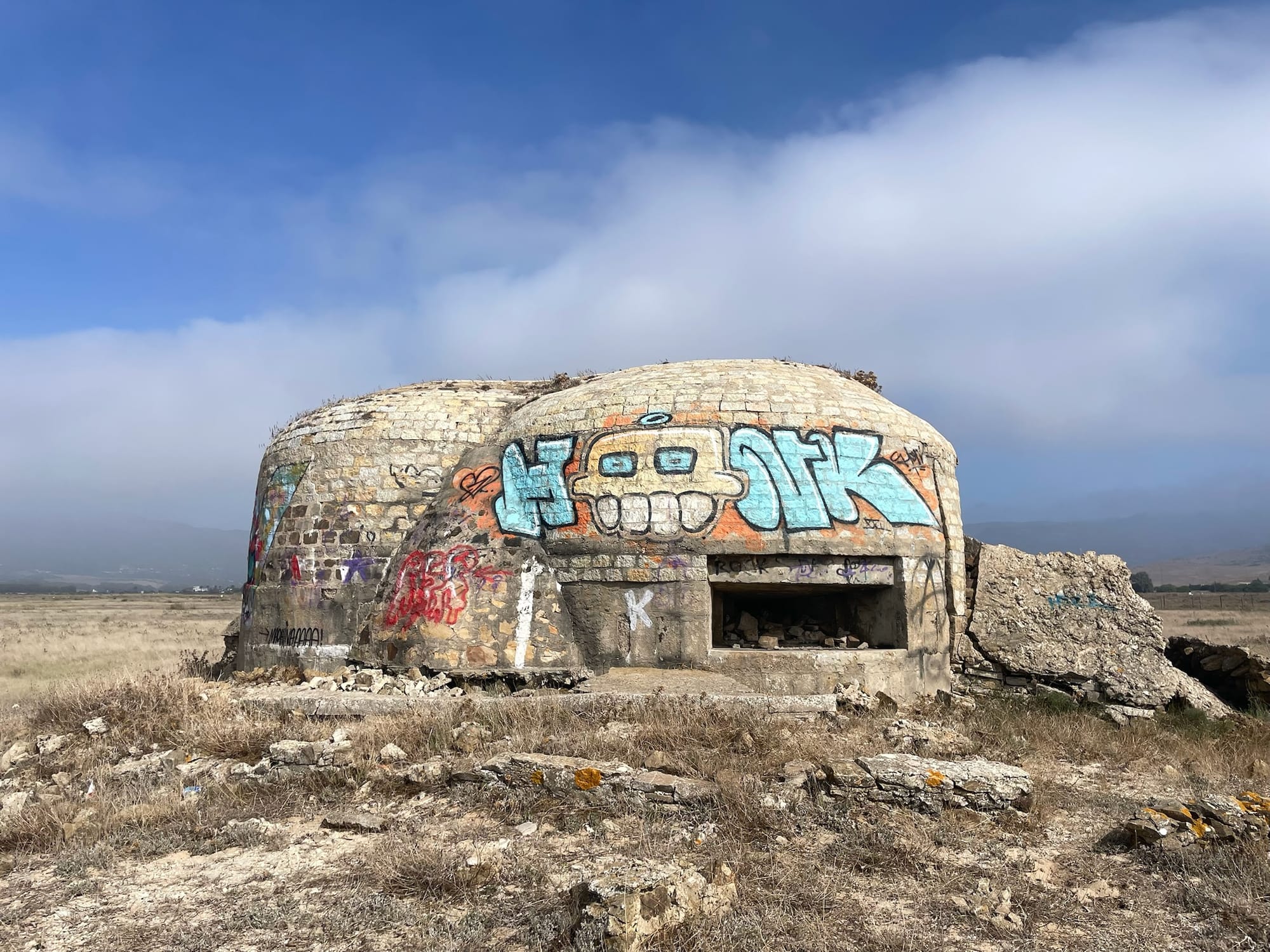
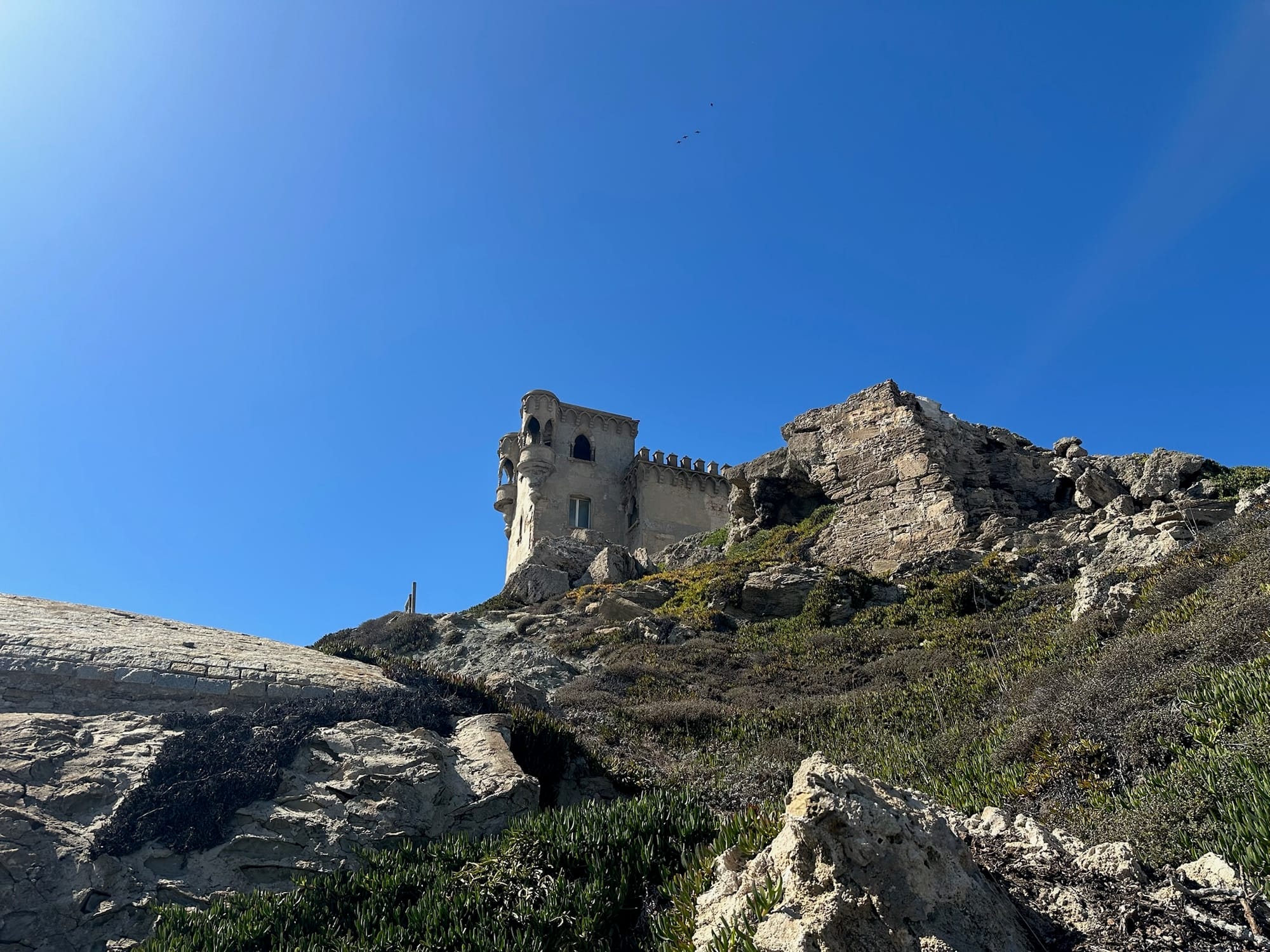
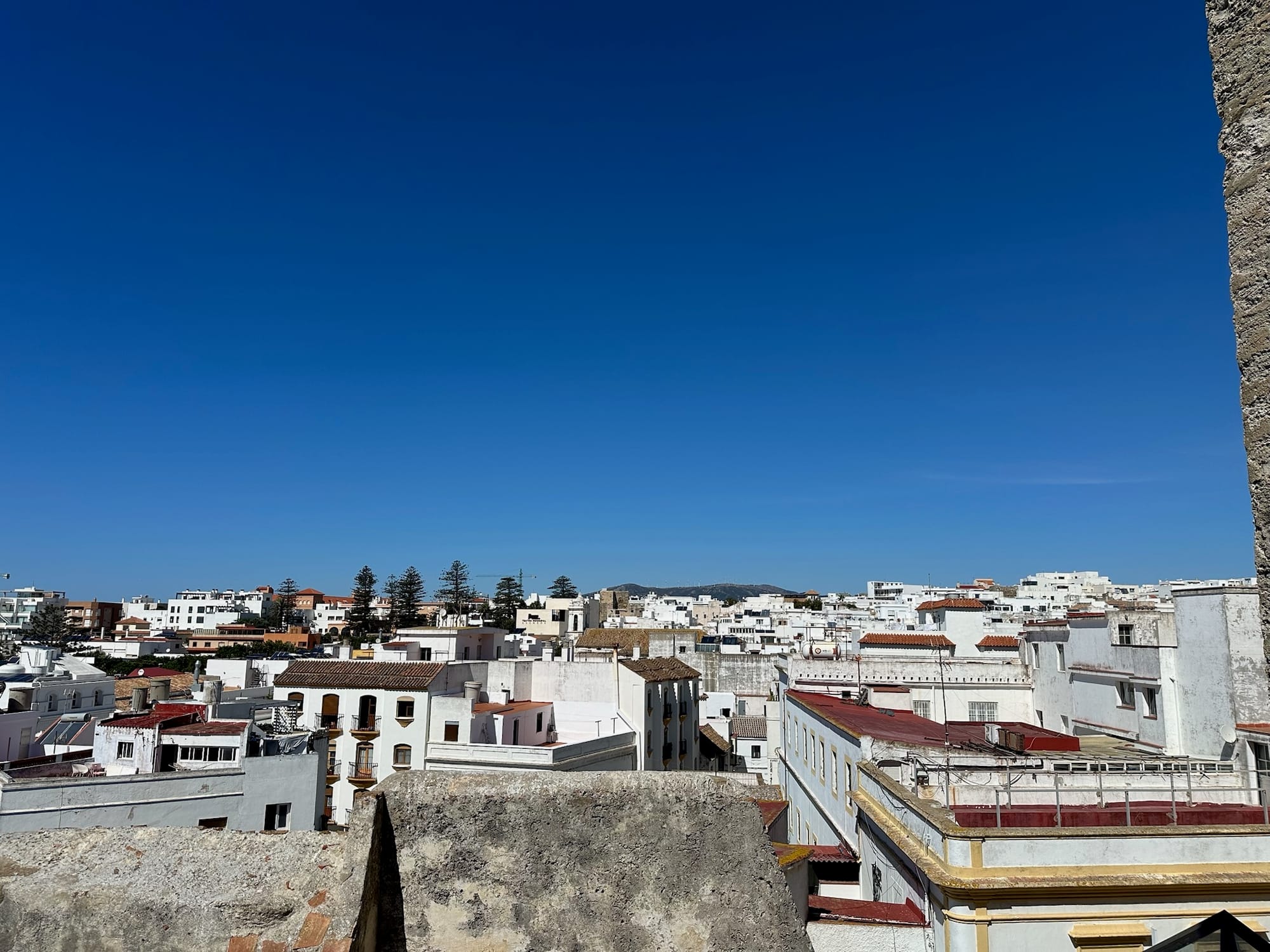
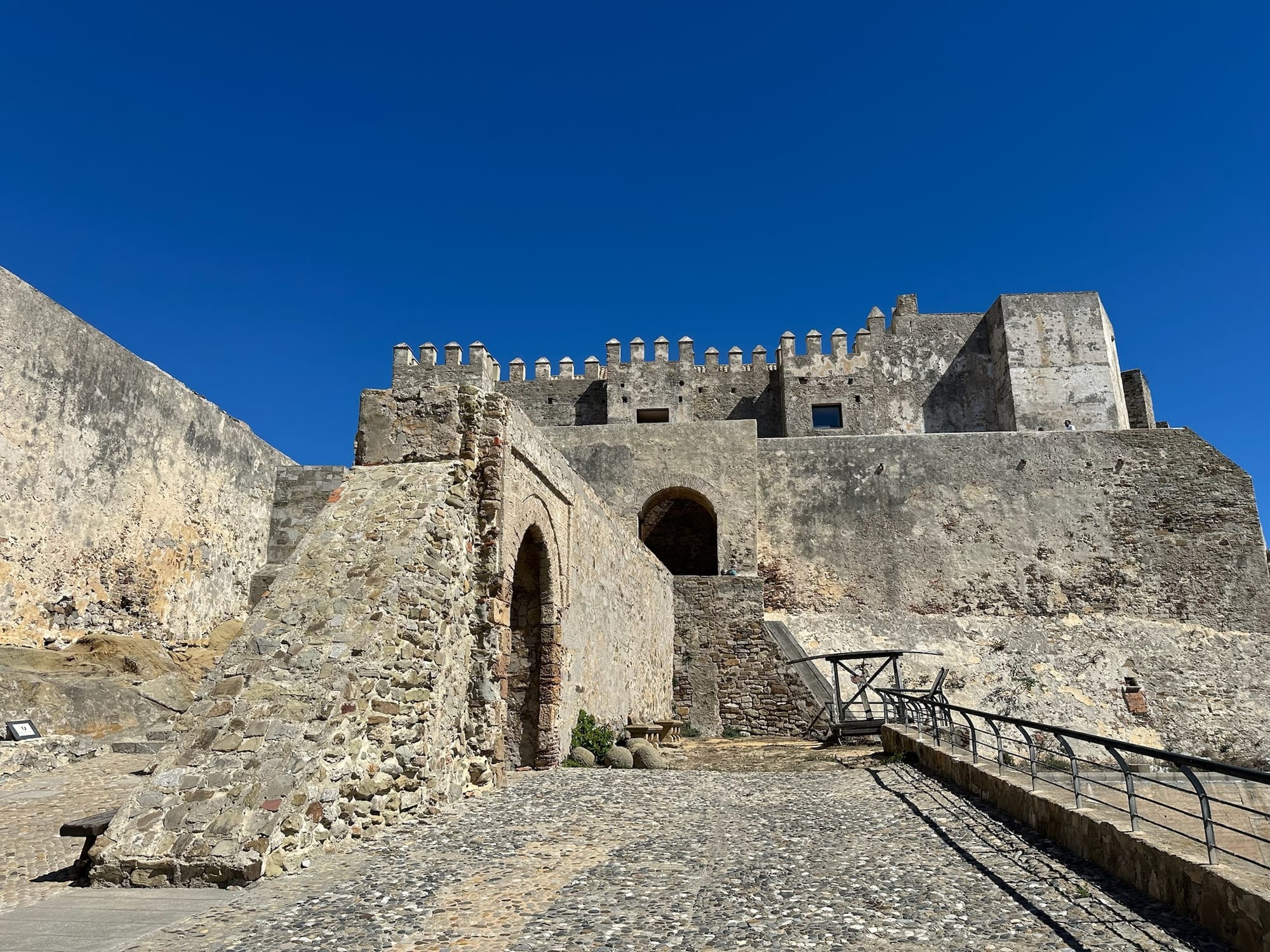
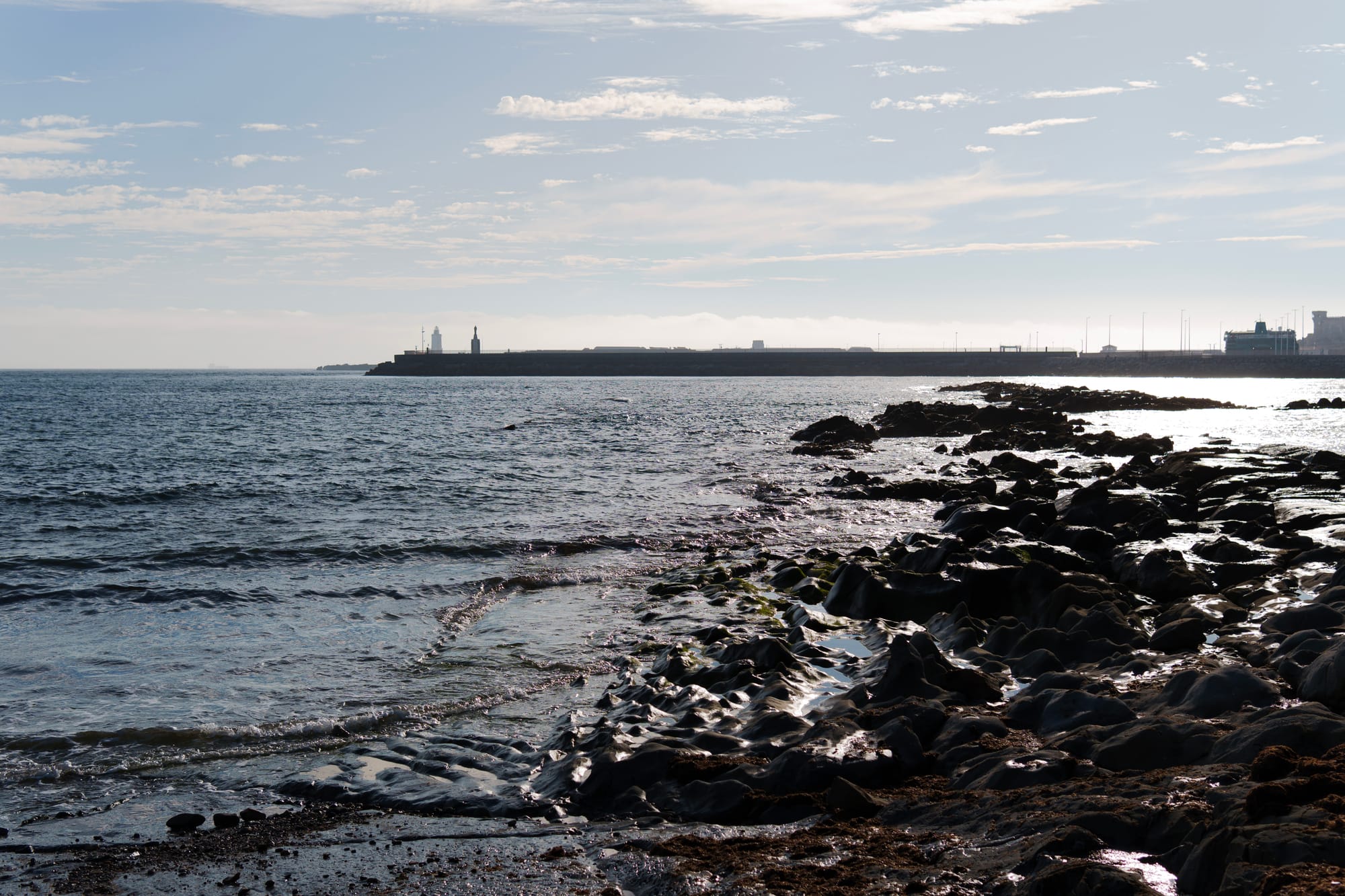
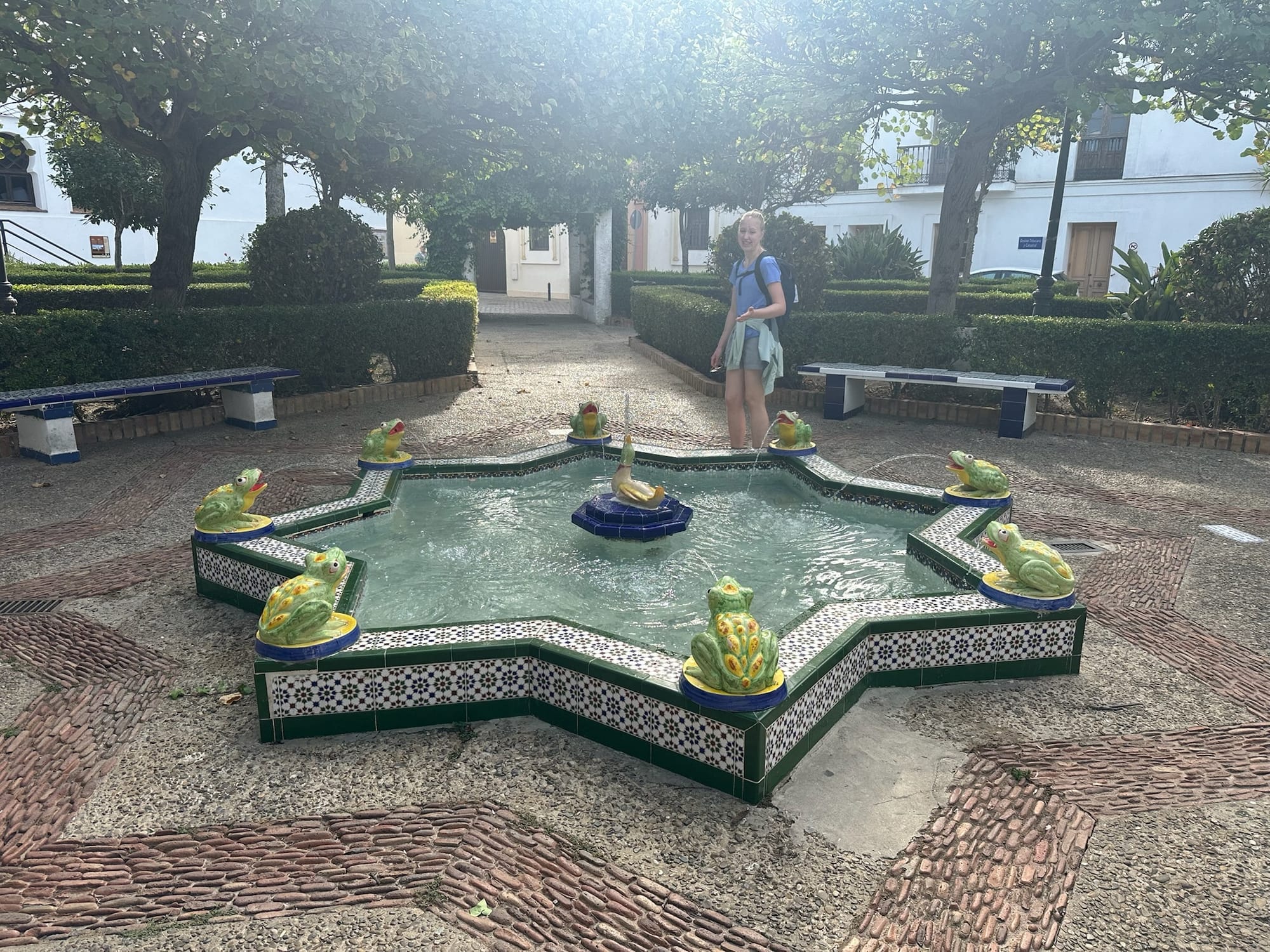
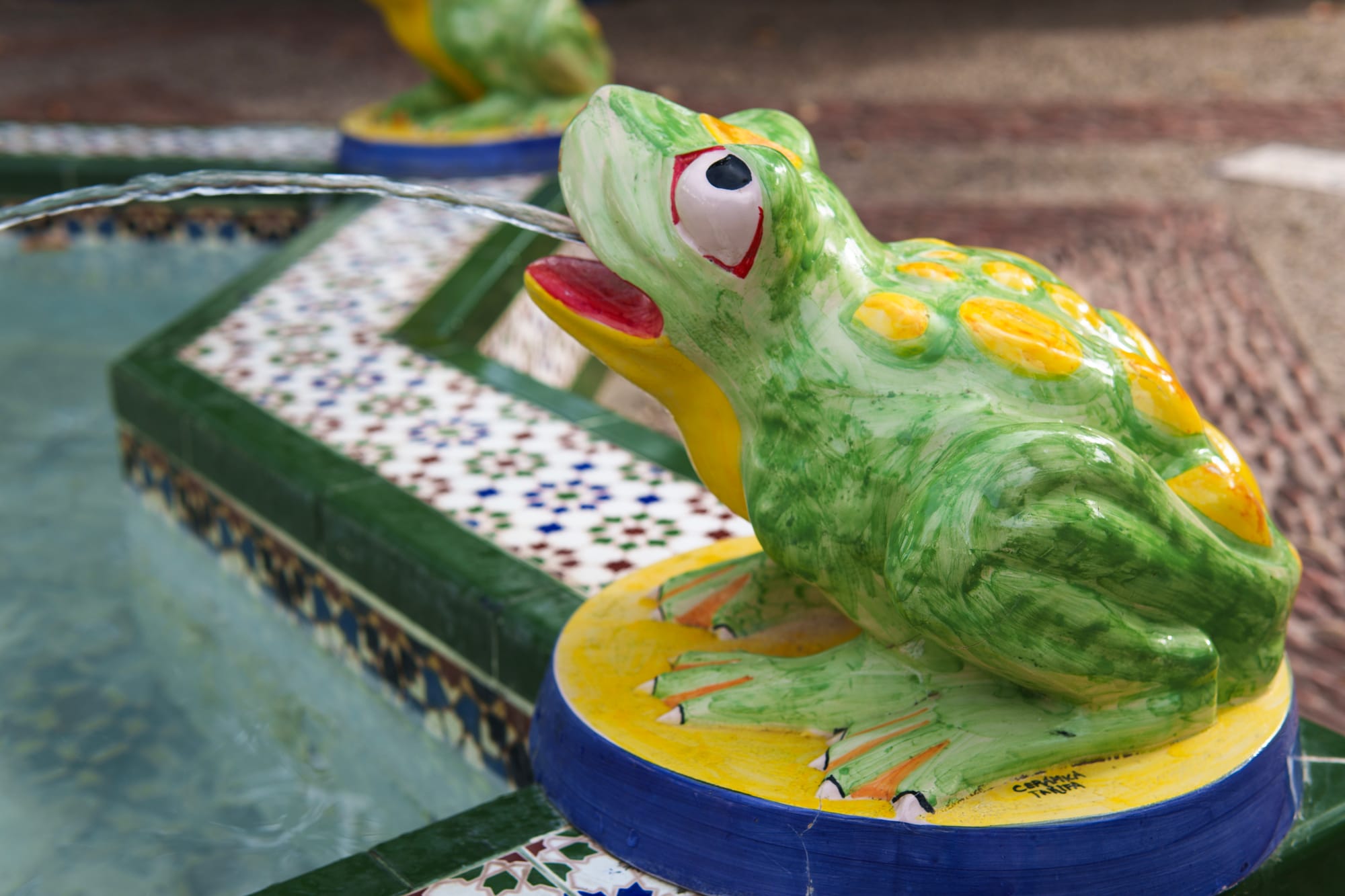
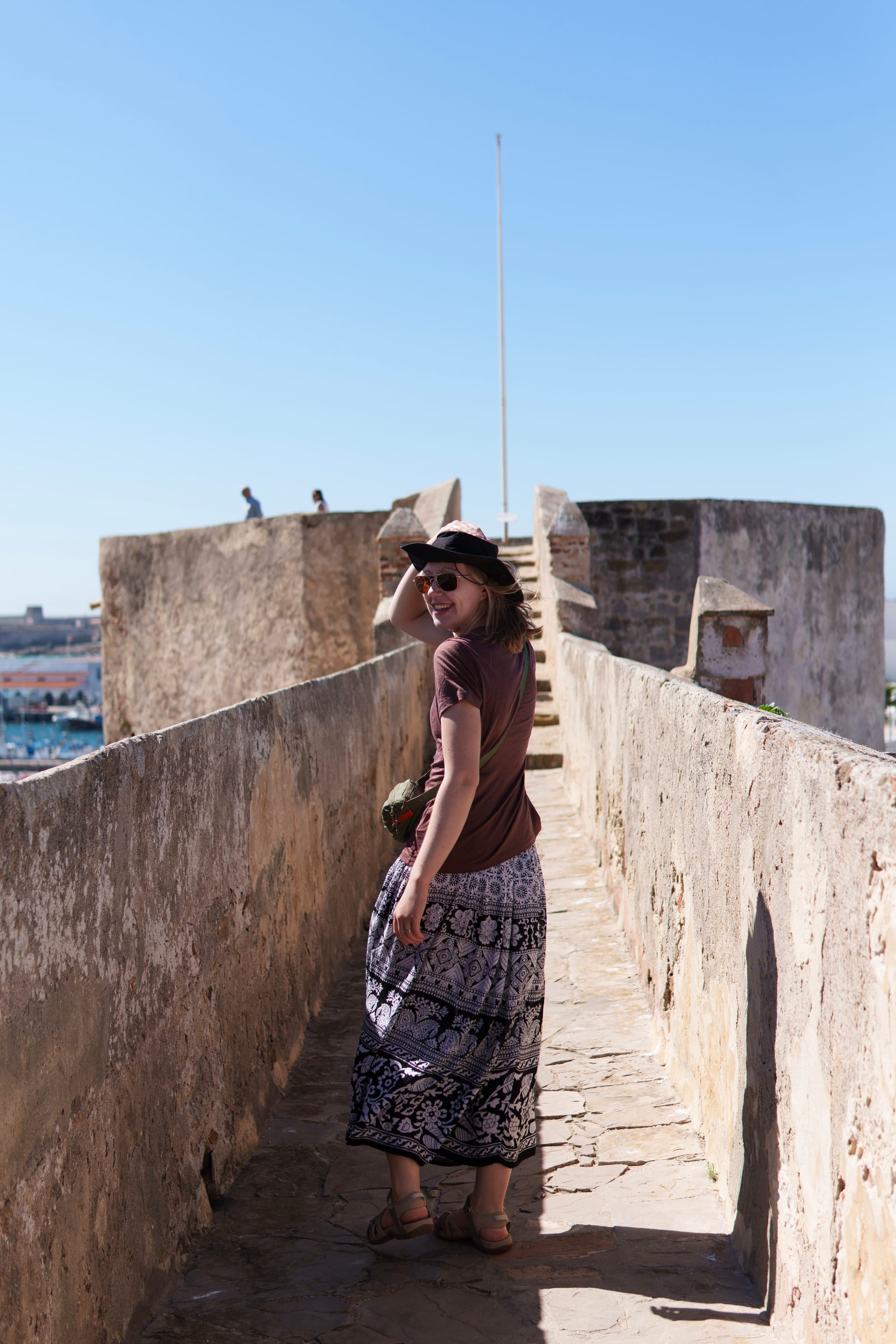
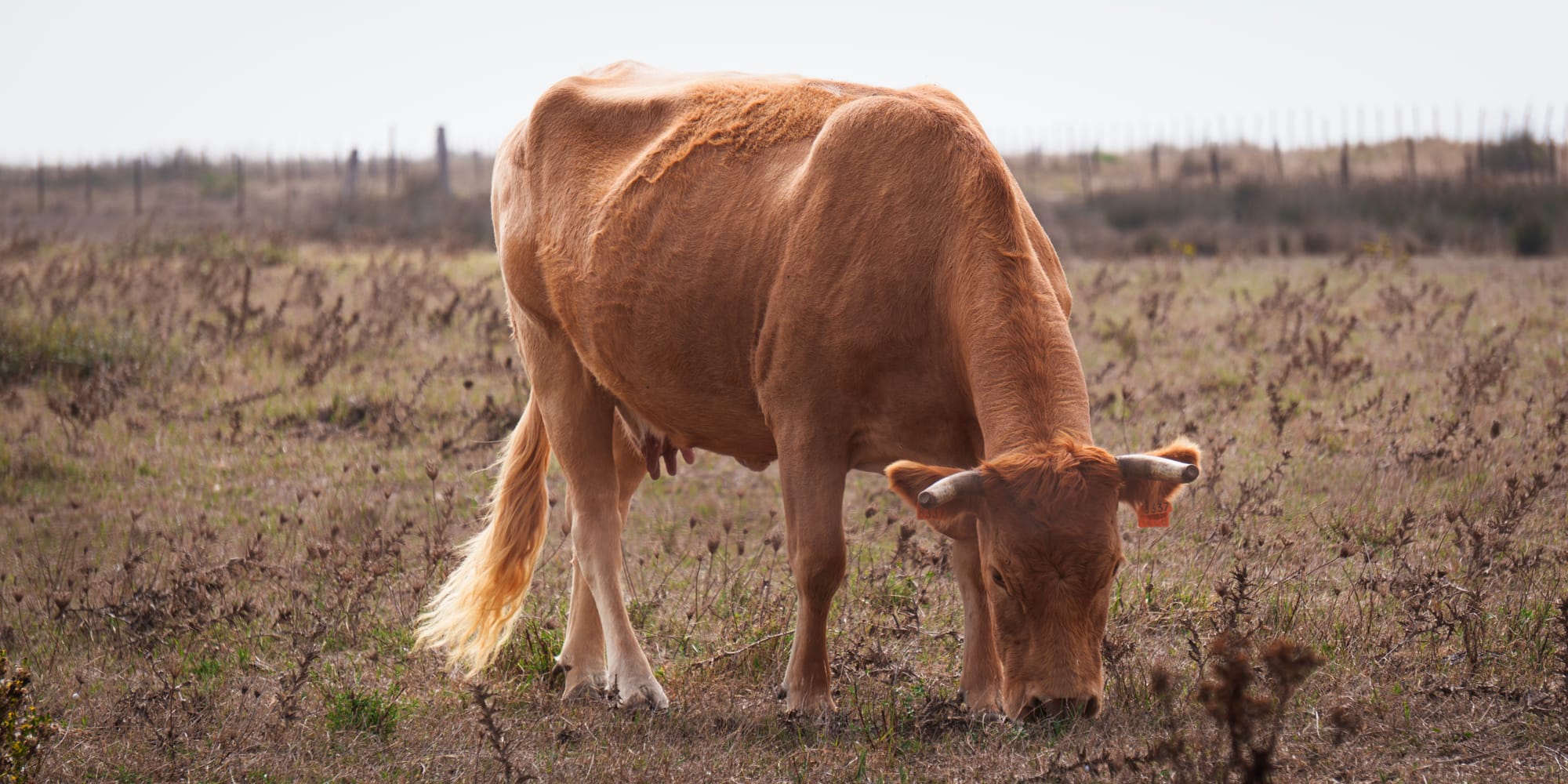
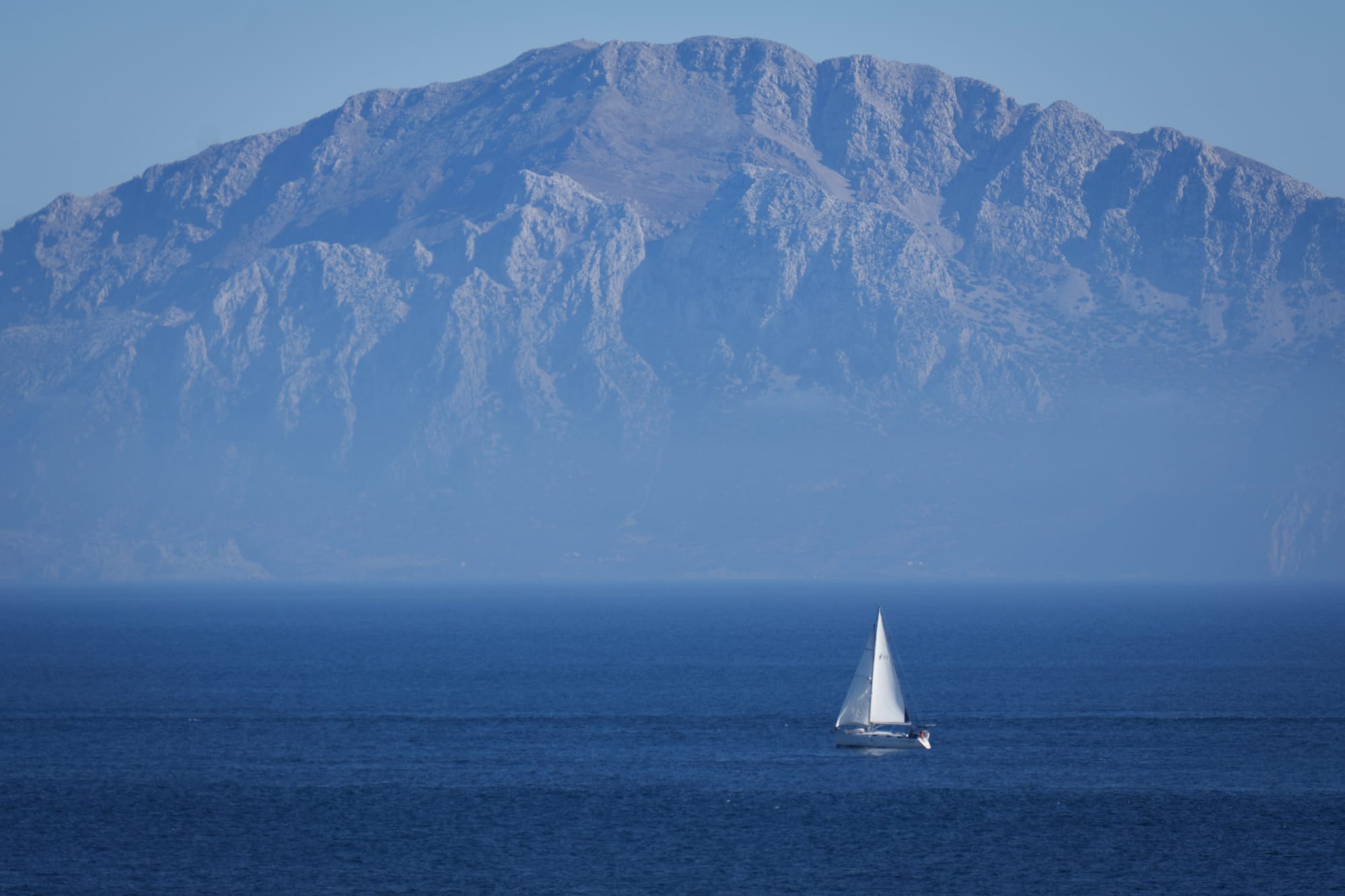
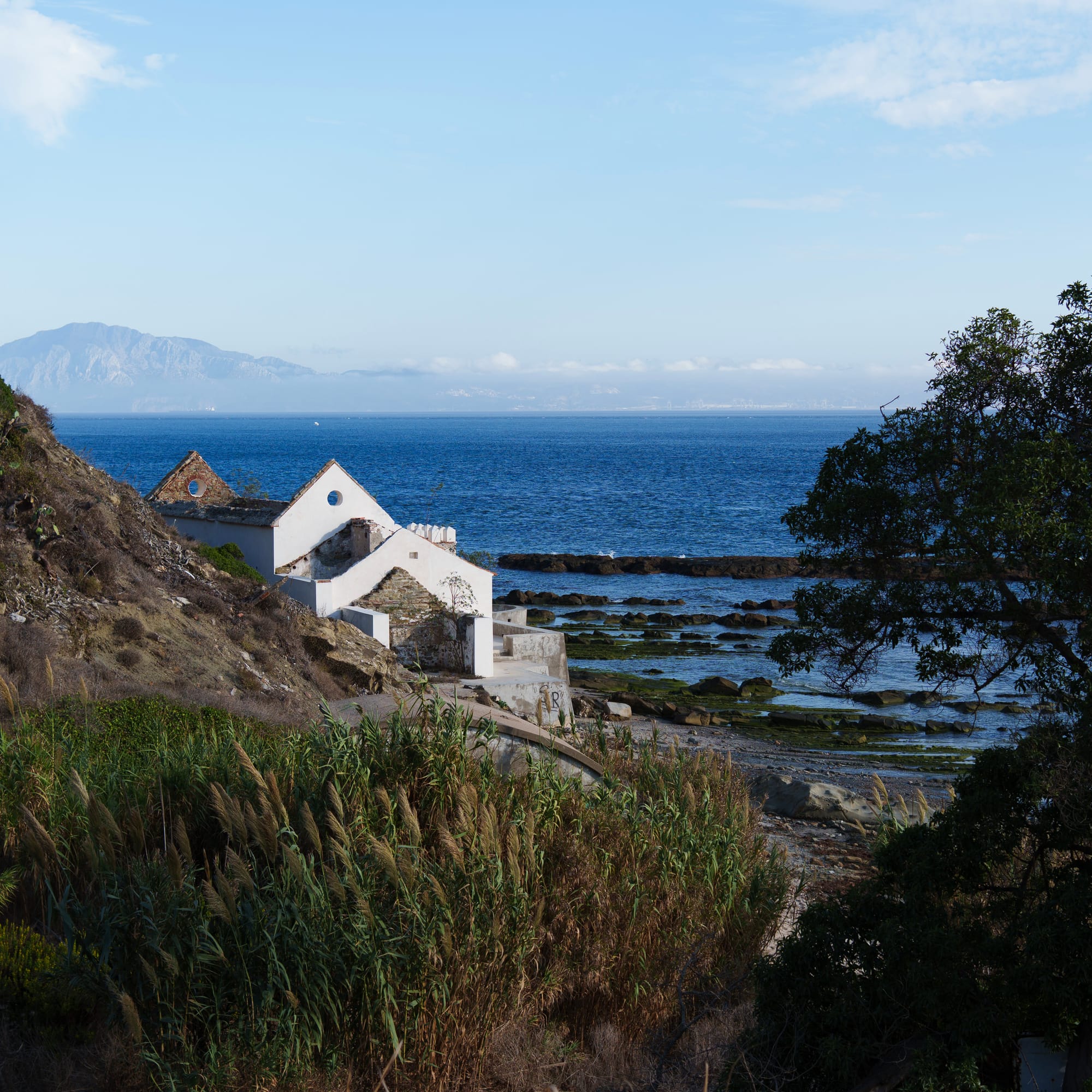
[📸 Rachel & Johann]
During our three days in Tarifa we were able to catch glimpses, and sometimes see the entire coastline of northern Africa extending along the ocean only 14 km away. On Oct. 6th, we caught the ferry from Tarifa to Tangier, Morocco, where we spent another three days. We only wish it could have been much, much longer.
Morocco
Stepping off the ferry and into Tangier, the first thing we noticed was that it was hot. Only 10:00 am, the sun blazed down, promising to keep each day of our October visit hovering close to 30 degrees Celsius. We dropped our bags off, and dove into the writhing streets of Tangier.
Their weave was labyrinthine; narrow alleys twisting and turning, intersecting or coming suddenly to a dead-end. A few streets were driveable (and it's amazing just what people will take cars down), but the majority were only two to three meters wide.
The old medina was eclectic and vibrant. Crooked, cobbled streets converged around tiled fountains, and the pale white-washed walls were splashed with the blues, pinks, and yellows of painted walls and shutters. In the souk, small store fronts lined the streets piled high with spices, dates, olives. An indoor market thrummed with vendors selling raw meat, fresh veggies, and piles of fish on a floor slick with mucus.
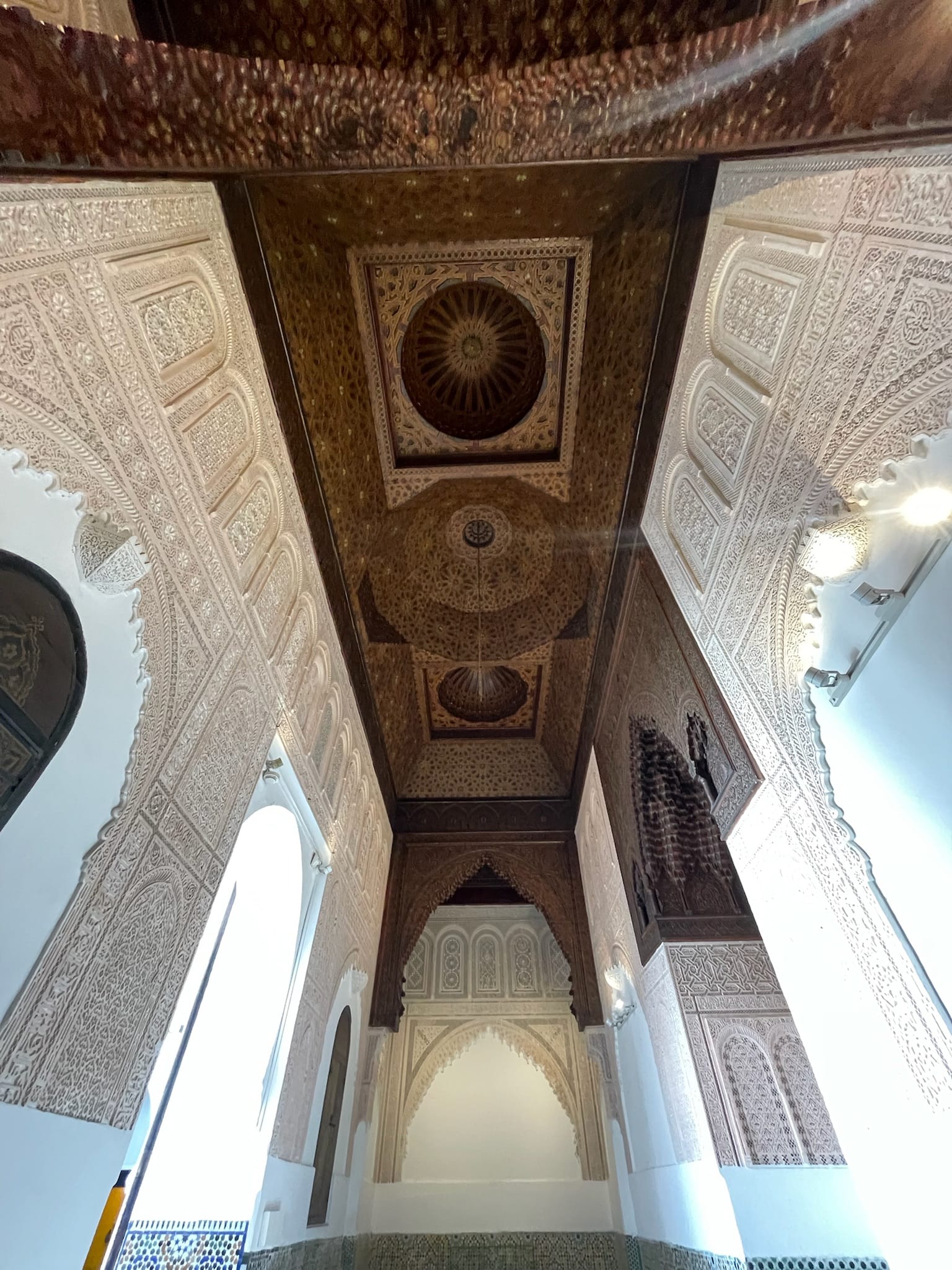
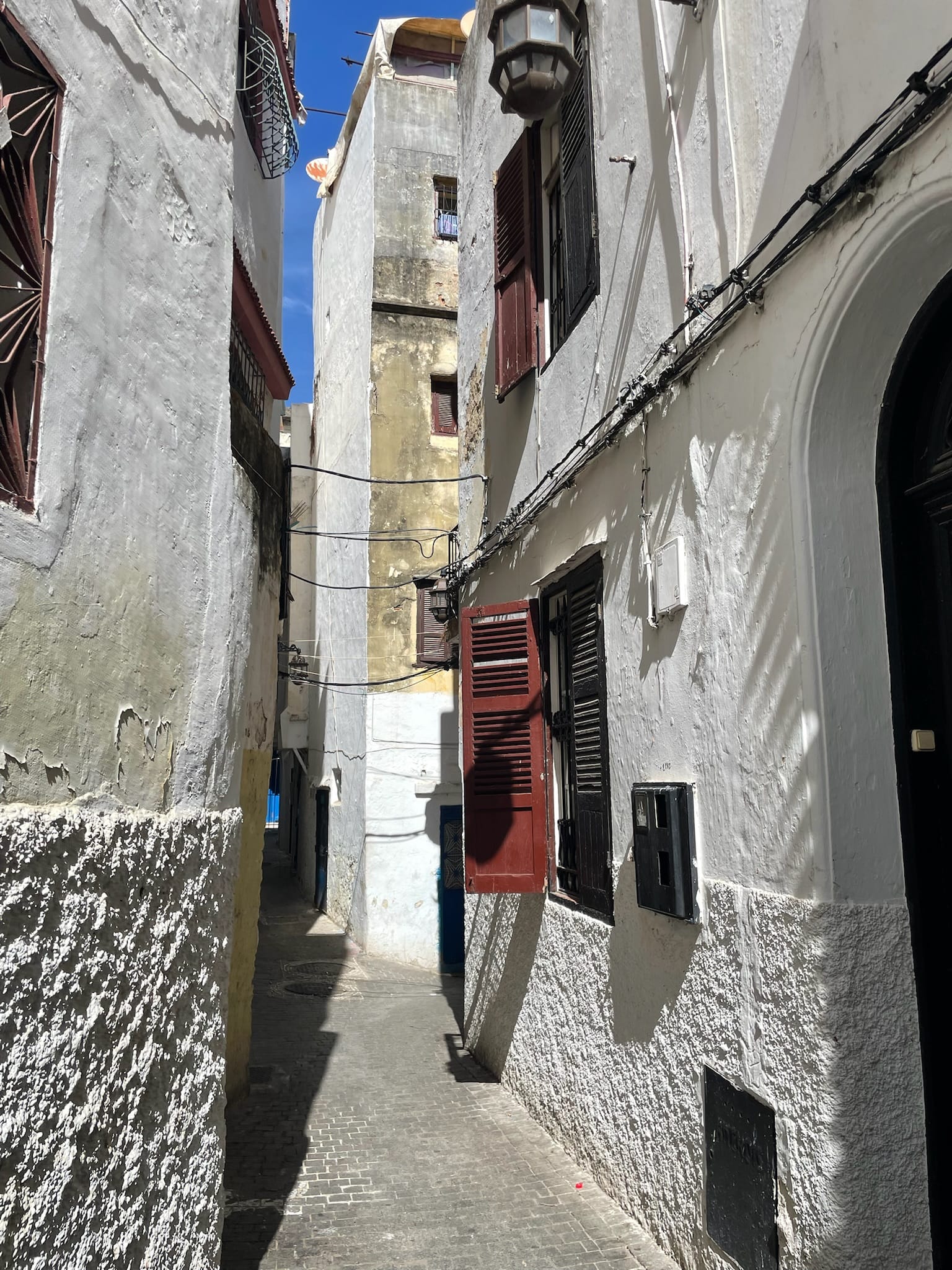
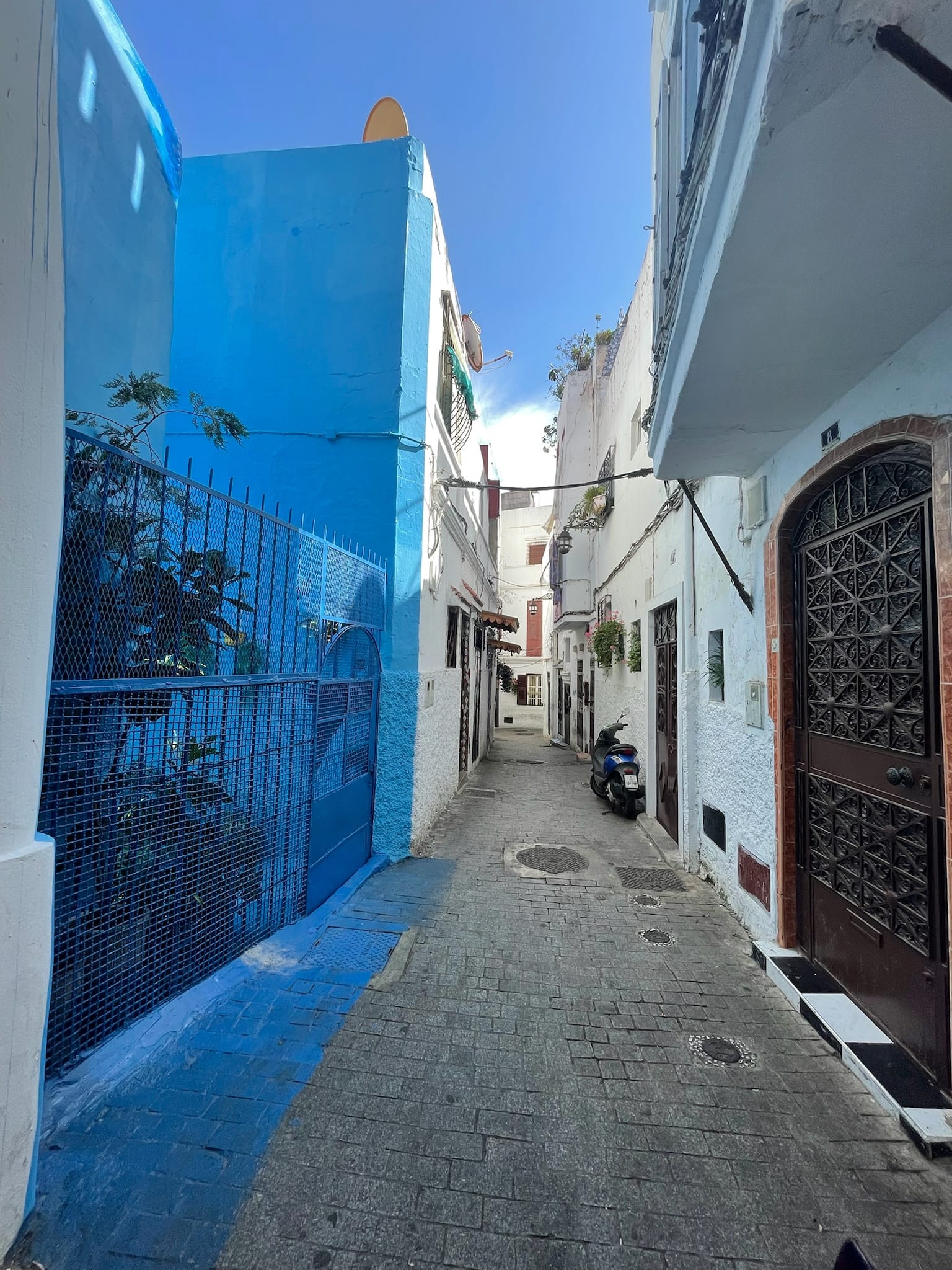
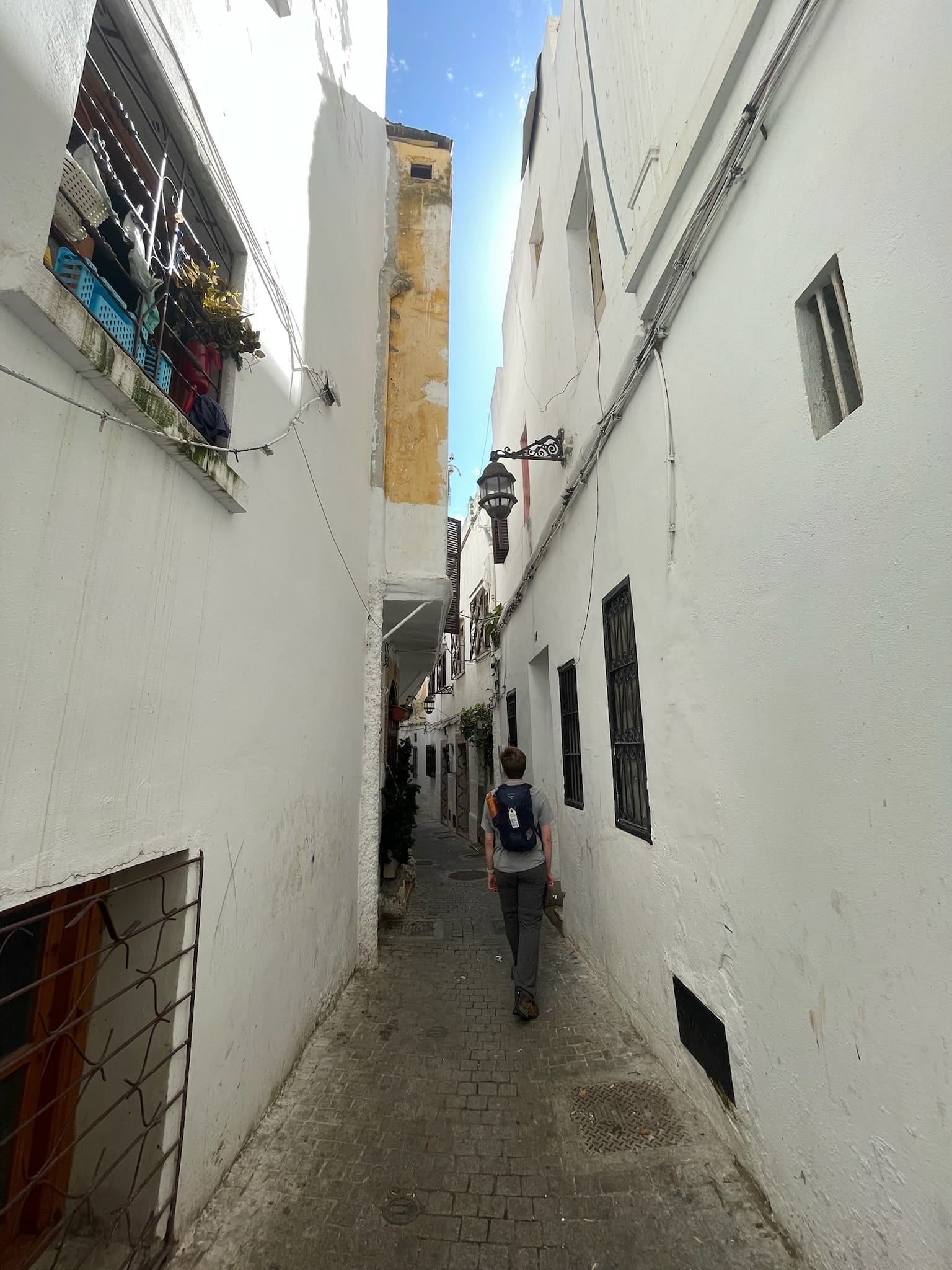
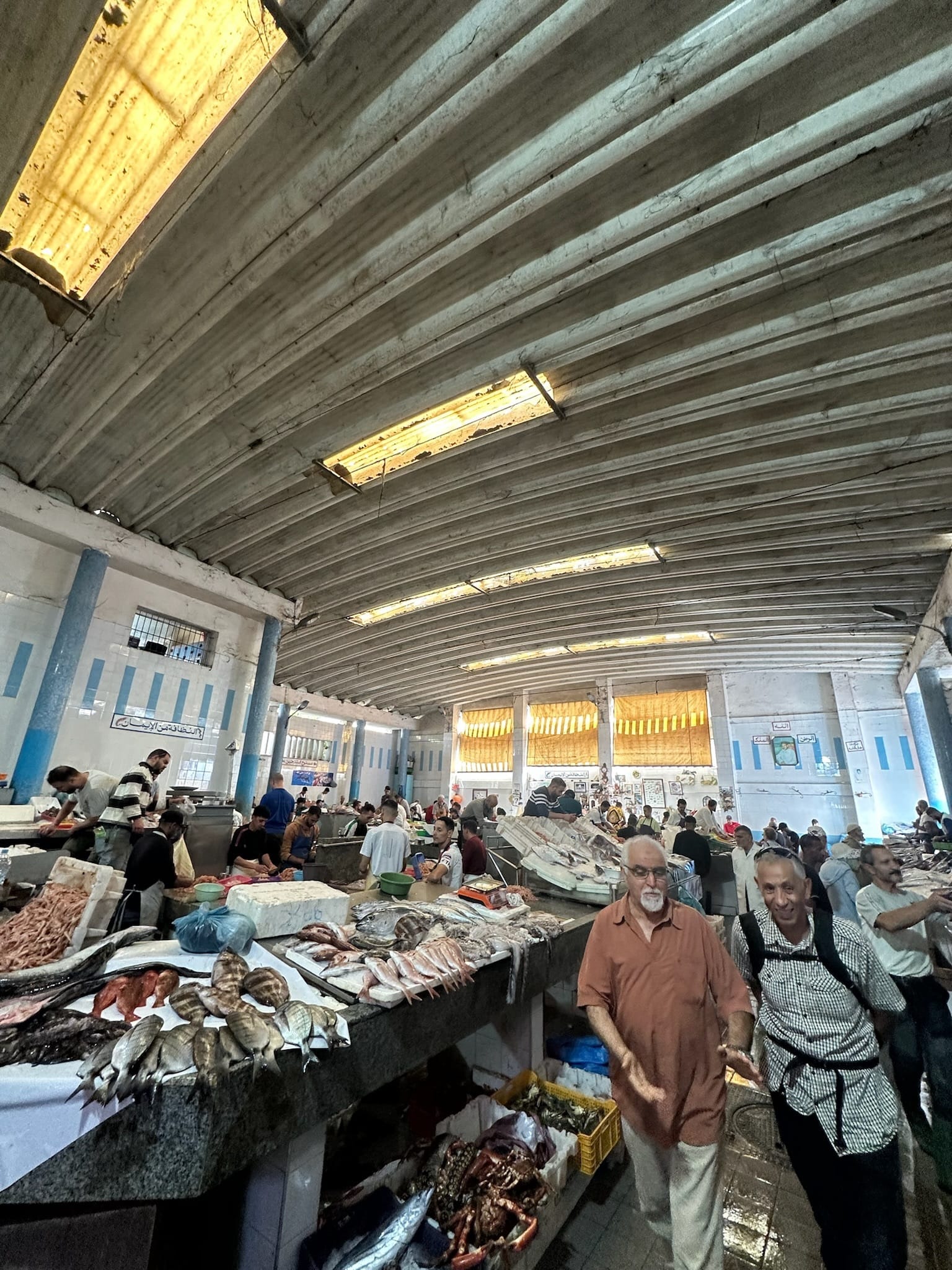
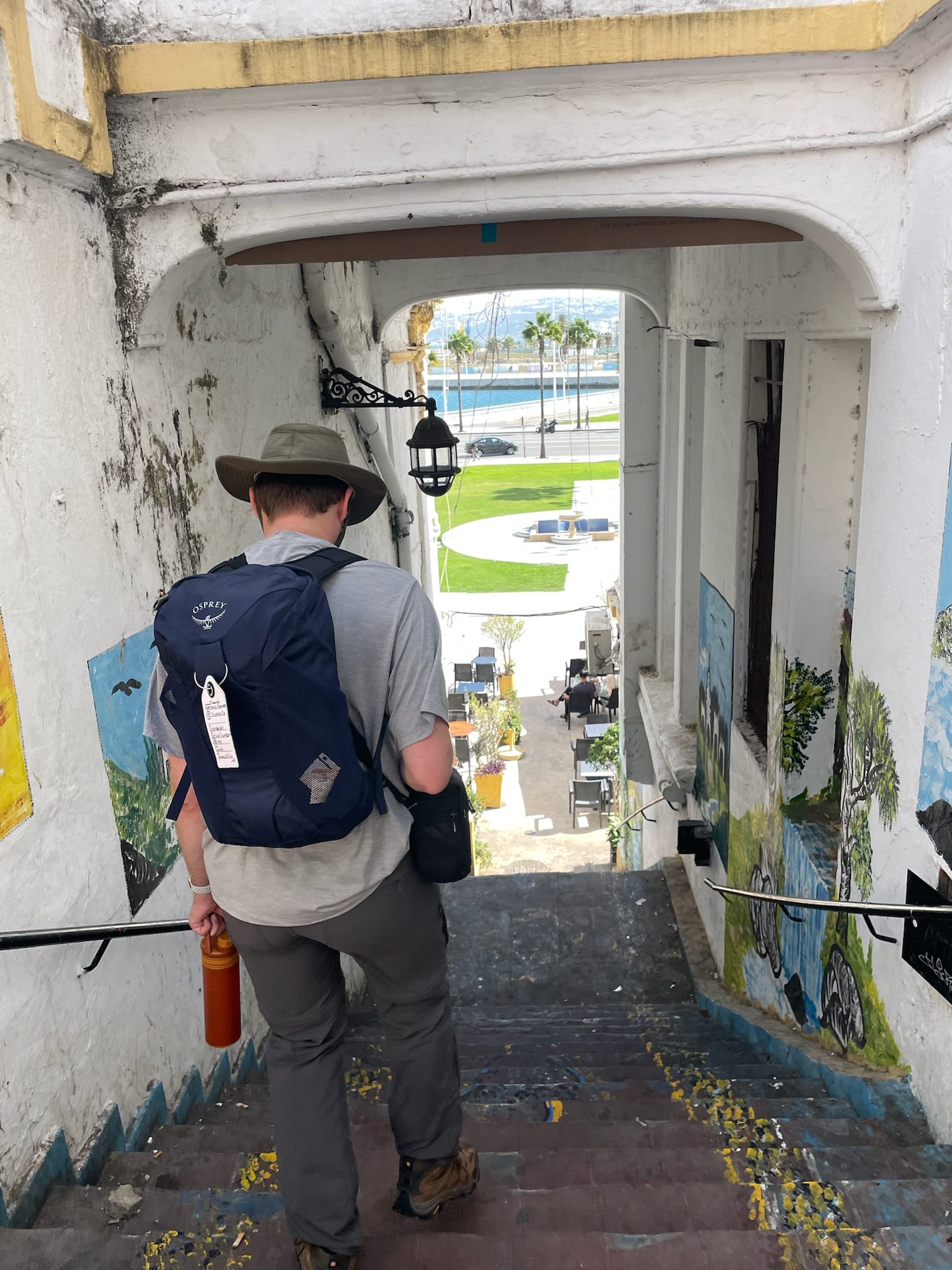
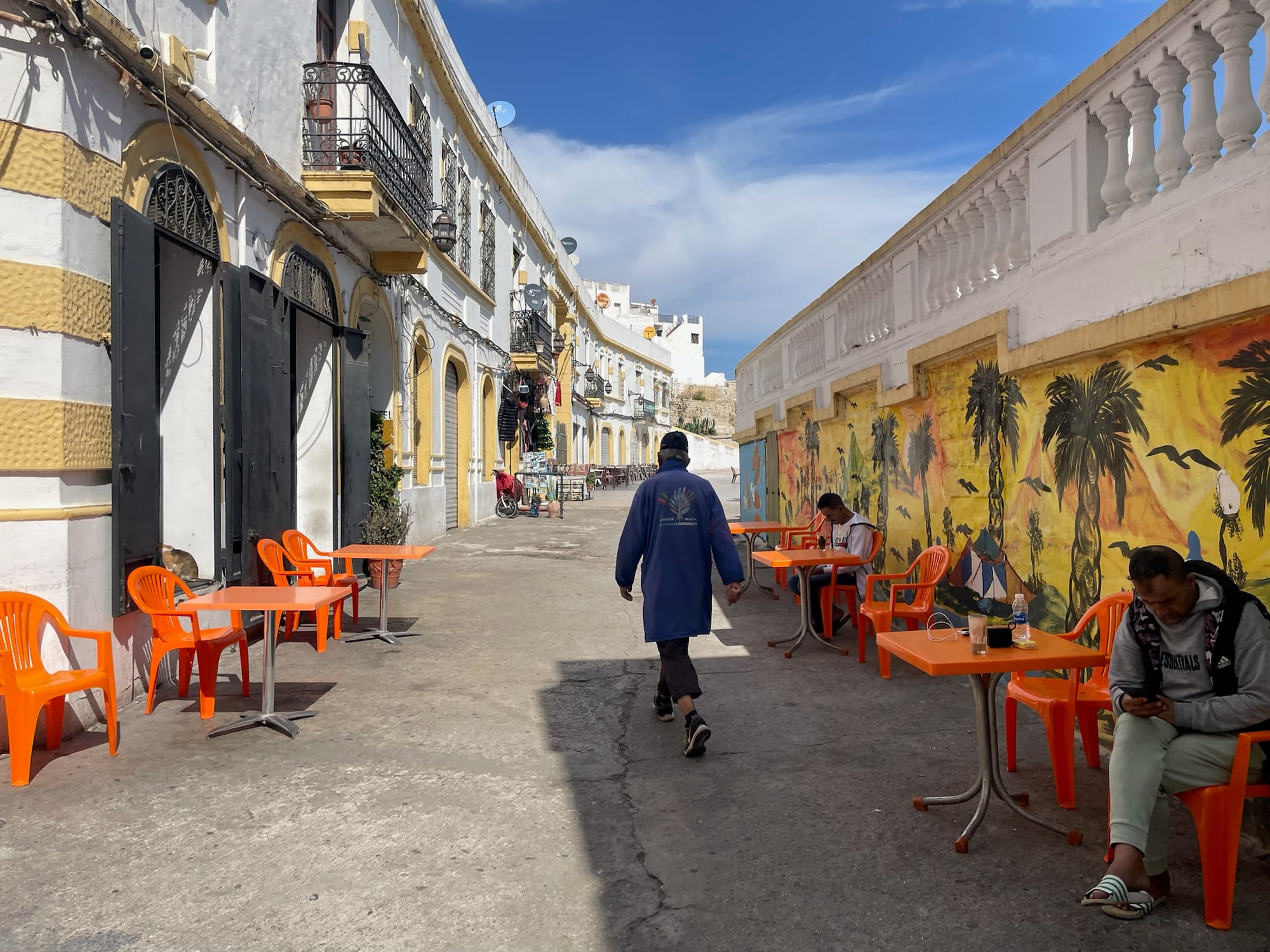
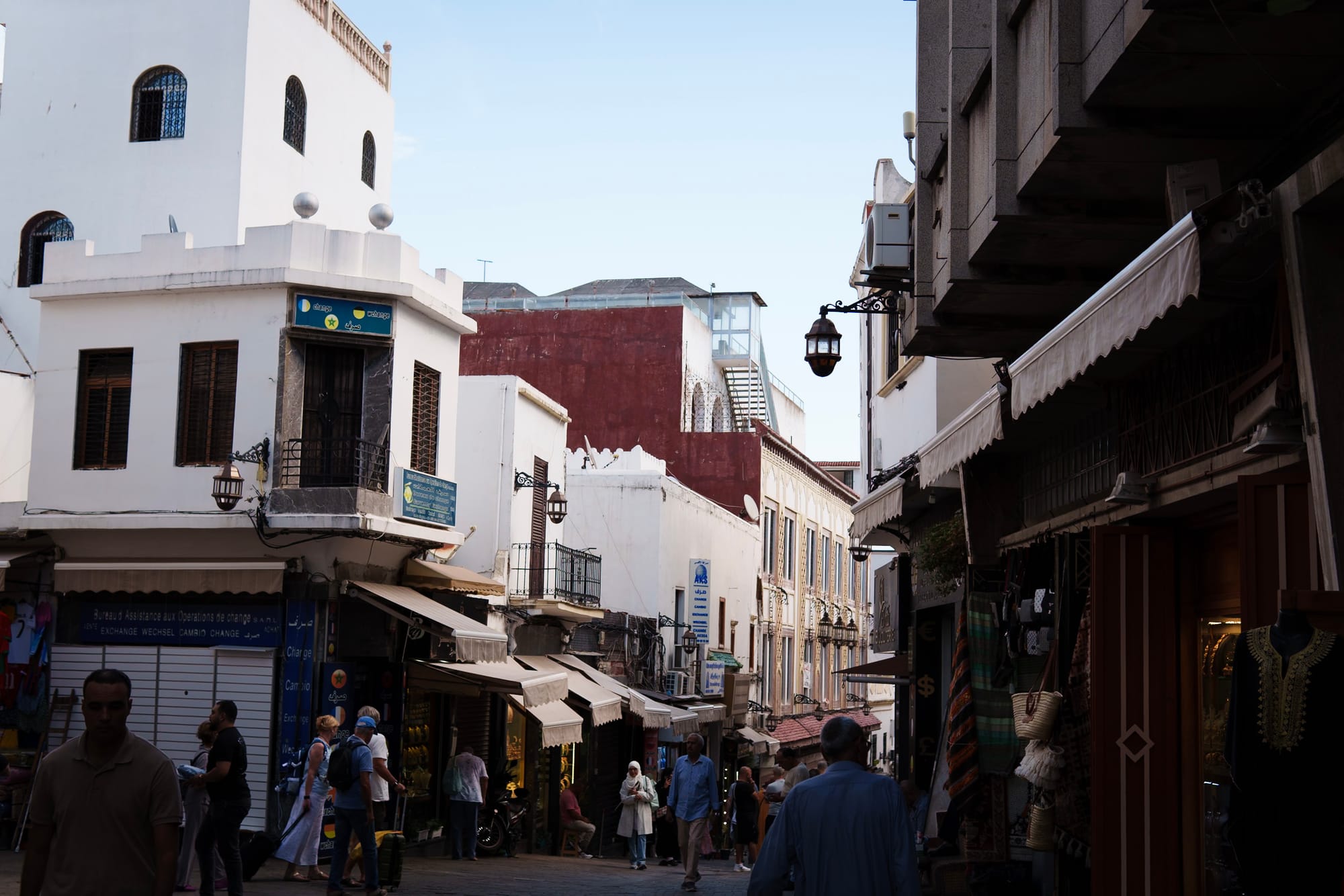
Exploring Tangier on our first day. [📸 Rachel & Johann]
The second thing we noticed were the cats (ok, maybe it was actually the smell of all the cat urine and excrement that initially caught our attention). Morocco has a lot of stray cats, napping in clusters on the park grass or curled up in street vendor wares, dozing in the shade of a parked car or wolfing down discarded fish from the cobblestones. We also saw the compassion people extended towards these animals in the form of drinking water, kibble, or makeshift shelters. The grocery store we shopped at had ¾ of the pet aisle dedicated to cat products, with only the remaining ¼ for dogs.
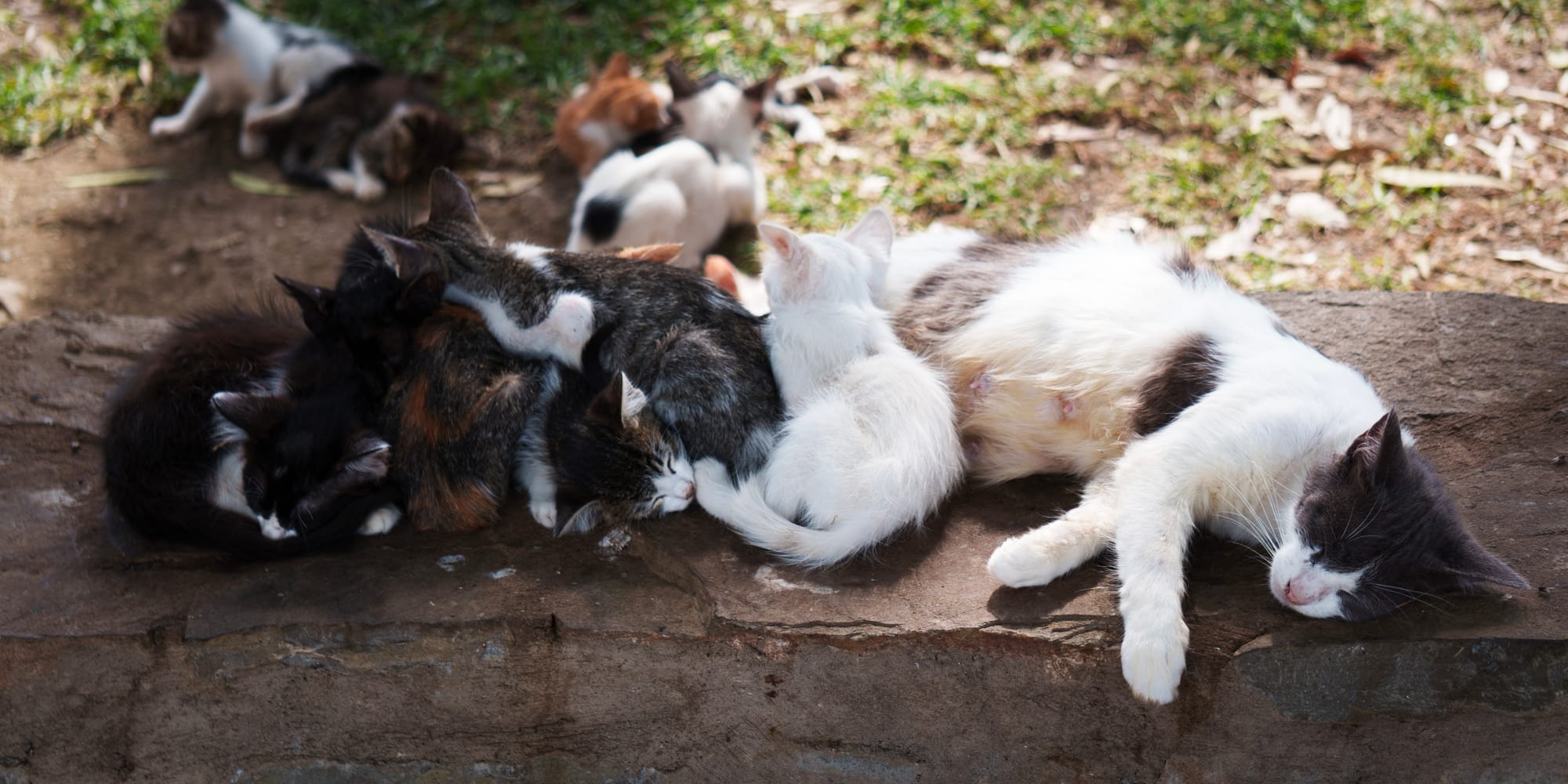
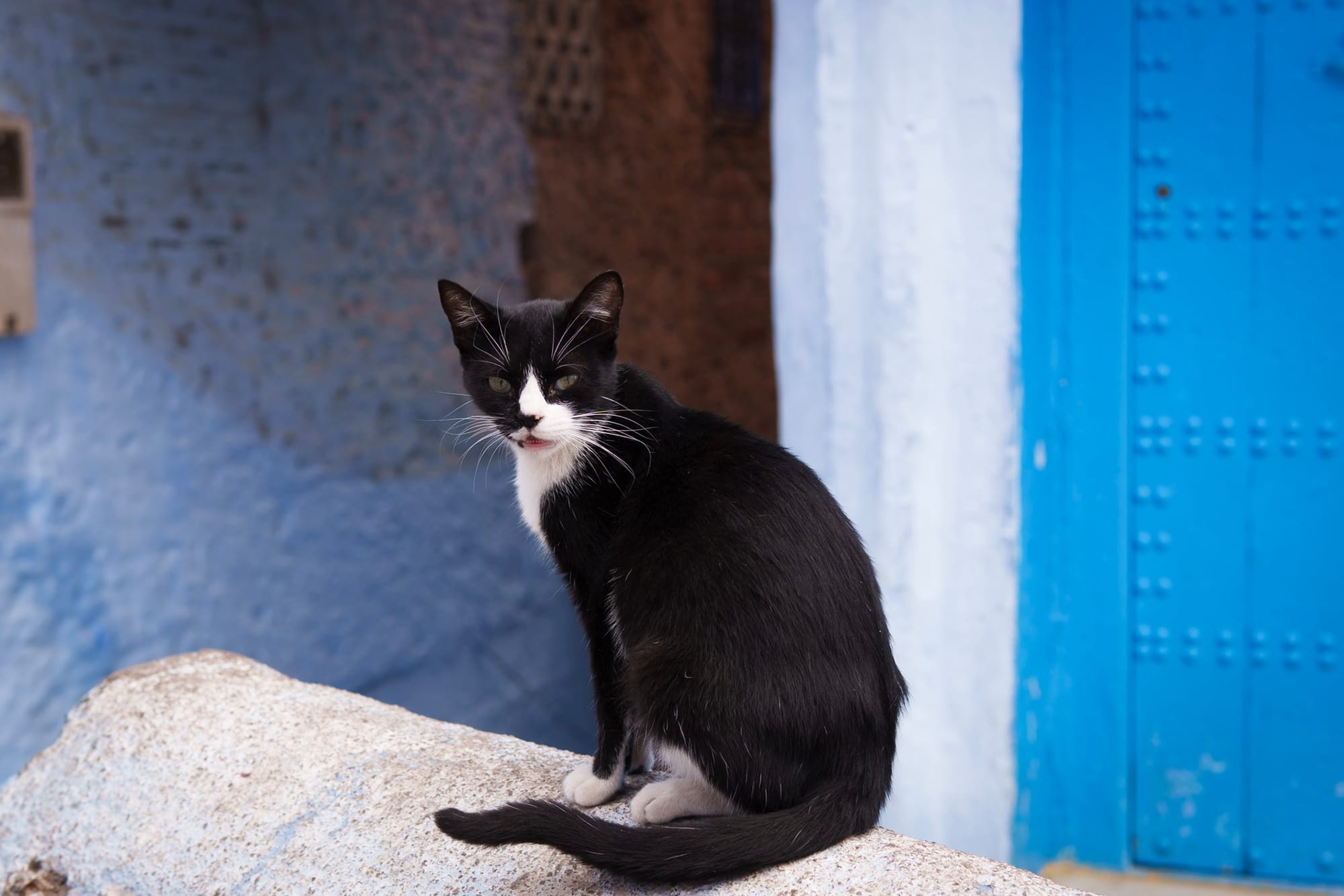
Stray cats were everywhere, whether in Tangier (left) or Chefchaouen (right). [📸 Johann]
With the taste of mint tea on our tongues, rich spices and indefinable scents filling our nostrils, and the Adhan reverberating in our ears, Morocco was somewhere that demanded we always be present. And while we only had time to brush the surface of this remarkable and vibrant country, every moment left us yearning to come back.
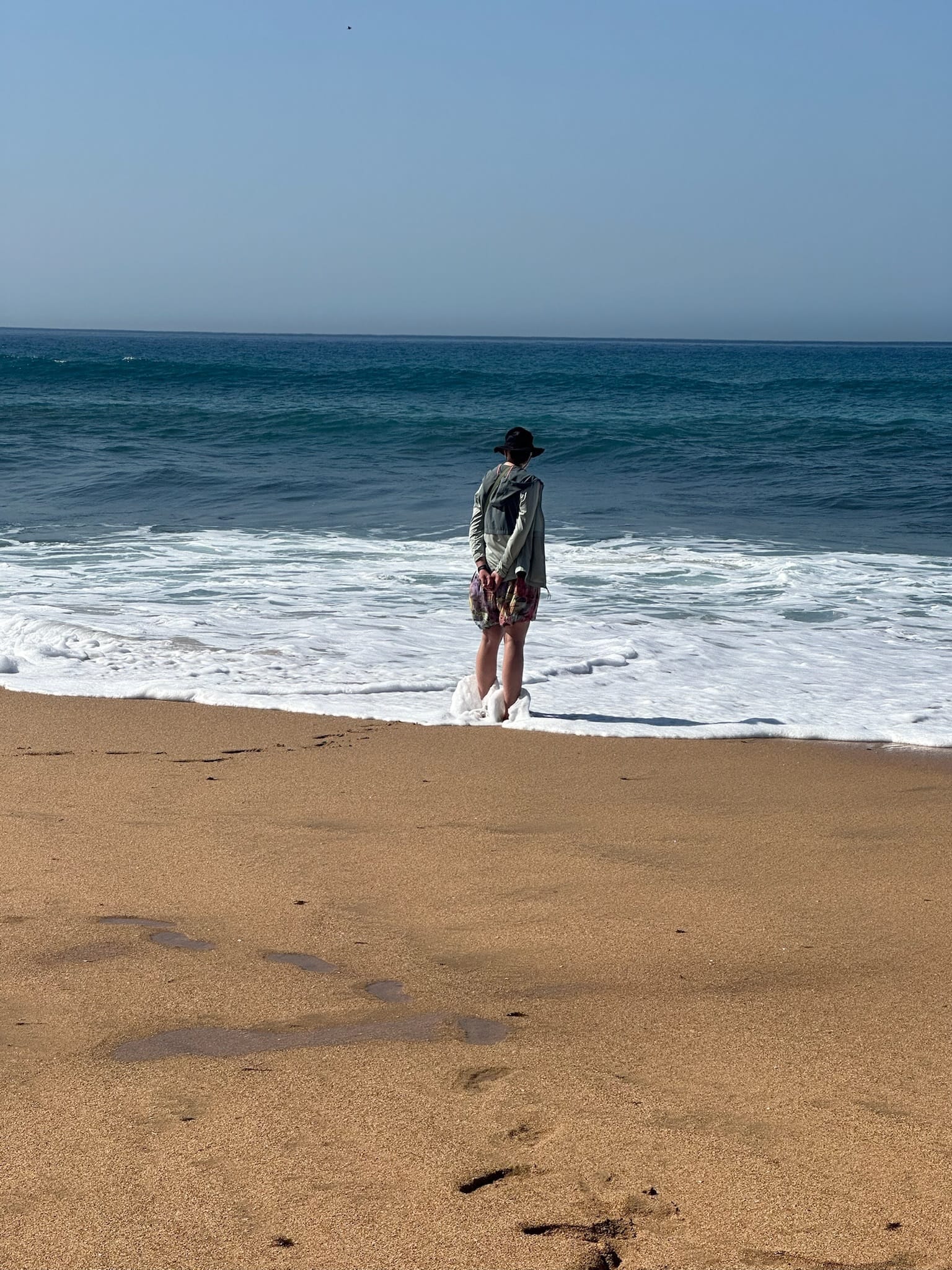
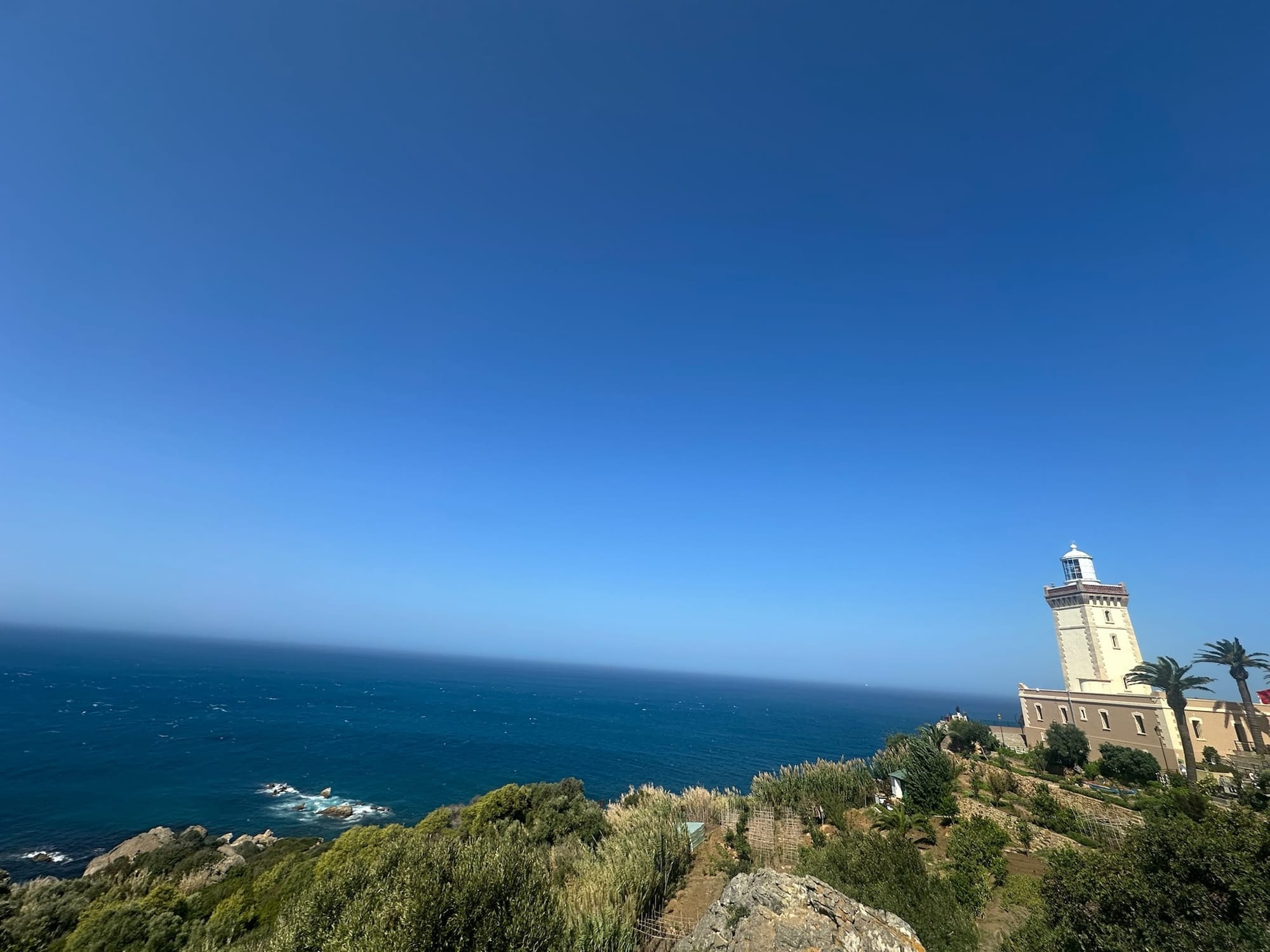
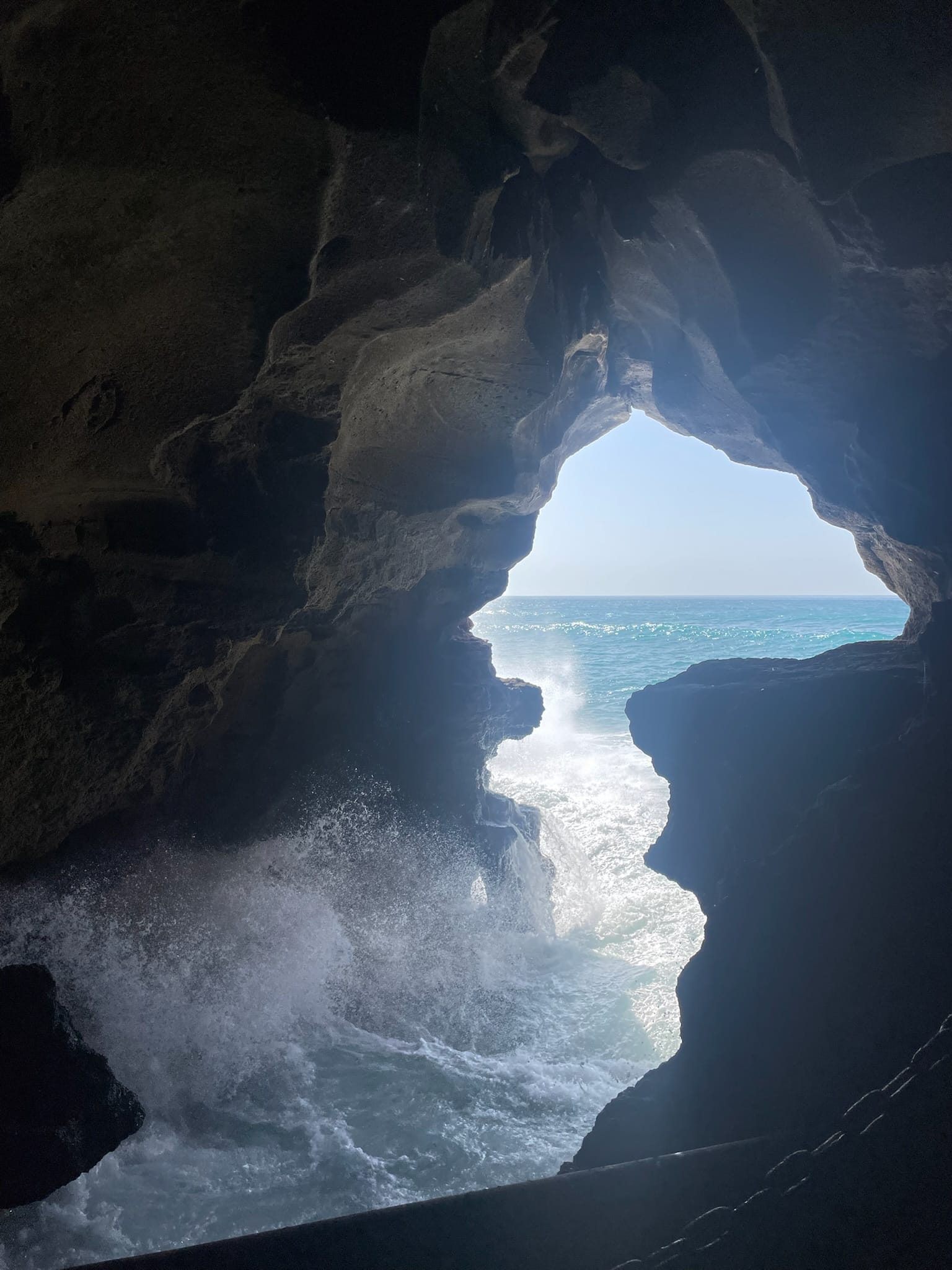
We explored down the Atlantic coast, and visited the Cave of Heracules. [📸 Rachel & Johann]
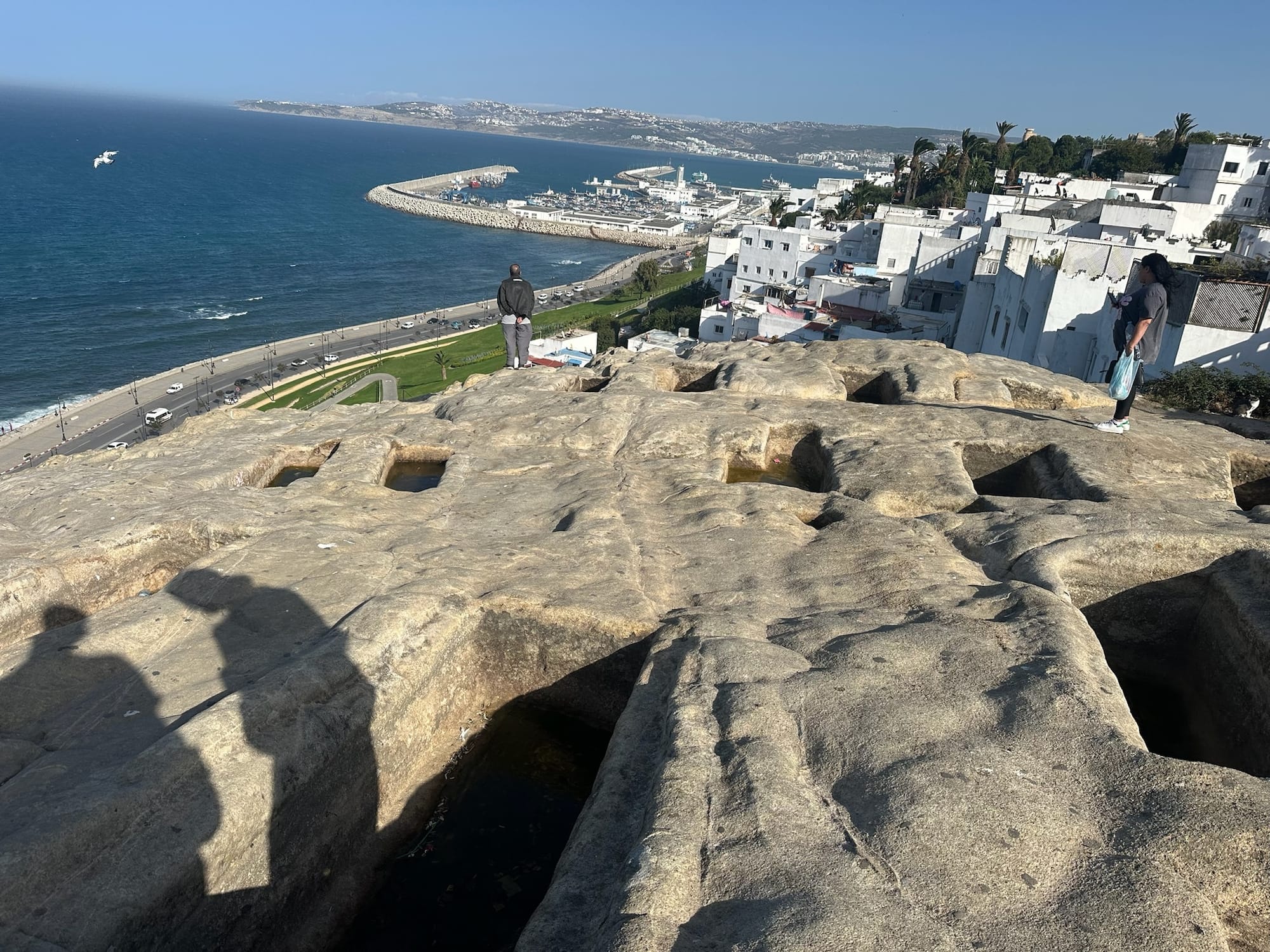
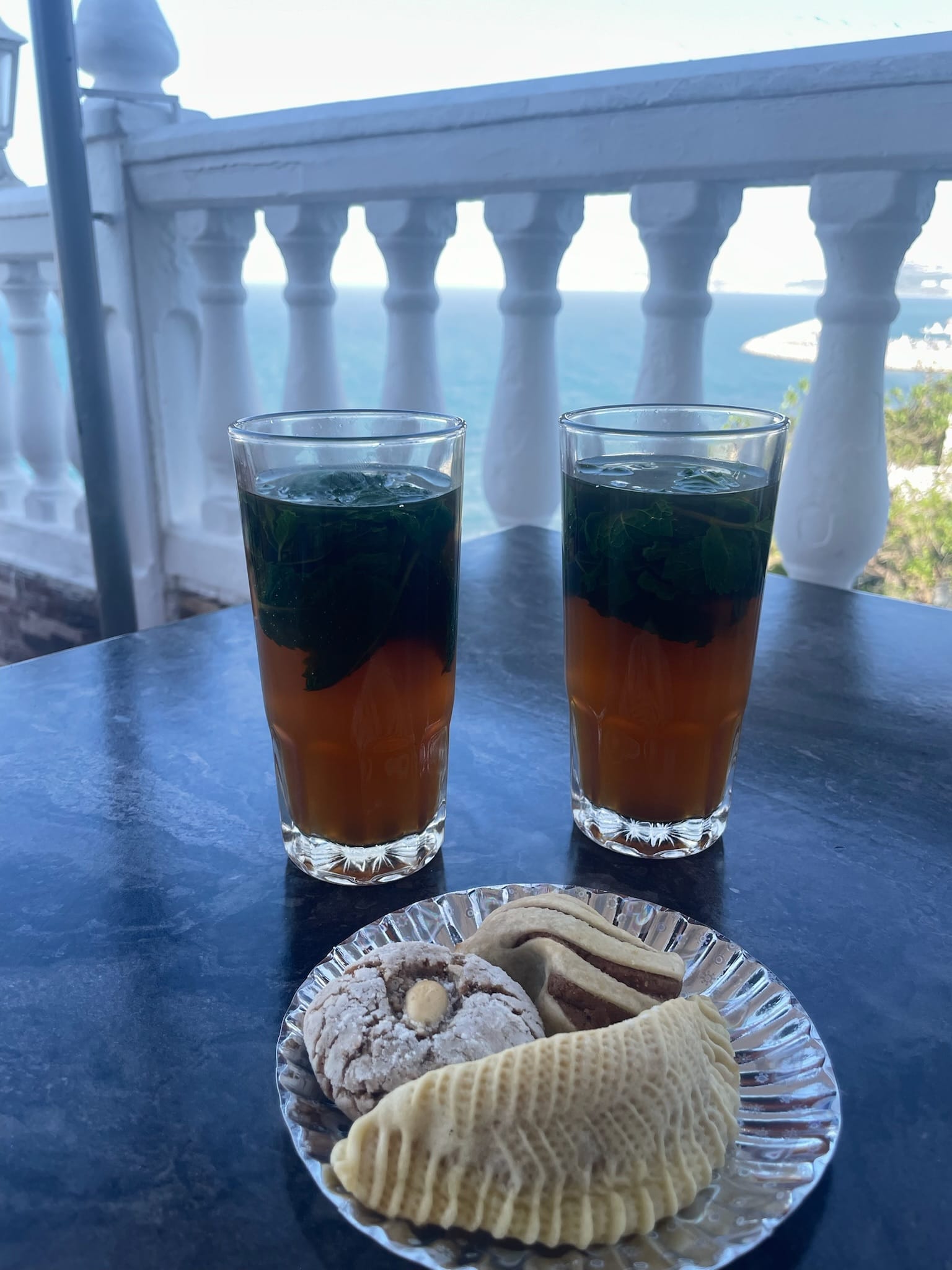
Steps away from Phoenician graves over the old city of Tangier, we enjoyed mint tea and local pastries with a view of the sea. [📸 Johann & Rachel]
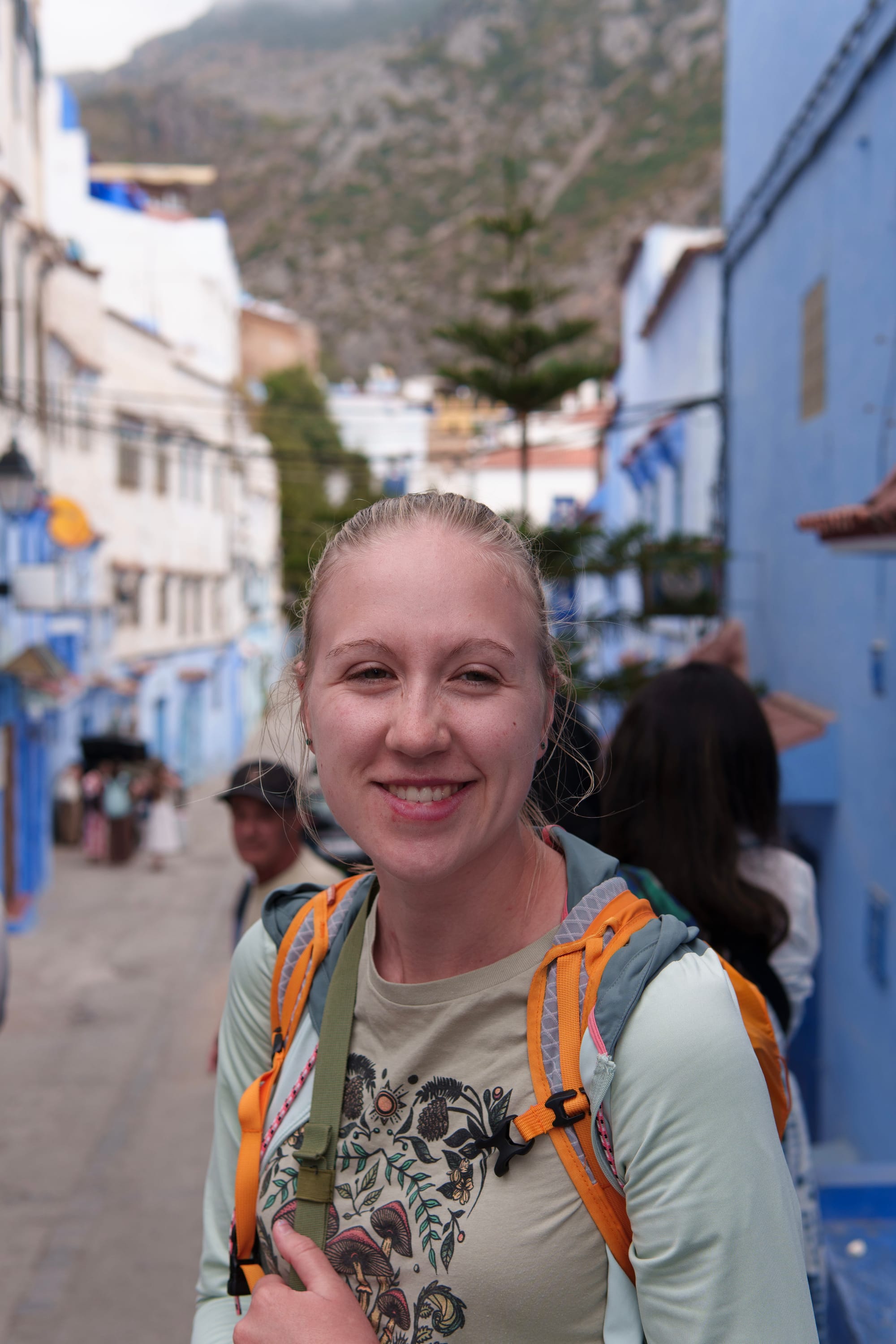
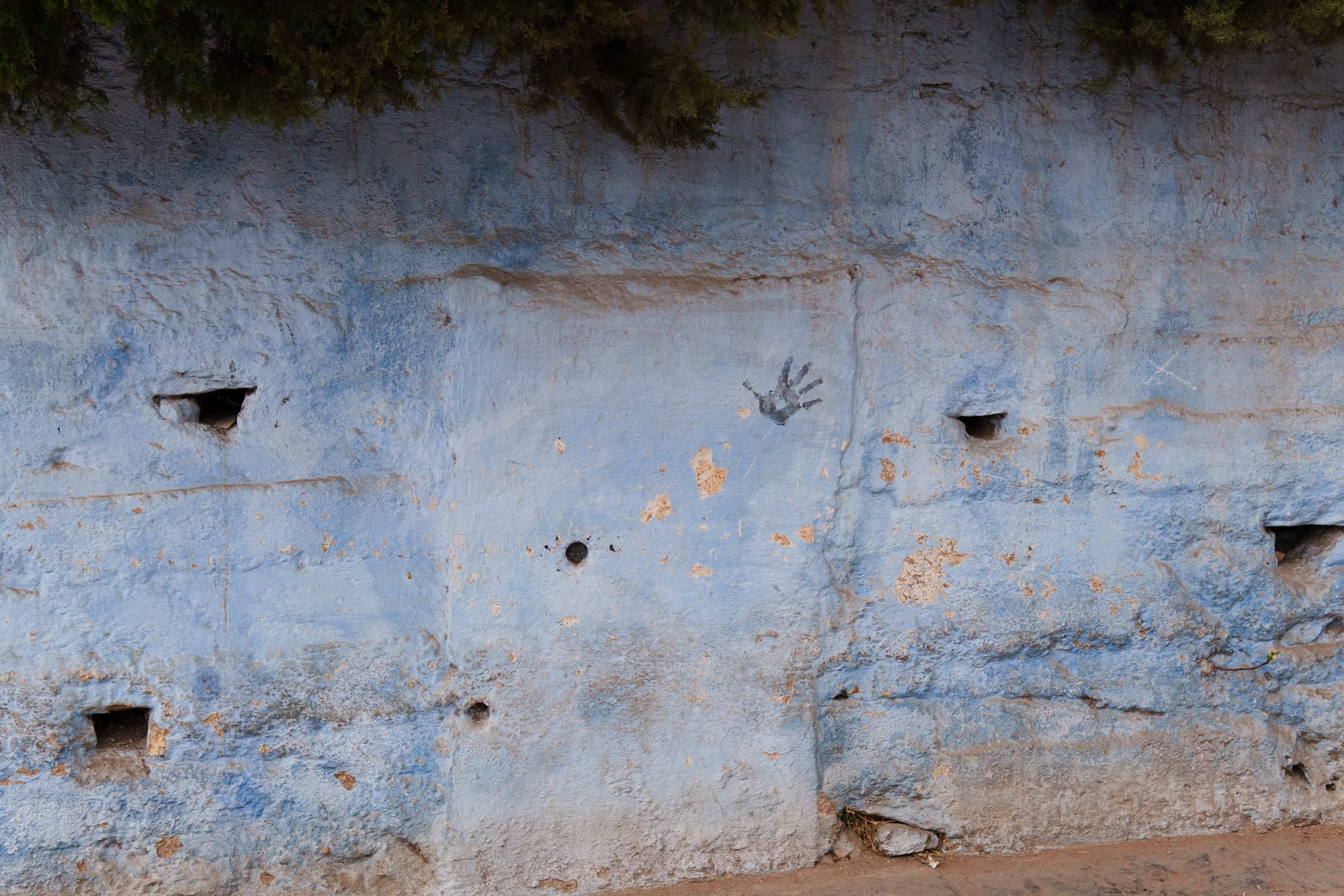
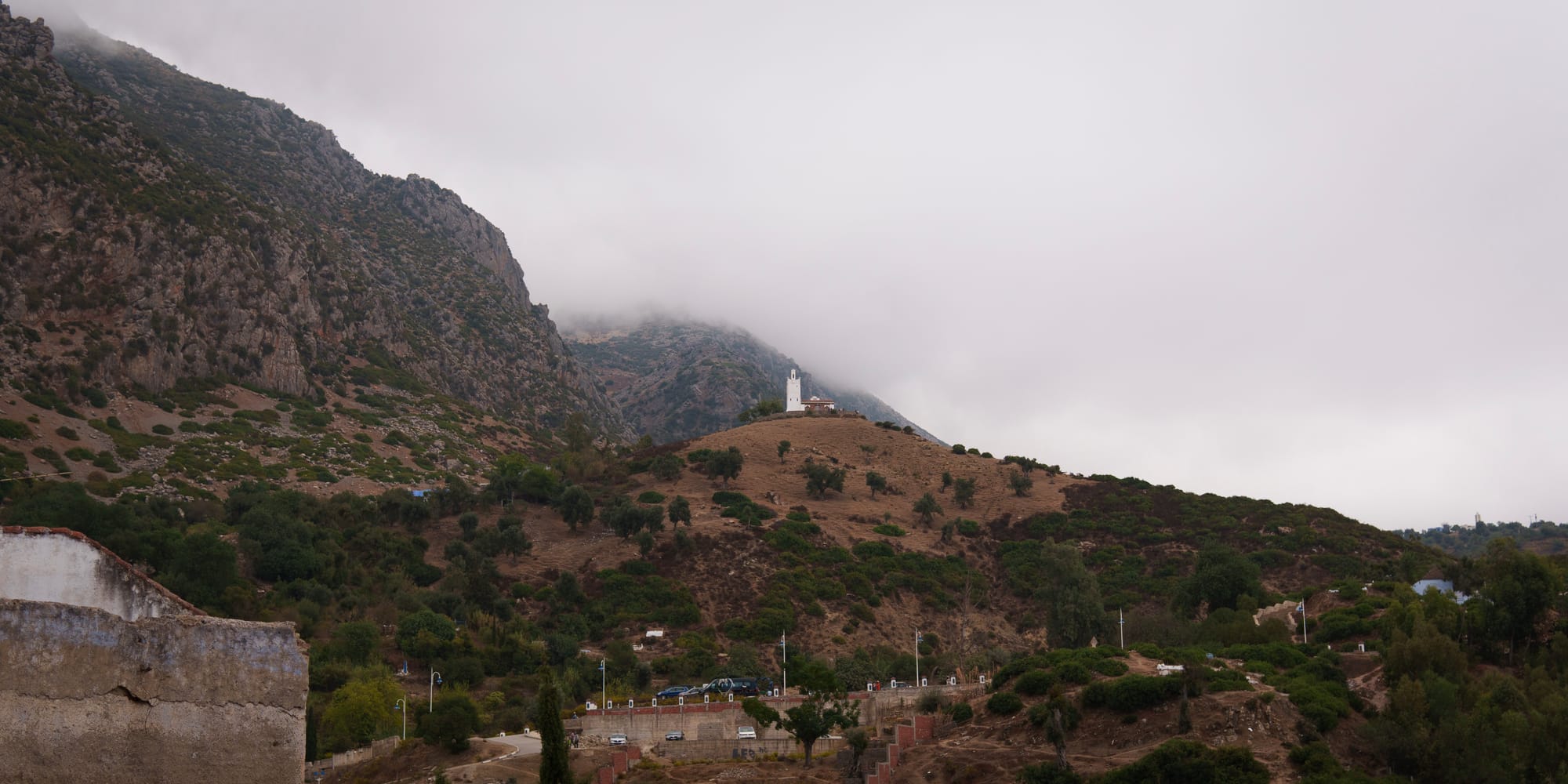
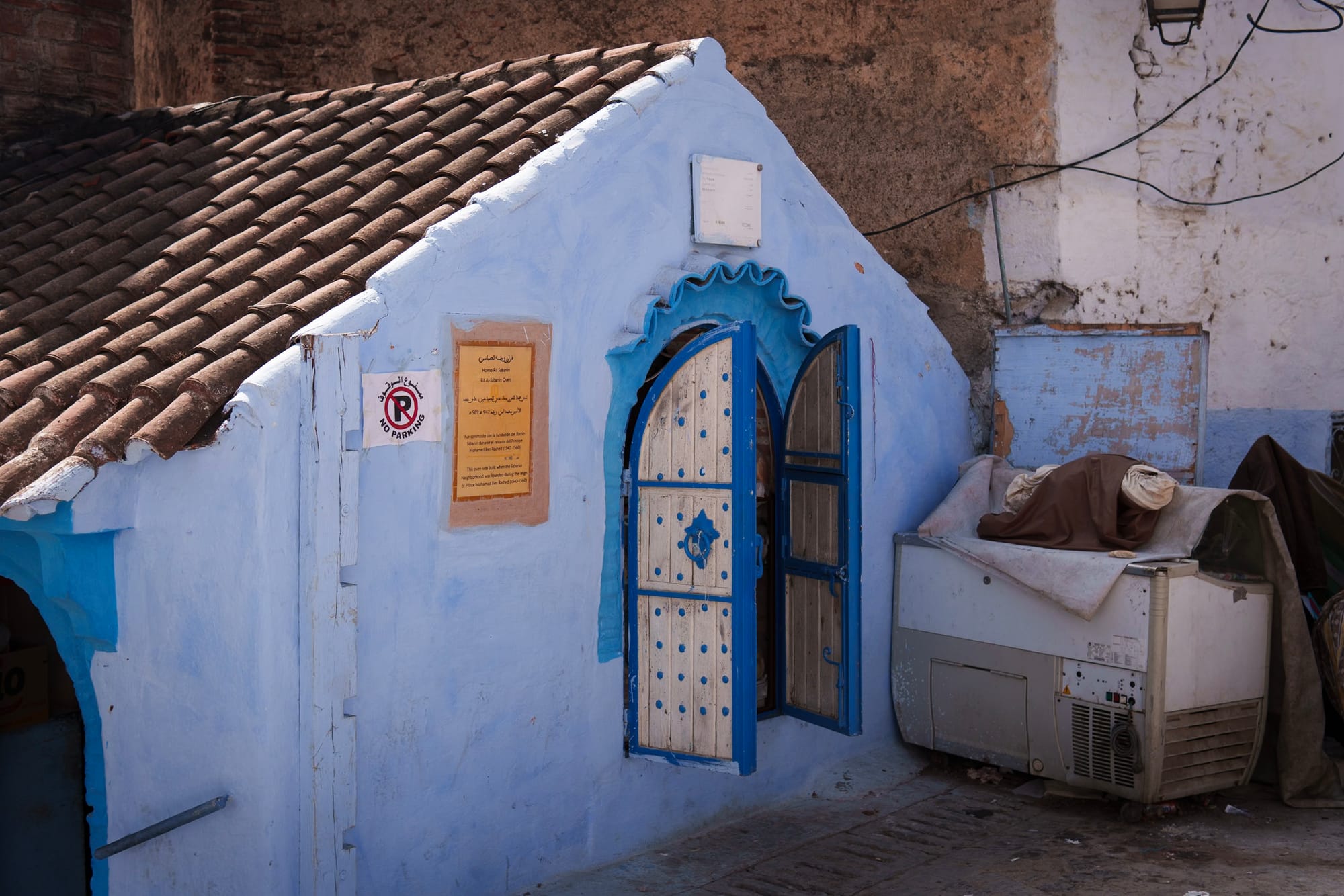
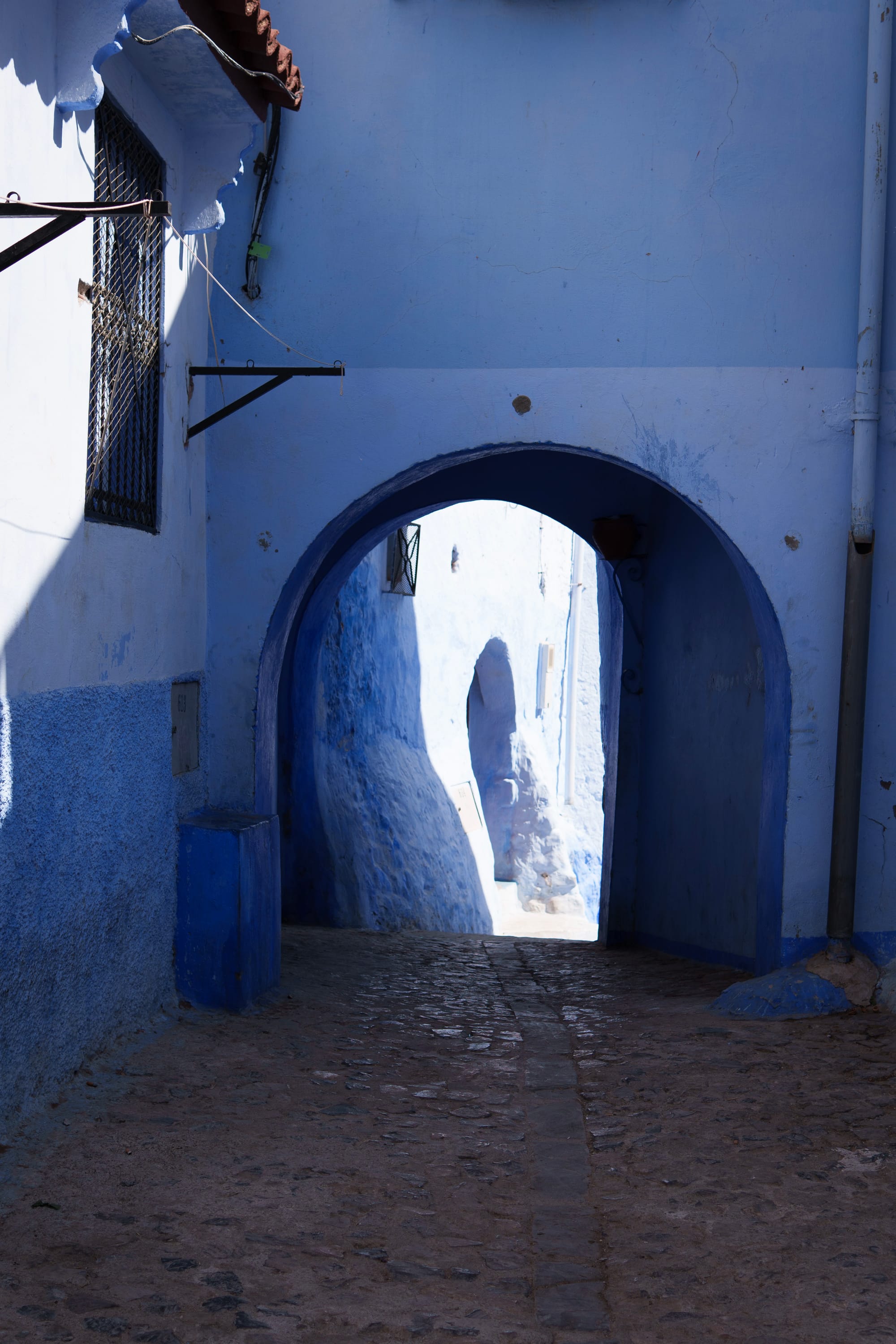
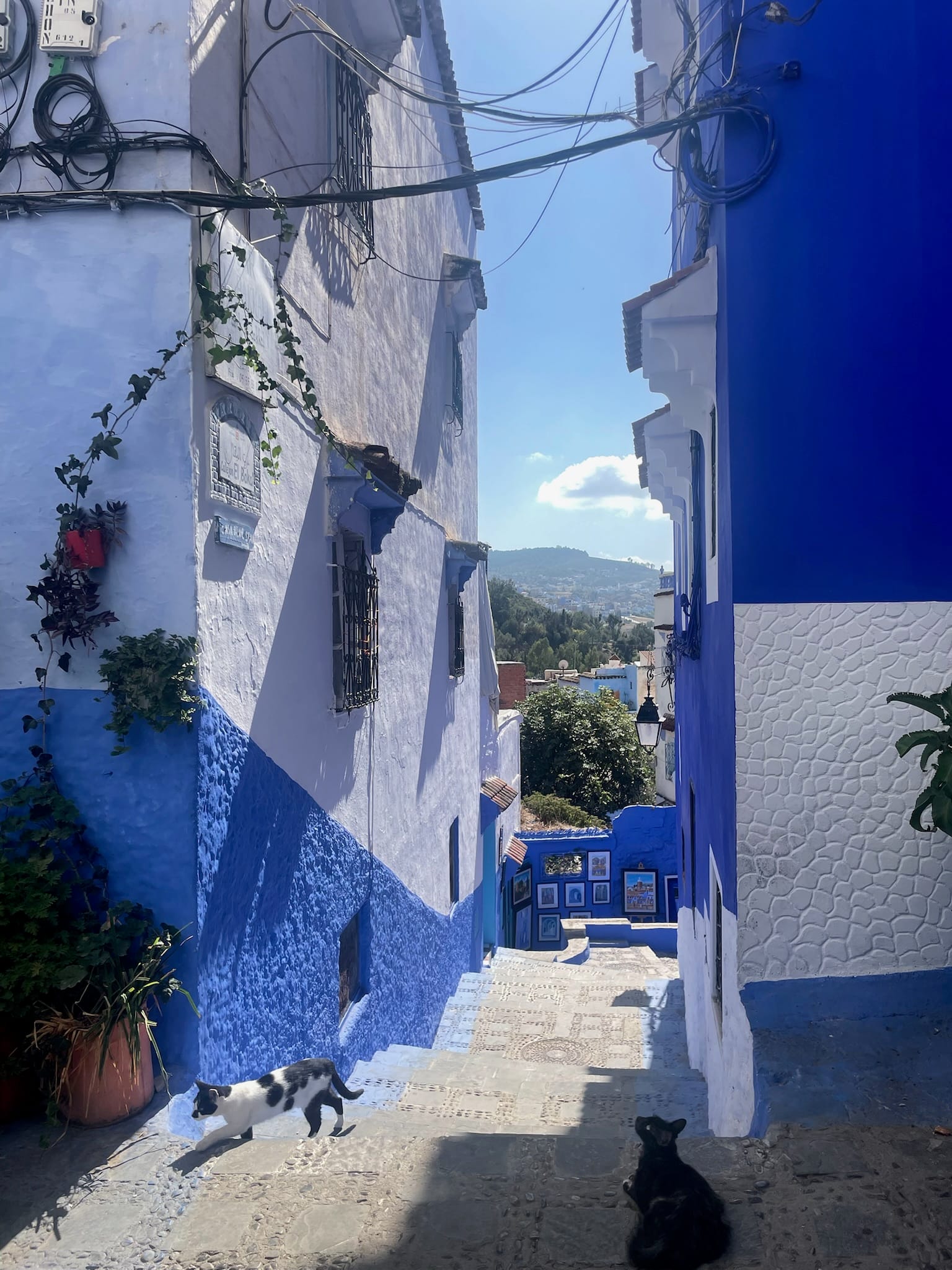
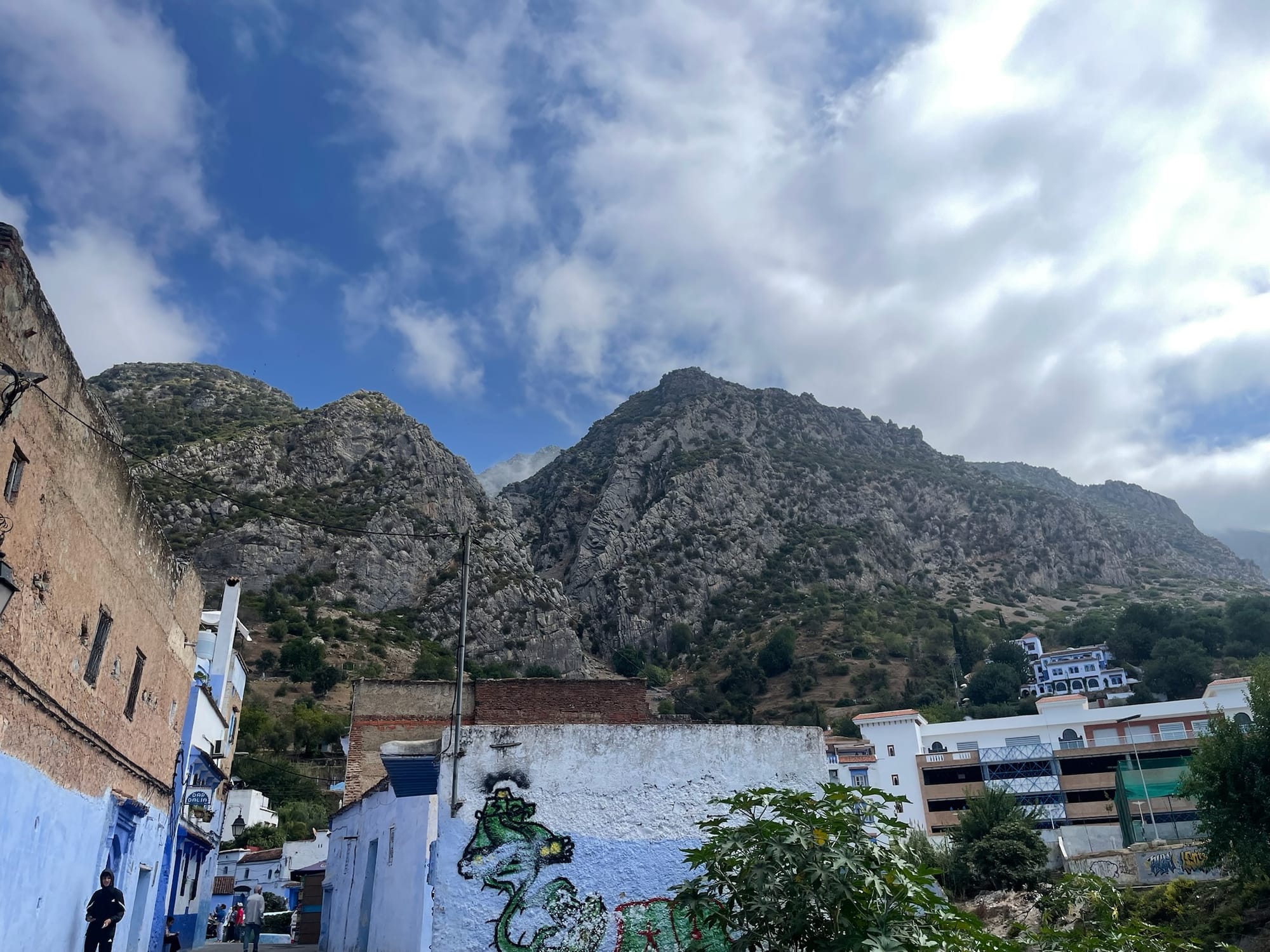
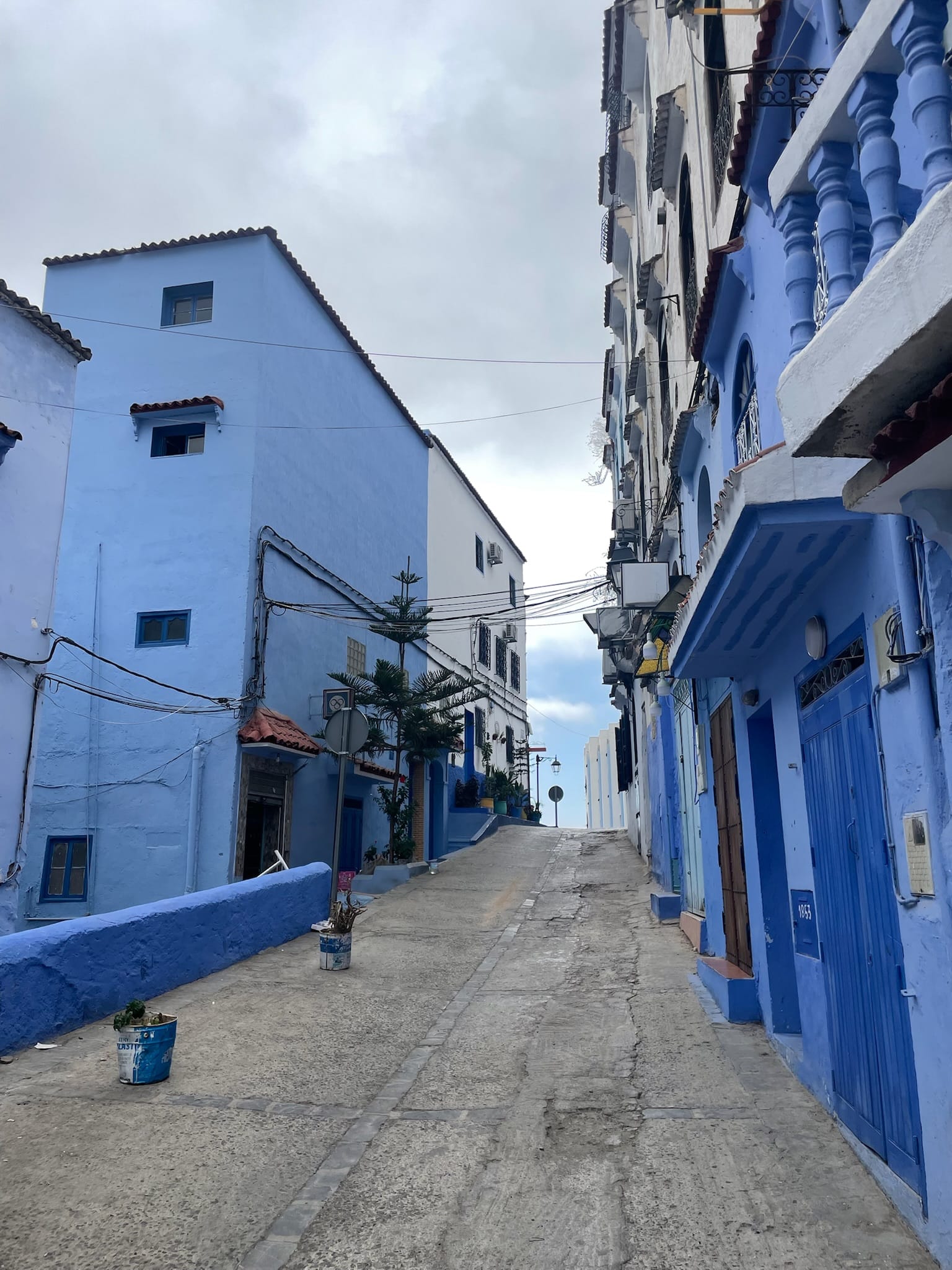
We explored Chefchaouen, a city in the mountains famous for its blue buildings (though our guide told us it was painted blue about 20 years ago to attract tourists...). The old city was filled with twisted streets and communal ovens. [📸 Rachel & Johann]
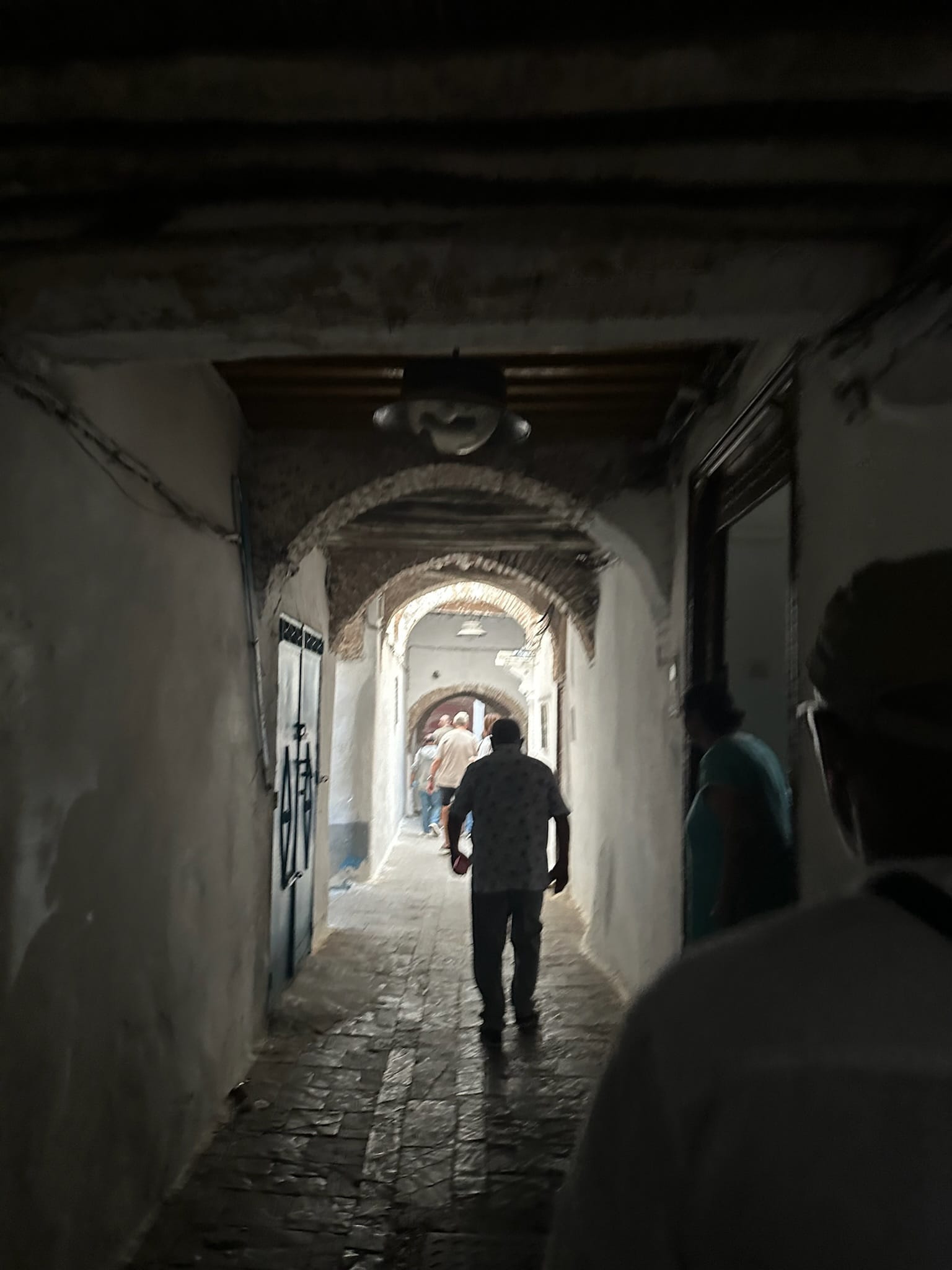
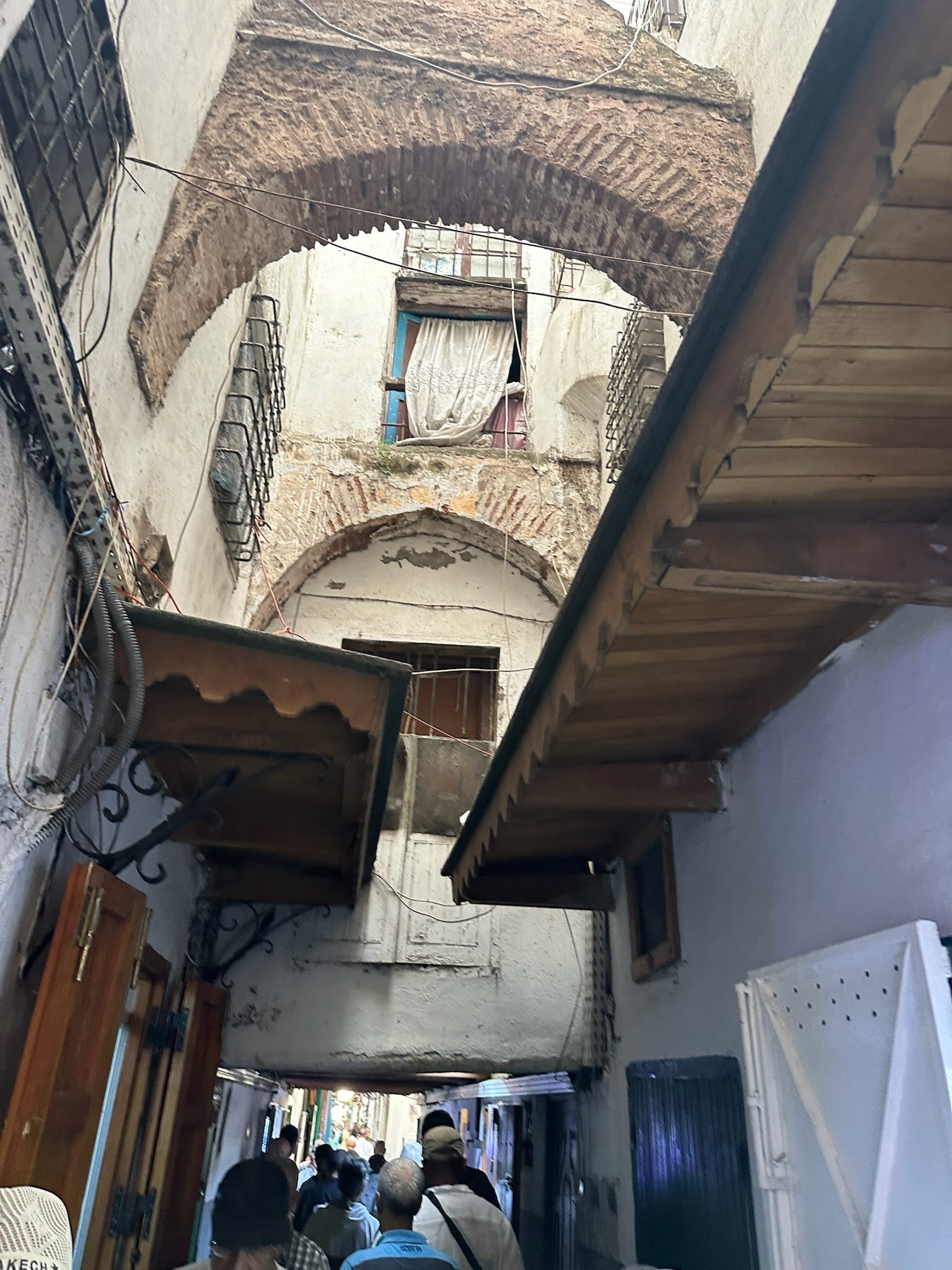
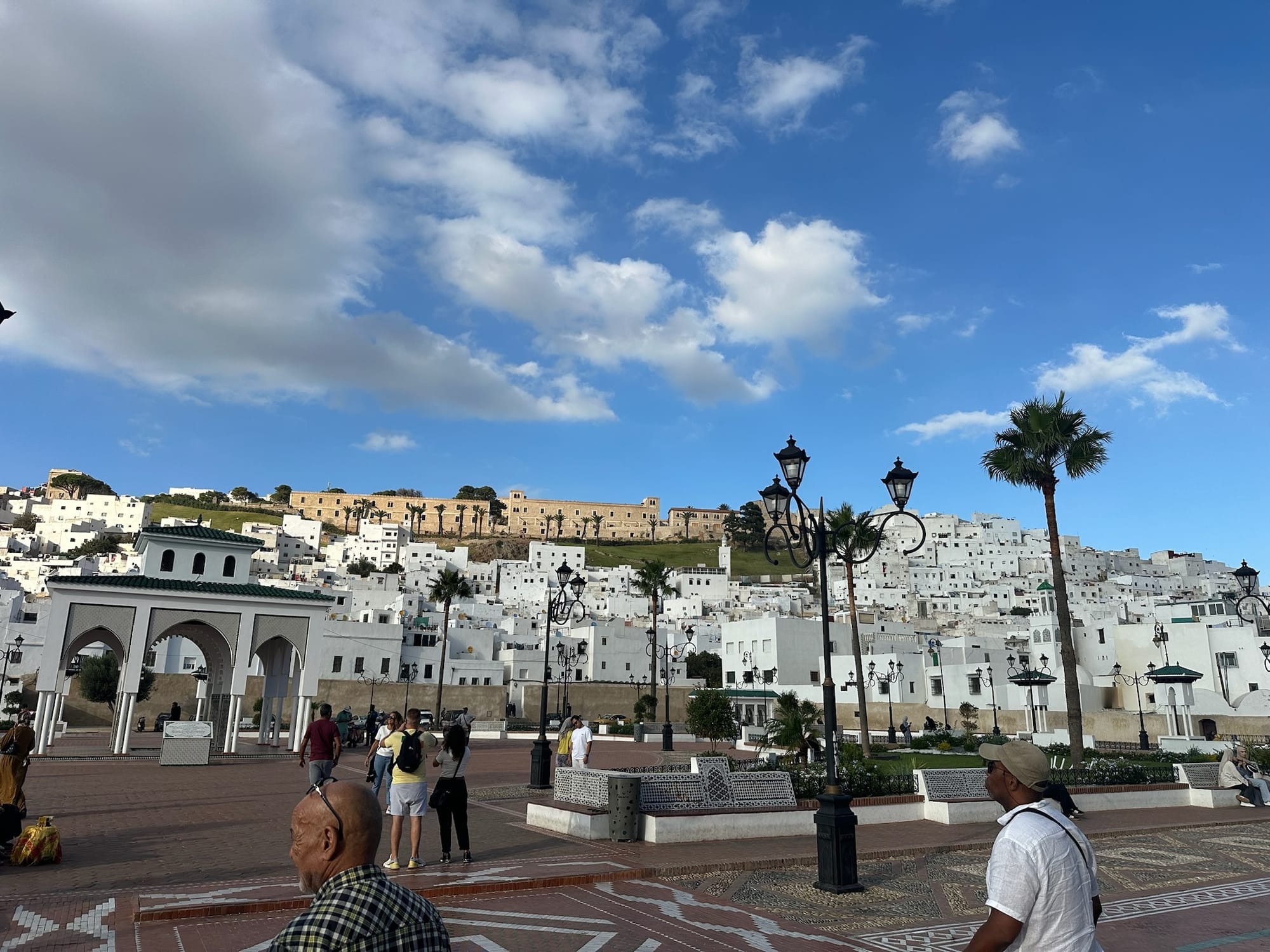
We also visited Tétouan, with its Spanish-influenced architecture and wide, tiled plazas and its older, closed-in medina. [📸 Rachel & Johann]