The Bolivian Highlands (and a Snippet of Chile)
Our three days in the Bolivian Highlands seemed far longer, in the best way possible. This is a place we would recommend everyone to visit if they can.
Day 1: Uyuni and the salt flats
The sites around Uyuni were packed with photo-hungry tourists and souvenir stalls overflowing with mass-produced textiles and salt. We visited the train graveyard, a collection of rusting steam engines that were cheaper to abandon and replace than repair. The ‘salt museum’ was a display of salt processing steps in the back of a gift shop where our guide explained that the Uyuni salt flats, which happen to be the largest in the world, are the dried remnants of a huge ancient lake.
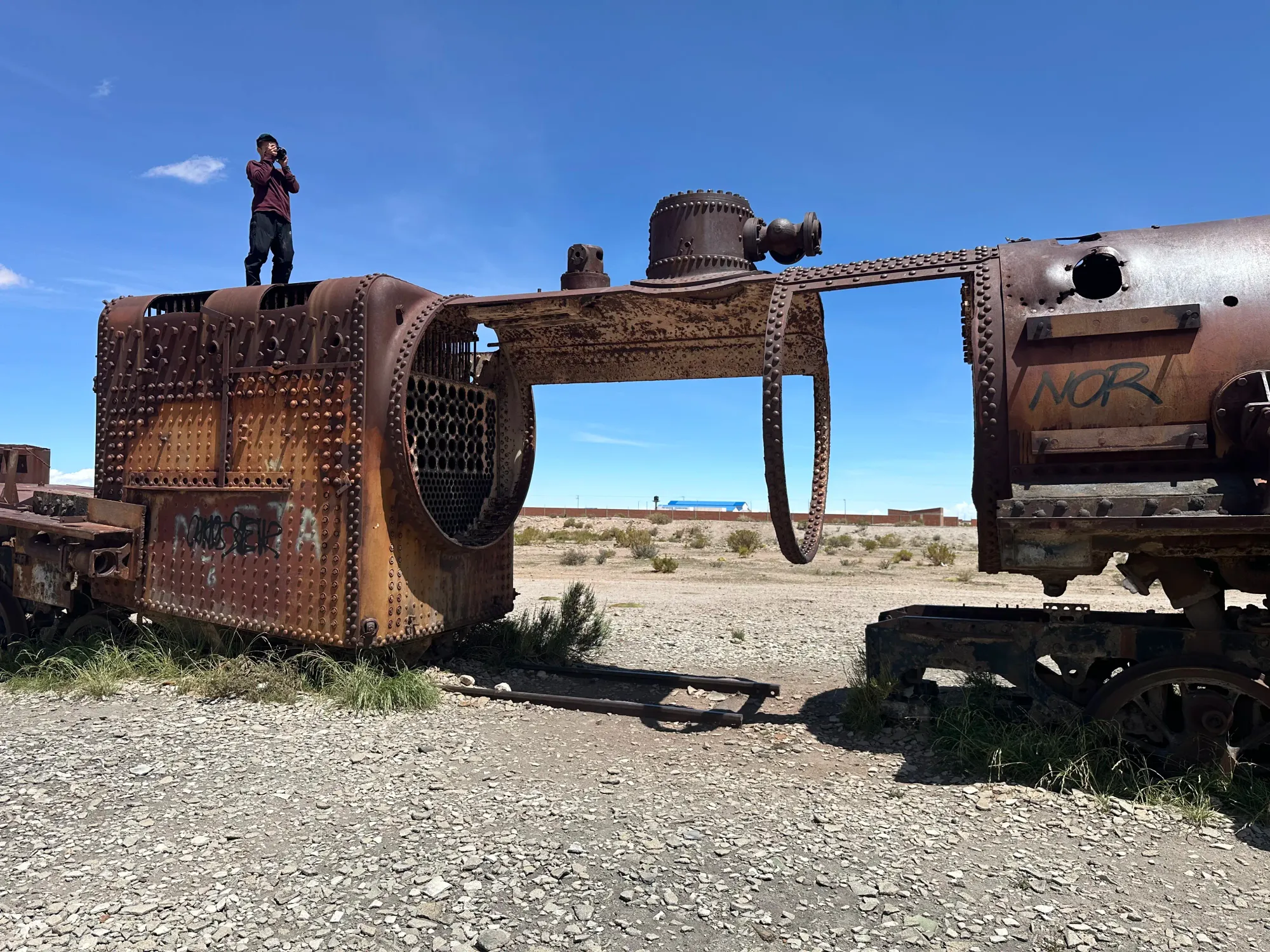
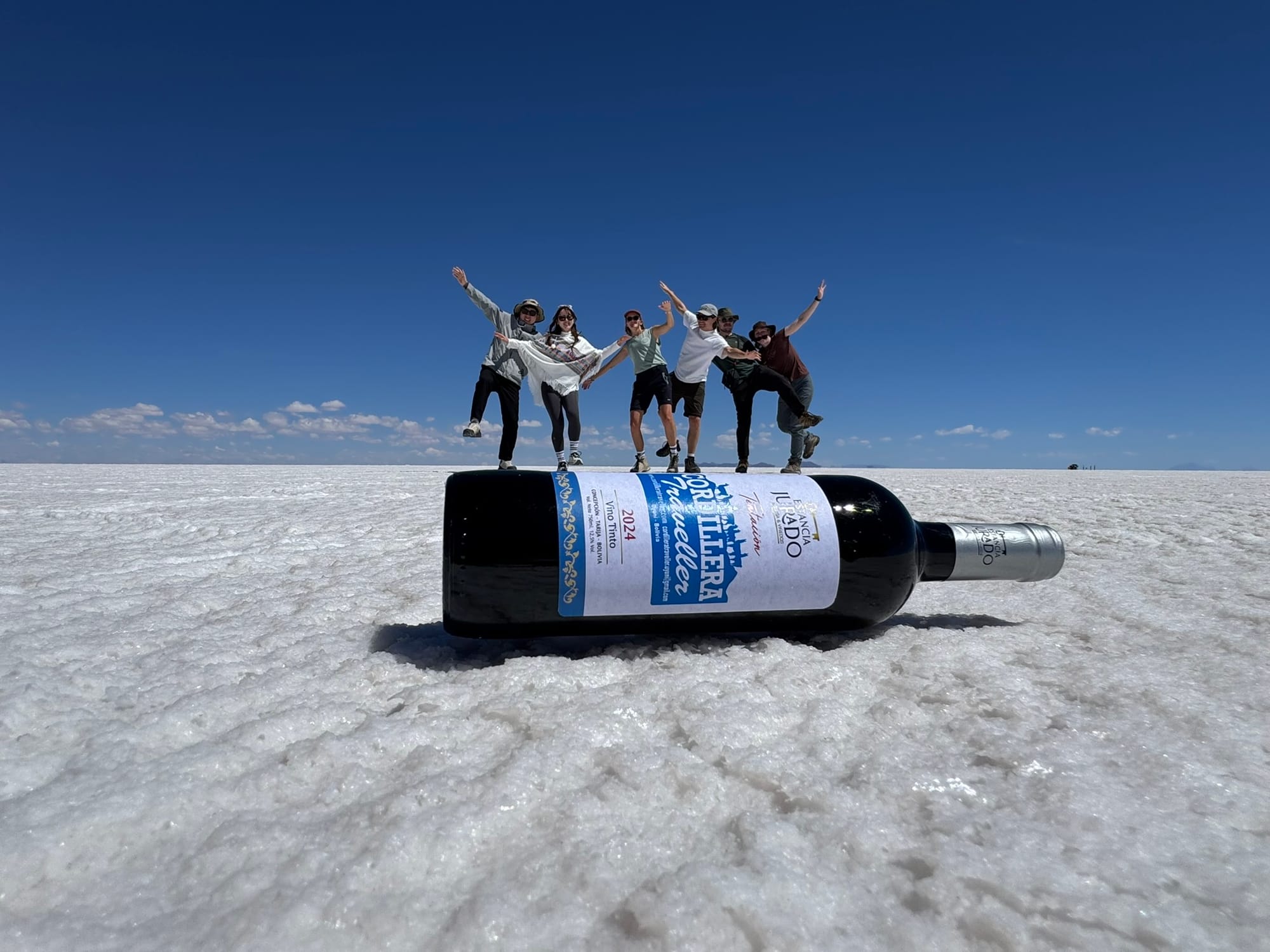
The desert landscape with rusty train remnants and the ever-present salt made us REAL thirsty. [📸 Johann & Rachel]
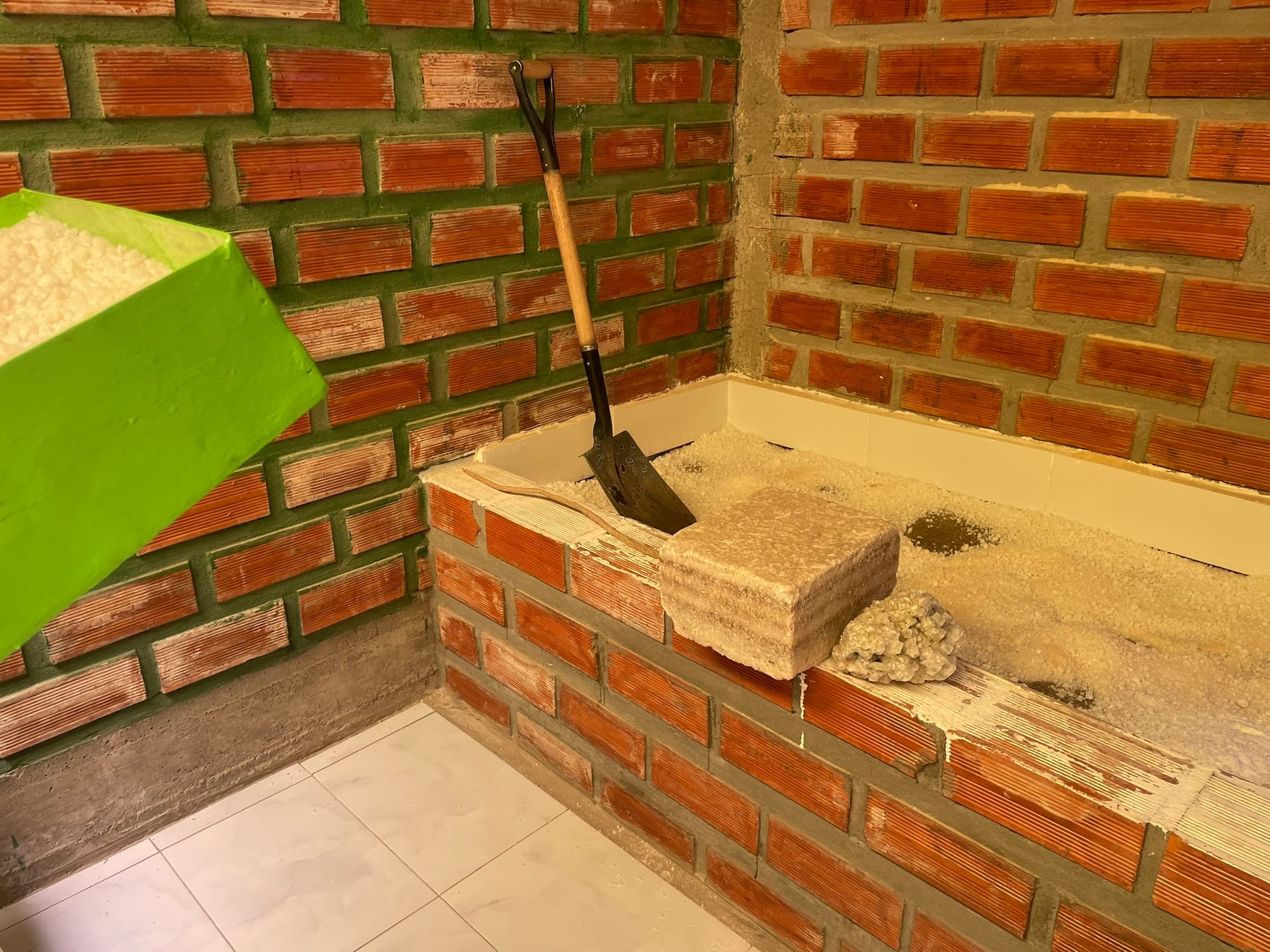
Salt bricks cut from the flats show layers which reflect the dust of different seasons, segmented like tree rings. Once on the salt flats, the building we ate lunch in was constructed of these bricks. Afterwards, we spent a bit of time using the uncanny uniformity of the landscape to take some wild perspective photos.
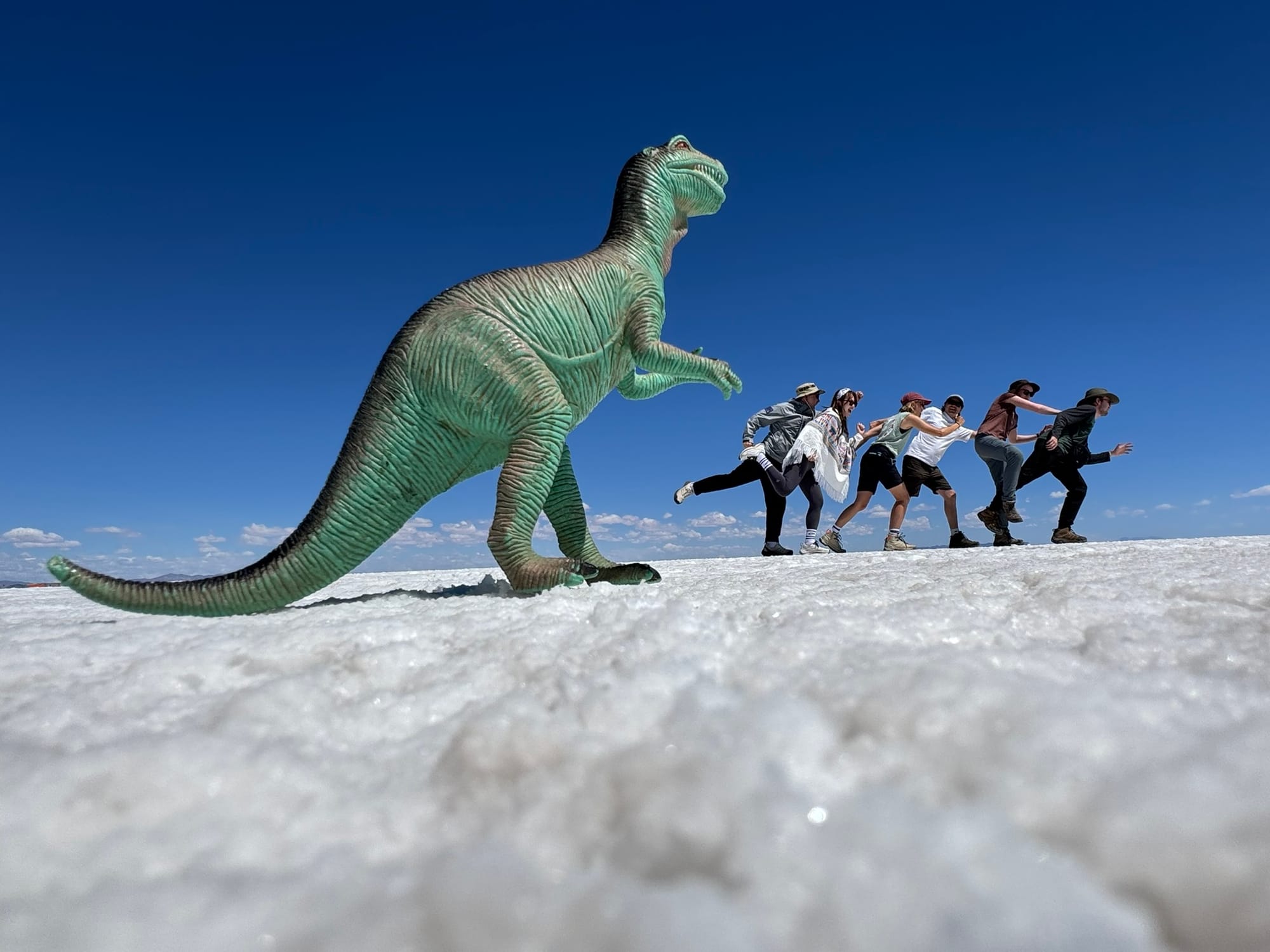
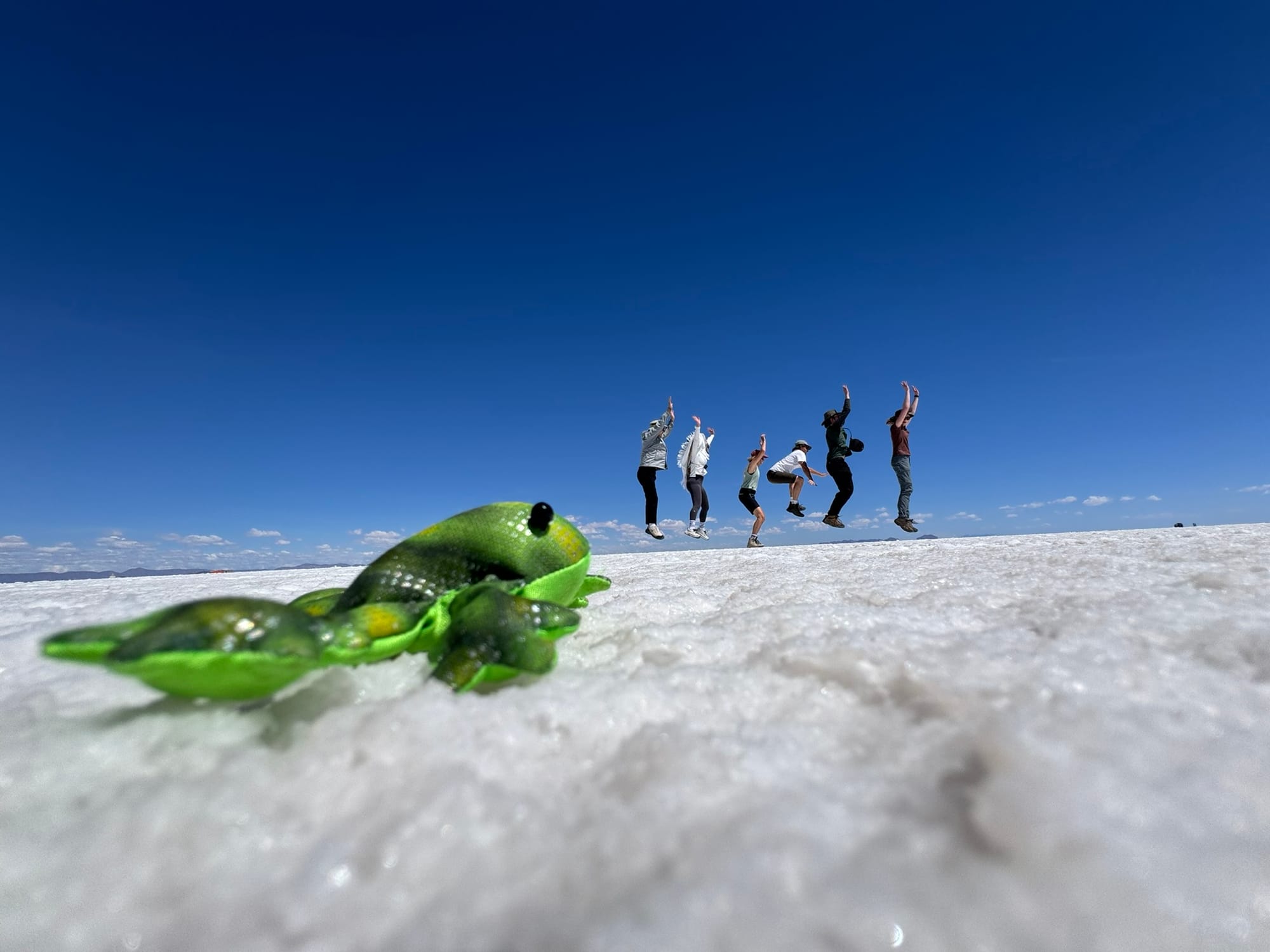
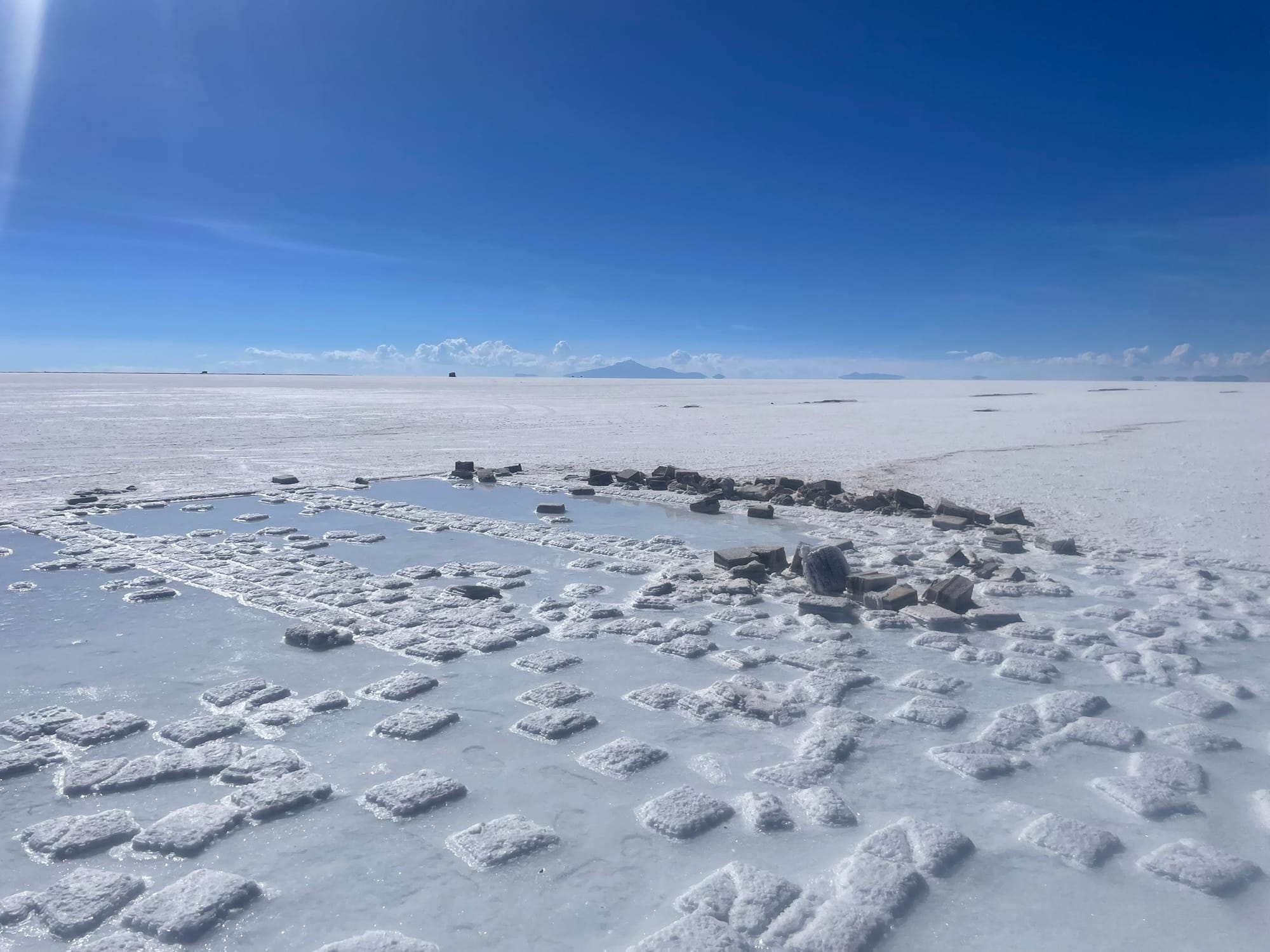
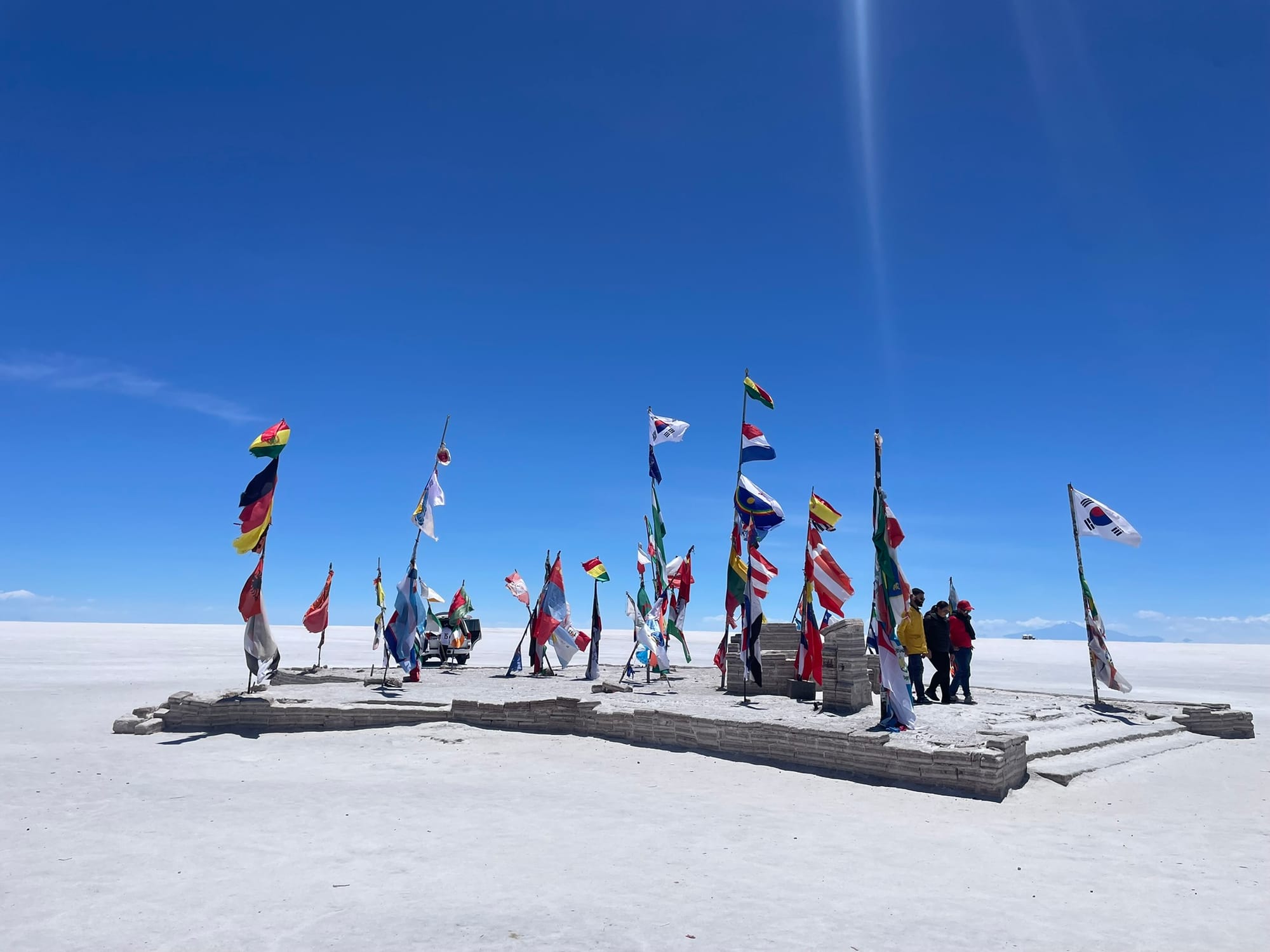
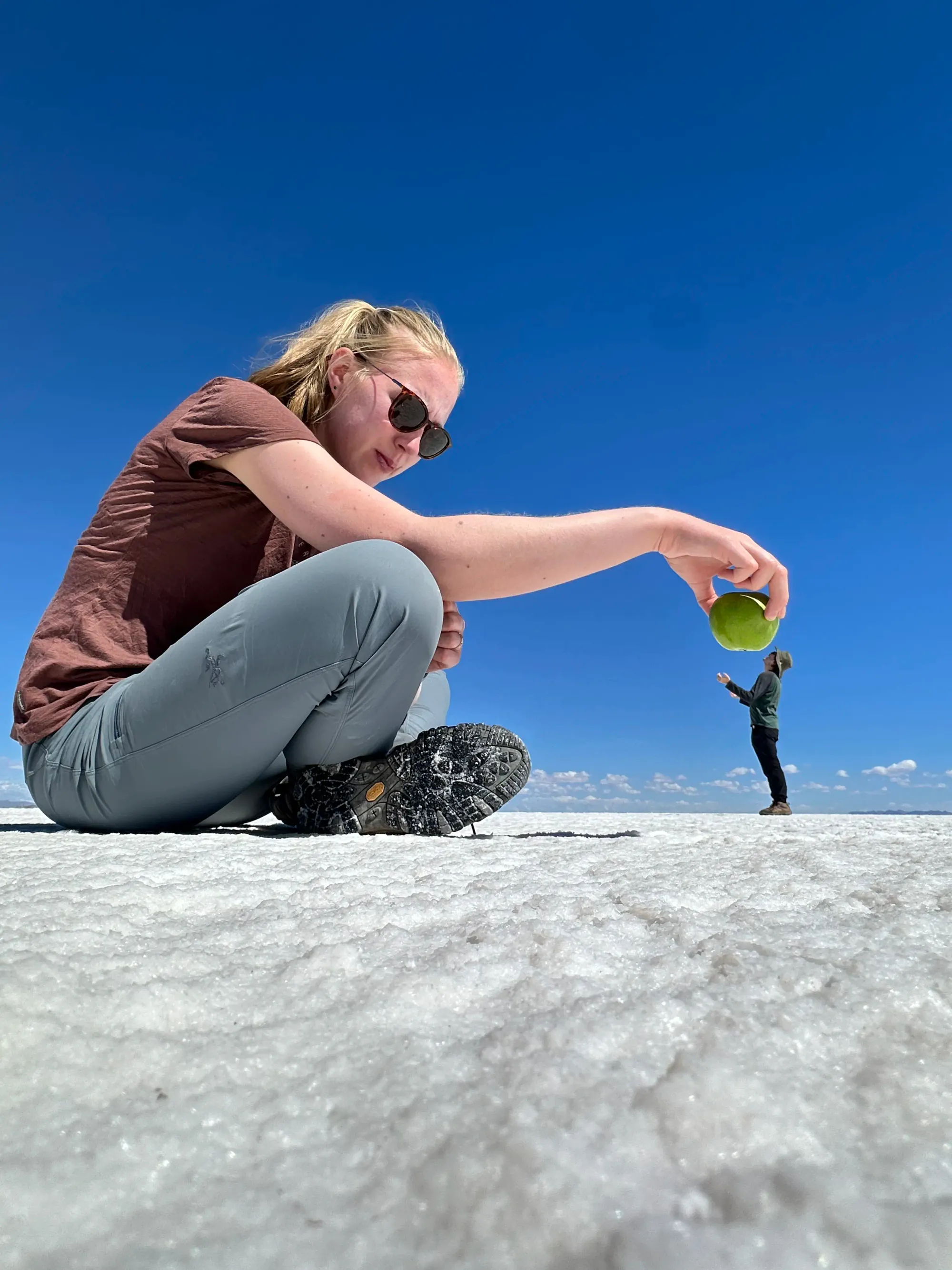
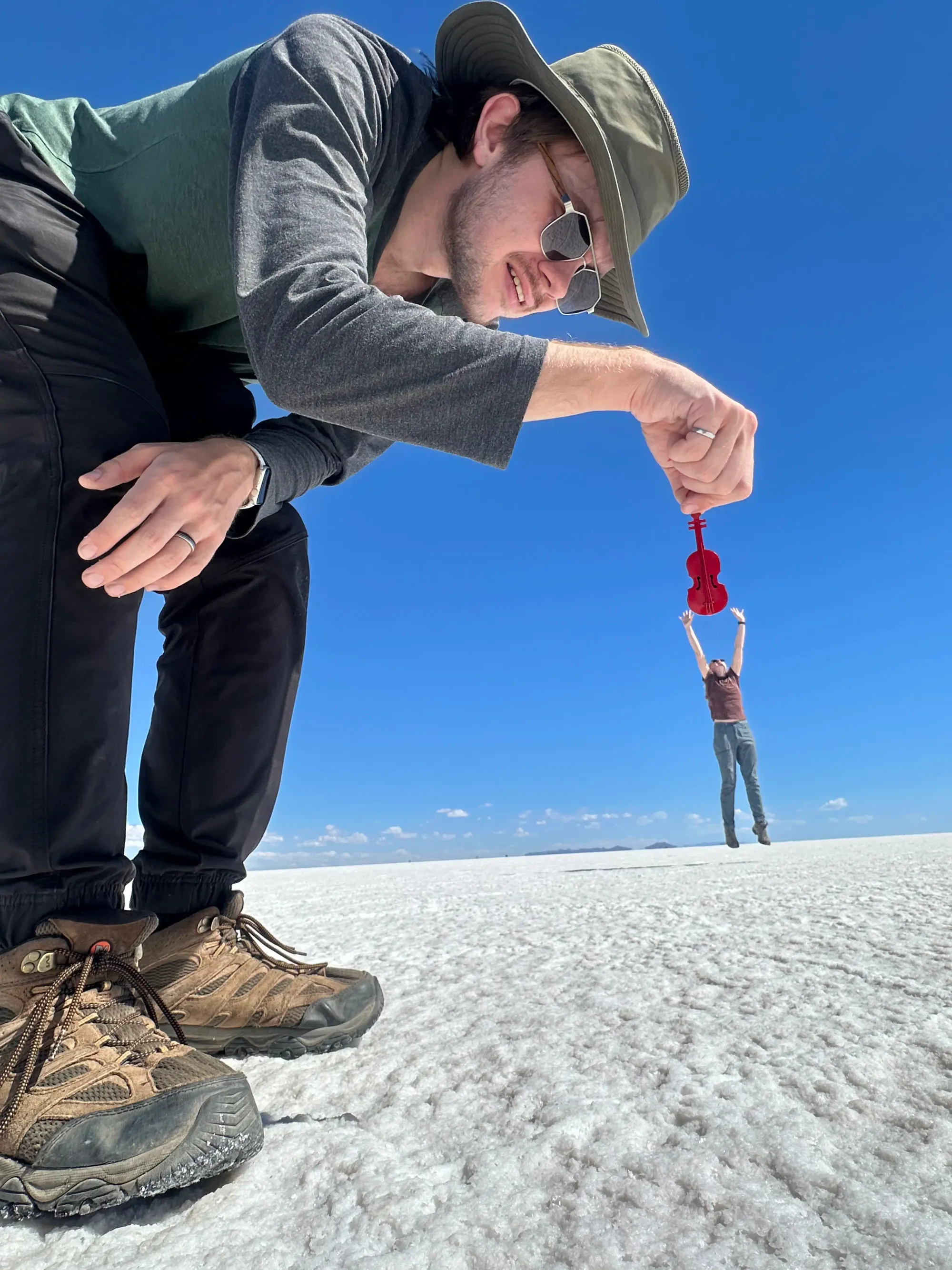
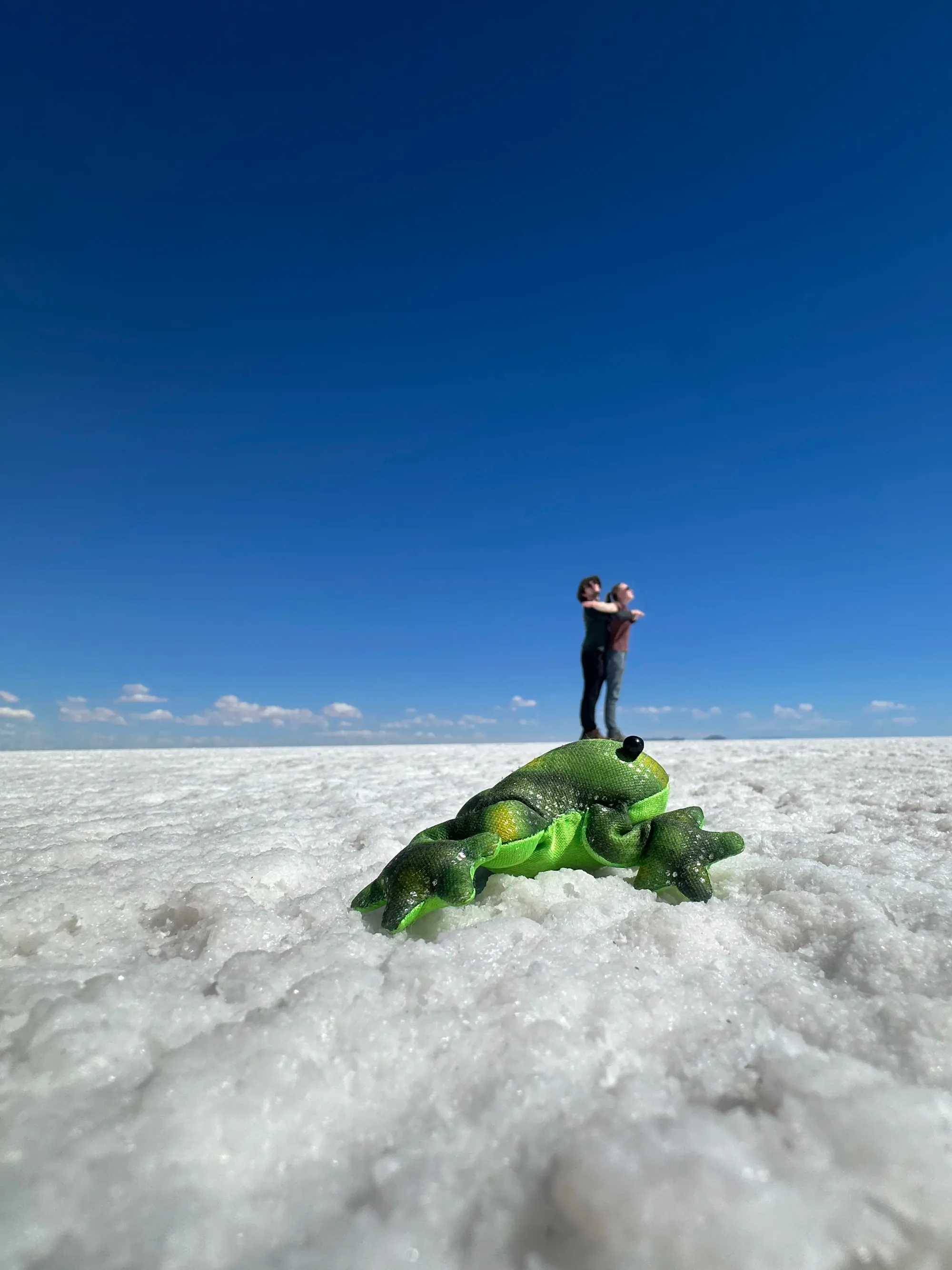
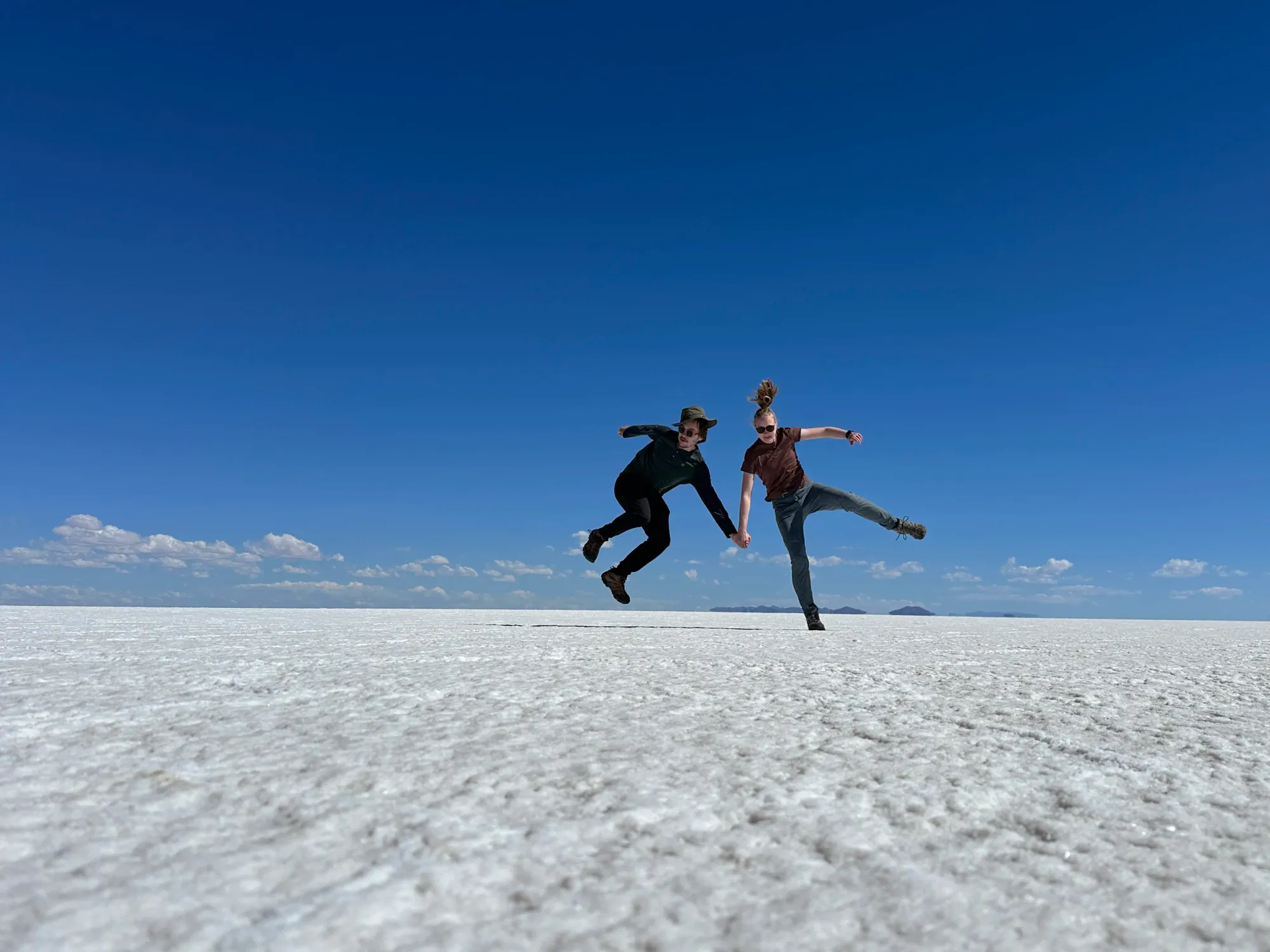
The salt flats are otherworldly, an expanse of white crystals that stretch to the horizon. Hexagonal patterns cover its crust, and shallow puddles of water shimmer a tropical turquoise. In the distance, volcanic rises of land form dark masses on the horizon. Besides these ‘islands,’ the salty expanse is so flat that it varies less than a meter in elevation, making it ideal for satellite calibration.
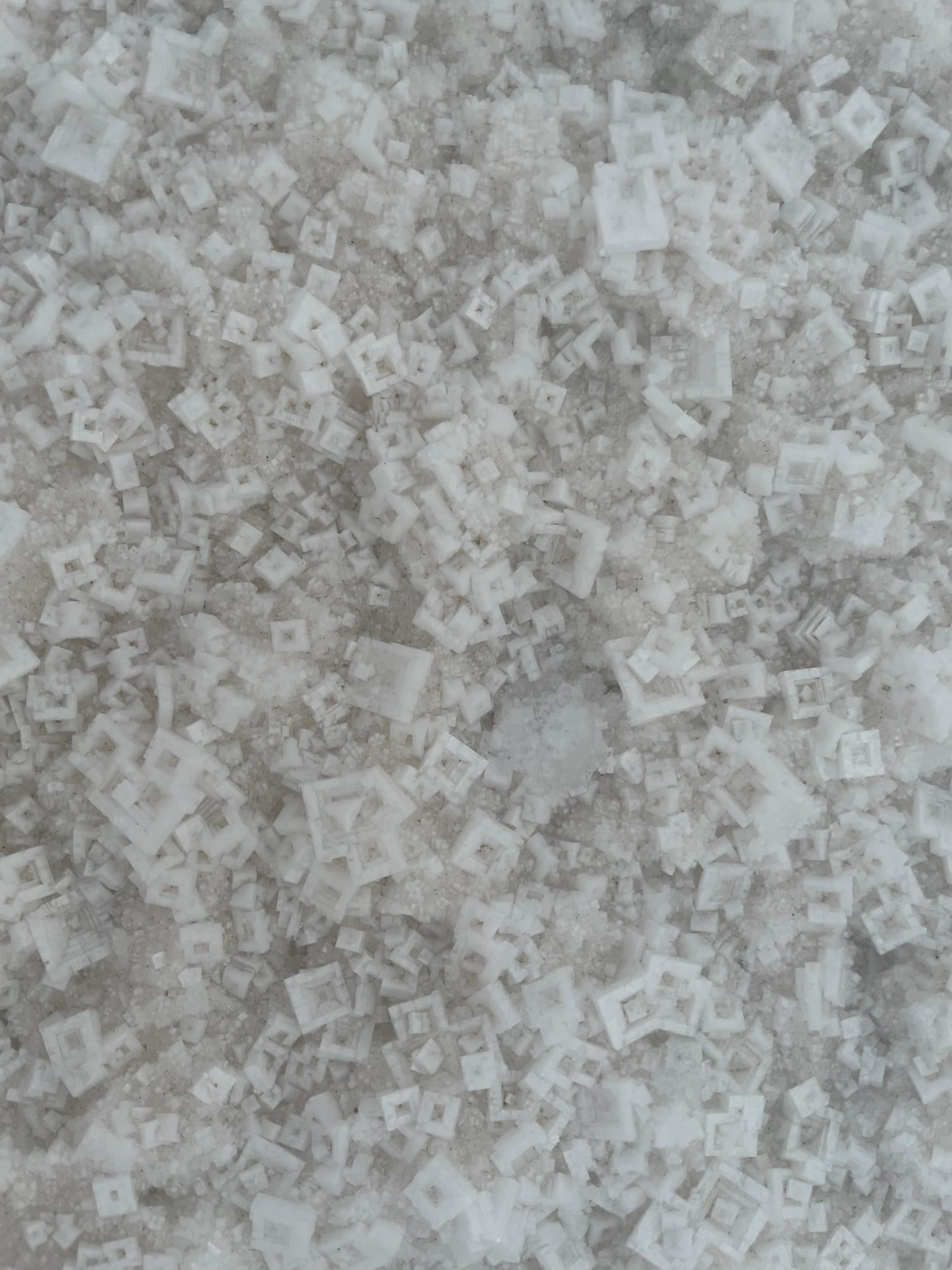
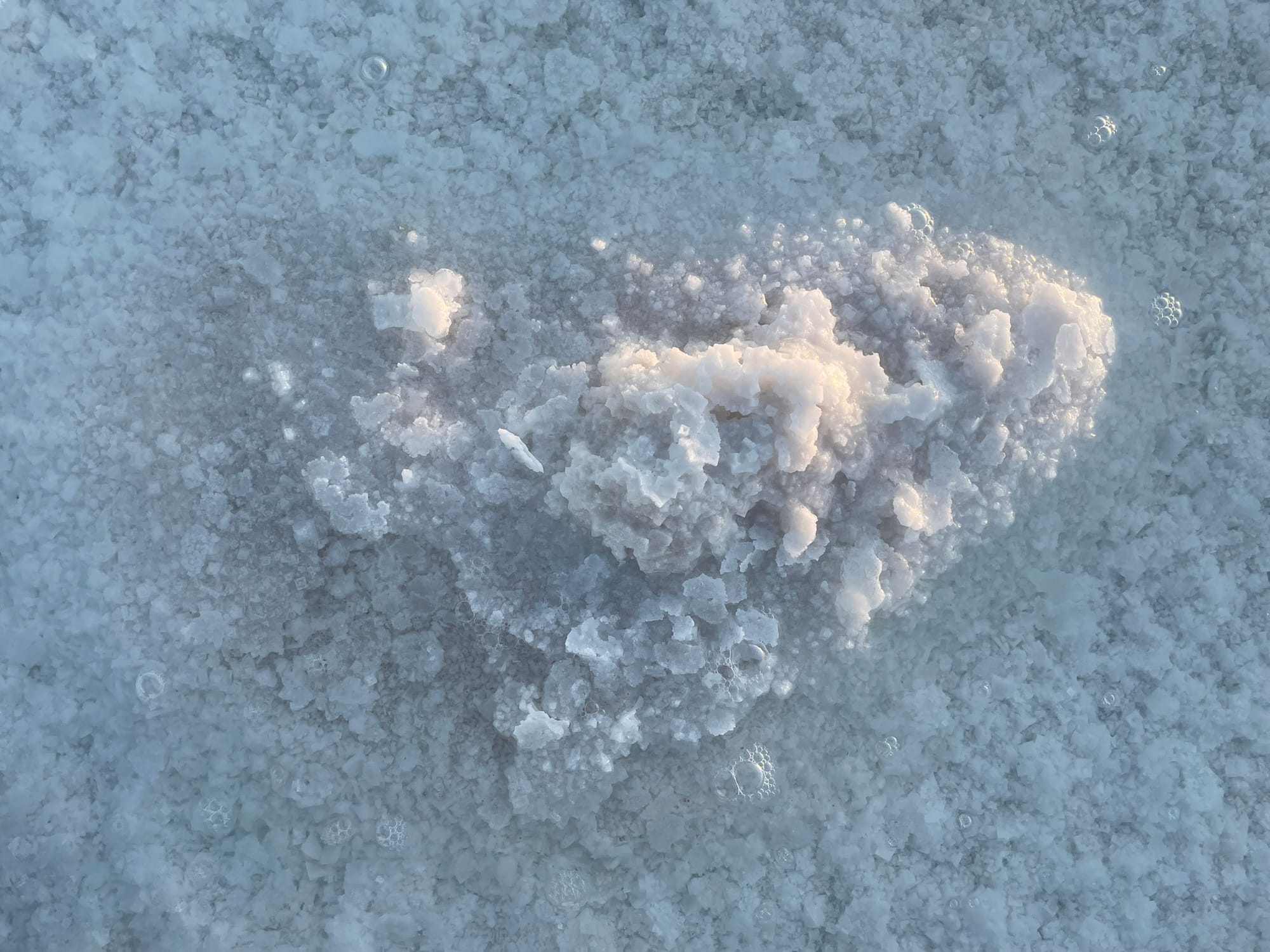
NaCl's naturally cubic crystalline structure was on full display, especially in the flooded areas of the salt flats where new crystals were constantly precipitating out of the water. [📸 Rachel]
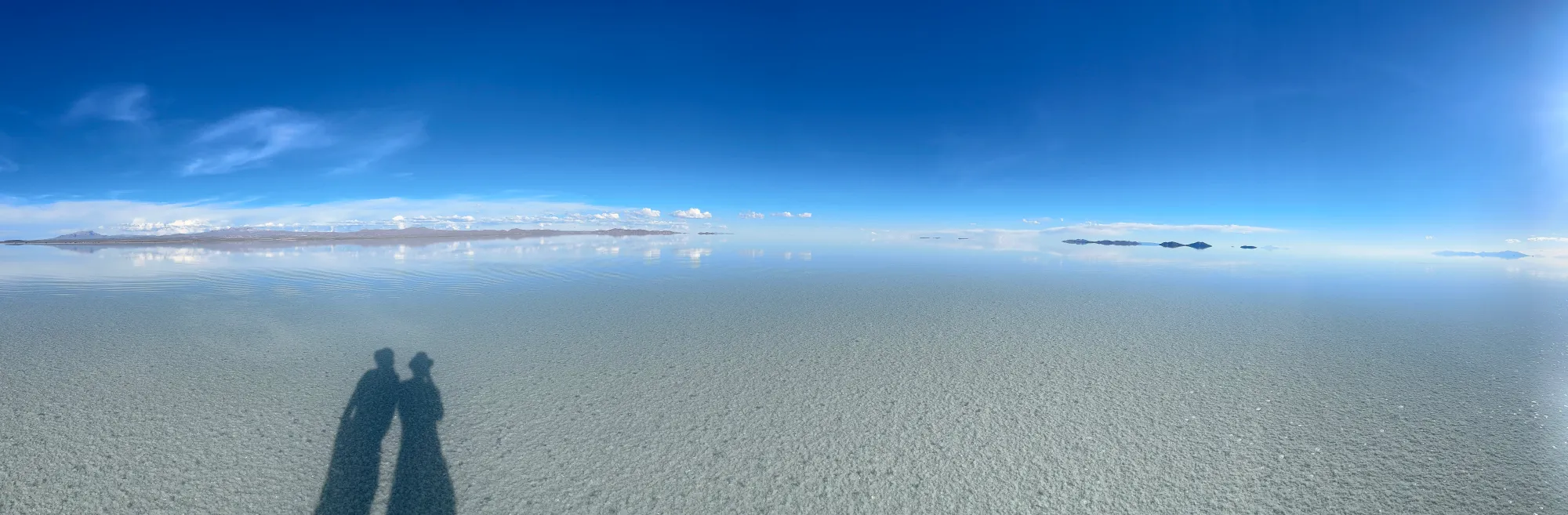
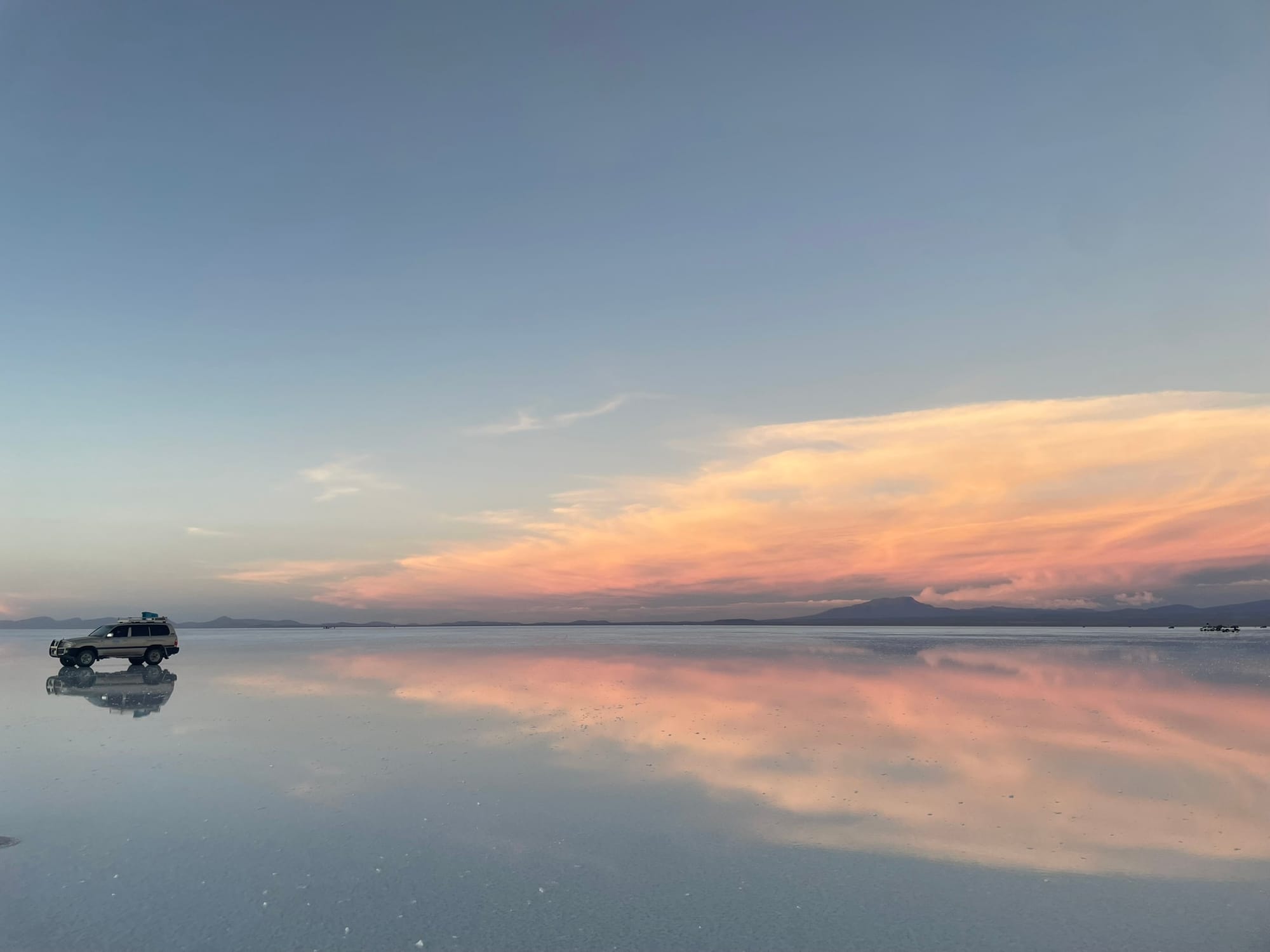
In this wetter season, the Uyuni salt flats turn into the world’s largest mirror. We drove to its edge, the water perfectly reflecting the blue sky and wispy clouds, water and sky melding at the horizon. Pulling on rubber boots, we walked into the vast expanse hand in hand, feeling like we had come to world’s end.
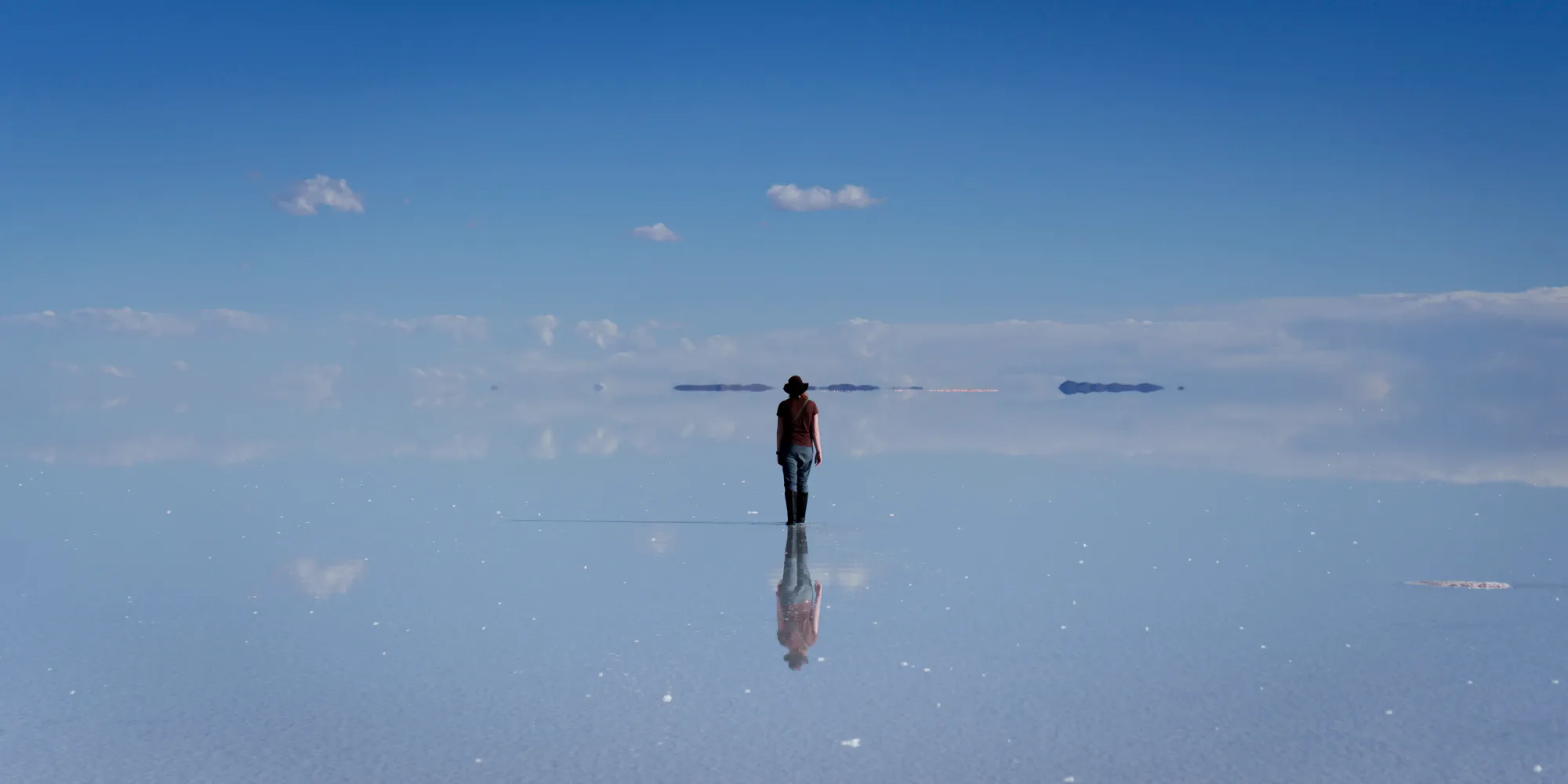
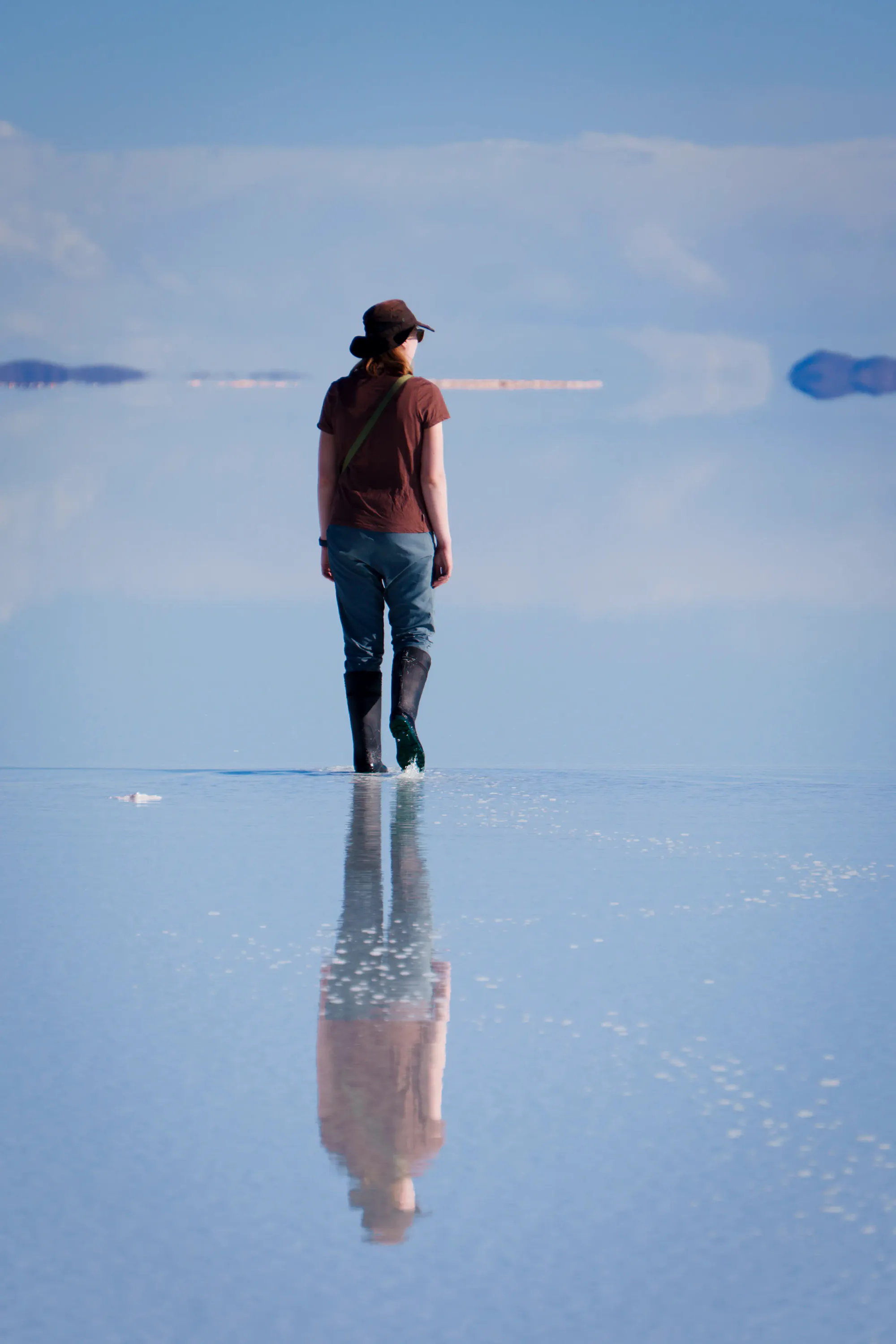
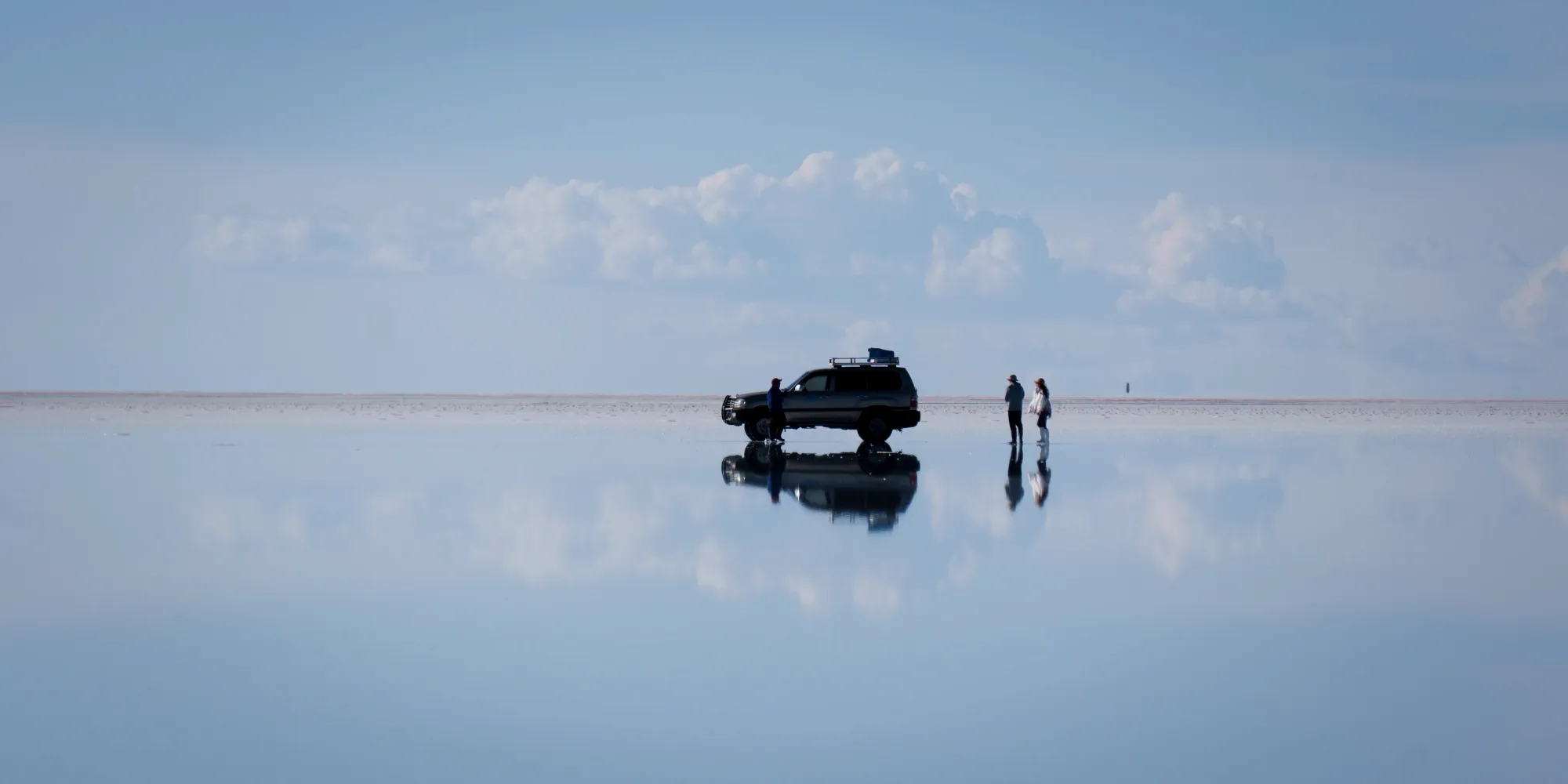
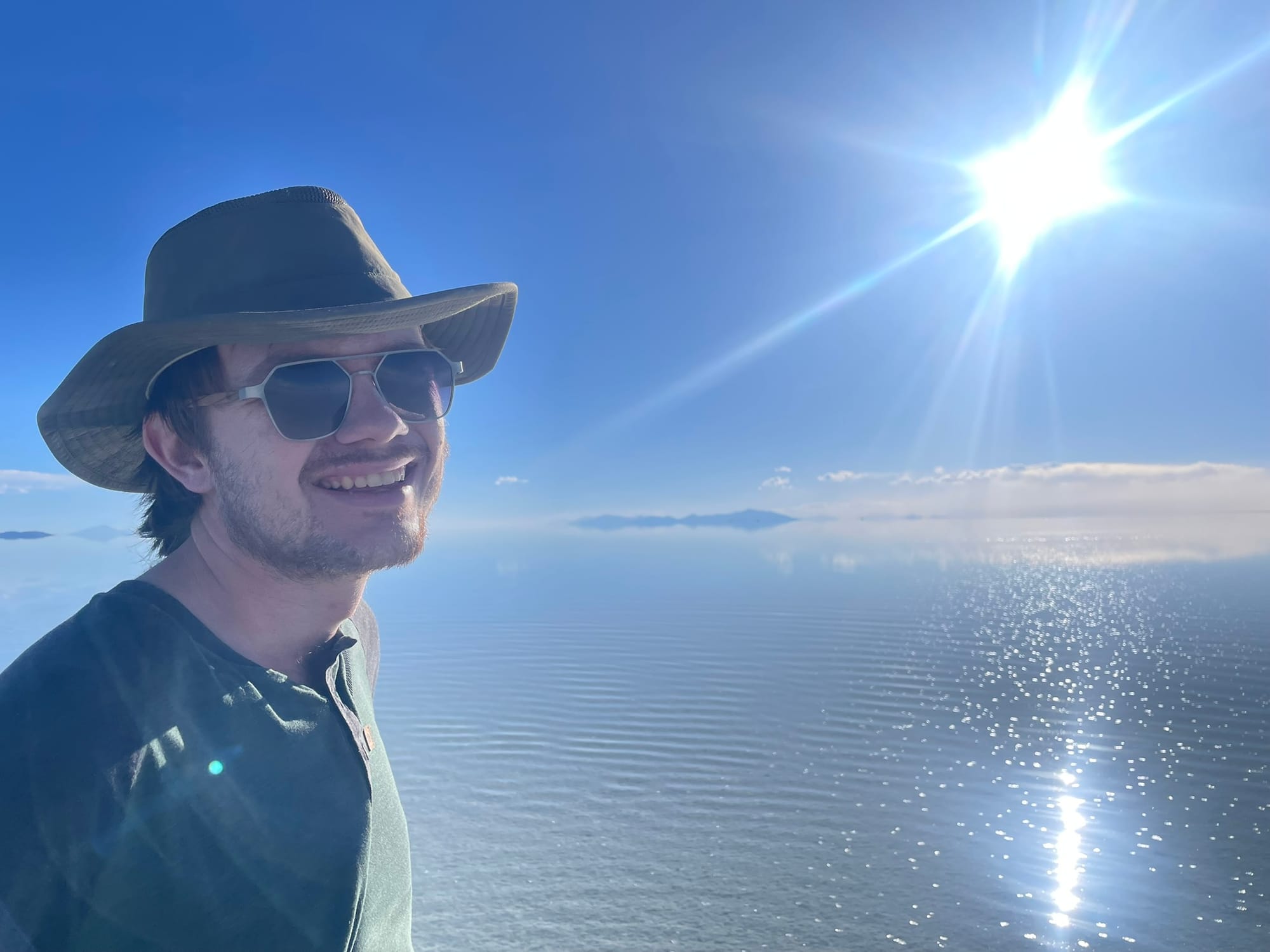
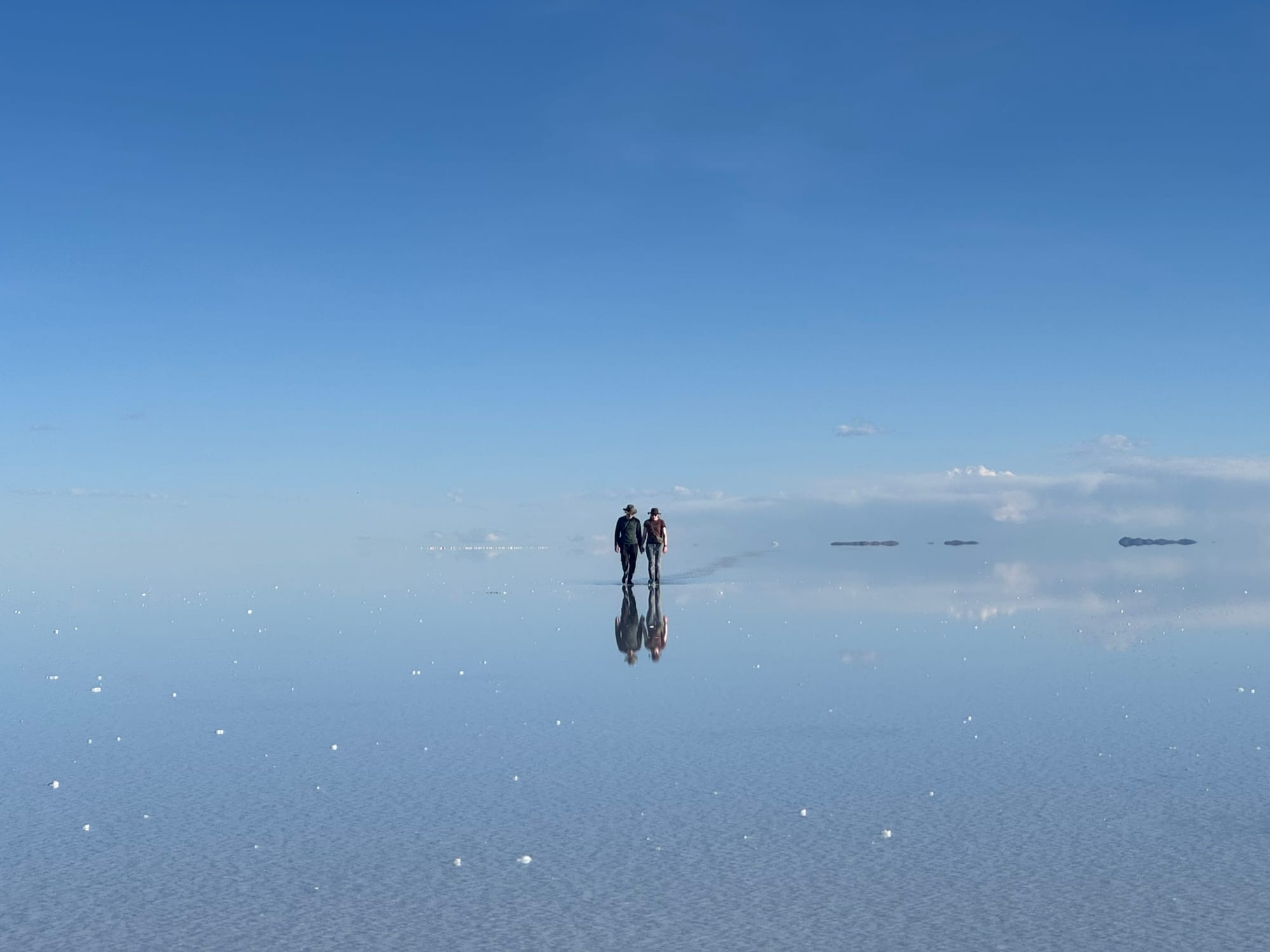
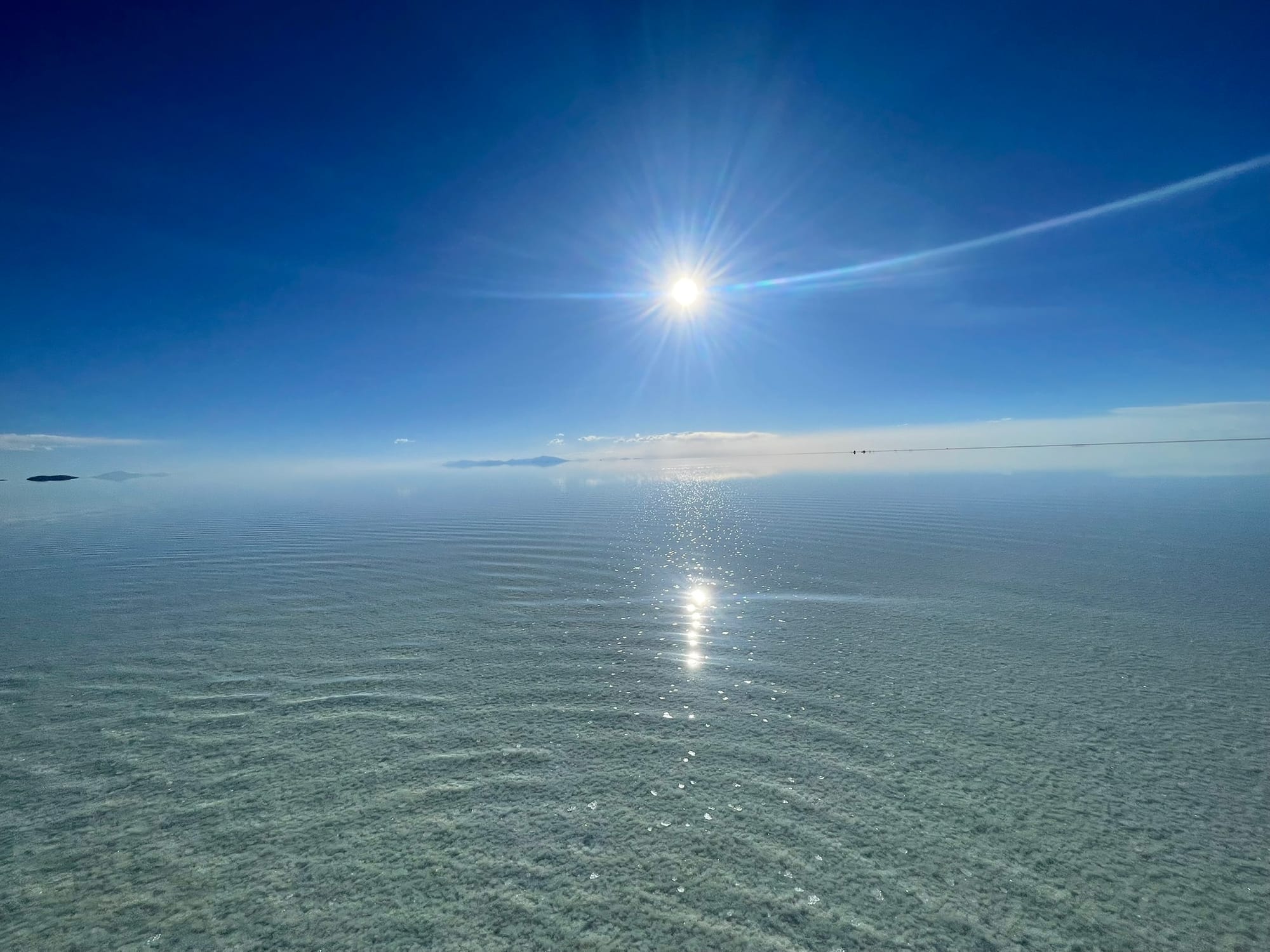
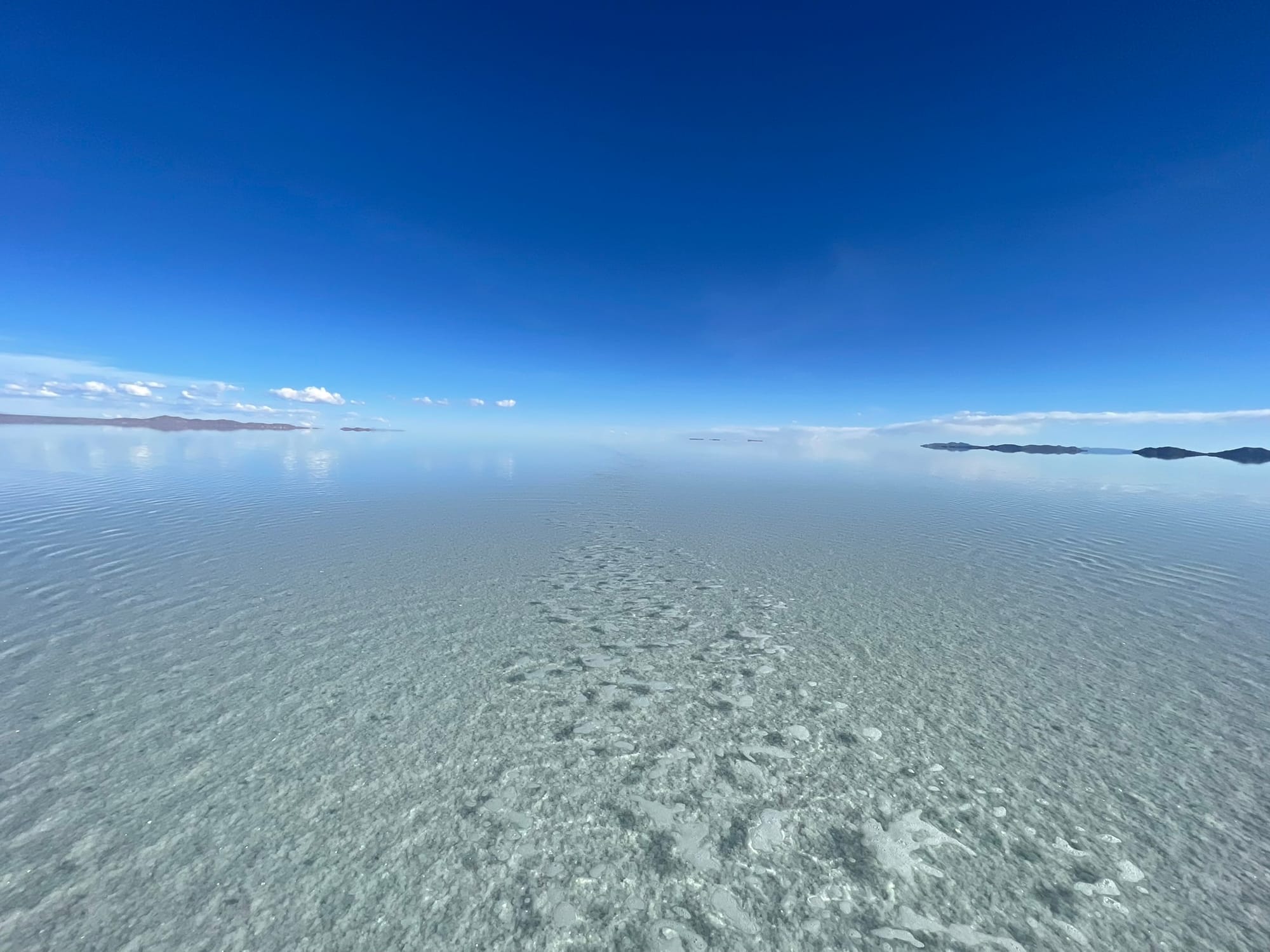
Without any significant gradients, the only variation in the water's depth as we walked was due to the slightest of breezes, pushing the entire body of water this way or that. We could tell the direction of the wind by how the floating, crystallizing rafts of salt drifted. [📸 Johann & Rachel]
The water was consistently only a few centimetres in depth, and behind us a wake of bubbles marked where we had come from. The silence was vast, and when we stopped the only sound was their gentle popping. Returning to the Land Cruiser, we looked back to see a path of frothed water disappearing into the horizon.
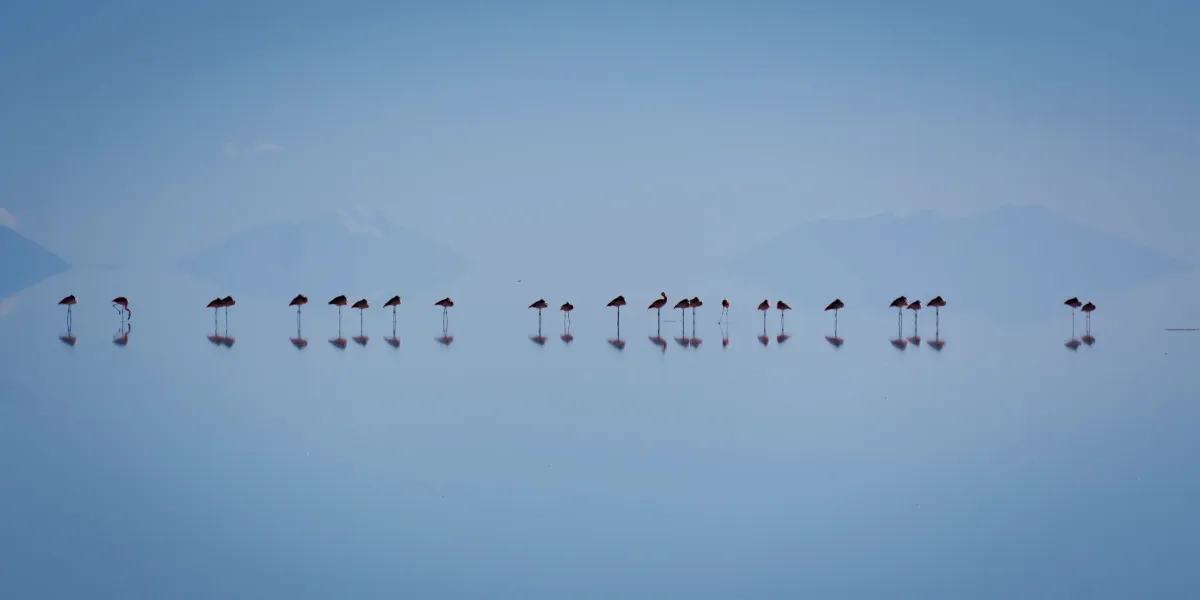
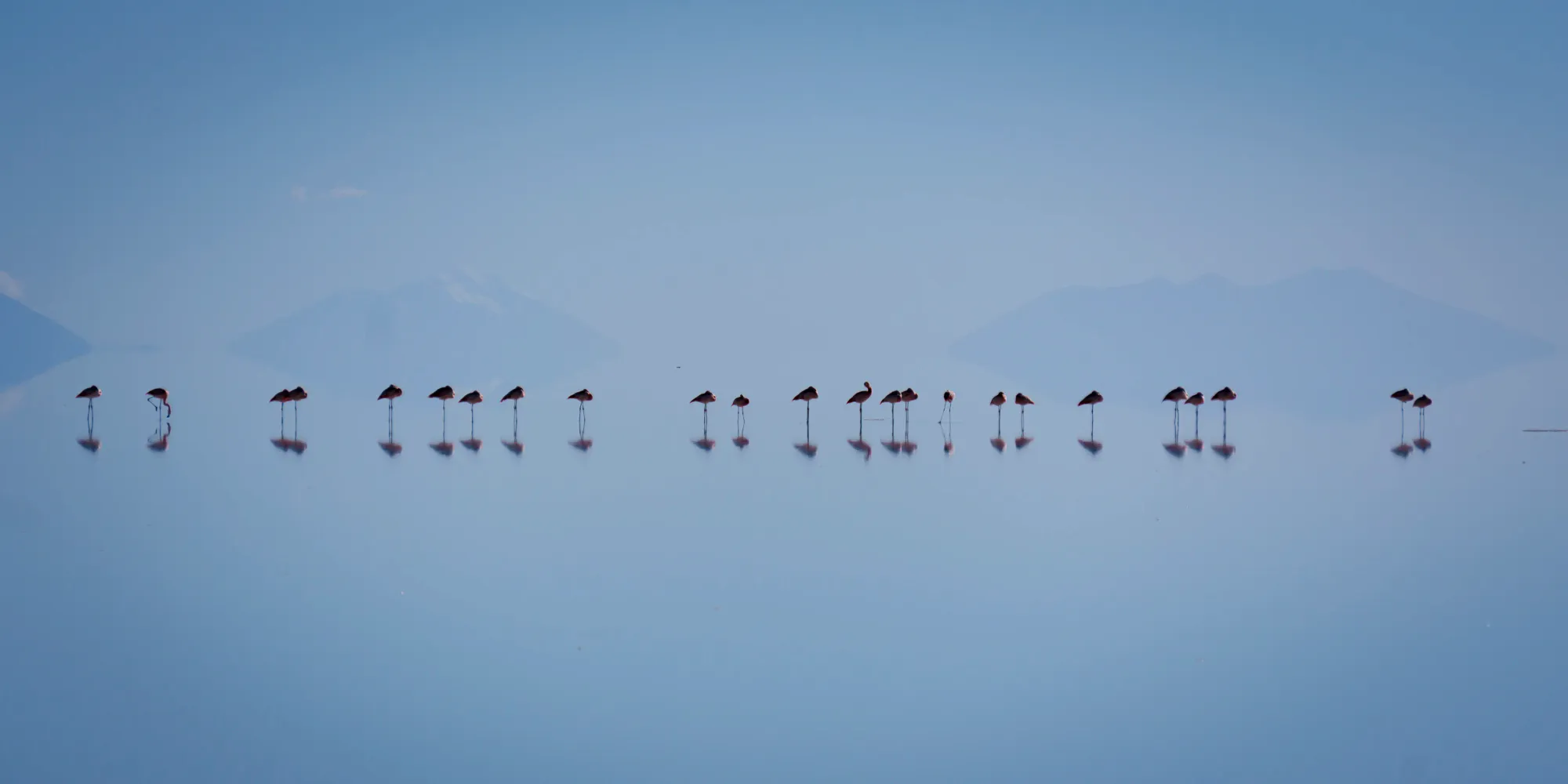
Six flamingos stood nearby; in the distance, flocks showed as bands of solid pink, contrasting with vistas of blue and white. We walked towards them for half an hour, but perspective means nothing in a place this remarkably flat, and they never seemed any closer. As we were walking back, part of a flock took to the air, flying overhead with outstretched necks and hot pink wings tipped with black.
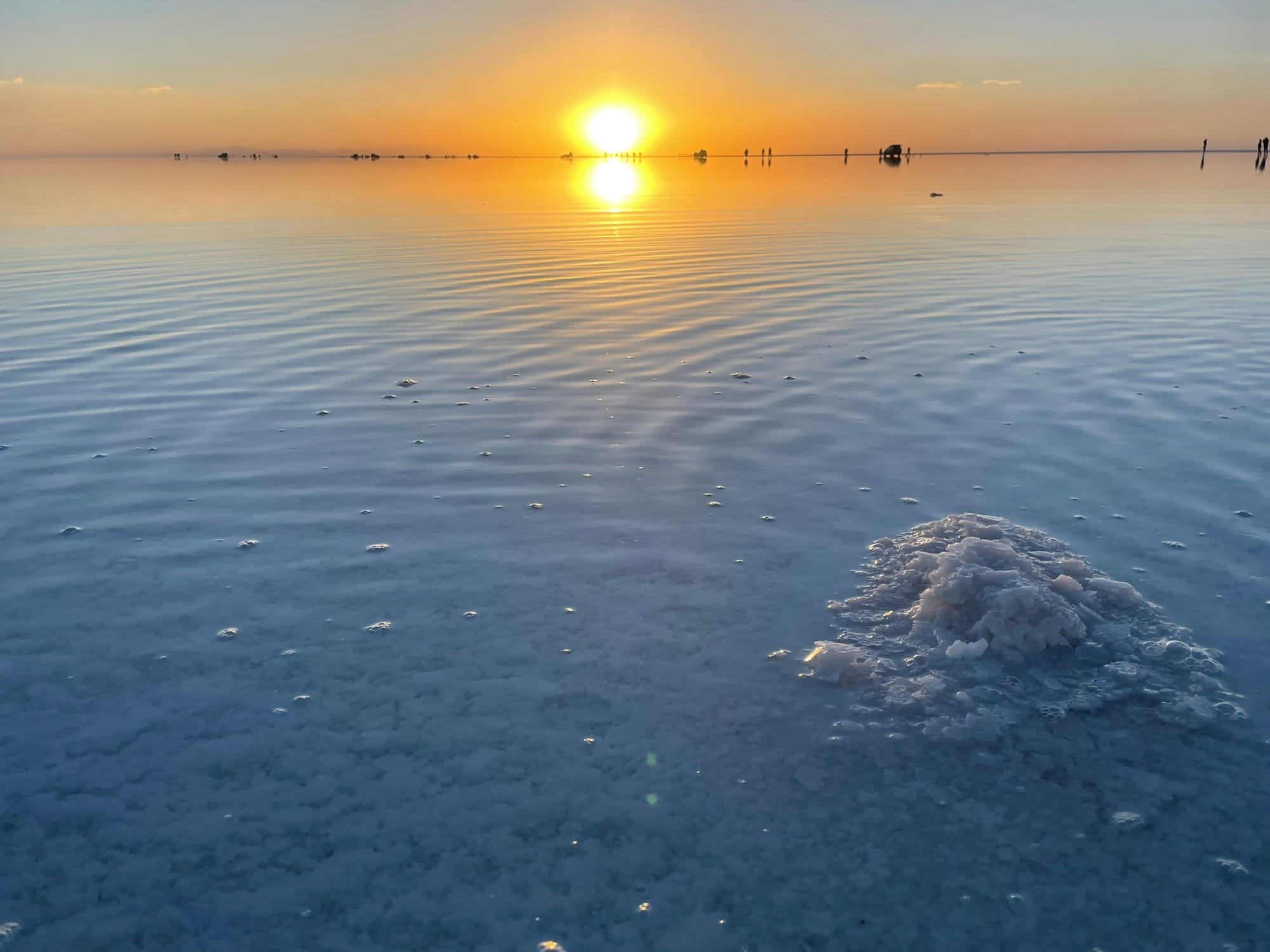
In the hour before sunset, our guide set up the portal table and chairs he had lashed onto the roof rack. We sat and chatted while sipping a Bolivian red and munching on fried plantains and corn. Then as the sun started to dip below the horizon our group broke apart for walks, the sky flushing with a wash of pink and orange.
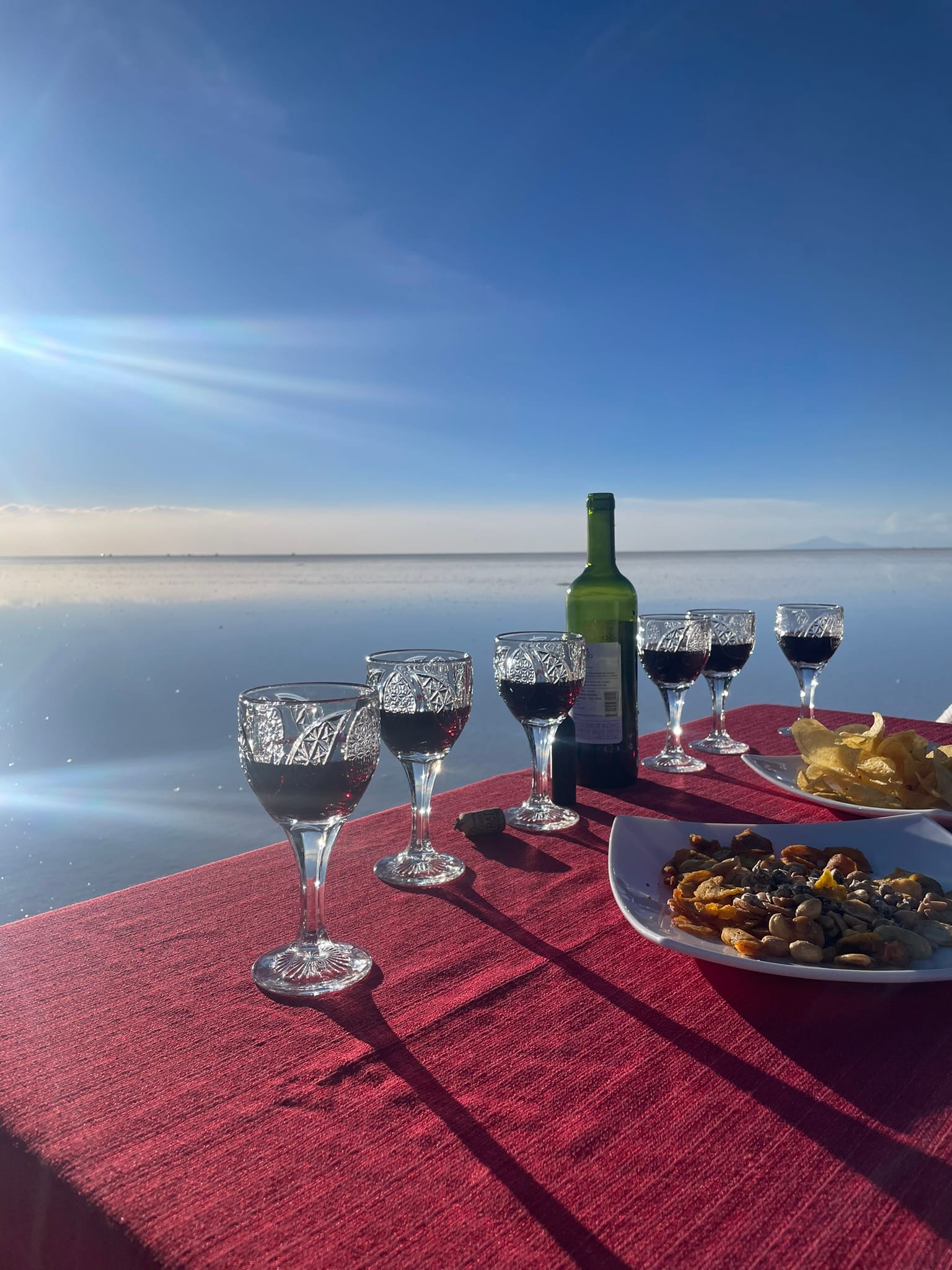
Johann dropped a salty chip into the brine, and still ate it. Just... for the record. [📸 Rachel]
Fine rafts of salt floated on the water, blown along by the wind. As we walked, perfect concentric circles rippled outwards, and the rafts tipped below the surface, drifting slowly downwards. The salty bottom was sharp with crystals. As we left, we only wished we could see this place by starlight.
Day 2: Uyuni to Huayllajara
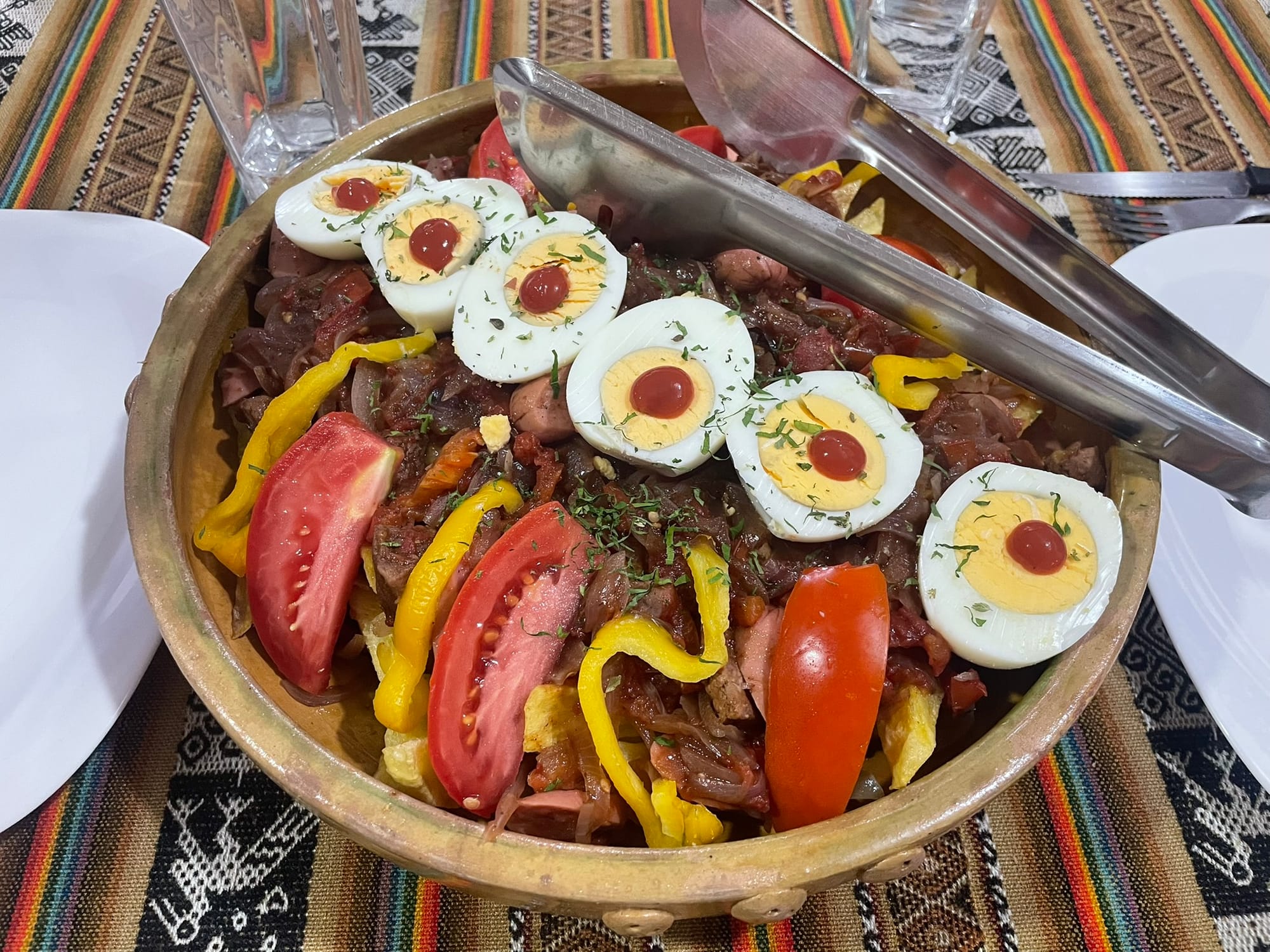
Rachel must have gotten gluten poisoning, because she woke up literally writhing in pain. (It’s okay, you don’t need to send flowers; she’s fully recovered). Once in the Land Cruiser, we hunkered down in the back row of seats and gratefully sucked on green apple bubblegum lollipops that our guide Walter distributed.
The arid, flat landscape gradually became more rolling as we drove, until we were among the volcanic hills. Quinoa fields in red and purple grew from only rain, and llamas grazed nearby, bearing colourful tassels as a tribute to Pachamama (Mother Earth).
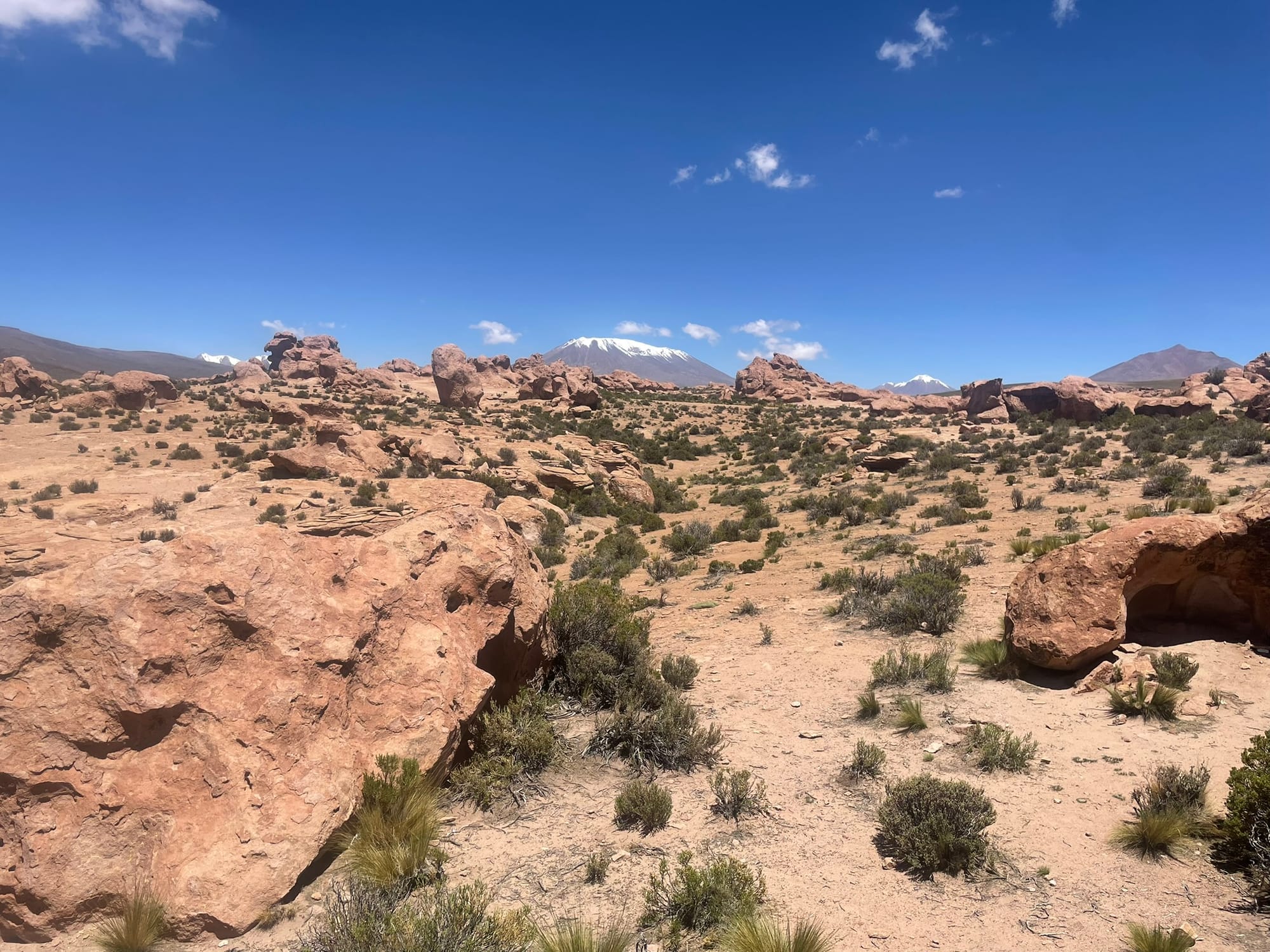
We reached an expansive field of large, light red volcanic rocks which people imagine into the shape of animals. A little ways on we lunched near a slow river filled with green hummocks. Ten minutes more and we stopped again to look at volcanic mountains and examine the native flora, including bunchgrass and yareta. A cushion plant in the carrot family, yareta grows extremely slowly and can live up to 3000 years, making local harvesting for fire fuel unsustainable.
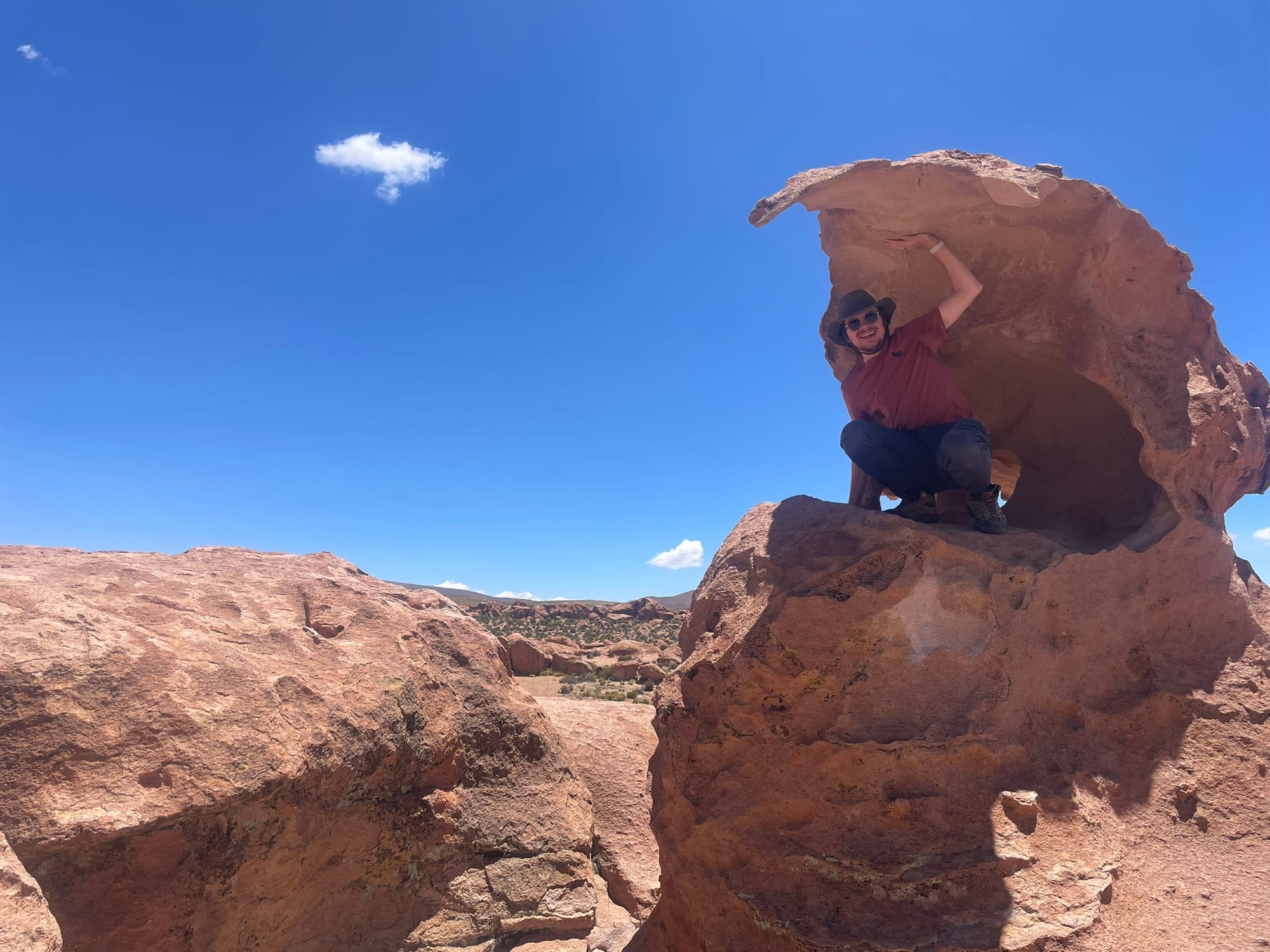
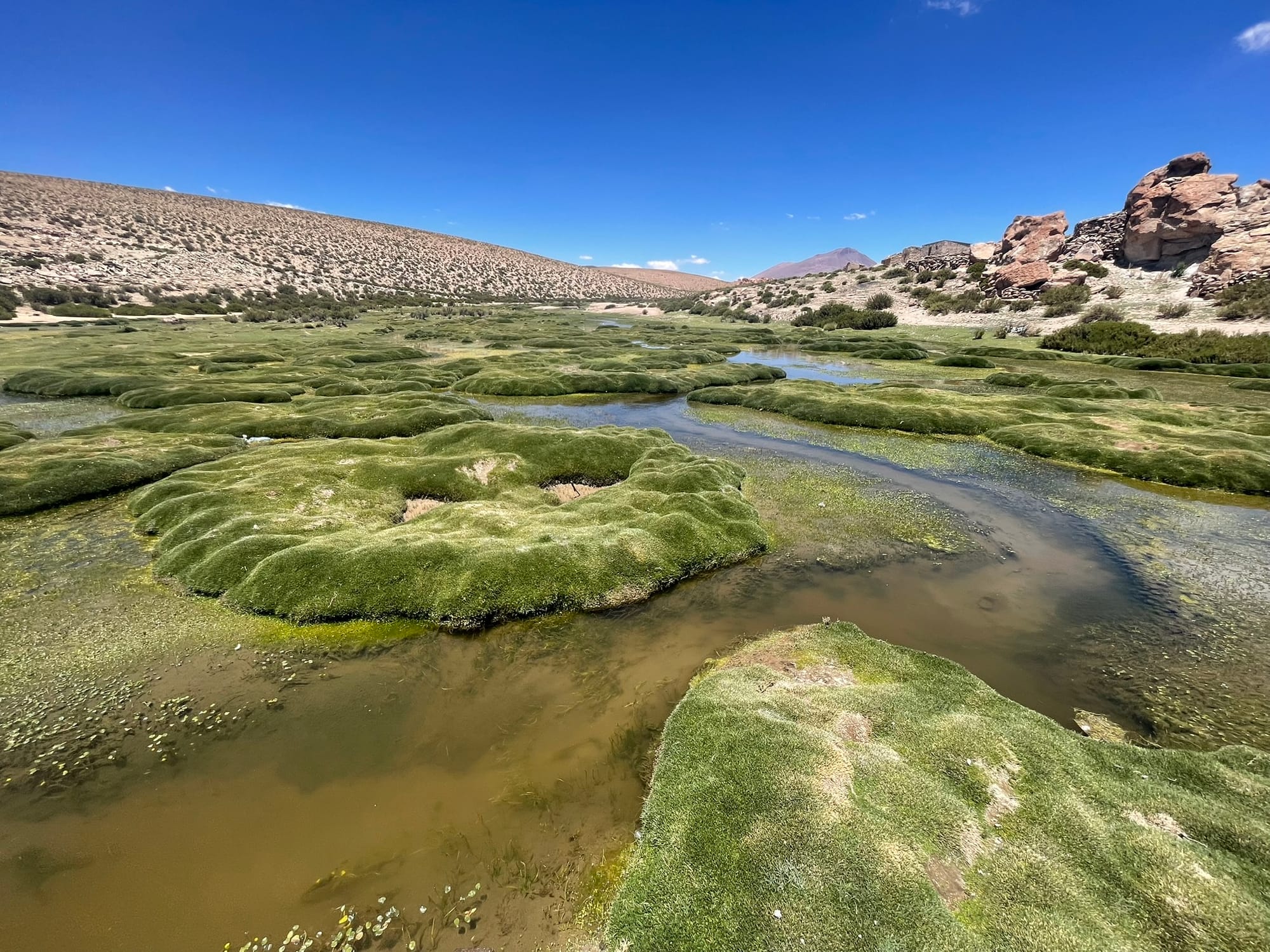
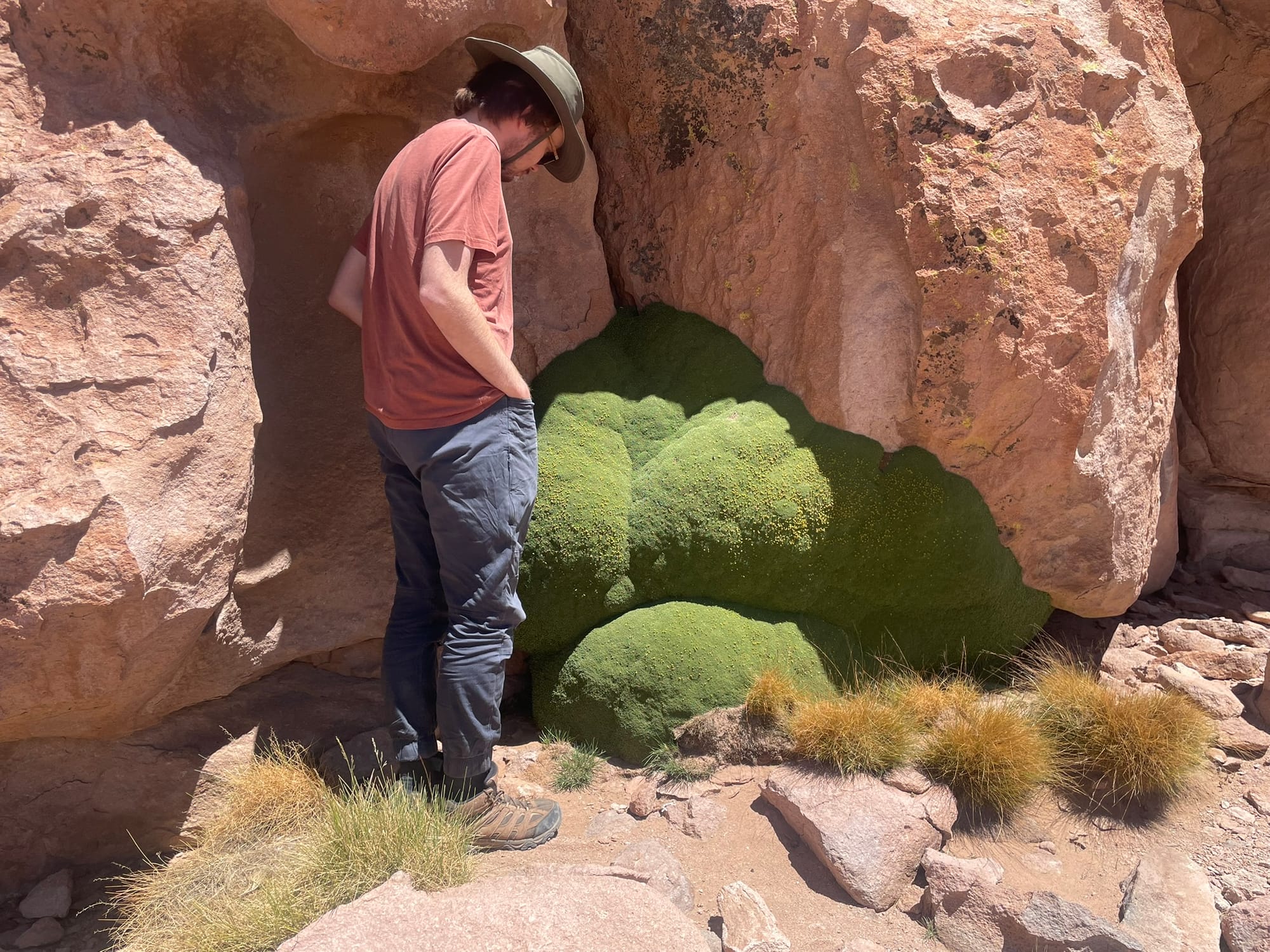
Yareta is actually quite a hard plant to the touch, not spongy as its appearance might have you believe, and dense too. With how slowly it grows, the plant Johann is staring at is probably really old. [📸 Rachel]
We had actually rejoined the Andes, the landscape becoming more colourful as we ascended, all purples. browns, and reds. Gradually the plant life disappeared, leaving only sand and rocks. Shallow lagoons began to appear, and we stopped to watch the large flocks of feeding flamingos, borax foaming along the water’s edge.
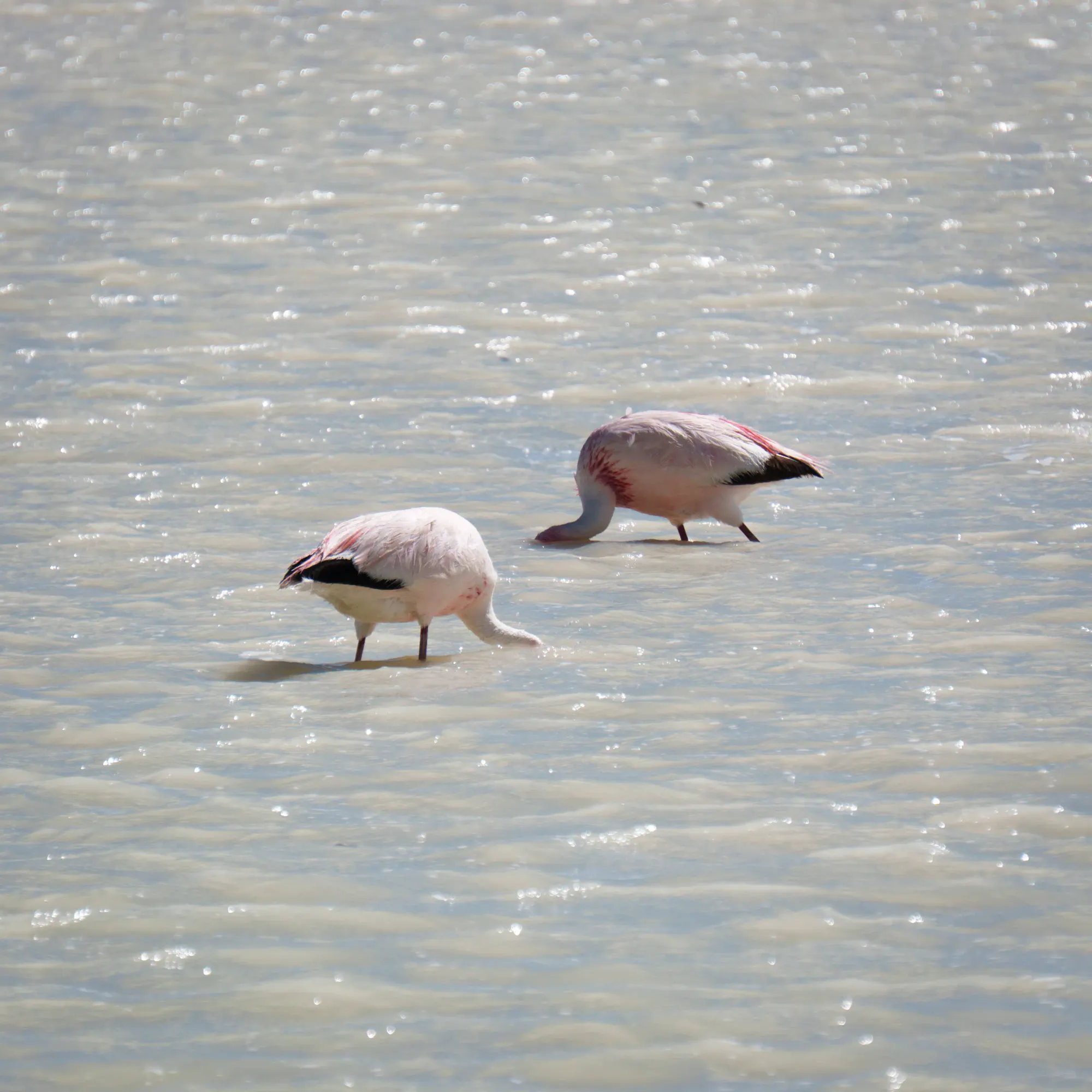
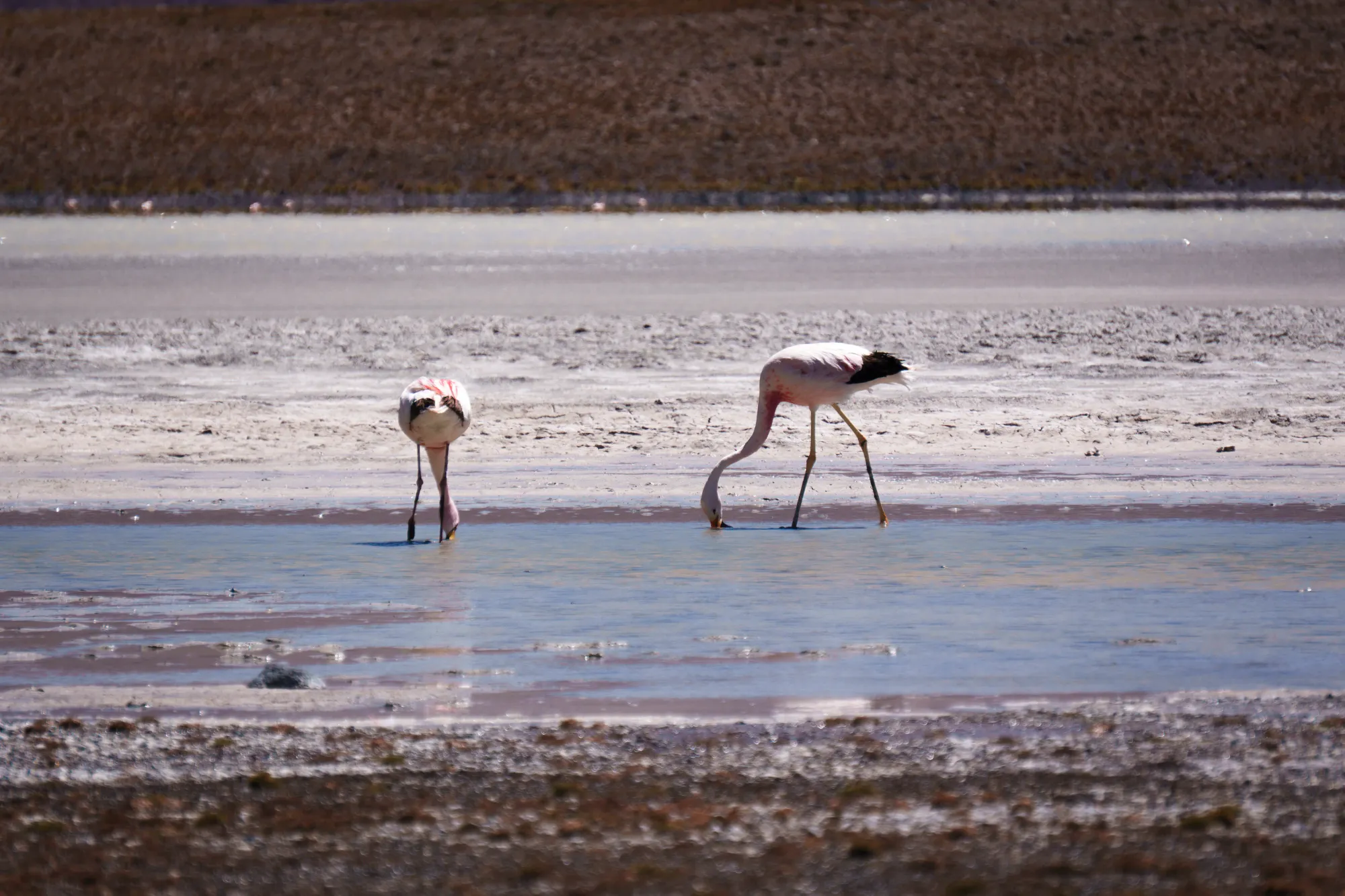
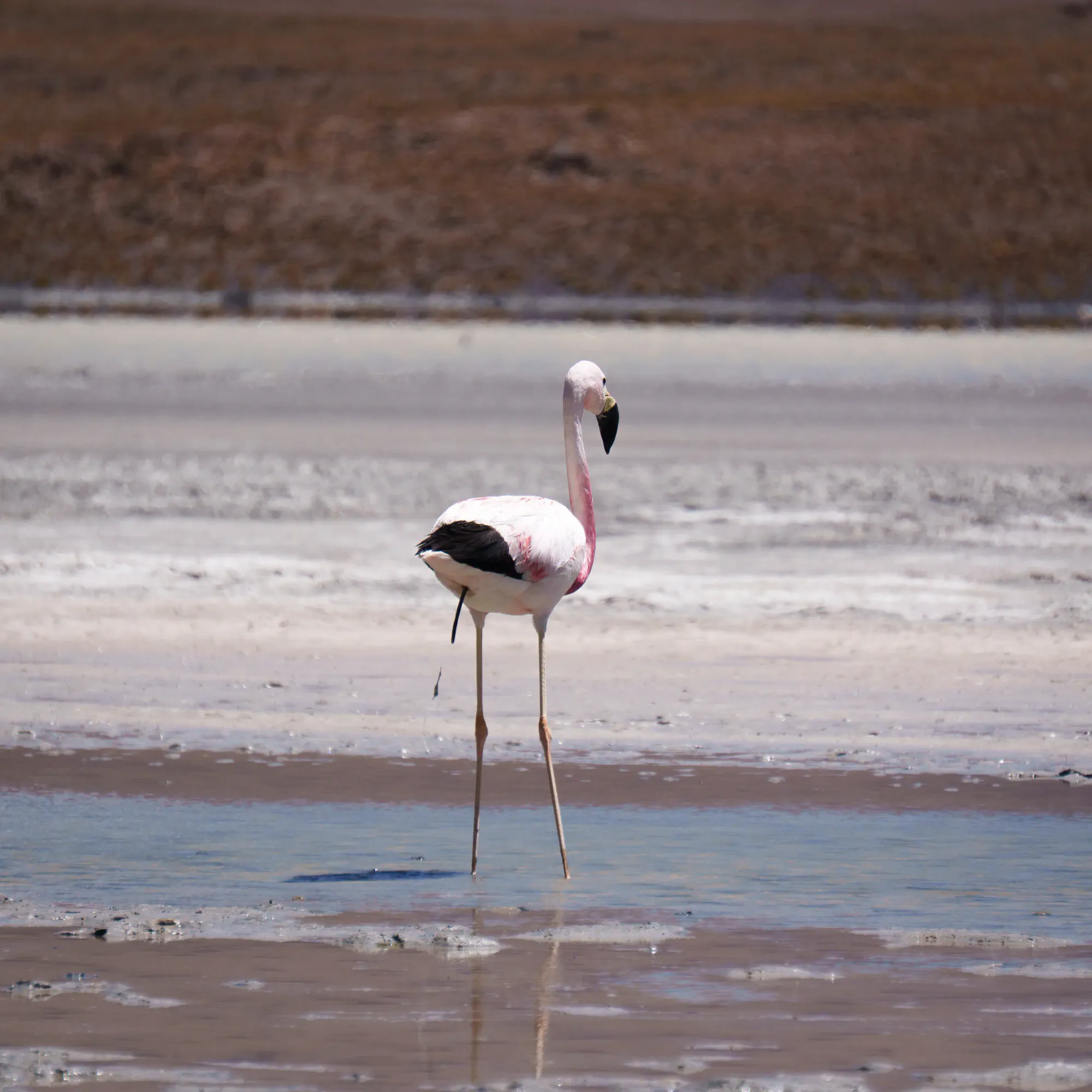
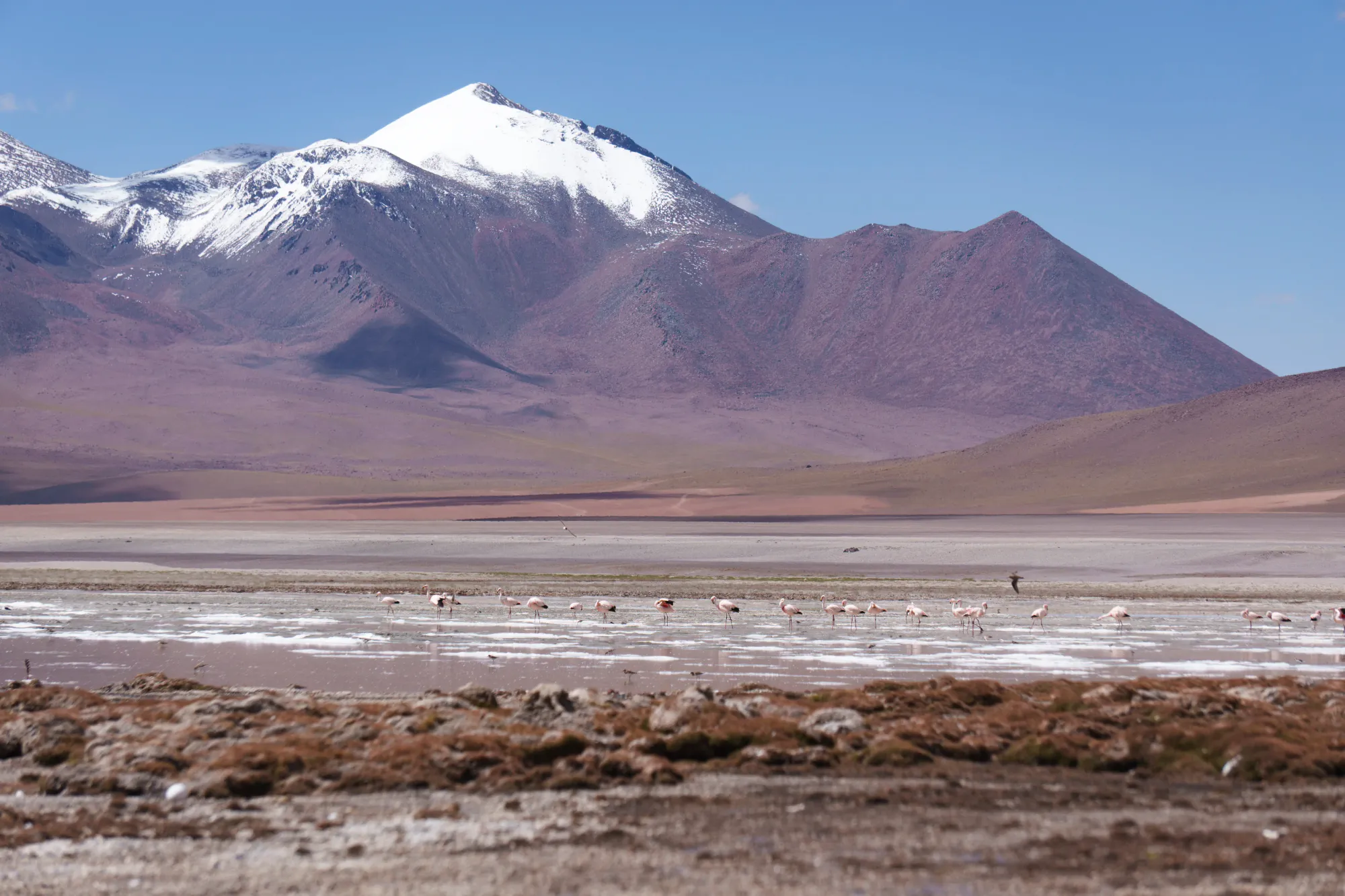
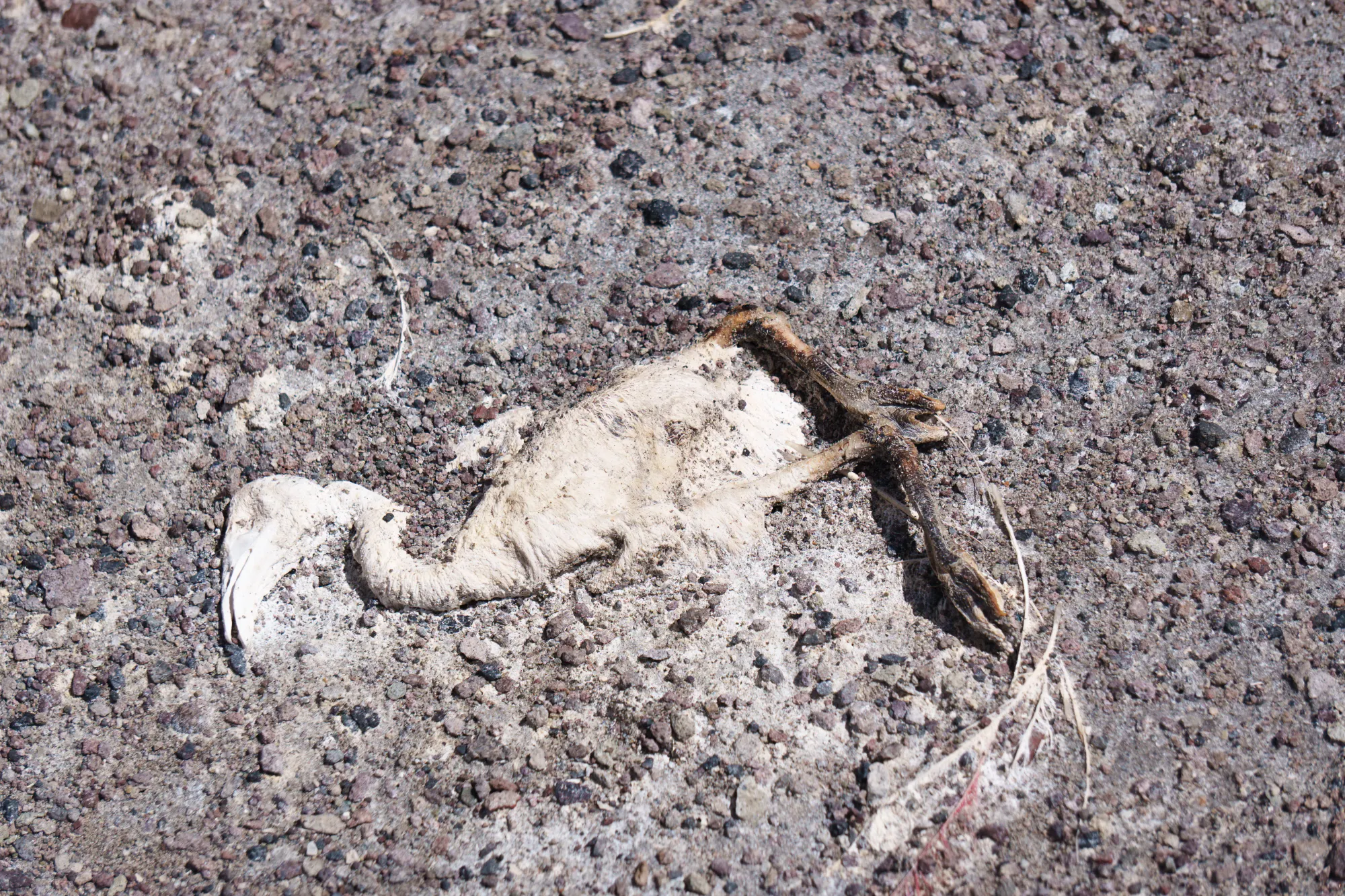
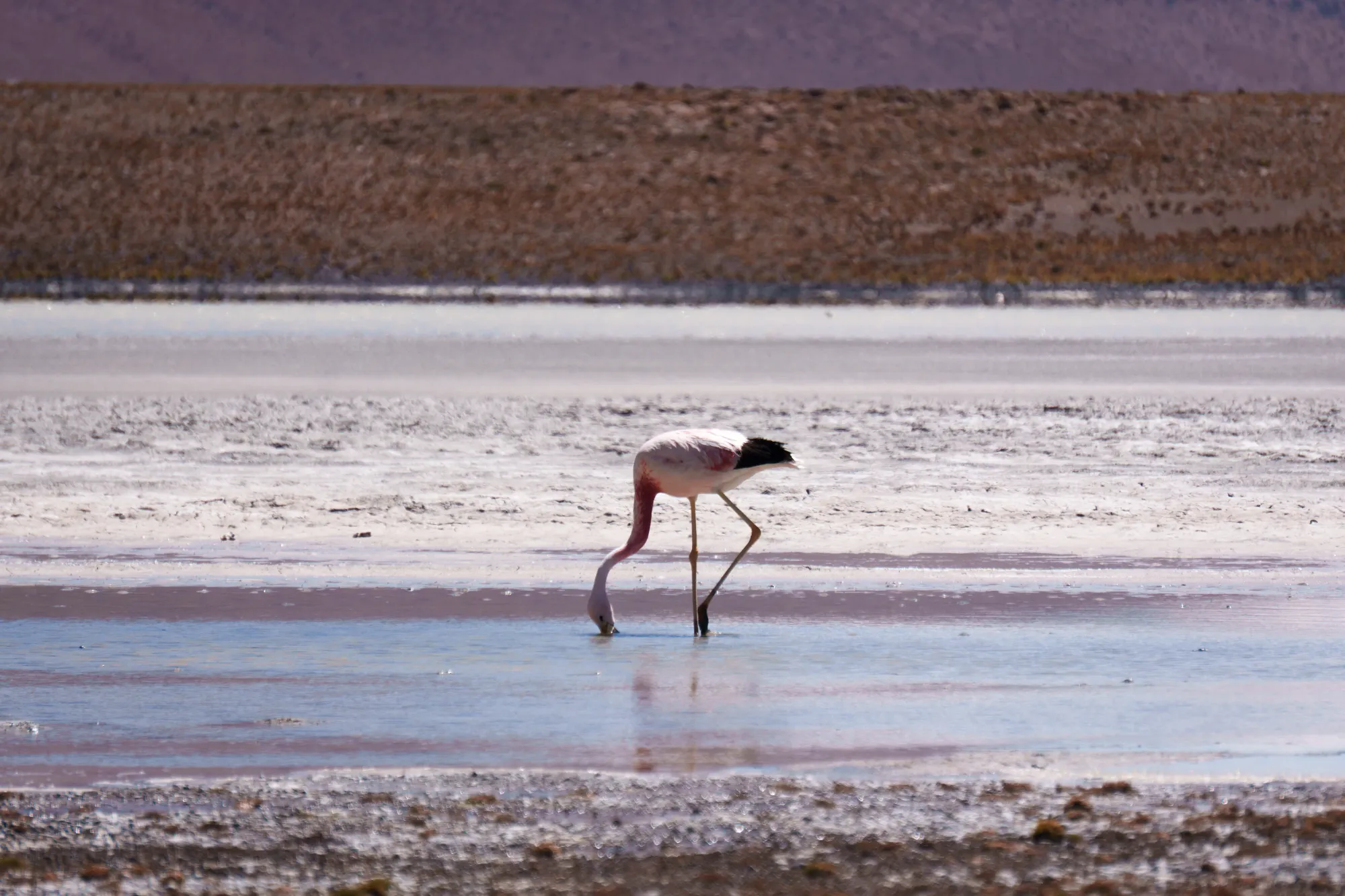
We adore these flamingos much more than the plastic, neon-pink, Walmart variety. [📸 Rachel & Johann]
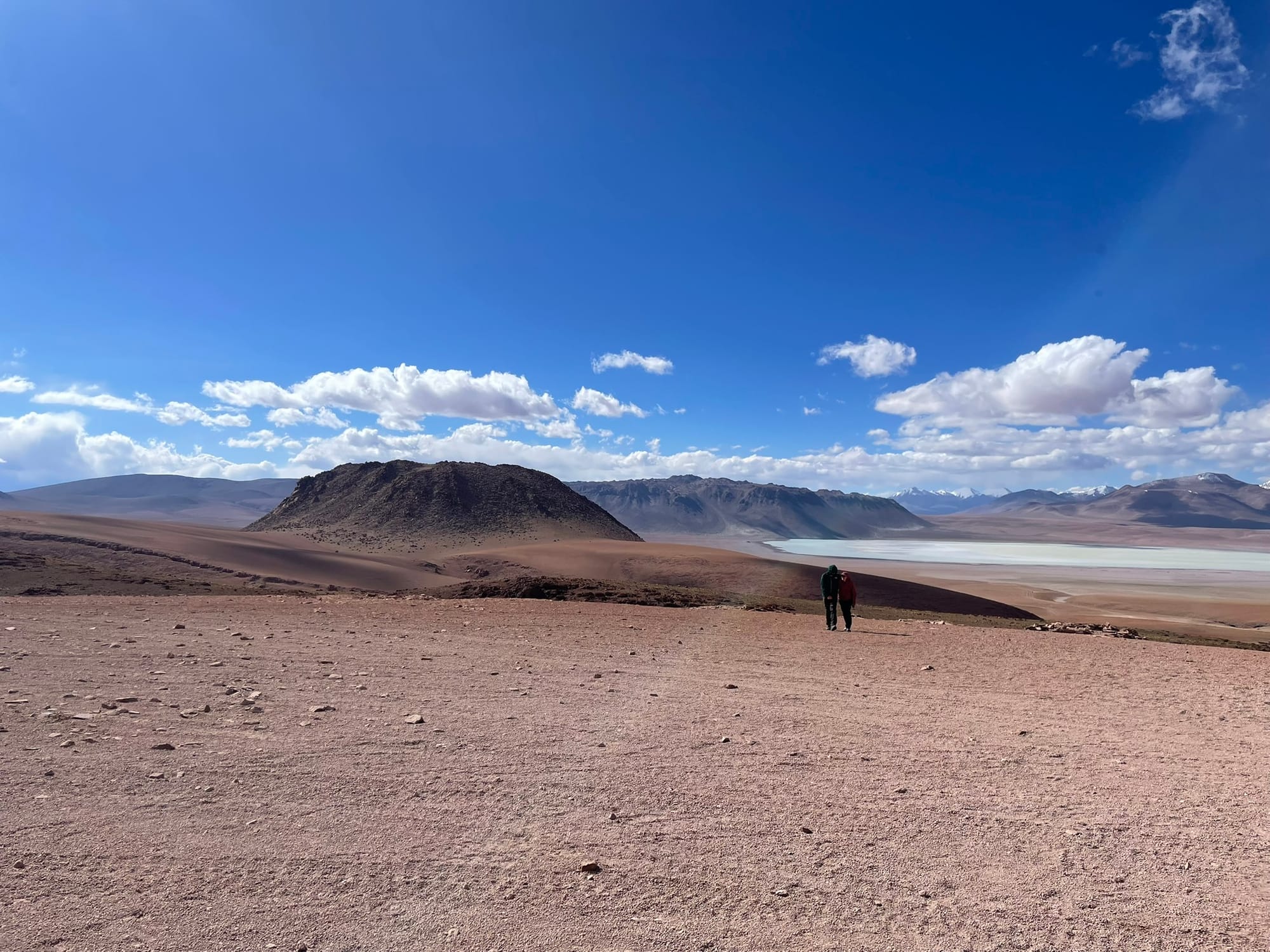
At 4900m we reached a lookout with a breathtaking view of the high desert which neither words nor camera can capture. Know that the wind was intensely awful. A little lower down we walked between huge boulders, and saw a rock formation strongly resembling a tree.
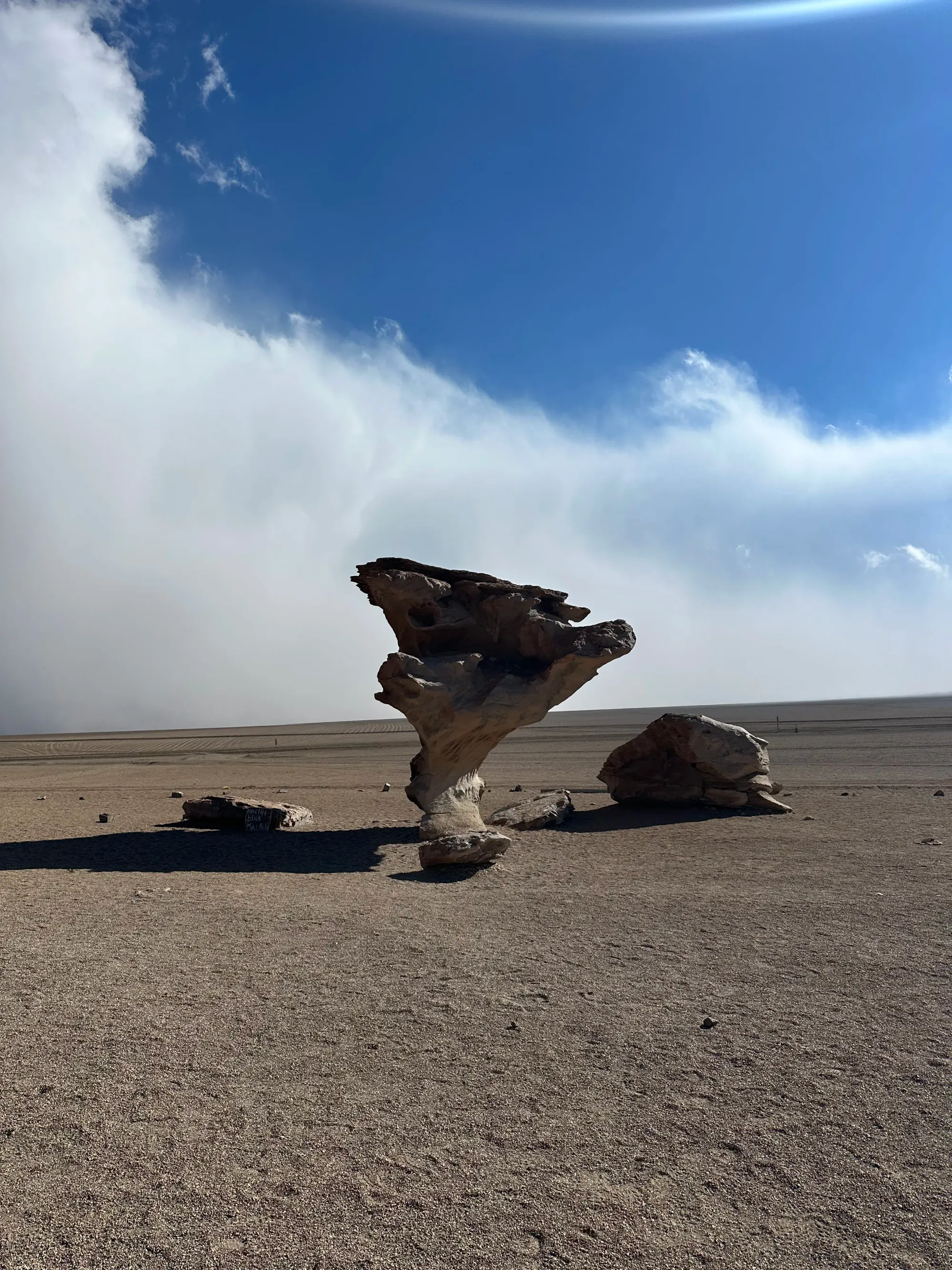
The towering snowstorm behind the tree-like rock formation started sending snowflakes our way, foreshadowing things to come. [📸 Rachel & Johann]
Our last stop before our basic (but comfortable!) hostel was the Laguna Colorado. Naturally tinged by elements and minerals like iron and borax, the water was a mosaic of reds, blues and whites. Vegetation on the shore and islands added greens and yellows to the mix, while the many feeding flamingos were the crowning gem; water spelling out a rainbow in many colours.
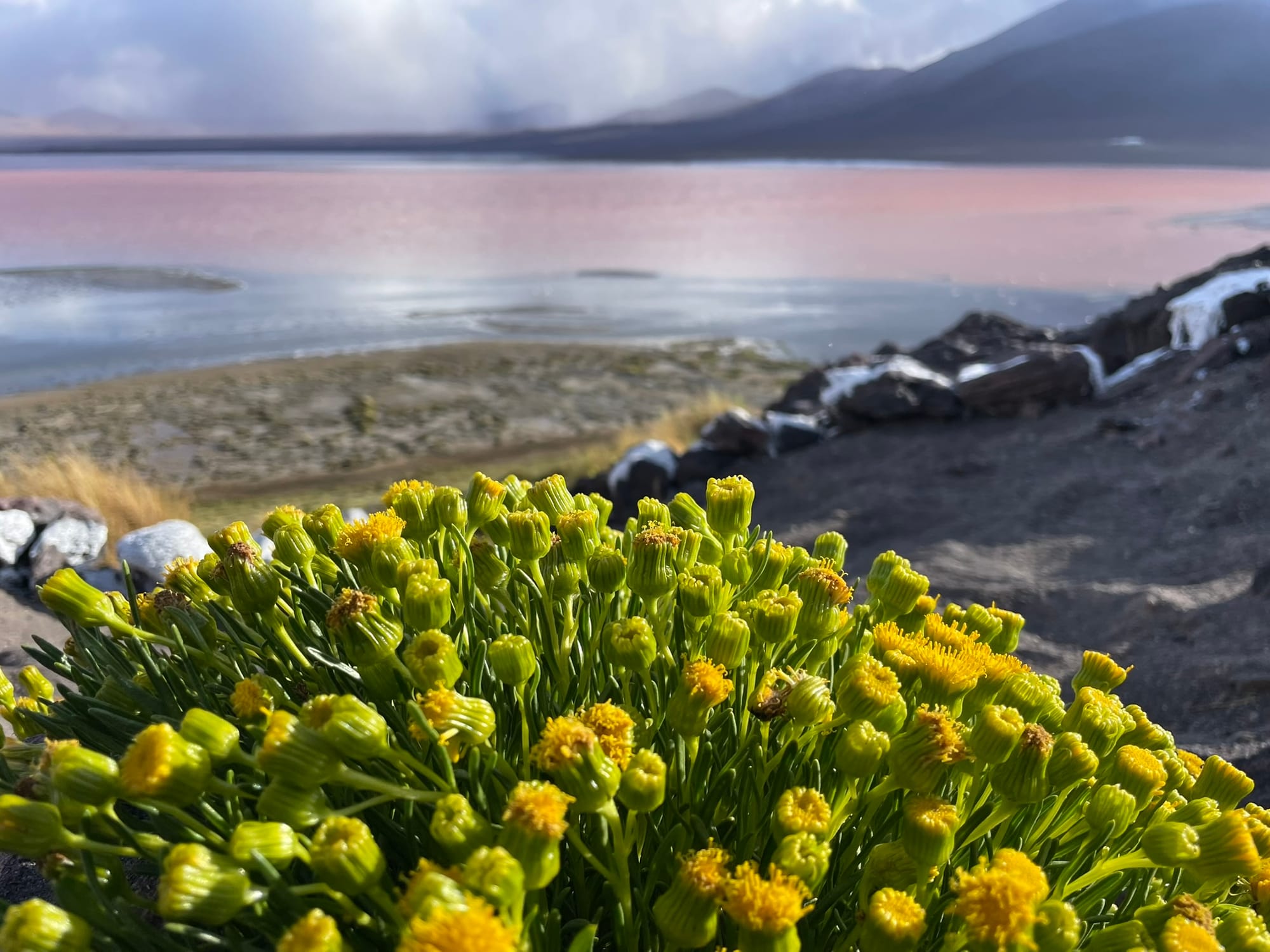
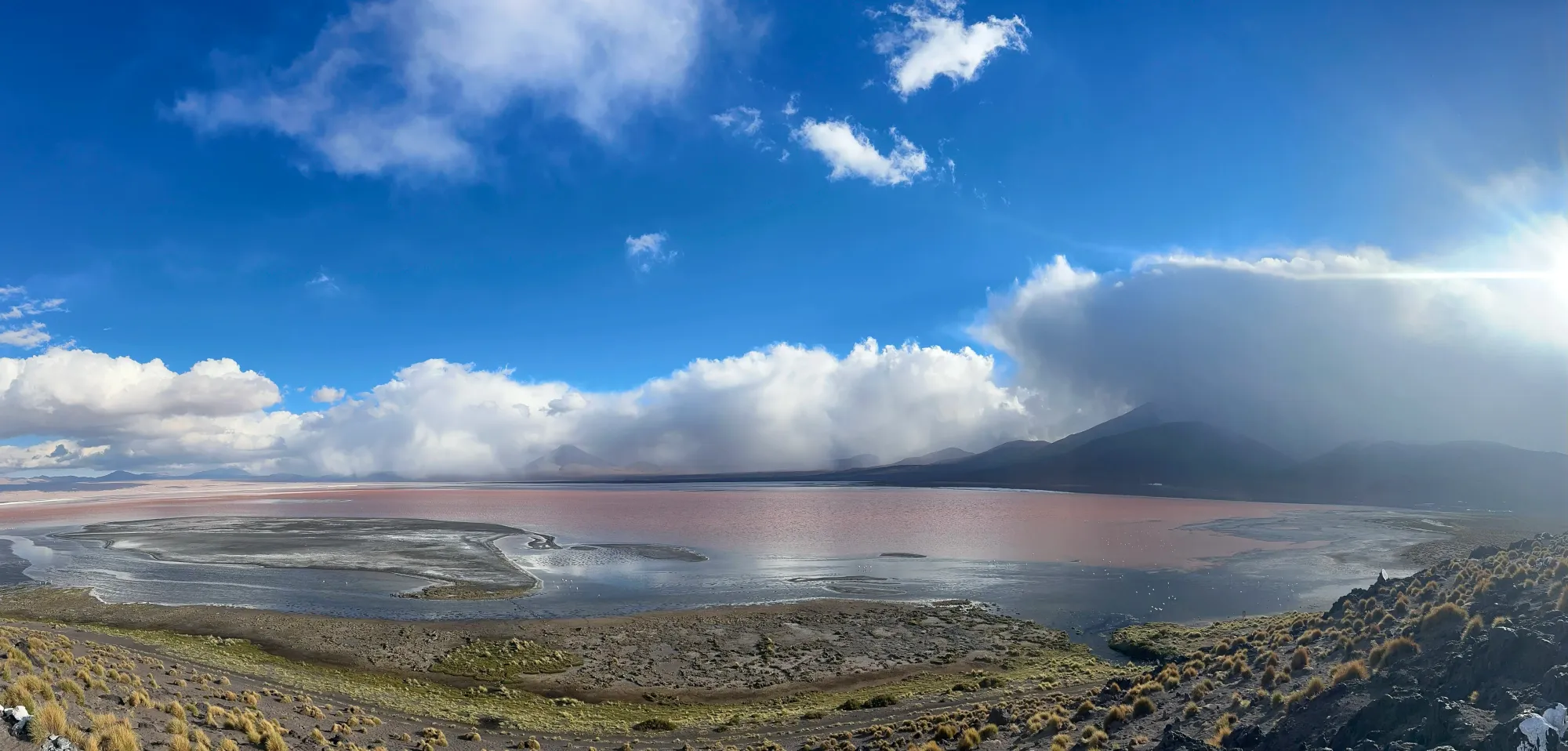
The wind was absolutely intense at this lookout - we kept getting almost blown off our feet. [📸 Rachel & Johann]
Day 3: Huayllajara to San Pedro de Atacama
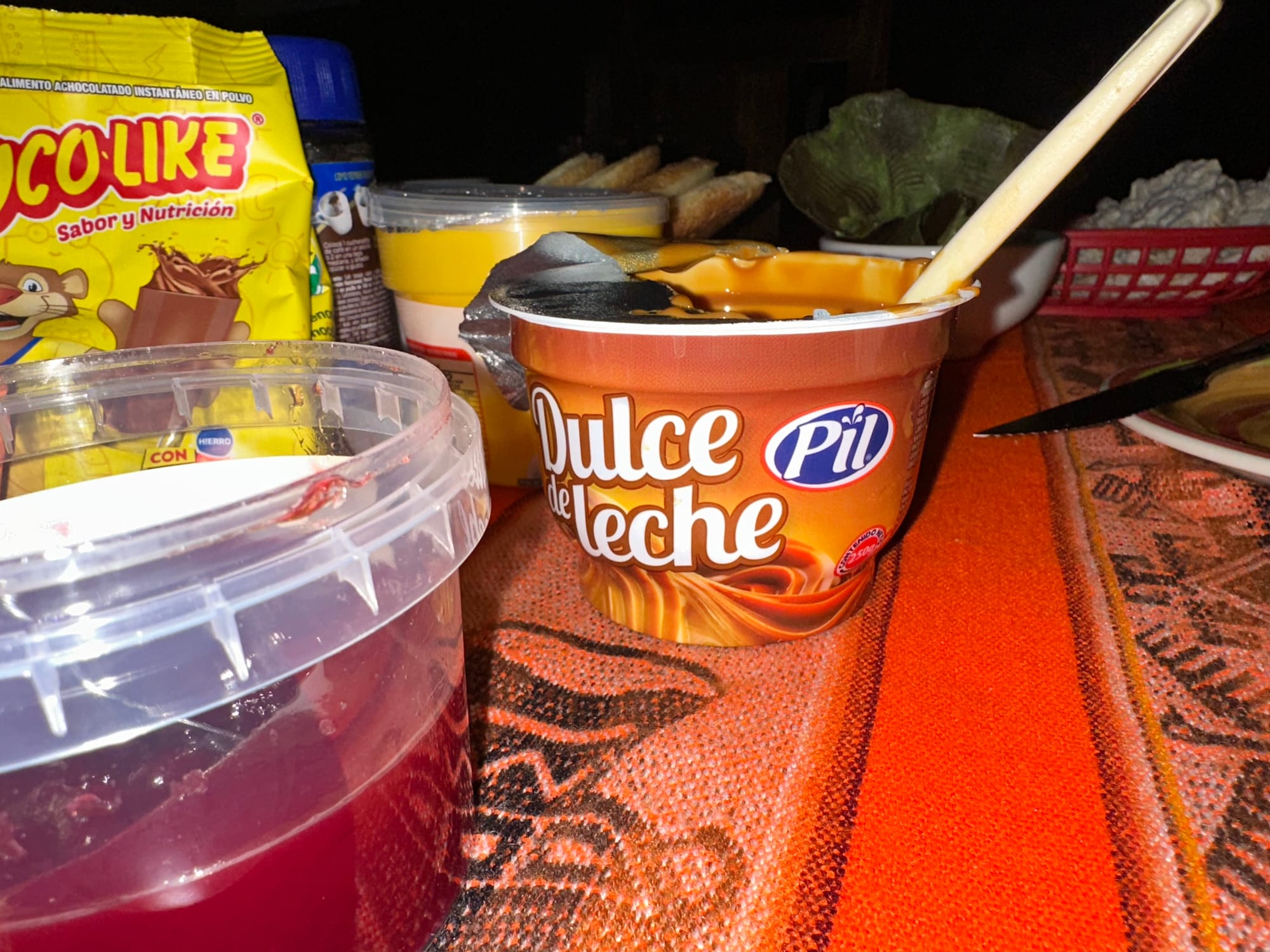
We rose early and breakfasted at 4:30. It was in that defining half-an-hour that we discovered that dulce de leche (condensed milk caramel) comes pre-made in a container in Bolivia. Rachel ate it with fresh avocado (don’t judge, it had to be eaten before the Chilean border) on ‘rice bread’ (what Walter calls rice cakes). Ah, sweet ambrosia!
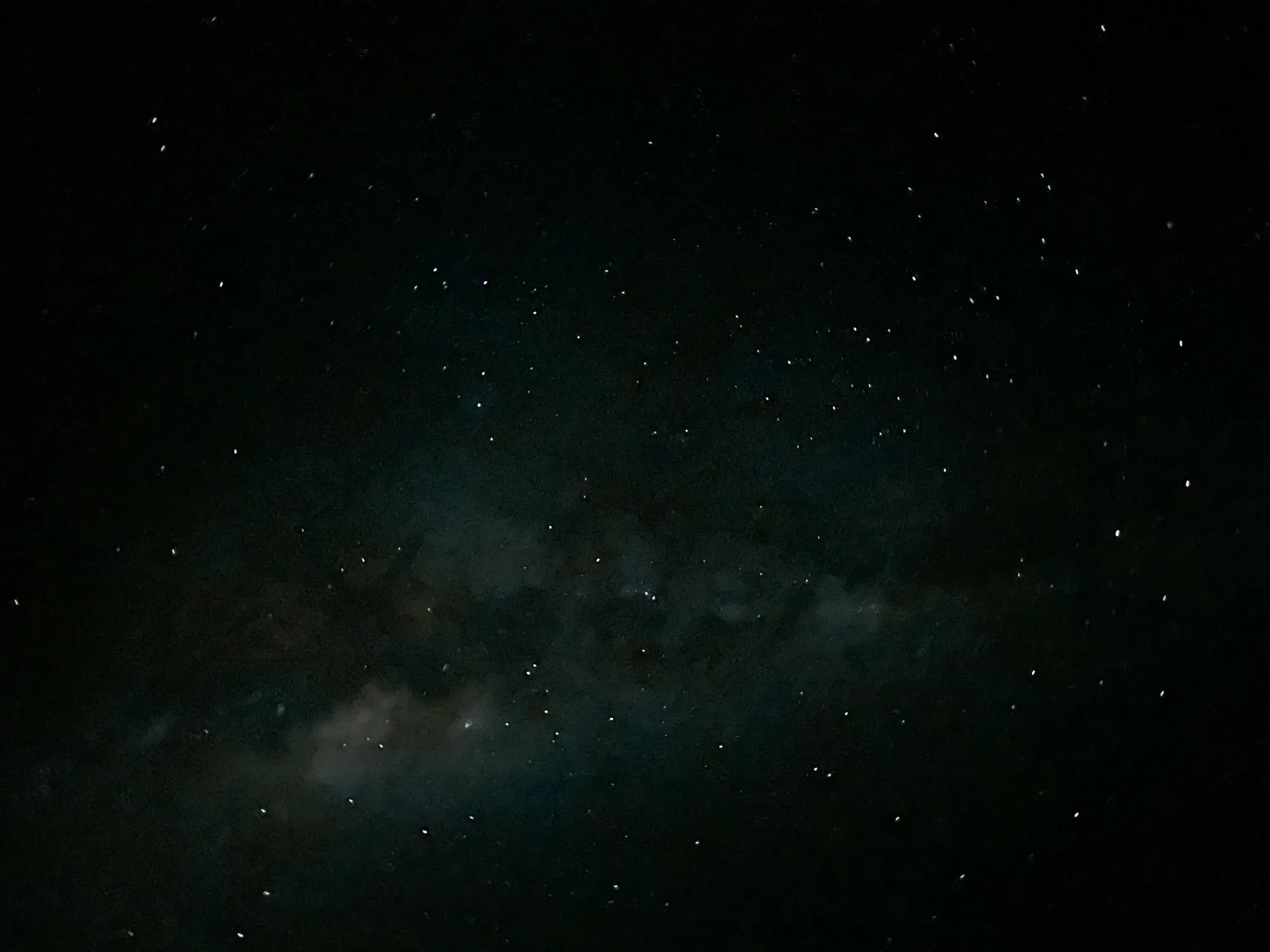
When we brought our bags out to the car, the landscape was dusted with snow. The sky was still dark, and at over 4000m (i.e. reduced atmospheric interference) and looking into the Milky Way, the stars were thick and bright. By sunrise we were shivering in a valley of geysers, sulphurous steam pouring off the mud-spitting vats. Golden light spilled over the valley hills, the snow sparkling in the sun.
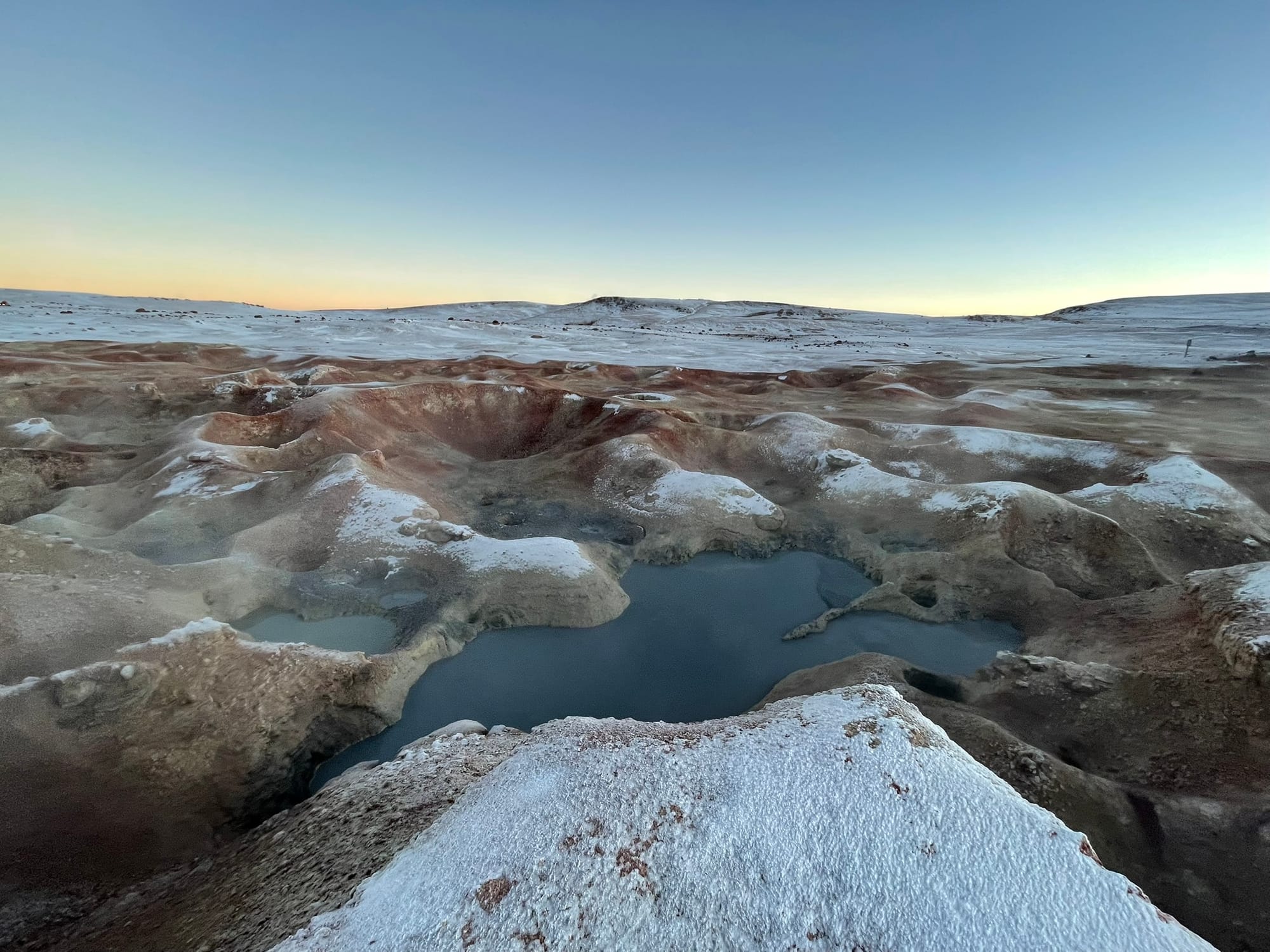
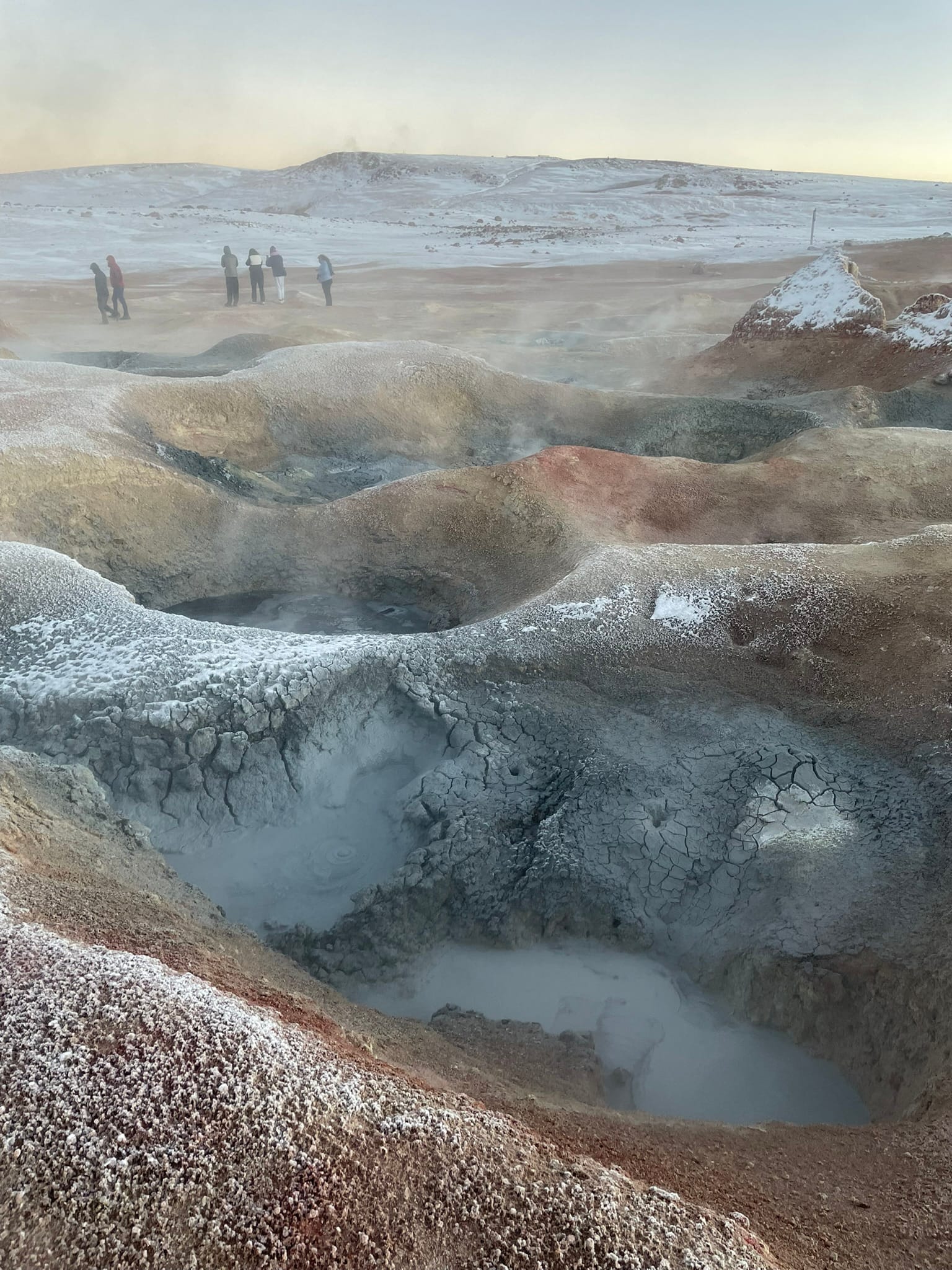
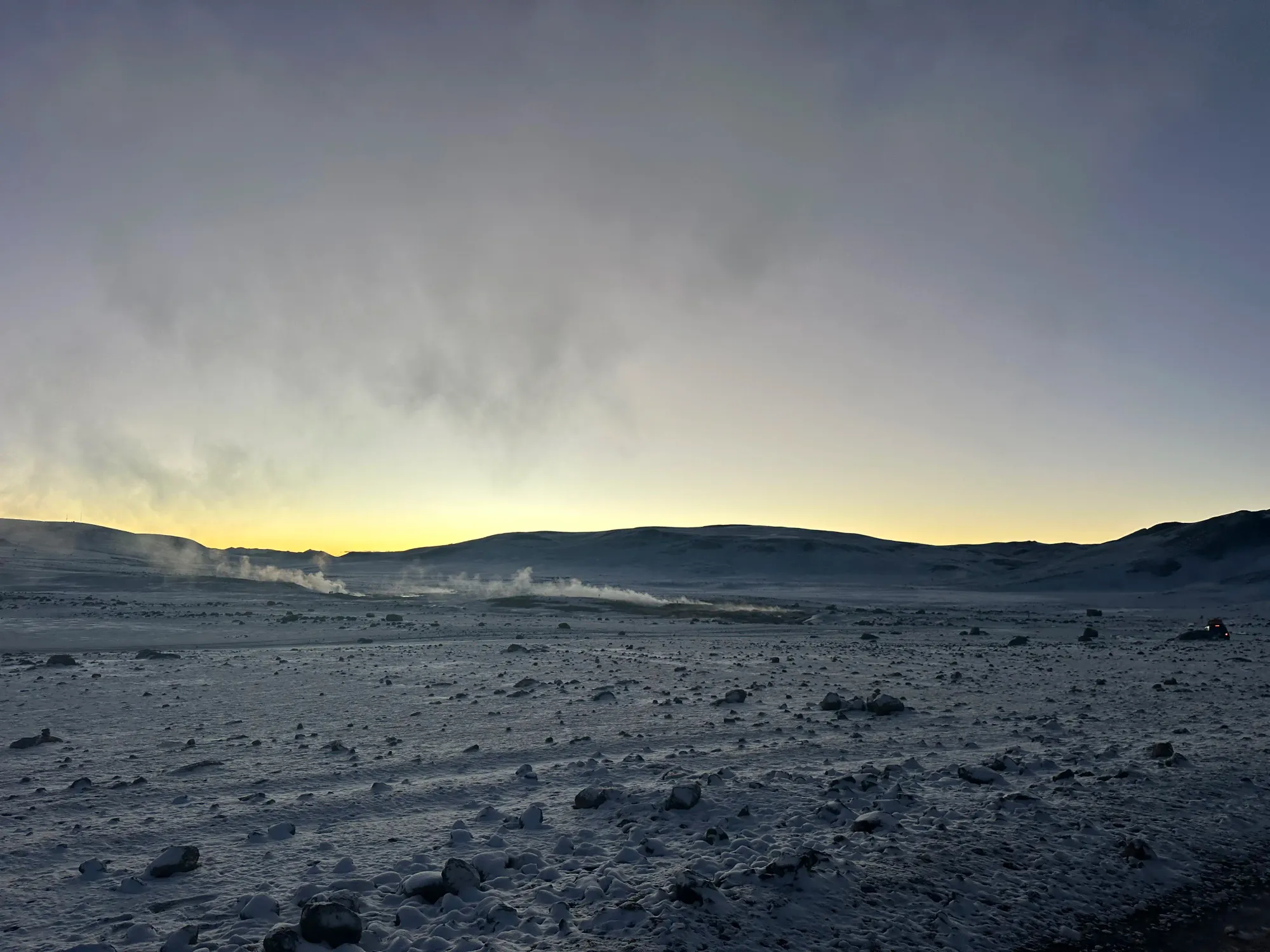
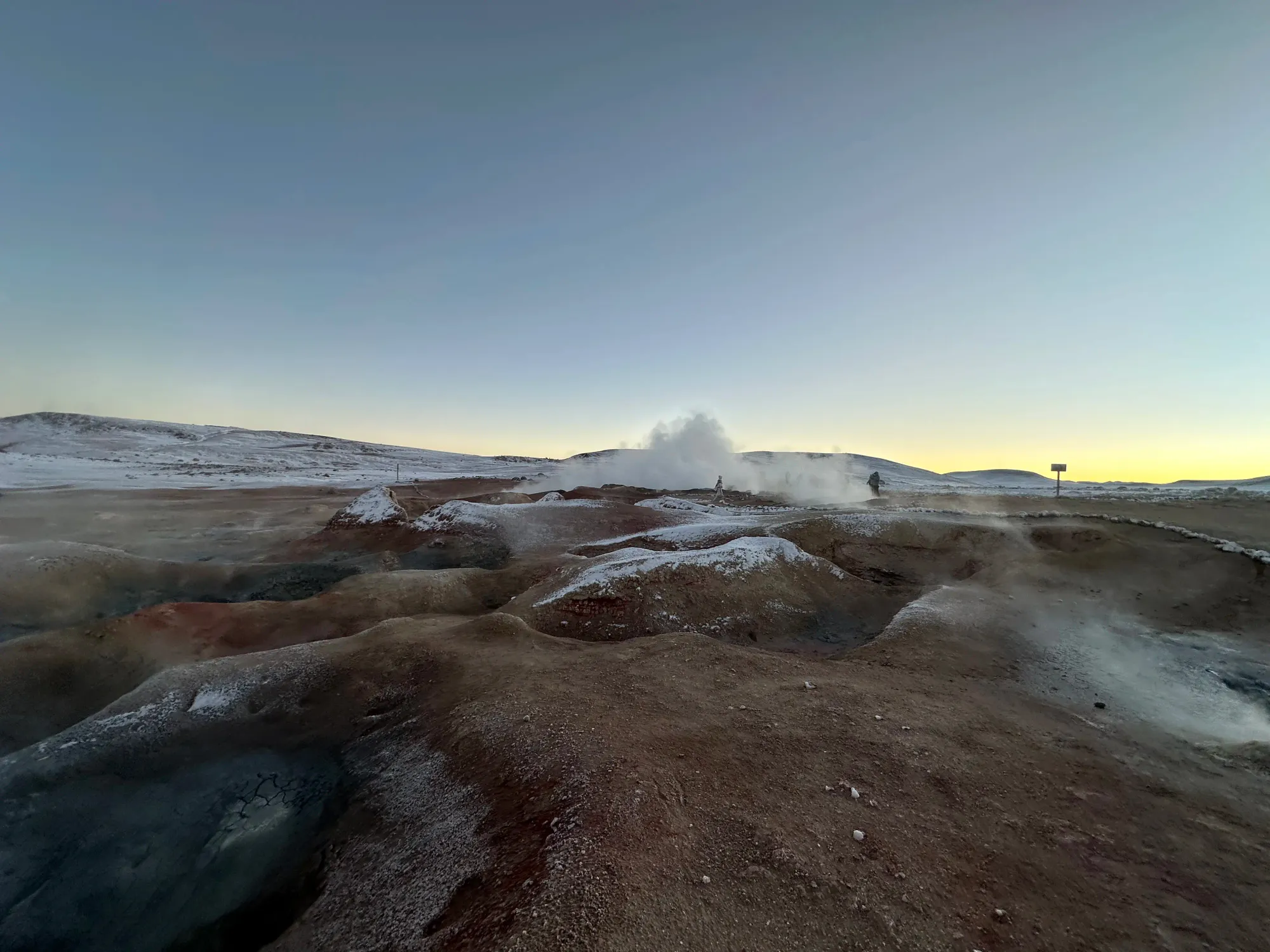
The sulphurous stench of the steam rising from the mud pots woke us up way more than the weak instant coffee we had earlier in the morning. [📸 Johann & Rachel]
We drove along a shimmering lake and stopped at one end where hot spring pools lined the shoreline. Unfortunately they were small and few and very crowded, so we opted not to join the human soup. That’s where we got the news that the border was closed, so we took our time driving through the desert with colourful rock showing through bare patches in the snow.
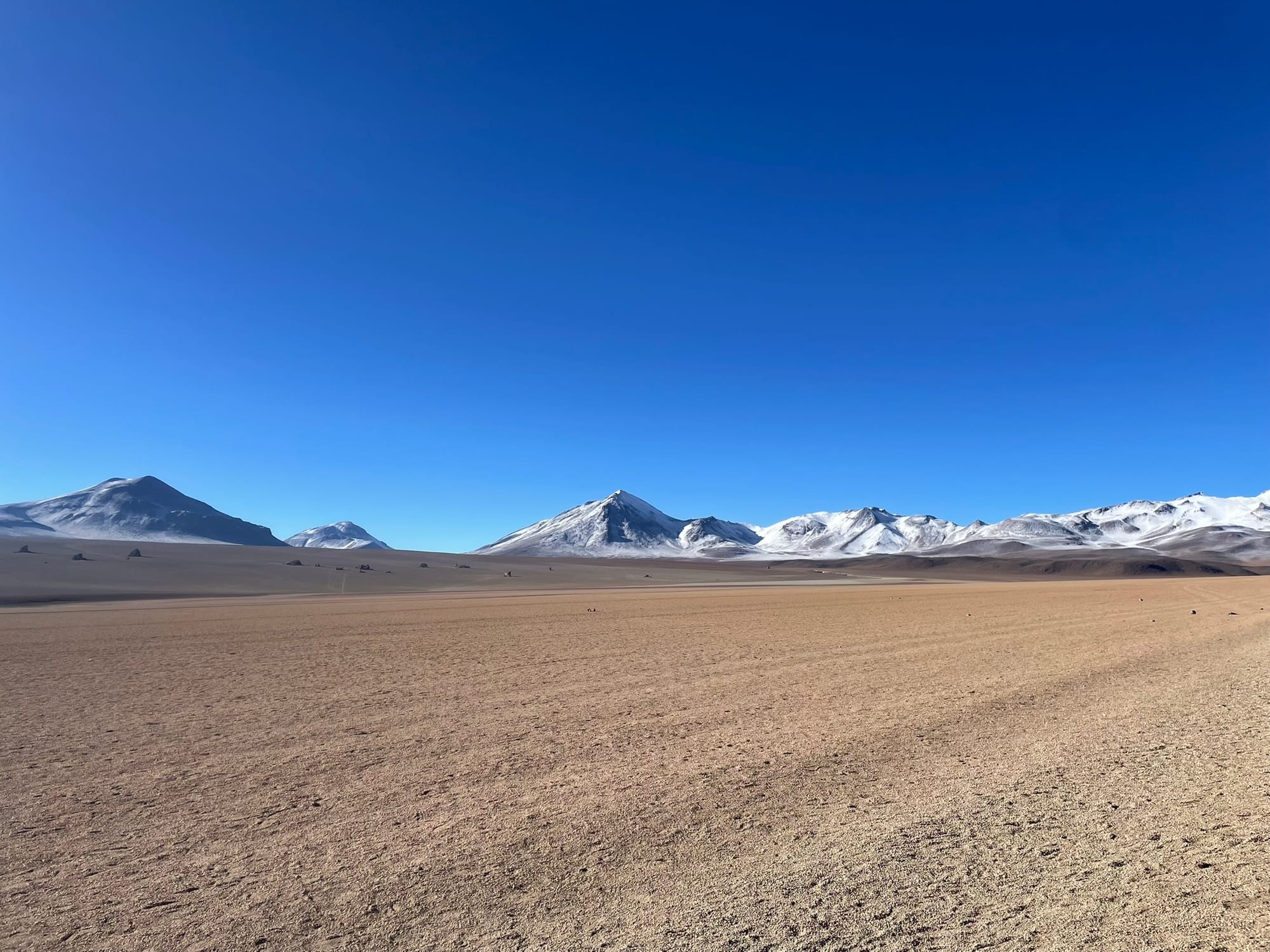
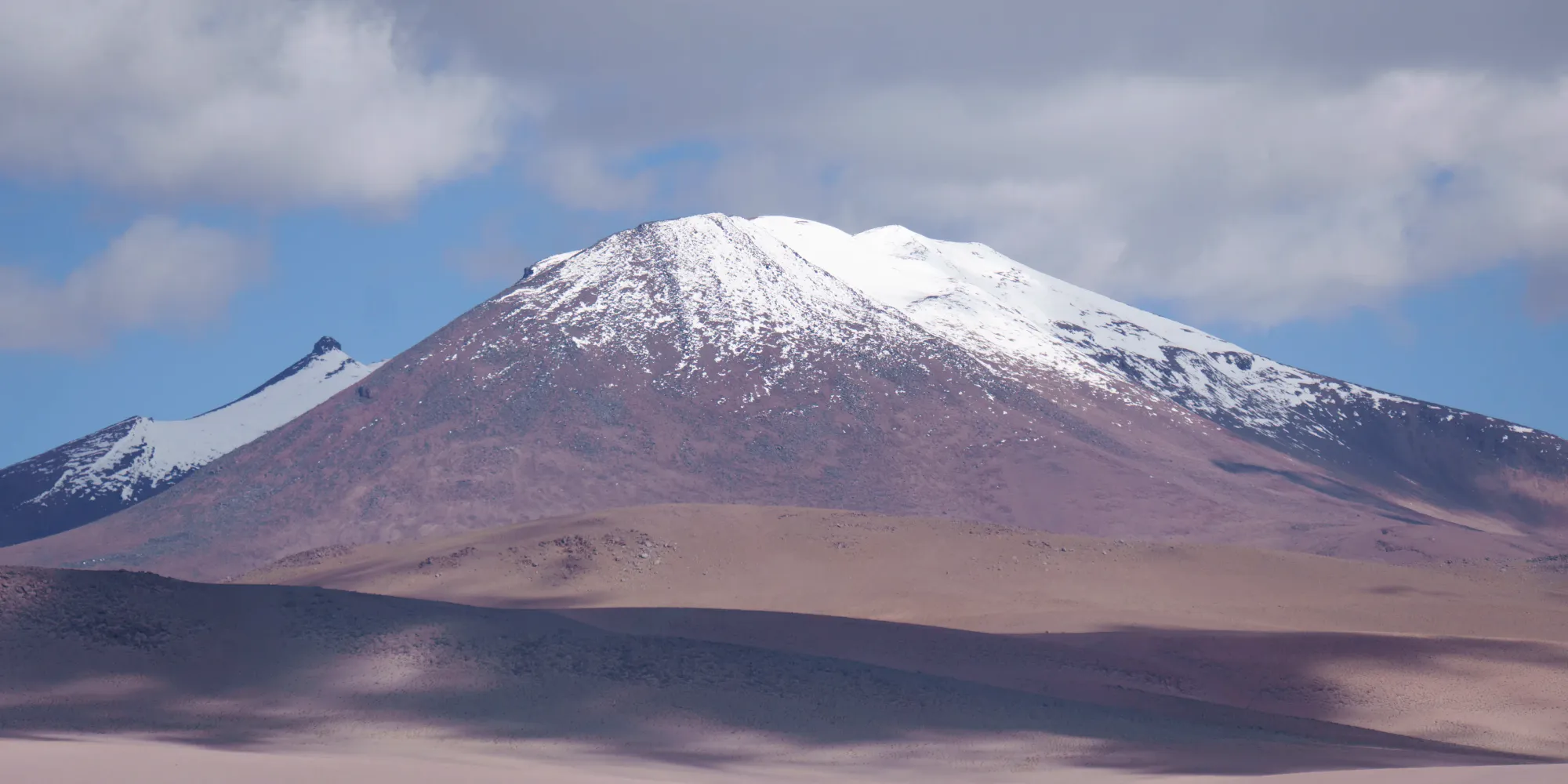
As far as we could tell (we're not geologists), a huge amount of the peaks we drove past were either dormant or semi-active volcanoes. [📸 Rachel]
A huge volcano towered over the green and white lagoons; the green lagoon is naturally tinged by arsenic, and is too toxic for animals to use. Without the wind stirring the waters, the lagoons looked mostly blue. A nearby lake reflected mountains to exquisite perfection.
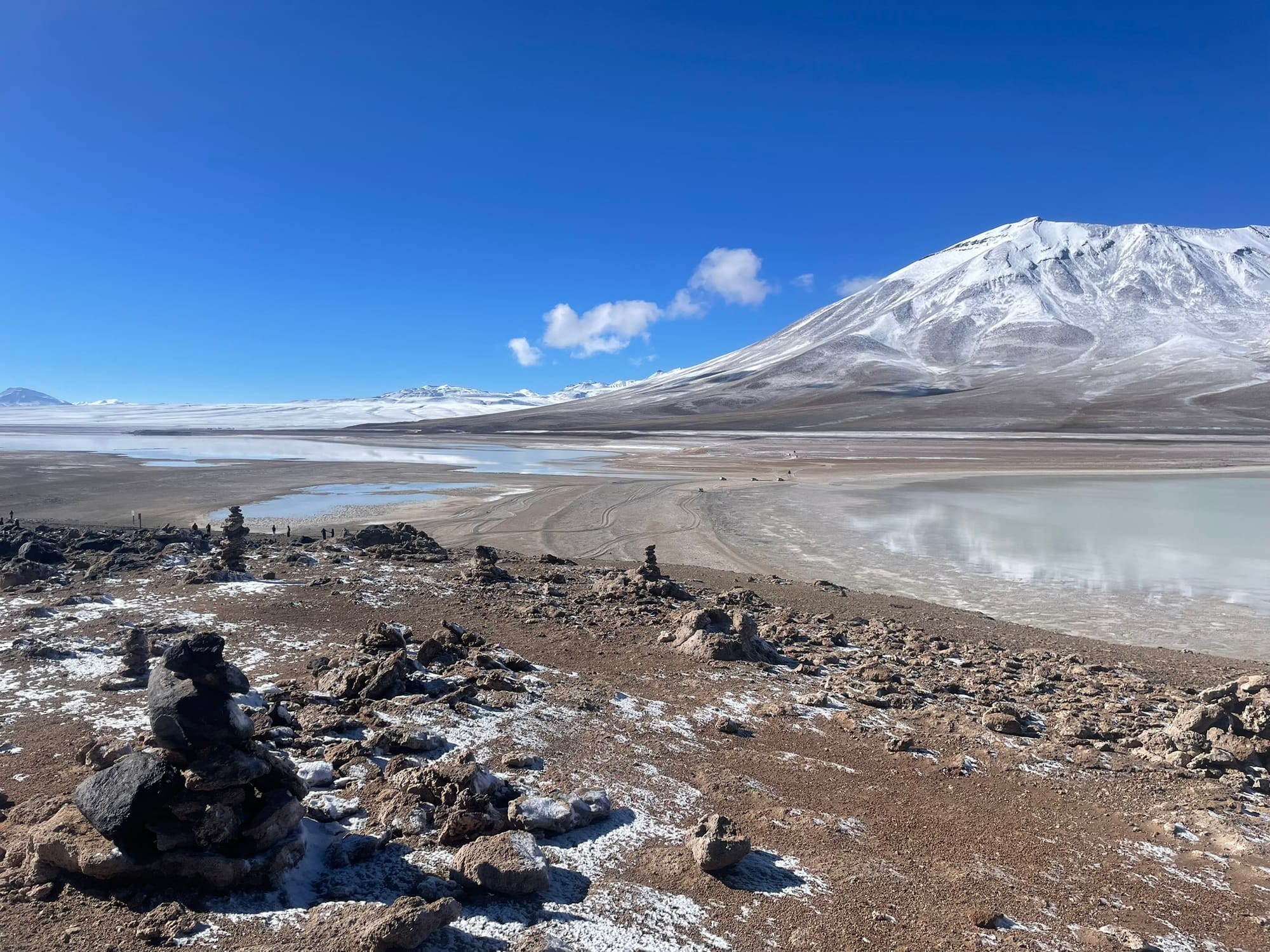
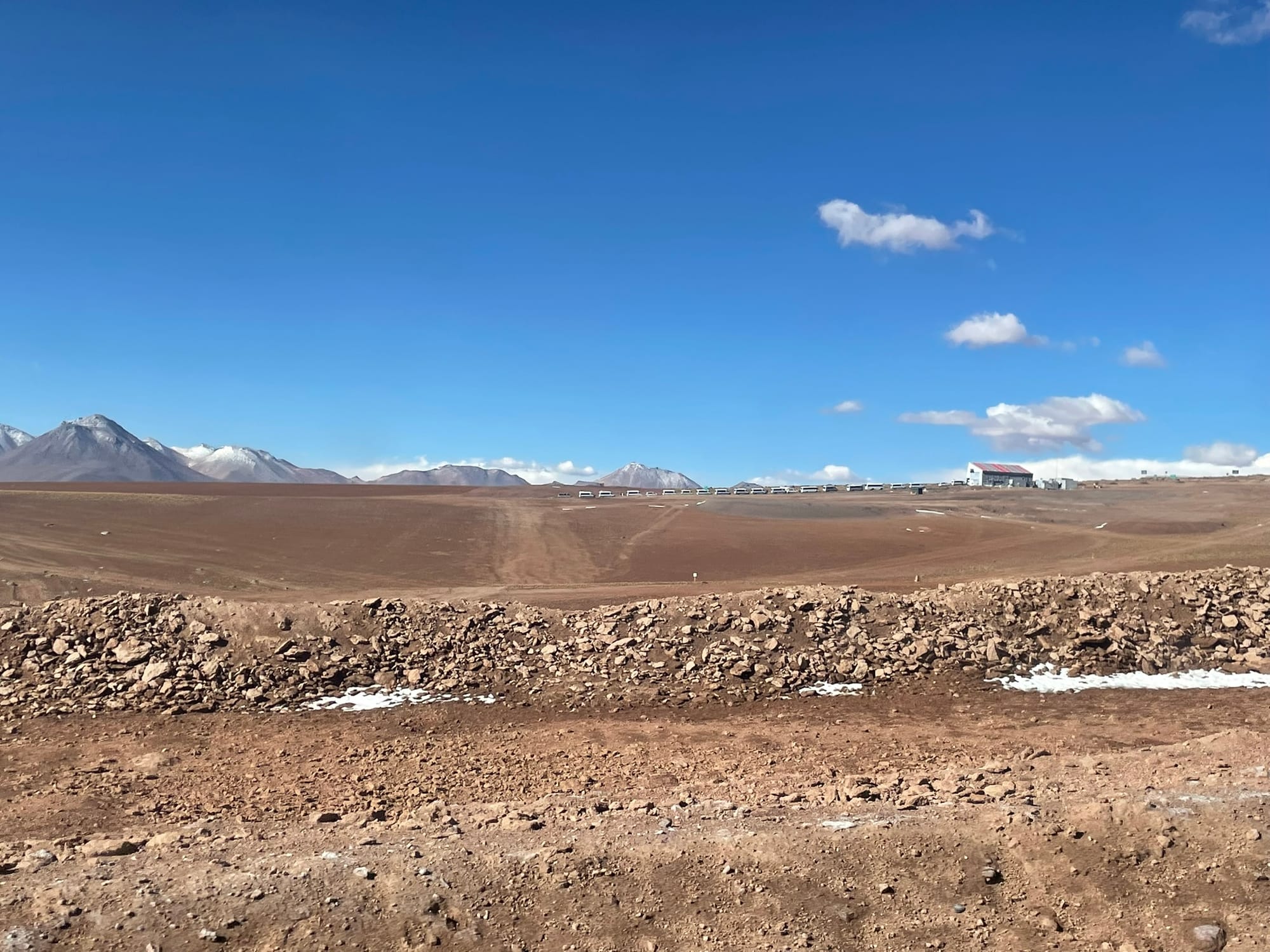
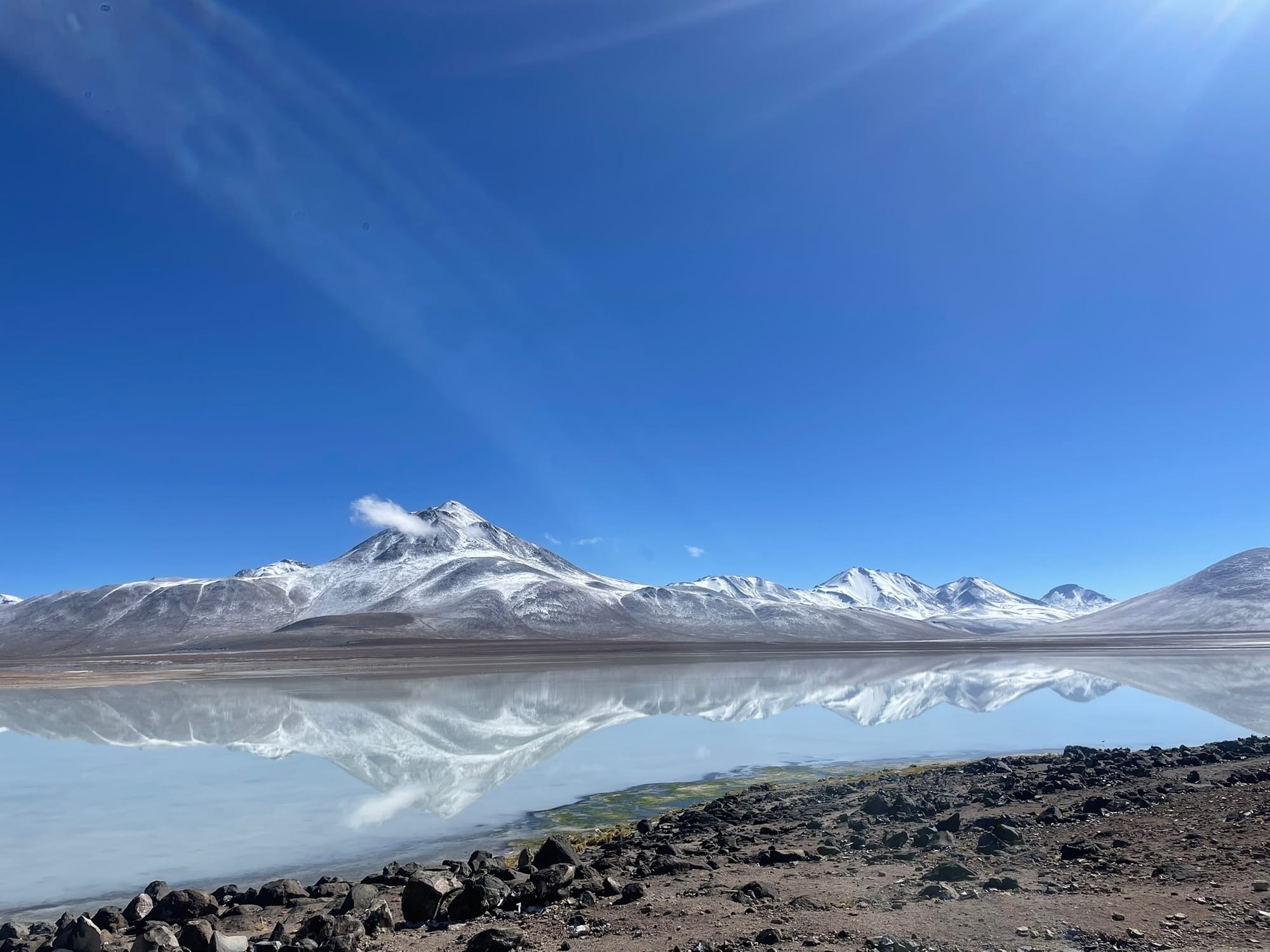
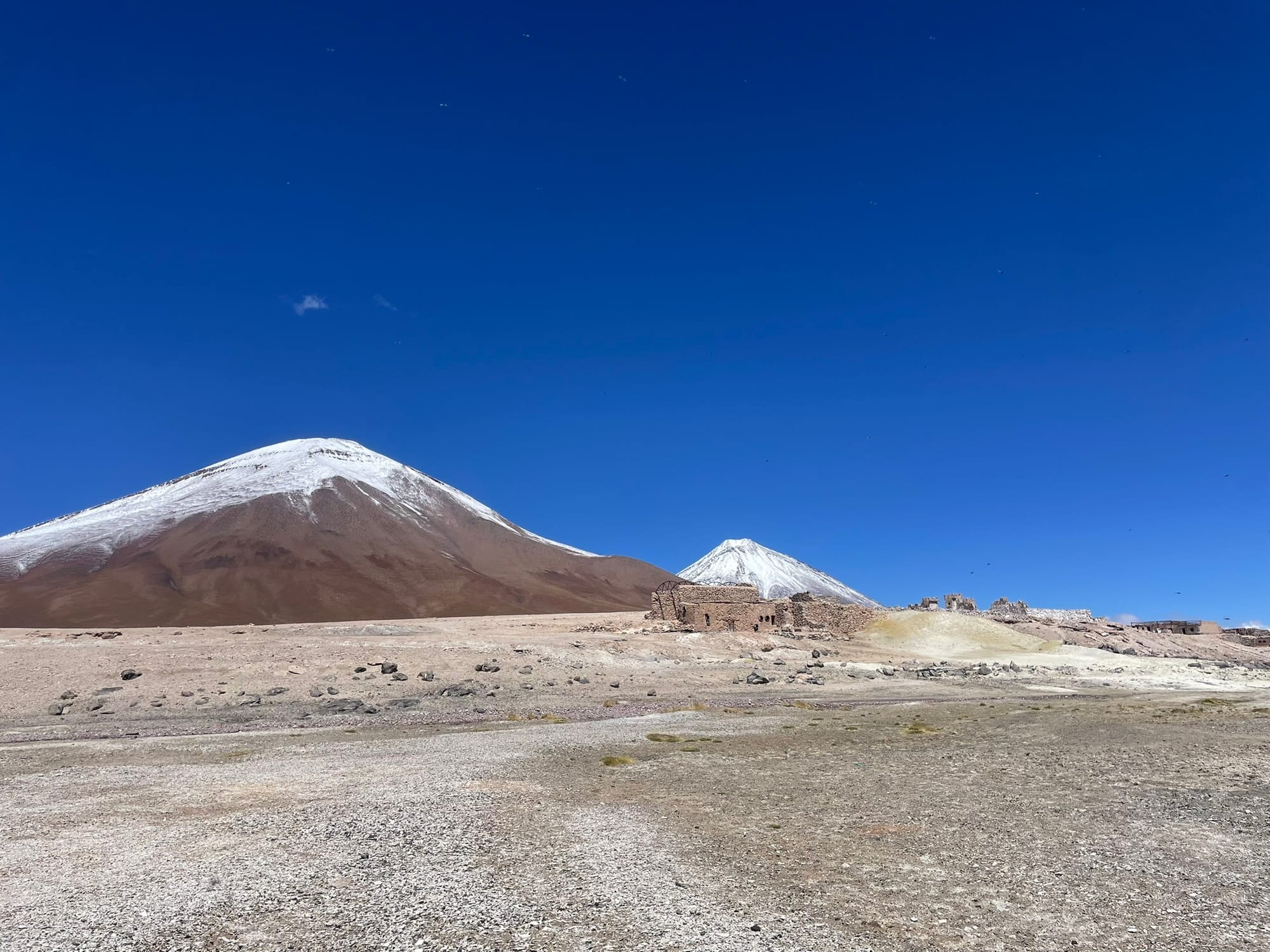
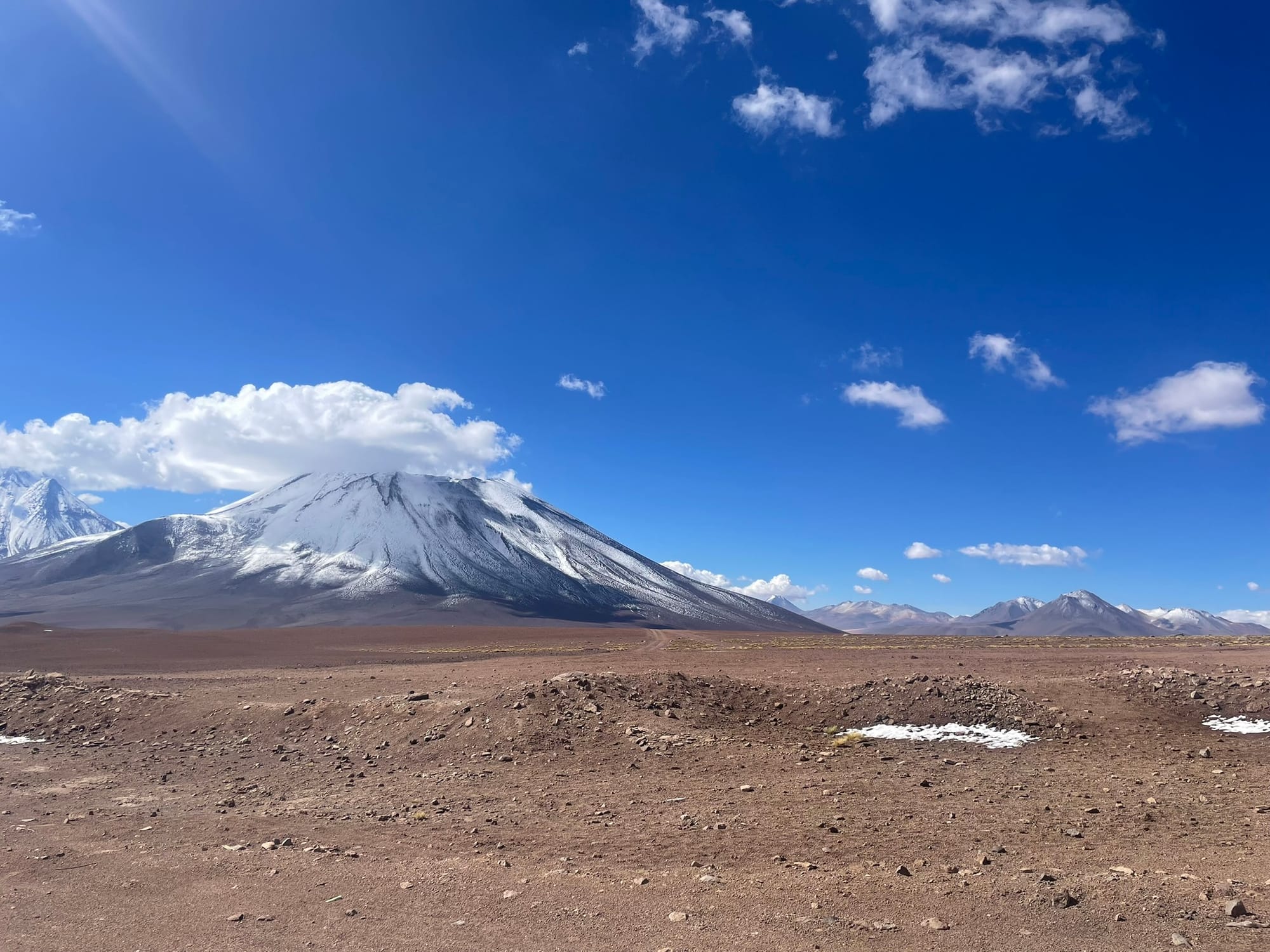
Oh wow, that's a lot of cars lined up at that ticket checkpoint off in the distance, huh? I'm sure that doesn't mean anything! [📸 Rachel & Johann]
Crossing Into Chile: An Adventure of Unexpected Duration
We ended up being delayed for 9 hours trying to cross the border. It was a Certified Time™.
We started by being held up at Bolivian customs/the National Reserve exit gate for 3 hours, as Chile had closed their border due to snowfall (remember that snow storm in the tree-like rock formation photo?). When it did open, we dotted our i’s and crossed our t’s before driving to Bolivian exit immigration. After an hour in line (over a hundred tourists and only one guy giving exit stamps), we received our stamps and returned to the car. We had officially "exited" Bolivia, and were now in immigration limbo.
After more waiting, huddled in the car to hide from the biting wind, our guide Walter turned up to break the news that Chile’s border now had no power. Unable to process passports electronically, their border was still closed.
Lunch was provided in a brick shell of a building, and Rachel struggled to eat ham and tomato on rice cakes. Around 15:00 that afternoon (Bolivian time), Walter came by the car to explain the new plan. The drivers were planning to take all of us travellers and drop us off at the border en-mass so that Chile would be forced to evacuate us to San Pedro de Atacama. As Bolivian cars aren’t allowed in Chile, they would of course drop us off 700m away to avoid the Chilean cops.
We agreed. We had a flight at 7:00 the next morning, and while we had booked it with free cancellation, we didn’t enough cell signal to change anything.
Five minutes later Walter was back. "We see the first van coming from Chile," he said. And where there was one, more would follow. Indeed, the vans began to arrive, and we were assigned to one of them.
We threw our bags in the back and Rachel climbed in. But there was no seat for Johann! No matter, he squeezed into the thin space between the door and Rachel’s seat, squatting sideways as we bumped over the dirt road to the Chilean border.
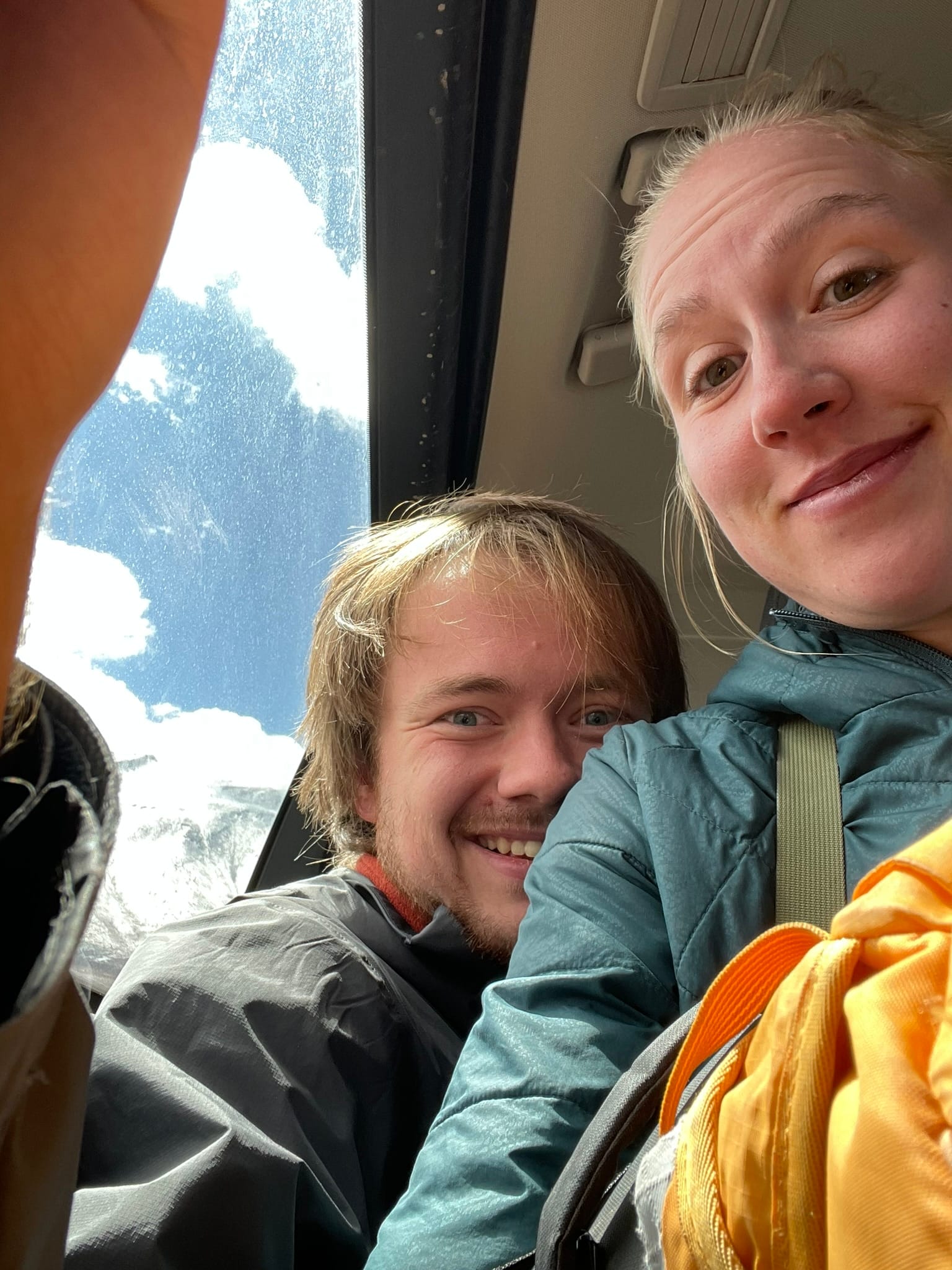
We stopped in the line of vans, and the driver hurried the guy in the front seat into another van. Apparently, he had silently walked up while the vans were being loaded and taken the front seat. Now that he was gone, Johann gratefully sat down.
They had to process all the vans entering Bolivia first, with their passengers from Chile who would undertake our journey in reverse. We sat for almost an hour, filling out our Chilean customs forms and declaring our can of tuna (which was dinner).
Meanwhile, the guy in the row behind us had extreme altitude sickness. When our side did open for processing, we were the first ones through, so that he could get medical attention. We stamped in, put all our bags through the scanner, and got the go ahead to keep our tuna. Finally we were through, 45 minutes before the border was supposed to close!
We dropped almost 2000 m in 25 minutes on the way down to San Pedro de Atacama. Arriving in town, we checked into our hotel and bought an avocado to go with our tuna. Then early to bed, just grateful to have made it.
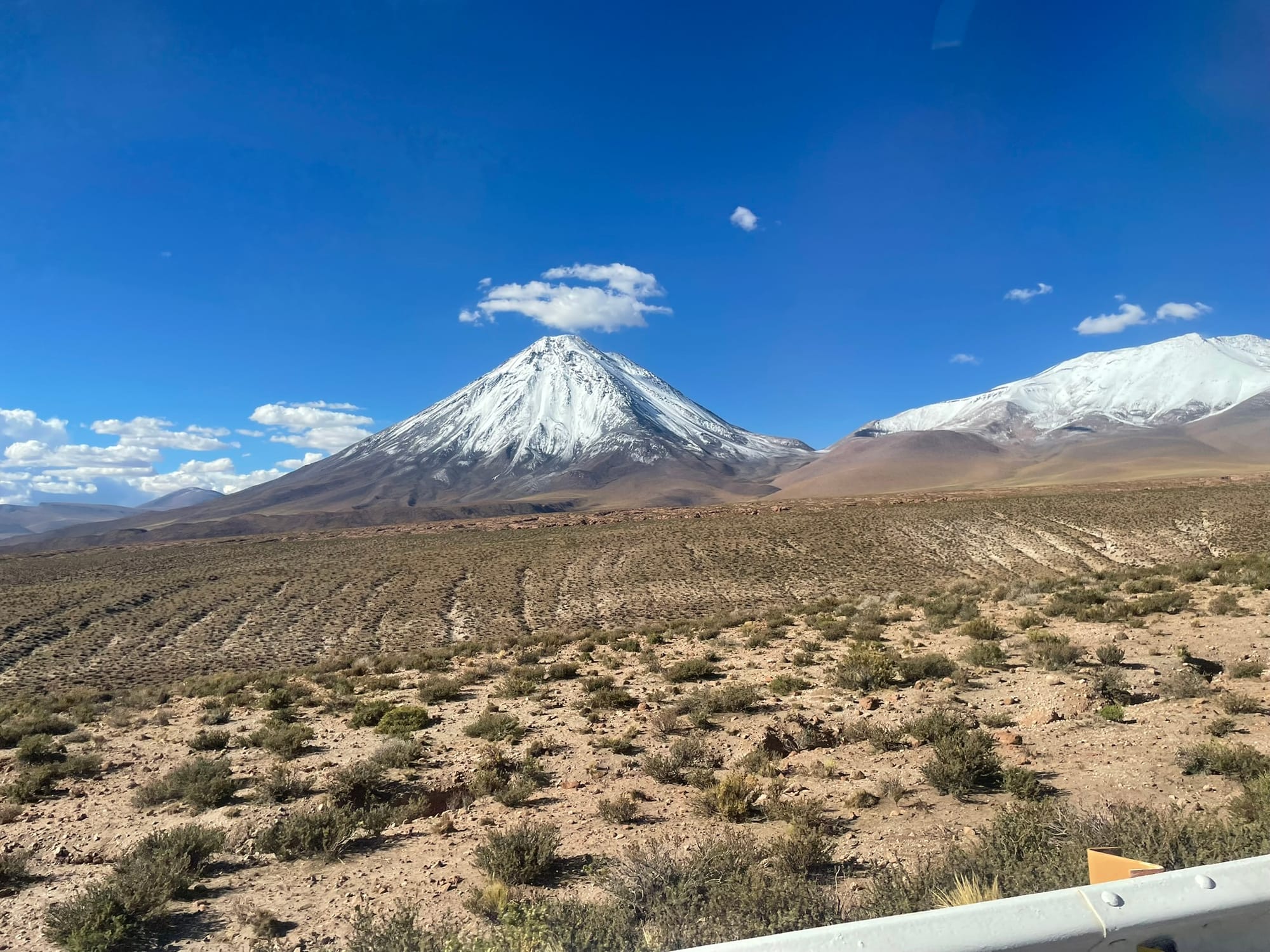
This is the other side of that same volcano that overlooks the green and white lagoons! [📸 Rachel]
And so ends the ‘unsupervised’ portion of our trip. Up next, we meet up with some responsible adults in Argentina!